



Matthew Taylor
-
Posts
973 -
Joined
-
Last visited
Content Type
Profiles
News
Minnesota Twins Videos
2026 Minnesota Twins Top Prospects Ranking
2022 Minnesota Twins Draft Picks
Minnesota Twins Free Agent & Trade Rumors, Notes, & Tidbits
Guides & Resources
2023 Minnesota Twins Draft Picks
The Minnesota Twins Players Project
2024 Minnesota Twins Draft Picks
2025 Minnesota Twins Draft Pick Tracker
2026 Minnesota Twins Draft Tracker: Picks & Bonuses
Forums
Blogs
Events
Store
Downloads
Gallery
Everything posted by Matthew Taylor
-
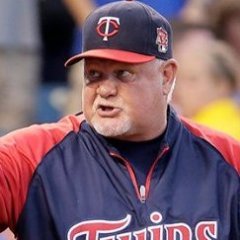 While we spend most of our time focusing on the players on the current Minnesota Twins squad, it’s fun to check in on our “old friends” every once in a while. The moniker, “old friend”, has been common amongst Minnesota Twins fans when talking about players who used to play for the hometown squad but have since moved on to play for a different team. Whether or not you continue to root for old friends after they leave the Twins, it’s always a fun exercise to see how they are doing. Here are top performing “old friends” thus far in 2022: 5. Josh Donaldson .764 OPS 5 HR 15 RBI 0.9 fWAR While mired in controversy over the past couple of weeks, it’s still hard to deny that Josh Donaldson is having a strong year in pinstripes after being traded to the Yankees this past offseason. Aided by an average exit velocity that ranks in the 89th percentile, the Bringer of Rain owns a 123 OPS+ while continuing to provide above-average defense at the hot corner. For many, Donaldson isn’t much of an “old friend”, but he cracks the top-five for top performing ex-Twins in 2022. 4. Kyle Gibson 48 IP 3.94 ERA 1.1 fWAR Coming in fourth for top performing ex-Minnesota Twins in 2022 is someone who flashed ace potential at times with the Minnesota Twins but never quite put it all together, Kyle Gibson. After earning his first all-star appearance last season, Gibson is having himself another solid year on the mound with the Phillies in 2022. With a FIP of 3.22, Gibson has actually been even better than his surface stats suggest. 3. Taylor Rogers 21 1/3 IP 1.69 ERA 17 Saves 0.6 fWAR It was a controversial trade this offseason when the Twins traded away Taylor Rogers in exchange for Chris Paddack, and has become even more controversial after the start that Rogers has had in 2022. Across 21 appearances this season, Rogers has allowed an earned run in just two of those appearances. Rogers leads all of baseball with 17 saves this season and has quickly become one of the most dominant relievers in all of baseball. 2. C.J. Cron .942 OPS 13 HR 37 RBI 1.5 fWAR C.J. Cron only spent one season with the Minnesota Twins, but since he departed following the 2019 season, he has been excellent. In 2022, though, he is having the best season of his career with an OPS+ of 155. Cron is tied for third in all of baseball with 13 home runs and is tied for sixth with 37 RBI. 1. Martín Pérez 56 1/3 IP 1.60 ERA 1.7 fWAR Martín Pérez was not good as a member of the Twins, posting a 5.12 ERA in his sole season with the club in 2019. In 2022, though, he has pitched like the best starting pitcher in all of baseball. Pérez’s 1.60 ERA leads Major League Baseball, and his 1.7 fWAR ranks third among starting pitchers. He hasn’t been garnering many strikeouts, but he has yet to allow a home run this season and is allowing a career-low 2.2 walks per nine innings. Who do you think has been the best performing ex-Minnesota Twins player in 2022? Which of these players would you add to the current Minnesota Twins roster if you could? Leave a comment and start the conversation! View full article
 -
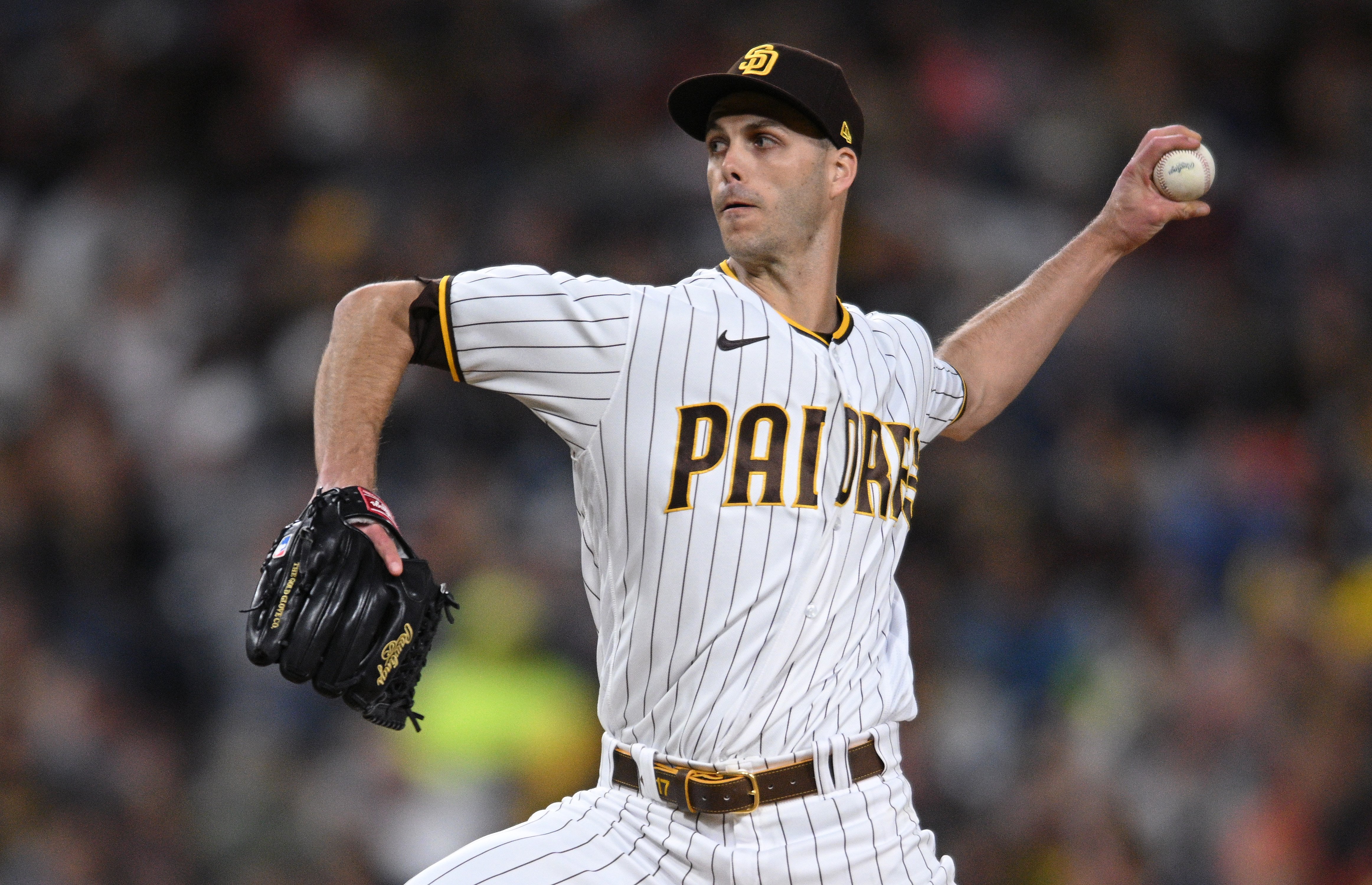 The moniker, “old friend”, has been common amongst Minnesota Twins fans when talking about players who used to play for the hometown squad but have since moved on to play for a different team. Whether or not you continue to root for old friends after they leave the Twins, it’s always a fun exercise to see how they are doing. Here are top performing “old friends” thus far in 2022: 5. Josh Donaldson .764 OPS 5 HR 15 RBI 0.9 fWAR While mired in controversy over the past couple of weeks, it’s still hard to deny that Josh Donaldson is having a strong year in pinstripes after being traded to the Yankees this past offseason. Aided by an average exit velocity that ranks in the 89th percentile, the Bringer of Rain owns a 123 OPS+ while continuing to provide above-average defense at the hot corner. For many, Donaldson isn’t much of an “old friend”, but he cracks the top-five for top performing ex-Twins in 2022. 4. Kyle Gibson 48 IP 3.94 ERA 1.1 fWAR Coming in fourth for top performing ex-Minnesota Twins in 2022 is someone who flashed ace potential at times with the Minnesota Twins but never quite put it all together, Kyle Gibson. After earning his first all-star appearance last season, Gibson is having himself another solid year on the mound with the Phillies in 2022. With a FIP of 3.22, Gibson has actually been even better than his surface stats suggest. 3. Taylor Rogers 21 1/3 IP 1.69 ERA 17 Saves 0.6 fWAR It was a controversial trade this offseason when the Twins traded away Taylor Rogers in exchange for Chris Paddack, and has become even more controversial after the start that Rogers has had in 2022. Across 21 appearances this season, Rogers has allowed an earned run in just two of those appearances. Rogers leads all of baseball with 17 saves this season and has quickly become one of the most dominant relievers in all of baseball. 2. C.J. Cron .942 OPS 13 HR 37 RBI 1.5 fWAR C.J. Cron only spent one season with the Minnesota Twins, but since he departed following the 2019 season, he has been excellent. In 2022, though, he is having the best season of his career with an OPS+ of 155. Cron is tied for third in all of baseball with 13 home runs and is tied for sixth with 37 RBI. 1. Martín Pérez 56 1/3 IP 1.60 ERA 1.7 fWAR Martín Pérez was not good as a member of the Twins, posting a 5.12 ERA in his sole season with the club in 2019. In 2022, though, he has pitched like the best starting pitcher in all of baseball. Pérez’s 1.60 ERA leads Major League Baseball, and his 1.7 fWAR ranks third among starting pitchers. He hasn’t been garnering many strikeouts, but he has yet to allow a home run this season and is allowing a career-low 2.2 walks per nine innings. Who do you think has been the best performing ex-Minnesota Twins player in 2022? Which of these players would you add to the current Minnesota Twins roster if you could? Leave a comment and start the conversation!
- 14 comments
-
- 3
-

-
- martin perez
- josh donaldson
- (and 3 more)
-
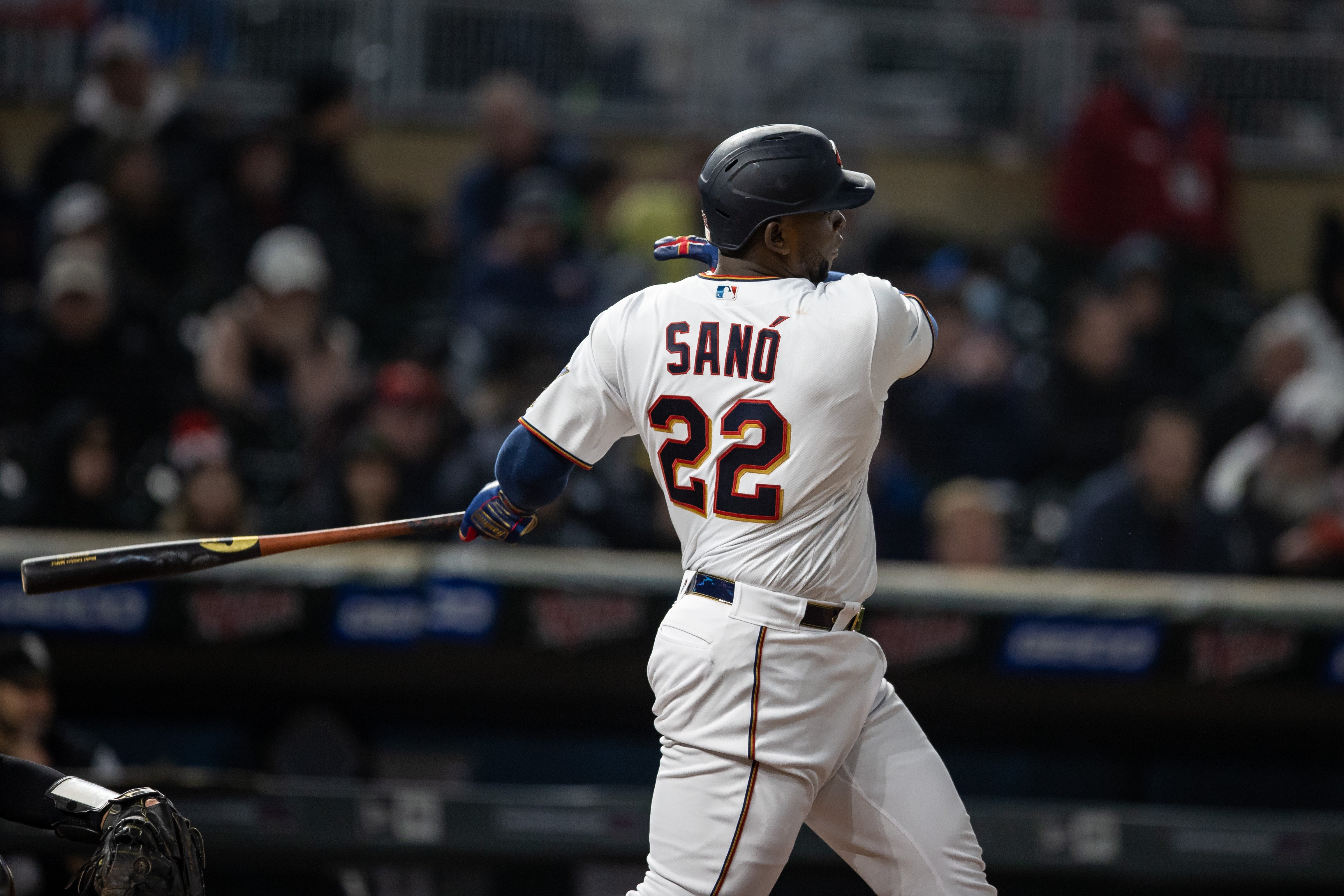 Miguel Sanó has had an April to forget in 2022 for the Minnesota Twins. Through 15 games, Sanó has just five hits and an abysmal OPS of .380. Sanó has just one extra-base hit and has statistically been the least valuable player in baseball in this early season with an fWAR of -.07. Miguel Sanó having yet another poor start has left Minnesota Twins fans extremely frustrated with the first baseman and questioning whether it is time to cut bait. Sanó is in the final guaranteed year of his contract, and with Alex Kirilloff nearing his way back from injury and Jose Miranda on the doorstep of the Majors, it might make sense to move on from him in favor of youth. I certainly have voiced my own frustrations with Miguel Sanó. Miguel Sanó’s advanced numbers, though, paint a different picture and portend that Sanó’s early struggles are largely fluky and that better days are ahead. Let’s dig deeper into the numbers. First, let’s look at his contact numbers. Through the first handful of weeks, Miguel Sanó ranks 11th in all of baseball with an average exit velocity of 93.2 MPH, right on par with his career average exit velocity of 93.1 MPH. Further, Sanó’s hard-hit percentage is at 50%, tied for 24th in baseball. Finally, his barrel numbers are at his typically high rate, with a barrel percentage of 15.6%, just a tick below his career average. So, if his contact numbers are at their typically high level, then it must be his poor plate discipline that explains his terrible numbers, right? Wrong. Sanó is actually showing better discipline at the plate in 2022 than he ever has in his career. Thus far in 2022, Sanó owns a career-low K% of 29.3 with a BB% of 13.8, the second-highest mark of his career. Additionally, Sanó has a career-low chase rate and whiff rate of just 16.9% and 33.3%, respectively. Just look at Sanó’s statcast percentile numbers. Does this look like someone who should be hitting .083 and worthy of being cut? If Sanó’s contact rates are at his typically-elite levels, and his plate discipline numbers are at career-best levels, why is Miguel Sanó having such a terrible start to the season? Simply put, it’s been bad luck for the Dominican. A simple, yet admittedly not perfect, way to gauge luck in baseball is by looking at batting average on balls in play (BABIP). Over a large enough sample size, the BABIP for most MLB players will settle at around .300. Heading into the 2022 season, Miguel Sanó had a career BABIP of .329. This season, though, Miguel Sanó is sitting at a BABIP of .097, the second-lowest mark in baseball behind Kansas City’s Carlos Santana. Another way to look at bad luck is to compare a player’s actual numbers to his expected numbers and look at the difference. The best numbers to look for this is weighted on-base average (wOBA) versus expected weighted on-base average (xwOBA). wOBA is a catch-all offensive statistic that best encapsulates offensive performance. xwOBA then looks at a player's process statistics such as exit velocity to determine what a player’s numbers should be, as we all know that luck is a big part of the game of baseball. Miguel Sanó currently has a wOBA of .192, compared to a xwOBA of .334. The -0.142 difference between those two numbers is the sixth-largest discrepancy in all of baseball, showing that Sanó has been one of the most snake-bitten players in 2022. On Tuesday night, Miguel Sanó teased what could be the start of some converted luck as he smoked a 108 MPH single over right fielder, Robbie Grossman's, head which (in the wildest way possible) wound up being a walk-off hit for the Twins. It has been extremely frustrating to watch Miguel Sanó bat in 2022, but all of the advanced numbers show that better days are ahead for the right-hander. It can be tempting to want to give up on Sanó and want to move onto other options, but the upside that Sanó brings is sky-high. Let’s cut Sanó some slack as a big summer is coming for the powerful first baseman.
 -
While he is notoriously a slow starter, Miguel Sanó is off to his slowest start yet in 2022. While it’s tempting to write him off completely, might there be reason to cut Sanó some slack? Miguel Sanó has had an April to forget in 2022 for the Minnesota Twins. Through 15 games, Sanó has just five hits and an abysmal OPS of .380. Sanó has just one extra-base hit and has statistically been the least valuable player in baseball in this early season with an fWAR of -.07. Miguel Sanó having yet another poor start has left Minnesota Twins fans extremely frustrated with the first baseman and questioning whether it is time to cut bait. Sanó is in the final guaranteed year of his contract, and with Alex Kirilloff nearing his way back from injury and Jose Miranda on the doorstep of the Majors, it might make sense to move on from him in favor of youth. I certainly have voiced my own frustrations with Miguel Sanó. Miguel Sanó’s advanced numbers, though, paint a different picture and portend that Sanó’s early struggles are largely fluky and that better days are ahead. Let’s dig deeper into the numbers. First, let’s look at his contact numbers. Through the first handful of weeks, Miguel Sanó ranks 11th in all of baseball with an average exit velocity of 93.2 MPH, right on par with his career average exit velocity of 93.1 MPH. Further, Sanó’s hard-hit percentage is at 50%, tied for 24th in baseball. Finally, his barrel numbers are at his typically high rate, with a barrel percentage of 15.6%, just a tick below his career average. So, if his contact numbers are at their typically high level, then it must be his poor plate discipline that explains his terrible numbers, right? Wrong. Sanó is actually showing better discipline at the plate in 2022 than he ever has in his career. Thus far in 2022, Sanó owns a career-low K% of 29.3 with a BB% of 13.8, the second-highest mark of his career. Additionally, Sanó has a career-low chase rate and whiff rate of just 16.9% and 33.3%, respectively. Just look at Sanó’s statcast percentile numbers. Does this look like someone who should be hitting .083 and worthy of being cut? If Sanó’s contact rates are at his typically-elite levels, and his plate discipline numbers are at career-best levels, why is Miguel Sanó having such a terrible start to the season? Simply put, it’s been bad luck for the Dominican. A simple, yet admittedly not perfect, way to gauge luck in baseball is by looking at batting average on balls in play (BABIP). Over a large enough sample size, the BABIP for most MLB players will settle at around .300. Heading into the 2022 season, Miguel Sanó had a career BABIP of .329. This season, though, Miguel Sanó is sitting at a BABIP of .097, the second-lowest mark in baseball behind Kansas City’s Carlos Santana. Another way to look at bad luck is to compare a player’s actual numbers to his expected numbers and look at the difference. The best numbers to look for this is weighted on-base average (wOBA) versus expected weighted on-base average (xwOBA). wOBA is a catch-all offensive statistic that best encapsulates offensive performance. xwOBA then looks at a player's process statistics such as exit velocity to determine what a player’s numbers should be, as we all know that luck is a big part of the game of baseball. Miguel Sanó currently has a wOBA of .192, compared to a xwOBA of .334. The -0.142 difference between those two numbers is the sixth-largest discrepancy in all of baseball, showing that Sanó has been one of the most snake-bitten players in 2022. On Tuesday night, Miguel Sanó teased what could be the start of some converted luck as he smoked a 108 MPH single over right fielder, Robbie Grossman's, head which (in the wildest way possible) wound up being a walk-off hit for the Twins. It has been extremely frustrating to watch Miguel Sanó bat in 2022, but all of the advanced numbers show that better days are ahead for the right-hander. It can be tempting to want to give up on Sanó and want to move onto other options, but the upside that Sanó brings is sky-high. Let’s cut Sanó some slack as a big summer is coming for the powerful first baseman. View full article
-
I just ranked the players on the 40-man roster.
- 16 replies
-
- 1
-
-
- carlos correa
- byron buxton
- (and 3 more)
-
As the 2022 season for the Minnesota Twins rapidly approaches, let’s rank every player on the Twins from 40 to 1. In these rankings we will only be looking at players on the 40-man roster, and we will only be looking at their value to the Twins for the 2022 season. This is different from the Twins asset rankings that Nick Nelson does each year where he ranks the Twins players in terms of the long-term value they bring to the club. In these rankings, young prospects might be ranked lower than aging veterans and past production will typically trump future projection. In the simplest of terms, these rankings will answer the question, “Who would you rather have for the 2022 season?” Tier 11: Likely Non-Contributors 40. Chris Vallimont Vallimont struggled mightily in double-A last season, but was added to the 40-man roster to be protected in the Rule 5 draft. Don’t expect to see Vallimont contribute to the Twins this season. 39. Ronny Henriquez 38. Blayne Enlow After undergoing Tommy John surgery last season, Enlow will look to get healthy in 2022 as he prepares to be a contributor for the club in 2023. 37. Drew Strotman Strotman has been converted into a reliever and will work as such with the St. Paul Saints this season. He struggled as a starter after joining the Saints last year, but in a bullpen role he will likely get a shot with the Twins at some point in 2022. 36. Cole Sands 35. Jordan Balazovic While he hopes to get a call up to the Majors at some point in 2022, Balazovic still has yet to pitch above the double-A level and will be starting the 2022 season on the injured list. Still a promising prospect, Balazovic will hope to string together some healthy months and work his way up to the Big Leagues. Tier 10: Bench Utility Guys…With Upside? 34. Gilberto Celestino 33. Royce Lewis Having not played in competitive baseball games since 2019, the 2022 season will be a big one for Royce Lewis. The former number one overall pick will look to prove that he still has what it takes to be a superstar in this league. Lewis will start the season in St. Paul and fight to work his way up to the Big Leagues where he can fill in all over the diamond. 32. Nick Gordon 31. Jose Miranda Miranda exploded onto the scene in 2021 in Wichita and St. Paul, posting one of the best minor league seasons in Minnesota Twins history. Miranda will look to ride that momentum into the 2022 season, where it shouldn’t be long until he gets a call up to the Majors. Tier 9: Who Keeps Their Job Longer? 30. Chris Archer The most recently acquired player on the Minnesota Twins’ roster, Archer has shown what his ceiling can look like. The problem is, he hasn’t reached that ceiling since leaving the Tampa Bay Rays in 2018. Now with injuries and declining velocity, we’ll see how long he can stay in the rotation. 29. Dylan Bundy Tier 8: Bullpen Cycle Guys 28. Cody Stashak After bursting on the scene in 2019 with an extremely impressive run as a rookie, Stashak has struggled mightily with injury. Last season, Stashak didn't pitch at all after May, and now again this season the right hander finds himself on the injured list with bicep trouble. When healthy, Stashak has impressive upside, but until he can prove himself to be healthy, he finds himself at the bottom of the "Bullpen Cycle Guys." 27. Griffin Jax 26. Jovani Moran After pitching the lights out in the Minors last season, Moran got called up to the Majors towards the end of the season where he struggled. Moran will begin the year in St. Paul, but is the type of high-upside left hander that could pop in his second stint up in the Big Leagues. 25. Josh Winder 24. Emilio Pagán The "other guy" acquired in the Taylor Rogers trade, Pagán has shown that he has the ability to be a lights-out reliever. In 2019, the right-hander tossed a 2.31 ERA in 70.0 IP with the Tampa Bay Rays with a 12.3 K/9. After a couple of down seasons in San Diego, he has the makeup to be a potentially dominant reliever for the Twins with a few tweaks. 23. Danny Coulombe 22. Jhon Romero The newly acquired Colombian product is still just 27-years-old and with little experience in the Major Leagues. Across double-A and triple-A last season, though, Romero posted a combined 2.95 ERA with a K/9 of 11.3. 21. Joe Smith 20. Jharel Cotton 19. Jhoan Duran Maybe this ranking is a little too optimistic for how young and unproven he is, but Jhoan Duran has a higher ceiling than almost any other arm in this bullpen. Since being moved to a full-time reliever role, Duran has upped his velocity to consistently hitting triple digits, to go along with a nasty ‘splinker’. Duran could easily be this team’s closer by season’s end. Tier 7: Which Catcher is Better? 18. Gary Sánchez Did you know that Gary Sánchez is the fastest catcher in MLB history to hit 100 home runs? Sánchez came up with the New York Yankees as a super prospect and immediately showed off his big time power en route to some incredible seasons. Over the last two seasons, though, the swing for Sánchez has looked ugly, and his poor defense lends to him being more of a DH than a catcher. If a change in scenery can spark the offense for him again, though, he could do some special things. 17. Ryan Jeffers Tier 5: X-Factor Bats 16. Trevor Larnach 15. Gio Urshela Urshela broke out in a big way in 2019, when he posted a .889 OPS over 132 games with the Yankees. After another strong season in 2020, Urshela regressed in 2021 to the tune of a .720 OPS. Urshela can play multiple spots in the infield, but whether or not his bat can rebound is what makes him an X-Factor for the Twins in 2022. Tier 4: Back of Bullpen Studs 14. Jorge Alcala After struggling to start the year in 2021, Alcala thrived down the stretch. Over the last 22 innings of last season, Alcala allowed just two earned runs while striking out 27. We could quickly see Alcala working his way to higher and higher leverage spots this season. 13. Caleb Thielbar 12. Tyler Duffey A prime bounceback candidate, Tyler Duffey will look to return to his 2020 form after a tough 2021 that saw his K/9 decline from 11.6 to 8.8, however he still managed to turn in an excellent 3.18 ERA. Tier 3: Young Gun Arms 11. Bailey Ober 10. Chris Paddack 9. Joe Ryan Ryan was acquired last season in a trade deadline deal for Nelson Cruz and quickly became a fan favorite. In his sophomore season, Ryan has already been named Opening Day starter and hopes are high for the right hander. Ryan is no doubt a Major League pitcher, but the question with him is upside. Does he have the upside to be a top of the rotation starter? Tier 2: The Next Best 8. Max Kepler After a breakout season in 2019, Kepler regressed in 2020 and was even worse in 2021. Last season, Kepler finished the year with a lowly OPS of .719. He still has the power and still has the glove to be a fringe all-star player, but he needs to prove that this season, otherwise he might wear out his welcome in Minnesota. 7. Alex Kirilloff Alex Kirilloff jumped out of the gates really strong in a Twins uniform, showing that his hype as a highly-touted prospect was deserved. The injury bug hit him hard though, as a wrist injury severely diminished his power and he limped through the season to a mediocre .722 OPS. Now, with a healthy wrist, Kirilloff figures to impact the Twins team more this season and provide middle-of-the-order numbers by the end of the season. 6. Miguel Sanó 5. Luis Arraez Tier 1: 2022 Team MVP Candidates 4. Sonny Gray While Sonny Gray profiles more as a number two than a number one, Gray has the upside to be an ace pitcher for the Minnesota Twins in 2022. If he can replicate his 2019 numbers and give the Minnesota Twins a true, no-doubt ace that they have been starved for, he certainly has the potential to be the MVP of the Twins in 2022. 3. Jorge Polanco 2. Byron Buxton An argument could definitely be made for Byron Buxton to fill the number one spot on these rankings. Pound for pound, game for game, Buxton arguably produces more value than any other player in baseball. Like always with Byron, though, health is the question. If Buxton can play 140+ games for the Twins this year, he will likely finish the season in the number one spot. 1. Carlos Correa In signing Carlos Correa, the Minnesota Twins are bringing in who is now the best player on the team. Correa does everything that you look for in a star player. He plays a premium position, offers gold-glove level defense and excellent offense. The best part, he’s only just entering his prime, as he is still just 27-years-old. Do you agree with the rankings above? Who is ranked too high? Too low? Leave your disagreements in the rankings below and let’s have a conversation! View full article
-
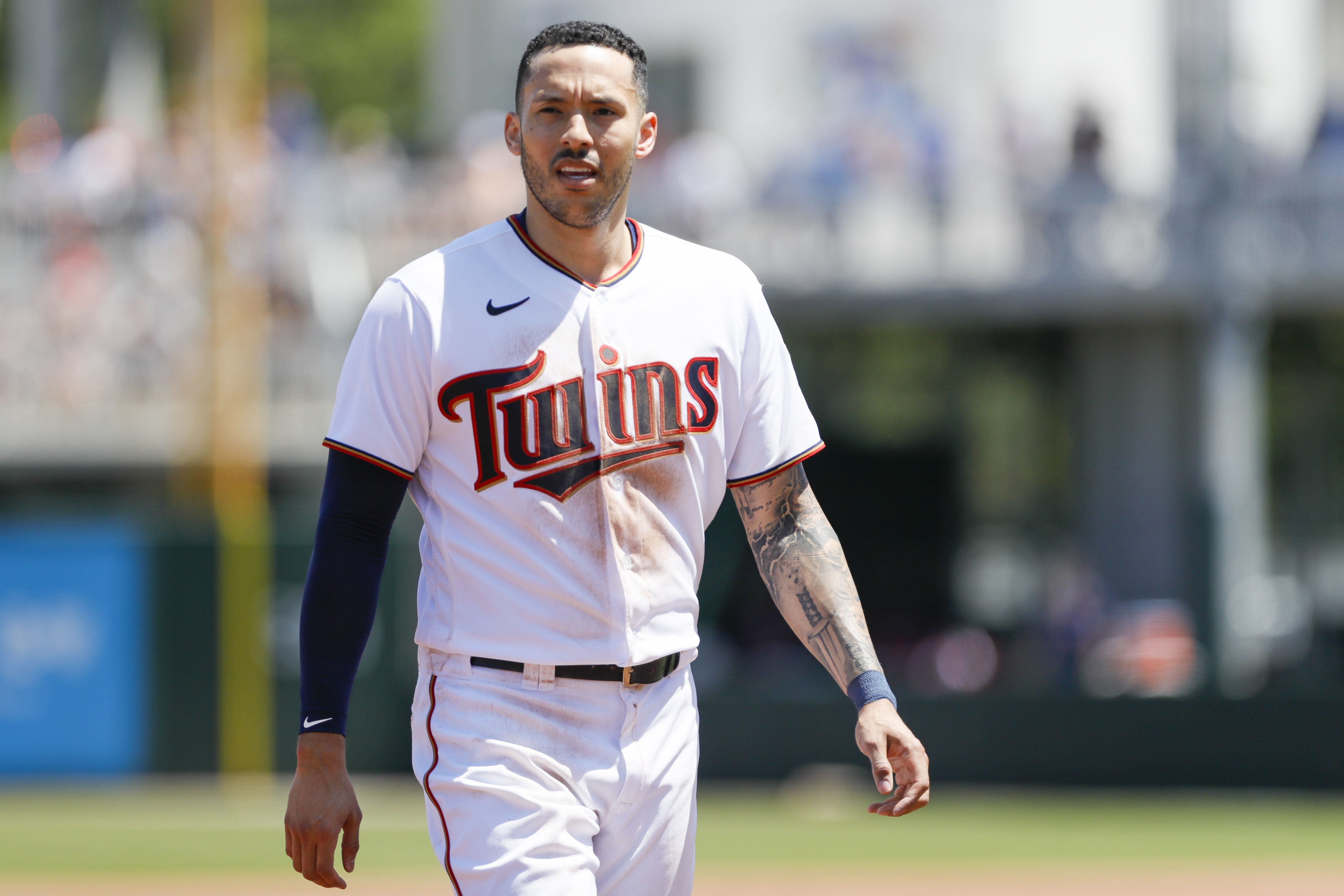 In these rankings we will only be looking at players on the 40-man roster, and we will only be looking at their value to the Twins for the 2022 season. This is different from the Twins asset rankings that Nick Nelson does each year where he ranks the Twins players in terms of the long-term value they bring to the club. In these rankings, young prospects might be ranked lower than aging veterans and past production will typically trump future projection. In the simplest of terms, these rankings will answer the question, “Who would you rather have for the 2022 season?” Tier 11: Likely Non-Contributors 40. Chris Vallimont Vallimont struggled mightily in double-A last season, but was added to the 40-man roster to be protected in the Rule 5 draft. Don’t expect to see Vallimont contribute to the Twins this season. 39. Ronny Henriquez 38. Blayne Enlow After undergoing Tommy John surgery last season, Enlow will look to get healthy in 2022 as he prepares to be a contributor for the club in 2023. 37. Drew Strotman Strotman has been converted into a reliever and will work as such with the St. Paul Saints this season. He struggled as a starter after joining the Saints last year, but in a bullpen role he will likely get a shot with the Twins at some point in 2022. 36. Cole Sands 35. Jordan Balazovic While he hopes to get a call up to the Majors at some point in 2022, Balazovic still has yet to pitch above the double-A level and will be starting the 2022 season on the injured list. Still a promising prospect, Balazovic will hope to string together some healthy months and work his way up to the Big Leagues. Tier 10: Bench Utility Guys…With Upside? 34. Gilberto Celestino 33. Royce Lewis Having not played in competitive baseball games since 2019, the 2022 season will be a big one for Royce Lewis. The former number one overall pick will look to prove that he still has what it takes to be a superstar in this league. Lewis will start the season in St. Paul and fight to work his way up to the Big Leagues where he can fill in all over the diamond. 32. Nick Gordon 31. Jose Miranda Miranda exploded onto the scene in 2021 in Wichita and St. Paul, posting one of the best minor league seasons in Minnesota Twins history. Miranda will look to ride that momentum into the 2022 season, where it shouldn’t be long until he gets a call up to the Majors. Tier 9: Who Keeps Their Job Longer? 30. Chris Archer The most recently acquired player on the Minnesota Twins’ roster, Archer has shown what his ceiling can look like. The problem is, he hasn’t reached that ceiling since leaving the Tampa Bay Rays in 2018. Now with injuries and declining velocity, we’ll see how long he can stay in the rotation. 29. Dylan Bundy Tier 8: Bullpen Cycle Guys 28. Cody Stashak After bursting on the scene in 2019 with an extremely impressive run as a rookie, Stashak has struggled mightily with injury. Last season, Stashak didn't pitch at all after May, and now again this season the right hander finds himself on the injured list with bicep trouble. When healthy, Stashak has impressive upside, but until he can prove himself to be healthy, he finds himself at the bottom of the "Bullpen Cycle Guys." 27. Griffin Jax 26. Jovani Moran After pitching the lights out in the Minors last season, Moran got called up to the Majors towards the end of the season where he struggled. Moran will begin the year in St. Paul, but is the type of high-upside left hander that could pop in his second stint up in the Big Leagues. 25. Josh Winder 24. Emilio Pagán The "other guy" acquired in the Taylor Rogers trade, Pagán has shown that he has the ability to be a lights-out reliever. In 2019, the right-hander tossed a 2.31 ERA in 70.0 IP with the Tampa Bay Rays with a 12.3 K/9. After a couple of down seasons in San Diego, he has the makeup to be a potentially dominant reliever for the Twins with a few tweaks. 23. Danny Coulombe 22. Jhon Romero The newly acquired Colombian product is still just 27-years-old and with little experience in the Major Leagues. Across double-A and triple-A last season, though, Romero posted a combined 2.95 ERA with a K/9 of 11.3. 21. Joe Smith 20. Jharel Cotton 19. Jhoan Duran Maybe this ranking is a little too optimistic for how young and unproven he is, but Jhoan Duran has a higher ceiling than almost any other arm in this bullpen. Since being moved to a full-time reliever role, Duran has upped his velocity to consistently hitting triple digits, to go along with a nasty ‘splinker’. Duran could easily be this team’s closer by season’s end. Tier 7: Which Catcher is Better? 18. Gary Sánchez Did you know that Gary Sánchez is the fastest catcher in MLB history to hit 100 home runs? Sánchez came up with the New York Yankees as a super prospect and immediately showed off his big time power en route to some incredible seasons. Over the last two seasons, though, the swing for Sánchez has looked ugly, and his poor defense lends to him being more of a DH than a catcher. If a change in scenery can spark the offense for him again, though, he could do some special things. 17. Ryan Jeffers Tier 5: X-Factor Bats 16. Trevor Larnach 15. Gio Urshela Urshela broke out in a big way in 2019, when he posted a .889 OPS over 132 games with the Yankees. After another strong season in 2020, Urshela regressed in 2021 to the tune of a .720 OPS. Urshela can play multiple spots in the infield, but whether or not his bat can rebound is what makes him an X-Factor for the Twins in 2022. Tier 4: Back of Bullpen Studs 14. Jorge Alcala After struggling to start the year in 2021, Alcala thrived down the stretch. Over the last 22 innings of last season, Alcala allowed just two earned runs while striking out 27. We could quickly see Alcala working his way to higher and higher leverage spots this season. 13. Caleb Thielbar 12. Tyler Duffey A prime bounceback candidate, Tyler Duffey will look to return to his 2020 form after a tough 2021 that saw his K/9 decline from 11.6 to 8.8, however he still managed to turn in an excellent 3.18 ERA. Tier 3: Young Gun Arms 11. Bailey Ober 10. Chris Paddack 9. Joe Ryan Ryan was acquired last season in a trade deadline deal for Nelson Cruz and quickly became a fan favorite. In his sophomore season, Ryan has already been named Opening Day starter and hopes are high for the right hander. Ryan is no doubt a Major League pitcher, but the question with him is upside. Does he have the upside to be a top of the rotation starter? Tier 2: The Next Best 8. Max Kepler After a breakout season in 2019, Kepler regressed in 2020 and was even worse in 2021. Last season, Kepler finished the year with a lowly OPS of .719. He still has the power and still has the glove to be a fringe all-star player, but he needs to prove that this season, otherwise he might wear out his welcome in Minnesota. 7. Alex Kirilloff Alex Kirilloff jumped out of the gates really strong in a Twins uniform, showing that his hype as a highly-touted prospect was deserved. The injury bug hit him hard though, as a wrist injury severely diminished his power and he limped through the season to a mediocre .722 OPS. Now, with a healthy wrist, Kirilloff figures to impact the Twins team more this season and provide middle-of-the-order numbers by the end of the season. 6. Miguel Sanó 5. Luis Arraez Tier 1: 2022 Team MVP Candidates 4. Sonny Gray While Sonny Gray profiles more as a number two than a number one, Gray has the upside to be an ace pitcher for the Minnesota Twins in 2022. If he can replicate his 2019 numbers and give the Minnesota Twins a true, no-doubt ace that they have been starved for, he certainly has the potential to be the MVP of the Twins in 2022. 3. Jorge Polanco 2. Byron Buxton An argument could definitely be made for Byron Buxton to fill the number one spot on these rankings. Pound for pound, game for game, Buxton arguably produces more value than any other player in baseball. Like always with Byron, though, health is the question. If Buxton can play 140+ games for the Twins this year, he will likely finish the season in the number one spot. 1. Carlos Correa In signing Carlos Correa, the Minnesota Twins are bringing in who is now the best player on the team. Correa does everything that you look for in a star player. He plays a premium position, offers gold-glove level defense and excellent offense. The best part, he’s only just entering his prime, as he is still just 27-years-old. Do you agree with the rankings above? Who is ranked too high? Too low? Leave your disagreements in the rankings below and let’s have a conversation!
- 16 comments
-
- 3
-
-
- carlos correa
- byron buxton
- (and 3 more)
-
LET'S GO!
-
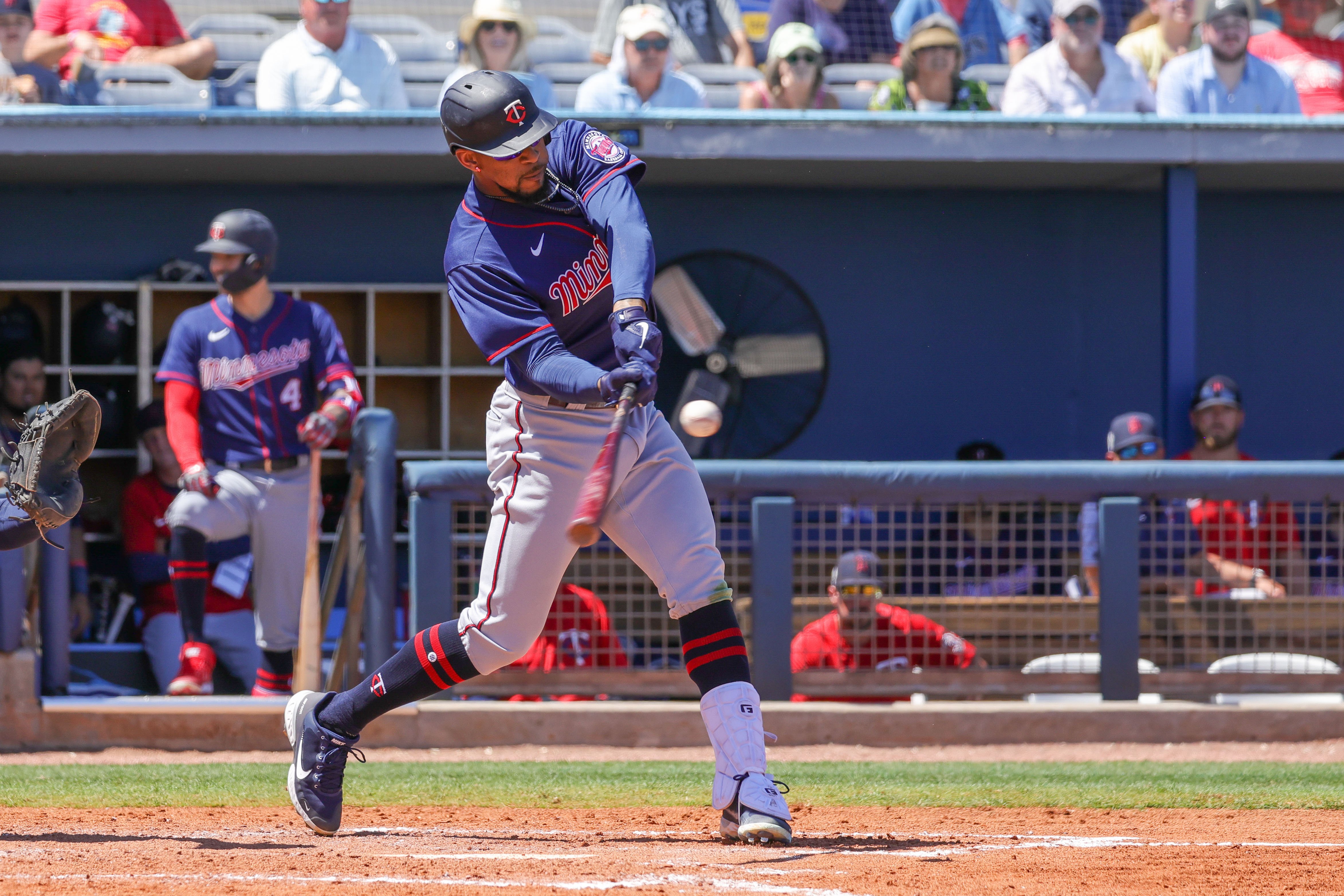 Catchers Ryan Jeffers: Will more at-bats against LHP take Jeffers to a new level? Over the last two seasons, Ryan Jeffers had ceded at-bats against left-handed pitchers to Mitch Garver. With Garver no longer on the team, Jeffers figures to get more opportunities against southpaws which should aid his performance at the plate. Gary Sánchez: Will a change of scenery bring back the old Gary? After bursting onto the scene as a prospect and in his early years with the Yankees, Sánchez has struggled mightily, to the tune of a .698 OPS over the last two seasons. Potentially getting out of the highly-intense New York market and moving to Minnesota will be the change that he needs to get back to his past production. Infielders: Luis Arraez: Will he stay on the team all year? Arraez has been a prime trade candidate all offseason, however he is on the Opening Day roster. As needs continue to appear and the Twins make moves during the season, will Arraez be a guy they look to move? With Polanco taking second base and Urshela at third, with Miranda on the way, Arraez could prove to be moveable. Carlos Correa: Can Correa’s clutchness (finally) bring the Twins a playoff victory? Among many areas in which Carlos Correa has excelled in his young career, his clutchness might be the most exciting. At 27-years-old, Correa has already appeared in 79 postseason games and might finally be the guy to end the Twins’ playoff drought. Nick Gordon: How long can he fend off the prospects? While Nick Gordon was a surprise in the 2021 season, he still only managed to post an OPS of .647. With prospects like Jose Miranda and Royce Lewis waiting for their opportunity, how long can Nick be the utilityman before he gets overtaken for someone with more upside? Jorge Polanco: Can he provide Gold Glove-level defense this year? After a bumpy start at second base to start the year, Polanco finished strong at second base, providing excellent defense. In his second full season at the position, Polanco could turn into Gold Glover at second base, paired up the middle with Carlos Correa, who himself is a Gold Glover. Miguel Sanó: Can he avoid prolonged slumps this year? The problem with Miguel Sanó has never been a question of talent, as he can get scorching hot at the plate and single-handedly win games by himself. The problem with the first baseman has always been his propensity to go into prolonged slumps. Avoid long slumps, and he could be in for a big year. Gio Urshela: Was 2019 the outlier season or was 2021 the outlier season? In 2019, Urshela posted a .889 OPS in 132 games with the Yankees. Last season, Urshela posted a mediocre .720 OPS in 116 games with the Yankees. Which is the norm and which is the outlier? We’ll soon find out. Outfielders Byron Buxton: Will he win the MVP this year? Having already received his big payday, and coming into the season fully healthy, this looks like it could be the year that Byron puts it all together. With upside higher than almost anyone else in the Majors, an MVP looks in the realm of possibilities for Buck. Gilberto Celestino: How much upside is there? A surprise addition to the Opening Day roster, Celestino was named fourth outfielder over Kyle Garlick. Celestino has been on top-prospect lists for the Twins since coming over via the Ryan Pressly trade in 2018. Is Celestino just a fourth outfielder type, or is there more? Could he use this opportunity to really burst onto the scene? Max Kepler: Can he hit left handed pitching again? Max Kepler had the best season of his career in 2019, largely because of the success that he had against left-handed pitching, posting a .880 OPS against southpaws that year. Every other year of his career, Kepler has struggled mightily against lefties, shown by his .509 OPS against them last season. Can he hit left handers again? Alex Kirilloff: Can he burst onto the scene with a now-healthy wrist? After a strong start to the year in 2022, Alex Kirilloff sustained a wrist injury which hampered his play immensely. Following the injury, Kirilloff lost almost all of his power, managing a slugging percentage of just .387. Now healthy, what can he do? Starting Pitchers Chris Archer: How long of a leash will he have? Check out Cody’s article linked above! Dylan Bundy: Can he ride his slider to a nice season? The Twins love sliders and Dylan Bundy has a good one. Even though he had a 36% whiff rate on his slider last year, Bundy only threw it 21.1% of the time. If the Twins have Bundy throw the slider more, he could surprise some people. Sonny Gray: Can he work through his declining velocity? Sonny Gray’s fastball velocity has declined in each of the past two years and now it is sitting at 92 MPH. Gray has never been a power pitcher, but if that trend continues, things could get worrisome. Bailey Ober: Has he already hit his ceiling? Bailey Ober’s 2021 season was a big surprise as he was never high on people’s prospect lists. The question with Ober, though, is if he can continue improving. Was his 2021 season the best that we’ll see of him, or is he on a trajectory to get even better? Chris Paddack: Should we be worried about his elbow? The newly-acquired Chris Paddack certainly has upside, as he showed in his rookie year in 2019. His elbow is a bit of a concern, though. Paddack previously had Tommy John surgery in 2016, and last year got an elbow injection after a UCL strain. Something to monitor, for sure, as an elbow injury would change the outlook of the Rogers trade, tremendously. Joe Ryan: Can he become a frontline starter? Joe Ryan is good, but is he a third or fourth starter type of good? Or is he a number two pitcher, potential ace type of good? He was named the Opening Day starter and will get plenty of opportunity, and the answer to this question could mean a lot for the Twins’ roster-building plans moving forward. Relief Pitchers Jorge Alcala: Will he become the Twins closer? With Taylor Rogers gone, Alcala looks like one of the prime candidates to be the 9th inning closer for the Twins in 2022. After a strong finish to the 2022 season in which he posted a 0.82 ERA in his last 19 appearances, Alcala might be the best man for the job. Jharel Cotton: Will he be the next big Falvine waiver claim? In 2019 it was Matt Wisler. Last year it was Danny Coulombe. This year, Jharel Cotton has the makeup to be the next big waiver claim reliever. Danny Coulombe: Can he reliably get out lefties? Following the Rogers trade, Coulombe is now one of two left handed relievers on the Opening Day roster. The Twins will need to look to Coulombe throughout the season to get out left-handed hitters. Tyler Duffey: Is he now a pitch-to-contact pitcher? After huge strikeout rates in 2019 and 2020, Duffey managed to strikeout less than one batter per inning last year. Is that who Duffey is now, or can he get back to his strikeout ways? Jhoan Duran: Will he be the hardest-throwing pitcher in Twins history? Duran has always thrown gas as a prospect for the Twins. After now having been moved to a full-time reliever role, Duran can let it rip even further. He has already been touching triple digits this spring with ease. Emilio Pagán: Will he be a high-leverage reliever? The other piece in the Taylor Rogers trade, the Twins will be bringing back another reliever to fill Rogers’ place in the bullpen. Pagán was excellent in 2019 with Tampa Bay, tossing a 2.31 ERA with a K/9 of 12.3. The right-hander has struggled each of the last two seasons, but has the upside to be a high leverage guy with some tweaks. Jhon Romero: Can he be a piece? Another sneaky waiver claim by the front office this offseason, Romero is just 27-years-old and coming off of a season in which he posted a 2.62 ERA with an 11.3 K/9 across double and triple-A. The numbers certainly point to him being a piece, but it remains to be scene if it will translate to the big leagues. Joe Smith: Does he have anything left in the tank? An under the radar signing this offseason, Joe Smith doesn’t possess velocity, but has been successful throughout his career. At 38-years-old, though, it’s only a matter of time before the wheels fall off. Caleb Thielbar: Can he get back to dominating with his curveball? Caleb Thielbar has one of the best curveballs in all of baseball. In 2020, Thielbar didn’t allow a single hit against his curveball. Last season, opponents hit .348 against the pitch. Josh Winder: What will his role look like? There was some thought that Winder might have gotten the fifth starter spot prior to the Twins signing Chris Archer. Still making the Opening Day roster, it’s fair to wonder how the Twins will use him. The Twins will still want to keep Winder stretched out, so I would expect to see him in a piggyback type role with Archer in April. Which of the above questions is the biggest one for the Twins in 2022? Leave a comment and start the conversation!
- 17 comments
-
- 2
-
-
- byron buxton
- gilberto celestino
- (and 3 more)
-
The Minnesota Twins just announced their 28-Man roster for Opening Day of the 2022 season. Here are the names and one question facing each player on the roster. Catchers Ryan Jeffers: Will more at-bats against LHP take Jeffers to a new level? Over the last two seasons, Ryan Jeffers had ceded at-bats against left-handed pitchers to Mitch Garver. With Garver no longer on the team, Jeffers figures to get more opportunities against southpaws which should aid his performance at the plate. Gary Sánchez: Will a change of scenery bring back the old Gary? After bursting onto the scene as a prospect and in his early years with the Yankees, Sánchez has struggled mightily, to the tune of a .698 OPS over the last two seasons. Potentially getting out of the highly-intense New York market and moving to Minnesota will be the change that he needs to get back to his past production. Infielders: Luis Arraez: Will he stay on the team all year? Arraez has been a prime trade candidate all offseason, however he is on the Opening Day roster. As needs continue to appear and the Twins make moves during the season, will Arraez be a guy they look to move? With Polanco taking second base and Urshela at third, with Miranda on the way, Arraez could prove to be moveable. Carlos Correa: Can Correa’s clutchness (finally) bring the Twins a playoff victory? Among many areas in which Carlos Correa has excelled in his young career, his clutchness might be the most exciting. At 27-years-old, Correa has already appeared in 79 postseason games and might finally be the guy to end the Twins’ playoff drought. Nick Gordon: How long can he fend off the prospects? While Nick Gordon was a surprise in the 2021 season, he still only managed to post an OPS of .647. With prospects like Jose Miranda and Royce Lewis waiting for their opportunity, how long can Nick be the utilityman before he gets overtaken for someone with more upside? Jorge Polanco: Can he provide Gold Glove-level defense this year? After a bumpy start at second base to start the year, Polanco finished strong at second base, providing excellent defense. In his second full season at the position, Polanco could turn into Gold Glover at second base, paired up the middle with Carlos Correa, who himself is a Gold Glover. Miguel Sanó: Can he avoid prolonged slumps this year? The problem with Miguel Sanó has never been a question of talent, as he can get scorching hot at the plate and single-handedly win games by himself. The problem with the first baseman has always been his propensity to go into prolonged slumps. Avoid long slumps, and he could be in for a big year. Gio Urshela: Was 2019 the outlier season or was 2021 the outlier season? In 2019, Urshela posted a .889 OPS in 132 games with the Yankees. Last season, Urshela posted a mediocre .720 OPS in 116 games with the Yankees. Which is the norm and which is the outlier? We’ll soon find out. Outfielders Byron Buxton: Will he win the MVP this year? Having already received his big payday, and coming into the season fully healthy, this looks like it could be the year that Byron puts it all together. With upside higher than almost anyone else in the Majors, an MVP looks in the realm of possibilities for Buck. Gilberto Celestino: How much upside is there? A surprise addition to the Opening Day roster, Celestino was named fourth outfielder over Kyle Garlick. Celestino has been on top-prospect lists for the Twins since coming over via the Ryan Pressly trade in 2018. Is Celestino just a fourth outfielder type, or is there more? Could he use this opportunity to really burst onto the scene? Max Kepler: Can he hit left handed pitching again? Max Kepler had the best season of his career in 2019, largely because of the success that he had against left-handed pitching, posting a .880 OPS against southpaws that year. Every other year of his career, Kepler has struggled mightily against lefties, shown by his .509 OPS against them last season. Can he hit left handers again? Alex Kirilloff: Can he burst onto the scene with a now-healthy wrist? After a strong start to the year in 2022, Alex Kirilloff sustained a wrist injury which hampered his play immensely. Following the injury, Kirilloff lost almost all of his power, managing a slugging percentage of just .387. Now healthy, what can he do? Starting Pitchers Chris Archer: How long of a leash will he have? Check out Cody’s article linked above! Dylan Bundy: Can he ride his slider to a nice season? The Twins love sliders and Dylan Bundy has a good one. Even though he had a 36% whiff rate on his slider last year, Bundy only threw it 21.1% of the time. If the Twins have Bundy throw the slider more, he could surprise some people. Sonny Gray: Can he work through his declining velocity? Sonny Gray’s fastball velocity has declined in each of the past two years and now it is sitting at 92 MPH. Gray has never been a power pitcher, but if that trend continues, things could get worrisome. Bailey Ober: Has he already hit his ceiling? Bailey Ober’s 2021 season was a big surprise as he was never high on people’s prospect lists. The question with Ober, though, is if he can continue improving. Was his 2021 season the best that we’ll see of him, or is he on a trajectory to get even better? Chris Paddack: Should we be worried about his elbow? The newly-acquired Chris Paddack certainly has upside, as he showed in his rookie year in 2019. His elbow is a bit of a concern, though. Paddack previously had Tommy John surgery in 2016, and last year got an elbow injection after a UCL strain. Something to monitor, for sure, as an elbow injury would change the outlook of the Rogers trade, tremendously. Joe Ryan: Can he become a frontline starter? Joe Ryan is good, but is he a third or fourth starter type of good? Or is he a number two pitcher, potential ace type of good? He was named the Opening Day starter and will get plenty of opportunity, and the answer to this question could mean a lot for the Twins’ roster-building plans moving forward. Relief Pitchers Jorge Alcala: Will he become the Twins closer? With Taylor Rogers gone, Alcala looks like one of the prime candidates to be the 9th inning closer for the Twins in 2022. After a strong finish to the 2022 season in which he posted a 0.82 ERA in his last 19 appearances, Alcala might be the best man for the job. Jharel Cotton: Will he be the next big Falvine waiver claim? In 2019 it was Matt Wisler. Last year it was Danny Coulombe. This year, Jharel Cotton has the makeup to be the next big waiver claim reliever. Danny Coulombe: Can he reliably get out lefties? Following the Rogers trade, Coulombe is now one of two left handed relievers on the Opening Day roster. The Twins will need to look to Coulombe throughout the season to get out left-handed hitters. Tyler Duffey: Is he now a pitch-to-contact pitcher? After huge strikeout rates in 2019 and 2020, Duffey managed to strikeout less than one batter per inning last year. Is that who Duffey is now, or can he get back to his strikeout ways? Jhoan Duran: Will he be the hardest-throwing pitcher in Twins history? Duran has always thrown gas as a prospect for the Twins. After now having been moved to a full-time reliever role, Duran can let it rip even further. He has already been touching triple digits this spring with ease. Emilio Pagán: Will he be a high-leverage reliever? The other piece in the Taylor Rogers trade, the Twins will be bringing back another reliever to fill Rogers’ place in the bullpen. Pagán was excellent in 2019 with Tampa Bay, tossing a 2.31 ERA with a K/9 of 12.3. The right-hander has struggled each of the last two seasons, but has the upside to be a high leverage guy with some tweaks. Jhon Romero: Can he be a piece? Another sneaky waiver claim by the front office this offseason, Romero is just 27-years-old and coming off of a season in which he posted a 2.62 ERA with an 11.3 K/9 across double and triple-A. The numbers certainly point to him being a piece, but it remains to be scene if it will translate to the big leagues. Joe Smith: Does he have anything left in the tank? An under the radar signing this offseason, Joe Smith doesn’t possess velocity, but has been successful throughout his career. At 38-years-old, though, it’s only a matter of time before the wheels fall off. Caleb Thielbar: Can he get back to dominating with his curveball? Caleb Thielbar has one of the best curveballs in all of baseball. In 2020, Thielbar didn’t allow a single hit against his curveball. Last season, opponents hit .348 against the pitch. Josh Winder: What will his role look like? There was some thought that Winder might have gotten the fifth starter spot prior to the Twins signing Chris Archer. Still making the Opening Day roster, it’s fair to wonder how the Twins will use him. The Twins will still want to keep Winder stretched out, so I would expect to see him in a piggyback type role with Archer in April. Which of the above questions is the biggest one for the Twins in 2022? Leave a comment and start the conversation! View full article
-
Who Will Be the Twins Top Prospect in 2024?
Matthew Taylor replied to Cody Christie's topic in Twins Minor League Talk
I'll guess that the Twins' 2022 draft pick (#8 overall) will be their #1 prospect in 2024.- 23 replies
-
- 7
-
-
- chase petty
- emmanuel rodriguez
- (and 1 more)
-
Love it. Unique opportunity to lock up an ace.
-
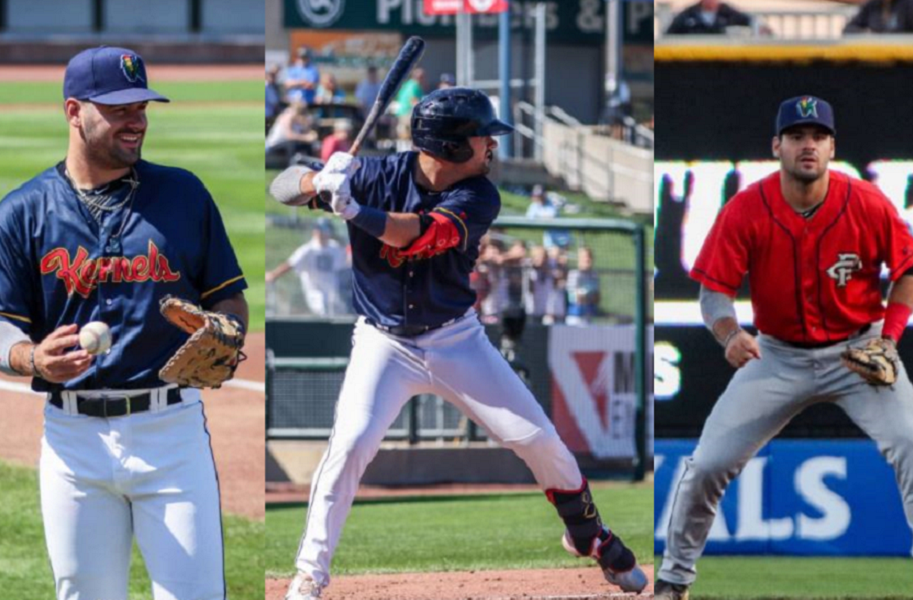 On June 23, 2020, the Minnesota Twins selected Aaron Sabato, a bat-first first baseman out of the University of North Carolina with the 27th overall pick of the MLB draft, and signed him to an over-slot bonus of $2.75M. In his final full season at North Carolina prior to the draft, Sabato hit .343/.453/.696 with 18 home runs in 64 games. Sabato immediately found himself as a top-8 prospect in the Twins organization with optimism around that huge bat. Then came his debut in the pros, when things went south for the big man. In his first season as a professional in 2021, Sabato hit just .202 while striking out in 32% of his plate appearances across his time with Fort Myers and Cedar Rapids. As a result of his poor play, Sabato has crashed hard down prospect boards. On MLB.com, Sabato moved from the 8th ranked Twins prospect prior to the 2021 season down to 18th, where he found himself at the end of the season. While Sabato certainly had a disappointing debut season in pro ball, there are reasons for optimism for the right-handed slugger. First of all, Sabato showed that his plate discipline is legit. In 464 plate appearances in 2021, Sabato walked 19.8% of the time. To put that in perspective, only Juan Soto posted a higher BB% in the MLB last season. The high BB% contributed to Sabato still posting an on-base percentage of .373 despite the low batting average of .202. Additionally, Sabato improved quite a bit following his promotion from Fort Myers to Cedar Rapids. The Low-A Southwest League (Formerly the Florida State League) is notorious for being a league that is tough on batters, and Sabato suffered from that during his time there. However, after he was moved up to High-A Cedar Rapids on August 25, Sabato showed improvement. During his 22 games with the Kernels, Sabato posted a batting line of .253/.402/.613 (1.015 OPS) with eight home runs in 97 plate appearances, after hitting 11 home runs in 367 plate appearances in Low-A. While Sabato maintained a high K% of 33% in High-A, his improved home run rate allowed him to improve his overall slash line greatly. Over the last 23 games of his 2021 season, Sabato crushed nine home runs. His home runs weren’t wall scrapers either, Sabato showed time and time again down the stretch that his power is absolutely legitimate, including center field and opposite-field power. Aaron Sabato has a lot to improve on if he wants to carve out a career as a big leaguer. As a bat-first first baseman with little defensive ability, Sabato will need to be exceptional with the bat in order to stick, and his low batting average and sky-high strikeout percentage weren’t that. At just 22-years-old, though, and still possessing all of that pedigree as a first-round pick, Sabato shouldn’t yet be counted out as a legitimate prospect. Especially with the ability that the right-hander showed down the stretch with plus-plus power and an exceptional ability to draw walks. Sabato certainly needs to cut down on the strikeouts, but the talent is absolutely still there. Let’s not give up yet on Aaron Sabato.
 -
Drafted in the first round less than two years ago, many have moved on from Aaron Sabato as a serious prospect for the Twins. There are still reasons to have hope for the slugging right-hander, though. On June 23, 2020, the Minnesota Twins selected Aaron Sabato, a bat-first first baseman out of the University of North Carolina with the 27th overall pick of the MLB draft, and signed him to an over-slot bonus of $2.75M. In his final full season at North Carolina prior to the draft, Sabato hit .343/.453/.696 with 18 home runs in 64 games. Sabato immediately found himself as a top-8 prospect in the Twins organization with optimism around that huge bat. Then came his debut in the pros, when things went south for the big man. In his first season as a professional in 2021, Sabato hit just .202 while striking out in 32% of his plate appearances across his time with Fort Myers and Cedar Rapids. As a result of his poor play, Sabato has crashed hard down prospect boards. On MLB.com, Sabato moved from the 8th ranked Twins prospect prior to the 2021 season down to 18th, where he found himself at the end of the season. While Sabato certainly had a disappointing debut season in pro ball, there are reasons for optimism for the right-handed slugger. First of all, Sabato showed that his plate discipline is legit. In 464 plate appearances in 2021, Sabato walked 19.8% of the time. To put that in perspective, only Juan Soto posted a higher BB% in the MLB last season. The high BB% contributed to Sabato still posting an on-base percentage of .373 despite the low batting average of .202. Additionally, Sabato improved quite a bit following his promotion from Fort Myers to Cedar Rapids. The Low-A Southwest League (Formerly the Florida State League) is notorious for being a league that is tough on batters, and Sabato suffered from that during his time there. However, after he was moved up to High-A Cedar Rapids on August 25, Sabato showed improvement. During his 22 games with the Kernels, Sabato posted a batting line of .253/.402/.613 (1.015 OPS) with eight home runs in 97 plate appearances, after hitting 11 home runs in 367 plate appearances in Low-A. While Sabato maintained a high K% of 33% in High-A, his improved home run rate allowed him to improve his overall slash line greatly. Over the last 23 games of his 2021 season, Sabato crushed nine home runs. His home runs weren’t wall scrapers either, Sabato showed time and time again down the stretch that his power is absolutely legitimate, including center field and opposite-field power. Aaron Sabato has a lot to improve on if he wants to carve out a career as a big leaguer. As a bat-first first baseman with little defensive ability, Sabato will need to be exceptional with the bat in order to stick, and his low batting average and sky-high strikeout percentage weren’t that. At just 22-years-old, though, and still possessing all of that pedigree as a first-round pick, Sabato shouldn’t yet be counted out as a legitimate prospect. Especially with the ability that the right-hander showed down the stretch with plus-plus power and an exceptional ability to draw walks. Sabato certainly needs to cut down on the strikeouts, but the talent is absolutely still there. Let’s not give up yet on Aaron Sabato. View full article
-
The 2022 MLB Hall of Fame results are in and a former Minnesota Twin has been elected to Cooperstown. Here are the four Ex-Twins who have a shot at making the ballot for 2023. Torii Hunter Resumé - 19 Seasons - 353 Home Runs - 5x All-Star - 9x Gold Glove - 2x Silver Slugger After receiving 5.3% of the vote share in the 2022 voting, former Minnesota Twins center fielder, Torii Hunter, clinched a spot on the 2023 Hall of Fame ballot as a holdover. Hunter had an extremely successful career in the Majors, as evidenced by his 19 seasons in the Big Leagues. Thanks to the multiple all-star appearances and nine Gold Glove awards, Hunter earned enough votes to stay on the ballot. While he certainly won’t make it to Cooperstown, he has the potential to add to his vote share in 2023 with big names such as David Ortiz, Barry Bonds, and Roger Clemens falling off the ballot. Glen Perkins Resumé - 12 Seasons - 3.88 ERA - 3x All-Star - 120 Saves Now that five years have passed since his retirement, Glen Perkins will finally have a shot at making the Hall of Fame ballot for 2023. Perkins provided the rare accomplishment of completing a double-digit year career with the same team as he played all 12 of his MLB seasons with the Minnesota Twins. After struggling mightily as a starting pitcher, the Twins moved Glen Perkins to the bullpen full time in August of 2010 where he thrived. In his career as a reliever, Perkins amassed a 3.09 ERA with 120 saves and three all-star appearances. Perkins certainly won’t stay on the ballot for any period of time, but a ballot appearance is possible. R.A. Dickey Resumé - 15 Seasons - 4.04 ERA - 2012 NL Cy Young - 1x All-Star - 1x Gold Glove While Dickey reached impressive heights, highlighted by a Cy Young Award, many forget that he once played for the Minnesota Twins. Dickey pitched for the Minnesota Twins in 2009 after the Twins signed Dickey to a Minor League contract that offseason. Dickey appeared in 35 games for the Twins, mostly as a reliever, posting a 4.62 ERA in 64 1/3 innings. Dickey was then plucked away from the Twins via the Rule 5 draft in 2010 where he would ultimately end up in New York with the Mets where he used his knuckleball to thrive as a starter, winning the previously mentioned Cy Young in 2012. Although he won the top award for an MLB pitcher, Dickey doesn’t figure to get much run on the 2023 Hall of Fame ballot. J.J. Hardy Resumé - 13 Seasons - 1,488 Hits - 188 Home Runs - 2x All-Star - 3x Gold Glove - 1x Silver Slugger After acquiring J.J. Hardy in exchange for Carlos Goméz ahead of the 2010 season, Hardy played one season in Minnesota where he posted a .268 average with six home runs. Hardy provided excellent defense for the Twins at the shortstop position and was a constant presence in their lineup during their inaugural season at Target Field, after which he was ultimately traded away. Playing 13 seasons in the big leagues at the shortstop position is certainly impressive and might be enough to put him on the Hall of Fame ballot, however similar to the other players, he doesn’t figure to stay on the ballot for long. Do you think any of the above players have a chance to last on the Hall of Fame ballot? What memories do you have of these ex-Twins during their time in Minnesota? Leave a comment below and start the conversation! View full article
-
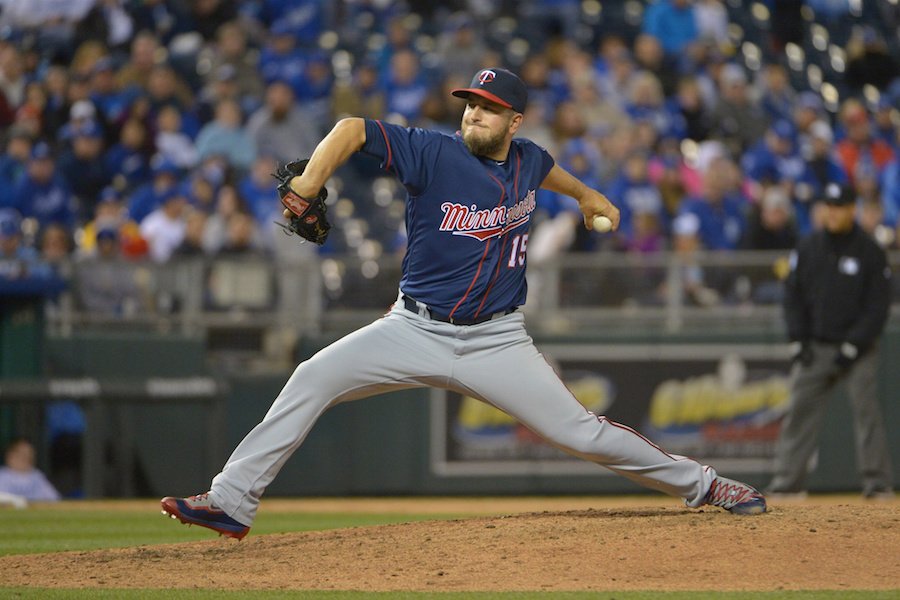 Torii Hunter Resumé - 19 Seasons - 353 Home Runs - 5x All-Star - 9x Gold Glove - 2x Silver Slugger After receiving 5.3% of the vote share in the 2022 voting, former Minnesota Twins center fielder, Torii Hunter, clinched a spot on the 2023 Hall of Fame ballot as a holdover. Hunter had an extremely successful career in the Majors, as evidenced by his 19 seasons in the Big Leagues. Thanks to the multiple all-star appearances and nine Gold Glove awards, Hunter earned enough votes to stay on the ballot. While he certainly won’t make it to Cooperstown, he has the potential to add to his vote share in 2023 with big names such as David Ortiz, Barry Bonds, and Roger Clemens falling off the ballot. Glen Perkins Resumé - 12 Seasons - 3.88 ERA - 3x All-Star - 120 Saves Now that five years have passed since his retirement, Glen Perkins will finally have a shot at making the Hall of Fame ballot for 2023. Perkins provided the rare accomplishment of completing a double-digit year career with the same team as he played all 12 of his MLB seasons with the Minnesota Twins. After struggling mightily as a starting pitcher, the Twins moved Glen Perkins to the bullpen full time in August of 2010 where he thrived. In his career as a reliever, Perkins amassed a 3.09 ERA with 120 saves and three all-star appearances. Perkins certainly won’t stay on the ballot for any period of time, but a ballot appearance is possible. R.A. Dickey Resumé - 15 Seasons - 4.04 ERA - 2012 NL Cy Young - 1x All-Star - 1x Gold Glove While Dickey reached impressive heights, highlighted by a Cy Young Award, many forget that he once played for the Minnesota Twins. Dickey pitched for the Minnesota Twins in 2009 after the Twins signed Dickey to a Minor League contract that offseason. Dickey appeared in 35 games for the Twins, mostly as a reliever, posting a 4.62 ERA in 64 1/3 innings. Dickey was then plucked away from the Twins via the Rule 5 draft in 2010 where he would ultimately end up in New York with the Mets where he used his knuckleball to thrive as a starter, winning the previously mentioned Cy Young in 2012. Although he won the top award for an MLB pitcher, Dickey doesn’t figure to get much run on the 2023 Hall of Fame ballot. J.J. Hardy Resumé - 13 Seasons - 1,488 Hits - 188 Home Runs - 2x All-Star - 3x Gold Glove - 1x Silver Slugger After acquiring J.J. Hardy in exchange for Carlos Goméz ahead of the 2010 season, Hardy played one season in Minnesota where he posted a .268 average with six home runs. Hardy provided excellent defense for the Twins at the shortstop position and was a constant presence in their lineup during their inaugural season at Target Field, after which he was ultimately traded away. Playing 13 seasons in the big leagues at the shortstop position is certainly impressive and might be enough to put him on the Hall of Fame ballot, however similar to the other players, he doesn’t figure to stay on the ballot for long. Do you think any of the above players have a chance to last on the Hall of Fame ballot? What memories do you have of these ex-Twins during their time in Minnesota? Leave a comment below and start the conversation!
- 16 comments
-
- 1
-
-
- jj hardy
- torii hunter
- (and 2 more)
-
Both are Minnesota Twins legends. Both are Hall of Famers. But who was better: Rod Carew or Kirby Puckett? If you look at any ranking of the best Minnesota Twins players of all time, you’re going to find Rod Carew and Kirby Puckett firmly locked into the top five of that list. Both Carew and Puckett were legends whose names will be remembered forever. Today, we will dive into their careers and determine, once and for all, who had the better career. The Case for Rod The case for Rod Carew having a better overall career than Kirby Puckett starts with his numbers at the plate. Over the course of his career, Carew posted a higher batting average (.328 vs .318) and on-base percentage (.393 vs. .360) than Puckett. Carew’s career batting average ranks 30th all-time, and his seven career batting titles are tied for the fourth most in MLB history. Carew amassed over 3,000 hits in his MLB career, ranking 26th in MLB history. Even when accounting for era, Carew was still the better batter as evidenced by his career OPS+ of 131 compared to Puckett’s 124. On the bases, Carew also has the edge. Over his 19 year career, Carew amassed 353 stolen bases, nearly triple the number of career steals as Puckett. Another area where Carew bests Puckett is his longevity. While Puckett’s career was cut short (through no fault of his own), Carew was able to play at an extremely high level for 19 seasons in the Big Leagues. Additionally, Carew reached a higher individual peak than Puckett ever did, marked by the MVP award that he won in 1977 as a member of the Minnesota Twins. In this season, Carew led all of baseball with a .388 batting average, .449 on-base percentage, and 1.029 OPS. Carew led the majors that season in hits (239), runs (128), and triples (178). Carew was the standard of consistency during his Major League Baseball career. Carew was an all-star in 18 consecutive seasons, eclipsed a .300 batting average in 15 consecutive seasons, won four consecutive batting titles, and played in at least 140 games in eight consecutive seasons. Carew played for two different franchises, earning all-star appearances and MVP votes with each team. The Case for Kirby While Rod Carew bests Kirby Puckett at the plate, Kirby more than held his own on offense. Puckett led the Majors in batting average in 1989 and led baseball in hits on four different occasions and total bases on two occasions. Puckett didn’t break any home run records, but consistently put the ball in play and drove in runs, leading the Majors in RBI in his penultimate season in 1994. A huge mark in Kirby’s favor over Carew comes in the field where Puckett was a wizard with his glove at one of the most important defensive positions in baseball, centerfield. Over his 10-year career, Puckett earned the Gold Glove award for best center fielder in baseball six times, including four consecutive from 1986-1989. While Carew wasn’t a butcher in the field, he certainly wasn’t dominant and played a position in second base that just doesn’t bring the importance of center field. Where Kirby absolutely set himself apart from Rod Carew came in his performance in the absolute biggest of moments. Starting off with just clutch performance, Kirby was about as clutch as they come. In high leverage situations over the course of his career, Puckett posted a career OPS of .863 in 1,400 plate appearances compared to Carew’s .823 OPS in 2,095 plate appearances. Moving into the postseason numbers, the difference between the two becomes even more stark. Puckett played in four postseason series in his career, winning all four series en route to two World Series titles. In those four playoff series, Puckett amassed a .897 OPS, highlighted by a ridiculous .913 OPS across his world series appearances in 1987 and 1991. Compare that to Carew who was 0-4 in the four playoff series of his career where he hit just .220 with four extra-base hits. The moment that all Twins fans will remember from Kirby Puckett, and the absolute highlight of a Hall of Fame career was his performance in Game 6 of the 1991 World Series that single-handedly kept the Twins’ playoff hopes alive and sent them to Game 7 where they would eventually win their second title. In this game, Puckett hit a triple in the first inning, robbed Ron Gant of extra-bases in front of the Plexiglass wall in the third inning, and then won the game in the bottom of the 11th inning when he launched a game-winning, walk-off home run in front of the Twins’ faithful. The Verdict Kirby Puckett revitalized an entire generation of Minnesota Twins fans through his "clutchness" and late-game heroics. Puckett’s joy for the game was contagious and his leadership mindset and impact in the community made him a fan favorite for many. Rod Carew, however, had a better career than Kirby. As previously mentioned, Rod Carew beats out Kirby Puckett in just about every offensive category. Carew similarly has the edge over Puckett in terms of value-added. Over his 19-year career, Carew contributed 72.3 fWAR, 3.81 per season compared to Puckett providing 44.9 fWAR over his 12-year career, 3.74 per season. Carew accumulated more individual hardware with his all-star games, MVP awards, and batting titles. Whether fair or not, Puckett is hurt by his career being cut short. Only playing in 12 seasons, Puckett just didn’t have the runway to collect the number of accolades that Carew did. It’s entirely possible that if Puckett didn’t contract glaucoma, he would have gone on to have a 20-year career and rack up MVP awards and all-star game appearances, but with only 12 years, he just didn’t do enough to beat out Carew for the better career. Who do you think had the better overall career between Rod Carew and Kirby Puckett, leave a comment below and join the conversation! View full article
-
.png.d15a1665840055f0ae678c8b77591a25.png) If you look at any ranking of the best Minnesota Twins players of all time, you’re going to find Rod Carew and Kirby Puckett firmly locked into the top five of that list. Both Carew and Puckett were legends whose names will be remembered forever. Today, we will dive into their careers and determine, once and for all, who had the better career. The Case for Rod The case for Rod Carew having a better overall career than Kirby Puckett starts with his numbers at the plate. Over the course of his career, Carew posted a higher batting average (.328 vs .318) and on-base percentage (.393 vs. .360) than Puckett. Carew’s career batting average ranks 30th all-time, and his seven career batting titles are tied for the fourth most in MLB history. Carew amassed over 3,000 hits in his MLB career, ranking 26th in MLB history. Even when accounting for era, Carew was still the better batter as evidenced by his career OPS+ of 131 compared to Puckett’s 124. On the bases, Carew also has the edge. Over his 19 year career, Carew amassed 353 stolen bases, nearly triple the number of career steals as Puckett. Another area where Carew bests Puckett is his longevity. While Puckett’s career was cut short (through no fault of his own), Carew was able to play at an extremely high level for 19 seasons in the Big Leagues. Additionally, Carew reached a higher individual peak than Puckett ever did, marked by the MVP award that he won in 1977 as a member of the Minnesota Twins. In this season, Carew led all of baseball with a .388 batting average, .449 on-base percentage, and 1.029 OPS. Carew led the majors that season in hits (239), runs (128), and triples (178). Carew was the standard of consistency during his Major League Baseball career. Carew was an all-star in 18 consecutive seasons, eclipsed a .300 batting average in 15 consecutive seasons, won four consecutive batting titles, and played in at least 140 games in eight consecutive seasons. Carew played for two different franchises, earning all-star appearances and MVP votes with each team. The Case for Kirby While Rod Carew bests Kirby Puckett at the plate, Kirby more than held his own on offense. Puckett led the Majors in batting average in 1989 and led baseball in hits on four different occasions and total bases on two occasions. Puckett didn’t break any home run records, but consistently put the ball in play and drove in runs, leading the Majors in RBI in his penultimate season in 1994. A huge mark in Kirby’s favor over Carew comes in the field where Puckett was a wizard with his glove at one of the most important defensive positions in baseball, centerfield. Over his 10-year career, Puckett earned the Gold Glove award for best center fielder in baseball six times, including four consecutive from 1986-1989. While Carew wasn’t a butcher in the field, he certainly wasn’t dominant and played a position in second base that just doesn’t bring the importance of center field. Where Kirby absolutely set himself apart from Rod Carew came in his performance in the absolute biggest of moments. Starting off with just clutch performance, Kirby was about as clutch as they come. In high leverage situations over the course of his career, Puckett posted a career OPS of .863 in 1,400 plate appearances compared to Carew’s .823 OPS in 2,095 plate appearances. Moving into the postseason numbers, the difference between the two becomes even more stark. Puckett played in four postseason series in his career, winning all four series en route to two World Series titles. In those four playoff series, Puckett amassed a .897 OPS, highlighted by a ridiculous .913 OPS across his world series appearances in 1987 and 1991. Compare that to Carew who was 0-4 in the four playoff series of his career where he hit just .220 with four extra-base hits. The moment that all Twins fans will remember from Kirby Puckett, and the absolute highlight of a Hall of Fame career was his performance in Game 6 of the 1991 World Series that single-handedly kept the Twins’ playoff hopes alive and sent them to Game 7 where they would eventually win their second title. In this game, Puckett hit a triple in the first inning, robbed Ron Gant of extra-bases in front of the Plexiglass wall in the third inning, and then won the game in the bottom of the 11th inning when he launched a game-winning, walk-off home run in front of the Twins’ faithful. The Verdict Kirby Puckett revitalized an entire generation of Minnesota Twins fans through his "clutchness" and late-game heroics. Puckett’s joy for the game was contagious and his leadership mindset and impact in the community made him a fan favorite for many. Rod Carew, however, had a better career than Kirby. As previously mentioned, Rod Carew beats out Kirby Puckett in just about every offensive category. Carew similarly has the edge over Puckett in terms of value-added. Over his 19-year career, Carew contributed 72.3 fWAR, 3.81 per season compared to Puckett providing 44.9 fWAR over his 12-year career, 3.74 per season. Carew accumulated more individual hardware with his all-star games, MVP awards, and batting titles. Whether fair or not, Puckett is hurt by his career being cut short. Only playing in 12 seasons, Puckett just didn’t have the runway to collect the number of accolades that Carew did. It’s entirely possible that if Puckett didn’t contract glaucoma, he would have gone on to have a 20-year career and rack up MVP awards and all-star game appearances, but with only 12 years, he just didn’t do enough to beat out Carew for the better career. Who do you think had the better overall career between Rod Carew and Kirby Puckett, leave a comment below and join the conversation!
If you look at any ranking of the best Minnesota Twins players of all time, you’re going to find Rod Carew and Kirby Puckett firmly locked into the top five of that list. Both Carew and Puckett were legends whose names will be remembered forever. Today, we will dive into their careers and determine, once and for all, who had the better career. The Case for Rod The case for Rod Carew having a better overall career than Kirby Puckett starts with his numbers at the plate. Over the course of his career, Carew posted a higher batting average (.328 vs .318) and on-base percentage (.393 vs. .360) than Puckett. Carew’s career batting average ranks 30th all-time, and his seven career batting titles are tied for the fourth most in MLB history. Carew amassed over 3,000 hits in his MLB career, ranking 26th in MLB history. Even when accounting for era, Carew was still the better batter as evidenced by his career OPS+ of 131 compared to Puckett’s 124. On the bases, Carew also has the edge. Over his 19 year career, Carew amassed 353 stolen bases, nearly triple the number of career steals as Puckett. Another area where Carew bests Puckett is his longevity. While Puckett’s career was cut short (through no fault of his own), Carew was able to play at an extremely high level for 19 seasons in the Big Leagues. Additionally, Carew reached a higher individual peak than Puckett ever did, marked by the MVP award that he won in 1977 as a member of the Minnesota Twins. In this season, Carew led all of baseball with a .388 batting average, .449 on-base percentage, and 1.029 OPS. Carew led the majors that season in hits (239), runs (128), and triples (178). Carew was the standard of consistency during his Major League Baseball career. Carew was an all-star in 18 consecutive seasons, eclipsed a .300 batting average in 15 consecutive seasons, won four consecutive batting titles, and played in at least 140 games in eight consecutive seasons. Carew played for two different franchises, earning all-star appearances and MVP votes with each team. The Case for Kirby While Rod Carew bests Kirby Puckett at the plate, Kirby more than held his own on offense. Puckett led the Majors in batting average in 1989 and led baseball in hits on four different occasions and total bases on two occasions. Puckett didn’t break any home run records, but consistently put the ball in play and drove in runs, leading the Majors in RBI in his penultimate season in 1994. A huge mark in Kirby’s favor over Carew comes in the field where Puckett was a wizard with his glove at one of the most important defensive positions in baseball, centerfield. Over his 10-year career, Puckett earned the Gold Glove award for best center fielder in baseball six times, including four consecutive from 1986-1989. While Carew wasn’t a butcher in the field, he certainly wasn’t dominant and played a position in second base that just doesn’t bring the importance of center field. Where Kirby absolutely set himself apart from Rod Carew came in his performance in the absolute biggest of moments. Starting off with just clutch performance, Kirby was about as clutch as they come. In high leverage situations over the course of his career, Puckett posted a career OPS of .863 in 1,400 plate appearances compared to Carew’s .823 OPS in 2,095 plate appearances. Moving into the postseason numbers, the difference between the two becomes even more stark. Puckett played in four postseason series in his career, winning all four series en route to two World Series titles. In those four playoff series, Puckett amassed a .897 OPS, highlighted by a ridiculous .913 OPS across his world series appearances in 1987 and 1991. Compare that to Carew who was 0-4 in the four playoff series of his career where he hit just .220 with four extra-base hits. The moment that all Twins fans will remember from Kirby Puckett, and the absolute highlight of a Hall of Fame career was his performance in Game 6 of the 1991 World Series that single-handedly kept the Twins’ playoff hopes alive and sent them to Game 7 where they would eventually win their second title. In this game, Puckett hit a triple in the first inning, robbed Ron Gant of extra-bases in front of the Plexiglass wall in the third inning, and then won the game in the bottom of the 11th inning when he launched a game-winning, walk-off home run in front of the Twins’ faithful. The Verdict Kirby Puckett revitalized an entire generation of Minnesota Twins fans through his "clutchness" and late-game heroics. Puckett’s joy for the game was contagious and his leadership mindset and impact in the community made him a fan favorite for many. Rod Carew, however, had a better career than Kirby. As previously mentioned, Rod Carew beats out Kirby Puckett in just about every offensive category. Carew similarly has the edge over Puckett in terms of value-added. Over his 19-year career, Carew contributed 72.3 fWAR, 3.81 per season compared to Puckett providing 44.9 fWAR over his 12-year career, 3.74 per season. Carew accumulated more individual hardware with his all-star games, MVP awards, and batting titles. Whether fair or not, Puckett is hurt by his career being cut short. Only playing in 12 seasons, Puckett just didn’t have the runway to collect the number of accolades that Carew did. It’s entirely possible that if Puckett didn’t contract glaucoma, he would have gone on to have a 20-year career and rack up MVP awards and all-star game appearances, but with only 12 years, he just didn’t do enough to beat out Carew for the better career. Who do you think had the better overall career between Rod Carew and Kirby Puckett, leave a comment below and join the conversation! -
On Monday, we identified three realistic free agent targets for the Minnesota Twins’ bullpen. Today, we’ll focus on three realistic reliever trade targets. Trades are a good route for baseball teams to acquire talent in that they can bring back quality players at a cost-controlled rate that free agency can’t offer. While there is a good argument for why the Minnesota Twins should avoid making a trade this offseason, the three relievers below figure to bring value to the Minnesota Twins without costing much prospect capital to be acquired. Target #1: Chris Stratton, Pittsburgh Pirates After struggling in a starting pitcher role over the first few years of his career, Stratton moved into a reliever role full time after being acquired by the Pittsburgh Pirates in 2019. Since that time, Stratton owns a 3.69 ERA and 9.9 K/9 in 156 innings. Stratton is a ground ball pitcher who has found success with high spin rates on his fastball and curveball, landing in the 99th and 98th percentile on those respective pitches, the type of reliever who can come into jams with runners on and get out of them with double plays. The right hander still boasts two more years of team control via arbitration. Target #2: Cole Sulser, Baltimore Orioles Hiding on the lowly Orioles, Cole Sulser was quietly one of the better relievers in the American League in 2021. In 63 innings last season, Sulser posted a 3.71 ERA with a K/9 of 9.3 while walking just over three batters per nine innings. The righty boasts an impressive changeup, which allowed him to neutralize left handed hitters last season, allowing them to hit just .186 on the year. Sulser is still pre-arbitration, which means he will come with an affordable price tag over the next handful of seasons. Target #3: Lou Trivino, Oakland Athletics The Oakland Athletics are reportedly open for business as they look to shed salary and right handed reliever Lou Trivino is one of their more intriguing names. In 72 1/3 innings last season, Trivino posted a 3.18 ERA and showed that he has the chops to close ball games, earning 22 saves. While Trivino doesn’t have big time strikeout numbers (9.0 career K/9), he does throw a fastball in the mid-to-upper 90s and specializes in limiting contact, with an opponent exit velocity of just 87.4 MPH. Trivino is set to earn about $3M in 2022 and still has two more years of arbitration after that, making him an intriguing trade target for the Twins. Which of the above names would you be most interested in seeing the Twins go after in a trade? Are there any other potential trade targets not listed? Leave a comment below and start the conversation! MORE FROM TWINS DAILY — Latest Twins coverage from our writers — Recent Twins discussion in our forums — Follow Twins Daily via Twitter, Facebook or email View full article
-
3 Realistic Trade Targets for the Minnesota Twins' Bullpen
Matthew Taylor posted an article in Twins
 Trades are a good route for baseball teams to acquire talent in that they can bring back quality players at a cost-controlled rate that free agency can’t offer. While there is a good argument for why the Minnesota Twins should avoid making a trade this offseason, the three relievers below figure to bring value to the Minnesota Twins without costing much prospect capital to be acquired. Target #1: Chris Stratton, Pittsburgh Pirates After struggling in a starting pitcher role over the first few years of his career, Stratton moved into a reliever role full time after being acquired by the Pittsburgh Pirates in 2019. Since that time, Stratton owns a 3.69 ERA and 9.9 K/9 in 156 innings. Stratton is a ground ball pitcher who has found success with high spin rates on his fastball and curveball, landing in the 99th and 98th percentile on those respective pitches, the type of reliever who can come into jams with runners on and get out of them with double plays. The right hander still boasts two more years of team control via arbitration. Target #2: Cole Sulser, Baltimore Orioles Hiding on the lowly Orioles, Cole Sulser was quietly one of the better relievers in the American League in 2021. In 63 innings last season, Sulser posted a 3.71 ERA with a K/9 of 9.3 while walking just over three batters per nine innings. The righty boasts an impressive changeup, which allowed him to neutralize left handed hitters last season, allowing them to hit just .186 on the year. Sulser is still pre-arbitration, which means he will come with an affordable price tag over the next handful of seasons. Target #3: Lou Trivino, Oakland Athletics The Oakland Athletics are reportedly open for business as they look to shed salary and right handed reliever Lou Trivino is one of their more intriguing names. In 72 1/3 innings last season, Trivino posted a 3.18 ERA and showed that he has the chops to close ball games, earning 22 saves. While Trivino doesn’t have big time strikeout numbers (9.0 career K/9), he does throw a fastball in the mid-to-upper 90s and specializes in limiting contact, with an opponent exit velocity of just 87.4 MPH. Trivino is set to earn about $3M in 2022 and still has two more years of arbitration after that, making him an intriguing trade target for the Twins. Which of the above names would you be most interested in seeing the Twins go after in a trade? Are there any other potential trade targets not listed? Leave a comment below and start the conversation! MORE FROM TWINS DAILY — Latest Twins coverage from our writers — Recent Twins discussion in our forums — Follow Twins Daily via Twitter, Facebook or email
- 11 comments
-
- 2
-
-
- lou trivino
- chris stratton
- (and 1 more)
-
3 Realistic Free Agent Targets for the Minnesota Twins' Bullpen
Matthew Taylor posted an article in Twins
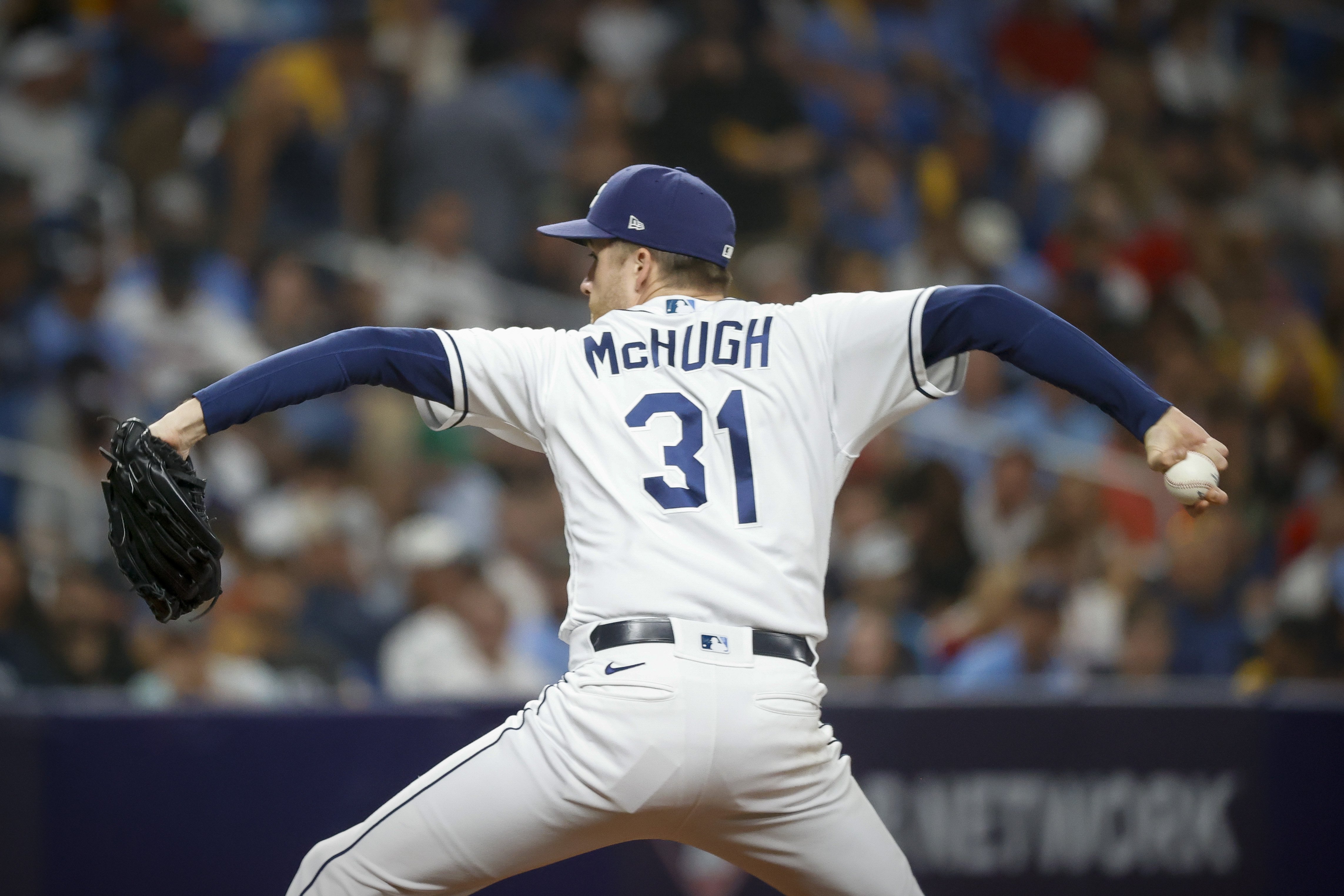 It’s no secret that the Minnesota Twins’ bullpen struggled in 2021. Over the course of the season, the group of relievers finished 12th in the American League in both ERA and fWAR. They did improve down the stretch, however, finishing 3rd in ERA from August 1st through the end of the season. Nevertheless, there are still holes to fill in the bullpen as Taylor Rogers, Tyler Duffey, Caleb Thielbar and Jorge Alcala are currently the only locks to make the opening day roster. In identifying free agent targets for the bullpen, we want to be sure to look at targets that history has shown us are realistic options that the Falvine regime would consider signing. Since taking over the Minnesota Twins’ front office after the 2016 season, the Twins have only ever signed one reliever to a multi-year contract (Addison Reed, 2017) and have never spent more than $6M on a reliever on a one-year deal (Alexander Colomé, 2021). For this exercise, we will be looking at free agent relief pitchers who figure to sign a one-year contract for around $7M or less. Target #1: Collin McHugh After opting out of the 2020 season, right hander, Collin McHugh just posted the best season of his career in 2021 with the Tampa Bay Rays. In 37 appearances last season, McHugh posted a 1.55 ERA and a sub-one WHIP. Additionally, McHugh bumped his K/9 up to double digits in 2021 for just the second time in his career. The key to McHugh’s success is his slider, which he threw on 53% of his pitches in 2021, allowing opponents to hit just .177 against the pitch. The Twins’ front office has shown an affinity for slider-tossing right handers, making McHugh a perfect fit for the 2022 Twins. Target #2: Ryan Tepera Although not a household name, Ryan Tepera has been a consistently solid reliever over his seven year career, owning a career 3.48 ERA and only posting an ERA over 4.00 in one of his seven seasons. 2021 was the best season of Tepera’s career, with an ERA of 2.79. Tepera is another slider-heavy right hander who has had success against righties and lefties. At 34-years-old, the Twins should be able to bring in Tepera on a one year deal, which would make a lot of sense for a bullpen that could use more right-handed depth. Target #3: Brad Boxberger After a rough 2019 season with Kansas City where he posted a 5.40 ERA, Brad Boxberger has put together back-to-back excellent seasons with Miami and Milwaukee, posting a combined ERA of 3.27 with an outstanding K/9 of 11. Boxberger relies on a mid-90s fastball with a devastating slider that generates a 35% whiff rate. When he limits walks, Boxberger can be a high leverage right handed arm, and figures to go for a salary that is in line with what the Falvey-regime has shown they are comfortable signing. Which of the three reliever targets is most intriguing to you? Are there any other realistic reliever targets that weren’t noted here? Leave a comment below and start the conversation!
 -
Much has been made about starting pitching and shortstop needs this offseason for the Minnesota Twins, however there are still holes in the bullpen that need to be filled. Here are some options for the Twins to target on the free agency market. It’s no secret that the Minnesota Twins’ bullpen struggled in 2021. Over the course of the season, the group of relievers finished 12th in the American League in both ERA and fWAR. They did improve down the stretch, however, finishing 3rd in ERA from August 1st through the end of the season. Nevertheless, there are still holes to fill in the bullpen as Taylor Rogers, Tyler Duffey, Caleb Thielbar and Jorge Alcala are currently the only locks to make the opening day roster. In identifying free agent targets for the bullpen, we want to be sure to look at targets that history has shown us are realistic options that the Falvine regime would consider signing. Since taking over the Minnesota Twins’ front office after the 2016 season, the Twins have only ever signed one reliever to a multi-year contract (Addison Reed, 2017) and have never spent more than $6M on a reliever on a one-year deal (Alexander Colomé, 2021). For this exercise, we will be looking at free agent relief pitchers who figure to sign a one-year contract for around $7M or less. Target #1: Collin McHugh After opting out of the 2020 season, right hander, Collin McHugh just posted the best season of his career in 2021 with the Tampa Bay Rays. In 37 appearances last season, McHugh posted a 1.55 ERA and a sub-one WHIP. Additionally, McHugh bumped his K/9 up to double digits in 2021 for just the second time in his career. The key to McHugh’s success is his slider, which he threw on 53% of his pitches in 2021, allowing opponents to hit just .177 against the pitch. The Twins’ front office has shown an affinity for slider-tossing right handers, making McHugh a perfect fit for the 2022 Twins. Target #2: Ryan Tepera Although not a household name, Ryan Tepera has been a consistently solid reliever over his seven year career, owning a career 3.48 ERA and only posting an ERA over 4.00 in one of his seven seasons. 2021 was the best season of Tepera’s career, with an ERA of 2.79. Tepera is another slider-heavy right hander who has had success against righties and lefties. At 34-years-old, the Twins should be able to bring in Tepera on a one year deal, which would make a lot of sense for a bullpen that could use more right-handed depth. Target #3: Brad Boxberger After a rough 2019 season with Kansas City where he posted a 5.40 ERA, Brad Boxberger has put together back-to-back excellent seasons with Miami and Milwaukee, posting a combined ERA of 3.27 with an outstanding K/9 of 11. Boxberger relies on a mid-90s fastball with a devastating slider that generates a 35% whiff rate. When he limits walks, Boxberger can be a high leverage right handed arm, and figures to go for a salary that is in line with what the Falvey-regime has shown they are comfortable signing. Which of the three reliever targets is most intriguing to you? Are there any other realistic reliever targets that weren’t noted here? Leave a comment below and start the conversation! View full article
-
The Minnesota Twins' need for starting pitching has been well-documented, but what if the Twins pivoted and went all-in on offense? The Minnesota Twins have long struggled to acquire top-end starting pitching. This was the case with prior Twins’ front offices and has been the case under Falvey/Levine’s leadership. Whether it is because of injuries (Kenta Maeda) or poor evaluation (J.A. Happ), betting on starting pitchers is extremely risky as the Twins have seen play out season after season. After getting largely shut out from the first wave of free agent starting pitchers, the Twins have now found themselves in a spot where they need to sign Carlos Rodón, trade for starting pitching (they shouldn’t), or be in for another long season with a better shot of fighting for the number one pick in the draft than a playoff spot. But what if there is another direction that the Twins could go? What if the Twins went all in on offense? While there is a shortage of impact starting pitching left on the free agency market, there are no shortage of bats. This surplus of bats on the market could present an opportunity for the Twins to pivot, settle for back-of-the-rotation arms, and instead go heavy on bats to bolster up what is already a strength of the Minnesota Twins. Names like Trevor Story, Kris Bryant, Nicolas Castellanos, and Michael Conforto are all all-star bats and are all still available as free agents. Not only is there a nice supply of big bats left on the free agent market, but the Twins have a need to fill multiple holes in their lineup as well, including shortstop, outfield and (potentially) designated hitter. The Minnesota Twins committed to Byron Buxton this offseason with a seven year contract. Additionally, the Twins have the young bats of Alex Kirilloff, Trevor Larnach, Royce Lewis and Austin Martin ready to contribute for the next decade as well. An intriguing path for the Minnesota Twins to take would be for them to sign even more bats, completely lean into their offense and take on the identity of a bat-first team that will out-hit all of its opponents for years to come. Assuming that the Twins have $55M to spend this offseason, they would have the funds to bring in two superstar bats this offseason like Trevor Story and Kris Bryant. They could then fill out the rest of their team with fringe starting pitching, or trade Max Kepler and a marginal prospect for a moldable arm. Yes, this would leave the Twins with quite the shaky starting rotation, but with a lineup core of Trevor Story, Kris Bryant, Byron Buxton, and Alex Kirilloff, on top of Josh Donaldson, Luis Arraez and Jorge Polanco. John Bonnes could be pitching for the Minnesota Twins and they’d be in good shape with that potent lineup. I mean..just look at this team: You hear about football teams that take on an offensive identity and out-score their opponents in order to win games, but you hardly find that in baseball. The Twins are in a position that they could go all in on offense and outscore the rest of the league by producing fireworks all Summer at Target Field. What do you think? View full article
- 31 replies
-
- 1
-
-
- trevor story
- kris bryant
- (and 3 more)
-
.png.88b7ce82f6b6650b366416c391e8fea7.png) The Minnesota Twins have long struggled to acquire top-end starting pitching. This was the case with prior Twins’ front offices and has been the case under Falvey/Levine’s leadership. Whether it is because of injuries (Kenta Maeda) or poor evaluation (J.A. Happ), betting on starting pitchers is extremely risky as the Twins have seen play out season after season. After getting largely shut out from the first wave of free agent starting pitchers, the Twins have now found themselves in a spot where they need to sign Carlos Rodón, trade for starting pitching (they shouldn’t), or be in for another long season with a better shot of fighting for the number one pick in the draft than a playoff spot. But what if there is another direction that the Twins could go? What if the Twins went all in on offense? While there is a shortage of impact starting pitching left on the free agency market, there are no shortage of bats. This surplus of bats on the market could present an opportunity for the Twins to pivot, settle for back-of-the-rotation arms, and instead go heavy on bats to bolster up what is already a strength of the Minnesota Twins. Names like Trevor Story, Kris Bryant, Nicolas Castellanos, and Michael Conforto are all all-star bats and are all still available as free agents. Not only is there a nice supply of big bats left on the free agent market, but the Twins have a need to fill multiple holes in their lineup as well, including shortstop, outfield and (potentially) designated hitter. The Minnesota Twins committed to Byron Buxton this offseason with a seven year contract. Additionally, the Twins have the young bats of Alex Kirilloff, Trevor Larnach, Royce Lewis and Austin Martin ready to contribute for the next decade as well. An intriguing path for the Minnesota Twins to take would be for them to sign even more bats, completely lean into their offense and take on the identity of a bat-first team that will out-hit all of its opponents for years to come. Assuming that the Twins have $55M to spend this offseason, they would have the funds to bring in two superstar bats this offseason like Trevor Story and Kris Bryant. They could then fill out the rest of their team with fringe starting pitching, or trade Max Kepler and a marginal prospect for a moldable arm. Yes, this would leave the Twins with quite the shaky starting rotation, but with a lineup core of Trevor Story, Kris Bryant, Byron Buxton, and Alex Kirilloff, on top of Josh Donaldson, Luis Arraez and Jorge Polanco. John Bonnes could be pitching for the Minnesota Twins and they’d be in good shape with that potent lineup. I mean..just look at this team: You hear about football teams that take on an offensive identity and out-score their opponents in order to win games, but you hardly find that in baseball. The Twins are in a position that they could go all in on offense and outscore the rest of the league by producing fireworks all Summer at Target Field. What do you think?
The Minnesota Twins have long struggled to acquire top-end starting pitching. This was the case with prior Twins’ front offices and has been the case under Falvey/Levine’s leadership. Whether it is because of injuries (Kenta Maeda) or poor evaluation (J.A. Happ), betting on starting pitchers is extremely risky as the Twins have seen play out season after season. After getting largely shut out from the first wave of free agent starting pitchers, the Twins have now found themselves in a spot where they need to sign Carlos Rodón, trade for starting pitching (they shouldn’t), or be in for another long season with a better shot of fighting for the number one pick in the draft than a playoff spot. But what if there is another direction that the Twins could go? What if the Twins went all in on offense? While there is a shortage of impact starting pitching left on the free agency market, there are no shortage of bats. This surplus of bats on the market could present an opportunity for the Twins to pivot, settle for back-of-the-rotation arms, and instead go heavy on bats to bolster up what is already a strength of the Minnesota Twins. Names like Trevor Story, Kris Bryant, Nicolas Castellanos, and Michael Conforto are all all-star bats and are all still available as free agents. Not only is there a nice supply of big bats left on the free agent market, but the Twins have a need to fill multiple holes in their lineup as well, including shortstop, outfield and (potentially) designated hitter. The Minnesota Twins committed to Byron Buxton this offseason with a seven year contract. Additionally, the Twins have the young bats of Alex Kirilloff, Trevor Larnach, Royce Lewis and Austin Martin ready to contribute for the next decade as well. An intriguing path for the Minnesota Twins to take would be for them to sign even more bats, completely lean into their offense and take on the identity of a bat-first team that will out-hit all of its opponents for years to come. Assuming that the Twins have $55M to spend this offseason, they would have the funds to bring in two superstar bats this offseason like Trevor Story and Kris Bryant. They could then fill out the rest of their team with fringe starting pitching, or trade Max Kepler and a marginal prospect for a moldable arm. Yes, this would leave the Twins with quite the shaky starting rotation, but with a lineup core of Trevor Story, Kris Bryant, Byron Buxton, and Alex Kirilloff, on top of Josh Donaldson, Luis Arraez and Jorge Polanco. John Bonnes could be pitching for the Minnesota Twins and they’d be in good shape with that potent lineup. I mean..just look at this team: You hear about football teams that take on an offensive identity and out-score their opponents in order to win games, but you hardly find that in baseball. The Twins are in a position that they could go all in on offense and outscore the rest of the league by producing fireworks all Summer at Target Field. What do you think?- 31 comments
-
- 6
-

-
-
- trevor story
- kris bryant
- (and 3 more)
-
5 Takeaways from the Minnesota Twins' 2022 ZiPS Projections
Matthew Taylor posted an article in Twins
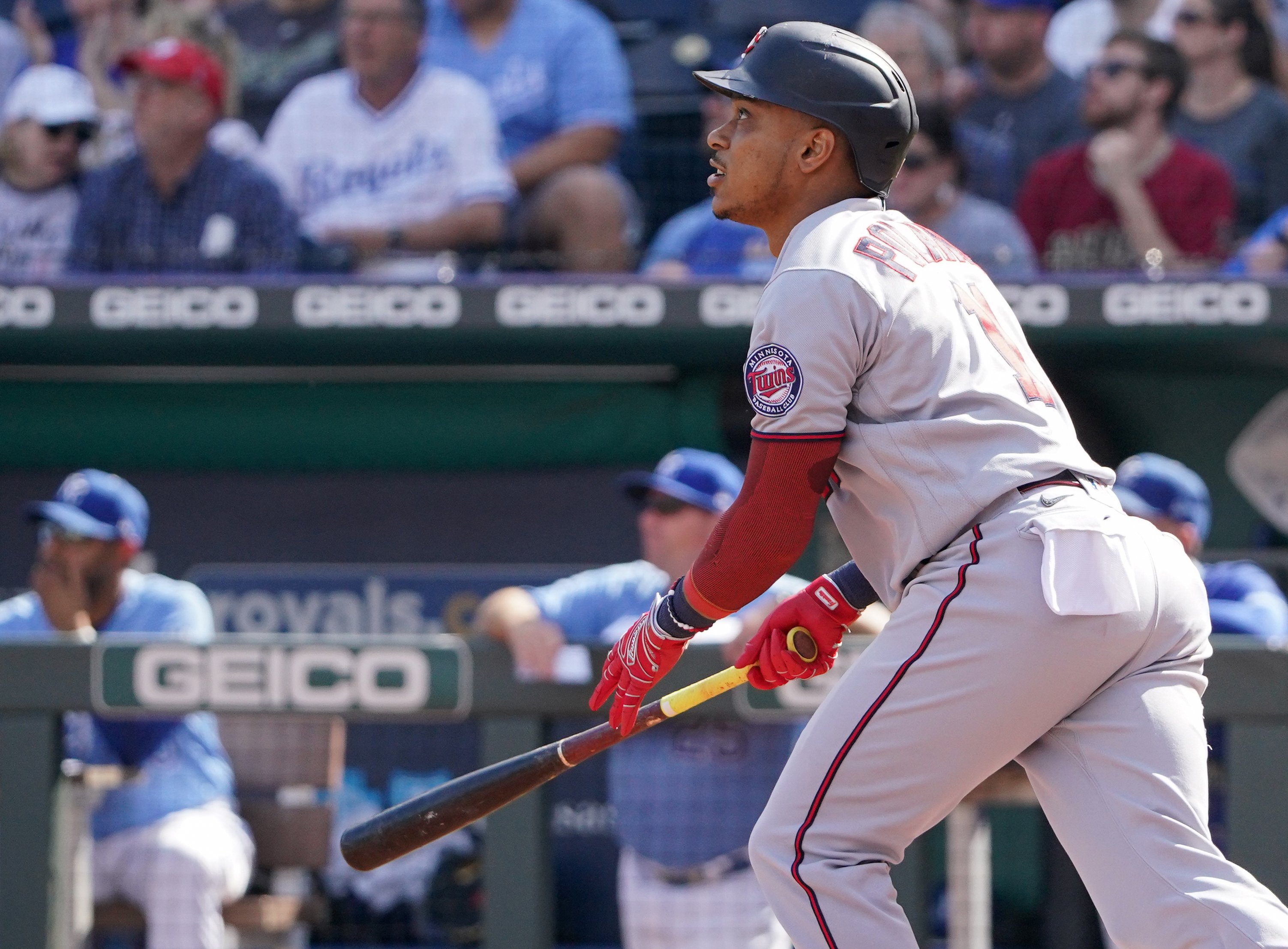 ZiPS is a computer projection system that was created by senior writer at Fangraphs, Dan Szymborski in the early 2000s. ZiPS uses a mixture of past performance, similar player comparisons as well as aging curve to project out how a player will perform that next season. Important to note, ZiPS does not project playing time for each individual player, but rather gives numbers for what a player's statistics would be if they were named the starter on the team. 1. Miranda Mania Coming? 2022 ZiPS Projection: .272/.316/.432 No. 1 Player Comp: Mike Lowell Jose Miranda had one of the best Minor League seasons in Minnesota Twins history in 2021 and the hype for his 2022 season is starting to pick up. While it’s no sure thing that Jose Miranda will start the season with the Twins, these ZiPS projections seem to think that he could hold his own in the Big Leagues. Szymborski’s projections have Miranda projected with an OPS+ of 103, which would have been the 6th best OPS+ on the 2021 Twins. Not bad for a guy who wasn’t even a top-10 prospect heading into last season. Miranda’s number one player comp will definitely draw some looks as well, Mike Lowell. Lowell was a four-time all-star and also won a gold glove during his time with the Marlins and Red Sox. 2. Keep an Eye on Kerrigan 2022 ZiPS Projection: .221/.272/.373, 14 DRS A prospect name that hasn’t been included in many Twins conversations over the past year has been outfielder prospect, Jimmy Kerrigan. In Szymborski’s 2022 projections, Kerrigan was pegged with a defensive projection of 14 defensive runs saved. In the 2021 season just four players in all of baseball accumulated at least 14 defensive runs saved. Kerrigan’s glove is real, but the X-Factor in Kerrigan’s development as a prospect will be his bat. ZiPS only pegs Kerrigan as a .645 OPS batter, however that is a number higher than Willians Astudillo, Jake Cave and Andrelton Simmons produced in 2021. In 398 plate appearances with the St. Paul Saints in 2021, Kerrigan posted a .814 OPS with 19 home runs. 3. Projections Don’t Love Royce Lewis 2022 ZiPS Projection: .227/.270/.342 No. 1 Player Comp: Jhonny Perez While the ZiPS projections are excited about the potential of Jose Miranda and Jimmy Kerrigan, they are equally down on the potential of Royce Lewis in 2022. Szymborski’s system has Lewis pegged for a lowly .612 OPS and a negative defensive contribution. Royce Lewis is in for a pivotal season in 2022, as he has not truly played baseball since 2019 and hasn’t played well since 2018. 4. The Computers Are Just As Pessimistic about the Twins’ Starting Rotation as You Are Much has been said and written about the Minnesota Twins lack of action on the free agent starting pitching market this offseason. The front office’s lack of activity has left the Twins with a starting rotation featuring Randy Dobnak, Dylan Bundy, and a host of rookies. As a result, the projections for the Twins’s starting rotation are quite poor. While ZiPS is fairly optimistic on both Joe Ryan and Bailey Ober (4.11 and 4.22 ERAs, respectively), not a single pitcher in the Twins’ rotation is projected to eclipse 2.1 WAR in 2022. By comparison, the 2019 Twins had four different pitchers produce an fWAR above 2.1. 5. Fangraphs Doesn’t Think Jorge Polanco’s 2021 Season Was a Fluke The MVP of the 2021 Minnesota Twins unquestionably was Jorge Polanco. In a season where almost nothing went right, Polanco completely dominated the season and put up the best numbers in his career. While it’s natural to think that Polanco might regress in 2022, the ZiPS projections think that Polanco will actually improve at the plate next season. These projections peg Polanco for pacing the Twins in fWAR and posting the second best OPS on the team after Byron Buxton. What stands out to you from these ZiPS projections. What player projections are the most promising and worrying? Leave a comment below and start the conversation!
- 27 comments
-
- 4
-
-
- jose miranda
- royce lewis
- (and 3 more)
.png.d15a1665840055f0ae678c8b77591a25.png)
.png.88b7ce82f6b6650b366416c391e8fea7.png)
