



Matthew Taylor
-
Posts
973 -
Joined
-
Last visited
Content Type
Profiles
News
Minnesota Twins Videos
2026 Minnesota Twins Top Prospects Ranking
2022 Minnesota Twins Draft Picks
Minnesota Twins Free Agent & Trade Rumors, Notes, & Tidbits
Guides & Resources
2023 Minnesota Twins Draft Picks
The Minnesota Twins Players Project
2024 Minnesota Twins Draft Picks
2025 Minnesota Twins Draft Pick Tracker
2026 Minnesota Twins Draft Tracker: Picks & Bonuses
Forums
Blogs
Events
Store
Downloads
Gallery
Everything posted by Matthew Taylor
-
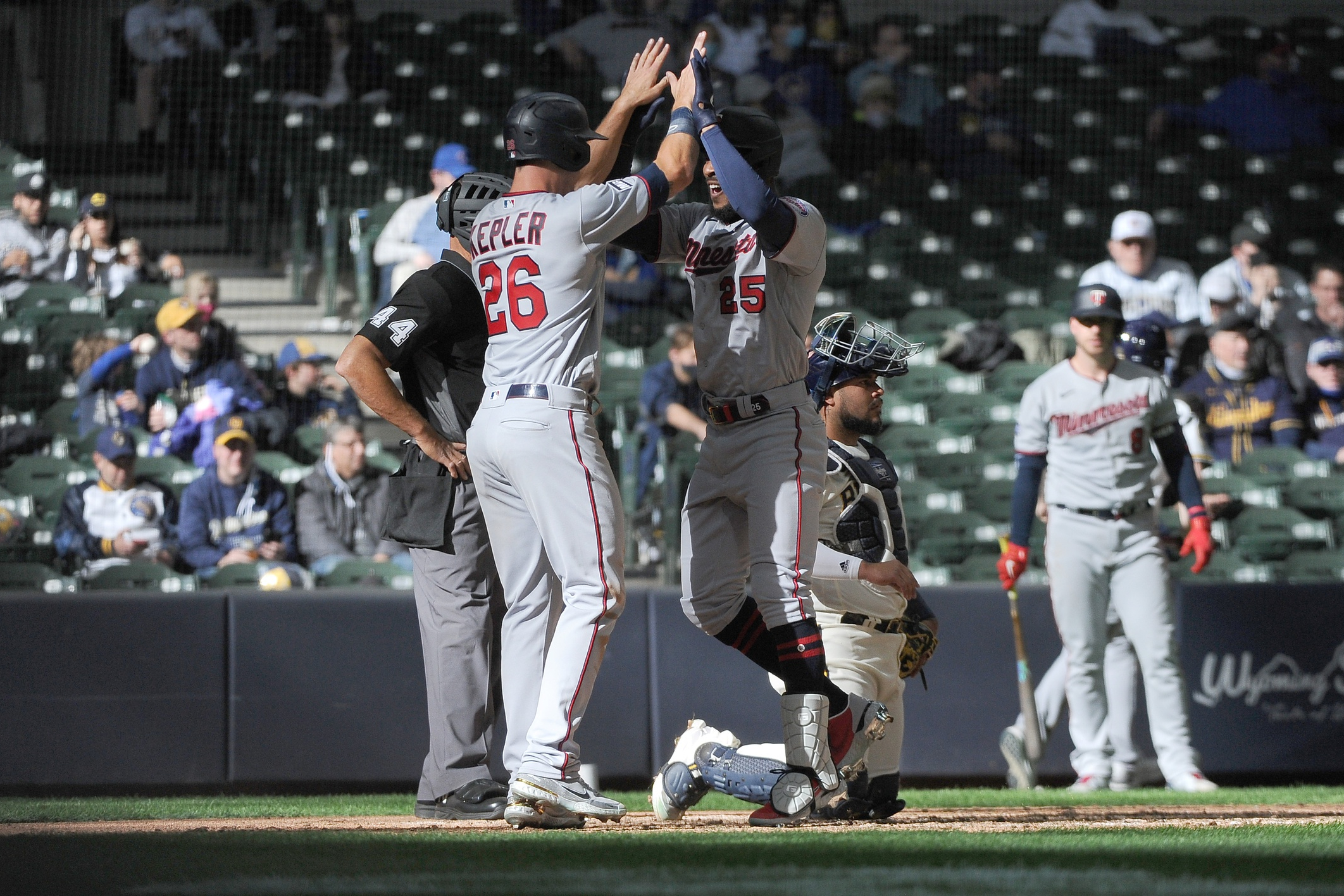 Box Score Maeda: 4.1 IP, 6 H, 2 R, 1 ER, 2 BB, 5 K Home Runs: Buxton (1) Bottom 3 WPA: Colome -.455, Dobnak -.355, Garver -.104 Win Probability Chart (via FanGraphs): In an emotional roller coaster of an opener for Minnesota Twins fans, the coaster ended in a valley as the Minnesota Twins blew a three-run ninth inning lead and lost in extra innings to their border rivals. Let’s take a ride: Kenta Maeda had a solid, yet not spectacular start for the Minnesota Twins as the Opening Day starter. While he only allowed one earned run, Maeda was only able to go 4 1/3 innings and allowed six hits, two walks and a hit batter over his start. Maeda flirted with trouble throughout his start, stranding a total of seven batters in the four complete innings that he pitched. The right hander did show increased velocity, tossing his fastball at an average of 92.8 MPH, 1.2 MPH above his average in 2020. At the plate, the Minnesota Twins kicked off the scoring with two runs in the third inning on a Woodruff wild pitch and a Max Kepler RBI single. After trading runs in the middle innings, the game seemed like it was sealed in the seventh inning when Byron Buxton blasted a 114 MPH two-run home run into left-center field. This gave the Minnesota Twins a three-run lead with Rogers, Robles and Colomé set to close out the game. https://twitter.com/Twins/status/1377733648720486401?s=20 After two perfect innings from Taylor Rogers and Hansel Robles in the seventh and eighth innings, newly acquired Alex Colomé gifted the game away by allowing two hits, a hit batter and three runs in the bottom of the ninth inning to force extra innings where the Brewers walked off the Twins on a walk-off single by Avisail Garcia to give the Brewers a 6-5 victory. Donaldson Injury While a loss is never fun, the most important development from Opening Day was the injury to Josh Donaldson. Donaldson injured his leg in the top of the first inning running to second base on a double. https://twitter.com/TFTwins/status/1377687804193411073?s=20 At first glance, it appeared that Josh Donaldson re-injured the calf that has plagued him throughout his career. As more information came out, though, it was revealed that the injury was a hamstring pull. We still don’t know the severity of the injury or how much (if any) time Donaldson will miss, but after an injury-riddled 2020, this is just about the worst way to begin the 2021 season for the former MVP. Rocco Baldelli indicated that the team would re-evaluate Josh Donaldson tomorrow on the team’s off day. https://twitter.com/betsyhelfand/status/1377760328604381185?s=20 Poor Defense While defense was a priority in the offseason for the Minnesota Twins, Opening Day was not the best showcase of their gloves. The Minnesota Twins made two official errors with a third error not being officially called as such. The first error came in the fifth inning from newly-acquired shortstop, Andrelton Simmons. Simmons dropped a Miguel Sanó throw that should have been a double play. That runner later went on to score in the inning. The second error of the game came from Alex Colomé when he tried throwing out the lead runner at second base rather than taking the easy out at first in the ninth inning. Additionally in the ninth inning, Max Kepler dropped a fly ball off the bat of Christian Yelich in right field that should have been out number two, but instead turned into a run-scoring single. https://twitter.com/TFTwins/status/1377745528306475009?s=20 Better days will surely be ahead for the Minnesota Twins defense, but it was disappointing watching a unit that was supposed to be a strength struggle so much. Big Day for Max Kepler After a miserable Spring Training in which he went 3-for-43, Kepler matched his Spring hit total in today’s opener, going 3-for-5 and just a home run short of hitting for the cycle. Kepler is in a prove-it year in 2021 after a down season in 2020 and is already showing that his Spring struggles are behind him and he is primed for a bounce-back season this year. Up Next The Minnesota Twins have an off-day tomorrow before facing off against Milwaukee again on Saturday where José Berríos will make his season debut. Bullpen Usage Spreadsheet MORE FROM TWINS DAILY — Latest Twins coverage from our writers — Recent Twins discussion in our forums — Follow Twins Daily via Twitter, Facebook or email
 -
 Injuries and suspension have kept Michael Pineda from putting together a full campaign since coming to Minnesota. With those issues behind him, Michael Pineda is primed for a big 2021 season.When the Minnesota Twins acquired Michael Pineda in 2018, he was entering into a season of recovery from Tommy John surgery, due to miss the entire season. In 2019, coming off of his recovery, Pineda was a revelation for the Minnesota Twins, arguably performing as the team’s best pitcher down the stretch of the season. In a 14-start stretch from June 13 to Sept. 6, Pineda posted a 2.96 ERA, allowing opponents to hit just .234. Unfortunately for the Twins, his momentum was halted when he was suspended in September for the use of a diuretic and his season ended, keeping Big Mike from pitching in the 2019 postseason. Last season, the breakout for Pineda again didn’t happen. Though the 2020 season was shortened by nearly two-thirds, the remainder of Pineda’s suspension was not, and he was forced to miss a much greater proportion of the 2020 season than if the season were its regular 162-game length. As a result, Pineda was only able to start five regular season games for the Minnesota Twins in 2020 and was again unable to pitch in the postseason as the Twins were knocked out after just two games. While he has not been a pitcher who throws big time velocity or misses lots of bats, Pineda has been the king of consistency for the Twins by limiting walks, eating innings and avoiding disaster. In his 31 starts since coming to the Minnesota Twins, Pineda has allowed more than four runs in an appearance just three times, and just once in his last 25 starts. While he has done it quietly, Pineda has produced excellent numbers in addition to providing consistency — since July 1, 2019, Pineda owns an ERA of just 3.03. Now heading into the 2021 season, Big Mike is healthy and free from the need to serve any suspension handed down by Major League Baseball. Pineda has the opportunity to put up an entire season’s worth of production and will hopefully be afforded the opportunity to pitch in the postseason for the first time in his career. Pineda will benefit from being in the shadow of Kenta Maeda and José Berríos as the team’s #3 pitcher, and free from the lofty expectations given to his starting counterparts. The Minnesota Twins have an incredibly deep pitching staff with potential aces at the top and promising prospects hoping to get a chance down the roster. In the middle, though, is maybe the most consistent and underrated starter of all. Could 2021 be the season that Michael Pineda puts it all together? Don’t sleep on Big Mike. What are your expectations for Michael Pineda heading into the 2021 season? Do you think he’s primed for a breakout? Leave a comment below and start the conversation! MORE FROM TWINS DAILY — Latest Twins coverage from our writers — Recent Twins discussion in our forums — Follow Twins Daily via Twitter, Facebook or email Click here to view the article
 -
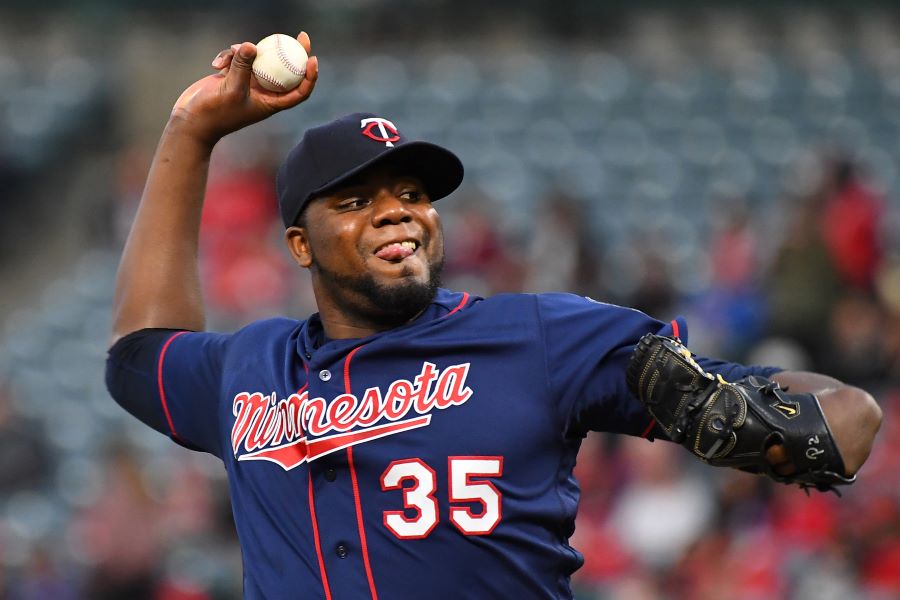 When the Minnesota Twins acquired Michael Pineda in 2018, he was entering into a season of recovery from Tommy John surgery, due to miss the entire season. In 2019, coming off of his recovery, Pineda was a revelation for the Minnesota Twins, arguably performing as the team’s best pitcher down the stretch of the season. In a 14-start stretch from June 13 to Sept. 6, Pineda posted a 2.96 ERA, allowing opponents to hit just .234. Unfortunately for the Twins, his momentum was halted when he was suspended in September for the use of a diuretic and his season ended, keeping Big Mike from pitching in the 2019 postseason. Last season, the breakout for Pineda again didn’t happen. Though the 2020 season was shortened by nearly two-thirds, the remainder of Pineda’s suspension was not, and he was forced to miss a much greater proportion of the 2020 season than if the season were its regular 162-game length. As a result, Pineda was only able to start five regular season games for the Minnesota Twins in 2020 and was again unable to pitch in the postseason as the Twins were knocked out after just two games. While he has not been a pitcher who throws big time velocity or misses lots of bats, Pineda has been the king of consistency for the Twins by limiting walks, eating innings and avoiding disaster. In his 31 starts since coming to the Minnesota Twins, Pineda has allowed more than four runs in an appearance just three times, and just once in his last 25 starts. While he has done it quietly, Pineda has produced excellent numbers in addition to providing consistency — since July 1, 2019, Pineda owns an ERA of just 3.03. https://twitter.com/MatthewTaylorMN/status/1369474927934455808?s=20 Now heading into the 2021 season, Big Mike is healthy and free from the need to serve any suspension handed down by Major League Baseball. Pineda has the opportunity to put up an entire season’s worth of production and will hopefully be afforded the opportunity to pitch in the postseason for the first time in his career. Pineda will benefit from being in the shadow of Kenta Maeda and José Berríos as the team’s #3 pitcher, and free from the lofty expectations given to his starting counterparts. The Minnesota Twins have an incredibly deep pitching staff with potential aces at the top and promising prospects hoping to get a chance down the roster. In the middle, though, is maybe the most consistent and underrated starter of all. Could 2021 be the season that Michael Pineda puts it all together? Don’t sleep on Big Mike. What are your expectations for Michael Pineda heading into the 2021 season? Do you think he’s primed for a breakout? Leave a comment below and start the conversation! MORE FROM TWINS DAILY — Latest Twins coverage from our writers — Recent Twins discussion in our forums — Follow Twins Daily via Twitter, Facebook or email
 -
Tuesday marked the first day of full-squad camp for the Minnesota Twins in Fort Myers. On their first day the Twins announced another signing, a new voice was announced to be joining the TV booth, and Josh Donaldson showed off some dance moves.Though many members of the team arrived at Hammond Stadium last week, today marked the first day of full-squad workouts — signifying that Spring Training is officially here. There were stretching sessions, infield drills, and live batting practices. Baseball is back, baby. Let’s dig into everything that happened in Twins Territory in today’s notebook: Twins sign Utilityman, Andrew Romine to Minor League Deal The Minnesota Twins announced this morning that they have signed 35-year old utilityman, Andrew Romine, to a minor league contract. Romine joined the club today in Fort Myers. In his 10 year Major League career, Romine has spent time with the Angels, Tigers, Mariners and Rangers, spending time all over the diamond in the field. In fact, in 2017 Romine became just the fifth player in Major League history to play all 9 positions in a single game. With a career OPS south of .600, Romine doesn’t figure to make the big league club out of camp, but should provide some flexible depth in AAA St. Paul. Twins Release Spring Training Broadcast Schedule There will be plenty of opportunity for fans to follow the Minnesota Twins this Spring, as the Twins announced today that 13 of their 19 Spring Training games will be televised on Fox Sports North, with an additional 3 games being broadcast on the radio. Perhaps the biggest surprise of the announcement, though, was that former Twins Cy Young Award winner, Johan Santana, would be making his debut in the booth. On March 26, Santana will act as the co-color commentator with LaTroy Hawkins on March 26, while acting as the lone color commentator alongside Dick Bremer on March 27. Majority of the Spring Training games will pull in the audio from the radio feed of Kris Atteberry, Dan Gladden and Cory Provus. The Bringer of Dance Moves Filed under the category of “things you love to see” was a video sent out by Minnesota Twins Communications Director, Dustin Morse, of Josh Donaldson dancing during morning workouts. Donaldson didn’t know he was being filmed until he turned around and saw Dustin standing there with his phone. Based on the slick dance moves, it appears Donaldson’s calves are in great shape. Baldelli Feeling Optimistic In his introductory press conference, Rocco Baldelli didn’t shy away from the expectations that he is placing on the 2021 Minnesota Twins team. According to the manager, “We again have everything we could possibly want to go out there and win a World Series frankly.” It’s a long season, but setting clear goals and expectations for the team and fans alike sets the tone for what’s truly a World Series-contending season. Hammond Stadium COVID-19 Precautions In addition to Tuesday being the first full-squad day at Hammond Stadium, it was also the first time that the media was in attendance for Spring Training. One nugget that came out of this was a look into how Hammond Stadium will handle fans in attendance. With zip tied seats and drawn rectangles enforcing social distancing, it’s clear that the Minnesota Twins will be doing everything they can to provide a safe return for fans to the stadium. Expect the same precautions to be followed at Target Field this Spring when fans return as well. See Also: The Twins Should Make Alex Kirilloff the Opening Day Left Fielder Twins Daily 2021 Top Prospects: #3 Trevor Larnach AL Central Rundown: Left Field MORE FROM TWINS DAILY — Latest Twins coverage from our writers — Recent Twins discussion in our forums — Follow Twins Daily via Twitter, Facebook or email Click here to view the article
-
Notebook: Full-Squad Workouts and The Bringer of...Dance Moves?
Matthew Taylor posted an article in Twins
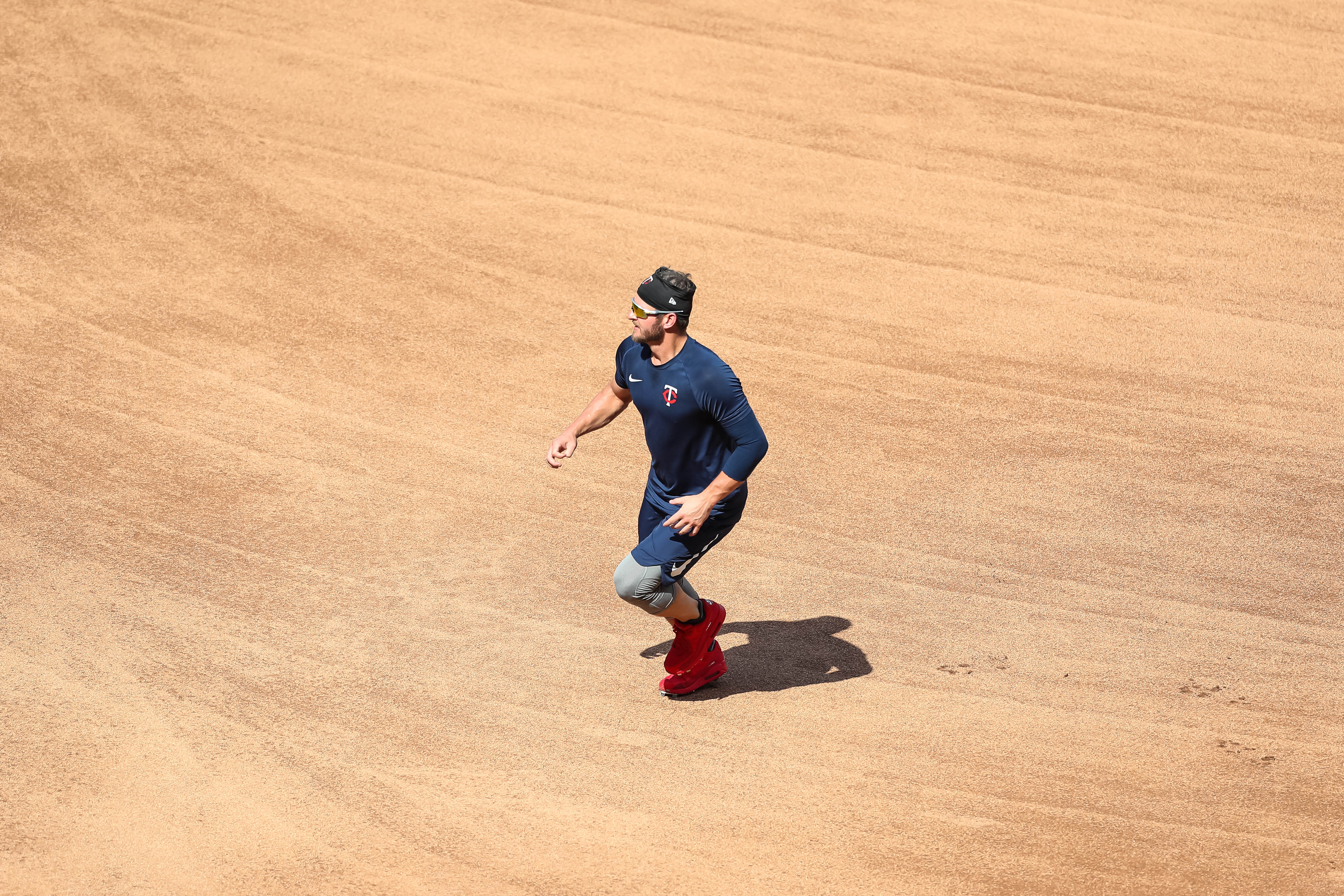 Though many members of the team arrived at Hammond Stadium last week, today marked the first day of full-squad workouts — signifying that Spring Training is officially here. There were stretching sessions, infield drills, and live batting practices. Baseball is back, baby. Let’s dig into everything that happened in Twins Territory in today’s notebook: https://twitter.com/Twins/status/1364275974628651009?s=20 Twins sign Utilityman, Andrew Romine to Minor League Deal https://twitter.com/twinsdaily/status/1364215156016893956?s=20 The Minnesota Twins announced this morning that they have signed 35-year old utilityman, Andrew Romine, to a minor league contract. Romine joined the club today in Fort Myers. In his 10 year Major League career, Romine has spent time with the Angels, Tigers, Mariners and Rangers, spending time all over the diamond in the field. In fact, in 2017 Romine became just the fifth player in Major League history to play all 9 positions in a single game. With a career OPS south of .600, Romine doesn’t figure to make the big league club out of camp, but should provide some flexible depth in AAA St. Paul. Twins Release Spring Training Broadcast Schedule https://twitter.com/betsyhelfand/status/1364244039546114049?s=20 There will be plenty of opportunity for fans to follow the Minnesota Twins this Spring, as the Twins announced today that 13 of their 19 Spring Training games will be televised on Fox Sports North, with an additional 3 games being broadcast on the radio. Perhaps the biggest surprise of the announcement, though, was that former Twins Cy Young Award winner, Johan Santana, would be making his debut in the booth. On March 26, Santana will act as the co-color commentator with LaTroy Hawkins on March 26, while acting as the lone color commentator alongside Dick Bremer on March 27. Majority of the Spring Training games will pull in the audio from the radio feed of Kris Atteberry, Dan Gladden and Cory Provus. The Bringer of Dance Moves https://twitter.com/morsecode/status/1364237770428981248?s=20 Filed under the category of “things you love to see” was a video sent out by Minnesota Twins Communications Director, Dustin Morse, of Josh Donaldson dancing during morning workouts. Donaldson didn’t know he was being filmed until he turned around and saw Dustin standing there with his phone. Based on the slick dance moves, it appears Donaldson’s calves are in great shape. Baldelli Feeling Optimistic https://twitter.com/betsyhelfand/status/1364354342082519043?s=20 In his introductory press conference, Rocco Baldelli didn’t shy away from the expectations that he is placing on the 2021 Minnesota Twins team. According to the manager, “We again have everything we could possibly want to go out there and win a World Series frankly.” It’s a long season, but setting clear goals and expectations for the team and fans alike sets the tone for what’s truly a World Series-contending season. Hammond Stadium COVID-19 Precautions In addition to Tuesday being the first full-squad day at Hammond Stadium, it was also the first time that the media was in attendance for Spring Training. One nugget that came out of this was a look into how Hammond Stadium will handle fans in attendance. With zip tied seats and drawn rectangles enforcing social distancing, it’s clear that the Minnesota Twins will be doing everything they can to provide a safe return for fans to the stadium. Expect the same precautions to be followed at Target Field this Spring when fans return as well. https://twitter.com/dohyoungpark/status/1364239516442198019?s=20 See Also: The Twins Should Make Alex Kirilloff the Opening Day Left Fielder Twins Daily 2021 Top Prospects: #3 Trevor Larnach AL Central Rundown: Left Field MORE FROM TWINS DAILY — Latest Twins coverage from our writers — Recent Twins discussion in our forums — Follow Twins Daily via Twitter, Facebook or email
 -
It was an eventful day in Minnesota Twins Territory after the signing of Alex Colomé. What’s next? Which former Twins pitcher ripped the team's signings today? Find out in today’s Twins Daily Notebook.Twins Sign Colomé The biggest news item of the day today was the Minnesota Twins signing former Chicago White Sox closer, Alex Colomé to a one-year, $5M deal with a mutual option for a second year. Minnesota Twins fans were all over Twitter voicing their excitement for the move, such as Twins Daily writer, Ted Schwerzler, who gave the Twins an “A” for their offseason after adding the right hander: Be sure to check out Twins Daily’s story on the Alex Colomé signing and watch the Offseason Live show with Nick Nelson, David Youngs and myself when we broke down the signing and discussed much more. What’s Next? After making two giant additions in Nelson Cruz and Alex Colomé, the thing that all Twins fans want to know is ... what’s next? Currently the Twins have ~$125M in committed salaries, right around the payroll that we expected them to have heading into the season. Are the Twins done making moves or should they sign someone else? Darren Wolfson says that they are done making splashes, but potentially the door could still be open to bring back Jake Odorizzi. Dan Hayes thinks they still have some payroll to play with to add a reliever and potentially a fifth starter What moves would you like to see the Twins make next? Selling Point for Nelson Cruz Re-Signing with Minnesota was ... the Food? While the $13M and the comfort with Minnesota was enticing for Nelson Cruz, the final selling point in bringing back Cruz ended up being the Twins adding Cruz’s personal chef to the gameday staff. Maybe the Twins can add Jake Odorizzi’s butler to the gameday staff and lockdown a deal with the former Twins right hander as well? Former Minnesota Twins Pitcher Slams Minnesota’s Offseason Additions Casey Fien pitched out of the bullpen for the Minnesota Twins from 2012-16 before being DFA’d by the Twins in May of 2016. Fien fired off a few different tweets criticizing the Twins today, most notably this tweet calling out the Twins for signing players who were suspended for performance enhancing drugs. Evidently Casey Fien did not leave the Twins on great terms and has burned some bridges since leaving Minnesota. Joakim Soria Signs with Arizona Prior to signing Alex Colomé, many thought that Oakland A’s reliever, Joakim Soria, could have been a good fit for the Twins. It was announced today that Soria signed a one-year deal for ~$4M. Though the Twins had some interest in Soria, the right hander was committed to signing with the D-Backs. Twins Get Approval for Fans at Spring Training We heard there was a good chance that there would be Twins fans able to attend Spring Training games this year, now we have confirmation as Seth Kaplan confirmed that Hammond Stadium will be at 28% capacity for Spring Training for the Twins. Depending on how things go, that could be a primer for limited capacity games at Target Field this summer. SEE ALSO 2021 Winter Meltdown Pint Glasses on Sale Now Did Nelson Cruz Start To Decline at the End of 2020? BREAKING: Twins Agree with DH Nelson Cruz on One-Year Deal Click here to view the article
-
 Twins Sign Colomé The biggest news item of the day today was the Minnesota Twins signing former Chicago White Sox closer, Alex Colomé to a one-year, $5M deal with a mutual option for a second year. https://twitter.com/AaronGleeman/status/1357096396034166787?s=20 Minnesota Twins fans were all over Twitter voicing their excitement for the move, such as Twins Daily writer, Ted Schwerzler, who gave the Twins an “A” for their offseason after adding the right hander: https://twitter.com/tlschwerz/status/1357098769611960320?s=20 Be sure to check out Twins Daily’s story on the Alex Colomé signing and watch the Offseason Live show with Nick Nelson, David Youngs and myself when we broke down the signing and discussed much more. What’s Next? After making two giant additions in Nelson Cruz and Alex Colomé, the thing that all Twins fans want to know is ... what’s next? https://twitter.com/MatthewTaylorMN/status/1357096590478110724?s=20 Currently the Twins have ~$125M in committed salaries, right around the payroll that we expected them to have heading into the season. Are the Twins done making moves or should they sign someone else? Darren Wolfson says that they are done making splashes, but potentially the door could still be open to bring back Jake Odorizzi. https://twitter.com/DWolfsonKSTP/status/1357099559755919362?s=20 Dan Hayes thinks they still have some payroll to play with to add a reliever and potentially a fifth starter https://twitter.com/DanHayesMLB/status/1357130909011566594?s=20 What moves would you like to see the Twins make next? Selling Point for Nelson Cruz Re-Signing with Minnesota was ... the Food? https://twitter.com/DanHayesMLB/status/1357082397225984001?s=20 While the $13M and the comfort with Minnesota was enticing for Nelson Cruz, the final selling point in bringing back Cruz ended up being the Twins adding Cruz’s personal chef to the gameday staff. Maybe the Twins can add Jake Odorizzi’s butler to the gameday staff and lockdown a deal with the former Twins right hander as well? Former Minnesota Twins Pitcher Slams Minnesota’s Offseason Additions https://twitter.com/CaseyFien/status/1357106209023610881?s=20 Casey Fien pitched out of the bullpen for the Minnesota Twins from 2012-16 before being DFA’d by the Twins in May of 2016. Fien fired off a few different tweets criticizing the Twins today, most notably this tweet calling out the Twins for signing players who were suspended for performance enhancing drugs. Evidently Casey Fien did not leave the Twins on great terms and has burned some bridges since leaving Minnesota. Joakim Soria Signs with Arizona Prior to signing Alex Colomé, many thought that Oakland A’s reliever, Joakim Soria, could have been a good fit for the Twins. It was announced today that Soria signed a one-year deal for ~$4M. Though the Twins had some interest in Soria, the right hander was committed to signing with the D-Backs. https://twitter.com/DWolfsonKSTP/status/1357068465648128002?s=20 Twins Get Approval for Fans at Spring Training https://twitter.com/Seth_Kaplan/status/1357042801175846922?s=20 We heard there was a good chance that there would be Twins fans able to attend Spring Training games this year, now we have confirmation as Seth Kaplan confirmed that Hammond Stadium will be at 28% capacity for Spring Training for the Twins. Depending on how things go, that could be a primer for limited capacity games at Target Field this summer. SEE ALSO 2021 Winter Meltdown Pint Glasses on Sale Now Did Nelson Cruz Start To Decline at the End of 2020? BREAKING: Twins Agree with DH Nelson Cruz on One-Year Deal
 -
You may have missed out on investing in GameStop or AMC over the past week, but there are three Minnesota Twins players worth investing in right now, while their values are at their lowest.Over the past week the stock market has dominated the national conversation and terms like “hedge fund” and “short squeeze” have entered the mainstream vocabulary. While many of the skyrocketing stocks on the market have already reached their peaks, there are three Minnesota Twins players worth investing in right now. These players' values are at their lowest, but figure to be in for big years in 2021. Buy now and ride these players to the moon! Randy Dobnak Randy Dobnak had an excellent start to the 2020 season, posting a 1.78 ERA through his first six starts and looking like a real piece in the Minnesota Twins rotation. The wheels started to fall off for Dobnak, though, as he posted an ERA of 8.27 over his next four starts and was eventually removed from the Minnesota Twins rotation. Though 2020 ended on a sour note for the right hander, his arrow is pointing up for the 2021 season as a result of the offseason changes made by the Minnesota Twins and the all-world infield defense that the Twins front office has assembled. Randy Dobnak is an extreme ground ball pitcher and excels the most with a great infield behind him. The Minnesota Twins improved their infield defense in a big way this offseason with the addition of Andrelton Simmons and shifting Jorge Polanco over to second base. Those changes combined with a (hopefully) healthy season from Josh Donaldson and Miguel Sanó could bode extremely well for the 26 year old heading into his third season as a big leaguer. It remains to be seen whether or not the Minnesota Twins will acquire another starting pitcher this offseason, but as things currently stand Randy Dobnak will begin the season as Minnesota’s #5 starter, and he’s one you should invest in now. BUYBUYBUY! Taylor Rogers The Minnesota left hander is coming off of the worst Major League season of his career in 2020. Rogers posted a career-high ERA of 4.05 with a 1.50 WHIP and opponent batting average of .302. Rogers repeatedly failed to come through in big moments for the Minnesota Twins and some thought he could be a non-tender candidate this offseason as a result. Rogers ultimately came to a deal with Minnesota this offseason for $6M. After such a poor season in 2020, why should Twins fans invest in him for the 2021 season? Although Rogers’ statistics last season were poor, his underlying numbers point to him being unlucky rather than bad last season. Although his ERA was a career-high 4.05, Taylor’s FIP (fielding independent pitching) was actually better in 2020 than it was in 2019. Further, Rogers posted a BABIP of .400, the sixth-highest mark of all MLB pitchers with at least 20 IP in 2020, indicating that he was extremely unlucky all season and balls were just finding holes in the field time and time again. After a season of bad luck in 2020, regression figures to flip back in a positive direction for the southpaw in 2021, especially with a season 2.7x longer than the shortened season last year. BUYBUYBUY! Josh Donaldson The 2020 season was nothing short of a lost year for the Bringer of Rain, who was only able to play in 28 games for the Minnesota Twins and was held out of both postseason games due to an injury to his calf. Because of the lost season for Donaldson, it’s easy for Twins fans to forget just how key of an addition he is to this club at the plate, and just how impactful he can be at the hot corner. The former MVP has posted an OPS of .900 or higher in each of his four healthy seasons since 2015, and even in his disastrous 2020, still posted an excellent OPS of .842. Though health is never a guarantee in the game of baseball, the load that Donaldson will need to shoulder in 2021 figures to have been reduced with the increased infield flexibility that came with the Andrelton Simmons signing. Now with Luis Arráez at the super utility position, the Twins can give Josh Donaldson routine days off without needing to suffer in the lineup. This figures to reduce the load on Donaldson’s calves, and keep him healthy for what should be a massive bounce-back season in 2021. BUYBUYBUY! Which Minnesota Twins player stocks are you investing in prior to the 2021 season? Leave a comment below and start the conversation! MORE FROM TWINS DAILY — Latest Twins coverage from our writers — Recent Twins discussion in our forums — Follow Twins Daily via Twitter, Facebook or email — Follow Matthew Taylor on Twitter here Click here to view the article
-
 Over the past week the stock market has dominated the national conversation and terms like “hedge fund” and “short squeeze” have entered the mainstream vocabulary. While many of the skyrocketing stocks on the market have already reached their peaks, there are three Minnesota Twins players worth investing in right now. These players' values are at their lowest, but figure to be in for big years in 2021. Buy now and ride these players to the moon! Randy Dobnak Randy Dobnak had an excellent start to the 2020 season, posting a 1.78 ERA through his first six starts and looking like a real piece in the Minnesota Twins rotation. The wheels started to fall off for Dobnak, though, as he posted an ERA of 8.27 over his next four starts and was eventually removed from the Minnesota Twins rotation. Though 2020 ended on a sour note for the right hander, his arrow is pointing up for the 2021 season as a result of the offseason changes made by the Minnesota Twins and the all-world infield defense that the Twins front office has assembled. Randy Dobnak is an extreme ground ball pitcher and excels the most with a great infield behind him. The Minnesota Twins improved their infield defense in a big way this offseason with the addition of Andrelton Simmons and shifting Jorge Polanco over to second base. Those changes combined with a (hopefully) healthy season from Josh Donaldson and Miguel Sanó could bode extremely well for the 26 year old heading into his third season as a big leaguer. It remains to be seen whether or not the Minnesota Twins will acquire another starting pitcher this offseason, but as things currently stand Randy Dobnak will begin the season as Minnesota’s #5 starter, and he’s one you should invest in now. BUYBUYBUY! Taylor Rogers The Minnesota left hander is coming off of the worst Major League season of his career in 2020. Rogers posted a career-high ERA of 4.05 with a 1.50 WHIP and opponent batting average of .302. Rogers repeatedly failed to come through in big moments for the Minnesota Twins and some thought he could be a non-tender candidate this offseason as a result. Rogers ultimately came to a deal with Minnesota this offseason for $6M. After such a poor season in 2020, why should Twins fans invest in him for the 2021 season? Although Rogers’ statistics last season were poor, his underlying numbers point to him being unlucky rather than bad last season. Although his ERA was a career-high 4.05, Taylor’s FIP (fielding independent pitching) was actually better in 2020 than it was in 2019. Further, Rogers posted a BABIP of .400, the sixth-highest mark of all MLB pitchers with at least 20 IP in 2020, indicating that he was extremely unlucky all season and balls were just finding holes in the field time and time again. After a season of bad luck in 2020, regression figures to flip back in a positive direction for the southpaw in 2021, especially with a season 2.7x longer than the shortened season last year. BUYBUYBUY! Josh Donaldson The 2020 season was nothing short of a lost year for the Bringer of Rain, who was only able to play in 28 games for the Minnesota Twins and was held out of both postseason games due to an injury to his calf. Because of the lost season for Donaldson, it’s easy for Twins fans to forget just how key of an addition he is to this club at the plate, and just how impactful he can be at the hot corner. The former MVP has posted an OPS of .900 or higher in each of his four healthy seasons since 2015, and even in his disastrous 2020, still posted an excellent OPS of .842. Though health is never a guarantee in the game of baseball, the load that Donaldson will need to shoulder in 2021 figures to have been reduced with the increased infield flexibility that came with the Andrelton Simmons signing. Now with Luis Arráez at the super utility position, the Twins can give Josh Donaldson routine days off without needing to suffer in the lineup. This figures to reduce the load on Donaldson’s calves, and keep him healthy for what should be a massive bounce-back season in 2021. BUYBUYBUY! Which Minnesota Twins player stocks are you investing in prior to the 2021 season? Leave a comment below and start the conversation! MORE FROM TWINS DAILY — Latest Twins coverage from our writers — Recent Twins discussion in our forums — Follow Twins Daily via Twitter, Facebook or email — Follow Matthew Taylor on Twitter here
 -
Keith Law released his annual top 100 prospect rankings, a free agent pitching target came off the market and a former Twins pitcher found a new home. Read about all that and more in the latest Twins notebook.Alex Kirilloff
-
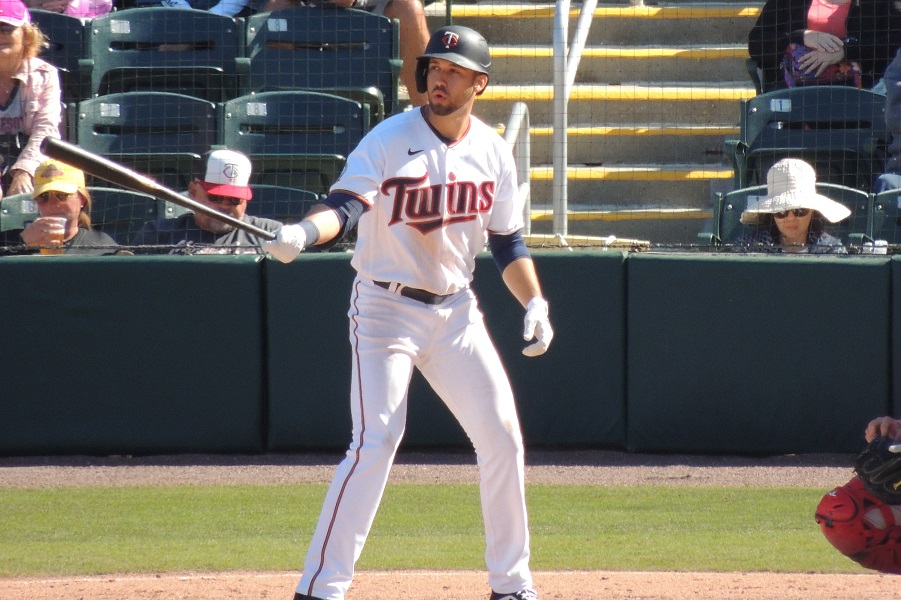 Alex Kirilloff
 -
On Tuesday evening, the Minnesota Twins agreed to a one-year, $10.5 million deal with free agent shortstop Andrelton Simmons. Within are the five biggest takeaways from the massive offseason addition for the reigning AL Central Champs.1. Andrelton Simmons Drastically Improves the Minnesota Twins Infield Defense The biggest asset that Andrelton Simmons brings to the table for the Minnesota Twins is the all-world defense that he provides from the shortstop position. Through the first nine years of his career, Simmons has taken home four gold gloves and shown that he has the reaction, range and arm to be one of the best defensive shortstops of all time when his career is all said and done. Defensive statistics typically aren’t always the most reliable metric, but the amount of separation that Simmons has put between him and every other shortstop in the league shows just how talented he is at the “6”. From 2015-2020, Andrelton Simmons has saved a total of 123 runs from the shortstop position, this is 44 more runs than second place Nick Ahmed and 78 more runs than fifth place Trevor Story. Simmons brings a defensive prowess to the shortstop position that Twins fans have never before seen and will be a massive improvement over the shortstop defense that Twins fans have grown used to with Jorge Polanco over the past handful of years. The addition of Andrelton Simmons not only improves the Twins’ shortstop defense, but figures to improve their defense at second base as well. For all of Jorge Polanco’s struggles at shortstop, his hands and athleticism were never the issue. Polanco’s issues have mostly come as a result of his shaky arm. At second base, where Polanco played much of his career in the minors, Polanco won’t be stretched with his arm and will be able to utilize his range and soft hands to upgrade the defense over Luis Arráez who had repeatedly been stretched from that spot as the everyday second baseman over the past two seasons. 2. Royce Lewis is Now Set to Take the SS Baton in 2022 It was not by accident that Andrelton Simmons was signed to a one year deal. By signing Simmons for just the 2021 season, the Twins were able to fill their shortstop/utility need for the upcoming season, without clogging up the shortstop position for future seasons. By doing this, the Twins were able to perfectly set up the Royce Lewis era in Minnesota in 2022. The Twins can now allow their top prospect time to learn and develop in the minors for the 2021 season without the pressure of needing to call him up early or force him into a starting role before he is ready. Further, both Royce Lewis and all of Minnesota Twins Territory all know that the shortstop position will be Royce’s for the taking for 2022 and beyond and there should be no shortstop controversy this time next winter. 3. Re-Signing Nelson Cruz is Now Even More Imperative While the signing of Andrelton Simmons drastically improves the Minnesota Twins’ defense, his signing only further solidifies their need to acquire a big bat, something Simmons does not possess. Over the course of his career, Simmons has only once eclipsed 15 home runs in a season and has posted an OPS of just .730 over the past 4 seasons. With Simmons most likely headed for a bottom of the order spot in the lineup, the Twins need to replace the middle of the order bat left behind by Eddie Rosario and (potentially) Nelson Cruz still has yet to be addressed. The easiest path for the Twins to fill that middle of the order spot in the lineup is simply by bringing back Cruz. The Twins still have ~$20M in payroll money to play with, allowing room to bring back Cruz and still sign a lower level pitcher to fill out their roster. 4. Andrelton Simmons spells good news for Randy Dobnak Many benefitted from the Minnesota Twins signing of Andrelton Simmons, but perhaps no player benefited more from the move than Minnesota Twins pitcher, Randy Dobnak. In his rookie season, Dobnak utilized his sinker to induce ground balls at an absurd rate of 62.1%, the most in all of baseball. With such a high ground ball rate, Dobnak relies on excellent infield defense behind him who can convert those ground balls into outs. With improved defense at the shortstop and second base positions, combined with the great defense at the hot corner from Josh Donaldson, it’s fair to expect some good numbers from Randy Dobnak in 2021, who is currently slated to be their #5 starter heading into the season. 5. Falvey and Levine Again Show they Aren’t Afraid to Mix Things Up Last offseason, the Minnesota Twins front office showed they weren’t afraid to mix things up with the Twins’ roster when they made the decision to shift Miguel Sanó to first base and sign Josh Donaldson. Falvey and Levine did the same thing again this offseason, by bringing in a shortstop and shifting their all-star caliber players in Jorge Polacno and Luis Arráez into new roles. This move again showed us that the Twins front office is willing to pivot in any number of directions and will always drift towards where there is value to be found. This offseason with three great shortstops on the market, they found the value at shortstop and didn’t let roster construction hinder their opportunity to capitalize on that value. In a sport like baseball where so many are hesitant to change or put players in new positions, it’s refreshing to see a Twins front office with an open mind to make whatever move improves their team. What were your biggest takeaways from the Minnesota Twins signing of Andrelton Simmons? Leave a comment below and start the conversation! MORE ANDRELTON SIMMONS COVERAGE — BREAKING: Twins to Sign Andrelton Simmons — Offseason Live Replay: Twins To Sign Andrelton Simmons — Simmons Down, 1 to Go: Securing the Middle Infield MORE FROM TWINS DAILY — Latest Twins coverage from our writers — Recent Twins discussion in our forums — Follow Twins Daily via Twitter, Facebook or email — Follow Matthew Taylor on Twitter here Click here to view the article
-
What Andrelton Simmons Signing Means for Cruz, Lewis, Dobnak & More
Matthew Taylor posted an article in Twins
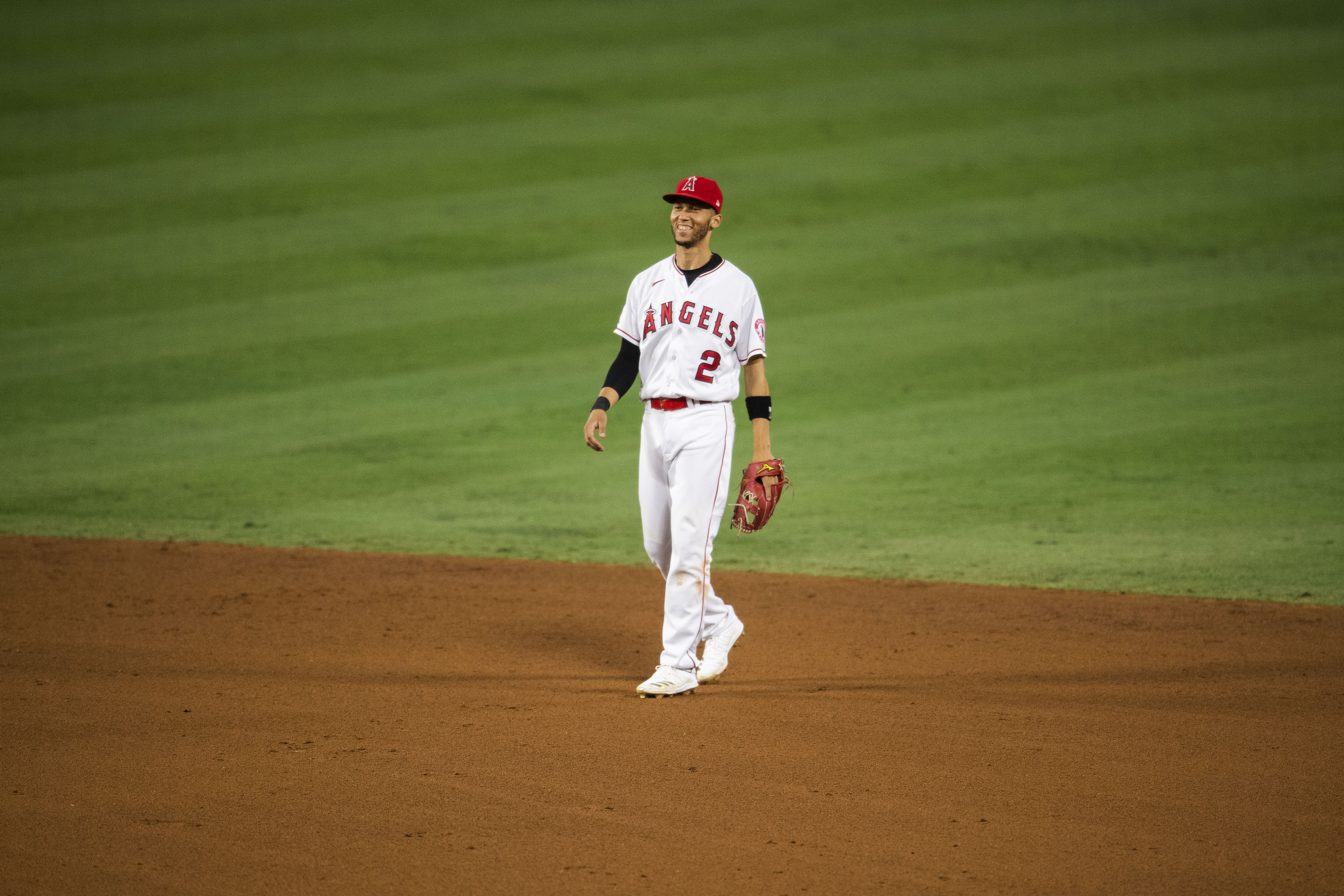 1. Andrelton Simmons Drastically Improves the Minnesota Twins Infield Defense The biggest asset that Andrelton Simmons brings to the table for the Minnesota Twins is the all-world defense that he provides from the shortstop position. Through the first nine years of his career, Simmons has taken home four gold gloves and shown that he has the reaction, range and arm to be one of the best defensive shortstops of all time when his career is all said and done. Defensive statistics typically aren’t always the most reliable metric, but the amount of separation that Simmons has put between him and every other shortstop in the league shows just how talented he is at the “6”. From 2015-2020, Andrelton Simmons has saved a total of 123 runs from the shortstop position, this is 44 more runs than second place Nick Ahmed and 78 more runs than fifth place Trevor Story. Simmons brings a defensive prowess to the shortstop position that Twins fans have never before seen and will be a massive improvement over the shortstop defense that Twins fans have grown used to with Jorge Polanco over the past handful of years. https://twitter.com/NickNelsonMN/status/1354503678833647621?s=20 The addition of Andrelton Simmons not only improves the Twins’ shortstop defense, but figures to improve their defense at second base as well. For all of Jorge Polanco’s struggles at shortstop, his hands and athleticism were never the issue. Polanco’s issues have mostly come as a result of his shaky arm. At second base, where Polanco played much of his career in the minors, Polanco won’t be stretched with his arm and will be able to utilize his range and soft hands to upgrade the defense over Luis Arráez who had repeatedly been stretched from that spot as the everyday second baseman over the past two seasons. 2. Royce Lewis is Now Set to Take the SS Baton in 2022 It was not by accident that Andrelton Simmons was signed to a one year deal. By signing Simmons for just the 2021 season, the Twins were able to fill their shortstop/utility need for the upcoming season, without clogging up the shortstop position for future seasons. By doing this, the Twins were able to perfectly set up the Royce Lewis era in Minnesota in 2022. The Twins can now allow their top prospect time to learn and develop in the minors for the 2021 season without the pressure of needing to call him up early or force him into a starting role before he is ready. Further, both Royce Lewis and all of Minnesota Twins Territory all know that the shortstop position will be Royce’s for the taking for 2022 and beyond and there should be no shortstop controversy this time next winter. 3. Re-Signing Nelson Cruz is Now Even More Imperative While the signing of Andrelton Simmons drastically improves the Minnesota Twins’ defense, his signing only further solidifies their need to acquire a big bat, something Simmons does not possess. Over the course of his career, Simmons has only once eclipsed 15 home runs in a season and has posted an OPS of just .730 over the past 4 seasons. With Simmons most likely headed for a bottom of the order spot in the lineup, the Twins need to replace the middle of the order bat left behind by Eddie Rosario and (potentially) Nelson Cruz still has yet to be addressed. The easiest path for the Twins to fill that middle of the order spot in the lineup is simply by bringing back Cruz. The Twins still have ~$20M in payroll money to play with, allowing room to bring back Cruz and still sign a lower level pitcher to fill out their roster. 4. Andrelton Simmons spells good news for Randy Dobnak Many benefitted from the Minnesota Twins signing of Andrelton Simmons, but perhaps no player benefited more from the move than Minnesota Twins pitcher, Randy Dobnak. In his rookie season, Dobnak utilized his sinker to induce ground balls at an absurd rate of 62.1%, the most in all of baseball. With such a high ground ball rate, Dobnak relies on excellent infield defense behind him who can convert those ground balls into outs. With improved defense at the shortstop and second base positions, combined with the great defense at the hot corner from Josh Donaldson, it’s fair to expect some good numbers from Randy Dobnak in 2021, who is currently slated to be their #5 starter heading into the season. 5. Falvey and Levine Again Show they Aren’t Afraid to Mix Things Up Last offseason, the Minnesota Twins front office showed they weren’t afraid to mix things up with the Twins’ roster when they made the decision to shift Miguel Sanó to first base and sign Josh Donaldson. Falvey and Levine did the same thing again this offseason, by bringing in a shortstop and shifting their all-star caliber players in Jorge Polacno and Luis Arráez into new roles. This move again showed us that the Twins front office is willing to pivot in any number of directions and will always drift towards where there is value to be found. This offseason with three great shortstops on the market, they found the value at shortstop and didn’t let roster construction hinder their opportunity to capitalize on that value. In a sport like baseball where so many are hesitant to change or put players in new positions, it’s refreshing to see a Twins front office with an open mind to make whatever move improves their team. What were your biggest takeaways from the Minnesota Twins signing of Andrelton Simmons? Leave a comment below and start the conversation! MORE ANDRELTON SIMMONS COVERAGE — BREAKING: Twins to Sign Andrelton Simmons — Offseason Live Replay: Twins To Sign Andrelton Simmons — Simmons Down, 1 to Go: Securing the Middle Infield MORE FROM TWINS DAILY — Latest Twins coverage from our writers — Recent Twins discussion in our forums — Follow Twins Daily via Twitter, Facebook or email — Follow Matthew Taylor on Twitter here
 -
Hi Mike — I linked the other 3 Faceoff stories at the top of my article right after the photo. So far, none have signed, but it sounds like Kiké Hernández is close to signing with the Red Sox.
-
Although relief pitchers have been flying off the market over the past week, there are still some intriguing names available. Would Brad Hand or Trevor Rosenthal be a better fit for the Minnesota Twins?Before reading the final entry of the “Free Agent Faceoff” series be sure to check out the previous three installments: Designated Hitter: Marcell Ozuna vs. Nelson Cruz Utilityman: Kiké Hernández vs. Tommy La Stella Starting Pitching: Jake Odorizzi vs. James Paxton Brad Hand Contract Estimate: 2 years, $14M The Case For: Brad Hand has been one of the best relievers in baseball over the past half decade. Since the start of the 2017 season, Hand ranks 5th among all relievers in ERA (2.61), 8th in K/9 (12.60) and 7th in fWAR (5.5). Hand is coming off of the best season of his career, posting an ERA of 2.05 and leading the American League with 16 saves in the abbreviated 2020 season. Hand is still just 30 years old and has been tremendously durable over the course of his career, throwing at least 50 innings in every season since becoming a full time reliever, and throwing at least 70 innings in all but one. As has been well documented within Twins fan circles, Brad Hand is a Minnesota native, playing his high school ball for Chaska High School. Bringing Hand home to play for his hometown ball club in front of friends and family would be a poetic next step in the all-star closer’s career. The Case Against: After deciding to bring back Taylor Rogers and Caleb Thielbar via arbitration earlier this offseason, the Minnesota Twins set themselves up well with left handed arms in their bullpen. Adding in another high-leverage left handed arm might be a bit of overkill, as their biggest need is to replace the right handed bullpen arms that they lost in Trevor May, Matt Wisler, Sergio Romo and Tyler Clippard. The other reason against bringing back Brad Hand is the philosophical approach the Minnesota Twins have against spending money on relievers. The reliever position has been proven to be extremely volatile over the years, and the Twins have shown repeatedly that they would prefer to get the most out of waiver claims and sign veteran relievers than to sign the top tier arms on the free agent market. Signing Hand would likely require a sizable monetary investment, and the Twins have shown time and time again they are unwilling to do so, especially as a third left hander in a bullpen that’s starving for righties. Trevor Rosenthal Contract Estimate: 2 years, $14M The Case For: Trevor Rosenthal was an elite closer in baseball for a long time, repeatedly finishing top-10 in the majors in ERA and strikeout numbers. After struggling with injury and undergoing Tommy John Surgery in 2018, Rosenthal struggled on the mound. In 2020, though, Rosenthal proved that his injury issues were behind him as he posted the best season of his career, throwing up a 1.90 EAR with a career-best K/9 of 14.5. Rosenthal re-gained his top-notch velocity, repeatedly hitting triple digits on the radar gun throughout the 2020 season. Trevor Rosenthal would slot in perfect as a replacement for Trevor May as a fireball-throwing right handed pitcher who generates plenty of swings and misses and strikeouts. Rosenthal would instantly be thrust into the high-leverage spot of the bullpen and allow everyone in the bullpen to slot down a rung in the bullpen pecking order. The Case Against: Rosenthal has by no means been a man of clean health over the past five seasons, as he hasn’t pitched more than 48 innings in a season since 2015. If the Minnesota Twins were to commit money to an elite reliever, it would be hard to do so for a reliever that has not proven that he can stay healthy for an entire season. To bring in an injury risk to a bullpen that will already be struggling with depth after losing Trevor May, Matt Wisler, Sergio Romo and Tyler Clippard would be an enormous risk for this Twins club. Additionally, Rosenthal proved over 23.2 innings that he can be effective out of the bullpen, but it hasn’t been since 2017 that he has pitched more than 40 innings and proven to be effective. Should the Minnesota Twins sign Rosenthal they would be taking a big bet that he can be both healthy and effective for a long stretch for the first time in a long time. The Verdict Although the health and consistency concerns with Rosenthal are very real, Trevor would make a lot of sense as an addition for this Minnesota Twins bullpen and is the winner of this free agent faceoff. After losing out on nearly 100 innings of right-handed bullpen arms from 2020, the Minnesota Twins need to be able to replace that right handed production. To be able to do someone with the elite upside of the former Padre makes a lot of sense. Rosenthal being able to lock down the back of the bullpen and being able to replace the velocity and strikeout ability of Trevor May would allow younger players like Jorge Alcalá and Cody Stashak the ability to thrive in lower leverage situations. Although Brand Hand makes sense in a lot of ways, it’s hard to envision the Twins committing money to a third left hander in the bullpen. Hand making more money than even his contract prediction would not be a surprise, and it’s difficult to see the Twins get into a bidding war for the southpaw. Which of these two relievers would you like to see the Minnesota Twins sign? Are there any other relievers on the market you’d like better? Leave a comment below and start the conversation! MORE FROM TWINS DAILY — Latest Twins coverage from our writers — Recent Twins discussion in our forums — Follow Twins Daily via Twitter, Facebook or email — Follow Matthew Taylor on Twitter here Click here to view the article
-
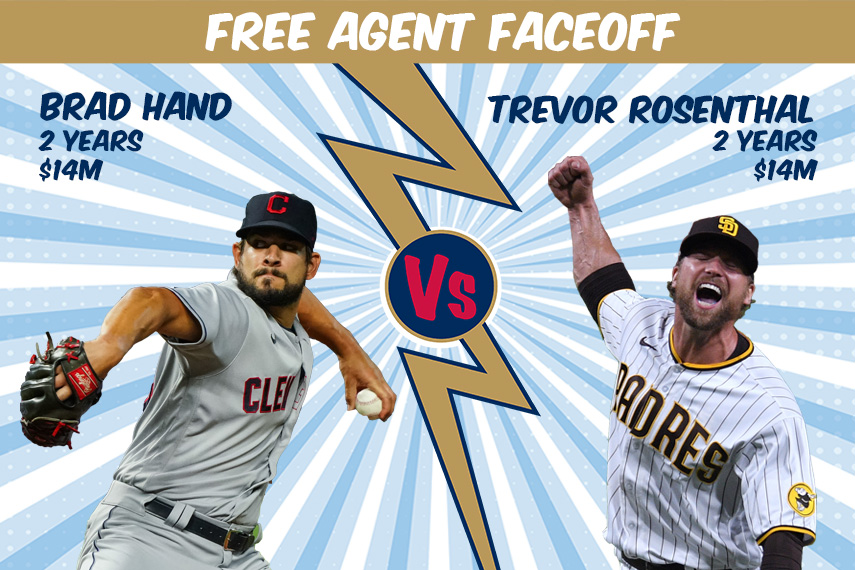 Before reading the final entry of the “Free Agent Faceoff” series be sure to check out the previous three installments: Designated Hitter: Marcell Ozuna vs. Nelson Cruz Utilityman: Kiké Hernández vs. Tommy La Stella Starting Pitching: Jake Odorizzi vs. James Paxton Brad Hand Contract Estimate: 2 years, $14M The Case For: Brad Hand has been one of the best relievers in baseball over the past half decade. Since the start of the 2017 season, Hand ranks 5th among all relievers in ERA (2.61), 8th in K/9 (12.60) and 7th in fWAR (5.5). Hand is coming off of the best season of his career, posting an ERA of 2.05 and leading the American League with 16 saves in the abbreviated 2020 season. Hand is still just 30 years old and has been tremendously durable over the course of his career, throwing at least 50 innings in every season since becoming a full time reliever, and throwing at least 70 innings in all but one. As has been well documented within Twins fan circles, Brad Hand is a Minnesota native, playing his high school ball for Chaska High School. Bringing Hand home to play for his hometown ball club in front of friends and family would be a poetic next step in the all-star closer’s career. The Case Against: After deciding to bring back Taylor Rogers and Caleb Thielbar via arbitration earlier this offseason, the Minnesota Twins set themselves up well with left handed arms in their bullpen. Adding in another high-leverage left handed arm might be a bit of overkill, as their biggest need is to replace the right handed bullpen arms that they lost in Trevor May, Matt Wisler, Sergio Romo and Tyler Clippard. The other reason against bringing back Brad Hand is the philosophical approach the Minnesota Twins have against spending money on relievers. The reliever position has been proven to be extremely volatile over the years, and the Twins have shown repeatedly that they would prefer to get the most out of waiver claims and sign veteran relievers than to sign the top tier arms on the free agent market. Signing Hand would likely require a sizable monetary investment, and the Twins have shown time and time again they are unwilling to do so, especially as a third left hander in a bullpen that’s starving for righties. Trevor Rosenthal Contract Estimate: 2 years, $14M The Case For: Trevor Rosenthal was an elite closer in baseball for a long time, repeatedly finishing top-10 in the majors in ERA and strikeout numbers. After struggling with injury and undergoing Tommy John Surgery in 2018, Rosenthal struggled on the mound. In 2020, though, Rosenthal proved that his injury issues were behind him as he posted the best season of his career, throwing up a 1.90 EAR with a career-best K/9 of 14.5. Rosenthal re-gained his top-notch velocity, repeatedly hitting triple digits on the radar gun throughout the 2020 season. Trevor Rosenthal would slot in perfect as a replacement for Trevor May as a fireball-throwing right handed pitcher who generates plenty of swings and misses and strikeouts. Rosenthal would instantly be thrust into the high-leverage spot of the bullpen and allow everyone in the bullpen to slot down a rung in the bullpen pecking order. The Case Against: Rosenthal has by no means been a man of clean health over the past five seasons, as he hasn’t pitched more than 48 innings in a season since 2015. If the Minnesota Twins were to commit money to an elite reliever, it would be hard to do so for a reliever that has not proven that he can stay healthy for an entire season. To bring in an injury risk to a bullpen that will already be struggling with depth after losing Trevor May, Matt Wisler, Sergio Romo and Tyler Clippard would be an enormous risk for this Twins club. Additionally, Rosenthal proved over 23.2 innings that he can be effective out of the bullpen, but it hasn’t been since 2017 that he has pitched more than 40 innings and proven to be effective. Should the Minnesota Twins sign Rosenthal they would be taking a big bet that he can be both healthy and effective for a long stretch for the first time in a long time. The Verdict Although the health and consistency concerns with Rosenthal are very real, Trevor would make a lot of sense as an addition for this Minnesota Twins bullpen and is the winner of this free agent faceoff. After losing out on nearly 100 innings of right-handed bullpen arms from 2020, the Minnesota Twins need to be able to replace that right handed production. To be able to do someone with the elite upside of the former Padre makes a lot of sense. Rosenthal being able to lock down the back of the bullpen and being able to replace the velocity and strikeout ability of Trevor May would allow younger players like Jorge Alcalá and Cody Stashak the ability to thrive in lower leverage situations. Although Brand Hand makes sense in a lot of ways, it’s hard to envision the Twins committing money to a third left hander in the bullpen. Hand making more money than even his contract prediction would not be a surprise, and it’s difficult to see the Twins get into a bidding war for the southpaw. Which of these two relievers would you like to see the Minnesota Twins sign? Are there any other relievers on the market you’d like better? Leave a comment below and start the conversation! MORE FROM TWINS DAILY — Latest Twins coverage from our writers — Recent Twins discussion in our forums — Follow Twins Daily via Twitter, Facebook or email — Follow Matthew Taylor on Twitter here
 -
The Minnesota Twins have a need to sign another starting pitcher this offseason. Jake Odorizzi and James Paxton are two of the biggest names left on the market. Which would make for a better fit for the Minnesota Twins this offseason?If you haven’t already, be sure to check out the first two editions of “Free Agent Faceoff”: Designated Hitter: Nelson Cruz vs. Marcell Ozuna Utilityman: Kike Hernández vs. Tommy La Stella For the third edition of “Free Agent Faceoff” we will be evaluating two starting pitchers with a high ceiling, but coming off of an injury-riddled 2020: Jake Odorizzi and James Paxton. Jake Odorizzi Contract Estimate: 3 years/ $39M The Case For: When healthy, Jake Odorizzi has pitched like a top level starter with the Minnesota Twins. The 2019 season was a breakthrough year for Odorizzi, when he reached his first career all-star game, tossed a 3.51 ERA and threw the best playoff start for any Twins starter in the 2019 ALDS. At his best, Odorizzi has been a #1 pitcher for the Twins and at the age of 30, might still have more untapped potential in that right arm. Throughout his career, Odorizzi has been a durable pitcher, tossing at least 140 innings in 5 straight seasons from 2014-2019. 2020 was a difficult season for Odo in terms of health, but the injuries he sustained were much more fluky in nature than injuries that should be of concern heading into the future. Odo has clearly taken a liking to the coaching staff in Minnesota and has embraced the analytics that unlocked a career best 10.1 K/9 in 2019. The familiarity that comes with Odorizzi makes bringing him back an easier decision and removes a lot of the uncertainty that comes with bringing in a free agent arm. With three years of team control, the Twins would be able to lock down a top starter to pair with Kenta Maeda and José Berríos for the foreseeable future, a position that has been in flux for the Twins over the past handful of seasons. The Case Against: 2020 was nothing short of a lost season for Jake Odorizzi, who struggled with injury all year. In the end, Odorizzi pitched in just 4 games, tossing 13.2 innings to the tune of a 6.59 ERA. Committing 3 years to Jake Odorizzi with him not having fully shown himself in 2 years would certainly be a risk for the Minnesota Twins. Although Odorizzi has been effective during his time with the Twins, his effectiveness has come in short stints. Over the course of 66 starts in Minnesota, Odorizzi has averaged just over 5 innings/start, rarely ever pitching into the 7th inning of games. After the past 15 months for Jake Odorizzi in a Minnesota Twins uniform, it could just be best for the two sides to move on. From the Twins boxing in Odorizzi with the qualifying offer last winter, to the injury issues all season, to not utilizing Odorizzi out of the bullpen in the playoffs, the last year has played out more like a couple ready to separate rather than renew their vows. James Paxton Contract Estimate: 2 years/$30M The Case For: Since breaking into the league in 2013, James Paxton has consistently been one of the better starting pitchers in all of baseball. Over the course of his career, Paxton owns a 3.58 ERA and a K/9 of 9.9, numbers that would qualify him as a #1 or #2 pitcher on most MLB teams. Stuff-wise, Paxton is about as good as they come, posting statlines like his 16 strikeout game or no-hitter in 2018. Paxton owns a fastball velocity and whiff percentage that are both in the top-25% of baseball. Though Paxton is 32-years-old, he has just 750 innings of mileage on his arm, signaling that there should still be plenty of juice left in him. Given the contract estimate and that the Twins would only need to commit two years to him, the Twins could get an ace-quality pitcher in his prime without dolling out exorbitant dollars or committing to him into the back end of his 30s. The Case Against: Unfortunately for James, Paxton has become more known for his injury history than for his pitching ability throughout his career. In each of his seven full seasons in the Majors, Paxton has spent time on the injured list including injuries to his middle finger, back, knee and most recently, his forearm. Paxton has only thrown 100 innings in a season 4 times, and 160 innings just once. Another argument against signing Paxton is the fact that he is left handed. Just down highway 94, the Chicago White Sox have assembled a team of right handed hitters that absolutely crush left handed pitching. The White Sox lineup, headlined by righties Tim Anderson, José Abreu, Eloy Jiménez and Luis Robert, combined to post the second-highest OPS against southpaws in Major League Baseball history in 2020 with a mark of .887. With the Twins and White Sox sure to battle all season for the division title, throwing a left handed pitcher out there against the White Sox could spell trouble for the Twins. Two of the other rivals of the Minnesota Twins in their pursuit of an American League pennant, the Astros and Yankees, are 2nd and 3rd respectively in OPS against LHP since the start of 2019. As a left handed pitcher, acquiring James Paxton could prove trouble for the Twins when the games matter the most. Twins Twitter’s Take: The Verdict: Upon review of the cases of the two starting pitchers, Jake Odorizzi fits the bill as the better fit for this Minnesota Twins ball club. In addition to being two years younger, Odorizzi has the experience with the Twins clubhouse and coaching staff to where the fit between the two sides is undoubtedly a good one. Being just 30 years old, Odorizzi could still have some untapped potential to take his game up yet another level, especially given the increased velocity that he showed during his short time on the mound for the Twins in 2020. In signing Odorizzi, the Twins would finally gain some stability on the mound to pair with Maeda and Berríos and would be able to do so at an AAV lower than what it would take to bring in James Paxton. James Paxton would certainly be a notable consolation prize should Odorizzi be ready to move on from the Twins given the reasons previously noted, but the risk that comes with his injury history is just too great for the Twins to seek him out as the man to solve their hole in the rotation. Would you rather the Minnesota Twins go out and sign James Paxton or Jake Odorizzi this offseason? Leave a comment below and start the conversation! Be on the lookout for the conclusion to the “Free Agent Faceoff” series later this week at Twins Daily! MORE FROM TWINS DAILY — Latest Twins coverage from our writers — Recent Twins discussion in our forums — Follow Twins Daily via Twitter, Facebook or email Click here to view the article
-
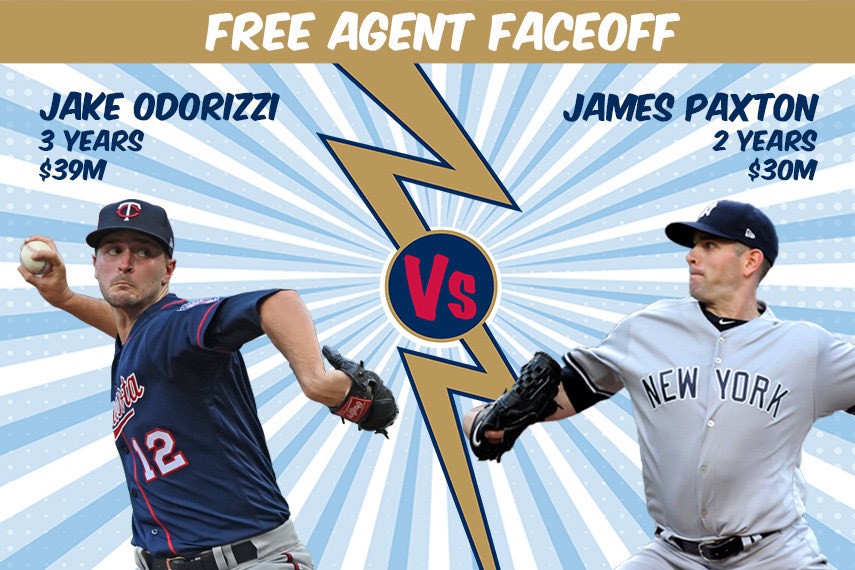 If you haven’t already, be sure to check out the first two editions of “Free Agent Faceoff”: Designated Hitter: Nelson Cruz vs. Marcell Ozuna Utilityman: Kike Hernández vs. Tommy La Stella For the third edition of “Free Agent Faceoff” we will be evaluating two starting pitchers with a high ceiling, but coming off of an injury-riddled 2020: Jake Odorizzi and James Paxton. Jake Odorizzi Contract Estimate: 3 years/ $39M The Case For: When healthy, Jake Odorizzi has pitched like a top level starter with the Minnesota Twins. The 2019 season was a breakthrough year for Odorizzi, when he reached his first career all-star game, tossed a 3.51 ERA and threw the best playoff start for any Twins starter in the 2019 ALDS. At his best, Odorizzi has been a #1 pitcher for the Twins and at the age of 30, might still have more untapped potential in that right arm. Throughout his career, Odorizzi has been a durable pitcher, tossing at least 140 innings in 5 straight seasons from 2014-2019. 2020 was a difficult season for Odo in terms of health, but the injuries he sustained were much more fluky in nature than injuries that should be of concern heading into the future. Odo has clearly taken a liking to the coaching staff in Minnesota and has embraced the analytics that unlocked a career best 10.1 K/9 in 2019. The familiarity that comes with Odorizzi makes bringing him back an easier decision and removes a lot of the uncertainty that comes with bringing in a free agent arm. With three years of team control, the Twins would be able to lock down a top starter to pair with Kenta Maeda and José Berríos for the foreseeable future, a position that has been in flux for the Twins over the past handful of seasons. The Case Against: 2020 was nothing short of a lost season for Jake Odorizzi, who struggled with injury all year. In the end, Odorizzi pitched in just 4 games, tossing 13.2 innings to the tune of a 6.59 ERA. Committing 3 years to Jake Odorizzi with him not having fully shown himself in 2 years would certainly be a risk for the Minnesota Twins. Although Odorizzi has been effective during his time with the Twins, his effectiveness has come in short stints. Over the course of 66 starts in Minnesota, Odorizzi has averaged just over 5 innings/start, rarely ever pitching into the 7th inning of games. After the past 15 months for Jake Odorizzi in a Minnesota Twins uniform, it could just be best for the two sides to move on. From the Twins boxing in Odorizzi with the qualifying offer last winter, to the injury issues all season, to not utilizing Odorizzi out of the bullpen in the playoffs, the last year has played out more like a couple ready to separate rather than renew their vows. James Paxton Contract Estimate: 2 years/$30M The Case For: Since breaking into the league in 2013, James Paxton has consistently been one of the better starting pitchers in all of baseball. Over the course of his career, Paxton owns a 3.58 ERA and a K/9 of 9.9, numbers that would qualify him as a #1 or #2 pitcher on most MLB teams. Stuff-wise, Paxton is about as good as they come, posting statlines like his 16 strikeout game or no-hitter in 2018. Paxton owns a fastball velocity and whiff percentage that are both in the top-25% of baseball. Though Paxton is 32-years-old, he has just 750 innings of mileage on his arm, signaling that there should still be plenty of juice left in him. Given the contract estimate and that the Twins would only need to commit two years to him, the Twins could get an ace-quality pitcher in his prime without dolling out exorbitant dollars or committing to him into the back end of his 30s. The Case Against: Unfortunately for James, Paxton has become more known for his injury history than for his pitching ability throughout his career. In each of his seven full seasons in the Majors, Paxton has spent time on the injured list including injuries to his middle finger, back, knee and most recently, his forearm. Paxton has only thrown 100 innings in a season 4 times, and 160 innings just once. Another argument against signing Paxton is the fact that he is left handed. Just down highway 94, the Chicago White Sox have assembled a team of right handed hitters that absolutely crush left handed pitching. The White Sox lineup, headlined by righties Tim Anderson, José Abreu, Eloy Jiménez and Luis Robert, combined to post the second-highest OPS against southpaws in Major League Baseball history in 2020 with a mark of .887. With the Twins and White Sox sure to battle all season for the division title, throwing a left handed pitcher out there against the White Sox could spell trouble for the Twins. Two of the other rivals of the Minnesota Twins in their pursuit of an American League pennant, the Astros and Yankees, are 2nd and 3rd respectively in OPS against LHP since the start of 2019. As a left handed pitcher, acquiring James Paxton could prove trouble for the Twins when the games matter the most. Twins Twitter’s Take: https://twitter.com/MatthewTaylorMN/status/1350114579104358401?s=20 The Verdict: Upon review of the cases of the two starting pitchers, Jake Odorizzi fits the bill as the better fit for this Minnesota Twins ball club. In addition to being two years younger, Odorizzi has the experience with the Twins clubhouse and coaching staff to where the fit between the two sides is undoubtedly a good one. Being just 30 years old, Odorizzi could still have some untapped potential to take his game up yet another level, especially given the increased velocity that he showed during his short time on the mound for the Twins in 2020. In signing Odorizzi, the Twins would finally gain some stability on the mound to pair with Maeda and Berríos and would be able to do so at an AAV lower than what it would take to bring in James Paxton. James Paxton would certainly be a notable consolation prize should Odorizzi be ready to move on from the Twins given the reasons previously noted, but the risk that comes with his injury history is just too great for the Twins to seek him out as the man to solve their hole in the rotation. Would you rather the Minnesota Twins go out and sign James Paxton or Jake Odorizzi this offseason? Leave a comment below and start the conversation! Be on the lookout for the conclusion to the “Free Agent Faceoff” series later this week at Twins Daily! MORE FROM TWINS DAILY — Latest Twins coverage from our writers — Recent Twins discussion in our forums — Follow Twins Daily via Twitter, Facebook or email
 -
With Marwin González and Ehrie Adrianza both free agents, the Minnesota Twins have a massive hole at the utility spot this offseason. There are many names available, but two names make a lot of sense as options for the Twins.“Free Agent Faceoff” is a multi-part series where I will be pitting two free agent targets against each other and determining which would be a better option for the Minnesota Twins. In case you missed it, be sure to check out part 1: Marcell Ozuna vs. Nelson Cruz. While the Minnesota Twins are looking to sign a utilityman, they are not looking to sign a bat off the bench who will appear in 60 games over the course of the season. Because of the way that the Twins have suffered injuries, as well as their tendency to rest their players, the utilityman position for the Twins has become an everyday starter. Take Marwin González for example — in the two seasons that he was with the Minnesota Twins, Marwin appeared in 75% of the team’s possible games. With that being said, the decision of who to sign in this role will certainly be a big one. The two utility men that will be squaring off in the second edition of “Free Agent Faceoff” will be two of the biggest names on the market, Kiké Hernández and Tommy La Stella. Kiké Hernández Contract Estimate: 2 years/$12M The Case For: Kiké Hernández’s biggest asset for the Minnesota Twins would be his versatility in the field. Unlike any other free agent utilityman on the market, Hernández has the rare ability to play all 9 positions in the field. For a Minnesota Twins team that has been ravaged with injuries over the past two seasons, having a utilityman who can play anywhere is a big deal. While defensive runs saved isn’t a fail-proof metric for defensive performance, the fact that he produced a positive number in that metric at each position shows that he can bring some serious juice to the field for a Twins team that began to pride themselves on that skill in 2020. Hernández is known more for his ability in the field than his ability at the plate, as he has been pretty much an average hitter over the course of his career. What Kiké has shown at the plate, though, is his ability to hit left handed pitching. Over the course of his career, Hernández owns a .820 OPS against southpaws, which would certainly help out a Minnesota Twins club that struggled mightily against lefties in 2020. Finally, what Hernández brings as a free agent is something that doesn’t show up in box scores — big game experience. Playing with the Dodgers over the past 6 seasons, Hernández has had his fair share of postseason experience. In total, the former Dodger has appeared in 58 postseason games in his career, and now owns a World Series title. For a team like the Twins that has struggled so much in the playoffs, acquiring players with playoff pedigree who have won on the big stage before isn’t a bad idea. The Case Against: As previously mentioned, with the primary utility position the Minnesota Twins will be signing an everyday player expected to amass between 450-500 plate appearances. With that in mind, the Twins cannot afford to sign a player who is going to be a minus at the plate, which Hernández has been in recent seasons. While Kiké Hernández has been a league average hitter over the course of his career, over the past two seasons he has been downright poor at the plate. Since the start of the 2019 season, the utilityman has hit just .235 with a meager .707 OPS. His numbers against left handed pitching haven’t been much better, posting an OPS against southpaws of just .739 over the same time frame. Outside of a breakout season in 2018, Hernández has never posted an OPS above .730 in a season in which he amassed more than 225 plate appearances, a number that he will surely eclipse in 2021. While the fielding flexibility is a huge plus, the Twins showed in 2020 how challenging it is to compete in games when struggling at the plate, and Hernández’s downside at the plate might just be too steep. Tommy La Stella Contract Estimate: 2 years/$14M The Case For: Though he doesn’t have the name recognition of other great players around the league, Tommy La Stella has been excellent at the plate for a really long time. Since the start of the 2017 season, La Stella has hit .284 and posted an OPS of .800. Focusing in on more recent seasons, La Stella has been even better, posting a .827 OPS since the start of the 2019 season — a mark better than sluggers such as Francisco Lindor, J.T. Realmuto and José Altuve. In addition to hitting for a high average and showing power, La Stella has proven himself to be one of the smartest hitters in baseball, as his 5.3 K% in 2020 was the lowest strikeout rate in all of baseball. La Stella can play 1st, 2nd and 3rd base, and his left handedness presents the opportunity to spell Josh Donaldson and Miguel Sanó against right handed pitching. As two of the more injury-prone players on the team, the ability to get each of them consistent rest without suffering a huge dropoff in production at the plate would be an enormous opportunity. The Case Against: The biggest strike against Tommy La Stella as an option for the Minnesota Twins this offseason is his inability to play shortstop or play in the outfield. The Minnesota Twins are extremely thin at the shortstop position, with Ehrie Adrianza a free agent and Jorge Polanco undergoing ankle surgeries in back to back seasons. Signing a backup shortstop is one of the greatest needs for the Twins, and La Stella would not be able to fill that need. Additionally, La Stella’s left handedness wouldn’t do much in addressing the clubs biggest weakness at the plate in 2020, hitting against left handed pitching. Since the start of the 2019 season, La Stella owns just a .662 OPS against left handed pitching, so would only further cement the issues that this team has against southpaws. Twins Twitter’s Take: The Verdict: While Kiké Hernández brings plenty of big game experience and championship pedigree, Tommy La Stella is the better option for this Minnesota Twins team. With the offseason departure of Eddie Rosario and the uncertainty surrounding Nelson Cruz, the Twins cannot afford to give 500 plate appearances to an average or below-average bat in 2021, which is what Kiké Hernández would bring. In Tommy La Stella the Minnesota Twins would be bringing in an excellent bat who has hit baseballs at the rate of much better known stars in the league. Further, the fact that he has an opposite handedness of Josh Donaldson and Miguel Sanó is a huge advantage, as 1st and 3rd base have been the two positions in the diamond where the Twins have most needed to utilize their utilityman position. While the fact that La Stella can’t play shortstop isn’t completely ideal, the Twins still have a second utility spot to fill where they could bring back Ehire Adrianza or call up any of their minor league glove-first infielders they have signed this offseason to eat innings at shortstop. Tommy La Stella has played with 3 different franchises in the Cubs, Angels and Athletics and proven at every stop that he can be an excellent hitter. La Stella was an all-star 2019, and possesses all the tools to be an all-star with the Twins, should he be the man they ink as their utilityman this offseason. Do you think the Minnesota Twins should sign Kiké Hernandez or Tommy La Stella this offseason? Is there another utilityman you would prefer over these two options? Leave a comment below and start the conversation! Be sure to continue to check back to Twins Daily this weekend for another edition of "Free Agent Faceoff"! MORE FROM TWINS DAILY — Latest Twins coverage from our writers — Recent Twins discussion in our forums — Follow Twins Daily via Twitter, Facebook or email — Follow Matthew Taylor on Twitter here Click here to view the article
-
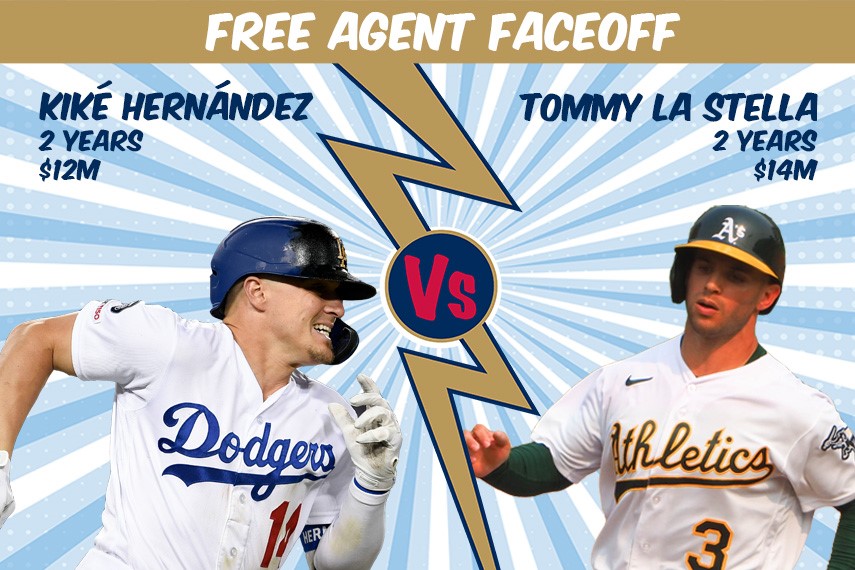 “Free Agent Faceoff” is a multi-part series where I will be pitting two free agent targets against each other and determining which would be a better option for the Minnesota Twins. In case you missed it, be sure to check out part 1: Marcell Ozuna vs. Nelson Cruz. While the Minnesota Twins are looking to sign a utilityman, they are not looking to sign a bat off the bench who will appear in 60 games over the course of the season. Because of the way that the Twins have suffered injuries, as well as their tendency to rest their players, the utilityman position for the Twins has become an everyday starter. Take Marwin González for example — in the two seasons that he was with the Minnesota Twins, Marwin appeared in 75% of the team’s possible games. With that being said, the decision of who to sign in this role will certainly be a big one. The two utility men that will be squaring off in the second edition of “Free Agent Faceoff” will be two of the biggest names on the market, Kiké Hernández and Tommy La Stella. Kiké Hernández Contract Estimate: 2 years/$12M The Case For: Kiké Hernández’s biggest asset for the Minnesota Twins would be his versatility in the field. Unlike any other free agent utilityman on the market, Hernández has the rare ability to play all 9 positions in the field. For a Minnesota Twins team that has been ravaged with injuries over the past two seasons, having a utilityman who can play anywhere is a big deal. While defensive runs saved isn’t a fail-proof metric for defensive performance, the fact that he produced a positive number in that metric at each position shows that he can bring some serious juice to the field for a Twins team that began to pride themselves on that skill in 2020. Hernández is known more for his ability in the field than his ability at the plate, as he has been pretty much an average hitter over the course of his career. What Kiké has shown at the plate, though, is his ability to hit left handed pitching. Over the course of his career, Hernández owns a .820 OPS against southpaws, which would certainly help out a Minnesota Twins club that struggled mightily against lefties in 2020. Finally, what Hernández brings as a free agent is something that doesn’t show up in box scores — big game experience. Playing with the Dodgers over the past 6 seasons, Hernández has had his fair share of postseason experience. In total, the former Dodger has appeared in 58 postseason games in his career, and now owns a World Series title. For a team like the Twins that has struggled so much in the playoffs, acquiring players with playoff pedigree who have won on the big stage before isn’t a bad idea. The Case Against: As previously mentioned, with the primary utility position the Minnesota Twins will be signing an everyday player expected to amass between 450-500 plate appearances. With that in mind, the Twins cannot afford to sign a player who is going to be a minus at the plate, which Hernández has been in recent seasons. While Kiké Hernández has been a league average hitter over the course of his career, over the past two seasons he has been downright poor at the plate. Since the start of the 2019 season, the utilityman has hit just .235 with a meager .707 OPS. His numbers against left handed pitching haven’t been much better, posting an OPS against southpaws of just .739 over the same time frame. Outside of a breakout season in 2018, Hernández has never posted an OPS above .730 in a season in which he amassed more than 225 plate appearances, a number that he will surely eclipse in 2021. While the fielding flexibility is a huge plus, the Twins showed in 2020 how challenging it is to compete in games when struggling at the plate, and Hernández’s downside at the plate might just be too steep. Tommy La Stella Contract Estimate: 2 years/$14M The Case For: Though he doesn’t have the name recognition of other great players around the league, Tommy La Stella has been excellent at the plate for a really long time. Since the start of the 2017 season, La Stella has hit .284 and posted an OPS of .800. Focusing in on more recent seasons, La Stella has been even better, posting a .827 OPS since the start of the 2019 season — a mark better than sluggers such as Francisco Lindor, J.T. Realmuto and José Altuve. In addition to hitting for a high average and showing power, La Stella has proven himself to be one of the smartest hitters in baseball, as his 5.3 K% in 2020 was the lowest strikeout rate in all of baseball. La Stella can play 1st, 2nd and 3rd base, and his left handedness presents the opportunity to spell Josh Donaldson and Miguel Sanó against right handed pitching. As two of the more injury-prone players on the team, the ability to get each of them consistent rest without suffering a huge dropoff in production at the plate would be an enormous opportunity. The Case Against: The biggest strike against Tommy La Stella as an option for the Minnesota Twins this offseason is his inability to play shortstop or play in the outfield. The Minnesota Twins are extremely thin at the shortstop position, with Ehrie Adrianza a free agent and Jorge Polanco undergoing ankle surgeries in back to back seasons. Signing a backup shortstop is one of the greatest needs for the Twins, and La Stella would not be able to fill that need. Additionally, La Stella’s left handedness wouldn’t do much in addressing the clubs biggest weakness at the plate in 2020, hitting against left handed pitching. Since the start of the 2019 season, La Stella owns just a .662 OPS against left handed pitching, so would only further cement the issues that this team has against southpaws. Twins Twitter’s Take: https://twitter.com/MatthewTaylorMN/status/1348662257056583680?s=20 The Verdict: While Kiké Hernández brings plenty of big game experience and championship pedigree, Tommy La Stella is the better option for this Minnesota Twins team. With the offseason departure of Eddie Rosario and the uncertainty surrounding Nelson Cruz, the Twins cannot afford to give 500 plate appearances to an average or below-average bat in 2021, which is what Kiké Hernández would bring. In Tommy La Stella the Minnesota Twins would be bringing in an excellent bat who has hit baseballs at the rate of much better known stars in the league. Further, the fact that he has an opposite handedness of Josh Donaldson and Miguel Sanó is a huge advantage, as 1st and 3rd base have been the two positions in the diamond where the Twins have most needed to utilize their utilityman position. While the fact that La Stella can’t play shortstop isn’t completely ideal, the Twins still have a second utility spot to fill where they could bring back Ehire Adrianza or call up any of their minor league glove-first infielders they have signed this offseason to eat innings at shortstop. Tommy La Stella has played with 3 different franchises in the Cubs, Angels and Athletics and proven at every stop that he can be an excellent hitter. La Stella was an all-star 2019, and possesses all the tools to be an all-star with the Twins, should he be the man they ink as their utilityman this offseason. Do you think the Minnesota Twins should sign Kiké Hernandez or Tommy La Stella this offseason? Is there another utilityman you would prefer over these two options? Leave a comment below and start the conversation! Be sure to continue to check back to Twins Daily this weekend for another edition of "Free Agent Faceoff"! MORE FROM TWINS DAILY — Latest Twins coverage from our writers — Recent Twins discussion in our forums — Follow Twins Daily via Twitter, Facebook or email — Follow Matthew Taylor on Twitter here
 -
The Minnesota Twins have a clear need for a designated hitter this offseason, and the free agent market has some intriguing names. Nelson Cruz and Marcell Ozuna are the top designated hitters available. Which would make for a better fit for the reigning AL Central Champs?“Free Agent Faceoff” will be a multi-part series in which I will pit two free agent targets against one another, examining their candidacy as a free agent for the Minnesota Twins. Ultimately I will decide the winner of the faceoff as the better fit for the Twins. The first faceoff, two designated hitters: Marcell Ozuna vs. Nelson Cruz Marcell Ozuna Contract Estimate: 4 years/$72M The Case For: Marcell Ozuna finished 6th in MVP voting in 2020 after leading the National League in both home runs and RBI and posting a massive 1.067 OPS in 60 games. Ozuna’s numbers were no fluke, either, as the free agent finished in the mid-90s percentile for both exit velocity and barrel %. Ozuna possesses elite power and contact skills and is also extremely smart at the plate, posting a BB% of 14.2 in 2020, good enough for the top-12% of baseball. Further, Ozuna will only just be entering into his age-30 season in the Majors in 2021. He is right in the middle of his prime, and figures to have many seasons of crushing baseballs ahead of him over the next half-decade. In addition to being a designated hitter, Ozuna also possesses the ability to play the outfield. Since entering the league in 2013 Ozuna has over 8,000 innings of experience in the outfield, playing all three outfield positions. Ozuna hasn’t been super effective in the field, but the flexibility that he provides by being able to chip in on defense makes him extremely valuable. The Case Against: While Ozuna undoubtedly put up elite numbers in 2020, his career has been wildly inconsistent over the years. Since entering the league full-time in 2014, Ozuna has posted more seasons in his career with an OPS under .775 (4) than over .775 (3). If the Minnesota Twins were to sign the former Atlanta Brave this offseason, they would be acquiring him at his absolute highest value, paying top dollar after a great performance for 60 games. The small sample size could easily be more of an outlier for Ozuna’s career, where his realistic production expectation might be closer to the .816 OPS that he had averaged for the four seasons prior to his 2020 breakout. Because the Minnesota Twins would be acquiring Ozuna at his peak value, the contract to sign him would need to be quite generous, likely requiring 4 years and somewhere in the range of $72M, handicapping the Twins payroll for years to come and making additional moves harder to come by. Further, with Ozuna’s spot as the team’s designated hitter on the payroll for the next four years, the Twins could find themselves in a tough spot should players like Miguel Sanó or Josh Donaldson decline enough in the field to necessitate becoming designated hitters themselves. Nelson Cruz Contract Estimate: 1 year/$16M The Case For: Nelson Cruz requires little introduction for Minnesota Twins fans. In two seasons with the Twins, Cruz has posted a combined OPS of 1.020, leading the team in home runs in both seasons. Off the field, Cruz has been a leader in the Minnesota Twins clubhouse and become a fan favorite for those in Twins Territory. While it’s natural to be fearful of Nelson Cruz’s production dropping off in his age-41 season, the same could have been said for Cruz going into his age-39 and 40 seasons, when he defied historical precedent and provided the Twins monstrous numbers at the plate. Cruz has made it clear year after year, that past age-related production precedent does not apply to him. Signing Nelson Cruz would allow the Minnesota Twins a tremendous amount of flexibility. First, signing Cruz would allow the Twins to fill their designated hitter spot without tying up their future payroll, as Nelson’s age will likely only require a 1-year contract, or potentially a second year that would kick in if certain incentives are met in the first year. In addition to the financial flexibility, the shortened Cruz contract would also provide the Twins with roster flexibility. Given the injury history of Miguel Sanó and Josh Donaldson, the Twins could certainly find themselves in a spot over the next two seasons where they might need to shift Sanó or Donaldson to the designated hitter position, and signing Cruz this offseason wouldn’t inhibit them from being able to do so. The Case Against: Sure, Nelson Cruz has defied all past precedent when it comes to age-related production, but at the same time ... he’s going to be 41 years old next season! There is certainly an imminent drop off coming for Cruz, and that drop off could certainly be coming next season. Teams constantly make the mistake of moving on from their aging stars a year too late rather than a year too early, and there is a very real chance that the Twins could be moving on from Cruz a year too late, should they decide to bring him back in 2021. Down the stretch of the 2020 season, Nelson Cruz began to suffer from knee soreness, and his production took a dip as a result. After posting months with an OPS greater than 1.000 in both July and August, Cruz saw his OPS dip down to a more modest .844 OPS in September and October, perhaps hinting at a larger-scale production drop off in 2021. Twins Twitter’s Take The Verdict Looking at the cases for both designated hitter free agents, Nelson Cruz makes much more sense as a target for this Minnesota Twins ball club. While the Twins have shown the willingness to open up their pocketbooks and spend money under this front office regime, this club is still a middle-market team that can only afford so many high-dollar contracts on their books. Signing Ozuna, a designated hitter, to a high-dollar deal for four years would simply hamper the Twins books too much and hamper them on such a replaceable position like designated hitter. Additionally, the Twins have multiple players in the pipeline who could fill the designated hitter position down the line, whether it is for an aging player declining in the field like Sanó or Donaldson, or a current prospect needing a roster spot like Brent Rooker or Aaron Sabato, the Twins simply can’t afford to tie up a roster spot on a designated hitter for the next four seasons. In Nelson Cruz, there is definite risk with his age and likely dip in health and production, but his upside on this Twins team has been seen in each of the past two seasons on and off the field. The likely commitment of just one season greatly minimizes Minnesota’s risk and leaves the Twins with clear books to go out and sign players in future seasons while this contending window is still wide open. Do you think the Minnesota Twins should go after Nelson Cruz or Marcell Ozuna at their likely price points? Leave a comment below and start the conversation! Be sure to check back to Twins Daily throughout this week for more editions of “Free Agent Faceoff”! MORE FROM TWINS DAILY — Latest Twins coverage from our writers — Recent Twins discussion in our forums — Follow Twins Daily via Twitter, Facebook or email — Follow Matthew Taylor on Twitter here Click here to view the article
-
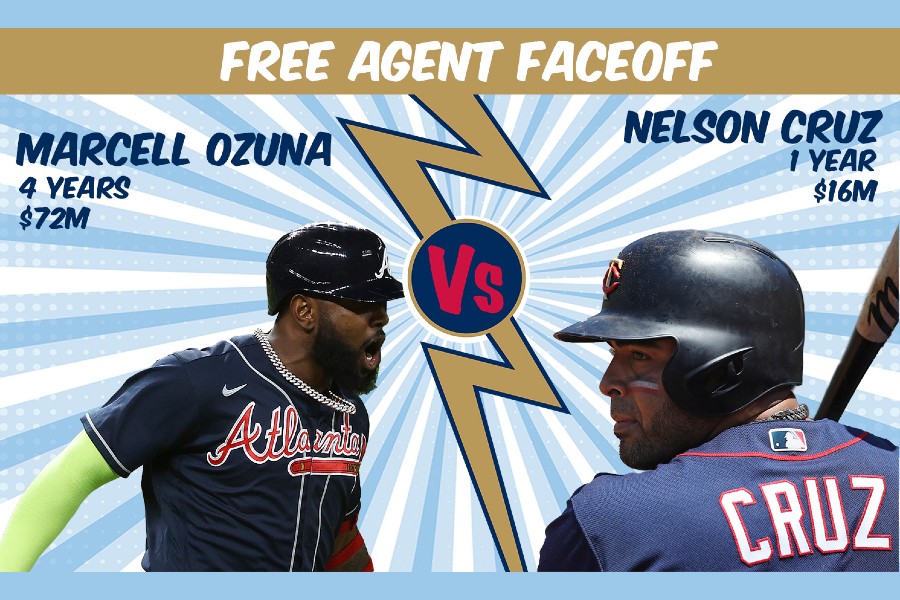 “Free Agent Faceoff” will be a multi-part series in which I will pit two free agent targets against one another, examining their candidacy as a free agent for the Minnesota Twins. Ultimately I will decide the winner of the faceoff as the better fit for the Twins. The first faceoff, two designated hitters: Marcell Ozuna vs. Nelson Cruz Marcell Ozuna Contract Estimate: 4 years/$72M The Case For: Marcell Ozuna finished 6th in MVP voting in 2020 after leading the National League in both home runs and RBI and posting a massive 1.067 OPS in 60 games. Ozuna’s numbers were no fluke, either, as the free agent finished in the mid-90s percentile for both exit velocity and barrel %. Ozuna possesses elite power and contact skills and is also extremely smart at the plate, posting a BB% of 14.2 in 2020, good enough for the top-12% of baseball. Further, Ozuna will only just be entering into his age-30 season in the Majors in 2021. He is right in the middle of his prime, and figures to have many seasons of crushing baseballs ahead of him over the next half-decade. In addition to being a designated hitter, Ozuna also possesses the ability to play the outfield. Since entering the league in 2013 Ozuna has over 8,000 innings of experience in the outfield, playing all three outfield positions. Ozuna hasn’t been super effective in the field, but the flexibility that he provides by being able to chip in on defense makes him extremely valuable. The Case Against: While Ozuna undoubtedly put up elite numbers in 2020, his career has been wildly inconsistent over the years. Since entering the league full-time in 2014, Ozuna has posted more seasons in his career with an OPS under .775 (4) than over .775 (3). If the Minnesota Twins were to sign the former Atlanta Brave this offseason, they would be acquiring him at his absolute highest value, paying top dollar after a great performance for 60 games. The small sample size could easily be more of an outlier for Ozuna’s career, where his realistic production expectation might be closer to the .816 OPS that he had averaged for the four seasons prior to his 2020 breakout. Because the Minnesota Twins would be acquiring Ozuna at his peak value, the contract to sign him would need to be quite generous, likely requiring 4 years and somewhere in the range of $72M, handicapping the Twins payroll for years to come and making additional moves harder to come by. Further, with Ozuna’s spot as the team’s designated hitter on the payroll for the next four years, the Twins could find themselves in a tough spot should players like Miguel Sanó or Josh Donaldson decline enough in the field to necessitate becoming designated hitters themselves. Nelson Cruz Contract Estimate: 1 year/$16M The Case For: Nelson Cruz requires little introduction for Minnesota Twins fans. In two seasons with the Twins, Cruz has posted a combined OPS of 1.020, leading the team in home runs in both seasons. Off the field, Cruz has been a leader in the Minnesota Twins clubhouse and become a fan favorite for those in Twins Territory. While it’s natural to be fearful of Nelson Cruz’s production dropping off in his age-41 season, the same could have been said for Cruz going into his age-39 and 40 seasons, when he defied historical precedent and provided the Twins monstrous numbers at the plate. Cruz has made it clear year after year, that past age-related production precedent does not apply to him. Signing Nelson Cruz would allow the Minnesota Twins a tremendous amount of flexibility. First, signing Cruz would allow the Twins to fill their designated hitter spot without tying up their future payroll, as Nelson’s age will likely only require a 1-year contract, or potentially a second year that would kick in if certain incentives are met in the first year. In addition to the financial flexibility, the shortened Cruz contract would also provide the Twins with roster flexibility. Given the injury history of Miguel Sanó and Josh Donaldson, the Twins could certainly find themselves in a spot over the next two seasons where they might need to shift Sanó or Donaldson to the designated hitter position, and signing Cruz this offseason wouldn’t inhibit them from being able to do so. The Case Against: Sure, Nelson Cruz has defied all past precedent when it comes to age-related production, but at the same time ... he’s going to be 41 years old next season! There is certainly an imminent drop off coming for Cruz, and that drop off could certainly be coming next season. Teams constantly make the mistake of moving on from their aging stars a year too late rather than a year too early, and there is a very real chance that the Twins could be moving on from Cruz a year too late, should they decide to bring him back in 2021. Down the stretch of the 2020 season, Nelson Cruz began to suffer from knee soreness, and his production took a dip as a result. After posting months with an OPS greater than 1.000 in both July and August, Cruz saw his OPS dip down to a more modest .844 OPS in September and October, perhaps hinting at a larger-scale production drop off in 2021. Twins Twitter’s Take https://twitter.com/NickNelsonMN/status/1347354089177436166?s=20 The Verdict Looking at the cases for both designated hitter free agents, Nelson Cruz makes much more sense as a target for this Minnesota Twins ball club. While the Twins have shown the willingness to open up their pocketbooks and spend money under this front office regime, this club is still a middle-market team that can only afford so many high-dollar contracts on their books. Signing Ozuna, a designated hitter, to a high-dollar deal for four years would simply hamper the Twins books too much and hamper them on such a replaceable position like designated hitter. Additionally, the Twins have multiple players in the pipeline who could fill the designated hitter position down the line, whether it is for an aging player declining in the field like Sanó or Donaldson, or a current prospect needing a roster spot like Brent Rooker or Aaron Sabato, the Twins simply can’t afford to tie up a roster spot on a designated hitter for the next four seasons. In Nelson Cruz, there is definite risk with his age and likely dip in health and production, but his upside on this Twins team has been seen in each of the past two seasons on and off the field. The likely commitment of just one season greatly minimizes Minnesota’s risk and leaves the Twins with clear books to go out and sign players in future seasons while this contending window is still wide open. Do you think the Minnesota Twins should go after Nelson Cruz or Marcell Ozuna at their likely price points? Leave a comment below and start the conversation! Be sure to check back to Twins Daily throughout this week for more editions of “Free Agent Faceoff”! MORE FROM TWINS DAILY — Latest Twins coverage from our writers — Recent Twins discussion in our forums — Follow Twins Daily via Twitter, Facebook or email — Follow Matthew Taylor on Twitter here
 -
Monday night the San Diego Padres traded for starting pitcher, Yu Darvish. While the deal closed the door on a potential trade target for the Minnesota Twins, it might have opened up the door for a new trade target.After trading away Yu Darvish to the San Diego Padres, the Chicago Cubs signaled to the baseball world that they were open for business and ready to begin a rebuild, especially after team president Theo Epstein stepped down earlier this year. Players such as Kyle Hendricks, Anthony Rizzo and Kris Bryant are now likely on the table, as well as all-star shortstop, Javier Báez. Much has been made this offseason about the Minnesota Twins pursuing a shortstop and reports have confirmed that this is a direction that the Twins are, indeed, exploring. Names such as Marcus Semien, Andrelton Simmons and Trevor Story have been discussed, but Javier Báez now instantly becomes the most intriguing name of the bunch. Over the past half-decade, Javy Báez has been one of the best shortstops in baseball. From 2016-2019, Báez posted a .822 OPS, earned two all-star bids, and finished second in MVP voting in 2018 after posting a .290/.326/.554 slashline from the shortstop position. Báez has flashed serious power at the plate and absolutely mashes left handed pitchers. 2020 was admittedly a tough season at the plate for Báez (.203 AVG in 59 games), however his overall body of work points to this 60-game sample size being an outlier rather than a trend for the Chicago Cub. When Báez isn’t mashing at the plate, he has shown himself to be a whizz in the field, leading the league in outs above average in 2019 before taking home the Gold Glove trophy in 2020. Baez has the range, arm, and flashy tagging ability to turn the hole between second and third base from a liability to a strength for the Minnesota Twins in 2021. Javier Báez will be playing in his final season of arbitration in 2021 before becoming a free agent in 2022. The “expiring” contract would allow the Twins to acquire a bridge shortstop while Royce Lewis prepares to take the shortstop baton for the future. The singular year of team control would also bring with it a suppressed cost, likely allowing the Twins to hang onto their top-tier prospect capital in a hypothetical trade for the Puerto Rican. Of course, one cannot discuss a connection with Javier Báez and the Minnesota Twins without bringing up the kindred relationship between Báez and his brother-in-law, José Berríos. While Berríos’ wife and Báez’s wife being sisters doesn’t necessarily give the Twins a leg up in any trade discussion, bringing family together on the diamond would certainly bring a smile to the faces of the brothers-in-law and give Dick Bremer plenty of talking points during Twins broadcasts in 2021. What would you think about the Minnesota Twins pursuing a trade for Javier Báez this offseason? How much would you give up to acquire him? Leave a comment below and start the conversation! MORE FROM TWINS DAILY — Latest Twins coverage from our writers — Recent Twins discussion in our forums — Follow Twins Daily via Twitter, Facebook or email — Follow Matthew Taylor on Twitter here Click here to view the article
-
 After trading away Yu Darvish to the San Diego Padres, the Chicago Cubs signaled to the baseball world that they were open for business and ready to begin a rebuild, especially after team president Theo Epstein stepped down earlier this year. Players such as Kyle Hendricks, Anthony Rizzo and Kris Bryant are now likely on the table, as well as all-star shortstop, Javier Báez. Much has been made this offseason about the Minnesota Twins pursuing a shortstop and reports have confirmed that this is a direction that the Twins are, indeed, exploring. Names such as Marcus Semien, Andrelton Simmons and Trevor Story have been discussed, but Javier Báez now instantly becomes the most intriguing name of the bunch. Over the past half-decade, Javy Báez has been one of the best shortstops in baseball. From 2016-2019, Báez posted a .822 OPS, earned two all-star bids, and finished second in MVP voting in 2018 after posting a .290/.326/.554 slashline from the shortstop position. Báez has flashed serious power at the plate and absolutely mashes left handed pitchers. 2020 was admittedly a tough season at the plate for Báez (.203 AVG in 59 games), however his overall body of work points to this 60-game sample size being an outlier rather than a trend for the Chicago Cub. When Báez isn’t mashing at the plate, he has shown himself to be a whizz in the field, leading the league in outs above average in 2019 before taking home the Gold Glove trophy in 2020. Baez has the range, arm, and flashy tagging ability to turn the hole between second and third base from a liability to a strength for the Minnesota Twins in 2021. https://twitter.com/YahooSports/status/1152706721464254464?s=20 Javier Báez will be playing in his final season of arbitration in 2021 before becoming a free agent in 2022. The “expiring” contract would allow the Twins to acquire a bridge shortstop while Royce Lewis prepares to take the shortstop baton for the future. The singular year of team control would also bring with it a suppressed cost, likely allowing the Twins to hang onto their top-tier prospect capital in a hypothetical trade for the Puerto Rican. Of course, one cannot discuss a connection with Javier Báez and the Minnesota Twins without bringing up the kindred relationship between Báez and his brother-in-law, José Berríos. While Berríos’ wife and Báez’s wife being sisters doesn’t necessarily give the Twins a leg up in any trade discussion, bringing family together on the diamond would certainly bring a smile to the faces of the brothers-in-law and give Dick Bremer plenty of talking points during Twins broadcasts in 2021. https://twitter.com/JOLaMaKina/status/1148770808745091072?s=20 What would you think about the Minnesota Twins pursuing a trade for Javier Báez this offseason? How much would you give up to acquire him? Leave a comment below and start the conversation! MORE FROM TWINS DAILY — Latest Twins coverage from our writers — Recent Twins discussion in our forums — Follow Twins Daily via Twitter, Facebook or email — Follow Matthew Taylor on Twitter here
 -
Since joining the Minnesota Twins after the 2016 season, Derek Falvey and the Twins front office have signed 22 MLB free agents. What can those 22 prior free agency signings tell us about who the Minnesota Twins might sign this offseason?While it’s fun to speculate on which free agents we think the Minnesota Twins should sign this offseason, it might be more worthwhile to use recent history as an indicator of who the Minnesota Twins are most likely to sign. To do this, we will take a look back at the prior four offseasons for the Twins under the Derek Falvey regime and the archetypes of players that Falvey & company have signed. Then using that history, we can see which types of players in this free agency class match that archetype and could be a realistic free agent for the Twins this offseason. Archetype #1: Veteran Relievers on 1 Year Deals Prior examples: Zach Duke, 1 year/$2.15M (2018)Fernando Rodney, 1 year/$4.5M (2018)Tyler Clippard, 1 year/$3M (2020)Sergio Romo, 1 year/$5M (2020)2021 possibilities:Joakim SoriaSean DoolittleDarren O’DayTyler ClippardLike most teams, the position that the Minnesota Twins have attacked most frequently in free agency over the past four seasons has been relief pitcher. Upon looking at those reliever free agency signings, there is one singular theme that binds them together — they are largely veteran on one-year deals. Over the past four years the Twins have signed 8 relief pitchers. Seven of those eight relief pitchers have been signed on one-year deals (only Addison Reed’s two-year deal being the outlier), and the average age of those seven relief pitchers has been 37 years old. So, while it’s fun to speculate on the Twins going out and signing a top-tier free agent reliever like Liam Hendriks or Brad Hand, chances are the Minnesota Twins are going to stick with what has worked for them, and sign another aging veteran on a one-year contract. Players like Joakim Soria (36), Sean Doolittle (34), Darren O’Day (38) or Tyler Clippard (35) definitely fit the archetype for a Falvey-like free agent more than Liam Hendriks and are the names we should expect to see the Minnesota Twins go after this offseason. Archetype #2: Starting Pitchers Recovering from Injury Prior examples: Rich Hill, 1 year/$3M (2020)Michael Pineda, 2 years/$10M (2018)2021 possibilities:Cole HamelsCorey KluberAnother archetype that we have seen the Falvey-era Minnesota Twins sign in free agency has been starting pitchers recovering from injury. This is a category of player that typically comes with a built-in discount due to the inherent risk of pitching injuries, and the Twins haven’t shied away from capitalizing on that discount. The previous names that we have seen the Twins sign under this archetype have been Rich Hill, who was originally scheduled to miss half of the following season due to elbow surgery, and Michael Pineda who was signed with the understanding that he would miss the entirety of the first season of his contract due to elbow surgery. Teams like the Minnesota Twins might not be able to compete for the Gerrit Coles of the world, but if they hit on a discounted pitcher due to injury, they could acquire a top-flight pitcher for a fraction of the cost. This offseason there are two starting pitchers that fit the bill for a starting pitcher recovering from injury, Cole Hamels and Corey Kluber. Hamels signed with the Atlanta Braves last offseason, only to pitch 3 1/3 innings and ultimately be shut down with shoulder fatigue. Kluber was another starting pitcher with a new team last season only to struggle with injury, pitching just one inning for the Rangers before being shut down with a shoulder tear. Both of these players would make a lot of sense on the Minnesota Twins on reclamation projects, and there has already been buzz of the Minnesota Twins showing interest in Kluber. Archetype #3: Veteran, Frame-Savvy, “Clubhouse Guy” Catchers Prior examples: Jason Castro, 3 year/$24.5M (2017)Alex Avila, 1 year/$4.25M (2020)2021 possibilities:Alex AvilaJason CastroWith Alex Avila becoming a free agent, the Twins have a backup catcher spot to fill on their roster this offseason. Under the Falvey regime, the two catchers that the Twins have signed (Castro and Avila) have both been veteran, frame-savvy, “clubhouse guy” catchers. They have been field-first catchers who excel in making pitchers look better, while being high character guys in the clubhouse. With a hole at backup catcher, the Twins could certainly go out and acquire another framing specialist behind the plate, with the two most likely names, ironically, being Alex Avila and Jason Castro. The most likely path for the Twins, though, will be to not sign either of those names as they have their own frame-savvy catcher within their organization in Ryan Jeffers. Jeffers might not be a 10-year veteran in the Majors like Castro and Avila, but he showed last season that he is an adept pitch framer, and by all accounts has what it takes to be the backup catcher, if not ultimately the starting catcher for the Minnesota Twins in 2021 and beyond. Archetype #4: Top-Tier, Superstar Free Agent Prior examples: Nelson Cruz, 1 year/$14M + $12M second year option (2019)Josh Donaldson, 4 years/$92M (2020)2021 possibilities:Trevor BauerMasahiro TanakaMarcell OzunaNelson CruzThe final archetype of free agent that the Falvey-era Twins have shown that they are capable of signing is the top-tier, superstar free agent. While the Twins have looked to find discounts on the reliever market or by signing starting pitchers coming off of injury, they have also shown that they are capable of ponying up and signing a star when the opportunity presents itself. They somewhat showed that in 2019, when the Twins signed Nelson Cruz to a nice contract, but they really proved it last offseason, when they signed Josh Donaldson to a franchise record $92M deal. Twins fans might still cry “Pohlad Pocket Protector”, but this front office has shown that when the right player is out there, and the need presents itself, they will spend big-time money to bring in talent. Because they have shown in the past that they are willing to spend, no free agent should be thought of as completely off the table for this Twins front office. The big time players this year are Trevor Bauer, Masahiro Tanaka, Marcell Ozuna and Nelson Cruz. Look for the Twins to explore deals with all of these free agents, and potentially ink a deal. Which archetype of free agent do you think the Twins are most likely to sign this offseason? Is there another theme of free agent that was missed? Leave a comment below and start the conversation! MORE FROM TWINS DAILY — Latest Twins coverage from our writers — Recent Twins discussion in our forums — Follow Twins Daily via Twitter, Facebook or email Click here to view the article

