



Matthew Taylor
-
Posts
973 -
Joined
-
Last visited
Content Type
Profiles
News
Minnesota Twins Videos
2026 Minnesota Twins Top Prospects Ranking
2022 Minnesota Twins Draft Picks
Minnesota Twins Free Agent & Trade Rumors, Notes, & Tidbits
Guides & Resources
2023 Minnesota Twins Draft Picks
The Minnesota Twins Players Project
2024 Minnesota Twins Draft Picks
2025 Minnesota Twins Draft Pick Tracker
2026 Minnesota Twins Draft Tracker: Picks & Bonuses
Forums
Blogs
Events
Store
Downloads
Gallery
Everything posted by Matthew Taylor
-
 Was wondering who would catch this Since RBI wasn't technically a stat when The Babe played, he's not on the all-time RBI list, like it or not.
 -
The Twins will look to build upon Monday night’s victory over the Cleveland Indians with another matchup against their division rivals. This time, though, the Twins will face much stiffer competition as team ace, and Cy Young front runner will take the mound for the Tribe.Last Night’s Game Recap MIN 3, CLE 2: Bullpen Bends, Does Not Break TODAY Minnesota Twins at Cleveland Indians, 6:10pm CDT Twins Starter: Rich Hill 1-1, 4.70 ERA, 1.30 WHIP Download attachment: hill.png Rich Hill is coming off of his worst start of the 2020 season last week when he allowed 4 runs, 4 hits and a walk in just 2.2 innings against the Milwaukee Brewers. Hill struggled mightily with missing bats, and didn’t have the same type of command that we saw from him in his first start of the season. Whether his rough start was a result of rust coming off of a long IL stint or whether his 40-year-old age is finally catching up with him will be something to monitor in tonight’s game. Hill will benefit from facing a Cleveland lineup that continues to struggle, as they are 28th in baseball in runs/game (3.93) and batting average (.213). Indians Starter: Shane Bieber 5-0, 1.11 ERA, 0.76 WHIP Download attachment: bieber.png There’s been no starting pitcher in baseball better than Bieber to start the 2020 season, and the Twins experienced that first hand the last time the right hander faced the Twins this season. On July 30, Bieber held the Twins to 3 hits over 8 innings with 13 strikeouts. The Minnesota Twins batters looked completely lost at the plate against Bieber and were unable to put up any sort of fight. Bieber uses his full arsenal of 5 different pitches to neutralize batters from both sides of the plate, and uses excellent command to avoid mistakes and get deep in games. Lineups 2 Things to Watch For 1. Sanó's Streak Miguel Sanó has been on an absolute tear for the Minnesota Twins, and the numbers are absolutely eye popping: Over his last 13 games, Sanó owns a 1.286 OPS.Miguel Sanó is currently sporting a 8 game hitting streak, owning a .433/.500/.900 slash line during the streak with 8 doubles, 2 HR and 7 RBIMiguel Sanó has recorded an extra base hit in 8 consecutive games. He is 3 games off of the Twins record of 11 consecutive games with an XBH by Brian Dozier in 2016.Will Sanó be the guy who’s finally able to come through against Shane Bieber? Will his hit streak and XBH streak continue tonight? It will certainly be something to watch! 2. Bullpen Usage As has become customary for the Minnesota Twins in 2020, the bullpen is in a tough spot heading into tonight’s game. Following a bullpen game on Sunday, the Twins needed to turn to several of its high leverage arms last night. After pitching on consecutive nights, Taylor Rogers, Trevor May and Sergio Romo all figure to be out of the bullpen mix tonight. With Clippard injured, this figures to only leave Tyler Duffey and Jorge Alacala for high leverage spots tonight. Rich Hill was unable to get through 3 innings in his last start, but getting through at least 5 or 6 innings will be key for the right hander tonight. Download attachment: bullpen usage.png News & Notes We are exactly halfway through the MLB season with many teams having now completed 30 games. Through the halfway point, the Minnesota Twins are tied with the Oakland Athletics for the most wins in the American League with 20. Shane Bieber (Indians), Anthony Rendon (Angels) and Brandon Lowe (Rays) lead the American League in WAR with 1.8 and Mike Yastrzemski (Giants) leads the National league in WAR with 2.2.Who are your League MVP and Cy Young Award winners through the first half of the MLB season?After an RBI single in the 5th inning of LAA’s 11-4 loss against the Houston Astros, Albert Pujols passed Alex Rodriguez for the second most RBI in Major League Baseball history with 2,087. He now trails only Hank Aaron who posted 2,297 career RBI Around the AL Central STL 9, KCR 3 CHC 9, DET 3 1. MIN 20-10 (+41) 2. CLE 17-12 (+27) 3. CWS 17-12 (+30) 4. DET 11-16 (-37) 5. KCR 11-16 (-18) What will you be watching for in tonight’s game? What do you think will be the biggest key for the matchup? Leave a comment below and start the conversation! MORE FROM TWINS DAILY — Latest Twins coverage from our writers — Recent Twins discussion in our forums — Follow Twins Daily via Twitter, Facebook or email Click here to view the article
-
Twins Notebook 8/25: Minnesota Twins Seek Revenge on (Not Justin) Bieber
Matthew Taylor posted an article in Twins
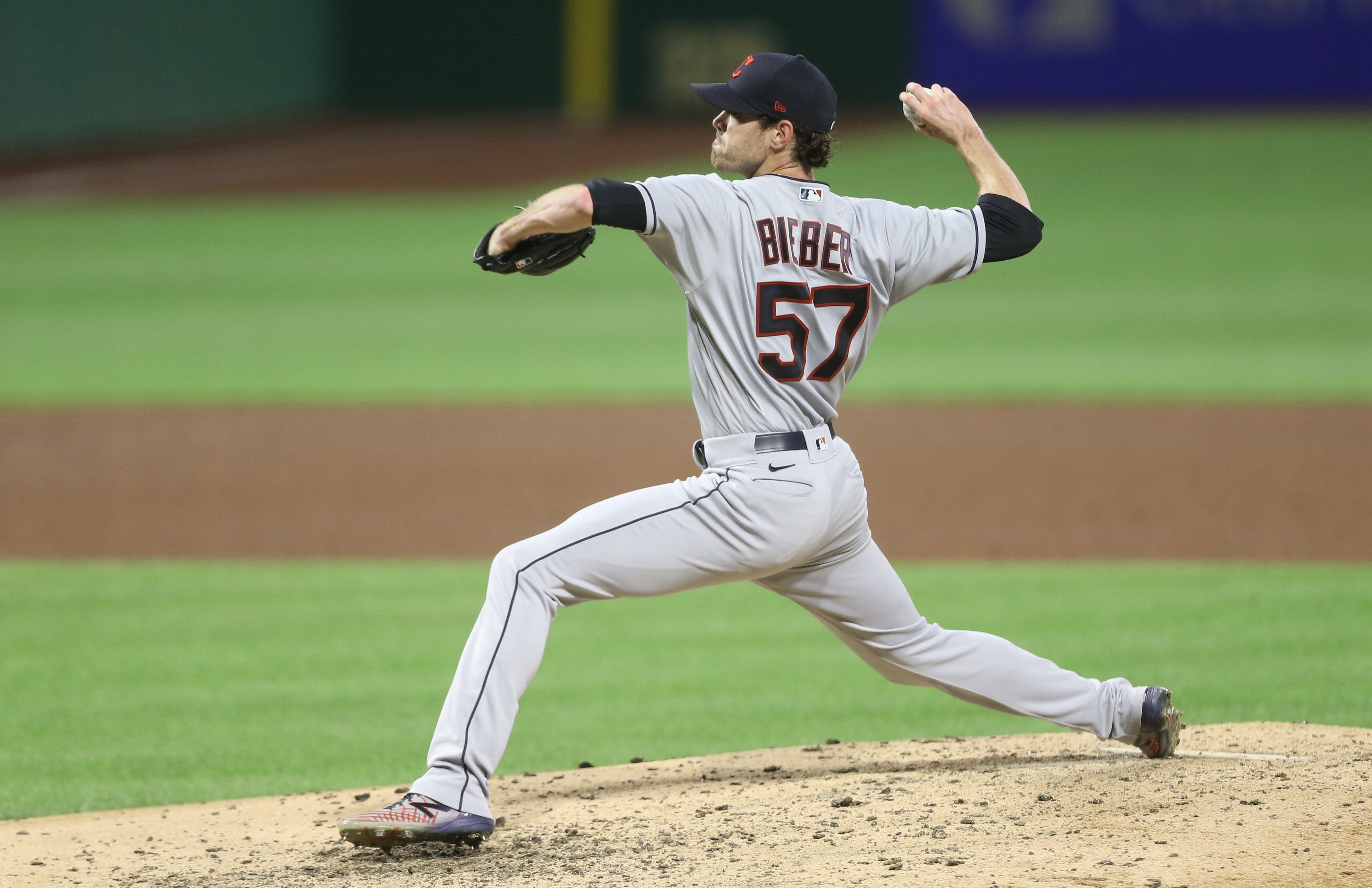 Last Night’s Game Recap MIN 3, CLE 2: Bullpen Bends, Does Not Break TODAY Minnesota Twins at Cleveland Indians, 6:10pm CDT Twins Starter: Rich Hill 1-1, 4.70 ERA, 1.30 WHIP Rich Hill is coming off of his worst start of the 2020 season last week when he allowed 4 runs, 4 hits and a walk in just 2.2 innings against the Milwaukee Brewers. Hill struggled mightily with missing bats, and didn’t have the same type of command that we saw from him in his first start of the season. Whether his rough start was a result of rust coming off of a long IL stint or whether his 40-year-old age is finally catching up with him will be something to monitor in tonight’s game. Hill will benefit from facing a Cleveland lineup that continues to struggle, as they are 28th in baseball in runs/game (3.93) and batting average (.213). Indians Starter: Shane Bieber 5-0, 1.11 ERA, 0.76 WHIP There’s been no starting pitcher in baseball better than Bieber to start the 2020 season, and the Twins experienced that first hand the last time the right hander faced the Twins this season. On July 30, Bieber held the Twins to 3 hits over 8 innings with 13 strikeouts. The Minnesota Twins batters looked completely lost at the plate against Bieber and were unable to put up any sort of fight. Bieber uses his full arsenal of 5 different pitches to neutralize batters from both sides of the plate, and uses excellent command to avoid mistakes and get deep in games. Lineups https://twitter.com/dailyrotonews/status/1298300107067142145?s=20 2 Things to Watch For 1. Sanó's Streak Miguel Sanó has been on an absolute tear for the Minnesota Twins, and the numbers are absolutely eye popping: Over his last 13 games, Sanó owns a 1.286 OPS. Miguel Sanó is currently sporting a 8 game hitting streak, owning a .433/.500/.900 slash line during the streak with 8 doubles, 2 HR and 7 RBI Miguel Sanó has recorded an extra base hit in 8 consecutive games. He is 3 games off of the Twins record of 11 consecutive games with an XBH by Brian Dozier in 2016. Will Sanó be the guy who’s finally able to come through against Shane Bieber? Will his hit streak and XBH streak continue tonight? It will certainly be something to watch! 2. Bullpen Usage As has become customary for the Minnesota Twins in 2020, the bullpen is in a tough spot heading into tonight’s game. Following a bullpen game on Sunday, the Twins needed to turn to several of its high leverage arms last night. After pitching on consecutive nights, Taylor Rogers, Trevor May and Sergio Romo all figure to be out of the bullpen mix tonight. With Clippard injured, this figures to only leave Tyler Duffey and Jorge Alacala for high leverage spots tonight. Rich Hill was unable to get through 3 innings in his last start, but getting through at least 5 or 6 innings will be key for the right hander tonight. News & Notes We are exactly halfway through the MLB season with many teams having now completed 30 games. Through the halfway point, the Minnesota Twins are tied with the Oakland Athletics for the most wins in the American League with 20. Shane Bieber (Indians), Anthony Rendon (Angels) and Brandon Lowe (Rays) lead the American League in WAR with 1.8 and Mike Yastrzemski (Giants) leads the National league in WAR with 2.2. Who are your League MVP and Cy Young Award winners through the first half of the MLB season? After an RBI single in the 5th inning of LAA’s 11-4 loss against the Houston Astros, Albert Pujols passed Alex Rodriguez for the second most RBI in Major League Baseball history with 2,087. He now trails only Hank Aaron who posted 2,297 career RBI Around the AL Central STL 9, KCR 3 CHC 9, DET 3 1. MIN 20-10 (+41) 2. CLE 17-12 (+27) 3. CWS 17-12 (+30) 4. DET 11-16 (-37) 5. KCR 11-16 (-18) What will you be watching for in tonight’s game? What do you think will be the biggest key for the matchup? Leave a comment below and start the conversation! MORE FROM TWINS DAILY — Latest Twins coverage from our writers — Recent Twins discussion in our forums — Follow Twins Daily via Twitter, Facebook or email
 -
The Twins jumped out to an early lead again on Sunday, and they had plenty of opportunities to add on. Nelson Cruz added some insurance in the ninth, but things got interesting again in the bottom of the ninth inning. However, Taylor Rogers got the save and the Twins evened their season series with the Royals.Box Score Wisler: 2.0 IP, 1 H, 0 ER, 1 BB, 2 K Home Runs: Cruz (10) Bottom 3 WPA: Top 3 WPA: Tyler Clippard 0.153, Nelson Cruz 0.142, Sean Poppen 0.129 Win Probability Chart (via FanGraphs): The Minnesota Twins kicked off the scoring in Sunday’s afternoon affair with a couple of 2-out hits in the first inning. The first, a 107 MPH double off the bat of Miguel Sanó to drive in Max Kepler, followed by a RBI single off the bat of Eddie Rosario to give the Twins a 2-0 lead to begin the game. The 2 first inning runs continued the Minnesota Twins’ strength of first inning scoring, as they have now scored 27 first inning runs in 29 games this season. The Twins then built on their lead in the 3rd inning in what was one of the more exciting innings you’ll see from the Minnesota Twins. The 3rd inning rally began with a rare infield single by Nelson Cruz. Following the Cruz single, the Twins got another single from Miguel Sanó, who has been on fire since shaking off his initial rust after a late start to the 2020 season. With runners on first and second, Eddie Rosario laid down a drag bunt for a single to load the bases for Marwin Gonzalez. Marwin wasted no time to tack onto the Twins lead, knocking a 2-run double on the first pitch to put the Twins up 4-0. The Royals quickly began to chip away at Minnesota’s lead, though, as they strung together a hit by pitch, a Hunter Dozier double, and a 2-run Jorge Soler double in the bottom of the third inning to immediately cut the Twins lead in half. In the bottom of the 7th inning, the Royals trimmed their deficit again after getting a 2-out RBI single from third baseman, Maikel Franco, cutting the Twins’ lead to just one run. In what became a much closer game than it had any business becoming, the Minnesota Twins needed some insurance and like a good neighbor, Nelson Cruz was there. In the top of the 9th inning in a one-run game, Nelson Cruz went yard off of the extremely tough Trevor Rosenthal, blasting a 107 MPH shot to center field to give the Twins a 2 run lead heading into the bottom of the 9th inning. Taylor Rogers allowed for some 9th inning drama to creep in as he allowed one run and two hits (one double) and had the Royals with the winning run on 1st base with 2 outs. Rogers was able to escape from the jam, though, and get the Minnesota Twins a 2-1 series win. Should Taylor Rogers remain the team’s closer? Some additional notes: Bullpen Game Produces Another Win Because of all of the injuries to Minnesota’s starting rotation, the Twins have needed to turn to bullpen games throughout this shortened 2020 season. These bullpen games, however, have produced good results for the Twins, as they are now 3-1 in bullpen games this season. While Devin Smeltzer struggled a bit in innings 3-4 with taming Kansas City’s bats, the Twins got excellent appearances from each of the other relievers they turned to today, with Matt Wisler, Trevor May, Sean Poppen, Sergio Romo, Tyler Clippard and Taylor Rogers allowing a combined 2 earned runs in 8 innings pitched. Sanó Está En Fuego Miguel Sanó continued his absolute tear at the plate in today’s game, going 3-for-4 with a walk, 2 doubles, and an RBI. The big guy is now 15 for his last 38 (.395) with 10 extra base hits over his last 12 games. Miguel Sanó clearly had some rust to knock off after getting a late start to the season with his COVID-19 diagnosis, and has clearly knocked off that rust. For the season he now boasts a .879 OPS, second on the Minnesota Twins and only trailing Nelson Cruz for best on the team. Missed Opportunities In a game in which the Minnesota Twins chased the starting pitcher in 3.1 innings, posted 13 hits, and an expected batting average of .358, putting up just 5 runs is a disappointment. The story of the offense today was missed opportunities and leaving runners on base. The Twins left 11 runners on base in today’s game and were just 3-17 with runners in scoring position. Against a team like the Royals, you can survive without converting opportunities, but when fiercer competition comes their way, the Twins will have to convert on the opportunities that come their way. Another Injured Pitcher After throwing another scoreless inning in Sunday’s ballgame, the appearance for Tyler Clippard ended in scary fashion. On the final out of the bottom of the 8th inning, Clippard was drilled on the elbow with a 100 MPH liner from Whit Merrifield. Following the liner, Clippard slowly made his way back to the dugout with the type of body language that induces fear into a fanbase that has been able to rely on the right hander all season. In Rocco Baldelli's press conference, the managers said that initial imaging from Clippard didn't show anything serious but that he "doesn't anticipate (Clippard) throwing a baseball anytime in the very near future". To date, Clippard has a 1.42 ERA in 13.2 innings with the Twins Today marked the final game of the Minnesota Twins 10-game slate versus the Kansas City Royals in 2020. The Royals posed a much stiffer competition to the Twins than anyone anticipated, as the two teams split the season series 5-5, with the Twins scoring 36 runs over the 10 games compared to 38 for the Royals. The Minnesota Twins are now 19-10 on the season and lead the American League Central by 1.5 games. The Twins will continue their road trip Monday evening in a matchup against the second place Cleveland Indians — Minnesota will trout Kenta Maeda out on the hill to face Indians starter Aaron Civale. Bullpen Usage Spreadsheet What were your takeaways from Sunday’s victory over the Kansas City Royals? Who would you say was the player of the game? Leave a comment below and start the conversation! MORE FROM TWINS DAILY — Latest Twins coverage from our writers — Recent Twins discussion in our forums — Follow Twins Daily via Twitter, Facebook or email Click here to view the article
-
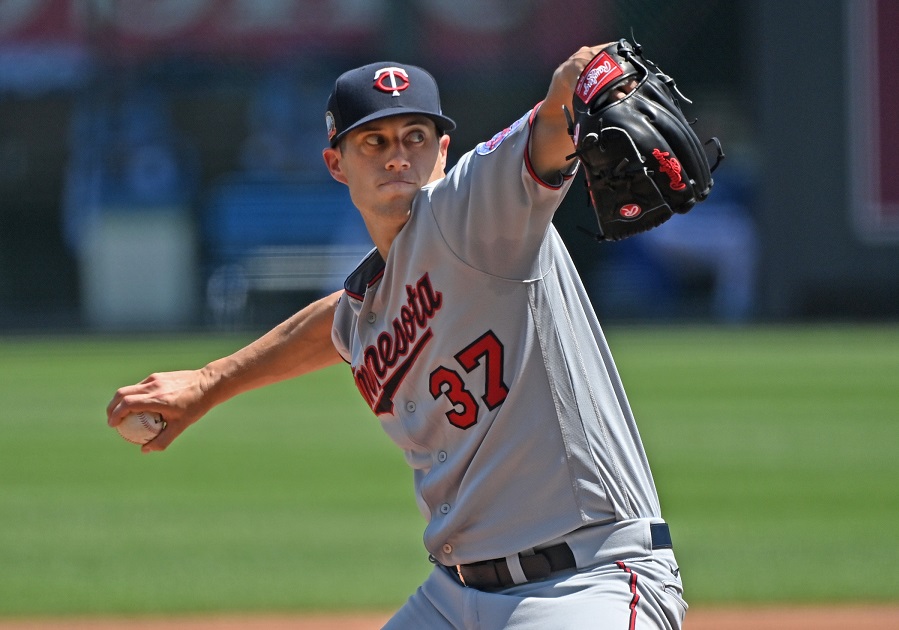 Box Score Wisler: 2.0 IP, 1 H, 0 ER, 1 BB, 2 K Home Runs: Cruz (10) Bottom 3 WPA: Top 3 WPA: Tyler Clippard 0.153, Nelson Cruz 0.142, Sean Poppen 0.129 Win Probability Chart (via FanGraphs): The Minnesota Twins kicked off the scoring in Sunday’s afternoon affair with a couple of 2-out hits in the first inning. The first, a 107 MPH double off the bat of Miguel Sanó to drive in Max Kepler, followed by a RBI single off the bat of Eddie Rosario to give the Twins a 2-0 lead to begin the game. The 2 first inning runs continued the Minnesota Twins’ strength of first inning scoring, as they have now scored 27 first inning runs in 29 games this season. The Twins then built on their lead in the 3rd inning in what was one of the more exciting innings you’ll see from the Minnesota Twins. The 3rd inning rally began with a rare infield single by Nelson Cruz. Following the Cruz single, the Twins got another single from Miguel Sanó, who has been on fire since shaking off his initial rust after a late start to the 2020 season. With runners on first and second, Eddie Rosario laid down a drag bunt for a single to load the bases for Marwin Gonzalez. Marwin wasted no time to tack onto the Twins lead, knocking a 2-run double on the first pitch to put the Twins up 4-0. https://twitter.com/Twins/status/1297609595179892739?s=20 The Royals quickly began to chip away at Minnesota’s lead, though, as they strung together a hit by pitch, a Hunter Dozier double, and a 2-run Jorge Soler double in the bottom of the third inning to immediately cut the Twins lead in half. In the bottom of the 7th inning, the Royals trimmed their deficit again after getting a 2-out RBI single from third baseman, Maikel Franco, cutting the Twins’ lead to just one run. In what became a much closer game than it had any business becoming, the Minnesota Twins needed some insurance and like a good neighbor, Nelson Cruz was there. In the top of the 9th inning in a one-run game, Nelson Cruz went yard off of the extremely tough Trevor Rosenthal, blasting a 107 MPH shot to center field to give the Twins a 2 run lead heading into the bottom of the 9th inning. https://twitter.com/Twins/status/1297645764173234179?s=20 Taylor Rogers allowed for some 9th inning drama to creep in as he allowed one run and two hits (one double) and had the Royals with the winning run on 1st base with 2 outs. Rogers was able to escape from the jam, though, and get the Minnesota Twins a 2-1 series win. Should Taylor Rogers remain the team’s closer? Some additional notes: Bullpen Game Produces Another Win Because of all of the injuries to Minnesota’s starting rotation, the Twins have needed to turn to bullpen games throughout this shortened 2020 season. These bullpen games, however, have produced good results for the Twins, as they are now 3-1 in bullpen games this season. While Devin Smeltzer struggled a bit in innings 3-4 with taming Kansas City’s bats, the Twins got excellent appearances from each of the other relievers they turned to today, with Matt Wisler, Trevor May, Sean Poppen, Sergio Romo, Tyler Clippard and Taylor Rogers allowing a combined 2 earned runs in 8 innings pitched. Sanó Está En Fuego Miguel Sanó continued his absolute tear at the plate in today’s game, going 3-for-4 with a walk, 2 doubles, and an RBI. The big guy is now 15 for his last 38 (.395) with 10 extra base hits over his last 12 games. Miguel Sanó clearly had some rust to knock off after getting a late start to the season with his COVID-19 diagnosis, and has clearly knocked off that rust. For the season he now boasts a .879 OPS, second on the Minnesota Twins and only trailing Nelson Cruz for best on the team. Missed Opportunities In a game in which the Minnesota Twins chased the starting pitcher in 3.1 innings, posted 13 hits, and an expected batting average of .358, putting up just 5 runs is a disappointment. The story of the offense today was missed opportunities and leaving runners on base. The Twins left 11 runners on base in today’s game and were just 3-17 with runners in scoring position. Against a team like the Royals, you can survive without converting opportunities, but when fiercer competition comes their way, the Twins will have to convert on the opportunities that come their way. Another Injured Pitcher After throwing another scoreless inning in Sunday’s ballgame, the appearance for Tyler Clippard ended in scary fashion. On the final out of the bottom of the 8th inning, Clippard was drilled on the elbow with a 100 MPH liner from Whit Merrifield. Following the liner, Clippard slowly made his way back to the dugout with the type of body language that induces fear into a fanbase that has been able to rely on the right hander all season. In Rocco Baldelli's press conference, the managers said that initial imaging from Clippard didn't show anything serious but that he "doesn't anticipate (Clippard) throwing a baseball anytime in the very near future". To date, Clippard has a 1.42 ERA in 13.2 innings with the Twins Today marked the final game of the Minnesota Twins 10-game slate versus the Kansas City Royals in 2020. The Royals posed a much stiffer competition to the Twins than anyone anticipated, as the two teams split the season series 5-5, with the Twins scoring 36 runs over the 10 games compared to 38 for the Royals. The Minnesota Twins are now 19-10 on the season and lead the American League Central by 1.5 games. The Twins will continue their road trip Monday evening in a matchup against the second place Cleveland Indians — Minnesota will trout Kenta Maeda out on the hill to face Indians starter Aaron Civale. Bullpen Usage Spreadsheet What were your takeaways from Sunday’s victory over the Kansas City Royals? Who would you say was the player of the game? Leave a comment below and start the conversation! MORE FROM TWINS DAILY — Latest Twins coverage from our writers — Recent Twins discussion in our forums — Follow Twins Daily via Twitter, Facebook or email
 -
For the past handful of seasons, Taylor Rogers has been the shining star in the Minnesota Twins bullpen. After a few rough outings to start the 2020 season, though, it’s time to evaluate where Taylor Rogers fits in with the bullpen pecking order and if it’s time for a changing of the guard.From the start of the 2017 season to the end of the 2019 season, Taylor Rogers had been one of the best relief pitchers in baseball. Over that timespan, Rogers ranked 15th in baseball in ERA (2.75) and 15th in fWAR (4.3). In what had been rollercoaster season for the Twins’ various relief groups, Rogers had been the steady force who could be counted on in the highest of leverage situations. Down the stretch run of 2019 and into the 2020 season, though, there have been some chinks in the armor. After an outstanding first half of the 2019 season (1.82 ERA), Taylor Rogers stumbled a bit down the stretch, posting a second half ERA of 3.68. Rogers has continued that poor stretch into the 2020 season as he now owns a 4.82 ERA through the first third of the season, while batters own a batting average north of .300 against him. Thus far in the 2020 season, the biggest difference in Taylor Rogers struggles have been the ability for opposing batters to square up and make hard contact on his pitches. In 2018 and 2019, Rogers ranked in the top 25% of baseball in limiting hard contact for opposing batters. Thus far in 2020, though, Rogers ranks in the bottom third in baseball in limiting hard contact, allowing a hard hit percentage of 40.7. The hard hits have led to some tough outings for Rogers, who has allowed runs in three of his 10 outings, two of them resulting in multiple runs, and all three of them blowing a tie or a lead. In addition to the runs allowed, Rogers has seemingly had to work his way through every outing. In 2019, Taylor Rogers got through 42% of his appearances without allowing a hit, while in 2020 he has allowed a hit in seven of his 10 outings. While Taylor Rogers has taken a small step back from his "eliteness" over the past 13 months, there have been several other arms in the Minnesota Twins bullpen that have made the leap forward to being outstanding relief options. As you can see above, Taylor Rogers still has a very respectable 3.82 ERA since last July, but other arms have simply been better — namely, Trevor May and Tyler Duffey. Trevor May has the best pure “stuff” of anyone on the Minnesota Twins bullpen, utilizing a 98 MPH fastball and a slider that completely fools batters at the plate. Tyler Duffey, in the meantime, has developed into one of the best relief pitchers in all of baseball, becoming practically unhittable every time he takes the mound. May and Duffey both tout right handedness in an American League where the majority of the best hitters come from the right side of the plate. Taylor Rogers still has the command and the stuff to work his way back up the bullpen pecking order, but Trevor May and Tyler Duffey have done enough over what has worked out to be a half-season sample size to become the high leverage arms in this relief group. In a shortened season in which every game (theoretically) means 2.7 times more than it normally would, it’s time for the pecking order to be rearranged and for the Twins bullpen stars to get their time to shine. Do you think Taylor Rogers should be moved down the bullpen pecking order? Would you rather see Trevor May or Tyler Duffey as the “highest” leverage arm? Leave a comment below and start the conversation! MORE FROM TWINS DAILY — Latest Twins coverage from our writers — Recent Twins discussion in our forums — Follow Twins Daily via Twitter, Facebook or email Click here to view the article
-
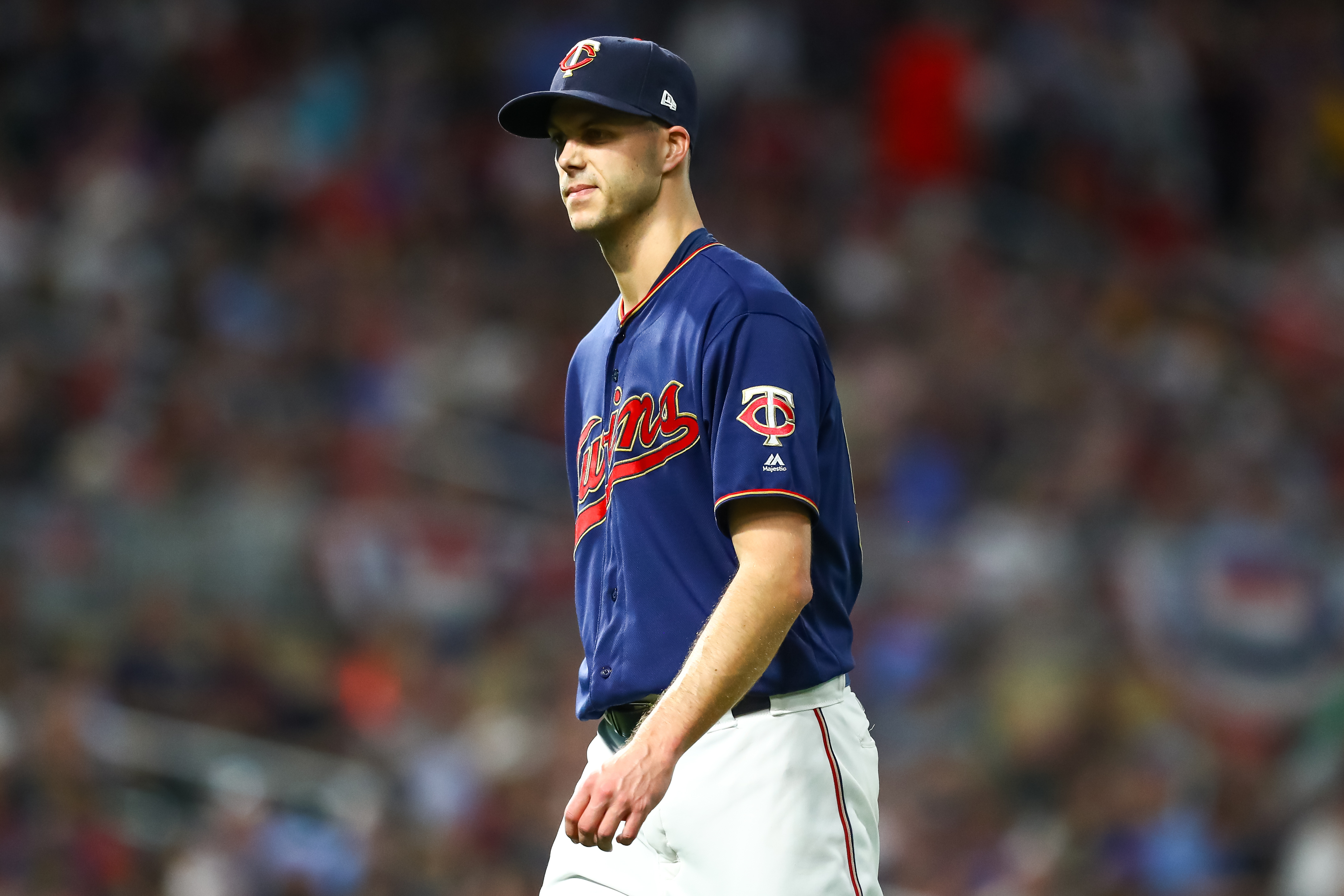 From the start of the 2017 season to the end of the 2019 season, Taylor Rogers had been one of the best relief pitchers in baseball. Over that timespan, Rogers ranked 15th in baseball in ERA (2.75) and 15th in fWAR (4.3). In what had been rollercoaster season for the Twins’ various relief groups, Rogers had been the steady force who could be counted on in the highest of leverage situations. Down the stretch run of 2019 and into the 2020 season, though, there have been some chinks in the armor. After an outstanding first half of the 2019 season (1.82 ERA), Taylor Rogers stumbled a bit down the stretch, posting a second half ERA of 3.68. Rogers has continued that poor stretch into the 2020 season as he now owns a 4.82 ERA through the first third of the season, while batters own a batting average north of .300 against him. Thus far in the 2020 season, the biggest difference in Taylor Rogers struggles have been the ability for opposing batters to square up and make hard contact on his pitches. In 2018 and 2019, Rogers ranked in the top 25% of baseball in limiting hard contact for opposing batters. Thus far in 2020, though, Rogers ranks in the bottom third in baseball in limiting hard contact, allowing a hard hit percentage of 40.7. The hard hits have led to some tough outings for Rogers, who has allowed runs in three of his 10 outings, two of them resulting in multiple runs, and all three of them blowing a tie or a lead. In addition to the runs allowed, Rogers has seemingly had to work his way through every outing. In 2019, Taylor Rogers got through 42% of his appearances without allowing a hit, while in 2020 he has allowed a hit in seven of his 10 outings. While Taylor Rogers has taken a small step back from his "eliteness" over the past 13 months, there have been several other arms in the Minnesota Twins bullpen that have made the leap forward to being outstanding relief options. https://twitter.com/MatthewTaylorMN/status/1296527817153421313?s=20 As you can see above, Taylor Rogers still has a very respectable 3.82 ERA since last July, but other arms have simply been better — namely, Trevor May and Tyler Duffey. Trevor May has the best pure “stuff” of anyone on the Minnesota Twins bullpen, utilizing a 98 MPH fastball and a slider that completely fools batters at the plate. Tyler Duffey, in the meantime, has developed into one of the best relief pitchers in all of baseball, becoming practically unhittable every time he takes the mound. May and Duffey both tout right handedness in an American League where the majority of the best hitters come from the right side of the plate. Taylor Rogers still has the command and the stuff to work his way back up the bullpen pecking order, but Trevor May and Tyler Duffey have done enough over what has worked out to be a half-season sample size to become the high leverage arms in this relief group. In a shortened season in which every game (theoretically) means 2.7 times more than it normally would, it’s time for the pecking order to be rearranged and for the Twins bullpen stars to get their time to shine. Do you think Taylor Rogers should be moved down the bullpen pecking order? Would you rather see Trevor May or Tyler Duffey as the “highest” leverage arm? Leave a comment below and start the conversation! MORE FROM TWINS DAILY — Latest Twins coverage from our writers — Recent Twins discussion in our forums — Follow Twins Daily via Twitter, Facebook or email
 -
After taking three of four games from the Kansas City Royals over the weekend, the Minnesota Twins will look to continue their winning ways as they open up a three-game series against the Milwaukee Brewers on Tuesday evening. The Twins will turn to starting pitcher Kenta Maeda to kick off the series.YESTERDAY’S GAME RECAP MIN 4, KCR 1: Nelson Cruz Continues to Defy Logic Today: Minnesota @ Milwaukee, 7:10 PM CT Twins Starter: Kenta Maeda 3-0, 2.66 ERA, 0.72 WHIP Download attachment: maeda 2.png Because he makes it look so easy, it’s easy to miss just how outstanding Kenta Maeda has been to begin the 2020 season. Maeda is first on the Minnesota Twins in FIP (fielding independent pitching), WHIP, and K/BB. In addition to the excellent movement he gets on his pitches and the weak contact he induces, what makes Maeda so great is the simple fact that he throws strikes. Maeda leads the Minnesota Twins in strike % with 68.1% of his pitches going for strikes. Maeda’s last start came against the Brewers last Wednesday and he was particularly great, allowing just 2 runs in 6.2 innings. Maeda threw 74% of his 85 pitches for strikes, and a 2-run single in the 6th inning in a 12-2 game was the only blemish for Maeda on an otherwise outstanding appearance. Where Maeda found the most success in his last outing against Milwaukee was with the pitch that usually gives him success, his slider. Using his slider against righties, Maeda held the Brewers to just one hit and an average exit velocity of 82.8 MPH. Brewers Starter: Corbin Burnes 0-0, 3.38 ERA, 1.19 WHIP Download attachment: corbin.png After the Twins crushed left handed pitcher, Eric Lauer, in their last meeting, the Brewers sent Lauer down to their alternate training site and have swapped in right hander Corbin Burnes to take his place in the rotation. Burnes has largely been a reliever in his 2+ year career, making just 5 starts in his career prior to tonight. In his only other start this season, Burnes lasted just 3.1 innings. Burnes has good pitches in his arsenal, touting a fastball that hovers around 96 MPH and a slider that gets batters to whiff >50% of the time. Where Burnes has struggled this year has been with his control, as he has a 16.7% walk percentage thus far in 2020, 8th worst in baseball. Lineup: 2 Things to Watch For: 1. Patience is a Virtue The Minnesota Twins will be facing off against a reliever-turned-starter tonight in Corbin Burnes who has struggled with his command for most of the 2020 season. In his previous 5 starts, Burnes has never pitched more than 5 innings, and in his only other start in 2020, the right hander tossed just 3.1 innings. If the Twins’ batters can work counts early and get up Burnes’ pitch count early, they can force Milwaukee to get to their bullpen early. Having the Brewers burn their bullpen in the first game of a 3-game series would set up the Twins extremely well for the 3-gamer and patience at the plate will be something to monitor tonight. 2. Can Maeda Go Seven? While it will be a key for the Twins to knock out Corbin Burnes early, it will equally be a key for the Twins to get good length from Kenta Maeda. To this point in the season, Maeda has yet to throw more than 85 pitches in a start, yet has thrown at least 6 innings in each of his last 3 starts. After a bullpen game yesterday when the Twins used six of their bullpen arms, including Clippard, May, and Duffey, it might behoove the Twins to stretch out Maeda to 90-95 pitches tonight, allow him to go 7 innings, and reset the bullpen for the final two games of the series. Other Notes: The story coming out of baseball last night came in a west coast game when San Diego Padres superstar Fernando Tatis Jr. swung at a 3-0 pitch with a 6-run lead and hit a grand slam to give the Padres a 14-4 lead. The home run ticked off Rangers’ manager, Chris Woodward, who said of the slam, “You’re up by seven in the eighth inning; it’s typically not a good time to swing 3-0. It’s kind of the way we were all raised in the game.” Tatis’s own manager,Jayce Tingler, didn’t approve of Tatis’s home run either saying, “...that’s a learning opportunity, that’s it and he’ll grow from it”. Tatis was later forced to apologize for his “actions”, saying “Those experiences, you got to learn from it. Probably next time, I take a pitch now that I learned from it.”This is not the first time that the Rangers have gotten upset about a team “running up the score”. If you’ll remember last season, Jake Cake hit a 3-0 pitch for a single when the Twins were up 13-5 in the 9th inning and the Rangers weren’t happy about that either. The “unwritten rules” of baseball are such an embarrassment to the sport. You have a generational superstar in Tatis Jr. and he’s being told not to hit a home run because he shouldn’t hurt the other team's feelings. Around the AL Central: CWS 7, DET 2 MIN 15-8 (+38 run differential) CLE 13-9 (+21) CWS 12-11 (+2) DET 9-11 (-17) KCR 9-14 (-10) See also: Who is the Twins’ Ace? Sergio Romo to Royals: Keep Talking What are you watching for in tonight’s game? What is your score prediction? What do you think about baseball’s “unwritten rules”? Leave a comment below and start the conversation! Click here to view the article
-
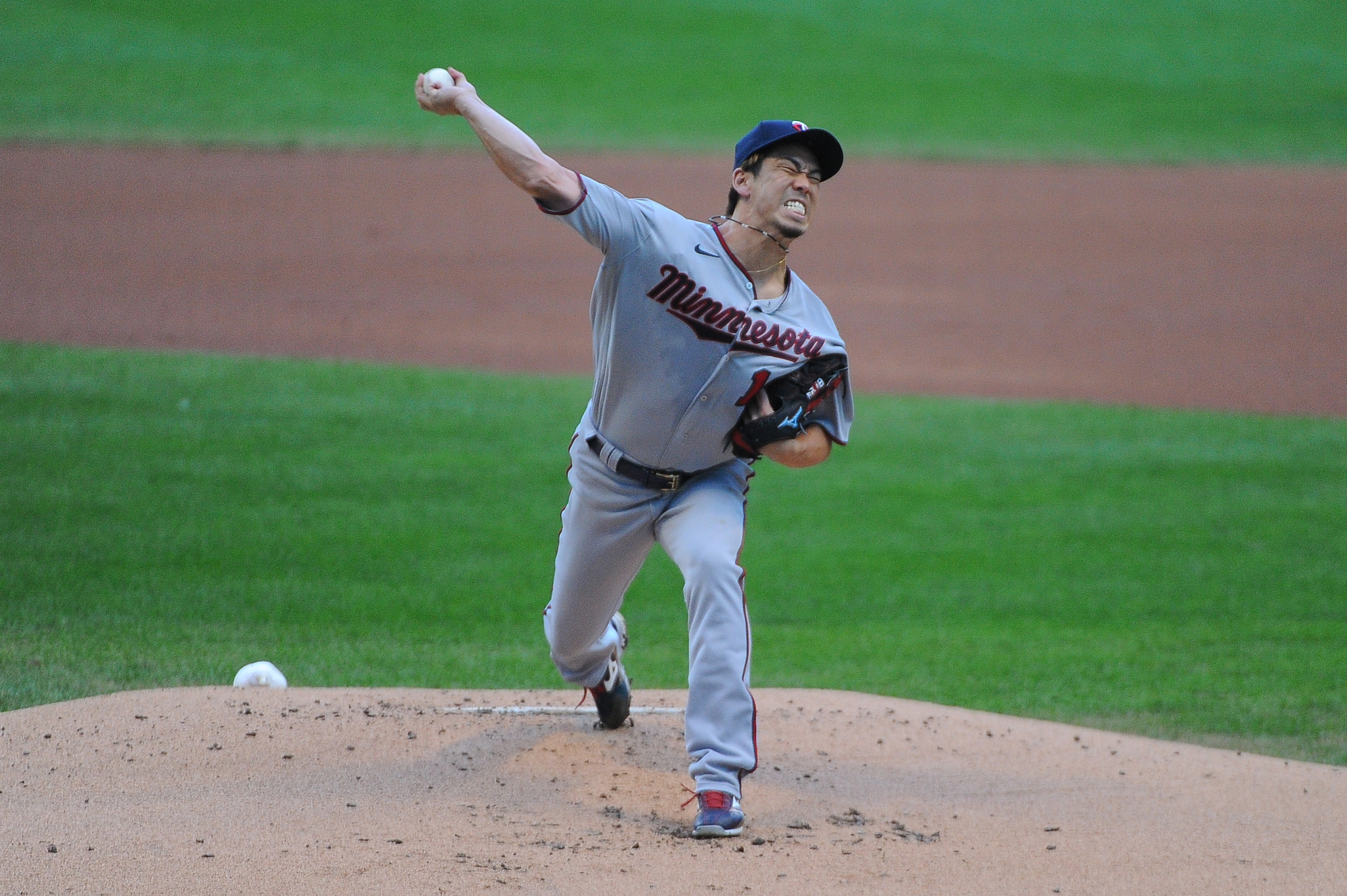 YESTERDAY’S GAME RECAP MIN 4, KCR 1: Nelson Cruz Continues to Defy Logic Today: Minnesota @ Milwaukee, 7:10 PM CT Twins Starter: Kenta Maeda 3-0, 2.66 ERA, 0.72 WHIP Because he makes it look so easy, it’s easy to miss just how outstanding Kenta Maeda has been to begin the 2020 season. Maeda is first on the Minnesota Twins in FIP (fielding independent pitching), WHIP, and K/BB. In addition to the excellent movement he gets on his pitches and the weak contact he induces, what makes Maeda so great is the simple fact that he throws strikes. Maeda leads the Minnesota Twins in strike % with 68.1% of his pitches going for strikes. Maeda’s last start came against the Brewers last Wednesday and he was particularly great, allowing just 2 runs in 6.2 innings. Maeda threw 74% of his 85 pitches for strikes, and a 2-run single in the 6th inning in a 12-2 game was the only blemish for Maeda on an otherwise outstanding appearance. Where Maeda found the most success in his last outing against Milwaukee was with the pitch that usually gives him success, his slider. Using his slider against righties, Maeda held the Brewers to just one hit and an average exit velocity of 82.8 MPH. Brewers Starter: Corbin Burnes 0-0, 3.38 ERA, 1.19 WHIP After the Twins crushed left handed pitcher, Eric Lauer, in their last meeting, the Brewers sent Lauer down to their alternate training site and have swapped in right hander Corbin Burnes to take his place in the rotation. Burnes has largely been a reliever in his 2+ year career, making just 5 starts in his career prior to tonight. In his only other start this season, Burnes lasted just 3.1 innings. Burnes has good pitches in his arsenal, touting a fastball that hovers around 96 MPH and a slider that gets batters to whiff >50% of the time. Where Burnes has struggled this year has been with his control, as he has a 16.7% walk percentage thus far in 2020, 8th worst in baseball. Lineup: https://twitter.com/dailyrotonews/status/1295805183251947521?s=20 https://twitter.com/dailyrotonews/status/1295813738692476928 2 Things to Watch For: 1. Patience is a Virtue The Minnesota Twins will be facing off against a reliever-turned-starter tonight in Corbin Burnes who has struggled with his command for most of the 2020 season. In his previous 5 starts, Burnes has never pitched more than 5 innings, and in his only other start in 2020, the right hander tossed just 3.1 innings. If the Twins’ batters can work counts early and get up Burnes’ pitch count early, they can force Milwaukee to get to their bullpen early. Having the Brewers burn their bullpen in the first game of a 3-game series would set up the Twins extremely well for the 3-gamer and patience at the plate will be something to monitor tonight. 2. Can Maeda Go Seven? While it will be a key for the Twins to knock out Corbin Burnes early, it will equally be a key for the Twins to get good length from Kenta Maeda. To this point in the season, Maeda has yet to throw more than 85 pitches in a start, yet has thrown at least 6 innings in each of his last 3 starts. After a bullpen game yesterday when the Twins used six of their bullpen arms, including Clippard, May, and Duffey, it might behoove the Twins to stretch out Maeda to 90-95 pitches tonight, allow him to go 7 innings, and reset the bullpen for the final two games of the series. Other Notes: The story coming out of baseball last night came in a west coast game when San Diego Padres superstar Fernando Tatis Jr. swung at a 3-0 pitch with a 6-run lead and hit a grand slam to give the Padres a 14-4 lead. The home run ticked off Rangers’ manager, Chris Woodward, who said of the slam, “You’re up by seven in the eighth inning; it’s typically not a good time to swing 3-0. It’s kind of the way we were all raised in the game.” Tatis’s own manager,Jayce Tingler, didn’t approve of Tatis’s home run either saying, “...that’s a learning opportunity, that’s it and he’ll grow from it”. Tatis was later forced to apologize for his “actions”, saying “Those experiences, you got to learn from it. Probably next time, I take a pitch now that I learned from it.” This is not the first time that the Rangers have gotten upset about a team “running up the score”. If you’ll remember last season, Jake Cake hit a 3-0 pitch for a single when the Twins were up 13-5 in the 9th inning and the Rangers weren’t happy about that either. The “unwritten rules” of baseball are such an embarrassment to the sport. You have a generational superstar in Tatis Jr. and he’s being told not to hit a home run because he shouldn’t hurt the other team's feelings. Around the AL Central: CWS 7, DET 2 MIN 15-8 (+38 run differential) CLE 13-9 (+21) CWS 12-11 (+2) DET 9-11 (-17) KCR 9-14 (-10) See also: Who is the Twins’ Ace? Sergio Romo to Royals: Keep Talking What are you watching for in tonight’s game? What is your score prediction? What do you think about baseball’s “unwritten rules”? Leave a comment below and start the conversation!
 -
The Minnesota Twins established an identity as the Bomba Squad last season, but the club’s ability to execute the finer points was on display during a 4-2 victory Sunday. The Twins dazzled in the field and successfully executed a safety squeeze.Box Score Dobnak: 5.1 IP, 3 H, 2 ER, 1 BB, 3 K Home Runs: Kepler (6) Top 3 WPA: Avila .201, Kepler .197, Clippard .143 Win Probability Chart (via FanGraphs): Download attachment: Winchart.png The Minnesota Twins used a mixture of solid pitching and timely hitting on Sunday afternoon to put together a solid all-around win and clinch at least a split-series against the Kansas City Royal. The Royals were the first team to get on the scoreboard in Sunday’s matchup, pushing across solo home runs from Hunter Dozier and Alex Gordon in the 1st and 2nd innings, respectively, to take an early 2-0 lead on the Minnesota Twins. After the second Royals’ home run, though, Randy Dobank found his groove, retiring the following 11 consecutive batters, including 1-2-3 innings in the 3rd, 4th and 5th innings. After not getting much run support through the first four innings of the game, Max Kepler came through by crushing a 395-foot two-run blast off of Brady Singer to give the Minnesota Twins a 3-2 lead in the game. In the 6th inning Dobnak was pulled after running into trouble, with Tyler Clippard entering the game with runners on 1st and 2nd with one out. Clippard only needed to face one batter to get out of the jam, though, as Eddie Rosario made an outstanding sliding catch in left field followed by an outfield assist to convert a double play and end the inning damage-free. The Twins tacked on an insurance run in a fashion that you don’t typically see from the Bomba Squad, converting a safety squeeze in the bottom of the 7th inning when Jorge Polanco’s bunt brought home newly acquired Minnesota Twin, Ildemaro Vargas, who was pinch-running for Alex Avila. From there, the Minnesota Twins bullpen was lights-out, taking away any potential drama of a comeback. After Clippard got out of the jam in the 6th, Trevor May, Taylor Rogers and Sergio Romo each threw scoreless innings, securing a 4-2 win for the Minnesota Twins. Additional notes: Dobnak Stays Solid After José Berríos struggled with his command in yesterday’s loss, it was another solid showing for the ever-steady Randy Dobnak today. Randy allowed two runs in 5.1 innings on 74 pitches. Dobnak once again found success by throwing strikes, tossing 65% of his pitches for strikes and only allowing one base on balls. The only mistakes that Dobnak made was throwing two elevated sinkers that each went for home runs. Randy Dobnak is now 4-1 on the season with a 1.42 ERA, 5th lowest in Majors. Download attachment: D0C8AD20-4DCF-4167-9130-39D00A178037.jpeg Another Impressive Showing from the Defense One of the biggest stories for the 2020 Minnesota Twins has been the improvement that they have made in the field. Their fielding prowess was once again on display in Sunday’s victory. In addition to Eddie Rosario’s excellent sliding catch in the 5th inning, the Twins got a great play at 3rd base by Marwin Gonzalez in the 1st inning, an excellent back-handed block by Alex Avila and of course, the unforgettable double play turned by the middle infielders, Jorge Polanco and Luis Arráez. Entering the season, it was assumed that the fielding of the Twins was going to be a net negative, as Polanco, Arráez, Rosario and Sanó are all known much more for their bats than their gloves. As each game passes and the sample size grows larger and larger, though, this defense looks absolutely legit, with just 2 errors through 22 games. The most amazing part is they are still without their best infielder defender, in Josh Donaldson. Catcher Controversy? It was yet another extremely impressive showing from Alex Avila behind the plate today for the Minnesota Twins. The catcher reached on all three of his plate appearances today, converting a single and two walks. Avila now has an on-base percentage of .457 and has shown nothing but an excellent approach and tremendous patience at the plate as well as stellar defense. With the early season struggles that we have seen from Mitch Garver, it will be fascinating to see if Rocco Baldelli shifts the playing time split at all between his two catchers. To this point, the catching timeshare split has been 60/40 in favor of Garver, could we see that inch more towards 50/50 moving forward? The Minnesota Twins record now stands at 14-8 and the Twins will look to take a 3-1 series win over the Kansas City Royals on Monday at 7:10pm in a bullpen game, with Matt Wisler starting for the reigning AL Central Champs. Below you can see a look at where the bullpen stands ahead of tomorrow's game, as many of those pitchers will need to be relied upon in the series finale. Bullpen Usage Spreadsheet Download attachment: Bullpen.png What were your thoughts on today’s game? What did you think of Randy Dobnak’s starts? How do you think the playing time split for the catcher spot should look for the rest of the season? Leave a comment below and start the conversation! MORE FROM TWINS DAILY — Latest Twins coverage from our writers — Recent Twins discussion in our forums — Follow Twins Daily via Twitter, Facebook or email Click here to view the article
-
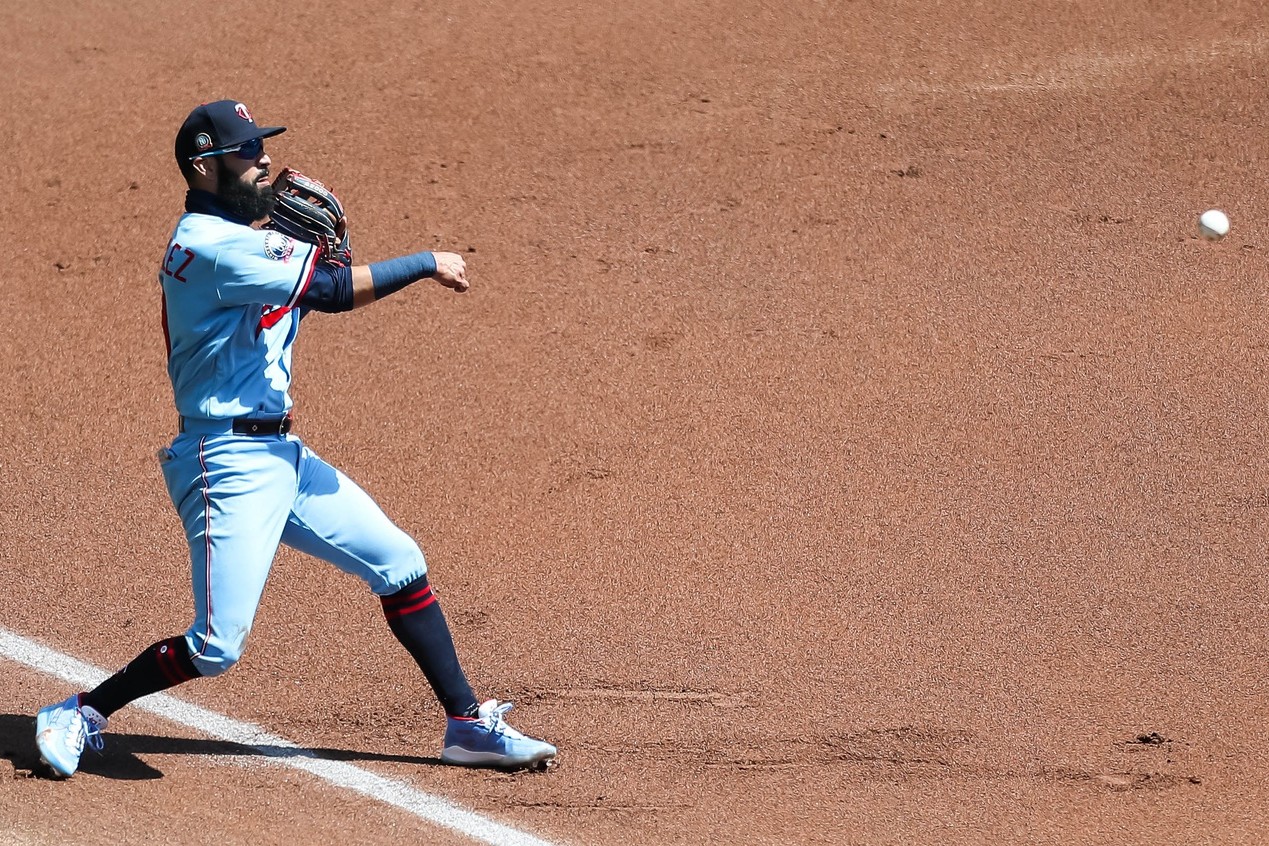 Box Score Dobnak: 5.1 IP, 3 H, 2 ER, 1 BB, 3 K Home Runs: Kepler (6) Top 3 WPA: Avila .201, Kepler .197, Clippard .143 Win Probability Chart (via FanGraphs): The Minnesota Twins used a mixture of solid pitching and timely hitting on Sunday afternoon to put together a solid all-around win and clinch at least a split-series against the Kansas City Royal. The Royals were the first team to get on the scoreboard in Sunday’s matchup, pushing across solo home runs from Hunter Dozier and Alex Gordon in the 1st and 2nd innings, respectively, to take an early 2-0 lead on the Minnesota Twins. After the second Royals’ home run, though, Randy Dobank found his groove, retiring the following 11 consecutive batters, including 1-2-3 innings in the 3rd, 4th and 5th innings. After not getting much run support through the first four innings of the game, Max Kepler came through by crushing a 395-foot two-run blast off of Brady Singer to give the Minnesota Twins a 3-2 lead in the game. https://twitter.com/Twins/status/1295080009430978562?s=20 In the 6th inning Dobnak was pulled after running into trouble, with Tyler Clippard entering the game with runners on 1st and 2nd with one out. Clippard only needed to face one batter to get out of the jam, though, as Eddie Rosario made an outstanding sliding catch in left field followed by an outfield assist to convert a double play and end the inning damage-free. https://twitter.com/Twins/status/1295086070489546754?s=20 The Twins tacked on an insurance run in a fashion that you don’t typically see from the Bomba Squad, converting a safety squeeze in the bottom of the 7th inning when Jorge Polanco’s bunt brought home newly acquired Minnesota Twin, Ildemaro Vargas, who was pinch-running for Alex Avila. From there, the Minnesota Twins bullpen was lights-out, taking away any potential drama of a comeback. After Clippard got out of the jam in the 6th, Trevor May, Taylor Rogers and Sergio Romo each threw scoreless innings, securing a 4-2 win for the Minnesota Twins. Additional notes: Dobnak Stays Solid After José Berríos struggled with his command in yesterday’s loss, it was another solid showing for the ever-steady Randy Dobnak today. Randy allowed two runs in 5.1 innings on 74 pitches. Dobnak once again found success by throwing strikes, tossing 65% of his pitches for strikes and only allowing one base on balls. The only mistakes that Dobnak made was throwing two elevated sinkers that each went for home runs. Randy Dobnak is now 4-1 on the season with a 1.42 ERA, 5th lowest in Majors. Another Impressive Showing from the Defense One of the biggest stories for the 2020 Minnesota Twins has been the improvement that they have made in the field. Their fielding prowess was once again on display in Sunday’s victory. In addition to Eddie Rosario’s excellent sliding catch in the 5th inning, the Twins got a great play at 3rd base by Marwin Gonzalez in the 1st inning, an excellent back-handed block by Alex Avila and of course, the unforgettable double play turned by the middle infielders, Jorge Polanco and Luis Arráez. Entering the season, it was assumed that the fielding of the Twins was going to be a net negative, as Polanco, Arráez, Rosario and Sanó are all known much more for their bats than their gloves. As each game passes and the sample size grows larger and larger, though, this defense looks absolutely legit, with just 2 errors through 22 games. The most amazing part is they are still without their best infielder defender, in Josh Donaldson. https://twitter.com/TFTwins/status/1295091067155550209?s=20 Catcher Controversy? It was yet another extremely impressive showing from Alex Avila behind the plate today for the Minnesota Twins. The catcher reached on all three of his plate appearances today, converting a single and two walks. Avila now has an on-base percentage of .457 and has shown nothing but an excellent approach and tremendous patience at the plate as well as stellar defense. With the early season struggles that we have seen from Mitch Garver, it will be fascinating to see if Rocco Baldelli shifts the playing time split at all between his two catchers. To this point, the catching timeshare split has been 60/40 in favor of Garver, could we see that inch more towards 50/50 moving forward? The Minnesota Twins record now stands at 14-8 and the Twins will look to take a 3-1 series win over the Kansas City Royals on Monday at 7:10pm in a bullpen game, with Matt Wisler starting for the reigning AL Central Champs. Below you can see a look at where the bullpen stands ahead of tomorrow's game, as many of those pitchers will need to be relied upon in the series finale. Bullpen Usage Spreadsheet What were your thoughts on today’s game? What did you think of Randy Dobnak’s starts? How do you think the playing time split for the catcher spot should look for the rest of the season? Leave a comment below and start the conversation! MORE FROM TWINS DAILY — Latest Twins coverage from our writers — Recent Twins discussion in our forums — Follow Twins Daily via Twitter, Facebook or email
 -
Although the Minnesota Twins offense finally broke through on Wednesday night, the combination of current injuries along with 28-man rosters present the Twins with an opportunity to call up a top prospect. Which top prospect (if any) should the Twins call up?As humans, we love to argue about things. MJ or LeBron? Which pizza spot is tastiest? Which fitness app is best? Lately, there has been chatter around Twins Territory about which top prospect the Twins should call up. In order to determine which prospect would best suit a spot on the big league roster, it should first be determined if the Minnesota Twins could stand to benefit from adding another position player to the roster. With the news that MLB rosters would remain at 28 for the remainder of the 2020 season, the Twins were awarded a tremendous amount of roster flexibility. With 28 men, the Twins are able to have three players on their roster that they didn’t have last season (when rosters were at 25). To begin the season, the Twins have heavily weighted their roster heavily towards pitchers, with pitchers using up 16 of the 28 roster spots. As of late, though, as pitchers have become more stretched out, the Twins haven’t utilized the glut of pitchers that they possess. Meanwhile, the Twins have been stretched thin in their position player depth. With Josh Donaldson out with injury and Luis Arráez hampered by a knee, Marwin Gonzalez and Ehire Adrianza have turned into everyday players. This has left the Twins bench with almost no infield depth, and only Jake Cave as depth in the outfield. On Wednesday afternoon, the Twins announced that they had made a trade for Diamondbacks utilityman, Ildemaro Vargas. As soon as Vargas clears his physical, he will join the Twins in Minneapolis and join the bench as infield depth. While the Vargas acquisition addresses the Twins’ need for infield depth, there is still depth to be had in the outfield. With Marwin González and Ehire Adrianza playing so much in the infield, Jake Cave is really the only outfield depth that the Twins have right now. By adding another outfielder to the roster in addition to adding Vargas in the infield, the Twins will still have 14 pitchers on the roster, as well as the appropriate amount of depth in the field to spare Kepler and Rosario an off day, as well as ensuring that the Twins don’t overdo it with Byron Buxton. Now that it’s been established that the Twins could utilize a call up from CHS Field to provide outfield depth, let’s look at three options for who that could be: Alex Kirilloff As the number two prospect in the Minnesota Twins organization, there is a lot of reason to be excited about Kirilloff. As Twins Daily writer Jeremy Nygaard put it in a recent Postgame Pint, “Kirilloff could get out of bed and hit .300 in the Major Leagues”. As a left handed hitter, Kirilloff isn’t quite as strong against lefties as he is righties, but he has more upside at the plate than any other Twins player in the farm system. Kirilloff did make a bit of a transition to first base in 2019, as he logged over 300 innings there in 2019, however most of his career he has played in the corner outfield and he should be a more than capable defender there. Kiriloff’s high ceiling and ability to play corner outfielder make him a viable option to be called up to the Big Leagues. His left handedness, though, makes him a it redundant with the likes of Eddie Rosario, Max Kepler, and Jake Cave all being left handed as well (Happy Left Handers Day, by the way!) Trevor Larnach If you were to try to make a clone of Alex Kirilloff, he would like a whole lot like Trevor Larnach. Standing just 2 inches taller and 1 year older, Larnach shares a lot of the same traits as Kirilloff. Larnach has a similarly strong build and presents a lot of the same power that Kirilloff does. Blessed with better health in 2019, Larnach hit the cover off the ball at AA last season and won Minor League Player of the Year for the Twins. In calling up Larnach, the Twins would again gain someone who could give a huge spark to the Twins offense while being able to rest some of their key guys. However, similar to Kirilloff, Larnach’s left handedness doesn’t afford the Twins quite the same upside of a platoon advantage while giving one of their existing lefties an off-day. Brent Rooker Although Brent Rooker is the lowest ranked of the three prospects, there is an argument to be made that Rooker would make the most sense to be called up to the Major League Squad. Rooker might not have the upside that Kirilloff or Larnach have at the plate, but he can certainly rake at the plate and has experience at AAA that should allow for a quicker transition to Major League pitching. In 65 games at AAA in 2019, Rooker posted a .281 average with a sky-high OPS of .933. What Rooker has going for him most, though, is his right handedness. As was mentioned previously, the Twins don’t currently have a right handed corner outfielder on their bench. With his right handedness, Rooker would allow the Twins to rest Eddie Rosario or Max Kepler against lefties and play Brent Rooker in their place who wouldn’t present much of an offensive dropoff as he would instantly have a platoon advantage against a left handed pitcher. Brent Rooker might not be the caliber of prospect of Alex Kirilloff or Trevor Larnach, but given the current status of the Minnesota Twins roster, he might make the most sense to join the club. Which top prospect do you think the Minnesota Twins should call up to the Big Leagues? Or, do you not think the Twins need to call up any additional hitters? Leave a comment below and start the conversation! MORE FROM TWINS DAILY — Latest Twins coverage from our writers — Recent Twins discussion in our forums — Follow Twins Daily via Twitter, Facebook or email Click here to view the article
-
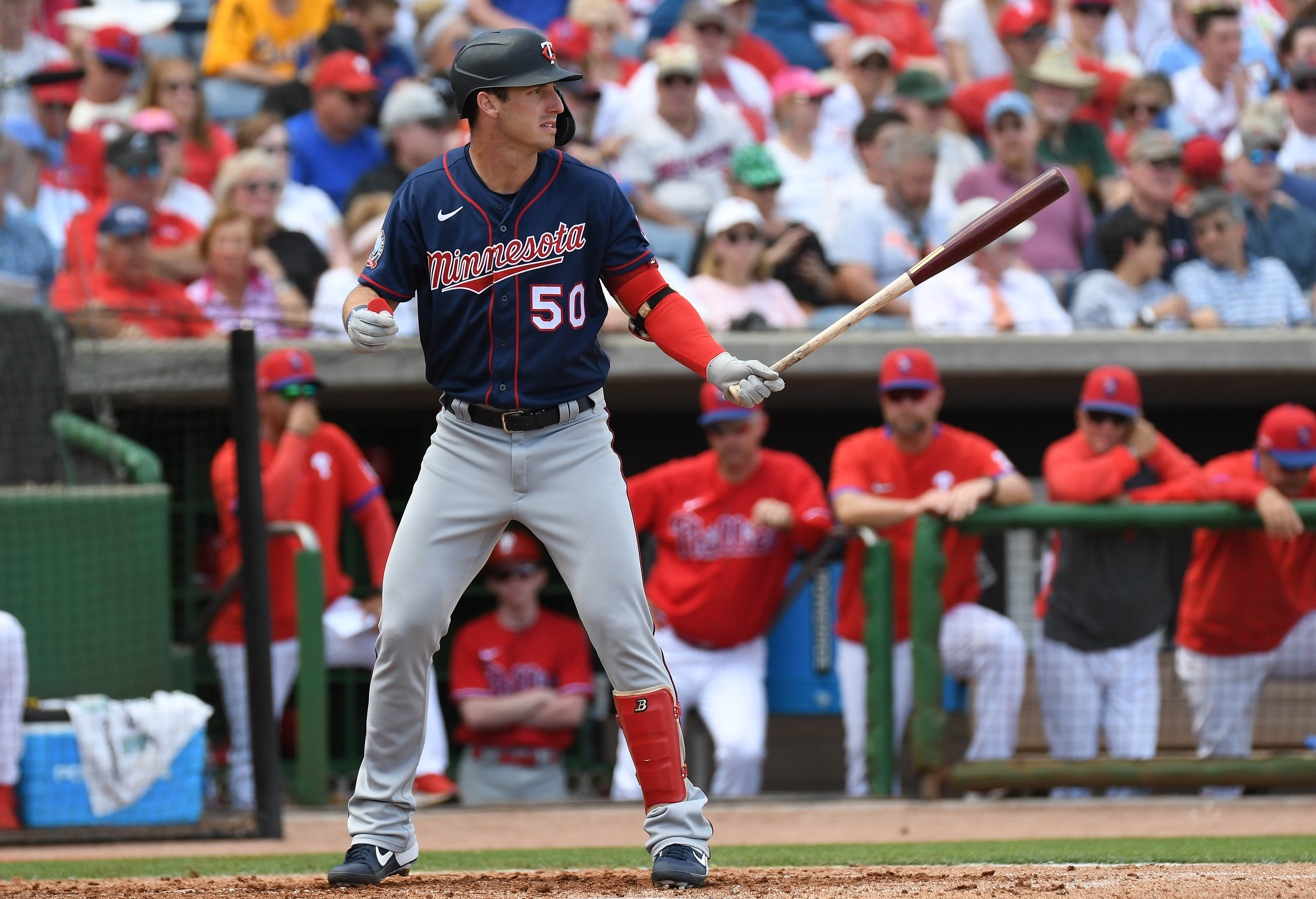 As humans, we love to argue about things. MJ or LeBron? Which pizza spot is tastiest? Which fitness app is best? Lately, there has been chatter around Twins Territory about which top prospect the Twins should call up. In order to determine which prospect would best suit a spot on the big league roster, it should first be determined if the Minnesota Twins could stand to benefit from adding another position player to the roster. With the news that MLB rosters would remain at 28 for the remainder of the 2020 season, the Twins were awarded a tremendous amount of roster flexibility. With 28 men, the Twins are able to have three players on their roster that they didn’t have last season (when rosters were at 25). To begin the season, the Twins have heavily weighted their roster heavily towards pitchers, with pitchers using up 16 of the 28 roster spots. As of late, though, as pitchers have become more stretched out, the Twins haven’t utilized the glut of pitchers that they possess. Meanwhile, the Twins have been stretched thin in their position player depth. With Josh Donaldson out with injury and Luis Arráez hampered by a knee, Marwin Gonzalez and Ehire Adrianza have turned into everyday players. This has left the Twins bench with almost no infield depth, and only Jake Cave as depth in the outfield. On Wednesday afternoon, the Twins announced that they had made a trade for Diamondbacks utilityman, Ildemaro Vargas. As soon as Vargas clears his physical, he will join the Twins in Minneapolis and join the bench as infield depth. While the Vargas acquisition addresses the Twins’ need for infield depth, there is still depth to be had in the outfield. With Marwin González and Ehire Adrianza playing so much in the infield, Jake Cave is really the only outfield depth that the Twins have right now. By adding another outfielder to the roster in addition to adding Vargas in the infield, the Twins will still have 14 pitchers on the roster, as well as the appropriate amount of depth in the field to spare Kepler and Rosario an off day, as well as ensuring that the Twins don’t overdo it with Byron Buxton. Now that it’s been established that the Twins could utilize a call up from CHS Field to provide outfield depth, let’s look at three options for who that could be: Alex Kirilloff As the number two prospect in the Minnesota Twins organization, there is a lot of reason to be excited about Kirilloff. As Twins Daily writer Jeremy Nygaard put it in a recent Postgame Pint, “Kirilloff could get out of bed and hit .300 in the Major Leagues”. As a left handed hitter, Kirilloff isn’t quite as strong against lefties as he is righties, but he has more upside at the plate than any other Twins player in the farm system. Kirilloff did make a bit of a transition to first base in 2019, as he logged over 300 innings there in 2019, however most of his career he has played in the corner outfield and he should be a more than capable defender there. Kiriloff’s high ceiling and ability to play corner outfielder make him a viable option to be called up to the Big Leagues. His left handedness, though, makes him a it redundant with the likes of Eddie Rosario, Max Kepler, and Jake Cave all being left handed as well (Happy Left Handers Day, by the way!) Trevor Larnach If you were to try to make a clone of Alex Kirilloff, he would like a whole lot like Trevor Larnach. Standing just 2 inches taller and 1 year older, Larnach shares a lot of the same traits as Kirilloff. Larnach has a similarly strong build and presents a lot of the same power that Kirilloff does. Blessed with better health in 2019, Larnach hit the cover off the ball at AA last season and won Minor League Player of the Year for the Twins. In calling up Larnach, the Twins would again gain someone who could give a huge spark to the Twins offense while being able to rest some of their key guys. However, similar to Kirilloff, Larnach’s left handedness doesn’t afford the Twins quite the same upside of a platoon advantage while giving one of their existing lefties an off-day. Brent Rooker Although Brent Rooker is the lowest ranked of the three prospects, there is an argument to be made that Rooker would make the most sense to be called up to the Major League Squad. Rooker might not have the upside that Kirilloff or Larnach have at the plate, but he can certainly rake at the plate and has experience at AAA that should allow for a quicker transition to Major League pitching. In 65 games at AAA in 2019, Rooker posted a .281 average with a sky-high OPS of .933. What Rooker has going for him most, though, is his right handedness. As was mentioned previously, the Twins don’t currently have a right handed corner outfielder on their bench. With his right handedness, Rooker would allow the Twins to rest Eddie Rosario or Max Kepler against lefties and play Brent Rooker in their place who wouldn’t present much of an offensive dropoff as he would instantly have a platoon advantage against a left handed pitcher. Brent Rooker might not be the caliber of prospect of Alex Kirilloff or Trevor Larnach, but given the current status of the Minnesota Twins roster, he might make the most sense to join the club. Which top prospect do you think the Minnesota Twins should call up to the Big Leagues? Or, do you not think the Twins need to call up any additional hitters? Leave a comment below and start the conversation! MORE FROM TWINS DAILY — Latest Twins coverage from our writers — Recent Twins discussion in our forums — Follow Twins Daily via Twitter, Facebook or email
 -
The beauty of baseball is that every day represents a new opportunity to reset and put the past in the past. After a tough loss on Tuesday night, the Minnesota Twins will get the opportunity on Wednesday to take the series against their border rivals and head into an off-day of much needed rest.YESTERDAY’S GAME RECAP MIL 6, MIN 4: Another Loss for Rogers, Additional Missed Opportunities for Offense Today: Minnesota @ Milwaukee, 6:10 PM CT Twins Starter: Kenta Maeda 2-1, 17 IP, 2.65 ERA, 0.65 WHIP Download attachment: maeda.png The Minnesota Twins will be trotting out the ever-steady Kenta Maeda for his 4th start of the young 2020 season. To this point, Maeda has been one of the two most reliable starting pitchers on the Twins staff. Thus far in the 2020 campaign, Maeda has a 2.65 ERA with a team-leading WHIP of 0.65 and a K% of 25.8, tops among all Twins’ starting pitchers. With a fastball that hovers around 92 MPH, Maeda doesn’t overpower hitters, but instead is adept at inducing weak contact and utilizing a slider that absolutely devastates right handed hitters. In his career, right handers own a .198 batting average against Maeda and in 2020 righties are hitting just .136. Outside of Christian Yelich, the Milwaukee Brewers are largely filled with right handed bats, which bodes well for Maeda and the Minnesota Twins. Brewers Starter: Eric Lauer 0-1, 5.2 IP, 9.53 ERA, 1.77 WHIP Download attachment: lauer.png Opposite Maeda, the Milwaukee Brewers will bring Eric Lauer out to the bump tonight to face off against the Minnesota Twins’ batters. Lauer is just 25 years old, making his big league debut in 2018 with the San Diego Padres. Eric Lauer was traded to the Milwaukee Brewers last November in the deal that sent Trent Grisham to San Diego. Lauer hasn’t had a ton of success in the majors up to this point, boasting a career ERA of 4.51 ERA. Lauer is a soft tossing, left handed pitcher who allows about 40% of hits to go for fly balls. The Minnesota Twins bats have yet to completely break out, but Lauer’s left handedness and fly ball propensity present a perfect opportunity for them to do so. Lineup: 2 Things to Watch For: 1. Garver and Sanó Breakout Game? Mitch Garver and Miguel Sanó have both had dreadful starts to the 2020 campaign, posting batting averages of .111 and .125 respectively. Twins fans have been anxiously waiting for them to breakout and it has yet to happen. With left handed pitcher, Eric Lauer, on the mound, though, this might be as good of an opportunity for the righties to breakout as there has been up to this point. In 2019 against left-handed pitching, Garver and Sanó posted OPS of 1.170 and 1.007 respectively. Will tonight be the night? 2. Can Maeda go 6 Innings? Download attachment: bullpen.png After burning through six of their best seven relievers last night, how Rocco utilizes his bullpen tonight will be something to monitor. Based on recent usage it would appear that Matt Wisler, Tyler Duffey, Trevor May, and Taylor Rogers are all unavailable. This leaves Romo and Stashak from your high-leverage guys, along with several of the lower leverage arms available to pitch. Getting at least 6 innings out of Kenta Maeda tonight will be huge as the Twins won’t want to turn to Cory Gearrin or Caleb Thielbar in a tight, high-leverage spot. Other Notes: The latest round of COVID-19 testing for the St. Louis Cardinals reportedly went well with no positive results, per MLB Network’s Jon Heyman. The Cardinals still have not played a game since they were swept by the Minnesota Twins on July 28 and 29. Their record stands at 2-3 on the season. They are slated to play next on Friday, August 14 against the Chicago White Sox.https://twitter.com/JonHeyman/status/1293548759125819394?s=20 On Tuesday afternoon, Commissioner Rob Manfred laid down suspensions resulting from the benches clearing brawl in the Astros/Athletics game on August 9. Oakland outfielder, Ramon Laureano, received a six game suspension and Houston Astros hitting coach, Alex Cintron, received 20 for his actions in Sundays’ brawl. Writing for a Minnesota Twins website I don’t get much of a chance to talk about other teams in the Majors, but I want to take advantage of this opportunity to talk about my favorite non-Twins player in baseball right now, Fernando Tatis Jr. The 21-year old shortstop for the San Diego Padres is lighting up baseball right now with his .333 batting average, 8 home runs, and league-leading 1.7 fWAR. Tatis is the most exciting young player we have right now, and deserves all of the national attention that he’s getting. Whether it’s at the plate or in the field, Tatis has captivated the country with his elite play, exuberant personality, and love of the game of baseball. Around the AL Central: CWS 8, DET 4 CHC 7, CLE 1 CIN 6, KCR 5 MIN 11-7 (+23 run differential) DET 9-6 (0) CLE 10-8 (+16) CWS 9-9 (-3) KCR 7-11 (-6) Tomorrow’s game Off day See also: Tyler Duffey: The Bullpen Ace that Almost Got Away Paving a Path, Women in Baseball: Vanessa Lambert What are you watching for in tonight's game? What is your score prediction? Leave a comment below and start the conversation! MORE FROM TWINS DAILY — Latest Twins coverage from our writers — Recent Twins discussion in our forums — Follow Twins Daily via Twitter, Facebook or email Click here to view the article
-
Twins Notebook 8/12: Kenta Maeda Looks to Continue Strong Start
Matthew Taylor posted an article in Twins
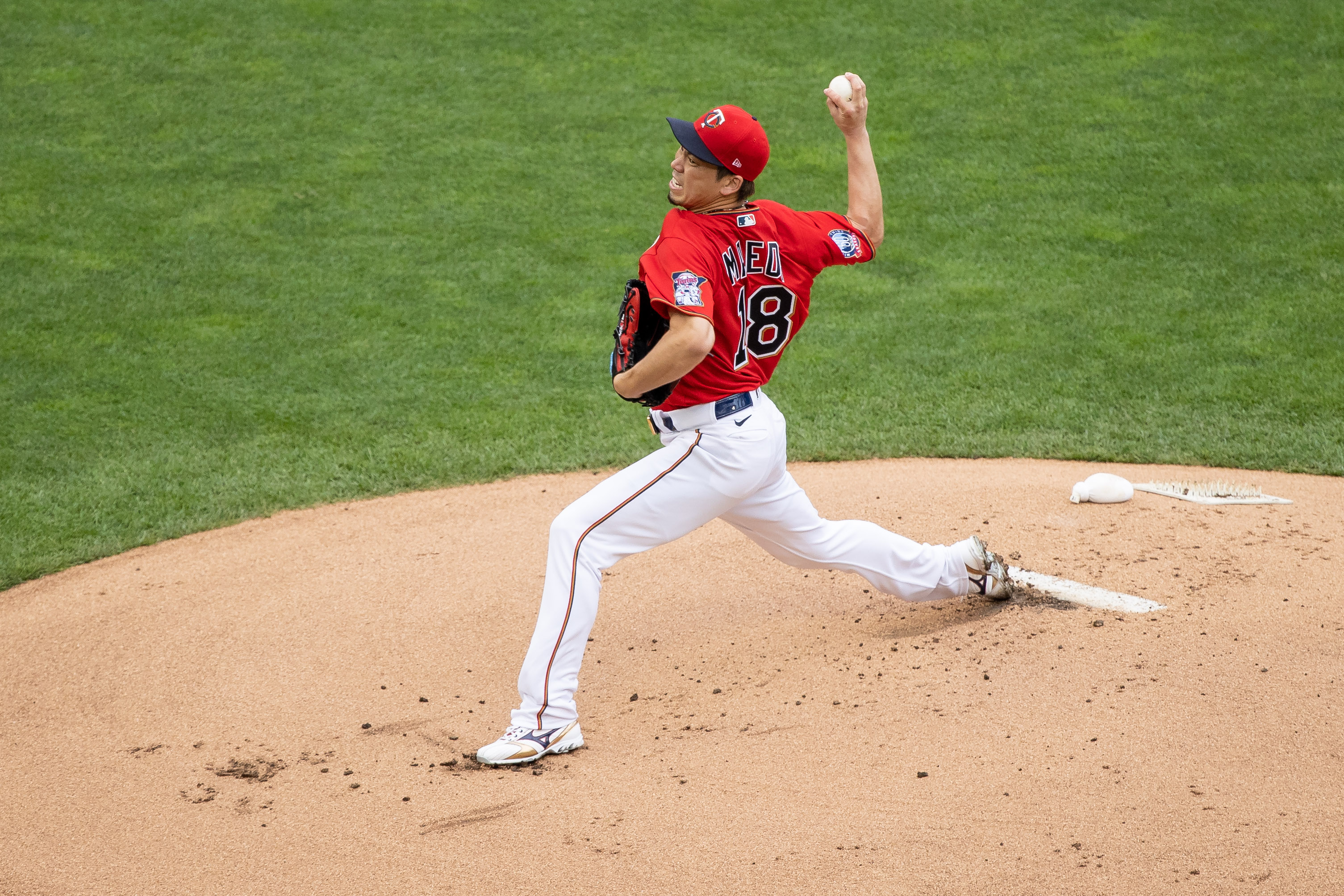 YESTERDAY’S GAME RECAP MIL 6, MIN 4: Another Loss for Rogers, Additional Missed Opportunities for Offense Today: Minnesota @ Milwaukee, 6:10 PM CT Twins Starter: Kenta Maeda 2-1, 17 IP, 2.65 ERA, 0.65 WHIP The Minnesota Twins will be trotting out the ever-steady Kenta Maeda for his 4th start of the young 2020 season. To this point, Maeda has been one of the two most reliable starting pitchers on the Twins staff. Thus far in the 2020 campaign, Maeda has a 2.65 ERA with a team-leading WHIP of 0.65 and a K% of 25.8, tops among all Twins’ starting pitchers. With a fastball that hovers around 92 MPH, Maeda doesn’t overpower hitters, but instead is adept at inducing weak contact and utilizing a slider that absolutely devastates right handed hitters. In his career, right handers own a .198 batting average against Maeda and in 2020 righties are hitting just .136. Outside of Christian Yelich, the Milwaukee Brewers are largely filled with right handed bats, which bodes well for Maeda and the Minnesota Twins. Brewers Starter: Eric Lauer 0-1, 5.2 IP, 9.53 ERA, 1.77 WHIP Opposite Maeda, the Milwaukee Brewers will bring Eric Lauer out to the bump tonight to face off against the Minnesota Twins’ batters. Lauer is just 25 years old, making his big league debut in 2018 with the San Diego Padres. Eric Lauer was traded to the Milwaukee Brewers last November in the deal that sent Trent Grisham to San Diego. Lauer hasn’t had a ton of success in the majors up to this point, boasting a career ERA of 4.51 ERA. Lauer is a soft tossing, left handed pitcher who allows about 40% of hits to go for fly balls. The Minnesota Twins bats have yet to completely break out, but Lauer’s left handedness and fly ball propensity present a perfect opportunity for them to do so. Lineup: https://twitter.com/dailyrotonews/status/1293611730954747910 2 Things to Watch For: 1. Garver and Sanó Breakout Game? Mitch Garver and Miguel Sanó have both had dreadful starts to the 2020 campaign, posting batting averages of .111 and .125 respectively. Twins fans have been anxiously waiting for them to breakout and it has yet to happen. With left handed pitcher, Eric Lauer, on the mound, though, this might be as good of an opportunity for the righties to breakout as there has been up to this point. In 2019 against left-handed pitching, Garver and Sanó posted OPS of 1.170 and 1.007 respectively. Will tonight be the night? 2. Can Maeda go 6 Innings? After burning through six of their best seven relievers last night, how Rocco utilizes his bullpen tonight will be something to monitor. Based on recent usage it would appear that Matt Wisler, Tyler Duffey, Trevor May, and Taylor Rogers are all unavailable. This leaves Romo and Stashak from your high-leverage guys, along with several of the lower leverage arms available to pitch. Getting at least 6 innings out of Kenta Maeda tonight will be huge as the Twins won’t want to turn to Cory Gearrin or Caleb Thielbar in a tight, high-leverage spot. Other Notes: The latest round of COVID-19 testing for the St. Louis Cardinals reportedly went well with no positive results, per MLB Network’s Jon Heyman. The Cardinals still have not played a game since they were swept by the Minnesota Twins on July 28 and 29. Their record stands at 2-3 on the season. They are slated to play next on Friday, August 14 against the Chicago White Sox. https://twitter.com/JonHeyman/status/1293548759125819394?s=20 On Tuesday afternoon, Commissioner Rob Manfred laid down suspensions resulting from the benches clearing brawl in the Astros/Athletics game on August 9. Oakland outfielder, Ramon Laureano, received a six game suspension and Houston Astros hitting coach, Alex Cintron, received 20 for his actions in Sundays’ brawl. https://twitter.com/NBCSAthletics/status/1292591549650358272?s=20 Writing for a Minnesota Twins website I don’t get much of a chance to talk about other teams in the Majors, but I want to take advantage of this opportunity to talk about my favorite non-Twins player in baseball right now, Fernando Tatis Jr. The 21-year old shortstop for the San Diego Padres is lighting up baseball right now with his .333 batting average, 8 home runs, and league-leading 1.7 fWAR. Tatis is the most exciting young player we have right now, and deserves all of the national attention that he’s getting. Whether it’s at the plate or in the field, Tatis has captivated the country with his elite play, exuberant personality, and love of the game of baseball. https://twitter.com/MLBStats/status/1293378012147331072?s=20 Around the AL Central: CWS 8, DET 4 CHC 7, CLE 1 CIN 6, KCR 5 MIN 11-7 (+23 run differential) DET 9-6 (0) CLE 10-8 (+16) CWS 9-9 (-3) KCR 7-11 (-6) Tomorrow’s game Off day See also: Tyler Duffey: The Bullpen Ace that Almost Got Away Paving a Path, Women in Baseball: Vanessa Lambert What are you watching for in tonight's game? What is your score prediction? Leave a comment below and start the conversation! MORE FROM TWINS DAILY — Latest Twins coverage from our writers — Recent Twins discussion in our forums — Follow Twins Daily via Twitter, Facebook or email
 -
KCR 4, MIN 2: Bad Day for Berríos, Bats
Matthew Taylor posted a topic in Twins Daily Front Page News
The downward trend continued for the Twins Sunday in Kansas City, as the Royals scored four runs off José Berríos and the Minnesota lineup left seven men on base. The Twins have now lost four straight games, all of them at the hands of a couple of the worst teams in baseball.Box Score Berrios: 5.1 IP, 8 H, 4 ER, 3 BB, 4 K Home Runs: None Bottom 3 WPA: Berríos -.161, Gonzalez -.150, Sanó -.114 Win Probability Chart (via FanGraphs): Download attachment: Winchart.png The first inning of Sunday’s loss to the Kansas City Royals set the tone for what was another difficult day at the ballpark for the Minnesota Twins. Rather than racing out of the gates, the Twins started the top of the first inning in 1-2-3 fashion, the third straight game they have started in that manner. Kansas City followed that up with a tough bottom half of the inning where the Royals worked Berríos to the tune of 23 pitches, 3 hits and 2 runs. The Minnesota Twins got on the scoreboard themselves in the 3rd inning where they went single-walk-double with Buxton, Avila and Kepler to mount their first rally of the game. Following a RBI groundout by Polonco, the Twins managed to give Berríos some support and tie the game at 2. Berríos quickly gave the lead back to the Royals, though, when Kansas City pushed across another run in the 3rd with a sacrifice fly. After struggling his way through a 22-pitch inning in the 5th, Rocco Baldelli made the curious decision to bring out Berríos again for the 6th inning. The decision quickly backfired, as Berríos served up a 414 foot bomb to Royals’ third baseman, Maikel Franco, to increase their lead to 4-2, which ultimately ended up being the final score. Berríos Struggles Again After taking a step forward in his last start against Pittsburgh, today was another step back for the Twins pitcher as Berríos struggled through 5⅓ innings today. In total, Berríos threw 96 pitches (62 strikes), allowing 8 hits, 3 walks, and 4 earned runs, while striking out 4. Berríos never seemed in control of the game, as he allowed a runner to reach at least second base in every inning except for the bottom of the 2nd. In particular, Berríos struggled mightily with his fastball today, against which the Royals produced an average exit velocity of 96.7 MPH. His velocity on the pitch was between 93-95 MPH all day, but he wasn’t commanding it the way he wanted, which impacted his ability to use the rest of his arsenal. Berríos will get his next shot at revenge next weekend though, when he’ll be lined up to face the Royals at Target Field. Curious Decisions by Baldelli Aside from the peculiar decision to bring back José Berríos for the 6th inning, Baldelli once again made some head scratching decisions with his bullpen management. In what was just a 2 run game in the bottom of the 7th inning, Rocco opted to go with newly promoted Cory Gearrin. Gearrin managed to get out of the inning without surrendering a run, however he did have a runner get to 3rd base. What made the Gearrin move especially strange was that Baldelli had his full arsenal of bullpen arms at his disposal. Trevor May had only thrown 5 pitches in the past week, and Romo, Duffey and Rogers were all sporting multiple days of rest. Trusting Rocco is a must at this point, but his bullpen decisions as of late have certainly been eyebrow-raising. Bats Stay Quiet It was another tough day for the Minnesota Twins bats. After hitting multiple bombas on Saturday, Minnesota only hit one extra base hit today and didn’t get a runner past 1st base after the 5th inning. It was an abysmal series for Twins’ first baseman, Miguel Sanó, who went 0-for-4 today, and finished the 3-game set against the Royals 0-for-11 with 6 strikeouts. Sanó’s season-long batting average is now down to .111. Overall it was a tough end to a tough series for the Minnesota Twins, who are now sporting a 4-game losing streak against two of the worst teams in baseball. The Twins won’t have any time to drown in their sorrows, though, as their next series begins Monday night against the Milwaukee Brewers. The Twins will trot out the red-hot Randy Dobnak to try and stop the bleeding against a similarly hot Brewers pitcher in Adrian Houser. Bullpen Usage Spreadsheet Download attachment: Bullpen.png Click here to view the article -
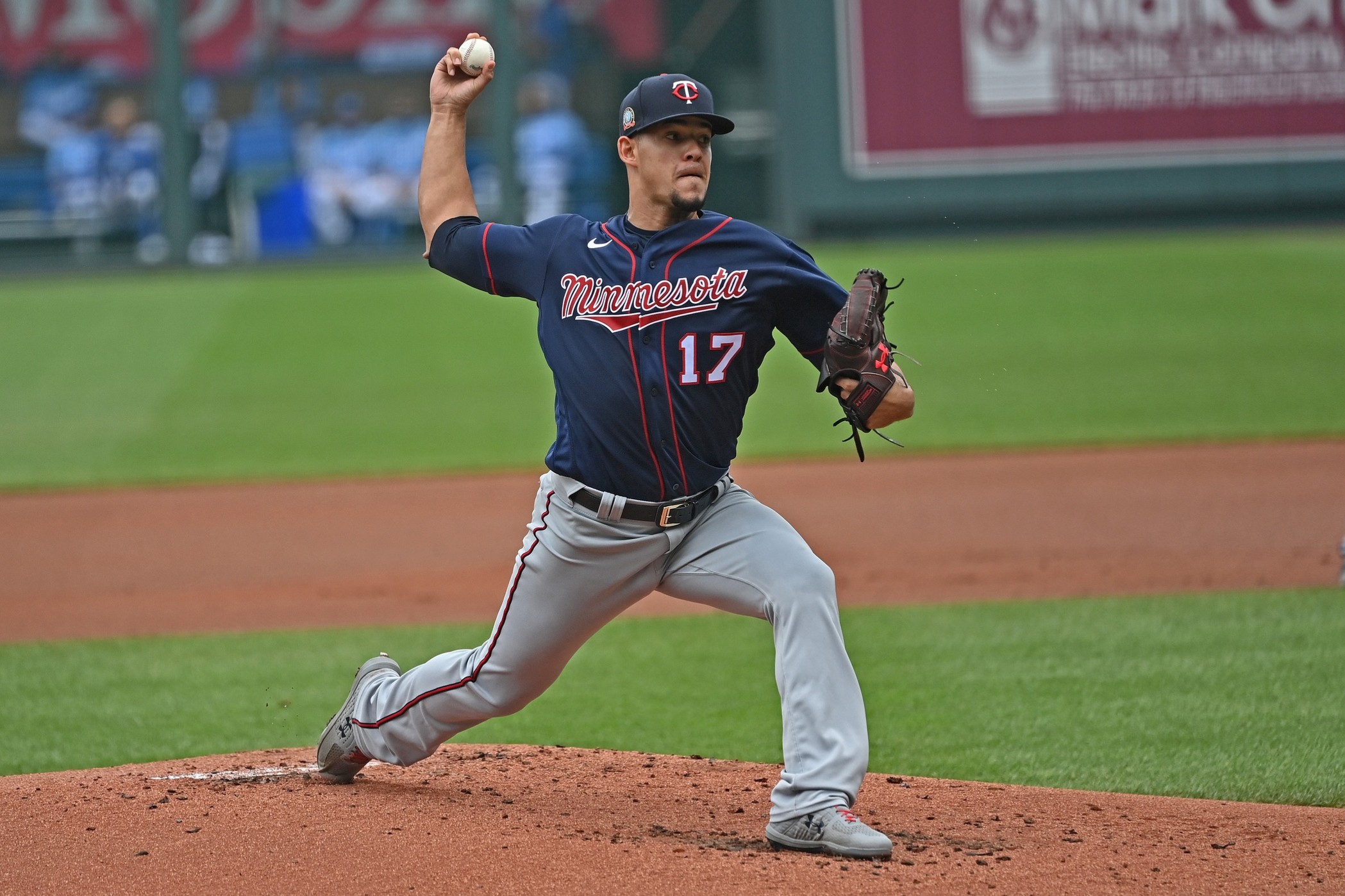 Box Score Berrios: 5.1 IP, 8 H, 4 ER, 3 BB, 4 K Home Runs: None Bottom 3 WPA: Berríos -.161, Gonzalez -.150, Sanó -.114 Win Probability Chart (via FanGraphs): The first inning of Sunday’s loss to the Kansas City Royals set the tone for what was another difficult day at the ballpark for the Minnesota Twins. Rather than racing out of the gates, the Twins started the top of the first inning in 1-2-3 fashion, the third straight game they have started in that manner. Kansas City followed that up with a tough bottom half of the inning where the Royals worked Berríos to the tune of 23 pitches, 3 hits and 2 runs. The Minnesota Twins got on the scoreboard themselves in the 3rd inning where they went single-walk-double with Buxton, Avila and Kepler to mount their first rally of the game. Following a RBI groundout by Polonco, the Twins managed to give Berríos some support and tie the game at 2. https://twitter.com/Twins/status/1292544807827640320?s=20 Berríos quickly gave the lead back to the Royals, though, when Kansas City pushed across another run in the 3rd with a sacrifice fly. After struggling his way through a 22-pitch inning in the 5th, Rocco Baldelli made the curious decision to bring out Berríos again for the 6th inning. The decision quickly backfired, as Berríos served up a 414 foot bomb to Royals’ third baseman, Maikel Franco, to increase their lead to 4-2, which ultimately ended up being the final score. https://twitter.com/Royals/status/1292562997701939200?s=20 Berríos Struggles Again After taking a step forward in his last start against Pittsburgh, today was another step back for the Twins pitcher as Berríos struggled through 5⅓ innings today. In total, Berríos threw 96 pitches (62 strikes), allowing 8 hits, 3 walks, and 4 earned runs, while striking out 4. Berríos never seemed in control of the game, as he allowed a runner to reach at least second base in every inning except for the bottom of the 2nd. In particular, Berríos struggled mightily with his fastball today, against which the Royals produced an average exit velocity of 96.7 MPH. His velocity on the pitch was between 93-95 MPH all day, but he wasn’t commanding it the way he wanted, which impacted his ability to use the rest of his arsenal. Berríos will get his next shot at revenge next weekend though, when he’ll be lined up to face the Royals at Target Field. Curious Decisions by Baldelli Aside from the peculiar decision to bring back José Berríos for the 6th inning, Baldelli once again made some head scratching decisions with his bullpen management. In what was just a 2 run game in the bottom of the 7th inning, Rocco opted to go with newly promoted Cory Gearrin. Gearrin managed to get out of the inning without surrendering a run, however he did have a runner get to 3rd base. What made the Gearrin move especially strange was that Baldelli had his full arsenal of bullpen arms at his disposal. Trevor May had only thrown 5 pitches in the past week, and Romo, Duffey and Rogers were all sporting multiple days of rest. Trusting Rocco is a must at this point, but his bullpen decisions as of late have certainly been eyebrow-raising. Bats Stay Quiet It was another tough day for the Minnesota Twins bats. After hitting multiple bombas on Saturday, Minnesota only hit one extra base hit today and didn’t get a runner past 1st base after the 5th inning. It was an abysmal series for Twins’ first baseman, Miguel Sanó, who went 0-for-4 today, and finished the 3-game set against the Royals 0-for-11 with 6 strikeouts. Sanó’s season-long batting average is now down to .111. Overall it was a tough end to a tough series for the Minnesota Twins, who are now sporting a 4-game losing streak against two of the worst teams in baseball. The Twins won’t have any time to drown in their sorrows, though, as their next series begins Monday night against the Milwaukee Brewers. The Twins will trot out the red-hot Randy Dobnak to try and stop the bleeding against a similarly hot Brewers pitcher in Adrian Houser. Bullpen Usage Spreadsheet
 -
Despite racing out to a 10-3 record to begin the season, the Minnesota Twins have had some of their key players crawl out to a slow start. Many of these players will turn things around sooner rather than later, but for some there is real cause for concern.Luis Arráez .216/.286/.243 Reasons for concern: Luis Arráez practically came out of nowhere in 2019 to have one of the best rookie seasons in Minnesota Twins history. It’s possible that we saw the best of Arráez in 2019, and that he was able to sneak up on the league while being unscouted. Now entering his second season, pitchers have made adjustments and Arráez is struggling early to catch up. In 2019, Arráez thrived on fastballs, producing a .364 batting average against them. This season, pitchers are throwing Arráez less fastballs and more breaking balls, against which Arráez is hitting just .083. Additionally, Arráez hasn’t yet shown much improvement in the power department. After producing 3 hard hit balls (95+ MPH exit velocity) in a July 26 game against the Chicago White Sox, Arráez has only produced 5 hard hits since. Thus far in 2020, Arráez has only recorded a single extra base hit. Reasons for confidence: What made Arráez so special in 2019 was the plate discipline and maturity he showed as a 22-year old rookie. Thus far in 2020, Arráez has proven that his plate discipline was no fluke and that he knows the strike zone like the back of his hand. Thus far in the season, Arráez has lowered his chase rate from 2019 down to just 20% and is seeing more pitches per plate appearances than he did last year. Arráez has an xBA of .268 and a BABIP of .229 showing that he has largely been unlucky this season. Worry-o-meter: 2/10 Miguel Sanó .147/.171/.471 Reasons for concern: Death, taxes, and Miguel Sanó mired in another strikeout-filled slump. To start the 2020 season, Sanó is batting 4-for-30, with 2 of those hits being from his 2-homer game against Cleveland over the weekend. What has been especially concerning for Sanó, as usual for him, are the strikeout numbers. To begin the 2020 season, Sanó is striking out 48% of the time with a sky-high whiff % of 50%. What has been the most concerning for Sanó is the fact that he is not chasing pitches more than usual, but that he is whiffing more on pitches in the zone. Thus far, Sanó has a zone contact % of just 64.2% (Career average is 73.2%). Right now pitchers are throwing Sanó hittable pitches and he is just swinging right through them. Reasons for confidence: Miguel Sanó has shown in the past that he can break out of slumps in a big way. During a stretch from mid-to-late June of 2019, Miguel Sanó suffered an extreme 3-for-39 slump with 23 strikeouts. In the middle of the slump, it was identified that Sanó had been tinkering with his swing and was re-learning his swing on the fly. Sanó turned around his season and had a career year as a result. After Sanó’s 2-homer game on Saturday, Sanó commented that he has again been tinkering with his swing and working on his hand positioning which has contributed to his slump to begin the year. Over his past 5 games, Sanó has hit 3 home runs and a double and appears to be turning the corner. Worry-o-meter: 2/10 Byron Buxton .174/.200/.348 Reasons for concern: Byron Buxton has been awful to begin the 2020 season. He has produced only one hit, a single through the infield, and has struck out 6 times in 16 plate appearances. Thus far in the season, Buxton is chasing out of the zone more than ever (43.8%) and has more swinging strikes than ever (17.4%). Buxton has generally seemed pretty lost at the plate thus far and has not yet built off of his strong 2019 season before his shoulder injury. Additionally, Buxton’s foot will be a concern this season until he proves it’s not an issue. Byron has been consistent saying his foot is not yet 100% so, as is usually the case, health will always be a concern for the speedy center fielder. Reasons for confidence: Byron Buxton suffered mightily by his extremely short Summer Camp. Buxton came into camp late this Summer after welcoming the birth of his child, and then exited camp early after his ankle injury in an intrasquad game. As a result, Buxton is very much gaining back his timing and feel at the plate in real time. The fact that he has struggled is no surprise and should be expected given his offseason timeline. Despite his plate discipline struggles, Buxton has shown some positives at the plate. In limited plate appearances, Buxton has produced an average exit velocity of 89 MPH, topping out at 109.7 MPH. In Thursday afternoon's game, Buxton finally broke through with a solo home run, and came about 5 feet short from hitting a second. Buxton has been gaining more playing time over the past week, and should get more comfortable at the plate in the coming games as a result. Will Thursday's showing catapult Buxton back to how he began 2019? Or will poor plate discipline hold him back all season? Worry-o-meter: 4/10 Mitch Garver .143/.296/.286 Reasons for concern: Twins Daily’s Cody Christie wrote up a great piece earlier this week on Mitch Garver’s struggles to begin the 2020 season. In it, Cody brought up that pitchers have adjusted against Garver and are throwing him less fastballs. In 2019, Garver slugged .838 against the fastball, hitting 25 of his 31 home runs off that pitch. As was mentioned with Luis Arráez, pitchers adjusting against post-breakout players is always something of concern. The other concern for Garver is his high strikeout rate (38.7%) to begin the season. Garver’s zone contact % is down nearly 10% from his numbers last year, meaning he is swinging through pitches in the zone. As a catcher, Garver will only be playing in 60-70% of games as it is, so if he is not taking advantage of the more limited opportunities that he gets, much of his value is taken away and there is some reason for concern. Another reason for concern for Garver is that he was a late bloomer. Garver waited until he was 28 years old to break out, so the potential is there that 2019 was an outlier season. Reasons for confidence: Garver’s plate discipline and knowledge of the strike zone has again been elite to begin the 2020 season. Garver’s chase rate (9.2%) is lower than it’s ever been in his career and he is walking at a higher clip than he ever has before. Additionally, Garver has been seeing more pitches per plate appearances (5.07) than he ever has in his career. If Garver can continue to stay patient and work himself into fastball counts, there is plenty of reason to believe that he can break out of his slow start. There is some reason to believe that Garver has already started to do so, as on Sunday Garver belted a home run off of Cleveland’s Aaron Civale 412 feet at 102.2 MPH. Worry-o-meter: 5/10 Josh Donaldson .182/.296/.318 Reasons for concern: As the crown jewel of the offseason for the Minnesota Twins, nobody could have predicted the start that we have seen from Josh Donaldson. Donaldson has been chasing, whiffing and striking out more than has ever done so in his career. Further, bad luck can’t even necessarily be contributed to his slow start as his expected batting average of .146 shows that his numbers should be even worse than they are right now. The biggest concern with Josh Donaldson, though, is his calf injury. Josh Donaldson has struggled his entire career with calf injuries, missing long parts of multiple seasons due to calf injuries in the past. Will this be another case of a calf injury that contributes to a lost season for Donaldson? Rocco Baldelli has been consistent in saying that the injury is minor, but with something that has hampered him so much in the past, there’s certainly reason to have concern. Reasons for confidence: Josh Donaldson has notoriously been a slow starter in his baseball career. In 2019, Donaldson posted an OPS 100 points higher in the second half of the season compared to the first. Despite the lower contact % to begin the season, when Donaldson has made contact, he has gotten good wood on the ball. Through the early part of the season, Donaldson is in the 85th percentile in exit velocity and 83rd percentile in hard hit percentage. While the calf injury does present concern, it’s easy to see why the Twins would be taking extra precaution with the Bringer of Rain in a season with expanded playoffs. Worry-o-meter: 6/10 Which struggling Minnesota Twins hitter are you most concerned about? Most confident in? What does your "Worry-o-meter" read on each of these players? Leave a comment below and start the conversation! MORE FROM TWINS DAILY — Latest Twins coverage from our writers — Recent Twins discussion in our forums — Follow Twins Daily via Twitter, Facebook or email Click here to view the article
-
Should Twins Fans Be Worried about Mitch Garver? There Are Others, Too
Matthew Taylor posted an article in Twins
 Luis Arráez .216/.286/.243 Reasons for concern: Luis Arráez practically came out of nowhere in 2019 to have one of the best rookie seasons in Minnesota Twins history. It’s possible that we saw the best of Arráez in 2019, and that he was able to sneak up on the league while being unscouted. Now entering his second season, pitchers have made adjustments and Arráez is struggling early to catch up. In 2019, Arráez thrived on fastballs, producing a .364 batting average against them. This season, pitchers are throwing Arráez less fastballs and more breaking balls, against which Arráez is hitting just .083. Additionally, Arráez hasn’t yet shown much improvement in the power department. After producing 3 hard hit balls (95+ MPH exit velocity) in a July 26 game against the Chicago White Sox, Arráez has only produced 5 hard hits since. Thus far in 2020, Arráez has only recorded a single extra base hit. Reasons for confidence: What made Arráez so special in 2019 was the plate discipline and maturity he showed as a 22-year old rookie. Thus far in 2020, Arráez has proven that his plate discipline was no fluke and that he knows the strike zone like the back of his hand. Thus far in the season, Arráez has lowered his chase rate from 2019 down to just 20% and is seeing more pitches per plate appearances than he did last year. Arráez has an xBA of .268 and a BABIP of .229 showing that he has largely been unlucky this season. Worry-o-meter: 2/10 Miguel Sanó .147/.171/.471 Reasons for concern: Death, taxes, and Miguel Sanó mired in another strikeout-filled slump. To start the 2020 season, Sanó is batting 4-for-30, with 2 of those hits being from his 2-homer game against Cleveland over the weekend. What has been especially concerning for Sanó, as usual for him, are the strikeout numbers. To begin the 2020 season, Sanó is striking out 48% of the time with a sky-high whiff % of 50%. What has been the most concerning for Sanó is the fact that he is not chasing pitches more than usual, but that he is whiffing more on pitches in the zone. Thus far, Sanó has a zone contact % of just 64.2% (Career average is 73.2%). Right now pitchers are throwing Sanó hittable pitches and he is just swinging right through them. Reasons for confidence: Miguel Sanó has shown in the past that he can break out of slumps in a big way. During a stretch from mid-to-late June of 2019, Miguel Sanó suffered an extreme 3-for-39 slump with 23 strikeouts. In the middle of the slump, it was identified that Sanó had been tinkering with his swing and was re-learning his swing on the fly. Sanó turned around his season and had a career year as a result. After Sanó’s 2-homer game on Saturday, Sanó commented that he has again been tinkering with his swing and working on his hand positioning which has contributed to his slump to begin the year. Over his past 5 games, Sanó has hit 3 home runs and a double and appears to be turning the corner. Worry-o-meter: 2/10 Byron Buxton .174/.200/.348 Reasons for concern: Byron Buxton has been awful to begin the 2020 season. He has produced only one hit, a single through the infield, and has struck out 6 times in 16 plate appearances. Thus far in the season, Buxton is chasing out of the zone more than ever (43.8%) and has more swinging strikes than ever (17.4%). Buxton has generally seemed pretty lost at the plate thus far and has not yet built off of his strong 2019 season before his shoulder injury. Additionally, Buxton’s foot will be a concern this season until he proves it’s not an issue. Byron has been consistent saying his foot is not yet 100% so, as is usually the case, health will always be a concern for the speedy center fielder. Reasons for confidence: Byron Buxton suffered mightily by his extremely short Summer Camp. Buxton came into camp late this Summer after welcoming the birth of his child, and then exited camp early after his ankle injury in an intrasquad game. As a result, Buxton is very much gaining back his timing and feel at the plate in real time. The fact that he has struggled is no surprise and should be expected given his offseason timeline. Despite his plate discipline struggles, Buxton has shown some positives at the plate. In limited plate appearances, Buxton has produced an average exit velocity of 89 MPH, topping out at 109.7 MPH. In Thursday afternoon's game, Buxton finally broke through with a solo home run, and came about 5 feet short from hitting a second. Buxton has been gaining more playing time over the past week, and should get more comfortable at the plate in the coming games as a result. Will Thursday's showing catapult Buxton back to how he began 2019? Or will poor plate discipline hold him back all season? Worry-o-meter: 4/10 Mitch Garver .143/.296/.286 Reasons for concern: Twins Daily’s Cody Christie wrote up a great piece earlier this week on Mitch Garver’s struggles to begin the 2020 season. In it, Cody brought up that pitchers have adjusted against Garver and are throwing him less fastballs. In 2019, Garver slugged .838 against the fastball, hitting 25 of his 31 home runs off that pitch. As was mentioned with Luis Arráez, pitchers adjusting against post-breakout players is always something of concern. The other concern for Garver is his high strikeout rate (38.7%) to begin the season. Garver’s zone contact % is down nearly 10% from his numbers last year, meaning he is swinging through pitches in the zone. As a catcher, Garver will only be playing in 60-70% of games as it is, so if he is not taking advantage of the more limited opportunities that he gets, much of his value is taken away and there is some reason for concern. Another reason for concern for Garver is that he was a late bloomer. Garver waited until he was 28 years old to break out, so the potential is there that 2019 was an outlier season. Reasons for confidence: Garver’s plate discipline and knowledge of the strike zone has again been elite to begin the 2020 season. Garver’s chase rate (9.2%) is lower than it’s ever been in his career and he is walking at a higher clip than he ever has before. Additionally, Garver has been seeing more pitches per plate appearances (5.07) than he ever has in his career. If Garver can continue to stay patient and work himself into fastball counts, there is plenty of reason to believe that he can break out of his slow start. There is some reason to believe that Garver has already started to do so, as on Sunday Garver belted a home run off of Cleveland’s Aaron Civale 412 feet at 102.2 MPH. Worry-o-meter: 5/10 Josh Donaldson .182/.296/.318 Reasons for concern: As the crown jewel of the offseason for the Minnesota Twins, nobody could have predicted the start that we have seen from Josh Donaldson. Donaldson has been chasing, whiffing and striking out more than has ever done so in his career. Further, bad luck can’t even necessarily be contributed to his slow start as his expected batting average of .146 shows that his numbers should be even worse than they are right now. The biggest concern with Josh Donaldson, though, is his calf injury. Josh Donaldson has struggled his entire career with calf injuries, missing long parts of multiple seasons due to calf injuries in the past. Will this be another case of a calf injury that contributes to a lost season for Donaldson? Rocco Baldelli has been consistent in saying that the injury is minor, but with something that has hampered him so much in the past, there’s certainly reason to have concern. Reasons for confidence: Josh Donaldson has notoriously been a slow starter in his baseball career. In 2019, Donaldson posted an OPS 100 points higher in the second half of the season compared to the first. Despite the lower contact % to begin the season, when Donaldson has made contact, he has gotten good wood on the ball. Through the early part of the season, Donaldson is in the 85th percentile in exit velocity and 83rd percentile in hard hit percentage. While the calf injury does present concern, it’s easy to see why the Twins would be taking extra precaution with the Bringer of Rain in a season with expanded playoffs. Worry-o-meter: 6/10 Which struggling Minnesota Twins hitter are you most concerned about? Most confident in? What does your "Worry-o-meter" read on each of these players? Leave a comment below and start the conversation! MORE FROM TWINS DAILY — Latest Twins coverage from our writers — Recent Twins discussion in our forums — Follow Twins Daily via Twitter, Facebook or email
 -
Reviewing a Week of Twins Quotes
Matthew Taylor replied to Cody Pirkl's topic in Twins Daily Front Page News
I like this article concept. Nice work. Rich Hill's quote is certainly the most exciting for Twins fans! -
There was much talk this offseason about the value of Eddie Rosario. While he brings power and spark to the Twins ballclub, his lack of plate discipline has always held him back from reaching his ceiling as a ballplayer. After showing a desire to improve in this area over the offseason, what do early returns show us of Rosario’s plate discipline in 2020?Up to this point in his career, Eddie Rosario has taken a lot of flack for being a free-swinger who bails out pitchers by swinging at pitches out of the zone. He would frequently find himself in pitcher’s counts, and consistently kill rallies by popping up the first pitch of an at-bat after the players in front of him would grind out long ones. In 2019, Eddie Rosario finished last on the Minnesota Twins after he saw just 3.51 pitches per plate appearance. By comparison, more patient hitters like Mitch Garver and Nelson Cruz saw 4.17 and 4.11 pitches per plate appearance respectively. Additionally in 2019, Rosario led the Twins in 1st pitch swing % (42.1%) as well as O-Swing% (46.3% of swings at pitches outside of the strike zone). It became clear this offseason that his aggressiveness and free-swinging nature was something that Rosario wanted to work on. In a radio interview at Twins Fest, Rosario had a lot to say on the work that he was doing with his plate discipline. “Every bad number? I want to try to get better at it”, Rosario said. “Defense, walks, OPS, those are the numbers in the game right now that are bad for me. OK. I want to try to change that. That’s it.” Eddie continued on later in the interview to say, “I love being aggressive, but I love to help the team”. Manager Rocco Baldelli and new hitting coach Edgar Varela had surely been in Eddie’s ear this offseason, showing him the numbers, and how a little plate discipline could unlock a whole new part of Rosie’s game. Early returns have given some reason for optimism that Eddie has made strides in the plate discipline mark. In Eddie’s first at bat of the 2020 season, Rosario took a 5 pitch walk off of White Sox ace, Lucas Giolito. Up to that point, Giolito had proven that his command was a bit off. He already had walked Josh Donaldson three batters before him and in general seemed frazzled after a rocky start. Rosario stayed disciplined and took all five pitches in the at-bat, laid off pitches outside the zone, and took a walk. One would have expected an aggressive Eddie to jump out of the gates swinging, but that wasn’t the case. Sure it’s just one walk, but that walk seemed to be a good representation of a potential new mindset for Eddie this season. While that initial walk signaled a potential new mindset for Rosario, his numbers through the first five games of the season have borne out improved plate discipline for the Twins right fielder. Rosario has thus far shown improved numbers in pitches per plate appearance, first pitch strike %, O-Swing% and Chase %. Even just by the eye test, Eddie has appeared to show more restraint earlier in counts and has appeared to have a desire to take pitchers deeper in counts. Download attachment: rosario.png While the early numbers do show improved plate discipline for Rosario, small sample size is always the name of the game when we are tossing around stats through five games in a season. There is reason to believe that Eddie’s plate discipline numbers above might not tell the whole story. Eddie has only taken two unintentional walks, and his O-Swing% isn’t too far off of his career numbers. Rosario became a very controversial figure withinTwins circles this offseason. Debates swirled regarding the importance of plate discipline and just how much Rosie's lack of that discipline could take away from his overall value as a hitter. For that reason, it will be important to keep a close eye on these numbers all season as the sample size grows larger and larger. Has Rosario done what he vowed to do at Twins Fest and sacrificed some aggressiveness in favor of helping the team? Or is regression in order, and Eddie will wind up just being the same ole’ Eddie? Only time will tell. What have been your first impression of Eddie Rosario this season? Do you think that he has demonstrated improved plate discipline? What will be the biggest key to Rosario being more disciplined this year? Leave a comment below and start the conversation! Click here to view the article
-
 Up to this point in his career, Eddie Rosario has taken a lot of flack for being a free-swinger who bails out pitchers by swinging at pitches out of the zone. He would frequently find himself in pitcher’s counts, and consistently kill rallies by popping up the first pitch of an at-bat after the players in front of him would grind out long ones. In 2019, Eddie Rosario finished last on the Minnesota Twins after he saw just 3.51 pitches per plate appearance. By comparison, more patient hitters like Mitch Garver and Nelson Cruz saw 4.17 and 4.11 pitches per plate appearance respectively. Additionally in 2019, Rosario led the Twins in 1st pitch swing % (42.1%) as well as O-Swing% (46.3% of swings at pitches outside of the strike zone). It became clear this offseason that his aggressiveness and free-swinging nature was something that Rosario wanted to work on. In a radio interview at Twins Fest, Rosario had a lot to say on the work that he was doing with his plate discipline. “Every bad number? I want to try to get better at it”, Rosario said. “Defense, walks, OPS, those are the numbers in the game right now that are bad for me. OK. I want to try to change that. That’s it.” Eddie continued on later in the interview to say, “I love being aggressive, but I love to help the team”. Manager Rocco Baldelli and new hitting coach Edgar Varela had surely been in Eddie’s ear this offseason, showing him the numbers, and how a little plate discipline could unlock a whole new part of Rosie’s game. Early returns have given some reason for optimism that Eddie has made strides in the plate discipline mark. In Eddie’s first at bat of the 2020 season, Rosario took a 5 pitch walk off of White Sox ace, Lucas Giolito. Up to that point, Giolito had proven that his command was a bit off. He already had walked Josh Donaldson three batters before him and in general seemed frazzled after a rocky start. Rosario stayed disciplined and took all five pitches in the at-bat, laid off pitches outside the zone, and took a walk. One would have expected an aggressive Eddie to jump out of the gates swinging, but that wasn’t the case. Sure it’s just one walk, but that walk seemed to be a good representation of a potential new mindset for Eddie this season. While that initial walk signaled a potential new mindset for Rosario, his numbers through the first five games of the season have borne out improved plate discipline for the Twins right fielder. Rosario has thus far shown improved numbers in pitches per plate appearance, first pitch strike %, O-Swing% and Chase %. Even just by the eye test, Eddie has appeared to show more restraint earlier in counts and has appeared to have a desire to take pitchers deeper in counts. While the early numbers do show improved plate discipline for Rosario, small sample size is always the name of the game when we are tossing around stats through five games in a season. There is reason to believe that Eddie’s plate discipline numbers above might not tell the whole story. Eddie has only taken two unintentional walks, and his O-Swing% isn’t too far off of his career numbers. https://twitter.com/AaronGleeman/status/1288862722004619264?s=20 Rosario became a very controversial figure withinTwins circles this offseason. Debates swirled regarding the importance of plate discipline and just how much Rosie's lack of that discipline could take away from his overall value as a hitter. For that reason, it will be important to keep a close eye on these numbers all season as the sample size grows larger and larger. Has Rosario done what he vowed to do at Twins Fest and sacrificed some aggressiveness in favor of helping the team? Or is regression in order, and Eddie will wind up just being the same ole’ Eddie? Only time will tell. What have been your first impression of Eddie Rosario this season? Do you think that he has demonstrated improved plate discipline? What will be the biggest key to Rosario being more disciplined this year? Leave a comment below and start the conversation!
 -
A New Nemesis Has Joined the AL Central
Matthew Taylor posted a topic in Twins Daily Front Page News
There were plenty of positives to take away from the Twins’ opening series against the Chicago White Sox, from which Minnesota took two out of three games. Unfortunately for the Twins though, the three game series birthed a nemesis who figures to haunt the Twins for years to come.For years, the Minnesota Twins were haunted by Detroit Tigers corner infielder, Miguel Cabrera. Over his career, Miguel has posted a .313 batting average with an OPS of .944 against the Minnesota Twins. Cabrera seemed to put that fear of God into you that comes from truly the best players. He gave you that awful feeling where every time he stepped up to the plate you just knew that he was going to rip your soul out of your chest. Fortunately for the Twins, Miggy has reached the point where he is past his prime, and Twins fans can finally breathe a little easier when he steps up to the plate. But just when the Twins thought they had gotten past that “fear of God”-type player in the AL Central with Miguel Cabrera, a new nemesis entered the fold over the weekend, and this one has two first names. Luis Robert came into the 2020 season as one of the most highly touted prospects we have had in a while. Robert is a classic 5-tool center fielder who can hit, run, and defend. Standing 6-foot-2 at 210 pounds, Robert entered the season already looking like a seasoned Major Leaguer, despite being only 22 years old. The Chicago White Sox were so confident in Robert’s skills that they signed him to a massive 6-year, $50M contract before he had even played an inning in the big leagues. We have plenty of history, though, of highly touted prospects who have flamed out upon entering the Majors. Recent American League names like Tim Beckham and Dustin Ackley have shown that just because you are highly touted doesn’t mean that it will translate to Major League success. How Robert looked in the opening series against the Minnesota Twins would be telling for just how dominant he could be for the Sox in the years to come. Robert filled up the stat sheet in his opening series with the Chicago White Sox. In 12 plate appearances against the Minnesota Twins, Robert went 4-for-11 (.364) with a walk, a double, and a towering 419-foot home run. Robert recorded a hit in each game of the three-game series and looked every bit the part of a top prospect. When digging into the advanced numbers though, Robert’s 2020 series debut gets even more impressive. In Luis Robert’s first major league at-bat, Robert recorded a single. While a single doesn’t seem to be too impressive, the hit was recorded with an exit velocity of 115.8 MPH, registering as a barrel. In 2019, only 18 different batters recorded a hit of at least 115.8 MPH. Robert reached that milestone on his very first hit in the Majors. Below is the 115.8 MPH laser: Fast forward to the 8th inning of the same game, when Robert recorded his second career hit, a double off of Twins’ reliever, Cody Stashak. Robert took a high fastball to the opposite field with an exit velocity of 103.5, showing more big-boy power. Two days later in the series finale, Luis Robert recorded his first home run as a Major Leaguer. Robert took a first pitch changeup off of Kenta Maeda and launched it 419 feet into the center field bleachers of Guaranteed Rate Field. Robert’s first homer was recorded as a barrel with an exit velocity of 111.4 MPH. Over the first five games of his career, Robert owns an average exit velocity of 93.9 MPH, with a 62.5 hard hit % and 2 barrels. While every article quoting stats through three games needs to be prefaced with “extremely, extremely small sample”, it only took three games for Luis Robert to flash his potential as an all-world hitter and put a knot in the stomach of Twins pitchers for years to come. The Chicago White Sox have oodles of young potential, and while they may or not put it all together in the 2020 season, it’s apparent that they will be a force for years to come. That begins and ends with Luis Robert. What were your first impressions of Luis Robert? How scared are you to have to face him in the AL Central for the next 6+ seasons? Leave a comment below and start the conversation! MORE FROM TWINS DAILY — Latest Twins coverage from our writers — Recent Twins discussion in our forums — Follow Twins Daily via Twitter, Facebook or email Click here to view the article -
 For years, the Minnesota Twins were haunted by Detroit Tigers corner infielder, Miguel Cabrera. Over his career, Miguel has posted a .313 batting average with an OPS of .944 against the Minnesota Twins. Cabrera seemed to put that fear of God into you that comes from truly the best players. He gave you that awful feeling where every time he stepped up to the plate you just knew that he was going to rip your soul out of your chest. Fortunately for the Twins, Miggy has reached the point where he is past his prime, and Twins fans can finally breathe a little easier when he steps up to the plate. But just when the Twins thought they had gotten past that “fear of God”-type player in the AL Central with Miguel Cabrera, a new nemesis entered the fold over the weekend, and this one has two first names. Luis Robert came into the 2020 season as one of the most highly touted prospects we have had in a while. Robert is a classic 5-tool center fielder who can hit, run, and defend. Standing 6-foot-2 at 210 pounds, Robert entered the season already looking like a seasoned Major Leaguer, despite being only 22 years old. The Chicago White Sox were so confident in Robert’s skills that they signed him to a massive 6-year, $50M contract before he had even played an inning in the big leagues. We have plenty of history, though, of highly touted prospects who have flamed out upon entering the Majors. Recent American League names like Tim Beckham and Dustin Ackley have shown that just because you are highly touted doesn’t mean that it will translate to Major League success. How Robert looked in the opening series against the Minnesota Twins would be telling for just how dominant he could be for the Sox in the years to come. Robert filled up the stat sheet in his opening series with the Chicago White Sox. In 12 plate appearances against the Minnesota Twins, Robert went 4-for-11 (.364) with a walk, a double, and a towering 419-foot home run. Robert recorded a hit in each game of the three-game series and looked every bit the part of a top prospect. When digging into the advanced numbers though, Robert’s 2020 series debut gets even more impressive. In Luis Robert’s first major league at-bat, Robert recorded a single. While a single doesn’t seem to be too impressive, the hit was recorded with an exit velocity of 115.8 MPH, registering as a barrel. In 2019, only 18 different batters recorded a hit of at least 115.8 MPH. Robert reached that milestone on his very first hit in the Majors. Below is the 115.8 MPH laser: https://twitter.com/MatthewTaylorMN/status/1288156354222456835?s=20 Fast forward to the 8th inning of the same game, when Robert recorded his second career hit, a double off of Twins’ reliever, Cody Stashak. Robert took a high fastball to the opposite field with an exit velocity of 103.5, showing more big-boy power. https://twitter.com/MatthewTaylorMN/status/1288208773543329795?s=20 Two days later in the series finale, Luis Robert recorded his first home run as a Major Leaguer. Robert took a first pitch changeup off of Kenta Maeda and launched it 419 feet into the center field bleachers of Guaranteed Rate Field. Robert’s first homer was recorded as a barrel with an exit velocity of 111.4 MPH. https://twitter.com/NBCSWhiteSox/status/1287479102660907010?s=20 Over the first five games of his career, Robert owns an average exit velocity of 93.9 MPH, with a 62.5 hard hit % and 2 barrels. While every article quoting stats through three games needs to be prefaced with “extremely, extremely small sample”, it only took three games for Luis Robert to flash his potential as an all-world hitter and put a knot in the stomach of Twins pitchers for years to come. The Chicago White Sox have oodles of young potential, and while they may or not put it all together in the 2020 season, it’s apparent that they will be a force for years to come. That begins and ends with Luis Robert. What were your first impressions of Luis Robert? How scared are you to have to face him in the AL Central for the next 6+ seasons? Leave a comment below and start the conversation! MORE FROM TWINS DAILY — Latest Twins coverage from our writers — Recent Twins discussion in our forums — Follow Twins Daily via Twitter, Facebook or email
 -
5 Overreactions from Opening Weekend
Matthew Taylor replied to renabanena's topic in Twins Daily Front Page News
Lol, number 5 was my favorite! Nice piece!

