



Cody Pirkl
-
Posts
1,314 -
Joined
-
Last visited
-
Days Won
4
Content Type
Profiles
News
Minnesota Twins Videos
2026 Minnesota Twins Top Prospects Ranking
2022 Minnesota Twins Draft Picks
Minnesota Twins Free Agent & Trade Rumors, Notes, & Tidbits
Guides & Resources
2023 Minnesota Twins Draft Picks
The Minnesota Twins Players Project
2024 Minnesota Twins Draft Picks
2025 Minnesota Twins Draft Pick Tracker
2026 Minnesota Twins Draft Tracker: Picks & Bonuses
Forums
Blogs
Events
Store
Downloads
Gallery
Everything posted by Cody Pirkl
-
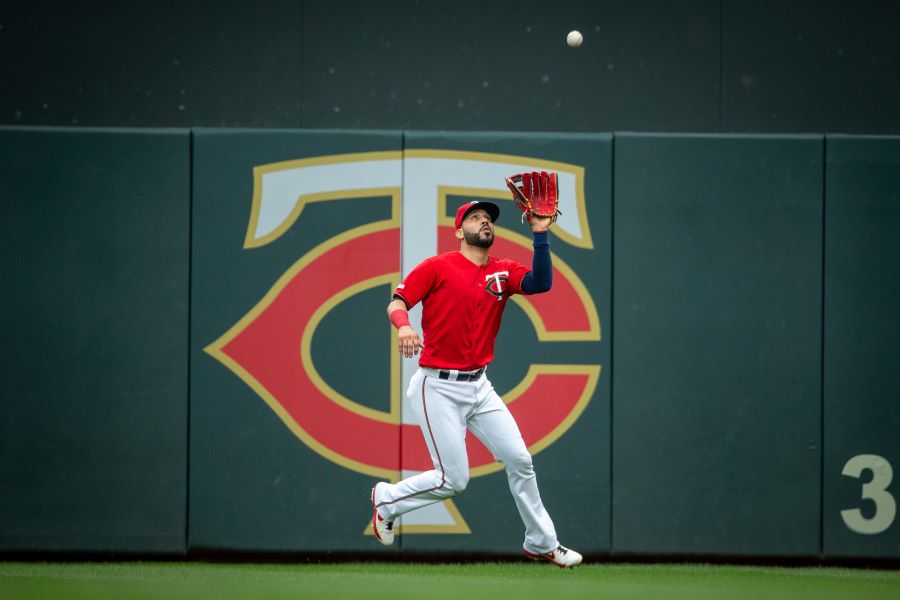 Some uneasiness with Marwin Gonzalez lies in his contract. Some believe that the 2 year $21m the Twins gave Marwin were ill-gotten gains. He was coming off a season where he was worth 1.5 fWAR. His offense was slightly above average as he put up a triple slash of .247/.324/.409, good for a 103 wRC+. A far cry from his career year in 2017 in which he was 44% above league average. Fangraphs calculated the cost per WAR on the 2018 free agent market. At $6.8m per win, Marwin does look like a slight overpay just by looking at his numbers. However, a lot of Marwin’s value lies in the role he plays. The Twins brought him in without planning on giving him a starting job on opening day before Sano’s injury. They waited out free agency and snagged the best super utility player in baseball, a value that goes beyond numbers. If the Twins were paying Marwin for his 2017, that 4.0 fWAR would have been compensated much more handsomely. He would have had a starting spot from the day he was signed if the Twins believed he was that 2017 player. The fact of the matter is, the market identified Marwin’s 2017 as an outlier. The Twins weren’t fooled into offering this contract. In terms of performance, Marwin’s versatility is his main draw, as previously mentioned. Sano’s injury to begin the year made use of Marwin’s flexibility as he immediately slotted to fill in at third base. In addition, he played some first base in C.J. Cron’s absence, as well as the corner outfield spots, periodically spelling Rosario and Kepler as nagging injuries piled up. The nice thing about Marwin is that even with all of the spots he plays, he’s not just a body manning a position. At 1B he’s worth -2 defensive runs saved, at 3B he’s worth 4 DRS, and he’s a very strong outfielder with 7 DRS. https://twitter.com/CodyPirkl/status/1233376609975111681 It was a down year for Marwin on offense in 2019 with a 93 wRC+. He suffered through a miserable start to the season with a 33 wRC+ in March and April. He’s traditionally a slow starter with a career wRC+ of 85 over the first month of the season. He also was late to spring training in 2019 due to the late signing which can throw off a player’s preparation for the season. Marwin also had a 66 wRC+ in September which helped weigh down his offensive stats. To end the year, he was recovering from an oblique injury and was likely rushed back to fill in for the several other Twins injuries. He had a triple slash of .264/.322/.414, good for a 93 wRC+ and 1.4 fWAR. That’s an admirable line for a 10th man on a roster, but normal routine and good health may lead to improvement for Marwin in 2020. It was also an odd year for Marwin in the sense that he actually made improvements to his game. He had a career best hard hit %, average exit velocity, and highest launch angle, all better than his career year in 2017 where he allegedly knew which pitches were coming. Despite all of this, he put up his worst offensive numbers since 2016. If he can repeat these trends, I’d expect him to wind up with some much better looking offensive numbers to pair with the value he provides on defense. You don’t have to buy his jersey, but Marwin Gonzalez is still going to play a big role for the Twins in 2020. His apology may not be enough for some fans, but there has yet to be any proof of it being an issue in the clubhouse which now includes two players directly victimized by the actions of the 2017 Astros. Even in a down year in 2019, he was valuable beyond measure for the Twins. He’s poised to add more value to this talented roster with even a slight rebound. While Marwin Gonzalez will always be linked to 2017, don’t let his past keep you from recognizing his contributions in the present. MORE FROM TWINS DAILY — Latest Twins coverage from our writers — Recent Twins discussion in our forums — Follow Twins Daily via Twitter, Facebook or email — Follow Cody Pirkl on Twitter here
 -
Comparing Kenta Maeda to the Free Agent Starters
Cody Pirkl replied to Cooper Carlson's topic in Twins Daily Front Page News
MadBum was holding onto Oracle Park for dear life. That might be the number one pitcher's park in all of baseball, and MadBum had a 2.93 ERA at home. On the road? 5.29 ERA. Maeda had some favorable home/road splits as well, but he at least matches up for the Twins a bit better because of his effectiveness on righties which is most of the American league. I'd guess MadBum sees some tough effects of pitching in SF 1-2 times per year as opposed to 12-15. -
I mistook his Fangraphs RF DRS for his CF haha. He's fallen off more than I thought.
-
Rocco Baldelli and the Three-Batter Minimum
Cody Pirkl replied to Matthew Trueblood's topic in Twins Daily Front Page News
It's also interesting to consider how other teams are building bullpens, look at Cleveland for example. Two of their top relievers are Adam Cimber and Oliver Perez. Both get absolutely demolished by opposite handed hitters, and having two relievers like this could easily lose Cleveland some tight games since both were used in one or two out situations last year. I said it back in December, Falvey and Levine have done a great job of getting "out getters" in this bullpen instead of spending money and roster spots on specialists. -
Comparing Kenta Maeda to the Free Agent Starters
Cody Pirkl replied to Cooper Carlson's topic in Twins Daily Front Page News
From a sheer numbers standpoint, Maeda is a much better matchup if you're looking at facing off against the Yankees or Astros. His right handed splits would probably fare better than Ryu's style of left handed pitching. It's a small sample size but of 8 Yankee hitters Ryu has faced in his career, 4 of them have an OPS over 1000 against him. As for Graterol, there's so much depth in the bullpen that it's an easy move to make to cash in on the height of his value for starting pitching which is a bigger need. Raley never really had any path to playing time. His role was probably always based around being traded. -
Comparing Kenta Maeda to the Free Agent Starters
Cody Pirkl replied to Cooper Carlson's topic in Twins Daily Front Page News
Don't forget that .535 OPS against righties for Maeda. That should translate to the Central and AL in general super well. I see red when people say we should have signed Bumgarner instead of trading for Maeda, so thank you very much for this Cooper. -
Pillar still had more DRS in center than Kepler did. Kepler is a fantastic right fielder and about average centerfielder. To keep his defense in RF and slot Pillar into CF with 5 DRS and 2 outs above average makes for a better defense even with Pillar's aging drop. Pillar is declining but he was still a bit better than league average in CF even in the enormous outfield of Oracle park. My argument is basically that if you move Kepler over and slot Cave or Wade into RF, you downgrade two positions on defense instead of just one. We've got two open 40 man spots and not much of an urgent need to fill with that 26th roster spot. It wouldn't have been the end of the world to sign another right handed outfielder that can play a decent center field.
-
Reading through the comments I'm seeing people discredit Almora's ability to play CF. We can move Kepler from RF to CF if Buxton gets injured, but then he drops from a well above average defensive player to about average. Cave cannot play center, that's been proven time and time again. It's easier to bring in a specialist to play center if Buxton were to get hurt. That's why I wish we would have just signed Kevin Pillar instead of discussing trading for a backup center fielder. That being said, of Dobnak, Thorpe and Smeltzer, I think Smeltzer is the only one I'd consider giving up for Almora, and I definitely wouldn't add Littell or Stashak to that deal.
-
That's why I like Hardy, he matches up well against righties. The main thing to look for is a changeup, that's a pitch that typically brings the reverse splits you see on guys like Tyler Clippard. Juan Minaya actually has similar splits because his main offspeed is a changeup.
-
It was a busy winter for Falvey and Levine, although a lot of their work has flown under the radar. It seems like every major league deal they made was accompanied by three minor league ones that didn’t make headlines. As we see every offseason, nothing comes from most of these deals. There are a few players brought in however that could make surprise contributions in 2020.Juan Minaya - Minor League Deal - No Spring Training Invite If Minaya’s name rings a bell, it’s because he spent parts of the last 4 seasons with the White Sox. In 2018 he put up a 3.25 ERA with a near 28% strikeout rate while averaging over 95 mph on his fastball. He was one of the top arms in the White Sox bullpen 2018 with a 78 ERA- which was similar to Sergio Romo’s 2019 season. 2019 wasn’t quite as kind however, as his velocity dipped by almost 2 mph and the effectiveness of the rest of his pitches went with it. His 3.90 ERA was discredited by a 4.66 FIP, and the White Sox outrighted him midseason. Minaya could work to recapture some of that velocity at the age of 29 which could raise the floor of the rest of his arsenal. If the Twins are in need of bullpen help as the season goes on, they may have themselves a high octane arm with past major league success waiting in AAA. Cory Gearrin - Minor League Deal - Spring Training Invite Gearrin is a reliever who’s made a career out of being reliable. In his eight seasons he’s pitched to a 3.64 ERA and 3.81 FIP and in only one of them has he allowed a HR/9 over 1.0 His career groundball rate of almost 50% indicates a high floor, as suppressing fly balls is a valuable skill to have these days. Gearrin also has one of those sliders that nerds love. While he may not have Minaya’s raw stuff with an average fastball at 91.4 mph, there’s a lot to like about Gearrin’s reliability. Gearrin is another one of those veterans who’s been around the majors and provides a great fallback option if something doesn’t go according to plan. We may not be seeing him in a closer or setup role, but he’s a name to watch for at some point in 2020. Blaine Hardy - Minor League Deal - Spring Training Invite Hardy is another player that’s been in the AL Central for a few years, spending his entire career with the Tigers thus far. He suffered a miserable 2019 with a 4.47 ERA and 5.72 FIP while trying to pitch through a partially torn flexor tendon in his arm. Before 2019 however, Hardy had a 3.60 ERA in 5 seasons. He’s shown up to Major League Camp confident that his arm issues are in the past. Hardy has a leg up because of his being left handed. He has some interesting reverse platoon splits (4.82 FIP vs L, 3.69 FIP vs R) due to his best pitch being his changeup the last few years similar to Tyler Clippard. If the Twins can get his breaking ball to be more effective against same handed hitters, Hardy’s repertoire could make him valuable. Pitchers with strong changeups may be at a premium with the new three batter minimum since they’re typically able to match up decently against hitters on both sides of the plate. You have to believe the Twins have something in mind after watching Hardy first hand all these years and giving him a chance to prove he’s healthy in a Twins uniform. The Twins already had some strong minor league depth going into the winter, but clearly wanted some options with more major league experience at the ready. I think this year above all others we’ve seen the front office bring in low risk options with the chance for a high pay off. On non guaranteed contracts, why not give yourself as much of a buffer of major league talent as possible? With the season just around the corner, are there any sneaky candidates you would expect to come up at some point and make an impact for the 2020 Twins? MORE FROM TWINS DAILY — Latest Twins coverage from our writers — Recent Twins discussion in our forums — Follow Twins Daily via Twitter, Facebook or email Click here to view the article
-
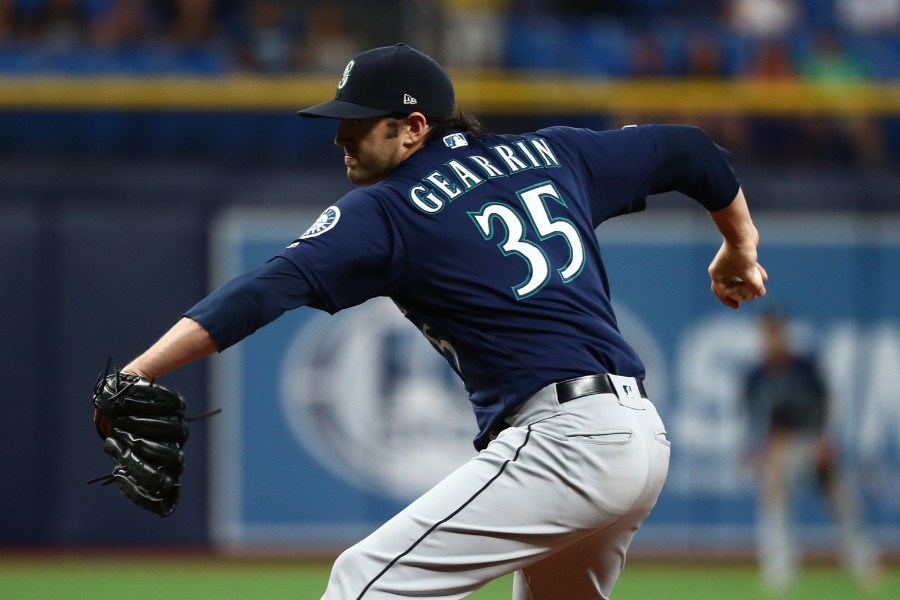 Juan Minaya - Minor League Deal - No Spring Training Invite If Minaya’s name rings a bell, it’s because he spent parts of the last 4 seasons with the White Sox. In 2018 he put up a 3.25 ERA with a near 28% strikeout rate while averaging over 95 mph on his fastball. He was one of the top arms in the White Sox bullpen 2018 with a 78 ERA- which was similar to Sergio Romo’s 2019 season. 2019 wasn’t quite as kind however, as his velocity dipped by almost 2 mph and the effectiveness of the rest of his pitches went with it. His 3.90 ERA was discredited by a 4.66 FIP, and the White Sox outrighted him midseason. Minaya could work to recapture some of that velocity at the age of 29 which could raise the floor of the rest of his arsenal. If the Twins are in need of bullpen help as the season goes on, they may have themselves a high octane arm with past major league success waiting in AAA. Cory Gearrin - Minor League Deal - Spring Training Invite Gearrin is a reliever who’s made a career out of being reliable. In his eight seasons he’s pitched to a 3.64 ERA and 3.81 FIP and in only one of them has he allowed a HR/9 over 1.0 His career groundball rate of almost 50% indicates a high floor, as suppressing fly balls is a valuable skill to have these days. Gearrin also has one of those sliders that nerds love. https://twitter.com/CodyPirkl/status/1230527600889602048 While he may not have Minaya’s raw stuff with an average fastball at 91.4 mph, there’s a lot to like about Gearrin’s reliability. Gearrin is another one of those veterans who’s been around the majors and provides a great fallback option if something doesn’t go according to plan. We may not be seeing him in a closer or setup role, but he’s a name to watch for at some point in 2020. Blaine Hardy - Minor League Deal - Spring Training Invite Hardy is another player that’s been in the AL Central for a few years, spending his entire career with the Tigers thus far. He suffered a miserable 2019 with a 4.47 ERA and 5.72 FIP while trying to pitch through a partially torn flexor tendon in his arm. Before 2019 however, Hardy had a 3.60 ERA in 5 seasons. He’s shown up to Major League Camp confident that his arm issues are in the past. Hardy has a leg up because of his being left handed. He has some interesting reverse platoon splits (4.82 FIP vs L, 3.69 FIP vs R) due to his best pitch being his changeup the last few years similar to Tyler Clippard. https://twitter.com/CodyPirkl/status/1230862517712424960 If the Twins can get his breaking ball to be more effective against same handed hitters, Hardy’s repertoire could make him valuable. Pitchers with strong changeups may be at a premium with the new three batter minimum since they’re typically able to match up decently against hitters on both sides of the plate. You have to believe the Twins have something in mind after watching Hardy first hand all these years and giving him a chance to prove he’s healthy in a Twins uniform. The Twins already had some strong minor league depth going into the winter, but clearly wanted some options with more major league experience at the ready. I think this year above all others we’ve seen the front office bring in low risk options with the chance for a high pay off. On non guaranteed contracts, why not give yourself as much of a buffer of major league talent as possible? With the season just around the corner, are there any sneaky candidates you would expect to come up at some point and make an impact for the 2020 Twins? MORE FROM TWINS DAILY — Latest Twins coverage from our writers — Recent Twins discussion in our forums — Follow Twins Daily via Twitter, Facebook or email
 -
Logging onto Twins Daily and seeing this picture headlining an article is literally my worst nightmare. Well done.
-
Chacin is gone if he doesn't come out of the spring with a major league spot I believe. That's the catch 22. I don't think the Twins want to see another Anibal Sanchez situation where a guy could rebound in a big way but they cut him without giving him the chance. Thorpe is definitely ready for a longer look, but the front office will weigh his ability to start at AAA for sure.
-
Three Truths and a Question about Twins Payroll
Cody Pirkl replied to John Bonnes's topic in Twins Daily Front Page News
It's actually incredible how the front office appears to have improved the team while only sitting at $138m. I'm not super concerned with the free agents next offseason. If Cruz is still slugging, I'd expect the front office to do everything they can to retain him. The rest of the guys I see as replaceable either internally or on the free agent market with all that financial flexibility we'll have back. Losing Odorizzi in particular is a lot less scary now that Berrios, Pineda and Maeda are slotted in. -
Love that thought process. The Twins are in an enviable spot where if they choose Chacin, these prospects that are in competition with him just go to AAA until they're needed later. There's risk Chacin doesn't work out, but there's no risk of watching younger talent leave the organization.
-
Every team has that list unfortunately. The nice thing about the way things fall this spring for the Twins is that the only guys who can "get away" if they don't earn a spot are guys like Chacin and Wisler. All of the young guys can be stashed at AAA.
-
Very much agree. I just want to see whoever ends up in that spot earn it. I'm hoping it isn't awarded because of the past or what they think of the future. We have enough options that whoever gets it should be judged on how they look in the present. Also love the Jake Reed reference. That's my guy.
-
Maybe they're thinking of Perez last year? Didn't get released but for sure got scouted out and exposed after his first 11 starts or so. I think both of these guys are different though. Wisler and Chacin have measurable skills that they still do well. Perez just showed up with a new pitch that had 0 scouting reports on it and wasn't good enough to adjust in response.
-
I love Thielbar, he went to my high school of a few hundred people. I think he could pitch himself into a spot, but he'll have to beat out someone like Cody Stashak who's coming off a nice year. Thielbar has the upper hand because he's a lefty, but it's unknown how much that will even play into the Twins decision with the 3 batter minimum. All that being said, Thielbar is my sleeper to make the squad this spring. He had a hell of a year at AAA last season.
-
I don't know that he'll be outside of their pay scale. That being said, if we see Duran, Balazovic, Thorpe, Dobnak, Smeltzer etc. have successful seasons, they may make the decision to let him walk. They'll have the 1-3 of Berrios, Pineda, Maeda going into 2021. Also keep in mind next year's free agent market. The top pitcher is arguably Bauer who's made it known he'll only take one year deals. If he has a down year and Odorizzi puts up 2019 numbers, Odo is the #1 pitcher on the market. The Twins could afford him, but how much does his price get bid up?
-
The Twins have brought in a few project pitchers despite having several younger arms who appear ready for extended looks. The front office appears to be growing confident in its ability to identify undervalued skills and turn them into value. Is this really the way the Twins should be filling out their roster?Only one rotation spot is up for grabs as we roll into spring, and it likely won’t be a long term gig, as Pineda returns 39 games into the season. The fifth spot has several competitors. Jhoulys Chacín - 103.1 IP, 6.01 ERA, 5.88 FIP, .280/.356/.521 against Chacin is believed by some to be the favorite for the fifth rotation spot despite everything bottoming out in 2019. If you’re looking at his numbers wondering why the Twins even gave him a call, it’s because prior to 2019 he sported a 3.86 ERA in over 1,200 innings in his career. He was starting playoff games for Milwaukee just two years ago and still managed a 25.7% whiff rate on the slider that’s carried him to this point in his career. If the Twins can adjust anything with Chacín to bring him near the No. 2 or 3 pitcher he was in Milwaukee, he slots in well for the fifth spot and gives you more than you can realistically ask from any of the rookies. Randy Dobnak - 28.1 IP, 1.59 ERA, 2.90 FIP, .245/.297/.300 against Lewis Thorpe - 27.2 IP, 6.18 ERA, 3.47 FIP, .336/.387/.531 against Devin Smeltzer - 49 IP, 3.86 ERA, 4.58 FIP, .265/.312/.466 against Here we have three young pitchers who you could easily argue, based on their 2019 performances, are more deserving of a rotation spot than Chacín . Even Thorpe’s ugly looking numbers are balanced by his 3.47 FIP, likely due to his .438 BABIP allowed. So why would Chacín be in consideration for it? The first thought is that he can have explosive value for a non-roster invite if he returns to form. His history says he’s at least capable, while the other three have had success in relatively small sample sizes to start their careers. Also consider Pineda’s return. Do the Twins want a young guy to settle in for six weeks and then have his role in flux? The bullpen had a spot open up just recently as the front office used their bullpen depth to add to their rotation depth by trading Brusdar Graterol for Kenta Maeda. Let’s call this 1.5 spots up for grabs. Matt Wisler: 51.1 IP, 5.61 ERA, 4.23 FIP, .272/.323/.490 against A former top 100 prospect, Wisler was brought in on a guaranteed contract this winter to take a spot in a bullpen with a surprising amount of depth. His FIP being a run and a half lower suggests he may have gotten unlucky. Look no further than his home run to fly ball rate at 18.2%, almost double what the league average normally is. He also has an absurd slider to work with, which earned a 40.8 whiff%. While everything but the slider got crushed in 2019 for Wisler, finding just one more effective pitch could make him a valuable reliever. While it’s not certain, I’d expect Wisler, being out of options, to hold his role with that guaranteed contract when the team heads north, leaving only one bullpen spot remaining. Cody Stashak: 25 IP, 3.24 ERA, 3.01 FIP, .287/.298/.475 against Fernando Romero: 14 IP, 7.07 ERA, 5.07 FIP, .317/.431/.483 against Stashak was money in his debut season, so it’s easy to want him to nab the final spot given his performance compared to Romero’s. You may even be asking what the question is here. Nick Nelson had a nice write up on why you shouldn’t just rule the hard-throwing righty out. He’s got the raw skills you dream of in a reliever, and 2020 is his last option year. It would be nice to give him another chance in the majors in low leverage to live up to his pedigree. If you disagree, also consider that one of the young guys who lost out on a rotation spot could transition to long relief to begin the year. You could solidly argue that the Twins might make better use of two bullpen spots rather than counting on improvement from Wisler. What the final decision may come down to is the confidence the Twins have in betting on themselves. They’d be betting on their ability to identify hidden talent and value, as well as their coaching staff’s ability to bring it to the forefront. It’s easy to say “stash the young arms in the minors in case we need them”, but they’re looking ready for a major league role after most performed better last season than the projects the front office brought in this winter. A lot of them possess a fair amount of upside themselves. Consider the depth that this team has in all facets, as well as the fact that they’re coming off of 101 wins with a wide open window. Do you feel comfortable with the Twins’ ability to make something of these pitchers coming off rough seasons? Or would you prefer they run with the younger, mostly unproven arms of which little is known at this point? Let us know below. MORE FROM TWINS DAILY — Latest Twins coverage from our writers — Recent Twins discussion in our forums — Follow Twins Daily via Twitter, Facebook or email — Follow Cody Pirkl on Twitter here Click here to view the article
-
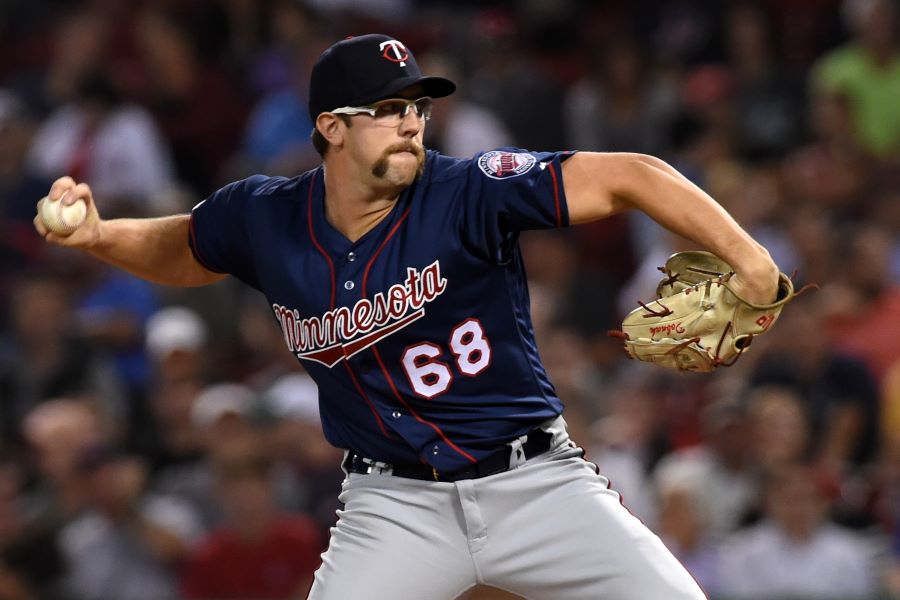 Only one rotation spot is up for grabs as we roll into spring, and it likely won’t be a long term gig, as Pineda returns 39 games into the season. The fifth spot has several competitors. Jhoulys Chacín - 103.1 IP, 6.01 ERA, 5.88 FIP, .280/.356/.521 against Chacin is believed by some to be the favorite for the fifth rotation spot despite everything bottoming out in 2019. If you’re looking at his numbers wondering why the Twins even gave him a call, it’s because prior to 2019 he sported a 3.86 ERA in over 1,200 innings in his career. He was starting playoff games for Milwaukee just two years ago and still managed a 25.7% whiff rate on the slider that’s carried him to this point in his career. If the Twins can adjust anything with Chacín to bring him near the No. 2 or 3 pitcher he was in Milwaukee, he slots in well for the fifth spot and gives you more than you can realistically ask from any of the rookies. Randy Dobnak - 28.1 IP, 1.59 ERA, 2.90 FIP, .245/.297/.300 against Lewis Thorpe - 27.2 IP, 6.18 ERA, 3.47 FIP, .336/.387/.531 against Devin Smeltzer - 49 IP, 3.86 ERA, 4.58 FIP, .265/.312/.466 against Here we have three young pitchers who you could easily argue, based on their 2019 performances, are more deserving of a rotation spot than Chacín . Even Thorpe’s ugly looking numbers are balanced by his 3.47 FIP, likely due to his .438 BABIP allowed. So why would Chacín be in consideration for it? The first thought is that he can have explosive value for a non-roster invite if he returns to form. His history says he’s at least capable, while the other three have had success in relatively small sample sizes to start their careers. Also consider Pineda’s return. Do the Twins want a young guy to settle in for six weeks and then have his role in flux? The bullpen had a spot open up just recently as the front office used their bullpen depth to add to their rotation depth by trading Brusdar Graterol for Kenta Maeda. Let’s call this 1.5 spots up for grabs. Matt Wisler: 51.1 IP, 5.61 ERA, 4.23 FIP, .272/.323/.490 against A former top 100 prospect, Wisler was brought in on a guaranteed contract this winter to take a spot in a bullpen with a surprising amount of depth. His FIP being a run and a half lower suggests he may have gotten unlucky. Look no further than his home run to fly ball rate at 18.2%, almost double what the league average normally is. He also has an absurd slider to work with, which earned a 40.8 whiff%. While everything but the slider got crushed in 2019 for Wisler, finding just one more effective pitch could make him a valuable reliever. While it’s not certain, I’d expect Wisler, being out of options, to hold his role with that guaranteed contract when the team heads north, leaving only one bullpen spot remaining. Cody Stashak: 25 IP, 3.24 ERA, 3.01 FIP, .287/.298/.475 against Fernando Romero: 14 IP, 7.07 ERA, 5.07 FIP, .317/.431/.483 against Stashak was money in his debut season, so it’s easy to want him to nab the final spot given his performance compared to Romero’s. You may even be asking what the question is here. Nick Nelson had a nice write up on why you shouldn’t just rule the hard-throwing righty out. He’s got the raw skills you dream of in a reliever, and 2020 is his last option year. It would be nice to give him another chance in the majors in low leverage to live up to his pedigree. If you disagree, also consider that one of the young guys who lost out on a rotation spot could transition to long relief to begin the year. You could solidly argue that the Twins might make better use of two bullpen spots rather than counting on improvement from Wisler. What the final decision may come down to is the confidence the Twins have in betting on themselves. They’d be betting on their ability to identify hidden talent and value, as well as their coaching staff’s ability to bring it to the forefront. It’s easy to say “stash the young arms in the minors in case we need them”, but they’re looking ready for a major league role after most performed better last season than the projects the front office brought in this winter. A lot of them possess a fair amount of upside themselves. Consider the depth that this team has in all facets, as well as the fact that they’re coming off of 101 wins with a wide open window. Do you feel comfortable with the Twins’ ability to make something of these pitchers coming off rough seasons? Or would you prefer they run with the younger, mostly unproven arms of which little is known at this point? Let us know below. MORE FROM TWINS DAILY — Latest Twins coverage from our writers — Recent Twins discussion in our forums — Follow Twins Daily via Twitter, Facebook or email — Follow Cody Pirkl on Twitter here
 -
Twins Daily 2020 Top Prospects: #8 SS Keoni Cavaco
Cody Pirkl replied to Seth Stohs's topic in Twins Daily Front Page News
The Twins did take him higher than most thought he would go. It sounded more like they felt they had the ability to do so because of the organizational depth. They had a deep enough farm system to identify a young guy with the tools to be a game changer. They knew he was a raw talent. Nobody is going to be fired up to see the numbers he put together in his debut. There's obviously more there though and the front office was confident that they could spend the time developing him, and afford the risk that came along with it.- 37 replies
-
- 2
-

-
- keoni cavaco
- byron buxton
- (and 3 more)
-
I went to school in Beloit for two years and yeah, every time I went to a Snappers game, my friends and I made up roughly 50% of the attendance. I actually loved the stadium and they did a good job of setting up promotions throughout the game to keep you entertained. I don't know that a new stadium would do much to draw in more unfortunately. The team just isn't much of a draw among students at the school and you don't really see many locals attending either. Might just not be a viable town for a professional team.
-
It’s worthwhile to look at stats. They tell a story of a player or team’s season. When you only look at stats however, you miss a chunk of the story being told. Behind each slash line and number total is a person with his own uniqueness. It’s why we ask about “clubhouse fit” when a Nelson Cruz or Josh Donaldson gets added to the roster. Each player has his own immeasurable contribution they make to their team. Because of that, today I’m going to count down the top 5 intangibles to look forward to in 2020.5. Luis Arraez’s Particular Set of Skills I have to imagine that pitchers absolutely loathe watching Arraez step up to the plate. Not because he’s going to hit one 450 feet like the Miguel Sanos of the lineup, but because whatever happens next is just not going to be enjoyable. Everything from his contact ability to him furiously shaking his head after every pitch he takes says there’s just no way that can be fun to pitch to. Just ask Edwin Diaz. , the soft-tossing spark plug will be spinning sliders from the Twins bullpen for an entire season in 2020. Romo’s veteran presence has obvious value for a bullpen of all ages and pitching styles. While he was a three-time world champion in the 2010s, he’s also just a good pitcher even after 12 years in the league and a fastball averaging well under 90 mph. He’s just a fantastic guy whose energy rubs off on everyone around him. It’s also safe to say that through the ups and downs of the season, he’s probably going to keep everybody lighthearted. 2. Josh Donaldson’s Intensity Josh Donaldson is a fiery guy as Matthew Taylor pointed out last week. He makes it known that he not only comes to play every day of the week, he’s here to beat you. It doesn’t matter if it’s the division-clinching game or the getaway game the day after, it’s getting Donaldson’s 100% effort. There’s a reason so many questions were raised in regard to Donaldson’s fit in this clubhouse. The Twins don’t have anybody like him. By all accounts however, this group has a wide range of characters already present and the atmosphere is fantastic. I think an intense superstar is more of a missing piece of the puzzle rather than a presence that’s going to rock the boat. 1. Rocco Baldelli’s Managing Style Rocco is the glue that holds this roster together. His ties to being a player so recently give him valuable insight into the everyday grind of his players. He’s able to manipulate lineups day in and day out and press the right buttons to keep everybody as fresh as possible. We saw career bests from a lot of the lineup from the 26-year-old Kepler to the 39-year-old Cruz in 2020, and that’s no coincidence. Rocco embraces analytics and always seems to be looking for that next edge in a calm and collected way. It’s difficult to put a number on the effectiveness of a manager, but I’d argue that a Manager of the Year award likely does just as well. Look for Rocco to become even more effective at managing games in 2020, which will be only his second year doing so. Last year was a lot of fun for statistical reasons like setting the home run record and winning 101 games. We were all lucky however in the sense that we got to see everything that the box scores don’t tell you. This year looks like there are going to be even more intangibles to help contribute to another successful season, certainly more than I listed here. Which ones are you most looking forward to? MORE FROM TWINS DAILY — Latest Twins coverage from our writers — Recent Twins discussion in our forums — Follow Twins Daily via Twitter, Facebook or email — Follow Cody Pirkl on Twitter here Click here to view the article
