



bean5302
-
Posts
7,571 -
Joined
-
Last visited
-
Days Won
36
Content Type
Profiles
News
Minnesota Twins Videos
2026 Minnesota Twins Top Prospects Ranking
2022 Minnesota Twins Draft Picks
Minnesota Twins Free Agent & Trade Rumors, Notes, & Tidbits
Guides & Resources
2023 Minnesota Twins Draft Picks
The Minnesota Twins Players Project
2024 Minnesota Twins Draft Picks
2025 Minnesota Twins Draft Pick Tracker
2026 Minnesota Twins Draft Tracker: Picks & Bonuses
Forums
Blogs
Events
Store
Downloads
Gallery
Everything posted by bean5302
-
Most recent contributors coming to mind... Luis Arraez (Terry Ryan) came out of Venezuela. Jhoan Duran (Arizona) came out of the Dominican Republic. Jorge Alcala (Houston) came out of the Dominican Republic. Falvey's had no success at signing an international player and having them produce at the MLB level yet. At least for the Twins.
- 32 replies
-
- 4
-

-
- emmanuel rodriguez
- danny de andrade
- (and 4 more)
-
Take it up with Falvey. He's got a history of beating down players in arbitration. Maybe he wanted that championship belt again this year.
-
Eric Wagaman Might Be the Next Kyle Garlick
bean5302 replied to Cody Schoenmann's topic in Twins Daily Front Page News
Oh yeah, loved Kyle Garlick and how the Twins kept him over Rooker. That was a good call. The grand total of 0.4 fWAR Garlick brought to Minnesota over his 3 year tenure is hard to beat!- 48 replies
-
- 4
-
-
- jordan luplow
- jonah bride
- (and 2 more)
-
It's hard to evaluate these players when it comes to their asset value to the Twins. It depends on whether or not the Twins are trying to compete, and what metrics are valued. Keaschall didn't hit in AAA, and he was below average at MLB with Luis Arraez like power (and walk rates) in the second half of his MLB stint. There's plenty to like with his speed and upside, but the way he's being touted almost like a guaranteed stud remind me of Danny Santana's future as a career All Star SS. Lopez's value all comes in the form of a playoff worthy rotation arm and a steady force for a competitive team's rotation. Ryan brings everything Lopez does PLUS trade value if the Twins pivot from trying to compete. Obviously Jenkins and Culpepper are all future value, but there is a chasm between the two when it comes to national recognition and expectations which drives trade value. Jenkins blew the doors off AA, but initially floundered at AA. Hopefully, Culpepper's AAA adjustment is far less severe. I don't think I'd have Culpepper in the top 5. Feels too bullish.
-
I can't argue with "scoreboard!" so you've definitely got a solid point on real production by bWAR levels. I have a major issue with bWAR these days. I used to like it way more than fWAR until I looked at Jose Berrios for the Jays vs. Aaron Nola in 2024. Berrios = 2.3 bWAR on the back of 192.1 IP, 3.60 ERA, 114 ERA+ Nola = 3.7 bWAR on the back of 199.1 IP, 3.57 ERA, 117 ERA+ The disconnect makes no sense, and I've run into Baseball Reference broken logic before. Even so, you've got a stronger argument than me saying, I don't like bWAR.
- 46 replies
-
- 1
-
-
- taj bradley
- mick abel
- (and 3 more)
-
Well, I think I'm in a pretty good position with the evidence I presented vs. you just not wanting it to be true, haha.
-
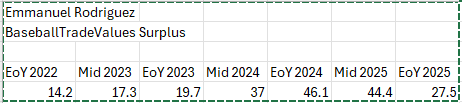
Emmanuel Rodriguez will need to do something pretty special this year to regain peak value. I think the Twins might be able to get a 4th option year on him based on how much time he's missed with injuries, and that could really help. While I'm not a believer, Emma did make substantial strides in K rate at AAA this year. It's still way too high, but he was able to get the rate down from 37% to 31%. He just doesn't show a lot of game power in AAA, though. An ISO of .166 (average-ish) this year and .130 (pretty light hitting) the year prior. Emma's not a super young prospect anymore, either coming into his age 23 season with 5 years of professional MiLB experience under his belt. We'll see what ST has in store. He's averaged an over 50% K rate in previous invites. That really needs to get down to 30%-ish to show the needed progress.
- 46 replies
-
- 1
-
-
- taj bradley
- mick abel
- (and 3 more)
-
It's circumstantial, but there are what I consider to be supportive of my position. First is in regard to his conditioning. SWR has demonstrated his endurance is lacking. He gets pulled after 4-5 innings regularly, often with a velocity drop corresponding with about 80 pitches thrown. It's often cited how SWR wore down late in the year in 2024 after 112.1 innings in the big show (125.2 IP on the season including MiLB) with a 2mph drop off for his average FB in his final 5 starts vs his previous 5. Last season, he also showed reduced velocity at the tail end. His 6 starts prior to his demotion to AAA in July averaged 93.7mph on the fastball. Despite the sparkly ERA, his velo was down to 92.8mph over his last 6 starts coming back to the big show to finish the season out. Second is his coachability. The Twins coaches had apparently given up on him in 2023. For 2 years there were comments from the front office and coaches about SWR's inability to repeat his mechanics and adjust. He looked absolutely cooked and he was down to his last chance coming into 2024. SWR had to go to the coaches to seek help and almost overnight, once he finally was willing to listen, his mechanics got better and he picked up 3-4mph of velo going from wash out to legitimate rotation prospect. SWR continued to struggle a bit with repeating his mechanics throughout the 2024 campaign, but that's only natural considering the lack of experience with the effort. Barely adequate. A 4.55 xFIP in 2024, 2 demotions to AAA due to performance problems last year (5/14, 7/28) and a 4.71 xFIP on the 2025 season while averaging just 4.2 IP per start. That's barely adequate in my book. I don't see him as a legit desired rotation option for a playoff caliber team going forward. Do other teams have worse pitchers in their rotation? Sure. Do they WANT those worse pitchers in the rotation? Absolutely not.
- 46 replies
-
- 3
-
-
- taj bradley
- mick abel
- (and 3 more)
-
SWR, front line starter! I don't think I've ever heard such a bullish take on the pitcher. Certainly not since he reached AAA several years ago. While SWR did have a great finish to the season, it came with an average exit velocity against him of 92mph (terrible), a 9% barrel rate (terrible) and a 40% hard hit rate (from Statcast, terrible) yet with a miserly .152 BABIP against. He did dramatically increase his K rates, and that's a positive, but he's flashed K rates before. With a track record of over 50 starts as a barely adequate #5 with uninspiring peripherals under his belt, it'll take a lot more than 3-4 lucky games chained together to get me on board. Especially given his history of seemingly having conditioning issues and being difficult to coach. Emma is a reach in the top 10 at this point as well.
- 46 replies
-
- 3
-
-

-
- taj bradley
- mick abel
- (and 3 more)
-
The Pohlad Playbook Has Not Changed in 30 Years
bean5302 replied to Cody Christie's topic in Twins Daily Front Page News
Oh really? I've let them off the hook have I? What season ticket package did you cancel? I upgraded my season ticket package in 2023 before the payroll cut announcement and paid $10,000 into the Twins in 2024 in terms of a season ticket package and game day expenditures. I canceled for 2025 and haven't picked up for 2026. How about you? I like realism in my evaluations because it lends credibility and it's easier to support. Making radical statements which are easily chipped away or contradicted like "Pohlads one of the worst owners in sports" when there are plenty of examples of ownership groups who are arguably worse just off the top of my head in MLB alone: more miserly (Guardians-Dolan), less successful (Nutting-Pirates), more predatory on fan bases (Loria-Marlins), more hated by fans (Fisher-Athletics) more misguided while being hands on (Moreno/Angels), more dysfunctional leadership wise (Reinsdorf/White Sox). The Pohlads are not good owners and I want them gone in favor of potentially better owners, but I'd rather have them than Nutting, Sherman, Morena or Reinsdorf in MLB any day.- 24 replies
-
- 3
-
-
-
- jim pohlad
- jerry bell
- (and 1 more)
-
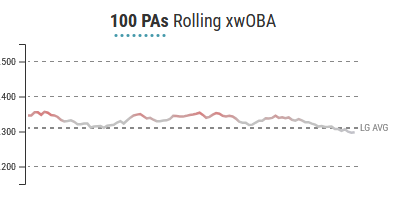
Wallner and Lewis can be expected to have a huge impact on the season. The Twins absolutely need them to excel if the team has any hopes of achieving the seemingly ambitious outlook ownership has for the organization. Wallner's defense needs to rebound as much as anything else. Brooks Lee hasn't demonstrated much with the bat, and I don't think he ever will since there are so many tools he's missing in his production profile. I also don't think it's reasonable to expect him to be a big producer so that puts more pressure on other players. I think Luke Keaschall could be far more key to the Twins this year than Lee. Keaschall has been willing to take walks, and enough pop to keep pitchers honest. Keaschalls speed means he's tough to double up and a threat to reach base safely on an infield grounder. Even considering his lower actual xwOBA, a league average bat at 2B would still be very valuable and it would be really nice to find a stable every day 2B.
- 39 replies
-
- 4
-
-

-
- matt wallner
- royce lewis
- (and 1 more)
-
6'1" and 190lbs is not remotely wiry. That's final, full adult, MLB starting shortstop size. Miguel Sano was 6'3" and 190lbs when he was signed back in 2009. It's tough to gauge how likely a player is to stick at a premium position until after they get a couple years into their international signing.
-
The Pohlad Playbook Has Not Changed in 30 Years
bean5302 replied to Cody Christie's topic in Twins Daily Front Page News
Oh yes. Definitely way worse than owners of say the Pirates, etc. The Pohlad family isn't remotely close to the worst. They're not good, either.- 24 replies
-
- 3
-
-
-
- jim pohlad
- jerry bell
- (and 1 more)
-
Zebby needs to learn much better command of his pitches or he's going to the bullpen. If Matthews is able to demonstrate that mid-upper 3s ERA potential, he'll likely go to #1 this year. Ryan, Lopez and Ober lose 1/2 of their remaining control this year so their value goes with it. Buxton is probably at peak value right now as well. I find Lee's +30 (2nd highest for Twins, I think) to be a modeling snafu. There just isn't much high end asset value with the Twins entire system.
-
The Pohlad Playbook Has Not Changed in 30 Years
bean5302 replied to Cody Christie's topic in Twins Daily Front Page News
I've felt Jim has moved towards the more conservative Carl Pohlad as Jim has aged. Bill Smith extended Morneau, Mauer, Nathan, and Cuddyer all to sizable contracts. As Target Field approached opening day, and for the first years of Target Field, there was definitely a different vibe about things. Yet, rather than capitalizing on the momentum, the Pohlads pulled back. It was never the same again, and while the family opened up the wallet in recent years, the spending quickly got pulled back again at the worst possible time.- 24 replies
-
- 3
-
-
- jim pohlad
- jerry bell
- (and 1 more)
-
Lee shouldn't be entirely written off, but 700 PA in back to back seasons is getting to be a pretty solid sample size. There's a high degree of likelihood he'll never hit well enough to hold down an starting spot on an MLB team. I've seen enough of Lee already to want the team to be planning to supplant him.
-
The Twins absolutely need to have a competent defensive shortstop to replace Brooks Lee in the starting lineup. Fixed that for ya.
-
Honestly, though, I like this signing. On a MiLB contract, Arcia is excellent AAA roster filler, though I wonder if the contract includes an opt-out? Honestly, I think it's best for Arcia if the opt out is mid-year to give him some opportunity to work on his game with consistent playing time, though patience hasn't been his virtue at the plate. Also, this provides me some personal entertainment value wondering what's wrong with Arcia's stats when I continue to mistakenly input "Oswaldo" into the search bars of baseball stat sites. I think the signing makes even more sense if the Twins believe Kaelyn Culpepper is potentially close because there isn't much AAA ready talent for SS in the Twins' system. If Kaelyn doesn't look ready, Orlando is a much better backup option than Kriedler, IMHO.
-
Except it's a MiLB deal instead of an MLB deal at like $4MM where Falvey would subbornly keep the player on the roster as if there was a turnaround coming and Baldelli would play them every day just to troll the fans.
-
In a vacuum, and when done properly. Baldelli didn't do it properly. There is no legitimate use of a 26 man roster spot for a part time LHP-only platoon specialist DH on a well run team.
- 166 replies
-
- 4
-
-
- ryan fitzgerald
- kade bragg
- (and 1 more)
-
Shoulder surgery at the end of March last year with a typical recovery period of 12 months. Nick Paparesta indicated it was likely Canterino will take longer than that. Honestly, I'd be surprised if he was on the mound prior to the end of Spring training. It's a 2 year MiLB contract, but I'd say the odds Canterino ever pitches in the big show are very long.
-
The problem is Falvey was hoarding clock time on all of them rather than calling them up last year to get a look at them. Even if they weren't ready, Falvey committed to a path of gutting the entire bullpen with no money to rebuild it, and the waiver wire guys we brought onto the 26 man to finish the season aren't solutions for the future. Can't have your cake and eat it, too. On top of it, I've seen some conflict in the front office when it comes to how pitching depth is to be utilized. Falvey has been on record multiple times talking about Prielipp as a reliever while Zoll has been clear he wants to use Prielipp as a starter. There doesn't appear to be any strategy whatsoever for this team right now. It's Falvey's job to create one and carry it out. Anybody from this site could do the job Falvey has done with the roster after the trade deadline was over last year.
-
Spotrac has him at 3yrs $32MM. MLBTR had him at 2yrs $18MM. Dominguez is not elite so he won't be able to set market demands with a ton of suitors, but spending on relief pitchers hasn't been Falvey's typical MO.
-
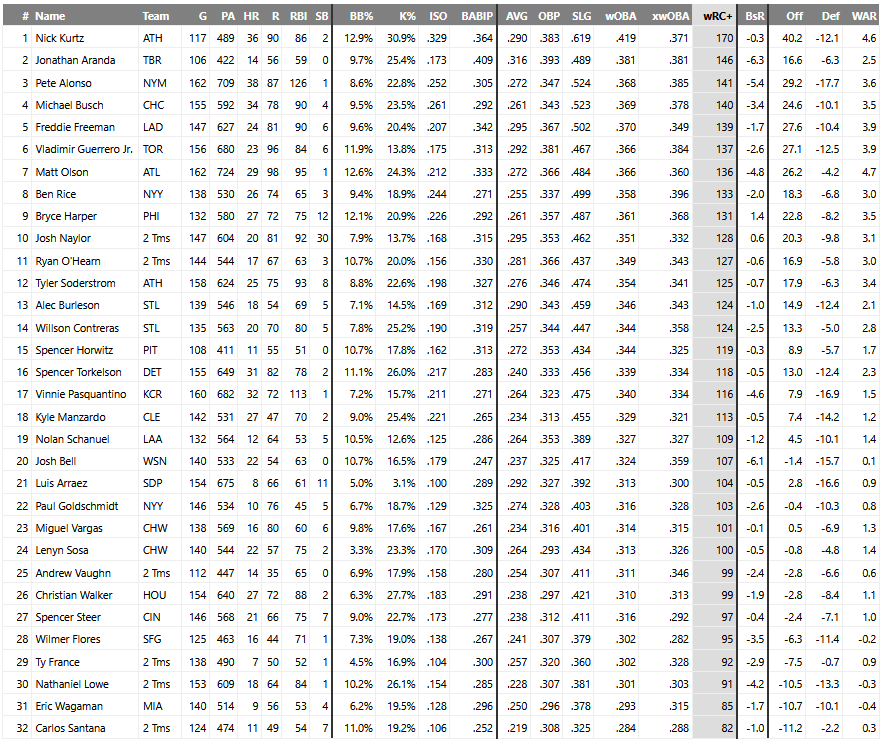
I see some comments about Fangraphs and interacting with it. If you're devious enough, you can make stats or sites like Fangraphs say whatever you want them to say. For 32 players with a "primary position" of 1B with at least 400 PA, Eric Wagaman put up the 2nd worst wRC+ For the splits argument, please take a look at the plate appearances last year. Players get a lot more plate appearances vs right handed pitching than left handed pitching. Then you look at 1B splits in general. There were 28 primary 1B with 120+ plate appearances (SSS) vs left handed pitching last year. Wagaman's .783 OPS ranked 59th percentile for RHH, and 64th percentile for LHH (higher percentile is better). Basically, Wagaman was "above average" against left handed pitchers, but hardly elite. When you consider he's only going to see 25% of his plate appearances vs. lefties and he can't hit righties in a position where your performance at the plate is the most important thing in your profile, he's not a significant asset on paper. On top of that, Baldelli v2.0 is our manager so we can expect the same kind of substitution nonsense we saw last year where opposing managers would feint a move, Baldelli would overreact and cripple the line up for the rest of the game using an ill-advised substitution trying to play the stupid platoon game. Wagaman was terrible against 75% of the pitchers he played against. Wagaman was "above average" but certainly not great against the 25% of the pitchers who were lefties.

- 166 replies
-
- 1
-
-
- ryan fitzgerald
- kade bragg
- (and 1 more)
-
Perfect example of my biggest complaints about Falvey. Doesn't understand how to operate within a budget. Give him a budget and he'll use it, but he'll squander it with his desperate need to sign every name he possibly can. I can't imagine what the inside of his house looks like. Probably like a Big Lots exploded in there.
- 166 replies
-
- 1
-
-
- ryan fitzgerald
- kade bragg
- (and 1 more)

