


Twins Video
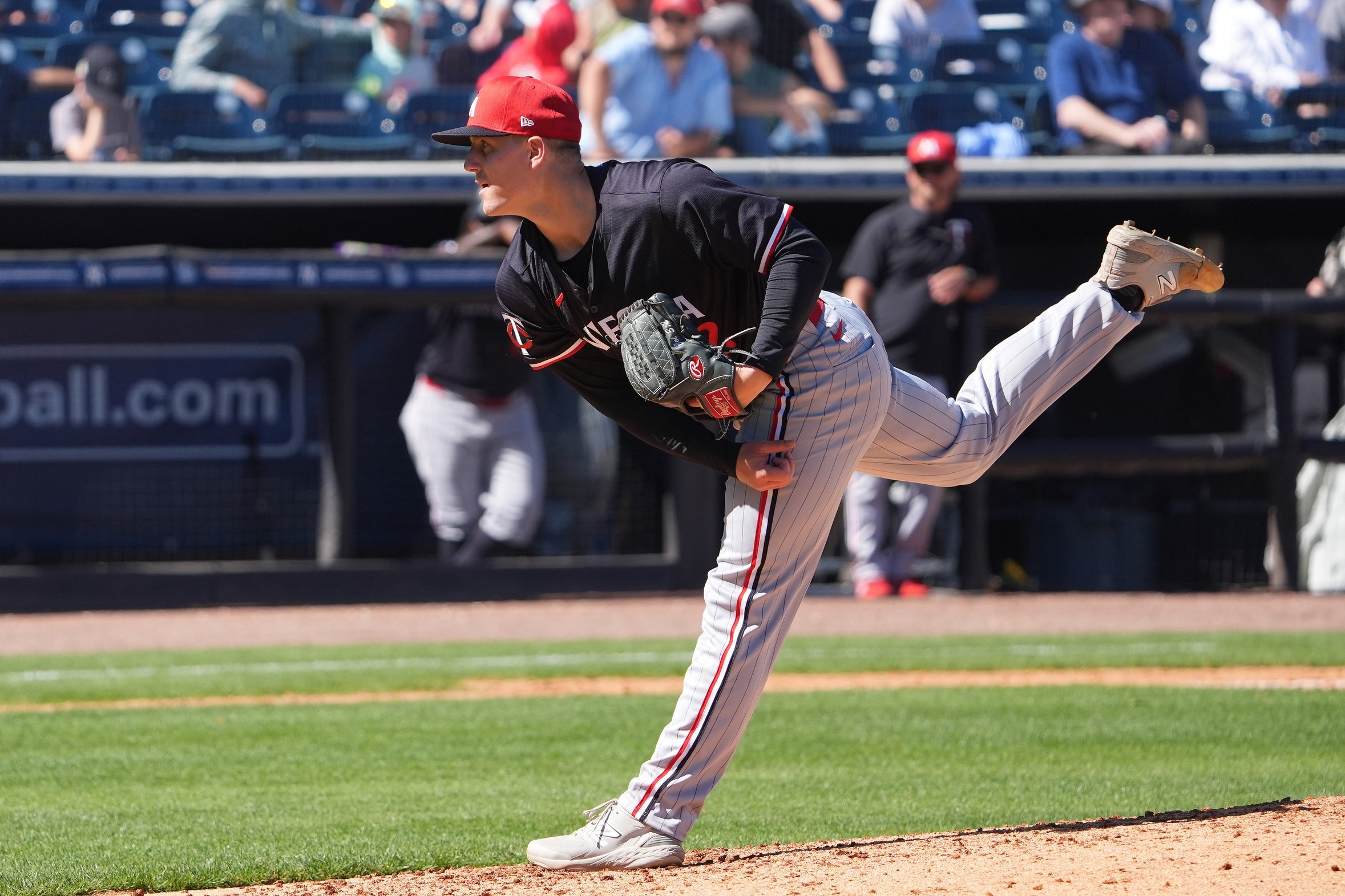
For many Twins fans, it was perhaps a surprise when David Festa got the call to the Twins rotation over Zebby Matthews. After all, Zebby was lined up to take Pablo’s day in the rotation. Matthews has also made tangible performance gains in 2025. The move made sense, though. Festa is MLB-ready in his own right. He has more experience at Triple-A. His promotion allowed the Twins to build up some extra rest for a rotation that has rounded into form.
We’ll see Zebby Matthews with the big league team soon. Let’s take stock of his early-season performance in the minors and dig in on some of those tangible improvements.
Matthews has made three starts in AAA thus far in 2025, most recently against the Iowa Cubs, probably the best Triple-A lineup in baseball. In those three starts he’s thrown 15 innings and managed a 1.28 FIP, posting a 32.7 K-BB% in the process. That’s dominant.
One inescapable truth, and one that underpinned folks clamoring for Zebby to be promoted to the big leagues to replace Pablo Lopez, is a significant uptick in velocity across the board. In 2024, a year in which Matthews saw three different MiLB levels (and a brief, challenging stint in the majors), his fastball averaged 95.6 mph. Through 15 innings in 2025, he's averaging 97.2 mph, he's touched 99.5 mph, and he’s using it more (45%, up from 37% in 2024).
It’s not just the fastball. The velocity is up across the board.
|
|
|
|
|
|
|
|
|
|
|
|
|
|
|
|
|
|
|
|
|
To put this in context: 97.2 mph would have been the fastest average fastball for a starter in the majors in 2024, ahead of Dylan Cease (96.9 mph) and Tarik Skubal (96.8 mph). His slider would be the second hardest, on average. While we’ve been astounded by Matthew’s velocity gains in 2025, it still feels like we’re underselling it.
So, what’s the impact of velocity gains? It’s giving him significantly more margin for error with his one remaining area of opportunity, command, (more on that later). The amount of contact opposing hitters are making in the strike zone is way down, from 88.7% in AAA in 2024, to 78.8% in Triple-A this year. His CSW% (called + swinging strike percent) is up from 28.6% in AAA in 2024, to 34.6% in AAA in 2025. These are not small improvements.
If you’re a stuff nerd, that's taken a step forward. Please consult your preferred stuff plus model of choice. This is trending towards becoming one of the better arsenals out there, aided by new found elite velocity.
So, what are the opportunities for Matthews? One aspect of his performance we should continue to pick apart is control versus command. The two are often conflated. He’s elite at one, while the other is a work in progress.
Considered in its simplest form ‘control’ is the ability to throw strikes, ‘command’ your ability to manipulate those strikes throughout the strike zone. The latter is much more complicated. After all, you have to consider the relative strengths and weaknesses of a particular hitter, the sequencing of your pitches, and so on.
Matthews threw ~70% strikes in his 2024 season. His 1.9 BB% in his MiLB innings would easily be the best in the majors (George Kirby led the league at 3%). Matthews is throwing slightly less strikes in 2025 (68%). I’d contend that’s a net positive. Knowing how, when, and where to leave the strike zone is an important skill in learning to deploy your arsenal, particularly when it features a fastball you can run up to 100 mph. To put it bluntly; how can you make a batter chase if you are never out of the strike zone?
Let’s address the command directly. Location+ is a count and pitch type adjusted stat that serves as a measure of the pitcher’s ability to put the ball in the right place. While that’s not perfect, it tells an interesting story. In his brief MLB debut in 2024, Matthews had a Location+ of 97. If he was qualified, that would have ranked 52nd out of 58 starting pitchers in the league. Matthews’ Location+ was worst on his fastball and cutter, two pitches that account for ~60% of the pitches he throws. To be direct, he was outstanding at throwing strikes, not yet outstanding at putting those strikes in the right places.
The remaining area of opportunity for Matthews is training command: spotting his pitches where they are called, reducing his miss rate, and ensuring misses don’t leak over the heart of the plate. This is where his velocity creates increased margin for error, but command metrics are the aspect of Matthews’ performance I’ll be paying closest attention to when he gets the call.
One final aspect of development we should mention is a pitch tweak. Matthews adjusted his changeup this offseason. Primarily for use against left handed hitters, he’s worked on executing it over the plate to ensure they can’t sit on a cut fastball or breaking pitch inside. You can see an example below of how these were executed against Owen Caissie after getting to 0-2 against him in his most recent start (both changeups in this at-bat were swinging strikes).

Matthews is more equipped to handle MLB hitters in a second stint with the Twins, whenever that may come. It’s now elite velocity, elite strike throwing, and a diverse arsenal that should beget success at the highest level. If he can continue to improve his command, he has a chance to be a playoff caliber starting pitcher.
Which team do you dislike the most in the AL Central?

Interested in learning more about the Minnesota Twins' top prospects? Check out our comprehensive top prospects list that includes up-to-date stats, articles and videos about every prospect, scouting reports, and more!
View Twins Top Prospects







Recommended Comments
Create an account or sign in to comment
You need to be a member in order to leave a comment
Create an account
Sign up for a new account in our community. It's easy!
Register a new accountSign in
Already have an account? Sign in here.
Sign In Now