


Jump to content
Twins Daily
  • Create Account
  • Twins News & Analysis

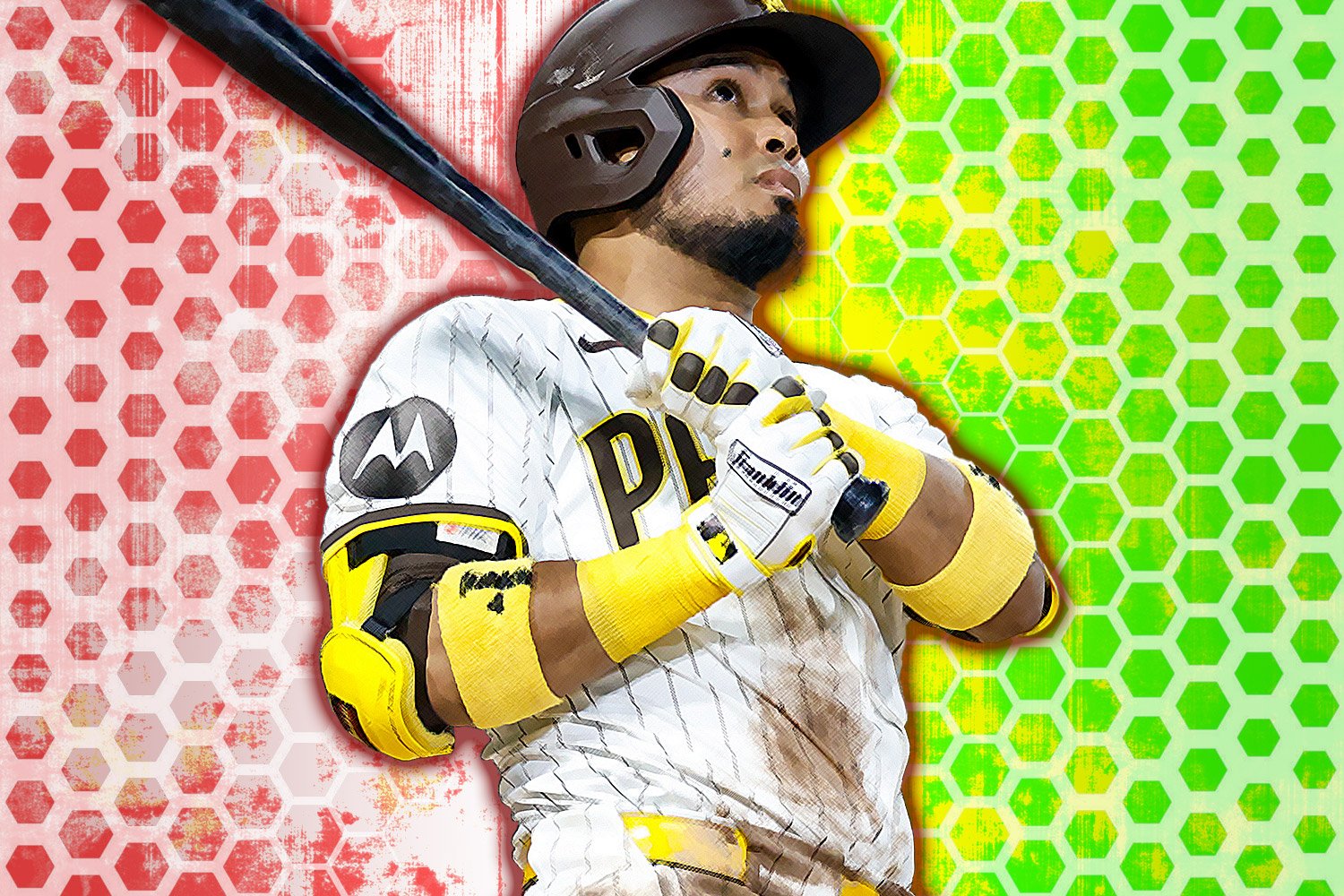
    Why the Twins Didn't Sign Luis Arraez

    He’s a three-time batting champ. He’s beloved across Twins Territory. He might be in their price range. So why would it be a bad idea?

    Greggory Masterson

    Twins Video

    Luis Arraez has the highest batting average among active MLB players. His .317 is 14 points higher than the next highest, Jose Altuve’s .303 average. There isn’t another player over .300.

    Arraez also registered the lowest strikeout rate since Tony Gwynn in 1995, retired on strikes in just 21 of his 620 at-bats (3.1%).

    And he might have been in the Twins’ range before the Josh Bell signing. Jon Becker of FanGraphs compiles public estimates for free agents, and Arraez’s mean contract is $10.25 million annually. Estimates are split between Arraez getting a one- or two-year contract, ranging from $8.5 million to $15 million per year, which could fit into the Twins’ budget for upgrading first base.

    But this isn’t about why the Twins could sign Arraez. It’s about why they didn't.

    And it’s not because batting average doesn’t matter.

    Put succinctly, it’s because he hasn’t played like the player the Twins traded away in years.

    Between 2019 and 2023 (his first year in Miami following the trade that brought Pablo López to Minnesota), Arraez slashed .326/.379/.427, and his .806 OPS was 22% above league-average. This season, he was just league-average, slashing .292/.327/.392. If you’ve been following Arraez at all, you probably know that his batting average dipped this season. But there’s more going on here than bad luck.

    There’s bad process.

    Yes, even with one of the highest batting averages in baseball, and one of the best strikeout rates in the past 50 years, Arraez’s plate appearances are not good. It almost seems as if he’s focused all of his energy into not striking out, ignoring all other aspects of a good approach.

    Some of this regression can be seen in his ability to draw a walk. Arraez has never hunted walks, but he sat around league-average as a Twin between 2019 and 2022, walking 8.7% of the time. When combined with his .314 batting average in Minnesota, Arraez got to flirt with a .400 OBP. That went out the window in Miami in 2023, but his .354 average made up for that loss in walks, as he still got on base 39.3% of the time. Since then, though, he’s had a .337 OBP between 2024 and 2025, which is about 8% above the league average during that time.

    A slightly above average OBP is good, but paired with a roughly league-average .392 slugging percentage (35 points lower than it was during the first five years of his career), the overall production doesn’t match the sexy batting average.

    Within and beyond his ability to draw a walk lies another issue: his swing decisions. Yes, Arraez isn’t striking out. But that doesn’t mean he’s taking good plate appearances. In Minnesota, he chased pitches outside the strike zone about 23% of the time, far better than league-average. Since leaving, he’s swung at about 34% of pitches outside the zone, nearly 50% more often and much worse than league-average. Put another way, for every two balls he swung at outside the zone in Minnesota, he’s swung at three since.

    He has a remarkable ability to make contact with pitches, even outside of the strike zone, and he’s gotten better at it with age, going from about making contact with balls outside of the zone 86% of the time in Minnesota to 91% in Miami and San Diego. He’s also making more contact with strikes, going from 95% in Minnesota to setting a career-high 97.3% this year.

    But also, he just set his career low for swings on strikes, at 60%. So he swung at a career-high percent of pitches outside of the zone, but he also swung at a career-low number of pitches inside the zone. That’s not supposed to happen.  

    As he has been making more contact, his batting average has gone down. And pitchers are throwing him more strikes in the process. In Minnesota, 50% of the pitches he saw were strikes, whereas it’s been 55% since 2023.

    I just threw a bunch of numbers at you, so here’s something else. Remember Willians Astudillo? La Tortuga? Well, Arraez seems to have a bit of the La Tortuga disease, where because he’s a guy who can put wood on anything, he’s putting a lot of pitches he probably shouldn’t be swinging at in play, and poorly. But then you add into that equation that he’s also swinging at fewer strikes than he ever has. It’s perplexing. And it bears out in the quality of his contact.

    Arraez has the slowest swing speed in the league, and he’s consistently at the bottom of the league in hitting the ball hard, but over the past two years, he’s almost become a caricature of himself. You don’t need to hit the ball hard to get hits. Arraez has mastered the art of dropping one into the shallow outfield. But you need to get at least a little speed off the bat to have good contact.

    It won’t surprise you to learn, after reading all of that above, that Arraez just hit line drives at the lowest rate of his career and grounders at the second-highest rate of his career. He made much more soft contact in the last couple of seasons than he did in the first five, and he made much less hard contact (naturally).

    Arraez’s batting average on balls in play has dropped quite remarkably, too. It was .343 through his first five years, and it’s been .307 since. Some of that is luck, but BABIP can be sticky, especially for a player like Arraez who specializes in putting the ball exactly where it needs to go to get a hit. And the ball hasn’t.

    Arraez’s swing decisions are getting worse. His quality of contact is getting worse. And his back of the baseball card stats are getting worse because of that.

    Add to that the fact that Arraez is, at this point, a first baseman or DH, with the ability to fill in at second if absolutely needed (he started three times the number of games as a DH as he did as a second baseman last year, ceding those opportunities to a roughly average defender in Jake Cronenworth). And he’s a poor defensive first baseman by most metrics. And he’s an average runner at best.

    I’ll make one concession, one sed contra to the title of this article. He made better decisions in Minnesota. He made better contact. He had a higher batting average. If they know what’s wrong with him and how to fix it, and if everyone else in the league knows what you now know, if they’re all scared off by his slipping performance, then sure. Maybe they could have made him a lowball offer and try to fix him. Even in his current form, he would have outperformed most of the internal options at first base and DH. But he’s not someone to get in a bidding war over, chasing that .320 average dragon. There are other options.

    Follow Twins Daily For Minnesota Twins News & Analysis

    Recent Twins Articles

    Recent Twins Videos

    Twins Top Prospects

    Marek Houston

    Cedar Rapids Kernels - A+, SS
    The 22-year-old went 2-for-5 on Friday night, his fourth straight multi-hit game. Heading into the week, he was hitting .246/.328/.404 (.732). Four games later, he is hitting .303/.361/.447 (.808).

    User Feedback

    Recommended Comments


    Featured Comments

    13 hours ago, arby58 said:

    Arraez had a .292 batting average last year, and a .327 OBP. OBP 'overcomplicates' things? That's nonsense logic - getting on base is a key part of scoring runs. Bell had a .237 batting average and a .325 OBP. In essence, they were on base about the same percentage of the time. Are you seriously suggesting that Arraez was as valuable offensively when 77% of his hits were singles, and only 4% were HRS, compared to Bell's 64% singles and 20% HRs? Math is beautiful too, and baseball has lots of math imbedded in it. 


    You are forgetting-or don't know-that all OBP is not created equally.

    Walks are not as valuable as singles (or other XBHs).

    If you like Fangraphs math, I've linked the linear weights explanation below. Long story short, a single creates about 30% more runs than a walk.


    https://library.fangraphs.com/principles/linear-weights/


    Now I don't know exactly how accurate that is, but I DO know, instinctively, that a base hit is worth more than a walk, even though they contribute the same toward OBP. Ergo OBP built on BA is more valuable than the same OBP built on walks. A single often moves runners more than one base, for the most obvious thing.


    Of course, SLG needs to be accounted for as well. 

    Personally, I see Arraez as a likely bounce back candidate. 


    11 hours ago, Doube Duty Dave said:

    A runner on 3rd with two outs... Getting on base is important, but so is getting a hit with runners in scoring position. With the bases empty, a single is equal to a walk. With runners on base, a hit is waaaaay better. YES! I AM seriously arguing that Arraez was valuable. His 77% singles represent more hits than Bell's combined 84% singles plus home runs because he batted 55 points higher. Arraez had 181 hits. Bell had 111. A base hit can advance a runner two bases, score a runner from second or third, etc. Hits and batting average matter. The problem with new statistical analysis is that it overvalues home runs (slugging percentage) and forgives strikeouts. Solo home runs and strikeouts. That's what we're measuring. In my opinion, it's much better to string a few hits together than hoping to hit one more solo shot than the other team. It's certainly more fun to watch. Need another home team example of how the modern stats are clouding our reasoning? Trevor Larnach isn't perceived by TD contributors to be as valuable a hitter as Wallner. Larnach batted .250 and was second on the team in RBI (including some clutch hits). Wallner batted .202 and struck out 33.9% of the time. I'm 56 years old with a torn rotary cuff, and I think I can sneak a fastball by him at the top of the zone. He hits for some power. Yippee. It does not make up for the fact that he is nearly an automatic out. Despite this, Wallner is penciled in the 2026 lineup and everyone is hoping to see Larnach traded, Math IS beautiful and is embedded in the sport. We agree on that. I am suggesting that the formulas we use are measuring the wrong variables. And don't get me started on Kody Clemens...  

    Arráez had 37 plate appearances last season with a man on third and 2 outs. That’s a difference of 2 RBI over the course of a season with a .240 batting average vs a .290 batting average. We don’t build lineups for niche situations.

    OPS is 70% batting average, 30% walks and power combined. I don’t think that’s BA being underrated.

    8 hours ago, DJL44 said:

    Much more often the opportunity is a runner is on 1st with two outs. Arraez can't drive that runner in, but Bell can.

    I like Bell, but I like Arraez, too. Bell will be a nice addition to the lineup. They are two completely different type of hitters. Both bring value to a team. I simply don't like people undervaluing hitters like Arraez because they only get singles. As I've said, I think the current trend in statistical analysis overvalues power, undervalues batting average, and accepts strikeouts. 

    8 hours ago, Greggory Masterson said:

    Arráez had 37 plate appearances last season with a man on third and 2 outs. That’s a difference of 2 RBI over the course of a season with a .240 batting average vs a .290 batting average. We don’t build lineups for niche situations.

    OPS is 70% batting average, 30% walks and power combined. I don’t think that’s BA being underrated.

    I like Bell. It was a decent signing. I'm not saying that I would have signed Arraez instead of him. That being said, I stand by my argument that the current statistical analysis overvalues power, undervalues batting average and accepts high strikeout percentages. The Twins batted .238 and struck out 22.6% of the time as a team last season. That's not going to get it done. It's not very much fun to watch either.

    8 hours ago, Greggory Masterson said:

    Arráez had 37 plate appearances last season with a man on third and 2 outs. That’s a difference of 2 RBI over the course of a season with a .240 batting average vs a .290 batting average. We don’t build lineups for niche situations.

    OPS is 70% batting average, 30% walks and power combined. I don’t think that’s BA being underrated.

    First of all, I'm not arguing Arraez over Bell. They are vastly differently hitters and both have unique value to a team. The niche situation of a runner on 3rd with two outs is simply an example to illustrate that base hits matter. The real stat is that Arraez had 70 more base hits than Bell. Base hits are more valuable than walks. XBHs are even more valuable. Bell has the advantage there. My bigger concern is that the Twins batted .238 as a team with a strikeout rate of 22.6%. That's not going to get it done. 

    8 hours ago, DJL44 said:

    Much more often the opportunity is a runner is on 1st with two outs. Arraez can't drive that runner in, but Bell can.

    You are right, but Arraez is going to get a hit 29% of the time and Bell 23% of the time. That matters, too. I like the Bell signing, but don't love the current statistical analysis that undervalues batting average, overvalues power and forgives high strikeout percentages. 

    On 12/17/2025 at 6:41 AM, jmlease1 said:

    It's not one season, though. it's 2. And he's not unsignable, but he is a poor fit for the Twins, who are looking for more thump in the lineup and don't need more LH hitters who can't hit LHP. For all that Arraez is a good hitter still, he doesn't hit LHP and has always been poor at it.

    Basing a preference for Arraez on him winning batting titles in the past while ignoring everything else is faulty logic.

    I didn't address the rest of the argument. Just the batting title portion. I should have elaborated. 

    On 12/17/2025 at 6:00 PM, Doube Duty Dave said:

    I like Bell, but I like Arraez, too. Bell will be a nice addition to the lineup. They are two completely different type of hitters. Both bring value to a team. I simply don't like people undervaluing hitters like Arraez because they only get singles. As I've said, I think the current trend in statistical analysis overvalues power, undervalues batting average, and accepts strikeouts. 

    I don't think people here are undervaluing Arraez, though. Especially because we're being pretty clear it's not because he hits singles that we're less enthusiastic about him, it's because he's been going in a direction where that's all he's doing. He's not taking walks like he used to, he doesn't hit for power, he doesn't add value on the bases (and he also hits into a lot of DPs)...that's the issue.

    I think it's fair that batting average has become undervalued to some extent in this era, but people get hung up on the aesthetics of strikeouts as much as the impact of strikeouts, when at the end of the day there's little difference between a K with no one on base and a lazy fly to left...but some people get much much angrier about the K.

    On 12/19/2025 at 6:24 AM, jmlease1 said:

    I think it's fair that batting average has become undervalued to some extent in this era, 

    I don't believe that's even true.  When people complain about so-called sabrmetric stats for offense, I don't know whether they realize how much of a dominant role is still played by good old-fashioned BA.

    I'll use OPS as a simple version for explanatory purposes.  Other fancy stats like WOBA and its derivatives are better respected but harder to explain, and in my experience they correlate pretty closely anyway.  Sorry this is long, but I really want skeptics to consider the details.

    A quick refresher for anyone not immersed in OPS.  It's defined as OBP plus SLG.  OBP comes from BA plus some additional outcomes (mainly walks), and it's instructive to subtract OBP-BA, although I don't know a name for it - for this post I'll call it an X factor, representing those other ways to get on base.  For SLG, there is a name for when you subtract BA from it: Isolated power, or ISO, which reflects basically every extra base after reaching first before the next batter comes to the plate.

    So OPS equals: (BA + X) for OBP, plus (BA + ISO) for SLG.  Taken together, OPS = 2*BA + X + ISO.

    Take Trevor Larnach's 2025 with the Twins for an example of this.  He's a middle of the road offensive player, not terrible and not stellar, with an OPS of .727.  His BA for the Twins was .250.  The X factor (on base not coming from base hits) was .073 - almost exactly league average.  His ISO was .154 - also league average for power, give or take.  So his OPS breaks down as 2*.250 + .073 + .154 = .727 as promised.

    Here's my point: more than HALF of Larnach's OPS comes from his batting average alone.  68.8% of it.  He gets a little bump for the walks, he gets a little more bump from what power he offers.  But it's mostly the batting average.  He's typical of major leaguers.

    How about Aaron Judge?  His OPS is 1.144 this year.  That's mostly his homers, right?  Not so fast.  His BA was .331, and that times two gives .662.  So even Aaron Judge's OPS comes more than half (57.9%) from his batting average.  That is true even with his X of .126 and phenomenal ISO of .357.  (There can be a little roundoff error in that last digit.)

    Arraez?  This year he batted .292.  His X factor for walks, etc, comes out at .035 (he never walks very much).  His ISO/power is exactly .100, below par for a major leaguer.  Added together, it's 2*.292 + .035 + .100, or .719.  A hefty 81.2% of his OPS is tied up in his batting average alone.

    2025 was a down year for Luis, though.  Let's look at his career year, which was his first one in Miami in 2023 right after the trade.  BA of .354, X was .039, ISO of .115.  Put the pieces together and it's 2*.354 + .039 + .115 = .862 (again roundoff is off by 1 in the last digit).  So that's an even heftier 82.1% of OPS earned via BA.

    So what's the difference between Arraez and Judge?  Well, yes, the walks and HR.  (Also Runs and RBI, another pair of very old-fashioned stats.)

    Doesn't matter who the player is.  OPS = 2*BA + X + ISO.  Batting Average is counted twice in OPS, solely by how OPS is defined.  If you broke down other popular "advanced" stats like WOBA, you'd see a similar reliance on BA.  Nothing else, not even home runs, matters more than BA.

    BA is not undervalued by any reputable analyst I'm aware of.  And rightly so.  It's important.  It's... just... not the final word on a batter's production.


    I didn't read others comments but, if you look at this season, Arraez got off to a slow start- batting around .220 for the first 3+ weeks or so. After that, he hit around .330 for the rest of the season. So your story is full of holes as far as average goes. If .240 hitters are making 15-20 million and Arraez is only worth 10 mil, then teams are just plain stupid for not signing him. Too much emphasis is on barrel rate and other dumb stats and, to me, Arraez' swing looks plenty quick to be able to hit almost everything thrown at him. 

    On 12/21/2025 at 10:13 PM, ashbury said:

    I don't believe that's even true.  When people complain about so-called sabrmetric stats for offense, I don't know whether they realize how much of a dominant role is still played by good old-fashioned BA.

    I'll use OPS as a simple version for explanatory purposes.  Other fancy stats like WOBA and its derivatives are better respected but harder to explain, and in my experience they correlate pretty closely anyway.  Sorry this is long, but I really want skeptics to consider the details.

    A quick refresher for anyone not immersed in OPS.  It's defined as OBP plus SLG.  OBP comes from BA plus some additional outcomes (mainly walks), and it's instructive to subtract OBP-BA, although I don't know a name for it - for this post I'll call it an X factor, representing those other ways to get on base.  For SLG, there is a name for when you subtract BA from it: Isolated power, or ISO, which reflects basically every extra base after reaching first before the next batter comes to the plate.

    So OPS equals: (BA + X) for OBP, plus (BA + ISO) for SLG.  Taken together, OPS = 2*BA + X + ISO.

    Take Trevor Larnach's 2025 with the Twins for an example of this.  He's a middle of the road offensive player, not terrible and not stellar, with an OPS of .727.  His BA for the Twins was .250.  The X factor (on base not coming from base hits) was .073 - almost exactly league average.  His ISO was .154 - also league average for power, give or take.  So his OPS breaks down as 2*.250 + .073 + .154 = .727 as promised.

    Here's my point: more than HALF of Larnach's OPS comes from his batting average alone.  68.8% of it.  He gets a little bump for the walks, he gets a little more bump from what power he offers.  But it's mostly the batting average.  He's typical of major leaguers.

    How about Aaron Judge?  His OPS is 1.144 this year.  That's mostly his homers, right?  Not so fast.  His BA was .331, and that times two gives .662.  So even Aaron Judge's OPS comes more than half (57.9%) from his batting average.  That is true even with his X of .126 and phenomenal ISO of .357.  (There can be a little roundoff error in that last digit.)

    Arraez?  This year he batted .292.  His X factor for walks, etc, comes out at .035 (he never walks very much).  His ISO/power is exactly .100, below par for a major leaguer.  Added together, it's 2*.292 + .035 + .100, or .719.  A hefty 81.2% of his OPS is tied up in his batting average alone.

    2025 was a down year for Luis, though.  Let's look at his career year, which was his first one in Miami in 2023 right after the trade.  BA of .354, X was .039, ISO of .115.  Put the pieces together and it's 2*.354 + .039 + .115 = .862 (again roundoff is off by 1 in the last digit).  So that's an even heftier 82.1% of OPS earned via BA.

    So what's the difference between Arraez and Judge?  Well, yes, the walks and HR.  (Also Runs and RBI, another pair of very old-fashioned stats.)

    Doesn't matter who the player is.  OPS = 2*BA + X + ISO.  Batting Average is counted twice in OPS, solely by how OPS is defined.  If you broke down other popular "advanced" stats like WOBA, you'd see a similar reliance on BA.  Nothing else, not even home runs, matters more than BA.

    BA is not undervalued by any reputable analyst I'm aware of.  And rightly so.  It's important.  It's... just... not the final word on a batter's production.


    Very few people make the effort to understand how the stats they quote are put together.  

    I appreciate posts that show the effort. 

    Yes... You are completely accurate that Batting Average counts in OBP and SLG so batting average is indeed counted twice and therefore doubled in the OPS calculation. I love that you took the time to point that out.

    Some more OPS food for thought. When people are looking at OPS and judging with it. Despite BA counting twice... it's important to note that it is and will always be a slugging driven stat. It's really hard to OBP yourself to an amazing OPS without slugging and it will always make Arraez seem like less than he was or is. Slugging is going to rule the stat. 

    In 2025 the average OBP was .315 and the average slug was .404 therefore the Average OPS was .719. 

    Aaron Judge led baseball in both OBP (.457) and SLG (.688) which is .142 and .284 above the MLB averages. I love how .284 is exactly double of .142 to easily illustrate the case of Aaron Judge in 2025. Slugging provided exactly two thirds of what separates him from the average OPS. 

    Slugging can increase your OPS .100 to .200 points where OBP can increase your OPS .50 to .75 points. Slugging is the driving mechanism in OPS. If you don't slug but don't make outs. OPS isn't going to be pretty. 

    That's Aaron Judge. The convenient leaders in both those stats. 

    Let's look at a couple of others. 

    Out of the top 25 qualified OPS in 2025. The Lowest Slug was produced by Geraldo Perdomo with a .462. His OBP was .389 added together for an OPS of .851.

    His .132 OPS Separation from the MLB average OPS of .719 consisted of .74 OBP deviation from the league average OBP and .58 boost from the average slug. So even in the finest hour of OBP it moves the OPS needle roughly equal to what slugging does in the case of Perdomo. It illustrates that it is near impossible for OBP to drive OPS. 

    OPS is simply a slugging stat. Arraez just isn't going to look good.

    Then there is this Wallner guy. .311 OBP and a .464 Slug in 2025. Added together for a .775 OPS. 

    That is .004 below the MLB average in OBP. His OPS was .060 above the major league average. Slug was why his OPS was above average. 

    I love Wallner... I'm not knocking him. But... for a worse example of that sort of thing. Joey Gallo in 2023 and I will knock Joey Gallo until the cows come home from wherever the cows are.

    I remember you once accurately referred to Joey's 2023 numbers as an Empty OPS and I loved that description. 

    Joey 2023: .301/.440 for a .741 OPS. The MLB average in 2023 was .320/.414.

    After he took the .019 point OBP hit... His slugging .036 boost above average made him seem like an average MLB hitter. 

    I have no conclusion for this. Just extra stuff to tack on to your fantastic post... everybody should read your post and understand it's implications. Gallo in 2023 looks like he's better with a .741 OPS than Arraez in 2025 in with a .719.

    Do baseball teams have places for players like Arraez who will never be OPS darlings?

    I'd take Arraez because that single to left keeps that train moving. He really needs to get his walk rate up but the lack of fear of the big long ball probably keeps pitchers away from nibbling. 

    Do I take Arraez for the Twins this year. No I don't. But I don't want Gallo Either. 

    Ultimately... I like players who don't make outs period. The simple out when you only get three of them an inning is perhaps the biggest run producing stat in baseball. Not making an out puts traffic on the base where the big blow pays off in crooked numbers. Crooked numbers provides space that leads to victories.    


    On 12/16/2025 at 8:04 AM, arby58 said:

    Why? Arraez' OPS+ last year was 99, Bell's was 110. Arraez' 'advantage' is a higher batting average that supposedly translates into OBP - except last year it wasn't. Arraez was .327, and Bell was .325. 

    Arraez doesn't run well, so all those singles take a lot of additional effort to translate into runs. Arraez last year had 675 plate appearances and scored 66 runs - a run per 10.2 platea appearances. Bell had 533 and scored 54 - a run for every 9.9 plate appearances. OK, so maybe all those hits drive in runs? Bell actually had 2 RBIs more than Arraez in far fewer plate apperances. Then there is the difference in HRs - Bell had 22 versus Arraez' 8 in far less plate appearances.

    I 'get' that people like to watch him battle against pitchers, but the one thing he should do is score runs - and he doesn't really do all that well in that category.

    Good point.  It begs the question ... what can we take away from each player's 2025 that might suggest who will be better this year.  @Brock Beauchamp pointed out Arraez made very weak contact.  How much consideration should we give that stat?  Was he fighting injury or just not squaring up the ball?  I like to look at 2nd half numbers to see how a player is trending.  Arraez wRC+ was 105 and Bell was 139.  Should we put anything into the difference in their 2nd half performance?

    16 hours ago, twinfan said:

    I didn't read others comments but, if you look at this season, Arraez got off to a slow start- batting around .220 for the first 3+ weeks or so. After that, he hit around .330 for the rest of the season. So your story is full of holes as far as average goes. 

    Well, no.

    If Arraez hit .220 for the first 3 weeks of the season and then .330 for the rest, his batting average would have been like .315-.320. So that's not true on its face.

    But also, his batting average in March and April was .298, which is higher than his overall line for the season. Shoot, he had a .780 OPS during that stretch, which is 20% above league-average. If he held his performance over the first 5 weeks over the full season, none of this conversation would be happening.

    BA by month:
    March/April: .298
    May: .274
    June: .288
    July: .323
    August: .235
    Sept/Oct: .352

    But of course, if you just took away his bad performances, then all the rest were good.

    1 hour ago, Greggory Masterson said:

    Well, no.

    If Arraez hit .220 for the first 3 weeks of the season and then .330 for the rest, his batting average would have been like .315-.320. So that's not true on its face.

    But also, his batting average in March and April was .298, which is higher than his overall line for the season. 

    If you're getting these splits from b-r.com, then the game log that the site provides for each player lets us zoom in on how his season began and when things turned around for the better.  There wasn't any period where his BA hovered near .220.  One can choose two early-season turning points.

    April 5: Eight games into his season he was batting a frigid .129 (4 for 34), but that afternoon he went 2 for 3 to bring him instantly to .176, 4 for 5 the next day jumped him to .256, and he continued with 2 more multi-hit games to bring up his BA to .313 the morning of April 8.  Cue the Forrest Gump "And Just Like That" meme.

    April 14: But Luis slipped into another funk and his BA dropped until reaching .258 (17 for 66), and then in the game on this date he turned it around again, launching a period into early May where he brought the BA to a season-high .313 again.

    The rest of the way he hit .288, below the .292 season average he eventually landed at.

    I know you (Greggory) know all this.  I'm just mentioning it because it's often worth going back to the underlying data rather than averages over periods of time which can blur the events.

    7 hours ago, Riverbrian said:

    Some more OPS food for thought. When people are looking at OPS and judging with it. Despite BA counting twice... it's important to note that it is and will always be a slugging driven stat.

    You need to take the extra step when adopting this point of view.  Baseball is a slugging driven sport.

    OPS and its kin are not some kind of trick intended to purposely fool you into thinking the worse player is the better.  Those stats try to reflect the game as it's played. 

    But if you're going to cast doubt on that kind of stats, then let's talk about Runs.  Nobody wins a World Series by having the highest OPS, they win by scoring runs and preventing runs.

    There were 21614 runs scored and 20740 RBIs in the majors in 2025.  With 30 teams and with each team having 9 spots in the lineup there is a raw average of 80 runs and 77 RBIs. 

    However, batters at the bottom of the lineup get fewer opportunities so a different and perhaps better way to look at what is "average" run production is to take the major league splits at baseball-reference.com by Batting Order Position.  Leadoff hitters scored 3077 runs and batted in 2216, so dividing by the 30 teams means roughly 103 runs and 74 RBIs expected in that slot. The full table:

    1  103  74

    2   97  83

    3   91   91

    4   84   96

    5   77   84

    6   69   73

    7   68   68

    8   68   64

    9   65   59

    This is just to set expectations - if you bat a guy 9th your expectations should be lower than for an "average" player, much less a player in the top half of the lineup where the opportunities are more plentiful.

    Separately b-r.com provides for each player a career "162-game average".  Nobody plays a full 162 games in a season and many play far fewer, but it represents an answer to the question "what if I plugged this guy in for the full year, what would I get?"

    I mentioned Trevor Larnach last time.  His 162-game average for runs is 73 and for RBIs is also 73.  Over his career he's batted all over the place in the lineup but way more than half has been in slots 2, 3 and 4.  I wouldn't say he measures up very well at all versus the average player in those 3 slots but it's fair to allow that his run production stats are watered down a bit by the 1/3 of his PA where he batted 5th or lower.  Compared to 80 and 77 "raw" runs and RBIs mentioned above, he comes in close to an average run producer.

    I mentioned Aaron Judge.  His 162-game averages are 124 runs and 117 RBIs.  For his career he's batted almost exclusively 2nd or 3rd, and measures up VERY well against his counterparts on other teams.

    So, I come to Arraez.  His 162-game average for runs is 84, and for RBIs is 59.  Three quarters of his career PA have been in the #1 or #2 slot in the batting order (which is a little less than I expected), but even allowing for a bit of blending with middle-of-the-order experience, his run production is not especially impressive at all.

    How does Luis Arraez score runs at a rate barely better than Trevor Larnach?  Maybe Trevor's better than I give him credit for (and I know you want to hang onto him), but compared to league averages, whichever of the above are most relevant, he's no better than average.  How can someone like Arraez who is arguably the best at hitting a baseball and getting on base not lead the league in runs, at least some of the years?  Luis has now had 4 seasons of 600+ plate appearances, and never scored more than 88 runs.  How? 

    After a while you have to stop blaming teammates and consider if there's something about the guy himself.  The whole is somehow less than the sum of the parts.  He gets on base but is slow afoot.  He doesn't hit with power.

    Guys like Corbin Carroll amass 162-game averages of above 100 runs scored. Why doesn't Luis?

    The Twins actually were fifth in the majors in runs scored by their leadoff hitters.  Prominent among those hitters was Byron Buxton, who scored 97 runs in a season where he still lost some time to injury.  What's Byron got that Luis doesn't?

    I'm just not enthused about expending a bunch of dollars we don't have, to obtain someone that won't even be a difference maker when at his 2023 peak - to obtain another Trevor Larnach with slightly different skills.  And, as you can see, I don't need the shorthand of using OPS to make that argument.

    55 minutes ago, ashbury said:

    And, as you can see, I don't need the shorthand of using OPS to make that argument.

    Nor should you.  

    OPS is a simple down and dirty stat that simply compares players down and dirtily. Past performance comparison by producing a single number blending two popular metrics. It's easy... so I use it more often than I should with the realization that it won't be kind to players without slugging. 

    I always appreciate your ability and willingness to shine light into some of the dark corners where none of us are looking. 

    When I really want to scratch my head metrically. Sometimes I feel like scratching my head. I'll take these 162 games averages and break them down per game. I do this for fun... because somewhere in my life I was unable to come up with other fun things to do. 

    I bring this up because you kind of brought me back into that world by using 162 game averages.

    Carroll averages 119 runs per 162 games. Arraez 84.

    Carroll scores a run every 1.36 games. Arraez scores a run every 1.92 games.

    Then you get to Home Runs.

    Carroll 27 HR 162 game average. Arraez 7. Every 8 games... Carroll will bop an extra home run.

    Hit a home run every 8 games and it separates you from a power hitter and a slap hitter. The Margins get real thin at this point.

    Then you get down to per PA and the Margins are now sliced so thin that your in-laws will never come back. (If you remember that commercial). 

    Incremental differences take time to become the larger differences that we all talk about on TD.  


    1 hour ago, Riverbrian said:

    Nor should you.  

    OPS is a simple down and dirty stat that simply compares players down and dirtily. Past performance comparison by producing a single number blending two popular metrics. It's easy... so I use it more often than I should with the realization that it won't be kind to players without slugging. 

    I always appreciate your ability and willingness to shine light into some of the dark corners where none of us are looking. 

    When I really want to scratch my head metrically. Sometimes I feel like scratching my head. I'll take these 162 games averages and break them down per game. I do this for fun... because somewhere in my life I was unable to come up with other fun things to do. 

    I bring this up because you kind of brought me back into that world by using 162 game averages.

    Carroll averages 119 runs per 162 games. Arraez 84.

    Carroll scores a run every 1.36 games. Arraez scores a run every 1.92 games.

    Then you get to Home Runs.

    Carroll 27 HR 162 game average. Arraez 7. Every 8 games... Carroll will bop an extra home run.

    Hit a home run every 8 games and it separates you from a power hitter and a slap hitter. The Margins get real thin at this point.

    Then you get down to per PA and the Margins are now sliced so thin that your in-laws will never come back. (If you remember that commercial). 

    Incremental differences take time to become the larger differences that we all talk about on TD.  


    My last post was already long enough so I left out a point that probably is important in this discussion.  Like batting average or OPS, any per-162 stats amount to a "rate" stat.  These completely leave out the notion of whether a given player is at all available for anything like a full season's workload.  "The most important ability is availability," and the latter can be diminished by various reasons that aren't simply "injury" which is already bad enough - for instance if the manager felt the need to platoon the guy a lot, or if poor performance caused him to spend half the season at AAA - yes I have Matt Wallner in mind.  Even batting low in the batting order will affect whether a guy has 600+ PA or just 550 or 500, even if the manager wants his glove in the starting lineup every game - huh, I suddenly stopped thinking about Wallner. 

    So, in considering whether to sign a player, it's fair to acknowledge that Arraez has a good track record for earning a paycheck by getting his name in the lineup. 

    (I still may ask, if he has had 600 plate appearances four years running and bats .300+, then why isn't he a run scoring machine with 100 per season, or even 90, on the regular,)

    1 hour ago, ashbury said:

    My last post was already long enough so I left out a point that probably is important in this discussion.  Like batting average or OPS, any per-162 stats amount to a "rate" stat.  These completely leave out the notion of whether a given player is at all available for anything like a full season's workload.  "The most important ability is availability," and the latter can be diminished by various reasons that aren't simply "injury" which is already bad enough - for instance if the manager felt the need to platoon the guy a lot, or if poor performance caused him to spend half the season at AAA - yes I have Matt Wallner in mind.  Even batting low in the batting order will affect whether a guy has 600+ PA or just 550 or 500, even if the manager wants his glove in the starting lineup every game - huh, I suddenly stopped thinking about Wallner. 

    So, in considering whether to sign a player, it's fair to acknowledge that Arraez has a good track record for earning a paycheck by getting his name in the lineup. 

    (I still may ask, if he has had 600 plate appearances four years running and bats .300+, then why isn't he a run scoring machine with 100 per season, or even 90, on the regular,)

    I was sad when they traded Arraez because at the time of the trade. He was the one guy... and I mean the one guy in the lineup that I felt could get a hit at any time. 

    I'm fine with the trade now. Pablo Lopez has turned into a plus addition at based on his numbers downticking... I'd say that they cashed in Arraez at the optimum time. 

    When watching him play... It was hitting that I enjoyed. It was hitting that made him special. 

    That aside. In regards to the question. 

    Why isn't he scoring runs?

    No idea other than he's not an aggressive base runner. He's not the guy to grab that extra base and he certainly isn't going to knock himself home. That can explain some of it but not enough of it.

    His runs scored... as with nearly everyone but perhaps more so with Arraez is going to depend on the players behind him.  

    You'd figure just getting on base would take care of it naturally. His best OBP year was his first year in Miami. Solar and De La Cruz were just not what other teams have on their rosters.

    The 2nd best OBP was his last year with Minnesota. I wasn't crazy about that 2022 Twins lineup that year either. 

    So perhaps... it's sequencing. He just happened to have his best OBP years when the teams he played for were not very good and now that he's playing for a team like the Padres... His OBP has gone down.  

    I’ve noted the insane contact rates, combined with diminishing on-base numbers and figured that he wasn’t hitting the ball very hard. Not striking out is admirable, but weak contact is not. Arraez has won three batting championships., so I suppose he’s maximized his skill set, but it makes him more of curiosity than a really valuable key player. 

    Ok. Compare Arraez to Tony Gwynn who was one of the greatest hitters of our time. Gwynn topped 88 runs scored only 4 times in his career- mostly at the beginning. Would you not sign him because of that? I just can't agree with the thinking that nobody (especially the Twins) is signing the best pure hitter (or close to it) of our time. Of course defenses know how to play him so his average may drop but, like Gwynn, he is slower than normal and, unlike Gwynn, his defense isn't the greatest though you don't have to play defense as a DH (if needed there).

    On 12/17/2025 at 6:41 AM, jmlease1 said:

    It's not one season, though. it's 2. And he's not unsignable, but he is a poor fit for the Twins, who are looking for more thump in the lineup and don't need more LH hitters who can't hit LHP. For all that Arraez is a good hitter still, he doesn't hit LHP and has always been poor at it.

    Basing a preference for Arraez on him winning batting titles in the past while ignoring everything else is faulty logic.

    To be clear... I don't think the Twins should go after Arraez either. 

    Just want to post some numbers for consideration. 

    6,059 Plate Appearances for the Twins in 2025. 

    3,919 of those PA's were against Right Handed Pitching. 72%

    1,697 of those PA were against Left Handed Pitching. 28%

    In 2025 The Twins as a team produced:

    .706 OPS vs Left Handers (Ranked 14th in MLB)

    .708 OPS vs Right Handers (Ranked 22nd in MLB)

    If you are looking at the splits, the rankings, the percentages. Isn't the hitting against right handers the bigger problem?   

    How much of your limited resources do you commit to the 28% problem? What will that commitment leave for the 72% problem?

    11 minutes ago, Riverbrian said:

    To be clear... I don't think the Twins should go after Arraez either. 

    Just want to post some numbers for consideration. 

    6,059 Plate Appearances for the Twins in 2025. 

    *3,919 of those PA's were against Right Handed Pitching. 72%

    1,697 of those PA were against Left Handed Pitching. 28%

    In 2025 The Twins as a team produced:

    .706 OPS vs Left Handers (Ranked 14th in MLB)

    .708 OPS vs Right Handers (Ranked 22nd in MLB)

    If you are looking at the splits, the rankings, the percentages. Isn't the hitting against right handers the bigger problem?   

    How much of your limited resources do you commit to the 28% problem? What will that commitment leave for the 72% problem?

    *4362

    But yeah, the Twins have a hitting problem, not a platoon problem. 


    6 minutes ago, USAFChief said:

    I'm more of a John Kruk-esque type center fielder.

    I'd shift you to 1B and let your left handed bat produce that career .842 OPS. I wouldn't worry at all about how many lefties are teammates of yours and I wouldn't worry about your .722 OPS against lefties either. 

    I am awfully concerned about your age though. 

    2 hours ago, Riverbrian said:

    I'd shift you to 1B and let your left handed bat produce that career .842 OPS. I wouldn't worry at all about how many lefties are teammates of yours and I wouldn't worry about your .722 OPS against lefties either. 

    I am awfully concerned about your age though. 

    Be careful. fWAR says that OPS is somehow worth less if I stand at first base on defense.

    As for how many lefties, please let's leave politics out of this.

    3 minutes ago, USAFChief said:

    Be careful. fWAR says that OPS is somehow worth less if I stand at first base on defense.

    As for how many lefties, please let's leave politics out of this.

    I'm careful handling that stuff.

    I'm waiting for aWAR, cWAR. dWAR and eWAR to eliminate those bothersome gaps. 


    Create an account or sign in to comment

    You need to be a member in order to leave a comment

    Create an account

    Sign up for a new account in our community. It's easy!

    Register a new account

    Sign in

    Already have an account? Sign in here.

    Sign In Now

×
×
  • Create New...


