Jump to content
Twins Daily
  • Create Account
  • Twins News & Analysis

    The Twins' Reluctance to Rebuild, and Whether It Will Remain This Winter

    If the Twins continue to trade established pieces like Pablo López, Joe Ryan, or even Byron Buxton for prospects, Derek Falvey will enter uncharted territory. Never in his previous nine offseasons has he engaged in a selloff.

    Greggory Masterson
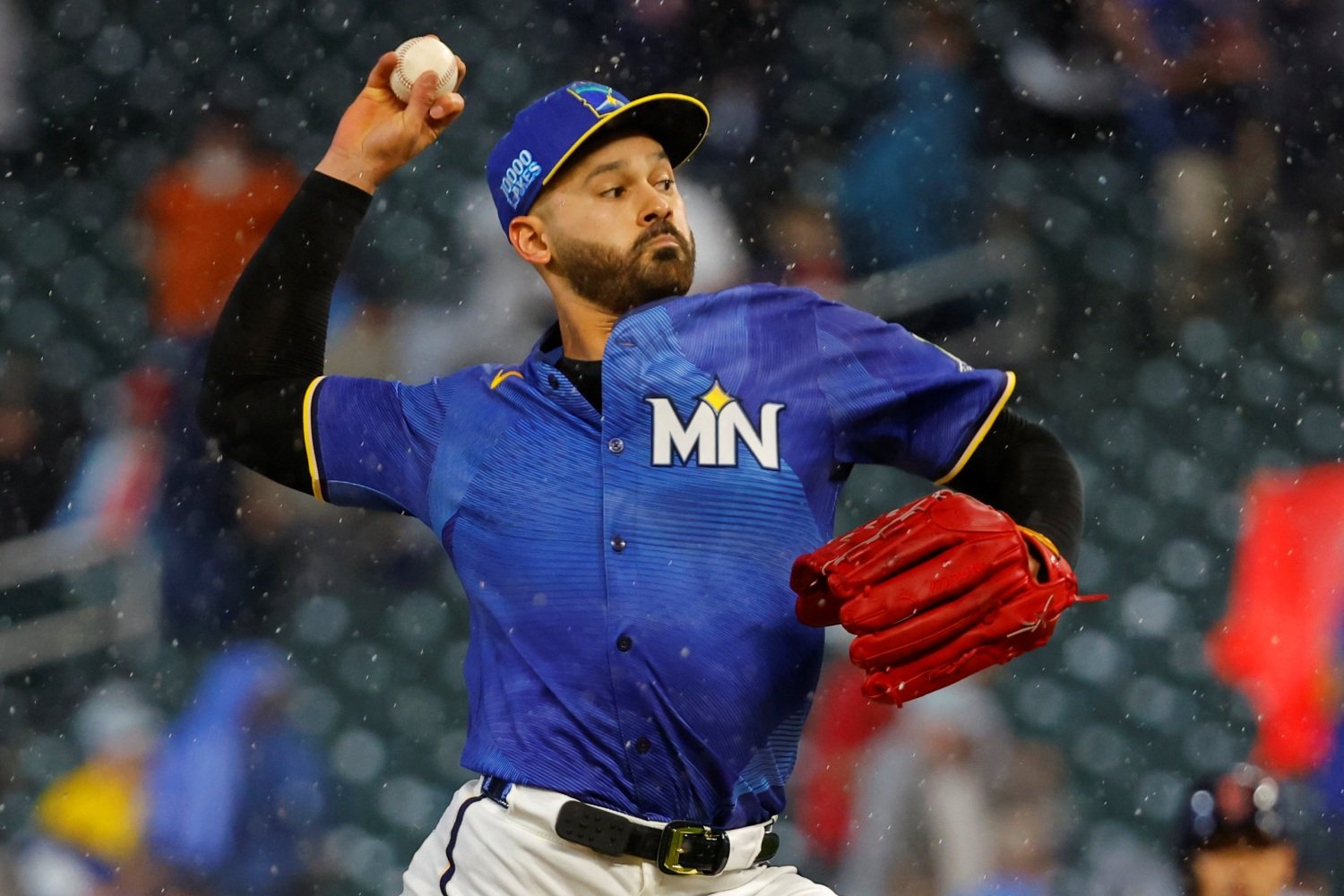
    Image courtesy of © Bruce Kluckhohn-Imagn Images

    Twins Video

    There has been one instance of Derek Falvey trading a veteran for prospect(s) over the offseason. Just one. Can you think of it?

    It was Gio Urshela, after 2022. Urshela was traded to the Angels for 19-year-old pitcher Alejandro Hidalgo, just hours before the non-tender deadline. This move suggests a high likelihood that Urshela would have been released, rather than the Twins paying him an estimated $8 million via arbitration. The trade was more about finding value than about getting worse in the present for future rewards.

    Falvey’s avoidance of selling present value for future value communicates an intention not to spend any year in a state of non-competitiveness. Sure, the team has gone through periods of non-competitiveness, but it’s never seemed to be part of an intentional plan. There hasn’t been a single offseason that has seemed like throwing in the towel on the following year.

    There have been trades of established players. But—except Urshela—they have all brought back big-league talent. There have been minor moves, like 2024’s trade of Nick Gordon for Steven Okert or 2021’s much-ballyhooed LaMonte Wade Jr.-for-Shaun Anderson swap, but most of the Twins’ most significant offseason moves have been these challenge trades, trading MLB talent for MLB talent.

    The Twins wanted to sell Josh Donaldson ahead of 2022, but instead of prospects, they received Urshela and Gary Sánchez, and they included Isiah Kiner-Falefa and Ben Rortvedt to facilitate the trade. Jorge Polanco was traded for prospects Gabriel Gonzalez and Darren Bowen, but the Twins also received Justin Topa and Anthony DeSclafani in the deal, filling holes on the big-league roster—you know, in theory.

    In both the Donaldson and Polanco trades, the primary motivation was to move salary, but the Twins used the trades to solve existing problems with their plans to contend immediately. Urshela took Donaldson’s spot, and Sánchez filled a backup catcher role after Mitch Garver was traded for Kiner-Falefa and prospect Ronny Henríquez, for example. The money was quickly reinvested. Carlos Correa signed shortly after the Donaldson trade, and within a week, the money saved in the Polanco trade was allocated to Carlos Santana and Jay Jackson.

    Even if Urshela was seen as a worse third baseman than Donaldson, the moves served a purpose: to build the team in the short-term and (often) in the long term. As a perfect example of this, the trade that sent Luis Arraez to Miami netted Pablo López, Jose Salas, and Byron Chourio. The Twins dealt from a perceived surplus of lefty corner bats for a badly-needed frontline starter, and they stocked the farm a bit in the process.

    Ahead of 2022, it was clear that they were ready to move on from Taylor Rogers, but instead of prospects, they brought in two experienced pitchers with more team control, in Emilio Pagán and Chris Paddack. Perceptions of the quality of these trades run the gamut, but it’s clear that the intent has never been to outright cut back on talent in the hopes that the trade would bear fruit three years later.

    Beyond trades, the Twins have tried to shop each offseason in free agency, sometimes getting creative (like ahead of 2024), sometimes biding their time and hoping talent falls through the cracks (like ahead of 2018, 2021, or 2025). The late signings of Addison Reed, Logan Morrison, and Lance Lynn before 2018 didn’t work, but they still trudged on, adding Nelson Cruz, Jonathan Schoop, C.J. Cron, and (late in the offseason), Marwin Gonzalez ahead of 2019. Even after a disastrous 2021, in an offseason in which they dumped the biggest free-agent contract the organization had ever signed, they still added Correa, because they weren’t throwing in the towel on 2022.

    I’m not sure that it’s the right tactic. At some point, a team has to cut its losses and stop taking half-measures. The reluctance to sell a player without getting commensurate MLB talent may have kept players around longer than they should have been with the Twins (Max Kepler, maybe?). But the Central has been open for the entirety of Falvey’s tenure—at least to win enough games to catch a Wild Card berth.

    If nothing else, it’s a noble pursuit. And if, as fans worry, the next step of the process begun on July 31, 2025 is to further hack away at this roster, Falvey will be in uncharted territory. We’ve never seen this team jpack it in ahead of the season. There’s no history to base it on or use as speculation.

    Falvey has been insistent that he still does not intend to rebuild, and that he does not intend to continue to sell. He's told the media that he wants to add to his group, not subtract, which is in line with his behavior in previous offseasons. Whether you believe him is up to you.

    Follow Twins Daily For Minnesota Twins News & Analysis

    Recent Twins Articles

    Recent Twins Videos

    Twins Top Prospects

    Marek Houston

    Cedar Rapids Kernels - A+, SS
    The 22-year-old went 2-for-5 on Friday night, his fourth straight multi-hit game. Heading into the week, he was hitting .246/.328/.404 (.732). Four games later, he is hitting .303/.361/.447 (.808).

    User Feedback

    Recommended Comments


    Featured Comments

    15 hours ago, NYCTK said:

    Brewers traded Burns and then had the leagues best record. 

    You keep asking these questions cause you don't like the answers, as they don't fit the narrative you've already constructed. 

    The question was THIS team.  The answer is still being waited for.

    15 hours ago, Major League Ready said:

    Actually, I did address Rayn / Lopez when I stated that there is a significant future cost of keeping Ryan / Lopez.  Here is the difference in how we see this situation.  You like to say the team does not get better when your best players play for other teams which IMO only looks at the part of the equation you want to see.  Obviously, the team would not be better in 2026-27 by trading Ryan / Lopez.  KC traded Greinke before the 2011 season and actually improve from 67 to 71 wins.  The players they received (Escobar & Cane) made the team in 2011.  Escobar contributed 1.9 WAR and Cane had just 23 PAs.  In 2012 they contributed 4 WAR so it was probably a wash in terms of if they got better.  Here is the part you are not considering, the Royals had their best teams in a very long time from 2012-2015 and Greinke would have been gone for free agency. 

    The Royals were slightly worse for a couple years when their win totals would have been in the mid 70s and they would arguably have never got to the WS without the players they got from the Greinke trade.  They definitely got better for 3 years by trading Greinke.  Of course, there are no guarantees the Twins will have similar success but there is definitely an opportunity cost in NOT trading Ryan / Lopez.  The Twins are in a very similar spot.  Keep Ryan/Lopez with a likely outcome of mediocrity or invest in the future. 

    Ask yourself this question, if the twins had a real good team and could add a key piece by trading a prospect, would you do it?  The two scenarios follow the same Logic, just a reversal of when the benefit is realized.

    Again, the question remains;  When has THIS team ever traded a front line starter and won the deal?Still waiting.

    4 hours ago, dxpavelka said:

    Again, the question remains;  When has THIS team ever traded a front line starter and won the deal?Still waiting.

    The Berrios trade. The players Twins received have produced more bWAR for the Twins than Berrios produced in his controllable years in Toronto.  Don’t like that  way of looking at it? SWR had more WAR than Berrios.  Still don’t like that way? SWR has never been a losing pitcher in a playoff game, unlike Berrios. Not a fair comparison, but it could be a parameter used.  

    5 hours ago, dxpavelka said:

    Again, the question remains;  When has THIS team ever traded a front line starter and won the deal?Still waiting.

    Your logic is that this particular team has never done this specific thing well so they should not do it now?  Really?  They have not given weight to athleticism and defense in the past. Should they continue to draft slow guys that can't play defense or run the bases?  

    How can they be more successful than they have in the past if they don't improve their execution?  The question should be ... has this strategy benefited MLB teams.  If the Twins have not been successful in a given strategy or practice it's an opportunity to improve.  Avoiding it would eliminate that opportunity to improve.  That would be a very good illustration of incompetence.  Shouldn't we be all for them improving the practices that have been responsible for their mediocrity?  

    9 hours ago, old nurse said:

    You talked of a 1 40 million payroll https://www.mlb.com/twins/team/front-office Fire ever vice president. Andy McPhail never needed them. How assistant coaches and other coaches did TK have? He did alright. Fire the game day experience person, except if she doubles as the Sober Cab, lots and lots of people. Might as well fire the marketing people, too. All that should surely get the player salary up to Maylor money 

    Don't forget the PA Announcer. 

    4 hours ago, old nurse said:

    The Berrios trade. The players Twins received have produced more bWAR for the Twins than Berrios produced in his controllable years in Toronto.  Don’t like that  way of looking at it? SWR had more WAR than Berrios.  Still don’t like that way? SWR has never been a losing pitcher in a playoff game, unlike Berrios. Not a fair comparison, but it could be a parameter used.  

    Actually since the trade Berrios has a 6.9 war, SWR 4.0 and Martin .7  

    Not to mention that much of the "need" for a rebuild is because if we can't put better players than SWR & Martin on the field we're going nowhere.  

    And since you brought up "not a fair comparison, but it could be a parameter used" I'll see your "never been a losing pitcher in a playoff game" throw in "Rings that will be put on fingers in March or April" and call.

    4 hours ago, Major League Ready said:

    Your logic is that this particular team has never done this specific thing well so they should not do it now?  Really?  They have not given weight to athleticism and defense in the past. Should they continue to draft slow guys that can't play defense or run the bases?  

    How can they be more successful than they have in the past if they don't improve their execution?  The question should be ... has this strategy benefited MLB teams.  If the Twins have not been successful in a given strategy or practice it's an opportunity to improve.  Avoiding it would eliminate that opportunity to improve.  That would be a very good illustration of incompetence.  Shouldn't we be all for them improving the practices that have been responsible for their mediocrity?  

    Having multiple front line starting pitchers is NOT a practice responsible for mediocrity.  And the question remains unanswered.  There IS one correct answer but nobody has come close to it.  And if we made the same trade today folks would SCREAM incompetence.

    15 minutes ago, dxpavelka said:

    Actually since the trade Berrios has a 6.9 war, SWR 4.0 and Martin .7  

    Not to mention that much of the "need" for a rebuild is because if we can't put better players than SWR & Martin on the field we're going nowhere.  

    And since you brought up "not a fair comparison, but it could be a parameter used" I'll see your "never been a losing pitcher in a playoff game" throw in "Rings that will be put on fingers in March or April" and call.

    The notion that a player is the team’s until they die went out with the Curt Flood ruling which was so long ago people should understand what it means. When trades are made because of money and impending free agency you can’t hold the post free agency date against the team that traded the player. It should be a pretty basic thing but far too many b people here do not seem to realize that money matters 

    25 minutes ago, dxpavelka said:

    Having multiple front line starting pitchers is NOT a practice responsible for mediocrity.  And the question remains unanswered.  There IS one correct answer but nobody has come close to it.  And if we made the same trade today folks would SCREAM incompetence.

    I guess you are going to stick with the logic that they have not executed this sort of trade in the past.  Many other teams have used this type of trade to great benefit, but we should avoid because we didn't get anything from trading Johan Santana.  If that's what Falvey is thinking, he is in fact incompetent.  I guess we should not try to draft an ace either because we have failed at that for the past decade.  

    What do you get when you have Ryan and Lopez, no BP, and several below average position players.  Answer: mediocrity at best.  The Guardians, Rays, and Brewers have many examples among them if you are willing to look at what has worked. Apparently, you are not interested in what has worked for other teams.  We have very different ways of approaching this so let's just agree to disagree. 

    3 hours ago, old nurse said:

    The notion that a player is the team’s until they die went out with the Curt Flood ruling which was so long ago people should understand what it means. When trades are made because of money and impending free agency you can’t hold the post free agency date against the team that traded the player. It should be a pretty basic thing but far too many b people here do not seem to realize that money matters 

    Why can't you do that.  Ya'll want the team to spend money like drunken sailors, it would seem that retaining their best home grown players should be achievable.

    3 hours ago, Major League Ready said:

    I guess you are going to stick with the logic that they have not executed this sort of trade in the past.  Many other teams have used this type of trade to great benefit, but we should avoid because we didn't get anything from trading Johan Santana.  If that's what Falvey is thinking, he is in fact incompetent.  I guess we should not try to draft an ace either because we have failed at that for the past decade.  

    What do you get when you have Ryan and Lopez, no BP, and several below average position players.  Answer: mediocrity at best.  The Guardians, Rays, and Brewers have many examples among them if you are willing to look at what has worked. Apparently, you are not interested in what has worked for other teams.  We have very different ways of approaching this so let's just agree to disagree. 

    You are right. Guess I'm hungover from all of those Guardians, Rays & Brewers World Series celebrations.  And did i limit your options to the Santana trade?

    1 hour ago, dxpavelka said:

    You are right. Guess I'm hungover from all of those Guardians, Rays & Brewers World Series celebrations.  And did i limit your options to the Santana trade?

    You continue to use ridiculous measures and ignore the most pertinent data.  Only one team in the bottom half of revenue has won the WS in the past 20 years so it's a ridiculous measure but I will play along.  That would be the KC Royals.  Lets see... Did trading a top of the rotation pitcher contribute to their WS win.  What do you know their best player and their starting SS came from trading Greinke.   The only team to win the WS followed the exact strategy you are arguing against.

    Of course, using a WS win given the rarity is a ridiculous metric I guess you have to resort to the ridiculous when reasonable metrics with meaningful sample sizes disprove your position.  Which teams in the bottom half of revenue have had the most 90-win seasons or playoff appearances.  That would be the Guardians, Rays, and Brewers and those three teams have been the most inclined to trade established players they won't be able to retain for prospects.  You simply chose to ignore history if it does not support your thinking.


    1 hour ago, dxpavelka said:

    Why can't you do that.  Ya'll want the team to spend money like drunken sailors, it would seem that retaining their best home grown players should be achievable.

    If I was a star baseball player the money doesn’t matter when it comes to staying in a city I do not want to be in.  

    I have caught more flack for being the one to remind people that little things like the lack of attendance when the Twins have a winning team drives the payroll than you can imagine judging by your retort 

    24 minutes ago, Major League Ready said:

    You continue to use ridiculous measures and ignore the most pertinent data.  Only one team in the bottom half of revenue has won the WS in the past 20 years so it's a ridiculous measure but I will play along.  That would be the KC Royals.  Lets see... Did trading a top of the rotation pitcher contribute to their WS win.  What do you know their best player and their starting SS came from trading Greinke.   The only team to win the WS followed the exact strategy you are arguing against.

    Of course, using a WS win given the rarity is a ridiculous metric I guess you have to resort to the ridiculous when reasonable metrics with meaningful sample sizes disprove your position.  Which teams in the bottom half of revenue have had the most 90-win seasons or playoff appearances.  That would be the Guardians, Rays, and Brewers and those three teams have been the most inclined to trade established players they won't be able to retain for prospects.  You simply chose to ignore history if it does not support your thinking.


    How many star players have been traded in the last 20 years that have resulted in the team getting back a star caliber player equivalent to what they traded?  You found one. 

    11 hours ago, old nurse said:

    The Berrios trade. The players Twins received have produced more bWAR for the Twins than Berrios produced in his controllable years in Toronto.  Don’t like that  way of looking at it? SWR had more WAR than Berrios.  Still don’t like that way? SWR has never been a losing pitcher in a playoff game, unlike Berrios. Not a fair comparison, but it could be a parameter used.  

    This one has been a modest return so far in my view but could become quite good.  I am with you in terms of measuring what we gave up.  The year he was traded we were bad so trading him did not matter and Berrios only produced .9 WAR so in the context of who "won" we did not need to get much.  It makes absolutely no sense to consider what he did after he was signed to a new contract.

    The fact we lost very little is probably not the best lens to look at it either.  Teams trading a player the caliber of Berrios need to get a return.  It does not become a good trade just because Berrios was bad that last year of team control.  If SWR is a 2 WAR player for the next 4 years that will be a decent return.  If Martin is also a 2 WAR player for the next 5 years it will be a very good return.  Anything more than that would be great.

    57 minutes ago, Major League Ready said:

    You continue to use ridiculous measures and ignore the most pertinent data.  Only one team in the bottom half of revenue has won the WS in the past 20 years so it's a ridiculous measure but I will play along.  That would be the KC Royals.  Lets see... Did trading a top of the rotation pitcher contribute to their WS win.  What do you know their best player and their starting SS came from trading Greinke.   The only team to win the WS followed the exact strategy you are arguing against.

    Of course, using a WS win given the rarity is a ridiculous metric I guess you have to resort to the ridiculous when reasonable metrics with meaningful sample sizes disprove your position.  Which teams in the bottom half of revenue have had the most 90-win seasons or playoff appearances.  That would be the Guardians, Rays, and Brewers and those three teams have been the most inclined to trade established players they won't be able to retain for prospects.  You simply chose to ignore history if it does not support your thinking.


    I don't care about history of other teams.  I care about the history of THIS team.  And I'm still waiting for an example of trading a front line starter that has helped THIS team.  I've even told you that the actually IS one example but I'm still waiting for someone to identify it.

    49 minutes ago, old nurse said:

    If I was a star baseball player the money doesn’t matter when it comes to staying in a city I do not want to be in.  

    I have caught more flack for being the one to remind people that little things like the lack of attendance when the Twins have a winning team drives the payroll than you can imagine judging by your retort 

    Twins have drawn two million fans 19 times.  

    2 hours ago, old nurse said:

    How many star players have been traded in the last 20 years that have resulted in the team getting back a star caliber player equivalent to what they traded?  You found one. 

    Star players don't get traded often and I am not going to go back 20 years but off the top of my head …

    Miami got Zach Gallan and Sandy Alcantara for Marcell Azuna

    Washington got Crawford CJ Abrahams, James Wood and Mackenzie Gore,

    Tatis Jr. was acquired as a prospect for James Shields.

    Danby Swanson was acquired as a prospect for Shelby Miller

    Willy Adames was acquired as a prospect in trade for David Price.

    Bryan Reynolds was acquired as a prospect for Andrew McCutchen

    Ketel Marte was relatively unproven when acquired in trade for Mitch Hanigar and Jean Segura.

    The As acquired Marcus Semien and Chris Basset, for Jeff Samardzija.  They also acquired Frankie Montas and Mark Canha as prospects.  The A’s have others that escape me at the moment.   Probably a while ago.  

    Cleveland, Tampa, and Milwaukee have many examples.  Cleveland got Emmanuel Clase for 1 year of Corey Kluber.  Kluber was also acquired as a prospect in trade for Jake Westbrook.  They also got Josh Naylor for Mike Clevinger.  Clevinger was also acquired as a prospect.  Carlos Santana as a prospect by trading Casey Blake.  They got Carlos Carrasco by trading Cliff Lee.  

    Tampa and Milwaukee have quite a few but I am not going to go through the same exercise with them.  These teams I mentioned also acquired many good (not star) players by trading for prospects.  Those players contributed significantly as well.  Obviously, we want to trade for stars but an above average player is a decent outcome for a player controlled for 1-2 years, especially when the team is not expected to contend.  
     

    2 hours ago, dxpavelka said:

    I don't care about history of other teams.  I care about the history of THIS team. 

    This team rarely has front line starting pitching, period.  So your narrow focus guarantees small sample size to sift through for insight.

    The Berrios trade looks like an absolute win. They traded his 1+ seasons of control for Woods Richardson and Martin. The key was the next winter when they took that Berrios salary slot and replaced it by acquiring Sonny Gray and sending Chase Petty to the Reds. They retained Gray for two years before using the comp pick to draft Kyle DeBarge.

    Assets acquired

    • Sonny Gray (22 and 23)
    • Woods Richardson (6 years)
    • Martin [6 years)
    • DeBarge (6 years)

    Assets lost 

    • Berrios (2 months of 21 and 22)
    • Petty (6 years)
    • Potential comp pick for Berrios

    They traded Berrios in a lost season and replaced his contract slot with Gray who was a big part of winning a playoff series for the first time in years. In reality they had two shots of playoff control with Gray where they were only going to have one more with Berrios. That is a big win. It is yet to be seen if Woods Richardson and Martin will end up being more valuable than Petty and really no way the comp pick that never happened for Berrios in comparison to DeBarge.

    They can do the same with Ryan. Let the season play out. If they are not competitive at the deadline they can move him as they did Berrios. The key will be filling his contract slot  by acquiring a player next off season at near that projected salary. It is unlikely that they will win any Ryan deal if the primary motivation is to reduce the payroll. 

    38 minutes ago, jorgenswest said:

    The Berrios trade looks like an absolute win. They traded his 1+ seasons of control for Woods Richardson and Martin. The key was the next winter when they took that Berrios salary slot and replaced it by acquiring Sonny Gray and sending Chase Petty to the Reds. They retained Gray for two years before using the comp pick to draft Kyle DeBarge.

    Assets acquired

    • Sonny Gray (22 and 23)
    • Woods Richardson (6 years)
    • Martin [6 years)
    • DeBarge (6 years)

    Assets lost 

    • Berrios (2 months of 21 and 22)
    • Petty (6 years)
    • Potential comp pick for Berrios

    They traded Berrios in a lost season and replaced his contract slot with Gray who was a big part of winning a playoff series for the first time in years. In reality they had two shots of playoff control with Gray where they were only going to have one more with Berrios. That is a big win. It is yet to be seen if Woods Richardson and Martin will end up being more valuable than Petty and really no way the comp pick that never happened for Berrios in comparison to DeBarge.

    They can do the same with Ryan. Let the season play out. If they are not competitive at the deadline they can move him as they did Berrios. The key will be filling his contract slot  by acquiring a player next off season at near that projected salary. It is unlikely that they will win any Ryan deal if the primary motivation is to reduce the payroll. 

    People just outright ignore how they used the money when looking at this deal. Every. Time. Not you, though!

    Whether players are traded depends on the budget and what players are being offered. It has been correctly pointed out that very few highly rated prospects get traded even for a Joe Ryan or a Pablo Lopez. However, if I am a GM with a team who has a window, it makes sense to make a strong offer. This is what was missing from past Twins teams. We don't know the names being asked about or whether any GM's have a strong interest in Twins players. The cost is high now and there is always risk of waiting too long. At the very least there should be a pile of names bandied about and frequent conversations about potential deals. 

    5 hours ago, ashbury said:

    This team rarely has front line starting pitching, period.  So your narrow focus guarantees small sample size to sift through for insight.

    So they rarely have front line starting pitching but now since they do they should trade it away?

    4 hours ago, jorgenswest said:

    The Berrios trade looks like an absolute win. They traded his 1+ seasons of control for Woods Richardson and Martin. The key was the next winter when they took that Berrios salary slot and replaced it by acquiring Sonny Gray and sending Chase Petty to the Reds. They retained Gray for two years before using the comp pick to draft Kyle DeBarge.

    Assets acquired

    • Sonny Gray (22 and 23)
    • Woods Richardson (6 years)
    • Martin [6 years)
    • DeBarge (6 years)

    Assets lost 

    • Berrios (2 months of 21 and 22)
    • Petty (6 years)
    • Potential comp pick for Berrios

    They traded Berrios in a lost season and replaced his contract slot with Gray who was a big part of winning a playoff series for the first time in years. In reality they had two shots of playoff control with Gray where they were only going to have one more with Berrios. That is a big win. It is yet to be seen if Woods Richardson and Martin will end up being more valuable than Petty and really no way the comp pick that never happened for Berrios in comparison to DeBarge.

    They can do the same with Ryan. Let the season play out. If they are not competitive at the deadline they can move him as they did Berrios. The key will be filling his contract slot  by acquiring a player next off season at near that projected salary. It is unlikely that they will win any Ryan deal if the primary motivation is to reduce the payroll. 

    Don't forget that that a year later, at the deadline, even WITH Sonny Gray they felt they needed MORE starting pitching and traded for Tyler Mahle.  And six months hence traded a guy who would become a three time batting champion for MORE starting pitching.  You can never have enough starting pitching.  Especially front line starting pitching.  

    14 hours ago, dxpavelka said:

    I don't care about history of other teams.  I care about the history of THIS team.  And I'm still waiting for an example of trading a front line starter that has helped THIS team.  I've even told you that the actually IS one example but I'm still waiting for someone to identify it.

    Expanding on Asbury's point.  The Twins are 3.3% of the league and their transactions of this type are probably less than 3.3% given they have rarely made such a trade.   Would you evaluate a player based who played in 150 games based on 5 games or how he hit in a particular stadium and ignore the other 145 games?  If the Twins brought up a player that played well in 30 games, was traded and played well below average in 900 (96.66%) games for 9 teams, would you ignore how he played in the 900 games and sign him as a free agent.  Of course not, it would be ridiculous to ignore the vast majority of available information.

    History is clear.  This type of trade is the best course of action for teams in the bottom half of revenue, especially when they are not in contention.  You should focus on arguing this team is a contender.  You could argue that they can build a great BP from the rubble they have.  It’s conceivable Lewis and Lee both go from well below average to well above average hitters and they find an above average 1B.  It’s possible that Martin steps up and Jenkins is ROY.  Jeffers and the pitching staff all have a good year and of course they would all also need to say healthy.  This is all highly unlikely but it’s not as ridiculous as refusing to consider how other teams have been successful.  

    As a fan, it is your prerogative to ignore the 96.66% of the data that does not support your desired conclusion.  When a baseball executive ignores 96.66% of the data they are removed from their position for gross incompetence.  Therefore, I guess you can take whatever ridiculous position you like.  Just don’t be surprised when the team arrives at a different decision. 

    1 hour ago, Major League Ready said:

    History is clear.  This type of trade is the best course of action for teams in the bottom half of revenue, especially when they are not in contention.

    It isn’t clear to me that this trade should be done with two full years of service time. I don’t see the comps in the history and I don’t see the evidence that the return will be significantly more if traded now as opposed to next winter or this year’s deadline if they are sellers. I see the history of teams similar to the Twins trading their starters with 1 or even 1+ years of service time. I see the value. We did it with Berrios.


    36 minutes ago, jorgenswest said:

    It isn’t clear to me that this trade should be done with two full years of service time. I don’t see the comps in the history and I don’t see the evidence that the return will be significantly more if traded now as opposed to next winter or this year’s deadline if they are sellers. I see the history of teams similar to the Twins trading their starters with 1 or even 1+ years of service time. I see the value. We did it with Berrios.


    A comp would require that the same player be traded with 2 years remaining and then flipped the next year.  That same player would also have to project the same.  In other words, his performance would have to remain very similar over the year between trades and the years before the trade.  I am not aware of any such comp so we will have to use a hypothetical trade. 

    Would you give the same in trade for 1 year of service vs 2 years of service?  How about if it was reported that the team was in negotiation for two ace SPs that from every vantage point were exactly equal and they were asking for the exact same players in return.  Would you prefer Falvey chose the player with one year of control?  Do you think most people here would be calling for his head?  

    15 minutes ago, Major League Ready said:

    A comp would require that the same player be traded with 2 years remaining and then flipped the next year.  That same player would also have to project the same.  In other words, his performance would have to remain very similar over the year between trades and the years before the trade.  I am not aware of any such comp so we will have to use a hypothetical trade. 

    Would you give the same in trade for 1 year of service vs 2 years of service?  How about if it was reported that the team was in negotiation for two ace SPs that from every vantage point were exactly equal and they were asking for the exact same players in return.  Would you prefer Falvey chose the player with one year of control?  Do you think most people here would be calling for his head?  

    I just don’t see teams other than the Marlins trading good starting pitchers with two or more years of service time. Why is that? 


    Create an account or sign in to comment

    You need to be a member in order to leave a comment

    Create an account

    Sign up for a new account in our community. It's easy!

    Register a new account

    Sign in

    Already have an account? Sign in here.

    Sign In Now

×
×
  • Create New...