


Twins Video
The Twins tried the opener strategy again on Sunday afternoon. Each time they’ve tried it this season, the plan has unraveled quickly, leaving Rocco Baldelli and his coaching staff scrambling. While the concept behind the approach is understandable, the execution and results have simply not been there, and the Twins seem ready to continue trying it.
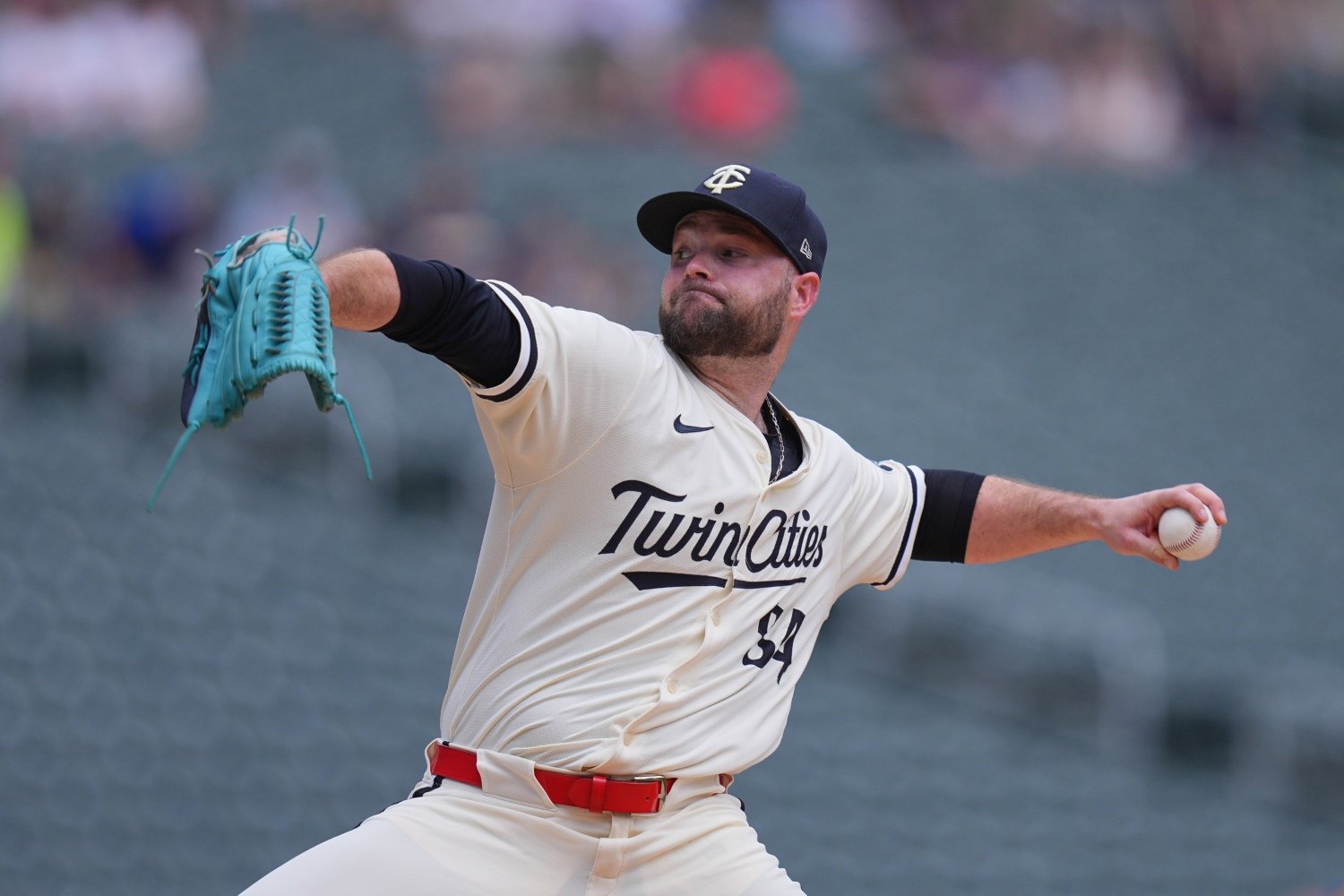
On paper, the idea made sense. Danny Coulombe got the nod as Sunday’s opener because the Milwaukee Brewers have two left-handed hitters near the top of their lineup, in Sal Frelick (first) and Christian Yelich (third). The Twins wanted to shield rookie David Festa from those dangerous bats the first time through the order, in hopes of letting him pitch deeper into the game.
“We’re reacting a little bit because we have to,” Twins manager Rocco Baldelli said before the game. “I think there are certain times of the year where you’ve got to make a call, one way or the other. And it’s been a little while now we’ve been struggling to stop the other teams from scoring and we’re going to introduce something new and try to switch things up. Not just for the sake of switching things up, because I think there are actual benefits, too.”
But baseball games rarely go as planned.
Coulombe quickly got the first two outs in the opening inning and appeared poised to do his job. Then things turned. After a grinding nine-pitch at-bat, Yelich drilled a double to the right-field corner. William Contreras followed with a line-drive single to center to drive in a run. Suddenly, the Twins were behind before their starter ever took the mound. Coulombe’s assignment was simple: get through the first inning unscathed. He couldn’t do it.
Minnesota’s offense picked him up immediately, scoring twice in the bottom half to hand a 2-1 lead to Festa when he entered. The early cushion was supposed to help the rookie settle in. Instead, he turned in one of the worst outings of his brief big-league career. Festa was hit hard, charged with eight runs on 12 hits in just 4 2/3 innings of work. Despite the change in routine, Festa didn’t point to the opener as an excuse.
“It’s a little different,” said Festa, “but it had no impact on any of the results.”
If this sounds familiar, it should. The Twins tried the same approach back in April against the Atlanta Braves. In that game, Justin Topa opened for Simeon Woods Richardson. Topa surrendered three hits and gave up a run in his inning of work. Woods Richardson came in and allowed three more runs over five innings, and the Twins lost 4-3. In both cases, the strategy was designed to give young or unproven starters a softer landing. In both cases, the plan did little to prevent early damage or to improve the performance of the starter that followed.
There’s nothing new about the opener strategy. Tampa Bay popularized it years ago, and other clubs have since dabbled in it. When it works, it limits exposure to tough top-of-the-order bats early and helps a team's best pitchers handle high-leverage spots later. But it’s not a one-size-fits-all fix, and so far, the Twins haven't cracked the code.
The Twins’ roster construction may be part of the reason they continue to try. Minnesota’s rotation depth has been tested this year, and when a young pitcher like Festa or Woods Richardson gets the ball, there are legitimate concerns about them facing a lineup three times. The opener is meant to give these arms the best possible chance to survive and stretch deeper into games. At least, that’s the theory.
In practice, the results haven’t been good. Despite the shaky outcomes, Baldelli made it clear that the club plans to stick with this approach, especially when introducing younger pitchers or when a matchup necessitates it.
“[It gives] us a chance to go out there, start a good reliever at the beginning of the game and then kind of run from there,” the skipper said. “It also leaves the other team guessing a little bit. … A lot of reasons for it, but I think it’s something that can help us and probably something that we’re going to see more of.”
That may not thrill Twins fans, who have seen the opener blow up more often than not this season. But with injuries, inconsistency, and inexperience shaking the back of the rotation, the Twins feel they have little choice. The alternative, throwing a young starter into the fire against a lineup’s best hitters, might be even riskier.
The opener isn’t going away. However, unless the execution improves, the results will probably not either. At some point, it’s worth asking: how many times can the Twins try this strategy and watch it backfire before they pivot? For now, they remain committed. Whether fans or the standings will tolerate more of these misfires is another question entirely.
Should the Twins continue to use an opener? Leave a comment and start the discussion.







Recommended Comments
Create an account or sign in to comment
You need to be a member in order to leave a comment
Create an account
Sign up for a new account in our community. It's easy!
Register a new accountSign in
Already have an account? Sign in here.
Sign In Now