


Jump to content
Twins Daily
  • Create Account
  • Twins News & Analysis

    Royce Lewis' Quotes Are Half-Right about Baseball’s Contract Structure

    Royce Lewis seemingly has a bone to pick with baseball's arbitration system. Let's look at whether there's merits to his claims.

    Peter Labuza
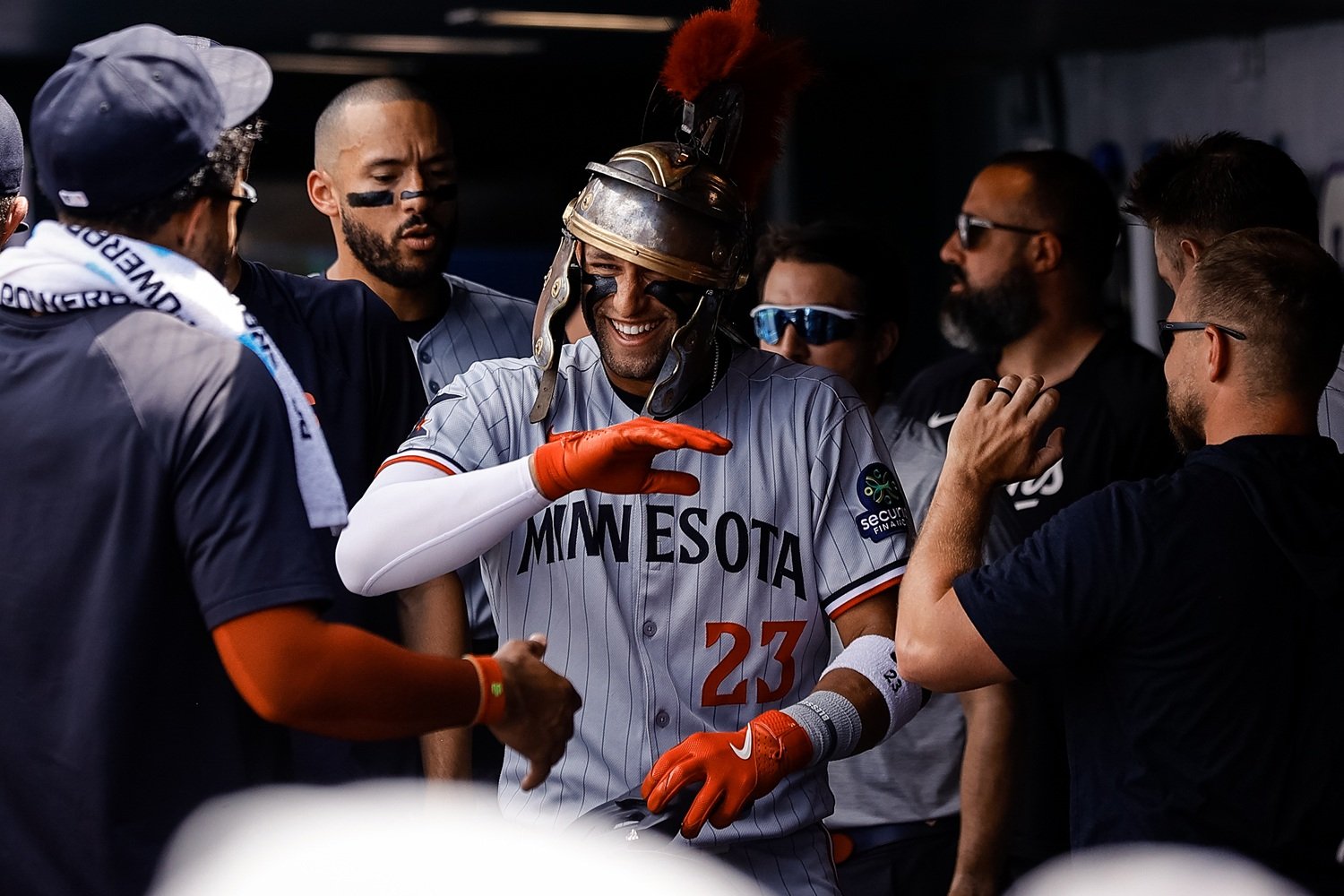
    Image courtesy of © Isaiah J. Downing-Imagn Images

    Twins Video

    Of all the next generation of potential Minnesota Twins stars, none has created a flurry of debate more than Royce Lewis . Like many recent Twins, part of his story has been one of perpetual injury, limiting his play. But when he finally arrived, few could deny the sheer talent he quickly demonstrated. An overall #1 draft pick, Lewis’s initial numbers succeeded beyond any other recent prospect promotions in the club. He also cemented a legendary status with his two home runs in the first Minnesota Twins playoff win in 18 years. 

    More so, Lewis has acted like a star. He has an effervescent smile and charisma that lifts the team up. Before the 2024 season, Jake Mintz of Cespedes Family BBQ declared him the most likely MLB player to appear on The Bachelor. (Royce is happily married; don’t expect to see him there.)

    But as Lewis’s struggles became less a product of unfortunate injuries and more prolonged as an issue of technique, he has also made comments that have raised eyebrows. Rather than simply dismiss the comments as those of someone who perhaps could use more media training, they deserve nuance to understand the context in which a player like Lewis has come to see the system in which all he can control is his swing.

    First, the comments. 

    September 2024: As the team collapses and plays its way out of a playoff berth, Carlos Correa suggests that several players failed to step up. Lewis retorts to the media, “It falls on the players, but I didn't think it fell on just us” further qualifying, “especially the young guys - the cheap guys is the best way to put it." During these final two months, Lewis slashed an abysmal .207/.265 /.337 .

    February 2025: During the offseason, Lewis appears on Inside Twins. A harmless fan question asks about whether Lewis would make “day in the life” TikToks as Bryce Harper has done (though many of us have concerns due to Harper’s interest in Raw Milk). “If I was lucky enough to sign a contract like Bryce, I’d love to do stuff like that…maybe for me I’ll join him one day, but for right now I’ll focus on baseball.” The implication is that, as a rookie with concerns over arbitration, Lewis must focus on developing his earning potential, while stars on contracts like Harper can do whatever they want.

    August 2025: After a trade deadline that sent away 38% of the active roster, Lewis was suddenly hoisted into a leadership role despite his young age. His struggles are continuing through all 2025 with starts and stops of promise. Although his defense had significantly improved, cameras caught Lewis bashing his helmet after another flyout to the left field fence against the Athletics. 

    Lewis hit a grand slam and make a highlight reel worthy throw to the home to tag out a runner the next night, but his mind earlier in the day was on changes to his swing. As he tells the media scrum, anxiety over arbitration and how the Twins might use it against him are concerns:

    Quote

    It’s always hard. I know (Michael) Harris (II) just did a significant change. Being under contract probably helps because he knows what he’s making that year and the year after. For someone like me, I’m fighting (to take) care of myself and my family. I don’t want to put any of those stats in jeopardy. I’m trying to do what’s best as fast as possible. But feeling like I’ve been on an island, it’s kind of tough.”

    To break down these incidents, I want to consider this from two angles. Is Royce right about what matters to Royce? But more so, is Royce right about what matters to all baseball players and the league?

    On the personal performance, it’s strange to think Royce would feel worried about trying to adjust his swing. He spent the entire offseason improving his defense, enough to cement that as his position for some years, especially after the team tried to push him into learning second base on the fly. And given that so little of his swing has worked this season, what’s a week going to do in arbitration? Obviously, due to his previous injuries this year, a week of plate appearances does represent a significant amount of work. But as Aaron Gleeman noted, “It doesn't even make logical sense to avoid adjustments and help.”

    But the bigger question in all of this is how Lewis seems to believe his entire career is in peril without an extension. Michael Harris II was looking like an all-time dud earlier this season before turning it around—and notably did it by adjusting his swing. But for Lewis, it’s a secured contract that would enable such a choice.

    This is where Lewis remains generally right about baseball: new rookies emerge every year and often outplay the rest of the league. Until the recent bonus pool was added in the 2022 Collective Bargaining Agreement, the most they could earn over three years was approximately the minimum salary. While arbitration years finally see increases, the process remains notoriously contentious. Attorneys on both sides argue before someone who might never watch baseball, much less understand advanced statistics. Josh Hader famously discussed how the Milwaukee Brewers used the “Blown Save” stat to lowball his salary despite an otherwise stellar record.

    At the same time, numerous teams have shifted their strategy toward early extensions: rookies such as Jackson Merrill, Jackson Chourio , and other players not named Jackson have seen extensions even before seeing a single pitch. These players essentially trade away the worries that Lewis continually has called out—having to feel the weight of responsibility to perform while knowing each swing could determine your earnings—in exchange for losing likely millions by forgoing the free agency payout. (Notably, Lewis’s agent is Scott Boras, who has consistently pushed his players to go to free agency rather than sign an extension.) And yet, the Minnesota Twins have not engaged in this trend with pre-arbitration players since Jorge Polanco and Max Kepler. Instead, they now trade players before they can each the second year of arbitration.

    Free agency remains a quandary for baseball; players on monster contracts rarely play better than their arb years. On average, Harper had better seasons in Washington than he has in Philadelphia. Beyond the fact that contracts like Harper’s are meant to cover half the years with the back half as a prayer for average play, the real issue is that teams should be paying much more during those arbitration years that set up their contracts in free agency. And unless players fight for the best numbers possible, it can limit other future free agents. Pair this with an impending CBA fight after the 2026 season where the owners seem dead set on limiting free agency through the use of a salary cap, and it only adds to the complication.

    Baseball’s experts have often discussed ways to fix this system, whether getting to free agency earlier or—as Travis Sawcheck noted—revisit an old idea proposed during the 1994 strike to essentially turn arbitration offers into an open market. Dave Cameron once proposed a safety net for players as a way to avoid the whims of arbitration.  And there does seem to be a growing divide in player sentiment between the union’s focus on the top 1% and those players belonging to a shrinking middle class, playing season to season on one-year deals. 

    But the question is how to fix the issue. The obvious answer would be for Royce to go back to doing what he did in 2023: smash a record number of grand slams again. More importantly, none of us should be out there criticizing Lewis for speaking out on the issues that concern him. For every media-trained player who only sees it as their job to say the most boring comments of all time, Lewis is speaking to what—intentionally or not—many of us worry about: player treatment in the league, especially on a team that has more often than not valued cheapness rather than the quality of their play. And for Lewis, every play can be another highlight to be played during a trial that his own trusted confidants, who are the ones trying to “fix” his swing, might use against him.

    However, if Royce wants to find a solution, there is a way: it involves thinking beyond himself. His Pittsburgh Pirates colleague Paul Skenes , who is currently on minimum salary on an equally ownership kneecapped team, ran for and won a spot the MLB Players Association negotiation committee for the upcoming CBA. (Pablo Lopez currently serves as the Twins' player representative.) Players like Skenes realize that Lewis’s problems are not just those of his own unfortunate circumstances; they represent those of all players—not to mention more and more workers among all trades—who live in a state of precarity. If Lewis wants to secure a more stable future, perhaps the answer lies beyond his swing.  

    Follow Twins Daily For Minnesota Twins News & Analysis

    Recent Twins Articles

    Recent Twins Videos

    Twins Top Prospects

    Marek Houston

    Cedar Rapids Kernels - A+, SS
    The 22-year-old went 2-for-5 on Thursday night, his third straight multi-hit game. Heading into the week, he was hitting .246/.328/.404 (.732). Three games later, he is hitting .296/.359/.437 (.796).

    User Feedback

    Recommended Comments


    Featured Comments

    On 8/31/2025 at 11:27 AM, Pat said:

    Interesting.  He can't take care of his family on $760,00+ a year plus per diem.  That is certainly hard to swallow. That is more like my lifetime income. 

    Pro sports players need to make their money young so that they have enough for a lifetime.  If all goes well (and considering his injury history), Lewis might make it to age 35. If he loses his swing, he could be washed up in 2 years.

    After paying taxes, Boras and living expenses Lewis might now have around $4 million of assets, but that might have to last him for 70+ years, unless he proves good at some other vocation. He needs to earn a lot more to guarantee lifelong prosperity. 

    I feel sympathy for the young players who did not get big signing bonuses, especially the ones who skipped college. I wonder how they feel when they wash up and college scholarships are not available to them.

    On 9/2/2025 at 12:23 AM, glunn said:

    Pro sports players need to make their money young so that they have enough for a lifetime.  If all goes well (and considering his injury history), Lewis might make it to age 35. If he loses his swing, he could be washed up in 2 years.

    After paying taxes, Boras and living expenses Lewis might now have around $4 million of assets, but that might have to last him for 70+ years, unless he proves good at some other vocation. He needs to earn a lot more to guarantee lifelong prosperity. 

    I feel sympathy for the young players who did not get big signing bonuses, especially the ones who skipped college. I wonder how they feel when they wash up and college scholarships are not available to them.

    Why?


    7 minutes ago, USAFChief said:

    Why?


    Instead of putting his time and effort of his formative years into a profession he'd learn in college, he's doing it on the ball field. It's not like going back to school to become a doctor or lawyer is something a 30-year-old with a wife and kids can do without significant hurdles.

    I didn't care for the last comments Royce made about changing his swing and tanking his stats even further, but he's not wrong. Which player has this coaching staff successfully help adjust their offensive game? He can still sink lower, and he only needs to look at his contemporary prospects, Julien and Miranda. So many prospects have come up and looked fantastic. Then the other teams adjust to them, and pretty much every single time, the Twins coaching staff is unable to get the players to adjust to the adjustments. I have zero faith in the coaching staff myself, and I have nothing riding on it.


    I think it's important to recognize that ballplayers have very short careers. The median MLB career length is 2.7 to 3.5 years, according to AI, with the average longer but skewed by a small subset of players that have very long careers so the median is the better measure. That's the MLB v career length, it doesn't include the 95% of ballplayers who try but never make the majors. Add to that the fact that Lewis has had two career altering and perhaps career threatening injuries and I can understand his concerns. It's not like he's guaranteed to make 750K plus for 5 years and then millions. He might make 750K plus for a couple of years, then be wandering the landscape looking for one year MLB or even less lucrative MiLB deals, or even out of baseball with no other skills to fall back on. These guys aren't set for life unless and until they get a long term guaranteed contract and most if not almost all of them never get that. Most of them don't have other skills to make a living. 

    I also don't understand the complaining about his bonus amount or what he makes compared to the "average guy". Lewis makes more money that the average guy because his services create more wealth than the average guy. We are a capitalist society. He who creates more economic activity and wealth is worth more to our society. He does something none of us can do. Pro athletes make more money than most everybody else because they provide more economic value than most everybody else. In other words, they make more because they are worth more in economic terms. Lewis has one shot at real wealth from his unique talent over the next few years. It's understandable that he's worried about that.  

    Having said all this, Lewis  needs to keep those concerns to himself. He comes across kind of like the rich guy who complains about this taxes. Very few have sympathy for that guy.  

    The average length of a Major League Baseball player's career is 5.6 years. This average is based on studies of position players from the early 20th century to the mid-1990s and is skewed by the many shorter careers, as about 20% of players leave after their first year and a small number of players have careers lasting 20 or more years. 

    6 hours ago, nicksaviking said:

    It's not like going back to school to become a doctor or lawyer is something a 30-year-old with a wife and kids can do without significant hurdles.


    Why?

    People in all walks of life put themselves through career changes in their 20's, 30's, 40's.

    Playing baseball for a living when you're young doesn’t entitle you to a lifetime of retirement. 

    5 hours ago, USAFChief said:


    Playing baseball for a living when you're young doesn’t entitle you to a lifetime of retirement. 

    I don't see anyone saying that. My point was that a young player could fail and be left with what seems like a fortune today, but might not last until he dies 70 years from now.

    On AVERAGE I suspect that an average schoolteacher is more financially secure over the long run than an average baseball draft pick. The difference is that the few players who have successful careers can make a fortune. I can see why someone who might make a fortune if his career takes off might also be worried about becoming a financially insecure "has been" if he washes out. In that context, changing his swing seems risky from his perspective. I appreciate his candor.

    15 hours ago, USAFChief said:

    Why?

    People in all walks of life put themselves through career changes in their 20's, 30's, 40's.

    Playing baseball for a living when you're young doesn’t entitle you to a lifetime of retirement. 

    Sure, but if you're good enough it can lead to a lifetime of retirement. Why would he willingly give up making that money now? Is he supposed to be a masochist just so as not to rock the boat?

    If he truly believes that the Twins coaching staff could prevent him from doing that, I understand why he'd speak up. And really, all evidence points to him being right; those guys in no way look like they know what they're doing.

    We've probably all run into people, in our respective lines of work, who were old and kind of dead wood but were hanging on as long as they could because they were in their peak earning years.  Unless and until their work quality slipped so much that they got fired, we might grumble about them but could at least see things from their point of view.  (And I freely confess to having been exactly that kind of dead wood in my final couple of years as well.)  The usual pay structure in the US is such that you don't hit your peak earning years until close to the end.  It leads to some perverse incentives but all in all seems acceptable to the employers and the work force alike.  Don't hate the player, hate the game.

    Big time sports operate differently.  Peak earning years may not happen instantly (baseball and basketball and football each have their own rhythms to this), but they still come at a very early age in the human lifespan.  I can't get much more worked up about an athlete in his 20s, not even dead wood yet, trying to protect his peak earning years in whatever way makes sense to him, than I can about the dead wood dudes where I worked.

    As an aside: elsewhere we see posters beg Derek Falvey or Joe Pohlad to just "tell us the truth."  Royce Lewis spoke his mind, and we see what kind of blowback that earns someone in the public eye.

    Jack Nicholson You Cant Handle The Truth GIF


    41 minutes ago, ashbury said:

    As an aside: elsewhere we see posters beg Derek Falvey or Joe Pohlad to just "tell us the truth."  Royce Lewis spoke his mind, and we see what kind of blowback that earns someone in the public eye.


    30 minutes ago, ashbury said:

    As an aside: elsewhere we see posters beg Derek Falvey or Joe Pohlad to just "tell us the truth."  Royce Lewis spoke his mind, and we see what kind of blowback that earns someone in the public eye.

    I think there's a difference between Falvey/Pohlad brazenly lying to fans about the trade deadline, and Lewis expressing an opinion about contract structures.   I'm glad Royce speaks his mind, and I wish more players would do it.   That doesn't mean he is exempt from criticism.  And I'm sorry, a millionaire using "contract anxiety" as an excuse for not performing is absurd.

    My old neighbor was ex-NHL and his philosophy was, focus solely and totally on being the best player he could be, and the money and all the rest would work itself out.  His agent negotiated all his contracts, and he had a financial guy manage investments and set him up for the future.  He just played hockey.  

    If Royce discovers a bit of humility, stops worrying about his contract and stats, puts the work in, and starts performing at a high level again, the money will follow.  He has the talent. 


    Create an account or sign in to comment

    You need to be a member in order to leave a comment

    Create an account

    Sign up for a new account in our community. It's easy!

    Register a new account

    Sign in

    Already have an account? Sign in here.

    Sign In Now

×
×
  • Create New...

