


Twins Video
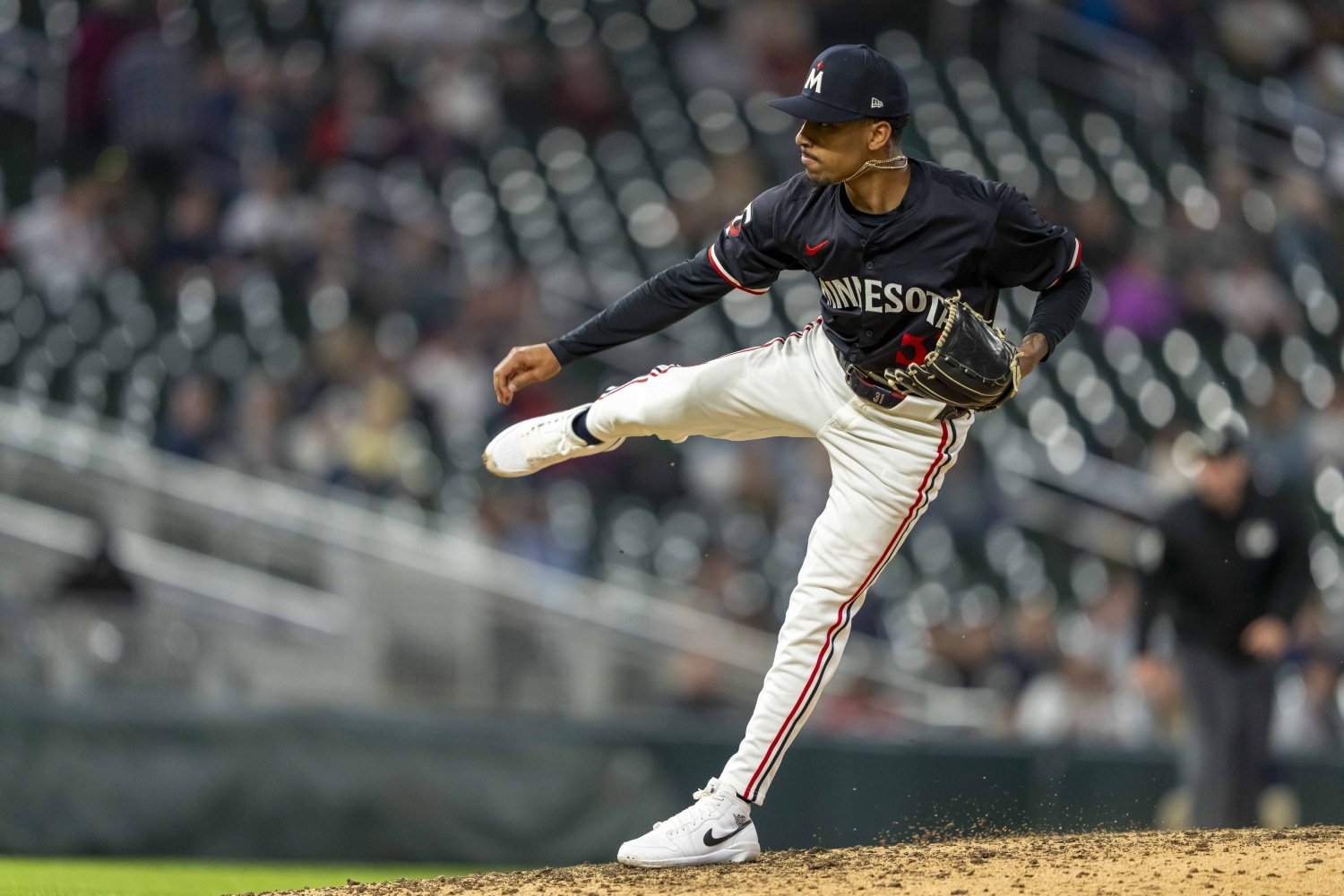
Last season, right-handed reliever Ronny Henriquez received his first extended appearance with the Minnesota Twins, finishing with a 3.26 ERA, 3.95 xFIP, and 18.3% strikeout rate over 19 ⅓ innings pitched. Sprinkled into low-, mid-, and high-leverage roles during his time with the club, Henriquez never assumed a solidified role. That said, the young hurler impressed in his first extended cup of coffee in the majors, functioning as a steady force in what became an injury-depleted unit late in the season. Now, Henriquez’s moderate success came during the team’s late-season collapse, naturally causing much of his positive output to be pushed to the wayside because, well, Twins Territory was trapped in the belly of a horrible machine, and the machine was bleeding to death.
Still, the 24-year-old righty’s feats weren’t for naught. Right now, the Twins' bullpen hierarchy to enter the 2025 MLB regular season is projected to be the following, according to FanGraphs:
- Jhoan Durán
- Griffin Jax
- Cole Sands
- Brock Stewart
- Jorge Alcalá
- Michael Tonkin
- Kody Funderburk
- Eiberson Castellano
At this moment, FanGraphs’s projection system ZiPS expects Minnesota to have the best bullpen in baseball in 2025. Much of this projection lies in the expectation that Durán will bounce back from a lackluster 2024 campaign, with Jax, Sands, and Stewart expected to continue to be high-leverage stalwarts. Still, the way the rest of the eight-pitcher unit will be constructed is open-ended. Alcalá is a near-lock to inhabit a spot, but the team has been wishy-washy on his bullpen role and could utilize the fact that he still has two minor-league options early next season. Tonkin is also a near-lock. Yet, given that he was designated for assignment or traded five times between the New York Mets, New York Yankees, and Twins last season, anything feels possible with the rubber-armed veteran hurler.
The left-handed Funderburk and recent Rule 5 draftee Castellano are projected to occupy the seventh and eighth spots in the unit. However, if they perform poorly in spring, Funderburk could begin the season at Triple-A and Castellano could be returned to the Philadelphia Phillies. Uncertainty surrounds the middle-relief corps, and fellow MLB-caliber relievers Justin Topa, Louie Varland, and Brent Headrick could earn roles with strong Spring Training performances. That said, Topa, Varland, and Headrick having minor-league options (like Alcalá and Funderburk) muddies the equation and makes it more likely they begin their 2025 campaigns at Triple-A to prioritize early season depth.
Henriquez, however, is an outlier in the group: he can't be optioned to the minors. Considering this, the Twins could prioritize keeping him on the 26-man roster. All of that, however, hinges on him carrying over the impressive things he showed in 2024 when the team reports to Fort Myers next month.
Henriquez employs a four-pitch mix, headlined by a plus changeup he threw 34% of the time last season. He also utilizes a slider (33%), four-seam fastball (29%), and sinker (3%). Henriquez's changeup's movement profile hovers around league average. Yet, he throws it 4.6 MPH faster than an average change. (Obviously, velocity is a mixed blessing on a changeup, but it works in this case.) Given the pitch's plus velocity and steady movement profile, Henriquez has crafted a truly special offspeed out pitch. However, if his changeup isn't working, he's prone to having less-than-exceptional outings as he is forced to rely on his slider and four-seam fastball, which are both slightly below league-average pitches in terms of movement.
Henriquez throws his four-seam fastball one MPH faster than league average, so velocity isn't a concern. If he can refine his fastball and slider (the two pitches the Twins pitching development staff is known to get pitchers to maximize), he could mature into a consistently productive mid-to-high leverage arm. What also makes the 24-year-old reliever intriguing is how he tends to manufacture outs.
Last season, Sands, Tonkin, Stewart, and Alcalá all generated significantly below-league-average groundball rates. Most of their outs were manufactured through strikeouts or flyouts. Evidently, this approach worked well for these four arms, as they were all effective medium- to high-leverage arms when healthy. However, the team would be wise to diversify the unit's skillset. Durán and Jax manufactured near-elite groundball rates last season. Yet, they are elite relievers who operate exclusively in late-inning, high-leverage situations. While having an elite primary set-up reliever and closer is a welcomed luxury, the team would benefit from rostering a mid-leverage right-handed reliever with a plus groundball rate. Henriquez, who generated a 53.3% groundball rate last, could fit the bill.
Topa and Funderburk are also mid-leverage relief options who generate groundballs at a well-above-league-average rate. Again, if Henriquez, Topa, and Funderburk all impress this spring, the team would be wise to give Henriquez the final bullpen spot to prioritize early-season depth. Nevertheless, Henriquez is entering his fourth season in the Twins organization, and despite being a name those who follow the team have long been cognizant of, he has yet to earn a solidified role in the club's bullpen. If he performs well this spring, he could be rewarded with an opportunity to become a fixture in Minnesota's bullpen. However, if he performs poorly, his time in Twins Territory could come to an uneventful conclusion.






Recommended Comments
Create an account or sign in to comment
You need to be a member in order to leave a comment
Create an account
Sign up for a new account in our community. It's easy!
Register a new accountSign in
Already have an account? Sign in here.
Sign In Now