Jump to content
Twins Daily
  • Create Account
  • Twins News & Analysis

    Make It Official! Twins 3, Athletics 0: Pablo López, Byron Buxton Get Right at Expense of A's


    Hans Birkeland

    The Twins bullpen got a nice day off on Saturday, with Bailey Ober pitching his first career complete game. Pablo López decided to extend that vacation (except for Griffin Jax) coming off one of the worst stretches of his career, striking out 14 across eight shutout innings. Byron Buxton had a homer and an RBI double to fuel the offense.

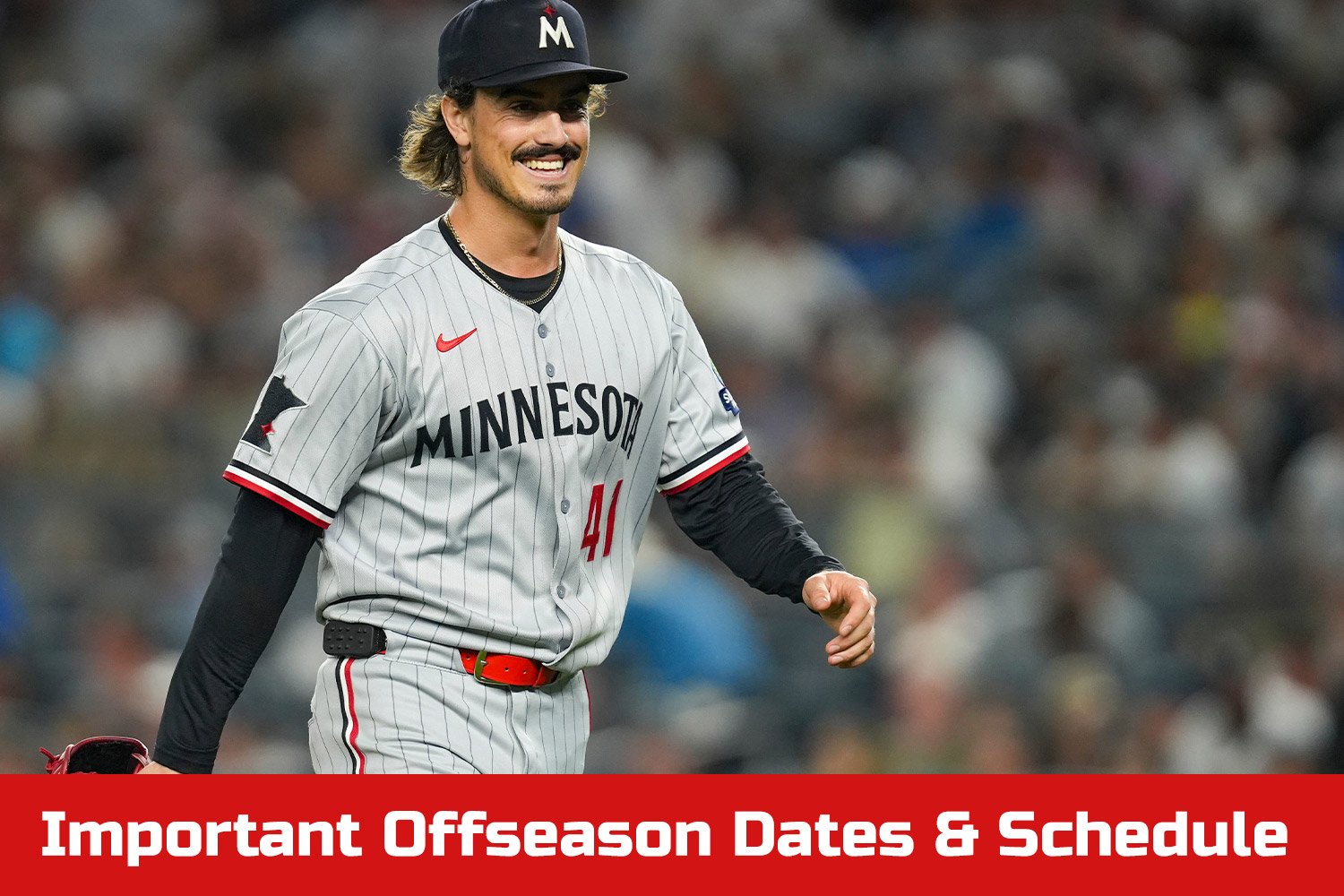
    Image courtesy of © D. Ross Cameron-USA TODAY Sports

    Twins Video

    Box Score:
    Starting Pitcher:
    Pablo López: 8 IP 2 H 0 ER 1 BB 14 K (102 Pitches, 68 Strikes, 66.6%)
    Home Runs: Byron Buxton (5)
    Top 3 WPA: López (.473), Buxton (.169), Willi Castro (.056)
    Win Probability Chart (Via Fangraphs):

    image.png.d9d641500ab4aa88d147a6db911fc1e9.png

    Coming off a brutal stretch that saw his ERA swell to 5.66, Pablo López was approaching the point where some uncomfortable discussions would need to be had if he couldn't bounce back and deliver an encouraging start against the A's on Sunday. Pitchers with that kind of (lack of) run prevention over 15 starts are either cooked, injured or not that good, no matter what their underlying metrics would indicate.

    López came out like a man eager to prove that he was healthy, obviously in his prime and still really good, starting by emphasizing his fastball heavily in the first inning. It looked good sitting at 94-96 MPH, and he appeared to command it pretty well. The A's were clearly hoping to hit some sweepers and changeups, as the run value of those pitches has come in at the third and fourth percentile, respectively, thus far this year. López and Christian Vázquez responded by mixing in some sinkers and curveballs to keep the A's off-balance.

    He was tentative with the changeup at first, throwing them for chase pitches while he tried to gain a feel for the pitch. He ended up striking out seven of the nine batters he faced in the first three innings. It would improve in depth and the conviction it was thrown with as the outing went along.


    Twins Daily's winning "Make It Official!" game recaps are sponsored by Official Fried Chicken, which you can find in center field of Target Field. With a name like "Official," we know we have to be the best in the game every day, and from your first bite, you'll know that's a promise we make good on.


    Opposite López was lefty Hogan Harris, who got off to a shaky start against the Twins' lefty-mashing lineup. Manuel Margot led off with a sharp single, Carlos Correa was hit by a pitch, and Royce Lewis lifted a hanging curveball to deep left field. Fortunately for Harris, the fly ball was caught at the wall by Miguel Andujar, the former Yankee slugger who now multiple teams have tried to hide defensively. Andujar then made a heads-up throw to third base to nab a tagging Margot, and all of a sudden there were two outs and just a lone baserunner.

    However in the second, Harris wasn't able to escape throwing a flat fastball on the outside edge of the plate to Byron Buxton, as Buxton torched it 112 MPH over the left field wall for a solo shot.

    Harris settled in after that, setting down the next ten batters by commanding his 93 fastball at all corners of the zone. The Twins were close to barreling him up, but were just off much of the time, resulting in quite a few medium-deep fly balls. Harris was able to play his curveball and his slider off of each other to decent effect, whereas he entered the game with his slider being pummeled thus far.

    By the fifth inning, López was starting to feel some confidence in his changeup, starting off All-Star DH Brent Rooker in the fifth with a right-on-right change for a strike, and then finishing Rooker off with another changeup down and in.


    He carried a perfect game into the sixth, and struck out the first two batters with challenge fastballs. Lawrence Butler then jumped on a first pitch curveball and lined a clean single to right, ending the perfecto and the no-hitter. In a one run game, Max Schuemann then inexplicably bunted back to López for the third out.

    The Twins were finally able to add on in the seventh. After Carlos Santana waited back on a fastball and punched it back through the right side for a leadoff single, Willi Castro blooped a ball off his hands into center field, with Santana aggressively taking the extra base and reaching third when J.J. Bleday bobbled the ball,

    Buxton then delivered his second RBI of the day, rifling a slider into the left-center gap for a double that scored Santana and left with Twins with runners on second and third and nobody out.

    Kyle Farmer then grounded a ball up the middle, and second baseman Zach Geloff smartly threw to third base to nab an advancing Buxton. it did appear that third baseman Tyler Nevin obstructed the base as Buxton slid in, but after conferring, the umpire crew decided the out call would stand. The third run did score on the play.

    López fell behind in a few more counts in the seventh and eighth innings, but was able to make enough quality pitches to emerge unscathed before Griffin Jax took over in the ninth.

    The Good:
    -López pitched as angry as I have ever seen him. it reminded me of the episode of the Simpsons where Ned Flanders gets mad and cusses out the whole town. I half expected him to tell Rooker, ¨I don´t know you but I´m sure you´re a jerk" after he struck him out with 97 MPH down the middle in the seventh.

    The Bad:
    -Kyle Farmer made another out on the bases, ending the rally in the seventh by getting thrown out attempting to steal second, his fifth caught stealing of the year in eight tries.
    -Lewis was due a bad game, and went 0-4 while striking out on a pitch at his eyes in the eighth.

    What’s Next: Joe Ryan (5-5, 3.13 ERA) goes against Brandon Pfaadt (3-6, 4.37 ERA) as the Twins begin a series in Arizona against the Diamondbacks. Ryan looks to build on his case for his first All-Star selection, while Pfaadt, who was a highly touted prospect and started games in the World Series last year, looks to get his season going after some middling results thus far.


    Postgame Interviews:

    Bullpen Usage Chart:

      WED THU FRI SAT SUN TOT
    Alcalá 20 0 16 0 0 36
    Durán 10 0 19 0 0 29
    Sands 23 20 0 0 0 43
    Okert 19 15 0 0 0 34
    Staumont 32 0 0 0 0 32
    Jax 0 20 0 0 15 35
    Funderburk 0 0 22 0 0 22
    Thielbar 0 14 0 0 0 14

    Follow Twins Daily For Minnesota Twins News & Analysis

    Recent Twins Articles

    Recent Twins Videos

    Twins Top Prospects

    Marek Houston

    Cedar Rapids Kernels - A+, SS
    The 22-year-old went 2-for-5 on Friday night, his fourth straight multi-hit game. Heading into the week, he was hitting .246/.328/.404 (.732). Four games later, he is hitting .303/.361/.447 (.808).

    User Feedback

    Recommended Comments


    Featured Comments

    10 hours ago, knothole61 said:

    I do find WPA rather intriguing. DJL, if tweaks were made, such as adding a defensive component, would you be willing to take WPA out of the garbage bin? I'm also wondering if WPA is essentially a "clutchness" index, or am I way off base?    

    There are context-adjusted stats that do a much better job than WPA. Player Won-Lost Records is probably my favorite.

    https://baseball.tomthress.com/

    Quote

    Using play-by-play data, I have constructed a set of Player won-lost records that attempt to quantify the precise extent to which individual players contribute directly to wins and losses in Major League Baseball on the baseball field.

    That said, I'm not a believer in using context-adjusted stats to assess player value. It adds noise to the signal.

    12 hours ago, JD-TWINS said:

    Not here to be difficult but if what you say is true about WPA …….”why did the Team win?”

    How does Bailey Ober’s shutout on Saturday not merit a big piece of “why the Team won?”…….he didn’t let the opposition score - seems to be a big reason! I know it’s not your fault…….,but how does this make sense?

    Did you watch the game, or merely read the box score?

    59 minutes ago, DJL44 said:

    It's crazy that the A's are basically tanking the season and there are 3 teams with worse records than the A's.

    Oakland does have some talent; there are some good hitters over there and their bullpen is quality. The starting pitching, on the other hand...injuries, poor performance and hope that a guy like Hogan Harris has figured it out? oof.

    14 hours ago, ashbury said:


    Are we going to do this every night?

    WPA is not a garbage stat.

    You're not going to read what I say, so I'll leave it at this: WPA is not measuring what you apparently want it to measure.  It addresses "why did the team win? (or lose?)".  Not "who had a good game?"  There are plenty of other stats for the latter.  Often the two forms of question line up; when they don't, there is insight to be had as to why not.

    I would argue it doesn’t measure why a team won. It measures what it says. It measures the change in win probability for each individual event in the game. Isolating those events individually, the most key moments in the game can be highlighted helping to tell the story of the game.

    Assigning those moments as the single responsibility of one player can reasonably be questioned. A pitcher needs defense behind him. A batter is helped by runners on base in front of him.

    Summing those individual events for a game or season or career is probably not the best use for WPA and is as misleading as it is helpful. It should be used solely to tell the story of the game highlighting the most key moments.

    18 minutes ago, jorgenswest said:

    It should be used solely to tell the story of the game highlighting the most key moments.

    Whether one agrees or disagrees with what you said leading up to this, what you say here in conclusion seems exactly what the original objectors disagree with.

    15 hours ago, Alex Wilde said:

    Because he could have given up 9 runs and they still would have won. That’s basically the whole idea there. He pitched really well but they won more so because the lineup scored 10 runs not because he pitched a complete game.

    Not the “complete game” - the opponent didn’t score and that’s the most he, or any other pitcher can contribute to any win, regardless of the score.

    3 hours ago, ashbury said:

    Did you watch the game, or merely read the box score?

    I watched the last 8 innings……what does that have to do with questions about WPA?

    The author says Ober (pitcher) doesn’t get WPA credit because of all of the runs the offense scored.

    My question is, why do the offensive players get credit for the run spread but the pitcher gets zero credit for shutting the opponent out????? Why is some guy’s double mean more than a strikeout with a guy on base?

    3 minutes ago, JD-TWINS said:

    I watched the last 8 innings……what does that have to do with questions about WPA?

    The author says Ober (pitcher) doesn’t get WPA credit because of all of the runs the offense scored.

    My question is, why do the offensive players get credit for the run spread but the pitcher gets zero credit for shutting the opponent out????? Why is some guy’s double mean more than a strikeout with a guy on base?

    Late in the game, that double wasn't worth squat for wpa. 

    15 hours ago, bean5302 said:

    Lopez's brutal stretch... AKA 2024. It's great to get a good start out of Lopez. He's not going to be able to recover to have a decent season at this point, but maybe he can whip himself into shape where he's good for the playoffs again. 

    Why, with a 7-6 record & 51% of the season remaining……why is he not going to be able to have a decent season?

    His K to Walk ratio is 101-19. 10.3 K’s per 9……1.9 Walks per 9.

    His WHIP is only 1.178 - could get to under 1.100 over next 3 months plus.

    He’s on pace for approximately 180 innings.

    His ERA is up due to 3 really poor outings. He can get it back to around 4.00 - not great but better than the 4.50 mark used for Quality Starts.

    15-11 with a 4.00 ERA & 200 K’s with a 1.100 WHIP would be a very nice season in the end - not at all Blue Sky thoughts.

    9 minutes ago, Mike Sixel said:

    Late in the game, that double wasn't worth squat for wpa. 

    Mike - my guy that hits a double was rhetorical - an example of my Q, why are random offensive events more important than specific defensive plays? I hear that it’s about RUNS & spread of score but if the pitcher doesn’t allow runs, he’s creating the capability for a “spread” in the score to occur.

    It seems to be an “event” stat. A pitcher can’t get 8 outs with one pitch but a hitter can hit a 3 run homer.

    Bottom line, for ME, it’s a shallow view of the game.

    42 minutes ago, JD-TWINS said:

    Mike - my guy that hits a double was rhetorical

    And that seems to be the core of the argument against WPA.  "What if something else had happened?" 

    As the game actually played out, the Twins scored a run in the top of the first, for which the batters got suitable credit (surely you agree that scoring the first run in a game brings a significant advantage), and then Ober gave away that advantage with a home run in the bottom of that inning.  The hitters put the game away, for all intents and purposes, in the top of the second.  Ober still gave up a home run in the bottom of that inning too, which was much less damaging, and from there on he was lights out - but by that point they would have likely won (96 times out 100, with that lead, according to b-r.com's tally) even if he or some relievers who followed had been less effective.

    Bailey Ober had a fine game. But the hitters won it, and during the brief period the game was still in doubt, Ober was not effective at the job of holding the lead.  "What if those hitters hadn't scored in the top of the second? What if the big inning had been in the top of the ninth?"  Different, non-existent ballgames, those.  It's not Ober's "fault" that he had little opportunity to affect the winning outcome, but that first inning wasn't a plus.

    I'm not one to dwell on "clutch" performances too much, but to whatever degree major leaguers are clutch, WPA may reflect it.  Joey Gallo last year had a negative WPA despite positive WAR, because the stats that feed WAR seemed to come only when the team was already comfortably ahead - and that seemed to agree with the eye test of all of us who disliked having him in the lineup.  I'm not going to cast aspersions at Ober now, but merely point out that in this one game, his performance got better when the game was not tight anymore; other games, Ober has done well when it counted.

    Pablo pitched his masterpiece on Sunday under much tighter circumstances, clinging to a 1-run lead for six of his eight innings, and did better by surrendering zero runs, not two.  WPA reflects all of that too.  The batters other than Buxton (and Castro and Correa to a degree) didn't win that game, Lopez (to whatever degree we assign anything to one person) did - three runs by the offense loses more times than not.

    One final observation, WPA might reflect the fan's mood as the game progresses.  I enjoyed my afternoon in the sun in Oakland in a much different, more relaxed, way with that early lead than if it had been a tight ballgame.  The much-maligned Manuel Margot gave me that luxury as a fan, and he deserves the WPA he earned.

    WPA reflects the game, as it actually went, better than the box score and rhetorical arguments do. Does the stat have flaws? Yes!  Is it the one ultimate stat that tells us how good a player is? Not at all!  But criticizing it for not doing things it's not designed to, isn't any more fair than me criticizing RBIs because they don't include defense.

    Someone else called it a garbage stat, not you, I believe.  That's no way to start a reasoned discussion.

    9 minutes ago, ashbury said:

    And that seems to be the core of the argument against WPA.  "What if something else had happened?" 

    As the game actually played out, the Twins scored a run in the top of the first, for which the batters got suitable credit (surely you agree that scoring the first run in a game brings a significant advantage), and then Ober gave away that advantage with a home run in the bottom of that inning.  The hitters put the game away, for all intents and purposes, in the top of the second.  Ober still gave up a home run in the bottom of that inning too, which was much less damaging, and from there on he was lights out - but by that point they would have likely won (96 times out 100, with that lead, according to b-r.com's tally) even if he or some relievers who followed had been less effective.

    Bailey Ober had a fine game. But the hitters won it, and during the brief period the game was still in doubt, Ober was not effective at the job of holding the lead.  "What if those hitters hadn't scored in the top of the second? What if the big inning had been in the top of the ninth?"  Different, non-existent ballgames, those.  It's not Ober's "fault" that he had little opportunity to affect the winning outcome, but that first inning wasn't a plus.

    I'm not one to dwell on "clutch" performances too much, but to whatever degree major leaguers are clutch, WPA may reflect it.  Joey Gallo last year had a negative WPA despite positive WAR, because the stats that feed WAR seemed to come only when the team was already comfortably ahead - and that seemed to agree with the eye test of all of us who disliked having him in the lineup.  I'm not going to cast aspersions at Ober now, but merely point out that in this one game, his performance got better when the game was not tight anymore; other games, Ober has done well when it counted.

    Pablo pitched his masterpiece on Sunday under much tighter circumstances, clinging to a 1-run lead for six of his eight innings, and did better by surrendering zero runs, not two.  WPA reflects all of that too.  The batters didn't win that game, Lopez (to whatever degree we assign anything to one person) did - three runs by the offense loses more times than not.

    WPA reflects the game, as it actually went, better than the box score and rhetorical arguments do. Does the stat have flaws? Yes!  Is it the one ultimate stat that tells us how good a player is? Not at all!  But criticizing it for not doing things it's not designed to, isn't any more fair than me criticizing RBIs because they don't include defense.

    Someone else called it a garbage stat, not you, I believe.  That's no way to start a reasoned discussion.

    Not to mention, Ober got plenty of fWAR and a lower ERA and a win....so he got plenty of stats and credit. 

    3 hours ago, ashbury said:

    Whether one agrees or disagrees with what you said leading up to this, what you say here in conclusion seems exactly what the original objectors disagree with.

    I think they also disagree how each individual event is assigned to a single player on each team. If TD listed the three events that has the most impact on the game instead of player sums I am not sure they would disagree. I also think it tells a better story of the game.

    11 minutes ago, jorgenswest said:

    I think they also disagree how each individual event is assigned to a single player on each team. If TD listed the three events that has the most impact on the game instead of player sums I am not sure they would disagree. I also think it tells a better story of the game.

    If the complaint is that defense isn't included, tell me a defensive stat that everyone agrees with, and we can improve WPA by using that.

    To the degree that the individual events correspond to what the fan experiences, I think WPA usually stacks up pretty well.  The batter gets credit for a base hit. He loses credit for a strikeout. A strikeout to end the inning with runners on base and a close score, well, don't we groan when that happens?  Adding them all up during a game tells one story, listing individual numbers tells another - but for those who call it a garbage stat, nothing TD does will satisfy them. (Individual events will almost always favor the batters, won't they?)

    Margot getting thrown out at third base to give Royce Lewis an undeserved additional negative score for what should have been a fly out is just noise in the system, by comparison.  That kind of stuff evens out during the course of a long season.  But people want to throw it all out instead of looking for the information that does get imparted.

    10 minutes ago, jorgenswest said:

    I think they also disagree how each individual event is assigned to a single player on each team. If TD listed the three events that has the most impact on the game instead of player sums I am not sure they would disagree. I also think it tells a better story of the game.

    I doubt the readers here have put in the time to analyze every play in the history of MLB to determine how much one play changes the odds of a win......which is different than telling the story of a game. No one state does that, or even tries to do that. 

    5 minutes ago, Mike Sixel said:

    I doubt the readers here have put in the time to analyze every play in the history of MLB to determine how much one play changes the odds of a win......which is different than telling the story of a game. No one state does that, or even tries to do that. 

    I am a little confused. Why would anyone need to analyze? The WPA of each event is readily available.

    WPA 6% or greater from yesterday’s game.

    1) T1: Margot doubled up on Lewis flyout to LF (-11.3%)

    2) T2: Buxton’s  home run (+11.1%)

    3) T7: Castro’s single moving Santana to third (+9.2%)

    4) T7: Buxton double scoring Santana with Castro moving to third (+8.3%)

    Doesn’t presenting in this way put the weight more on Margot? You can also see the impact of the sequence of plays in the 7th inning. 


    1 minute ago, jorgenswest said:

    I am a little confused. Why would anyone need to analyze? The WPA of each event is readily available.

    WPA 6% or greater from yesterday’s game.

    1) T1: Margot doubled up on Lewis flyout to LF (-11.3%)

    2) T2: Buxton’s  home run (+11.1%)

    3) T7: Castro’s single moving Santana to third (+9.2%)

    4) T7: Buxton double scoring Santana with Castro moving to third (+8.3%)

    Doesn’t presenting in this way put the weight more on Margot? You can also see the impact of the sequence of plays in the 7th inning. 


    I thought you were arguing WPA was not useful, and we should just let readers tell us about the game? I guess I didn't understand your post at all. My bad.

    The only thing interesting about WPA is the chart. Once it does the accounting to assign credit/debit to individual players incorrectly (and thanks for reminding me that it also ignores baserunning in addition to ignoring defense) it is useless.

    WPA is a stat. It's useful when used in the right way. More or less a better indicator of how a player performs under pressure. Are they racking up their stats in garbage time or are they providing value when it matters?

    When you see a 3 WAR player with -2 WPA it tells you a lot about how that player actually performs when the team really needs them.

    49 minutes ago, bean5302 said:

    WPA is a stat. It's useful when used in the right way. More or less a better indicator of how a player performs under pressure. Are they racking up their stats in garbage time or are they providing value when it matters?

    When you see a 3 WAR player with -2 WPA it tells you a lot about how that player actually performs when the team really needs them.

    Or they're a catcher, or a gold-glove SS, or any number of other things.

    1 hour ago, DJL44 said:

    Or they're a catcher, or a gold-glove SS, or any number of other things.

    Nope.

    Say a catcher has 3 WAR because they have a wRC+ of 90 and good defense. If they had a - 2 WPA, it just means the catcher turns into 2024 Christian Vazquez at the plate whenever the team needs a meaningful plate appearance. It's about how that player directly impacted the outcome of games throughout the season.

    That's why a guy like Miguel Sano almost always had a lower WPA than his WAR. Important situation? He was an easy out, even if his WAR suggested he was valuable, like in 2019. WPA is just a fancier "clutch" stat IMHO.


    Create an account or sign in to comment

    You need to be a member in order to leave a comment

    Create an account

    Sign up for a new account in our community. It's easy!

    Register a new account

    Sign in

    Already have an account? Sign in here.

    Sign In Now

×
×
  • Create New...