Jump to content
Twins Daily
  • Create Account
  • Twins News & Analysis

    How the Twins Can Get to MLB’s Proposed Salary Floor

    Minnesota would need to spend aggressively under MLB’s latest labor proposal, but there are multiple paths for the Twins to bridge a sizable payroll gap while improving the roster for the long term.

    Cody Christie
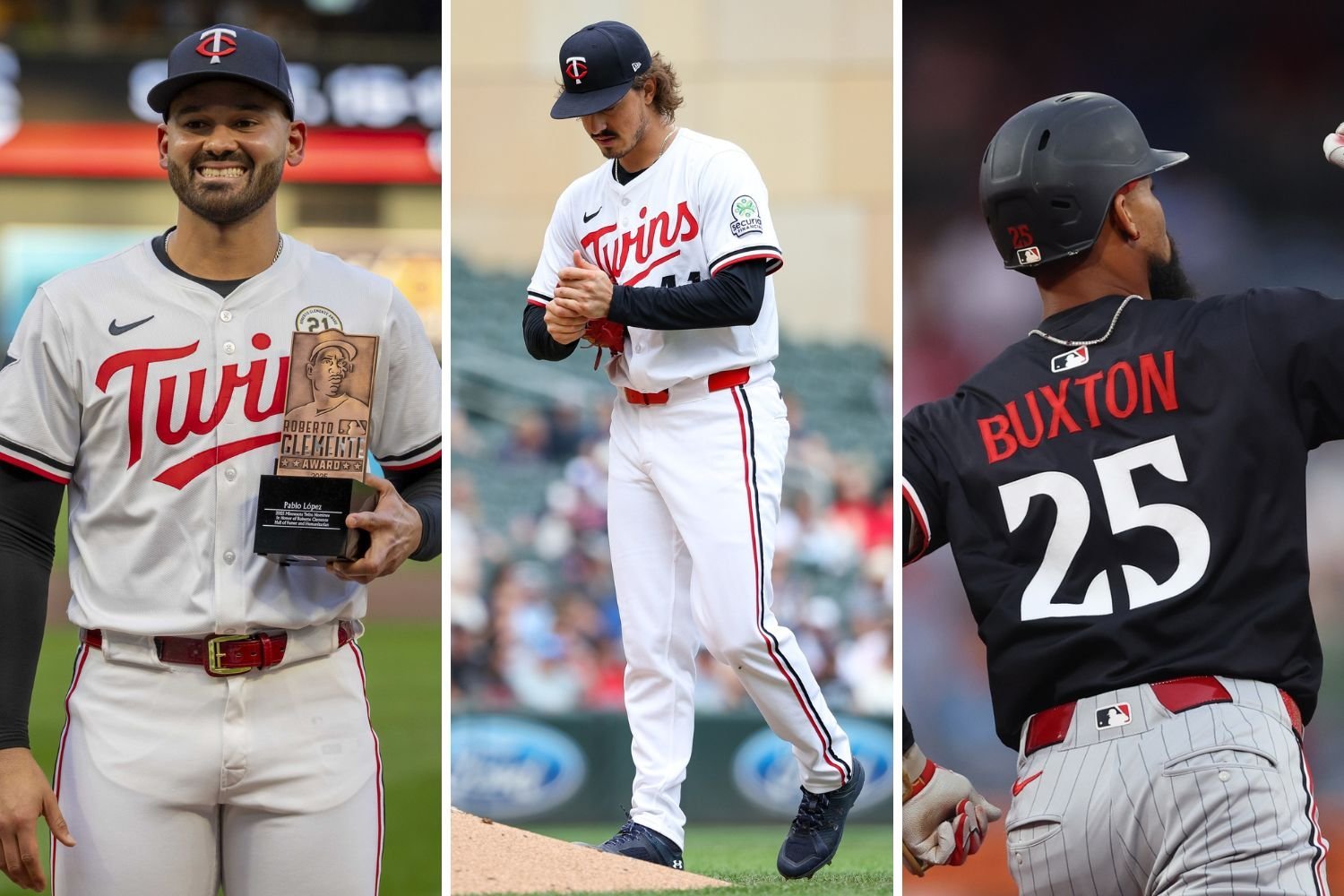
    Image courtesy of Jesse Johnson, Matt Krohn, Bill Streicher-Imagn Images

    Twins Video

    Major League Baseball and the MLB Players Association appear headed for another lengthy negotiation cycle, and the league’s latest proposal added fuel to the fire. MLB’s initial economic proposal for the next Collective Bargaining Agreement (CBA) included the framework for both a salary cap and a salary floor, a concept that has long been discussed around the sport but never implemented.

    Under the proposal, teams would be required to meet a minimum payroll threshold, while also staying below a maximum spending limit. The league says the structure would improve competitive balance while also encouraging clubs to invest more heavily in their major-league rosters. (They're pointedly not saying that it would allow them to define "baseball revenue" and wall off a greater portion of what they make from each other and from players, or the biggest reason for wanting a cap: cost certainty that would be worth tens of millions per year in rising franchise values.)

    The proposed floor for 2027 would sit at $171.2 million. Based on current Opening Day payroll projections, a dozen teams would need to increase spending to comply with the new rules. According to FanGraphs, the Twins currently have a $107 million payroll, leaving Minnesota more than $64 million short of the proposed floor.

    That creates an interesting question. If this proposal eventually becomes reality, how could the Twins realistically add that much payroll? The answer is that there are several ways to get there, and some of them could actually strengthen the organization’s long-term outlook.

    Lock Up the Current Core
    The easiest way for Minnesota to add payroll responsibly would be by extending players already in the clubhouse. 
    Joe Ryan immediately stands out as one of the organization’s most logical extension candidates. He has developed into one of the American League’s steadiest starters, and front offices around baseball are always looking for controllable pitching. That reality also means Ryan could become a trade deadline target for other clubs if the Twins fall out of contention. Minnesota must decide whether it views him as part of the next competitive window or as a trade asset.

    Ryan Jeffers falls into a similar category. Catchers with offensive upside are difficult to replace, and while his production has fluctuated at times, Jeffers remains one of the better offensive catchers in the league when healthy. Extending him would provide some stability behind the plate, while also raising payroll organically.

    Then there is Pablo López, whose situation may be the most fascinating of the group. López is recovering from Tommy John surgery and has only one year of team control remaining. Normally, pitchers approaching free agency after a major surgery carry substantial risk, but that risk can also create an opportunity for a team-friendly extension. If Minnesota believes López can return to form, it may be able to negotiate a deal that adds multiple seasons at a more manageable annual value than a healthy frontline starter would command on the open market.

    Rather than viewing extensions strictly as financial burdens, the Twins could use them to create certainty around a roster core, while simultaneously moving closer to the salary floor.

    Bet on Young Pitching Before the Price Explodes
    Across baseball, teams have become increasingly aggressive about extending young pitchers before they fully establish themselves at the major-league level. The Twins could follow that blueprint.

    Taj Bradley already looks like a potential long-term rotation fixture. His power arsenal gives Minnesota something it has lacked consistently near the top of the rotation, and if he continues trending upward, his arbitration years could become expensive quickly. An extension now could save the organization money in the long run while also helping boost payroll in the short term.

    Connor Prielipp and Mick Abel are more complicated cases because of their injury histories, but both possess legitimate upside. Pitching is expensive on the open market, and teams willing to take calculated risks on talented young arms can sometimes create tremendous surplus value. Minnesota has historically operated carefully in this space. If a salary floor becomes reality, the Twins may need to become more proactive about buying out arbitration and free-agent years before prices escalate.

    Join Baseball’s Pre-Arbitration Extension Movement
    One of the biggest trends around baseball has been teams extending players before they even establish themselves in the major leagues. Clubs are increasingly willing to guarantee money early in exchange for long-term cost certainty and additional years of team control. The Twins have mostly stayed away from these types of contracts (sure, they signed Jorge Polanco and Max Kepler, but that was a long time ago, now), but that may need to change.

    Kaelen Culpepper could make a great deal of sense as a candidate, if Minnesota believes he's a long-term answer somewhere in the infield. He offers athleticism, defensive versatility, and a skill set that could age well. Walker Jenkins and Emmanuel Rodriguez possess enormous ceilings, but both players carry obvious injury risks. That uncertainty could actually create an opening for Minnesota. If the organization still believes either player can become a foundational star, a creative extension could protect the player financially while giving the Twins a chance at massive long-term value.

    These deals are becoming increasingly common because they allow teams to spend aggressively without necessarily diving headfirst into free agency. For a club attempting to reach a salary floor while maintaining long-term flexibility, this approach may become essential.

    Make Byron Buxton a Twin for Life
    There are certain players who define an era of Twins baseball, and Buxton unquestionably fits into that category. When healthy, Buxton remains one of the most electric players in baseball. His combination of defense, speed, and power still changes games in ways very few players can replicate. More importantly, he has become one of the faces of the franchise.

    If Minnesota is eventually required to spend significantly more money, keeping Buxton in a Twins uniform through the remainder of his career should become a priority. Even with the injury concerns, there is value in maintaining continuity and rewarding a player who has remained loyal to the organization throughout his career.

    The Twins have often struggled to keep star-level talent long term. Ensuring Buxton retires in Minnesota would send a meaningful message about the franchise's direction.

    Finally, Invest Real Money in the Bullpen
    The bullpen has too often been treated like a clearance rack project. Minnesota has consistently attempted to patch together relief groups through waiver claims, minor-league signings, and bounce-back candidates. Occasionally, that strategy works. More often, it leaves the bullpen lacking reliable late-inning options.

    If the Twins suddenly need to add tens of millions of dollars to payroll, the relief market provides one of the easiest opportunities to do so quickly. Elite relievers are expensive, but they also dramatically improve roster stability.

    Adding proven bullpen arms would not only help Minnesota reach the proposed salary floor but address one of the organization’s most persistent weaknesses. The Twins do not necessarily need to hand out reckless contracts, but they can no longer operate as though every bullpen spot should be filled through bargain hunting.

    Right now, MLB’s salary cap-and-floor proposal remains exactly that: a proposal. There is still a long road before any new CBA becomes a reality, and the players union has already made clear that it detests the idea of a cap. Still, the concept forces teams like the Twins into an uncomfortable but fascinating discussion. If Minnesota were suddenly required to spend another $64 million, the organization could no longer rely exclusively on short-term fixes and payroll restraint.

    The encouraging part for Twins fans is that there are logical ways to add that spending without abandoning the future. Extensions for core veterans, aggressive deals with young talent, long-term commitments to franchise players, and meaningful bullpen investments could all help bridge the gap.

    For years, fans have begged ownership to act more aggressively. A salary floor might eventually force the issue.


    How would the Twins spend the money needed to get to the salary floor? Leave a comment and start the discussion.

    Follow Twins Daily For Minnesota Twins News & Analysis

    Recent Twins Articles

    Recent Twins Videos

    Twins Top Prospects

    Eduardo Tait

    Cedar Rapids Kernels - A+, C
    The 19-year-old backstop went 3-for-5 with a double, a homer, and six RBI. In his past four games, he is 9-for-23 with a double, four homers, and 13 RBI.

    User Feedback

    Recommended Comments


    Featured Comments

    2 hours ago, Old Twins Hat said:

    I think MLB players really need to think this through.  A cap and floor system would help salaries for a lot of players, not just the superstars. 

    We haven't seen all the details but there's nothing really in it to help the average player. 

    I see it resulting in a lot of inflated 1-2 year deals for the middle tier free agents with no effect on the team controlled players. 

    2 hours ago, Old Twins Hat said:

    I've seen this before where salary negotiations are pegged on the highest flyers and the others get scraps. 

    The players offer doubled rookie salaries. The owners offer doesn't do anything for them, at least at first glance. 

    1 hour ago, Richie the Rally Goat said:


    while the two sides are a loooong way apart, I’m encouraged in the direction.

    This is putting it mildly. The players flatly reject the owners offer. And they're right to do so. Especially with the owners cute wording of their offer, which more honestly presents a payroll cap of $225 Million and a floor of $150 Million.

    I've been saying for a year or more now, there will be no salary cap, and I am still certain of that. The first cap offer is a joke, and the owners are going to be fighting dirty by propagandizing the fans. But at the end of the day, the owners are greedy greedy snakes and they will blink when it comes time to actually start cutting into their revenue. 

    1 hour ago, Linus said:

    Will be interesting to see the response from the players association. In the past, any proposed cap was DOA. 

    It's still DOA. 

    1 hour ago, amjgt said:

    I think that was part of the proposal.

    1.5M

    That was the players proposal, not the owners. 

    58 minutes ago, LewFordLives said:

    My guess is MLB just threw 2027 out there to get some of the players to start seeing dollar signs and to cause fractures in the union.

    Yes, and also to try to start the propaganda battle to get the fans behind them as well. 

    35 minutes ago, bean5302 said:

    2. I'm not sure how much more revenue you think there is to share (with the TV revenue being included) or why MLBPA would care if there was full revenue sharing.

    This is why this showdown was ALWAYS going to be owner versus owner more than owner versus player. Any drastic changes we see will be on the owner side, with very little impact on the players. 

    25 minutes ago, amjgt said:

    That definitely seems like the owners mostly likely path to success.

    Get the bottom 75% of players (Arb and pre-arb guys) asking the top 10% why they get to make all of the decisions and why those decision always seem to benefit the 10% and ignore the 75%.

    Players are stupid, but not that stupid. The owners don't care about the lowest paid players and this offer doesn't help them. And the players union reps are voted on by the players, including those 75% that are under team control and currently under suppressed earnings. 


    1 hour ago, bean5302 said:

    1. There's a general idea of what MLB makes, combined, in terms of revenue. I don't think it's particularly valuable or warranted for MLB to "open their books" considering MLBPA was happy to make their proposal without books being opened. Aside from that, how many thousands of hours of review would it take to truly get to the bottom of detailed accounting records for 30 companies, all with different owners operating in different states, each bringing in hundreds of millions in revenue? I don't see how a detailed financial audit of MLB by the MLBPA would be valuable.

    2. I'm not sure how much more revenue you think there is to share (with the TV revenue being included) or why MLBPA would care if there was full revenue sharing. They currently don't care. I also think this is counter-productive. There should be incentive for trying to make a good game day experience, and I think teams who work to provide a good experience would be vehemently opposed to funding teams like the Twins who suck at it. That said, I think a 100% revenue share is required if there is a tight floor/ceiling because there has to be one from a math standpoint.

    3. I don't actually care about the gap. I don't think the MLBPA cares about the gap, either. I care about competitive balance, and forcing a tight floor and ceiling hasn't improved competitive balance in any of the sports. It seems to put teams into a long term competitive position (either good or bad).

    4. Deferred contracts are already reduced to NPV at a rate of 4%, if I recall.

    5. I don't think MLB cares about the minimum. You could make the minimum $5MM, but it would mean big contracts would be moved to the endangered species list. The MLBPA would absolutely hate this.

    6. I don't think MLB cares about the MiLB minimum, either. The MLBPA needs to balance where they want the money to go. If MLB teams spend more on the minors, they can't spend as much on MLB players. I think there is a general lack of understanding by fans of compensation for MiLB players.

    7. I don't think it's necessary to consider the max length of contracts allowed. Contract length is dictated by market experience. We've already seen contract length tightening as a result of some bad big contracts. A salary cap will quicken the adjustment.

    Other than the Dodgers in recent seasons, the competitive balance in MLB is excellent, IMHO. Certainly better than NHL/NBA/NFL which have seen a decade of dynasties where 1-2 teams in a league basically make the championship series/game every single year.

    There is a lot wrong here but it starts with the false premise in the last paragraph.  You are judging "competitive balance" based on how frequently the winner of the World Series changes.  That metric omits a great deal of variables that extend well beyond payroll.  The truth is, the "competitive balance" you are citing is a function of the sport and has next to nothing to do with the CBA.  The reasoning is really simple: your metric is based on small sample sizes that we know are prone to incredibly random outcomes.  When you zoom further out, to larger sample sizes, the impact of the CBA is much more obvious.  Teams with the enormous spending power give themselves much, much better chances to win games and be in the "Super Random Small Sample Size Championship Bracket" we overemphasize to determine the best team.  Every other part of your argument falls apart when this superficial argument is exposed for what it is.

    The other leagues have their champions determined more by the quality in which their franchise is run rather than their market size and spending power.  This is all any fan should want out of their CBA.  (Though I'd argue the NHL has by far the best system, followed by the NFL (though deals there need to be guaranteed), and finally by the convoluted mess that is the NBA).  When the Vikings fail, they fail due to their own choices, allocation of resources, and leadership.  When the Twins fail, those are part of it, but they also have a several hundred million disadvantage that the Vikings simply don't face.  Is it an excuse to run your team like the Marlins?  No.  Is it a valid, unfair obstacle towards true competitive spirit?  Yes.  It is.  That is simply a fact that I can state while also saying "F the Pohlads"

    The league absolutely has to address issues including revenue sharing of local media.  There are battles within the billionaires that need to be hashed and there are concessions players are going to have to make for the health of the sport.  It's unfortunate the fate of the game hangs in the balance of so many that have their own messy self-interests in play and we, the fans, stand to suffer the most.

    4 hours ago, Cody Christie said:

    The proposed floor for 2027 would sit at $171.2 million. Based on current Opening Day payroll projections, a dozen teams would need to increase spending to comply with the new rules. According to FanGraphs, the Twins currently have a $107 million payroll, leaving Minnesota more than $64 million short of the proposed floor.

    $23M of that number is benefits costs, which would leave the Twins $40M short. $148M in payroll is not that far off from what they had in 2024/25.

    18 minutes ago, TheLeviathan said:

    There is a lot wrong here but it starts with the false premise in the last paragraph.  You are judging "competitive balance" based on how frequently the winner of the World Series changes.  That metric omits a great deal of variables that extend well beyond payroll.  The truth is, the "competitive balance" you are citing is a function of the sport and has next to nothing to do with the CBA.  The reasoning is really simple: your metric is based on small sample sizes that we know are prone to incredibly random outcomes.  When you zoom further out, to larger sample sizes, the impact of the CBA is much more obvious.  Teams with the enormous spending power give themselves much, much better chances to win games and be in the "Super Random Small Sample Size Championship Bracket" we overemphasize to determine the best team.  Every other part of your argument falls apart when this superficial argument is exposed for what it is.

    The other leagues have their champions determined more by the quality in which their franchise is run rather than their market size and spending power.  This is all any fan should want out of their CBA.  (Though I'd argue the NHL has by far the best system, followed by the NFL (though deals there need to be guaranteed), and finally by the convoluted mess that is the NBA).  When the Vikings fail, they fail due to their own choices, allocation of resources, and leadership.  When the Twins fail, those are part of it, but they also have a several hundred million disadvantage that the Vikings simply don't face.  Is it an excuse to run your team like the Marlins?  No.  Is it a valid, unfair obstacle towards true competitive spirit?  Yes.  It is.  That is simply a fact that I can state while also saying "F the Pohlads"

    The league absolutely has to address issues including revenue sharing of local media.  There are battles within the billionaires that need to be hashed and there are concessions players are going to have to make for the health of the sport.  It's unfortunate the fate of the game hangs in the balance of so many that have their own messy self-interests in play and we, the fans, stand to suffer the most.

    We can have socialism in MLB when we have publicly owned teams and universal healthcare, and not a moment before. 

    4 minutes ago, DJL44 said:

    This is key. I think you can fix competitive balance with revenue sharing without needing a cap and floor.

    The owners are 100% of the reason there is disparity in market competitiveness, and the players should just sit back and let the owners fight it out. 

    But that requires the fans to recognize this is 100% an owner problem, with nothing to do with the players. 

    13 minutes ago, DJL44 said:

    This is key. I think you can fix competitive balance with revenue sharing without needing a cap and floor.

    I think it depends on what rules you put around the revenue sharing. And the enforcement of those rules.

    Splitting all local TV money would certainly bring the massive revenue advantage teams like the Dodgers and Yankees have down, but if you don't actually force the Pirates and Twins of the world to spend it, it doesn't really do anything. And the Dodgers have plenty of other income sources to still wield a pretty sizeable advantage lead by their desire to win and not only make swimming pools full of money.

    I don't think it's a hard argument to make that teams aren't spending the revenue sharing they get now in an attempt to win. If you don't add, and enforce, rules along with the increase in revenue sharing you don't really make much progress if the Pohlads still care more about making money than trying to win baseball games. It'd be improvement, but not substantial.

    7 minutes ago, chpettit19 said:

    if you don't actually force the Pirates and Twins of the world to spend it, it doesn't really do anything.

    So a soft floor, like the players proposed, would penalize them. 

    There is no reason to think a hard cap and floor is necessary to increase parity (of which there already is plenty). 

    8 minutes ago, chpettit19 said:

    I think it depends on what rules you put around the revenue sharing. And the enforcement of those rules.

    Splitting all local TV money would certainly bring the massive revenue advantage teams like the Dodgers and Yankees have down, but if you don't actually force the Pirates and Twins of the world to spend it, it doesn't really do anything. And the Dodgers have plenty of other income sources to still wield a pretty sizeable advantage lead by their desire to win and not only make swimming pools full of money.

    I don't think it's a hard argument to make that teams aren't spending the revenue sharing they get now in an attempt to win. If you don't add, and enforce, rules along with the increase in revenue sharing you don't really make much progress if the Pohlads still care more about making money than trying to win baseball games. It'd be improvement, but not substantial.

    You have to make it so the teams that have the best attendance make the most money. I don’t care if they’re spending or even winning if the fans are attending.

    Just now, DJL44 said:

    You have to make it so the teams that have the best attendance make the most money. I don’t care if they’re spending or even winning if the fans are attending.

    Even that is a somewhat problematic issue without a cap.  Whether the Dodgers are winning or losing...their market allows them to charge significantly more per ticket because of the nature of their local economy.

    Nothing Kansas City does, in terms of winning, changes that $80 in Missouri isn't the same as $80 in New York or Los Angeles.

    Attendance should be the reward for competence, no doubt.  It also has to have a cap to ensure it doesn't have a compounding effect on that competence.  

    2 minutes ago, NYCTK said:

    So a soft floor, like the players proposed, would penalize them. 

    There is no reason to think a hard cap and floor is necessary to increase parity (of which there already is plenty). 

    I disagree that there's already enough parity, but don't wish to get into that discussion here. I'm fine with a soft floor and cap or hard floor and cap. I feel change is needed, but that change can come in a number of different effective forms.

    1 minute ago, chpettit19 said:

    I disagree that there's already enough parity, but don't wish to get into that discussion here. I'm fine with a soft floor and cap or hard floor and cap. I feel change is needed, but that change can come in a number of different effective forms.

    It's a pretty important part of the conversation though, considering the owners are using it as a piece of the propaganda to sell it to fans. 

    But, yeah, a soft floor added to the already existing soft cap (with greater penalties) is all that's necessary. The owners can figure out their revenue sharing and the players should just sit back and let them figure it out.

    Does anyone know when the parade for the World Champions start?  San Fran has beaten the Dodgers in 4 of their 7 games this year.  I assume that sample will suffice for us to end the season and declare them winners correct?

    Or does the month of October magically envelope their success in some greater meaning because of temperature?  Ancient Pagan rituals?  The celestial alignment of pumpkin shaped Reese's, Pumpkin Pie, and Oktoberfest?

    At least "parity" will continue and give us extra time to watch the Bananas!

    3 hours ago, DJL44 said:

    You have to make it so the teams that have the best attendance make the most money. I don’t care if they’re spending or even winning if the fans are attending.

    I can agree with that in general terms. My core desire is that every fan can go into every season feeling that their team has a legitimate chance to succeed if it's run well. 

    The Dodgers aren't successful only because they spend. They were really bad for a long time while spending. The Mets are bad even though they spend. The Dodgers are the best run organization and also have the most money. That puts them in a position to go on what could be a pretty crazy run of success. One could make very compelling arguments that Tampa, Cleveland, and Milwaukee are 3 of the 5ish best run organizations in MLB. They have absolutely no ability to do what the Dodgers do. None. Zero. And their fans know it. But if the playing field is leveled in a meaningful way, suddenly you have those teams with a chance to make Dodger like teams.

    All I ask is that more of the results are based on actual front office competency and less on simply money.

    3 minutes ago, NYCTK said:

    It's a pretty important part of the conversation though, considering the owners are using it as a piece of the propaganda to sell it to fans. 

    But, yeah, a soft floor added to the already existing soft cap (with greater penalties) is all that's necessary. The owners can figure out their revenue sharing and the players should just sit back and let them figure it out.

    And the players use the same propaganda just in the other direction. I get it. 

    Yes, you can absolutely build a system with a soft floor and cap that better balances things. I don't understand your stance that the players have no role in anything, though. It's nonsense, and pretty clearly built largely, if not exclusively, on your biases towards billionaires. 

    The owners are raking in money. All of them. The players not pushing for certain things and just letting the owners decide how they want to split up their money doesn't help the players at all. If the players are so convinced that the teams have more money to spend than they actually do, and don't feel they're getting at least 50% of the revenue they're driving, then they should absolutely be actively in the fight for deciding where MLB revenue goes. If they truly believe there's more money to be spent they shouldn't be fighting for a soft floor, but for a hard one. One that forces a certain percentage of the money they feel MLB is making, and not paying them, to go to them. The players should be doing everything they can to be involved in the revenue sharing decisions because it gives them the chance to force more money their way.

    Just now, chpettit19 said:

    I don't understand your stance that the players have no role in anything, though. It's nonsense, and pretty clearly built largely, if not exclusively, on your biases towards billionaires. 

    In what way are the players responsible for the lack of agreement between owners for better revenue sharing? That's 100% an owner issue

    In what way are the players responsible for the Pirates and Marlins refusing to spend money? That is 100% an owner issue

    In what way are the Dodgers willingness to spend $500 million on player expenditures the fault of the people getting the money? The lack of agreement is 100% an owner issue

    And of course, in what way are players responsible for rising beer and dog costs? That is, again, 100% an owner issue

    Everything fans don't like about baseball is 100% because of owners. 

    22 minutes ago, chpettit19 said:

    I can agree with that in general terms. My core desire is that every team can go into every season feeling that their team has a legitimate chance to succeed if it's run well. 

    The Dodgers aren't successful only because they spend. They were really bad for a long time while spending. The Mets are bad even though they spend. The Dodgers are the best run organization and also have the most money. That puts them in a position to go on what could be a pretty crazy run of success. One could make very compelling arguments that Tampa, Cleveland, and Milwaukee are 3 of the 5ish best run organizations in MLB. They have absolutely no ability to do what the Dodgers do. None. Zero. And their fans know it. But if the playing field is leveled in a meaningful way, suddenly you have those teams with a chance to make Dodger like teams.

    All I ask is that more of the results are based on actual front office competency and less on simply money.

    Blinding Rick And Morty GIF by Adult Swim

    Logic....blinding.

    Finally a move that should force the Pohlads to sell. I don’t see how they could possibly spend another $63 a year on the Twins. The poor family has had to cut concessions workers left and right. Maybe they’ll raise ticket prices so high no one will go to a game. Guaranteed they’ll be bitchin about his every time the trade deadline comes up. Something’s gotta give. Even if attendance stays where it’s been, another $63 million a year should be the final dagger!!!

    5 hours ago, FlyingFinn said:

    The Twins wouldn't have had to invest $ in the bullpen if they just kept Varland. With a closer, this crew in the pen appears like they could handle the other innings (can't believe I'm saying that). But if Rojas turns into a stud starter, I was wrong about the trade. 

    Haven't we played this song enough when discussing the bullpen? After awhile, the lyrics get stale.

    The post is about what to do now, not what to have done last year.

    5 hours ago, DJL44 said:

    Or they can just take on a bad contract from a team that needs to get under the cap

    Why would they take a bad contract and salary and get no return on investment, when they can spend the same amount for something that could be a return on the investment? It's too cute by half.

    47 minutes ago, NYCTK said:

    In what way are the players responsible for the lack of agreement between owners for better revenue sharing? That's 100% an owner issue

    In what way are the players responsible for the Pirates and Marlins refusing to spend money? That is 100% an owner issue

    In what way are the Dodgers willingness to spend $500 million on player expenditures the fault of the people getting the money? The lack of agreement is 100% an owner issue

    And of course, in what way are players responsible for rising beer and dog costs? That is, again, 100% an owner issue

    Everything fans don't like about baseball is 100% because of owners. 

    Because it's all based on CBA negotiated rules. The owners want more money. The players want more money. Prices go up because they all want more money. And the MLBPA plays a role in what the rules governing the money the league brings in are. 

    You're arguing they need a soft floor while also saying the players play no role in anything financial. If the players don't force a soft floor rule the owners will continue to have no floor. The entire point of the union is that the players get a say in what and how the owners do things with the revenue in MLB.

    I am not interested in continuing this discussion. You are free to believe what you'd like. We'll just have to agree to disagree.

    Here is a good way to look at this situation, IMO.

    In the NFL, there is NO DISCUSSION about eliminating the hard cap and floor.  ZERO.

    Why?  Because it works.  Contracts have evolved, good players are getting a ton more guaranteed money than they did 5 years ago, but all good.  

    Same for NHL and NBA.

    But MLB?  NO.  Somehow this sport is uniquely unsuited to a fair, hard cap and floor because of what reason?  Is there something about the nature or baseball as a game vs. the other major sports that differentiates its labor situation?  NO!!!!

    It is the historical precedent of a very powerful union that has manhandled a weak, fractious, disparate ownership group.  Nothing more, nothing less.

    There is plenty of money to go around and compensate the players even better, keep the owners rich, and improve the competitiveness of the game.  It is TIME to step up and make it happen.

    But, saying all that, I remain skeptical that anything significant will get done.

    13 minutes ago, chpettit19 said:

    Prices go up because they all want more money.

    No. You're acting as a propaganda arm of the owners. 

    The prices go up because the OWNERS want more money. The players have absolutely no sway over the cost of anything in the ballpark, except maybe signed memorabilia or stuff that would actually need to go through MLBPA. 

    15 minutes ago, chpettit19 said:

    The entire point of the union is that the players get a say in what and how the owners do things with the revenue in MLB.

    I can promise you the players don't care if the owners decide to level the playing field by sharing their TV revenue. Which is the single best thing that can come out of this dispute. 

    That is entirely an ownership battle. 

    27 minutes ago, arby58 said:

    Why would they take a bad contract and salary and get no return on investment, when they can spend the same amount for something that could be a return on the investment? It's too cute by half.

    If the Dodgers include prospects to shed dead salary, the Twins can cut the salaried player and keep the prospects. This happens in other sports with a cap all the time.

    9 minutes ago, NYCTK said:

    I can promise you the players don't care if the owners decide to level the playing field by sharing their TV revenue. Which is the single best thing that can come out of this dispute. 

    That is entirely an ownership battle. 

    It is a very good sign that the owners first proposal had full TV revenue sharing in it. That alone could save the 2027 season.

    Now the only thing to argue about is how hard/soft the ceiling and floor are and what numbers to put on them. 

    MLB is at $245/$171 and MLBPA is at $300/$150. That is not very far apart at all.

    6 hours ago, DJL44 said:

    Or they can just take on a bad contract from a team that needs to get under the cap

    This.  Dealing with caps is a great way to catch up if you're good at it.  I have zero reason to believe the Twins would be good at it, given they way they draft.  It's all game theory.

    24 minutes ago, DJL44 said:

    If the Dodgers include prospects to shed dead salary, the Twins can cut the salaried player and keep the prospects. This happens in other sports with a cap all the time.

    That's different from the OP, which didn't mention prospects as part of the deal. 

    38 minutes ago, NYCTK said:

    I can promise you the players don't care if the owners decide to level the playing field by sharing their TV revenue. Which is the single best thing that can come out of this dispute. 

    That is entirely an ownership battle. 

    Then the players are idiots. How the money is dispersed in the league and the rules that govern it is incredibly important to the players. The Dodgers having to give more money to the Twins but the Twins not having to spend that money is very bad for the players. It means less money being paid to players. 

    The players don't care about it for the reason of balancing competition, but they very much care how the revenue the league generates is dispersed. It's their entire fight every CBA.

    43 minutes ago, DJL44 said:

    MLB is at $245/$171 and MLBPA is at $300/$150. That is not very far apart at all.

    Reminder the 245/171 does not include the 20m or so of ancillary player spending, meaning the realistic payroll cap/floor they proposed is $225m/$150m. 

    Once you make that adjustment and realize the difference between hard and soft caps you realize how far apart they two camps are. 


    Create an account or sign in to comment

    You need to be a member in order to leave a comment

    Create an account

    Sign up for a new account in our community. It's easy!

    Register a new account

    Sign in

    Already have an account? Sign in here.

    Sign In Now

×
×
  • Create New...