Jump to content
Twins Daily
  • Create Account
  • Twins News & Analysis

    Dallas Keuchel Is Who He Is


    Matt Braun

    One fortunate start should not convince anyone otherwise.

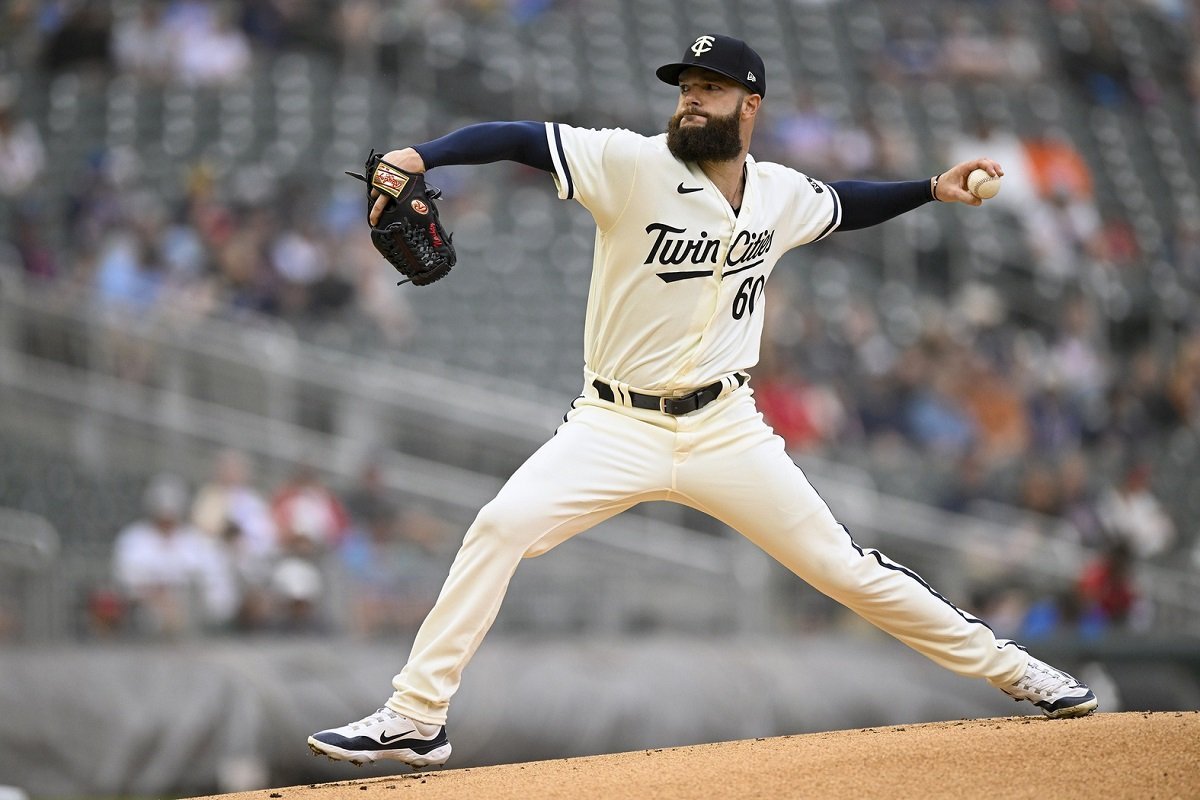
    Image courtesy of © Nick Wosika-USA TODAY Sports

    Twins Video


    There was quite a stir made when Dallas Keuchel signed with the Twins. Although MLB hitters spent much of the prior two seasons spanking his offerings, the former Cy Young winner felt that his sinker had a few more outs in it, and worked hard to add a few elusive ticks of velo—perhaps hoping that the extra oomph would be the difference between disaster and a spot on a major league roster. He latched onto the Twins on a minor league deal and waited for fate to move in his favor. 

    Fortunately, Joe Ryan had a debatably real groin problem and an undeniably real home run problem. Needing to decide on keeping Keuchel around, the Twins called him up—and with his Sunday start now in the books—he now needs to be talked about.

    Some may have viewed his five frames of one-run ball positively; our own Sherry Cerny argues that he should be the 6th man in the Twins rotation, extending his stay on the major-league roster. He did only allow one run, after all. 

    Beyond the earned runs, though, there’s much to be concerned about. Namely, Keuchel didn’t strike anyone out.

    Yes, no one would confuse prime Keuchel with Randy Johnson—the sinking lefty earned his bread off groundballs, not whiffs—but at his best, Keuchel could still offer five to six punchouts a game, improving his absurd ground ball total by ensuring that the few batted balls hitters could find were headed straight for infielder’s gloves. This year's performance is not Keuchel at his best; his strikeout rate in 2023 against AAA hitters—inferior competition—was below average. He’s almost wholly unable to miss major league bats. 

    That matters. Some days, those batted balls aren’t always going to find gloves and will instead bang around the field, creating chaos and scoring runs as the visions of his double plays on Sunday become distant and unrecognizable. It’s a simple math problem, with a few more batted ball chances allowing for shenanigans and unideal outcomes. The Pied Piper comes calling for his due eventually; relying on fortunate sequencing and unsustainable left-on-base rates won’t cut it. Those hits will fall. They have to.

    Now, yes, he does still have the groundballs. The almighty ability to get batters to drive the ball directly into the earth hasn’t evaporated with age. However, diminished in recent years, Keuchel has demonstrated a rejuvenated grounder rate with the Saints and in his lone Twins start. That’ll always help cap the damage he allows. It can even erase some of his mistakes, but it’s not enough to only have groundballs—especially if batters are smoking his sinker with an exit velocity of 96.2 MPH as they did on Sunday.

    Put it this way: strip away the name and the Cy Young award. Would you trust a pitcher with 14 walks and 28 strikeouts over 37 innings? Would you trust a pitcher who could only elicit five swings and misses against one of the coldest offenses in baseball? 

    He’s solid depth—the kind of guy you may trust more than Simeon Woods Richardson—but making big plans to add him to Minnesota’s grand down-the-stretch scheme is foolish. He got lucky on Sunday and was fortunate in his time with the Saints. 

    Once Joe Ryan is over his bout of balls-keep-leaving-the-yard-itis, the Twins should thank Keuchel for his troubles, and jettison him to the depths of Baseball Reference, only to be uncovered by intrepid dorks wondering why he made a handful of starts for the 2023 Minnesota Twins. They have better starters, and they will be far more critical to the Twins staving off Cleveland in the coming months. 

    Follow Twins Daily For Minnesota Twins News & Analysis

    Recent Twins Articles

    Recent Twins Videos

    Twins Top Prospects

    Marek Houston

    Cedar Rapids Kernels - A+, SS
    The 22-year-old went 2-for-5 on Friday night, his fourth straight multi-hit game. Heading into the week, he was hitting .246/.328/.404 (.732). Four games later, he is hitting .303/.361/.447 (.808).

    User Feedback

    Recommended Comments


    Featured Comments

    3 hours ago, chpettit19 said:

    Over half the balls put in play against him were hit over 88 MPH (11 of 21). Another at 85, and 1 at 83. There were far more than "a few well hit balls." 

    To be quite blunt, looking at velocity only on the batted balls like this and using the data to say stuff was well struck, is not the reality.

    A line drive at 90 MPH is much different than a ground ball at 90 MPH. One is going to look good, the other is going to look routine.

    Launch angles play a role too, and is why there is this thing called "barrels" associated with exit velocity/launch angle. You point out 13 hits that you classify as "well hit," when in actuality, only 6 would be classified as barrels, while at least 10 of them would go into the "poorly hit" category. I'm not saying giving up 6 barrels is great, but it's a lot better than you're making it out to be. He also gave up four singles that didn't leave the bat at higher than 65 MPH.

    As a comparison in this game, Zac Gallen, arguably the far better pitcher, also gave up 4 barrels on 14 balls in play. This is my way of telling you each pitcher gave up the exact same percentage of barrels on ball in play. 

    26 minutes ago, Steve Lein said:

    To be quite blunt, looking at velocity only on the batted balls like this and using the data to say stuff was well struck, is not the reality.

    A line drive at 90 MPH is much different than a ground ball at 90 MPH. One is going to look good, the other is going to look routine.

    Launch angles play a role too, and is why there is this thing called "barrels" associated with exit velocity/launch angle. You point out 13 hits that you classify as "well hit," when in actuality, only 6 would be classified as barrels, while at least 10 of them would go into the "poorly hit" category. I'm not saying giving up 6 barrels is great, but it's a lot better than you're making it out to be. He also gave up four singles that didn't leave the bat at higher than 65 MPH.

    As a comparison in this game, Zac Gallen, arguably the far better pitcher, also gave up 4 barrels on 14 balls in play. This is my way of telling you each pitcher gave up the exact same percentage of barrels on ball in play. 

    I have no problem with being blunt, but if you want to do the full context there's even more to it. 

    6 barrels in 5 innings is a ton. An absolute ton. Gallen gave up 4 on 14 balls in play in 7 innings. Keuchel gave up 6 on 21 balls in play in 5 innings. That's over 1 barrel per inning for Keuchel, and just over .5 per inning for Gallen. Gallen K'd 8 in 7 innings while Keuchel K'd 0 in 5. Gallen allowed 2 balls in play per inning. Keuchel allowed over 4.

    You are not surviving giving up over a barrel an inning while striking nobody out. Yes, the ball on the ground hit hard is less dangerous than the ball in the air hit hard. But when every batter you face either walks or puts the ball in play even those balls on the ground matter. When you're giving up 4 hits on even the soft contact the hard contact is even more concerning when, once again, you're not striking anyone out.

    If Keuchel can maintain a 60+% groundball rate he has a better chance of surviving all that hard contact with no, to very few, Ks. He hasn't done that since 2019, and he was K'ing 19% of his batters faced then.

    The data is not on Keuchel's side.

    1 minute ago, chpettit19 said:

    I have no problem with being blunt, but if you want to do the full context there's even more to it. 

    6 barrels in 5 innings is a ton. An absolute ton. Gallen gave up 4 on 14 balls in play in 7 innings. Keuchel gave up 6 on 21 balls in play in 5 innings. That's over 1 barrel per inning for Keuchel, and just over .5 per inning for Gallen. Gallen K'd 8 in 7 innings while Keuchel K'd 0 in 5. Gallen allowed 2 balls in play per inning. Keuchel allowed over 4.

    You are not surviving giving up over a barrel an inning while striking nobody out. Yes, the ball on the ground hit hard is less dangerous than the ball in the air hit hard. But when every batter you face either walks or puts the ball in play even those balls on the ground matter. When you're giving up 4 hits on even the soft contact the hard contact is even more concerning when, once again, you're not striking anyone out.

    If Keuchel can maintain a 60+% groundball rate he has a better chance of surviving all that hard contact with no, to very few, Ks. He hasn't done that since 2019, and he was K'ing 19% of his batters faced then.

    The data is not on Keuchel's side.

    Yup, wasn't saying it was great, and the more balls you allow to be put into play, the worse. But saying everything was "well hit" against Keuchel just wasn't true. Again, 4 of the Diamondbacks hits didn't even exceed 65 MPH.

    This is definitely who Keuchel is, but he's also been in the past, and so far with the Twins, one who succeeds despite this deficiency. If the Twins get this Keuchel more than they don't, it's a success, in my opinion.

    2 hours ago, Karbo said:
    What is the exit Velo average at MLB?
     
     
    Exit velocity can vary based on whether or not the ball is moisturized with a humidor. From April 7 to May 22, 2021, the average exit velocity was 91.8 miles per hour (147.7 km/h) with a humidor and 92.8 miles per hour (149.3 km/h) without a humidor.
     
    I also found another answer of 89 MPH. I honestly don't know which is correct. But going by the eye test on Sunday there were not very many well hit balls. Squibbers and pop outs. I again will say that I can't judge anybody after 1 outing. Do I think he should be a regular in the rotation? No, not yet. And I can't see the Twins cutting back to 12 relievers for any length of time. Maybe when rosters expand trying 6 starters.

    Not sure if you've ever used Baseball Savant, but it's pretty cool. It's MLB's public facing data center. I've linked below to some of the pages. Atlanta is the only team averaging over 90 MPH exit velo, and they may break the Twins single season HR record this year. Nobody else over 90. Keuchel definitely gave up some squibbers and pop outs, but he also gave up a lot of balls hit over 90 MPH.

    By player sorted highest to lowest avg exit velo. 

    By team sorted highest to lowest avg exit velo.

    Keuchel's numbers from that game.

    17 minutes ago, Steve Lein said:

    Yup, wasn't saying it was great, and the more balls you allow to be put into play, the worse. But saying everything was "well hit" against Keuchel just wasn't true. Again, 4 of the Diamondbacks hits didn't even exceed 65 MPH.

    This is definitely who Keuchel is, but he's also been in the past, and so far with the Twins, one who succeeds despite this deficiency. If the Twins get this Keuchel more than they don't, it's a success, in my opinion.

    The 4 hits that didn't exceed 65 don't help the case. That just means more guys on base for the hard hit balls. The difference between a 95 MPH grounder and a 95 MPH liner and a 95 MPH fly ball are fractions of an inch on the barrel. When it's being thrown 87 MPH the margin of error is miniscule, and if he leaves that pitch up even a little that 95 MPH grounder people aren't worried about turns into a 95 MPH HR. 

    If the Twins get 1 earned in 5 innings more than they don't of course it's a success. The question is how likely is that to happen. And the data from his first game says it's not very likely. Keuchel hasn't succeeded without striking people out. He's not striking people out anymore. He hasn't succeeded in years. The odds of him not improving his stuff in any meaningful way, and not being likely at all to bounce back closer to 20% K rate, makes it very unlikely he is successful moving forward.

    Is giving him 3 starts until Ryan is back the end of the world? Absolutely not. Do we have any reason to believe this FO will just cut him loose when Ryan returns? Absolutely not. I mean there's people on these pages talking about him being on the playoff staff. His 60+% groundball rate is the only data point from his first start that gives any hope to him having any sort of success. Every other data point says we're about to see the 5.25-9.25 ERA Keuchel from the last 2 years. Any random AAA pitcher we call up can do that.

    I think keuchel has a small roll on this team. I don't think anybody believes that he is a lights out pitcher. Maybe....just maybe ...the twins can catch lightning in a bottle and use him for 6-8 starts and have him eat 30-45 innings out of the starting rotation and  skip/rest the other 5 pitchers in the rotation to make sure they are fresh for the rest of the yr/playoffs.

    A month or 6 weeks from now he  gets released with some heartfelt thanks for a job well done and everybody moves on.

    Or maybe they keep him for bullpen veteran exp. 

    But it seems to me he is on borrowed time at the big league level with the twins.

    This team just wasn't built to support ground ball starters. The outfield defense is solid, but with a sinkerball pitcher starting, now you're going to have to choose to run out the better offense at the expense of getting outs the way Keuchel likes them, or you're going to run out an offense that will force Keuchel to win a bunch of 2-1 games.

    Wow, this is a lot of analysis over 5 innings of pitching.

    Keuchel is likely to stay with the Twins on a start by start basis. The first start worked out very well regardless of the analysis. He was up against one of the better pitchers in the game & we got the W, that's what counts. Next time out maybe he gets lit up, but every game that we get from him that works out well is an unexpected bonus. 

    A pitcher that doesn't walk batters and gets a lot of ground ball outs will win a lot of games no matter how many strikeouts he gets. I think the Twins had lost too many games when a walked batter scores the winning run. Often the walked batter has a very low batting average. When a batter has one chance in 5 of getting a hit why would any good pitcher walk him? Is the catcher calling for a pitch on the edge of the strike zone or is the pitcher just missing the strike zone? With a 3 ball count to a low average batter why doesn't the pitcher throw a pitch in the strike zone even if the pitch has to be right down the middle? Game after game the Twins pitchers walk batters with low batting averages and that has to stop. Is the manager calling the pitches?


    Create an account or sign in to comment

    You need to be a member in order to leave a comment

    Create an account

    Sign up for a new account in our community. It's easy!

    Register a new account

    Sign in

    Already have an account? Sign in here.

    Sign In Now

×
×
  • Create New...