

Jump to content
Twins Daily
  • Create Account
  • Twins News & Analysis

    Can the Twins Become the New Astros? Part 2


    Patrick Wozniak

    After looking into the similarities in the use of analytics, technology, and communication in both the Twins and Astros organizations in Part 1 of this series, today we will turn our attention to both teams’ efforts to build their farm systems and create a group of young core players to build around.

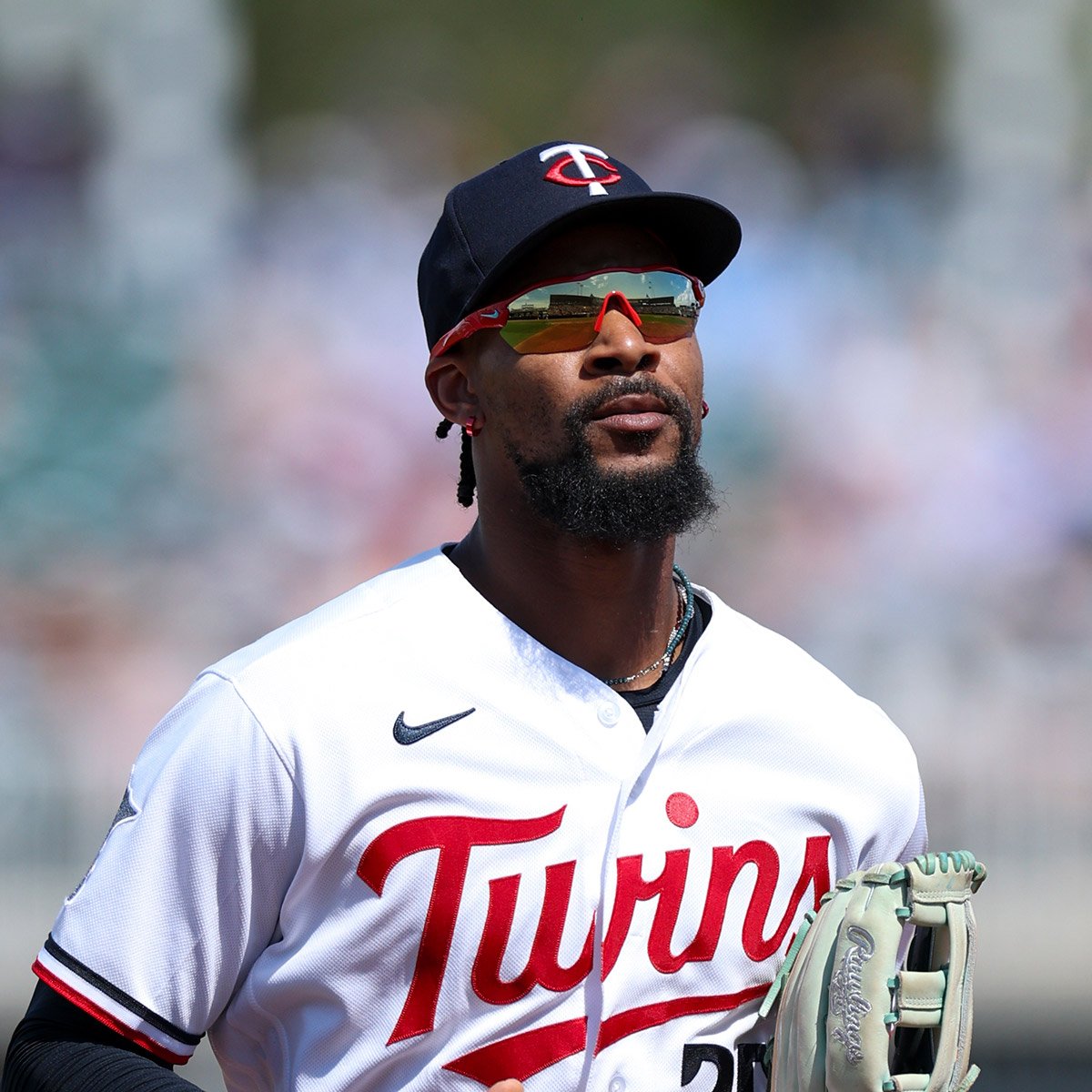
    Image courtesy of © Sam Navarro-USA TODAY Sports

    Twins Video

    Click here for Part 1 of this series.

    Building the Farm

    While Houston’s farm system isn’t as strong as it once was, Jeff Luhnow and company did a great job of using their high draft pics to add invaluable pieces like SS Carlos Correa and 3B Alex Bregman to rebuild the farm. While they added plenty of major league talent, rebuilding the farm also gave the Astros the prospect capital they needed to add key pieces such as Verlander in 2017, Gerrit Cole and Pressly last season, and Zack Greinke this year. Repeated success and the corresponding lower draft position along with several trades have weakened Houston’s farm, but they have been able to add high-end talent without giving up too much and the whole point of having a good farm system is to eventually have success at the highest level, a tradeoff I’m sure the Astros would take ad infinitum.

    While the Twins struggles since 2010 were not as intentional as Houston’s, Minnesota received plenty of top 10 draft pics due to their struggles. Ryan and company’s results are a bit of a mixed bag up to this point. With the second pick in the 2012 draft, the Twins picked Byron Buxton immediately after the Astros selected Correa, and although he has suffered several injury setbacks and taken some time to establish himself in the big leagues, Minnesota did well with that pick (if you disagree, look at the pics who followed Buxton). They also selected Jose Berrios with a supplemental first-round pick in that draft, along with Tyler Duffey in the fifth round and Taylor Rogers in the 12th.

    After the 2012 draft the results weren’t quite as sterling for the Twins. In 2013 they picked high school righty Kohl Stewart (SP), with the fourth overall pick, and although he has reached the majors his upside is extremely limited and he has to be considered a disappointment at this point. The verdict on 2014 fifth overall pick Nick Gordon is still out. He has yet to reach the majors, but had a good year in Triple A that was shortened due to injury, however questions about his ability to remain at shortstop remain. Hindsight is 20/20 but both Aaron Nola and Trey Turner were available.

    With the sixth overall pick in 2015 Minnesota selected Tyler Jay, a college reliever that the Twins tried to turn into a starter and was a complete failure (he’s no longer in the organization), but 2016 first rounder, outfielder Alex Kirilloff (No. 15 overall), has become a top prospect who should join the Twins soon.

    Of course, the Astros also wasted a top pick on pitcher Mark Appel who was a bust and the Twins did hit on some later round picks, but given the high draft position that Minnesota had from 2012-15, the results have been underwhelming. Falvey and Levine are too early in their tenure to put too much stock in their draft picks but they were gifted the number one overall pick in their first year. They selected shortstop Royce Lewis, who is very high on most national prospect lists despite a somewhat disappointing 2019, although he has been much younger than his competition and is off to a great start in the Arizona Fall League. Last year’s first-round pick, College World Series hero Trevor Larnach, has had a promising start to his career as well. The Twins went for a high-risk, high-reward high school prospect in this year’s draft, selecting SS/3B Keoni Cavaco who has a long road to travel before reaching Minnesota.

    The FO has done a lot to bolster the farm through trades. They gained the most at the 2018 trade deadline due to being out of contention, unlike 2017 where they were surprise contenders, although they did pick up Zack Littell that year, picking up multiple prospects including pitchers Johan Duran, Jorge Alcala, and Dakota Chalmers and outfielders Gilberto Celestino, Gabriel Maciel, and Luke Raley. They gained several other smaller pieces as well, including Devin Smeltzer, and greatly improved the overall depth of the system.

    Even while being obvious buyers at the deadline this season the FO was clearly hesitant to let go of top prospects like Lewis and Kirilloff to obtain a top-notch starter, though they even managed to add a pitching prospect, Chris Vallimont, in the Sergio Romo trade. They have built one of the best farm systems in baseball and seem keen to keep it that way. While teams like the Chicago Cubs and Boston Red Sox were willing to part with some of their best prospects, teams like the Los Angeles Dodgers and to a lesser extent Houston, have been less willing to give away prized prospects. This has allowed the Dodgers to be good for a very long time, and both the Dodgers and the Astros seem to have new stars come out of their system almost every year. Falvey and Levine like to talk about the long-term future for the organization and seemed poised to follow a similar path.

    The Young Core

    Although Houston did a lot to improve their club through drafts and trades, a few key pieces of the future World Series champs were in the organization when Luhnow took over. One of the most important pieces of the Astros run of success has been Jose Altuve, an undersized player who puts up big numbers while playing second base. Along with Altuve, Houston had also drafted outfielder George Springer prior to the new FO and he has also been a huge cog in their always potent lineup, batting leadoff for the World Series run. But outside of Altuve and Springer, most of Houston’s players came from within the system after Luhnow took over or were acquired through trades and free agency.

    Falvey and Levine were fortunate to inherit a pretty impressive young core to build around. A lot of the credit should actually go to former GM Bill Smith, who in his short tenure was able to sign Miguel Sano, Jorge Polanco, and Max Kepler in one international signing period. As previously noted, both Buxton and Berrios were drafted under Ryan, as were Mitch Garver and Eddie Rosario. The new FO does deserve credit for extending both Polanco and Kepler to team-friendly deals prior to their breakout seasons this year and it is possible that they will seek more extensions with some of the others this offseason.
    Follow Twins Daily For Minnesota Twins News & Analysis

    Recent Twins Articles

    Recent Twins Videos

    Twins Top Prospects

    Marek Houston

    Cedar Rapids Kernels - A+, SS
    The 22-year-old went 2-for-5 on Friday night, his fourth straight multi-hit game. Heading into the week, he was hitting .246/.328/.404 (.732). Four games later, he is hitting .303/.361/.447 (.808).

    User Feedback

    Recommended Comments


    Featured Comments


    Twins also did not beat the price for Stroman, even though it was two not highly rated players (though both were likely under rated due to their short time in the minors so far).


    "Not highly rated" equates to a 1st and 2nd round draft pick, both pitching prospects. What would have been an equivalent offer from the Twins? Enlow and Thorpe? It's easy to criticize them for "not beating" the price. Just sayin'.


    Maybe the Twins liked Stroman, just not as much as the price? 


    Again, we all want them to get deals done.


    Lots of our peers were pretty meh when it came to Stroman. And Enlow. And Thorpe. Confusing.

    Doesn’t read like sour grapes to me. The Twins should be the Twins, chart their own course and innovate in their own way. If they’re always trying to chase the Astros they’ll probably never accomplish more than chasing the Astros.

    That was the exact method used by the prior brass, and it resulted in the most inept playoff streak in sports. Nobody is championing trying to mirror the Astros, but taking notes from how a great roster is put together is a good thing. Buy, sell, trade, and draft. Can't win without all coming together.


    In the drafts from 2011-2015, Houston out-drafted the Twins by about 50 WAR. 50. In that stretch the Twins have about 30 WAR...all wrapped up in Buxton, Berrios, Rogers (all from 2012)...and Garver. Meanwhile, Houston drafted Springer, Correa, McCullers, Bregman, and guys like Ramon Laureano, who was about a 4-WAR player with the A's this year. Many of those years...especially 13-15...the Twins had very early picks and have nothing to show for it...with time running out. (If you go back another year, the Twins have Rosario to show...but the Astros out-drafted them in that draft as well, getting good players they traded for WS pieces like Evan Gattis and Ken Giles.) And regarding international signings...in the 12+ combined seasons of Sano, Polanco, and Kepler so far, they have a total of about 29 WAR. Just Altuve has about 39 WAR in his 8+ seasons.


    With every game one actually watches the Astros play, it's more and more obvious how far the Twins are from that organization. Basically, the Twins need to get more aggressive with trades...they have to get more aggressive with payroll....AND they have to have the prospects they keep hit, and hit BIG. That's basically what we're watching with Houston...still, they found a way to lose a playoff series last year, which is probably the good news.


    While I appreciate your analysis and respect it, I respectfully question the quality of the conclusions one might draw from a comparison of the arithmetic being held out as proof of some gap in competence. I suggest that the two organizations have similar capacity to make quality decisions and that the arithmetic is telling an incomplete and false story.


    Let's take the first year you cite, 2011. This was a draft year that all the pundits described at the time as shallow and pretty much front-end loaded. That's exactly what happened. The Astros deserve much credit (there's always luck involved too, good and bad) for getting it right with Springer at 1(11). He's no Gerritt Cole 1(1), but hey, great job Houston. The Twins picked Levi Michael at 1(30). As expected, the pickings got slim in the minds of the pundits several picks earlier, and none of the next 9 picks after Levi panned out either. In fact, 25 of the 30 picks starting with Levi at #30 through pick #60 were essentially duds as well. That's an 85% fail rate. The fail rate of the first 30 picks? Roughly 40%. I'm just not convinced that Houston would have had the foresight to, for example, hijack Colorado's pick of Trevor Story at #45 instead of being another one of the 5 of 6 teams who have to call the second half of the 2011 draft a bust.


    The point: to use that 25 point difference in WAR between Springer and Levi is grossly misleading if you're using it conclude much if anything about comparative competence.


    Taking it a step further, if Houston was so much more competent, someone needs to explain what they did with their next pick, Adrain Houser at 2(69). He ultimately has generated 1.8 WAR none for the Astros, because he was shipped off to the Brewers with 3 other guys whose WAR benefited another team and not Houston: Josh Hader (6.6 WAR), Brett Phillips (2.6 WAR), and Domingo Santana (4.2 WAR). That's 15.2 WAR sent packing. The two guys they got back delivered 0.9 WAR for Houston. Mike Fiers and Carlos Gomez. Their third success story from that draft, Nick Tropeano, 5(160), generated 1.0 for another team, as did the Twins one success story, Derek Rodriguez 6(208).


    I realize people might roll their eyes and call this an excuse rather than an explanation. So be it.


    As for the IFA comparison, it defies all reasonable analysis to use a single extreme outlier as Altuve to conclude anything. The Twins can't (yet) match that total, but no reasonable examination of the capabilities in the IFA marketplace would conclude that the Twins are anything but at the least an equal to Houston here, despite the unfortunate setbacks and delays attributable to Sano.


    I agree 100% with your last paragraph. While it's unreasonable to expect any team to somehow luck out with a Bregman or a Trout, the Twins won't match the Astros in 26-man talent without hitting big with guys like Lewis, Buxton, and Kirilloff the way Houston hit it big with Correa and Springer. And yeah, I've been saying they need to take advantage of the fact that they now have value and surplus from which to trade, and an ability to jack up payroll to $150M or more.


    Edited by birdwatcher


     I guess if they win this year world series another one in next two years it will have been determined successful run.

    2015 - Wild Card, beat the Yankees, Lost in 5 games in ALDS to the eventual World Series Champion Kansas City  (86 - 76) (Dallas Keuchel Cy Young)

    2016 - 3rd place in Division (84 -78)

    2017- World Series Champs (101 wins) (José Altuve MVP)

    2018 - Lost in ALCS to eventual World Series Champs and 108 win Boston team. (103 wins)

    2019 - World Series (107-55) (possible MVP - Alex Bregman and possible CY Young - Verlander/Cole)


    So you guess "IF" they win another world series or two it would be determined successful?


    I am pretty sure winning the world series or losing to the world series champion 4 out of 5 years (and being in the world series 2 out of 3 years) is considered a success in just about everybody mind. No offense, but you might be the only baseball fan that isn't sure if the Astros plan has been a success or not.

    Edited by Tomj14


    The Twins are not like the Astros.

    - They haven't wasted prospects on Verlander type pitchers.

    Can't take that seriously if you think Houston wasted prospects for Verlander. He has went 42 - 15 in just over two years, pitched 471 innings with a 2.44 ERA, with 633 K's.

    I would trade anybody and any prospect(s) if the Twins could get that the next two years out of a starting pitcher and 2 world series appearances in the next three years.


    The big misses on Stewart and Jay hurt a lot.....


    No question.


    Fans from every team in baseball say this about their team's first round misses. Many fans say the miss is an indication of their team's ineptitude. It doesn't matter to some if their team's picks the year before and after were great, they're STILL stupid.


    Two of Houston's big misses, Appel and Aiken, could easily have hurt a lot.


    Instead, they got the reprieve of picking 2nd a year later and nabbed Bregman when stupid Arizona passed on him and gave Houston a generational talent. Pretty nice bit of luck.


    So in the year we had to settle for Jay at #6 (a risk that backfired), Arizona was stupid enough to pass on Bregman, who so far has generated 4 times more WAR than any other player drafted in 2015.


    Houston is simply smarter than the rest, right?


    But then they picked Kyle Tucker and his -0.1 WAR at #5, one slot before we picked Jay. Reports say the Twins liked Tucker a lot. Regardless, both the Astro's and the Twins have been criticized by some of their fans because both teams were so stupid that they passed on Beneintendo and his 8.7 second-best WAR one slot later. Stupid stupid stupid.


    Appel? They eventually packaged him up with 4 (four!) other players for Ken Giles, who gave them 1.7 WAR during his 18 month stay, but helped them win a game or two they otherwise would not have won at a very crucial time. But hey, we all wish the Twins would make these kinds of deadline trades...


    Houston's track record isn't as perfect as it gets portrayed, just sayin'. But they ARE the new Cardinals.

    Houston tanked and received good draft positions.

    Houston was on the forefront of analytic player drafting.

    Houston was on the forefront of analytic player development.


    The margin lead they had in these areas is already closing. The Twins window is opening. Guess we will see what the brain trust can pull off and how it goes. They got me to shell out some cash to watch a fun team.


    The draft is still a crapshoot (convince me otherwise) :D .


    Edited by LimestoneBaggy


    No question.


    Fans from every team in baseball say this about their team's first round misses. Many fans say the miss is an indication of their team's ineptitude. It doesn't matter to some if their team's picks the year before and after were great, they're STILL stupid.


    Two of Houston's big misses, Appel and Aiken, could easily have hurt a lot.


    Instead, they got the reprieve of picking 2nd a year later and nabbed Bregman when stupid Arizona passed on him and gave Houston a generational talent. Pretty nice bit of luck.


    So in the year we had to settle for Jay at #6 (a risk that backfired), Arizona was stupid enough to pass on Bregman, who so far has generated 4 times more WAR than any other player drafted in 2015.


    Houston is simply smarter than the rest, right?


    But then they picked Kyle Tucker and his -0.1 WAR at #5, one slot before we picked Jay. Reports say the Twins liked Tucker a lot. Regardless, both the Astro's and the Twins have been criticized by some of their fans because both teams were so stupid that they passed on Beneintendo and his 8.7 second-best WAR one slot later. Stupid stupid stupid.


    Appel? They eventually packaged him up with 4 (four!) other players for Ken Giles, who gave them 1.7 WAR during his 18 month stay, but helped them win a game or two they otherwise would not have won at a very crucial time. But hey, we all wish the Twins would make these kinds of deadline trades...


    Houston's track record isn't as perfect as it gets portrayed, just sayin'. But they ARE the new Cardinals.

    Nice reply. I guess i should have elaborated a little more on  my original post.  The thing with Stewart and Jay is that they didn't even become decent enough prospects at the minor league level to be considered part of a trade package.  Of course not all first round picks are going to become stars, but you at least hope they become decent prospects that have trade value.  Neither one of those did.....


    Houston tanked and received good draft positions.

    Houston was on the forefront of analytic player drafting.

    Houston was on the forefront of analytic player development.


    The margin lead they had in these areas is already closing. The Twins window is opening. Guess we will see what the brain trust can pull off and how it goes. They got me to shell out some cash to watch a fun team.


    The draft is still a crapshoot (convince me otherwise) :D .


    I am with you, but the difference between the Twins and the Astros is that the Twins avoid risk at all costs. Astros are aggressive. 


    I think the Twins are on the right track as far as building the organization to be more self sustaining, more analytical, etc. 


    Now they just need some balls. Literally, that is the big thing that is missing so far. That and a willingness to put themselves into the top 10 in payroll when the situation warrants itself. 

    Edited by Battle ur tail off


      The thing with Stewart and Jay is that they didn't even become decent enough prospects at the minor league level to be considered part of a trade package.  Of course not all first round picks are going to become stars, but you at least hope they become decent prospects that have trade value.  Neither one of those did.....

    That is not true, they were both top 5 Twins prospects for 3 years, they Twins just didn't take advantage of trading them when they were. Kind of like Gonsalves and Romero.

    Lets hope the same thing doesn't happen to Gordon or any of the other top minor league players.


    I am pretty sure back in 2015, Jay, Stewart and Gordon would have brought back something pretty good.  In 2016 it probably would have gotten more in return since they were all in the Twins top 5.

    2017 might have been a decent return with all three in the Twins top 10, then the bottom fell out in 2018 for Jay and Stewart and 19 seen Gordon drop.


    That is not true, they were both top 5 Twins prospects for 3 years, they Twins just didn't take advantage of trading them when they were. Kind of like Gonsalves and Romero.

    Lets hope the same thing doesn't happen to Gordon or any of the other top minor league players.


    I am pretty sure back in 2015, Jay, Stewart and Gordon would have brought back something pretty good.  In 2016 it probably would have gotten more in return since they were all in the Twins top 5.

    2017 might have been a decent return with all three in the Twins top 10, then the bottom fell out in 2018 for Jay and Stewart and 19 seen Gordon drop.


    While this is pretty much accurate and a good thought in theory, I'd offer three points:


    1. We had a NEED for every one of these prospects unless we found a better prospective or real alternative. Each became a surplus over the course of 2019. Not before. Dobnak, Thorpe, Smeltzer, Graterol, and Poppen all supplanted Kohl Stewart and the injured Gonsalves over the course of 2019. Romero and the injured Jay got passed up by Stashak, Littell, Alcala, and any number of others. Luis Arraez came along and made the oft-injured Gordon redundant.


    The 2019 off-season will be the first in a long time when we have a surplus of quality prospects. Prospects who have decent trade value. Palacios, who was maybe fifth on the SS depth chart when he fetched Odorizzi, is an exception, and I suppose Huascar Ynoa as one of a boatload of similarly-prized pitching prospects and who ultimately resulted in Littell, might be another. But now, according to Fangraphs, we have 17 starting pitching prospects with a FV of 40 or higher, which is what Teng and Berroa both have and why even if Sam Dyson wasn't injured it was an overpay. But at least those prospects were surplus.


    2. Most every talent evaluator probably projected the value of all five of those prospects to increase. Many believe Gordon's trade value is still low compared to what it will be. Even Gonsalves and Romero stand a chance to be more valuable as trade pieces in the future than they have been in the past.


    The thing is, even high-profile prospects come with warts that have to be addressed, right? So when a team finally decides a prospect has washed out, everyone in the industry knows it too.


    Had we traded any one of the minor leaguers who contributed this year for MLB players, it's highly doubtful that any player acquired would have contributed more than what we got out of guys like Littell or Stashak. Finds like Odorizzi are pretty rare.


    3. Trading any of these prospects, or all three of the first-rounders, for that matter, would probably not have brought back a return sufficient enough to move the needle, even with Dozier and Mauer still good (not great). In 2019, moving players who fit into this category makes more sense because the team may only need a couple of final pieces. So the equivalents, maybe guys like Canterino and Wallner and, well, Gordon, are more likely to be useful trade pieces if the goal is more wins and being more competitive in the postseason. That's what the tough luck Sam Dyson trade was supposed to be.

    Edited by birdwatcher


    While this is pretty much accurate and a good thought in theory, I'd offer three points:


    1. We had a NEED for every one of these prospects unless we found a better prospective or real alternative. Each became a surplus over the course of 2019. Not before. Dobnak, Thorpe, Smeltzer, Graterol, and Poppen all supplanted Kohl Stewart and the injured Gonsalves over the course of 2019. Romero and the injured Jay got passed up by Stashak, Littell, Alcala, and any number of others. Luis Arraez came along and made the oft-injured Gordon redundant.


    The 2019 off-season will be the first in a long time when we have a surplus of quality prospects. Prospects who have decent trade value. Palacios, who was maybe fifth on the SS depth chart when he fetched Odorizzi, is an exception, and I suppose Huascar Ynoa as one of a boatload of similarly-prized pitching prospects and who ultimately resulted in Littell, might be another. But now, according to Fangraphs, we have 17 starting pitching prospects with a FV of 40 or higher, which is what Teng and Berroa both have and why even if Sam Dyson wasn't injured it was an overpay. But at least those prospects were surplus.


    2. Most every talent evaluator probably projected the value of all five of those prospects to increase. Many believe Gordon's trade value is still low compared to what it will be. Even Gonsalves and Romero stand a chance to be more valuable as trade pieces in the future than they have been in the past.


    The thing is, even high-profile prospects come with warts that have to be addressed, right? So when a team finally decides a prospect has washed out, everyone in the industry knows it too.


    Had we traded any one of the minor leaguers who contributed this year for MLB players, it's highly doubtful that any player acquired would have contributed more than what we got out of guys like Littell or Stashak. Finds like Odorizzi are pretty rare.


    3. Trading any of these prospects, or all three of the first-rounders, for that matter, would probably not have brought back a return sufficient enough to move the needle, even with Dozier and Mauer still good (not great). In 2019, moving players who fit into this category makes more sense because the team may only need a couple of final pieces. So the equivalents, maybe guys like Canterino and Wallner and, well, Gordon, are more likely to be useful trade pieces if the goal is more wins and being more competitive in the postseason. That's what the tough luck Sam Dyson trade was supposed to be.

    I understand what you are saying.

    But a 24 year old 2B that has to be put on the 40 man doesn't have anywhere near the trade value of a 21 year old (top 35 prospect) SS with the last name Gordon, so unless an injury happens and he gets called up and plays like Arraez is trade value isn't going up anytime soon if ever.

    The same can be said for Romero and Gonzo.


    As for Dobnak, Thorpe, Smeltzer, Romero,Gonsalves and Poppen none of them are younger than 24 and if you packaged them all in a trade wouldn't get you want you would have gotten for Romero when he was 21 lighting up A ball.


    I will give the Twins this with Graterol at least they brought him and used him to see what they have, unlike what they did with the other high rated pitches that lost their luster and trade value as the moved up the ranks.


    Finally - "We had a NEED for every one of these prospects unless we found a better prospective or real alternative."

    The Twins did have a need that was to help the major league team win, either with their play or helping get better players and so far they haven't filled that need at all. One could say keeping those players cost them Nick Anderson, and a handful of other relief pitchers they had to let go because there wasn't room on the 40 man.(I am not but one could)


    I understand what you are saying.

    But a 24 year old 2B that has to be put on the 40 man doesn't have anywhere near the trade value of a 21 year old (top 35 prospect) SS with the last name Gordon, so unless an injury happens and he gets called up and plays like Arraez is trade value isn't going up anytime soon if ever.

    The same can be said for Romero and Gonzo.


    As for Dobnak, Thorpe, Smeltzer, Romero,Gonsalves and Poppen none of them are younger than 24 and if you packaged them all in a trade wouldn't get you want you would have gotten for Romero when he was 21 lighting up A ball.


    I will give the Twins this with Graterol at least they brought him and used him to see what they have, unlike what they did with the other high rated pitches that lost their luster and trade value as the moved up the ranks.


    Finally - "We had a NEED for every one of these prospects unless we found a better prospective or real alternative."

    The Twins did have a need that was to help the major league team win, either with their play or helping get better players and so far they haven't filled that need at all. One could say keeping those players cost them Nick Anderson, and a handful of other relief pitchers they had to let go because there wasn't room on the 40 man.(I am not but one could)


    We talked about 11 ballplayers in our exchange, Tom. Out of necessity, the team used 8 of these guys, and might have used two more, Gonsalves and Gordon even, had it not been for injuries to those two.


    Combined, according to b-ref, those 8 contributed an extra 4 wins and in that, Romero, Stewart, and Thorpe dragged it down by -0.2 WAR apiece. 


    I just think it's really difficult, when you don't have any surplus talent, to trade off a Romero. Remember, he was as highly regarded as just about any prospect we had at the time, and coming into 2019, it was viewed as a major setback when he unexpectedly floundered.


    If you were calling for the Twins to trade Romero but hang on to Arraez back in April, that's impressive. If you were calling for them to trade both back then or before, you batted .500. Worse, because Arraez burst onto the scene mid season, produced 1.8 WAR, and probably quintupled his trade value in a few months.


    Trade from surplus.  ;)

    Edited by birdwatcher

    Brian, I don't fully agree. Baseball is fickle. All teams try to fix flaws and develop talent. Some are better than others. The crucial component is identifying IF you can fix a guy and IF someone has the talent to be a big league player. That is why the decision makers get paid big money.

    yup, talent evaluation in all of its many forms is critical to developing internal players and identifying external candidates. I don’t think the Twins were bad at prospect evaluation, under TR/WS. I think lots of teams are very good talent evaluators. It’s tough to gain a competitive edge, when there are 25 teams all really good at talent evaluation.


    There are fewer teams really good at talent development and flaw fixing.


    Houston is one of the best at all 3.


    If you were calling for the Twins to trade Romero but hang on to Arraez back in April, that's impressive. If you were calling for them to trade both back then or before, you batted .500. Worse, because Arraez burst onto the scene mid season, produced 1.8 WAR, and probably quintupled his trade value in a few months.


    Trade from surplus.  ;)

    I wasn't calling them to trade either of those two guys in April, because neither had any real trade value.

    I was calling them to trade Romero in 2017 for a playoff run and before 2018 to make another playoff run when he still had value, by 2019 Romero's trade value was basically nothing but a throw in on another trade as a guy with possible upside.

    Minor league surplus only means you have a bunch of players that have a high upside but haven't failed yet or your major league team is stacked and their just isn't a position for the prospect that has succeeded in the majors every step of the way.

    If you are going to hold onto every prospect in the low minors with a high upside until they have proven they are for real or failed, you are going to end up on the wrong side of the percentages.


    Now they just need some balls. Literally, that is the big thing that is missing so far. That and a willingness to put themselves into the top 10 in payroll when the situation warrants itself. 


    Balls, but smart balls.....


    We've seen plenty of examples of teams wading in and looking terrible. The Padres winning free agency comes to mind. 

    Balls, but smart balls.....


    We've seen plenty of examples of teams wading in and looking terrible. The Padres winning free agency comes to mind.

    The Padres added a long term asset, not a one or even three year asset. No one expected them to be good this year.... But next year or the year after?

    Of course be smart. But also, you can't be afraid to fail either. If there is someone out there in a trade or signing that you feel has a great chance to improve your club, don't hold back because you think some kid in A ball might be the next coming or feel that by spending money now you won't be able to have enough to sign your own guys later. There is no later. Teams and players go up and down all the time. If there are chances to make things happen, be aggressive. 


    The Padres added a long term asset, not a one or even three year asset. No one expected them to be good this year.... But next year or the year after?


    Mike,


    My apologies; I should have dated my reference. If I recall correctly, I was referring to prior to the 2015 season. 


    Mike,


    My apologies; I should have dated my reference. If I recall correctly, I was referring to prior to the 2015 season. 


    Ah, yes, there are many examples of teams trying to buy a good team failing, just as you can look at the Pirates, Reds, and many other teams that have spent decade(s) trying to only build from within and failing. It's not the strategy, it's the execution of the strategy, imo. Teams can be built many ways, but it's player development, scouting, luck, and a willingness to be aggressive when you are a real contender, that seem to be the keys to getting to the playoffs and winning. 

    Edited by Mike Sixel


    Create an account or sign in to comment

    You need to be a member in order to leave a comment

    Create an account

    Sign up for a new account in our community. It's easy!

    Register a new account

    Sign in

    Already have an account? Sign in here.

    Sign In Now

×
×
  • Create New...
