


Twins Video
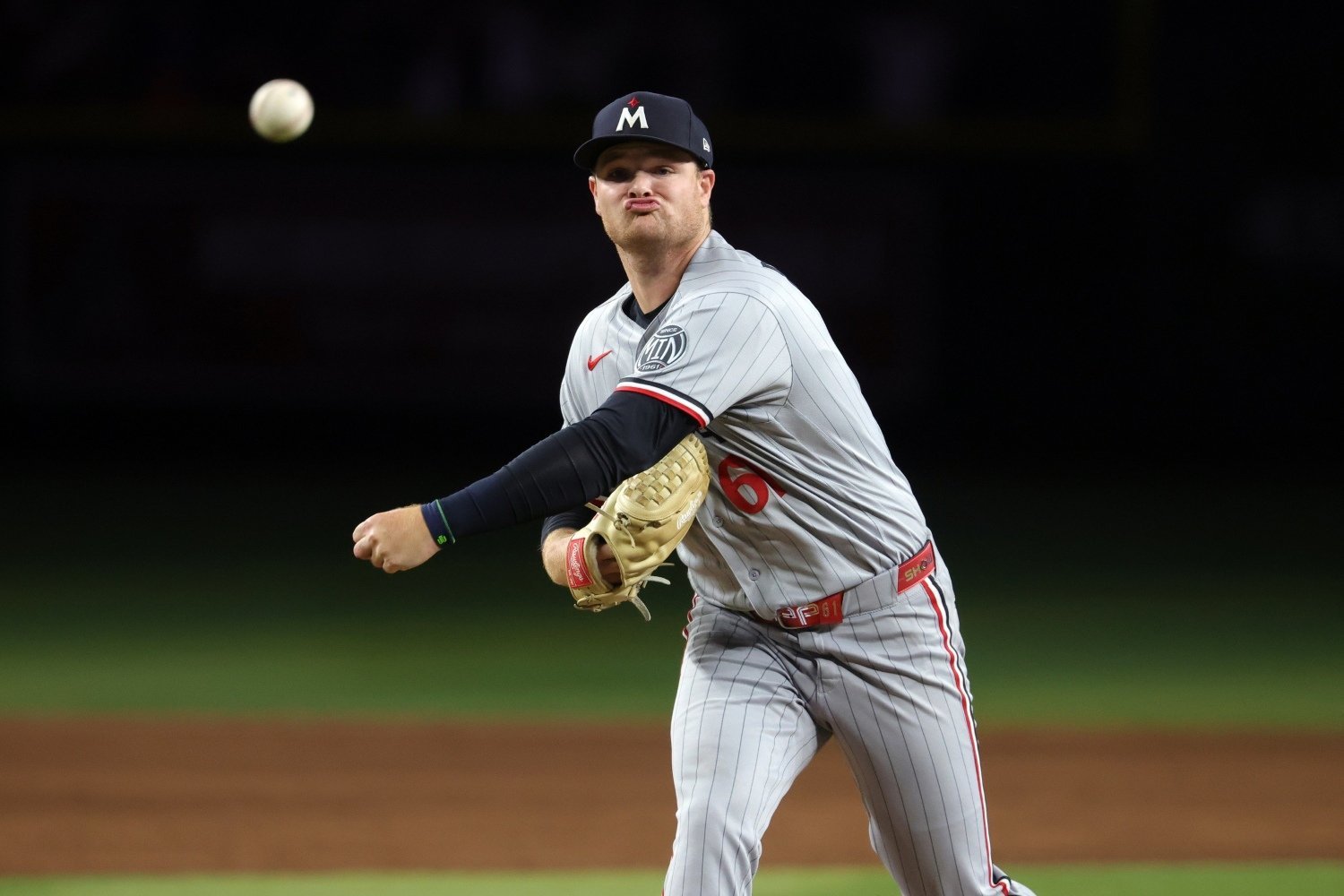
Connor Prielipp entered 2026 facing big questions. The former second-round pick has dealt with significant injury concerns throughout his amateur and professional careers, making simply getting through a full season an important accomplishment. He did that in 2026.
The results were mixed, but there were enough positives to make his season worth examining. His underlying numbers suggest there was some bad luck involved in his 4.87 ERA, while his new curveball gives him another weapon moving forward. At the same time, there were some concerning trends that Prielipp will need to address if he wants to become a reliable part of Minnesota's rotation. Here are three ups and three downs from Prielipp's 2026 season.
Up 1: He Stayed Healthy
This might be the most important development of Prielipp's season. After years of injury concerns, Prielipp finally made it through an entire season without another major setback. He logged 144 1/3 innings across 29 appearances between the minors and the big leagues. This gave him the opportunity to build the workload and experience that simply weren't available to him earlier in his career.
For a pitcher whose professional development was repeatedly interrupted by injuries, accumulating innings matters. He had only pitched 113 2/3 innings across three professional seasons. Prielipp now has an entire season of major-league experience under his belt. The Twins can evaluate what worked, what didn't and what needs to change heading into 2027. That foundation is valuable.
Up 2: The Underlying Numbers Were Better
Prielipp's 4.87 ERA doesn't exactly jump off the page in a positive way. However, some of his underlying statistics tell a much more encouraging story. His 3.95 expected ERA (xERA) and 3.73 FIP were both significantly better than his actual ERA. That gap suggests Prielipp didn't pitch as poorly as his traditional numbers indicate.
FIP strips away some of the factors outside a pitcher's control, while xERA uses quality of contact and other underlying information to estimate what a pitcher's ERA could have looked like. Neither statistic guarantees that Prielipp will suddenly post a sub-4.00 ERA next season, but both suggest there was some bad luck involved in his 2026 results. There is a difference between a pitcher who simply gets hit hard all season and one whose results don't fully match his underlying performance. Prielipp appears to have been closer to the latter.
Up 3: The Curveball Gives Him Another Weapon
Prielipp also added a curveball to his arsenal, and the results were encouraging. The pitch produced a .194 expected slugging percentage and a 37.7% whiff rate, showing legitimate swing-and-miss potential. Those numbers give Prielipp another way to attack hitters beyond his existing offspeed pitches.
That matters because starting pitchers need multiple ways to get through a lineup. If Prielipp can consistently establish his fastball and then use his curveball and other offspeed offerings to finish at-bats, there is a path toward much better results. The curveball isn't going to solve every problem by itself, but it gives the Twins another reason to believe there is more in Prielipp's arsenal.
Down 1: The Blow-Ups Were Too Frequent
For all the positives, Prielipp had too many games where everything unraveled. He allowed four or more earned runs in 25% of his starts, and three different times he surrendered at least six runs. Those outings had a major impact on his overall numbers.
His 87 ERA+ also tells the story. Prielipp's ERA was 13% worse than the league average after accounting for the environment in which he pitched. A young pitcher is going to have rough outings. That's part of development. But Prielipp needs to find a way to limit the damage when things start going sideways. Turning a six-run disaster into a three-run outing can make a significant difference over the course of a full season.
Down 2: The Four-Seamer Needs Work
Prielipp's offspeed pitches can be effective, but he has to get himself into position to use them. His 41.1% hard-hit rate ranked in baseball's bottom third, another indication that opposing hitters were making too much quality contact. His four-seamer was a major part of that problem, allowing a .505 expected slugging percentage and producing a -6 run value.
That's a difficult combination for a starting pitcher. The curveball and other offspeed pitches can be excellent, but they don't matter as much if hitters are consistently getting comfortable against the fastball. Prielipp needs to improve his ability to get ahead in counts and make his four-seamer something hitters can't simply sit on. His secondary stuff gives him a chance. The fastball needs to put him in position to use it.
Down 3: Left-Handed Hitters Gave Him Problems
One of the more surprising splits from Prielipp's season came against hitters from the same side. Left-handed hitters posted a .786 OPS against Prielipp, compared to a .678 OPS from right-handed hitters. His WHIP showed an even bigger difference, with lefties posting a 1.62 WHIP compared to 1.18 against righties.
That's something Prielipp will need to address. As a left-handed starter, Prielipp needs to be able to neutralize left-handed hitters. If opposing managers can load their lineups with lefties and force him into difficult matchups, it makes his job considerably harder. His secondary stuff should give him the tools to attack those hitters. The challenge is turning those tools into consistent results.
Prielipp's 2026 season was difficult to summarize with one number. The 4.87 ERA isn't particularly impressive, but the 3.95 xERA and 3.73 FIP suggest there was more going on beneath the surface. His new curveball gives him another potentially dangerous pitch, and perhaps most importantly, he finally completed a full season without another major injury interruption.
There are still significant questions. Prielipp needs to limit the blow-ups, improve the quality of contact allowed and figure out how to attack left-handed hitters more effectively. His four-seamer also needs to become a more reliable foundation for his secondary arsenal.
That's what makes 2027 so interesting. Prielipp has already overcome one of the biggest obstacles in his development by staying healthy. Now he needs to turn that durability into consistency.
How should the Twins view Prielipp’s rookie campaign? Leave a comment and start the discussion.







Recommended Comments
Create an account or sign in to comment
You need to be a member in order to leave a comment
Create an account
Sign up for a new account in our community. It's easy!
Register a new accountSign in
Already have an account? Sign in here.
Sign In Now