Jump to content
Twins Daily
  • Create Account

Recommended Posts

Twins Daily Contributor
Posted

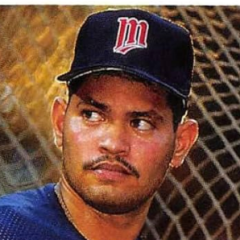
Stan Cliburn managed several levels of Twins minor-league affiliates through the 2000s. Twins Daily talked to him about his time in the organization.

Stan Cliburn has been managing professional baseball clubs for over three decades, first heading up the Watertown Pirates of the New York-Penn League in 1988. He is currently managing the Southern Maryland Blue Crabs of the Atlantic League.

Between all of this, Cliburn spent a decade managing various minor league teams within the Minnesota Twins' farm system. He developed several players who helped the organization win six AL Central titles between 2002 and 2010.

Twins Daily recently caught up with him.

Before joining the Twins organization, Cliburn managed in the Pittsburgh Pirates' minor league system for several seasons. In 1989, he helped transition Tim Wakefield from a light-hitting first baseman to a star knuckleballer. On Wakefield, Cliburn said:

“We drafted him [in round] eight as a big power guy. Hit a lot of home runs out in college. He just couldn’t get used to the wooden bat. We took him to A-ball in Augusta. He was a first baseman. Before games, we used to have mandatory infield/outfield practice for the scouts to judge. I’d always come out and have to get on Tim because he would be playing catch with the second baseman, or his other counterpart at first base."

"Just always messing around with that knuckleball. I’d always say, ‘Timmy, you’re a first baseman. Throw the ball straight. We’re getting ready for infield/outfield. Throw the ball straight.’ But every day, he was out there throwing that knuckleball. It came to the point where he wasn’t hitting. He came to me and said ‘Stan, I don’t think I’m going to be able to hit in pro ball. I just can’t get used to the wooden bat.’ Pittsburgh was very discouraged with his development as a hitter. He said ‘You know how I love throwing that knuckleball? You think there’s a chance they’ll send me back to extended spring. Go down there, show ‘em I can throw this knuckleball? And then go from there.’ So that’s what we did.”

With the Twins, Cliburn managed at three different levels: Class-A Quad Cities (2000), Double-A New Britain (2001-05), and Triple-A Rochester (2006-09). Each level is different and presents its challenges for coaches.

“In the Midwest League [Class-A], you’ve got a lot of young players. Just drafted out of high school and college. It’s most of your draft picks who are young. You’ve to pay attention a bit more with teaching them the professional side of the game. Not only teaching them the game between the white lines. The fundamentals of the game, how you play the game, professional etiquette, and all that. You’re more of a father figure to them. That’s something I had learned early in my Pirate days back in ‘88, ‘89 when I was a young manager."

"They jumped me to Double-A in ‘01. These guys have been through the learning process of how the organization works, what the organizational policy is, and what we believe. From there, it’s just a matter of keeping the guys ready for the big league call-up."

Player development was especially important in the Twins organization. 

“We didn’t go out and sign a lot of free agents at the big league level. Most of our young men were developed within the farm system. Those were kind of the glory years, I call them. From 2000 to 2010, I was there. Just look at the names from the past. Joe Mauer came through there. Michael Cuddyer. Michael Restovich. Dustan Mohr. Pat Neshek. A.J. Pierzynski. The list goes on and on. Trevor Plouffe. Terry Tiffee. It was player development all the way with Minnesota. That’s how they do things. That was under the old regime. [General manager] Terry Ryan, [farm system director] Jim Rantz. Mike Radcliff was the scouting director. Those guys had been over there forever. I really enjoyed those years. There’s a model in pro baseball of how to develop players, and the Minnesota Twins knew the way to do it.”

Player development might take priority over winning games at the minor league level, but that didn’t stop Cliburn from racking up a ton of wins while managing in the Twins' minor league system. 

“Player development first. But I always believed that if you teach the game the right way and play the game the right way, wins come with that. You do the fundamentals, pay attention to detail, play defense, throw strikes, just do everything the game relies on to be successful. Teach all that, and you’re going to win games. Wins are icing on the cake. But that’s what we did. We did the little things to win games."

"I think the biggest challenge I’ve ever had as a manager was in 2001. That 90-win season in the Eastern League [with Double-A New Britain]. That team went on and was named Sporting News Minor League Team of the Year… I felt more pressure. We knew we were gonna have a good club, because Minnesota had put all their best prospects in Double-A that year. There was a lot of pressure on us to do well. A lot of eyes on us."

"I remember the ‘06 club and going to Rochester [Triple-A]. It was a lot of the same guys I had in Double-A. Of course, we fall one game short of winning the International League. The Toledo Mud Hens got us. But that was the concept. All those guys went to the big leagues in the middle-2000’s. And those years, the American League Central was dominated by the Twins. A lot of those same guys who we had throughout the minor leagues were now playing for Ron Gardenhire and his staff up in Minnesota.”

Cliburn had success with all types of prospects, from first-round pick Joe Mauer to 26th-round picks such as Terry Tiffee.

“I always took the concept, if you were a number one pick or a 40th round pick, you try to treat them all the same. Try to give them all the same time. You try to give them all the same commitment. Joe [Mauer] was really such a special talent. You didn’t have to teach Joe the intangibles or professionalism. He had all of that. The ones, like the Tiffees and the Lew Fords, were kind of diamonds in the rough. You really had to polish them up and see them develop. You love to see them make it. [Justin] Morneau was a catcher, we had to move him to first base. He was a surprise with how he turned out for us. We always knew he was gonna hit, but the way he went over and played first base was unbelievable. He really worked at it. [Michael] Cuddyer was another one. Figuring out the best way to use him…But Mauer was a special one. It didn’t take him long to get where he needed to be, and it didn’t take him long to get into the Hall of Fame. The other kids were just grinders. They believed in their ability. They believed in what they were doing. They made it. They did well. Lew Ford got there because of his grit. Tiffee was another. They just bought into the system. I’m really proud of every one of those guys."

Lew Ford is now the manager for the Long Island Ducks, coaching against Cliburn in the Atlantic League. Several other Cliburn pupils have also gone into coaching, including both current Twins base coaches, Ramon Borrego and Tommy Watkins. He believes you can always tell when guys are cut out for coaching early on.

“You see their passion, their competitive edge and what kind of teammate they are. How their teammates gravitate towards them when the ship starts getting rocky. Guys go to them for answers. Tommy Watkins was a good one. Ramon Borrego. Jeff Smith was a catcher. He went on to be a first base coach for Paul Molitor. You just knew they had that passion and a love for the game. You can always read those type of guys. Joe Maddon is a good example. We were teammates in the 70s and 80s in the early Angels days. We always knew Joe was gonna turn out to be a pretty good coach or manager. We knew that back when he was 21, 22 years old. It’s not tough to find those guys. They seem to glow and come out.”

The Twins also employed Stu Cliburn, the twin brother of Stan. Stu served as the pitching coach on several teams that Stan was managing.

“It was the most amazing thing, almost like having two managers. Stu was my pitching coach for nine years, and just did a tremendous job. We thought alike, we lived alike, our mannerisms would be the same. The communication is easy. The players were comfortable around both of us. They knew it was two guys with one mind thinking the same way. Stu did a great job with the pitchers. He had their respect. I’d be thinking something, maybe about a pitching change or bringing a guy out of the bullpen. I’d ask him what he was thinking, and he’d go ‘let’s get Neshek in there.’ Lo and behold, I was already thinking the same thing. It was a gift having two managers.”

Stan and Stu apply philosophies from their Twins days to their current jobs in independent ball. Stu is currently the pitching coach of the Chicago Dogs in the American Association.

“We both had good years [with the Twins organization]. We continue what we learned and what we did in Minnesota, applying it to indie ball. We want the players that we get here to get on out of here and move up the ladder. Maybe go back to Double-A and Triple-A. Hopefully, land in the big leagues one day. And that has happened to me over the last 15 or so years managing independent ball. I’m the same manager. I give the same speeches I gave Mauer and Morneau and all of those guys.”


View full article

Create an account or sign in to comment

You need to be a member in order to leave a comment

Create an account

Sign up for a new account in our community. It's easy!

Register a new account

Sign in

Already have an account? Sign in here.

Sign In Now
The Twins Daily Caretaker Fund

You all care about this site. The next step is caring for it. We’re asking you to caretake this site so it can remain the premier Twins community on the internet.

×
×
  • Create New...