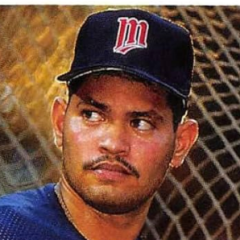
Lucas Seehafer PT Twins Daily Contributor Posted January 18, 2024 Posted January 18, 2024 To say that Royce Lewis had an exciting 2023 season would be an understatement. The former top prospect re-established himself as a core component of the Minnesota Twins’ future, after returning from his second ACL tear in as many years and continuing right where he left off. Specifically, he hit the crap out of the ball. However, there might be more room for explosiveness. Image courtesy of © Kamil Krzaczynski - USA Today Sports Although he did not qualify for any awards due to his limited plate appearances, Royce Lewis ranked in the top 10 percent of all MLB hitters in maximum exit velocity (114.0 mph) and Barrels per plate appearance (7.9%), meaning he has near-elite raw power and an ability to find the ball with his barrel. Lewis’s bat-to-ball skills resulted in 15 home runs and a massive .920 OPS in only 239 plate appearances, one of the highest home run rates per plate appearance in baseball. However, looking under the hood, it’s fair to be skeptical about Lewis’s 2023 power output. For starters, a 6.3% home run per plate appearance rate is elite. For context, Atlanta’s Ronald Acuña Jr. tallied 735 plate appearances last summer. Had Lewis maintained his power output across Acuña’s volume, he would have mashed 46 home runs, which would have tied for third in MLB with the Mets’ Pete Alonso. Additionally, Lewis’s underlying hard-hit data leaves something to be desired. His 42% hard-hit rate was 132nd out of 343 batters with at least 150 batted ball events, and his Sweet Spot percentage—which tracks balls hit with a launch angle between 8 and 32 degrees—was only 33.3%, which would have ranked well below average. So while Lewis has the raw power to hit balls very hard, he’s not able to tap into a full share of that power consistently, or at the optimal launch angle to maximize extra-base hits and home runs. This highlights how impressive his 15 home runs were last summer, while also showing that there was a bit of luck and small-sample noise involved. It may be worth discussing a couple of the biomechanical variances between Lewis and Acuña’s swings, to highlight how they differ and also to suggest minor tweaks Lewis could implement to increase his power profile. Let’s start by looking at each swing in slow motion. First, here's Lewis: Royce Lewis.mp4 Acuna2.mp4 I purposely chose videos in which both batters faced off against middle-in sliders that resulted in home runs. This allows us to see how each batter attacks these offerings and how their swings differ, despite having similar outcomes. View full article
Jamie Cameron Twins Daily Contributor Posted January 18, 2024 Posted January 18, 2024 Great read, Lucas PDX Twin, Karbo, Lucas Seehafer PT and 1 other 3 1
Oldgoat_MN Verified Member Posted January 18, 2024 Posted January 18, 2024 Really interesting analysis. Thank you. The little things account for a lot in MLB. It would be fun if you were to revisit this sometime around the All-Star break. Royce will have had to make some adjustments by then, even if unrelated to the points you have highlighted. USNMCPO, Lucas Seehafer PT and Matthew Trueblood 3
Old Crow Verified Member Posted January 23, 2024 Posted January 23, 2024 Lower hands at address leads to less verticle drop in Acuna's hands during the swing.
Quentin Young Fort Myers Mighty Mussels - A SS/3B The Young infielders knocked his 11th home run of the season on Wednesday morning. It accounted for three of his four RBI in the game. Explore Quentin Young News >
Recommended Posts
Create an account or sign in to comment
You need to be a member in order to leave a comment
Create an account
Sign up for a new account in our community. It's easy!
Register a new accountSign in
Already have an account? Sign in here.
Sign In Now