Matthew Trueblood
-
Posts
1,033 -
Joined
-
Last visited
Content Type
Profiles
News
Minnesota Twins Videos
2026 Minnesota Twins Top Prospects Ranking
2022 Minnesota Twins Draft Picks
Minnesota Twins Free Agent & Trade Rumors, Notes, & Tidbits
Guides & Resources
2023 Minnesota Twins Draft Picks
The Minnesota Twins Players Project
2024 Minnesota Twins Draft Picks
2025 Minnesota Twins Draft Pick Tracker
2026 Minnesota Twins Draft Tracker: Picks & Bonuses
Forums
Blogs
Events
Store
Downloads
Gallery
Everything posted by Matthew Trueblood
-
We agree with you, Indiana. But what about putting a big old leafy salad in one of those helmets now and then? We'd be happy to procure some fat-free Ranch dressing for you!
-
 The Minnesota Twins aren't actually good, right now. They have the potential to be, if they get more from their latent talent in 2026 than they have gotten from many of the same players over the last two years, but they're not currently a competitive team. As they embark on their offseason work, they have to hope they can spend some money to support the roster and take it to the next level. Unfortunately, the opposite course might be their required path. Let's imagine that the Twins' budget is as tight as we've all worried it would be. In that case, they're not only unlikely to make a significant investment to improve at first base or DH or to shore up their thin bullpen, but in danger of having to trade one or more of their expensive (though stellar) veterans: Byron Buxton, Ryan Jeffers, Pablo López and Joe Ryan. They would, therefore, have virtually no chance of surging back into contention. They'd also start feeling both time and personal pressure to move Buxton (who wants to play for a winner) and Jeffers (a free agent after 2026), in particular. Meanwhile, another lost year would mean launching the clock forward on López and Ryan, each of whom can be free agents at the end of the 2027 season. In such a situation, there's a case to be made that the Twins would be best served by hitting the big red button and blowing up the current roster, in a more profound way than they did at the 2025 trade deadline. That's particularly true because of the young talent they've already amassed, and the influx they're likely to see next July. MLB Pipeline ranked the Twins as the second-best farm system in baseball after the deadline. bolstered by the haul from their July fire sale. FanGraphs is much less bullish, ranking them just 12th, but even that is above-average. The truth likely lies somewhere in between, for the moment, with Walker Jenkins, Kaelen Culpepper, Emmanuel Rodriguez and Eduardo Tait as the big four in a very deep group. They also have some good young players in the majors already, under long-term team and cost control. Luke Keaschall is the face of that cohort, but it also includes several intriguing pitchers. So far, the team hasn't gotten the big-league production for which they might have hoped from Zebby Matthews or David Festa, and it's still not clear what Mick Abel, Taj Bradley, Simeon Woods Richardson, Andrew Morris, Connor Prielipp and Marco Raya will become, but there's a good deal of young talent clustered around the big-league roster already. That group will be supplemented, if the Twins have gotten their recent reorganization in Latin America right, by new waves of teenage talent from that part of the world. They have Eduardo Beltre, a 2026 breakout candidate, and added some exciting players from the low minors in July—though they then fired several of the scouts who helped find them. Much more quickly and tangibly, they should get help from a high pick in the first round of next summer's MLB Draft. They won't know exactly where they pick in July until the MLB Draft Lottery at next week's Winter Meetings, but they have roughly a 50/50 shot of nabbing a top-three selection. They also officially received a competitive-balance pick this week, though it won't come until the tail end of the second round. It's not an easy needle to thread, but the Twins could end up with a once-in-a-generation farm system by the 2026 trade deadline. If they trade players as good and valuable as Buxton, López or the others, theirs will become the best farm system anyone has had in the 2020s. That's not the same as having the best farm system in the game at a given moment; it's a much bigger thing. When people talk about teams who plunge into rebuilding with gusto (or even glee), they often cite the 2010s Cubs and Astros. Those clubs are sometimes held responsible, in public circles, for the culture of tanking and aggressive boom-bust team-building that took over the game in their wake. In truth, though, those teams were merely responding to the rules and incentives the game foisted on them when the 2011 Collective Bargaining Agreement altered the nature of draft spending and the competitive-balance tax. They were also scrambling to make up for unintentional multi-year downturns. They had to take their medicine for almost a half-decade before emerging as powerhouses, but they each succeeded in doing so, to some degree. There was also an exemplar who came before those two teams. The late-2000s Royals were a bad team, but not on purpose. Frustrated by what he saw as a stagnating roster around him, ace Zack Greinke demanded a trade, and they accommodated him by shipping him to Milwaukee. In the wake of that deal, Kansas City was semi-voluntarily bad for another few years—but between some good draft picks, a couple of huge hits on Latin American talent, and the accelerant that was the Greinke trade, they also built the best farm system anyone had had in a decade or so. As was true with the Cubs and Astros, that eventually paid dividends. The Royals contended in 2013, though they missed the postseason with an 86-76 record. The next year, they snuck into the playoffs, but then reeled off an improbable run to Game 7 of the World Series. In 2015, they won a second straight pennant, and this time, they finished the job, winning their first championship since 1985 by beating the Mets in five games. With an aggressive set of rebuilding moves this winter and during the summer of 2026, the Twins could be an even faster-moving version of those Royals. They have Jenkins as one prospective cornerstone of the next great team. If the lottery breaks right, they should have a chance to add another player of that caliber. The rest comes down to continued successes in scouting and (especially) player development, because Keaschall, Culpepper, and many young arms already in the system have that kind of upside—but it must be realized to become important. Unlike the Royals, the Twins play in a market with average-plus ceiling, if they can dig out of the hole they find themselves in now. They have a higher initial baseline in their favor, and the rules won't drag on their attempts to sustain success the way they did with the Cubs and Astros. It only works if they raise the stakes and win their gamble, but the Twins might be better off trading some of their stars to go from a great farm system to a truly transcendent, change-your-fortunes kind of corps.
- 139 comments
-
- 15
-

-

-

-

-
- joe ryan
- pablo lopez
- (and 4 more)
-
Image courtesy of © Denny Medley-Imagn Images The Minnesota Twins aren't actually good, right now. They have the potential to be, if they get more from their latent talent in 2026 than they have gotten from many of the same players over the last two years, but they're not currently a competitive team. As they embark on their offseason work, they have to hope they can spend some money to support the roster and take it to the next level. Unfortunately, the opposite course might be their required path. Let's imagine that the Twins' budget is as tight as we've all worried it would be. In that case, they're not only unlikely to make a significant investment to improve at first base or DH or to shore up their thin bullpen, but in danger of having to trade one or more of their expensive (though stellar) veterans: Byron Buxton, Ryan Jeffers, Pablo López and Joe Ryan. They would, therefore, have virtually no chance of surging back into contention. They'd also start feeling both time and personal pressure to move Buxton (who wants to play for a winner) and Jeffers (a free agent after 2026), in particular. Meanwhile, another lost year would mean launching the clock forward on López and Ryan, each of whom can be free agents at the end of the 2027 season. In such a situation, there's a case to be made that the Twins would be best served by hitting the big red button and blowing up the current roster, in a more profound way than they did at the 2025 trade deadline. That's particularly true because of the young talent they've already amassed, and the influx they're likely to see next July. MLB Pipeline ranked the Twins as the second-best farm system in baseball after the deadline. bolstered by the haul from their July fire sale. FanGraphs is much less bullish, ranking them just 12th, but even that is above-average. The truth likely lies somewhere in between, for the moment, with Walker Jenkins, Kaelen Culpepper, Emmanuel Rodriguez and Eduardo Tait as the big four in a very deep group. They also have some good young players in the majors already, under long-term team and cost control. Luke Keaschall is the face of that cohort, but it also includes several intriguing pitchers. So far, the team hasn't gotten the big-league production for which they might have hoped from Zebby Matthews or David Festa, and it's still not clear what Mick Abel, Taj Bradley, Simeon Woods Richardson, Andrew Morris, Connor Prielipp and Marco Raya will become, but there's a good deal of young talent clustered around the big-league roster already. That group will be supplemented, if the Twins have gotten their recent reorganization in Latin America right, by new waves of teenage talent from that part of the world. They have Eduardo Beltre, a 2026 breakout candidate, and added some exciting players from the low minors in July—though they then fired several of the scouts who helped find them. Much more quickly and tangibly, they should get help from a high pick in the first round of next summer's MLB Draft. They won't know exactly where they pick in July until the MLB Draft Lottery at next week's Winter Meetings, but they have roughly a 50/50 shot of nabbing a top-three selection. They also officially received a competitive-balance pick this week, though it won't come until the tail end of the second round. It's not an easy needle to thread, but the Twins could end up with a once-in-a-generation farm system by the 2026 trade deadline. If they trade players as good and valuable as Buxton, López or the others, theirs will become the best farm system anyone has had in the 2020s. That's not the same as having the best farm system in the game at a given moment; it's a much bigger thing. When people talk about teams who plunge into rebuilding with gusto (or even glee), they often cite the 2010s Cubs and Astros. Those clubs are sometimes held responsible, in public circles, for the culture of tanking and aggressive boom-bust team-building that took over the game in their wake. In truth, though, those teams were merely responding to the rules and incentives the game foisted on them when the 2011 Collective Bargaining Agreement altered the nature of draft spending and the competitive-balance tax. They were also scrambling to make up for unintentional multi-year downturns. They had to take their medicine for almost a half-decade before emerging as powerhouses, but they each succeeded in doing so, to some degree. There was also an exemplar who came before those two teams. The late-2000s Royals were a bad team, but not on purpose. Frustrated by what he saw as a stagnating roster around him, ace Zack Greinke demanded a trade, and they accommodated him by shipping him to Milwaukee. In the wake of that deal, Kansas City was semi-voluntarily bad for another few years—but between some good draft picks, a couple of huge hits on Latin American talent, and the accelerant that was the Greinke trade, they also built the best farm system anyone had had in a decade or so. As was true with the Cubs and Astros, that eventually paid dividends. The Royals contended in 2013, though they missed the postseason with an 86-76 record. The next year, they snuck into the playoffs, but then reeled off an improbable run to Game 7 of the World Series. In 2015, they won a second straight pennant, and this time, they finished the job, winning their first championship since 1985 by beating the Mets in five games. With an aggressive set of rebuilding moves this winter and during the summer of 2026, the Twins could be an even faster-moving version of those Royals. They have Jenkins as one prospective cornerstone of the next great team. If the lottery breaks right, they should have a chance to add another player of that caliber. The rest comes down to continued successes in scouting and (especially) player development, because Keaschall, Culpepper, and many young arms already in the system have that kind of upside—but it must be realized to become important. Unlike the Royals, the Twins play in a market with average-plus ceiling, if they can dig out of the hole they find themselves in now. They have a higher initial baseline in their favor, and the rules won't drag on their attempts to sustain success the way they did with the Cubs and Astros. It only works if they raise the stakes and win their gamble, but the Twins might be better off trading some of their stars to go from a great farm system to a truly transcendent, change-your-fortunes kind of corps. View full article
-
3 Changeup Specialists Twins Will Target in MLB Free Agency
Matthew Trueblood posted an article in Twins
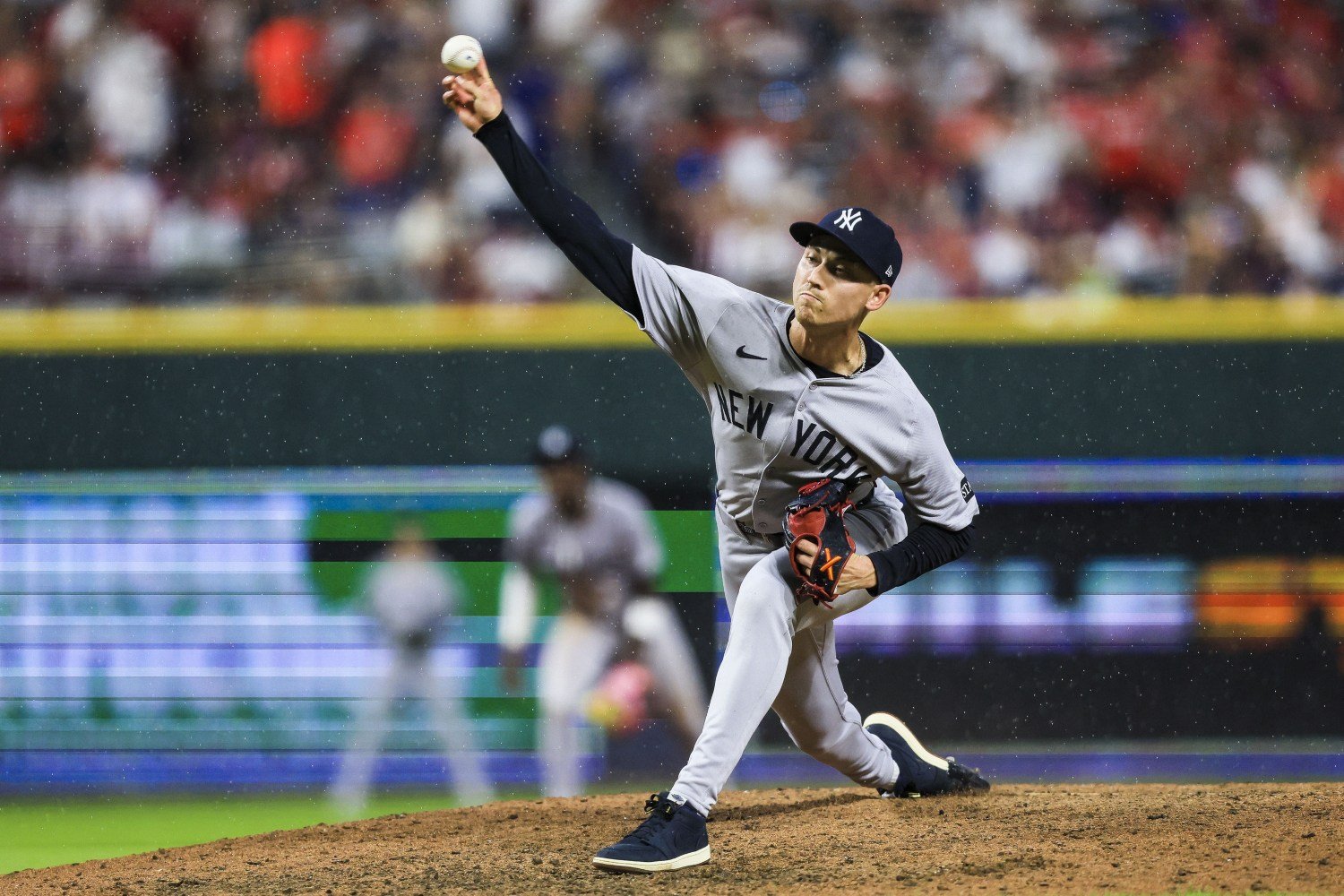 The 2026 American League Central is likely to be wide-open. The Cleveland Guardians, Kansas City Royals and Detroit Tigers have each put together two straight winning seasons, but each time, they benefited from the extreme weakness of the Chicago White Sox. In 2025, none of them won more than 88 games. The Twins are stuck very much in the middle, but they do have some chance of putting together a good enough team to compete in the Central in 2026, even as they change direction and attempt to recover from two straight disappointing campaigns. Most fans expect little activity from the Twins this offseason, but then, most expect little activity from the other three pretenders to the crown, too. Detroit has already brought back (albeit in a passive way, by having each opt in at significant salaries) Jack Flaherty and Gleyber Torres, but they don't have the flexibility to make another big splash. Nor can Cleveland or Kansas City make major outlays to bolster the rosters they've constructed. Whatever the Twins do spend will go further than it might in other divisions. They're likely to sign a couple of free agents, even if it takes until the endgame of the offseason (as it has in each of the last two winters) and those players sign one-year deals for low salaries. Specifically, they can go shopping in the cheapest aisle of the hot stove marketplace, because it's also the place where the things they need most are stocked. Here are three relievers who could help the Twins make an unexpected playoff push in 2026; who would be lovely trade chips if the season breaks bad; and who fit the team's philosophy of pitching perfectly. The Twins love a good changeup, and all three of these guys have one. Tommy Kahnle No pitcher in baseball throws the changeup more than Kahnle. In fact, it's barely a changeup when he throws it, because it's the pitch batters have to be expecting each time he kicks and fires. Kahnle threw his change 85.6% of the time in 2025, with an extraordinary ability to kill spin. He doesn't use a split grip, but the way he sharply turns his hand outward as he delivers the change turns the pitch into something close to an old-fashioned forkball. OHl3eVhfVjBZQUhRPT1fQmdFRFhRVlZWUUFBRDFWV1VnQUhVMWRVQUZsWFUxSUFDMVZVQ1FKVVVBVmNBbE5S.mp4 The way that pitch tumbles allows Kahnle to succeed despite throwing it practically all the time. He induced whiffs on over 26% of opponents' swings on that offering in 2025, and has ridden the offering to a 3.61 career ERA. Next year will be his age-36 season, and he's coming off a down year in Detroit—one in which he had a 4.43 ERA. For the six years before that, though, he'd posted an aggregate 2.90 mark. Because he lost some velocity and saw his numbers slip this year, Kahnle will come very cheaply. He's probably not actually out of steam, though. There is that one other thing, though. New Twins bullpen coach LaTroy Hawkins famously called Kahnle "the worst teammate" he'd ever had during a broadcast in 2017. Kahnle himself shrugged that off even in the moment, and Hawkins said he'd put the divide between the two in the past, but presumably, there's still no relationship or positive feeling between them. It doesn't need to be disqualifying, because Kahnle and Hawkins butted heads in 2014. Each has lived a lot of years since, and Kahnle has been well-liked in several subsequent stops. It's possible he's evolved in ways that would impress and delight Hawkins. The two could well move beyond their past and form a productive partnership. Before signing Kahnle, though, the team would need to talk to Hawkins. Luke Weaver It's a much more traditional pairing of fastball and change from Weaver. He throws a mid-90s fastball with good life about 60% of the time, and leans heavily on the changeup only as a complement thereto. Although he bloomed late, Weaver has been a sturdy presence in the Yankees bullpen for the last two-plus seasons. Discovering the right changeup changed his career. His pitch is much more of a power change, with fade and downward action but not the telltale, erratic tumble of the lower-spin split-change he used to employ. Batters whiff on this version of the cambio over 40% of the time, which has driven a 29.4% strikeout rate since he arrived in the Bronx. dnZCMWpfWGw0TUFRPT1fQmdSV1VnVlZWQUFBRHdCUkJBQUhCd0VDQUFOVVVWWUFDbE1HQVZZR0NWQlRVd0ZR.mp4 Our DiamondCentric Top 50 Free Agents list ranked Weaver 37th and forecasted a two-year, $16-million deal for him this winter. That still looks like a reasonable projection. It's probably also the highest the Twins would go to get him, but Weaver would be an instant closer for the depleted relief corps. Kyle Finnegan Considering Finnegan is like studying the midpoint between Kahnle and Weaver. He uses his splitter more than Weaver uses his change, but less than Kahnle does. Kahnle is 36; Weaver is 32; Finnegan is 34. The former Nationals closer came to Detroit at the trade deadline in July and enjoyed one of the best stretches of his career. He throws harder than either of the others and has a highly kinetic delivery, launching himself at the batter in a way that makes his sharply sinking splitter especially deceptive. WEQyZDJfV0ZRVkV3dEdEUT09X0J3RllWVkFIVXdBQVhGTldCd0FIQUFKVUFGaFFBVmNBVmxkVEJGY01VQUFHQmxGZQ==.mp4 Way down at 48th on the DiamondCentric Top 50, Finnegan is projected for a one-year deal worth $6 million. If he actually signs for anything in that range, he'd be perfect for the Twins. He'd be eminently tradeable, if it came to that, but he'd also deliver high-octane heat and that swing-and-miss splitter to a pen that has missed those things since the trades that sent away Jhoan Duran and Griffin Jax. The Twins threw more offspeed pitches than all teams but the Angels and Tigers in 2025. They love changeups and splitters, not only for their ability to keep hitters off a good fastball, but for the way they thwart opposite-handed batters. Finnegan and Weaver have huge platoon splits, but they go in the opposite of the usual direction: they're better against lefties than righties. Kahnle has only occasionally been that good against lefties, but his change plays against righties, too. All three of these hurlers would be solid back-end relief options for the Twins, who need to be better than average at converting late leads into wins if they want to sneak to the front of the crowded but unintimidating AL Central. None will come at great expense. While it might be a quiet winter for Derek Falvey and Company, even on a tight budget, opportunities abound.
- 19 comments
-
- 4
-
-
- luke weaver
- kyle finnegan
- (and 1 more)
-
Image courtesy of © Katie Stratman-Imagn Images The 2026 American League Central is likely to be wide-open. The Cleveland Guardians, Kansas City Royals and Detroit Tigers have each put together two straight winning seasons, but each time, they benefited from the extreme weakness of the Chicago White Sox. In 2025, none of them won more than 88 games. The Twins are stuck very much in the middle, but they do have some chance of putting together a good enough team to compete in the Central in 2026, even as they change direction and attempt to recover from two straight disappointing campaigns. Most fans expect little activity from the Twins this offseason, but then, most expect little activity from the other three pretenders to the crown, too. Detroit has already brought back (albeit in a passive way, by having each opt in at significant salaries) Jack Flaherty and Gleyber Torres, but they don't have the flexibility to make another big splash. Nor can Cleveland or Kansas City make major outlays to bolster the rosters they've constructed. Whatever the Twins do spend will go further than it might in other divisions. They're likely to sign a couple of free agents, even if it takes until the endgame of the offseason (as it has in each of the last two winters) and those players sign one-year deals for low salaries. Specifically, they can go shopping in the cheapest aisle of the hot stove marketplace, because it's also the place where the things they need most are stocked. Here are three relievers who could help the Twins make an unexpected playoff push in 2026; who would be lovely trade chips if the season breaks bad; and who fit the team's philosophy of pitching perfectly. The Twins love a good changeup, and all three of these guys have one. Tommy Kahnle No pitcher in baseball throws the changeup more than Kahnle. In fact, it's barely a changeup when he throws it, because it's the pitch batters have to be expecting each time he kicks and fires. Kahnle threw his change 85.6% of the time in 2025, with an extraordinary ability to kill spin. He doesn't use a split grip, but the way he sharply turns his hand outward as he delivers the change turns the pitch into something close to an old-fashioned forkball. OHl3eVhfVjBZQUhRPT1fQmdFRFhRVlZWUUFBRDFWV1VnQUhVMWRVQUZsWFUxSUFDMVZVQ1FKVVVBVmNBbE5S.mp4 The way that pitch tumbles allows Kahnle to succeed despite throwing it practically all the time. He induced whiffs on over 26% of opponents' swings on that offering in 2025, and has ridden the offering to a 3.61 career ERA. Next year will be his age-36 season, and he's coming off a down year in Detroit—one in which he had a 4.43 ERA. For the six years before that, though, he'd posted an aggregate 2.90 mark. Because he lost some velocity and saw his numbers slip this year, Kahnle will come very cheaply. He's probably not actually out of steam, though. There is that one other thing, though. New Twins bullpen coach LaTroy Hawkins famously called Kahnle "the worst teammate" he'd ever had during a broadcast in 2017. Kahnle himself shrugged that off even in the moment, and Hawkins said he'd put the divide between the two in the past, but presumably, there's still no relationship or positive feeling between them. It doesn't need to be disqualifying, because Kahnle and Hawkins butted heads in 2014. Each has lived a lot of years since, and Kahnle has been well-liked in several subsequent stops. It's possible he's evolved in ways that would impress and delight Hawkins. The two could well move beyond their past and form a productive partnership. Before signing Kahnle, though, the team would need to talk to Hawkins. Luke Weaver It's a much more traditional pairing of fastball and change from Weaver. He throws a mid-90s fastball with good life about 60% of the time, and leans heavily on the changeup only as a complement thereto. Although he bloomed late, Weaver has been a sturdy presence in the Yankees bullpen for the last two-plus seasons. Discovering the right changeup changed his career. His pitch is much more of a power change, with fade and downward action but not the telltale, erratic tumble of the lower-spin split-change he used to employ. Batters whiff on this version of the cambio over 40% of the time, which has driven a 29.4% strikeout rate since he arrived in the Bronx. dnZCMWpfWGw0TUFRPT1fQmdSV1VnVlZWQUFBRHdCUkJBQUhCd0VDQUFOVVVWWUFDbE1HQVZZR0NWQlRVd0ZR.mp4 Our DiamondCentric Top 50 Free Agents list ranked Weaver 37th and forecasted a two-year, $16-million deal for him this winter. That still looks like a reasonable projection. It's probably also the highest the Twins would go to get him, but Weaver would be an instant closer for the depleted relief corps. Kyle Finnegan Considering Finnegan is like studying the midpoint between Kahnle and Weaver. He uses his splitter more than Weaver uses his change, but less than Kahnle does. Kahnle is 36; Weaver is 32; Finnegan is 34. The former Nationals closer came to Detroit at the trade deadline in July and enjoyed one of the best stretches of his career. He throws harder than either of the others and has a highly kinetic delivery, launching himself at the batter in a way that makes his sharply sinking splitter especially deceptive. WEQyZDJfV0ZRVkV3dEdEUT09X0J3RllWVkFIVXdBQVhGTldCd0FIQUFKVUFGaFFBVmNBVmxkVEJGY01VQUFHQmxGZQ==.mp4 Way down at 48th on the DiamondCentric Top 50, Finnegan is projected for a one-year deal worth $6 million. If he actually signs for anything in that range, he'd be perfect for the Twins. He'd be eminently tradeable, if it came to that, but he'd also deliver high-octane heat and that swing-and-miss splitter to a pen that has missed those things since the trades that sent away Jhoan Duran and Griffin Jax. The Twins threw more offspeed pitches than all teams but the Angels and Tigers in 2025. They love changeups and splitters, not only for their ability to keep hitters off a good fastball, but for the way they thwart opposite-handed batters. Finnegan and Weaver have huge platoon splits, but they go in the opposite of the usual direction: they're better against lefties than righties. Kahnle has only occasionally been that good against lefties, but his change plays against righties, too. All three of these hurlers would be solid back-end relief options for the Twins, who need to be better than average at converting late leads into wins if they want to sneak to the front of the crowded but unintimidating AL Central. None will come at great expense. While it might be a quiet winter for Derek Falvey and Company, even on a tight budget, opportunities abound. View full article
- 19 replies
-
- 1
-
-
- luke weaver
- kyle finnegan
- (and 1 more)
-
One Way the Twins Are Spending Money to Improve Their Offense in 2026
Matthew Trueblood posted an article in Twins
 The Twins will be spending some significant money this winter to improve their offense—even if that spending comes in the form of hours tallied by front-office personnel or technological upgrades, rather than new hitters on high-paying free-agent contracts. That was, perhaps, the most intriguing takeaway from the press conference at which the team introduced new hitting coach Keith Beauregard (and bench coach Mark Hallberg) last month. "We’re gonna build a markerless system that shows what a guy’s swing is, and when it’s good what it looks like and when it’s off, ‘Here’s what we’re seeing,'" Beauregard said via Zoom on November 17. "And it should get us to solutions as quickly as possible, and make meaningful tweaks as quickly as possible, as well." Nestled in that enthusiastic statement of intent was a somewhat startling admission: the Twins don't already have such a system in place. Sources within front offices elsewhere in the league estimate that between 15 and 25 of the other 29 teams do already have proprietary means by which they provide biomechanical feedback to players on their swings within games—that is, without needing to attach markers and study the player's movements in a laboratory setting. This is one of the little-discussed shortfalls that has crept up on the team over the last few years. Throughout Derek Falvey's tenure as the head of baseball operations, good analysts, developers, scouts, executives, coaches and instructors have flowed through Minnesota. They've generally been well-regarded by other teams for their acquisition and development of good staffers. That's why they've lost a lot of them to other teams over the last several seasons. When it comes to technology (and the implementation thereof in player development and coaching), however, they haven't invested enough to stay ahead of the curve. In fact, they're a bit behind it. Diminished spending throughout the organization has had effects reaching beyond the 40-man roster and the nominal payroll. Most of the team's pro scouts were let go earlier this year, and sources familiar with the internal workings of the team say a budget crunch has encroached upon the efforts of the front office since 2023. That's the bad news. The good news is that forward strides like the one Beauregard described cost very little. It won't eat up much of the budget for research, development and implementation to add a markerless motion-capture system to their arsenal of tools. The data needed to do that kind of work is already abundantly available to the Twins, via Statcast. Visualizations that animate and illustrate a hitter's swing in three dimensions already exist, and are available to the public via Baseball Savant. Here's the one for Trevor Larnach, for 2025. Larn Dog.mp4 However, these animations are composites. They show the average of all the swings a hitter took during the year in question. The application Beauregard described, which the Twins will have at their disposal in 2026, is more nuanced. It will allow them to study individual swings on demand (another capability they technically already had, but which they didn't use extensively in 2025, according to a source), and even more importantly, it will allow them to bin and tailor swings to study them in clusters. What does a hitter's swing look like on fastballs down in the zone? What about when the pitch is belt-high and on the inner edge? How are they adjusting to breaking balls, in terms of both their bat path and the transfer of weight in their lower half? These are questions all hitting coaches would agree are important, but there are different ways to attempt to answer them. With improved technological tools at their disposal, Beauregard and assistant hitting coaches Rayden Sierra and Trevor Amicone will try to give their charges more objective, concrete answers in 2026. For multiple reasons, communication about swings and hitting trouble has been a major weakness for the team over the last two years. David Popkins was fired after 2024 because the front office believed he was unable to adequately convey the team's philosophy to the players under his tutelage. He proved that theory wrong in 2025, as he helmed one of baseball's best offenses and led the Blue Jays to within inches of a World Series title. Although signed to a multi-year deal to replace Popkins, Matt Borgschulte was fired after just one season in his stead. The team's persistent inability to translate apparent talent into consistent production prompted that move. Larnach is a perfect example. The fault might well lie in him, rather than his instructors, but neither Popkins nor Borgschulte succeeded in getting the young slugger to better understand his own swing. He made major changes from 2024 to 2025, but wasn't even aware of them—or able to articulate the reasons for them. "There's been no intentional changes to the swing this year," Larnach said in August. "Everything I'm trying to do is the same as last year, and if anything's different, it's just my adjustment to the pitch and to what I'm seeing." That might have been true, as far as it went, but it betrayed an insufficient self-knowledge, which can be blamed partially on a lack of irrefutable feedback. Beauregard's markerless capture system will force Larnach to reckon more with the realities of his swing, which might be part of why the team felt optimistic enough to retain him at the non-tender deadline in mid-November. Slushy swing talk was a virus that spread throughout Minnesota's clubhouse in 2025. Carlos Correa (who came to the team from the Astros, and thus has had his swing captured and dissected in quantitative fashion for a decade), Ryan Jeffers, and late-season reinforcements Ryan Fitzgerald and James Outman could be counted on to accurately describe their own swings, but Larnach, Matt Wallner and others frequently demonstrated a mistaken or incomplete comprehension of themselves in motion. That can reflect a player's attitude or inclination, as much as a team's tendency, but the Twins' lack of cutting-edge tools certainly made it more possible to come to work every day and be underprepared for the hard work of hitting big-league pitching. In 2026, Larnach, Wallner, Royce Lewis and Luke Keaschall will have the benefit of that hard data, be it in numerical or visual form. Beauregard is ready to find the best way to communicate with each individual, but one way or another, the goal is to get them the actionable information they weren't receiving (at least in actionable form) until now. "I think it goes back to meeting guys where they’re at, and figuring out how to speak their language," Beauregard said. "When you learn to speak their language, you build (basically) a base model of what type of swing works for them. And with some of these biomechanical markers, and some of the things you just alluded to, it allows us to get to resolutions a little bit quicker, so when they’re outside of those markers, we can catch flags." The 2026 Twins will have to do more with less, at the plate. Hiring Beauregard was part of the plan to do so, but supporting him with better technology and advanced tools the team should have had already will be important, too.
- 29 comments
-
- 8
-
-
- keith beauregard
- royce lewis
- (and 1 more)
-
Image courtesy of © Junfu Han / USA TODAY NETWORK via Imagn Images The Twins will be spending some significant money this winter to improve their offense—even if that spending comes in the form of hours tallied by front-office personnel or technological upgrades, rather than new hitters on high-paying free-agent contracts. That was, perhaps, the most intriguing takeaway from the press conference at which the team introduced new hitting coach Keith Beauregard (and bench coach Mark Hallberg) last month. "We’re gonna build a markerless system that shows what a guy’s swing is, and when it’s good what it looks like and when it’s off, ‘Here’s what we’re seeing,'" Beauregard said via Zoom on November 17. "And it should get us to solutions as quickly as possible, and make meaningful tweaks as quickly as possible, as well." Nestled in that enthusiastic statement of intent was a somewhat startling admission: the Twins don't already have such a system in place. Sources within front offices elsewhere in the league estimate that between 15 and 25 of the other 29 teams do already have proprietary means by which they provide biomechanical feedback to players on their swings within games—that is, without needing to attach markers and study the player's movements in a laboratory setting. This is one of the little-discussed shortfalls that has crept up on the team over the last few years. Throughout Derek Falvey's tenure as the head of baseball operations, good analysts, developers, scouts, executives, coaches and instructors have flowed through Minnesota. They've generally been well-regarded by other teams for their acquisition and development of good staffers. That's why they've lost a lot of them to other teams over the last several seasons. When it comes to technology (and the implementation thereof in player development and coaching), however, they haven't invested enough to stay ahead of the curve. In fact, they're a bit behind it. Diminished spending throughout the organization has had effects reaching beyond the 40-man roster and the nominal payroll. Most of the team's pro scouts were let go earlier this year, and sources familiar with the internal workings of the team say a budget crunch has encroached upon the efforts of the front office since 2023. That's the bad news. The good news is that forward strides like the one Beauregard described cost very little. It won't eat up much of the budget for research, development and implementation to add a markerless motion-capture system to their arsenal of tools. The data needed to do that kind of work is already abundantly available to the Twins, via Statcast. Visualizations that animate and illustrate a hitter's swing in three dimensions already exist, and are available to the public via Baseball Savant. Here's the one for Trevor Larnach, for 2025. Larn Dog.mp4 However, these animations are composites. They show the average of all the swings a hitter took during the year in question. The application Beauregard described, which the Twins will have at their disposal in 2026, is more nuanced. It will allow them to study individual swings on demand (another capability they technically already had, but which they didn't use extensively in 2025, according to a source), and even more importantly, it will allow them to bin and tailor swings to study them in clusters. What does a hitter's swing look like on fastballs down in the zone? What about when the pitch is belt-high and on the inner edge? How are they adjusting to breaking balls, in terms of both their bat path and the transfer of weight in their lower half? These are questions all hitting coaches would agree are important, but there are different ways to attempt to answer them. With improved technological tools at their disposal, Beauregard and assistant hitting coaches Rayden Sierra and Trevor Amicone will try to give their charges more objective, concrete answers in 2026. For multiple reasons, communication about swings and hitting trouble has been a major weakness for the team over the last two years. David Popkins was fired after 2024 because the front office believed he was unable to adequately convey the team's philosophy to the players under his tutelage. He proved that theory wrong in 2025, as he helmed one of baseball's best offenses and led the Blue Jays to within inches of a World Series title. Although signed to a multi-year deal to replace Popkins, Matt Borgschulte was fired after just one season in his stead. The team's persistent inability to translate apparent talent into consistent production prompted that move. Larnach is a perfect example. The fault might well lie in him, rather than his instructors, but neither Popkins nor Borgschulte succeeded in getting the young slugger to better understand his own swing. He made major changes from 2024 to 2025, but wasn't even aware of them—or able to articulate the reasons for them. "There's been no intentional changes to the swing this year," Larnach said in August. "Everything I'm trying to do is the same as last year, and if anything's different, it's just my adjustment to the pitch and to what I'm seeing." That might have been true, as far as it went, but it betrayed an insufficient self-knowledge, which can be blamed partially on a lack of irrefutable feedback. Beauregard's markerless capture system will force Larnach to reckon more with the realities of his swing, which might be part of why the team felt optimistic enough to retain him at the non-tender deadline in mid-November. Slushy swing talk was a virus that spread throughout Minnesota's clubhouse in 2025. Carlos Correa (who came to the team from the Astros, and thus has had his swing captured and dissected in quantitative fashion for a decade), Ryan Jeffers, and late-season reinforcements Ryan Fitzgerald and James Outman could be counted on to accurately describe their own swings, but Larnach, Matt Wallner and others frequently demonstrated a mistaken or incomplete comprehension of themselves in motion. That can reflect a player's attitude or inclination, as much as a team's tendency, but the Twins' lack of cutting-edge tools certainly made it more possible to come to work every day and be underprepared for the hard work of hitting big-league pitching. In 2026, Larnach, Wallner, Royce Lewis and Luke Keaschall will have the benefit of that hard data, be it in numerical or visual form. Beauregard is ready to find the best way to communicate with each individual, but one way or another, the goal is to get them the actionable information they weren't receiving (at least in actionable form) until now. "I think it goes back to meeting guys where they’re at, and figuring out how to speak their language," Beauregard said. "When you learn to speak their language, you build (basically) a base model of what type of swing works for them. And with some of these biomechanical markers, and some of the things you just alluded to, it allows us to get to resolutions a little bit quicker, so when they’re outside of those markers, we can catch flags." The 2026 Twins will have to do more with less, at the plate. Hiring Beauregard was part of the plan to do so, but supporting him with better technology and advanced tools the team should have had already will be important, too. View full article
-
Image courtesy of © Jesse Johnson-Imagn Images Teams have until 7 PM Central on Friday to decide whether to tender contracts to their arbitration-eligible players for 2026. The Twins will be one of the busiest teams in the league at this annual miniature deadline, as they have seven eligible players on their 40-man roster right now—even after cutting three such players earlier this month. The headliner, of course, is Trevor Larnach. Though Ryan Jeffers, Joe Ryan, Bailey Ober and Royce Lewis are all on the list with him, their places on the roster are relatively safe. The Twins might well trade any of the four within the next nine months, but they're not going to jettison any of them and lose them for nothing, just to save a few million dollars. Larnach is in a different situation. He batted .250/.323/.404 in 2025, but is now set to make nearly $5 million in his second season of arbitration and his penultimate year of team control. Those aren't atrocious offensive numbers, but for a guy with virtually no defensive value and little projection for growth left, they're underwhelming. Just as importantly, the Twins have a surfeit of young players with profiles sufficiently similar to Larnach's that they won't miss him if they lose him this winter. Cutting bait on him should free up a little bit of money to be spent elsewhere on the roster, but it will also ease the logistical crunch the team has been facing for some time. They're one of 18 teams who enter Friday with a full 40-man list, and while it's nice to know they aren't alone, they need more flexibility than that. Friday is their last chance to create an opening on the roster so that they can make a pick in next month's Rule 5 Draft, should they wish to do so. Moving Larnach aside would also make it easier to find playing time for Alan Roden, James Outman, Austin Martin, Matt Wallner, and outfield prospects Emmanuel Rodriguez and Gabriel Gonzalez. It would give the team a chance to slide Luke Keaschall to the outfield at times, and to play both Kody Clemens and Edouard Julien against right-handed pitchers at times. Larnach is a better hitter than Julien, but at this point, he's also a more expensive one, and Julien has the greater upside. Whether Larnach is simply released or traded will be interesting, but it's hard to imagine him coming back. Cole Sands will join Jeffers, Ober, Ryan and Lewis in being tendered deals, while Justin Topa is a borderline guy. To create more roster flexibility, the team could dump Topa as well as Larnach. It could come down to whether Topa is willing to agree to terms the Twins find team-friendly. If so, he'll stick around. If not, rather than take him through the full arbitration process and deal with the lingering uncertainty about his 2026 salary for another six weeks or so, the team is likely to non-tender him. Topa is the only obvious candidate for a pre-deadline agreement Friday, but similar ones for Ober, Lewis or Sands are also possible. Since they're likely to be subjects of trade discussions in the weeks ahead, Jeffers and Ryan could sign deals Friday, locking in their salaries and making negotiations a bit easier afterward. There will be news in Twins Territory Friday evening. It might be small, but the roster will further take shape, even if that comes only in the form of one or two existing possibilities being foreclosed upon. View full article
-
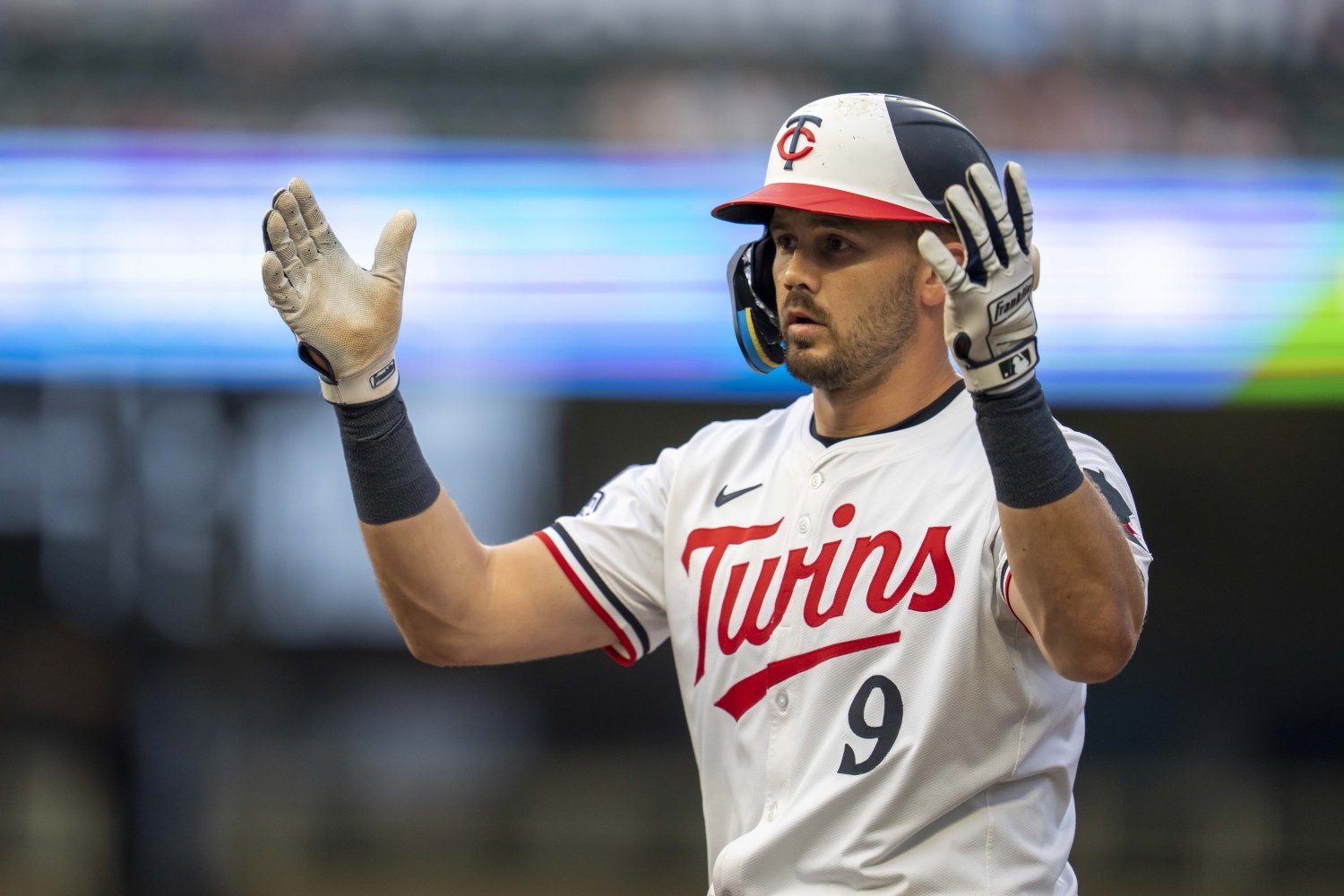 Teams have until 7 PM Central on Friday to decide whether to tender contracts to their arbitration-eligible players for 2026. The Twins will be one of the busiest teams in the league at this annual miniature deadline, as they have seven eligible players on their 40-man roster right now—even after cutting three such players earlier this month. The headliner, of course, is Trevor Larnach. Though Ryan Jeffers, Joe Ryan, Bailey Ober and Royce Lewis are all on the list with him, their places on the roster are relatively safe. The Twins might well trade any of the four within the next nine months, but they're not going to jettison any of them and lose them for nothing, just to save a few million dollars. Larnach is in a different situation. He batted .250/.323/.404 in 2025, but is now set to make nearly $5 million in his second season of arbitration and his penultimate year of team control. Those aren't atrocious offensive numbers, but for a guy with virtually no defensive value and little projection for growth left, they're underwhelming. Just as importantly, the Twins have a surfeit of young players with profiles sufficiently similar to Larnach's that they won't miss him if they lose him this winter. Cutting bait on him should free up a little bit of money to be spent elsewhere on the roster, but it will also ease the logistical crunch the team has been facing for some time. They're one of 18 teams who enter Friday with a full 40-man list, and while it's nice to know they aren't alone, they need more flexibility than that. Friday is their last chance to create an opening on the roster so that they can make a pick in next month's Rule 5 Draft, should they wish to do so. Moving Larnach aside would also make it easier to find playing time for Alan Roden, James Outman, Austin Martin, Matt Wallner, and outfield prospects Emmanuel Rodriguez and Gabriel Gonzalez. It would give the team a chance to slide Luke Keaschall to the outfield at times, and to play both Kody Clemens and Edouard Julien against right-handed pitchers at times. Larnach is a better hitter than Julien, but at this point, he's also a more expensive one, and Julien has the greater upside. Whether Larnach is simply released or traded will be interesting, but it's hard to imagine him coming back. Cole Sands will join Jeffers, Ober, Ryan and Lewis in being tendered deals, while Justin Topa is a borderline guy. To create more roster flexibility, the team could dump Topa as well as Larnach. It could come down to whether Topa is willing to agree to terms the Twins find team-friendly. If so, he'll stick around. If not, rather than take him through the full arbitration process and deal with the lingering uncertainty about his 2026 salary for another six weeks or so, the team is likely to non-tender him. Topa is the only obvious candidate for a pre-deadline agreement Friday, but similar ones for Ober, Lewis or Sands are also possible. Since they're likely to be subjects of trade discussions in the weeks ahead, Jeffers and Ryan could sign deals Friday, locking in their salaries and making negotiations a bit easier afterward. There will be news in Twins Territory Friday evening. It might be small, but the roster will further take shape, even if that comes only in the form of one or two existing possibilities being foreclosed upon.
- 62 comments
-
- 4
-
-
- trevor larnach
- ryan jeffers
- (and 5 more)
-
What Derek Shelton Saw While Watching Twins Hitters This Summer
Matthew Trueblood posted an article in Twins
 The downside of hiring Derek Shelton—a former organizational soldier who remains a close friend of the just-ousted Rocco Baldelli—was that the Minnesota Twins risked sending the message to their fans that the foregoing 15 months had been acceptable. Whatever differences of perspective Shelton might bring, he comes from the same philosophical lineage as the front office, which hired him once before, and his closeness to Baldelli will lead some fans to paint the two with the same brush. Derek Falvey knew that. Thus, entering the club's interview with Shelton for the managerial job, he and his staff ensured that they also realized the upside of engaging with him. "I think we were harder on [Shelton] than maybe we were on other candidates, because when you spend three rounds of interviews (6-8 hours each time among groups, there's a lot of time when you're interviewing somebody that you spend a lot of time getting to know the person," Falvey said at Shelton's introductory press conference Tuesday. "How's the fit? Can we work with this [person]? How do they feel about this organization? "With Shelty, it was easy to cut through all that. 'I know you. We know you.' We can talk about the challenges and what is similar to what you would do to what we've done historically, but how you'd do things differently." In other words, the very familiarity that made Shelton somewhat suspect in the eyes of many outsiders permitted a much-needed frankness between the once-and-future colleagues. Specifically, Shelton has a long track record as a hitting coach; that's the side of the runs ledger on which his greater expertise lies. He worked in the Cleveland organization at the same time as Falvey, before moving on to become the hitting coach for the Rays. When the time came for those harder questions, therefore, Falvey and the Twins front office asked Shelton the same thing so many Twins fans asked, starting in August 2024 and almost without stopping until the end of this September: What's going wrong with these hitters? The answer, as Shelton rendered it, will be maddening for some Twins fans, but it remains true. In brief: it's complicated. Falvey said that Shelton, who took a gig on SiriusXM MLB Network Radio over the summer and got more accustomed to watching the whole league again and asking objective questions. focused his analysis of Minnesota's long slumps at the plate on approach. "He said the most important thing is to understand what the player's intent was, right?" Falvey recalled. "To know a little bit of what they were trying to do. Because you can watch a game, you can watch an at-bat, and go, 'Man, why was he doing that?' I was like, 'I don't know what his game plan was. I don't know what his approach was. I could judge it because he was 0-3. But like, was he actually, did he actually have a good approach and a good plan, and it just didn't execute that night?' That happens too. So, he has said he wants to get to know how our people operate and what they do to better assess, is it a plan issue? Is it an execution issue?" Predictably, both Falvey and Shelton said they don't yet have those answers hammered out, in each individual case or at the broader team level. But Shelton was asked a specific question about Brooks Lee, who is hitting .232/.279/.357 over his first 712 career plate appearances, and he did have at least a partial (and perhaps a telling) answer for it. "I talked to Drew MacPhail a little bit about it, and we’ll continue to talk about it, but players get to the big leagues so fast these days," Shelton observed, "and then when players get to the big leagues the competition they go through in terms of amateur baseball is different, and they end up jumping from team to team, and it becomes almost more of a showcase than what’s actually going on in the game." That explanation widens the lens far beyond Lee, and it offloads the blame for his slow or uneven development to entities beyond the Twins. Shelton doesn't yet have a specific remedy in mind for his switch-hitting infielder, because he doesn't yet know Lee deeply enough to evaluate his process. However, the answer he gave Falvey still tells us something, because of what he didn't do: he didn't denigrate or question the fundamental moves of any of the hitters there. Shelton takes a holistic and intellectual tack to hitting, but he also has the eye of a coach who has to correct and adjust bad mechanics or essential failures of timing. That wasn't his focus in the meeting with Falvey, and it's not a crisis-level, organizational problem. In Shelton's view, the Twins do have talent, and their hitters are doing things he considers plausibly correct; he just didn't have the access to them to test those plausible options. As he looks ahead to the time when he will have more complete information, Shelton believes the first part of his work in reforming struggling hitters is done: they've failed. For most big-leaguers, it takes some failure to open the doors to change. From there, the question becomes one of information management—which sometimes means figuring out what voices the player is hearing, besides his own. "I think the second, and probably just as important, thing is you have to figure out where they are getting their information," Shelton said. "Players get their information from so many different people today that we all have to be working in the same direction. The communication lines—sometimes, that’s the manager. Sometimes that’s the pitching coach. It’s definitely a hitting coach in today’s world. I know. I lived it at one point. You have to find out where they’re getting their information and is it counterproductive? With today’s player, you have to prove to them this is why we’re doing it. I think that is important." Most hitters work with some private hitting instructor or trainer. Shelton was quick to say that that's often a good thing. The wrinkle comes in the form of whatever confusion it might cause, as the team and the player try to communicate clearly about the best way for that hitter to be their best self. "If you tell someone right away, 'Hey, we’re not going to allow you to do this,' and they have a feeling that it helps them, then we’re damaging the relationship from the get-go," he said. "The biggest part is making sure there are open relationships in terms of the information you’re getting. That may not directly be made to that other coach, but at least to the player, hey, if you’re getting that, can you give me a little bit of a glimpse into what you’re doing?" Every team strives for this, of course, but not every team achieves it. Baldelli took a delegatory approach to the job, and left any sorting out of messaging from coach to player between those parties. Shelton will take a more direct role, not only in those conversations about hitters' approaches, but in the follow-up and in the discovery of underlying theory in everything his hitters do. That could be the way he separates himself from Baldelli, and it could make him the right man for this job. If there's one thing the Twins must do better going forward than they've done over the last half-decade, it's develop and transition talented young batters to the majors. Falvey bought into Shelton's ability to do that. It's up to Shelton to prove (not merely to Falvey, but to Twins Territory) that that faith was warranted.
- 32 comments
-
- 6
-
-
-
- derek shelton
- derek falvey
- (and 1 more)
-
Image courtesy of © Bill Streicher-Imagn Images The downside of hiring Derek Shelton—a former organizational soldier who remains a close friend of the just-ousted Rocco Baldelli—was that the Minnesota Twins risked sending the message to their fans that the foregoing 15 months had been acceptable. Whatever differences of perspective Shelton might bring, he comes from the same philosophical lineage as the front office, which hired him once before, and his closeness to Baldelli will lead some fans to paint the two with the same brush. Derek Falvey knew that. Thus, entering the club's interview with Shelton for the managerial job, he and his staff ensured that they also realized the upside of engaging with him. "I think we were harder on [Shelton] than maybe we were on other candidates, because when you spend three rounds of interviews (6-8 hours each time among groups, there's a lot of time when you're interviewing somebody that you spend a lot of time getting to know the person," Falvey said at Shelton's introductory press conference Tuesday. "How's the fit? Can we work with this [person]? How do they feel about this organization? "With Shelty, it was easy to cut through all that. 'I know you. We know you.' We can talk about the challenges and what is similar to what you would do to what we've done historically, but how you'd do things differently." In other words, the very familiarity that made Shelton somewhat suspect in the eyes of many outsiders permitted a much-needed frankness between the once-and-future colleagues. Specifically, Shelton has a long track record as a hitting coach; that's the side of the runs ledger on which his greater expertise lies. He worked in the Cleveland organization at the same time as Falvey, before moving on to become the hitting coach for the Rays. When the time came for those harder questions, therefore, Falvey and the Twins front office asked Shelton the same thing so many Twins fans asked, starting in August 2024 and almost without stopping until the end of this September: What's going wrong with these hitters? The answer, as Shelton rendered it, will be maddening for some Twins fans, but it remains true. In brief: it's complicated. Falvey said that Shelton, who took a gig on SiriusXM MLB Network Radio over the summer and got more accustomed to watching the whole league again and asking objective questions. focused his analysis of Minnesota's long slumps at the plate on approach. "He said the most important thing is to understand what the player's intent was, right?" Falvey recalled. "To know a little bit of what they were trying to do. Because you can watch a game, you can watch an at-bat, and go, 'Man, why was he doing that?' I was like, 'I don't know what his game plan was. I don't know what his approach was. I could judge it because he was 0-3. But like, was he actually, did he actually have a good approach and a good plan, and it just didn't execute that night?' That happens too. So, he has said he wants to get to know how our people operate and what they do to better assess, is it a plan issue? Is it an execution issue?" Predictably, both Falvey and Shelton said they don't yet have those answers hammered out, in each individual case or at the broader team level. But Shelton was asked a specific question about Brooks Lee, who is hitting .232/.279/.357 over his first 712 career plate appearances, and he did have at least a partial (and perhaps a telling) answer for it. "I talked to Drew MacPhail a little bit about it, and we’ll continue to talk about it, but players get to the big leagues so fast these days," Shelton observed, "and then when players get to the big leagues the competition they go through in terms of amateur baseball is different, and they end up jumping from team to team, and it becomes almost more of a showcase than what’s actually going on in the game." That explanation widens the lens far beyond Lee, and it offloads the blame for his slow or uneven development to entities beyond the Twins. Shelton doesn't yet have a specific remedy in mind for his switch-hitting infielder, because he doesn't yet know Lee deeply enough to evaluate his process. However, the answer he gave Falvey still tells us something, because of what he didn't do: he didn't denigrate or question the fundamental moves of any of the hitters there. Shelton takes a holistic and intellectual tack to hitting, but he also has the eye of a coach who has to correct and adjust bad mechanics or essential failures of timing. That wasn't his focus in the meeting with Falvey, and it's not a crisis-level, organizational problem. In Shelton's view, the Twins do have talent, and their hitters are doing things he considers plausibly correct; he just didn't have the access to them to test those plausible options. As he looks ahead to the time when he will have more complete information, Shelton believes the first part of his work in reforming struggling hitters is done: they've failed. For most big-leaguers, it takes some failure to open the doors to change. From there, the question becomes one of information management—which sometimes means figuring out what voices the player is hearing, besides his own. "I think the second, and probably just as important, thing is you have to figure out where they are getting their information," Shelton said. "Players get their information from so many different people today that we all have to be working in the same direction. The communication lines—sometimes, that’s the manager. Sometimes that’s the pitching coach. It’s definitely a hitting coach in today’s world. I know. I lived it at one point. You have to find out where they’re getting their information and is it counterproductive? With today’s player, you have to prove to them this is why we’re doing it. I think that is important." Most hitters work with some private hitting instructor or trainer. Shelton was quick to say that that's often a good thing. The wrinkle comes in the form of whatever confusion it might cause, as the team and the player try to communicate clearly about the best way for that hitter to be their best self. "If you tell someone right away, 'Hey, we’re not going to allow you to do this,' and they have a feeling that it helps them, then we’re damaging the relationship from the get-go," he said. "The biggest part is making sure there are open relationships in terms of the information you’re getting. That may not directly be made to that other coach, but at least to the player, hey, if you’re getting that, can you give me a little bit of a glimpse into what you’re doing?" Every team strives for this, of course, but not every team achieves it. Baldelli took a delegatory approach to the job, and left any sorting out of messaging from coach to player between those parties. Shelton will take a more direct role, not only in those conversations about hitters' approaches, but in the follow-up and in the discovery of underlying theory in everything his hitters do. That could be the way he separates himself from Baldelli, and it could make him the right man for this job. If there's one thing the Twins must do better going forward than they've done over the last half-decade, it's develop and transition talented young batters to the majors. Falvey bought into Shelton's ability to do that. It's up to Shelton to prove (not merely to Falvey, but to Twins Territory) that that faith was warranted. View full article
-
Image courtesy of © Jerome Miron-Imagn Images Bailey Ober entered his fifth big-league season with a 3.76 career ERA and a 3.90 career FIP. Despite below-average fastball velocity, he had a 25.6% career strikeout rate. Even at his best, he was vulnerable to the occasional blowup, usually because hitters would square him up and hit a couple of home runs against him in a given start. On balance, though, he was a reliably strong starter, and occasionally something like an ace. In 2025, his career went off the rails. His ERA spiked to 5.10, and a 4.90 FIP says that was no mere fluke. He continued to pound the strike zone, for the most part, walking just 5.0% of opposing batters, but he allowed almost a home run for every free pass he issued. His strikeout rate, by contrast, plunged to 19.2%. It was, in a word, miserable. For many, Ober's low velocity became a focal point. He did lose roughly 1.5 miles per hour in average speed on his heater, pushing him from below-average to one of the very lowest figures in the league. Amid a confusing and frustrating season for both the hurler and Twins fans, confirmation bias rushed in to fill gaps in the collective understanding. Many had always been suspicious of Ober, even as he racked up high-quality innings, because he didn't throw hard. As he spiraled downward and that velocity dropped even more, those doubters pointed the finger of blame toward that dearth of power. Honestly, though, velocity wasn't the problem for Ober in 2025. It'd be lovely if he discovered a way to get back the speed he lost, and even to vault ahead, but he didn't fail because he doesn't throw hard enough. Rather, the problems that piled up on him had to do with insufficient feel for movement and location, on all the pitches in his diverse arsenal. Compare the location of his four-seam fastballs and changeups against left-handed batters, from 2024 and 2025. In the former season, he held lefties to a .235 weighted on-base average (wOBA). In the latter one, that number was .305. When Ober used his heater against lefties, he was much more likely to pull the ball and put it on the inner third of the plate this year than in the past. He missed inside on them more and above the zone more. The area he targeted most often in 2024 (and had the most success in), up and away, was harder for him to hit. With his changeup, he missed away by a significant margin more often. Given the way his stuff works, those pitches well off the plate didn't tempt opposing batters much. The same was true, broadly, when Ober faced righty batters. Against righties, Ober's fastball missed high less often this year, but that just meant that it spent more time in hittable areas along the top rail. His changeup was, of course, less of a weapon to righties than to lefties; that's in the nature of an offspeed pitch to same-handed batters. One major key to Ober's season—one that shows up in the image above, but relatively subtly—is the new sinker he incorporated. It wasn't a panic-induced inclusion in his arsenal; Ober brought that new pitch to spring training and utilized it right away when the season began. However, it never became much of a factor for him. He threw fewer than 100 total sinkers, almost all of them to fellow righties. The sinker isn't a good pitch, really. According to pitch-modeling metrics, it's perhaps the worst offering in his repertoire. The pitch will have value, though, if Ober can gain better comfort with it and start locating it more consistently—thereby giving him the chance to throw it more often. As you can see above, Ober's breaking balls also don't rate very well. Both his sweeper and his shorter, tighter slider need work, and having a different fastball to play off of might pay big dividends for him. Reliably using the sinker would open up more of the strike zone and mitigate some of Ober's homer problems. It might also, indirectly and eventually, restore his ability to miss bats against righties. As he heads into his 30s, Ober probably won't suddenly regain the velocity he suddenly lost last year. What he could do, however, is tap into the value of an altered arsenal that suits his strengths and his style well. He just needs to build significantly on the small experiment he attempted during his worst season yet. The Twins need their mid-rotation workhorse back. Ober can still be that guy, but it might require an uncomfortably complete reinvention. View full article
-
 Bailey Ober entered his fifth big-league season with a 3.76 career ERA and a 3.90 career FIP. Despite below-average fastball velocity, he had a 25.6% career strikeout rate. Even at his best, he was vulnerable to the occasional blowup, usually because hitters would square him up and hit a couple of home runs against him in a given start. On balance, though, he was a reliably strong starter, and occasionally something like an ace. In 2025, his career went off the rails. His ERA spiked to 5.10, and a 4.90 FIP says that was no mere fluke. He continued to pound the strike zone, for the most part, walking just 5.0% of opposing batters, but he allowed almost a home run for every free pass he issued. His strikeout rate, by contrast, plunged to 19.2%. It was, in a word, miserable. For many, Ober's low velocity became a focal point. He did lose roughly 1.5 miles per hour in average speed on his heater, pushing him from below-average to one of the very lowest figures in the league. Amid a confusing and frustrating season for both the hurler and Twins fans, confirmation bias rushed in to fill gaps in the collective understanding. Many had always been suspicious of Ober, even as he racked up high-quality innings, because he didn't throw hard. As he spiraled downward and that velocity dropped even more, those doubters pointed the finger of blame toward that dearth of power. Honestly, though, velocity wasn't the problem for Ober in 2025. It'd be lovely if he discovered a way to get back the speed he lost, and even to vault ahead, but he didn't fail because he doesn't throw hard enough. Rather, the problems that piled up on him had to do with insufficient feel for movement and location, on all the pitches in his diverse arsenal. Compare the location of his four-seam fastballs and changeups against left-handed batters, from 2024 and 2025. In the former season, he held lefties to a .235 weighted on-base average (wOBA). In the latter one, that number was .305. When Ober used his heater against lefties, he was much more likely to pull the ball and put it on the inner third of the plate this year than in the past. He missed inside on them more and above the zone more. The area he targeted most often in 2024 (and had the most success in), up and away, was harder for him to hit. With his changeup, he missed away by a significant margin more often. Given the way his stuff works, those pitches well off the plate didn't tempt opposing batters much. The same was true, broadly, when Ober faced righty batters. Against righties, Ober's fastball missed high less often this year, but that just meant that it spent more time in hittable areas along the top rail. His changeup was, of course, less of a weapon to righties than to lefties; that's in the nature of an offspeed pitch to same-handed batters. One major key to Ober's season—one that shows up in the image above, but relatively subtly—is the new sinker he incorporated. It wasn't a panic-induced inclusion in his arsenal; Ober brought that new pitch to spring training and utilized it right away when the season began. However, it never became much of a factor for him. He threw fewer than 100 total sinkers, almost all of them to fellow righties. The sinker isn't a good pitch, really. According to pitch-modeling metrics, it's perhaps the worst offering in his repertoire. The pitch will have value, though, if Ober can gain better comfort with it and start locating it more consistently—thereby giving him the chance to throw it more often. As you can see above, Ober's breaking balls also don't rate very well. Both his sweeper and his shorter, tighter slider need work, and having a different fastball to play off of might pay big dividends for him. Reliably using the sinker would open up more of the strike zone and mitigate some of Ober's homer problems. It might also, indirectly and eventually, restore his ability to miss bats against righties. As he heads into his 30s, Ober probably won't suddenly regain the velocity he suddenly lost last year. What he could do, however, is tap into the value of an altered arsenal that suits his strengths and his style well. He just needs to build significantly on the small experiment he attempted during his worst season yet. The Twins need their mid-rotation workhorse back. Ober can still be that guy, but it might require an uncomfortably complete reinvention.
 -
BREAKING: Twins to Hire Derek Shelton as Manager for 2026
Matthew Trueblood posted an article in Twins
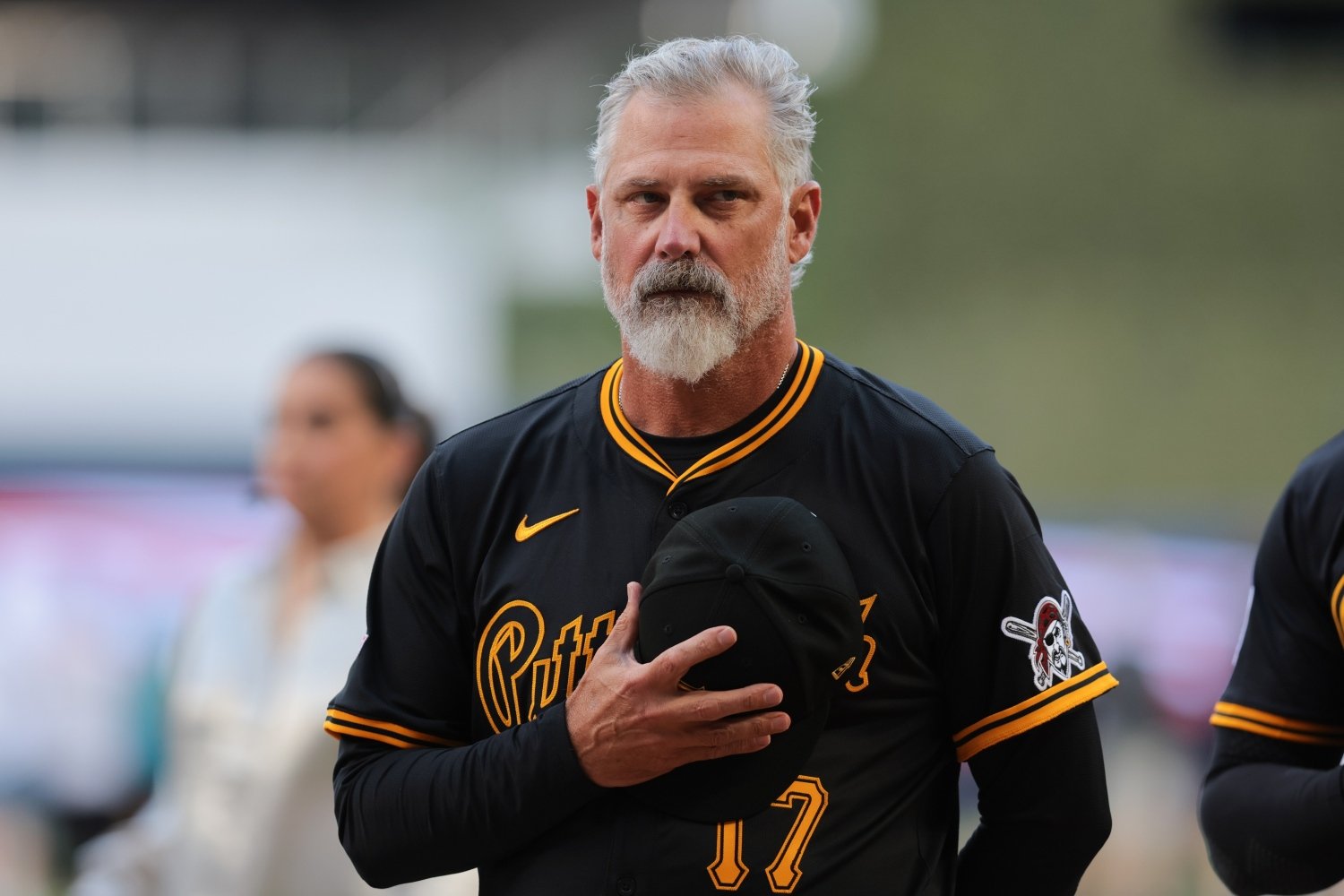 In a move many fans will find underwhelming, the Twins chose to push the dials of familiarity and experience as high as possible with their hire to replace recently fired manager Rocco Baldelli. His place at the top of the dugout steps at Target Field will be taken by Derek Shelton, who served as Baldelli's bench coach in his first season on the job in 2019 and coordinated the day-to-day efforts of the winningest team (by regular-season record) in Twins history. Shelton, 55, was poached by the Pittsburgh Pirates that winter, taking over as their manager beginning with the COVID season of 2020. Brought in to oversee a rebuilding team's development and with no support from ownership whatsoever, though, he found little success there, going 306-440 before being fired 38 games into the 2025 campaign. The Twins front office knows and loves Shelton, who took over as bench coach for the final season of Paul Molitor's tenure with the team and stayed on to serve in the same role for Baldelli. He's been a coach or manager almost without interruption since 1998, including eight total seasons as a manager (three of them in the minor leagues, over two decades ago) and long stints as a hitting coach, in addition to roles as quality control and bench coach with the Blue Jays and Twins. He's the most experienced candidate the team interviewed, although he doesn't have the same amount of success under his belt as fellow finalist Scott Servais did. It might seem like a comfortable (and therefore unimaginative) choice, but Shelton offers the stability and competence the organization prizes, and was considered an integral part of the team that set a then-record by hitting over 300 home runs and winning 100 games under a rookie manager. The team faces some of the same daunting questions about payroll commitment and competitive window status as the Pirates did when Shelton took charge there, but they're multiple steps ahead of where Pittsburgh was. If Shelton is a mere placeholder, they couldn't have done any better. He won't bring a major culture change to the franchise, but it appears as though Derek Falvey decided he didn't want one.
- 250 comments
-
- 8
-
-
-
-
- derek shelton
- rocco baldelli
- (and 1 more)
-
That's (sorry; you're gonna hate this pun) very weird framing, Mike! The strike zone has been MASSIVELY more accurate over the last 5 years than in the 5 years before; more accurate in the last 10 years than in the 10 years before; more accurate in the least 20 years than in the 20 years before. Technology has done nothing but make the zone more and more precise and uniform *and less and less distorted by individuals' performance or judgment* and pitch framing isn't anything remotely akin to a new concept! Branch Rickey taught it; Bill Terry boasted of it; Jim Sundberg and Bob Boone were commended for it. All the last 15-20 years have done is allow us to quantify what was already happening, and again, only within a broader context of umpires calling a zone that more closely accords to both their fellow umps' zones and the rule book—a rule book that includes necessarily subjective judgments, anyway, like where the hollow of one's knees are or what constitutes each batter's normal crouch and the level of the letters on their jersey when they assume it! It's important that everyone understand that there's nothing old-school about disdaining pitch framing—and that the ABS challenge system might actually lead to a less evenly called/enforced zone than we've seen throughout the pitch-tracking era. It almost certainly WON'T result in an increase in uniformity or accuracy. It will slightly diminish but come nowhere near eliminating the impact of framing, and all of the value no longer accrued by catchers presenting pitches will now be diffused among catchers, batters and pitchers challenging calls or not.
-
Image courtesy of © Matt Blewett-Imagn Images No team in baseball got fewer called strikes on pitches outside the strike zone in 2025 than the Minnesota Twins' 295, according to Statcast. The cocktail of a pitching staff that throws lots of non-fastballs (seeking chases outside the zone, rather than calls on the edges of it) and poor pitch framing by catcher Ryan Jeffers led to very few marginal strikes for the team. They were middle-of-the-pack, meanwhile, with 513 called balls on pitches technically within the strike zone. Twins batters were similarly maltreated by the umpires, but again, it had something to do with the way they played. Minnesota hitters had 411 strikes called on pitches outside the zone (third-most), and 528 balls called on pitches within the zone (10th-most). These numbers don't even out, not just because the Twins had the wrong side of umpiring over the course of the season, but because of the well-documented change in the size of the strike zone resulting from a shift in the way the league evaluates arbiters that was rolled out over the winter. The patient approach taken by Twins hitters leads, unavoidably, to lots of balls called on pitches that are "too close to take," by the standards of previous eras in the game. It also results in some called strikes, though, that might technically be outside the zone, but are still the responsibility of the hitter. They really were too close to take; you have to find ways to cover the zone better. Next season, though, there will be a greater recourse than nodding and adjusting. Jeffers, any of the pitchers he works with, and all Twins batters will have the right to challenge ball-strike calls they deem to have been wrong. Each team will get two challenges to start each game, and they only lose them if they challenge a call and the system confirms it. In other words, if an umpire is consistently wrong and a team gets the hang of challenging calls when they are, they might flip a dozen calls within a single game. The net of -101 calls on umpire errors in 2025 placed the Twins ahead of only the White Sox (-143) and Astros (-126) among the 30 teams. Five clubs (the Tigers, Diamondbacks, Blue Jays, Yankees and Giants) netted at least 100 calls in the opposite direction, so the magnitude of this effect could be significant. Imagine if Byron Buxton had the right to tap his helmet and overturn this crummy call. MnIyR3hfWGw0TUFRPT1fVkZkV1ZWQUhCMUFBQVZNRVVBQUhDRkpmQUZsV1ZGVUFCRllDQWxCVVZRSldBUUFF.mp4 That would have flipped a strikeout to a walk; it's a big deal. At other times, though, the effects can be almost as large even when they're much more subtle. Consider this call, also against Buxton. ZFhWNndfWGw0TUFRPT1fVndSVlVBQldVd1VBRFZKVFVBQUhBUTllQUZsWFZ3QUFCVkFIVkZJR1ZGZFNWZ0ZR.mp4 The difference between 0-1 and 1-0 is huge. When a righty batter started a count ahead of a lefty pitcher 1-0, in 2025, they batted .260/.377/.437. When the hurler got ahead 0-1, they held those hitters to .224/.269/.352. Every missed call on a first pitch is worth roughly 6.7% of a run; that kind of difference can add up fast. Next year, the challenge for all 30 teams will be to make good use of the new system. The Twins have more space to use it than most teams do, because if they simply challenged every pitch, they would have had a higher success rate this year than almost anyone else. Of course, it's not that simple. The two Twins hitters who saw the most out-of-zone pitches called strikes were Carlos Correa (already gone) and Trevor Larnach (a non-tender candidate). They took lots of pitches, and they figure to do so again in 2026, but they do need to moderate and modify their approach. If they make good individual and collective adjustments, they might have more overall success, but it might not come in the form of more favorable calls at the edges of the zone. There's also the question of how competent each player in a lineup (and especially each catcher who takes their place behind the dish when a team is pitching) can get at challenging pitches. That will be a point of emphasis for smart teams in the spring, because ideally, players will feel empowered to make as many challenges as possible—without getting two wrong and leaving themselves without the right to appeal during the late innings of a game. Teamwork will matter, but if the Twins default to having hitters be extremely conservative with their challenges, they might only realize the benefits of the system on one side of the runs ledger. With new personnel entering the picture late in the 2025 season and more changes coming, the Twins should be one of the teams best positioned to get better by being good at using the challenge system in 2026. It's not as simple as operating the same way and tapping one's head more often, though. Their efforts to get the better side of calls whenever possible have to be mitigated by a broader focus on playing winning baseball, overall. View full article
-
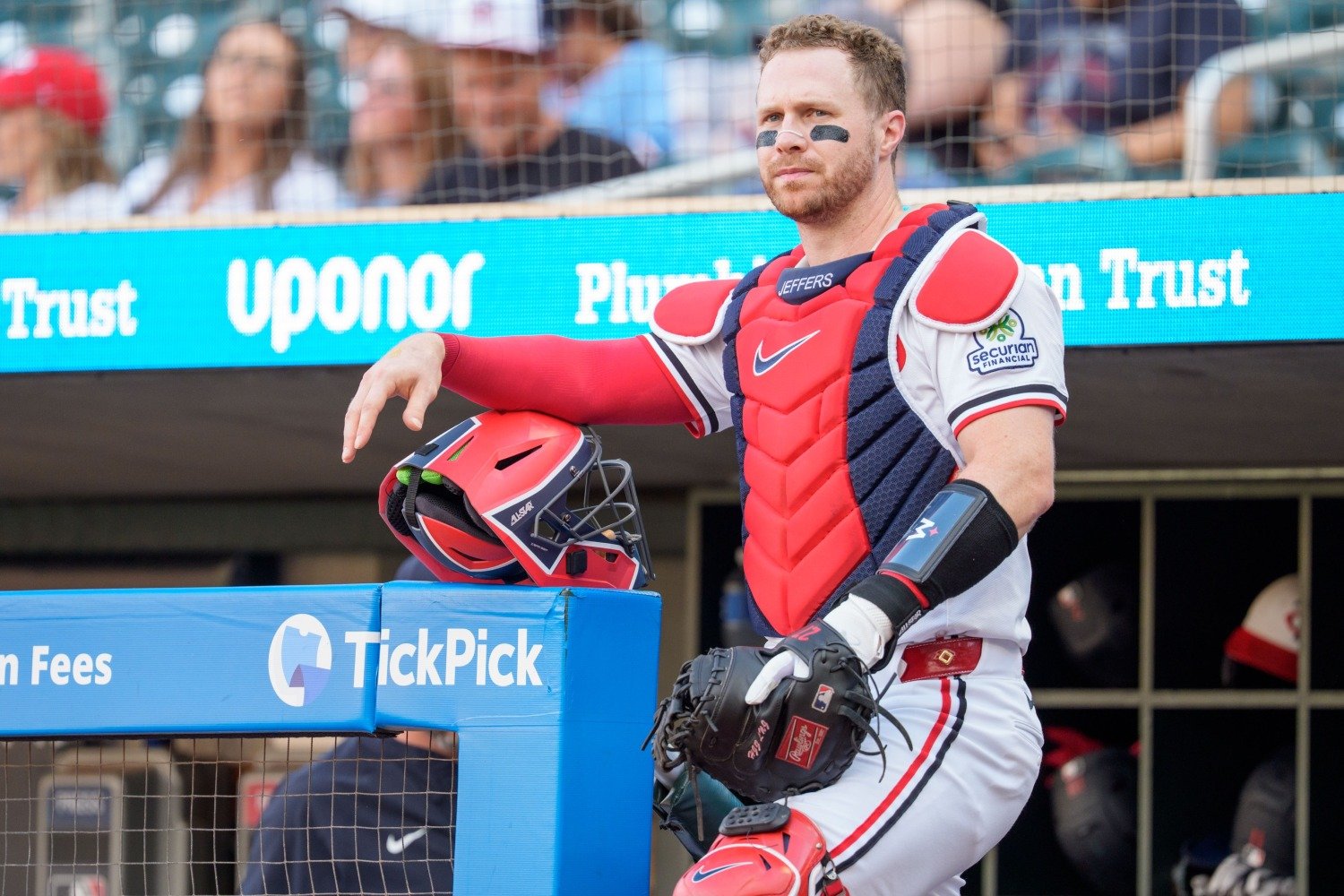 No team in baseball got fewer called strikes on pitches outside the strike zone in 2025 than the Minnesota Twins' 295, according to Statcast. The cocktail of a pitching staff that throws lots of non-fastballs (seeking chases outside the zone, rather than calls on the edges of it) and poor pitch framing by catcher Ryan Jeffers led to very few marginal strikes for the team. They were middle-of-the-pack, meanwhile, with 513 called balls on pitches technically within the strike zone. Twins batters were similarly maltreated by the umpires, but again, it had something to do with the way they played. Minnesota hitters had 411 strikes called on pitches outside the zone (third-most), and 528 balls called on pitches within the zone (10th-most). These numbers don't even out, not just because the Twins had the wrong side of umpiring over the course of the season, but because of the well-documented change in the size of the strike zone resulting from a shift in the way the league evaluates arbiters that was rolled out over the winter. The patient approach taken by Twins hitters leads, unavoidably, to lots of balls called on pitches that are "too close to take," by the standards of previous eras in the game. It also results in some called strikes, though, that might technically be outside the zone, but are still the responsibility of the hitter. They really were too close to take; you have to find ways to cover the zone better. Next season, though, there will be a greater recourse than nodding and adjusting. Jeffers, any of the pitchers he works with, and all Twins batters will have the right to challenge ball-strike calls they deem to have been wrong. Each team will get two challenges to start each game, and they only lose them if they challenge a call and the system confirms it. In other words, if an umpire is consistently wrong and a team gets the hang of challenging calls when they are, they might flip a dozen calls within a single game. The net of -101 calls on umpire errors in 2025 placed the Twins ahead of only the White Sox (-143) and Astros (-126) among the 30 teams. Five clubs (the Tigers, Diamondbacks, Blue Jays, Yankees and Giants) netted at least 100 calls in the opposite direction, so the magnitude of this effect could be significant. Imagine if Byron Buxton had the right to tap his helmet and overturn this crummy call. MnIyR3hfWGw0TUFRPT1fVkZkV1ZWQUhCMUFBQVZNRVVBQUhDRkpmQUZsV1ZGVUFCRllDQWxCVVZRSldBUUFF.mp4 That would have flipped a strikeout to a walk; it's a big deal. At other times, though, the effects can be almost as large even when they're much more subtle. Consider this call, also against Buxton. ZFhWNndfWGw0TUFRPT1fVndSVlVBQldVd1VBRFZKVFVBQUhBUTllQUZsWFZ3QUFCVkFIVkZJR1ZGZFNWZ0ZR.mp4 The difference between 0-1 and 1-0 is huge. When a righty batter started a count ahead of a lefty pitcher 1-0, in 2025, they batted .260/.377/.437. When the hurler got ahead 0-1, they held those hitters to .224/.269/.352. Every missed call on a first pitch is worth roughly 6.7% of a run; that kind of difference can add up fast. Next year, the challenge for all 30 teams will be to make good use of the new system. The Twins have more space to use it than most teams do, because if they simply challenged every pitch, they would have had a higher success rate this year than almost anyone else. Of course, it's not that simple. The two Twins hitters who saw the most out-of-zone pitches called strikes were Carlos Correa (already gone) and Trevor Larnach (a non-tender candidate). They took lots of pitches, and they figure to do so again in 2026, but they do need to moderate and modify their approach. If they make good individual and collective adjustments, they might have more overall success, but it might not come in the form of more favorable calls at the edges of the zone. There's also the question of how competent each player in a lineup (and especially each catcher who takes their place behind the dish when a team is pitching) can get at challenging pitches. That will be a point of emphasis for smart teams in the spring, because ideally, players will feel empowered to make as many challenges as possible—without getting two wrong and leaving themselves without the right to appeal during the late innings of a game. Teamwork will matter, but if the Twins default to having hitters be extremely conservative with their challenges, they might only realize the benefits of the system on one side of the runs ledger. With new personnel entering the picture late in the 2025 season and more changes coming, the Twins should be one of the teams best positioned to get better by being good at using the challenge system in 2026. It's not as simple as operating the same way and tapping one's head more often, though. Their efforts to get the better side of calls whenever possible have to be mitigated by a broader focus on playing winning baseball, overall.
 -
Image courtesy of © Matt Marton-Imagn Images He'll be out of options next spring, and the 40-man roster carousel might toss Jose Miranda off and into the waiver-wire Tilt-o-Whirl soon, anyway. However, one common mechanism of offseason roster churn won't affect the Twins infielder: arbitration eligibility, and the mid-November non-tender deadline. Miranda, 27, finished the 2025 campaign with 2 years and 135 days of official big-league service time, according to Cot's Contracts. That's almost exactly the likely cutoff for Super Two eligibility this winter, based on a Twins Daily review of eligible players. However, Miranda himself can't benefit, even if he noses over the line. No matter where the cutoff line falls, Miranda won't have been part of the calculation thereof, and he won't be eligible for arbitration this winter. As a quick refresher, all players with between three and six years of MLB service time (who haven't already signed multi-year contracts) are eligible for salary arbitration each offseason. In addition to that group, 22 percent of the players with at least two but less than three full years of service (a full year, for the purposes of this question, constitutes 172 days on a big-league roster) also qualify, under what's called Super Two status. Those players get a fourth year of arbitration eligibility, should they stay under team control throughout that entire span. However, there's an important second qualifying factor to become Super Two-eligible, or even to be considered in the class of players from which the Super Two players are drawn. It's not all players between two and three years of service who qualify, but all those who also got at least 86 days of service during the previous season. That turns out to be an important caveat. There are roughly 180 players who sit between two and three years of service heading into this offseason, but only about 160 of them meet the second criterion. The Super Two cutoff will be determined by looking only at that group of 160—and anyone who didn't get at least those 86 days (half a year) of service in 2025 will neither be eligible for arbitration nor part of the denominator that decides who is. Thus, Miranda is on the outside looking in, even if the cutoff line falls below 2.135 years of service. He only got 17 days of his total service time this year, in that calamitous start to this season. After that, the Twins optioned him to Triple-A St. Paul, where he subsequently got hurt and played so badly that he never made it back to the big-league team. The Twins will have the option of renewing his contract for 2026. On balance, this isn't likely to keep Miranda with Minnesota. He still used up his final year of optionability in 2025, so to keep him into next season, the team would have to carry him on the big-league roster. That decision could theoretically be delayed until next Opening Day, but the team has to add several players to their 40-man roster next month to protect them from the Rule 5 Draft in December, and Miranda could easily lose his spot during that churn. What it does mean, though, is that the team will have no financial incentive to jettison Miranda, and that keeping him is one extremely low-cost, relatively low-friction way to go into spring training with one more option to evaluate at first base. Two other members of the 2025 Twins (although not ones who overlapped with Miranda on the major-league roster) are affected, in some way, by the same rule, and by Miranda's exclusion from the sample of players who could be Super Two-eligible. Thomas Hatch, who spent the final two months with the team and has 2 years, 98 days of service to his name, didn't get over the 86-day threshold, either. He wasn't all that closer to qualifying for Super Two status, but the fact that he only got 66 days of service in 2025 means he won't be one of the players in the pool from which Super Twos are culled. Kody Clemens, by contrast, got a full year of service in 2025 and enters the offseason with 2 years, 134 days in total. That will likely flirt with the line, but fall just short of it, according to the same review of eligible players. Miranda missing out helps the cause of the man who replaced him, but there are more guys like Hatch (with relatively low numbers of days beyond the two-year threshold) than like Miranda in the pool of players who are eliminated by not having gotten enough experience in 2025. Three players (Lucas Erceg of the Royals, and Patrick Bailey and Ryan Walker of the Giants) have 2 years, 136 days of service; the line is likely to fall right below them and cut Clemens out of the money. That would be a nice (if small) break for the Twins, who would save just under $1 million on Clemens's salary if he doesn't qualify for Super Two status. It doesn't change the fact that Clemens is also out of options, and the team could still elect to part ways with him this winter, but it would make it much easier for the team to keep him, even under extremely tight payroll constraints from ownership. Right now, though, it's just a projection. If the line does fall at 2.135 years of service, it would hold with a trend from last year, when the cutoff came in at an unusually high 2.132—but it would also be the highest the line has been since 2012, when the rules made fewer players eligible. One way or another, it's likely that Miranda ends up on some other team (or playing in Asia or Mexico) next spring. When looking ahead at the team's offseason, though, it's helpful to know that the Twins won't have to weigh the question of whether to tender him a deal for the purposes of arbitration. If he does return to Fort Myers in February, it will be on a contract worth something very close to the league-minimum salary. View full article
-
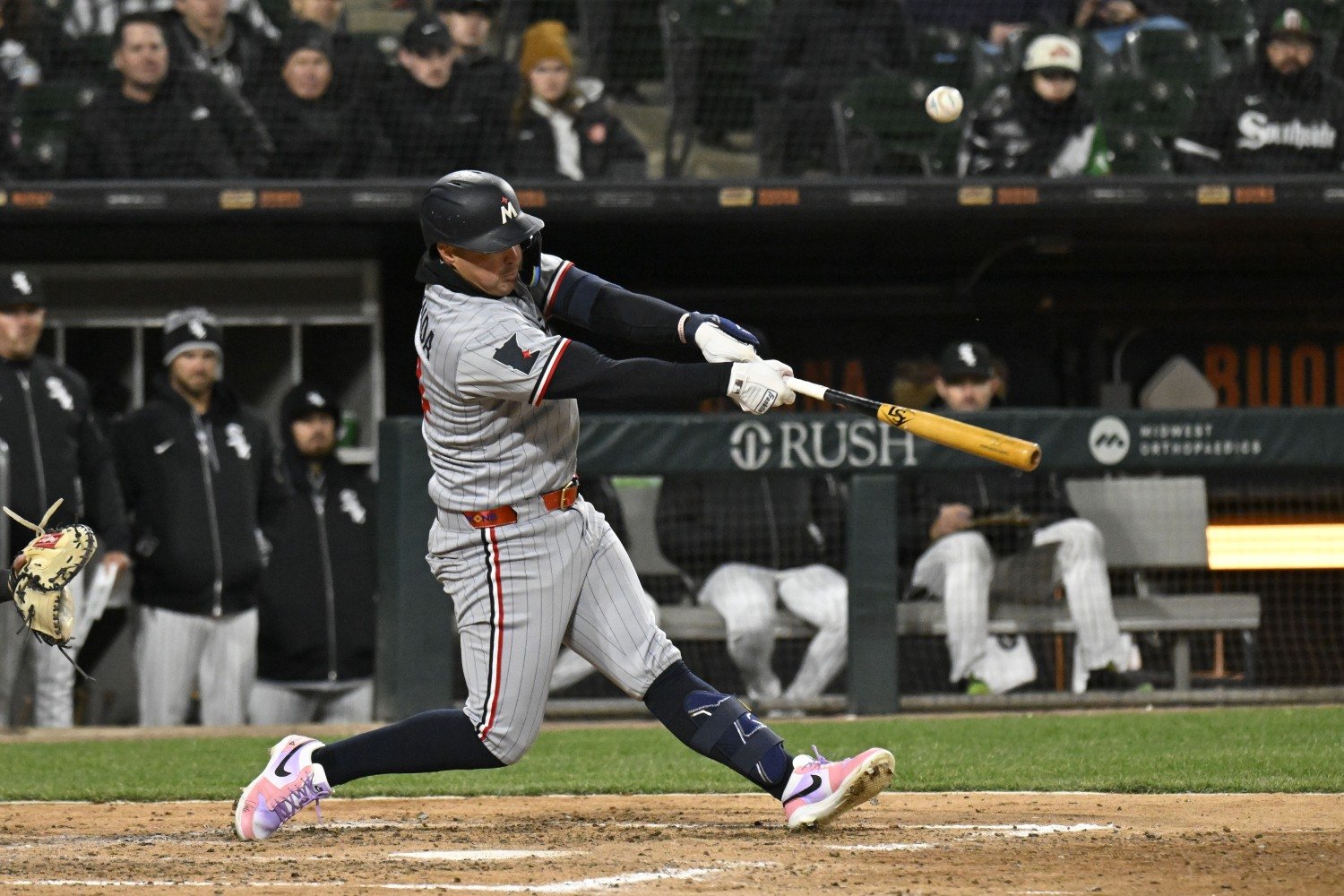 He'll be out of options next spring, and the 40-man roster carousel might toss Jose Miranda off and into the waiver-wire Tilt-o-Whirl soon, anyway. However, one common mechanism of offseason roster churn won't affect the Twins infielder: arbitration eligibility, and the mid-November non-tender deadline. Miranda, 27, finished the 2025 campaign with 2 years and 135 days of official big-league service time, according to Cot's Contracts. That's almost exactly the likely cutoff for Super Two eligibility this winter, based on a Twins Daily review of eligible players. However, Miranda himself can't benefit, even if he noses over the line. No matter where the cutoff line falls, Miranda won't have been part of the calculation thereof, and he won't be eligible for arbitration this winter. As a quick refresher, all players with between three and six years of MLB service time (who haven't already signed multi-year contracts) are eligible for salary arbitration each offseason. In addition to that group, 22 percent of the players with at least two but less than three full years of service (a full year, for the purposes of this question, constitutes 172 days on a big-league roster) also qualify, under what's called Super Two status. Those players get a fourth year of arbitration eligibility, should they stay under team control throughout that entire span. However, there's an important second qualifying factor to become Super Two-eligible, or even to be considered in the class of players from which the Super Two players are drawn. It's not all players between two and three years of service who qualify, but all those who also got at least 86 days of service during the previous season. That turns out to be an important caveat. There are roughly 180 players who sit between two and three years of service heading into this offseason, but only about 160 of them meet the second criterion. The Super Two cutoff will be determined by looking only at that group of 160—and anyone who didn't get at least those 86 days (half a year) of service in 2025 will neither be eligible for arbitration nor part of the denominator that decides who is. Thus, Miranda is on the outside looking in, even if the cutoff line falls below 2.135 years of service. He only got 17 days of his total service time this year, in that calamitous start to this season. After that, the Twins optioned him to Triple-A St. Paul, where he subsequently got hurt and played so badly that he never made it back to the big-league team. The Twins will have the option of renewing his contract for 2026. On balance, this isn't likely to keep Miranda with Minnesota. He still used up his final year of optionability in 2025, so to keep him into next season, the team would have to carry him on the big-league roster. That decision could theoretically be delayed until next Opening Day, but the team has to add several players to their 40-man roster next month to protect them from the Rule 5 Draft in December, and Miranda could easily lose his spot during that churn. What it does mean, though, is that the team will have no financial incentive to jettison Miranda, and that keeping him is one extremely low-cost, relatively low-friction way to go into spring training with one more option to evaluate at first base. Two other members of the 2025 Twins (although not ones who overlapped with Miranda on the major-league roster) are affected, in some way, by the same rule, and by Miranda's exclusion from the sample of players who could be Super Two-eligible. Thomas Hatch, who spent the final two months with the team and has 2 years, 98 days of service to his name, didn't get over the 86-day threshold, either. He wasn't all that closer to qualifying for Super Two status, but the fact that he only got 66 days of service in 2025 means he won't be one of the players in the pool from which Super Twos are culled. Kody Clemens, by contrast, got a full year of service in 2025 and enters the offseason with 2 years, 134 days in total. That will likely flirt with the line, but fall just short of it, according to the same review of eligible players. Miranda missing out helps the cause of the man who replaced him, but there are more guys like Hatch (with relatively low numbers of days beyond the two-year threshold) than like Miranda in the pool of players who are eliminated by not having gotten enough experience in 2025. Three players (Lucas Erceg of the Royals, and Patrick Bailey and Ryan Walker of the Giants) have 2 years, 136 days of service; the line is likely to fall right below them and cut Clemens out of the money. That would be a nice (if small) break for the Twins, who would save just under $1 million on Clemens's salary if he doesn't qualify for Super Two status. It doesn't change the fact that Clemens is also out of options, and the team could still elect to part ways with him this winter, but it would make it much easier for the team to keep him, even under extremely tight payroll constraints from ownership. Right now, though, it's just a projection. If the line does fall at 2.135 years of service, it would hold with a trend from last year, when the cutoff came in at an unusually high 2.132—but it would also be the highest the line has been since 2012, when the rules made fewer players eligible. One way or another, it's likely that Miranda ends up on some other team (or playing in Asia or Mexico) next spring. When looking ahead at the team's offseason, though, it's helpful to know that the Twins won't have to weigh the question of whether to tender him a deal for the purposes of arbitration. If he does return to Fort Myers in February, it will be on a contract worth something very close to the league-minimum salary.
- 16 comments
-
- 9
-
-
- jose miranda
- thomas hatch
- (and 1 more)
-
Image courtesy of © Jesse Johnson-Imagn Images In ways familiar and excruciatingly new, Zebby Matthews keeps underachieving. He throws 96 miles per hour, and can reach 99 semi-regularly. He has six pitches, including a couple of bat-missing breaking balls. He fills up the strike zone. He even has a great, folksy baseball name—the kind of name baseball needs a really good player or two to have, in every generation. Alas: he's not that really good player, so far. In 25 starts and 117 innings over parts of the last two seasons, Matthews has a 5.92 ERA. In theory, he should be much better than that. The stuff is certainly better, and so are his peripheral numbers. Matthews has fanned 24.7% of the batters he's faced in the majors, and walked just 6.6%. He had a major home-run problem in his rookie stint last season, but brought that under control in 2025. Though his FIP is a still-underwhelming 4.41, all the building blocks of a pitcher with a sub-4.00 ERA are here. He just hasn't been that guy—or anything close to it. The problem—the reason why Matthews has been so unsuccessful—is simple: hitters just keep finding singles against him. He's allowed a .361 batting average on balls in play so far in his career, which is too high to permit any pitcher to function well. Whenever a hurler is running that high a BABIP, the temptation is to declare them unlucky. In Matthews's case, though, that's only half-true, and the half of it that's true is a more lasting and existential kind of bad luck, rather than the fluky kind that time and nature take care of. First of all, Matthews gives up too many batted balls that have a very good chance to be hits. Of the 192 pitchers who allowed at least 200 batted balls in the majors this season, only two had a higher percentage of those batted balls fall into the bucket Statcast labels "Flares and Burners". That category is made up, basically, of three kinds of hits, though they scatter along a spectrum (rather than neatly subdividing themselves): Low line drives Extremely hard ground balls Softly-hit fly balls at launch angles too low to be pop-ups; the kind that fall between infielders and outfielders On "Flares and Burners," the global batting average is right around .660. Thus, the fact that Matthews gives up so many of those batted balls is a problem. Here's the other problem: when Matthews allowed those batted balls, opponents batted .789. In that same sample of 192 hurlers, the only one who gave up a higher batting average on flares and burners was Austin Gomber. We have to engage with both of these facts, but let's start with the second one. That's where a kind of bad luck is infecting Matthews—only, it's not the bad luck of a ball just being hit to the wrong spot four or five times, where nothing could be done. Rather, it's the bad luck of having pitched in front of the Twins' defense. Unfortunately for Matthews, that group is unlikely to be stronger next year than it was in 2025. For all pitchers, the Twins allowed a .699 batting average on flares and burners this season. Only the Angels were worse. Batted balls like those test a defense as much as any others, and the Twins failed that test more often than almost any other team. They simply don't have the personnel to convert those plays into outs at even an average level. Unless the team rededicates itself to defense this winter, the likely starters at third base, shortstop and second base will be Royce Lewis, Brooks Lee and Luke Keaschall, respectively. Those three are all average-minus defenders. There's a slightly better chance that Minnesota will have above-average fielders in the outfield, but Byron Buxton is aging and might not be long for center. It won't turn out any better if Matthews shows up in 2026 and continues giving up batted balls like these. They're hits most of the time, and the poor defense behind Twins hurlers will exacerbate that. Let's talk, then, about the fact that Matthews gives up so many of those batted balls in the first place. Is that something he can fix? Or is it an intrinsic aspect of his game? Alas, it's closer to the latter. Unless Matthews makes some changes to the way he pitches, he's likely to keep giving up a lot of those batted balls. He limits very hard-hit fly balls (the Barrels you've probably heard much more about, relative to the flares and burners) reasonably well, and his stuff profile can induce whiffs, but he's not good at manipulating batters' launch angles. That begets a lot of near-automatic singles. Matthews fills up the zone, even though he's walked more batters since reaching the big leagues than he did in the minors. Among the 260 pitchers who threw at least 1,000 pitches this year, he was in the 78th percentile for Called Strike Probability, according to Baseball Prospectus. That reflects not just the frequency with which a ball is technically in the zone, but the average likelihood of a pitch they throw being called a strike if not swung at. As such, his standing within the league means that Matthews is throwing pretty hittable stuff; he leaves a lot of white on either side of the ball. He doesn't perfectly target the edges, laterally or at the top and bottom of the zone. Location is an issue, then. Unfortunately, so is raw stuff. Only Matthews's slider reliably avoids being hittable; hitters square him up a lot. A change of pitch mix (ratcheting up the frequency with which he throws his sinker to righties, for instance) could help, but it's not obvious that he can either shape or locate that pitch (or any other, save his very good slider) well enough to prevent an abundance of this kind of hit. Even if there's no major roster overhaul, the Twins could use their very best defensive lineups behind Matthews in 2026 and achieve a modest improvement in outcomes. Even if Matthews can't avoid giving up this kind of contact when hitters do touch him, he might be able to miss more bats by using strike-to-ball breaking or offspeed stuff more often, or by better elevating his fastball. There are plenty of ways he can take a big step forward next season, but doing so will require at least some mitigation of the tendency to give up lots and lots of singles by letting opponents hit lots and lots of balls with high expected batting averages—even if the high expected slugging average that plagues some similar hurlers isn't among his problems. View full article
-
One Big Thing: Can Zebby Matthews Solve His Singles Problem?
Matthew Trueblood posted an article in Twins
 In ways familiar and excruciatingly new, Zebby Matthews keeps underachieving. He throws 96 miles per hour, and can reach 99 semi-regularly. He has six pitches, including a couple of bat-missing breaking balls. He fills up the strike zone. He even has a great, folksy baseball name—the kind of name baseball needs a really good player or two to have, in every generation. Alas: he's not that really good player, so far. In 25 starts and 117 innings over parts of the last two seasons, Matthews has a 5.92 ERA. In theory, he should be much better than that. The stuff is certainly better, and so are his peripheral numbers. Matthews has fanned 24.7% of the batters he's faced in the majors, and walked just 6.6%. He had a major home-run problem in his rookie stint last season, but brought that under control in 2025. Though his FIP is a still-underwhelming 4.41, all the building blocks of a pitcher with a sub-4.00 ERA are here. He just hasn't been that guy—or anything close to it. The problem—the reason why Matthews has been so unsuccessful—is simple: hitters just keep finding singles against him. He's allowed a .361 batting average on balls in play so far in his career, which is too high to permit any pitcher to function well. Whenever a hurler is running that high a BABIP, the temptation is to declare them unlucky. In Matthews's case, though, that's only half-true, and the half of it that's true is a more lasting and existential kind of bad luck, rather than the fluky kind that time and nature take care of. First of all, Matthews gives up too many batted balls that have a very good chance to be hits. Of the 192 pitchers who allowed at least 200 batted balls in the majors this season, only two had a higher percentage of those batted balls fall into the bucket Statcast labels "Flares and Burners". That category is made up, basically, of three kinds of hits, though they scatter along a spectrum (rather than neatly subdividing themselves): Low line drives Extremely hard ground balls Softly-hit fly balls at launch angles too low to be pop-ups; the kind that fall between infielders and outfielders On "Flares and Burners," the global batting average is right around .660. Thus, the fact that Matthews gives up so many of those batted balls is a problem. Here's the other problem: when Matthews allowed those batted balls, opponents batted .789. In that same sample of 192 hurlers, the only one who gave up a higher batting average on flares and burners was Austin Gomber. We have to engage with both of these facts, but let's start with the second one. That's where a kind of bad luck is infecting Matthews—only, it's not the bad luck of a ball just being hit to the wrong spot four or five times, where nothing could be done. Rather, it's the bad luck of having pitched in front of the Twins' defense. Unfortunately for Matthews, that group is unlikely to be stronger next year than it was in 2025. For all pitchers, the Twins allowed a .699 batting average on flares and burners this season. Only the Angels were worse. Batted balls like those test a defense as much as any others, and the Twins failed that test more often than almost any other team. They simply don't have the personnel to convert those plays into outs at even an average level. Unless the team rededicates itself to defense this winter, the likely starters at third base, shortstop and second base will be Royce Lewis, Brooks Lee and Luke Keaschall, respectively. Those three are all average-minus defenders. There's a slightly better chance that Minnesota will have above-average fielders in the outfield, but Byron Buxton is aging and might not be long for center. It won't turn out any better if Matthews shows up in 2026 and continues giving up batted balls like these. They're hits most of the time, and the poor defense behind Twins hurlers will exacerbate that. Let's talk, then, about the fact that Matthews gives up so many of those batted balls in the first place. Is that something he can fix? Or is it an intrinsic aspect of his game? Alas, it's closer to the latter. Unless Matthews makes some changes to the way he pitches, he's likely to keep giving up a lot of those batted balls. He limits very hard-hit fly balls (the Barrels you've probably heard much more about, relative to the flares and burners) reasonably well, and his stuff profile can induce whiffs, but he's not good at manipulating batters' launch angles. That begets a lot of near-automatic singles. Matthews fills up the zone, even though he's walked more batters since reaching the big leagues than he did in the minors. Among the 260 pitchers who threw at least 1,000 pitches this year, he was in the 78th percentile for Called Strike Probability, according to Baseball Prospectus. That reflects not just the frequency with which a ball is technically in the zone, but the average likelihood of a pitch they throw being called a strike if not swung at. As such, his standing within the league means that Matthews is throwing pretty hittable stuff; he leaves a lot of white on either side of the ball. He doesn't perfectly target the edges, laterally or at the top and bottom of the zone. Location is an issue, then. Unfortunately, so is raw stuff. Only Matthews's slider reliably avoids being hittable; hitters square him up a lot. A change of pitch mix (ratcheting up the frequency with which he throws his sinker to righties, for instance) could help, but it's not obvious that he can either shape or locate that pitch (or any other, save his very good slider) well enough to prevent an abundance of this kind of hit. Even if there's no major roster overhaul, the Twins could use their very best defensive lineups behind Matthews in 2026 and achieve a modest improvement in outcomes. Even if Matthews can't avoid giving up this kind of contact when hitters do touch him, he might be able to miss more bats by using strike-to-ball breaking or offspeed stuff more often, or by better elevating his fastball. There are plenty of ways he can take a big step forward next season, but doing so will require at least some mitigation of the tendency to give up lots and lots of singles by letting opponents hit lots and lots of balls with high expected batting averages—even if the high expected slugging average that plagues some similar hurlers isn't among his problems.
 -
Twins Daily's Community Awards: 2025 MLB Season
Matthew Trueblood replied to Brock Beauchamp's topic in Minnesota Twins Talk
Thanks to all of you for being here with us! Brock, as always, nice job finding fun stuff to send to the winners. 😀 -
Image courtesy of © Eric Canha-Imagn Images Though highly visible and familiar names—mostly ex-players and those with direct ties to Minnesota who have lots of media savvy or easy name recognition—tend to pop up each time a managerial job opens up, the hottest candidates in baseball tend to be people you've barely heard of. When the Twins hired Rocco Baldelli after the 2018 season, he was not widely known in Twins Territory. Already, we at Twins Daily have confirmed that the team has interest in Cleveland bench coach Craig Albernaz. Now, we have even more concrete evidence of an even more obscure (but very intriguing) candidate. In the wee hours of Tuesday morning, MLB scoopster Jon Heyman reported that the Twins had asked the Red Sox for permission to talk to their bench coach, ex-infielder Ramón Vázquez, about taking the job at the top step of the first-base dugout at Target Field. Vázquez, 49, would certainly be a less sexy signing than Baldelli was seven years ago. Whereas Baldelli had transitioned from a playing career as a budding star-turned-injury case to working in the Tampa Bay Rays front office and was known first for his familiarity with the behind-the-scenes things of the modern game, Vázquez is an in-uniform lifer. When his playing career ended, he moved into coaching, then managing in the minor leagues. He got back to the big leagues as a coach with the Padres in 2017, but joined Alex Cora when the latter took over as manager of the Red Sox in 2018. He's worked in roles ranging from infield instruction to coordinating gameplans and advance scouting information, and thus, he's had ample exposure to the analytical side of the game, as well. He coached the bases for Boston for three years, then stepped up to become Cora's lieutenant as bench coach. A Puerto Rico native who went to college in Iowa before being drafted in the 7th round, Vázquez rode buses in the minor leagues for a long time; played almost 700 games in parts of nine big-league seasons; and then went back to the minors to earn his way to the majors as a coach. He has every kind of experience as a coach and manager, and a strong reputation within the game for his breadth of knowledge and ability to develop rapport with young players. If hired, he would be the first person of color ever to manage the Twins. We're a long way from that happening, of course. Vázquez might not even end up actually interviewing; this is just a confirmation of the team's interest. However, it's nice to see signs of real movement in the search for the new skipper. The Twins need to get this hire right, and Vázquez is an interesting name to watch. View full article
-
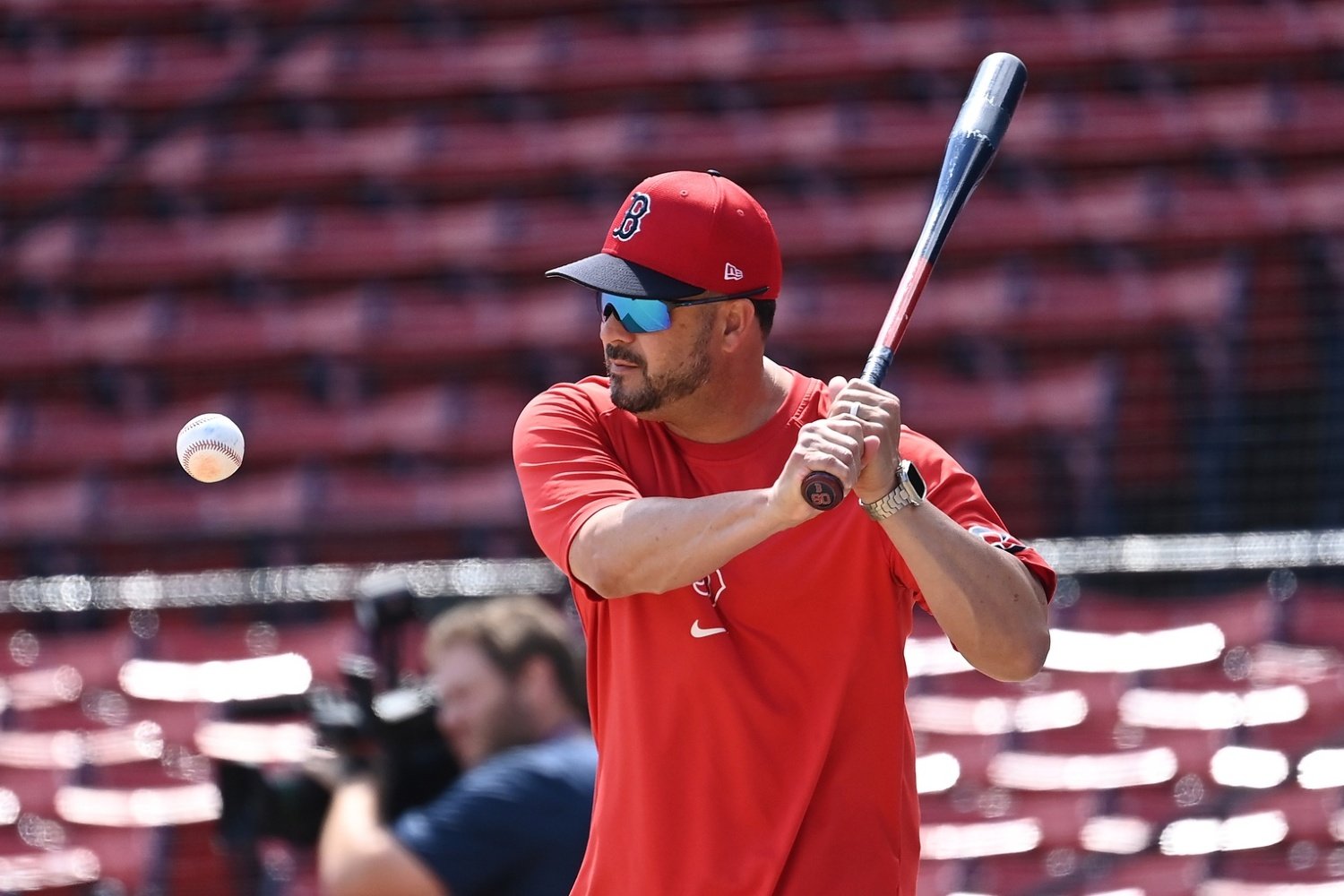 Though highly visible and familiar names—mostly ex-players and those with direct ties to Minnesota who have lots of media savvy or easy name recognition—tend to pop up each time a managerial job opens up, the hottest candidates in baseball tend to be people you've barely heard of. When the Twins hired Rocco Baldelli after the 2018 season, he was not widely known in Twins Territory. Already, we at Twins Daily have confirmed that the team has interest in Cleveland bench coach Craig Albernaz. Now, we have even more concrete evidence of an even more obscure (but very intriguing) candidate. In the wee hours of Tuesday morning, MLB scoopster Jon Heyman reported that the Twins had asked the Red Sox for permission to talk to their bench coach, ex-infielder Ramón Vázquez, about taking the job at the top step of the first-base dugout at Target Field. Vázquez, 49, would certainly be a less sexy signing than Baldelli was seven years ago. Whereas Baldelli had transitioned from a playing career as a budding star-turned-injury case to working in the Tampa Bay Rays front office and was known first for his familiarity with the behind-the-scenes things of the modern game, Vázquez is an in-uniform lifer. When his playing career ended, he moved into coaching, then managing in the minor leagues. He got back to the big leagues as a coach with the Padres in 2017, but joined Alex Cora when the latter took over as manager of the Red Sox in 2018. He's worked in roles ranging from infield instruction to coordinating gameplans and advance scouting information, and thus, he's had ample exposure to the analytical side of the game, as well. He coached the bases for Boston for three years, then stepped up to become Cora's lieutenant as bench coach. A Puerto Rico native who went to college in Iowa before being drafted in the 7th round, Vázquez rode buses in the minor leagues for a long time; played almost 700 games in parts of nine big-league seasons; and then went back to the minors to earn his way to the majors as a coach. He has every kind of experience as a coach and manager, and a strong reputation within the game for his breadth of knowledge and ability to develop rapport with young players. If hired, he would be the first person of color ever to manage the Twins. We're a long way from that happening, of course. Vázquez might not even end up actually interviewing; this is just a confirmation of the team's interest. However, it's nice to see signs of real movement in the search for the new skipper. The Twins need to get this hire right, and Vázquez is an interesting name to watch.
 -
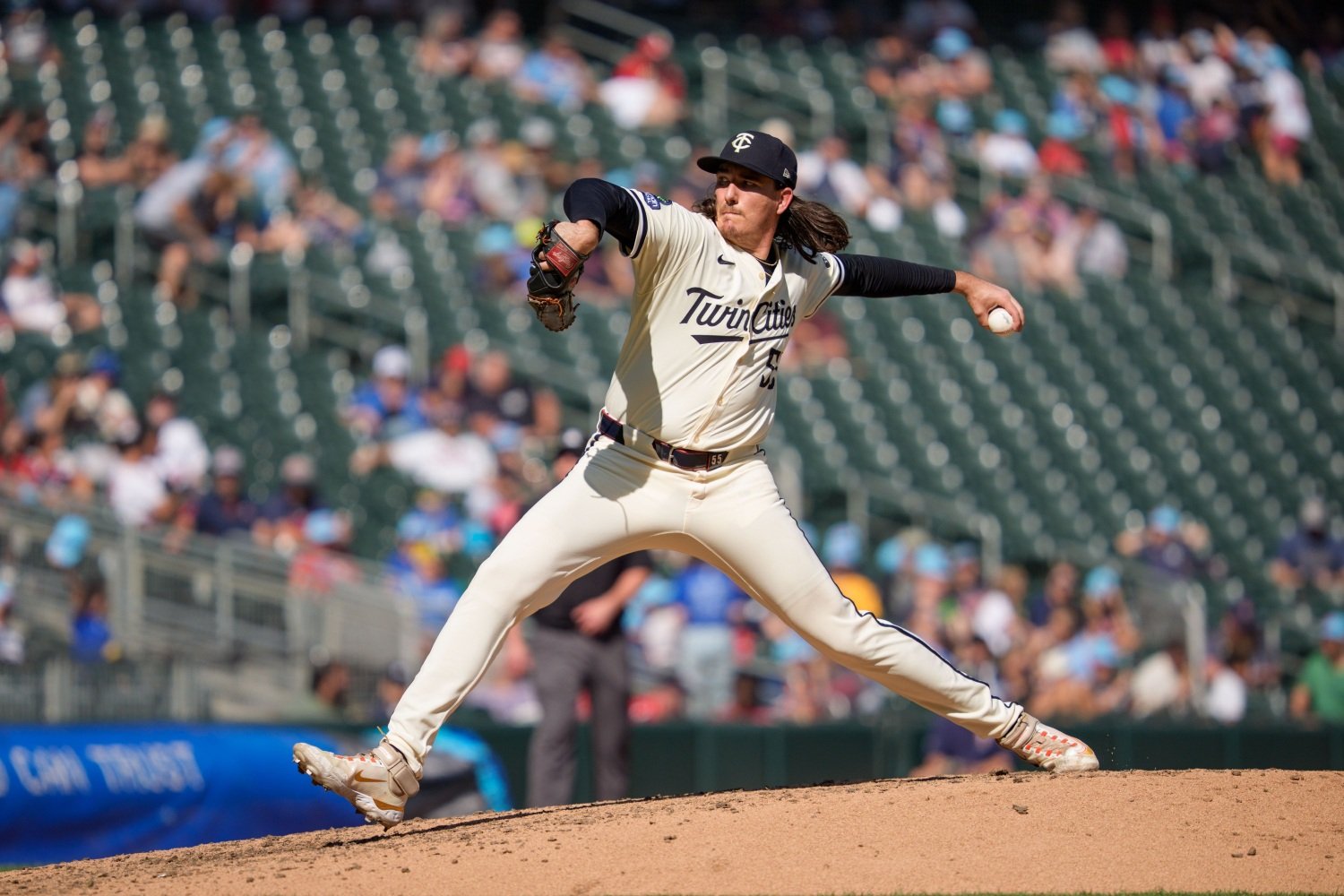 Don't lose sight of this: Being a good relief pitcher in the major leagues is hard. That said, it's not as hard as being a good starting pitcher, or a good shortstop or a good cleanup hitter. Relievers are role players. They enjoy the advantages of playing at a higher baseline level of effort, relative to the absolute maximum they can do, and of being sheltered (most of the time) from the worst matchups they might face if their manager weren't carefully selecting the situations in which they're used. You really just need one good thing, to be a good reliever. You have to have a calling card. That's not to say that overspecialization is advisable. In the age of the short start and the three-batter minimum rule, it pays to be versatile and durable. Still, because relievers play in such short bursts and under such favorable conditions, having one really good trait can be enough to keep you around. It might even be enough to make you a positive contributor on a winning club. Kody Funderburk entered 2025, though, without that one thing. He was an up-and-down relief arm in 2024, used more or less as cannon fodder. The Twins didn't view him as a well-built weapon against lefties, but nor has he ever been a reverse-splits guy. He does get lots of ground balls, but because he's generally struggled with walks and doesn't miss bats, he was always a bit too much of a risk to bring into a high-leverage situation, even to get a lefty batter out or to induce a double play. He was missing the kind of ingredient that cements a player in the majors, and keeps them off the shuttle to Triple A. Over the summer, though, he found it. Funderburk slightly lowered his arm angle and his release point this season. As a result of the mechanical tweak, he achieved more extension at release, which added a half-tick to his fastball. The change in angles also made it easier for him to keep his primarily east-west arsenal on the plate. Fully 53% of his pitches this year were in the strike zone, according to Statcast; that's up from just over 50% in 2024. He still walked batters at about the same rate, and there's work left to do with his sequencing to better convert the increase in strikes thrown to a decrease in free passes, but Funderburk no longer found himself working from behind in so many counts. He kept the ball in the park much better, because hitters couldn't sit on his cutter, and indeed, the lower angle opened up much greater usage of his sinker and changeup, each of which helped him seek grounders. Were Funderburk pitching in front of a better defense, he'd probably have put up even better numbers this season. As it was, he finished the campaign with a 3.51 ERA in 41 innings for the major-league team, most of them pitched after the trade deadline fire sale. That's sustainable. In fact, he can improve upon it next year. The Twins should pencil him into their relief mix heading into the offseason, which is a concrete improvement from where he slotted into their depth chart as recently as three months ago. It would be good, I think, to visualize this arm angle change in a couple of ways more concrete than that numerical chart. First, let's compare the arsenal Funderburk threw to lefties in 2024 with that for 2024, by looking at an animation of his pitch mix coming toward a lefty from an imagined lefty's vantage point. Slightly reducing the arm angle actually makes the cutter separate from his other offerings more than it did last year, for Funderburk, but that only sounds like a bad thing. It's actually exactly what he needed. Getting around the cutter a bit more allows him to drive it to the outside edge against lefties, while his sinker runs nicely back to the inside corner. He emphasized his slider more this year, at the expense of his sweeper. That sounds like a distinction without a difference, but it's not. Firstly, as he lowered his arm angle and brought his sinker forward as his primary fastball, Funderburk naturally went to the breaking ball that better tunnels with the sinker. His sweeper, as you can see in the upper half of the image above, tunnels better with the cutter; he's more deceptive with the slider taking over. Secondly, though, making the slider a primary weapon to lefties also made it easier to maintain that pitch and execute it consistently to righties. One challenge for a reliever is that their arsenal needs to overlap, from a matchup perspective, more than a starter's does. A starter who has three pitches that work against lefties and three that work against righties will get enough reps and enough time between starts to hone all of those offerings. A reliever has to be ready at all times, which usually means keeping the repertoire streamlined and sharp for whoever digs into the box. Here, you can really see why the sinker and cutter disguised one another better in 2025 than in 2024. The sweeper is turning into more of a curve, a pitch thrown ball-to-strike to catch the batter off-guard and steal a call. The slider and changeup stay on plane with the sinker and cutter longer, from a righty's perspective, despite the lower slot. Here's a glimpse of the change in video form. First, watch Funderburk throw a sinker to a lefty in 2024. NjQxdllfWGw0TUFRPT1fQjFWWEFRWU5VQW9BWFZBQ1ZBQUFBUVZlQUFBQ0JWTUFBbFlDVWxBSEJsSmRWUU5R.mp4 That's not a bad way to shoot for that corner, but Funderburk decidedly missed. Now, consider the way he went after another lefty, in August. UUEyclZfWGw0TUFRPT1fQndOU1ZsUUdWUVVBRHdkV1h3QUhVd1ZUQUZrRlZBVUFCbFJYQkFWVUIxVlRBVmRX.mp4 Though neither the velocity nor the simple movement metrics on that sinker changed much this year, it's easy to see why Funderburk now likes it enough to be throwing it more often. It's livelier. It's also more likely to find the zone. Let's freeze on the release point of each of those pitches. You can see the difference, in the angle of the arm relative to the shoulder. It's much harder to see from this angle, but Funderburk is also getting a bit deeper into his legs as he flies down the mound. Thence comes his better extension and the added deception of a change in release angle. Funderburk is not a future closer. His upside looks something like what Caleb Thielbar gave the Twins for a few years. Until this season, though, Funderburk looked like he might never get off the roster bubble. Changing his mechanics (and letting that inform changes in approach) got him off that bubble. It was a small thing, but it became a bigger one for both the player and the team after the July shakeup. In 2026, it might feel like a fairly big thing to have done.