



Thiéres Rabelo
-
Posts
569 -
Joined
-
Last visited
Content Type
Profiles
News
Minnesota Twins Videos
2026 Minnesota Twins Top Prospects Ranking
2022 Minnesota Twins Draft Picks
Minnesota Twins Free Agent & Trade Rumors, Notes, & Tidbits
Guides & Resources
2023 Minnesota Twins Draft Picks
The Minnesota Twins Players Project
2024 Minnesota Twins Draft Picks
2025 Minnesota Twins Draft Pick Tracker
2026 Minnesota Twins Draft Tracker: Picks & Bonuses
Forums
Blogs
Events
Store
Downloads
Gallery
Everything posted by Thiéres Rabelo
-
 With an incredible offensive outburst, the Twins needed only six innings to score eleven runs and blowout the Athletics in Oakland this afternoon. Sonny Gray was lights out as well, and Minnesota secured another series victory. Box Score Starting Pitcher: Sonny Gray, 6.0 IP, 6 H, 2 R, 2 ER, 0 BB, 5 K (84 pitches, 55 strikes, 65.4%) Home Runs: none Top 3 WPA: Gary Sánchez (.264), Luis Arráez (.125), Carlos Correa (.125) Win Probability Chart (via FanGraphs) Sánchez, Urshela remain hot, push across four runs The Twins were off to a great start offensively, with the pair of former Yankees pushing across four early runs for Minnesota. After Luis Arráez and Carlos Correa hit back-to-back singles and Max Kepler drew a two-out walk to load the bases, red-hot Gary Sánchez hit a slow liner to left to score two runs. In the next at-bat, Gio Urshela smacked an RBI single to right to bring home Kepler and make it 3-0 Minnesota. Sánchez has been living his best stretch as a Twin. Not only did he homer in the first two games of this series, but he carried into this game an OPS of .916 in his previous 15 games. That’s a relief for Twins fans, as he posted a .606 OPS in 12 games during the month of April. Urshela, who is also seeing some improvement as of late, now has at least one hit in five of his last seven games. Making his second start since being reinstated from the injured list, Sonny Gray struggled a bit to close out the innings early. After quickly getting two outs in the bottom of the first, he gave up back-to-back hits, and Oakland got a run back on a Seth Brown RBI single. Sánchez, again, provided him with some more run support in the third when he hit a two-out double to score Jorge Polanco from first. He now has four extra-base hits in the last four games. But Gray would go on to give up three more two-out hits in the next two innings, including an RBI single to Christian Bethancourt in the bottom of the third, to cut the Twins lead to two once again. Twins begin a hard-hit bonanza, score seven more runs Minnesota provided a quick response to Oakland’s potential rally. After Byron Buxton drew a two-out walk in the top of the fourth, the Twins hit back-to-back doubles to score two more runs. First, it was Arráez with a 96.5 MPH exit velocity fly ball to center to score Buxton, then it was Correa with a 105.6 MPH rocket to score Arráez. Speaking of Correa, what a great way to come back from the IL. This was the third time he made solid contact in the game, with his first-inning hit reaching 109.8 MPH coming off the bat. The offense kept putting men on base, as they loaded the bases (but didn’t cash in) in the fifth and had seven men reach in the sixth. Arráez and Correa drew walks against reliever Kirby Snead to lead off the inning, and they were both brought home by a Polanco single and a Kepler sac-fly, making it 8-2 Minnesota. Snead’s nightmare inning continued as he gave up a walk to Urshela, which put two men on, and the Twins made him pay. Ryan Jeffers hit a hard double to left (104.9 MPH exit velocity) to bring home both runners, then he himself scored on a Nick Gordon single. The entire Twins lineup had an at-bat in the sixth. Gray gets on a roll, retires ten in a row It wasn’t all just about the offense today. After giving up Oakland’s second run in the third inning, Gray went on to retire ten consecutive batters, including three consecutive 1-2-3 innings. This was a very encouraging outing for him, giving him a much-needed morale boost. He wasn’t very sharp in his last start last Friday against the Guardians. He threw only 56.1% strikes despite the season-high eight strikeouts and gave up four walks. Today, he seemed much more comfortable with his command, which enabled him to complete six innings with a similar pitch count as his last start, when he tossed only 4 1/3 innings. The Twins bullpen wasn’t nearly as sharp as Gray was. Yennier Cano took over for him in the seventh, and he loaded the bases before recording an out. Fortunately, after a mound visit, he was able to limit the damage to a minimum. The A’s got one run back on a Tony Kemp forceout, and that was it. In the eighth, Cody Stashak also allowed Oakland to score, when Chad Pinder doubled and scored on a Luis Barrera single. With outfielder Pinder pitching for the A's in the ninth, the bats got a couple more insurance runs with an RBI double by Arráez, his third hit of the afternoon, and an RBI single by Gilberto Celestino. That gave Jhoan Duran some more cushion to finish the game in the bottom of the inning (not that he needed it). What’s Next? The Twins have a day off on Thursday, and they remain on the road after that. They start a three-game series against the Royals in Kansas City on Friday, with the first game set to start at 7:10 pm CDT. Devin Smeltzer (1.80 ERA) is expected to make the start, facing Daniel Lynch (3.30 ERA). Postgame Interviews Bullpen Usage Spreadsheet SAT SUN MON TUE WED TOT Winder 0 0 0 78 0 78 Cano 0 0 25 0 19 44 Duran 12 0 0 0 23 35 Thielbar 15 2 0 16 0 33 Stashak 0 13 0 0 13 26 Duffey 5 0 20 0 0 25 Jax 0 0 25 0 0 25 Smith 15 9 0 0 0 24 Pagán 9 10 0 0 0 19 View full article
- 37 replies
-
- 1
-

-
- gary sanchez
- sonny gray
- (and 2 more)
-
Twins 14, Athletics 4: Twins Crush Oakland, Secure Series Win
Thiéres Rabelo posted an article in Twins
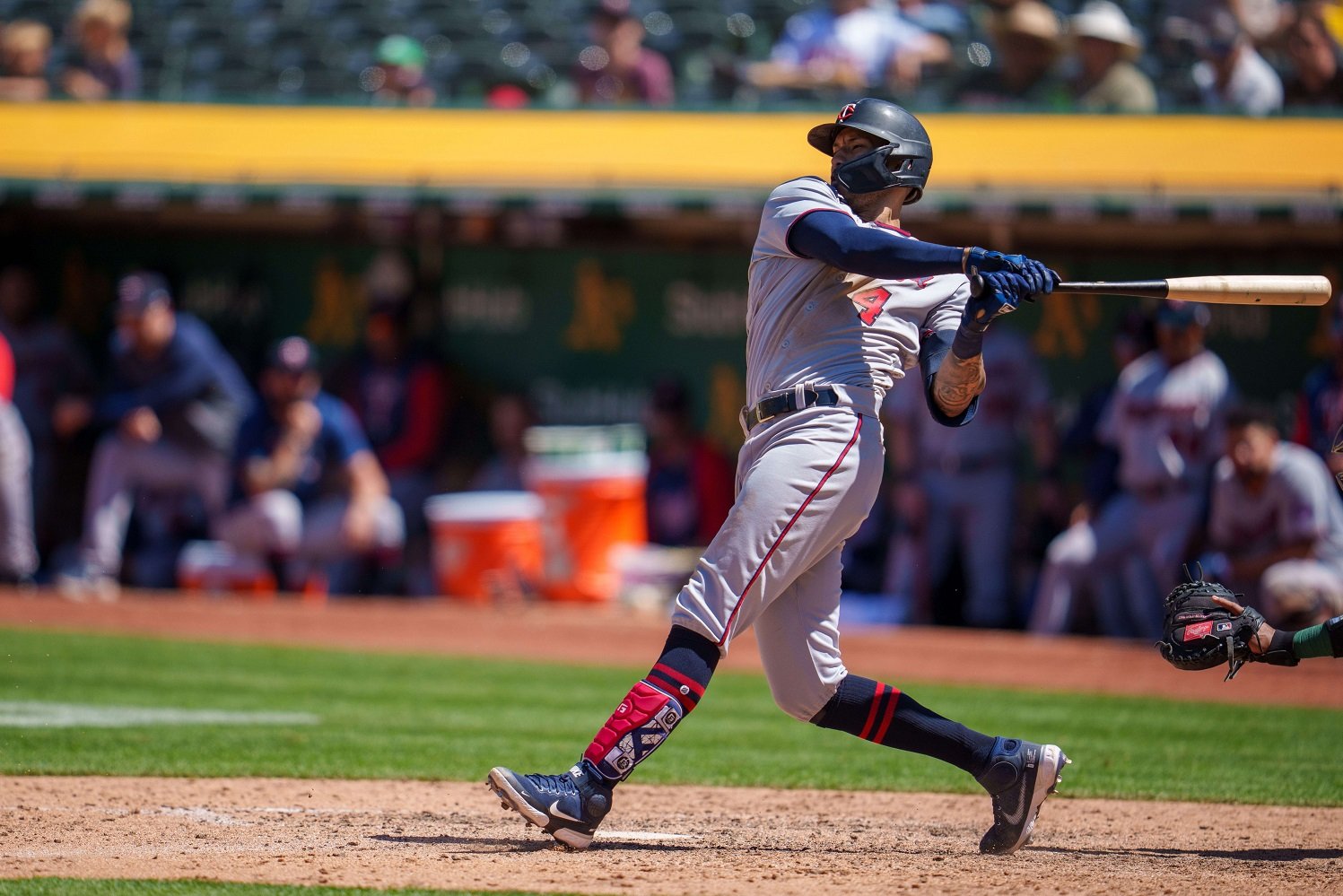 Box Score Starting Pitcher: Sonny Gray, 6.0 IP, 6 H, 2 R, 2 ER, 0 BB, 5 K (84 pitches, 55 strikes, 65.4%) Home Runs: none Top 3 WPA: Gary Sánchez (.264), Luis Arráez (.125), Carlos Correa (.125) Win Probability Chart (via FanGraphs) Sánchez, Urshela remain hot, push across four runs The Twins were off to a great start offensively, with the pair of former Yankees pushing across four early runs for Minnesota. After Luis Arráez and Carlos Correa hit back-to-back singles and Max Kepler drew a two-out walk to load the bases, red-hot Gary Sánchez hit a slow liner to left to score two runs. In the next at-bat, Gio Urshela smacked an RBI single to right to bring home Kepler and make it 3-0 Minnesota. Sánchez has been living his best stretch as a Twin. Not only did he homer in the first two games of this series, but he carried into this game an OPS of .916 in his previous 15 games. That’s a relief for Twins fans, as he posted a .606 OPS in 12 games during the month of April. Urshela, who is also seeing some improvement as of late, now has at least one hit in five of his last seven games. Making his second start since being reinstated from the injured list, Sonny Gray struggled a bit to close out the innings early. After quickly getting two outs in the bottom of the first, he gave up back-to-back hits, and Oakland got a run back on a Seth Brown RBI single. Sánchez, again, provided him with some more run support in the third when he hit a two-out double to score Jorge Polanco from first. He now has four extra-base hits in the last four games. But Gray would go on to give up three more two-out hits in the next two innings, including an RBI single to Christian Bethancourt in the bottom of the third, to cut the Twins lead to two once again. Twins begin a hard-hit bonanza, score seven more runs Minnesota provided a quick response to Oakland’s potential rally. After Byron Buxton drew a two-out walk in the top of the fourth, the Twins hit back-to-back doubles to score two more runs. First, it was Arráez with a 96.5 MPH exit velocity fly ball to center to score Buxton, then it was Correa with a 105.6 MPH rocket to score Arráez. Speaking of Correa, what a great way to come back from the IL. This was the third time he made solid contact in the game, with his first-inning hit reaching 109.8 MPH coming off the bat. The offense kept putting men on base, as they loaded the bases (but didn’t cash in) in the fifth and had seven men reach in the sixth. Arráez and Correa drew walks against reliever Kirby Snead to lead off the inning, and they were both brought home by a Polanco single and a Kepler sac-fly, making it 8-2 Minnesota. Snead’s nightmare inning continued as he gave up a walk to Urshela, which put two men on, and the Twins made him pay. Ryan Jeffers hit a hard double to left (104.9 MPH exit velocity) to bring home both runners, then he himself scored on a Nick Gordon single. The entire Twins lineup had an at-bat in the sixth. Gray gets on a roll, retires ten in a row It wasn’t all just about the offense today. After giving up Oakland’s second run in the third inning, Gray went on to retire ten consecutive batters, including three consecutive 1-2-3 innings. This was a very encouraging outing for him, giving him a much-needed morale boost. He wasn’t very sharp in his last start last Friday against the Guardians. He threw only 56.1% strikes despite the season-high eight strikeouts and gave up four walks. Today, he seemed much more comfortable with his command, which enabled him to complete six innings with a similar pitch count as his last start, when he tossed only 4 1/3 innings. The Twins bullpen wasn’t nearly as sharp as Gray was. Yennier Cano took over for him in the seventh, and he loaded the bases before recording an out. Fortunately, after a mound visit, he was able to limit the damage to a minimum. The A’s got one run back on a Tony Kemp forceout, and that was it. In the eighth, Cody Stashak also allowed Oakland to score, when Chad Pinder doubled and scored on a Luis Barrera single. With outfielder Pinder pitching for the A's in the ninth, the bats got a couple more insurance runs with an RBI double by Arráez, his third hit of the afternoon, and an RBI single by Gilberto Celestino. That gave Jhoan Duran some more cushion to finish the game in the bottom of the inning (not that he needed it). What’s Next? The Twins have a day off on Thursday, and they remain on the road after that. They start a three-game series against the Royals in Kansas City on Friday, with the first game set to start at 7:10 pm CDT. Devin Smeltzer (1.80 ERA) is expected to make the start, facing Daniel Lynch (3.30 ERA). Postgame Interviews Bullpen Usage Spreadsheet SAT SUN MON TUE WED TOT Winder 0 0 0 78 0 78 Cano 0 0 25 0 19 44 Duran 12 0 0 0 23 35 Thielbar 15 2 0 16 0 33 Stashak 0 13 0 0 13 26 Duffey 5 0 20 0 0 25 Jax 0 0 25 0 0 25 Smith 15 9 0 0 0 24 Pagán 9 10 0 0 0 19
- 37 comments
-
- 4
-
-
- gary sanchez
- sonny gray
- (and 2 more)
-
After a slow start, the Twins offense exploded in the fifth inning and put the game out of reach. Minnesota scored more runs in this game than they did in their last six games and they snap a three-game losing streak. Box Score Starting Pitcher: Sonny Gray, 4.1 IP, 4 H, 2 R, 2 ER, 4 BB, 8 K (82 pitches, 46 strikes, 56.1%) Home Runs: Byron Buxton (10), Jorge Polanco (4), Gary Sánchez (2), Royce Lewis (1) Top 3 WPA: Gary Sánchez (.178), Royce Lewis (.155), Byron Buxton (.123) Win Probability Chart (via FanGraphs) Gray is off to a good start, but can't go to distance The big story of tonight’s game was whether or not the Twins would get a decent start from their starting pitcher. The last time a Twins starter threw more than four innings in a game was exactly a week ago when Josh Winder delivered six innings with no earned runs against the A’s. Would Sonny Gray be up for the task? But that wasn’t the only question mark regarding the Twins coming into this game. Minnesota’s offense, full of ups and downs this season, produced a grand total of three runs during the three games against Houston, being shut out in two of those games. Would they be able to turn things around? Despite facing Aaron Civale, who has a career 3.31 ERA against Minnesota, the offense managed to be productive from the get-go. Byron Buxton and Jorge Polanco hit a couple of solo shots in the bottom of first, giving the Twins an early two-run lead. Things could’ve been even better, as Max Kepler and Gary Sánchez got back-to-back hits and moved into scoring position, but Minnesota couldn’t add on. Gray pitched around a leadoff walk in the first, then pitched an easy, 12-pitch second, with two punch outs. However, he oddly had a troublesome third, loading the bases before recording an out, including a couple of walks. Fortunately, he was able to keep the damage to a minimum, with Cleveland scoring only the one run on a force out. Gray struck out a couple more batters in that inning. Civale settle down and started to dominate the Twins lineup. After the Sánchez double in the first, Minnesota’s batters went 0-for-11 and failed to provide Gray with some run support. After a scoreless fourth with a couple more strikeouts, Gray became the first Twin starter to pitch into the fifth in the past seven days. But he wouldn’t go to distance. He gave up a leadoff home run to Austin Hedges and shortly after that, a walk and a single, which was enough for Rocco Baldelli to pull him from the game. Griffin Jax came into the game and induced an inning-ending double play on two pitches, to end the threat. The offense gets back on track, turns the game into a blowout Another short start, a cold offense, and a tied ball game. All the ingredients that might have led Twins fans to brace themselves for the worst. Little did they know that they were in for a treat: the Twins lineup put together a nine-run fifth inning on seven pitches and put this game out of reach. First, Civale loaded the bases by giving up a leadoff single to Ryan Jeffers, a double to Royce Lewis, and a walk to Buxton. Minnesota scored two of those runners on a Luis Arráez groundout and a Max Kepler single to left. Polanco had drawn a walk in between and, with two men on, Civale’s night was done. With Kepler and Polanco on, and Bryan Shaw pitching, Sánchez definitely put the slump behind him by smashing a three-run home run to deep center, making it 7-2 Twins. But they were surely not done. The bases were once again loaded for the Twins, as Shaw gave up back-to-back singles, to Gio Urshela and Nick Gordon, and a walk to Jeffers. Still chasing his first big league home run, Lewis destroyed a cutter in the heart of the plate for a huge grand slam, making it 11-2 Minnesota. It was impressive to see how much the Twins improved with men in scoring position in this game, compared to the Houston series. They finished the game hitting 3-for-7 with RISP. Jax has his toughest outing so far, Smith bails him out When he was brought into this game, Jax hadn’t given up any runs in his previous six outings and was posting a stellar 1.35 ERA through eight appearances. After inducing an inning-ending double play to get out of an inherited jam, he simply wasn’t sharp in the following two innings. Franmil Reyes singled off him in the sixth, shortly before Oscar Mercado hit a two-out, two-run bomb to bring the Guardians within seven. In the seventh, things were even worse, as he struggled badly with his command, allowing Cleveland to score a couple more runs on a single by José Ramírez and a triple by Amed Rosario, making it 11-6. Jax gave up back-to-back walks to load the bases with two outs, causing Baldelli to remove him from the game. Joe Smith took over and struck out Mercado on four pitches, ending the threat. Smith has now stranded 11 inherited runners so far this season – every single one he’s inherited in the year. In the bottom of the eighth, Buxton drew a leadoff walk and the Twins managed to manufacture a run, with Kepler pushing Buxton across with a sac-fly. Emilio Pagán had a flashy six-run lead when he took the mound in the ninth, but he gave up a two-out, two-run home run to Andrés Giménez, before he struck out Mercado to avoid a Cleveland rally. What’s Next? Tomorrow at 6:10 pm CDT both teams are back on the field for game 2. Cleveland will have Shane Bieber (4.13 ERA) start for them, whereas the Twins will call up Devin Smeltzer to make his season debut. Postgame Interview Bullpen Usage Spreadsheet MON TUE WED THU FRI TOT Cotton 0 58 0 0 0 58 Jax 0 0 0 0 50 50 Stashak 0 0 0 46 0 46 Cano 0 0 0 36 0 36 Duffey 0 0 0 33 0 33 Thielbar 0 3 0 23 0 26 Pagán 0 0 0 0 22 22 Duran 0 0 0 0 10 10 Smith 0 0 0 0 4 4 View full article
- 34 replies
-
- 1
-
-
- royce lewis
- byron buxton
- (and 2 more)
-
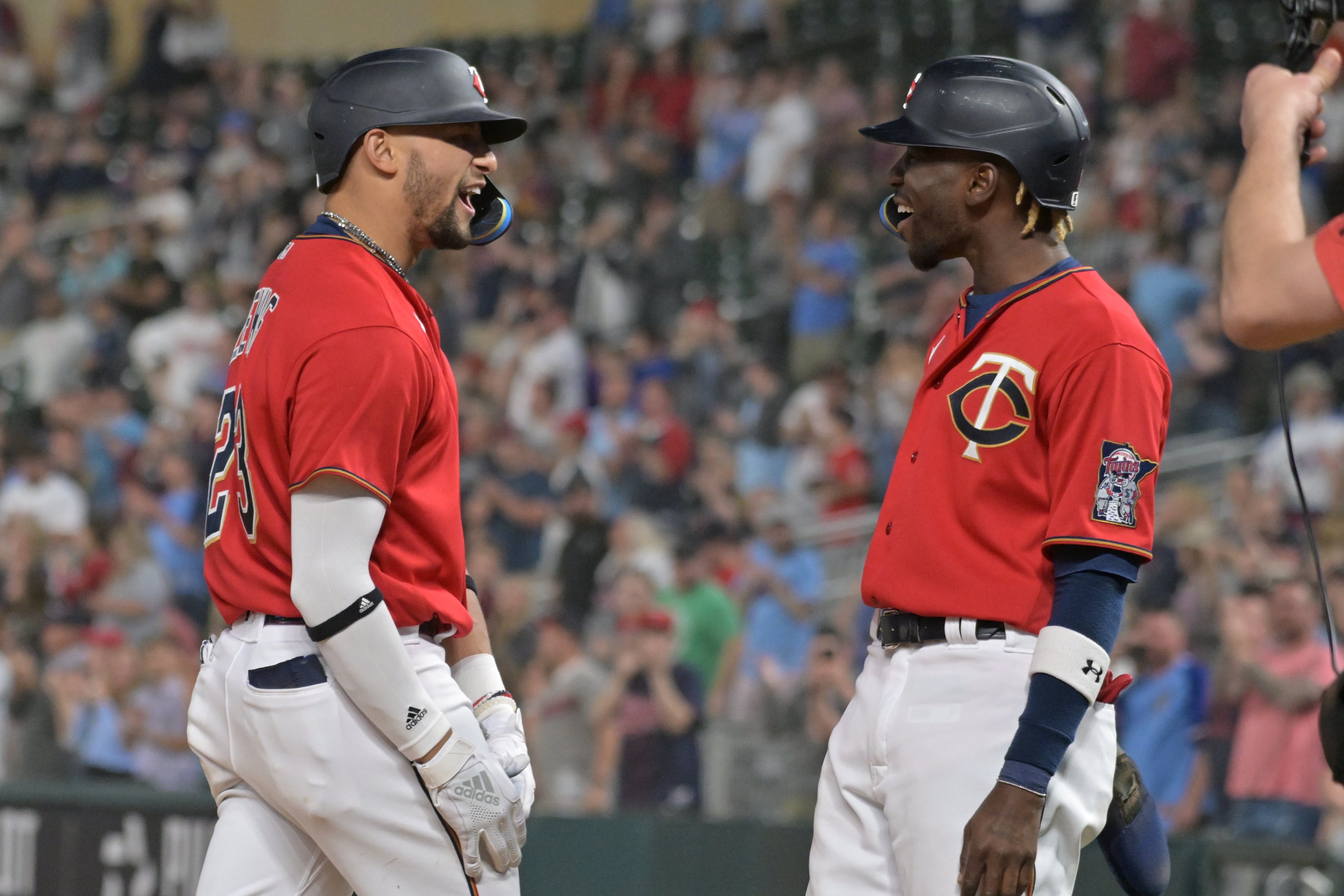 Box Score Starting Pitcher: Sonny Gray, 4.1 IP, 4 H, 2 R, 2 ER, 4 BB, 8 K (82 pitches, 46 strikes, 56.1%) Home Runs: Byron Buxton (10), Jorge Polanco (4), Gary Sánchez (2), Royce Lewis (1) Top 3 WPA: Gary Sánchez (.178), Royce Lewis (.155), Byron Buxton (.123) Win Probability Chart (via FanGraphs) Gray is off to a good start, but can't go to distance The big story of tonight’s game was whether or not the Twins would get a decent start from their starting pitcher. The last time a Twins starter threw more than four innings in a game was exactly a week ago when Josh Winder delivered six innings with no earned runs against the A’s. Would Sonny Gray be up for the task? But that wasn’t the only question mark regarding the Twins coming into this game. Minnesota’s offense, full of ups and downs this season, produced a grand total of three runs during the three games against Houston, being shut out in two of those games. Would they be able to turn things around? Despite facing Aaron Civale, who has a career 3.31 ERA against Minnesota, the offense managed to be productive from the get-go. Byron Buxton and Jorge Polanco hit a couple of solo shots in the bottom of first, giving the Twins an early two-run lead. Things could’ve been even better, as Max Kepler and Gary Sánchez got back-to-back hits and moved into scoring position, but Minnesota couldn’t add on. Gray pitched around a leadoff walk in the first, then pitched an easy, 12-pitch second, with two punch outs. However, he oddly had a troublesome third, loading the bases before recording an out, including a couple of walks. Fortunately, he was able to keep the damage to a minimum, with Cleveland scoring only the one run on a force out. Gray struck out a couple more batters in that inning. Civale settle down and started to dominate the Twins lineup. After the Sánchez double in the first, Minnesota’s batters went 0-for-11 and failed to provide Gray with some run support. After a scoreless fourth with a couple more strikeouts, Gray became the first Twin starter to pitch into the fifth in the past seven days. But he wouldn’t go to distance. He gave up a leadoff home run to Austin Hedges and shortly after that, a walk and a single, which was enough for Rocco Baldelli to pull him from the game. Griffin Jax came into the game and induced an inning-ending double play on two pitches, to end the threat. The offense gets back on track, turns the game into a blowout Another short start, a cold offense, and a tied ball game. All the ingredients that might have led Twins fans to brace themselves for the worst. Little did they know that they were in for a treat: the Twins lineup put together a nine-run fifth inning on seven pitches and put this game out of reach. First, Civale loaded the bases by giving up a leadoff single to Ryan Jeffers, a double to Royce Lewis, and a walk to Buxton. Minnesota scored two of those runners on a Luis Arráez groundout and a Max Kepler single to left. Polanco had drawn a walk in between and, with two men on, Civale’s night was done. With Kepler and Polanco on, and Bryan Shaw pitching, Sánchez definitely put the slump behind him by smashing a three-run home run to deep center, making it 7-2 Twins. But they were surely not done. The bases were once again loaded for the Twins, as Shaw gave up back-to-back singles, to Gio Urshela and Nick Gordon, and a walk to Jeffers. Still chasing his first big league home run, Lewis destroyed a cutter in the heart of the plate for a huge grand slam, making it 11-2 Minnesota. It was impressive to see how much the Twins improved with men in scoring position in this game, compared to the Houston series. They finished the game hitting 3-for-7 with RISP. Jax has his toughest outing so far, Smith bails him out When he was brought into this game, Jax hadn’t given up any runs in his previous six outings and was posting a stellar 1.35 ERA through eight appearances. After inducing an inning-ending double play to get out of an inherited jam, he simply wasn’t sharp in the following two innings. Franmil Reyes singled off him in the sixth, shortly before Oscar Mercado hit a two-out, two-run bomb to bring the Guardians within seven. In the seventh, things were even worse, as he struggled badly with his command, allowing Cleveland to score a couple more runs on a single by José Ramírez and a triple by Amed Rosario, making it 11-6. Jax gave up back-to-back walks to load the bases with two outs, causing Baldelli to remove him from the game. Joe Smith took over and struck out Mercado on four pitches, ending the threat. Smith has now stranded 11 inherited runners so far this season – every single one he’s inherited in the year. In the bottom of the eighth, Buxton drew a leadoff walk and the Twins managed to manufacture a run, with Kepler pushing Buxton across with a sac-fly. Emilio Pagán had a flashy six-run lead when he took the mound in the ninth, but he gave up a two-out, two-run home run to Andrés Giménez, before he struck out Mercado to avoid a Cleveland rally. What’s Next? Tomorrow at 6:10 pm CDT both teams are back on the field for game 2. Cleveland will have Shane Bieber (4.13 ERA) start for them, whereas the Twins will call up Devin Smeltzer to make his season debut. Postgame Interview Bullpen Usage Spreadsheet MON TUE WED THU FRI TOT Cotton 0 58 0 0 0 58 Jax 0 0 0 0 50 50 Stashak 0 0 0 46 0 46 Cano 0 0 0 36 0 36 Duffey 0 0 0 33 0 33 Thielbar 0 3 0 23 0 26 Pagán 0 0 0 0 22 22 Duran 0 0 0 0 10 10 Smith 0 0 0 0 4 4
- 34 comments
-
- 1
-
-
- royce lewis
- byron buxton
- (and 2 more)
-
Over 19 hours after it started, the second game of the Twins-Astros series mercifully came to an end. Tornado warnings and an impressive storm in the Twin Cities area on Wednesday night caused the suspension of the game after just three innings. On Thursday afternoon, the game finished in a decisive fashion. The final game of the series will begin in approximately 30 minutes. Box Score Starting Pitcher: Chris Archer, 3.0 IP, 5 H, 5 R, 4 ER, 3 BB, 2 K (75 pitches, 42 strikes, 56%) Home Runs: none Win Probability Chart (via FanGraphs) Offense shows some encouraging signs early, but Archer can't come through Apparently, not having to face Justin Verlander makes a huge difference – who knew? Contrary to Tuesday night, when Minnesota’s first hit of the game came only in the eighth inning, the bats were off to a good start early. Max Kepler doubled to deep right in the Twins’ second at-bat of the game and scored moments later when Jorge Polanco hit a double to the right corner. Starting this game with a couple of good, extra-base hits was a relief for this offense. The Twins hadn’t scored a run since the third inning of the final game of the Oakland series. Polanco hit an RBI single on Sunday, and the Twins went on to hit .137 since. But the Twins needed their starting pitcher to pick up as well, and that didn’t come close to happening tonight. Making his sixth start of the season, Chris Archer hadn’t given up more than two runs in any of his previous five starts, but things were about to change. After a long 1-2-3 first inning, Archer struggled with his command and very quickly gave up the Twins' one-run lead. Yordan Álvarez and Yuli Gurriel hit back-to-back singles to open the second inning, and both of them scored later on, on a sac fly and a single. José Altuve hit a leadoff home run to right to open the third, and then things definitely spiraled out of control for Archer. He gave up back-to-back walks after the home run, then loaded the bases with a two-out walk to Kyle Tucker. Jeremy Peña hit a liner to right to score two more runs, making it 5-1 Houston. That concluded Archer’s night, making it the fourth consecutive game in which a Twins starter pitches four innings or less. A storm breaks out, and the game gets suspended, set to resume on Thursday A Royce Lewis single to lead off the bottom of the third brought some hope that the Twins could build some momentum offensively, with the top of the order coming next. But José Urquidy retired the side on 13 pitches to end the threat and… the night at Target Field. Before the fourth inning started, with Yennier Cano warming up to make his big league debut, a storm broke out, and the game went into a weather delay. Fans were evacuated from the stands into the concourses and had to wait until the announcement of the game suspension came, roughly one hour after the interruption of the game. Here we go again... After a 15-hour weather delay (aka, suspended game), the Twins and Astros resumed play at 12:10. Big-League Debuts Technically, Yennier Cano made his MLB debut on Wednesday night because he was announced. However, the reality is that he actually made his MLB debut when the game resumed on Thursday. Cano, who had all night to think about it, was impressive. He struck out the first batter he faced, catcher Martin Maldanado. Then he got Jose Altuve and Michael Brantley quickly. In the fifth inning, he got through Alex Bregman, Yordan Alvarez and Yuli Guerriel without breaking a sweat. He went out for a third inning. Kyle Tucker hit a high home run over the wall in right field to lead off the sixth frame. He got one out in that inning but after a couple of singles, Cody Stashak came on and allowed both inherited runners to score. So in his 2 1/3 innings, he was charged with three runs on three hits. That line is so much worse than how Cano performed. The Twins had a second player make his MLB debut in the game too. When play resumed, Gilberto Celestino had moved from left to center field. Mark Contreras took over in left field. Contreras came to the plate with runners on first and third and nobody out. He swung at the first pitch and hit a ball 105 mph to center. It was caught just in front of the warning track, but the run scored, so Contreras was awarded an RBI on the sacrifice fly. In his next at-bat, Contreras saw a handful of pitches before hitting a bounding grounder up the middle. Astros shortstop Jeremy Pena misplayed it for an error. Contreras later came around to score a run too. His final at-bat ended with a fielder's choice. The Twins are off to a very nice start to their season, but playing against a strong, veteran Astros team without Carlos Correa, and with young pitchers, was always going to be a bit of a reality check. Again, consider the amount of MLB time and at-bats that Alex Kirilloff, Jose Miranda, Gilberto Celestino, Royce Lewis, Mark Contreras, and even Ryan Jeffers have. Yet each of them contributed something in this game and are holding their own. So, you can say it's a reality check to see the Twins lose by a big margin, and that's fair. You can also be really excited about the future of this club, not only this year when Correa and Byron Buxton are back at full strength but for years to come. Along with the pitching pipeline that we are starting to see contribute to the Twins, there are hitters too. It's also OK to acknowledge both. Speaking of firsts... Nick Gordon has played all over the place since joining the Twins last summer. On Thursday, he made his pitching debut. The son of the former All-Star and long-time reliever Tom Gordon, Nick came in to face the Astros with the Twins down 11-3. And, he kept the score right there. For the most part, he lobbed in pitches at 70 mph or so. That said, he hit 87 with one pitch and 88 with another. He got a little help from Gio Urshela, but threw a scoreless frame. What’s Next? In approximately 30 minutes, Josh Winder (1.61 ERA) will try to snap the sequence of bad starts as he takes the mound for the third and final game of this series, facing Luis Garcia (3.45 ERA). Postgame Interview No postgame interviews due to the quick turn-around. Bullpen Usage Spreadsheet SUN MON TUE WED THU TOT Stashak 34 0 0 0 46 80 Cotton 0 0 58 0 0 58 Cano 0 0 0 0 36 36 Coulombe 0 0 29 IL IL 29 Pagán 28 0 0 0 0 28 Thielbar 20 0 3 0 0 23 Smith 12 0 0 0 0 12 Duffey 9 0 0 0 0 9 Duran 0 0 0 0 0 0 Jax 0 0 0 0 0 0 View full article
-
Astros 11, Twins 3: Astros Dominate Young Twins in Suspended Game
Thiéres Rabelo posted an article in Twins
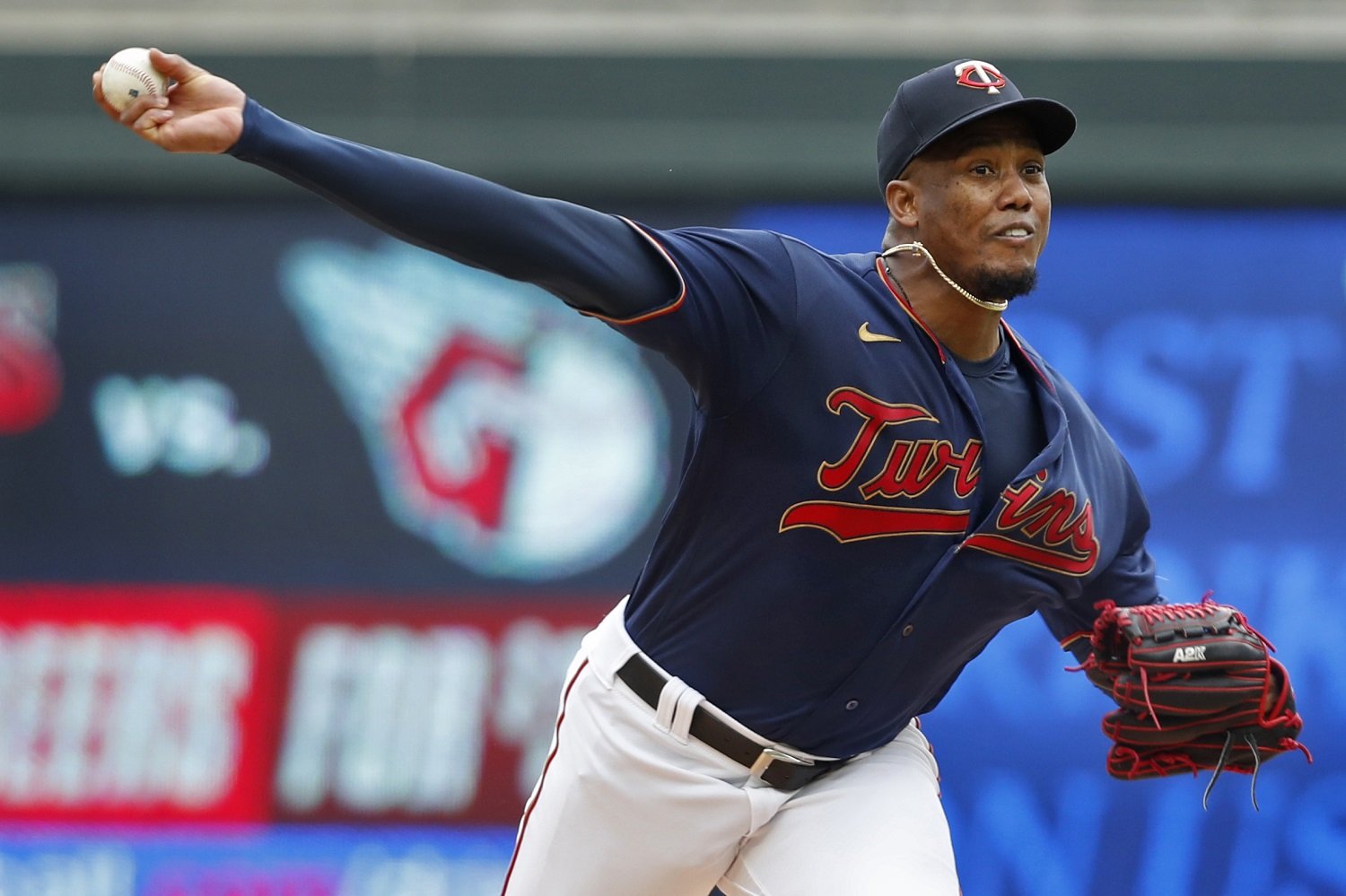 Box Score Starting Pitcher: Chris Archer, 3.0 IP, 5 H, 5 R, 4 ER, 3 BB, 2 K (75 pitches, 42 strikes, 56%) Home Runs: none Win Probability Chart (via FanGraphs) Offense shows some encouraging signs early, but Archer can't come through Apparently, not having to face Justin Verlander makes a huge difference – who knew? Contrary to Tuesday night, when Minnesota’s first hit of the game came only in the eighth inning, the bats were off to a good start early. Max Kepler doubled to deep right in the Twins’ second at-bat of the game and scored moments later when Jorge Polanco hit a double to the right corner. Starting this game with a couple of good, extra-base hits was a relief for this offense. The Twins hadn’t scored a run since the third inning of the final game of the Oakland series. Polanco hit an RBI single on Sunday, and the Twins went on to hit .137 since. But the Twins needed their starting pitcher to pick up as well, and that didn’t come close to happening tonight. Making his sixth start of the season, Chris Archer hadn’t given up more than two runs in any of his previous five starts, but things were about to change. After a long 1-2-3 first inning, Archer struggled with his command and very quickly gave up the Twins' one-run lead. Yordan Álvarez and Yuli Gurriel hit back-to-back singles to open the second inning, and both of them scored later on, on a sac fly and a single. José Altuve hit a leadoff home run to right to open the third, and then things definitely spiraled out of control for Archer. He gave up back-to-back walks after the home run, then loaded the bases with a two-out walk to Kyle Tucker. Jeremy Peña hit a liner to right to score two more runs, making it 5-1 Houston. That concluded Archer’s night, making it the fourth consecutive game in which a Twins starter pitches four innings or less. A storm breaks out, and the game gets suspended, set to resume on Thursday A Royce Lewis single to lead off the bottom of the third brought some hope that the Twins could build some momentum offensively, with the top of the order coming next. But José Urquidy retired the side on 13 pitches to end the threat and… the night at Target Field. Before the fourth inning started, with Yennier Cano warming up to make his big league debut, a storm broke out, and the game went into a weather delay. Fans were evacuated from the stands into the concourses and had to wait until the announcement of the game suspension came, roughly one hour after the interruption of the game. Here we go again... After a 15-hour weather delay (aka, suspended game), the Twins and Astros resumed play at 12:10. Big-League Debuts Technically, Yennier Cano made his MLB debut on Wednesday night because he was announced. However, the reality is that he actually made his MLB debut when the game resumed on Thursday. Cano, who had all night to think about it, was impressive. He struck out the first batter he faced, catcher Martin Maldanado. Then he got Jose Altuve and Michael Brantley quickly. In the fifth inning, he got through Alex Bregman, Yordan Alvarez and Yuli Guerriel without breaking a sweat. He went out for a third inning. Kyle Tucker hit a high home run over the wall in right field to lead off the sixth frame. He got one out in that inning but after a couple of singles, Cody Stashak came on and allowed both inherited runners to score. So in his 2 1/3 innings, he was charged with three runs on three hits. That line is so much worse than how Cano performed. The Twins had a second player make his MLB debut in the game too. When play resumed, Gilberto Celestino had moved from left to center field. Mark Contreras took over in left field. Contreras came to the plate with runners on first and third and nobody out. He swung at the first pitch and hit a ball 105 mph to center. It was caught just in front of the warning track, but the run scored, so Contreras was awarded an RBI on the sacrifice fly. In his next at-bat, Contreras saw a handful of pitches before hitting a bounding grounder up the middle. Astros shortstop Jeremy Pena misplayed it for an error. Contreras later came around to score a run too. His final at-bat ended with a fielder's choice. The Twins are off to a very nice start to their season, but playing against a strong, veteran Astros team without Carlos Correa, and with young pitchers, was always going to be a bit of a reality check. Again, consider the amount of MLB time and at-bats that Alex Kirilloff, Jose Miranda, Gilberto Celestino, Royce Lewis, Mark Contreras, and even Ryan Jeffers have. Yet each of them contributed something in this game and are holding their own. So, you can say it's a reality check to see the Twins lose by a big margin, and that's fair. You can also be really excited about the future of this club, not only this year when Correa and Byron Buxton are back at full strength but for years to come. Along with the pitching pipeline that we are starting to see contribute to the Twins, there are hitters too. It's also OK to acknowledge both. Speaking of firsts... Nick Gordon has played all over the place since joining the Twins last summer. On Thursday, he made his pitching debut. The son of the former All-Star and long-time reliever Tom Gordon, Nick came in to face the Astros with the Twins down 11-3. And, he kept the score right there. For the most part, he lobbed in pitches at 70 mph or so. That said, he hit 87 with one pitch and 88 with another. He got a little help from Gio Urshela, but threw a scoreless frame. What’s Next? In approximately 30 minutes, Josh Winder (1.61 ERA) will try to snap the sequence of bad starts as he takes the mound for the third and final game of this series, facing Luis Garcia (3.45 ERA). Postgame Interview No postgame interviews due to the quick turn-around. Bullpen Usage Spreadsheet SUN MON TUE WED THU TOT Stashak 34 0 0 0 46 80 Cotton 0 0 58 0 0 58 Cano 0 0 0 0 36 36 Coulombe 0 0 29 IL IL 29 Pagán 28 0 0 0 0 28 Thielbar 20 0 3 0 0 23 Smith 12 0 0 0 0 12 Duffey 9 0 0 0 0 9 Duran 0 0 0 0 0 0 Jax 0 0 0 0 0 0
- 14 comments
-
- 3
-
-
- chris archer
- jorge polanco
- (and 1 more)
-
Nothing worked for the Twins on Wednesday night, as the team got another abysmal start from Dylan Bundy, combined with a series of defensive miscues. A mid-game rally came up short, and Baltimore avoids the series loss for now. Box Score Starting Pitcher: Dylan Bundy, 3.2 IP, 11 H, 9 ER, 2 BB, 3 K (74 pitches, 55 strikes, 74.3%) Home Runs: Carlos Correa (2) Bottom 3 WPA: Dylan Bundy (-.465), Gio Urshela (-.096), José Miranda (-.082) Win Probability Chart (via FanGraphs) Dylan Bundy was looking for a bounce-back start after the rough one he had against Tampa Bay last Friday. It was a good chance for him to regain some confidence, mainly because he would face an Orioles offense that had a team OPS of .609 coming into this game, the third-worst in the majors. Bundy managed to pitch a couple of clean innings despite a cold offense in his support early, but things completely derailed for him in the third. Gilberto Celestino couldn’t glove a playable fly ball from Jorge Mateo, who ended up at second. Cedric Mullins homered to right to give Baltimore a 2-0 lead in the next at-bat. That got to Bundy. He then gave up back-to-back walks, throwing only one strike in the next nine pitches. Baltimore kept the line moving with a pair of RBI singles from Austin Hays and Rougned Odor, making it 4-0 Orioles. Then, with Odor on, Ramón Urías smashed a two-run homer to center, making it 6-0 for Baltimore. The offense comes to life, give the Twins a chance After three innings of struggles, Minnesota’s offense finally got the ball rolling and put together a four-run fourth. After Luis Arráez worked a leadoff walk, Carlos Correa hit a two-run dinger off Kyle Bradish. Two other Twins batters reached before the Orioles starter could record an out, with Jorge Polanco drawing a walk and a Trevor Larnach single. They both scored with a Nick Gordon single and a Gio Urshela sac fly, and suddenly the Twins were back in the game. This could’ve been a five-run inning if the Twins weren’t so unlucky tonight. With Gary Sánchez at first and Gordon at third, Celestino hit a line drive that would've reached the outfield and scored Gordon, but the liner hit Sánchez on the base path, and the inning was over. Baltimore gets three runs back as defensive miscues continue The Orioles ambushed Bundy again in the bottom of the fourth, scoring three runs, also with a little help from some lousy fielding from Minnesota. After Bundy struck out the leadoff batter, he gave up back-to-back singles. The second one of those came on a throwing error by José Miranda, and both runners moved into scoring position. Then Bundy had another meltdown, giving up three more runs on a single, a sac fly, and a double, putting the Orioles ahead by 9-4. Bundy’s night was done before getting the inning’s final out, with Danny Coulombe coming in his relief. The Twins starter finished the night with ten hard-hit balls and an average exit velocity of 93.4 mph. Coulombe and Jovani Moran, who got called up earlier this week, did a fine job in relief of Bundy. They combined for 4 1/3 innings of shutout ball. So far in this series, Twins relievers have been doing a fantastic job, not allowing runs in 12 1/3 innings of work. What’s Next? The series final game is tomorrow, with first pitch scheduled to 6:05 pm CDT. The Twins turn to Chris Archer (2.93 ERA) to try to win the series against Spenser Watkins (2.55 ERA). Postgame Interview Bullpen Usage Spreadsheet SAT SUN MON TUE WED TOT Duffey 0 17 0 18 0 35 Thielbar 15 0 0 18 0 33 Duran 20 0 10 0 0 30 Pagán 0 0 27 0 0 27 Coulombe 0 0 0 0 26 26 Stashak 14 0 0 11 0 25 Moran 0 0 0 0 25 25 Jax 0 0 15 0 0 15 Smith 9 0 2 0 0 11 View full article
- 58 replies
-
- 1
-
-
- dylan bundy
- carlos correa
- (and 1 more)
-
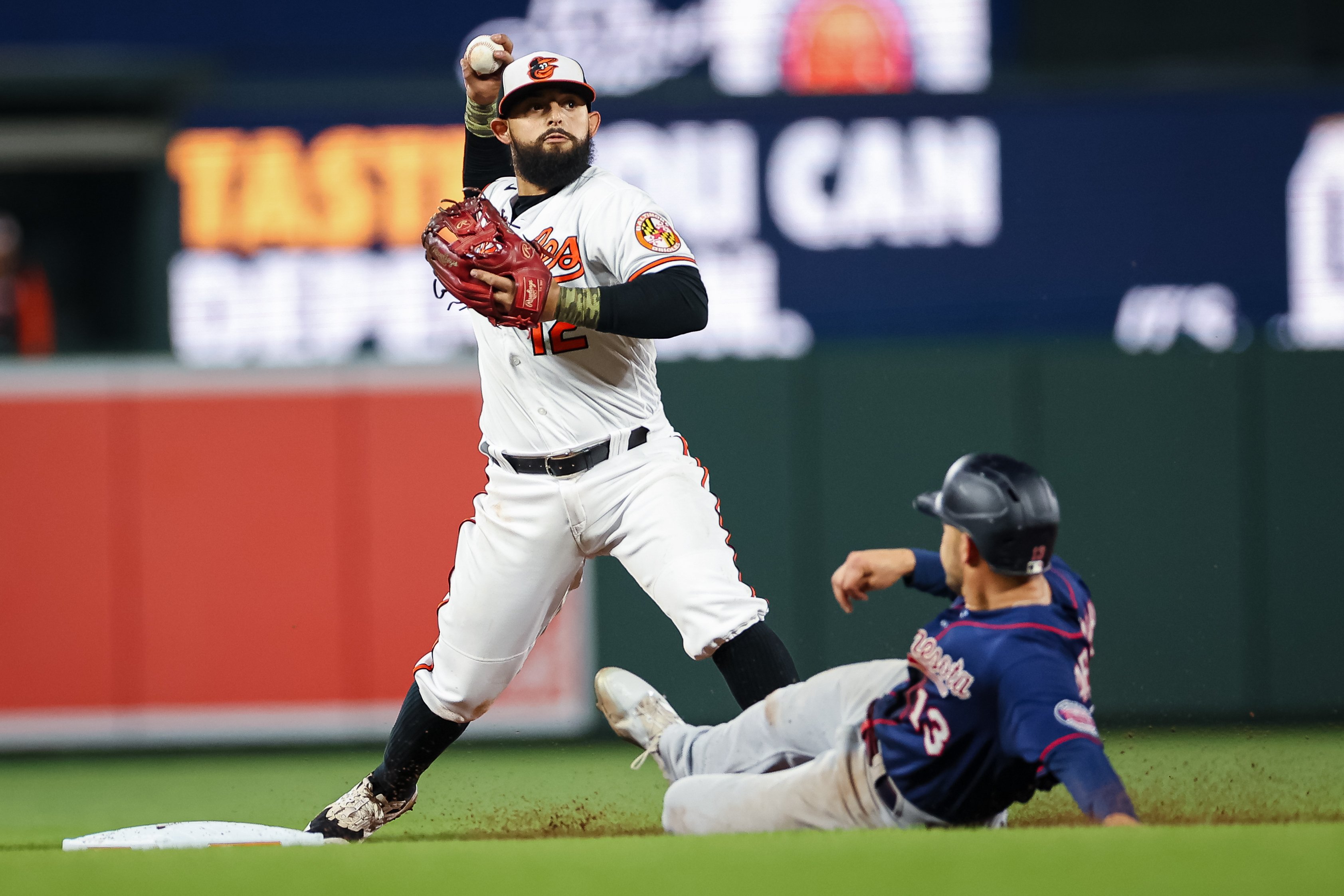 Box Score Starting Pitcher: Dylan Bundy, 3.2 IP, 11 H, 9 ER, 2 BB, 3 K (74 pitches, 55 strikes, 74.3%) Home Runs: Carlos Correa (2) Bottom 3 WPA: Dylan Bundy (-.465), Gio Urshela (-.096), José Miranda (-.082) Win Probability Chart (via FanGraphs) Dylan Bundy was looking for a bounce-back start after the rough one he had against Tampa Bay last Friday. It was a good chance for him to regain some confidence, mainly because he would face an Orioles offense that had a team OPS of .609 coming into this game, the third-worst in the majors. Bundy managed to pitch a couple of clean innings despite a cold offense in his support early, but things completely derailed for him in the third. Gilberto Celestino couldn’t glove a playable fly ball from Jorge Mateo, who ended up at second. Cedric Mullins homered to right to give Baltimore a 2-0 lead in the next at-bat. That got to Bundy. He then gave up back-to-back walks, throwing only one strike in the next nine pitches. Baltimore kept the line moving with a pair of RBI singles from Austin Hays and Rougned Odor, making it 4-0 Orioles. Then, with Odor on, Ramón Urías smashed a two-run homer to center, making it 6-0 for Baltimore. The offense comes to life, give the Twins a chance After three innings of struggles, Minnesota’s offense finally got the ball rolling and put together a four-run fourth. After Luis Arráez worked a leadoff walk, Carlos Correa hit a two-run dinger off Kyle Bradish. Two other Twins batters reached before the Orioles starter could record an out, with Jorge Polanco drawing a walk and a Trevor Larnach single. They both scored with a Nick Gordon single and a Gio Urshela sac fly, and suddenly the Twins were back in the game. This could’ve been a five-run inning if the Twins weren’t so unlucky tonight. With Gary Sánchez at first and Gordon at third, Celestino hit a line drive that would've reached the outfield and scored Gordon, but the liner hit Sánchez on the base path, and the inning was over. Baltimore gets three runs back as defensive miscues continue The Orioles ambushed Bundy again in the bottom of the fourth, scoring three runs, also with a little help from some lousy fielding from Minnesota. After Bundy struck out the leadoff batter, he gave up back-to-back singles. The second one of those came on a throwing error by José Miranda, and both runners moved into scoring position. Then Bundy had another meltdown, giving up three more runs on a single, a sac fly, and a double, putting the Orioles ahead by 9-4. Bundy’s night was done before getting the inning’s final out, with Danny Coulombe coming in his relief. The Twins starter finished the night with ten hard-hit balls and an average exit velocity of 93.4 mph. Coulombe and Jovani Moran, who got called up earlier this week, did a fine job in relief of Bundy. They combined for 4 1/3 innings of shutout ball. So far in this series, Twins relievers have been doing a fantastic job, not allowing runs in 12 1/3 innings of work. What’s Next? The series final game is tomorrow, with first pitch scheduled to 6:05 pm CDT. The Twins turn to Chris Archer (2.93 ERA) to try to win the series against Spenser Watkins (2.55 ERA). Postgame Interview Bullpen Usage Spreadsheet SAT SUN MON TUE WED TOT Duffey 0 17 0 18 0 35 Thielbar 15 0 0 18 0 33 Duran 20 0 10 0 0 30 Pagán 0 0 27 0 0 27 Coulombe 0 0 0 0 26 26 Stashak 14 0 0 11 0 25 Moran 0 0 0 0 25 25 Jax 0 0 15 0 0 15 Smith 9 0 2 0 0 11
- 58 comments
-
- 4
-
-
- dylan bundy
- carlos correa
- (and 1 more)
-
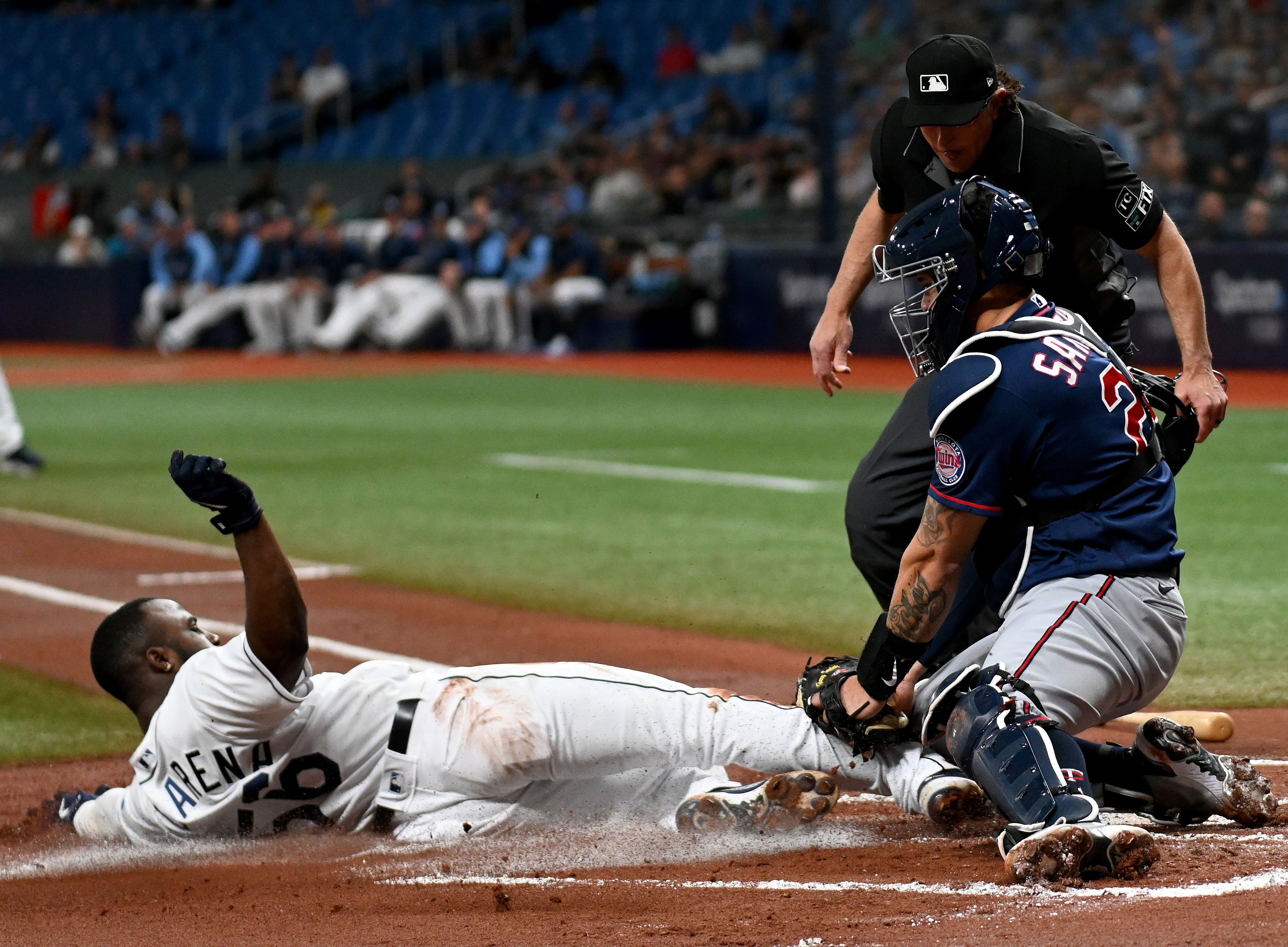 Box Score Starting Pitcher: Dylan Bundy, 6.0 IP, 7 H, 6 ER, 2 BB, 7 K (94 pitches, 57 strikes, 60.6%) Home Runs: none Bottom 3 WPA: Dylan Bundy (-.362), Jorge Polanco (-.042), Luis Arráez (-.032) Win Probability Chart (via FanGraphs) Tampa roughs up Bundy early, building a six-run lead Before tonight’s game, Dylan Bundy had given up only one earned run in over fifteen innings of work this season. But he had a 6.19 career ERA against Tampa Bay, and, apparently, that track record came back to haunt him in this game. The Rays severely roughed him up before he could record his first out of the evening, building a four-run lead only eight pitches into Bundy’s start. A pair of doubles to open the game, and the home team took a quick one-run lead. That was followed by a Yandy Díaz line drive to right that put men in the corners before Josh Lowe hammered a three-run shot to deep center. Bundy’s struggles continued as he walked the next batter, Randy Arozarena, who almost scored in the next at-bat, but he was caught at home plate by a beautiful Trevor Larnach assist from left. On the other side, Corey Kluber had no trouble early against the Twins lineup. Despite some hard contact from Twins bats early, it took him only 20 pitches to retire the first six Minnesota batters in order. His offense provided him with some more run support in the second, as Bundy, still struggling with his command, gave up a leadoff walk to Taylor Walls, and he was pushed across a couple of at-bats later, making it 5-0 Tampa in the second. Bundy settles down, but the offense can’t rally After Kluber finished his first time through the other with yet a third perfect inning, Bundy started to find some groove. For the first time in the evening, he quickly retired the first two batters of the inning in the third. But Mike Zunino jumped on the first pitch he saw next for another Tampa Bay home run. He came back for the fourth and tossed his first 1-2-3 inning of the night. Bundy's adjustments after the third inning would be pointless unless the offense could back him up. In the fourth, the bats came to life briefly and put the Twins on the board. Kluber hit Byron Buxton to lead off the inning, and a couple of at-bats later, Carlos Correa got Minnesota’s first hit of the night, scoring Buxton from second. After that, Jorge Polanco grounded into a double play, and the Twins had to settle for the one run. Though the offense couldn’t come through and rally, Bundy made sure to eat up some more innings. He threw a couple more 1-2-3 innings, in the fifth and the sixth, before departing the game. Curiously enough, his final line saw him walking only two batters while striking out seven. A couple of positive takeaways Only a miracle could save the Twins offensively, but that didn't come close to happening. The silver lining tonight was Danny Coulombe's solid-as-a-rock outing out of the bullpen. He pitched a couple of scoreless frames, inducing six swinging strikes. He also avoided hard contact really well, limiting Rays batters to an average of only 85.1 mph exit velocity. Despite the horrific night at the plate for Minnesota, another silver lining from tonight might have been another good game from Correa. Minnesota was limited to only three hits in the night, and two of them belonged to him. His overall season numbers still don't look good, but he is now 5-for-9 in the past two games, with a double and four runs batted in. What’s Next? Game 2 of the series is tomorrow, with the first pitch scheduled for 3:10 pm CDT. Former Ray Chris Archer (3.18 ERA) takes the mound for Minnesota, facing lefty Shane McClanahan (2.45 ERA). Postgame Interview Bullpen Usage Spreadsheet MON TUE WED THU FRI TOT Jax 0 10 0 46 0 56 Coulombe 0 0 20 0 35 55 Duffey 0 19 0 8 0 27 Thielbar 0 27 0 0 0 27 Pagán 0 23 0 0 0 23 Stashak 0 0 0 18 0 18 Smith 0 0 10 0 0 10 Duran 0 0 0 0 0 0 Winder 0 0 0 0 0 0
- 16 comments
-
- 1
-
-
- dylan bundy
- carlos correa
- (and 2 more)
-
The winning streak is over. Tampa Bay ambushed Dylan Bundy right out of the gate, building a six-run lead in the first three innings, on their way to blowing out the Twins in the series opener. Box Score Starting Pitcher: Dylan Bundy, 6.0 IP, 7 H, 6 ER, 2 BB, 7 K (94 pitches, 57 strikes, 60.6%) Home Runs: none Bottom 3 WPA: Dylan Bundy (-.362), Jorge Polanco (-.042), Luis Arráez (-.032) Win Probability Chart (via FanGraphs) Tampa roughs up Bundy early, building a six-run lead Before tonight’s game, Dylan Bundy had given up only one earned run in over fifteen innings of work this season. But he had a 6.19 career ERA against Tampa Bay, and, apparently, that track record came back to haunt him in this game. The Rays severely roughed him up before he could record his first out of the evening, building a four-run lead only eight pitches into Bundy’s start. A pair of doubles to open the game, and the home team took a quick one-run lead. That was followed by a Yandy Díaz line drive to right that put men in the corners before Josh Lowe hammered a three-run shot to deep center. Bundy’s struggles continued as he walked the next batter, Randy Arozarena, who almost scored in the next at-bat, but he was caught at home plate by a beautiful Trevor Larnach assist from left. On the other side, Corey Kluber had no trouble early against the Twins lineup. Despite some hard contact from Twins bats early, it took him only 20 pitches to retire the first six Minnesota batters in order. His offense provided him with some more run support in the second, as Bundy, still struggling with his command, gave up a leadoff walk to Taylor Walls, and he was pushed across a couple of at-bats later, making it 5-0 Tampa in the second. Bundy settles down, but the offense can’t rally After Kluber finished his first time through the other with yet a third perfect inning, Bundy started to find some groove. For the first time in the evening, he quickly retired the first two batters of the inning in the third. But Mike Zunino jumped on the first pitch he saw next for another Tampa Bay home run. He came back for the fourth and tossed his first 1-2-3 inning of the night. Bundy's adjustments after the third inning would be pointless unless the offense could back him up. In the fourth, the bats came to life briefly and put the Twins on the board. Kluber hit Byron Buxton to lead off the inning, and a couple of at-bats later, Carlos Correa got Minnesota’s first hit of the night, scoring Buxton from second. After that, Jorge Polanco grounded into a double play, and the Twins had to settle for the one run. Though the offense couldn’t come through and rally, Bundy made sure to eat up some more innings. He threw a couple more 1-2-3 innings, in the fifth and the sixth, before departing the game. Curiously enough, his final line saw him walking only two batters while striking out seven. A couple of positive takeaways Only a miracle could save the Twins offensively, but that didn't come close to happening. The silver lining tonight was Danny Coulombe's solid-as-a-rock outing out of the bullpen. He pitched a couple of scoreless frames, inducing six swinging strikes. He also avoided hard contact really well, limiting Rays batters to an average of only 85.1 mph exit velocity. Despite the horrific night at the plate for Minnesota, another silver lining from tonight might have been another good game from Correa. Minnesota was limited to only three hits in the night, and two of them belonged to him. His overall season numbers still don't look good, but he is now 5-for-9 in the past two games, with a double and four runs batted in. What’s Next? Game 2 of the series is tomorrow, with the first pitch scheduled for 3:10 pm CDT. Former Ray Chris Archer (3.18 ERA) takes the mound for Minnesota, facing lefty Shane McClanahan (2.45 ERA). Postgame Interview Bullpen Usage Spreadsheet MON TUE WED THU FRI TOT Jax 0 10 0 46 0 56 Coulombe 0 0 20 0 35 55 Duffey 0 19 0 8 0 27 Thielbar 0 27 0 0 0 27 Pagán 0 23 0 0 0 23 Stashak 0 0 0 18 0 18 Smith 0 0 10 0 0 10 Duran 0 0 0 0 0 0 Winder 0 0 0 0 0 0 View full article
- 16 replies
-
- 1
-
-
- dylan bundy
- carlos correa
- (and 2 more)
-
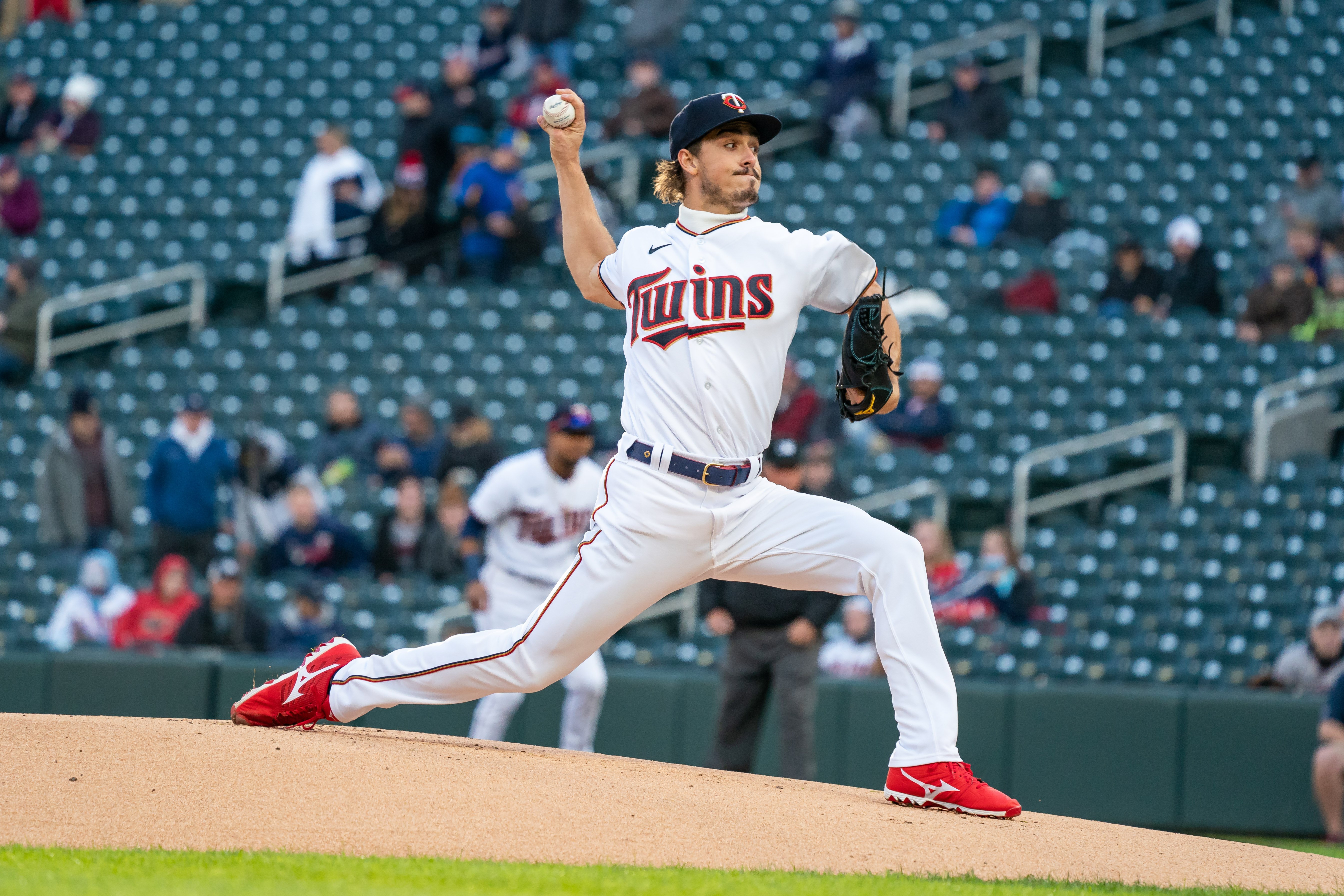 Box Score Starting Pitcher: Joe Ryan, 7.0 IP, 1 H, 0 ER, 1 BB, 9 K (90 pitches, 58 strikes, 64.4%) Home Runs: Max Kepler, 2 (4), Ryan Jeffers (2) Top 3 WPA: Joe Ryan (.322), Max Kepler (.223), Ryan Jeffers (.078) Win Probability Chart (via FanGraphs) Joe Ryan – and his cool turtleneck – picked up where he left off after his previous two outstanding starts. He pitched superbly right from the get-go, tossing four scoreless frames on 54 pitches. The first hit allowed by him came only in the fourth, but by that point, he had already induced nine swinging strikes. Also, in the fourth, he matched his season-high in strikeouts with seven. He did get some help from some excellent fielding, including a great stop from Carlos Correa, but his most important help came from the batter’s box. Max Kepler kept the hottest streak he’s had in a while going. Facing former teammate Michael Pineda, Max provided Ryan with some run support by hitting two early, solo home runs in his first two plate appearances. He now has four homers in the season, something that in 2021 didn’t happen until May 16. His increased productivity could be one of Minnesota’s most significant uplifts for this season, should it carry on. Ryan pitched a couple more 1-2-3 innings to reach six scoreless frames on only 76 pitches. That allowed him to become the first Twins starter this year to make it into the seventh. He did so and tossed yet another 1-2-3 innings, completing the brilliant seven-inning shutout. After giving up that Cabrera single in the fourth, he retired ten consecutive batters, almost effortlessly dominating the Tiger lineup. According to MLB.com's Do-Hyoung Park, Joe Ryan now has 57 strikeouts through his first nine starts, a new club record. Bert Blyleven held that record until tonight, with 50 punchouts. The offense came through with some more breathing room to make Ryan's evening even better with a four-hit fifth. Trevor Larnach opened the inning with a leadoff double and was followed by a rocket (110.9 mph exit velocity) from Ryan Jeffers, a two-run home run. In that same inning, two more batters reached against Pineda, but they were stranded. The offense continued to hit the ball hard, producing another run for the Twins in the bottom of the seventh. Larnach hit yet another leadoff double, and he was pushed across in the very next at-bat by a Jeffers double. Both of those hits surpassed 107 mph exit velocity and gave Minnesota a 5-0 lead. Joe Smith and Danny Coulombe had no trouble whatsoever shredding the uninspired Detroit offense, tossing a couple of clean innings on 30 pitches, making it a memorable, all-around performance by the Twins. What's next? Before heading to the east coast for a seven-game road trip, the Twins close out the series tomorrow with Bailey Ober (2.81 ERA) dueling against lefty Tarik Skubal (2.30 ERA). The first pitch is scheduled for 12:10 pm CDT. Postgame Interview Bullpen Usage Spreadsheet SAT SUN MON TUE WED TOT Winder 0 61 0 0 0 61 Thielbar 22 0 0 27 0 49 Coulombe 28 0 0 0 20 48 Pagán 0 0 0 23 0 23 Smith 0 13 0 0 10 23 Stashak 22 0 0 0 0 22 Duffey 0 0 0 19 0 19 Duran 0 18 0 0 0 18 Jax 0 0 0 10 0 10
- 46 comments
-
- 3
-
-
- joe ryan
- max kepler
- (and 2 more)
-
Behind another fantastic start from rookie Joe Ryan, the Twins extended their winning streak to six, their longest since August 2020. They take the series win and get the chance to sweep another division rival. Box Score Starting Pitcher: Joe Ryan, 7.0 IP, 1 H, 0 ER, 1 BB, 9 K (90 pitches, 58 strikes, 64.4%) Home Runs: Max Kepler, 2 (4), Ryan Jeffers (2) Top 3 WPA: Joe Ryan (.322), Max Kepler (.223), Ryan Jeffers (.078) Win Probability Chart (via FanGraphs) Joe Ryan – and his cool turtleneck – picked up where he left off after his previous two outstanding starts. He pitched superbly right from the get-go, tossing four scoreless frames on 54 pitches. The first hit allowed by him came only in the fourth, but by that point, he had already induced nine swinging strikes. Also, in the fourth, he matched his season-high in strikeouts with seven. He did get some help from some excellent fielding, including a great stop from Carlos Correa, but his most important help came from the batter’s box. Max Kepler kept the hottest streak he’s had in a while going. Facing former teammate Michael Pineda, Max provided Ryan with some run support by hitting two early, solo home runs in his first two plate appearances. He now has four homers in the season, something that in 2021 didn’t happen until May 16. His increased productivity could be one of Minnesota’s most significant uplifts for this season, should it carry on. Ryan pitched a couple more 1-2-3 innings to reach six scoreless frames on only 76 pitches. That allowed him to become the first Twins starter this year to make it into the seventh. He did so and tossed yet another 1-2-3 innings, completing the brilliant seven-inning shutout. After giving up that Cabrera single in the fourth, he retired ten consecutive batters, almost effortlessly dominating the Tiger lineup. According to MLB.com's Do-Hyoung Park, Joe Ryan now has 57 strikeouts through his first nine starts, a new club record. Bert Blyleven held that record until tonight, with 50 punchouts. The offense came through with some more breathing room to make Ryan's evening even better with a four-hit fifth. Trevor Larnach opened the inning with a leadoff double and was followed by a rocket (110.9 mph exit velocity) from Ryan Jeffers, a two-run home run. In that same inning, two more batters reached against Pineda, but they were stranded. The offense continued to hit the ball hard, producing another run for the Twins in the bottom of the seventh. Larnach hit yet another leadoff double, and he was pushed across in the very next at-bat by a Jeffers double. Both of those hits surpassed 107 mph exit velocity and gave Minnesota a 5-0 lead. Joe Smith and Danny Coulombe had no trouble whatsoever shredding the uninspired Detroit offense, tossing a couple of clean innings on 30 pitches, making it a memorable, all-around performance by the Twins. What's next? Before heading to the east coast for a seven-game road trip, the Twins close out the series tomorrow with Bailey Ober (2.81 ERA) dueling against lefty Tarik Skubal (2.30 ERA). The first pitch is scheduled for 12:10 pm CDT. Postgame Interview Bullpen Usage Spreadsheet SAT SUN MON TUE WED TOT Winder 0 61 0 0 0 61 Thielbar 22 0 0 27 0 49 Coulombe 28 0 0 0 20 48 Pagán 0 0 0 23 0 23 Smith 0 13 0 0 10 23 Stashak 22 0 0 0 0 22 Duffey 0 0 0 19 0 19 Duran 0 18 0 0 0 18 Jax 0 0 0 10 0 10 View full article
- 46 replies
-
- 1
-
-
- joe ryan
- max kepler
- (and 2 more)
-
On yet another terrible game by the Twins offense, Bailey Ober and the bullpen kept chances alive until the end. The White Sox made a horrific defensive blunder and allowed Minnesota to steal the game in the eighth. Box Score Starting Pitcher: Bailey Ober, 5.0 IP, 5 H, 1 ER, 0 BB, 6 K (79 pitches, 56 strikes, 70.8%) Home Runs: none Top 3 WPA: Carlos Correa (.462), Emilio Pagán (.152), Bailey Ober (.104) Win Probability Chart (via FanGraphs) Ober pitches solid five innings, but gets no help from the offense Earlier today, the Twins official Twitter account sent out the tweet below, which could’ve somehow put a little pressure on young starter Bailey Ober: But that’s exactly what didn't happen. The sophomore had a solid start to this game, dominating the White Sox lineup. With solid command, he threw over 72% strikes in the first three innings allowing only two hits. Unfortunately for the Twins, Chicago’s starter Michael Kopech also feasted off recently weakened Minnesota’s offense through the first portion of the game. Luis Arráez opened up the first inning with a leadoff single, but Carlos Correa grounded into a double play immediately afterward. In that same inning, Jorge Polanco reached on a walk but was caught trying to steal second, ending the threat. The first man in scoring position of the game was a Twin. Trevor Larnach hit a two-out double in the second, but Kopech followed that up by retiring the next eight batters, including four strikeouts. Ober pitched a clean fourth inning, but the White Sox got to him in the fifth, with Andrew Vaughn smashing a leadoff home run to center to make it 1-0 Chicago. Ober got into a bad spot when Reese McGuire followed that homer with a double, prompting an immediate mound visit by Wes Johnson. That helped him get back on track and he retired the next three batters to limit the damage to just the one run. Ober’s night was done after that inning, with Griffin Jax coming in to pitch the sixth. With tonight’s outing, Ober lowered his season ERA to 2.81 and the Twins rotation continues to be one of the best in the majors. You know, as we all have predicted a month ago, right? Jax, Bullpen perform brilliantly; wild defense from Chicago gives Twins the lead Griffin Jax came in trying to keep this a one-run game and he couldn’t have done a better job. He threw two scoreless and hitless frames on 29 pitches – 24 sliders (83%). He pitched around a leadoff walk in the sixth and went on to retire the next six batters, causing them to swing and miss 46% of the time. After a rough outing in Kansas City on Tuesday that cost the Twins a win, Tyler Duffey got a much-needed clean inning in the eighth. He retired the top of Chicago’s lineup in order on 13 pitches, including two strikeouts, giving the offense a chance to redeem itself in the bottom of the inning. Could they do it? Well, yes and no. The inning started out atrociously for Minnesota, with Miguel Sanó and Nick Gordon quickly retired on ten pitches. Ryan Jeffers stepped up to the plate and, also quickly, was down 0-2 in the count. Suddenly, things started to change in a wild way. In the third pitch of the at-bat, Jeffers crushed a ground-rule double to left-center, bringing Arráez to the plate. Luis worked a nice six-pitch walk to keep the inning alive and bring Correa to the plate. Slumping really hard on the season so far, “C4” swung on the second pitch and grounded to the hole in deep shortstop, enough to score Jeffers. But to make things better, Tim Anderson and José Abreu made a couple of awful throws that allowed Arráez to also score and Correa to make second. (Just watch this...) Emilio Pagán was brought in to pitch the ninth and try to earn the save, but things didn’t start well for him. He gave up a leadoff double to Eloy Jiménez and loaded the bases with only one out. After a hard-fought, nine-pitch at-bat, he got McGuire to pop out. Then, he almost lost Jake Burger for the last out but managed to strike him out on a full count. What’s Next? Game two of the series is tomorrow at 3:05 pm CDT, when Dylan Bundy (2-0, 0.87 ERA) tries to keep his hot start going facing righty Vince Velasquez (0-1, 4.15 ERA). Byron Buxton is expected to be back in the lineup. Postgame Interviews Bullpen Usage Spreadsheet MON TUE WED THU FRI TOT Jax 47 0 0 0 29 76 Pagán 0 0 0 9 34 43 Duran 23 0 0 15 0 38 Romero 0 30 0 0 0 30 Duffey 0 15 0 0 13 28 Smith 6 2 0 16 0 24 Stashak 0 0 21 0 0 21 Thielbar 0 0 15 0 0 15 Winder 0 0 0 0 0 0 Coulombe 0 0 0 0 0 0 View full article
- 43 replies
-
- 1
-
-
- carlos correa
- tyler duffey
- (and 2 more)
-
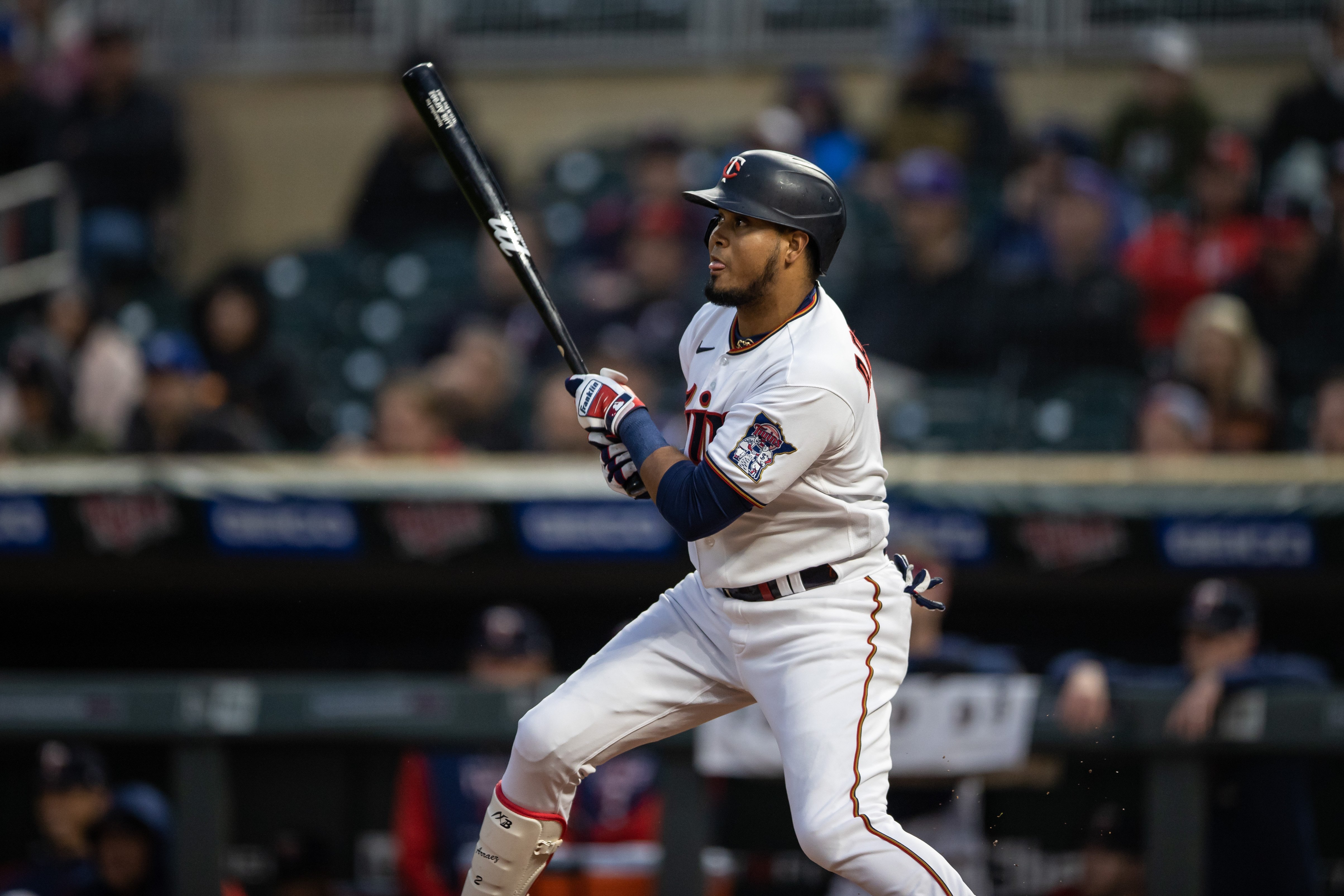 Box Score Starting Pitcher: Bailey Ober, 5.0 IP, 5 H, 1 ER, 0 BB, 6 K (79 pitches, 56 strikes, 70.8%) Home Runs: none Top 3 WPA: Carlos Correa (.462), Emilio Pagán (.152), Bailey Ober (.104) Win Probability Chart (via FanGraphs) Ober pitches solid five innings, but gets no help from the offense Earlier today, the Twins official Twitter account sent out the tweet below, which could’ve somehow put a little pressure on young starter Bailey Ober: But that’s exactly what didn't happen. The sophomore had a solid start to this game, dominating the White Sox lineup. With solid command, he threw over 72% strikes in the first three innings allowing only two hits. Unfortunately for the Twins, Chicago’s starter Michael Kopech also feasted off recently weakened Minnesota’s offense through the first portion of the game. Luis Arráez opened up the first inning with a leadoff single, but Carlos Correa grounded into a double play immediately afterward. In that same inning, Jorge Polanco reached on a walk but was caught trying to steal second, ending the threat. The first man in scoring position of the game was a Twin. Trevor Larnach hit a two-out double in the second, but Kopech followed that up by retiring the next eight batters, including four strikeouts. Ober pitched a clean fourth inning, but the White Sox got to him in the fifth, with Andrew Vaughn smashing a leadoff home run to center to make it 1-0 Chicago. Ober got into a bad spot when Reese McGuire followed that homer with a double, prompting an immediate mound visit by Wes Johnson. That helped him get back on track and he retired the next three batters to limit the damage to just the one run. Ober’s night was done after that inning, with Griffin Jax coming in to pitch the sixth. With tonight’s outing, Ober lowered his season ERA to 2.81 and the Twins rotation continues to be one of the best in the majors. You know, as we all have predicted a month ago, right? Jax, Bullpen perform brilliantly; wild defense from Chicago gives Twins the lead Griffin Jax came in trying to keep this a one-run game and he couldn’t have done a better job. He threw two scoreless and hitless frames on 29 pitches – 24 sliders (83%). He pitched around a leadoff walk in the sixth and went on to retire the next six batters, causing them to swing and miss 46% of the time. After a rough outing in Kansas City on Tuesday that cost the Twins a win, Tyler Duffey got a much-needed clean inning in the eighth. He retired the top of Chicago’s lineup in order on 13 pitches, including two strikeouts, giving the offense a chance to redeem itself in the bottom of the inning. Could they do it? Well, yes and no. The inning started out atrociously for Minnesota, with Miguel Sanó and Nick Gordon quickly retired on ten pitches. Ryan Jeffers stepped up to the plate and, also quickly, was down 0-2 in the count. Suddenly, things started to change in a wild way. In the third pitch of the at-bat, Jeffers crushed a ground-rule double to left-center, bringing Arráez to the plate. Luis worked a nice six-pitch walk to keep the inning alive and bring Correa to the plate. Slumping really hard on the season so far, “C4” swung on the second pitch and grounded to the hole in deep shortstop, enough to score Jeffers. But to make things better, Tim Anderson and José Abreu made a couple of awful throws that allowed Arráez to also score and Correa to make second. (Just watch this...) Emilio Pagán was brought in to pitch the ninth and try to earn the save, but things didn’t start well for him. He gave up a leadoff double to Eloy Jiménez and loaded the bases with only one out. After a hard-fought, nine-pitch at-bat, he got McGuire to pop out. Then, he almost lost Jake Burger for the last out but managed to strike him out on a full count. What’s Next? Game two of the series is tomorrow at 3:05 pm CDT, when Dylan Bundy (2-0, 0.87 ERA) tries to keep his hot start going facing righty Vince Velasquez (0-1, 4.15 ERA). Byron Buxton is expected to be back in the lineup. Postgame Interviews Bullpen Usage Spreadsheet MON TUE WED THU FRI TOT Jax 47 0 0 0 29 76 Pagán 0 0 0 9 34 43 Duran 23 0 0 15 0 38 Romero 0 30 0 0 0 30 Duffey 0 15 0 0 13 28 Smith 6 2 0 16 0 24 Stashak 0 0 21 0 0 21 Thielbar 0 0 15 0 0 15 Winder 0 0 0 0 0 0 Coulombe 0 0 0 0 0 0
- 43 comments
-
- 6
-
-
- carlos correa
- tyler duffey
- (and 2 more)
-
Royals 2, Twins 0: Another Solid Pitching Performance Gets Wasted
Thiéres Rabelo posted an article in Twins
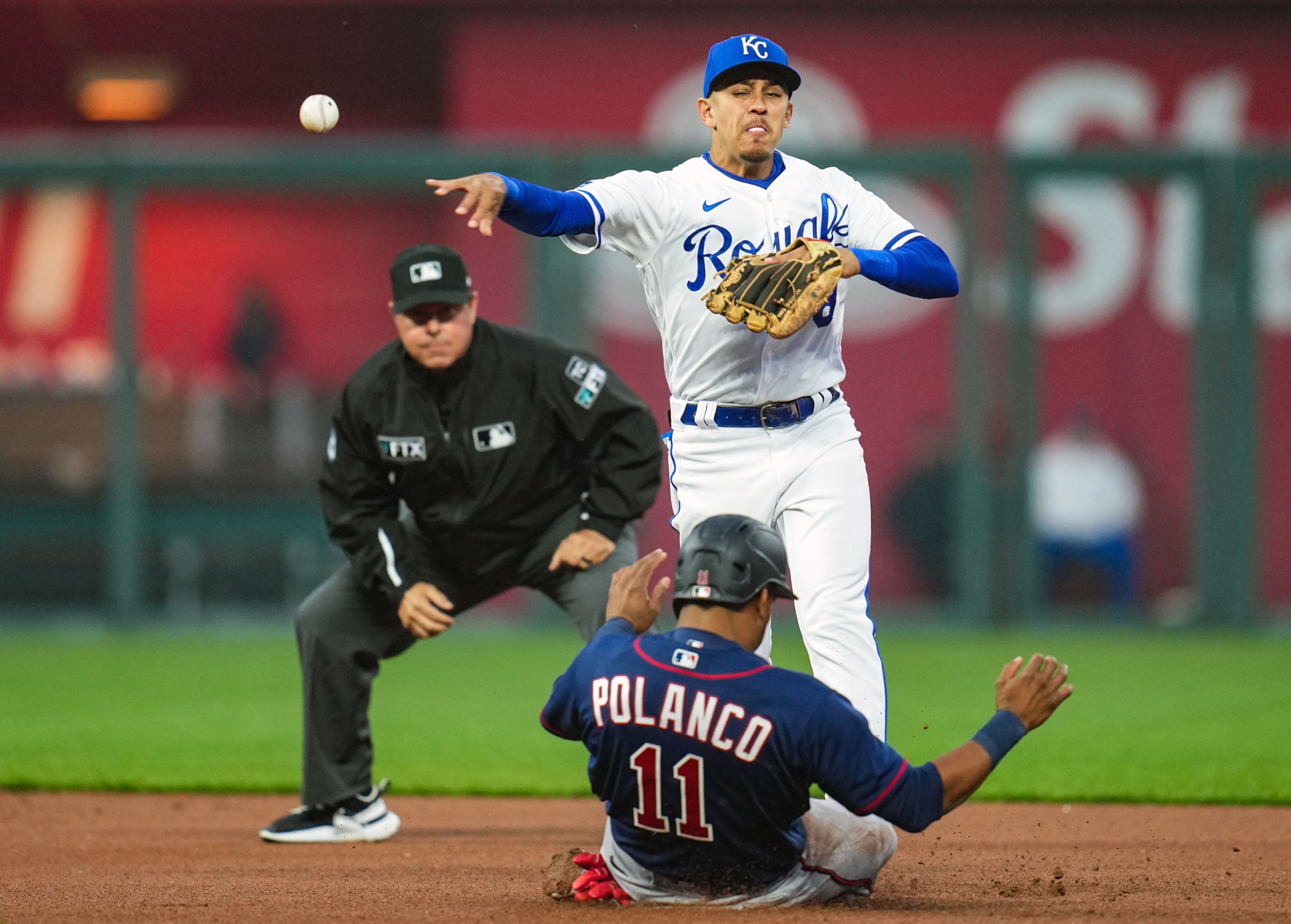 Box Score Starting Pitcher: Chris Paddack, 5.0 IP, 5 H, 2 ER, 0 BB, 4 K (71 pitches, 52 strikes, 73.2%) Home Runs: none Bottom 3 WPA: Gio Urshela (-.181), Gary Sánchez (-.154), Trevor Larnach (-.085) Win Probability Chart (via FanGraphs) The Royals put pressure on Chris Paddack right out of the gate, as the righty gave up back-to-back hits to open the game, and the Royals had men on the corners eight pitches into the game. Paddack was able to induce a double play to get out of the jam partially, but not before leadoff man Whit Merrifield scored from third. Fortunately, that double play was the beginning of Paddack hottest streak. After the two hits he allowed early, he went on to retire the next eleven batters. The Royals manufactured another run in the fifth inning, again opening the inning with back-to-back hits. Adalberto Mondesí brought Andrew Benintendi home on a bunt single to make it 2-0 Kansas City. Paddack got right back on track and retired the next three batters to end the threat. Unfortunately, the offense was a no factor to back him up. Coming into this game, the Twins' offense had a poor OPS of .621 (ranking 19th in MLB) and struck out 26.8% of the time (ranking 22nd) when facing lefties this year. Minnesota’s bats were utterly dominated by Royals starter, lefty Daniel Lynch during the first five innings. The only time during that span the Twins posed a threat to Lynch was in the third inning, the only time they had two baserunners – a Miguel Sanó leadoff single and a Jorge Polanco walk. However, Minnesota couldn’t cash in, and they stranded both runners. In the sixth, a leadoff single by Carlos Correa took Lynch out of the game, but the pitching change didn’t do much for Minnesota’s offense, which continued struggling. Paddack closed out the game with a solid start, throwing 73.2% strikes over five innings of work. After two starts, he has yet to give up a walk in a Twins uniform. Is he becoming a reason for optimism for Twins fans? Caleb Thielbar and Cody Stashak combined for three solid shutout innings with no walks and four strikeouts, keeping the team alive came the ninth inning. But once again the cold bats couldn't provide the needed runs. According to Aaron Gleeman, this is the first time in Twins history they've had a batting average below .200 after 12 games. It can't get any worse than that. What’s Next? To conclude the road trip, the Twins will try to avoid the sweep on Thursday afternoon. Joe Ryan duels with Zack Greinke, with the first pitch scheduled for 1:10 pm CDT. Postgame Interview Bullpen Usage Spreadsheet SAT SUN MON TUE WED TOT Winder 66 0 0 0 0 66 Jax 0 0 47 0 0 47 Romero 11 0 0 30 0 41 Stashak 0 17 0 0 21 38 Duffey 0 18 0 15 0 33 Thielbar 0 17 0 0 15 32 Duran 0 0 23 0 0 23 Smith 0 0 6 2 0 8 Pagán 0 0 0 0 0 0 Coulombe 0 0 0 0 0 0
- 59 comments
-
- 2
-
-
- chris paddack
- carlos correa
- (and 1 more)
-
In what might've been their worst offensive performance of the season, the Twins got shut out by the Royals in Kansas City tonight, wasting a great pitching performance by Chris Paddack and the bullpen. Box Score Starting Pitcher: Chris Paddack, 5.0 IP, 5 H, 2 ER, 0 BB, 4 K (71 pitches, 52 strikes, 73.2%) Home Runs: none Bottom 3 WPA: Gio Urshela (-.181), Gary Sánchez (-.154), Trevor Larnach (-.085) Win Probability Chart (via FanGraphs) The Royals put pressure on Chris Paddack right out of the gate, as the righty gave up back-to-back hits to open the game, and the Royals had men on the corners eight pitches into the game. Paddack was able to induce a double play to get out of the jam partially, but not before leadoff man Whit Merrifield scored from third. Fortunately, that double play was the beginning of Paddack hottest streak. After the two hits he allowed early, he went on to retire the next eleven batters. The Royals manufactured another run in the fifth inning, again opening the inning with back-to-back hits. Adalberto Mondesí brought Andrew Benintendi home on a bunt single to make it 2-0 Kansas City. Paddack got right back on track and retired the next three batters to end the threat. Unfortunately, the offense was a no factor to back him up. Coming into this game, the Twins' offense had a poor OPS of .621 (ranking 19th in MLB) and struck out 26.8% of the time (ranking 22nd) when facing lefties this year. Minnesota’s bats were utterly dominated by Royals starter, lefty Daniel Lynch during the first five innings. The only time during that span the Twins posed a threat to Lynch was in the third inning, the only time they had two baserunners – a Miguel Sanó leadoff single and a Jorge Polanco walk. However, Minnesota couldn’t cash in, and they stranded both runners. In the sixth, a leadoff single by Carlos Correa took Lynch out of the game, but the pitching change didn’t do much for Minnesota’s offense, which continued struggling. Paddack closed out the game with a solid start, throwing 73.2% strikes over five innings of work. After two starts, he has yet to give up a walk in a Twins uniform. Is he becoming a reason for optimism for Twins fans? Caleb Thielbar and Cody Stashak combined for three solid shutout innings with no walks and four strikeouts, keeping the team alive came the ninth inning. But once again the cold bats couldn't provide the needed runs. According to Aaron Gleeman, this is the first time in Twins history they've had a batting average below .200 after 12 games. It can't get any worse than that. What’s Next? To conclude the road trip, the Twins will try to avoid the sweep on Thursday afternoon. Joe Ryan duels with Zack Greinke, with the first pitch scheduled for 1:10 pm CDT. Postgame Interview Bullpen Usage Spreadsheet SAT SUN MON TUE WED TOT Winder 66 0 0 0 0 66 Jax 0 0 47 0 0 47 Romero 11 0 0 30 0 41 Stashak 0 17 0 0 21 38 Duffey 0 18 0 15 0 33 Thielbar 0 17 0 0 15 32 Duran 0 0 23 0 0 23 Smith 0 0 6 2 0 8 Pagán 0 0 0 0 0 0 Coulombe 0 0 0 0 0 0 View full article
-
Minnesota bounced back nicely after getting swept by the Dodgers at home earlier this week. Despite losing Byron Buxton to an injury in the very first inning, the Twins went on to beat the Red Sox at Fenway Park, behind a magnificent start by rookie Joe Ryan. Box Score Starting Pitcher: Joe Ryan, 6.0 IP, 5 H, 1 ER, 0 BB, 7 K (82 pitches, 60 strikes, 73.1%) Home Runs: Miguel Sanó (1) Top 3 WPA: Joe Ryan (.189), Miguel Sanó (.170), Luis Arráez (.109) Win Probability Chart (via FanGraphs) Twins lose Buxton early but score four runs on five hits It was an eventful start to the game for Minnesota. Eight pitches into the first inning, Byron Buxton left the game with an apparent leg injury. He popped up to shallow left, and when Boston’s defense couldn’t make the play because of the sun, he sprinted and slid into second when the injury occurred. He immediately headed to the dugout and was replaced by Nick Gordon. On the brighter side of the inning, Luis Arráez snapped an 0-for-7 funk with a liner to center, and yet again, the Red Sox defense couldn’t take care of it, allowing Gordon to score the game’s first run easily. Even though Jorge Polanco drew a walk, helping to drive Nick Pivetta’s pitch count to 26, Minnesota had to settle for the one run in the first. But that wouldn’t last long. After Joe Ryan cruised through the bottom first on only eight pitches, striking out two and throwing strikes on every pitch, the offense ambushed Pivetta, scoring three runs on three hits. After Trevor Larnach drew a one-out walk, Miguel Sanó followed with a moon shot that went over the ‘green monster’ to make it 3-0 Twins. That was his first base hit of the season. Could his biggest early-season problem be the cold weather? Later on, Gordon singled to center with two outs, only to be brought home in the following at-bat by an Arráez double, making it 4-0 Minnesota. That’s the second multi-hit game for Luis this season. Closing out the inning with 54 pitches, Pivetta was done after two. Alex Verdugo got Boston a run back in the bottom of the second with a solo homer to center. Ryan looks excellent through six; the offense adds on After a somewhat shaky opening day start, Ryan looked superb today at Fenway. Boston hitters simply couldn’t figure him out, especially his slider, which produced whiffs 47% of the time in the first five innings. He also managed to get out of jams during the fourth and fifth innings when Boston had two runners on in each of them. In the meantime, he got even more run support from the bats. Carlos Correa and Polanco reached on a walk and a single to open the fifth inning, and both of them scored on a Gary Sánchez ground ball, making it 6-1 Minnesota. With those two runs batted in, Sánchez now has more RBI against Boston than any other team in the majors. Ryan continued his fantastic outing with a 1-2-3 sixth, shredding through Red Sox hitting with his off-speed offerings. By the end of the inning, he had produced an astonishing 19 swinging strikes, a career-high for him. Overall, 40% of his pitches were either called strikes or swinging strikes. Duran breaks Twitter, Boston’s rally comes up short Jhoan Duran took over once Ryan departed, and he baffled local fans and media with an incredible seventh inning. He retired the side on eight pitches which averaged 98.2 MPH and touched 102 MPH. His performance drew the attention of several national media accounts on Twitter. Boston got to him during the eighth, scoring three runs. Jackie Bradley Jr. hit a leadoff double and was pushed across a couple of at-bats later by a Kike Hernandez double. Then, Rafael Devers followed that with a two-run home run to the corner right, cutting the Twins lead in half. Duran cooled down and struck out the final two batters to end the inning. With the Red Sox getting dangerously close, Minnesota needed some insurance runs. Reliever Matt Barnes retired Arráez to open the top of the ninth, but he gave up a couple of walks against the following two batters. The Twins cashed in on both of those walks, first with a Max Kepler single and then with a slow groundout from Larnach with the bases loaded, bringing the lead back to four. Emilio Pagán came in to pitch the bottom of the ninth, and he threw a clean 1-2-3 inning to secure the win. What’s Next? For game two on Saturday, the Twins turn to Sonny Gray, who is set to face Boston’s Tanner Houck. The first pitch is scheduled for 3:10 pm CDT. Postgame Interview Bullpen Usage Spreadsheet MON TUE WED THU FRI TOT Duran 11 0 0 0 34 45 Thielbar 19 18 0 0 0 37 Romero 0 34 0 0 0 34 Pagán 0 20 0 0 11 31 Winder 0 28 0 0 0 28 Jax 0 0 22 0 0 22 Smith 19 3 0 0 0 22 Coulombe 0 14 0 0 0 14 Duffey 14 0 0 0 0 14 View full article
- 38 replies
-
- 1
-
-
- byron buxton
- joe ryan
- (and 3 more)
-
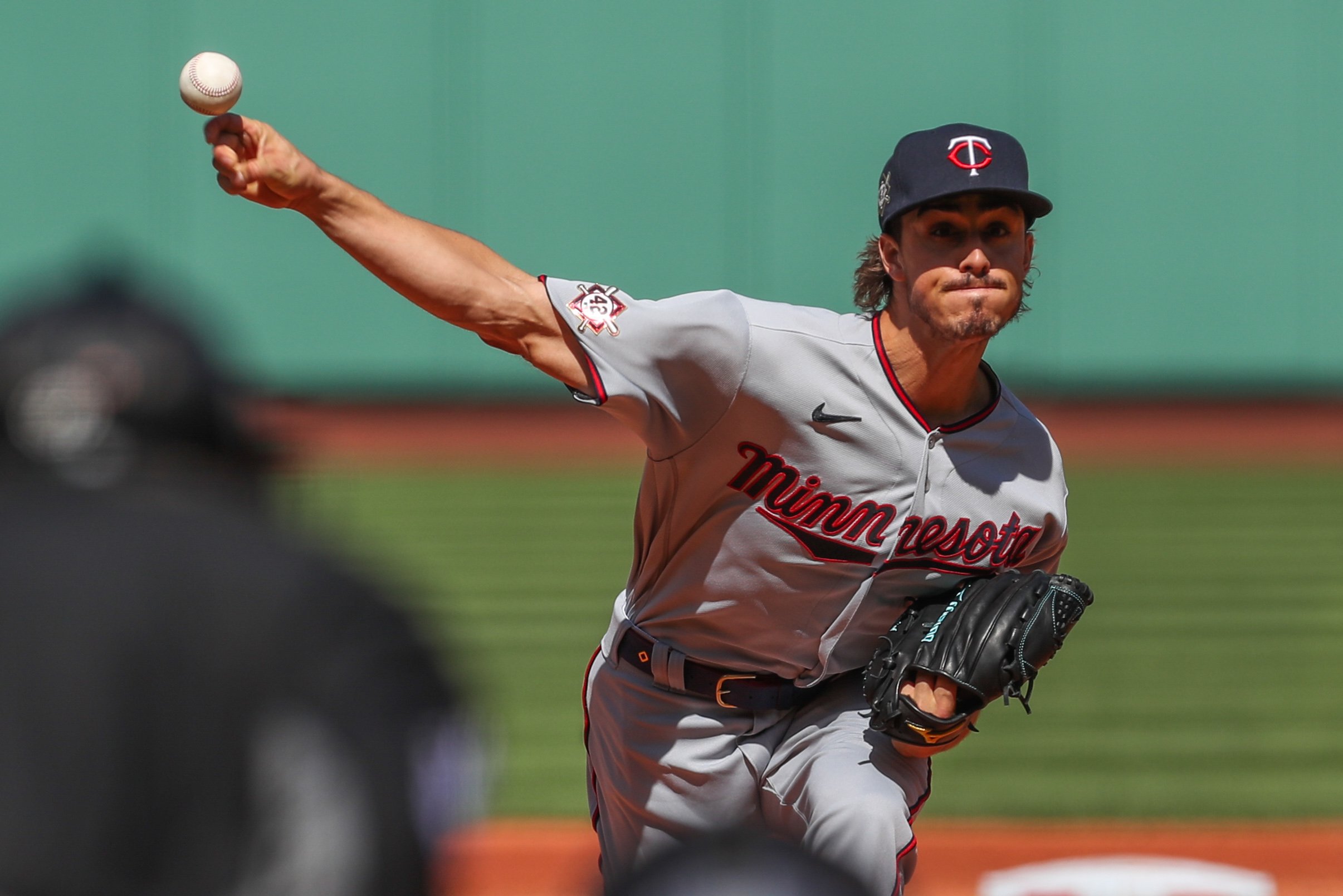 Box Score Starting Pitcher: Joe Ryan, 6.0 IP, 5 H, 1 ER, 0 BB, 7 K (82 pitches, 60 strikes, 73.1%) Home Runs: Miguel Sanó (1) Top 3 WPA: Joe Ryan (.189), Miguel Sanó (.170), Luis Arráez (.109) Win Probability Chart (via FanGraphs) Twins lose Buxton early but score four runs on five hits It was an eventful start to the game for Minnesota. Eight pitches into the first inning, Byron Buxton left the game with an apparent leg injury. He popped up to shallow left, and when Boston’s defense couldn’t make the play because of the sun, he sprinted and slid into second when the injury occurred. He immediately headed to the dugout and was replaced by Nick Gordon. On the brighter side of the inning, Luis Arráez snapped an 0-for-7 funk with a liner to center, and yet again, the Red Sox defense couldn’t take care of it, allowing Gordon to score the game’s first run easily. Even though Jorge Polanco drew a walk, helping to drive Nick Pivetta’s pitch count to 26, Minnesota had to settle for the one run in the first. But that wouldn’t last long. After Joe Ryan cruised through the bottom first on only eight pitches, striking out two and throwing strikes on every pitch, the offense ambushed Pivetta, scoring three runs on three hits. After Trevor Larnach drew a one-out walk, Miguel Sanó followed with a moon shot that went over the ‘green monster’ to make it 3-0 Twins. That was his first base hit of the season. Could his biggest early-season problem be the cold weather? Later on, Gordon singled to center with two outs, only to be brought home in the following at-bat by an Arráez double, making it 4-0 Minnesota. That’s the second multi-hit game for Luis this season. Closing out the inning with 54 pitches, Pivetta was done after two. Alex Verdugo got Boston a run back in the bottom of the second with a solo homer to center. Ryan looks excellent through six; the offense adds on After a somewhat shaky opening day start, Ryan looked superb today at Fenway. Boston hitters simply couldn’t figure him out, especially his slider, which produced whiffs 47% of the time in the first five innings. He also managed to get out of jams during the fourth and fifth innings when Boston had two runners on in each of them. In the meantime, he got even more run support from the bats. Carlos Correa and Polanco reached on a walk and a single to open the fifth inning, and both of them scored on a Gary Sánchez ground ball, making it 6-1 Minnesota. With those two runs batted in, Sánchez now has more RBI against Boston than any other team in the majors. Ryan continued his fantastic outing with a 1-2-3 sixth, shredding through Red Sox hitting with his off-speed offerings. By the end of the inning, he had produced an astonishing 19 swinging strikes, a career-high for him. Overall, 40% of his pitches were either called strikes or swinging strikes. Duran breaks Twitter, Boston’s rally comes up short Jhoan Duran took over once Ryan departed, and he baffled local fans and media with an incredible seventh inning. He retired the side on eight pitches which averaged 98.2 MPH and touched 102 MPH. His performance drew the attention of several national media accounts on Twitter. Boston got to him during the eighth, scoring three runs. Jackie Bradley Jr. hit a leadoff double and was pushed across a couple of at-bats later by a Kike Hernandez double. Then, Rafael Devers followed that with a two-run home run to the corner right, cutting the Twins lead in half. Duran cooled down and struck out the final two batters to end the inning. With the Red Sox getting dangerously close, Minnesota needed some insurance runs. Reliever Matt Barnes retired Arráez to open the top of the ninth, but he gave up a couple of walks against the following two batters. The Twins cashed in on both of those walks, first with a Max Kepler single and then with a slow groundout from Larnach with the bases loaded, bringing the lead back to four. Emilio Pagán came in to pitch the bottom of the ninth, and he threw a clean 1-2-3 inning to secure the win. What’s Next? For game two on Saturday, the Twins turn to Sonny Gray, who is set to face Boston’s Tanner Houck. The first pitch is scheduled for 3:10 pm CDT. Postgame Interview Bullpen Usage Spreadsheet MON TUE WED THU FRI TOT Duran 11 0 0 0 34 45 Thielbar 19 18 0 0 0 37 Romero 0 34 0 0 0 34 Pagán 0 20 0 0 11 31 Winder 0 28 0 0 0 28 Jax 0 0 22 0 0 22 Smith 19 3 0 0 0 22 Coulombe 0 14 0 0 0 14 Duffey 14 0 0 0 0 14
- 38 comments
-
- 5
-
-
- byron buxton
- joe ryan
- (and 3 more)
-
 Box Score Starting Pitcher: Chris Paddack, 4.0 IP, 6 H, 3 ER, 0 BB, 3 K (73 pitches, 49 strikes, 67.1%) Home Runs: none Bottom 3 WPA: Chris Paddack (-.152), Byron Buxton (-.074), Miguel Sanó (-.058) Win Probability Chart (via FanGraphs) Paddack has a rough start, done after four Chris Paddack’s first start as a Twin got off to a rough start. With a career 7.07 ERA against the Dodgers, the Texas native struggled with his command and getting ahead in the counts right in the first inning. The Dodgers loaded the bases quickly, and Justin Turner pushed the first two runs across on a ground ball. It took Paddack thirty pitches to get through the first inning, and only 56.6% of them were strikes. His second time through the order, during the second inning, wasn’t any easier. Mookie Betts and Freddie Freeman reached, and Trea Turner hit a sac-fly to score Betts, making it 3-0 Dodgers. Thankfully, he settled down and tossed a couple of scoreless frames on 24 pitches – less than half of what it took him to pitch the first two innings, including a nine-pitch 1-2-3 fourth. With his pitch count surpassing 70, Rocco Baldelli decided to pull him. Kershaw pitches seven perfect frames. Pulled too early? Making his first start of the season and his first-ever start against the Twins, Dodgers starter Clayton Kershaw was out of this world this afternoon. With a killer slider that resulted in swings and misses 63% of the time, he pitched seven perfect innings on 80 pitches, striking out 13 batters. The closest a Twins hitter got to breaking his perfect game bid was when Gio Urshela hit a grounder that ricocheted off the mound past Kershaw, but it was fielded in time by Gavin Lux. It had a .420 xBA, the highest against Kershaw in the game. To the disappointment of baseball fans all over the world, Dodgers manager Dave Roberts decided not to bring Kershaw back for the eighth inning. How did you feel about the move? Rodríguez tosses three solid innings, gets blown out in the eighth After Paddack was pulled from the game, righty Dereck Rodríguez took over, making his Twins debut almost 11 years after being drafted by Minnesota. He became a free agent and left the organization in 2017, and was signed to a minor league contract this summer. The Texas native no-hit the Dodgers for three innings and pretty much kept the Twins’ chances alive. However, everything fell apart in the eighth, when he gave up three consecutive home runs to the bottom third of the Dodger lineup, putting the game out of reach. Called up yesterday to replace Jorge Alcalá, Griffin Jax made his season debut in the ninth and allowed Los Angeles’ fourth home run of the game, a solo shot to Max Muncy, which gave the game its final numbers. What’s Next? The Twins have their first day off of the season this Thursday, and they start a four-game series against the Red Sox in Boston on Friday, their home opener. Friday’s first pitch is scheduled for 1:10 pm CDT. Postgame Interview Bullpen Usage Spreadsheet SAT SUN MON TUE WED TOT Rodríguez 0 0 0 0 59 59 Thielbar 18 0 19 18 0 55 Romero 0 15 0 34 0 49 Smith 20 0 19 3 0 42 Duffey 18 0 14 0 0 32 Pagán 0 10 0 20 0 30 Coulombe 0 15 0 14 0 29 Winder 0 0 0 28 0 28 Jax 0 0 0 0 22 22 Duran 0 0 11 0 0 11
- 42 comments
-
- 2
-
-
- chris paddack
- dereck rodriguez
- (and 1 more)
-
Clayton Kershaw had never pitched in Minnesota before, yet he couldn’t have been more comfortable at Target Field. The superstar Dodgers starter pitched seven perfect innings against the Twins while being supported by four home runs, resulting in a Los Angeles blowout. Box Score Starting Pitcher: Chris Paddack, 4.0 IP, 6 H, 3 ER, 0 BB, 3 K (73 pitches, 49 strikes, 67.1%) Home Runs: none Bottom 3 WPA: Chris Paddack (-.152), Byron Buxton (-.074), Miguel Sanó (-.058) Win Probability Chart (via FanGraphs) Paddack has a rough start, done after four Chris Paddack’s first start as a Twin got off to a rough start. With a career 7.07 ERA against the Dodgers, the Texas native struggled with his command and getting ahead in the counts right in the first inning. The Dodgers loaded the bases quickly, and Justin Turner pushed the first two runs across on a ground ball. It took Paddack thirty pitches to get through the first inning, and only 56.6% of them were strikes. His second time through the order, during the second inning, wasn’t any easier. Mookie Betts and Freddie Freeman reached, and Trea Turner hit a sac-fly to score Betts, making it 3-0 Dodgers. Thankfully, he settled down and tossed a couple of scoreless frames on 24 pitches – less than half of what it took him to pitch the first two innings, including a nine-pitch 1-2-3 fourth. With his pitch count surpassing 70, Rocco Baldelli decided to pull him. Kershaw pitches seven perfect frames. Pulled too early? Making his first start of the season and his first-ever start against the Twins, Dodgers starter Clayton Kershaw was out of this world this afternoon. With a killer slider that resulted in swings and misses 63% of the time, he pitched seven perfect innings on 80 pitches, striking out 13 batters. The closest a Twins hitter got to breaking his perfect game bid was when Gio Urshela hit a grounder that ricocheted off the mound past Kershaw, but it was fielded in time by Gavin Lux. It had a .420 xBA, the highest against Kershaw in the game. To the disappointment of baseball fans all over the world, Dodgers manager Dave Roberts decided not to bring Kershaw back for the eighth inning. How did you feel about the move? Rodríguez tosses three solid innings, gets blown out in the eighth After Paddack was pulled from the game, righty Dereck Rodríguez took over, making his Twins debut almost 11 years after being drafted by Minnesota. He became a free agent and left the organization in 2017, and was signed to a minor league contract this summer. The Texas native no-hit the Dodgers for three innings and pretty much kept the Twins’ chances alive. However, everything fell apart in the eighth, when he gave up three consecutive home runs to the bottom third of the Dodger lineup, putting the game out of reach. Called up yesterday to replace Jorge Alcalá, Griffin Jax made his season debut in the ninth and allowed Los Angeles’ fourth home run of the game, a solo shot to Max Muncy, which gave the game its final numbers. What’s Next? The Twins have their first day off of the season this Thursday, and they start a four-game series against the Red Sox in Boston on Friday, their home opener. Friday’s first pitch is scheduled for 1:10 pm CDT. Postgame Interview Bullpen Usage Spreadsheet SAT SUN MON TUE WED TOT Rodríguez 0 0 0 0 59 59 Thielbar 18 0 19 18 0 55 Romero 0 15 0 34 0 49 Smith 20 0 19 3 0 42 Duffey 18 0 14 0 0 32 Pagán 0 10 0 20 0 30 Coulombe 0 15 0 14 0 29 Winder 0 0 0 28 0 28 Jax 0 0 0 0 22 22 Duran 0 0 11 0 0 11 View full article
- 42 replies
-
- 1
-
-
- chris paddack
- dereck rodriguez
- (and 1 more)
-
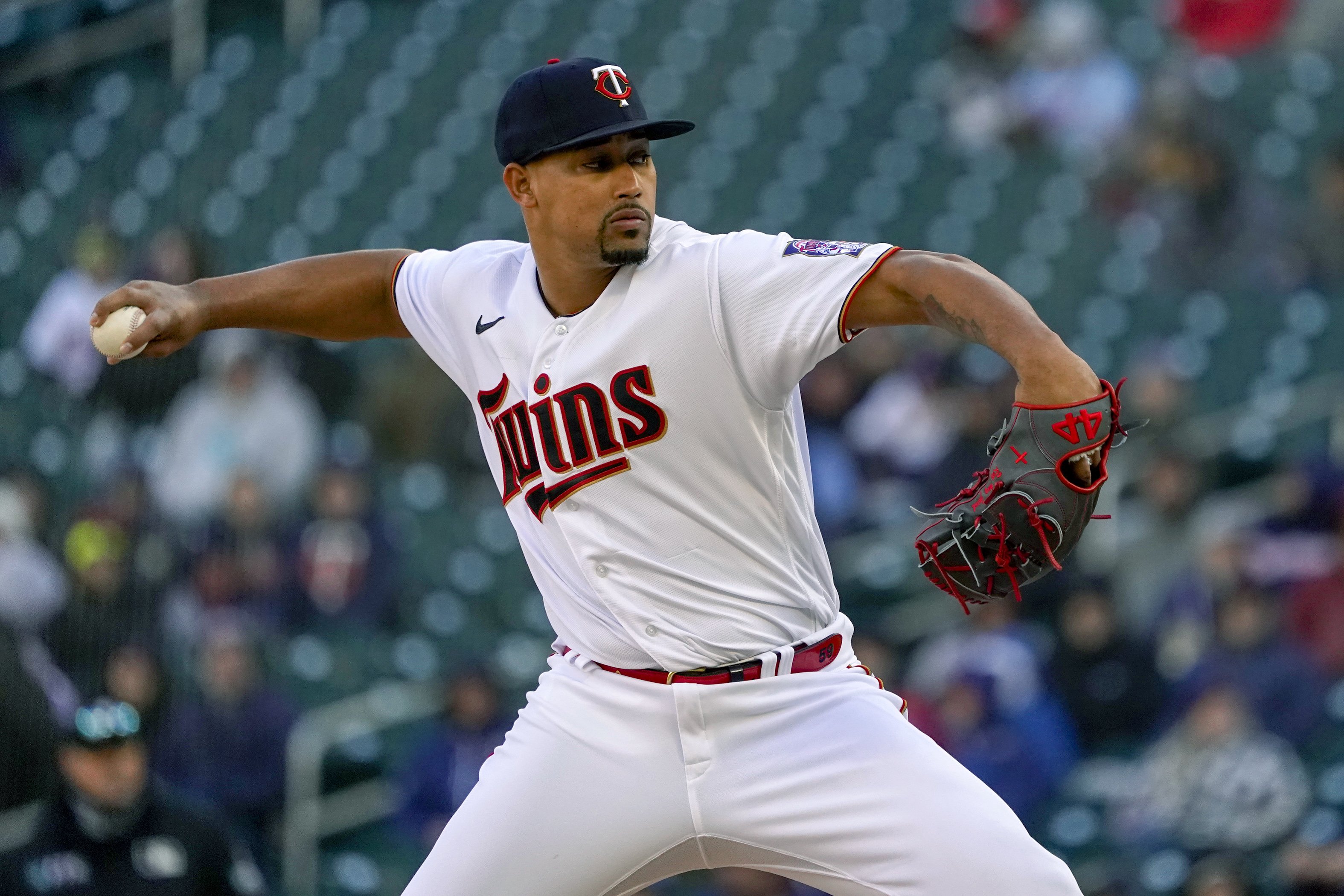 Box Score Starting Pitcher: Joe Ryan, 4.0 IP, 2 H, 2 ER, 4 BB, 4 K (70 pitches, 42 strikes, 64%) Home Runs: Gio Urshela (1) Bottom 3 WPA: Byron Buxton (-.214), Carlos Correa (-.173), Gary Sanchez (.152), Win Probability Chart (via FanGraphs) Ryan gives up an early home run, departs after four innings Joe Ryan was named the Opening Day starter for the Twins, becoming the first rookie starting pitcher to do so in precisely 53 years: on 4/8/1969, rookie Tom Hall took the mound, and he pitched into the sixth against the Royals in Kansas City to open the season. With only 26 2/3 big league innings in his career, Ryan became the Opening Day starter with the fewest such innings in franchise history and the first in the majors since David Nied in 1993. The first two times through the Seattle order were anything but smooth for Ryan. Having given up only five total walks in his five 2021 starts, he gave up three in the first three innings while also hitting a batter. He hung a fastball against Mitch Haniger in the first, which was crushed for a two-out, two-run home run. Seattle couldn't build momentum and add on despite posing a constant threat during the first three innings. Ryan closed out each of those innings with a strikeout, two against Eugenio Suárez. He also got some big help from a great defensive play by Carlos Correa in the third, which almost started a double play. Speaking of the new guy, he was responsible for Minnesota’s only hit early, as reigning American League Cy Young Award winner Robbie Ray – and his famous pants – cruised through the Twins lineup. In his first at-bat with Minnesota, C4 smacked a fastball down the middle for a single. Minnesota gets on the board, Duran impresses in majors debut Minnesota managed to get on the board in the fourth, with another new guy making a good first impression. Gio Urshela, once known for his efficiency against off-speed pitches, took Ray deep for the Twins’ first home run of the season. The fourth inning was also the final one for Ryan in the ballgame, as he once again failed to prevent baserunners from reaching. Rocco Baldelli brought in flame-throwing prospect Jhoan Duran for his Major League debut for the next two innings, and the Dominican didn’t disappoint. Duran didn’t get off to a good start, giving up back-to-back singles to open the inning. However, with his pitches reaching 100.7 MPH on the radar gun and showing off some nasty movement, he managed to blow past the heart of the Mariner lineup, striking out the next four batters. His velocity wasn’t the same during his second inning out there, but he still managed to hold off Seattle. The bats can’t provide the rally against Ray, Seattle’s bullpen Ray continued to dominate the Twins' offense and did so economically, as his pitch count didn’t hit 90 until the seventh inning. With one of baseball’s best bullpens last season, Mariner relievers managed to keep the Twins offense out of the game in the final two innings. After a 1-2-3 inning from reliever Paul Sewald in the eighth, Minnesota had one inning to try and spark a rally, and they almost did. Luis Arráez replaced Urshela in the ninth, and he put together a superb nine-pitch that ended in a leadoff single. It all came down to Gary Sánchez with two outs and a man on, and he put on a good fight but eventually flew out, merely inches away from a walk-off homer. A positive takeaway from this game for the Twins was the excellent pitching performance, especially from the bullpen. After Duran pitched two scoreless frames, Jorge Alcalá and Danny Coulombe kept Seattle scoreless for the rest of the game. Minnesota’s relievers combined for five scoreless innings, with three hits, three walks, and seven strikeouts. What’s Next? On Saturday, the series continues when Sonny Gray will make his Twins debut against Logan Gilbert. The first pitch is scheduled for 1:10 pm. Postgame Interview Bullpen Usage Spreadsheet (pitch counts were not available for Tuesday's spring training game) MON TUE WED THU FRI TOT Ober 56 0 0 0 0 56 Duran 0 0 0 0 31 31 Coulombe 0 0 0 0 27 27 Alcalá 10 0 0 0 13 23 Cotton 22 0 0 0 0 22 Thielbar 0 0 0 0 0 0 Duffey 0 0 0 0 0 0 Pagán 0 0 0 0 0 0 Romero 0 0 0 0 0 0 Smith 0 0 0 0 0 0 Winder 0 0 0 0 0 0
- 19 comments
-
- 6
-
-
- joe ryan
- jhoan duran
- (and 3 more)
-
Minnesota put together a lovely pitching performance, but Robbie Ray’s fantastic outing ultimately was the difference-maker. The Mariners held off a Twins rally late and handed Minnesota’s first season loss. Box Score Starting Pitcher: Joe Ryan, 4.0 IP, 2 H, 2 ER, 4 BB, 4 K (70 pitches, 42 strikes, 64%) Home Runs: Gio Urshela (1) Bottom 3 WPA: Byron Buxton (-.214), Carlos Correa (-.173), Gary Sanchez (.152), Win Probability Chart (via FanGraphs) Ryan gives up an early home run, departs after four innings Joe Ryan was named the Opening Day starter for the Twins, becoming the first rookie starting pitcher to do so in precisely 53 years: on 4/8/1969, rookie Tom Hall took the mound, and he pitched into the sixth against the Royals in Kansas City to open the season. With only 26 2/3 big league innings in his career, Ryan became the Opening Day starter with the fewest such innings in franchise history and the first in the majors since David Nied in 1993. The first two times through the Seattle order were anything but smooth for Ryan. Having given up only five total walks in his five 2021 starts, he gave up three in the first three innings while also hitting a batter. He hung a fastball against Mitch Haniger in the first, which was crushed for a two-out, two-run home run. Seattle couldn't build momentum and add on despite posing a constant threat during the first three innings. Ryan closed out each of those innings with a strikeout, two against Eugenio Suárez. He also got some big help from a great defensive play by Carlos Correa in the third, which almost started a double play. Speaking of the new guy, he was responsible for Minnesota’s only hit early, as reigning American League Cy Young Award winner Robbie Ray – and his famous pants – cruised through the Twins lineup. In his first at-bat with Minnesota, C4 smacked a fastball down the middle for a single. Minnesota gets on the board, Duran impresses in majors debut Minnesota managed to get on the board in the fourth, with another new guy making a good first impression. Gio Urshela, once known for his efficiency against off-speed pitches, took Ray deep for the Twins’ first home run of the season. The fourth inning was also the final one for Ryan in the ballgame, as he once again failed to prevent baserunners from reaching. Rocco Baldelli brought in flame-throwing prospect Jhoan Duran for his Major League debut for the next two innings, and the Dominican didn’t disappoint. Duran didn’t get off to a good start, giving up back-to-back singles to open the inning. However, with his pitches reaching 100.7 MPH on the radar gun and showing off some nasty movement, he managed to blow past the heart of the Mariner lineup, striking out the next four batters. His velocity wasn’t the same during his second inning out there, but he still managed to hold off Seattle. The bats can’t provide the rally against Ray, Seattle’s bullpen Ray continued to dominate the Twins' offense and did so economically, as his pitch count didn’t hit 90 until the seventh inning. With one of baseball’s best bullpens last season, Mariner relievers managed to keep the Twins offense out of the game in the final two innings. After a 1-2-3 inning from reliever Paul Sewald in the eighth, Minnesota had one inning to try and spark a rally, and they almost did. Luis Arráez replaced Urshela in the ninth, and he put together a superb nine-pitch that ended in a leadoff single. It all came down to Gary Sánchez with two outs and a man on, and he put on a good fight but eventually flew out, merely inches away from a walk-off homer. A positive takeaway from this game for the Twins was the excellent pitching performance, especially from the bullpen. After Duran pitched two scoreless frames, Jorge Alcalá and Danny Coulombe kept Seattle scoreless for the rest of the game. Minnesota’s relievers combined for five scoreless innings, with three hits, three walks, and seven strikeouts. What’s Next? On Saturday, the series continues when Sonny Gray will make his Twins debut against Logan Gilbert. The first pitch is scheduled for 1:10 pm. Postgame Interview Bullpen Usage Spreadsheet (pitch counts were not available for Tuesday's spring training game) MON TUE WED THU FRI TOT Ober 56 0 0 0 0 56 Duran 0 0 0 0 31 31 Coulombe 0 0 0 0 27 27 Alcalá 10 0 0 0 13 23 Cotton 22 0 0 0 0 22 Thielbar 0 0 0 0 0 0 Duffey 0 0 0 0 0 0 Pagán 0 0 0 0 0 0 Romero 0 0 0 0 0 0 Smith 0 0 0 0 0 0 Winder 0 0 0 0 0 0 View full article
- 19 replies
-
- 1
-
-
- joe ryan
- jhoan duran
- (and 3 more)
-
 First and foremost, I believe it’s crucial to get as much important information about this topic as possible out in the open. People shouldn’t just stick to shallow common-places when there’s so much in-depth information and analysis out there. That’s especially true when it comes to the effects of altitude in baseball. In this brilliant 2020 article, Rox Pile’s Kevin Larson buts the myth that hitters at Coors Field only succeed because of the altitude. I’ll be quoting a few parts of that article here, but I think everyone would learn a lot if they read the whole thing. Basically, Larson advises people to do two things when analyzing players' performances at Coors: Take into account the unique circumstances Rockies hitters live through, having to adjust to different pitcher approaches in Denver and on the road; Ignore the traditional stats splits and focus on Park Adjusted stats, like wRC+, OPS+, and DRC+, which can paint the big picture more nicely; Then, Larson goes on to provide several examples of both hitters who improved their wRC+ after leaving the Rockies, but also the contrary, players whose offensive productivity decreased after they joined the Rockies from other teams. Can you guess a former Twin, winner of an MVP in Minnesota, who falls in that last category? The bottom line is, things aren’t as simple as “hitters won’t succeed after leaving Coors.” Trevor Story's traditional splits sure don’t look good, but that shouldn’t be a reason not to bring him to Minnesota. Not only would the Twins be giving up on a potentially above-average right-handed hitter, but they would be bailing on one of the best defenders in the game. One of the best examples of former Rockies who succeeded elsewhere is second baseman DJ LeMahieu, who was signed by the Yankees in 2019 and has since won two Silver Slugger awards and received MVP votes in two seasons (finishing third in 2020). Take a look at some of his numbers. DJ LeMahieu's splits during his time with the Rockies (2012-2018), per Fangraphs: Home .329/.386/.447 (.834) .374 wOBA 96 wRC+ 13.4% K% 8.6% BB% Away .267/.314/.367 (.681) .298 wOBA 84 wRC+ 17.0% K% 6.2% BB% DJ LeMahieu as a Yankee, overall (since 2019), per Fangraphs: .307/.370/.461 (.831) .356 wOBA 126 wRC+ 13.2% K% 8.8% BB% The same way the belief that “Coors hitters do badly once they leave Colorado” shouldn’t be a rule, LeMahieu’s example isn’t a rule either. Former Rockies cornerstone third baseman Nolan Arenado, for instance, didn’t improve his numbers the same way LeMahieu did. However, his overall numbers in St. Louis didn’t get worse either. They were actually slightly better than his road numbers while with the Rockies. Nolan Arenado's splits during his time with the Rockies (2013-2020), per Fangraphs: Home .322/.376/.609 (.985) .409 wOBA 129 wRC+ 13.7% K% 8.0% BB% Away .263/.322/.471 (.793) .334 wOBA 108 wRC+ 16.3% K% 7.8% BB% Nolan Arenado as a Cardinal, overall (since 2021), per Fangraphs: .255/.312/.494 (.807) .336 wOBA 113 wRC+ 14.7% K% 7.7% BB% In conclusion, Trevor Story’s splits shouldn’t dissuade the Twins from trying to sign him. As someone who follows the Rockies very closely, I can attest to how talented and hard-working he is, and also how fun it is to watch him play every night. MORE FROM TWINS DAILY — Latest Twins coverage from our writers — Recent Twins discussion in our forums — Follow Twins Daily via Twitter, Facebook or email
 -
Rumors about the Twins pursuing shortstop Trevor Story in free agency has rendered a large portion of Twins fans excited. However, every time a former Colorado Rockie draws interest from other teams, some fans will inevitably point out the “Coors Effect.” Should that really dissuade the Twins from signing Story? First and foremost, I believe it’s crucial to get as much important information about this topic as possible out in the open. People shouldn’t just stick to shallow common-places when there’s so much in-depth information and analysis out there. That’s especially true when it comes to the effects of altitude in baseball. In this brilliant 2020 article, Rox Pile’s Kevin Larson buts the myth that hitters at Coors Field only succeed because of the altitude. I’ll be quoting a few parts of that article here, but I think everyone would learn a lot if they read the whole thing. Basically, Larson advises people to do two things when analyzing players' performances at Coors: Take into account the unique circumstances Rockies hitters live through, having to adjust to different pitcher approaches in Denver and on the road; Ignore the traditional stats splits and focus on Park Adjusted stats, like wRC+, OPS+, and DRC+, which can paint the big picture more nicely; Then, Larson goes on to provide several examples of both hitters who improved their wRC+ after leaving the Rockies, but also the contrary, players whose offensive productivity decreased after they joined the Rockies from other teams. Can you guess a former Twin, winner of an MVP in Minnesota, who falls in that last category? The bottom line is, things aren’t as simple as “hitters won’t succeed after leaving Coors.” Trevor Story's traditional splits sure don’t look good, but that shouldn’t be a reason not to bring him to Minnesota. Not only would the Twins be giving up on a potentially above-average right-handed hitter, but they would be bailing on one of the best defenders in the game. One of the best examples of former Rockies who succeeded elsewhere is second baseman DJ LeMahieu, who was signed by the Yankees in 2019 and has since won two Silver Slugger awards and received MVP votes in two seasons (finishing third in 2020). Take a look at some of his numbers. DJ LeMahieu's splits during his time with the Rockies (2012-2018), per Fangraphs: Home .329/.386/.447 (.834) .374 wOBA 96 wRC+ 13.4% K% 8.6% BB% Away .267/.314/.367 (.681) .298 wOBA 84 wRC+ 17.0% K% 6.2% BB% DJ LeMahieu as a Yankee, overall (since 2019), per Fangraphs: .307/.370/.461 (.831) .356 wOBA 126 wRC+ 13.2% K% 8.8% BB% The same way the belief that “Coors hitters do badly once they leave Colorado” shouldn’t be a rule, LeMahieu’s example isn’t a rule either. Former Rockies cornerstone third baseman Nolan Arenado, for instance, didn’t improve his numbers the same way LeMahieu did. However, his overall numbers in St. Louis didn’t get worse either. They were actually slightly better than his road numbers while with the Rockies. Nolan Arenado's splits during his time with the Rockies (2013-2020), per Fangraphs: Home .322/.376/.609 (.985) .409 wOBA 129 wRC+ 13.7% K% 8.0% BB% Away .263/.322/.471 (.793) .334 wOBA 108 wRC+ 16.3% K% 7.8% BB% Nolan Arenado as a Cardinal, overall (since 2021), per Fangraphs: .255/.312/.494 (.807) .336 wOBA 113 wRC+ 14.7% K% 7.7% BB% In conclusion, Trevor Story’s splits shouldn’t dissuade the Twins from trying to sign him. As someone who follows the Rockies very closely, I can attest to how talented and hard-working he is, and also how fun it is to watch him play every night. MORE FROM TWINS DAILY — Latest Twins coverage from our writers — Recent Twins discussion in our forums — Follow Twins Daily via Twitter, Facebook or email View full article
-
Twins Daily College Baseball Notebook: Week 1
Thiéres Rabelo replied to Jamie Cameron's topic in Twins Daily Front Page News
Awesome job, @Jamie Cameron! Would love to see this BOMB by New Mexico's Cody Holtz featured in the next one! Go Lobos!
