



Thiéres Rabelo
-
Posts
569 -
Joined
-
Last visited
Content Type
Profiles
News
Minnesota Twins Videos
2026 Minnesota Twins Top Prospects Ranking
2022 Minnesota Twins Draft Picks
Minnesota Twins Free Agent & Trade Rumors, Notes, & Tidbits
Guides & Resources
2023 Minnesota Twins Draft Picks
The Minnesota Twins Players Project
2024 Minnesota Twins Draft Picks
2025 Minnesota Twins Draft Pick Tracker
2026 Minnesota Twins Draft Tracker: Picks & Bonuses
Forums
Blogs
Events
Store
Downloads
Gallery
Everything posted by Thiéres Rabelo
-
It was an emotional night at Target Field, with Nelson Cruz’s return to town. Nelly homered and helped the Rays shorten Michael Pineda’s night to less than three innings, with Tampa Bay cruising to an easy win. Box Score Pineda: 2.2 IP, 6 H, 4 ER, 0 BB, 3 K (82.9% strikes) Home Runs: Rooker (5) Bottom 3 WPA: Pineda -.237, Gant -.138, Larnach -.133 Win Probability Chart (via FanGraphs) Friday night was an emotional affair for the Twins at Target Field even before the first pitch. For starters, the organization kicked off the “1991 Reunion Weekend” celebrations, with fans being able to take pictures with some World Series champions. Then, Gophers football head coach P.J. Fleck threw the ceremonial first pitch. But none of that seemed to be as big as the return of an old friend. Nelson Cruz played his first game as an opponent of the Twins since May 27, 2018, and the first one at Target Field since May 14 from that same year. Batting third for the Rays, he received a standing ovation from Twins fans, to whom he tipped his helmet. He also got shown some love from his old teammates, like Miguel Sanó, who crashed Nelly’s Zoom call with the media, asking “Papá Cruz” to go easy on the Twins. Cruz may have done what his friend and mentee asked him to do in his first at-bat – he struck out on three pitches. But his new teammates sure weren’t going to do the same. Brandon Lowe had hit a leadoff single to open the game before Cruz’s at-bat. Then, after it, Randy Arozarena hit a long double off the wall at center field, driving in Lowe. During the second inning, the Rays scored a couple more runs. Yandy Diaz hit a leadoff home run, and Mike Zunino scored after Pineda gave up back-to-back singles, followed by a wild pitch. Something seemed off with “Big Mike.” He faced Cruz for the second time in the game to open the third inning, and, this time, Nelson didn’t go easy. He crushed a hanging changeup to the left corner for a line-drive home run that left his bat at nearly 111 MPH. The Rays took an early 4-0 lead. After that, Pineda induced a couple of ground ball outs, but before he could finish the inning, he departed the game with an apparent injury. Pineda didn’t have a lot of problems throwing strikes (39 out of 47 pitches), but his velocity was slightly below his season average, perhaps making it easy for Tampa Bay hitting to get six hits off him. Twins try to rally multiple times, Rays always respond Making his Twins debut, veteran Nick Vincent came in relief of Pineda to get the last out of the third. Then, he gave up a solo home run to Zunino in the fourth, making it 5-0 Rays. But other than that, the 35-year old managed to limit the damage to the one run for the remainder of his outing. During the bottom of the fourth, the Twins offense finally posed its first threat to Rays’ starter, Shane McClanahan, putting two men on. Sanó singled to the gap to score Brent Rooker from third, putting the Twins on the board, before stranding both runners left. Minnesota kept hitting the ball hard, trying to spark a rally. After Vincent pitched a scoreless fifth, Ryan Jeffers led off the home half of the inning with a single. Then, Rooker, with his third hit of the night, pushed him across. Josh Donaldson had the chance to cut the Rays’ lead to only one run, but he ended up striking out, ending the threat. In the following inning, Tampa Bay responded right back, with an inside-the-park home run by Kevin Kiermaier, making it 6-2. He hit a flyball to deep right, which looked like a triple, but Jorge Polanco juggled the ball before being able to get Kiermaier at home plate. Mitch Garver and Rob Refsnyder opened the bottom half of the sixth with back-to-back singles, and Sanó made it three consecutive hits with an RBI single to score Garver. Suddenly, the Twins had two men on with no outs, down by only three runs. That was Miggy’s second RBI of the night. But once again, Tampa’s pitching frustrated Minnesota’s offense and spoiled their rally, ending the inning with a ground ball double play. Rays explode for a four-run seventh John Gant gave up that inside-the-park home run in the sixth, but he settled in and retired the following three batters. With the bullpen needing to eat up innings, he was brought back to pitch the seventh, and that’s where things went sour. Tampa produced four runs on three hits and a sac-fly off him, putting this game well out of reach, 10-3. Even with such a large deficit, Minnesota didn’t give up. Rooker got his fourth hit of the night with a two-out solo home run in the home half, cutting Tampa’s lead to six. Donaldson and Garver hit back-to-back singles after him, and once again, the Twins were one swing away from getting right back in the game. But they couldn’t capitalize again. Making his second appearance as a Twin, Edgar García pitched a couple of scoreless frames to close up the game, providing yet another very effective outing. The offense fell in order in the bottom of the ninth, and Tampa ran away with the win. Postgame Interview Bullpen Usage Spreadsheet MON TUE WED THU FRI TOT Barnes 68 0 0 0 0 68 García 32 0 0 0 27 59 Gant 0 11 0 0 41 52 Vincent 0 0 0 0 37 37 Colomé 0 10 14 0 0 24 Thielbar 0 0 20 0 0 20 Duffey 0 15 0 0 0 15 Minaya 0 0 15 0 0 15 Coulombe 0 0 0 0 0 0 View full article
-
 Box Score Pineda: 2.2 IP, 6 H, 4 ER, 0 BB, 3 K (82.9% strikes) Home Runs: Rooker (5) Bottom 3 WPA: Pineda -.237, Gant -.138, Larnach -.133 Win Probability Chart (via FanGraphs) Friday night was an emotional affair for the Twins at Target Field even before the first pitch. For starters, the organization kicked off the “1991 Reunion Weekend” celebrations, with fans being able to take pictures with some World Series champions. Then, Gophers football head coach P.J. Fleck threw the ceremonial first pitch. But none of that seemed to be as big as the return of an old friend. Nelson Cruz played his first game as an opponent of the Twins since May 27, 2018, and the first one at Target Field since May 14 from that same year. Batting third for the Rays, he received a standing ovation from Twins fans, to whom he tipped his helmet. He also got shown some love from his old teammates, like Miguel Sanó, who crashed Nelly’s Zoom call with the media, asking “Papá Cruz” to go easy on the Twins. Cruz may have done what his friend and mentee asked him to do in his first at-bat – he struck out on three pitches. But his new teammates sure weren’t going to do the same. Brandon Lowe had hit a leadoff single to open the game before Cruz’s at-bat. Then, after it, Randy Arozarena hit a long double off the wall at center field, driving in Lowe. During the second inning, the Rays scored a couple more runs. Yandy Diaz hit a leadoff home run, and Mike Zunino scored after Pineda gave up back-to-back singles, followed by a wild pitch. Something seemed off with “Big Mike.” He faced Cruz for the second time in the game to open the third inning, and, this time, Nelson didn’t go easy. He crushed a hanging changeup to the left corner for a line-drive home run that left his bat at nearly 111 MPH. The Rays took an early 4-0 lead. After that, Pineda induced a couple of ground ball outs, but before he could finish the inning, he departed the game with an apparent injury. Pineda didn’t have a lot of problems throwing strikes (39 out of 47 pitches), but his velocity was slightly below his season average, perhaps making it easy for Tampa Bay hitting to get six hits off him. Twins try to rally multiple times, Rays always respond Making his Twins debut, veteran Nick Vincent came in relief of Pineda to get the last out of the third. Then, he gave up a solo home run to Zunino in the fourth, making it 5-0 Rays. But other than that, the 35-year old managed to limit the damage to the one run for the remainder of his outing. During the bottom of the fourth, the Twins offense finally posed its first threat to Rays’ starter, Shane McClanahan, putting two men on. Sanó singled to the gap to score Brent Rooker from third, putting the Twins on the board, before stranding both runners left. Minnesota kept hitting the ball hard, trying to spark a rally. After Vincent pitched a scoreless fifth, Ryan Jeffers led off the home half of the inning with a single. Then, Rooker, with his third hit of the night, pushed him across. Josh Donaldson had the chance to cut the Rays’ lead to only one run, but he ended up striking out, ending the threat. In the following inning, Tampa Bay responded right back, with an inside-the-park home run by Kevin Kiermaier, making it 6-2. He hit a flyball to deep right, which looked like a triple, but Jorge Polanco juggled the ball before being able to get Kiermaier at home plate. Mitch Garver and Rob Refsnyder opened the bottom half of the sixth with back-to-back singles, and Sanó made it three consecutive hits with an RBI single to score Garver. Suddenly, the Twins had two men on with no outs, down by only three runs. That was Miggy’s second RBI of the night. But once again, Tampa’s pitching frustrated Minnesota’s offense and spoiled their rally, ending the inning with a ground ball double play. Rays explode for a four-run seventh John Gant gave up that inside-the-park home run in the sixth, but he settled in and retired the following three batters. With the bullpen needing to eat up innings, he was brought back to pitch the seventh, and that’s where things went sour. Tampa produced four runs on three hits and a sac-fly off him, putting this game well out of reach, 10-3. Even with such a large deficit, Minnesota didn’t give up. Rooker got his fourth hit of the night with a two-out solo home run in the home half, cutting Tampa’s lead to six. Donaldson and Garver hit back-to-back singles after him, and once again, the Twins were one swing away from getting right back in the game. But they couldn’t capitalize again. Making his second appearance as a Twin, Edgar García pitched a couple of scoreless frames to close up the game, providing yet another very effective outing. The offense fell in order in the bottom of the ninth, and Tampa ran away with the win. Postgame Interview Bullpen Usage Spreadsheet MON TUE WED THU FRI TOT Barnes 68 0 0 0 0 68 García 32 0 0 0 27 59 Gant 0 11 0 0 41 52 Vincent 0 0 0 0 37 37 Colomé 0 10 14 0 0 24 Thielbar 0 0 20 0 0 20 Duffey 0 15 0 0 0 15 Minaya 0 0 15 0 0 15 Coulombe 0 0 0 0 0 0
 -

Game Score: Twins 5, Astros 4
Thiéres Rabelo replied to Thiéres Rabelo's topic in Twins Daily Front Page News
-
It was a wild one, but the Twins came back from an early 3-0 deficit to beat the Astros in the second game of the series, earning at least a split. Minnesota’s bullpen had an outstanding game to support Bailey Ober’s solid start. Box Score Ober: 5.0 IP, 7 H, 3 ER, 1 BB, 5 K (68.7% strikes) Home Runs: Garver (13) Top 3 WPA: Minaya .718, Colomé .305, Kepler .110 Win Probability Chart (via FanGraphs) The bats started this game very eager to create an early lead as they did on Thursday night. That became evident by Max Kepler jumping on the game’s very first pitch and smacking a 106 MPH line drive to center. In fact, that was the first of four hard-hit balls collected by the Twins offense in the first four innings and the first out of five that had at least .500 xBA, per Statcast. Unfortunately, it was also the only one to become an actual hit. Despite allowing a great deal of hard contact, Astro’s starter Zack Greinke managed to retire the eight batters he faced following that Kepler leadoff single. Meanwhile, Bailey Ober had a hard time against the long ball, which allowed Houston to create a three-run lead. After a scoreless first inning and retiring the first two batters faced in the second, Ober gave up back-to-back two-out hits. The second one was a two-run home run for Taylor Jones. Ober got back on track and tossed a scoreless third, but then Chas McCormick took him deep with a solo shot in the fourth, making it 3-0 Houston. Twins rally back; bullpen helps to take the game into extras Minnesota finally managed to ambush Greinke in the fifth inning. After being limited to only the one hit through four, the Twins produced four hits in the same inning. Mitch Garver hit a leadoff homer to left to put Minnesota on the board. Miguel Sanó and Rob Refsnyder followed him with back-to-back singles, making it three consecutive to open the inning. Then Kepler grounded into a force out to score Sanó from third, pulling the Twins within a run. Ober finished his outing with a strong display. After getting two outs on nine pitches, he battled Kyle Tucker on a tough, seven-pitch at-bat. Ober prevailed and struck out Tucker, his first punchout since the second inning. Over his last six starts, dating back from the start of July, Ober has posted a 4.22 ERA while striking out 9.7 batters and walking just 2.9 per nine. Ober seems to be steadily evolving into a solid bottom of the rotation presence. He finished July with a 3.97 ERA over five starts and has now delivered at least five innings of work in four of his last six starts. Jorge Polanco opened up the sixth inning with a double, showing that the Twins’ comeback wasn’t done. A couple of at-bats later, Luis Arraez hit a hard ground ball to left, his first hit of the night, pushing Polanco across and tying the game. That run also earned Ober a no-decision. John Gant celebrated his birthday with a strong outing. He struck out the first two batters he faced before inducing a groundout to complete a 1-2-3 sixth on 17 pitches. However, Tyler Duffey’s outing after him wasn’t nearly as uneventful. He gave up back-to-back one-out hits, including a single to José Altuve that snapped an 0-for-11 stretch. Duffey took advantage of a fantastic defensive play from Arraez that ended the inning. Unfortunately, it also forced Arraez to leave the game a few moments later, as it seems like he twisted his knee on the play. The offense struggled against Houston’s bullpen. After the game-tying single from Arraez in the sixth, the Astros relievers retired 12 Minnesota batters in a row. That put a lot of pressure on the Twins bullpen, but they managed to navigate through it. Jorge Alcala pitched a 1-2-3 eighth on 14 pitches, striking out a pair. That was his fourth consecutive outing without allowing an earned run, for a total of 5 ⅓ innings. Has he finally turned the corner? Similarly, only with fewer innings, Alexander Colomé pitched a fourth consecutive scoreless outing, keeping the game tied after nine, taking the game to extra innings. Both teams exchange punches in extras With Refsnyder starting the 10th inning on second, the Twins managed to score quickly. Andrelton Simmons swung on the second pitch he saw from reliever Phil Maton and sent Refsnyder to third. Then Kepler got ahead in the count and hit a sacrifice fly to center, moving up both runners. Minnesota took the lead for the first time in the game, 4-3. That didn’t last long, though. Houston tied it up in the bottom half of the inning. Lefty Danny Coulombe came in relief of Colomé. Michael Brantley grounded out to move up Altuve, the automatic runner, to third. Then Yordan Álvarez singled to left to score Altuve. Coulombe gave up a two-out walk to Tucker, putting two runners on for Houston. Rocco Baldelli brought in Juan Minaya, who struck out Aledmys Diaz on three pitches to end the inning. Having a quiet night up until that point, Josh Donaldson stepped in and came through with a big hit to open the 11th inning, and that was enough to score Polanco from second and retake the lead for the Twins who now took a 5-4 lead. Minaya came back to close the game, and he did it brilliantly, retiring the first two batters on seven pitches. Then, some thrilling plays took place. Minaya induced poor contact from Jason Castro. But Garver, playing at first base, couldn’t field the ground ball cleanly, allowing his former teammate to reach and moving Diaz to third. In the final play of the game, Altuve tried to bunt to third, but Sanó was able to pick up the ball and retire Altuve at first with an 84 MPH “bazooka” throw, securing the win. Postgame Interview Bullpen Usage Spreadsheet MON TUE WED THU FRI TOT Minaya 0 0 44 0 17 61 Colomé 0 20 0 7 17 44 Coulombe 0 13 0 17 14 44 Duffey 0 0 0 21 20 41 Gant 0 22 0 0 17 39 Thielbar 0 0 22 8 0 30 Alcala 0 0 0 14 14 28 Burrows 0 0 13 0 0 13 View full article
- 28 replies
-
- 1
-

-
- bailey ober
- miguel sano
- (and 1 more)
-
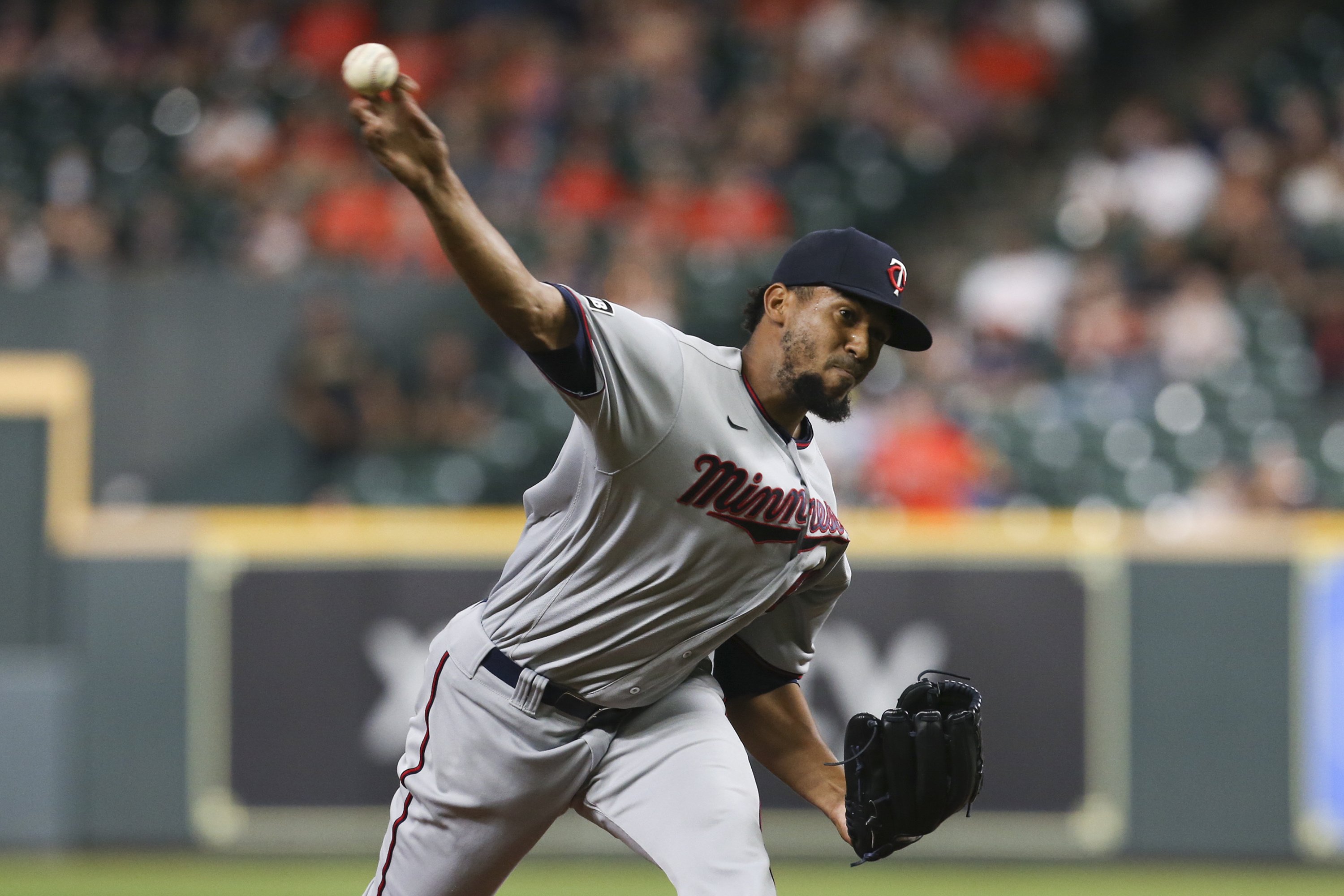 Box Score Ober: 5.0 IP, 7 H, 3 ER, 1 BB, 5 K (68.7% strikes) Home Runs: Garver (13) Top 3 WPA: Minaya .718, Colomé .305, Kepler .110 Win Probability Chart (via FanGraphs) The bats started this game very eager to create an early lead as they did on Thursday night. That became evident by Max Kepler jumping on the game’s very first pitch and smacking a 106 MPH line drive to center. In fact, that was the first of four hard-hit balls collected by the Twins offense in the first four innings and the first out of five that had at least .500 xBA, per Statcast. Unfortunately, it was also the only one to become an actual hit. Despite allowing a great deal of hard contact, Astro’s starter Zack Greinke managed to retire the eight batters he faced following that Kepler leadoff single. Meanwhile, Bailey Ober had a hard time against the long ball, which allowed Houston to create a three-run lead. After a scoreless first inning and retiring the first two batters faced in the second, Ober gave up back-to-back two-out hits. The second one was a two-run home run for Taylor Jones. Ober got back on track and tossed a scoreless third, but then Chas McCormick took him deep with a solo shot in the fourth, making it 3-0 Houston. Twins rally back; bullpen helps to take the game into extras Minnesota finally managed to ambush Greinke in the fifth inning. After being limited to only the one hit through four, the Twins produced four hits in the same inning. Mitch Garver hit a leadoff homer to left to put Minnesota on the board. Miguel Sanó and Rob Refsnyder followed him with back-to-back singles, making it three consecutive to open the inning. Then Kepler grounded into a force out to score Sanó from third, pulling the Twins within a run. Ober finished his outing with a strong display. After getting two outs on nine pitches, he battled Kyle Tucker on a tough, seven-pitch at-bat. Ober prevailed and struck out Tucker, his first punchout since the second inning. Over his last six starts, dating back from the start of July, Ober has posted a 4.22 ERA while striking out 9.7 batters and walking just 2.9 per nine. Ober seems to be steadily evolving into a solid bottom of the rotation presence. He finished July with a 3.97 ERA over five starts and has now delivered at least five innings of work in four of his last six starts. Jorge Polanco opened up the sixth inning with a double, showing that the Twins’ comeback wasn’t done. A couple of at-bats later, Luis Arraez hit a hard ground ball to left, his first hit of the night, pushing Polanco across and tying the game. That run also earned Ober a no-decision. John Gant celebrated his birthday with a strong outing. He struck out the first two batters he faced before inducing a groundout to complete a 1-2-3 sixth on 17 pitches. However, Tyler Duffey’s outing after him wasn’t nearly as uneventful. He gave up back-to-back one-out hits, including a single to José Altuve that snapped an 0-for-11 stretch. Duffey took advantage of a fantastic defensive play from Arraez that ended the inning. Unfortunately, it also forced Arraez to leave the game a few moments later, as it seems like he twisted his knee on the play. The offense struggled against Houston’s bullpen. After the game-tying single from Arraez in the sixth, the Astros relievers retired 12 Minnesota batters in a row. That put a lot of pressure on the Twins bullpen, but they managed to navigate through it. Jorge Alcala pitched a 1-2-3 eighth on 14 pitches, striking out a pair. That was his fourth consecutive outing without allowing an earned run, for a total of 5 ⅓ innings. Has he finally turned the corner? Similarly, only with fewer innings, Alexander Colomé pitched a fourth consecutive scoreless outing, keeping the game tied after nine, taking the game to extra innings. Both teams exchange punches in extras With Refsnyder starting the 10th inning on second, the Twins managed to score quickly. Andrelton Simmons swung on the second pitch he saw from reliever Phil Maton and sent Refsnyder to third. Then Kepler got ahead in the count and hit a sacrifice fly to center, moving up both runners. Minnesota took the lead for the first time in the game, 4-3. That didn’t last long, though. Houston tied it up in the bottom half of the inning. Lefty Danny Coulombe came in relief of Colomé. Michael Brantley grounded out to move up Altuve, the automatic runner, to third. Then Yordan Álvarez singled to left to score Altuve. Coulombe gave up a two-out walk to Tucker, putting two runners on for Houston. Rocco Baldelli brought in Juan Minaya, who struck out Aledmys Diaz on three pitches to end the inning. Having a quiet night up until that point, Josh Donaldson stepped in and came through with a big hit to open the 11th inning, and that was enough to score Polanco from second and retake the lead for the Twins who now took a 5-4 lead. Minaya came back to close the game, and he did it brilliantly, retiring the first two batters on seven pitches. Then, some thrilling plays took place. Minaya induced poor contact from Jason Castro. But Garver, playing at first base, couldn’t field the ground ball cleanly, allowing his former teammate to reach and moving Diaz to third. In the final play of the game, Altuve tried to bunt to third, but Sanó was able to pick up the ball and retire Altuve at first with an 84 MPH “bazooka” throw, securing the win. Postgame Interview Bullpen Usage Spreadsheet MON TUE WED THU FRI TOT Minaya 0 0 44 0 17 61 Colomé 0 20 0 7 17 44 Coulombe 0 13 0 17 14 44 Duffey 0 0 0 21 20 41 Gant 0 22 0 0 17 39 Thielbar 0 0 22 8 0 30 Alcala 0 0 0 14 14 28 Burrows 0 0 13 0 0 13
- 28 comments
-
- 1
-
-
- bailey ober
- miguel sano
- (and 1 more)
-
.png.ba8c6d8e033096816c1d3d31bce9d0f4.png) Please, calm down. I’m not at all saying Berríos is, today, similar to what Santana was when the Mets acquired him from Minnesota. Nor that he will be nearly as good as the Venezuelan. But bear with me, while I look at what those two deals have in common. Their role in the Twins After the 2007 season, Santana was already one of baseball’s greatest pitchers, if not the best one. Mentioning his accolades up until that moment has no use here. They couldn’t afford him, so they found themselves forced to trade him. Berríos, right now, may not be the ace Johan was, but he is certainly one of baseball’s most reliable arms. Especially, you know, health-wise. So far in his career, Berríos hasn’t had any serious injury that cost him relevant playing time. His injury history is immaculate. Minus 2016, the year he got called up for the first time, and 2020, the 60-game season, Berríos has logged at least 145 innings in each season of his career. He’s having career numbers this year, which indicates that he’s only getting better. So he may not be as talented as Santana, but he’s a solid piece of this rotation. A player who could easily be a number three starter for the vast majority of MLB teams. And, at 27, which is two years younger than Santana when he was dealt, you just have to assume he’s just entering his prime. What if they stayed? My main point here is this. What could’ve happened if the Twins could afford Santana and signed him to an extension? And what may happen if they decide to hold on to José now? Everything from now on will be hypothetical, so get ready for many ‘what ifs.’ When Minnesota traded Santana, they knowingly gave up on a two-time Cy Young Award winner, the best starter they had since… Blyleven? Viola in ‘91? Or the best one ever? You decide. If he had stayed, he would’ve made that phenomenal Twins team even better. After a disappointing 79-83 record in 2007, Minnesota went on to win at least 87 games in each of the following three seasons, including a 94-win season in 2010, capping a second consecutive AL Central title. However good they were, those teams could never get past the Yankees in their trips to the ALDS. How much closer to winning a World Series would that particular team be, had Santana stayed? No one will ever know. But I think it’s fair to assume they would have much, much better odds. In conclusion, trading away Johan, even though it was the only logical solution given the club’s financial reality at that point, undeniably made the Twins a worse team. With that being said, let’s shift to Berríos’ case now. Realistically speaking, the Twins are a much better team with him around. No pitcher within the organization brings to the table, today, the same productivity from Berríos. Kenta Maeda bounced back very nicely, but there’s no way he’s had a better season than José so far. If you’re not looking at the prospect of a two or three-year rebuilding process, there’s no way you trade Berríos now. Minnesota’s chances of having a competitive rotation in 2022 are not better at all with the absence of Berríos. Unless, of course, they pull a huge free agent signing during the winter, which is very unlikely. Let me repeat myself: Berríos is no ace (yet), and he doesn’t bring to the table the same as Santana 13 years ago. But if you keep him, adding one or two good free agent arms during the winter could turn this rotation around next year. If you don’t, you’re considerably further along. What is the big difference? Like I said before, the Twins had no alternatives but to trade Santana. Revenue wasn’t the same, so it’s understandable. What you can question is how bad the return for Santana was. That deal turned out to be one of the worst in club history. But, yeah, trading him was a must. On the other hand, that certainly doesn’t seem to be the same case with Berríos now. First, a contract extension to José wouldn’t be nearly as expensive. Twins Daily’s Ted Schwerzler believes that a Berríos contract would look similar to those of Luis Severino, Aaron Nola, and Lance McCullers, ranging around the $12-15M AAV and going for four or five years. We don’t know the complete picture of Minnesota’s financial reality, but that doesn’t seem like a very expensive ask. The aftermath While the return for Santana was suboptimal, sadly, the remainder of Santana’s career was severely affected by injuries. While still a fine pitcher and pitching an amazing 2008 season, he needed to go through two season-ending surgeries in 2009 and 2010, the latter one also removing him from the entirety of 2011. Again turning to hypotheticals, if he had been healthy in New York, watching him pitch at a high level for a different team could be somewhat similar to watch David Ortiz slug his way into the Hall of Fame in a Red Sox uniform. What aggravates Ortiz’s case is the fact that no one saw that coming, unlike Santana. Still, it wouldn’t feel nice. Thinking about the comparison with Berríos, how frustrating would it be to see him actually become an ace for a different team? Many Twins fans don’t consider him ace material up until now. But are you willing to bet money that this will never change? How certain are you that he won’t be one of the league’s top starters two or three years from now? Offering a more optimistic perspective: how amazing would it be if Berríos actually becomes an ace and the Twins had already locked him up long-term with a ‘bargain’ of $15M AAV? He would not only be the cornerstone of the Twins rotation, but he would also serve as a mentor to all the exciting arms coming up from the farm. Just picture, three years from now, a rotation containing Berríos and names like Josh Winder, Jordan Balazovic, Griffin Jax, and Bailey Ober. Assuming the financial aspect isn’t an issue, the only thing standing between Berríos and a future with the Twins is whether the club wants him around or not – unlike Santana. A haul in exchange for him would obviously look nice. But keeping him may potentially be even more profitable. MORE FROM TWINS DAILY — Latest Twins coverage from our writers — Recent Twins discussion in our forums — Follow Twins Daily via Twitter, Facebook or email
Please, calm down. I’m not at all saying Berríos is, today, similar to what Santana was when the Mets acquired him from Minnesota. Nor that he will be nearly as good as the Venezuelan. But bear with me, while I look at what those two deals have in common. Their role in the Twins After the 2007 season, Santana was already one of baseball’s greatest pitchers, if not the best one. Mentioning his accolades up until that moment has no use here. They couldn’t afford him, so they found themselves forced to trade him. Berríos, right now, may not be the ace Johan was, but he is certainly one of baseball’s most reliable arms. Especially, you know, health-wise. So far in his career, Berríos hasn’t had any serious injury that cost him relevant playing time. His injury history is immaculate. Minus 2016, the year he got called up for the first time, and 2020, the 60-game season, Berríos has logged at least 145 innings in each season of his career. He’s having career numbers this year, which indicates that he’s only getting better. So he may not be as talented as Santana, but he’s a solid piece of this rotation. A player who could easily be a number three starter for the vast majority of MLB teams. And, at 27, which is two years younger than Santana when he was dealt, you just have to assume he’s just entering his prime. What if they stayed? My main point here is this. What could’ve happened if the Twins could afford Santana and signed him to an extension? And what may happen if they decide to hold on to José now? Everything from now on will be hypothetical, so get ready for many ‘what ifs.’ When Minnesota traded Santana, they knowingly gave up on a two-time Cy Young Award winner, the best starter they had since… Blyleven? Viola in ‘91? Or the best one ever? You decide. If he had stayed, he would’ve made that phenomenal Twins team even better. After a disappointing 79-83 record in 2007, Minnesota went on to win at least 87 games in each of the following three seasons, including a 94-win season in 2010, capping a second consecutive AL Central title. However good they were, those teams could never get past the Yankees in their trips to the ALDS. How much closer to winning a World Series would that particular team be, had Santana stayed? No one will ever know. But I think it’s fair to assume they would have much, much better odds. In conclusion, trading away Johan, even though it was the only logical solution given the club’s financial reality at that point, undeniably made the Twins a worse team. With that being said, let’s shift to Berríos’ case now. Realistically speaking, the Twins are a much better team with him around. No pitcher within the organization brings to the table, today, the same productivity from Berríos. Kenta Maeda bounced back very nicely, but there’s no way he’s had a better season than José so far. If you’re not looking at the prospect of a two or three-year rebuilding process, there’s no way you trade Berríos now. Minnesota’s chances of having a competitive rotation in 2022 are not better at all with the absence of Berríos. Unless, of course, they pull a huge free agent signing during the winter, which is very unlikely. Let me repeat myself: Berríos is no ace (yet), and he doesn’t bring to the table the same as Santana 13 years ago. But if you keep him, adding one or two good free agent arms during the winter could turn this rotation around next year. If you don’t, you’re considerably further along. What is the big difference? Like I said before, the Twins had no alternatives but to trade Santana. Revenue wasn’t the same, so it’s understandable. What you can question is how bad the return for Santana was. That deal turned out to be one of the worst in club history. But, yeah, trading him was a must. On the other hand, that certainly doesn’t seem to be the same case with Berríos now. First, a contract extension to José wouldn’t be nearly as expensive. Twins Daily’s Ted Schwerzler believes that a Berríos contract would look similar to those of Luis Severino, Aaron Nola, and Lance McCullers, ranging around the $12-15M AAV and going for four or five years. We don’t know the complete picture of Minnesota’s financial reality, but that doesn’t seem like a very expensive ask. The aftermath While the return for Santana was suboptimal, sadly, the remainder of Santana’s career was severely affected by injuries. While still a fine pitcher and pitching an amazing 2008 season, he needed to go through two season-ending surgeries in 2009 and 2010, the latter one also removing him from the entirety of 2011. Again turning to hypotheticals, if he had been healthy in New York, watching him pitch at a high level for a different team could be somewhat similar to watch David Ortiz slug his way into the Hall of Fame in a Red Sox uniform. What aggravates Ortiz’s case is the fact that no one saw that coming, unlike Santana. Still, it wouldn’t feel nice. Thinking about the comparison with Berríos, how frustrating would it be to see him actually become an ace for a different team? Many Twins fans don’t consider him ace material up until now. But are you willing to bet money that this will never change? How certain are you that he won’t be one of the league’s top starters two or three years from now? Offering a more optimistic perspective: how amazing would it be if Berríos actually becomes an ace and the Twins had already locked him up long-term with a ‘bargain’ of $15M AAV? He would not only be the cornerstone of the Twins rotation, but he would also serve as a mentor to all the exciting arms coming up from the farm. Just picture, three years from now, a rotation containing Berríos and names like Josh Winder, Jordan Balazovic, Griffin Jax, and Bailey Ober. Assuming the financial aspect isn’t an issue, the only thing standing between Berríos and a future with the Twins is whether the club wants him around or not – unlike Santana. A haul in exchange for him would obviously look nice. But keeping him may potentially be even more profitable. MORE FROM TWINS DAILY — Latest Twins coverage from our writers — Recent Twins discussion in our forums — Follow Twins Daily via Twitter, Facebook or email- 24 comments
-
- 3
-
-
- 2021 trade deadline
- jose berrios
- (and 1 more)
-
We’re a few hours away from the 2021 trade deadline, and the Twins are on the verge of trading away José Berríos. ‘La Makina’ is, without a doubt, the greatest homegrown starting pitching talent Minnesota has developed in a long time. Is trading him similar, in any way, to trading Johan Santana back in 2008? Please, calm down. I’m not at all saying Berríos is, today, similar to what Santana was when the Mets acquired him from Minnesota. Nor that he will be nearly as good as the Venezuelan. But bear with me, while I look at what those two deals have in common. Their role in the Twins After the 2007 season, Santana was already one of baseball’s greatest pitchers, if not the best one. Mentioning his accolades up until that moment has no use here. They couldn’t afford him, so they found themselves forced to trade him. Berríos, right now, may not be the ace Johan was, but he is certainly one of baseball’s most reliable arms. Especially, you know, health-wise. So far in his career, Berríos hasn’t had any serious injury that cost him relevant playing time. His injury history is immaculate. Minus 2016, the year he got called up for the first time, and 2020, the 60-game season, Berríos has logged at least 145 innings in each season of his career. He’s having career numbers this year, which indicates that he’s only getting better. So he may not be as talented as Santana, but he’s a solid piece of this rotation. A player who could easily be a number three starter for the vast majority of MLB teams. And, at 27, which is two years younger than Santana when he was dealt, you just have to assume he’s just entering his prime. What if they stayed? My main point here is this. What could’ve happened if the Twins could afford Santana and signed him to an extension? And what may happen if they decide to hold on to José now? Everything from now on will be hypothetical, so get ready for many ‘what ifs.’ When Minnesota traded Santana, they knowingly gave up on a two-time Cy Young Award winner, the best starter they had since… Blyleven? Viola in ‘91? Or the best one ever? You decide. If he had stayed, he would’ve made that phenomenal Twins team even better. After a disappointing 79-83 record in 2007, Minnesota went on to win at least 87 games in each of the following three seasons, including a 94-win season in 2010, capping a second consecutive AL Central title. However good they were, those teams could never get past the Yankees in their trips to the ALDS. How much closer to winning a World Series would that particular team be, had Santana stayed? No one will ever know. But I think it’s fair to assume they would have much, much better odds. In conclusion, trading away Johan, even though it was the only logical solution given the club’s financial reality at that point, undeniably made the Twins a worse team. With that being said, let’s shift to Berríos’ case now. Realistically speaking, the Twins are a much better team with him around. No pitcher within the organization brings to the table, today, the same productivity from Berríos. Kenta Maeda bounced back very nicely, but there’s no way he’s had a better season than José so far. If you’re not looking at the prospect of a two or three-year rebuilding process, there’s no way you trade Berríos now. Minnesota’s chances of having a competitive rotation in 2022 are not better at all with the absence of Berríos. Unless, of course, they pull a huge free agent signing during the winter, which is very unlikely. Let me repeat myself: Berríos is no ace (yet), and he doesn’t bring to the table the same as Santana 13 years ago. But if you keep him, adding one or two good free agent arms during the winter could turn this rotation around next year. If you don’t, you’re considerably further along. What is the big difference? Like I said before, the Twins had no alternatives but to trade Santana. Revenue wasn’t the same, so it’s understandable. What you can question is how bad the return for Santana was. That deal turned out to be one of the worst in club history. But, yeah, trading him was a must. On the other hand, that certainly doesn’t seem to be the same case with Berríos now. First, a contract extension to José wouldn’t be nearly as expensive. Twins Daily’s Ted Schwerzler believes that a Berríos contract would look similar to those of Luis Severino, Aaron Nola, and Lance McCullers, ranging around the $12-15M AAV and going for four or five years. We don’t know the complete picture of Minnesota’s financial reality, but that doesn’t seem like a very expensive ask. The aftermath While the return for Santana was suboptimal, sadly, the remainder of Santana’s career was severely affected by injuries. While still a fine pitcher and pitching an amazing 2008 season, he needed to go through two season-ending surgeries in 2009 and 2010, the latter one also removing him from the entirety of 2011. Again turning to hypotheticals, if he had been healthy in New York, watching him pitch at a high level for a different team could be somewhat similar to watch David Ortiz slug his way into the Hall of Fame in a Red Sox uniform. What aggravates Ortiz’s case is the fact that no one saw that coming, unlike Santana. Still, it wouldn’t feel nice. Thinking about the comparison with Berríos, how frustrating would it be to see him actually become an ace for a different team? Many Twins fans don’t consider him ace material up until now. But are you willing to bet money that this will never change? How certain are you that he won’t be one of the league’s top starters two or three years from now? Offering a more optimistic perspective: how amazing would it be if Berríos actually becomes an ace and the Twins had already locked him up long-term with a ‘bargain’ of $15M AAV? He would not only be the cornerstone of the Twins rotation, but he would also serve as a mentor to all the exciting arms coming up from the farm. Just picture, three years from now, a rotation containing Berríos and names like Josh Winder, Jordan Balazovic, Griffin Jax, and Bailey Ober. Assuming the financial aspect isn’t an issue, the only thing standing between Berríos and a future with the Twins is whether the club wants him around or not – unlike Santana. A haul in exchange for him would obviously look nice. But keeping him may potentially be even more profitable. MORE FROM TWINS DAILY — Latest Twins coverage from our writers — Recent Twins discussion in our forums — Follow Twins Daily via Twitter, Facebook or email View full article
-
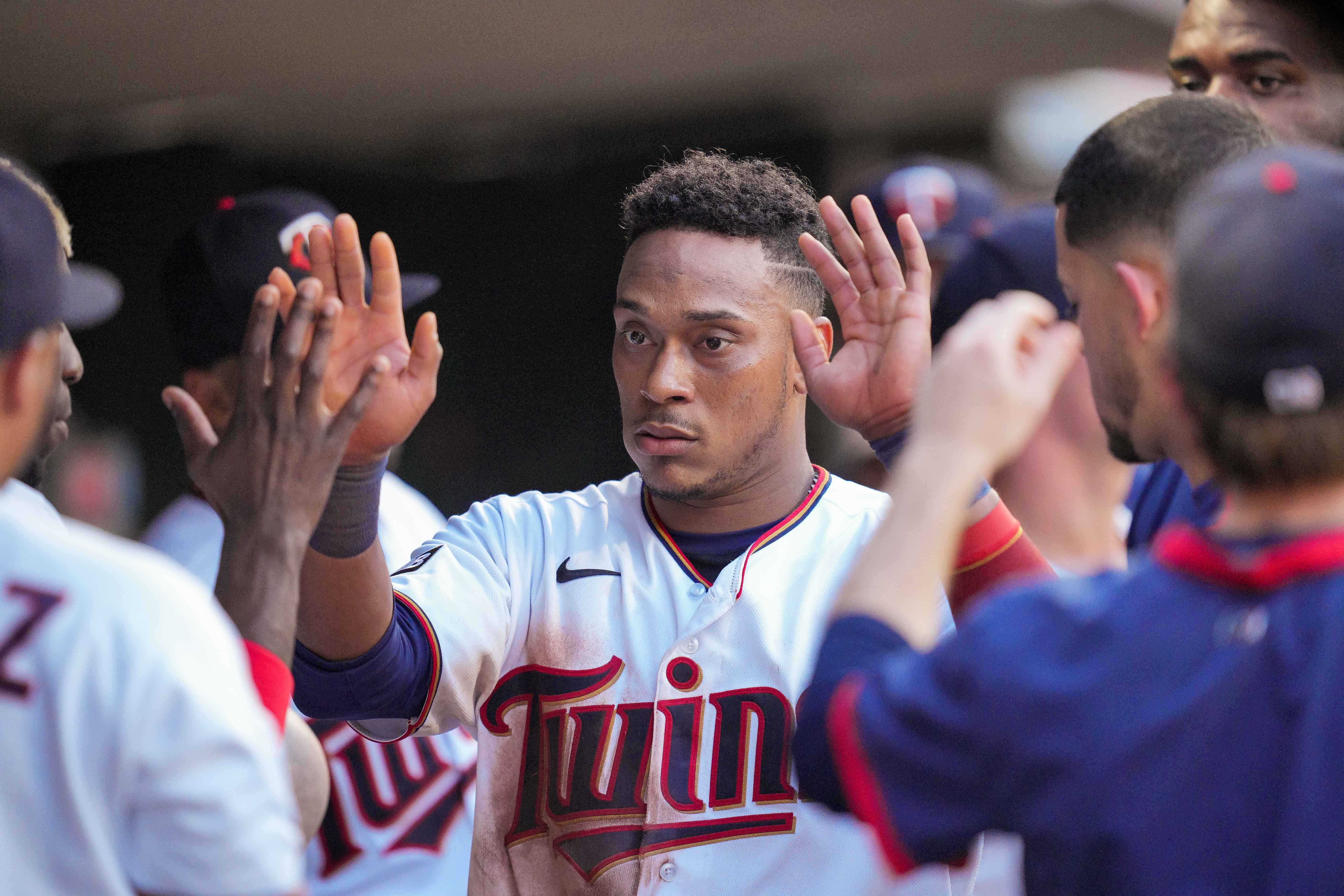 Box Score Happ: 6.0 IP, 7 H, 4 ER, 1 BB, 4 K (62.5% strikes) Home Runs: none Top 3 WPA: Jeffers .512, Rogers .169, Polanco .104 Win Probability Chart (via FanGraphs) Happ struggles early but settles in nicely Eight pitches. Eight pitches were all it took for this game to have its first runs on the board. Happ was off to a horrendous start, which is not news. Coming into tonight’s game, 21.3% of all earned runs given up by the southpaw in the season happened during the first inning of games. That became a little worse when Phil Gosselin doubled and then scored on a Jose Iglesias’ single. Then it became a lot worse a few moments later when old friend Kurt Suzuki hit a two-out, two-run bomb to the left field corner, making it 3-0 Angels. Facing righty Alex Cobb, the offense loaded the bases during the bottom of the first inning but couldn’t capitalize. They went down in order in the second frame, but not before Happ had given up yet another home run in the top of the inning to Jack Mayfield, extending the Angels’ lead to four. With the four early runs allowed, the Twins’ starter took the lead of Robbie Ray for most earned runs allowed by any left-handed pitcher in the American League. Minnesota got one run back in the third inning with Jorge Polanco keeping his hot streak alive and well with a double, and being pushed across by a single from Trevor Larnach. Fortunately, that was also the inning when Happ had started to settle in. After the awful first two innings, he went on to pitch four scoreless frames. Before he departed, the Twins manufactured another run in the bottom of the fifth inning. Max Kepler hit a bullet to lead off the inning (110 MPH exit velocity), then Polanco singled to move him to third. With men on the corners, a fantastic defensive play from Mayfield at third prevented the Twins from maybe scoring a couple of runs. Instead, Josh Donaldson grounded into a double-play, but that was enough to score Kepler from third and cut Los Angeles’ lead to 4-2. Offense keeps pushing for a rally The Twins continued to peck their way into this game. Cobb came back to the mound for the bottom of the sixth, but he left the game with a blister before throwing a single pitch. With Steve Cishek pitching, Miguel Sanó led off the inning with a double, and Nick Gordon singled to right to bring the big man home, putting Minnesota within a run. Minnesota kept hitting the ball hard. After Alexander Colomé delivered a scoreless seventh inning, Donaldson hit a single in the bottom of the inning, the Twins’ 11th hit of the night. However, they couldn’t add on, thanks to Mayfield’s impressive defensive display at the hot corner. While the Twins were able to produce baserunners, most of them were stranded by the Angel defense. Juan Minaya worked out of a jam in the top of the eighth to keep this a one-run game. Then, with a series of great at-bats, the offense came through in the home half. Sanó worked an eight-pitch at-bat to draw a leadoff walk, prompting a pitching change. Joe Maddon brought in star closer Raisel Iglesias to try to keep the Angels ahead. After he got the first out of the inning, Gordon responded with a single, his second of the night. Then Ryan Jeffers came through with his most clutch hit yet! A single to left, just out of the reach of Mayfield, was enough to score Sanó from second. After an errant throw home, Suzuki tried to catch Gordon advancing to third base, but he was way off the mark, allowing the Twins’ rookie to score sliding and give the Twins their first lead of the night, 5-4. Taylor Rogers came in to pitch the ninth inning and, despite giving up a bloop single to David Fletcher, managed to retire the side and secure the Twins win. This was his ninth save of the season, the 50th in his career. He's now even closer to enter the top 10 in career saves in Senators/Twins franchise history, ranking 13th at the moment. Postgame Interviews Nick Gordon Ryan Jeffers Bullpen Usage Spreadsheet MON TUE WED THU FRI TOT Colomé 0 26 22 0 11 59 Duffey 16 0 38 0 0 54 Alcala 23 24 0 0 0 47 Coulombe 0 5 0 32 0 37 Rogers 19 0 0 0 18 37 Thielbar 0 17 16 0 0 33 Robles 19 7 0 0 0 26 Minaya 0 0 0 0 20 20
- 12 comments
-
- 1
-
-
- minnesota twins
- nick gordon
- (and 3 more)
-
Down by four runs early on, the Twins never gave up and managed to rally back to beat the Angels and even the series, one game a piece. Ryan Jeffers' clutch hit and Nick Gordon's aggressive baserunning sealed the deal late. Box Score Happ: 6.0 IP, 7 H, 4 ER, 1 BB, 4 K (62.5% strikes) Home Runs: none Top 3 WPA: Jeffers .512, Rogers .169, Polanco .104 Win Probability Chart (via FanGraphs) Happ struggles early but settles in nicely Eight pitches. Eight pitches were all it took for this game to have its first runs on the board. Happ was off to a horrendous start, which is not news. Coming into tonight’s game, 21.3% of all earned runs given up by the southpaw in the season happened during the first inning of games. That became a little worse when Phil Gosselin doubled and then scored on a Jose Iglesias’ single. Then it became a lot worse a few moments later when old friend Kurt Suzuki hit a two-out, two-run bomb to the left field corner, making it 3-0 Angels. Facing righty Alex Cobb, the offense loaded the bases during the bottom of the first inning but couldn’t capitalize. They went down in order in the second frame, but not before Happ had given up yet another home run in the top of the inning to Jack Mayfield, extending the Angels’ lead to four. With the four early runs allowed, the Twins’ starter took the lead of Robbie Ray for most earned runs allowed by any left-handed pitcher in the American League. Minnesota got one run back in the third inning with Jorge Polanco keeping his hot streak alive and well with a double, and being pushed across by a single from Trevor Larnach. Fortunately, that was also the inning when Happ had started to settle in. After the awful first two innings, he went on to pitch four scoreless frames. Before he departed, the Twins manufactured another run in the bottom of the fifth inning. Max Kepler hit a bullet to lead off the inning (110 MPH exit velocity), then Polanco singled to move him to third. With men on the corners, a fantastic defensive play from Mayfield at third prevented the Twins from maybe scoring a couple of runs. Instead, Josh Donaldson grounded into a double-play, but that was enough to score Kepler from third and cut Los Angeles’ lead to 4-2. Offense keeps pushing for a rally The Twins continued to peck their way into this game. Cobb came back to the mound for the bottom of the sixth, but he left the game with a blister before throwing a single pitch. With Steve Cishek pitching, Miguel Sanó led off the inning with a double, and Nick Gordon singled to right to bring the big man home, putting Minnesota within a run. Minnesota kept hitting the ball hard. After Alexander Colomé delivered a scoreless seventh inning, Donaldson hit a single in the bottom of the inning, the Twins’ 11th hit of the night. However, they couldn’t add on, thanks to Mayfield’s impressive defensive display at the hot corner. While the Twins were able to produce baserunners, most of them were stranded by the Angel defense. Juan Minaya worked out of a jam in the top of the eighth to keep this a one-run game. Then, with a series of great at-bats, the offense came through in the home half. Sanó worked an eight-pitch at-bat to draw a leadoff walk, prompting a pitching change. Joe Maddon brought in star closer Raisel Iglesias to try to keep the Angels ahead. After he got the first out of the inning, Gordon responded with a single, his second of the night. Then Ryan Jeffers came through with his most clutch hit yet! A single to left, just out of the reach of Mayfield, was enough to score Sanó from second. After an errant throw home, Suzuki tried to catch Gordon advancing to third base, but he was way off the mark, allowing the Twins’ rookie to score sliding and give the Twins their first lead of the night, 5-4. Taylor Rogers came in to pitch the ninth inning and, despite giving up a bloop single to David Fletcher, managed to retire the side and secure the Twins win. This was his ninth save of the season, the 50th in his career. He's now even closer to enter the top 10 in career saves in Senators/Twins franchise history, ranking 13th at the moment. Postgame Interviews Nick Gordon Ryan Jeffers Bullpen Usage Spreadsheet MON TUE WED THU FRI TOT Colomé 0 26 22 0 11 59 Duffey 16 0 38 0 0 54 Alcala 23 24 0 0 0 47 Coulombe 0 5 0 32 0 37 Rogers 19 0 0 0 18 37 Thielbar 0 17 16 0 0 33 Robles 19 7 0 0 0 26 Minaya 0 0 0 0 20 20 View full article
- 12 replies
-
- 1
-
-
- minnesota twins
- nick gordon
- (and 3 more)
-
 What's their situation? The Mets' presence in October looks pretty likely, although it's not a sure thing. They went into the All-Star break leading the NL East by 3.5 games over the Philadelphia Phillies, with a record of 47-40. After a slow start in April, they exploded to go 17-9 in May. This helped them improve from the fourth-worst record in the NL to the top of their division by the end of the month. Winning the division – something they did last in 2015 – appears to be the safest way for them to make it into the postseason. The Los Angeles Dodgers (56-35) and the San Diego Padres (53-40), the two clubs currently in ownership of the two wild card spots, both have records considerably better than New York at this point. If one of them manages to win the NL West, the San Francisco Giants (currently at 57-32) suddenly become the Mets' competition for the wild card. New York finished the first half of the season with a winning record within the division, 19-18. But against their two main threats, the Phillies and the Braves, they are at 14-10. The Braves, unfortunately, lost Ronald Acuña Jr. for the season due to a torn ACL, so their already-average offensive productivity (100 wRC+) may take a dip during the second half. With the Mets having one of baseball's best pitching staffs, making the right additions in this trade deadline could be key to put them over the top in the NL East. Steven Cohen, the team's new boss since last October, is baseball's richest team owner with a net worth that has reached the $16 billion thresholds last April, according to Forbes. Not three months after acquiring Francisco Lindor from Cleveland last January, Cohen demonstrated his business aggressiveness and locked him up in late March with a 10-year, $341 million extension. Not only this proves his total commitment to building a World Series-caliber team, but it also puts the Mets into a very convenient position when they need to lure free agents or top trade targets into the club. Trading for and then signing Lindor to an extension wasn't the only move from the Mets for this season. Over the winter, they made some key free-agent additions, such as keeping Marcus Stroman, as well as All-Star starter Taijuan Walker, former All-Star catcher James McCann, and our dear Trevor May. The Mets being in a position of entering a pennant race after the trade deadline additions is certainly not an accident. What do they need? As good as the Mets' pitching staff has been, they could still use some help. Their starting rotation has produced 9.9 fWAR (4th most in baseball) while also having the second-best ERA, with 2.98, and the best FIP, at 3.36. However, they did that relying basically on three arms: Stroman, Walker, and Jacob deGrom, who's having one of the most dominant seasons a starting pitcher has had in years, possibly decades. Outside of the trio mentioned above, if you put together all the other pitchers who started at least one game for the Mets this season, they have a combined 4.62 ERA and 4.61 FIP. If they don't pursue pitching help now, that's the kind of productivity they'll be relying on should any severe injuries happen to one of their top three starters. Carlos Carrasco and Noah Syndergaard have slight chances of returning to the team this season, but that definitely shouldn't be something to count on. If you're the Mets, shopping for a solid starter to strengthen your rotation in the second half and into October should be your top priority. Next on their list are, of course, bats. The Mets as a team have had a very poor offense – to sugarcoat it – throughout this season, ranking 17th in wRC+ (93) and 25th in OPS (.683), while striking out 24.4% of the time, which represents the 10th highest percentage in baseball. They've produced the second-fewest runs in all of baseball so far this season, with a total of 327. deGrom, who constantly doesn't get run support from New York's lineup, has a .758 OPS, which is higher than those of seven of the eight qualified hitters in the team. Lindor appears to have found his mojo this month, but he's had an abysmal first three months as a Met, being booed several times by the fans. J.D. Davis has been sidelined for most of the season, which creates a huge gap in their lineup. Even though he's expected to be activated very soon, you have no idea what version of him is coming back from the injured list. So it makes a lot of sense to look for some help at third base. Besides, if he does come back hitting as well as he was in April, they can easily move him to one of their corner outfield spots. Good pitching is never enough, but so far, the Mets haven't been linked to any significant relief pitching rumors. They appear to be satisfied with what their bullpen is bringing to the table, a staff with a 2.12 WPA so far this season, the 12th-best in baseball. Seven of their eight most-used relievers this season have a sub-four ERA. Which Twins are the best fit? Having that in mind, the Twins may immediately become the best trading partner available for New York, as they can kill two birds with one stone by dealing with Minnesota. Josh Donaldson might not be a frontrunner, but he would be the perfect fit for the Mets. Earlier this month, it was reported that both sides started preliminary talks. However, things didn't progress. Nonetheless, 'The Bringer of Rain' is undeniably an upgrade over veteran Jonathan Villar, the Mets' primary hot corner starter this season. Donaldson's .831 OPS for the season (1.035 over his last 30 games) are considerably above Villar's .745. Besides, even with some of his defensive metrics being below his career average right now, Donaldson still provides the Mets much better defense. José Berríos is the next big thing the Twins have to offer. The former All-Star is not an ace, as we all know, but he is absolutely solid and, at 27 and under team control for this season and next, the upside is huge. After 18 starts this season, 'La Makina' is posting some career numbers, such as 3.48 ERA, 3.40 FIP, and 1.10 WHIP. In several metrics, Berríos is a superior pitcher to Walker himself, providing more strikeouts and giving up fewer walks. Having Berríos as their number three or four starter would make the Met rotation much, much scarier. Adding Berríos would also be huge for New York because both Stroman and Syndergaard will be free agents at the end of the season. The upside that he brings to the table is so significant that some Mets fans even consider him the 'condition' to accept all the potential downside of bringing in Donaldson, such as the age, the injury history, and the high salary. However, names like Kris Bryant, Adam Frazier, and Eduardo Escobar might get in the way of them making another blockbuster trade, such as the one they did with Cleveland in January. Who could the Twins get back? In mid-June, New York-based SNY presented this package in exchange for Berríos: Ronny Mauricio, a 20-year-old shortstop, is currently the organization's #2 prospect, while J.T. Ginn (RHP) is their #6, and Junior Santos (RHP) their #11. While this is a package containing some of your best-ranked prospects, looking at their productivity in the minors this season makes you think. Santos', who's only 19, still hasn't had a very good season in the Mets' system, with a 4.37 career ERA so far. On the other hand, Ginn has a solid 2.48 ERA this season, his first out of college, but the sample might still be too small to judge him. Mauricio is a very attractive piece, even though he doesn't have eye-popping numbers so far. However, it's uncertain how much the Twins would be willing to have the most valuable trade piece be a shortstop. This position already accounts for four of the team's top 30 prospects list, including their #1, Royce Lewis, and #7, Keoni Cavaco. Not to mention that Nick Gordon just made the big league team and is doing pretty well. But those are all more of a wondering than it is a reason to say no. It's hard to imagine that the Mets would toss in anything more than this for Berríos. Would they be willing to add a low-end prospect to the package in exchange for Donaldson? As much as Berríos and Donaldson would be the perfect fit for them, perhaps they won't be willing to go any higher than something similar to what's been suggested above. They could probably land a better third baseman with those same pieces if they decide to trade with some other team. At the same time, I also feel like the Twins could get a better return in exchange for Berríos. That is if they're really willing to deal him – which we aren't sure they are. MORE FROM TWINS DAILY — Latest Twins coverage from our writers — Recent Twins discussion in our forums — Follow Twins Daily via Twitter, Facebook or email
- 5 comments
-
- 2
-
-
- 2021 trade deadline
- josh donaldson
- (and 1 more)
-
The Mets, under new ownership, were aggressive in the market last winter and landed some key pieces. However, injuries have taken a toll on their season, and winning the division isn't a certainty. They haven't been to the postseason in four years, and if they want to have a relevant October, they need to add at least a starting pitcher and one more bat. Minnesota has exactly what they need. Will the clubs find the right price? What's their situation? The Mets' presence in October looks pretty likely, although it's not a sure thing. They went into the All-Star break leading the NL East by 3.5 games over the Philadelphia Phillies, with a record of 47-40. After a slow start in April, they exploded to go 17-9 in May. This helped them improve from the fourth-worst record in the NL to the top of their division by the end of the month. Winning the division – something they did last in 2015 – appears to be the safest way for them to make it into the postseason. The Los Angeles Dodgers (56-35) and the San Diego Padres (53-40), the two clubs currently in ownership of the two wild card spots, both have records considerably better than New York at this point. If one of them manages to win the NL West, the San Francisco Giants (currently at 57-32) suddenly become the Mets' competition for the wild card. New York finished the first half of the season with a winning record within the division, 19-18. But against their two main threats, the Phillies and the Braves, they are at 14-10. The Braves, unfortunately, lost Ronald Acuña Jr. for the season due to a torn ACL, so their already-average offensive productivity (100 wRC+) may take a dip during the second half. With the Mets having one of baseball's best pitching staffs, making the right additions in this trade deadline could be key to put them over the top in the NL East. Steven Cohen, the team's new boss since last October, is baseball's richest team owner with a net worth that has reached the $16 billion thresholds last April, according to Forbes. Not three months after acquiring Francisco Lindor from Cleveland last January, Cohen demonstrated his business aggressiveness and locked him up in late March with a 10-year, $341 million extension. Not only this proves his total commitment to building a World Series-caliber team, but it also puts the Mets into a very convenient position when they need to lure free agents or top trade targets into the club. Trading for and then signing Lindor to an extension wasn't the only move from the Mets for this season. Over the winter, they made some key free-agent additions, such as keeping Marcus Stroman, as well as All-Star starter Taijuan Walker, former All-Star catcher James McCann, and our dear Trevor May. The Mets being in a position of entering a pennant race after the trade deadline additions is certainly not an accident. What do they need? As good as the Mets' pitching staff has been, they could still use some help. Their starting rotation has produced 9.9 fWAR (4th most in baseball) while also having the second-best ERA, with 2.98, and the best FIP, at 3.36. However, they did that relying basically on three arms: Stroman, Walker, and Jacob deGrom, who's having one of the most dominant seasons a starting pitcher has had in years, possibly decades. Outside of the trio mentioned above, if you put together all the other pitchers who started at least one game for the Mets this season, they have a combined 4.62 ERA and 4.61 FIP. If they don't pursue pitching help now, that's the kind of productivity they'll be relying on should any severe injuries happen to one of their top three starters. Carlos Carrasco and Noah Syndergaard have slight chances of returning to the team this season, but that definitely shouldn't be something to count on. If you're the Mets, shopping for a solid starter to strengthen your rotation in the second half and into October should be your top priority. Next on their list are, of course, bats. The Mets as a team have had a very poor offense – to sugarcoat it – throughout this season, ranking 17th in wRC+ (93) and 25th in OPS (.683), while striking out 24.4% of the time, which represents the 10th highest percentage in baseball. They've produced the second-fewest runs in all of baseball so far this season, with a total of 327. deGrom, who constantly doesn't get run support from New York's lineup, has a .758 OPS, which is higher than those of seven of the eight qualified hitters in the team. Lindor appears to have found his mojo this month, but he's had an abysmal first three months as a Met, being booed several times by the fans. J.D. Davis has been sidelined for most of the season, which creates a huge gap in their lineup. Even though he's expected to be activated very soon, you have no idea what version of him is coming back from the injured list. So it makes a lot of sense to look for some help at third base. Besides, if he does come back hitting as well as he was in April, they can easily move him to one of their corner outfield spots. Good pitching is never enough, but so far, the Mets haven't been linked to any significant relief pitching rumors. They appear to be satisfied with what their bullpen is bringing to the table, a staff with a 2.12 WPA so far this season, the 12th-best in baseball. Seven of their eight most-used relievers this season have a sub-four ERA. Which Twins are the best fit? Having that in mind, the Twins may immediately become the best trading partner available for New York, as they can kill two birds with one stone by dealing with Minnesota. Josh Donaldson might not be a frontrunner, but he would be the perfect fit for the Mets. Earlier this month, it was reported that both sides started preliminary talks. However, things didn't progress. Nonetheless, 'The Bringer of Rain' is undeniably an upgrade over veteran Jonathan Villar, the Mets' primary hot corner starter this season. Donaldson's .831 OPS for the season (1.035 over his last 30 games) are considerably above Villar's .745. Besides, even with some of his defensive metrics being below his career average right now, Donaldson still provides the Mets much better defense. José Berríos is the next big thing the Twins have to offer. The former All-Star is not an ace, as we all know, but he is absolutely solid and, at 27 and under team control for this season and next, the upside is huge. After 18 starts this season, 'La Makina' is posting some career numbers, such as 3.48 ERA, 3.40 FIP, and 1.10 WHIP. In several metrics, Berríos is a superior pitcher to Walker himself, providing more strikeouts and giving up fewer walks. Having Berríos as their number three or four starter would make the Met rotation much, much scarier. Adding Berríos would also be huge for New York because both Stroman and Syndergaard will be free agents at the end of the season. The upside that he brings to the table is so significant that some Mets fans even consider him the 'condition' to accept all the potential downside of bringing in Donaldson, such as the age, the injury history, and the high salary. However, names like Kris Bryant, Adam Frazier, and Eduardo Escobar might get in the way of them making another blockbuster trade, such as the one they did with Cleveland in January. Who could the Twins get back? In mid-June, New York-based SNY presented this package in exchange for Berríos: Ronny Mauricio, a 20-year-old shortstop, is currently the organization's #2 prospect, while J.T. Ginn (RHP) is their #6, and Junior Santos (RHP) their #11. While this is a package containing some of your best-ranked prospects, looking at their productivity in the minors this season makes you think. Santos', who's only 19, still hasn't had a very good season in the Mets' system, with a 4.37 career ERA so far. On the other hand, Ginn has a solid 2.48 ERA this season, his first out of college, but the sample might still be too small to judge him. Mauricio is a very attractive piece, even though he doesn't have eye-popping numbers so far. However, it's uncertain how much the Twins would be willing to have the most valuable trade piece be a shortstop. This position already accounts for four of the team's top 30 prospects list, including their #1, Royce Lewis, and #7, Keoni Cavaco. Not to mention that Nick Gordon just made the big league team and is doing pretty well. But those are all more of a wondering than it is a reason to say no. It's hard to imagine that the Mets would toss in anything more than this for Berríos. Would they be willing to add a low-end prospect to the package in exchange for Donaldson? As much as Berríos and Donaldson would be the perfect fit for them, perhaps they won't be willing to go any higher than something similar to what's been suggested above. They could probably land a better third baseman with those same pieces if they decide to trade with some other team. At the same time, I also feel like the Twins could get a better return in exchange for Berríos. That is if they're really willing to deal him – which we aren't sure they are. MORE FROM TWINS DAILY — Latest Twins coverage from our writers — Recent Twins discussion in our forums — Follow Twins Daily via Twitter, Facebook or email View full article
- 5 replies
-
- 1
-
-
- 2021 trade deadline
- josh donaldson
- (and 1 more)
-
The Twins managed to come back from a two-run deficit and led by one in extra innings, but with an unbelievable play that ended the game, the Tigers won the nightcap and swept the split doubleheader with a walk-off. Box Score Maeda: 5.0 IP, 3 H, 3 ER, 1 BB, 8 K (68.8% strikes) Home Runs: Donaldson (14) Bottom 3 WPA: Rogers -.542, Jeffers -.366, Kirilloff -.192 Win Probability Chart (via FanGraphs) Bats show up early, Baddoo overpowers them In game one of the doubleheader, Minnesota’s lineup couldn’t figure out how to get to the Tigers pitching. They managed to get only two total hits the Twins were shut out. But in game two, things were different and it didn’t take long this time. Nelson Cruz hit a two-out double off Tyler Alexander shortly before Josh Donaldson brought him home with a liner to center. It was a rocket, too, leaving his bat at 108 MPH. Minnesota surpassed its hits total from the first game during the second inning when Miguel Sanó hit a double, but that threat was short-lived. Detroit, however, made the most of their opportunity in that same inning. A ghost from Kenta Maeda’s last start came back to haunt him, as he failed to retire the leadoff hitter, issuing a walk. Despite retiring his next two batters, he loaded the bases on a single and a hit-by-pitch. Akil Badoo made him pay and, on the next at-bat, the former Twins prospect tripled to clear the bases, putting the Tigers ahead, 3-1. Donaldson brings the rain, puts the rally in motion The Twins were far from done. While Maeda settled in and delivered back-to-back 1-2-3 innings, Minnesota tied it up, scoring a run in two consecutive innings. First, Donaldson got his second hit and run batted in of the game, with a leadoff home run in the fourth, to put the Twins within one. Oh, and potential Donaldson buyers at the trade deadline are going to be happy to know that this was an even stronger blast, leaving his bat at 113 MPH. Digging into their bullpen, the Tigers couldn’t avoid the Twins’ comeback. Minnesota loaded them up early in the fifth, after Andrelton Simmons and Jorge Polanco hit back-to-back singles, prompting Detroit’s second pitching change of the night, and Trevor Larnach drew a walk. Cruz hit a 107 MPH chopper that was understandably bobbled by second baseman Harold Castro, allowing Simmons to score and tied the game. After giving up that triple against Baddoo in the second, Maeda never allowed another Tiger to reach, retiring the final ten batters he saw. In fact, minus the second inning, he allowed only one baserunner to reach in this game, a single in the first inning. It was the third consecutive start in which he induced at least 15 swings and misses. Both bullpens didn’t allow any further scoring during regulation. Hansel Robles, topping at 99.6 MPH, pitched two scoreless innings. The only Tiger to reach against him was Eric Haase, who got hit by a pitch on the helmet by a 95 MPH four-seamer. Scary stuff. But fortunately, he seemed fine, as he stood up. Detroit medical staff did decide to remove him from the game. Ghost runners will haunt The 8th inning, which was also an extra-inning (2021 baseball, right?), was very peculiar, and I’m not talking about the ghost runner. Let’s begin with the fact that, after being hit by a pitch, Cruz stole another base. For the first time since 2015, Nelly has at least three stolen bases in the same season! But in all seriousness. Cruz’s presence at second put a lot of pressure on Tigers’ reliever Joe Jiménez, who now had two runners in scoring position, with Nick Gordon, the ghost runner, advancing to third on a sac-fly. Facing Ryan Jeffers, Jiménez threw a wild pitch, allowing both runners to move up and Gordon to score. Minnesota was back on top and headed to the bottom of the inning with a 4-3 lead. Then disaster struck. Jonathan Schoop tied the game against Taylor Rogers with a one-out single, scoring Derek Hill from third base. Rogers struck out Baddoo to open the inning and then did the same to Robbie Grossman. When facing Miguel Cabrera, the All-Star reliever managed to induce weak contact from Miggy, who popped up to center. But neither Gordon and Simmons could get to the ball. It dropped and Schoop was rewarded, scoring the winning run all the way from first base, in heartbreaking fashion (from the Twins' perspective). Postgame Interview Bullpen Usage Spreadsheet TUE WED THU FRI SAT TOT Burrows 0 0 0 0 32 32 Rogers 0 0 0 0 21 21 Robles 0 0 0 0 18 18 Thielbar 0 0 0 0 0 0 Duffey 0 0 0 0 0 0 Colomé 0 0 0 0 0 0 Coulombe 0 0 0 0 0 0 Alcala 0 0 0 0 0 0 View full article
-
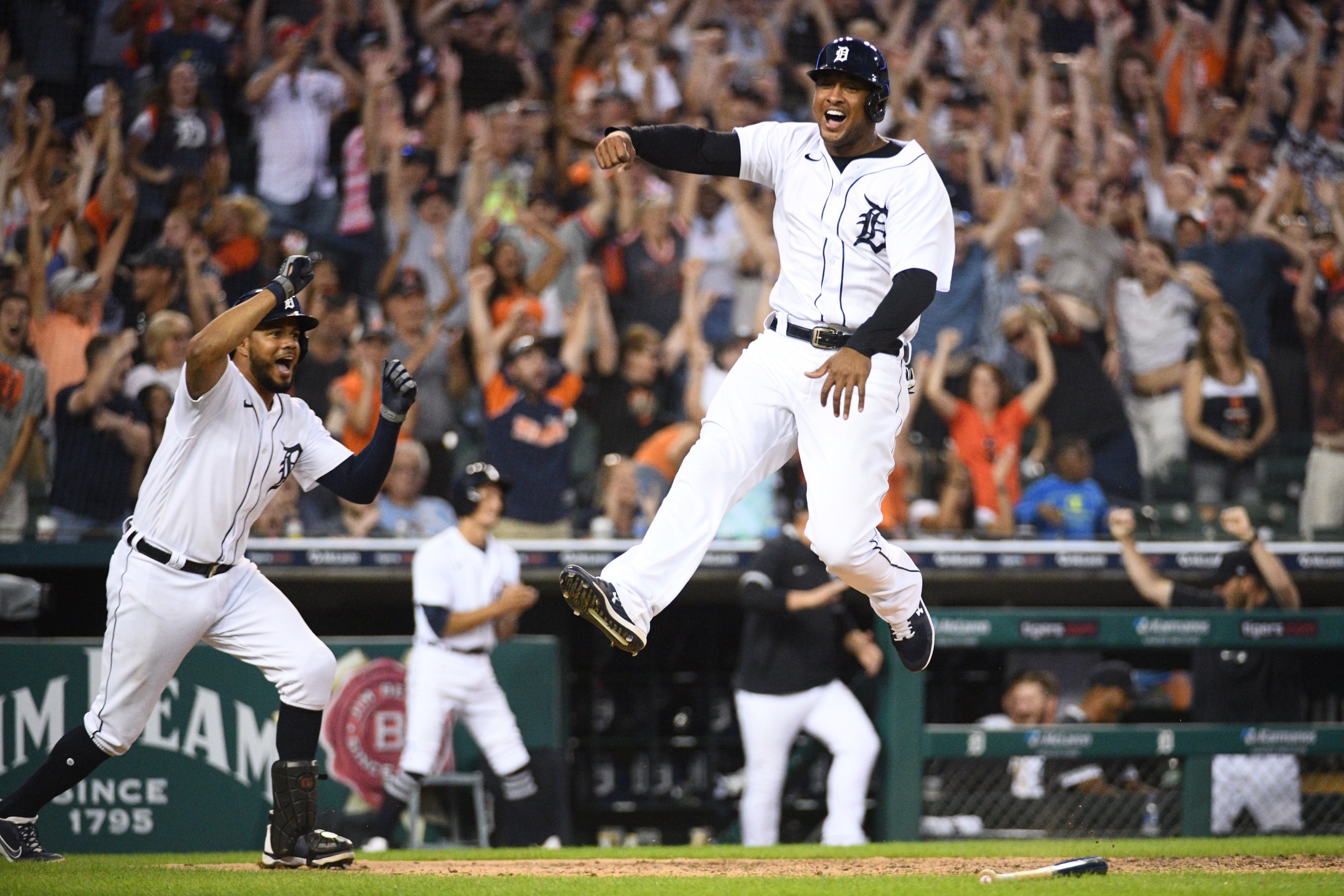 Box Score Maeda: 5.0 IP, 3 H, 3 ER, 1 BB, 8 K (68.8% strikes) Home Runs: Donaldson (14) Bottom 3 WPA: Rogers -.542, Jeffers -.366, Kirilloff -.192 Win Probability Chart (via FanGraphs) Bats show up early, Baddoo overpowers them In game one of the doubleheader, Minnesota’s lineup couldn’t figure out how to get to the Tigers pitching. They managed to get only two total hits the Twins were shut out. But in game two, things were different and it didn’t take long this time. Nelson Cruz hit a two-out double off Tyler Alexander shortly before Josh Donaldson brought him home with a liner to center. It was a rocket, too, leaving his bat at 108 MPH. Minnesota surpassed its hits total from the first game during the second inning when Miguel Sanó hit a double, but that threat was short-lived. Detroit, however, made the most of their opportunity in that same inning. A ghost from Kenta Maeda’s last start came back to haunt him, as he failed to retire the leadoff hitter, issuing a walk. Despite retiring his next two batters, he loaded the bases on a single and a hit-by-pitch. Akil Badoo made him pay and, on the next at-bat, the former Twins prospect tripled to clear the bases, putting the Tigers ahead, 3-1. Donaldson brings the rain, puts the rally in motion The Twins were far from done. While Maeda settled in and delivered back-to-back 1-2-3 innings, Minnesota tied it up, scoring a run in two consecutive innings. First, Donaldson got his second hit and run batted in of the game, with a leadoff home run in the fourth, to put the Twins within one. Oh, and potential Donaldson buyers at the trade deadline are going to be happy to know that this was an even stronger blast, leaving his bat at 113 MPH. Digging into their bullpen, the Tigers couldn’t avoid the Twins’ comeback. Minnesota loaded them up early in the fifth, after Andrelton Simmons and Jorge Polanco hit back-to-back singles, prompting Detroit’s second pitching change of the night, and Trevor Larnach drew a walk. Cruz hit a 107 MPH chopper that was understandably bobbled by second baseman Harold Castro, allowing Simmons to score and tied the game. After giving up that triple against Baddoo in the second, Maeda never allowed another Tiger to reach, retiring the final ten batters he saw. In fact, minus the second inning, he allowed only one baserunner to reach in this game, a single in the first inning. It was the third consecutive start in which he induced at least 15 swings and misses. Both bullpens didn’t allow any further scoring during regulation. Hansel Robles, topping at 99.6 MPH, pitched two scoreless innings. The only Tiger to reach against him was Eric Haase, who got hit by a pitch on the helmet by a 95 MPH four-seamer. Scary stuff. But fortunately, he seemed fine, as he stood up. Detroit medical staff did decide to remove him from the game. Ghost runners will haunt The 8th inning, which was also an extra-inning (2021 baseball, right?), was very peculiar, and I’m not talking about the ghost runner. Let’s begin with the fact that, after being hit by a pitch, Cruz stole another base. For the first time since 2015, Nelly has at least three stolen bases in the same season! But in all seriousness. Cruz’s presence at second put a lot of pressure on Tigers’ reliever Joe Jiménez, who now had two runners in scoring position, with Nick Gordon, the ghost runner, advancing to third on a sac-fly. Facing Ryan Jeffers, Jiménez threw a wild pitch, allowing both runners to move up and Gordon to score. Minnesota was back on top and headed to the bottom of the inning with a 4-3 lead. Then disaster struck. Jonathan Schoop tied the game against Taylor Rogers with a one-out single, scoring Derek Hill from third base. Rogers struck out Baddoo to open the inning and then did the same to Robbie Grossman. When facing Miguel Cabrera, the All-Star reliever managed to induce weak contact from Miggy, who popped up to center. But neither Gordon and Simmons could get to the ball. It dropped and Schoop was rewarded, scoring the winning run all the way from first base, in heartbreaking fashion (from the Twins' perspective). Postgame Interview Bullpen Usage Spreadsheet TUE WED THU FRI SAT TOT Burrows 0 0 0 0 32 32 Rogers 0 0 0 0 21 21 Robles 0 0 0 0 18 18 Thielbar 0 0 0 0 0 0 Duffey 0 0 0 0 0 0 Colomé 0 0 0 0 0 0 Coulombe 0 0 0 0 0 0 Alcala 0 0 0 0 0 0
 -
Kenta Maeda and Tigers’ starter Matt Manning both pitched five innings of shutout baseball before Minnesota’s offense ambushed the Detroit rookie for four runs in the sixth inning. The Twins have a chance to win the series on Saturday afternoon. Box Score Maeda: 5.0 IP, 2 H, 0 ER, 2 BB, 7 K (61.9% strikes) Home Runs: none Top 3 WPA: Maeda .288, Kepler .170, Robles .119 Win Probability Chart (via FanGraphs) Both starters began this game in a real pitchers’ duel. Making his fifth big league start, Manning no-hit the Twins lineup through three innings, on 34 pitches. Maeda had to work a bit harder, struggling to retire leadoff batters and surpassing 50 pitches in that same span. He did manage to fan six through three scoreless frames, but he also relied on some good defense to bale him out. Like when Ben Rortvedt caught former Twins prospect Akil Baddoo trying to steal second base during the first inning to complete a double play. Speaking of Rortvedt, here’s a fun stat brought by MLB.com beat writer Do-Hyoung Park: After three innings of work, both offenses managed to produce only three runners combined. Maeda continued to have a hard time with leadoff hitters, as four out of five reached. But he also missed a ton of bats, producing 17 swings and misses in this game, his third-highest total in a game this season. Strangely, Rocco Baldelli pulled him after five innings, with his pitch count at 84. He concluded his shutout with seven punch outs, all of them on swinging strikes, which makes it 31 consecutive swinging strikeouts for him. Manning took his no-hit bid into the fifth inning, still under 60 pitches, retiring nine consecutive Minnesota batters at one point. Then the Twins threatened for the first time in the game, with Jorge Polanco drawing a walk and being sent to third by a Max Kepler opposite field single. However, he took care of the next two batters and kept the game scoreless through five. The offense comes through big in the sixth Jorge Alcala pitched a quick, scoreless sixth inning. Then, the Twins offense finally managed to break Manning’s dominance. Luis Arraez jumped on the first pitch he saw for a leadoff single. Josh Donaldson drew a walk immediately afterward which forced A.J. Hinch to pull his rookie. Reliever Ian Krol took over, but he couldn’t take care of the inherited runners. He balked, advancing both of them, before giving up an RBI-single to Trevor Larnach. Nelson Cruz hit a sac-fly to push Donaldson across and double the Twins' lead. But they weren’t done. Alex Kirilloff drew a walk after falling behind 0-2 in the count and kept the threat going. Kepler, who’s having a scorching-hot month of July, cleared the bases with a two-out triple, scoring Larnach and Kirilloff, making it 4-0 Minnesota. Oh, and it wasn’t without the help of some vintage Robbie Grossman defense out in left field. The bullpen kept things interesting. Caleb Thielbar took over for Alcala in the seventh and managed to close out the inning, in spite of giving up a single. However, after allowing a leadoff single to Baddoo in the eighth, he saw Grossman hit a two-run bomb to left, cutting the Twins’ lead in half. Baldelli had enough and brought Hansel Robles into the game at once. Not only did he end the threat in the eight, but he also closed out the game with a scoreless ninth, earning his ninth save of the season. Robles has now had back-to-back scoreless outings, after giving runs in four consecutive games. The Twins record is now 37-50 and they have the chance to win the series this Saturday. The first pitch is scheduled for 1:10 pm CT, with Bailey Ober on the mound for Minnesota. Postgame Interviews Bullpen Usage Spreadsheet MON TUE WED THU FRI TOT Thielbar 29 0 20 0 20 69 Law 0 0 50 0 0 50 Rogers 31 0 0 6 0 37 Robles 12 0 0 0 24 36 Duffey 17 0 0 15 0 32 Alcala 0 0 0 0 23 23 Colomé 0 14 0 0 0 14 Coulombe 0 12 0 0 0 12 View full article
-
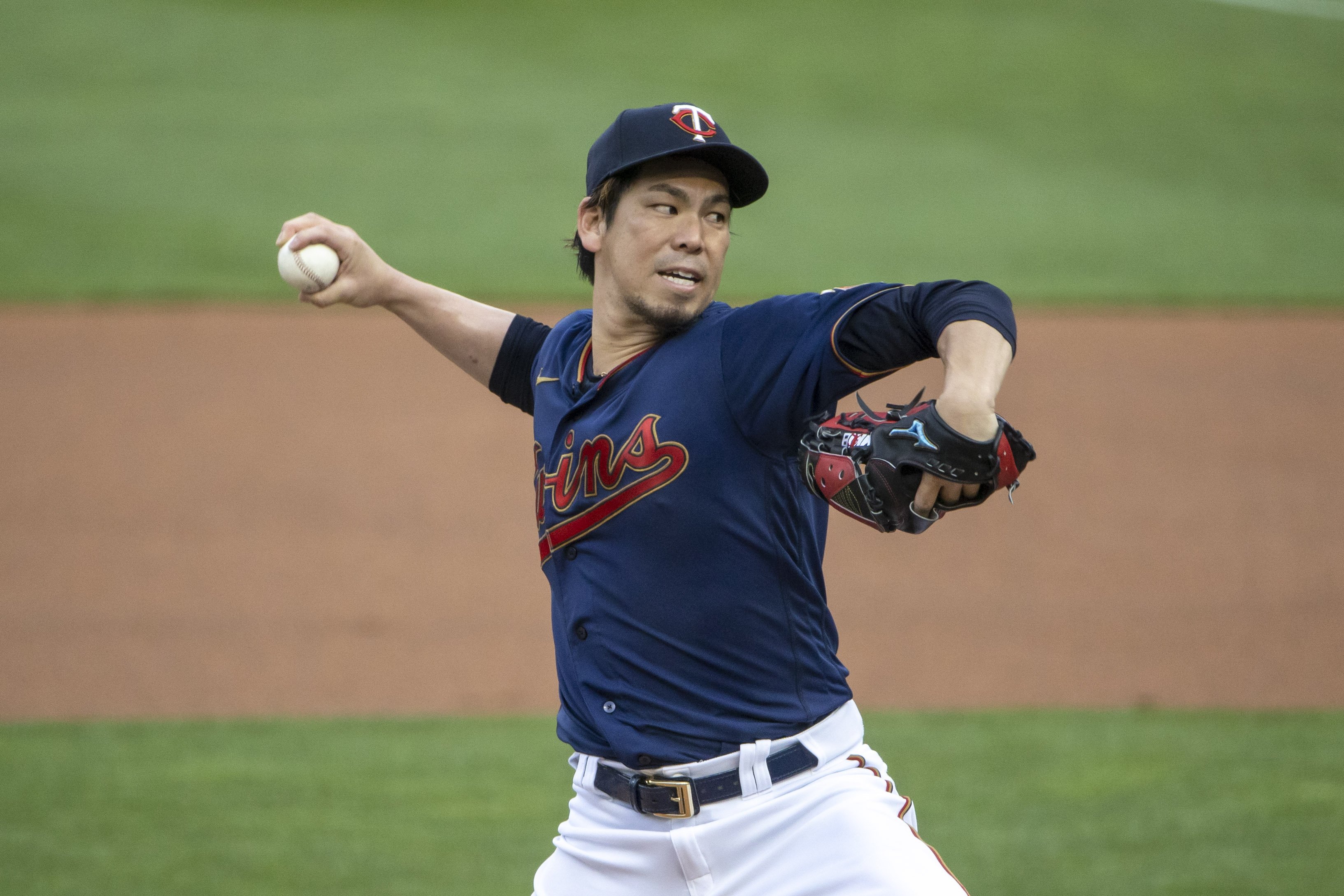 Box Score Maeda: 5.0 IP, 2 H, 0 ER, 2 BB, 7 K (61.9% strikes) Home Runs: none Top 3 WPA: Maeda .288, Kepler .170, Robles .119 Win Probability Chart (via FanGraphs) Both starters began this game in a real pitchers’ duel. Making his fifth big league start, Manning no-hit the Twins lineup through three innings, on 34 pitches. Maeda had to work a bit harder, struggling to retire leadoff batters and surpassing 50 pitches in that same span. He did manage to fan six through three scoreless frames, but he also relied on some good defense to bale him out. Like when Ben Rortvedt caught former Twins prospect Akil Baddoo trying to steal second base during the first inning to complete a double play. Speaking of Rortvedt, here’s a fun stat brought by MLB.com beat writer Do-Hyoung Park: After three innings of work, both offenses managed to produce only three runners combined. Maeda continued to have a hard time with leadoff hitters, as four out of five reached. But he also missed a ton of bats, producing 17 swings and misses in this game, his third-highest total in a game this season. Strangely, Rocco Baldelli pulled him after five innings, with his pitch count at 84. He concluded his shutout with seven punch outs, all of them on swinging strikes, which makes it 31 consecutive swinging strikeouts for him. Manning took his no-hit bid into the fifth inning, still under 60 pitches, retiring nine consecutive Minnesota batters at one point. Then the Twins threatened for the first time in the game, with Jorge Polanco drawing a walk and being sent to third by a Max Kepler opposite field single. However, he took care of the next two batters and kept the game scoreless through five. The offense comes through big in the sixth Jorge Alcala pitched a quick, scoreless sixth inning. Then, the Twins offense finally managed to break Manning’s dominance. Luis Arraez jumped on the first pitch he saw for a leadoff single. Josh Donaldson drew a walk immediately afterward which forced A.J. Hinch to pull his rookie. Reliever Ian Krol took over, but he couldn’t take care of the inherited runners. He balked, advancing both of them, before giving up an RBI-single to Trevor Larnach. Nelson Cruz hit a sac-fly to push Donaldson across and double the Twins' lead. But they weren’t done. Alex Kirilloff drew a walk after falling behind 0-2 in the count and kept the threat going. Kepler, who’s having a scorching-hot month of July, cleared the bases with a two-out triple, scoring Larnach and Kirilloff, making it 4-0 Minnesota. Oh, and it wasn’t without the help of some vintage Robbie Grossman defense out in left field. The bullpen kept things interesting. Caleb Thielbar took over for Alcala in the seventh and managed to close out the inning, in spite of giving up a single. However, after allowing a leadoff single to Baddoo in the eighth, he saw Grossman hit a two-run bomb to left, cutting the Twins’ lead in half. Baldelli had enough and brought Hansel Robles into the game at once. Not only did he end the threat in the eight, but he also closed out the game with a scoreless ninth, earning his ninth save of the season. Robles has now had back-to-back scoreless outings, after giving runs in four consecutive games. The Twins record is now 37-50 and they have the chance to win the series this Saturday. The first pitch is scheduled for 1:10 pm CT, with Bailey Ober on the mound for Minnesota. Postgame Interviews Bullpen Usage Spreadsheet MON TUE WED THU FRI TOT Thielbar 29 0 20 0 20 69 Law 0 0 50 0 0 50 Rogers 31 0 0 6 0 37 Robles 12 0 0 0 24 36 Duffey 17 0 0 15 0 32 Alcala 0 0 0 0 23 23 Colomé 0 14 0 0 0 14 Coulombe 0 12 0 0 0 12
 -
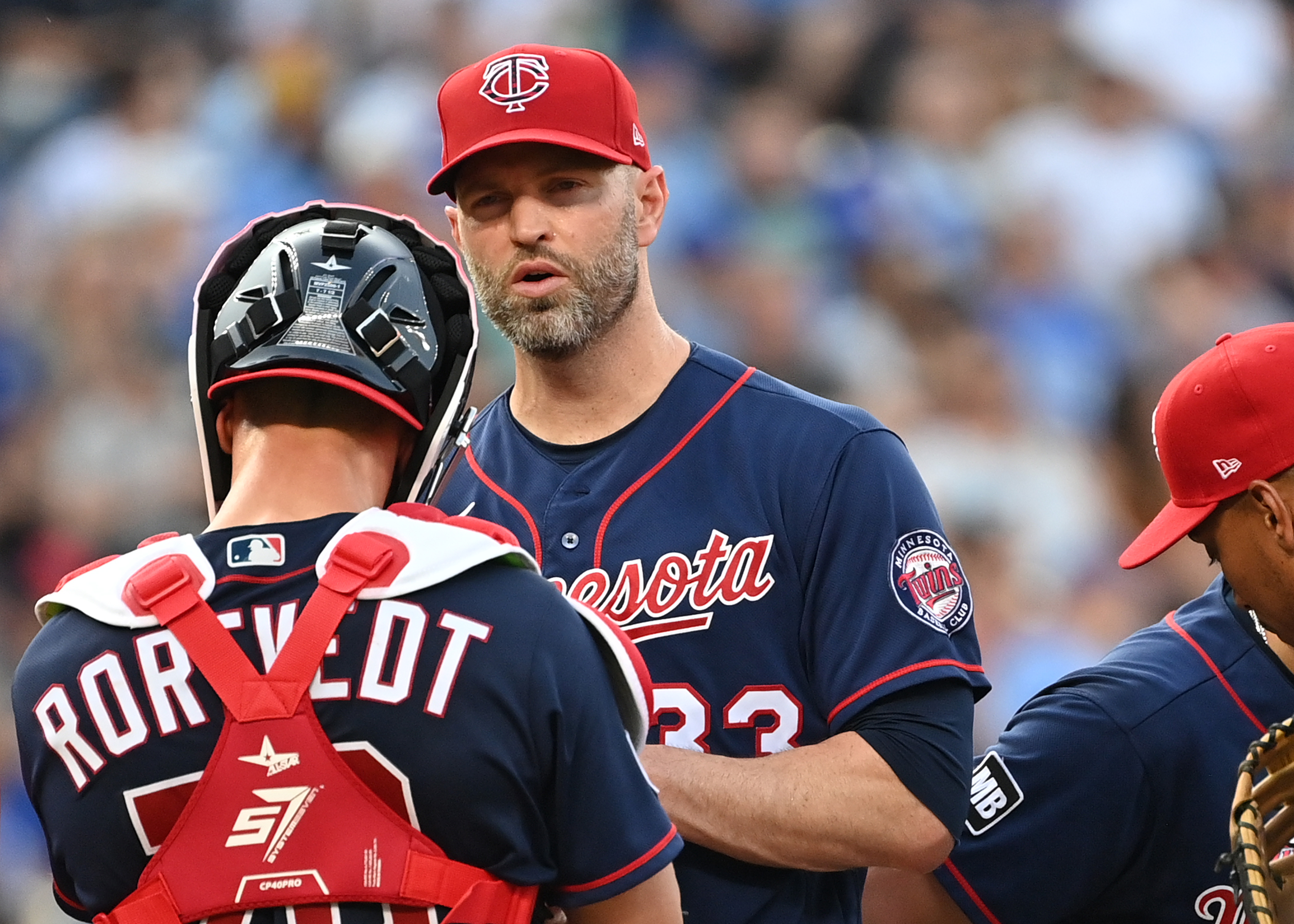 Box Score Happ: 4.1 IP, 9 H, 5 ER, 1 BB, 4 K Home Runs: None Bottom 3 WPA: Happ -.405, Cruz -.135, Arraez -.092 Win Probability Chart (via FanGraphs) Unsurprisingly, J.A. Happ and Brady Singer both struggled early in the game, making this a high-scoring affair very quickly. Minnesota manufactured three runs in the top of the first: Luis Arraez and Josh Donaldson hit back-to-back doubles to open the game and Trevor Larnach scored both of them with a grounder towards the mound. Singer made an awful throw to home plate, which not only allowed Donaldson to score but also Larnach to reach second. Alex Kirilloff joined the party and pushed Larny across on a single, a couple of at-bats later. But that wouldn’t last. As a matter of fact, Happ pitched an incredibly good first inning, retiring the top of the Kansas City order on only seven pitches. For a moment, things actually looked like they were going to go smoothly for a change. But it’s the 2021 Twins we’re talking about. After the offense went down in order in the top of the second, the ballgame was tied before a single out could be recorded. Happ gave up four consecutive hits to open the home second, including a leadoff home run to Salvador Pérez and a couple of doubles. Singer wasn’t sharp either and the Twins threatened in the following inning, loading the bases for Max Kepler. He struck out to end the inning, failing to end his slump. Also in the third, the Royals took their first lead of the game. Pérez hit a one-out single and was followed by a home run by Hanser Alberto. The Royal lineup ambushed Happ once again in the fifth, with three consecutive hits to start the inning. The third one, an RBI-single by Carlos Santana, gave Kansas City a 6-3 lead. Happ was done shortly after that and he has now allowed 47 runs in his last 47 innings. Could he be the next Twins starter to be DFA’d, joining Matt Shoemaker? The offense even tried to start a rally during the sixth inning. Royals reliever Jake Brentz loaded the bases without recording an out, but all the Twins could get was one run, with Arraez grounding into a double play to score Kepler. Tyler Duffey and Alexander Colomé provided a couple of rather uneventful, scoreless innings, while Danny Coulombe pitched himself in and out of a jam in the seventh. Their effort kept the Twins within two runs, with a chance to win it. But then Taylor Rogers, out of all people, struggled with his command during the eighth. He tossed two wild pitches in the inning, allowing Nicky Lopez -- who had hit a double off him -- to advance from second to third and then score standing. Donaldson managed to reach in the ninth, but the threat never materialized. Postgame interview Bullpen Usage Spreadsheet SUN MON TUE WED THU FRI TOT Coulombe 0 0 43 0 0 16 59 Duffey 23 0 15 0 0 13 51 Thielbar 30 0 0 16 0 0 46 Robles 0 0 0 0 34 0 34 Law 0 0 0 0 32 0 32 Colomé 0 0 0 14 0 17 31 Rogers 0 0 0 0 0 22 22 Alcala 0 0 0 0 19 0 19 Jax 0 0 0 0 0 0 0
 -
The Twins visited a last-placed Royals team, coming off a then league-worst nine consecutive losses. Even though Minnesota built an early three-run lead, J.A. Happ struggled badly, allowing six runs, and the Twins simply couldn’t bounce back. They drop four in a row and are now back at last place. Box Score Happ: 4.1 IP, 9 H, 5 ER, 1 BB, 4 K Home Runs: None Bottom 3 WPA: Happ -.405, Cruz -.135, Arraez -.092 Win Probability Chart (via FanGraphs) Unsurprisingly, J.A. Happ and Brady Singer both struggled early in the game, making this a high-scoring affair very quickly. Minnesota manufactured three runs in the top of the first: Luis Arraez and Josh Donaldson hit back-to-back doubles to open the game and Trevor Larnach scored both of them with a grounder towards the mound. Singer made an awful throw to home plate, which not only allowed Donaldson to score but also Larnach to reach second. Alex Kirilloff joined the party and pushed Larny across on a single, a couple of at-bats later. But that wouldn’t last. As a matter of fact, Happ pitched an incredibly good first inning, retiring the top of the Kansas City order on only seven pitches. For a moment, things actually looked like they were going to go smoothly for a change. But it’s the 2021 Twins we’re talking about. After the offense went down in order in the top of the second, the ballgame was tied before a single out could be recorded. Happ gave up four consecutive hits to open the home second, including a leadoff home run to Salvador Pérez and a couple of doubles. Singer wasn’t sharp either and the Twins threatened in the following inning, loading the bases for Max Kepler. He struck out to end the inning, failing to end his slump. Also in the third, the Royals took their first lead of the game. Pérez hit a one-out single and was followed by a home run by Hanser Alberto. The Royal lineup ambushed Happ once again in the fifth, with three consecutive hits to start the inning. The third one, an RBI-single by Carlos Santana, gave Kansas City a 6-3 lead. Happ was done shortly after that and he has now allowed 47 runs in his last 47 innings. Could he be the next Twins starter to be DFA’d, joining Matt Shoemaker? The offense even tried to start a rally during the sixth inning. Royals reliever Jake Brentz loaded the bases without recording an out, but all the Twins could get was one run, with Arraez grounding into a double play to score Kepler. Tyler Duffey and Alexander Colomé provided a couple of rather uneventful, scoreless innings, while Danny Coulombe pitched himself in and out of a jam in the seventh. Their effort kept the Twins within two runs, with a chance to win it. But then Taylor Rogers, out of all people, struggled with his command during the eighth. He tossed two wild pitches in the inning, allowing Nicky Lopez -- who had hit a double off him -- to advance from second to third and then score standing. Donaldson managed to reach in the ninth, but the threat never materialized. Postgame interview Bullpen Usage Spreadsheet SUN MON TUE WED THU FRI TOT Coulombe 0 0 43 0 0 16 59 Duffey 23 0 15 0 0 13 51 Thielbar 30 0 0 16 0 0 46 Robles 0 0 0 0 34 0 34 Law 0 0 0 0 32 0 32 Colomé 0 0 0 14 0 17 31 Rogers 0 0 0 0 0 22 22 Alcala 0 0 0 0 19 0 19 Jax 0 0 0 0 0 0 0 View full article
-
Game Recap: Twins 8, Cleveland 7
Thiéres Rabelo replied to Thiéres Rabelo's topic in Twins Daily Front Page News
Yeap! It's always nice! If you do come, make sure to visit the "Nordeste" beaches as well, because they're even better than the ones from Rio! -
Game Recap: Twins 8, Cleveland 7
Thiéres Rabelo replied to Thiéres Rabelo's topic in Twins Daily Front Page News
Thank you for reading it, my friend! -
Luis Arráez exploded with a three-hit night, all for extra bases, to help Minnesota overcome a bullpen night and beat Cleveland to even the series at a game apiece. Griffin Jax navigated through some ups and downs and managed to earn his first big league win. Box Score Coulombe (starter): 1.2 IP, 2 H, 3 R, 1 ER, 0 BB, 2 K (71.8% strikes) Jax (primary): 4.1 IP, 3 H, 3 R, 2 BB, 2 K (65.3% strikes) Home Runs: Kirilloff (6) Top 3 WPA: Arráez .445, Cruz .119, Kirilloff .095 Win Probability Chart (via FanGraphs) Lefty Danny Coulombe started tonight’s bullpen game, but he was roughed up in a hurry — with the help of some bad fielding behind him. Cleveland struck first, scoring three quick runs on two hits in the top of the first inning. Amed Rosario hit a solo home run five pitches into the game to score the first run. Then, Jorge Polanco made a costly error charging for the ball, allowing old friend Eddie Rosario to reach with two outs. Bobby Bradley made Minnesota pay, hitting a 436-feet bomb to center. Minnesota got one run back in the home half of the first inning. Luis Arráez hit a leadoff triple, with a little help from right fielder Josh Naylor, who lost the ball against the sun. Josh Donaldson scored Arráez with a sacrifice fly. Coulombe settled in nicely in the second frame, retiring the first two batters he faced on eight pitches before handing over the ball to Griffin Jax. Combined, Coulombe and Jax retired eight consecutive batters after that first inning home run. Then the offense put together an amazing display in the home half of the third inning. Nick Gordon led off with a double but was thrown out trying to go to third base on an Andrelton Simmons fielder’s choice. With Simmons on, Arráez hit his second triple of the night, with yet another awful misplay from the Cleveland outfield, scoring Simmons. This time he went oppo and became the first Twin to have two triples in a game since Aug. 30, 2017, when Ehire Adrianza did it. Donaldson followed up with a single to push Arráez across, earning himself his second RBI of the night and bringing the go-ahead run to the plate. Alex Kirilloff stepped into the batter’s box and… remember when he was struggling against offspeed pitches? Well, I bet Cal Quantrill was sorry to find out that that might not be a thing anymore. The Cleveland starter threw two consecutive changeups against Kirilloff only to watch the second one be obliterated. A 409-feet bomb that left Kirilloff’s bat at 104 mph, making it 5-3 Twins. Jax pitched himself into a jam during the fourth inning. Struggling with his command, he loaded the bases with only one out, throwing only six strikes on 18 pitches. After striking out Bradley Zimmer, it seemed like he would get out of the mess unharmed, but Austin Hedges jumped on his fastball for a two-out single to tie the game. After the offense went down in order in the home fourth, Jax was having a much smoother fifth frame. However, "Rosie" (of course) hit a solo shot to right to put Cleveland back ahead by one run. He was booed. Bats tie it up, retake the lead When Simmons (single) and Donaldson (walk) reached to start the bottom half of the fifth, Terry Francona had enough of Quantrill and brought in the bullpen. Nelson Cruz hit a weak flare to short with two-outs, just far enough to score Simmons from second and tie the game again. Jax pitched his best inning of the game, delivering an eight-pitch scoreless sixth. He was done after that, ending the night with 4 1/3 innings, on 75 pitches (49 for strikes), allowing three runs. Reliever Nick Wittgren needed only three pitches to get through Max Kepler and Ryan Jeffers to start the bottom of the sixth. However, he was about to get into trouble. NicknGordon singled to center for his second hit of the night and was followed by a single from Simmons, with once again some sloppy defense from Cleveland. Then, it was up to Arráez to make that inning count, and he absolutely didn’t disappoint. With his third extra-base hit of the night, he put the Twins back ahead, 8-6. While the offense didn’t produce much for the remainder of the game, the relievers who took to the mound did an outstanding job. Alexander Colomé and Taylor Rogers took care of the seventh and eighth with a couple of 1-2-3 innings, with neither of them needing more than nine pitches. Plus, they combined for 80% strikes. Hansel Robles allowed a solo shot to Naylor and nearly saw Zimmer reach second, but Kepler bailed him out with a perfect one-hop throw to Simmons for the tag. Robles earned his seventh save of the season, in nine opportunities, helping Jax earn his first big league win. Bullpen Usage Spreadsheet SUN MON TUE WED THU FRI TOT Jax 0 0 0 0 0 75 75 Alcalá 18 20 0 0 10 0 48 Coulombe 0 0 16 0 0 32 48 Colomé 0 7 30 0 0 7 44 Shoemaker 0 32 0 0 11 0 43 Thielbar 0 19 12 0 4 0 35 Rogers 0 16 0 0 8 9 33 Duffey 21 0 11 0 0 0 32 Robles 0 0 21 0 0 10 31 View full article
-
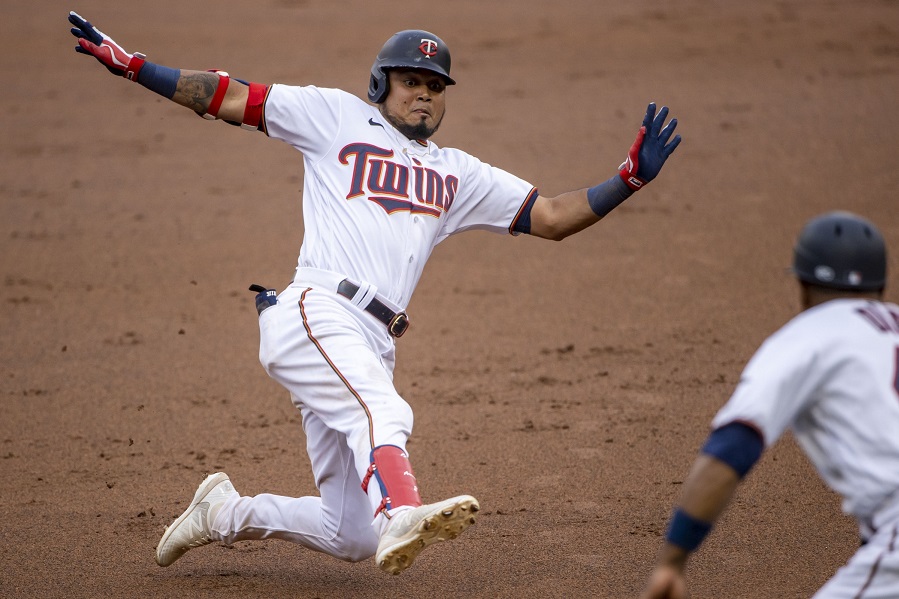 Box Score Coulombe (starter): 1.2 IP, 2 H, 3 R, 1 ER, 0 BB, 2 K (71.8% strikes) Jax (primary): 4.1 IP, 3 H, 3 R, 2 BB, 2 K (65.3% strikes) Home Runs: Kirilloff (6) Top 3 WPA: Arráez .445, Cruz .119, Kirilloff .095 Win Probability Chart (via FanGraphs) Lefty Danny Coulombe started tonight’s bullpen game, but he was roughed up in a hurry — with the help of some bad fielding behind him. Cleveland struck first, scoring three quick runs on two hits in the top of the first inning. Amed Rosario hit a solo home run five pitches into the game to score the first run. Then, Jorge Polanco made a costly error charging for the ball, allowing old friend Eddie Rosario to reach with two outs. Bobby Bradley made Minnesota pay, hitting a 436-feet bomb to center. Minnesota got one run back in the home half of the first inning. Luis Arráez hit a leadoff triple, with a little help from right fielder Josh Naylor, who lost the ball against the sun. Josh Donaldson scored Arráez with a sacrifice fly. Coulombe settled in nicely in the second frame, retiring the first two batters he faced on eight pitches before handing over the ball to Griffin Jax. Combined, Coulombe and Jax retired eight consecutive batters after that first inning home run. Then the offense put together an amazing display in the home half of the third inning. Nick Gordon led off with a double but was thrown out trying to go to third base on an Andrelton Simmons fielder’s choice. With Simmons on, Arráez hit his second triple of the night, with yet another awful misplay from the Cleveland outfield, scoring Simmons. This time he went oppo and became the first Twin to have two triples in a game since Aug. 30, 2017, when Ehire Adrianza did it. Donaldson followed up with a single to push Arráez across, earning himself his second RBI of the night and bringing the go-ahead run to the plate. Alex Kirilloff stepped into the batter’s box and… remember when he was struggling against offspeed pitches? Well, I bet Cal Quantrill was sorry to find out that that might not be a thing anymore. The Cleveland starter threw two consecutive changeups against Kirilloff only to watch the second one be obliterated. A 409-feet bomb that left Kirilloff’s bat at 104 mph, making it 5-3 Twins. Jax pitched himself into a jam during the fourth inning. Struggling with his command, he loaded the bases with only one out, throwing only six strikes on 18 pitches. After striking out Bradley Zimmer, it seemed like he would get out of the mess unharmed, but Austin Hedges jumped on his fastball for a two-out single to tie the game. After the offense went down in order in the home fourth, Jax was having a much smoother fifth frame. However, "Rosie" (of course) hit a solo shot to right to put Cleveland back ahead by one run. He was booed. Bats tie it up, retake the lead When Simmons (single) and Donaldson (walk) reached to start the bottom half of the fifth, Terry Francona had enough of Quantrill and brought in the bullpen. Nelson Cruz hit a weak flare to short with two-outs, just far enough to score Simmons from second and tie the game again. Jax pitched his best inning of the game, delivering an eight-pitch scoreless sixth. He was done after that, ending the night with 4 1/3 innings, on 75 pitches (49 for strikes), allowing three runs. Reliever Nick Wittgren needed only three pitches to get through Max Kepler and Ryan Jeffers to start the bottom of the sixth. However, he was about to get into trouble. NicknGordon singled to center for his second hit of the night and was followed by a single from Simmons, with once again some sloppy defense from Cleveland. Then, it was up to Arráez to make that inning count, and he absolutely didn’t disappoint. With his third extra-base hit of the night, he put the Twins back ahead, 8-6. While the offense didn’t produce much for the remainder of the game, the relievers who took to the mound did an outstanding job. Alexander Colomé and Taylor Rogers took care of the seventh and eighth with a couple of 1-2-3 innings, with neither of them needing more than nine pitches. Plus, they combined for 80% strikes. Hansel Robles allowed a solo shot to Naylor and nearly saw Zimmer reach second, but Kepler bailed him out with a perfect one-hop throw to Simmons for the tag. Robles earned his seventh save of the season, in nine opportunities, helping Jax earn his first big league win. Bullpen Usage Spreadsheet SUN MON TUE WED THU FRI TOT Jax 0 0 0 0 0 75 75 Alcalá 18 20 0 0 10 0 48 Coulombe 0 0 16 0 0 32 48 Colomé 0 7 30 0 0 7 44 Shoemaker 0 32 0 0 11 0 43 Thielbar 0 19 12 0 4 0 35 Rogers 0 16 0 0 8 9 33 Duffey 21 0 11 0 0 0 32 Robles 0 0 21 0 0 10 31
 -
The Twins opened a three-game series in Arlington with a nail-biter, beating the Rangers 7-5 in extra innings. José Berríos picked up a quality start and Luis Arráez hit a clutch triple in the 10th. Box Score Berríos: 6.0 IP, 6 H, 3 ER, 1 BB, 6 K (68,9% strikes) Home runs: Larnach (4) Top 3 WPA: Robles .311, Arráez .206, Jeffers .174 Win Probability Chart (via FanGraphs) Berríos has a tough start, but finishes off strong The game got busy in a hurry. Minnesota loaded the bases before Texas starter Mike Foltynewicz could record an out, with Luis Arráez and Trevor Larnach drawing walks, and Jorge Polanco hitting a single in between. Nelson Cruz took advantage of that, finding the right field gap on a 0-2 sinker, and to put the first run on the board. The Texas just got sloppy and the Twins scored two more runs. Playing his first big league game in nearly three weeks, Max Kepler grounded to center and score Polanco, while the Rangers defense couldn’t turn in the double play. Then Foltynewicz had a wild throwing error which allowed Ryan Jeffers to reach safely an Larnach scored, making it 3-0 Minnesota very, very quickly. José Berríos entered the game with a nice lead, but it didn’t last long. Isiah Kiner-Falefa hit a leadoff single, just before Berríos recorded two quick outs. But then he lost Joey Gallo on a four-pitch walk, and both runners scored on back-to-back singles. In the second inning, the Rangers’ batters drove Berríos’ pitch count through the roof with some quality at-bats. It took him 55 pitches to complete the first two innings of the game. As the offense started to get quiet, José started to settle in, but not before he gave up back-to-back singles to leadoff the fourth inning, allowing Jose Trevino to tie the game on a sac-fly. But that was all the instability Berríos would have for the night, as he managed to get the final out in spite of a runner on third, and cruised through the fifth on only nine pitches. Of course, he got some hel from the offense, which provided him with a little more run support. Larnach destroyed this baseball and Minnesota regained the lead, 4-3. At 92 pitches, Berríos was asked to come back to pitch the sixth, facing the bottom part of the Ranger lineup, and he managed to finish strong. Maintaining velocity and with no command issues whatsoever, José had yet another 1-2-3 inning, completing his quality start. He finished this game retiring seven batters in a row, with a total of 103 pitches (71 for strikes). Did he just increase his trade value or earned himself an even bigger paycheck to stay in Minnesota? Alcalá gives up the lead, Rogers and Robles help take the game to extras Twins’ bats struggled to get their momentum going for the better part of this game. After Larnach’s home run, nine consecutive Minnesota batters were retired. Jorge Alcalá took over in relief of Berríos, and after getting two outs on four pitches, he gave up a game-tying home run to Adolis García. Fortunately, the Twins bullpen managed to limit the damage to that one run in regulation. Taylor Rogers and Hanel Robles came up big, pitching a couple of 1-2-3 innings to keep the game tied and take it to extras. Rogers keeps adding his impressive resumé, on his way to become one of the Twins greatest relievers. Before regulation was done, in the top of the ninth, the offense threatened Texas’ star reliever Ian Kennedy. Alex Kirilloff made a mistake running the paths and got caught digging for second after Texas failed to turn in another double play. Had he been less aggressive, maybe he could’ve scored on Nick Gordon’s double that came immediately after his at-bat. Texas’ bullpen blows up in the 10th (that’s right) With Kennedy gone, Minnesota seized the opportunity and ambushed Josh Sborz. Arráez got behind in the count 0-2, but he jumped on the third pitch and ended up on third base, scoring Willians Astudillo, who started the innnig at second. Sborz couldn’t handle the pressure. He walked Polanco, who later stole second. He decided to intentionally walk Cruz and loaded the bases with one out. He managed to get the second out by striking out Kepler, but then Jeffers and Kirilloff drew walks that added two more runs, putting the Twins up 7-4. Tyler Duffey came in to close out the game and got himself in thin ice. Gallo scored the runner on second with a single and Nick Solak followed with another single, bringing the winning run to the plate with only one out. But he retired the last two batters to secure the win. Bullpen Usage Spreadsheet SUN MON TUE WED FRI TOT Alcalá 0 19 0 10 18 47 Colomé 24 0 0 20 0 44 Shoemaker 43 0 0 0 0 43 Dobnak 40 0 0 0 0 40 Thielbar 0 0 0 38 0 38 Robles 0 17 0 0 20 37 Duffey 0 10 0 0 20 30 Rogers 0 0 0 15 12 27 Farrell 0 24 0 0 0 24 View full article
-
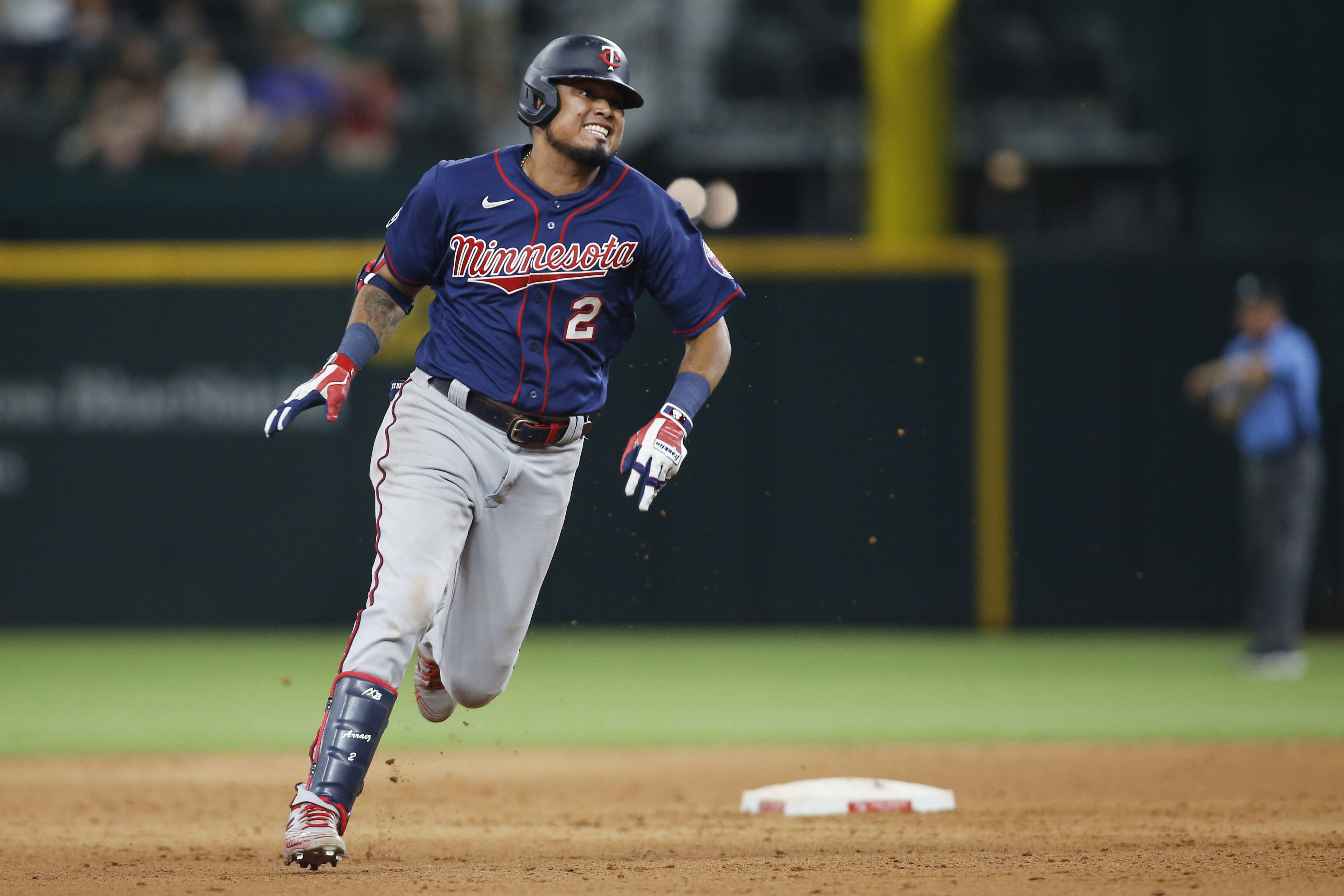 Box Score Berríos: 6.0 IP, 6 H, 3 ER, 1 BB, 6 K (68,9% strikes) Home runs: Larnach (4) Top 3 WPA: Robles .311, Arráez .206, Jeffers .174 Win Probability Chart (via FanGraphs) Berríos has a tough start, but finishes off strong The game got busy in a hurry. Minnesota loaded the bases before Texas starter Mike Foltynewicz could record an out, with Luis Arráez and Trevor Larnach drawing walks, and Jorge Polanco hitting a single in between. Nelson Cruz took advantage of that, finding the right field gap on a 0-2 sinker, and to put the first run on the board. The Texas just got sloppy and the Twins scored two more runs. Playing his first big league game in nearly three weeks, Max Kepler grounded to center and score Polanco, while the Rangers defense couldn’t turn in the double play. Then Foltynewicz had a wild throwing error which allowed Ryan Jeffers to reach safely an Larnach scored, making it 3-0 Minnesota very, very quickly. José Berríos entered the game with a nice lead, but it didn’t last long. Isiah Kiner-Falefa hit a leadoff single, just before Berríos recorded two quick outs. But then he lost Joey Gallo on a four-pitch walk, and both runners scored on back-to-back singles. In the second inning, the Rangers’ batters drove Berríos’ pitch count through the roof with some quality at-bats. It took him 55 pitches to complete the first two innings of the game. As the offense started to get quiet, José started to settle in, but not before he gave up back-to-back singles to leadoff the fourth inning, allowing Jose Trevino to tie the game on a sac-fly. But that was all the instability Berríos would have for the night, as he managed to get the final out in spite of a runner on third, and cruised through the fifth on only nine pitches. Of course, he got some hel from the offense, which provided him with a little more run support. Larnach destroyed this baseball and Minnesota regained the lead, 4-3. At 92 pitches, Berríos was asked to come back to pitch the sixth, facing the bottom part of the Ranger lineup, and he managed to finish strong. Maintaining velocity and with no command issues whatsoever, José had yet another 1-2-3 inning, completing his quality start. He finished this game retiring seven batters in a row, with a total of 103 pitches (71 for strikes). Did he just increase his trade value or earned himself an even bigger paycheck to stay in Minnesota? Alcalá gives up the lead, Rogers and Robles help take the game to extras Twins’ bats struggled to get their momentum going for the better part of this game. After Larnach’s home run, nine consecutive Minnesota batters were retired. Jorge Alcalá took over in relief of Berríos, and after getting two outs on four pitches, he gave up a game-tying home run to Adolis García. Fortunately, the Twins bullpen managed to limit the damage to that one run in regulation. Taylor Rogers and Hanel Robles came up big, pitching a couple of 1-2-3 innings to keep the game tied and take it to extras. Rogers keeps adding his impressive resumé, on his way to become one of the Twins greatest relievers. Before regulation was done, in the top of the ninth, the offense threatened Texas’ star reliever Ian Kennedy. Alex Kirilloff made a mistake running the paths and got caught digging for second after Texas failed to turn in another double play. Had he been less aggressive, maybe he could’ve scored on Nick Gordon’s double that came immediately after his at-bat. Texas’ bullpen blows up in the 10th (that’s right) With Kennedy gone, Minnesota seized the opportunity and ambushed Josh Sborz. Arráez got behind in the count 0-2, but he jumped on the third pitch and ended up on third base, scoring Willians Astudillo, who started the innnig at second. Sborz couldn’t handle the pressure. He walked Polanco, who later stole second. He decided to intentionally walk Cruz and loaded the bases with one out. He managed to get the second out by striking out Kepler, but then Jeffers and Kirilloff drew walks that added two more runs, putting the Twins up 7-4. Tyler Duffey came in to close out the game and got himself in thin ice. Gallo scored the runner on second with a single and Nick Solak followed with another single, bringing the winning run to the plate with only one out. But he retired the last two batters to secure the win. Bullpen Usage Spreadsheet SUN MON TUE WED FRI TOT Alcalá 0 19 0 10 18 47 Colomé 24 0 0 20 0 44 Shoemaker 43 0 0 0 0 43 Dobnak 40 0 0 0 0 40 Thielbar 0 0 0 38 0 38 Robles 0 17 0 0 20 37 Duffey 0 10 0 0 20 30 Rogers 0 0 0 15 12 27 Farrell 0 24 0 0 0 24
 -
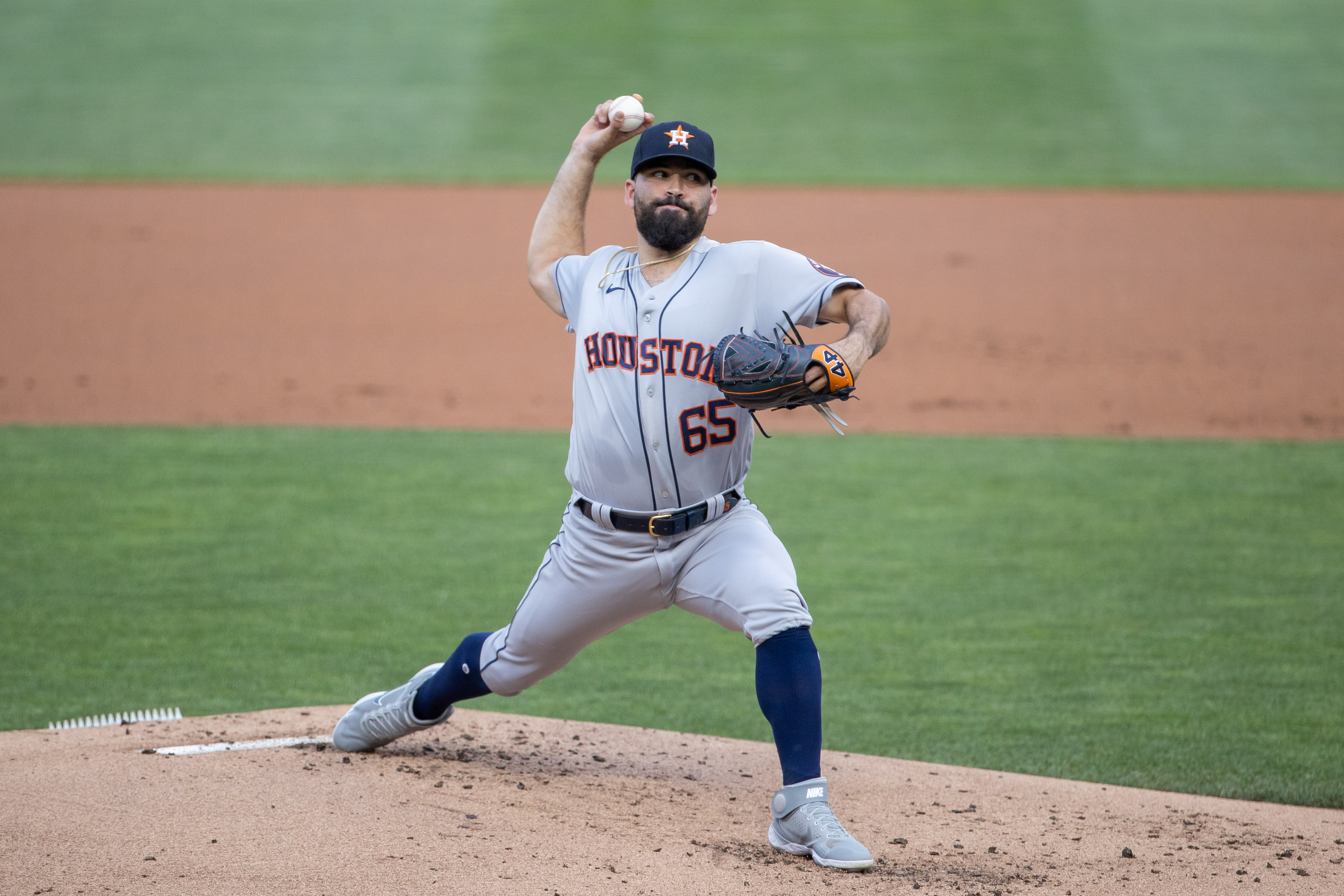 Box Score Ober: 5.0 IP, 7 H, 2 ER, 1 BB, 7 K (71,2% strikes) Home Runs: Cruz (12), Sanó (13), Donaldson 2 (10) Bottom 3 WPA: Shoemaker -.352, Duffey -.174, Larnach -.130 Win Probability Chart (via FanGraphs) Some great news brought in some optimism for Twins fans earlier today. The club announced that struggling starter Matt Shoemaker would be sent to the bullpen and rookie Bailey Ober would start tonight’s game. Could this mean that Shoemaker’s stint in Minnesota is close to an end? Ober took advantage of another opportunity, making his third start of the season. It didn’t take very long for this one to become special for him. He pitched through the first two innings quickly, on only 28 pitches. After giving up a leadoff single to Martín Maldonado in the third, he struck out the next batter, then his fifth punchout of the game, already his career-high. However, he did pitch himself into a small jam during that same inning. Michael Brantley doubled on a 0-2 curveball, putting two runners in scoring position right away. No team in baseball has allowed more 0-2 hits than the Twins this season. Alex Bregman pushed a run across on a sac-fly, but Ober limited the damage to that one run. Fortunately, while Ober navigated through his ups and downs, he got some early run support to make things a bit less difficult for him. Minnesota hit a solo home run in each of the first three innings. Nelson Cruz picked up right where he left off on Thursday night, taking José Urquidy deep after a nice, seven-pitch at-bat. With that dinger, his 12th of the year, he tied Miguel Sanó for the team-lead. But Miggy wouldn’t just sit there and take that. He had something to say about that. Then, when Houston cut the Twins’ lead in half in the top of the third, Josh Donaldson brought the rain and with a solo shot of his own, he gave Ober the two-run lead back, making it 3-1 Minnesota. After pitching a quick, scoreless fourth, Ober’s pitch count was still under 60. He earned himself the chance to pitch into the fifth inning for the first time in his big league career. José Altuve homered to the corner of the left field, on a ball that ricocheted off the foul pole into the limestone. Immediately after that, Brantley singled and suddenly Ober was in a potentially tough situation. Ober didn’t shy away from the challenge, as he managed to retire both batters that followed, including a strikeout against red-hot Yordan Álvarez (Ober’s seventh in the game) to close the inning, after a tough seven-pitch at-bat with a man on. You couldn’t ask for a better learning opportunity for the rookie, who was pulled right after this, in line for his first major league win. Rocco Baldelli decided not to bring Ober back to the sixth, even though he was still at 73 pitches (52 for strikes). Jorge Alcalá took over, making his fourth appearance in the last five days. After falling behind 3-0 on the count, he was later taken deep by Yuli Gurriel, who tied the game with a leadoff home run. He retired the side on ten pitches next. In spite of the game-tying home run, Alcalá is still having a very positive month of June, in which he has as many strikeouts as innings pitched (five) and has yet to give up a walk. While the offense struggled to produce baserunners, Tyler Duffey took over to pitch the seventh. He looked off from the beginning and even got one of the trainers to check on him on the mound after he retired the leadoff man. Command started to elude him and the inning became really sloppy. He walked Altuve and hit Brantley just before Bregman grounded out to bring Altuve home, making it 4-3 Astros. Donaldson ties the game, Shoemaker chokes it After the offense went down in order in the bottom of the seventh, it was time for Shoemaker’s first appearance out of the bullpen in a Twins uniform. Very convincingly, he pitched a 12-pitch, 1-2-3 inning. Which immediately raised the question: could the Twins find value (or trade value, for that matter) for him in relief pitching? Donaldson decided he wasn’t done being on fire, so in the bottom of the eighth, he brought the rain again. That’s three home runs in less than 24 hours for him, or five at-bats, to be more precise. But the question some of us were asking ourselves about Shoemaker after the eight was quickly answered in the ninth. Looking completely lost, he gave up two runs on three hits, in what seemed to be one of his worst outings as a Twin. A leadoff single to Myles Straw, followed by an RBI-double to Maldonado, and an RBI-single to Brantley later, while recording only one out. Former Twin Ryan Pressly didn’t have an easy task, as it took him 20 pitches to close out the game, but he did manage to retire Minnesota batters in order. Postgame Interviews Bailey Ober: Rocco Baldelli: Bullpen Usage Spreadsheet SUN TUE WED THU FRI TOT Jax 0 23 51 0 0 74 Duffey 14 0 0 20 22 56 Farrell 13 19 0 23 0 55 Alcalá 10 21 0 7 15 53 Shoemaker 0 0 0 0 35 35 Colomé 0 9 25 0 0 34 Robles 15 0 0 11 0 26 Rogers 0 20 0 0 3 23
 -
Bailey Ober had his best outing in the majors and the Twins once again showed they had some fight in them late, but the now reliever Matt Shoemaker allowed Houston to regain the lead with a two-run ninth and Minnesota drops the series opener against the Astros at Target Field. Box Score Ober: 5.0 IP, 7 H, 2 ER, 1 BB, 7 K (71,2% strikes) Home Runs: Cruz (12), Sanó (13), Donaldson 2 (10) Bottom 3 WPA: Shoemaker -.352, Duffey -.174, Larnach -.130 Win Probability Chart (via FanGraphs) Some great news brought in some optimism for Twins fans earlier today. The club announced that struggling starter Matt Shoemaker would be sent to the bullpen and rookie Bailey Ober would start tonight’s game. Could this mean that Shoemaker’s stint in Minnesota is close to an end? Ober took advantage of another opportunity, making his third start of the season. It didn’t take very long for this one to become special for him. He pitched through the first two innings quickly, on only 28 pitches. After giving up a leadoff single to Martín Maldonado in the third, he struck out the next batter, then his fifth punchout of the game, already his career-high. However, he did pitch himself into a small jam during that same inning. Michael Brantley doubled on a 0-2 curveball, putting two runners in scoring position right away. No team in baseball has allowed more 0-2 hits than the Twins this season. Alex Bregman pushed a run across on a sac-fly, but Ober limited the damage to that one run. Fortunately, while Ober navigated through his ups and downs, he got some early run support to make things a bit less difficult for him. Minnesota hit a solo home run in each of the first three innings. Nelson Cruz picked up right where he left off on Thursday night, taking José Urquidy deep after a nice, seven-pitch at-bat. With that dinger, his 12th of the year, he tied Miguel Sanó for the team-lead. But Miggy wouldn’t just sit there and take that. He had something to say about that. Then, when Houston cut the Twins’ lead in half in the top of the third, Josh Donaldson brought the rain and with a solo shot of his own, he gave Ober the two-run lead back, making it 3-1 Minnesota. After pitching a quick, scoreless fourth, Ober’s pitch count was still under 60. He earned himself the chance to pitch into the fifth inning for the first time in his big league career. José Altuve homered to the corner of the left field, on a ball that ricocheted off the foul pole into the limestone. Immediately after that, Brantley singled and suddenly Ober was in a potentially tough situation. Ober didn’t shy away from the challenge, as he managed to retire both batters that followed, including a strikeout against red-hot Yordan Álvarez (Ober’s seventh in the game) to close the inning, after a tough seven-pitch at-bat with a man on. You couldn’t ask for a better learning opportunity for the rookie, who was pulled right after this, in line for his first major league win. Rocco Baldelli decided not to bring Ober back to the sixth, even though he was still at 73 pitches (52 for strikes). Jorge Alcalá took over, making his fourth appearance in the last five days. After falling behind 3-0 on the count, he was later taken deep by Yuli Gurriel, who tied the game with a leadoff home run. He retired the side on ten pitches next. In spite of the game-tying home run, Alcalá is still having a very positive month of June, in which he has as many strikeouts as innings pitched (five) and has yet to give up a walk. While the offense struggled to produce baserunners, Tyler Duffey took over to pitch the seventh. He looked off from the beginning and even got one of the trainers to check on him on the mound after he retired the leadoff man. Command started to elude him and the inning became really sloppy. He walked Altuve and hit Brantley just before Bregman grounded out to bring Altuve home, making it 4-3 Astros. Donaldson ties the game, Shoemaker chokes it After the offense went down in order in the bottom of the seventh, it was time for Shoemaker’s first appearance out of the bullpen in a Twins uniform. Very convincingly, he pitched a 12-pitch, 1-2-3 inning. Which immediately raised the question: could the Twins find value (or trade value, for that matter) for him in relief pitching? Donaldson decided he wasn’t done being on fire, so in the bottom of the eighth, he brought the rain again. That’s three home runs in less than 24 hours for him, or five at-bats, to be more precise. But the question some of us were asking ourselves about Shoemaker after the eight was quickly answered in the ninth. Looking completely lost, he gave up two runs on three hits, in what seemed to be one of his worst outings as a Twin. A leadoff single to Myles Straw, followed by an RBI-double to Maldonado, and an RBI-single to Brantley later, while recording only one out. Former Twin Ryan Pressly didn’t have an easy task, as it took him 20 pitches to close out the game, but he did manage to retire Minnesota batters in order. Postgame Interviews Bailey Ober: Rocco Baldelli: Bullpen Usage Spreadsheet SUN TUE WED THU FRI TOT Jax 0 23 51 0 0 74 Duffey 14 0 0 20 22 56 Farrell 13 19 0 23 0 55 Alcalá 10 21 0 7 15 53 Shoemaker 0 0 0 0 35 35 Colomé 0 9 25 0 0 34 Robles 15 0 0 11 0 26 Rogers 0 20 0 0 3 23 View full article

.png.ba8c6d8e033096816c1d3d31bce9d0f4.png)
