Jamie Cameron
-
Posts
1,341 -
Joined
-
Last visited
-
Days Won
4
Content Type
Profiles
News
Minnesota Twins Videos
2026 Minnesota Twins Top Prospects Ranking
2022 Minnesota Twins Draft Picks
Minnesota Twins Free Agent & Trade Rumors, Notes, & Tidbits
Guides & Resources
2023 Minnesota Twins Draft Picks
The Minnesota Twins Players Project
2024 Minnesota Twins Draft Picks
2025 Minnesota Twins Draft Pick Tracker
2026 Minnesota Twins Draft Tracker: Picks & Bonuses
Forums
Blogs
Events
Store
Downloads
Gallery
Everything posted by Jamie Cameron
-
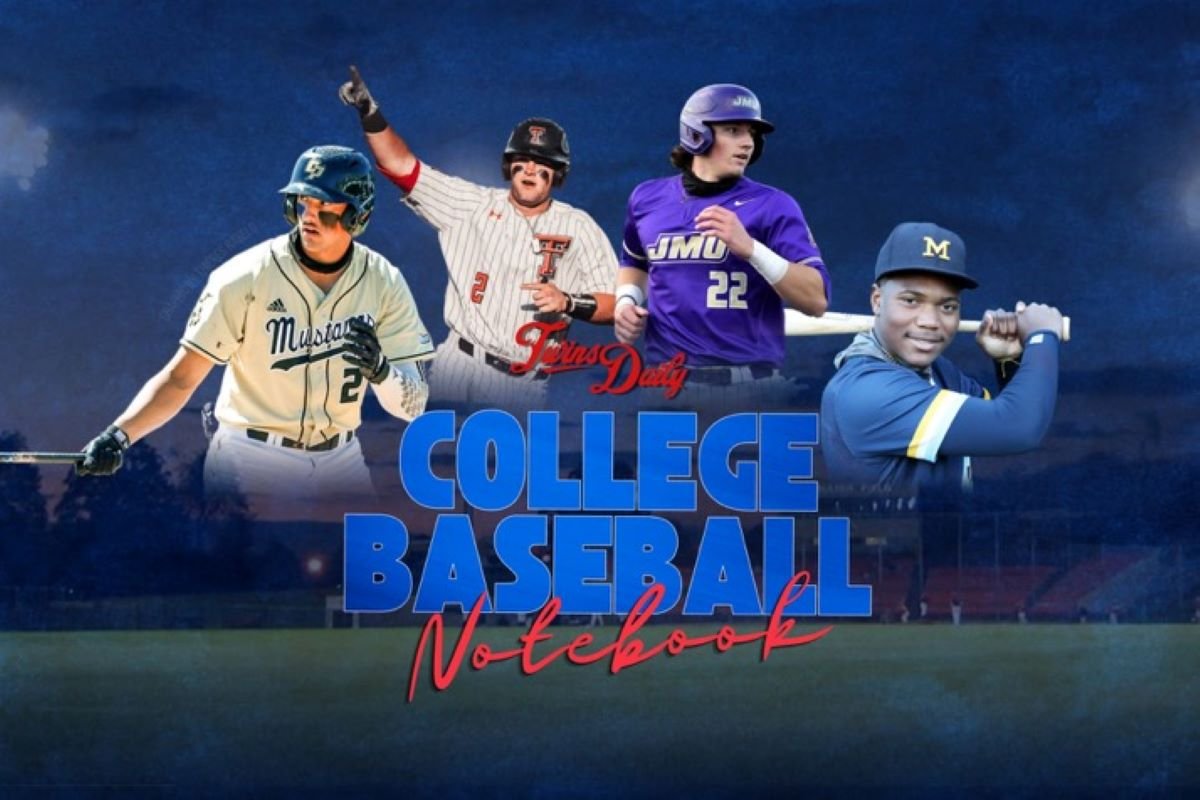 This was a great weekend in college baseball. As usual, there were upsets, standout performances, and an increasing wave of the incredible talent that is finally getting the attention it deserves in the midst of the MLB lockout. Let’s dig into the highlights and all the action from a great weekend. Weekly Recap Friday night was full of upsets in the top 25. The number one team in the country finally lost. UCLA beat Texas in the Shriners College Classic behind an outstanding performance from their pitching staff. UCLA also managed a win over Oklahoma, 15-3, before falling narrowly to Baylor in their last game of the weekend. Texas fell to 11-1 on the season and remain the best team in the country in the early going. After the Longhorns' loss, there are five remaining undefeated teams in college baseball, the B1G 10s Purdue among them. Minnesota played at US Bank Stadium in a tournament field that included the number three team in the country, Notre Dame. The Gophers currently have a 4-9 record due to a poor first week of the season in Fort Myers. Minnesota played well over the weekend, falling narrowly to Notre Dame 3-1, and number 25 West Virginia 5-4, despite a solid effort from starting pitcher Sam Ireland. At the end of the third weekend of the young season, here is where Baseball America has the top 25 teams. Notable Performances Outstanding Mississippi State right-handed pitcher Landon Sims had to leave his start this weekend with elbow soreness. Sims ad struck out ten of eleven hitters faced through that portion of the game. There has been no official update/diagnosis on his injury. Here’s a name to watch, Ben Joyce. The Tennessee right-hander throws a sinker up to 103 mph. He has been lighting up the radar gun and garnering the attention of anyone who pays attention to college baseball in the first few weeks of the season. Moment of the Week There’s only one winner this week. Druw Jones (son of Andruw) and a strong contender for the number one overall pick in June, headed to the plate in a game on Friday to chants of ‘overrated’ from opposition fans. He proceeded to deposit a high fastball at 92 mph over the wall in straight away centerfield. Awesome. Potential #8 Pick Performances Here’s a first look at a potential pick for the Twins in June. Dylan Lesko is a right-handed pitcher out of Georgia committed to Vanderbilt. He offers a mid-90s fastball and a devastating change that ESPN’s prospect guru Kiley McDaniel compares to that of Grayson Rodriguez, one of the top pitching prospects in minor league baseball. According to Darren Wolfson, the Twins had a solid scouting presence to watch LSU’s Jacob Berry this weekend. Additionally, Cal Poly SS Brooks Lee had a nice weekend, hitting his second home run of the season and striking out for only the first time in 50 plate appearances. Here are updates from the top eight of Baseball America’s 2022 draft board. I’ll work on adding more players to this pool as the weeks go by, the prep season gets up and running, and big-boards get adjusted. Brooks Lee, SS, Cal Poly, 20-42 (.476), 2 HR, 16 RBI, 12 BB, 1 K Jacob Berry, CI, LSU, 17-50 (.340), 5 HR, 14 RBI, 5 BB, 4 K Jace Jung, 2B, Texas Tech, 16-42 (.381), 2 HR, 11 RBI, 16 BB, 8 K Chase DeLauter, OF, James Madison 17-37 (.459), 3 HR, 18 RBI, 7 BB, 10 K What was your favorite college baseball moment of the week? Which prospects or team are you most excited about watching? Join the discussion in the comments.
 -
It was an action packed weekend full of upsets in college baseball, as Twins fans started to see more glimpses of players the organization might select at number eight in June. Here's a round up of the week in college baseball. This was a great weekend in college baseball. As usual, there were upsets, standout performances, and an increasing wave of the incredible talent that is finally getting the attention it deserves in the midst of the MLB lockout. Let’s dig into the highlights and all the action from a great weekend. Weekly Recap Friday night was full of upsets in the top 25. The number one team in the country finally lost. UCLA beat Texas in the Shriners College Classic behind an outstanding performance from their pitching staff. UCLA also managed a win over Oklahoma, 15-3, before falling narrowly to Baylor in their last game of the weekend. Texas fell to 11-1 on the season and remain the best team in the country in the early going. After the Longhorns' loss, there are five remaining undefeated teams in college baseball, the B1G 10s Purdue among them. Minnesota played at US Bank Stadium in a tournament field that included the number three team in the country, Notre Dame. The Gophers currently have a 4-9 record due to a poor first week of the season in Fort Myers. Minnesota played well over the weekend, falling narrowly to Notre Dame 3-1, and number 25 West Virginia 5-4, despite a solid effort from starting pitcher Sam Ireland. At the end of the third weekend of the young season, here is where Baseball America has the top 25 teams. Notable Performances Outstanding Mississippi State right-handed pitcher Landon Sims had to leave his start this weekend with elbow soreness. Sims ad struck out ten of eleven hitters faced through that portion of the game. There has been no official update/diagnosis on his injury. Here’s a name to watch, Ben Joyce. The Tennessee right-hander throws a sinker up to 103 mph. He has been lighting up the radar gun and garnering the attention of anyone who pays attention to college baseball in the first few weeks of the season. Moment of the Week There’s only one winner this week. Druw Jones (son of Andruw) and a strong contender for the number one overall pick in June, headed to the plate in a game on Friday to chants of ‘overrated’ from opposition fans. He proceeded to deposit a high fastball at 92 mph over the wall in straight away centerfield. Awesome. Potential #8 Pick Performances Here’s a first look at a potential pick for the Twins in June. Dylan Lesko is a right-handed pitcher out of Georgia committed to Vanderbilt. He offers a mid-90s fastball and a devastating change that ESPN’s prospect guru Kiley McDaniel compares to that of Grayson Rodriguez, one of the top pitching prospects in minor league baseball. According to Darren Wolfson, the Twins had a solid scouting presence to watch LSU’s Jacob Berry this weekend. Additionally, Cal Poly SS Brooks Lee had a nice weekend, hitting his second home run of the season and striking out for only the first time in 50 plate appearances. Here are updates from the top eight of Baseball America’s 2022 draft board. I’ll work on adding more players to this pool as the weeks go by, the prep season gets up and running, and big-boards get adjusted. Brooks Lee, SS, Cal Poly, 20-42 (.476), 2 HR, 16 RBI, 12 BB, 1 K Jacob Berry, CI, LSU, 17-50 (.340), 5 HR, 14 RBI, 5 BB, 4 K Jace Jung, 2B, Texas Tech, 16-42 (.381), 2 HR, 11 RBI, 16 BB, 8 K Chase DeLauter, OF, James Madison 17-37 (.459), 3 HR, 18 RBI, 7 BB, 10 K What was your favorite college baseball moment of the week? Which prospects or team are you most excited about watching? Join the discussion in the comments. View full article
-
Twins Daily College Baseball Notebook: Week 2
Jamie Cameron replied to Jamie Cameron's topic in Twins Daily Front Page News
If I wasn't being clear, it's his nickname. His actual name is Tommy White, which is much more boring haha -
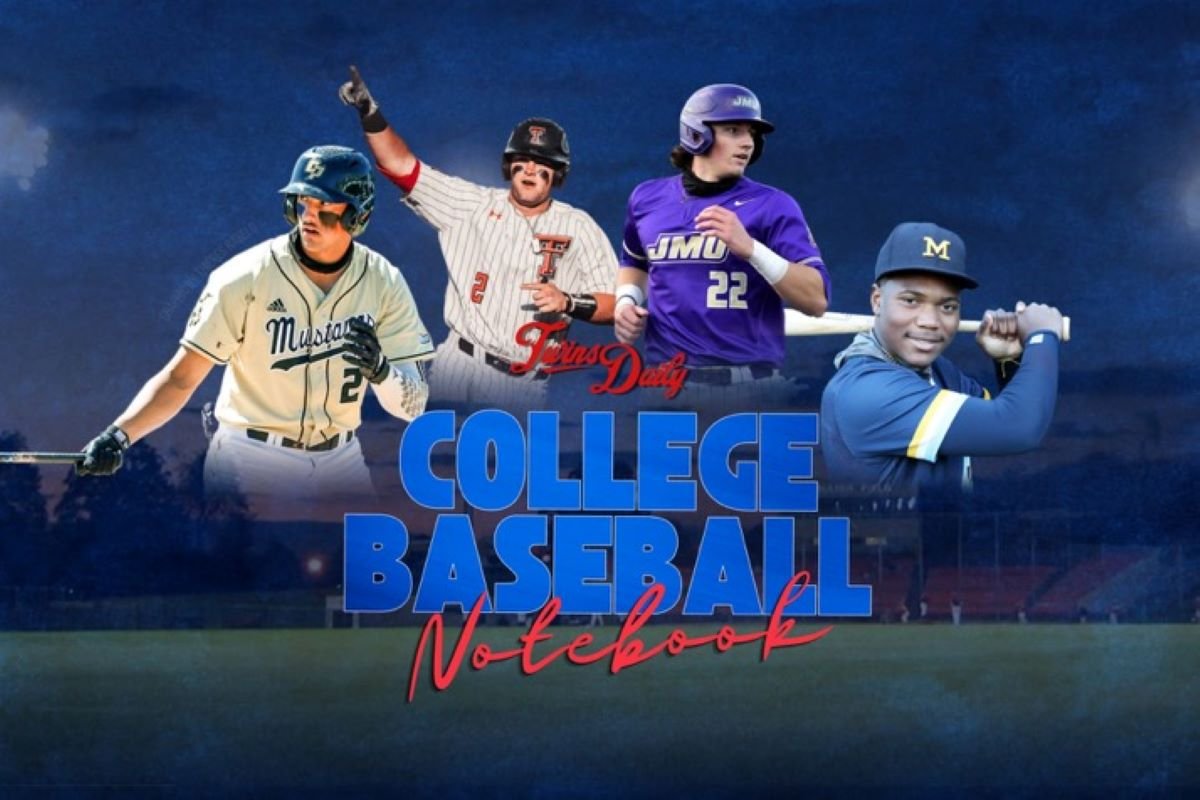 We’re now officially in no man's land. As I was writing this on Tuesday, the players rejected the owners ‘best’ offer and MLB regular-season games have been canceled. It stinks. There’s only one remedy, actual baseball. So here are some highlights from the world of college baseball after the second weekend of the season. As the season goes on, I’ll highlight players the Twins may be interested in with the number eight overall pick in the 2022 draft. For now, the season is still in its early days, so let’s dig in. Top 25 Recap Newly-minted #2 Stanford had an excellent weekend, beating Louisiana, Arkansas, Indiana, and Arkansas again to sweep the Round Rock Classic, moving to 6-1 on the season. #1 Texas continued their undefeated start to the season, sweeping Alabama to move to 8-0. Texas’ pitching has been an early strength, they have four shutouts in their eight wins so far. After upsetting NCAA defending champions Mississippi State on opening weekend, Long Beach State came crashing back to reality, being swept by Sacramento State. Elsewhere, Penn upset Miami, and North Carolina began knocking on the door of the top 25, beating East Carolina to move to 6-1 on the season. At the end of the second weekend of the young season, here is where Baseball America has the top 25 teams. Notable Performances Tommy Tanks just does not stop. The incredible North Carolina State slugger is up to nine HR and 29 RBI through eight games. He is an 18-year-old freshman. Enjoy all nine of his home runs so far this season. Kevin Parada has been lighting the world on fire so far in 2022. The sophomore catcher out of Georgia Tech has hit .485/.553/1.061 (yes that’s his SLG%) with five HR and 17 RBI in just eight games. Originally mocked as the #13 overall pick in Baseball America’s first mock draft of 2022, he’ll be moving up draft boards if he keeps up his incredible start to the season. Moments of the Week For this week's moment of the week, we go back to pre-season. Liberty had possibly the best jersey reveal of all time (baby-blues never fail) and their Celine Dion-inspired reveal was doing the rounds this weekend on Twitter and Tik Tok. Honorable Mention: Want to see a long home run? Check out Cody Holtz’ first home run for New Mexico, which was sent into orbit. Potential #8 Pick Performances Here are some notable performances from the top eight of Baseball America’s 2022 draft board. I’ll work on adding more players to this pool as the weeks go by, the prep season gets up and running, and big-boards get adjusted. Brooks Lee, SS, Cal Poly, 12-26 (.426), 1 HR, 9 RBI, 8 BB, 0 K Jacob Berry, CI, LSU, 12-35 (.343), 3 HR, 11 RBI, 1 BB, 3 K Jace Jung, 5-21, 2B, Texas Tech, (.238), 1 HR, 5 RBI, 10 BB, 7 K Chase DeLauter, OF, James Madison 11-29 (.379), 1 HR, 8 RBI, 5 BB, 10 K What was your favorite college baseball moment of the week? Which prospects or team are you most excited about watching? Join the discussion in the comments.
 -
With the MLB season officially delayed, what happened in the world of amateur baseball this week? How have candidates for the Twins #8 overall pick performed so far this season? Come and read updates, notable performances, and moments of the week in this weeks' College Baseball Notebook. We’re now officially in no man's land. As I was writing this on Tuesday, the players rejected the owners ‘best’ offer and MLB regular-season games have been canceled. It stinks. There’s only one remedy, actual baseball. So here are some highlights from the world of college baseball after the second weekend of the season. As the season goes on, I’ll highlight players the Twins may be interested in with the number eight overall pick in the 2022 draft. For now, the season is still in its early days, so let’s dig in. Top 25 Recap Newly-minted #2 Stanford had an excellent weekend, beating Louisiana, Arkansas, Indiana, and Arkansas again to sweep the Round Rock Classic, moving to 6-1 on the season. #1 Texas continued their undefeated start to the season, sweeping Alabama to move to 8-0. Texas’ pitching has been an early strength, they have four shutouts in their eight wins so far. After upsetting NCAA defending champions Mississippi State on opening weekend, Long Beach State came crashing back to reality, being swept by Sacramento State. Elsewhere, Penn upset Miami, and North Carolina began knocking on the door of the top 25, beating East Carolina to move to 6-1 on the season. At the end of the second weekend of the young season, here is where Baseball America has the top 25 teams. Notable Performances Tommy Tanks just does not stop. The incredible North Carolina State slugger is up to nine HR and 29 RBI through eight games. He is an 18-year-old freshman. Enjoy all nine of his home runs so far this season. Kevin Parada has been lighting the world on fire so far in 2022. The sophomore catcher out of Georgia Tech has hit .485/.553/1.061 (yes that’s his SLG%) with five HR and 17 RBI in just eight games. Originally mocked as the #13 overall pick in Baseball America’s first mock draft of 2022, he’ll be moving up draft boards if he keeps up his incredible start to the season. Moments of the Week For this week's moment of the week, we go back to pre-season. Liberty had possibly the best jersey reveal of all time (baby-blues never fail) and their Celine Dion-inspired reveal was doing the rounds this weekend on Twitter and Tik Tok. Honorable Mention: Want to see a long home run? Check out Cody Holtz’ first home run for New Mexico, which was sent into orbit. Potential #8 Pick Performances Here are some notable performances from the top eight of Baseball America’s 2022 draft board. I’ll work on adding more players to this pool as the weeks go by, the prep season gets up and running, and big-boards get adjusted. Brooks Lee, SS, Cal Poly, 12-26 (.426), 1 HR, 9 RBI, 8 BB, 0 K Jacob Berry, CI, LSU, 12-35 (.343), 3 HR, 11 RBI, 1 BB, 3 K Jace Jung, 5-21, 2B, Texas Tech, (.238), 1 HR, 5 RBI, 10 BB, 7 K Chase DeLauter, OF, James Madison 11-29 (.379), 1 HR, 8 RBI, 5 BB, 10 K What was your favorite college baseball moment of the week? Which prospects or team are you most excited about watching? Join the discussion in the comments. View full article
-
Twins Daily College Baseball Notebook: Week 1
Jamie Cameron replied to Jamie Cameron's topic in Twins Daily Front Page News
that's an awesome idea- 11 replies
-
- 1
-

-
- druw jones
- landon sims
- (and 2 more)
-
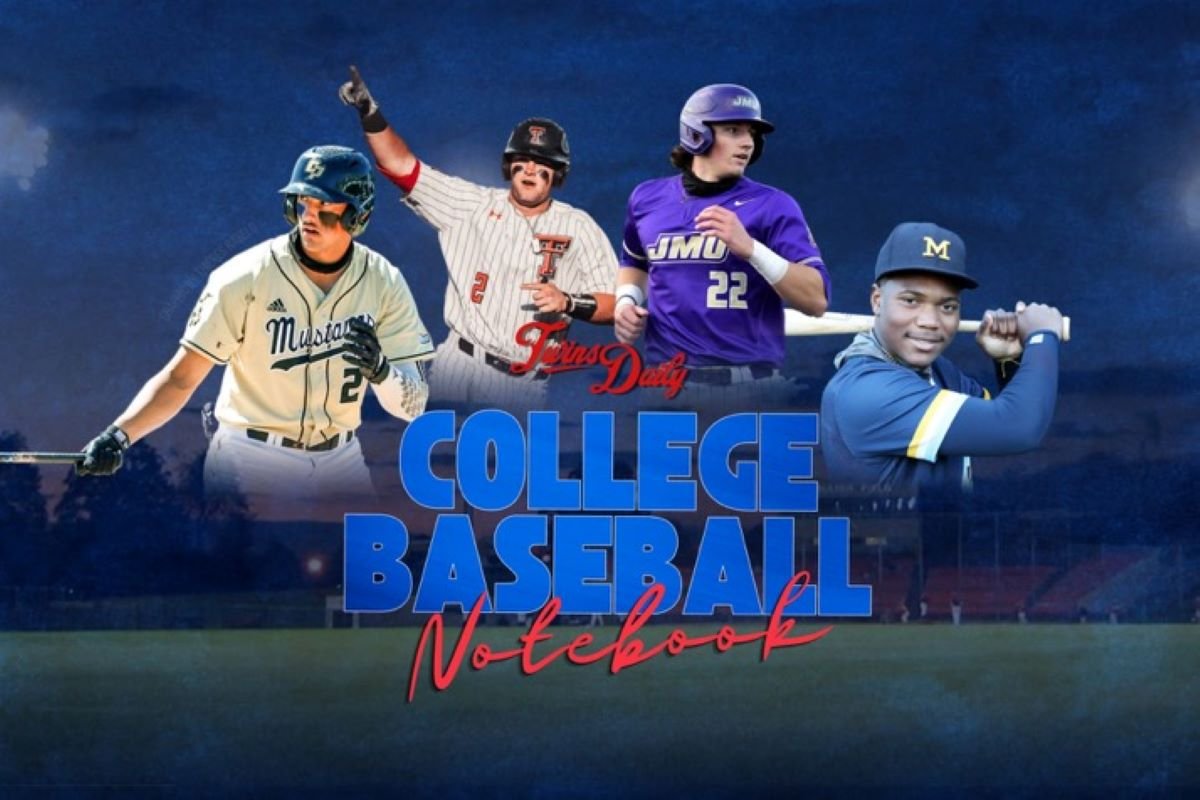 Taps mic. ‘Time for something new’. If you’re weary and fatigued by the incremental progress made between the Players Union and MLB during the lockout, you needn’t despair, baseball is up and running. The opening weekend of Division I college baseball is in the books. In this new, weekly feature for Twins Daily, I’ll be looking at some of the best performances, storylines, and highlights from the world of college baseball. As the season goes on, I’ll highlight players the Twins may be interested in with the number eight overall pick in the 2022 draft. For now, the season is just up and running, so let’s dig in. Top 25 Recap Anticipation was high for the opening weekend of college baseball. In Starkville, Mississippi State fans were excited to welcome their defending national champion Bulldogs to the 2022 season. Opening weekend was punctuated with several upsets as the defending champs were beaten by Long Beach State, despite an incredible performance from Mississippi St pitcher Landon Sims (more on him later). Other upsets saw Liberty beat Florida, Sam Houston beat Nebraska, and Oklahoma St beat Vanderbilt. Indeed the ‘Vandy Boys’ opening series was notable not just for the baseball, but the reaction to smartwatches being used to communicate signs to pitchers (feel free to weigh in on this in the comments). Other strong performances from the weekend came from Arizona, who scored 35 runs in three games in an opening weekend tournament against Big 12 opposition, and Oklahoma, who beat Auburn and Michigan in the same competition, despite losing to the Wildcats. At the end of opening weekend, here is where Baseball America has the top 25 teams nationally. Notable Performances North Carolina State slugger Tommy White had the most notable opening weekend. The freshman hit five home runs in his first 14 at-bats. Dominant. Landon Sims, a right-handed pitcher out of defending NCAA champions Mississippi State, had arguably the best pitching performance of the opening weekend. He allowed just five hits and one run over seven innings of work, striking out 13 and walking none. Sims is currently ranked as the 20th overall prospect on Baseball America’s pre-draft rankings and will be a prospect to monitor this season. Moment of the Week This one was easy. Nick Condo out of Chapman wins the inaugural ‘Moment of the Week’ award for this outrageous ‘telescope’ after clubbing a home run. ‘Moment of the Week’ may need to be immediately retired after this opening salvo. Potential #8 Pick Performances Moving forward, I’ll feature the weekly performances of the top 8-12 players from the 2022 draft class, in a year Carlos Collazo thinks is a great one to be picking in the Twins position. Right now, the top eight are comprised of Druw Jones, Temarr Johnson, Elijah Green, Brooks Lee, Jacob Berry, Jace Jung, Dylan Lesko, and Chase DeLauter (much, much more on these, and other names to come). It’s extremely early days here, and a lot will likely change before the draft. Check back next week for some updates on how these talented prospects started their seasons. For now, here’s a snippet of Druw Jones from week one. As this is a new feature, I’d love to get readers' feedback on the content. What would you like to see incorporated into this series? What did you like? What did you not like? I’ll do my best to incorporate feedback in the coming weeks, so come and join the discussion.
- 11 comments
-
- 4
-
-
- druw jones
- landon sims
- (and 2 more)
-
The college baseball season kicked off last weekend. What are the storylines to watch in Week 1? How did prospective Minnesota Twins perform? Come and read up on storylines from week one. Taps mic. ‘Time for something new’. If you’re weary and fatigued by the incremental progress made between the Players Union and MLB during the lockout, you needn’t despair, baseball is up and running. The opening weekend of Division I college baseball is in the books. In this new, weekly feature for Twins Daily, I’ll be looking at some of the best performances, storylines, and highlights from the world of college baseball. As the season goes on, I’ll highlight players the Twins may be interested in with the number eight overall pick in the 2022 draft. For now, the season is just up and running, so let’s dig in. Top 25 Recap Anticipation was high for the opening weekend of college baseball. In Starkville, Mississippi State fans were excited to welcome their defending national champion Bulldogs to the 2022 season. Opening weekend was punctuated with several upsets as the defending champs were beaten by Long Beach State, despite an incredible performance from Mississippi St pitcher Landon Sims (more on him later). Other upsets saw Liberty beat Florida, Sam Houston beat Nebraska, and Oklahoma St beat Vanderbilt. Indeed the ‘Vandy Boys’ opening series was notable not just for the baseball, but the reaction to smartwatches being used to communicate signs to pitchers (feel free to weigh in on this in the comments). Other strong performances from the weekend came from Arizona, who scored 35 runs in three games in an opening weekend tournament against Big 12 opposition, and Oklahoma, who beat Auburn and Michigan in the same competition, despite losing to the Wildcats. At the end of opening weekend, here is where Baseball America has the top 25 teams nationally. Notable Performances North Carolina State slugger Tommy White had the most notable opening weekend. The freshman hit five home runs in his first 14 at-bats. Dominant. Landon Sims, a right-handed pitcher out of defending NCAA champions Mississippi State, had arguably the best pitching performance of the opening weekend. He allowed just five hits and one run over seven innings of work, striking out 13 and walking none. Sims is currently ranked as the 20th overall prospect on Baseball America’s pre-draft rankings and will be a prospect to monitor this season. Moment of the Week This one was easy. Nick Condo out of Chapman wins the inaugural ‘Moment of the Week’ award for this outrageous ‘telescope’ after clubbing a home run. ‘Moment of the Week’ may need to be immediately retired after this opening salvo. Potential #8 Pick Performances Moving forward, I’ll feature the weekly performances of the top 8-12 players from the 2022 draft class, in a year Carlos Collazo thinks is a great one to be picking in the Twins position. Right now, the top eight are comprised of Druw Jones, Temarr Johnson, Elijah Green, Brooks Lee, Jacob Berry, Jace Jung, Dylan Lesko, and Chase DeLauter (much, much more on these, and other names to come). It’s extremely early days here, and a lot will likely change before the draft. Check back next week for some updates on how these talented prospects started their seasons. For now, here’s a snippet of Druw Jones from week one. As this is a new feature, I’d love to get readers' feedback on the content. What would you like to see incorporated into this series? What did you like? What did you not like? I’ll do my best to incorporate feedback in the coming weeks, so come and join the discussion. View full article
-
Jose Miranda put up one of the most electrifying seasons from a Twins prospect in organizational history. Is he the real deal? An emerging superstar? Come and read up on his prospects for 2022. Jose Miranda was drafted by the Twins with the 76th overall pick in 2016 as a high school prospect out of Puerto Rico. 2021 was the year Jose Miranda arrived. Insert your favorite line from ‘Hamilton’ or ‘The Heights’ here. The cousin of Lin Manuel Miranda catapulted himself into the national prospect writer collective consciousness in 2021, eviscerating AA and AAA pitching all season, and simultaneously vaulting himself into several national top 100 prospect lists. Age: 23 (DOB: 06/29/1998) 2021 Stats (AA and AAA): .344/.401/.572, 32 2B, 30 HR, 94 RBI, 6.7 BB%, 13.1 K% ETA: 2022 2021 Ranking: 19 National Top 100 Rankings: BA: 90 MLB: Not Released ATH: 96 BP: NR What’s to Like? Miranda had one of the best seasons for a prospect in Twins organizational history in 2021, so it’s hard to know where to start. Reports were high on Miranda from instructs at the end of the COVID shortened 2020 season. Miranda’s greatest challenge prior to the 2021 season was his contact rate. He has a short, compact swing and shows the ability to drive the ball to all fields. Prior to the 2021 season, he put the ball in play so much, he made hard contact much less often than he was capable of, rarely working pitch counts or being selective with the contact he made. Miranda tightening up his strike zone control had trajectory-altering implications for him in 2021, as he managed a combined 159 wRC+ at AA and AAA and had an offensive season on par with Yankees’ helium prospect Anthony Volpe. What’s Left to Work On? There are two remaining questions relating to Miranda’s status as a major leaguer. Was his breakout for real? Where is his defensive home? If Miranda’s breakout is for real, he should be, a lowest, the Twins #2 prospect (and possible #1 overall). Miranda does not have an established record of success in minor league baseball outside of 2021, posting wRC+ figures between 100-115 in his previous four seasons in the minors. If we want to be picky, Miranda could stand to walk more, managing just a 6.7% BB% in 2021 (about the same as Eddie Rosario). Miranda is limited from entering uber-prospect status by an uncertain defensive home. Miranda has played at first base, second base, and in the outfield for the Twins. He’s looked best at third base. Even there, he will be, at best, a slightly below-average defender. This will be a puzzle for the organization to solve. A permanent move to first base or a corner outfield spot may be what gives him the best chance at being an average defender, but make no mistake, the bat will play anywhere. Pre-season projection like Miranda, with Steamer having him posting a 113 wRC+ and 15 HR in around 400 plate appearances in 2022. Miranda will be at Target Field in 2022, if his development curve continues, he’s a star in the making. Previous Rankings Honorable Mentions Prospects 16-20 Prospects 11-15 #10: Josh Winder, RHP #9: Chase Petty, RHP #8: Simeon Woods Richardson, RHP #7: Jhoan Duran #6: Matt Canterino #5: Joe Ryan #4: Jordan Balazovic #3: Jose Miranda #2: Coming tomorrow! View full article
-
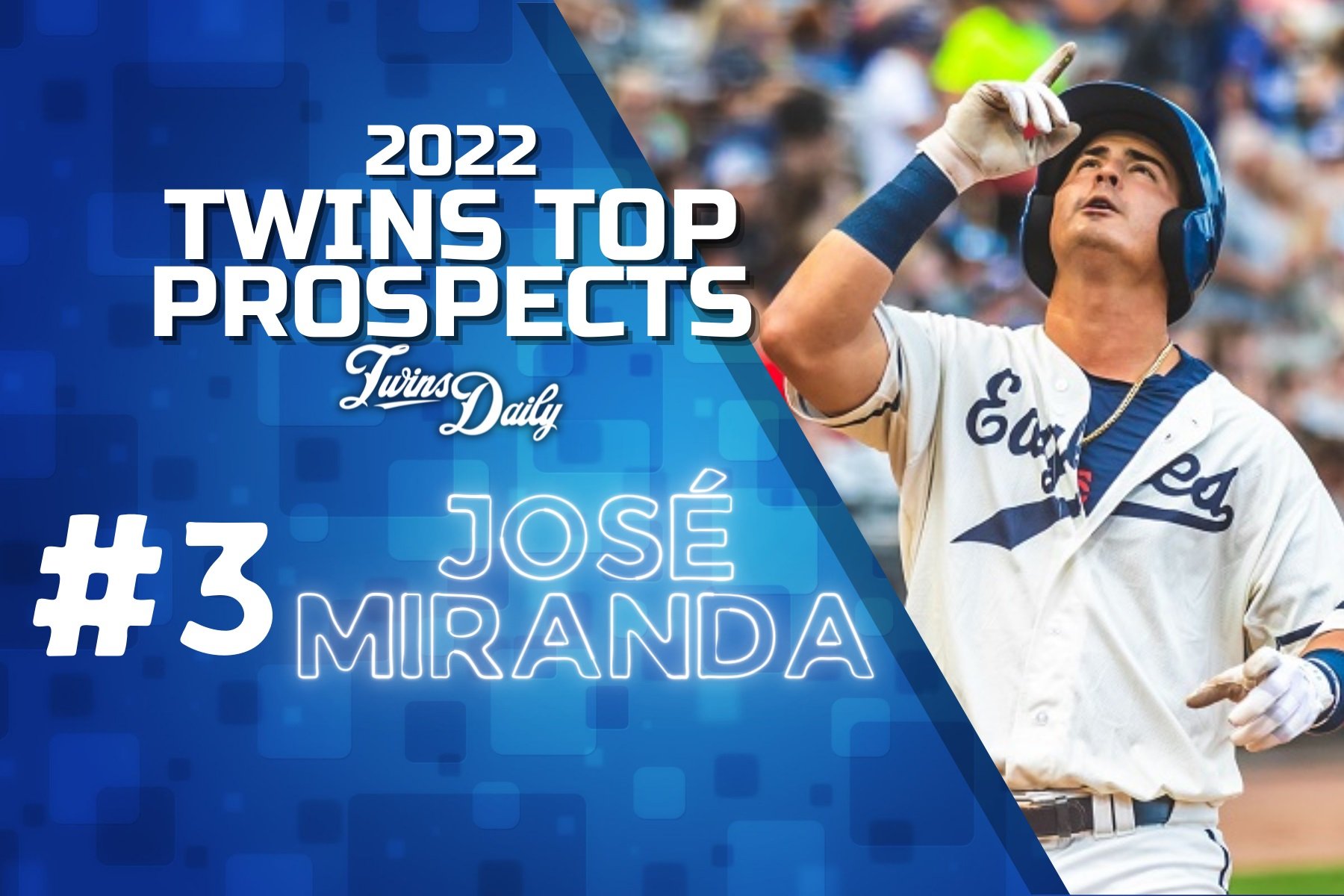 Jose Miranda was drafted by the Twins with the 76th overall pick in 2016 as a high school prospect out of Puerto Rico. 2021 was the year Jose Miranda arrived. Insert your favorite line from ‘Hamilton’ or ‘The Heights’ here. The cousin of Lin Manuel Miranda catapulted himself into the national prospect writer collective consciousness in 2021, eviscerating AA and AAA pitching all season, and simultaneously vaulting himself into several national top 100 prospect lists. Age: 23 (DOB: 06/29/1998) 2021 Stats (AA and AAA): .344/.401/.572, 32 2B, 30 HR, 94 RBI, 6.7 BB%, 13.1 K% ETA: 2022 2021 Ranking: 19 National Top 100 Rankings: BA: 90 MLB: Not Released ATH: 96 BP: NR What’s to Like? Miranda had one of the best seasons for a prospect in Twins organizational history in 2021, so it’s hard to know where to start. Reports were high on Miranda from instructs at the end of the COVID shortened 2020 season. Miranda’s greatest challenge prior to the 2021 season was his contact rate. He has a short, compact swing and shows the ability to drive the ball to all fields. Prior to the 2021 season, he put the ball in play so much, he made hard contact much less often than he was capable of, rarely working pitch counts or being selective with the contact he made. Miranda tightening up his strike zone control had trajectory-altering implications for him in 2021, as he managed a combined 159 wRC+ at AA and AAA and had an offensive season on par with Yankees’ helium prospect Anthony Volpe. What’s Left to Work On? There are two remaining questions relating to Miranda’s status as a major leaguer. Was his breakout for real? Where is his defensive home? If Miranda’s breakout is for real, he should be, a lowest, the Twins #2 prospect (and possible #1 overall). Miranda does not have an established record of success in minor league baseball outside of 2021, posting wRC+ figures between 100-115 in his previous four seasons in the minors. If we want to be picky, Miranda could stand to walk more, managing just a 6.7% BB% in 2021 (about the same as Eddie Rosario). Miranda is limited from entering uber-prospect status by an uncertain defensive home. Miranda has played at first base, second base, and in the outfield for the Twins. He’s looked best at third base. Even there, he will be, at best, a slightly below-average defender. This will be a puzzle for the organization to solve. A permanent move to first base or a corner outfield spot may be what gives him the best chance at being an average defender, but make no mistake, the bat will play anywhere. Pre-season projection like Miranda, with Steamer having him posting a 113 wRC+ and 15 HR in around 400 plate appearances in 2022. Miranda will be at Target Field in 2022, if his development curve continues, he’s a star in the making. Previous Rankings Honorable Mentions Prospects 16-20 Prospects 11-15 #10: Josh Winder, RHP #9: Chase Petty, RHP #8: Simeon Woods Richardson, RHP #7: Jhoan Duran #6: Matt Canterino #5: Joe Ryan #4: Jordan Balazovic #3: Jose Miranda #2: Coming tomorrow!
 -
Twins Daily 2022 Top Prospects: #6 Matt Canterino
Jamie Cameron replied to Jamie Cameron's topic in Twins Minor League Talk
Agree with ALLL THIS. Thanks for reading! -
Twins Daily 2022 Top Prospects: #6 Matt Canterino
Jamie Cameron replied to Jamie Cameron's topic in Twins Minor League Talk
Agree with you Roger. It's not super common for a SP prospect to have 3 plus pitches, usually one is more a 'serviceable' pitch. If he had a track record of good health, I would place him at #3 overall on my personal Twins prospect list. -
Twins Daily 2022 Top Prospects: #6 Matt Canterino
Jamie Cameron replied to Jamie Cameron's topic in Twins Minor League Talk
I think the reason I like Canterino so much as a prospect is he's the perfect balance of upside and 'already proven it' for me. Granted, the health will be the determining factor, but I'm pretty confident in his ability to show his upside.- 25 replies
-
- 3
-
-
- matt canterino
- simeon woods richardson
- (and 1 more)
-
Twins Daily 2022 Top Prospects: #6 Matt Canterino
Jamie Cameron replied to Jamie Cameron's topic in Twins Minor League Talk
Agree. Wasn't a comment on him as much as his college program. Fingers crossed for 2022. -
Matt Canterino has the best repertoire of a starting pitcher in the Minnesota Twins organization. He dominated two levels of minor league baseball in 2021. Read about his prospects ahead of the 2022 season. Matt Canterino was drafted by the Twins in the second round of the 2019 draft, out of Rice University. In a similar fashion to other drafted in 2019, his organizational visibility was limited early, due to the shortened 2020. None of that slowed Canterino, however, as he showed significant advancements in his repertoire, velocity, and approach after joining the Twins alternate site at the end of the 2020 season. Age: 24 (DOB: 12/14/1997) 2021 Stats (A and A+): 23 IP, 0.78 ERA, 0.61 WHIP, 45 K, 4 BB ETA: 2023 2021 Ranking: 9 National Top 100 Rankings: BA: NR MLB: NR ATH: NR BP: NR What’s to Like? Off the mound, Matt Canterino is a friendly, likable player who is always generous with his time, thoughts, and perspective. On the mound, he’s an apex predator, pacing and stalking around the mound with the level of intent he brings to his pitches. Canterino has a true four-pitch mix, beginning with a blazing fastball. At Rice, this sat in the low 90s, but he sits comfortably in the upper 90s with it now (reaching 99 mph). The other pitch which has developed into a significant weapon since he turned professional is his changeup, which has developed excellent tumble and is a plus pitch against hitters on both sides of the plate. Canterino also offers a deep curveball which sits in the high 70s/low 80s and a hard slider, which is his best breaking pitch. Canterino also has excellent control, (despite unusual, herky-jerky looking mechanics), walking just four hitters in 23 innings pitched in 2021 and dominating two levels of minor league baseball in the process. What’s Left to Work On? Not much, in terms of his pitch mix or approach. Canterino now carries a 60-grade fastball to go with a 55-grade changeup and 55-grade slider, with 55-grade control. There’s really only one orange flag in his young career. Health. Canterino missed the majority of 2021 with elbow injuries. Additionally, his collegiate career was spent at Rice, a program notorious for being reckless with young arms. Canterino could not have had a more dominant start to his professional career, but the combination of a shortened season in 2020 and injuries in 2021 mean he has not pitched more than 25 innings in a season in his career to date. If he can remain healthy, he has middle to top of the rotation upside as a starting pitcher. Make no mistake, a healthy Matt Canterino in 2022 should be a dominant force in the minor leagues if his short track record is any indicator. Previous Rankings Honorable Mentions Prospects 16-20 Prospects 11-15 #10: Josh Winder, RHP #9: Chase Petty, RHP #8: Simeon Woods Richardson, RHP #7: Jhoan Duran View full article
- 25 replies
-
- 1
-
-
- matt canterino
- simeon woods richardson
- (and 1 more)
-
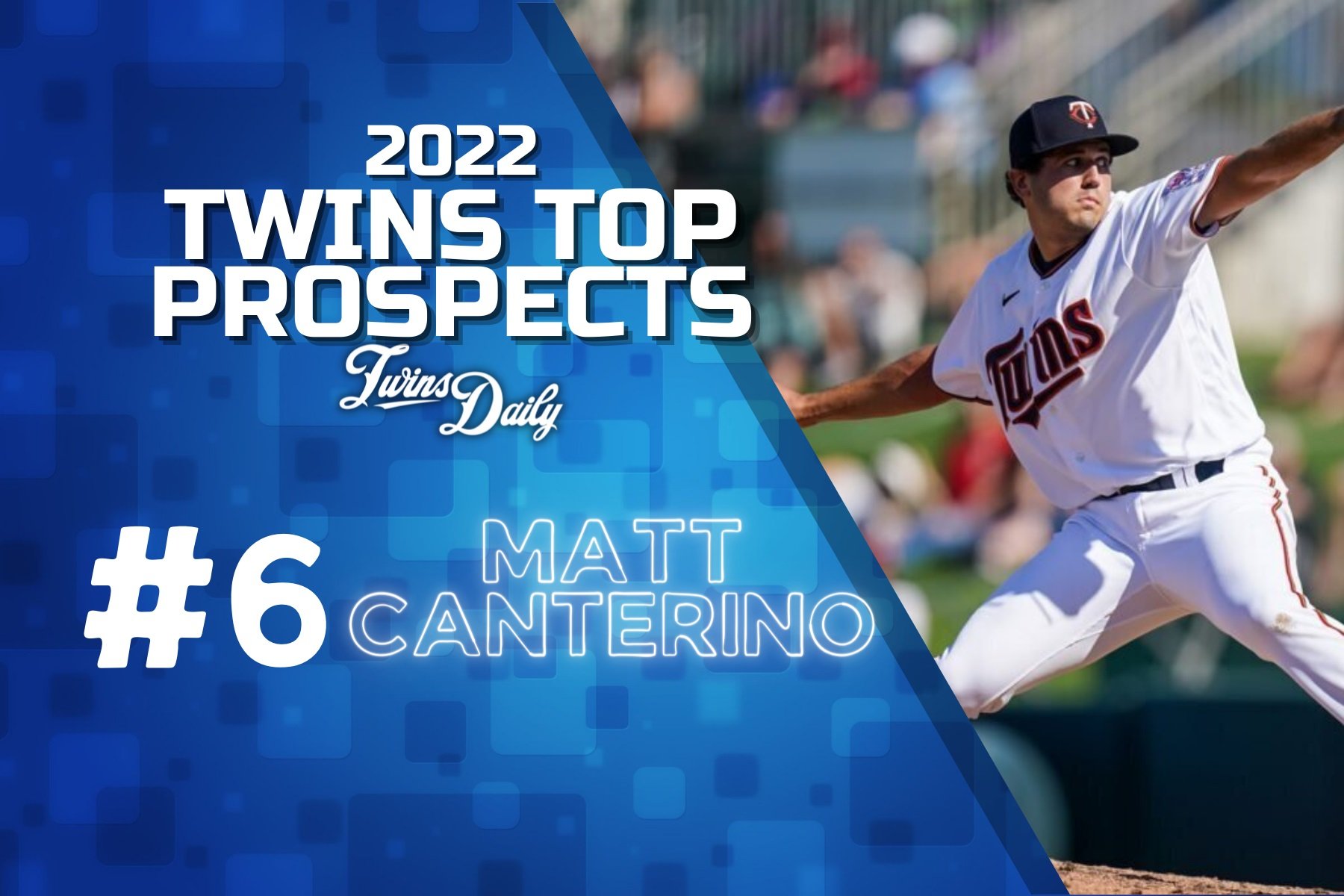 Matt Canterino was drafted by the Twins in the second round of the 2019 draft, out of Rice University. In a similar fashion to other drafted in 2019, his organizational visibility was limited early, due to the shortened 2020. None of that slowed Canterino, however, as he showed significant advancements in his repertoire, velocity, and approach after joining the Twins alternate site at the end of the 2020 season. Age: 24 (DOB: 12/14/1997) 2021 Stats (A and A+): 23 IP, 0.78 ERA, 0.61 WHIP, 45 K, 4 BB ETA: 2023 2021 Ranking: 9 National Top 100 Rankings: BA: NR MLB: NR ATH: NR BP: NR What’s to Like? Off the mound, Matt Canterino is a friendly, likable player who is always generous with his time, thoughts, and perspective. On the mound, he’s an apex predator, pacing and stalking around the mound with the level of intent he brings to his pitches. Canterino has a true four-pitch mix, beginning with a blazing fastball. At Rice, this sat in the low 90s, but he sits comfortably in the upper 90s with it now (reaching 99 mph). The other pitch which has developed into a significant weapon since he turned professional is his changeup, which has developed excellent tumble and is a plus pitch against hitters on both sides of the plate. Canterino also offers a deep curveball which sits in the high 70s/low 80s and a hard slider, which is his best breaking pitch. Canterino also has excellent control, (despite unusual, herky-jerky looking mechanics), walking just four hitters in 23 innings pitched in 2021 and dominating two levels of minor league baseball in the process. What’s Left to Work On? Not much, in terms of his pitch mix or approach. Canterino now carries a 60-grade fastball to go with a 55-grade changeup and 55-grade slider, with 55-grade control. There’s really only one orange flag in his young career. Health. Canterino missed the majority of 2021 with elbow injuries. Additionally, his collegiate career was spent at Rice, a program notorious for being reckless with young arms. Canterino could not have had a more dominant start to his professional career, but the combination of a shortened season in 2020 and injuries in 2021 mean he has not pitched more than 25 innings in a season in his career to date. If he can remain healthy, he has middle to top of the rotation upside as a starting pitcher. Make no mistake, a healthy Matt Canterino in 2022 should be a dominant force in the minor leagues if his short track record is any indicator. Previous Rankings Honorable Mentions Prospects 16-20 Prospects 11-15 #10: Josh Winder, RHP #9: Chase Petty, RHP #8: Simeon Woods Richardson, RHP #7: Jhoan Duran
- 25 comments
-
- 3
-
-
- matt canterino
- simeon woods richardson
- (and 1 more)
-
David Festa was the thirteenth round pick of the Twins in the 2021 draft. The 6'6 right-handed pitcher pumps a 97 mph fastball. Come and read about his profile, his background in the game, and what to watch for in 2022. While the MLB lockout continues to stagnate the offseason, minor-league players are preparing to travel to Florida and Arizona to begin preparation for their upcoming seasons. In this series, I’ll look at some of the Twins' notable picks from the early rounds of the 2021 draft. I’ll dig into scouting reports and storylines to look for ahead of the 2022 season. Next up, David Festa, a right-handed pitcher out of Seton Hall University Scouting Grades: Unavailable Signing and Scouting The Twins selected right-handed pitcher David Festa with their thirteenth-round pick in the 2021 draft (399th overall) out of Seton Hal University. Festa signed for a $125,000 bonus. Prior to the 2021 draft, Festa was ranked as the #474 prospect by Baseball America in their annual pre-draft top 500 rankings. BA described Festa as ‘having some sneaky projectability’ due to being 6’6 and 185 lbs pre-draft. Early in his final season at Seton Hall, Festa’s fastball was sitting at 88-92 mph, before jumping to 90-94 mph with a peak of 96 mph at the end of the season. After working with him briefly at the end of the 2021 season, the Twins already had Festa’s fastball sitting at 97 mph. Festa’s best secondary pitch prior to the draft was his changeup which sits 81-84 mph and shows good fade. Festa can locate his changeup at any point in the count. Pre-draft scouting reports point to the lack of a plus breaking pitch being the clear area of need for Festa moving forward, Prior to the draft, he was throwing both a slider and a curveball. It’s possible Festa’s long-term role may be in the bullpen, where his plus fastball would play even more. That will depend on how he’s able to leverage his changeup and develop a more potent breaking pitch in 2022. Seizing the Moment ‘It’s definitely been a great atmosphere,’ says Festa, who has been preparing for the 2022 season in Fort Myers several weeks ahead of schedule. When speaking to Twins Daily’s Seth Stohs, Festa emphasized the importance of preparing for the 2021 season in warm conditions, having coaches available to him in Fort Myers, and being able to lean into his lifting program. Jersey Boy "Seton-Hall prep, where I went to high school, was an incredibly competitive high-school program’" Festa reflects on some of his formative baseball experiences. He speaks highly of both the talent he played with and the amount of preparation and work ethic required to develop and perform at a high level. "We had a Vanderbilt commit, a Stanford commit, a Tulane commit, so it was a lot of talent on one high school team." Festa was originally committed as a shortstop in high school. He only began pitching his senior year after going through a significant growth spurt and playing in tournaments where teams would often run out of pitching. What a decision that would turn out to be for the New Jersey native. Draft Day and Transitioning to the Twins "I didn’t want to get too caught up (in where I would be selected), I just wanted to get the opportunity." The through-line in listening to Festa speak about his experiences in baseball and his opportunity with the Twins is his level of focus. He has a quiet, steely determination evident in his answers and the level of gratitude he has for the chance in front of him. Festa pitched 72 innings at Seton Hall in 2021, before pitching at both Rookie ball and Fort Myers to round out his first season as a professional. ‘For the most part, it was a build-up,’ says Festa of his throwing routine after his collegiate season was finished. The Twins gave incoming pitchers around a month before getting them into longer outings in games. "It was crazy how well we all got along," says Festa of other 2021 draftee pitchers he had the opportunity to connect with in his first season. He names his keys to success as attacking the strike zone and maximizing his changeup, for which he utilizes a circle-change grip. "The main thing was to do what’s right for my body,’ says Festa of pushing his fastball velocity to 97 mph. He speaks warmly of the impact the coaches at Fort Myers have had on maximizing his velocity, in addition to data and tools at his disposal since beginning his pro career. Festa, his plus fastball, and quality changeup, will be an intriguing prospect to track in 2022. Likely to Start At: Fort Myers (Low-A) Conclusion: Festa is an intriguing arm as a late-round pick in the 2021 draft. His fastball will play at any level. His speed of progression and overall ceiling will likely depend on his ability to continue to develop his secondary pitches to be increasingly effective, particularly a quality-breaking pitch. Who is the most intriguing of the five draft picks discussed so far? What are your thoughts on David Festa ahead of the 2022 season? Previous Prospect Previews Twins Prospect Preview: Chase Petty Twins Prospect Preview: Noah Miller Twins Prospect Preview: Steven Hajjar Twins Prospect Preview: Cade Povich Twins Prospect Preview: Christian Encarnacion-Strand Twins Prospect Preview: Pierson Ohl View full article
-
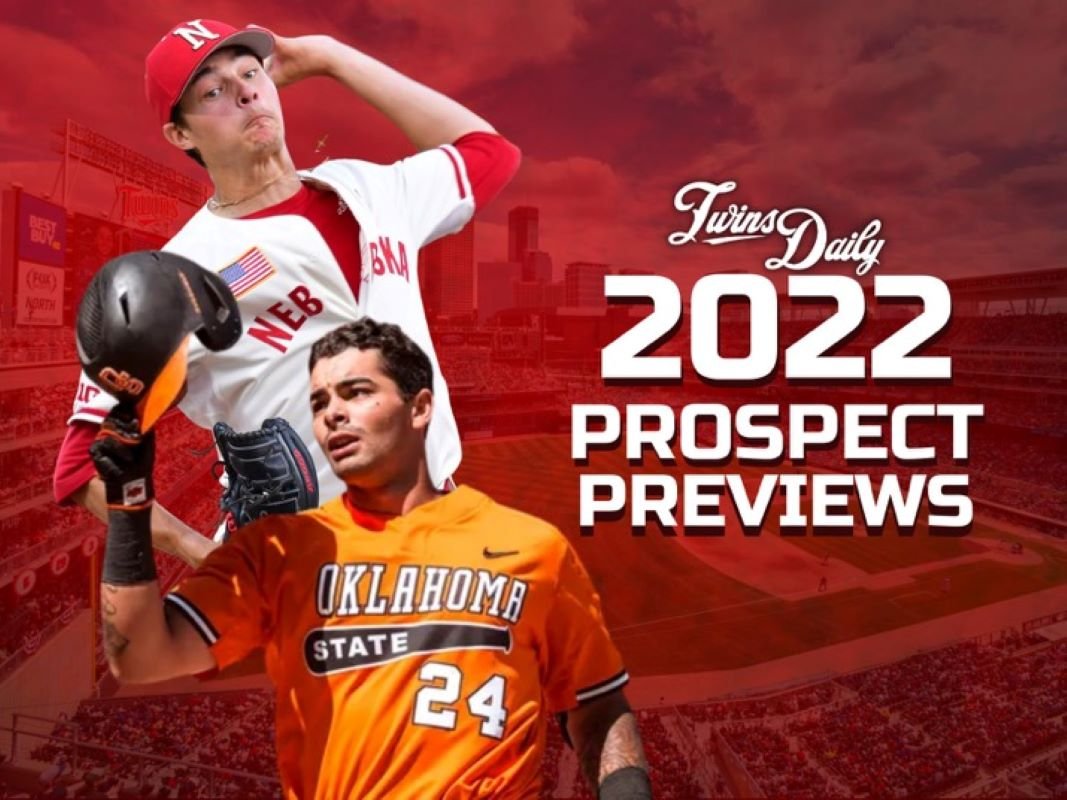 While the MLB lockout continues to stagnate the offseason, minor-league players are preparing to travel to Florida and Arizona to begin preparation for their upcoming seasons. In this series, I’ll look at some of the Twins' notable picks from the early rounds of the 2021 draft. I’ll dig into scouting reports and storylines to look for ahead of the 2022 season. Next up, David Festa, a right-handed pitcher out of Seton Hall University Scouting Grades: Unavailable Signing and Scouting The Twins selected right-handed pitcher David Festa with their thirteenth-round pick in the 2021 draft (399th overall) out of Seton Hal University. Festa signed for a $125,000 bonus. Prior to the 2021 draft, Festa was ranked as the #474 prospect by Baseball America in their annual pre-draft top 500 rankings. BA described Festa as ‘having some sneaky projectability’ due to being 6’6 and 185 lbs pre-draft. Early in his final season at Seton Hall, Festa’s fastball was sitting at 88-92 mph, before jumping to 90-94 mph with a peak of 96 mph at the end of the season. After working with him briefly at the end of the 2021 season, the Twins already had Festa’s fastball sitting at 97 mph. Festa’s best secondary pitch prior to the draft was his changeup which sits 81-84 mph and shows good fade. Festa can locate his changeup at any point in the count. Pre-draft scouting reports point to the lack of a plus breaking pitch being the clear area of need for Festa moving forward, Prior to the draft, he was throwing both a slider and a curveball. It’s possible Festa’s long-term role may be in the bullpen, where his plus fastball would play even more. That will depend on how he’s able to leverage his changeup and develop a more potent breaking pitch in 2022. Seizing the Moment ‘It’s definitely been a great atmosphere,’ says Festa, who has been preparing for the 2022 season in Fort Myers several weeks ahead of schedule. When speaking to Twins Daily’s Seth Stohs, Festa emphasized the importance of preparing for the 2021 season in warm conditions, having coaches available to him in Fort Myers, and being able to lean into his lifting program. Jersey Boy "Seton-Hall prep, where I went to high school, was an incredibly competitive high-school program’" Festa reflects on some of his formative baseball experiences. He speaks highly of both the talent he played with and the amount of preparation and work ethic required to develop and perform at a high level. "We had a Vanderbilt commit, a Stanford commit, a Tulane commit, so it was a lot of talent on one high school team." Festa was originally committed as a shortstop in high school. He only began pitching his senior year after going through a significant growth spurt and playing in tournaments where teams would often run out of pitching. What a decision that would turn out to be for the New Jersey native. Draft Day and Transitioning to the Twins "I didn’t want to get too caught up (in where I would be selected), I just wanted to get the opportunity." The through-line in listening to Festa speak about his experiences in baseball and his opportunity with the Twins is his level of focus. He has a quiet, steely determination evident in his answers and the level of gratitude he has for the chance in front of him. Festa pitched 72 innings at Seton Hall in 2021, before pitching at both Rookie ball and Fort Myers to round out his first season as a professional. ‘For the most part, it was a build-up,’ says Festa of his throwing routine after his collegiate season was finished. The Twins gave incoming pitchers around a month before getting them into longer outings in games. "It was crazy how well we all got along," says Festa of other 2021 draftee pitchers he had the opportunity to connect with in his first season. He names his keys to success as attacking the strike zone and maximizing his changeup, for which he utilizes a circle-change grip. "The main thing was to do what’s right for my body,’ says Festa of pushing his fastball velocity to 97 mph. He speaks warmly of the impact the coaches at Fort Myers have had on maximizing his velocity, in addition to data and tools at his disposal since beginning his pro career. Festa, his plus fastball, and quality changeup, will be an intriguing prospect to track in 2022. Likely to Start At: Fort Myers (Low-A) Conclusion: Festa is an intriguing arm as a late-round pick in the 2021 draft. His fastball will play at any level. His speed of progression and overall ceiling will likely depend on his ability to continue to develop his secondary pitches to be increasingly effective, particularly a quality-breaking pitch. Who is the most intriguing of the five draft picks discussed so far? What are your thoughts on David Festa ahead of the 2022 season? Previous Prospect Previews Twins Prospect Preview: Chase Petty Twins Prospect Preview: Noah Miller Twins Prospect Preview: Steven Hajjar Twins Prospect Preview: Cade Povich Twins Prospect Preview: Christian Encarnacion-Strand Twins Prospect Preview: Pierson Ohl
 -
Pierson Ohl was selected by the Twins in the 14th round of the 2021 draft. Read up on his profile, his successful college pitching career, and how he has embraced the organizational approach of the Twins in his short time as a professional player. While the MLB lockout continues to stagnate the offseason, minor-league players are preparing to travel to Florida and Arizona to begin preparation for their seasons. In this series, I’ll look at some of the Twins' notable picks from the early rounds of the 2021 draft. I’ll dig into scouting reports and storylines to look for ahead of the 2022 season. Next up, Pierson Ohl, a right-handed pitcher out of Grand Canyon University. Scouting Grades: Unavailable Signing and Scouting The Twins selected right-handed pitcher Pierson Ohl with their 14th-round pick in the 2021 draft (429th overall) out of Grand Canyon University. Ohl signed for a slot bonus of $100,000. Prior to the 2021 draft, Baseball America described Ohl as ‘the textbook example of a pitcher thriving on pitchability to compensate for a below-average fastball’. Ohl pitched extremely well in his three seasons at Grand Canyon, compiling a 2.60 ERA and a 10-2 record in his junior year. His pre-draft scouting report cited a fastball that operated in the high 80s and low 90s, with plus command. Additionally, Ohl carries a curveball and an above-average changeup which serves as his best secondary offering. High School and College Ball "I didn’t realize how far this game would take me in life," the affable, well-spoken SoCal native explains, speaking from his brothers' dorm room (also a pitcher at Grand Canyon University). Throughout his Twins Spotlight interview with Twins Daily’s Seth Stohs, there’s a genuine love of the game and appreciation for his circumstances which Ohl effuses. Growing up in talent-rich Southern California, Ohl was frank about his beginnings in baseball. "That wasn’t me," he said of SoCal prospects throwing mid-90s fastballs in high school. Ohl speaks admiringly of the coaching staff at Grand Canyon, including former big leaguer Andy Stankiewicz. "They are developing men, not just baseball players." An approach that combines baseball and personal development, comes across as important to Ohl, one of seven siblings who values his family connections deeply. The Transition to the Twins "As a junior, you’re getting excited," says Ohl of the build-up to the 2021 draft, in which his name was circulating among MLB teams. Ohl described feelings of disappointment at not being drafted on day two, ahead of being taken by the Twins in the 14th round. Indeed, the Twins appear to have snuck their pick of Ohl ahead of the Yankees and Orioles, who had told the righty they would be drafting him later in the 14th round. On Data and Technology "To be flying out (to spring training) for an MLB organization like the Twins, I don’t think it gets any better than that," says Ohl of forthcoming minor-league camp in Fort Myers. Ohl speaks highly of his initial time working with Twins pitching coordinators who helped him understand his profile and skill-set as a pitcher. "I learned that my fastball has plus-plus carry." Ohl continues to reflect on the need to transition his fastball from the bottom of the zone to the top, to take advantage of its profile (an organizational tendency of the Twins). "It’s a change for me, but the numbers show that guys with that kind of profile are successful up there." Listening to Ohl speak about his short time with the organization last summer, it’s easy to come away convinced he will be successful. He’s quick to soak in anything which will maximize his skillset and espouses the kind of self-discipline which should help him learn and grow quickly in his first minor-league season. Likely to Start At: Ft. Myers Mighty Mussels Conclusion: Ohl is a pitcher with a proven track record in three years of college baseball. He’s exactly the type of pitcher the Twins development staff will savor, a hard worker with a plus-plus fastball with carry open to the approach of the organization. Ohl will be a prospect to keep an eye on in 2022. Who is the most intriguing of the five draft picks discussed so far? What are your thoughts on Pierson Ohl ahead of the 2022 season? Previous Prospect Previews Twins Prospect Preview: Chase Petty Twins Prospect Preview: Noah Miller Twins Prospect Preview: Steven Hajjar Twins Prospect Preview: Cade Povich Twins Prospect Preview: Christian Encarnacion-Strand View full article
-
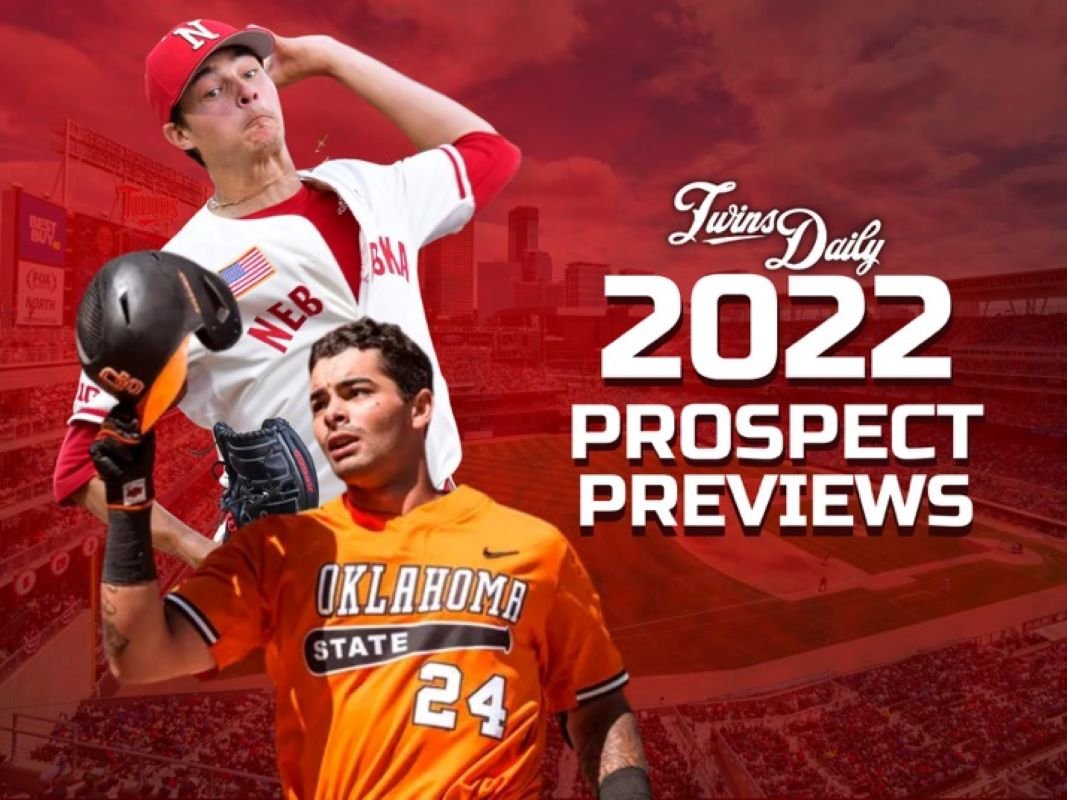 While the MLB lockout continues to stagnate the offseason, minor-league players are preparing to travel to Florida and Arizona to begin preparation for their seasons. In this series, I’ll look at some of the Twins' notable picks from the early rounds of the 2021 draft. I’ll dig into scouting reports and storylines to look for ahead of the 2022 season. Next up, Pierson Ohl, a right-handed pitcher out of Grand Canyon University. Scouting Grades: Unavailable Signing and Scouting The Twins selected right-handed pitcher Pierson Ohl with their 14th-round pick in the 2021 draft (429th overall) out of Grand Canyon University. Ohl signed for a slot bonus of $100,000. Prior to the 2021 draft, Baseball America described Ohl as ‘the textbook example of a pitcher thriving on pitchability to compensate for a below-average fastball’. Ohl pitched extremely well in his three seasons at Grand Canyon, compiling a 2.60 ERA and a 10-2 record in his junior year. His pre-draft scouting report cited a fastball that operated in the high 80s and low 90s, with plus command. Additionally, Ohl carries a curveball and an above-average changeup which serves as his best secondary offering. High School and College Ball "I didn’t realize how far this game would take me in life," the affable, well-spoken SoCal native explains, speaking from his brothers' dorm room (also a pitcher at Grand Canyon University). Throughout his Twins Spotlight interview with Twins Daily’s Seth Stohs, there’s a genuine love of the game and appreciation for his circumstances which Ohl effuses. Growing up in talent-rich Southern California, Ohl was frank about his beginnings in baseball. "That wasn’t me," he said of SoCal prospects throwing mid-90s fastballs in high school. Ohl speaks admiringly of the coaching staff at Grand Canyon, including former big leaguer Andy Stankiewicz. "They are developing men, not just baseball players." An approach that combines baseball and personal development, comes across as important to Ohl, one of seven siblings who values his family connections deeply. The Transition to the Twins "As a junior, you’re getting excited," says Ohl of the build-up to the 2021 draft, in which his name was circulating among MLB teams. Ohl described feelings of disappointment at not being drafted on day two, ahead of being taken by the Twins in the 14th round. Indeed, the Twins appear to have snuck their pick of Ohl ahead of the Yankees and Orioles, who had told the righty they would be drafting him later in the 14th round. On Data and Technology "To be flying out (to spring training) for an MLB organization like the Twins, I don’t think it gets any better than that," says Ohl of forthcoming minor-league camp in Fort Myers. Ohl speaks highly of his initial time working with Twins pitching coordinators who helped him understand his profile and skill-set as a pitcher. "I learned that my fastball has plus-plus carry." Ohl continues to reflect on the need to transition his fastball from the bottom of the zone to the top, to take advantage of its profile (an organizational tendency of the Twins). "It’s a change for me, but the numbers show that guys with that kind of profile are successful up there." Listening to Ohl speak about his short time with the organization last summer, it’s easy to come away convinced he will be successful. He’s quick to soak in anything which will maximize his skillset and espouses the kind of self-discipline which should help him learn and grow quickly in his first minor-league season. Likely to Start At: Ft. Myers Mighty Mussels Conclusion: Ohl is a pitcher with a proven track record in three years of college baseball. He’s exactly the type of pitcher the Twins development staff will savor, a hard worker with a plus-plus fastball with carry open to the approach of the organization. Ohl will be a prospect to keep an eye on in 2022. Who is the most intriguing of the five draft picks discussed so far? What are your thoughts on Pierson Ohl ahead of the 2022 season? Previous Prospect Previews Twins Prospect Preview: Chase Petty Twins Prospect Preview: Noah Miller Twins Prospect Preview: Steven Hajjar Twins Prospect Preview: Cade Povich Twins Prospect Preview: Christian Encarnacion-Strand
 -
No player the Twins drafted in 2021 made a stronger first impression than Christian Encarnacion-Strand. Read up on the Oklahoma State slugger, his profile, and what 2022 has in store. While the MLB lockout continues to stagnate the offseason, minor-league players are preparing to travel to Florida and Arizona to begin preparation for their seasons. In this series, I’ll look at some of the Twins' notable picks from the early rounds of the 2021 draft. I’ll dig into scouting reports and storylines to look for ahead of the 2022 season. Next up, Christian Encarnacion-Strand, a right-handed corner infield out of Oklahoma State University. Scouting Grades: Hit: 50 | Power: 55 | Run: 50 | Arm: 55 | Field: 50 | Overall: 45 (grades courtesy of Baseball America) Signing and Scouting The Twins selected right-handed hitter Christian Encarnacion-Strand with their fourth-round pick in the 2021 draft (128th overall) out of Oklahoma State University. Encarnacion-Strand signed for an exact slot bonus of $442,000. Encarnacion-Strand was ranked as the 93rd overall prospect coming into the draft by Baseball America. MLB.com ranked him at 208 overall. Encarnacion-Strand was just the second hitter taken by the Twins with their first five picks. MLB.com’s lower pre-draft rankings were due to scouts citing an unconventional load and uphill bat-path which would leave him vulnerable to high velocity and plus breaking pitches. Baseball America, meanwhile, thought highly of Encarnacion-Strand, suggesting his bat-speed is more than enough to catch up to high-velocity fastballs. Make of the conflicting scouting reports what you will. What is undeniable is that Encarnacion-Strand has mashed anywhere he has played, ever. In two seasons at Yavapai Junior College in Arizona he hit 33 home runs in 81 games. After transferring to Oklahoma State, he immediately became their best hitter, winning the Big 12 Newcomer of the Year Award. He ended the season in the top five in the conference in batting average (.362), slugging percentage (.665), and home runs (15). Encarnacion-Strand stands at 6’0 and 225 pounds. His overall hitting skill set is strong, with excellent bat speed, the ability to drive the ball to all fields, and solid plate discipline. What somewhat limits his ceiling as a prospect is the lack of a defensive home with upside. Encarnacion-Strand has a good arm and hands but pre-draft scouting reports suggested he would be a fringy third-baseman defensively. Still, that’s a challenge the Twins can work on developing a solution to further down the road. Encarnacion-Strand made his professional debut in 2021 and guess what? He absolutely raked. In 22 games at Fort Myers (not a hitters paradise) he hit .391/.424/.598 with four home runs and 52 total bases, although he did strike out 26 times. Of all the prospects drafted by the Twins in 2021, Encarnacion-Strand has the best power tool and had arguably the best pro-debut (although an argument could be made for Cade Povich). Likely to Start At: Fort Myers Mighty Mussels (A) or Cedar Rapids (A+) Conclusion: Encarnacion-Strand began his professional career with a 20 game hit streak and managed hits in 21 of his 22 games at Fort Myers. He’s certainly a prospect to watch for the Twins this year. While his defensive home is uncertain, a bat with 25 home run power plus ought to render that an afterthought. If Encarnacion-Strand carries his 2021 start into 2022, he could be knocking on the door of top 100 prospect lists by the end of the season. Who is the most intriguing of the four draft picks discussed so far? What are your thoughts on Christian Encarnacion-Strand ahead of the 2022 season? Previous Prospect Previews Twins Prospect Preview: Chase Petty Twins Prospect Preview: Noah Miller Twins Prospect Preview: Steven Hajjar Twins Prospect Preview: Cade Povich View full article
-
2022 Prospect Previews: Christian Encarnacion-Strand
Jamie Cameron posted an article in Minor Leagues
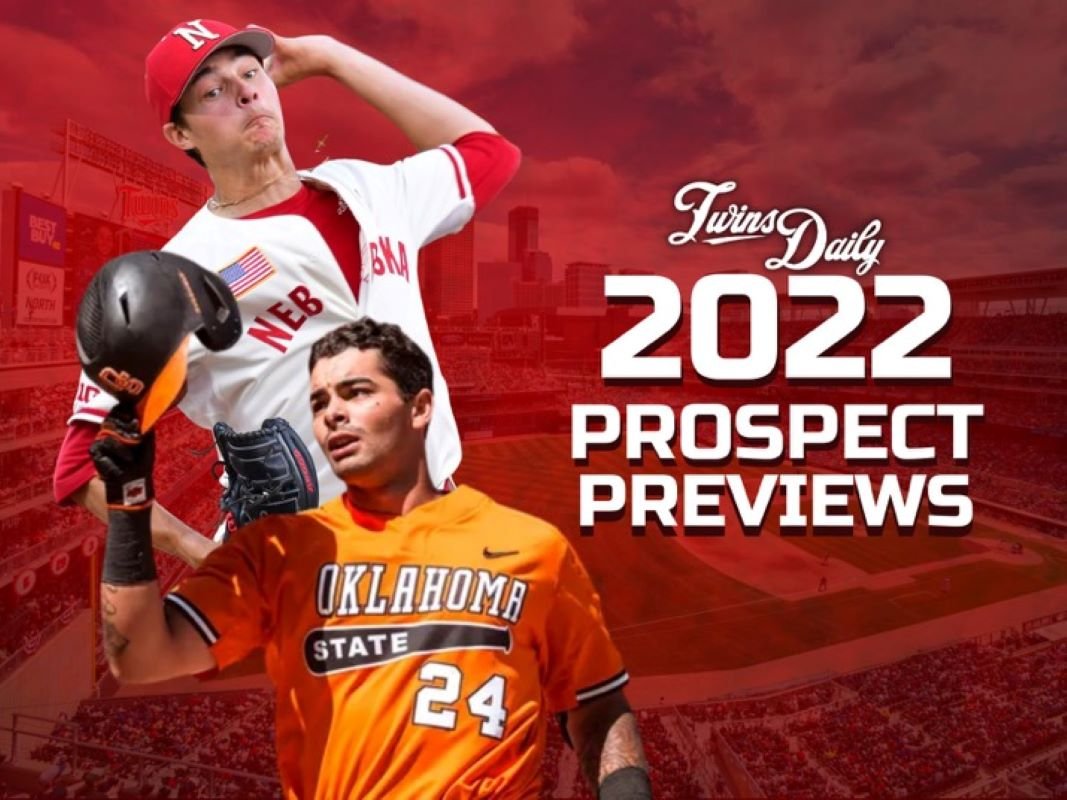 While the MLB lockout continues to stagnate the offseason, minor-league players are preparing to travel to Florida and Arizona to begin preparation for their seasons. In this series, I’ll look at some of the Twins' notable picks from the early rounds of the 2021 draft. I’ll dig into scouting reports and storylines to look for ahead of the 2022 season. Next up, Christian Encarnacion-Strand, a right-handed corner infield out of Oklahoma State University. Scouting Grades: Hit: 50 | Power: 55 | Run: 50 | Arm: 55 | Field: 50 | Overall: 45 (grades courtesy of Baseball America) Signing and Scouting The Twins selected right-handed hitter Christian Encarnacion-Strand with their fourth-round pick in the 2021 draft (128th overall) out of Oklahoma State University. Encarnacion-Strand signed for an exact slot bonus of $442,000. Encarnacion-Strand was ranked as the 93rd overall prospect coming into the draft by Baseball America. MLB.com ranked him at 208 overall. Encarnacion-Strand was just the second hitter taken by the Twins with their first five picks. MLB.com’s lower pre-draft rankings were due to scouts citing an unconventional load and uphill bat-path which would leave him vulnerable to high velocity and plus breaking pitches. Baseball America, meanwhile, thought highly of Encarnacion-Strand, suggesting his bat-speed is more than enough to catch up to high-velocity fastballs. Make of the conflicting scouting reports what you will. What is undeniable is that Encarnacion-Strand has mashed anywhere he has played, ever. In two seasons at Yavapai Junior College in Arizona he hit 33 home runs in 81 games. After transferring to Oklahoma State, he immediately became their best hitter, winning the Big 12 Newcomer of the Year Award. He ended the season in the top five in the conference in batting average (.362), slugging percentage (.665), and home runs (15). Encarnacion-Strand stands at 6’0 and 225 pounds. His overall hitting skill set is strong, with excellent bat speed, the ability to drive the ball to all fields, and solid plate discipline. What somewhat limits his ceiling as a prospect is the lack of a defensive home with upside. Encarnacion-Strand has a good arm and hands but pre-draft scouting reports suggested he would be a fringy third-baseman defensively. Still, that’s a challenge the Twins can work on developing a solution to further down the road. Encarnacion-Strand made his professional debut in 2021 and guess what? He absolutely raked. In 22 games at Fort Myers (not a hitters paradise) he hit .391/.424/.598 with four home runs and 52 total bases, although he did strike out 26 times. Of all the prospects drafted by the Twins in 2021, Encarnacion-Strand has the best power tool and had arguably the best pro-debut (although an argument could be made for Cade Povich). Likely to Start At: Fort Myers Mighty Mussels (A) or Cedar Rapids (A+) Conclusion: Encarnacion-Strand began his professional career with a 20 game hit streak and managed hits in 21 of his 22 games at Fort Myers. He’s certainly a prospect to watch for the Twins this year. While his defensive home is uncertain, a bat with 25 home run power plus ought to render that an afterthought. If Encarnacion-Strand carries his 2021 start into 2022, he could be knocking on the door of top 100 prospect lists by the end of the season. Who is the most intriguing of the four draft picks discussed so far? What are your thoughts on Christian Encarnacion-Strand ahead of the 2022 season? Previous Prospect Previews Twins Prospect Preview: Chase Petty Twins Prospect Preview: Noah Miller Twins Prospect Preview: Steven Hajjar Twins Prospect Preview: Cade Povich
 -
2022 Prospect Previews: Cade Povich
Jamie Cameron replied to Jamie Cameron's topic in Twins Minor League Talk
Really appreciate it! One more profile to come next week, maybe saving the most exciting for last. -
2022 Prospect Previews: Cade Povich
Jamie Cameron replied to Jamie Cameron's topic in Twins Minor League Talk
'Rice their pitchers' is a brilliant line I'm going to have to use in the future lol! -
2022 Prospect Previews: Cade Povich
Jamie Cameron replied to Jamie Cameron's topic in Twins Minor League Talk
I like him a ton, too Doc. I think he's going to impress and move quickly in 2022. Thanks for reading.