



John Bonnes
-
Posts
6,785 -
Joined
-
Last visited
-
Days Won
4
Content Type
Profiles
News
Minnesota Twins Videos
2026 Minnesota Twins Top Prospects Ranking
2022 Minnesota Twins Draft Picks
Minnesota Twins Free Agent & Trade Rumors, Notes, & Tidbits
Guides & Resources
2023 Minnesota Twins Draft Picks
The Minnesota Twins Players Project
2024 Minnesota Twins Draft Picks
2025 Minnesota Twins Draft Pick Tracker
2026 Minnesota Twins Draft Tracker: Picks & Bonuses
Forums
Blogs
Events
Store
Downloads
Gallery
Everything posted by John Bonnes
-
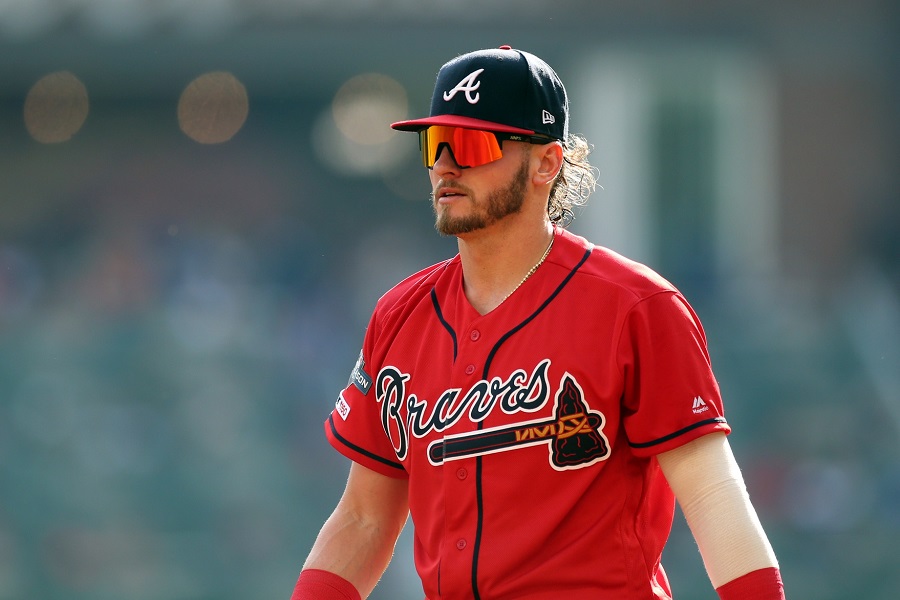 The cost of the Twins current roster is approximately $117-120M, with a projected payroll ceiling of $135M or so. (It’s worth noting that had they been able to sign Donaldson to an estimated $25M/year contract, they would have had a payroll level of $142-145M, above that projection.) So they still have plenty of money to spend. What they’re short of are options. The Twins say their focus is on adding an infielder, but Donaldson represents the last impact infielder available on the free agent market. Rena looked at some less impactful free agent infield options a couple of weeks ago, and Cooper detailed four names the Twins could now consider and a couple of other wild card options. The team could also explore trading for an infielder, such as Pirates first baseman Josh Bell. Or they could pivot back to looking for impact pitching. There are several starting pitchers that could make an impact, provided the Twins are willing to pay the price. There are also some salary dump pitchers available, like David Price. And the Twins have plenty of pieces they can trade, even without dipping into their farm system. The question is whether they will be more willing to spend prospects than they have been to spend money. They weren’t at last year's trade deadline. So the most likely scenario is that they essentially keep their powder dry; sign a mid-level infielder and enter spring training with a payroll of $120-$125M, which would be a lower payroll than they carried into the season two years ago. If so, that is a failed offseason. Given an unprecedented opportunity to make a division contender a world championship contender - an opportunity so ripe they themselves proclaimed their intentions to add impact players - they will end the offseason with exactly zero new impact players. Proponents might suggest that at least they didn’t make any mistakes, and that seems true. But that is also the problem. This management team was unable to chance the big signing, the big trade, the potential mistake. The most likely path forward is that same one. MORE FROM TWINS DAILY — Latest Twins coverage from our writers — Recent Twins discussion in our forums — Follow Twins Daily via Twitter, Facebook or email
 -
 Aaron and John talk about the Josh Donaldson end game, what the rotation plan looks like after signing Rich Hill and Homer Bailey, year-end podcast numbers, the Twins' newest outside-the-box hire, going out for a birthday meal. You can listen by downloading us from iTunes, Spotify, Stitcher, iHeartRadio or find it at GleemanAndTheGeek.com. Or just click this link. http://traffic.libsy...3?dest-id=74590 Click here to view the article
 -
 http://traffic.libsyn.com/gleemangeek/Ep_460_Hill_and_Bailey_and_Donaldson.mp3?dest-id=74590
 -
I guess something had to be done to fill these spots, and it's nice they left themselves some room for another big signing or a couple of spring-training-value buys, but unless we see the big signing, the is a failed offseason. It certainly doesn't help them significantly in postseason matchups. For like the third offseason in a row, I like almost all their moves, yet find myself frustrated by them not addressing their biggest needs.
-
According to Dan Hayes, the Minnesota Twins are signing two starting pitchers, Rich Hill and Homer Bailey. (UPDATE: The Twins have confirmed the signings.) Bailey is a 33-year-old right-hander who posted a 4.57 ERA last year and finished his year with the Oakland A’s. Rich Hill is a 39-year-old left-hander who posted a 2.45 ERA last year, but will not be able to pitch until June or July due to elbow surgery he underwent in October. Neither represents the Twins' stated offseason goal of adding an “impact” pitcher, and might represent an acknowledgement it’s possible no such move is coming, or at least an insurance policy if it does not.The Twins missed out on the starting pitchers at the top of this year’s free agent market, though they retained veterans Jake Odorizzi and Michael Pineda. Bailey is a pitcher Twins Daily’s Tom Froemming has brought up frequently this offseason. Earlier this month, Tom pointed out some ways in which Bailey compares favorably to Madison Bumgarner. Bailey gave up a lower OPS to non-pitchers (.719 vs. .764), had a higher K% vs. non-pitchers (21.4 vs. 21.3), surrendered a lower hard hit % (38.7 vs. 41.5) and a lower barrels/plate appearance % (4.0 vs. 6.3). The moves will likely disappointTwins fans, who have been waiting for the team to achieve its offseason goal of adding “impact” pitching, as neither pitcher represents impact pitching, or even an upgrade to last year’s starting rotation. They do, however, establish a “floor” for the starting rotation, which still had two vacant spots, not to mention Pineda missing the first 39 games of the season due to a PED suspension going back to September. Instead of filling those 2+ spots with internal candidates like Randy Dobnak, Devin Smeltzer and Lewis Thorpe, they now, in theory, have all five spots covered by Jose Berrios, Odorizzi, Pineda, Bailey & Hill - though they will still need coverage at the beginning of the season for Pineda and Hill. Bailey's $7M one-year deal and Hill's $3+M guaranteed also leave payroll room for a more significant move this offseason. Twins Daily projects the Twins to have about a $116M payroll after the signing, below last year's level, and about $20 million below our projection of the Twins team's payroll budget. MORE FROM TWINS DAILY — Latest Twins coverage from our writers — Recent Twins discussion in our forums — Follow Twins Daily via Twitter, Facebook or email Click here to view the article
-
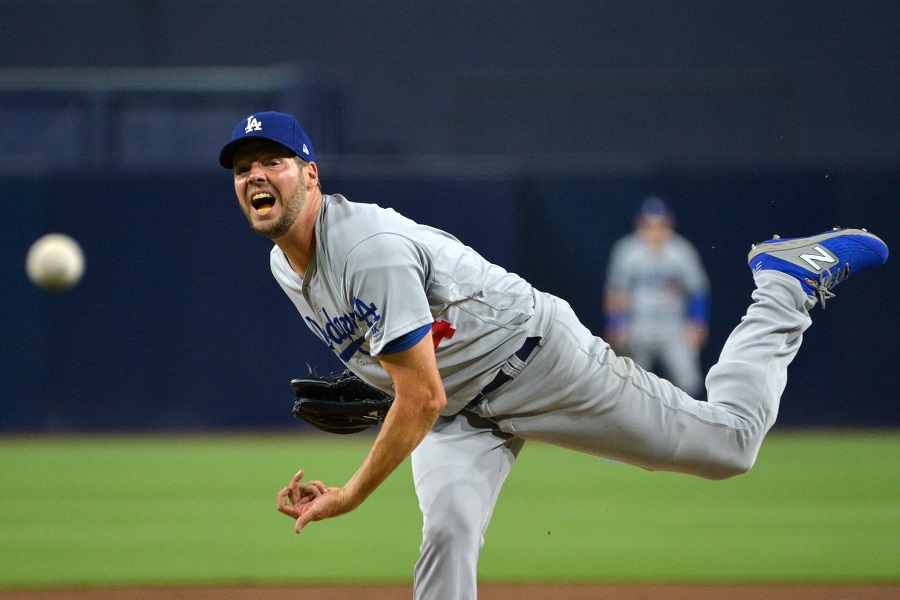 The Twins missed out on the starting pitchers at the top of this year’s free agent market, though they retained veterans Jake Odorizzi and Michael Pineda. Bailey is a pitcher Twins Daily’s Tom Froemming has brought up frequently this offseason. Earlier this month, Tom pointed out some ways in which Bailey compares favorably to Madison Bumgarner. Bailey gave up a lower OPS to non-pitchers (.719 vs. .764), had a higher K% vs. non-pitchers (21.4 vs. 21.3), surrendered a lower hard hit % (38.7 vs. 41.5) and a lower barrels/plate appearance % (4.0 vs. 6.3). https://twitter.com/Twins/status/1212058730394767360 Tom also used Bailey as a case study in pointing out how it may not be the worst-case scenario if Jake Odorizzi were to decline his qualifying offer. . Bailey had a better ERA, WHIP and xwOBA than both Odorizzi and Jose Berrios from June 13 forward.Hill has been outstanding - when he's been on the mound. He's had a career ERA of 3.82, including a 2.91 ERA since 2015. But he also hasn't been able to make more than 25 starts since 2007. His contract reflects the risk and reward he presents: he will make $3M guaranteed, with the possibility of making an additional $9.5M in performance bonuses. https://twitter.com/Twins/status/1212058963266682881 The moves will likely disappointTwins fans, who have been waiting for the team to achieve its offseason goal of adding “impact” pitching, as neither pitcher represents impact pitching, or even an upgrade to last year’s starting rotation. They do, however, establish a “floor” for the starting rotation, which still had two vacant spots, not to mention Pineda missing the first 39 games of the season due to a PED suspension going back to September. Instead of filling those 2+ spots with internal candidates like Randy Dobnak, Devin Smeltzer and Lewis Thorpe, they now, in theory, have all five spots covered by Jose Berrios, Odorizzi, Pineda, Bailey & Hill - though they will still need coverage at the beginning of the season for Pineda and Hill. Bailey's $7M one-year deal and Hill's $3+M guaranteed also leave payroll room for a more significant move this offseason. Twins Daily projects the Twins to have about a $116M payroll after the signing, below last year's level, and about $20 million below our projection of the Twins team's payroll budget. MORE FROM TWINS DAILY — Latest Twins coverage from our writers — Recent Twins discussion in our forums — Follow Twins Daily via Twitter, Facebook or email
 -
Aaron and John talk about forming very strong opinions on a Twins offseason that isn't actually finished, the latest on Hyun-Jin Ryu and Josh Donaldson, which free agent contracts the Twins should have happily handed out, quotes people wish they could take back, and mailbag questions from listeners. You can listen by downloading us from iTunes, Spotify, Stitcher, iHeartRadio or find it at GleemanAndTheGeek.com. Or just click this link. http://traffic.libsy...3?dest-id=74590 Click here to view the article
-
 http://traffic.libsyn.com/gleemangeek/Ep_459.mp3?dest-id=74590
 -
Sorry I'm so late in replying. Yes, there will be food available to purchase. Sounds like it's going to be pretty good, too, though I don't have a final list.
-
We have become a Twins media site that writes stories about other teams and other players. We have had to, because opportunities missed are news too. So much so, it’s almost a cliché: a person on his death bed, remembering the girl he never asked for a date, the chances he didn’t take. Losing Hyun-Jin Ryu is not so dramatic as that. But it’s Twins news, so we'll cover it, and what it means.Last night it was reported that Ryu will sign with the Blue Jays. He is the last of five “impact” pitchers on the free agent market, none of whom signed with the Twins. Those stories were also Twins news. That’s because the Twins had a clear objective this offseason, and they had set themselves up well to do it. They needed starting pitching that could hold up in the postseason. The free agent class for that particular skill was as strong as it had been in a decade. Plus, the Twins had managed their payroll so that they had lots of money to spend, even without asking for a serious increase in budget. All the pieces were there. Those pieces ended up completing other teams' puzzles. Turns out, a whole lot of other teams had the same idea, and between some aggressive crazy bidding and individual player preferences, the Twins were unable to sign any of the impact pitchers on the free agent market. What’s worse, while they were waiting for decisions from Ryu and Madison Bumgarner, the second and third tier of free agent pitchers have also been mostly snapped up. It’s not a complete disaster. Jake Odorizzi and Michael Pineda will rejoin Jose Berrios in the rotation, which brings back the top three starters of a rotation that finished fifth in the AL in ERA and third in innings pitched. But unless there is a trade, they are unlikely to start the season with a better rotation this year than they started last year. It’s arguable if any of the remaining available free agents are better than the departed Kyle Gibson, which shows just how shallow the remaining market is. Plus, of course, getting nominally better was never really the goal. So now what? At a high level, there are three options: Trade. For the most part, the trade market for starting pitching has been waiting for the free agent market to settle. There is a reason for that: the teams that lost out on free agents now need to get serious about trades. Reportedly, as many as five other teams missed out on Ryu, so the Twins now get to compete with them to try to pry away David Price or put together a mega-deal for Noah Syndergaard. There are also a number of other options that are a step below that, but could still make the rotation better. You’ll be seeing a lot of coverage of those options on Twins Daily. Pivot. Instead of trying to solve the pitching problem, they could sign an impact player on offense to make up the runs they’ll give up. This weekend’s rumors that the Twins are willing to give former-MVP third baseman Josh Donaldson a four-year deal suggest that they’re at least willing to explore in that direction. Signing Donaldson would improve the team considerably, even if he can’t take the mound in Game 2 of the ALDS. Keep the Powder Dry. This is another way of saying “do nothing.” It sounds better because it implies that they will do something later, perhaps by the trade deadline, when the time is right. Logically, conserving resources until a better opportunity comes along makes sense, but after failing to acquire any impact pitching both last offseason and the last trade deadline, and having a payroll about $15 million lower than they did last year, it’s hard to give them the benefit of the doubt. So the news is that there is no news, and that might not seem like a dramatic error. But then again, not saying “hi” to that girl at the party isn’t such a dramatic moment either. That’s the trap. There's no drama, because it’s not a risky path. Just the opposite. It keeps you on a familiar and comfortable path. A familiar comfortable path you have been down several time before, and now are assured to travel again: going home alone. MORE FROM TWINS DAILY — Latest Twins coverage from our writers — Recent Twins discussion in our forums — Follow Twins Daily via Twitter, Facebook or email Click here to view the article
-
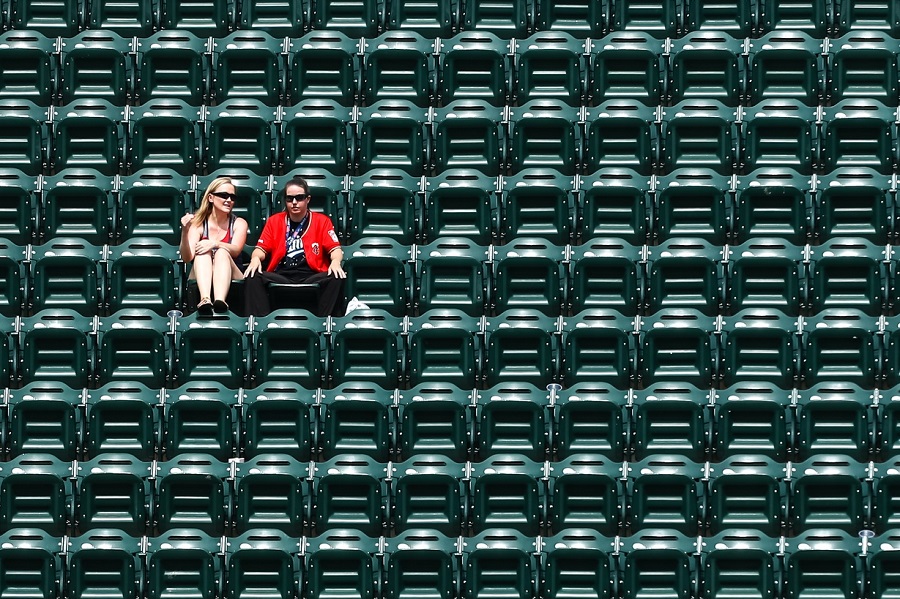 Last night it was reported that Ryu will sign with the Blue Jays. He is the last of five “impact” pitchers on the free agent market, none of whom signed with the Twins. Those stories were also Twins news. That’s because the Twins had a clear objective this offseason, and they had set themselves up well to do it. They needed starting pitching that could hold up in the postseason. The free agent class for that particular skill was as strong as it had been in a decade. Plus, the Twins had managed their payroll so that they had lots of money to spend, even without asking for a serious increase in budget. All the pieces were there. Those pieces ended up completing other teams' puzzles. Turns out, a whole lot of other teams had the same idea, and between some aggressive crazy bidding and individual player preferences, the Twins were unable to sign any of the impact pitchers on the free agent market. What’s worse, while they were waiting for decisions from Ryu and Madison Bumgarner, the second and third tier of free agent pitchers have also been mostly snapped up. It’s not a complete disaster. Jake Odorizzi and Michael Pineda will rejoin Jose Berrios in the rotation, which brings back the top three starters of a rotation that finished fifth in the AL in ERA and third in innings pitched. But unless there is a trade, they are unlikely to start the season with a better rotation this year than they started last year. It’s arguable if any of the remaining available free agents are better than the departed Kyle Gibson, which shows just how shallow the remaining market is. Plus, of course, getting nominally better was never really the goal. So now what? At a high level, there are three options: Trade. For the most part, the trade market for starting pitching has been waiting for the free agent market to settle. There is a reason for that: the teams that lost out on free agents now need to get serious about trades. Reportedly, as many as five other teams missed out on Ryu, so the Twins now get to compete with them to try to pry away David Price or put together a mega-deal for Noah Syndergaard. There are also a number of other options that are a step below that, but could still make the rotation better. You’ll be seeing a lot of coverage of those options on Twins Daily. Pivot. Instead of trying to solve the pitching problem, they could sign an impact player on offense to make up the runs they’ll give up. This weekend’s rumors that the Twins are willing to give former-MVP third baseman Josh Donaldson a four-year deal suggest that they’re at least willing to explore in that direction. Signing Donaldson would improve the team considerably, even if he can’t take the mound in Game 2 of the ALDS. Keep the Powder Dry. This is another way of saying “do nothing.” It sounds better because it implies that they will do something later, perhaps by the trade deadline, when the time is right. Logically, conserving resources until a better opportunity comes along makes sense, but after failing to acquire any impact pitching both last offseason and the last trade deadline, and having a payroll about $15 million lower than they did last year, it’s hard to give them the benefit of the doubt. So the news is that there is no news, and that might not seem like a dramatic error. But then again, not saying “hi” to that girl at the party isn’t such a dramatic moment either. That’s the trap. There's no drama, because it’s not a risky path. Just the opposite. It keeps you on a familiar and comfortable path. A familiar comfortable path you have been down several time before, and now are assured to travel again: going home alone. MORE FROM TWINS DAILY — Latest Twins coverage from our writers — Recent Twins discussion in our forums — Follow Twins Daily via Twitter, Facebook or email
 -
Aaron and John talk about the Twins shooting their final shots for Hyun-Jin Ryu and Josh Donaldson, beefing up the bullpen with fan favorite Sergio Romo and BABIP god Tyler Clippard, losing out on Madison Bumgarner, whether the Indians or the White Sox are scarier, and a bonus clip of our patreon-only interview with Dustin Morse. You can listen by downloading us from iTunes, Spotify, Stitcher, iHeartRadio or find it at GleemanAndTheGeek.com. Or just click this link. http://traffic.libsy...3?dest-id=74590 Click here to view the article
-
 http://traffic.libsyn.com/gleemangeek/Ep_458.mp3?dest-id=74590
 -
How about an intimate holiday gathering with … Michael Cuddyer? Joe Nathan? Scott Erickson? These are just a few of the special guests at past Twins Daily’s Winter Meltdown, and this year we’ll be in a gorgeous venue where everyone can see & hear the stage. Plus, you can buy presale tickets for just $25 (regular $40) through 12/25 (or until we run out). We are offering this quietly, to people that visit the site in the dead of winter.The Meltdown is Saturday, Jan 25th, from 4:30-7:30. That's the same night you'll be in town anyway, going to Twins Fest. It'll be at Lumber Exchange in downtown Minneapolis, just three blocks from Twins Plaza. It includes a pint glass (you can see previous years’) and two free 612 Brew beers. Plus, you could have met all of the above guests and many more at our Meltdowns. (We're not letting the cat out of the bag yet who are special guests are this year until after the new year.) There will also be some sweet raffle and game prizes, and lots of time to talk Hot Stove. Warning: These discounted presale tix sell out. So even if your holiday shopping is done, you might want to grab some ASAP. Or let your family know that THIS is what you really want. Or buy a pack and give your friends, family and coworkers a night to remember in the dead of winter. We'll see you there. Buy your tickets now! The 2020 Twins Daily Winter MeltdownJanuary 25th, 2020, 4:30-7:30 PM Lumber Exchange Event Center, 10 S 5th St, Minneapolis, MN 55402 Click here to view the article
-
 The Meltdown is Saturday, Jan 25th, from 4:30-7:30. That's the same night you'll be in town anyway, going to Twins Fest. It'll be at Lumber Exchange in downtown Minneapolis, just three blocks from Twins Plaza. It includes a pint glass (you can see previous years’) and two free 612 Brew beers. Plus, you could have met all of the above guests and many more at our Meltdowns. (We're not letting the cat out of the bag yet who are special guests are this year until after the new year.) There will also be some sweet raffle and game prizes, and lots of time to talk Hot Stove. Warning: These discounted presale tix sell out. So even if your holiday shopping is done, you might want to grab some ASAP. Or let your family know that THIS is what you really want. Or buy a pack and give your friends, family and coworkers a night to remember in the dead of winter. We'll see you there. Buy your tickets now! The 2020 Twins Daily Winter Meltdown January 25th, 2020, 4:30-7:30 PM Lumber Exchange Event Center, 10 S 5th St, Minneapolis, MN 55402
 -
Aaron and John talk about what's left of the Twins' chances of signing a big-time free agent, what pivoting to the trade market for pitching help would entail, Eddie Rosario and Jake Cave trade rumors, getting scouting reports on middle relievers from drunk women in bars, and the war zone that is Twins Twitter. You can listen by downloading us from iTunes, Spotify, Stitcher, iHeartRadio or find it at GleemanAndTheGeek.com. Or just click this link. http://traffic.libsy...3?dest-id=74590 MORE FROM TWINS DAILY — Latest Twins coverage from our writers — Recent Twins discussion in our forums — Follow Twins Daily via Twitter, Facebook or email Click here to view the article
-
Gleeman & The Geek, Ep 457: Shrinking Options and Backup Plans
John Bonnes posted an article in Twins
 http://traffic.libsyn.com/gleemangeek/Episode_457.mp3?dest-id=74590 MORE FROM TWINS DAILY — Latest Twins coverage from our writers — Recent Twins discussion in our forums — Follow Twins Daily via Twitter, Facebook or email
 -
Marco Gonzales: Underrated Target?
John Bonnes commented on Cody Pirkl's blog entry in All Things Twins
Interesting name. If the Twins had not signed Pineda, I'd be a little more interested in Gonzales. And I still might be interested if they lose out on Bumgarner and Ryu. But if they come out of this offseason swapping Gibson for Gonzales, I'm going to be at the front of the pack with my torch and pitchfork. -
The Marlins, Caleb Smith, and Eddie
John Bonnes commented on Cody Pirkl's blog entry in All Things Twins
Like you, I have trouble believing the Marlins are too revved up about giving anything of value for Rosario. That franchise just doesn't care that much. If this is the best they have, I think we look elsewhere and hang on to Eddie. -
What about bullpen arms? That seems more reasonable.
-
The big news yesterday was superstar third baseman Anthony Rendon agreed to a deal with the Angels, but we also heard Eddie Rosario’s name kicked around in trades – and those reports came from other teams. The bad news is we didn’t hear anything from Madison Bumgarner and Hyun-Jin Ryu. That’s also the good news. What will Day 4 bring?Rendon Fallout The Angels paid dearly for Anthony Rendon, agreeing to a seven-year, $245M contract. Does that mean they are less likely to chase a starting pitcher that the Twins have their eyes on? Or more likely? It also means that third baseman Josh Donaldson is not the top free agent position player, and we keep hearing the Twins are in the mix for him. If the Twins determine they can’t sign Bumgarner or Ryu, do they take the $30+ million of available payroll and pivot to a deal with Donaldson? Do you feel comfortable offering the 34-year-old the four-year deal he desires? Rosario Rumors The trade rumors that have swirled around Eddie Rosario this winter picked up steam yesterday, including a report that the Marlins had been asking about him and found the price very high. Coincidentally, Cooper Carlson wrote up a story yesterday detailing some Marlins starting pitchers that could be targets for the Twins. Waiting on the Big Arms We didn’t get a decision from Bumgarner or Ryu yesterday, though we did hear that some of the big boys like the Dodgers are now involved. So maybe no news was good news? It appears there is no longer any reason for either player to delay making a decision – they are clearly the best options remaining on the market – so one would think news should be coming soon. Patrick Wozniak has a story that will be published later today on the challenges of landing an ace. If the Twins don’t end up with one of them, there are also trade targets waiting for the market to settle. Can I interest you in David Price? You’ll be able to read about possibilities of making with a trade with the Red Sox for Price later today, courtesy of Cody Christie. Bullpen Buzz Suddenly, we’re hearing the Twins might be interested in some big-time bullpen arms, including Dellin Betances, the lights-out, former Yankees reliever who is recovering from an Achilles injury. Sergio Romo is still available, too. Rule 5 Draft today The Twins might grab someone, but are more likely to lose someone in the Rule 5 draft today. Ted detailed some of the Twins farmhands that might be at risk a couple of weeks ago. Have At It. (And Share?) Whew. That enough for you? TwinsDaily.com served up over 50,000 page views yesterday to over 14,000 visitors as everyone got caught up on the latest news. Today should be another big day, and your Twins friends might appreciate you letting them in on you little secret cool community here. We’re very glad you found us. MORE FROM TWINS DAILY — Latest Twins coverage from our writers — Recent Twins discussion in our forums — Follow Twins Daily via Twitter, Facebook or email Click here to view the article
-
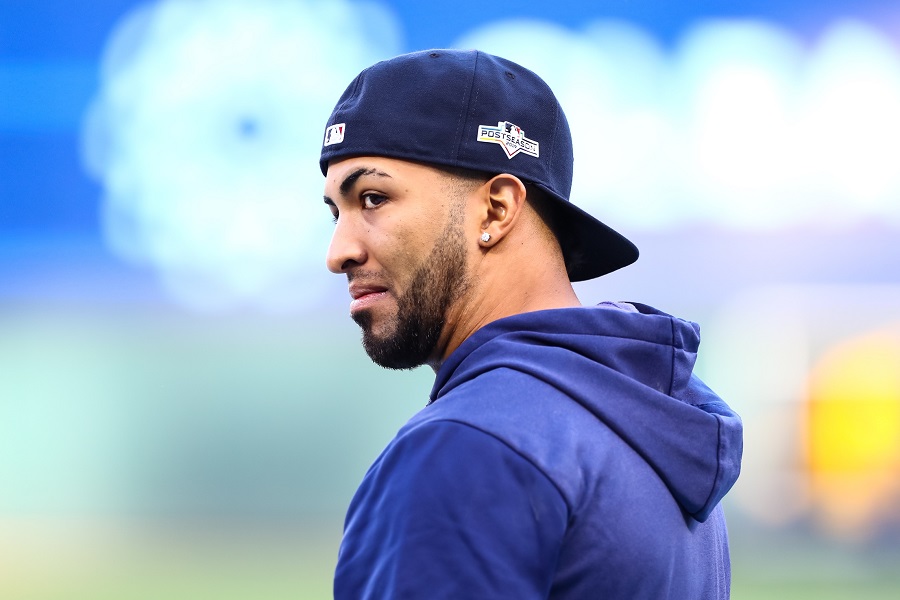 Rendon Fallout The Angels paid dearly for Anthony Rendon, agreeing to a seven-year, $245M contract. Does that mean they are less likely to chase a starting pitcher that the Twins have their eyes on? Or more likely? It also means that third baseman Josh Donaldson is not the top free agent position player, and we keep hearing the Twins are in the mix for him. If the Twins determine they can’t sign Bumgarner or Ryu, do they take the $30+ million of available payroll and pivot to a deal with Donaldson? Do you feel comfortable offering the 34-year-old the four-year deal he desires? Rosario Rumors The trade rumors that have swirled around Eddie Rosario this winter picked up steam yesterday, including a report that the Marlins had been asking about him and found the price very high. Coincidentally, Cooper Carlson wrote up a story yesterday detailing some Marlins starting pitchers that could be targets for the Twins. Waiting on the Big Arms We didn’t get a decision from Bumgarner or Ryu yesterday, though we did hear that some of the big boys like the Dodgers are now involved. So maybe no news was good news? It appears there is no longer any reason for either player to delay making a decision – they are clearly the best options remaining on the market – so one would think news should be coming soon. Patrick Wozniak has a story that will be published later today on the challenges of landing an ace. If the Twins don’t end up with one of them, there are also trade targets waiting for the market to settle. Can I interest you in David Price? You’ll be able to read about possibilities of making with a trade with the Red Sox for Price later today, courtesy of Cody Christie. Bullpen Buzz Suddenly, we’re hearing the Twins might be interested in some big-time bullpen arms, including Dellin Betances, the lights-out, former Yankees reliever who is recovering from an Achilles injury. Sergio Romo is still available, too. Rule 5 Draft today The Twins might grab someone, but are more likely to lose someone in the Rule 5 draft today. Ted detailed some of the Twins farmhands that might be at risk a couple of weeks ago. Have At It. (And Share?) Whew. That enough for you? TwinsDaily.com served up over 50,000 page views yesterday to over 14,000 visitors as everyone got caught up on the latest news. Today should be another big day, and your Twins friends might appreciate you letting them in on you little secret cool community here. We’re very glad you found us. MORE FROM TWINS DAILY — Latest Twins coverage from our writers — Recent Twins discussion in our forums — Follow Twins Daily via Twitter, Facebook or email
 -
Front Page: Twins Player Acquisition Tree
John Bonnes replied to Matthew Lenz's topic in Twins Daily Front Page News
As to the worthiness of the endeavor - go for it. It's a long offseason. It is kind of fun. And the 2019 list is going to make the 2018 list a lot easier to compile. I'm sort of struck by how few of the guys came here as part of a trade. Back in 2002, the last time a Twins team showed this much promise, it feels like there were a lot more trades. I'd say the same about the end of the Terry Ryan era. I suspect there will be a lot more long threads in future Twins teams given all the prospects acquired at the 2018 trade deadline. -
Aaron and John talk about the Twins re-signing Michael Pineda, replacing Jason Castro with Alex Avila, and how they can stick the landing of a great offseason with Madison Bumgarner, Hyun-Jin Ryu, or a big trade. You can listen by downloading us from iTunes, Spotify, Stitcher, iHeartRadio or find it at GleemanAndTheGeek.com. Or just click this link. Click here to view the article
-
 http://traffic.libsyn.com/gleemangeek/Ep_456_Pineda_Avila.mp3

