Cody Christie
-
Posts
7,810 -
Joined
-
Last visited
-
Days Won
5
Content Type
Profiles
News
Minnesota Twins Videos
2026 Minnesota Twins Top Prospects Ranking
2022 Minnesota Twins Draft Picks
Minnesota Twins Free Agent & Trade Rumors, Notes, & Tidbits
Guides & Resources
2023 Minnesota Twins Draft Picks
The Minnesota Twins Players Project
2024 Minnesota Twins Draft Picks
2025 Minnesota Twins Draft Pick Tracker
2026 Minnesota Twins Draft Tracker: Picks & Bonuses
Forums
Blogs
Events
Store
Downloads
Gallery
Everything posted by Cody Christie
-

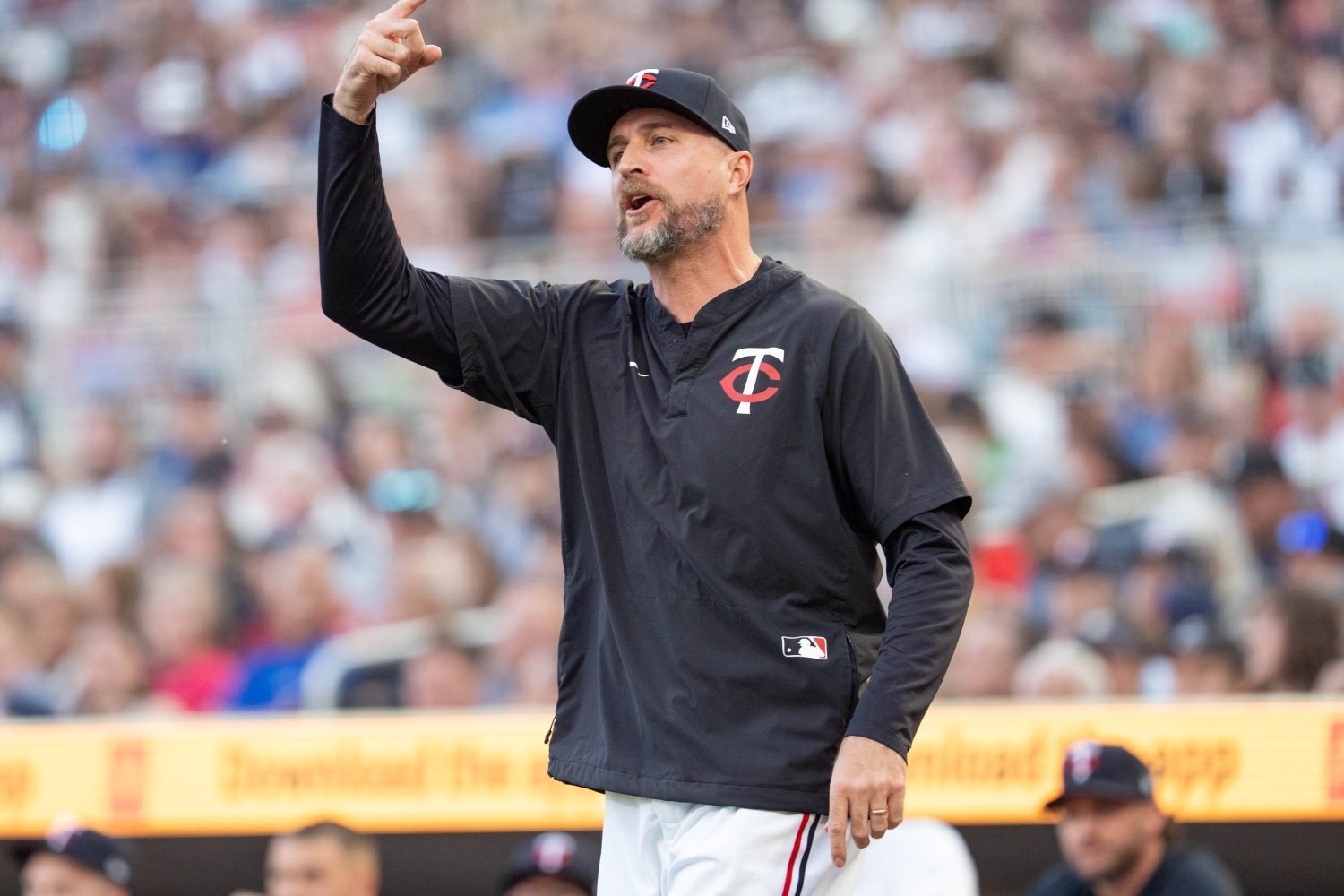 It’s no secret that the Twins have long eyed the blueprints of front-office success from the Cleveland Guardians and Tampa Bay Rays. These clubs have delivered consistent regular-season excellence, carving out niches through shrewd trades, player development, and long-term sustainability. But when it comes to the MLB trade deadline, a pressure cooker of instant decisions and bold risk-taking, the Twins have largely hesitated, despite organizational ties to two of the sport’s savviest operators. Derek Falvey arrived in Minnesota from the Guardians' front office, a system known for maximizing pitching and churning the roster efficiently. Manager Rocco Baldelli came from the Rays, where roster manipulation and deadline boldness are basically a front-office tradition. On paper, this pairing should have created a modern, nimble, and opportunistic Twins regime. But recent deadline inactivity has left fans wondering: where’s the boldness? To find inspiration, the Twins don’t need to look far. The Guardians and Rays have shown it’s possible to improve the future while still chasing a division crown in the present. Cleveland’s Deadline Calculus In 2023, Cleveland executed one of the most talked-about moves of the deadline by sending starting pitcher Aaron Civale to the Rays for first base prospect Kyle Manzardo. Civale was a solid mid-rotation arm under team control through 2025, but the Guardians, recognizing they had young arms ready to step in, sold high and grabbed a top-50 prospect. The same week, they moved Josh Bell and Amed Rosario while bringing in prospects like Jean Segura and Kahil Watson. These weren’t win-now deals, but they didn’t tank the season either. They were Cleveland’s version of asset optimization, realigning for 2024 and beyond without punting the present. Fast forward to 2024, the Guardians were 23 games above .500 at the trade deadline. Still, Cleveland only added outfielder Lane Thomas and starting pitcher Alex Cobb. If there was a season to bet the farm, it would have been the 2024 campaign for Cleveland but they made minimal moves to keep their winning window open. The Rays’ Neverending Shuffle Meanwhile, Tampa Bay has made a science out of buying and selling simultaneously. In 2023, they acquired Civale, filling a rotation need without sacrificing MLB-ready talent. That same year, they made minor deals to acquire C Alex Jackson from the Brewers for RHP Evan McKendry and added righties Manuel Rodriguez and Adrian Sampson from the Cubs. Tampa isn’t swinging blockbuster bats but they’re constantly adjusting. At the 2024 trade deadline, the Rays were above .500 but in fourth place in the AL East. Seeing the writing on the wall, the front office rebuilt their farm system by trading away multiple players. Not quite a year after their need to reinforce their injury-depleted rotation led them to acquire Civale from Cleveland, the Rays sent Civale to the Brewers for shortstop prospect Gregory Barrios. They also traded away Randy Arozarena, Isaac Paredes, Amed Rosario , Phil Maton, Zach Eflin, and Jason Adam. It’s this constant churn that keeps the Rays competitive without ever fully cashing in or cashing out. It’s a strategy built on confidence in their development system and an understanding that the deadline is not just about stars, but about control and upside. Will Minnesota Follow Suit? Now, the Twins find themselves in a similar situation. They’re not out of the race, but they’re not juggernauts either. The 2025 team has flaws: the lineup can go cold, the bullpen has been taxed, and starting depth is always fragile. And yet, the front office did little in 2024 and even less in 2023 when needs were equally pressing. This year, there’s chatter about dealing Jhoan Duran, Griffin Jax, or even expiring contracts like Willi Castro or Harrison Bader. But rather than signal a full teardown, these moves could be the Twins’ chance to emulate Cleveland and Tampa Bay: sell from positions of strength while retooling for 2026 and beyond. Would they move Duran for a near-MLB-ready bat or a controllable starting pitcher? Could they flip Danny Coulombe for a high-upside prospect? The Guardians and Rays have shown it’s not just possible because it’s essential to their roster model. The other key? Trusting player development. Tampa and Cleveland make moves knowing their farm can backfill. If the Twins want to join that tier, they’ll need to show the same confidence in their depth. The 2025 Trade Deadline Litmus Test The next few weeks offer a referendum on the Twins' front office philosophy. Falvey and Baldelli were brought in, in part, to replicate the disciplined, creative front-office strategies they saw succeed in Cleveland and Tampa Bay. But while the Guardians and Rays stay active and flexible, Minnesota’s recent deadlines have looked more like a waiting game. It’s easy to say you follow the Cleveland model. It’s harder to trade a solid big-leaguer for a prospect when your team is in playoff contention. But if the Twins want to act like the Rays and Guardians, now is the time to prove it, not with words, but with action. Will Minnesota toe the line, reshaping their roster for today and tomorrow? Or will they once again stand still while others pass them by? What would you do at the deadline: buy, sell, or both? Share your trade ideas or frustrations with the front office below.
 -
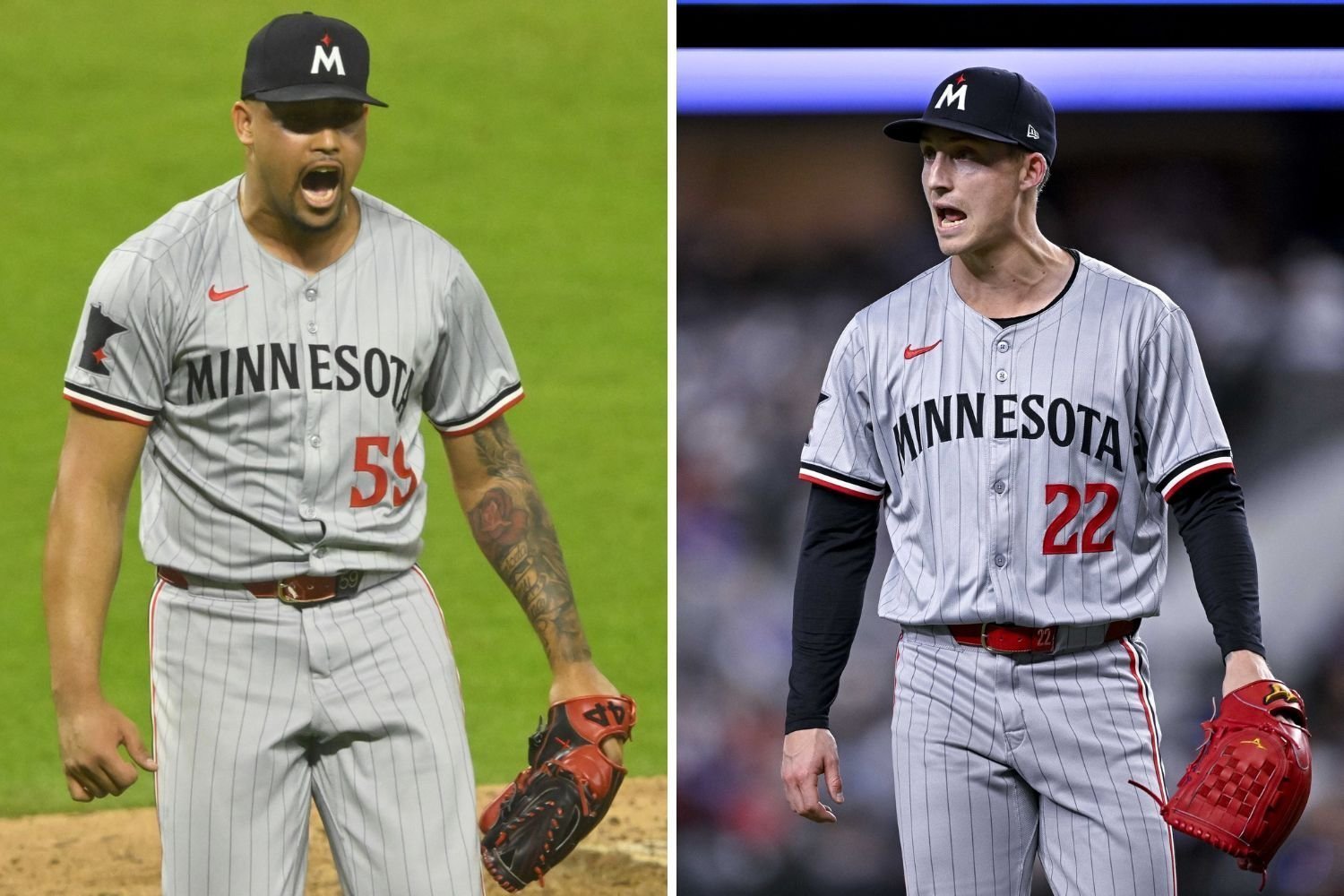 The Minnesota Twins find themselves in a difficult midseason position, caught between contention and caution. Hovering around the playoff picture, they’ve leaned heavily on one of baseball’s best bullpens to stay afloat. But with the trade deadline looming on July 31, there’s a growing case for selling, especially when you look at what top relievers have returned at recent trade deadlines. Could this be the time for Derek Falvey to cash in on Jhoan Duran, Griffin Jax, or even Danny Coulombe? If recent deals are any indication, the return might be too tempting to ignore. Tanner Scott Headlines a Bullpen Boom Last year, the Padres made the biggest bullpen blockbuster, acquiring All-Star closer Tanner Scott and swingman Bryan Hoeing from the Marlins. The return? Four prospects, including Robby Snelling, San Diego’s No. 2 prospect and a top-50 name across MLB, plus fellow top-five system arms Adam Mazur and Graham Pauley. That’s a massive haul for two relievers, the far better of whom (Scott) was a free agent at the end of 2024. Scott’s numbers at the time (1.18 ERA and 53 strikeouts in 45 2/3 IP) were undeniably elite, and he had the “proven closer” label. Duran and Jax, by contrast, bring not just performance but two more years of team control. That’s worth something—potentially, a lot. Lower Tiers Still Yield Talent Not every trade at recent deadlines has been a blockbuster, but even lesser relievers pull in real value: The Phillies gave up two pitching prospects (No. 23 Sam Aldegheri and No. 28 George Klassen) for Carlos Estévez, another rental. Gregory Soto, with a 4.08 ERA, netted the Orioles a top-10 prospect in Seth Johnson and a rising arm in Moisés Chace. Dylan Floro, a 33-year-old journeyman with a 2.06 ERA, was flipped for Andrés Chaparro, a slugging corner infielder with a .950+ OPS in Triple-A. These aren’t just trades for lottery tickets. Teams are paying real talent for relievers, even rentals. That makes you wonder: What would a team offer for Jax or Duran, who are under control through 2027 and carry better numbers than some of the names mentioned above? Coulombe: A Logical Trade Chip If the Twins don’t want to part with long-term assets, Coulombe is the obvious name to watch. The 34-year-old lefty has quietly put together one of the best seasons of his career, with a 0.68 ERA and a 27.9 K%. He’s also a free agent after this season. Think David Robertson in 2023, who brought the Mets two promising FCL-level prospects despite being a 38-year-old rental. He also netted the Cubs intriguing pitcher Ben Brown as a rental at the 2022 deadline. Players at the FCL level and pitchers with long injury histories are wild cards, but if a team like the Twins gets enough wild cards, one will turn into an impact big-league player. Coulombe might not have Robertson’s resume, but he’s been at his best in 2025. Teams looking for left-handed relief will come calling. The Wild Cards: Duran and Jax Let’s be clear: moving Duran would be a massive, headline-grabbing deal. He’s one of the few relievers in baseball with the stuff to dominate in multiple ways, with his sheer velocity commanding attention but his curveball and splinker being the keys to his high strikeout and ground-ball rates. At the 2023 deadline, Jordan Hicks brought back two high-upside Double-A arms as a rental (Blue Jays’ No. 7 prospect Sem Robberse and Adam Kloffenstein). Duran would fetch significantly more, thanks to his elite metrics and extra years of control. Jax is quietly just as valuable, in his own way. He’s become one of MLB’s most reliable setup men, posting back-to-back strong seasons. There has been some bad luck tied to his overall numbers this year, as he has an ERA above 4.00 but a FIP below 2.00. His career-high 37.9% strikeout rate is something that will play in the postseason. A contender looking for a bridge to October might be willing to part with multiple top-100 prospects to solidify their bullpen’s highest-leverage innings, this year and in each of the next two. These Aren’t Perfect Comps, But the Market Is Loud Not every trade listed is a clean comparison. Duran and Jax aren’t rentals, and the leverage of having them locked up through 2027 increases their value, but it also raises the bar for the return. The Twins would need to be overwhelmed to part with either. Still, the message from previous years’ markets is clear: contenders pay heavily for bullpen help, and Minnesota might hold the cards everyone wants. If the Twins choose to take a half-step back, the bullpen is where they could make the most significant leap forward to keep the team’s winning window open as long as possible. After all, relievers are volatile. Prospects are currency. And this deadline, the price has never been higher. The Twins don’t have to sell. But if they do, they might be surprised how much someone’s willing to pay for 100-mph heat and a devastating splinker. What do you think: Should the Twins capitalize on the market for bullpen arms or hold tight for a playoff push? Share your take in the comments below!
- 86 comments
-
- 5
-

-

-
- jhoan duran
- griffin jax
- (and 4 more)
-
Image courtesy of David Richard and Jerome Miron-Imagn Images The Minnesota Twins find themselves in a difficult midseason position, caught between contention and caution. Hovering around the playoff picture, they’ve leaned heavily on one of baseball’s best bullpens to stay afloat. But with the trade deadline looming on July 31, there’s a growing case for selling, especially when you look at what top relievers have returned at recent trade deadlines. Could this be the time for Derek Falvey to cash in on Jhoan Duran, Griffin Jax, or even Danny Coulombe? If recent deals are any indication, the return might be too tempting to ignore. Tanner Scott Headlines a Bullpen Boom Last year, the Padres made the biggest bullpen blockbuster, acquiring All-Star closer Tanner Scott and swingman Bryan Hoeing from the Marlins. The return? Four prospects, including Robby Snelling, San Diego’s No. 2 prospect and a top-50 name across MLB, plus fellow top-five system arms Adam Mazur and Graham Pauley. That’s a massive haul for two relievers, the far better of whom (Scott) was a free agent at the end of 2024. Scott’s numbers at the time (1.18 ERA and 53 strikeouts in 45 2/3 IP) were undeniably elite, and he had the “proven closer” label. Duran and Jax, by contrast, bring not just performance but two more years of team control. That’s worth something—potentially, a lot. Lower Tiers Still Yield Talent Not every trade at recent deadlines has been a blockbuster, but even lesser relievers pull in real value: The Phillies gave up two pitching prospects (No. 23 Sam Aldegheri and No. 28 George Klassen) for Carlos Estévez, another rental. Gregory Soto, with a 4.08 ERA, netted the Orioles a top-10 prospect in Seth Johnson and a rising arm in Moisés Chace. Dylan Floro, a 33-year-old journeyman with a 2.06 ERA, was flipped for Andrés Chaparro, a slugging corner infielder with a .950+ OPS in Triple-A. These aren’t just trades for lottery tickets. Teams are paying real talent for relievers, even rentals. That makes you wonder: What would a team offer for Jax or Duran, who are under control through 2027 and carry better numbers than some of the names mentioned above? Coulombe: A Logical Trade Chip If the Twins don’t want to part with long-term assets, Coulombe is the obvious name to watch. The 34-year-old lefty has quietly put together one of the best seasons of his career, with a 0.68 ERA and a 27.9 K%. He’s also a free agent after this season. Think David Robertson in 2023, who brought the Mets two promising FCL-level prospects despite being a 38-year-old rental. He also netted the Cubs intriguing pitcher Ben Brown as a rental at the 2022 deadline. Players at the FCL level and pitchers with long injury histories are wild cards, but if a team like the Twins gets enough wild cards, one will turn into an impact big-league player. Coulombe might not have Robertson’s resume, but he’s been at his best in 2025. Teams looking for left-handed relief will come calling. The Wild Cards: Duran and Jax Let’s be clear: moving Duran would be a massive, headline-grabbing deal. He’s one of the few relievers in baseball with the stuff to dominate in multiple ways, with his sheer velocity commanding attention but his curveball and splinker being the keys to his high strikeout and ground-ball rates. At the 2023 deadline, Jordan Hicks brought back two high-upside Double-A arms as a rental (Blue Jays’ No. 7 prospect Sem Robberse and Adam Kloffenstein). Duran would fetch significantly more, thanks to his elite metrics and extra years of control. Jax is quietly just as valuable, in his own way. He’s become one of MLB’s most reliable setup men, posting back-to-back strong seasons. There has been some bad luck tied to his overall numbers this year, as he has an ERA above 4.00 but a FIP below 2.00. His career-high 37.9% strikeout rate is something that will play in the postseason. A contender looking for a bridge to October might be willing to part with multiple top-100 prospects to solidify their bullpen’s highest-leverage innings, this year and in each of the next two. These Aren’t Perfect Comps, But the Market Is Loud Not every trade listed is a clean comparison. Duran and Jax aren’t rentals, and the leverage of having them locked up through 2027 increases their value, but it also raises the bar for the return. The Twins would need to be overwhelmed to part with either. Still, the message from previous years’ markets is clear: contenders pay heavily for bullpen help, and Minnesota might hold the cards everyone wants. If the Twins choose to take a half-step back, the bullpen is where they could make the most significant leap forward to keep the team’s winning window open as long as possible. After all, relievers are volatile. Prospects are currency. And this deadline, the price has never been higher. The Twins don’t have to sell. But if they do, they might be surprised how much someone’s willing to pay for 100-mph heat and a devastating splinker. What do you think: Should the Twins capitalize on the market for bullpen arms or hold tight for a playoff push? Share your take in the comments below! View full article
-
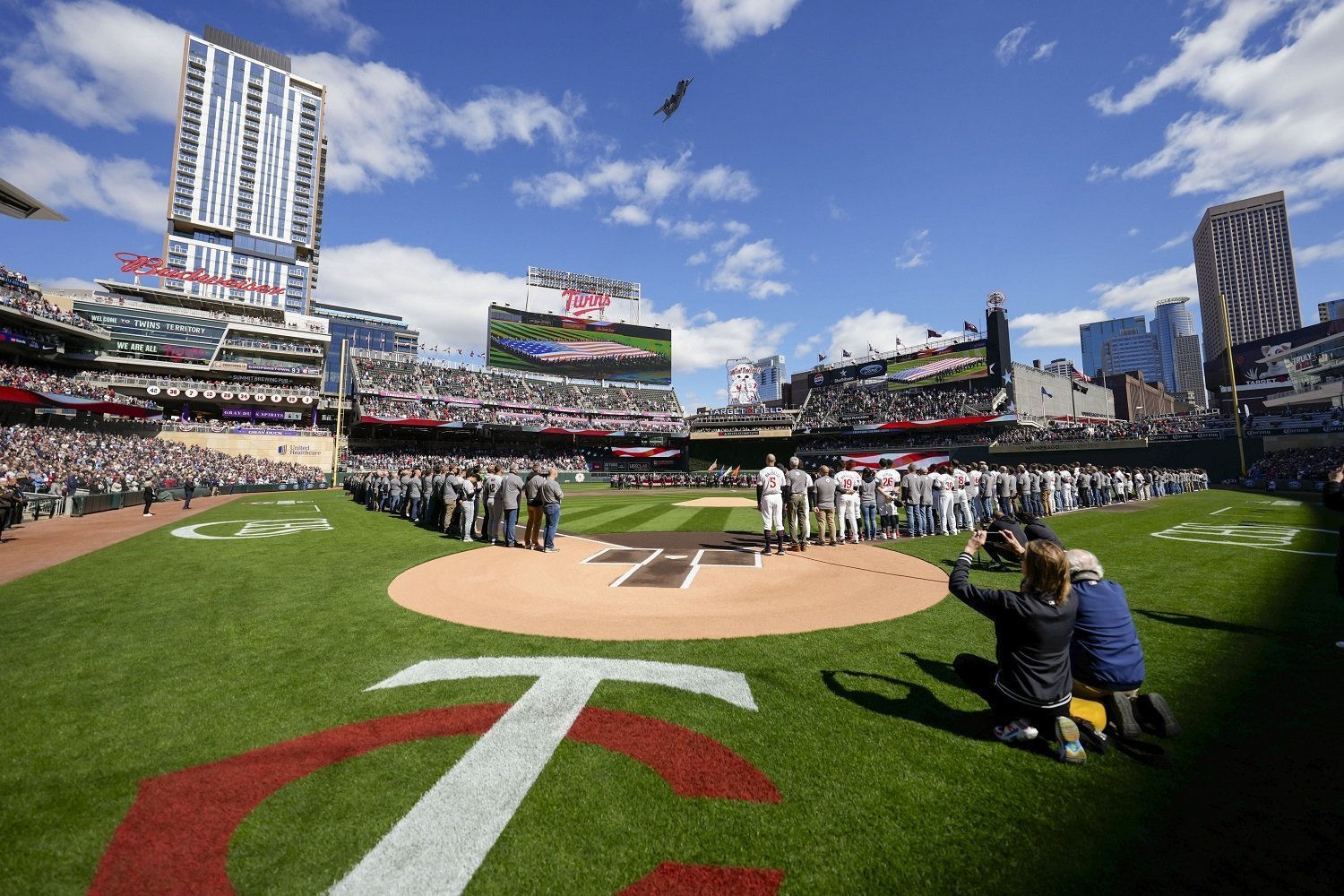 [Ed. note: Though we added the sarcasm filter here, I feel a need to make clear at the top that the quotes herein are not real. Sometimes, when I feel that compulsion, it requires the piece to be rewritten; good satire should require minimal explanation. In this particular case, I feel the onus should fall on the team. That what follows might not feel quite unreal enough for good fiction is a reflection of how bad a habit of stasis and staleness this front office has developed. Rather than demand that humorists stifle their reactions to the Falvey regime's tendencies, I echo the sentiments of Gabriel García Márquez: "It would be best to recommend that real life exercise a bit more discretion."] The Minnesota Twins front office has officially entered what insiders are calling their “Hope-and-Hold” era, refusing to trade prospects with fringe potential while simultaneously declining to upgrade a 40-man roster already flush with replacement-level promise. “We’re very proud of what we’ve built,” said President of Baseball Operations Derek Falvey, gesturing vaguely toward a roster carrying a team ERA north of 4.00. “Sure, the numbers might not be ideal right now, but every arm on this roster has the potential to be slightly below league average. You don’t give up on that kind of upside.” The comments came amid growing frustration among fans and players alike, as the team continues to cling tightly to mid-20s minor leaguers posting .694 OPS marks in Double-A and relievers with walk rates nearing their K/9. Why Trade for Proven Talent When You Can Dream on a Future Utility Guy? Despite glaring needs and a logjam of questionably projectable players, the Twins have made it clear: no one is touching their precious top-25 prospects list, especially not those ranked in the 15–25 range. “We’ve got a 24-year-old middle infielder hitting .244 in Wichita who we really think could someday be a fantastic bench option,” said assistant GM Josh Kalk. “You don’t just trade that kind of ceiling for a boring, effective major-league reliever.” The team’s resistance to flipping B-tier talent for real upgrades has drawn the attention of former prospects like Nick Gordon, who was once untouchable in trade talks. “Man, I remember when they wouldn’t trade me for two months of Chris Archer,” Gordon said, shaking his head. “Then I hit .270 for a year and they finally felt like I fulfilled the prophecy.” Added Brent Rooker, “They said I had ‘impact power potential’ in the system. Now I have impact power… just for someone else.” 40-Man Roster: A Sacred Circle of Trust (and 5.23 FIPs) The unwillingness to make roster improvements has extended beyond trades. Asked why the team hasn’t DFA’d struggling players to make room for potential contributors, Falvey doubled down on his protectionist philosophy. “Every spot on our 40-man roster is valuable,” he explained. “Each player on it was chosen for a reason. That reason may have been a decent Arizona Fall League appearance three years ago, but still, there's a process.” Pitching coach Pete Maki added context: “Sure, one of our guys gave up 11 earned runs in two innings last week, but he’s working through something: Mainly, being not-that-good. But we think he can be less not-that-good soon.” Even as quality arms remain in St. Paul and the waiver wire teems with relievers under 30, the team remains loyal to its internal solutions. “It’s like a family,” said Falvey. “A family that strikes out a lot, can’t hold a lead, and hasn’t returned a phone call from the Wild Card standings in weeks. But family nonetheless.” No Change on the Horizon, And That’s the Point Manager Rocco Baldelli, when asked about the possibility of adding reinforcements, responded with his trademark calm indifference. “I’ve gotten really close with the guys we’ve got,” Baldelli said. “Sometimes I even learn their names.” He then looked over a bullpen usage chart filled with crossed-out names and quietly muttered, “I miss Ronny Henriquez.” With the trade deadline approaching, rival GMs have reportedly stopped even bothering to ask about the Twins’ prospect pool. One anonymous executive noted: “They told me they’d only consider trading a 26-year-old Double-A outfielder hitting .218 if I included a top-5 pitching prospect and cash. I thought it was a joke. They were serious.” In Minnesota, though, it’s not about the numbers, because it’s about the dream—the dream that one day, that sixth-round pick from 2021 with a 1.48 WHIP might become a guy you sort of tolerate in your bullpen. After all, as Falvey puts it: “You can’t put a value on eventual mediocrity.”
 -
Image courtesy of © Jordan Johnson-Imagn Images The Minnesota Twins front office has officially entered what insiders are calling their “Hope-and-Hold” era, refusing to trade prospects with fringe potential while simultaneously declining to upgrade a 40-man roster already flush with replacement-level promise. “We’re very proud of what we’ve built,” said President of Baseball Operations Derek Falvey, gesturing vaguely toward a roster carrying a team ERA north of 4.00. “Sure, the numbers might not be ideal right now, but every arm on this roster has the potential to be slightly below league average. You don’t give up on that kind of upside.” The comments came amid growing frustration among fans and players alike as the team continues to cling tightly to mid-20s minor leaguers posting .694 OPS marks in Double-A, and relievers with walk rates nearing their K/9. Why Trade for Proven Talent When You Can Dream on a Future Utility Guy? Despite glaring needs and a logjam of questionably projectable players, the Twins have made it clear: no one is touching their precious top-25 prospects list, especially not those ranked in the 15–25 range. “We’ve got a 24-year-old middle infielder hitting .244 in Wichita who we really think could someday be a fantastic bench option,” said Assistant GM Josh Kalk. “You don’t just trade that kind of ceiling for a boring, effective major league reliever.” The team’s resistance to flipping B-tier talent for real upgrades has drawn the attention of former prospects like Nick Gordon, who was once untouchable in trade talks. “Man, I remember when they wouldn’t trade me for two months of Chris Archer,” Gordon said, shaking his head. “Then I hit .270 for a year and they finally felt like I fulfilled the prophecy.” Added Brent Rooker, “They said I had ‘impact power potential’ in the system. Now I have impact power… just for someone else.” 40-Man Roster: A Sacred Circle of Trust (and 5.23 FIPs) The unwillingness to make roster improvements has extended beyond trades. Asked why the team hasn’t DFA’d struggling players to make room for potential contributors, Falvey doubled down on his protectionist philosophy. “Every spot on our 40-man roster is valuable,” he explained. “Each player on it was chosen for a reason. That reason may have been a decent Arizona Fall League appearance three years ago, but still, there's a process.” Pitching coach Pete Maki added context: “Sure, one of our guys gave up 11 earned runs in two innings last week, but he’s working through something. Mainly, being not that good. But we think he can be less not that good soon.” Even as quality arms remain in St. Paul and the waiver wire teems with relievers under 30, the team remains loyal to its internal solutions. “It’s like a family,” said Falvey. “A family that strikes out a lot, can’t hold a lead, and hasn’t returned a phone call from the Wild Card standings in weeks. But family nonetheless.” No Change on the Horizon And That’s the Point Manager Rocco Baldelli, when asked about the possibility of adding reinforcements, responded with his trademark calm indifference. “I’ve gotten really close with the guys we’ve got,” Baldelli said. “Sometimes I even learn their names.” He then looked over a bullpen usage chart filled with crossed-out names and quietly muttered, “I miss Ronny Henriquez.” With the trade deadline approaching, rival GMs have reportedly stopped even bothering to ask about the Twins’ prospect pool. One anonymous executive noted: “They told me they’d only consider trading a 26-year-old Double-A outfielder hitting .218 if I included a top-5 pitching prospect and cash. I thought it was a joke. They were serious.” In Minnesota, though, it’s not about the numbers because it’s about the dream. The dream that one day, that sixth-round pick from 2021 with a 1.48 WHIP might become a guy you sort of tolerate in your bullpen. After all, as Falvey puts it: “You can’t put a value on eventual mediocrity.” View full article
-
Image courtesy of Rob Thompson, St. Paul Saints As the Twins look to stay competitive in the AL Central, help may not be far away, with several prospects making noise throughout the minor-league system. Whether it’s a college bat on a power tear, a once-hyped arm finally stringing together dominant starts, or a dynamic infielder terrorizing opposing batteries on the basepaths, Minnesota is seeing real development in key areas. Jaime Ferrer, Marco Raya, and Kyle DeBarge are each making compelling cases for more attention and (possibly) a faster track toward Target Field. C/1B/OF Jaime Ferrer, Cedar Rapids Kernels The Twins selected Ferrer in the 4th round of the 2024 MLB Draft, out of Florida State University. While he wasn’t a headliner on draft day, the organization saw potential in Ferrer’s bat speed, plate discipline, and strength. All tools that gave him a chance to outplay his draft slot. After a solid pro debut (.748 OPS in 24 games), he entered 2025 with a chance to establish himself as a legitimate power-hitting prospect. The Twins moved him between catcher, corner outfield and first base to find the best fit for his glove, while letting the bat do most of the talking. Hitting the Hot Button That bat has been shouting over the last week. In a three-game stretch for High-A Cedar Rapids, Ferrer hit .545, with a double, a triple, two home runs, four RBIs, and four runs scored. His OPS for the series? A staggering 1.947. That kind of offensive explosion isn’t just impressive for a 22-year-old playing his first full professional season. He’s showing the ability to punish mistakes while also controlling the zone, drawing walks and laying off breaking pitches in the dirt. His walk rate has improved from 6.5% to 7.4% in 2025. If the hot streak continues, Ferrer could force his way to Double A before the end of the season and join a growing list of under-the-radar hitters turning into legitimate threats in the Twins’ system. RHP Marco Raya, St. Paul Saints Raya has been one of the Twins’ more tantalizing pitching prospects since being selected in the fourth round of the 2020 MLB Draft out of high school in Texas. Injuries delayed his early development, but by 2023 and 2024, he had emerged as one of the more intriguing arms in the system thanks to a fastball that touched the upper 90s and a sharp slider that missed bats. While he was used carefully to protect his health, the flashes of dominance were enough to keep evaluators and fans excited. He entered the 2025 season looking to build innings and prove he could handle a full starter’s workload. Hitting the Hot Button Raya may be answering those questions. Pitching for Triple-A St. Paul, Raya turned in one of his best starts of the season last Thursday against Iowa. He went six innings, allowing just one run on three hits with one walk and seven strikeouts. It was a commanding performance that showcased the full arsenal. His fastball velocity held deep into the outing, his slider induced empty swings, and his command was crisp throughout. Over his last four starts, he has posted a 1.64 ERA while holding batters to a .547 OPS. Now 22 years old, Raya is starting to show that he’s more than just potential; he’s a near-ready contributor. If the Twins need a spot starter or bullpen help down the stretch, Raya is beginning to look like a legitimate option, especially if he can continue to prove durable and efficient. INF Kyle DeBarge, Cedar Rapids Kernels When the Twins picked DeBarge with the 33rd overall pick of the 2024 draft out of Louisiana-Lafayette, they saw an athlete with energy, bat control, and defensive versatility. What wasn’t immediately clear was how quickly he’d turn into one of the system’s premier base-stealing threats. Still just 21 years old, DeBarge opened his pro career at Fort Myers, holding his own at the plate (.322 OBP) while wreaking havoc on the bases (15-for-18 in SB attempts). He’s played mostly at shortstop and second base, flashing soft hands and solid instincts in the field, but it’s the wheels that are drawing the most attention in 2025. Hitting the Hot Button DeBarge is up to 46 stolen bases on the season, and it’s only mid-July. He’s swiping bags at a rate that few in the league can match, often turning routine singles or walks into immediate scoring threats. He’s only been caught stealing three times. What makes his success even more impressive is the fact that he’s more than a year younger than the average player in High-A, facing older pitchers in over 88% of his plate appearances. Despite that, he’s shown poise and maturity at the plate, keeping his on-base percentage north of .360. DeBarge is smart on the bases, picking the right spots and rarely running into outs. If he continues this level of production and stays healthy, a promotion to Double-A Wichita seems inevitable, and he could enter the Twins’ long-term middle infield discussion in the years ahead. The farm system doesn’t just exist to nurture future All-Stars. It also helps round out rosters, spark midseason promotions, and provide value when trade deadline conversations start heating up. Ferrer’s offensive outburst is putting him on the prospect map. Raya is finally pairing health with performance and showing he’s close to ready. And DeBarge’s elite speed and developing offensive profile make him one of the most unique prospects in the Twins’ pipeline. The Twins have plenty of star power in their top 10 prospects, but this trio reminds us that big-league help often comes from throughout a prospect list. With performances like these, Ferrer, Raya, and DeBarge won’t stay under the radar much longer. Which performance stands out the most? Leave a comment and start the discussion. View full article
-
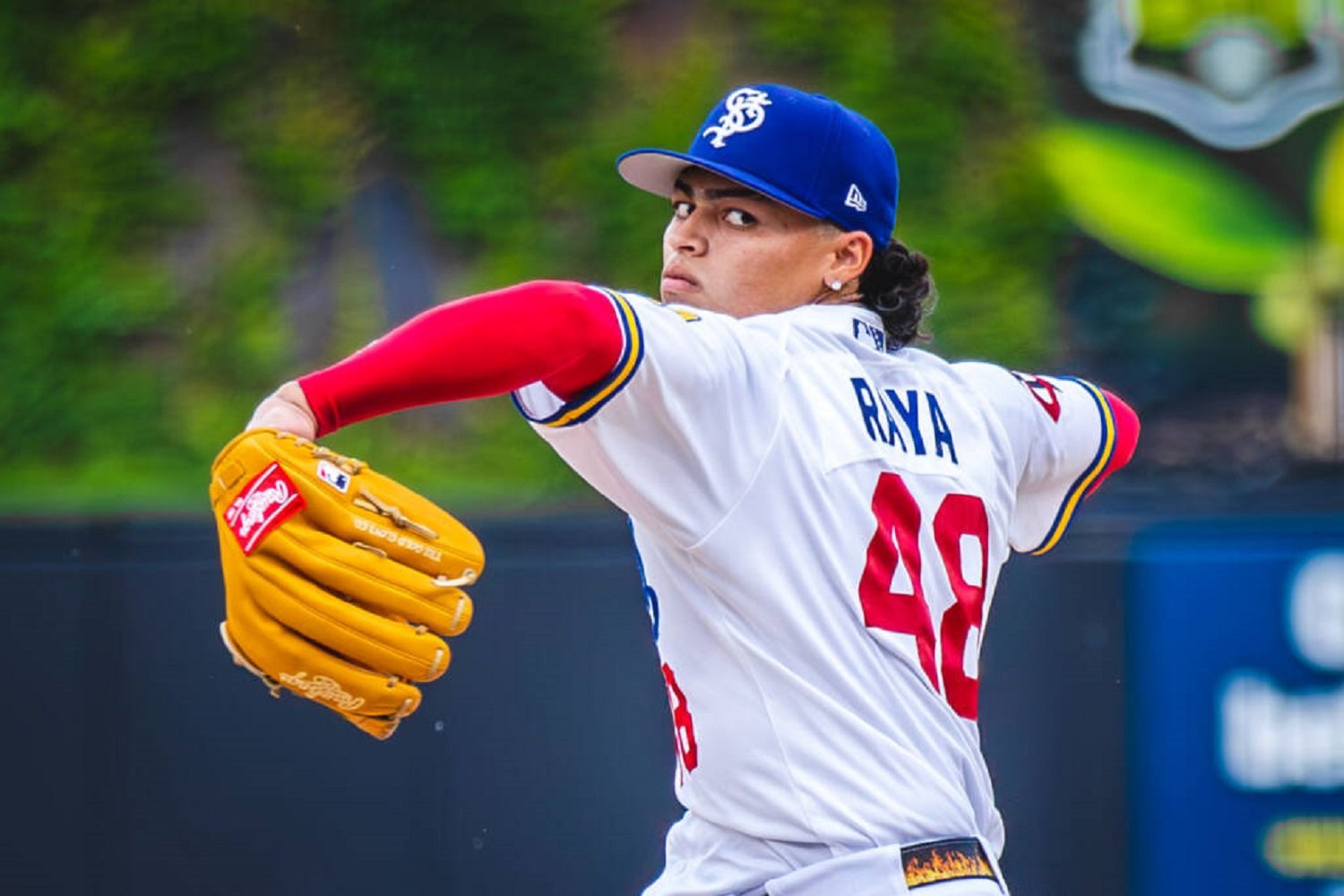 As the Twins look to stay competitive in the AL Central, help may not be far away, with several prospects making noise throughout the minor-league system. Whether it’s a college bat on a power tear, a once-hyped arm finally stringing together dominant starts, or a dynamic infielder terrorizing opposing batteries on the basepaths, Minnesota is seeing real development in key areas. Jaime Ferrer, Marco Raya, and Kyle DeBarge are each making compelling cases for more attention and (possibly) a faster track toward Target Field. C/1B/OF Jaime Ferrer, Cedar Rapids Kernels The Twins selected Ferrer in the 4th round of the 2024 MLB Draft, out of Florida State University. While he wasn’t a headliner on draft day, the organization saw potential in Ferrer’s bat speed, plate discipline, and strength. All tools that gave him a chance to outplay his draft slot. After a solid pro debut (.748 OPS in 24 games), he entered 2025 with a chance to establish himself as a legitimate power-hitting prospect. The Twins moved him between catcher, corner outfield and first base to find the best fit for his glove, while letting the bat do most of the talking. Hitting the Hot Button That bat has been shouting over the last week. In a three-game stretch for High-A Cedar Rapids, Ferrer hit .545, with a double, a triple, two home runs, four RBIs, and four runs scored. His OPS for the series? A staggering 1.947. That kind of offensive explosion isn’t just impressive for a 22-year-old playing his first full professional season. He’s showing the ability to punish mistakes while also controlling the zone, drawing walks and laying off breaking pitches in the dirt. His walk rate has improved from 6.5% to 7.4% in 2025. If the hot streak continues, Ferrer could force his way to Double A before the end of the season and join a growing list of under-the-radar hitters turning into legitimate threats in the Twins’ system. RHP Marco Raya, St. Paul Saints Raya has been one of the Twins’ more tantalizing pitching prospects since being selected in the fourth round of the 2020 MLB Draft out of high school in Texas. Injuries delayed his early development, but by 2023 and 2024, he had emerged as one of the more intriguing arms in the system thanks to a fastball that touched the upper 90s and a sharp slider that missed bats. While he was used carefully to protect his health, the flashes of dominance were enough to keep evaluators and fans excited. He entered the 2025 season looking to build innings and prove he could handle a full starter’s workload. Hitting the Hot Button Raya may be answering those questions. Pitching for Triple-A St. Paul, Raya turned in one of his best starts of the season last Thursday against Iowa. He went six innings, allowing just one run on three hits with one walk and seven strikeouts. It was a commanding performance that showcased the full arsenal. His fastball velocity held deep into the outing, his slider induced empty swings, and his command was crisp throughout. Over his last four starts, he has posted a 1.64 ERA while holding batters to a .547 OPS. Now 22 years old, Raya is starting to show that he’s more than just potential; he’s a near-ready contributor. If the Twins need a spot starter or bullpen help down the stretch, Raya is beginning to look like a legitimate option, especially if he can continue to prove durable and efficient. INF Kyle DeBarge, Cedar Rapids Kernels When the Twins picked DeBarge with the 33rd overall pick of the 2024 draft out of Louisiana-Lafayette, they saw an athlete with energy, bat control, and defensive versatility. What wasn’t immediately clear was how quickly he’d turn into one of the system’s premier base-stealing threats. Still just 21 years old, DeBarge opened his pro career at Fort Myers, holding his own at the plate (.322 OBP) while wreaking havoc on the bases (15-for-18 in SB attempts). He’s played mostly at shortstop and second base, flashing soft hands and solid instincts in the field, but it’s the wheels that are drawing the most attention in 2025. Hitting the Hot Button DeBarge is up to 46 stolen bases on the season, and it’s only mid-July. He’s swiping bags at a rate that few in the league can match, often turning routine singles or walks into immediate scoring threats. He’s only been caught stealing three times. What makes his success even more impressive is the fact that he’s more than a year younger than the average player in High-A, facing older pitchers in over 88% of his plate appearances. Despite that, he’s shown poise and maturity at the plate, keeping his on-base percentage north of .360. DeBarge is smart on the bases, picking the right spots and rarely running into outs. If he continues this level of production and stays healthy, a promotion to Double-A Wichita seems inevitable, and he could enter the Twins’ long-term middle infield discussion in the years ahead. The farm system doesn’t just exist to nurture future All-Stars. It also helps round out rosters, spark midseason promotions, and provide value when trade deadline conversations start heating up. Ferrer’s offensive outburst is putting him on the prospect map. Raya is finally pairing health with performance and showing he’s close to ready. And DeBarge’s elite speed and developing offensive profile make him one of the most unique prospects in the Twins’ pipeline. The Twins have plenty of star power in their top 10 prospects, but this trio reminds us that big-league help often comes from throughout a prospect list. With performances like these, Ferrer, Raya, and DeBarge won’t stay under the radar much longer. Which performance stands out the most? Leave a comment and start the discussion.
- 25 comments
-
- 6
-
-
- marco raya
- jaime ferrer
- (and 1 more)
-
Image courtesy of William Parmeter When Byron Buxton steps up for the 2025 Home Run Derby in Atlanta, his chosen pitcher will be Tommy Watkins, the Twins’ third base coach and an organizational icon. It’s a deeply personal connection that underscores Watkins’ impact on the team. A Story 27 Years in the Making Drafted in the 38th round in 1998, Watkins became affectionately known as “The Mayor of Fort Myers” during his time in the Twins organization. He was never seen as a top prospect, but moved his way up the system through hard work and forming life-long relationships that would serve him in his future career. After 10 seasons in the minors, amassing hundreds of games at Triple-A, Watkins finally got the call from GM Terry Ryan himself, during a visit to Rochester. Former Red Wings manager Stan Cliburn called it “one of the most emotional call‑ups [he had] ever been involved with,” describing how the news “set off a joyous celebration in the clubhouse, because of everyone's love, passion and respect for Tommy.” In his big-league debut at age 27, Watkins hit .357 (10-for-28) with four walks and only four strikeouts over nine games. It was a reward for his dedication to the organization, and he performed well in his cup of coffee at the big-league level. Building Bonds That Endure Fast forward to July 2025, and Watkins stands alongside Buxton as his Derby pitcher, an assignment that means more than just lobbing meatballs. When asked about the Derby, Watkins was “caught off-guard… honored, and it was a little emotional. … I think I teared up, and he started to, too.” Their connection goes way back. Watkins coached Buxton at Class‑A Cedar Rapids back in 2013, when Buxton was considered baseball’s best prospect and was still attempting to refine himself as a player. They reunited when Watkins was named the Twins’ first‑base coach in 2019, and have been through the ups and downs that have defined Buxton’s career. Buxton told MLB Network he’s been "just getting into the box, no turtle [batting cage], just feels like you're on an island by yourself a little bit. So, just getting used to the Derby effects and not having the turtle, having a catcher back there and getting used to Tommy." For Watkins, the spotlight isn’t his to steal. “This isn’t about me—this is about Buck,” he told reporters earlier this week. A Coaching Career Forged in Loyalty The moment Watkins donned a Twins uniform for the last time in 2009, a new path opened. In 2009, he started his coaching journey with the GCL Twins, progressing through Beloit, Cedar Rapids, and Double‑A as hitting coach and manager. In 2017, he led Cedar Rapids to a 75–65 record and a playoff berth. By 2019, he was in The Show as the Twins’ first-base coach (2019–21), later moving to third base in 2022. That's where he remains today, now deep into his 16th season and having spent six years at the MLB level. He’s also worked closely with Rocco Baldelli on outfield instruction, helping shape players like Buxton. The Derby: A Moment Defined by Connection This Home Run Derby isn’t just a performance; it’s a celebration of personal stories. Buxton is having the best season of his career, with 21 homers, a perfect 17-for-17 in steals, and top-tier defensive metrics. Yet, the Derby pairing reminds us of the mentorship and bond that have matured behind the scenes. So, as Watkins lobs to Buxton under Atlanta lights, he’ll carry decades worth of loyalty, respect, and the emotional weight of a journey few get to witness. This is Tommy Watkins, a late-draft kid who carved out a career through dedication, earned devotion, and remains the man Buxton trusts most with Derby pitches. Watkins isn’t just a coach or a Derby pitcher, he’s the embodiment of Twins devotion. When you see him in Atlanta, know that you’re looking at the end of a 27-year storybook that speaks to what this franchise truly values: clarity, connection, and community. View full article
-
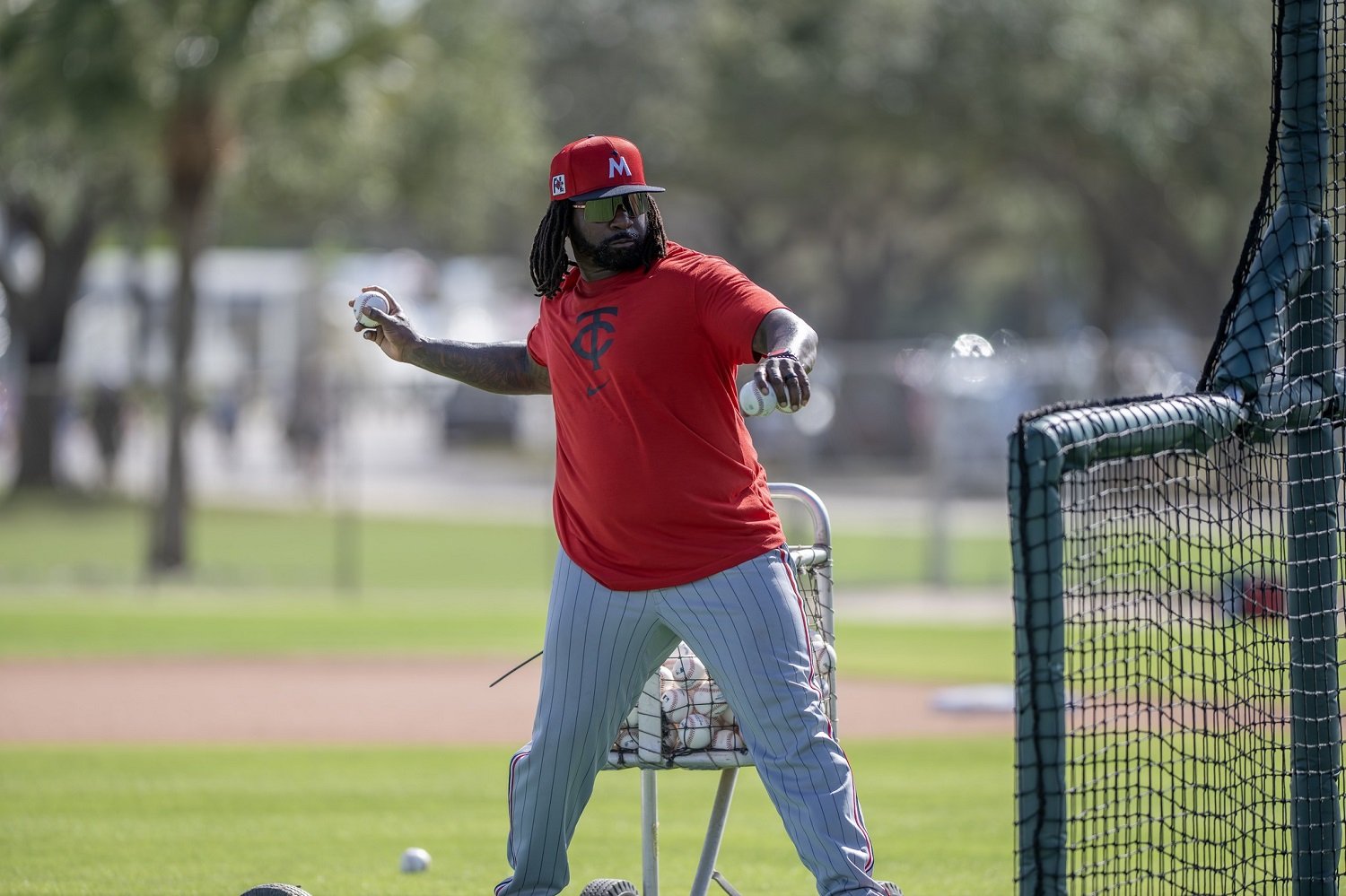 When Byron Buxton steps up for the 2025 Home Run Derby in Atlanta, his chosen pitcher will be Tommy Watkins, the Twins’ third base coach and an organizational icon. It’s a deeply personal connection that underscores Watkins’ impact on the team. A Story 27 Years in the Making Drafted in the 38th round in 1998, Watkins became affectionately known as “The Mayor of Fort Myers” during his time in the Twins organization. He was never seen as a top prospect, but moved his way up the system through hard work and forming life-long relationships that would serve him in his future career. After 10 seasons in the minors, amassing hundreds of games at Triple-A, Watkins finally got the call from GM Terry Ryan himself, during a visit to Rochester. Former Red Wings manager Stan Cliburn called it “one of the most emotional call‑ups [he had] ever been involved with,” describing how the news “set off a joyous celebration in the clubhouse, because of everyone's love, passion and respect for Tommy.” In his big-league debut at age 27, Watkins hit .357 (10-for-28) with four walks and only four strikeouts over nine games. It was a reward for his dedication to the organization, and he performed well in his cup of coffee at the big-league level. Building Bonds That Endure Fast forward to July 2025, and Watkins stands alongside Buxton as his Derby pitcher, an assignment that means more than just lobbing meatballs. When asked about the Derby, Watkins was “caught off-guard… honored, and it was a little emotional. … I think I teared up, and he started to, too.” Their connection goes way back. Watkins coached Buxton at Class‑A Cedar Rapids back in 2013, when Buxton was considered baseball’s best prospect and was still attempting to refine himself as a player. They reunited when Watkins was named the Twins’ first‑base coach in 2019, and have been through the ups and downs that have defined Buxton’s career. Buxton told MLB Network he’s been "just getting into the box, no turtle [batting cage], just feels like you're on an island by yourself a little bit. So, just getting used to the Derby effects and not having the turtle, having a catcher back there and getting used to Tommy." For Watkins, the spotlight isn’t his to steal. “This isn’t about me—this is about Buck,” he told reporters earlier this week. A Coaching Career Forged in Loyalty The moment Watkins donned a Twins uniform for the last time in 2009, a new path opened. In 2009, he started his coaching journey with the GCL Twins, progressing through Beloit, Cedar Rapids, and Double‑A as hitting coach and manager. In 2017, he led Cedar Rapids to a 75–65 record and a playoff berth. By 2019, he was in The Show as the Twins’ first-base coach (2019–21), later moving to third base in 2022. That's where he remains today, now deep into his 16th season and having spent six years at the MLB level. He’s also worked closely with Rocco Baldelli on outfield instruction, helping shape players like Buxton. The Derby: A Moment Defined by Connection This Home Run Derby isn’t just a performance; it’s a celebration of personal stories. Buxton is having the best season of his career, with 21 homers, a perfect 17-for-17 in steals, and top-tier defensive metrics. Yet, the Derby pairing reminds us of the mentorship and bond that have matured behind the scenes. So, as Watkins lobs to Buxton under Atlanta lights, he’ll carry decades worth of loyalty, respect, and the emotional weight of a journey few get to witness. This is Tommy Watkins, a late-draft kid who carved out a career through dedication, earned devotion, and remains the man Buxton trusts most with Derby pitches. Watkins isn’t just a coach or a Derby pitcher, he’s the embodiment of Twins devotion. When you see him in Atlanta, know that you’re looking at the end of a 27-year storybook that speaks to what this franchise truly values: clarity, connection, and community.
 -
How Kaelen Culpepper Has Answered His Draft Day Question Marks
Cody Christie posted an article in Minor Leagues
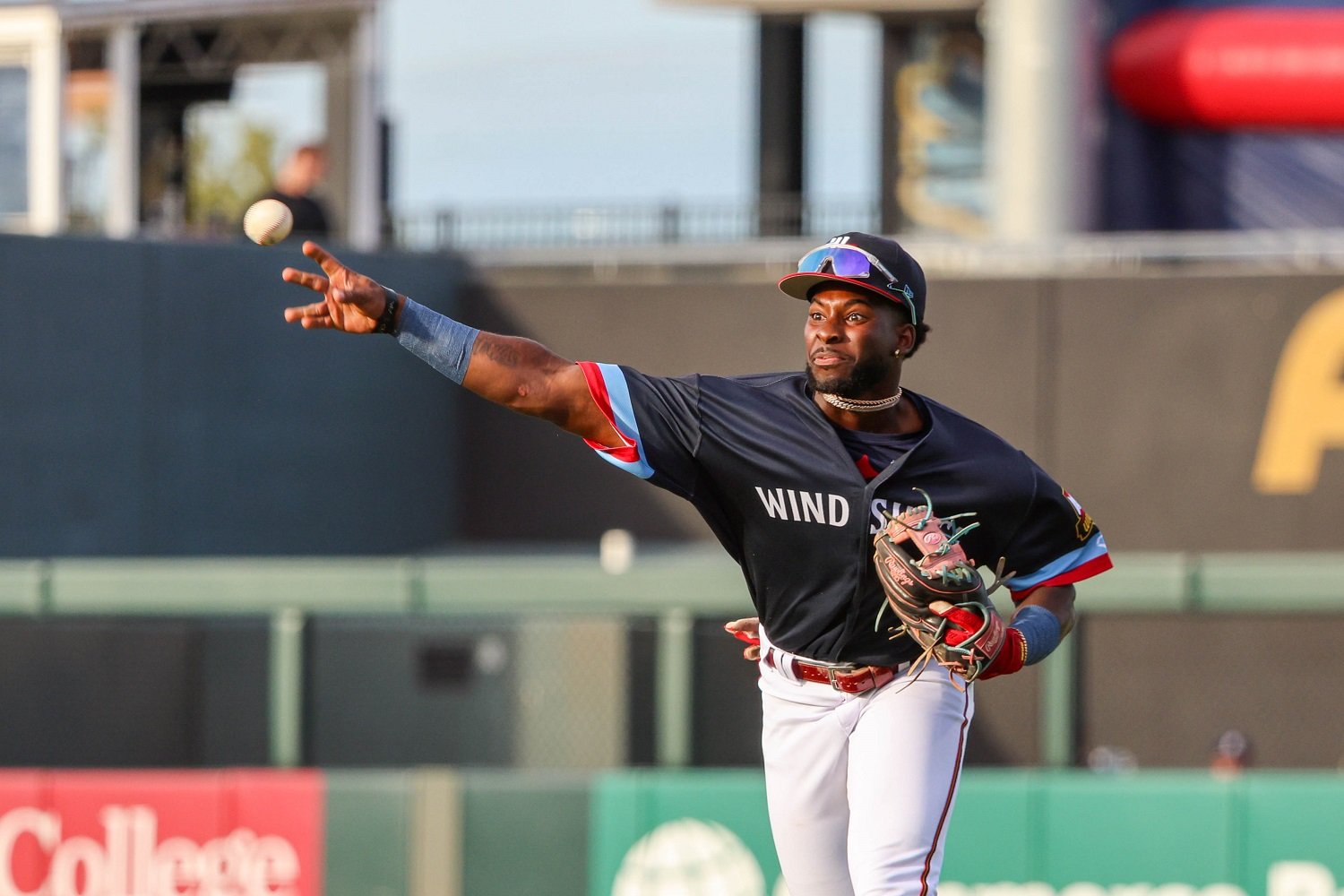 When the Twins selected Kaelen Culpepper with the 21st overall pick in the 2024 MLB Draft, there were a few raised eyebrows. Sure, Culpepper had plenty of tools, but concerns about plate discipline and defensive projection gave some evaluators pause. Less than a year later, Culpepper is not only putting those concerns to rest, he’s making evaluators look like they undersold him. Now firmly entrenched in Double-A Wichita and facing older, more experienced competition, Culpepper has surged into top-100 prospect territory. His all-around game is showing up in the box score and answering every pre-draft question thrown his way. Chasing Down the Concerns One of the most commonly cited red flags at the time of the draft came from The Athletic’s Keith Law, who wrote, “I know some teams had him in the second round because his chase rate was high, albeit not extremely so.” That concern was fair based on his collegiate track record, but Culpepper has responded in a big way. In his first full professional season, Culpepper has trimmed his chase rate significantly, especially against right-handed pitching. His strikeout rate currently sits under 16% for the season, and the right-handed hitter has a 16.25 K% against righties. He’s begun to show a mature ability to lay off pitches just outside the zone, something that was seen as a “maybe someday” skill on draft night and is already a present tool. Even FanGraphs’ Eric Longenhagen, who was skeptical on draft day, has had to take another look. “I have mixed-positive feeling about the Twins' first day because I’m lukewarm on Kaelen Culpepper due to his chase tendencies,” Longenhagen said after the pick. But Culpepper has flipped that narrative. His walk rate is hovering around 11% during the 2025 campaign, giving him a nearly even K/BB ratio. This is no small feat for a 21-year-old adjusting to professional spin and facing older pitchers over 78% of the time. The Shortstop Debate? Maybe It's Over Defensively, there was another looming question: Could Culpepper stay at shortstop, or was a move to third inevitable? ESPN summed it up nicely: “Ultimately, his pro ceiling will likely be decided by whether he can stick at shortstop or if he moves to third base on his way to the majors.” A year later, most evaluators are in agreement that he can stick. Culpepper has shown above-average range, clean footwork, and a plus arm at short. His internal clock is improving, and he’s making throws from deep in the hole that only true shortstops can pull off. The Twins have continued to give him regular reps at the position with only a handful of appearances at second base. Scouts now project him to remain there long-term unless the major-league roster demands a positional shift. That strong arm, once merely a bullet point in the scouting report, is now a calling card. In pre-draft evaluations, he was seen on the fringe between shortstop and third base. Now, he has the potential to be an impact defender as a big-league shortstop. He’s turned potential into production, and if anything, he’s separated himself from many of the other middle infielders in his draft class by staying up the middle. Crushing the Offspeed Test CBS Sports questioned whether Culpepper could handle spin, writing, “Can shortstop Kaelen Culpepper improve his breaking ball recognition?” It’s a valid question for any young hitter, especially one whose college profile leaned more on twitchy athleticism than polish at the plate. But once again, Culpepper’s adjustments have been impressive. Since his promotion to Double-A, he's actually improved his slugging percentage against offspeed and breaking pitches, showing better pitch tracking and timing. Over his last 10 games (49 PA), he is slashing .432/.490/.523 (1.013) with two extra-base hits and as many walks (5) as strikeouts (5). He’s not just laying off the tough stuff, because he’s doing damage when pitchers hang them. Fast Track to Target Field? What’s most exciting is just how quickly Culpepper has acclimated to professional ball. He’s one of only a handful of 2024 draftees already playing at Double-A, and he hasn’t missed a beat. The jump from college to pro ball is steep. The jump from there to Double-A is a leap. Culpepper made both without stumbling. It’s rare for a late first-round pick to push into top-100 territory so quickly, but Culpepper has earned it. His combination of steady defense, improved plate discipline, and surprising offensive production against older pitchers has made him one of the most exciting infield prospects in the system. The draft-day doubts have all been addressed quickly. The Twins believed in Culpepper’s upside when they took him at 21, and in less than 12 months, they may have already found the player who could be their shortstop of the future. If the trajectory holds, Culpepper could be pushing his way to Minneapolis by mid-2026. And when he gets there, don’t be surprised if the same evaluators who doubted the pick are suddenly talking about how obvious it was all along. Which doubt does Culpepper still need to answer? When will he debut with the Twins? Leave a comment and start the discussion on one of the organization's most exciting prospects.
 -
Image courtesy of Ed Bailey, Wichita Wind Surge (photo of Kaelen Culpepper) When the Twins selected Kaelen Culpepper with the 21st overall pick in the 2024 MLB Draft, there were a few raised eyebrows. Sure, Culpepper had plenty of tools, but concerns about plate discipline and defensive projection gave some evaluators pause. Less than a year later, Culpepper is not only putting those concerns to rest, he’s making evaluators look like they undersold him. Now firmly entrenched in Double-A Wichita and facing older, more experienced competition, Culpepper has surged into top-100 prospect territory. His all-around game is showing up in the box score and answering every pre-draft question thrown his way. Chasing Down the Concerns One of the most commonly cited red flags at the time of the draft came from The Athletic’s Keith Law, who wrote, “I know some teams had him in the second round because his chase rate was high, albeit not extremely so.” That concern was fair based on his collegiate track record, but Culpepper has responded in a big way. In his first full professional season, Culpepper has trimmed his chase rate significantly, especially against right-handed pitching. His strikeout rate currently sits under 16% for the season, and the right-handed hitter has a 16.25 K% against righties. He’s begun to show a mature ability to lay off pitches just outside the zone, something that was seen as a “maybe someday” skill on draft night and is already a present tool. Even FanGraphs’ Eric Longenhagen, who was skeptical on draft day, has had to take another look. “I have mixed-positive feeling about the Twins' first day because I’m lukewarm on Kaelen Culpepper due to his chase tendencies,” Longenhagen said after the pick. But Culpepper has flipped that narrative. His walk rate is hovering around 11% during the 2025 campaign, giving him a nearly even K/BB ratio. This is no small feat for a 21-year-old adjusting to professional spin and facing older pitchers over 78% of the time. The Shortstop Debate? Maybe It's Over Defensively, there was another looming question: Could Culpepper stay at shortstop, or was a move to third inevitable? ESPN summed it up nicely: “Ultimately, his pro ceiling will likely be decided by whether he can stick at shortstop or if he moves to third base on his way to the majors.” A year later, most evaluators are in agreement that he can stick. Culpepper has shown above-average range, clean footwork, and a plus arm at short. His internal clock is improving, and he’s making throws from deep in the hole that only true shortstops can pull off. The Twins have continued to give him regular reps at the position with only a handful of appearances at second base. Scouts now project him to remain there long-term unless the major-league roster demands a positional shift. That strong arm, once merely a bullet point in the scouting report, is now a calling card. In pre-draft evaluations, he was seen on the fringe between shortstop and third base. Now, he has the potential to be an impact defender as a big-league shortstop. He’s turned potential into production, and if anything, he’s separated himself from many of the other middle infielders in his draft class by staying up the middle. Crushing the Offspeed Test CBS Sports questioned whether Culpepper could handle spin, writing, “Can shortstop Kaelen Culpepper improve his breaking ball recognition?” It’s a valid question for any young hitter, especially one whose college profile leaned more on twitchy athleticism than polish at the plate. But once again, Culpepper’s adjustments have been impressive. Since his promotion to Double-A, he's actually improved his slugging percentage against offspeed and breaking pitches, showing better pitch tracking and timing. Over his last 10 games (49 PA), he is slashing .432/.490/.523 (1.013) with two extra-base hits and as many walks (5) as strikeouts (5). He’s not just laying off the tough stuff, because he’s doing damage when pitchers hang them. Fast Track to Target Field? What’s most exciting is just how quickly Culpepper has acclimated to professional ball. He’s one of only a handful of 2024 draftees already playing at Double-A, and he hasn’t missed a beat. The jump from college to pro ball is steep. The jump from there to Double-A is a leap. Culpepper made both without stumbling. It’s rare for a late first-round pick to push into top-100 territory so quickly, but Culpepper has earned it. His combination of steady defense, improved plate discipline, and surprising offensive production against older pitchers has made him one of the most exciting infield prospects in the system. The draft-day doubts have all been addressed quickly. The Twins believed in Culpepper’s upside when they took him at 21, and in less than 12 months, they may have already found the player who could be their shortstop of the future. If the trajectory holds, Culpepper could be pushing his way to Minneapolis by mid-2026. And when he gets there, don’t be surprised if the same evaluators who doubted the pick are suddenly talking about how obvious it was all along. Which doubt does Culpepper still need to answer? When will he debut with the Twins? Leave a comment and start the discussion on one of the organization's most exciting prospects. View full article
-
Could the Blue Jays Overpay for Jhoan Duran at the Trade Deadline?
Cody Christie posted an article in Twins
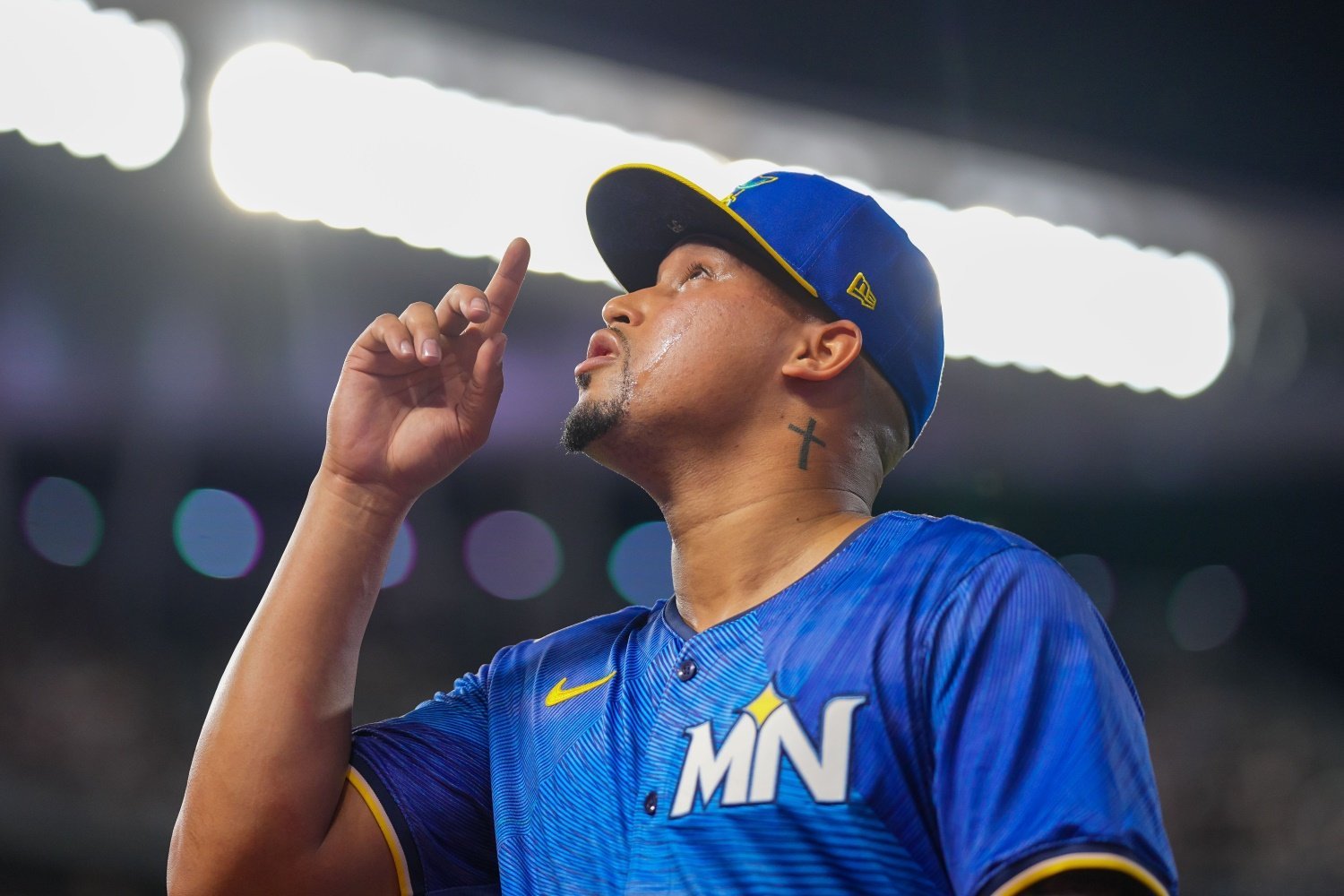 The MLB trade deadline is fast approaching, and few names carry as much intrigue and raw firepower as Twins closer Jhoan Duran. With the Blue Jays hovering at the top of the AL East and looking to make a serious push in October, the fit between buyer and seller is starting to crystallize. Toronto doesn’t need just any reliever. They need someone capable of shifting the late-inning dynamic in a postseason series. They already paid handsomely for Jeff Hoffman to be the fireman this winter, but we live in the era of the super-bullpen—and if it's 'super' a team is chasing, Duran fits that description better than almost anyone else on the market. The Jays’ Track Record of Aggression Toronto has made a habit of being one of the league’s most active teams at the deadline under general manager Ross Atkins. Since 2016, every year in which they’ve acted as buyers, they’ve pulled off at least three trades, often with a focus on pitching. In 2020 and 2022, they added three or more arms to their staff, and the approach has consistently paid off by raising the club’s floor down the stretch. From Jordan Hicks and Whit Merrifield to José Berríos and Anthony Bass, Toronto has been willing to spend prospect capital in exchange for reliable production. This year, the script feels similar. The Jays are thriving, but injuries have tested their depth at every level. What they lack now isn’t patchwork solutions, it’s elite talent. Specifically, they need a game-changer at the back of the bullpen. Why Duran Could Be on the Block Minnesota finds itself in a complicated spot. The Twins are still on the fringes of the playoff picture, but the front office is likely open to creative deals, if they can fetch long-term value in return. Trading Duran would be a massive move, both symbolically and strategically, but it's not out of the question. Duran, still just 27, remains one of the most electric arms in baseball. He boasts a triple-digit fastball, a wicked splinker, and elite strikeout rates (26.3 K% in 2025). Through the 2025 season’s first half, he’s posted a 1.52 ERA and 1.09 WHIP, while converting 14 save opportunities. Despite being one of the American League’s most dominant relievers, Duran was somehow left off the All-Star roster, a snub that could still be corrected as injury replacements are named over the weekend. Crucially, Duran is under team control through the 2027 season. The Blue Jays, like many teams, have shown a preference for adding players with team control. That extended runway of affordability makes him more than a rental. It makes him a long-term bullpen anchor, which significantly ups his trade value. The Prospect Price Tag If the Blue Jays want to land Duran, they’ll need to come to the table with a significant offer, and they have the pieces to make it happen. According to MLB Pipeline, Toronto’s top five prospects offer a compelling blend of upside and proximity to the majors: SS Arjun Nimmala (No. 1) – One of the most exciting teenage infielders in the minors, Nimmala offers premium bat speed and a strong arm at shortstop. Still just 19, he’s raw but oozes star potential. At High-A, he is hitting .238/.325/.416 with 11 homers and 17 doubles. The Twins would be hard-pressed to pass up a deal involving a talent of this caliber, though it’s unlikely the Jays would consider moving him for even an elite reliever. Nimmala might be in play if, instead, the Jays lock in on Twins starter Joe Ryan. RHP Trey Yesavage (No. 2) – A polished college arm from East Carolina, Yesavage was Toronto’s 2024 first-round pick and has quickly ascended the system as he reached Double-A this season. In 16 starts (67 2/3 IP), he has a 3.19 ERA with a 0.99 WHIP. With a deep pitch mix and strong command, he profiles as a mid-rotation starter who could reach the majors as soon as 2026. 2B/3B Orelvis Martinez (No. 3) – Recently promoted to the big leagues, Martinez brings major right-handed power and positional flexibility. He’s spent time at second base and third base and could help the Twins immediately, though questions remain about his plate discipline. He was a consensus top-100 prospect entering last season, so his stock has fallen. He’s struggled at Triple-A this season, with a .653 OPS in 74 games. LHP Ricky Tiedemann (No. 4) – Once considered one of the top left-handed pitching prospects in baseball, Tiedemann has battled injuries but still flashes frontline stuff when healthy. He underwent Tommy John surgery in July 2024, which will likely sideline him for most (if not all) of the 2025 season. His upside is tantalizing, but durability is the key concern. The Twins would require one of the top three names as the centerpiece in any Duran trade, particularly given his dominance and years of team control. Packaging a bat like Martinez with a pitcher such as Tiedemann or Yesavage could be enough to grab Minnesota’s attention, especially if Toronto is serious about upgrading their bullpen with a true game-changer. Why This Could Work For Minnesota, dealing Duran would be painful but potentially transformative. They could acquire controllable talent to bolster their farm or fill immediate gaps, especially with the pitching pipeline still under development. For Toronto, it’s a matter of maximizing their current window with Vladimir Guerrero Jr., Bo Bichette, and a rotation built to win now. This is the kind of deal that takes nerve. It requires the Blue Jays to bet on Duran being the difference-maker in October. It requires the Twins to look past 2025 and see the bigger picture. But if the market shapes up as expected, with few true closers available and several contenders shopping, Minnesota might hold the single most valuable bullpen chip available. Will the Blue Jays be bold enough to push all their chips in? If so, Duran might just be headed north of the border, and the Twins could walk away with a franchise-altering haul. Would the Blue Jays be willing to overpay for Duran? Leave a comment and start the discussion.
 -
Image courtesy of © Brad Rempel-Imagn Images The MLB trade deadline is fast approaching, and few names carry as much intrigue and raw firepower as Twins closer Jhoan Duran. With the Blue Jays hovering at the top of the AL East and looking to make a serious push in October, the fit between buyer and seller is starting to crystallize. Toronto doesn’t need just any reliever. They need someone capable of shifting the late-inning dynamic in a postseason series. They already paid handsomely for Jeff Hoffman to be the fireman this winter, but we live in the era of the super-bullpen—and if it's 'super' a team is chasing, Duran fits that description better than almost anyone else on the market. The Jays’ Track Record of Aggression Toronto has made a habit of being one of the league’s most active teams at the deadline under general manager Ross Atkins. Since 2016, every year in which they’ve acted as buyers, they’ve pulled off at least three trades, often with a focus on pitching. In 2020 and 2022, they added three or more arms to their staff, and the approach has consistently paid off by raising the club’s floor down the stretch. From Jordan Hicks and Whit Merrifield to José Berríos and Anthony Bass, Toronto has been willing to spend prospect capital in exchange for reliable production. This year, the script feels similar. The Jays are thriving, but injuries have tested their depth at every level. What they lack now isn’t patchwork solutions, it’s elite talent. Specifically, they need a game-changer at the back of the bullpen. Why Duran Could Be on the Block Minnesota finds itself in a complicated spot. The Twins are still on the fringes of the playoff picture, but the front office is likely open to creative deals, if they can fetch long-term value in return. Trading Duran would be a massive move, both symbolically and strategically, but it's not out of the question. Duran, still just 27, remains one of the most electric arms in baseball. He boasts a triple-digit fastball, a wicked splinker, and elite strikeout rates (26.3 K% in 2025). Through the 2025 season’s first half, he’s posted a 1.52 ERA and 1.09 WHIP, while converting 14 save opportunities. Despite being one of the American League’s most dominant relievers, Duran was somehow left off the All-Star roster, a snub that could still be corrected as injury replacements are named over the weekend. Crucially, Duran is under team control through the 2027 season. The Blue Jays, like many teams, have shown a preference for adding players with team control. That extended runway of affordability makes him more than a rental. It makes him a long-term bullpen anchor, which significantly ups his trade value. The Prospect Price Tag If the Blue Jays want to land Duran, they’ll need to come to the table with a significant offer, and they have the pieces to make it happen. According to MLB Pipeline, Toronto’s top five prospects offer a compelling blend of upside and proximity to the majors: SS Arjun Nimmala (No. 1) – One of the most exciting teenage infielders in the minors, Nimmala offers premium bat speed and a strong arm at shortstop. Still just 19, he’s raw but oozes star potential. At High-A, he is hitting .238/.325/.416 with 11 homers and 17 doubles. The Twins would be hard-pressed to pass up a deal involving a talent of this caliber, though it’s unlikely the Jays would consider moving him for even an elite reliever. Nimmala might be in play if, instead, the Jays lock in on Twins starter Joe Ryan. RHP Trey Yesavage (No. 2) – A polished college arm from East Carolina, Yesavage was Toronto’s 2024 first-round pick and has quickly ascended the system as he reached Double-A this season. In 16 starts (67 2/3 IP), he has a 3.19 ERA with a 0.99 WHIP. With a deep pitch mix and strong command, he profiles as a mid-rotation starter who could reach the majors as soon as 2026. 2B/3B Orelvis Martinez (No. 3) – Recently promoted to the big leagues, Martinez brings major right-handed power and positional flexibility. He’s spent time at second base and third base and could help the Twins immediately, though questions remain about his plate discipline. He was a consensus top-100 prospect entering last season, so his stock has fallen. He’s struggled at Triple-A this season, with a .653 OPS in 74 games. LHP Ricky Tiedemann (No. 4) – Once considered one of the top left-handed pitching prospects in baseball, Tiedemann has battled injuries but still flashes frontline stuff when healthy. He underwent Tommy John surgery in July 2024, which will likely sideline him for most (if not all) of the 2025 season. His upside is tantalizing, but durability is the key concern. The Twins would require one of the top three names as the centerpiece in any Duran trade, particularly given his dominance and years of team control. Packaging a bat like Martinez with a pitcher such as Tiedemann or Yesavage could be enough to grab Minnesota’s attention, especially if Toronto is serious about upgrading their bullpen with a true game-changer. Why This Could Work For Minnesota, dealing Duran would be painful but potentially transformative. They could acquire controllable talent to bolster their farm or fill immediate gaps, especially with the pitching pipeline still under development. For Toronto, it’s a matter of maximizing their current window with Vladimir Guerrero Jr., Bo Bichette, and a rotation built to win now. This is the kind of deal that takes nerve. It requires the Blue Jays to bet on Duran being the difference-maker in October. It requires the Twins to look past 2025 and see the bigger picture. But if the market shapes up as expected, with few true closers available and several contenders shopping, Minnesota might hold the single most valuable bullpen chip available. Will the Blue Jays be bold enough to push all their chips in? If so, Duran might just be headed north of the border, and the Twins could walk away with a franchise-altering haul. Would the Blue Jays be willing to overpay for Duran? Leave a comment and start the discussion. View full article
-
Image courtesy of Rob Thompson, St. Paul Saints Not every top prospect's story ends with big moments and standing ovations at Target Field. Earlier this week, the Minnesota Twins officially released infielder Yunior Severino, a once-promising slugger who led the minor leagues in home runs two years ago. His seemingly abrupt release serves as a sobering reminder of just how steep and unforgiving the climb to the big leagues can be, even for players who show legitimate flashes of big-league potential. From Power Breakout to 40-Man Roster It wasn’t long ago that Severino looked like one of the most exciting bats in the Twins’ pipeline. In 2023, the then-23-year-old slugged his way to the organizational spotlight, launching a minor league-leading 35 home runs across 120 games between Double-A Wichita and Triple-A St. Paul. His .272/.352/.546 slash line placed him among the most productive hitters in the farm system, and his ability to tap into raw power forced the Twins’ hand. They added him to the 40-man roster that offseason to shield him from the Rule 5 Draft. Baseball America named him the 2023 Twins Minor League Player of the Year. He was also the Twins Daily Minor League Hitter of the Year, beating out other players like Brooks Lee and Emmanuel Rodriguez. The Twins organization named Lee the 2023 Sherry Robertson Award winner as their minor-league player of the year. Severino was at the peak of his prospect standing, but there were flaws to his game. Despite the power surge, there were always red flags, most notably his high strikeout rate, which sat just shy of 33%. But in a farm system short on impact corner bats, Severino looked like someone who could offer value as a switch-hitting slugger. He was young for Triple-A; flashed legitimate power to all fields; and offered some positional versatility, at least on paper. Yet, the transition from a breakout season to sustainable success proved to be a hurdle he couldn’t clear. A Disappearing Bat The Twins carried Severino on the 40-man roster for the entirety of 2024, but never gave him a serious look for a call-up. That, in itself, was telling. With injuries and underperformance impacting the major-league roster at times, Severino remained in St. Paul, trying to regain the form that had vaulted him up prospect rankings. That form never returned. Severino’s OPS fell by 123 points in 2024. His isolated power (ISO), a key metric for evaluating raw pop, plummeted from .274 to .180. That’s a steep drop, especially in the hitter-friendly confines of CHS Field and across the power-inflated International League. His strikeout rate did improve slightly, dropping to 27.8%, but it came at the cost of his biggest weapon: the long ball. Pitchers at the Triple-A level began exploiting his approach. Severino showed a persistent tendency to chase pitches outside the zone and often looked off-balance at the plate. Without the loud contact to compensate for the swing-and-miss, the Twins were left with a player whose offensive ceiling suddenly looked far more limited. In 2025, his numbers cratered in St. Paul. The now-25-year-old hit .196/.344/.324, with two home runs and seven doubles in 33 games. His strikeout rate jumped back up over 35% and his wRC+ was below 85 for the first time in his career. The upper minors can be a challenging environment for power-swinging sluggers, and Severino was never able to put it all together. A Man Without a Position Even when the bat was booming, defensive questions trailed Severino. Originally signed as a middle infielder, he’s moved down the defensive spectrum as he’s filled out physically. By 2025, he was primarily limited to first base, where he was considered a below-average defender. He lacked the athleticism to cover ground and didn’t show the soft hands or footwork typically required at the position. He’s also a below-average runner, which further limits his value as a bench piece or utility player. Without a strong defensive position and with a bat that no longer looked major league-ready, Severino found himself in the unenviable position of being a power-first prospect with no clear role. Development Isn’t Linear There’s no question that Severino has legitimate raw power. Players who can hit 30-plus home runs in a minor-league season don’t grow on trees. However, his story highlights the often brutal nature of prospect development. Not every toolsy breakout can carry over to the highest level of competition in the world. Even with gaudy home run totals and a spot on the 40-man roster, Severino couldn’t bridge the gap between upper-minors standout and big-league contributor. Now 25, he’ll look for another opportunity elsewhere, likely with a club intrigued by his power potential and hoping a new environment can unlock a more consistent version of his swing. And for the Twins, the decision to release him reflects the crowded nature of the roster and the importance of finding players who can offer value both at the plate and in the field. Severino’s fall from top prospect to organizational depth to release was swift and disappointing. It’s a tough break for the player and a harsh reality for a front office constantly trying to forecast which players will pan out in the ultra-competitive world of MLB development. Do you think the Twins gave up on Severino too soon? Or was the writing already on the wall? Join the conversation in the comments below. View full article
-
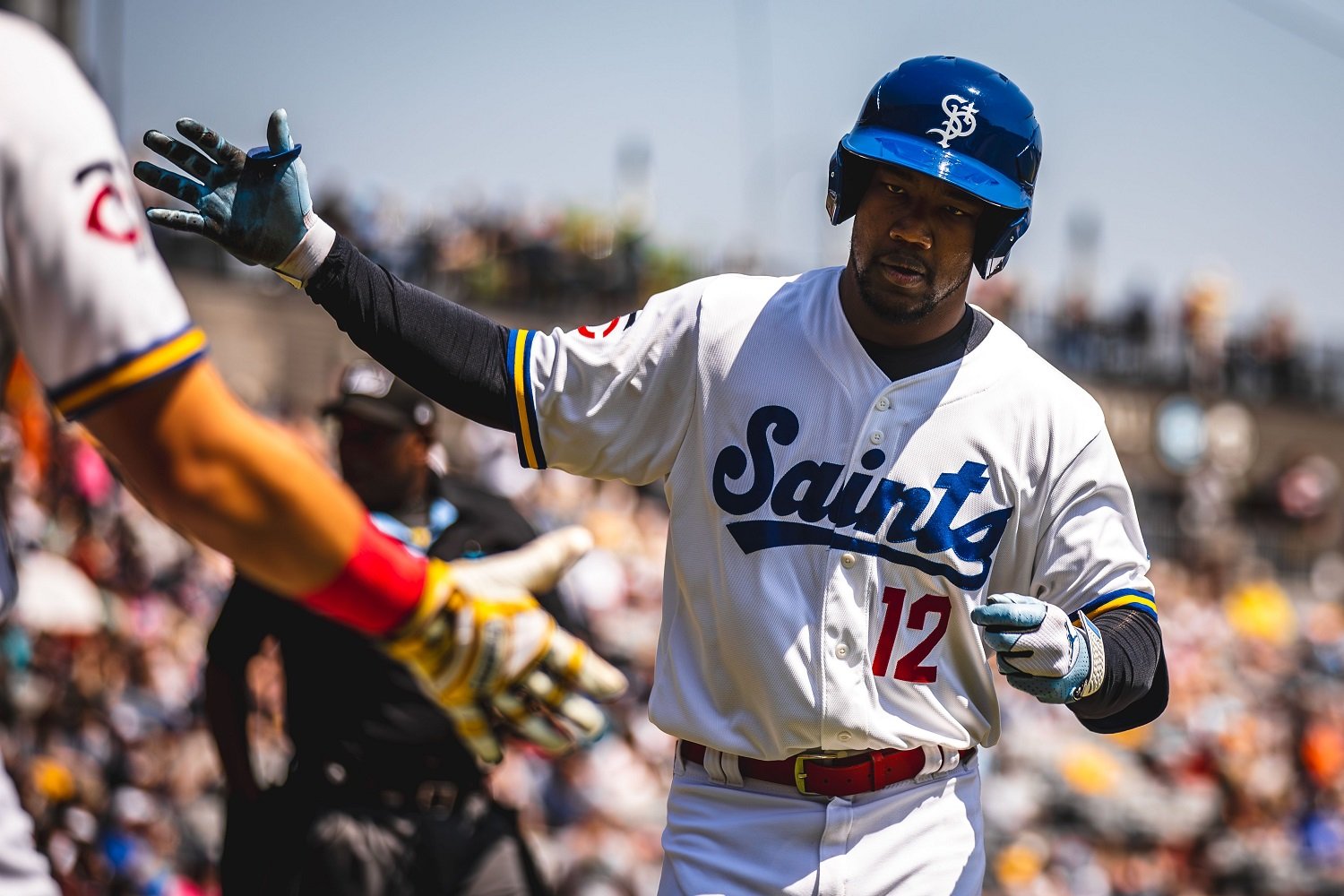 Not every top prospect's story ends with big moments and standing ovations at Target Field. Earlier this week, the Minnesota Twins officially released infielder Yunior Severino, a once-promising slugger who led the minor leagues in home runs two years ago. His seemingly abrupt release serves as a sobering reminder of just how steep and unforgiving the climb to the big leagues can be, even for players who show legitimate flashes of big-league potential. From Power Breakout to 40-Man Roster It wasn’t long ago that Severino looked like one of the most exciting bats in the Twins’ pipeline. In 2023, the then-23-year-old slugged his way to the organizational spotlight, launching a minor league-leading 35 home runs across 120 games between Double-A Wichita and Triple-A St. Paul. His .272/.352/.546 slash line placed him among the most productive hitters in the farm system, and his ability to tap into raw power forced the Twins’ hand. They added him to the 40-man roster that offseason to shield him from the Rule 5 Draft. Baseball America named him the 2023 Twins Minor League Player of the Year. He was also the Twins Daily Minor League Hitter of the Year, beating out other players like Brooks Lee and Emmanuel Rodriguez. The Twins organization named Lee the 2023 Sherry Robertson Award winner as their minor-league player of the year. Severino was at the peak of his prospect standing, but there were flaws to his game. Despite the power surge, there were always red flags, most notably his high strikeout rate, which sat just shy of 33%. But in a farm system short on impact corner bats, Severino looked like someone who could offer value as a switch-hitting slugger. He was young for Triple-A; flashed legitimate power to all fields; and offered some positional versatility, at least on paper. Yet, the transition from a breakout season to sustainable success proved to be a hurdle he couldn’t clear. A Disappearing Bat The Twins carried Severino on the 40-man roster for the entirety of 2024, but never gave him a serious look for a call-up. That, in itself, was telling. With injuries and underperformance impacting the major-league roster at times, Severino remained in St. Paul, trying to regain the form that had vaulted him up prospect rankings. That form never returned. Severino’s OPS fell by 123 points in 2024. His isolated power (ISO), a key metric for evaluating raw pop, plummeted from .274 to .180. That’s a steep drop, especially in the hitter-friendly confines of CHS Field and across the power-inflated International League. His strikeout rate did improve slightly, dropping to 27.8%, but it came at the cost of his biggest weapon: the long ball. Pitchers at the Triple-A level began exploiting his approach. Severino showed a persistent tendency to chase pitches outside the zone and often looked off-balance at the plate. Without the loud contact to compensate for the swing-and-miss, the Twins were left with a player whose offensive ceiling suddenly looked far more limited. In 2025, his numbers cratered in St. Paul. The now-25-year-old hit .196/.344/.324, with two home runs and seven doubles in 33 games. His strikeout rate jumped back up over 35% and his wRC+ was below 85 for the first time in his career. The upper minors can be a challenging environment for power-swinging sluggers, and Severino was never able to put it all together. A Man Without a Position Even when the bat was booming, defensive questions trailed Severino. Originally signed as a middle infielder, he’s moved down the defensive spectrum as he’s filled out physically. By 2025, he was primarily limited to first base, where he was considered a below-average defender. He lacked the athleticism to cover ground and didn’t show the soft hands or footwork typically required at the position. He’s also a below-average runner, which further limits his value as a bench piece or utility player. Without a strong defensive position and with a bat that no longer looked major league-ready, Severino found himself in the unenviable position of being a power-first prospect with no clear role. Development Isn’t Linear There’s no question that Severino has legitimate raw power. Players who can hit 30-plus home runs in a minor-league season don’t grow on trees. However, his story highlights the often brutal nature of prospect development. Not every toolsy breakout can carry over to the highest level of competition in the world. Even with gaudy home run totals and a spot on the 40-man roster, Severino couldn’t bridge the gap between upper-minors standout and big-league contributor. Now 25, he’ll look for another opportunity elsewhere, likely with a club intrigued by his power potential and hoping a new environment can unlock a more consistent version of his swing. And for the Twins, the decision to release him reflects the crowded nature of the roster and the importance of finding players who can offer value both at the plate and in the field. Severino’s fall from top prospect to organizational depth to release was swift and disappointing. It’s a tough break for the player and a harsh reality for a front office constantly trying to forecast which players will pan out in the ultra-competitive world of MLB development. Do you think the Twins gave up on Severino too soon? Or was the writing already on the wall? Join the conversation in the comments below.
 -
Twins Shuffle Bullpen: Joey Wentz DFA’d, Anthony Misiewicz Joins the Mix
Cody Christie posted an article in Twins
 The Minnesota Twins made a bullpen move on Wednesday, designating left-hander Joey Wentz for assignment and selecting the contract of fellow southpaw Anthony Misiewicz from Triple-A St. Paul. Wentz, 27, was a waiver claim last month from Pittsburgh but struggled mightily during his brief tenure with the Twins. He appeared in six games and allowed runs in five of them, ultimately compiling a 15.75 ERA over just eight innings. He served mostly in low-leverage situations, often coming in as a long reliever or mop-up man, and the results made it clear that a change was needed. Once a top prospect in the Braves organization, Wentz was traded to Detroit in the 2019 Shane Greene deal. He debuted with the Tigers, but has yet to establish himself in the big leagues. Over parts of four MLB seasons, he’s amassed 239 2/3 innings with a 5.75 ERA, a 20.6% strikeout rate, and a walk rate just over 10%. Issues with home runs (1.5 per nine innings) and stranding baserunners have continued to plague him (62.5 LOB% in 2025). For his career, he has accumulated -1.6 WAR, so he might be running out of big-league opportunities. Because Wentz is out of minor-league options, Minnesota couldn’t send him down without exposing him to waivers. If no team claims him within the waiver period, the Twins could outright him to Triple-A and try to work on his mechanics in a lower-pressure setting. A resolution will likely come within the next week. Stepping into his roster spot is 30-year-old Misiewicz, who joined the Twins on a minor-league deal this offseason. Pitching out of the Saints’ bullpen, Misiewicz posted a 4.02 ERA while notching eight saves and a hold. His 24.2% strikeout rate and 8.3% walk rate reflect solid command, and aside from one tough outing in late June (5 ER in 1 IP), he’s been steady, including two clean appearances since then. Misiewicz brings plenty of major-league experience, having previously pitched for five teams: the Mariners, Royals, Diamondbacks, Tigers, and Yankees. Over 115 2/3 big-league innings, he owns a 4.67 ERA with a 22.8% strikeout rate and 7.6% walk rate. With a fastball averaging around 91.6 mph, a cutter in the high 80s, and a looping curveball, he’s relied more on sequencing and location than overpowering stuff. The Twins didn't turn to their newest reliever immediately, but against a Cubs lineup with three high-powered left-handed bats, that could change Thursday. "The Mis, he's been doing a good job for us. He's been throwing the ball well. He gives us another really good left-handed option," manager Rocco Baldelli said. "Our pitching group has been very excited about him going all the way back to spring training. We think he has real weapons. It'll be good to give him a run and see what he can do. There's some left-handed runs we're facing in this lineup right now. Could be a good opportunity to get him right out there." Like Wentz, Misiewicz is also out of options, so he’ll need to perform if he hopes to stick on the big-league roster. That's probably why the team waited so long to promote him, even if they truly are enthusiastic about his stuff. He has three years of MLB service time, meaning the Twins could retain him beyond this season, but that will depend on how well he holds up in the big leagues. As the trade deadline approaches and the Twins keep looking for consistent arms to support their late-inning crew, Misiewicz could get a real opportunity to carve out a role, but he’ll need to prove himself quickly.
 -
The Minnesota Twins made a bullpen move on Wednesday, designating left-hander Joey Wentz for assignment and selecting the contract of fellow southpaw Anthony Misiewicz from Triple-A St. Paul. Wentz, 27, was a waiver claim last month from Pittsburgh but struggled mightily during his brief tenure with the Twins. He appeared in six games and allowed runs in five of them, ultimately compiling a 15.75 ERA over just eight innings. He served mostly in low-leverage situations, often coming in as a long reliever or mop-up man, and the results made it clear that a change was needed. Once a top prospect in the Braves organization, Wentz was traded to Detroit in the 2019 Shane Greene deal. He debuted with the Tigers but has yet to establish himself in the big leagues. Over parts of four MLB seasons, he’s amassed 239 2/3 innings with a 5.75 ERA, a 20.6% strikeout rate, and a walk rate just over 10%. Issues with home runs (1.50 per nine innings) and stranding baserunners have continued to plague him (62.5 LOB% in 2025). For his career, he has accumulated a -1.6 WAR, so he might be running out of big-league opportunities. Because Wentz is out of minor league options, Minnesota couldn’t send him down without exposing him to waivers. If no team claims him within the waiver period, the Twins could outright him to Triple-A and try to work on his mechanics in a lower-pressure setting. A resolution will likely come within the next week. Stepping into his roster spot is 30-year-old Misiewicz , who joined the Twins on a minor league deal this offseason. Pitching out of the Saints’ bullpen, Misiewicz posted a 4.02 ERA while notching eight saves and a hold. His 24.2% strikeout rate and 8.3% walk rate reflect solid command, and aside from one tough outing in late June (5 ER in 1 IP), he’s been steady including two clean appearances since then. Misiewicz brings plenty of major league experience, having previously pitched for five teams: the Mariners, Royals, Diamondbacks, Tigers, and Yankees. Over 115 2/3 big-league innings, he owns a 4.67 ERA with a 22.8% strikeout rate and 7.6% walk rate. With a fastball averaging around 91.6 mph, a cutter in the high 80s, and a looping curveball, he’s relied more on sequencing and location than overpowering stuff. Like Wentz, Misiewicz is also out of minor league options, so he’ll need to perform if he hopes to stick on the big-league roster. He has three years of MLB service time, meaning the Twins could retain him beyond this season, but that will depend on how well he holds up in the big leagues. As the trade deadline approaches and the Twins keep looking for consistent arms to support their late-inning crew, Misiewicz could get a real opportunity to carve out a role, but he’ll need to prove himself quickly. View full article
-
 The Minnesota Twins are clinging to the fringe of contention in a tight American League playoff race. Still, their front office may soon face a franchise-defining question: Do they trade their top starting pitcher while his value is at its absolute peak? MLB Network’s Jon Morosi floated the idea this week that the Boston Red Sox and "a number of teams" are keeping tabs on Joe Ryan as the deadline approaches. Now, Morosi's comment leaned speculative, but when a name like Ryan enters the rumor mill, it’s enough to raise eyebrows—and for good reason. Ryan has been one of the best starting pitchers in the American League this year. Through 18 starts, he's compiled a sparkling 2.76 ERA and a minuscule 0.89 WHIP. He’s fanned 116 batters while issuing just 21 walks in 104 1/3 innings. Opponents are hitting .193/.254/.335 against him. His 3.9 rWAR leads all Twins (0.6 rWAR higher than Byron Buxton) and ranks among the top pitchers in baseball. And somehow, he was snubbed from the initial All-Star Game selections, which was thankfully rectified on Wednesday. Ryan is succeeding because he’s evolving. His release point remains one of the most deceptive in baseball, with hitters struggling to pick up a four-seamer that plays up despite modest velocity (93.4 mph in 2025). His four-seamer is one of baseball’s most valuable pitches. He’s mixed in a sweeper with bite (.262 xSLG), sharpened his splitter (.212 BA), and continues to keep left-handed hitters in check (.633 OPS). He’s an entirely different pitcher from the fastball-heavy prospect the Twins originally acquired at the 2021 trade deadline. At 29 years old, Ryan is under team control for two more years after 2025, and his profile (with a deep arsenal, elite command, and deceptive delivery) makes him an incredibly appealing trade chip. If the Twins are willing to entertain offers, contenders should be lining up. Here’s a look at six potential suitors who could make a big push for Ryan, and why he’d be worth the price. Boston Red Sox: The Center of the Speculation Morosi mentioned the Red Sox by name, even floating the idea of a Joe Ryan-for-Jarren Duran framework. This is something discussed earlier this week at Twins Daily. Duran, an All-Star in 2024, has been a fixture atop Boston’s lineup, leading the league in plate appearances while playing nearly every game for two years running. For the Twins, who’ve struggled to get production from their best players, Duran’s consistency and athleticism would be a significant boost. Boston just dealt Rafael Devers, suggesting they’re open to retooling but not tearing down. Ryan would instantly help the top of their rotation, providing some much-needed rotation stability in 2025 and beyond. It’s hard to gauge if they’d honestly part with Duran, but if they’re serious about pitching, Ryan has been a borderline All-Star for multiple seasons. Chicago Cubs: Rotation Needs and Prospect Capital The Cubs’ rotation has been impacted by injuries, with Justin Steele being the most significant subtraction. He underwent season-ending UCL surgery on April 18. Also missing from the rotation is Jameson Taillon, who has a right calf strain. Chicago is surprising many at the top of the NL Central and could benefit from adding a frontline starter who isn’t a rental. They also have the prospect capital to make it happen, and some reports have them willing to go “all-in.” There is some speculation that they would be willing to trade top prospects Owen Caissie or Kevin Alcántara if that lands them the right pitchers. The Cubs are well-positioned to make an October run, and Ryan could headline their staff for multiple seasons. Houston Astros: Preparing for a Post-Valdez Rotation The Astros are in an awkward spot: still competitive and still dangerous, but clearly no longer the juggernaut they once were. However, they have jumped ahead in the AL West and are looking to keep their winning window open as long as possible. Framber Valdez is set to hit free agency this winter, and Cristian Javier is out until later this year with Tommy John surgery. The Astros are always looking to upgrade, and Ryan could take Valdez’s rotation spot in 2026. Ryan could be the perfect plug-and-play answer. He fits their mold of high-efficiency strike-throwers and would give them a cost-controlled, playoff-caliber starter to go with Hunter Brown and Valdez. The Astros have thinned out their system, but outfielder Jacob Melton and catcher Walker Janek are intriguing pieces who could headline a deal. Los Angeles Dodgers: Never Count Them Out If there’s a big name available, assume the Dodgers are interested, especially when it comes to starting pitching. Ryan fits like a glove in Los Angeles, as he is analytically inclined, strikes out hitters with command and deception, and brings a bulldog mentality to the mound. He’s also a California boy, so that adds to the intrigue. The Dodgers have the ability to overwhelm with prospect depth and would likely be willing to include one of their top prospects in the right deal. Could the Twins pry away someone like Josue De Paula or Zyhir Hope? Perhaps a long-term pitching solution like Jackson Ferris? Ryan wouldn’t just be a short-term fix for LA’s rotation, as he’d be a foundational piece alongside Tyler Glasnow, Yoshinobu Yamamoto, Blake Snell and Shohei Ohtani. New York Mets: Pitching-Starved and Prospect-Rich The Mets are aggressive. They’ve already shown a willingness to be aggressive with trades and free agency, and Steve Cohen’s deep pockets mean there’s never really a full rebuild. Currently, the Mets have five starting pitchers on the injured list, including Tylor Megill, Griffin Canning, Paul Blackburn, Kodai Senga, and Sean Manaea. New York has a clear need for a starter with top-of-the-line stuff. Ryan would give them a weapon in the NL East arms race and fits their desire to acquire players under control beyond 2025. Minnesota could target infielder/outfielder Jett Williams, right-handed pitcher Jonah Tong, or even explore a deal built around outfielder Carson Benge. Cohen wants his teams to make long playoff runs, and Ryan can help make that happen for the Mets. New York Yankees: Reinforcements Needed Now Gerrit Cole, Clarke Schmidt, and Luis Gil are all out, and the Yankees have played poorly in recent weeks. This isn’t the powerhouse Yankees of old, but they are still likely to be one of baseball’s most active teams at the deadline. If New York wants to return to the World Series, it needs rotational upgrades as soon as possible. Ryan would not only deepen the Yankees’ rotation for October, but also give them an option beyond this season. Could the Twins aim high and ask for infielder George Lombard Jr. or outfielder Spencer Jones? The Yankees have pitching prospects like right-handers Ben Hess and Bryce Cunningham, if Minnesota wants to continue building depth on the mound. Would the Twins Actually Do It? It’s a fair question, and one that’s likely being debated internally. Trading Ryan wouldn’t be a white flag on the season, but it would be a bold move for a team still chasing a playoff berth. The return would need to be substantial. Think multiple top-100 prospects, or a cost-controlled MLB regular and a high-ceiling arm. But if there’s a time to trade Ryan, it’s now. He’s pitching like a frontline ace, he’s healthy, and he has team-friendly control. If the Twins believe they can build a more sustainable winner by flipping him for long-term pieces, this deadline could turn into a franchise pivot point. What do you think, Twins fans? Would you trade Joe Ryan, if it meant getting a star outfielder like Jarren Duran or multiple top prospects? Or is Ryan too valuable to let go? Drop your thoughts below and let the deadline debate begin.
 -
Image courtesy of © Troy Taormina-Imagn Images The Minnesota Twins are clinging to the fringe of contention in a tight American League playoff race. Still, their front office may soon face a franchise-defining question: Do they trade their top starting pitcher while his value is at its absolute peak? MLB Network’s Jon Morosi floated the idea this week that the Boston Red Sox and "a number of teams" are keeping tabs on Joe Ryan as the deadline approaches. Now, Morosi's comment leaned speculative, but when a name like Ryan enters the rumor mill, it’s enough to raise eyebrows—and for good reason. Ryan has been one of the best starting pitchers in the American League this year. Through 18 starts, he's compiled a sparkling 2.76 ERA and a minuscule 0.89 WHIP. He’s fanned 116 batters while issuing just 21 walks in 104 1/3 innings. Opponents are hitting .193/.254/.335 against him. His 3.9 rWAR leads all Twins (0.6 rWAR higher than Byron Buxton) and ranks among the top pitchers in baseball. And somehow, he was snubbed from the initial All-Star Game selections, which was thankfully rectified on Wednesday. Ryan is succeeding because he’s evolving. His release point remains one of the most deceptive in baseball, with hitters struggling to pick up a four-seamer that plays up despite modest velocity (93.4 mph in 2025). His four-seamer is one of baseball’s most valuable pitches. He’s mixed in a sweeper with bite (.262 xSLG), sharpened his splitter (.212 BA), and continues to keep left-handed hitters in check (.633 OPS). He’s an entirely different pitcher from the fastball-heavy prospect the Twins originally acquired at the 2021 trade deadline. At 29 years old, Ryan is under team control for two more years after 2025, and his profile (with a deep arsenal, elite command, and deceptive delivery) makes him an incredibly appealing trade chip. If the Twins are willing to entertain offers, contenders should be lining up. Here’s a look at six potential suitors who could make a big push for Ryan, and why he’d be worth the price. Boston Red Sox: The Center of the Speculation Morosi mentioned the Red Sox by name, even floating the idea of a Joe Ryan-for-Jarren Duran framework. This is something discussed earlier this week at Twins Daily. Duran, an All-Star in 2024, has been a fixture atop Boston’s lineup, leading the league in plate appearances while playing nearly every game for two years running. For the Twins, who’ve struggled to get production from their best players, Duran’s consistency and athleticism would be a significant boost. Boston just dealt Rafael Devers, suggesting they’re open to retooling but not tearing down. Ryan would instantly help the top of their rotation, providing some much-needed rotation stability in 2025 and beyond. It’s hard to gauge if they’d honestly part with Duran, but if they’re serious about pitching, Ryan has been a borderline All-Star for multiple seasons. Chicago Cubs: Rotation Needs and Prospect Capital The Cubs’ rotation has been impacted by injuries, with Justin Steele being the most significant subtraction. He underwent season-ending UCL surgery on April 18. Also missing from the rotation is Jameson Taillon, who has a right calf strain. Chicago is surprising many at the top of the NL Central and could benefit from adding a frontline starter who isn’t a rental. They also have the prospect capital to make it happen, and some reports have them willing to go “all-in.” There is some speculation that they would be willing to trade top prospects Owen Caissie or Kevin Alcántara if that lands them the right pitchers. The Cubs are well-positioned to make an October run, and Ryan could headline their staff for multiple seasons. Houston Astros: Preparing for a Post-Valdez Rotation The Astros are in an awkward spot: still competitive and still dangerous, but clearly no longer the juggernaut they once were. However, they have jumped ahead in the AL West and are looking to keep their winning window open as long as possible. Framber Valdez is set to hit free agency this winter, and Cristian Javier is out until later this year with Tommy John surgery. The Astros are always looking to upgrade, and Ryan could take Valdez’s rotation spot in 2026. Ryan could be the perfect plug-and-play answer. He fits their mold of high-efficiency strike-throwers and would give them a cost-controlled, playoff-caliber starter to go with Hunter Brown and Valdez. The Astros have thinned out their system, but outfielder Jacob Melton and catcher Walker Janek are intriguing pieces who could headline a deal. Los Angeles Dodgers: Never Count Them Out If there’s a big name available, assume the Dodgers are interested, especially when it comes to starting pitching. Ryan fits like a glove in Los Angeles, as he is analytically inclined, strikes out hitters with command and deception, and brings a bulldog mentality to the mound. He’s also a California boy, so that adds to the intrigue. The Dodgers have the ability to overwhelm with prospect depth and would likely be willing to include one of their top prospects in the right deal. Could the Twins pry away someone like Josue De Paula or Zyhir Hope? Perhaps a long-term pitching solution like Jackson Ferris? Ryan wouldn’t just be a short-term fix for LA’s rotation, as he’d be a foundational piece alongside Tyler Glasnow, Yoshinobu Yamamoto, Blake Snell and Shohei Ohtani. New York Mets: Pitching-Starved and Prospect-Rich The Mets are aggressive. They’ve already shown a willingness to be aggressive with trades and free agency, and Steve Cohen’s deep pockets mean there’s never really a full rebuild. Currently, the Mets have five starting pitchers on the injured list, including Tylor Megill, Griffin Canning, Paul Blackburn, Kodai Senga, and Sean Manaea. New York has a clear need for a starter with top-of-the-line stuff. Ryan would give them a weapon in the NL East arms race and fits their desire to acquire players under control beyond 2025. Minnesota could target infielder/outfielder Jett Williams, right-handed pitcher Jonah Tong, or even explore a deal built around outfielder Carson Benge. Cohen wants his teams to make long playoff runs, and Ryan can help make that happen for the Mets. New York Yankees: Reinforcements Needed Now Gerrit Cole, Clarke Schmidt, and Luis Gil are all out, and the Yankees have played poorly in recent weeks. This isn’t the powerhouse Yankees of old, but they are still likely to be one of baseball’s most active teams at the deadline. If New York wants to return to the World Series, it needs rotational upgrades as soon as possible. Ryan would not only deepen the Yankees’ rotation for October, but also give them an option beyond this season. Could the Twins aim high and ask for infielder George Lombard Jr. or outfielder Spencer Jones? The Yankees have pitching prospects like right-handers Ben Hess and Bryce Cunningham, if Minnesota wants to continue building depth on the mound. Would the Twins Actually Do It? It’s a fair question, and one that’s likely being debated internally. Trading Ryan wouldn’t be a white flag on the season, but it would be a bold move for a team still chasing a playoff berth. The return would need to be substantial. Think multiple top-100 prospects, or a cost-controlled MLB regular and a high-ceiling arm. But if there’s a time to trade Ryan, it’s now. He’s pitching like a frontline ace, he’s healthy, and he has team-friendly control. If the Twins believe they can build a more sustainable winner by flipping him for long-term pieces, this deadline could turn into a franchise pivot point. What do you think, Twins fans? Would you trade Joe Ryan, if it meant getting a star outfielder like Jarren Duran or multiple top prospects? Or is Ryan too valuable to let go? Drop your thoughts below and let the deadline debate begin. View full article
-
Twins Analytics Team Discovers Groundbreaking Metric: ‘Runs’
Cody Christie posted an article in Just For Fun
 In a stunning revelation set to shake the very foundation of baseball operations, the Minnesota Twins front office has reportedly discovered a revolutionary new metric known as “runs.” According to insiders at Target Field, this cutting-edge stat measures how often a player crosses home plate, contributing directly to something called “winning.” “We’ve been focused on OPS+, wRC+, and even WAR,” said one anonymous front office analyst, furiously scrolling through a spreadsheet filled with acronyms. “But it turns out there's been this really obscure ‘runs’ stat just sitting on Baseball Reference this whole time. It’s wild.” Sources say the revelation came during a midseason analytics meeting after a particularly frustrating series loss to the Miami Marlins. “Someone jokingly said, ‘Well at least we had more quality at-bats,’ and then our intern asked if we actually needed more people to score. The room went completely silent.” Front Office Reaction Twins manager Rocco Baldelli confirmed the existence of the new metric after a game earlier this week. “Yeah, we’re trying something different,” Baldelli said. “The idea is to get runners on base and then have other players hit the ball in ways that allow those runners to reach home. It’s called… I think the intern called it 'run manufacturing'? We’re looking into it.” Team president Derek Falvey, who once based an entire offseason on launch angles and exit velocity, is reportedly leading a new initiative called “Project Touch Plate.” The organization plans to retrain hitters to do something they’re calling “situational hitting,” though early reports suggest this may cause irreparable tension with the team’s long-term relationship with three true outcomes. Some within the front office have even dared to suggest that more outcomes exist. Player Reactions Carlos Correa, when asked about the new metric, said, “I’ve always thought scoring runs was kind of important, but no one ever put it into a chart for us. Now that it’s got a name and color-coding, I’m fully on board.” Brooks Lee added, “So, wait… we’re supposed to try to go all the way around the bases? That changes a few things.” When asked for comment, Christian Vázquez, currently hitting below .170, simply stared into the distance and whispered, “So that’s what they meant.” Fan Feedback Twins fans have had mixed reactions to the club’s new scoring-based strategy. “I’ve been coming to games since the Metrodome,” said longtime fan Carol Rasmussen. “I thought standing up and clapping was just for pitching changes. You can actually cheer when someone reaches home? I like it!” Another unnamed fan, dressed in a vintage Nick Punto jersey, was more skeptical. “Look, I love analytics as much as the next guy, but if they’re saying we have to score to win, that feels a bit gimmicky.” Despite the fanbase's cautious optimism, the Twins remain committed to integrating “runs” into their long-term strategy. Coaches have begun implementing new terminology during batting practice, with phrases like “productive outs,” “hit the ball the other way,” and “stop bunting with two outs” being added to the team’s daily vocabulary. Meanwhile, the front office is already working on its next discovery: a revolutionary new formula called RS > RA, which early models suggest could lead to something called a "winning record.” “We’re just scratching the surface,” said the anonymous analyst. “Next year, we might even explore what happens when you win a lot of games." Have thoughts about the Twins' new 'runs' initiative? Leave your sabermetric sarcasm in the comments below.
 -
Image courtesy of Paul Rutherford-Imagn Images In a stunning revelation set to shake the very foundation of baseball operations, the Minnesota Twins front office has reportedly discovered a revolutionary new metric known as “runs.” According to insiders at Target Field, this cutting-edge stat measures how often a player crosses home plate, contributing directly to something called “winning.” “We’ve been focused on OPS+, wRC+, and even WAR,” said one anonymous front office analyst, furiously scrolling through a spreadsheet filled with acronyms. “But it turns out there's been this really obscure ‘runs’ stat just sitting on Baseball Reference this whole time. It’s wild.” Sources say the revelation came during a midseason analytics meeting after a particularly frustrating series loss to the Miami Marlins. “Someone jokingly said, ‘Well at least we had more quality at-bats,’ and then our intern asked if we actually needed more people to score. The room went completely silent.” Front Office Reaction Twins manager Rocco Baldelli confirmed the existence of the new metric after a game earlier this week. “Yeah, we’re trying something different,” Baldelli said. “The idea is to get runners on base and then have other players hit the ball in ways that allow those runners to reach home. It’s called… I think the intern called it 'run manufacturing'? We’re looking into it.” Team president Derek Falvey, who once based an entire offseason on launch angles and exit velocity, is reportedly leading a new initiative called “Project Touch Plate.” The organization plans to retrain hitters to do something they’re calling “situational hitting,” though early reports suggest this may cause irreparable tension with the team’s long-term relationship with three true outcomes. Some within the front office have even dared to suggest that more outcomes exist. Player Reactions Carlos Correa, when asked about the new metric, said, “I’ve always thought scoring runs was kind of important, but no one ever put it into a chart for us. Now that it’s got a name and color-coding, I’m fully on board.” Brooks Lee added, “So, wait… we’re supposed to try to go all the way around the bases? That changes a few things.” When asked for comment, Christian Vázquez, currently hitting below .170, simply stared into the distance and whispered, “So that’s what they meant.” Fan Feedback Twins fans have had mixed reactions to the club’s new scoring-based strategy. “I’ve been coming to games since the Metrodome,” said longtime fan Carol Rasmussen. “I thought standing up and clapping was just for pitching changes. You can actually cheer when someone reaches home? I like it!” Another unnamed fan, dressed in a vintage Nick Punto jersey, was more skeptical. “Look, I love analytics as much as the next guy, but if they’re saying we have to score to win, that feels a bit gimmicky.” Despite the fanbase's cautious optimism, the Twins remain committed to integrating “runs” into their long-term strategy. Coaches have begun implementing new terminology during batting practice, with phrases like “productive outs,” “hit the ball the other way,” and “stop bunting with two outs” being added to the team’s daily vocabulary. Meanwhile, the front office is already working on its next discovery: a revolutionary new formula called RS > RA, which early models suggest could lead to something called a "winning record.” “We’re just scratching the surface,” said the anonymous analyst. “Next year, we might even explore what happens when you win a lot of games." Have thoughts about the Twins' new 'runs' initiative? Leave your sabermetric sarcasm in the comments below. View full article
-
Jhoan Duran One of American League's Biggest All-Star Snubs
Cody Christie posted an article in Twins
 The Minnesota Twins will only send one representative to the 2025 MLB All-Star Game, and while Byron Buxton is a worthy choice and will even be competing in the Home Run Derby, it’s clear that the roster should include another Twin. Jhoan Duran, Minnesota’s electric closer, was quietly one of the most glaring omissions from this year’s American League squad. Yes, the All-Star selection process has changed. Each league now carries a limited number of relievers, making the path to an All-Star nod even more difficult. When you look at the names who made it (Josh Hader, Andrés Muñoz, and Aroldis Chapman), it’s hard to say any of them are undeserving. But if there’s one reliever who should be heading to Atlanta and isn’t, it’s Duran. Dominant, Despite the Save Total Duran hasn’t piled up the saves like some of his peers this year, with just 13, but that’s no reflection of how dominant he’s been on the mound. The 27-year-old right-hander owns a 1.56 ERA over 41 appearances this season. He’s yet to allow a home run, and his strikeout rate remains excellent (26.8%). He’s anchoring a Twins bullpen that’s kept the team afloat (more or less) during an up-and-down first half. Duran is the type of player who can thrive in a showcase like the All-Star Game, when players are facing the best hitters on the planet. His lack of saves isn’t a matter of performance, but rather a product of Minnesota’s inconsistency in close games. The Twins haven’t provided him with the same volume of save opportunities as teams like the Astros, Mariners, or Red Sox have furnished his counterparts, but when Duran gets the ball in the ninth, he’s almost automatic. For the season, he has two blown saves, and he has yet to allow more than one earned run in any appearance. Duran has already accrued 2.1 rWAR, the second-highest total of his big-league career. He’s been successful this season on multiple levels. He is getting one of the best ground-ball percentages in baseball (70.2%). When batters aren’t smacking the ball into the ground, it's often because they're missing the ball entirely; he's inducing whiffs on 31% of opponents' swings. If hitters do manage to make contact, even in the air, they are barreling the ball less than 3% of the time. His xSLG, wOBA, xwOBA, and xwOBACON each rank in baseball’s top 4%. The numbers are elite for a pitcher who has seen a velocity drop over the last two seasons. A Legacy of Elite Relief Arms If Duran had made the team, he’d be the latest in a proud tradition of Minnesota relievers representing the club in the Midsummer Classic. Glen Perkins made three straight appearances from 2013 to 2015. Taylor Rogers earned a spot in 2021 as a very late addition to the team. Duran could follow a similar path in 2025. “Everyday” Eddie Guardado was a two-time All-Star in the early 2000s, and Joe Nathan became a perennial All-Star during the team’s AL Central dominance in the 2000s. Duran fits right into that lineage, as a high-leverage monster with stuff that leaves hitters baffled and fans buzzing. Unfortunately, this year’s All-Star format didn’t leave enough room to include him. As bullpen usage continues to evolve and relievers take on greater importance in the modern game, limiting each league to a small number of bullpen spots feels increasingly outdated. If any position group deserves expansion, it’s relief pitching. More Snubs in the Twin Cities Duran wasn’t the only deserving Twin left off the AL roster. Matthew Trueblood recently wrote about Joe Ryan's case for inclusion, and he’s right, because Ryan’s underlying numbers are as strong as ever, and he’s become a model of consistency in the rotation. Like Duran, Ryan might have been a victim of the team’s lukewarm standing in the playoff race, making it harder for voters (including his fellow players) to reward his performance. Still, if the goal of the All-Star Game is to highlight the very best of the game at the halfway mark, Duran (and Ryan) belong. Whether it’s lighting up the radar gun or locking down a late-inning lead, there are few pitchers more imposing or more deserving. Here’s hoping the snub fuels a dominant second half, and maybe a late push for some postseason hardware instead. Was Duran snubbed from the All-Star team? Leave a comment and start the discussion.
 -
Image courtesy of © Matt Krohn-Imagn Images The Minnesota Twins will only send one representative to the 2025 MLB All-Star Game, and while Byron Buxton is a worthy choice and will even be competing in the Home Run Derby, it’s clear that the roster should include another Twin. Jhoan Duran, Minnesota’s electric closer, was quietly one of the most glaring omissions from this year’s American League squad. Yes, the All-Star selection process has changed. Each league now carries a limited number of relievers, making the path to an All-Star nod even more difficult. When you look at the names who made it (Josh Hader, Andrés Muñoz, and Aroldis Chapman), it’s hard to say any of them are undeserving. But if there’s one reliever who should be heading to Atlanta and isn’t, it’s Duran. Dominant, Despite the Save Total Duran hasn’t piled up the saves like some of his peers this year, with just 13, but that’s no reflection of how dominant he’s been on the mound. The 27-year-old right-hander owns a 1.56 ERA over 41 appearances this season. He’s yet to allow a home run, and his strikeout rate remains excellent (26.8%). He’s anchoring a Twins bullpen that’s kept the team afloat (more or less) during an up-and-down first half. Duran is the type of player who can thrive in a showcase like the All-Star Game, when players are facing the best hitters on the planet. His lack of saves isn’t a matter of performance, but rather a product of Minnesota’s inconsistency in close games. The Twins haven’t provided him with the same volume of save opportunities as teams like the Astros, Mariners, or Red Sox have furnished his counterparts, but when Duran gets the ball in the ninth, he’s almost automatic. For the season, he has two blown saves, and he has yet to allow more than one earned run in any appearance. Duran has already accrued 2.1 rWAR, the second-highest total of his big-league career. He’s been successful this season on multiple levels. He is getting one of the best ground-ball percentages in baseball (70.2%). When batters aren’t smacking the ball into the ground, it's often because they're missing the ball entirely; he's inducing whiffs on 31% of opponents' swings. If hitters do manage to make contact, even in the air, they are barreling the ball less than 3% of the time. His xSLG, wOBA, xwOBA, and xwOBACON each rank in baseball’s top 4%. The numbers are elite for a pitcher who has seen a velocity drop over the last two seasons. A Legacy of Elite Relief Arms If Duran had made the team, he’d be the latest in a proud tradition of Minnesota relievers representing the club in the Midsummer Classic. Glen Perkins made three straight appearances from 2013 to 2015. Taylor Rogers earned a spot in 2021 as a very late addition to the team. Duran could follow a similar path in 2025. “Everyday” Eddie Guardado was a two-time All-Star in the early 2000s, and Joe Nathan became a perennial All-Star during the team’s AL Central dominance in the 2000s. Duran fits right into that lineage, as a high-leverage monster with stuff that leaves hitters baffled and fans buzzing. Unfortunately, this year’s All-Star format didn’t leave enough room to include him. As bullpen usage continues to evolve and relievers take on greater importance in the modern game, limiting each league to a small number of bullpen spots feels increasingly outdated. If any position group deserves expansion, it’s relief pitching. More Snubs in the Twin Cities Duran wasn’t the only deserving Twin left off the AL roster. Matthew Trueblood recently wrote about Joe Ryan's case for inclusion, and he’s right, because Ryan’s underlying numbers are as strong as ever, and he’s become a model of consistency in the rotation. Like Duran, Ryan might have been a victim of the team’s lukewarm standing in the playoff race, making it harder for voters (including his fellow players) to reward his performance. Still, if the goal of the All-Star Game is to highlight the very best of the game at the halfway mark, Duran (and Ryan) belong. Whether it’s lighting up the radar gun or locking down a late-inning lead, there are few pitchers more imposing or more deserving. Here’s hoping the snub fuels a dominant second half, and maybe a late push for some postseason hardware instead. Was Duran snubbed from the All-Star team? Leave a comment and start the discussion. View full article
-
Image courtesy of William Parmeter (Photo of Marco Raya) The Minnesota Twins are nearing the All-Star break with a flawed roster that will need more than just their current group to carry them the rest of the way. With key injuries and performance questions lingering, some help could arrive from within the organization. The Twins have several upper-level prospects who may be ready to contribute in the second half, and each brings a unique skill set to the big-league roster. Here’s a look at four potential second-half contributors already in the system, and one dark horse who could make things interesting down the stretch. Luke Keaschall: Ready for a Return TD Current Prospect Rank: 2 Keaschall burst onto the scene earlier this year, with a brief but memorable debut in Minnesota. He collected seven hits in his first seven big-league games and showed the type of energy that can reshape a lineup. He also tied the MLB record for most stolen bases (5) in a player’s first five career games. Unfortunately, a fastball to the forearm cut that run short, as he broke his arm. Now nearing a rehab assignment, Keaschall is expected to ramp up later this month and could rejoin the Twins by early August. Over the weekend, the Twins reported that he has progressed to hitting in the cage and off a pitching machine, and could be cleared to face live pitching in a simulated environment within the next few days. His blend of contact ability, sneaky pop, and defensive versatility gives the coaching staff options, especially with the current lineup struggling to score runs. If healthy, Keaschall could be a table-setting force in the final months of the regular season. Emmanuel Rodriguez: The Power Is Real TD Current Prospect Rank: 3 Rodriguez has dealt with more than a fair share of injuries since signing out of the Dominican Republic, but when he’s healthy, his talent is undeniable. The left-handed slugger has been working his way back from a right hip strain after dealing with a left thumb injury earlier this season. There is a strong possibility he will make his major-league debut sometime in the second half. Rodriguez brings big-time power and a disciplined approach that’s rare for a player his age. He’s walked at an impressive clip (19.7%) while still producing extra-base hits (128 wRC+). Depending on the health of Minnesota’s outfield and how things shake out at the trade deadline, Rodriguez could find himself in the mix for meaningful at-bats down the stretch. Marco Raya: Rebounding at the Right Time TD Current Prospect Rank: 11 The Twins added Raya to their 40-man roster this past offseason, with the hope that he’d be part of the long-term pitching puzzle. His early-season results didn’t reflect that optimism, as he posted an 8.66 ERA while allowing a .916 OPS in his first 12 appearances. However, recent outings have hinted at a turnaround. Over his last three starts (16 IP), he has allowed three earned runs while holding batters to a .545 OPS. Raya has sharpened his command and is working deeper into games, putting himself back on the radar as the Twins continue to search for starting pitching depth. It’s also important to note that he was a high school draft pick back in 2020, so he is only 22 years old and has faced older batters in all but 15 of his batter-pitcher showdowns. Minnesota’s rotation has dealt with injuries and workload concerns all season. If the need arises again (and it likely will), Raya could be next in line to fill a gap. He may not be a frontline option just yet, but he’s trending in the right direction at the right time. Connor Prielipp: A Bullpen Weapon? TD Current Prospect Rank: 5 Few pitchers in the Twins’ system have had a more winding road than Prielipp. The former Alabama standout missed significant development time after Tommy John surgery, but he’s finally showing flashes of why the Twins made him their second-round pick in 2022. While the hit rate against him remains high, his strikeout and walk numbers (28.7 K%, 5.3 BB%) suggest he has the stuff to miss bats in high-leverage situations. The Twins are managing his innings carefully, which could point toward a bullpen role if he’s called upon. Prielipp’s slider is a legitimate out pitch, and a short-relief gig could allow him to air it out during the final stretch. Dark Horse: Walker Jenkins TD Current Prospect Rank: 1 Jenkins began the season behind schedule after an ankle injury, but he’s been rounding into form at Double-A Wichita over the past month. The 2023 first-round pick still projects as a middle-of-the-order mainstay, and while there’s no urgency to push him to the majors this season, he remains an intriguing wild card. With his advanced approach and natural ability, Jenkins could force the issue, especially if injuries or trades thin the outfield depth chart. He’s a long shot, but the kind of talent who could arrive ahead of schedule and make a late-season push all the more exciting. The Twins will no doubt explore the trade market in the coming weeks, but internal reinforcements might be the team’s only way to improve in the second half. Minnesota’s front office has been handcuffed at the last two trade deadlines, with minimal payroll space to add players. Keaschall, Rodriguez, Raya, and Prielipp all offer legitimate upside, and their paths to Target Field may be clearer than ever. Keep an eye on this group in coming weeks. Which player will have the most significant impact on the team’s second half? Leave a comment and start the discussion. View full article
- 47 replies
-
- 1
-
-
- emmanuel rodriguez
- marco raya
- (and 3 more)
-
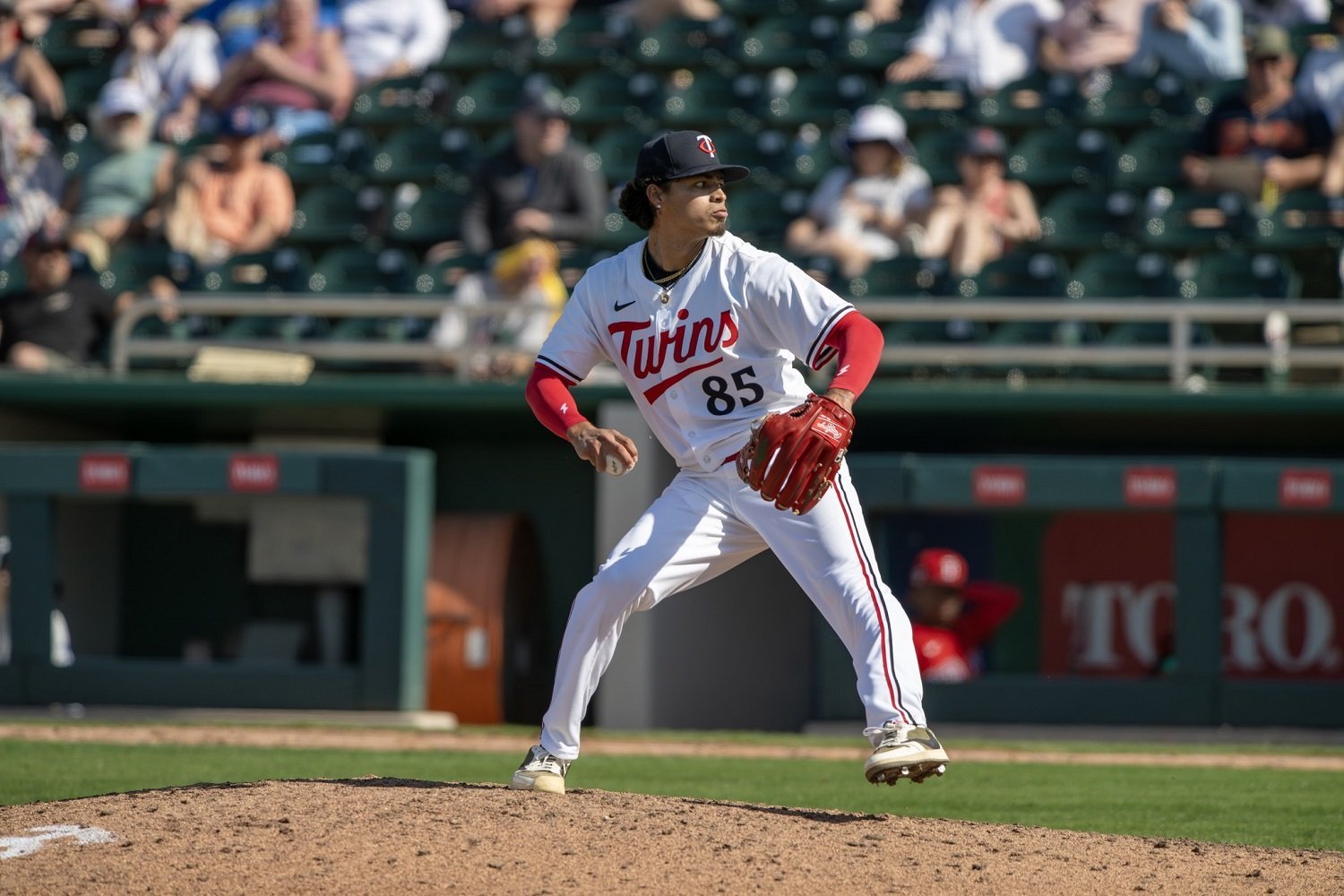 The Minnesota Twins are nearing the All-Star break with a flawed roster that will need more than just their current group to carry them the rest of the way. With key injuries and performance questions lingering, some help could arrive from within the organization. The Twins have several upper-level prospects who may be ready to contribute in the second half, and each brings a unique skill set to the big-league roster. Here’s a look at four potential second-half contributors already in the system, and one dark horse who could make things interesting down the stretch. Luke Keaschall: Ready for a Return TD Current Prospect Rank: 2 Keaschall burst onto the scene earlier this year, with a brief but memorable debut in Minnesota. He collected seven hits in his first seven big-league games and showed the type of energy that can reshape a lineup. He also tied the MLB record for most stolen bases (5) in a player’s first five career games. Unfortunately, a fastball to the forearm cut that run short, as he broke his arm. Now nearing a rehab assignment, Keaschall is expected to ramp up later this month and could rejoin the Twins by early August. Over the weekend, the Twins reported that he has progressed to hitting in the cage and off a pitching machine, and could be cleared to face live pitching in a simulated environment within the next few days. His blend of contact ability, sneaky pop, and defensive versatility gives the coaching staff options, especially with the current lineup struggling to score runs. If healthy, Keaschall could be a table-setting force in the final months of the regular season. Emmanuel Rodriguez: The Power Is Real TD Current Prospect Rank: 3 Rodriguez has dealt with more than a fair share of injuries since signing out of the Dominican Republic, but when he’s healthy, his talent is undeniable. The left-handed slugger has been working his way back from a right hip strain after dealing with a left thumb injury earlier this season. There is a strong possibility he will make his major-league debut sometime in the second half. Rodriguez brings big-time power and a disciplined approach that’s rare for a player his age. He’s walked at an impressive clip (19.7%) while still producing extra-base hits (128 wRC+). Depending on the health of Minnesota’s outfield and how things shake out at the trade deadline, Rodriguez could find himself in the mix for meaningful at-bats down the stretch. Marco Raya: Rebounding at the Right Time TD Current Prospect Rank: 11 The Twins added Raya to their 40-man roster this past offseason, with the hope that he’d be part of the long-term pitching puzzle. His early-season results didn’t reflect that optimism, as he posted an 8.66 ERA while allowing a .916 OPS in his first 12 appearances. However, recent outings have hinted at a turnaround. Over his last three starts (16 IP), he has allowed three earned runs while holding batters to a .545 OPS. Raya has sharpened his command and is working deeper into games, putting himself back on the radar as the Twins continue to search for starting pitching depth. It’s also important to note that he was a high school draft pick back in 2020, so he is only 22 years old and has faced older batters in all but 15 of his batter-pitcher showdowns. Minnesota’s rotation has dealt with injuries and workload concerns all season. If the need arises again (and it likely will), Raya could be next in line to fill a gap. He may not be a frontline option just yet, but he’s trending in the right direction at the right time. Connor Prielipp: A Bullpen Weapon? TD Current Prospect Rank: 5 Few pitchers in the Twins’ system have had a more winding road than Prielipp. The former Alabama standout missed significant development time after Tommy John surgery, but he’s finally showing flashes of why the Twins made him their second-round pick in 2022. While the hit rate against him remains high, his strikeout and walk numbers (28.7 K%, 5.3 BB%) suggest he has the stuff to miss bats in high-leverage situations. The Twins are managing his innings carefully, which could point toward a bullpen role if he’s called upon. Prielipp’s slider is a legitimate out pitch, and a short-relief gig could allow him to air it out during the final stretch. Dark Horse: Walker Jenkins TD Current Prospect Rank: 1 Jenkins began the season behind schedule after an ankle injury, but he’s been rounding into form at Double-A Wichita over the past month. The 2023 first-round pick still projects as a middle-of-the-order mainstay, and while there’s no urgency to push him to the majors this season, he remains an intriguing wild card. With his advanced approach and natural ability, Jenkins could force the issue, especially if injuries or trades thin the outfield depth chart. He’s a long shot, but the kind of talent who could arrive ahead of schedule and make a late-season push all the more exciting. The Twins will no doubt explore the trade market in the coming weeks, but internal reinforcements might be the team’s only way to improve in the second half. Minnesota’s front office has been handcuffed at the last two trade deadlines, with minimal payroll space to add players. Keaschall, Rodriguez, Raya, and Prielipp all offer legitimate upside, and their paths to Target Field may be clearer than ever. Keep an eye on this group in coming weeks. Which player will have the most significant impact on the team’s second half? Leave a comment and start the discussion.
- 47 comments
-
- 10
-
-
- emmanuel rodriguez
- marco raya
- (and 3 more)