



Cody Schoenmann
-
Posts
768 -
Joined
-
Last visited
-
Days Won
1
Content Type
Profiles
News
Minnesota Twins Videos
2026 Minnesota Twins Top Prospects Ranking
2022 Minnesota Twins Draft Picks
Minnesota Twins Free Agent & Trade Rumors, Notes, & Tidbits
Guides & Resources
2023 Minnesota Twins Draft Picks
The Minnesota Twins Players Project
2024 Minnesota Twins Draft Picks
2025 Minnesota Twins Draft Pick Tracker
2026 Minnesota Twins Draft Tracker: Picks & Bonuses
Forums
Blogs
Events
Store
Downloads
Gallery
Everything posted by Cody Schoenmann
-
Walker JenkinsBrooks LeeEmmanuel RodriguezDavid FestaMarco RayaAustin MartinCharlee SotoLuke KeaschallBrandon WinokurYunior SeverinoNoah MillerSimeon Woods RichardsonDanny De AndradeDaShawn Keirsey JrTanner SchobelKala'i RosarioJose RodriguezCory LewisAndrew CossettiCJ Culpepper
-
 this is an Auld Lang Syne deserving moment lol. 18 is enough! beautiful
- 114 replies
-
- 12
-

-
- royce lewis
- jhoan duran
- (and 3 more)
-
The Twins found multiple everyday contributors in arguably the best rookie class since 1982. Although various rookies caught our attention, one stood out among the rest. Congratulations to Twins Daily 2023 Rookie of the Year Award recipient Royce Lewis. 2023 was a challenging year to select just one Twins Daily Rookie of the Year Award recipient, but before we announce the winner, let's give the runner-ups their flowers. Many years, the Twins (and most other organizations) may not have five rookies on the roster all season. Even if they do, the odds of all of them finding success is not high. Three rookies especially are often credited with providing a spark and extended quality play. Two other pitchers have come up as rookies and contributed in whatever role they have been given. Fifth Place: LHP Kody Funderburk In fifth place is Twins relief pitcher Kody Funderburk. Beginning the season with the Double-A Wichita Wind Surge, Funderburk skyrocketed through the upper levels of the Twins organization and made his Twins debut on September 4 against the Cleveland Guardians. Funderburk sprung onto the scene and quickly became a dependable reliever for the Twins in the middle of a division title pennant race. Congratulations to Funderburk on a successful first month in the big leagues. He was also Twins Daily's choice for Minor League Relief Pitcher of the Year. Fourth Place: RHP Louie Varland In fourth place is rookie pitcher and Minnesota native Louie Varland. Beginning the season as a rotation fill-in for the injured Tyler Mahle, Varland quickly became one of the Twins' best and most reliable young starting pitchers alongside Bailey Ober and Joe Ryan. Unfortunately, Varland developed a problem giving up too many home runs and was demoted to Triple-A St. Paul in late June. Varland provided quality starts at the beginning of the season before developing into a lights-out reliever in September. Varland will be a key fixture for the Twins bullpen in their upcoming Wild Card series against the Toronto Blue Jays. Congratulations on a promising 2023 season, Louie. Third Place: OF Matt Wallner Twins corner outfielder and fellow Minnesota native Matt Wallner comes in third place. After getting recalled from Triple-A St. Paul with the Twins for the third time this season in mid-July, Wallner became an everyday corner outfielder who could mix his immense power with a strong eye at the plate, leading to a high on-base percentage. Wallner had an encouraging 2023 season and looks to be in the Twins' corner outfield plans for the foreseeable future. Second Place: 2B/DH Edouard Julien In second place is the pride of Québec City, Edouard Julien. Admittedly, I voted for Julien to win Twins Daily Rookie of the Year, but Twins Daily participates in a democracy, so the majority wins. Although the player I voted to win didn't, this is nonetheless a fair and healthy process. Thank you, John, Seth, Nick, Brock, and Parker. Okay, sorry, back to baseball. Julien had an incredible inaugural season and was arguably the Twins' best hitter for much of the season. Julien was one of the rookies that signified the Twins' turn-around in offensive production post-All-Star break and deserves as much credit as anyone for essentially saving the Twins' season. Congratulations to Julien on an incredible rookie season, and although he didn't win the Twins Daily Rookie of the Year Award, he came incredibly close. It was as close a vote as we have had in the decade of handing out these awards. First Place: 3B Royce Lewis Varland, Wallner, and Julien put together impressive rookie seasons, but the Twins Daily Rookie of the Year Award winner is Royce Lewis. In his first extended run as a Major League Baseball player, Lewis has met every expectation of being the first overall pick in the 2017 Major League Baseball draft. Let's see how Lewis got there. Lewis's Return From His Twice Torn ACL Lewis's start of the 2023 season began on May 29, when Lewis returned to the Twins lineup against the Astros in Houston. Returning exactly a year after tearing his ACL for the second time in as many seasons, Lewis instantly lit a spark under the Twins, hitting a three-run home run in just his second at-bat back from the 60-day IL. Lewis followed the home run with a game-tying RBI single in the ninth inning. Lewis's heroics propelled the Twins to a 7-5 win and signified the beginning of great things to come. Lewis followed his May return by hitting .322/.351/.444 (.795) with 29 hits, two doubles, three home runs, and a 122 wRC+ over 94 plate appearances from May 30 through through July 1. Unfortunately, Lewis was placed on the 10-day IL on July 1 with a grade-2 oblique strain and stayed there for 36 days before returning on August 15. Lewis's Second Return and the Dawning of "Mr. Grand Slam" Returning from an extended absence on August 15, Lewis immediately jumped back into the Twins lineup as their everyday third baseman, and the grand slam barrage began. Grand Slam #1: Arrival On August 27, the Twins were trailing the Texas Rangers 5-0 in the bottom of the sixth inning when Lewis stepped up to face reliever Chris Stratton with the bases loaded and one out. After falling behind 0-1, Lewis saw a hanging breaking ball deep to straight away center field, trimming the Twins deficit to 5-4. Lewis's home run was the spark for a Twins comeback, and the Twins beat the Rangers 7-6 in 13 innings. Grand Slam #2: Sacrifice Fly? NOPE The next day, Lewis stepped up to the plate in the 2nd inning with the bases loaded against the Guardians. Rookie pitcher was Xzavion Curry on the mound, and the Twins were down 4-2. Lewis again fell behind 0-1, and just like the day before, he drove a breaking ball over the wall in left center field, propelling the Twins to a 6-4 lead. Lewis's grand slam ignited a Twins comeback, and they were able to defeat the Guardians 10-to-6 and increase their division lead to seven games. Grand Slam #3: The Day Twins Territory Stood Still Lewis's third grand slam came on September 4. If you don't recall, one of the most stressful days in recent Twins history occurred just four days earlier, The Guardians, who were just two games back of the Twins, claimed Lucas Giolito, Matt Moore, and Reynaldo López off waivers from the Los Angeles Angels. The first time the Twins could do something about it came the next Monday when they began a three-game series in Cleveland. Giolito made his Guardians debut in Game 1 of the series. The Twins began the scoring with a Jorge Polanco leadoff home run in the top of the first inning. With two outs in the second frame, Polanco walked with the bases loaded to give them a 2-0 lead. That brought Lewis to the plate. On a 2-0 count, Lewis got a middle-middle fastball and crushed it deep into the left field bleachers to give the Twins a 6-0 lead. The Twins went on to win 20-6. CATHARSIS! Grand Slam #4: The Fourth Kind Last but not least, Lewis's final grand slam of the 2023 season came on September 15 against another divisional foe, the Chicago White Sox. On a 3-1 fastball from Jesse Scholtens, Lewis destroyed his fourth grand slam. It gave the Twins an early 4-0 lead and propelled the team to a 10-2 win in Chicago. After hitting his fourth grand slam of the 2023 season and fifth of his career, Lewis, as Aaron Gleeman of The Athletic noted, found himself tied for the eighth-most grand slams in Minnesota Twins history. Although his 2023 regular season came to an unfortunate end on September 19 when he strained his hamstring during an at-bat against the Cincinnati Reds, Lewis's grand slam propensity is an incredibly improbable and impressive feat. 2023 was the first season that Lewis, a traditional shortstop, began playing third base on an every-game basis in his professional career. Although he initially struggled some, he quickly began refining his craft. He became a respectable defensive third baseman. Lewis ended the 2023 season hitting .309/.372/.548 (.920) with seven doubles, 15 home runs, 8.4% BB%, 23% K%, .240 ISO, and 155 wRC+ over 239 plate appearances. Lewis had an incredible 2023 season, even if his time was still limited. Watching him in his first extended run in the big leagues was enjoyable. Congratulations to Royce Lewis for winning the Twins Daily 2023 Rookie of the Year award. How would you have voted for the Twins Top Rookie? Lewis or Julien, and how close should Wallner be to the top of the list? Comment below. Final Voting Points Tally Royce Lewis: 64 Edouard Julien: 62 Matt Wallner: 36 Louie Varland: 16 Kody Funderburk: 1 View full article
-
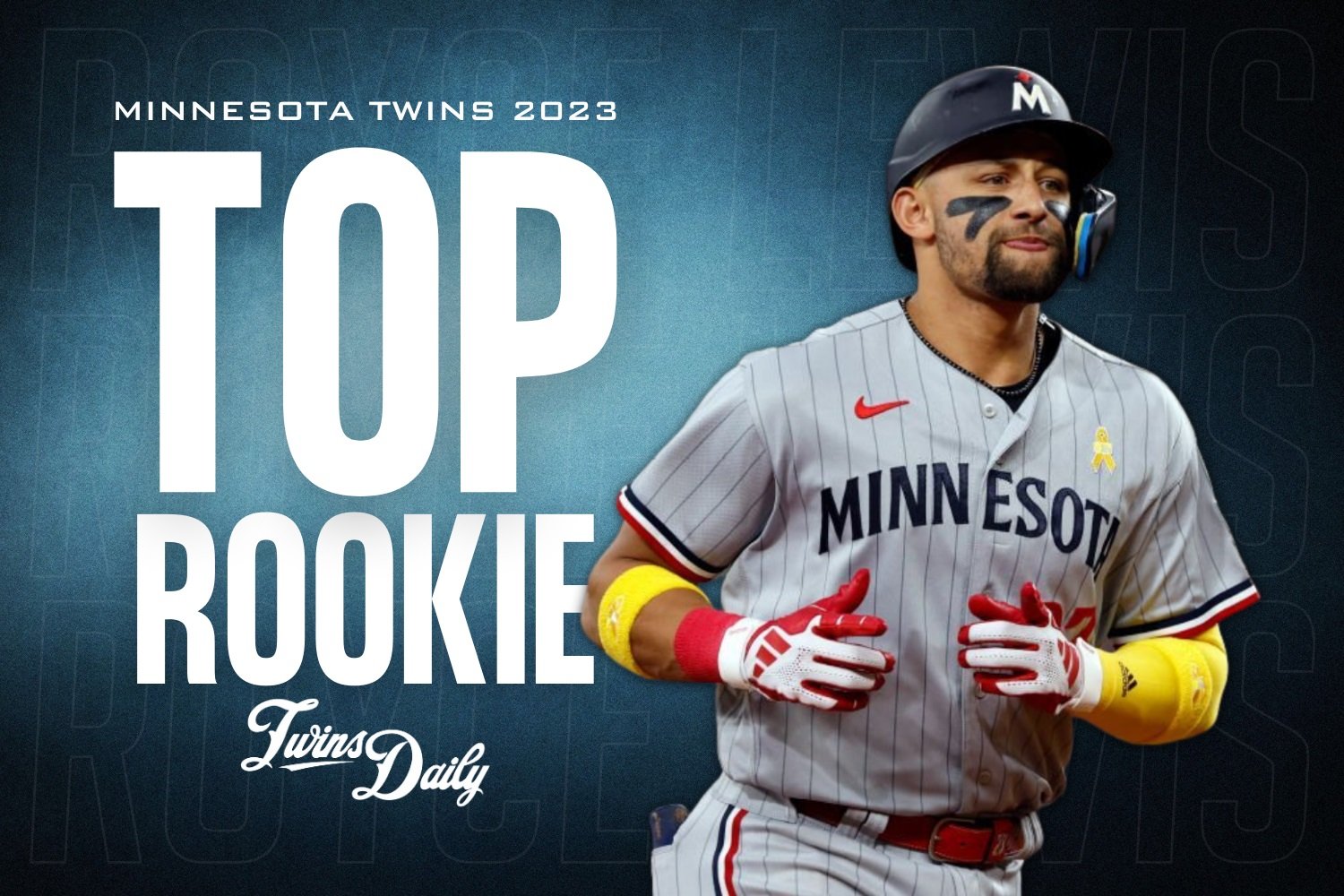 2023 was a challenging year to select just one Twins Daily Rookie of the Year Award recipient, but before we announce the winner, let's give the runner-ups their flowers. Many years, the Twins (and most other organizations) may not have five rookies on the roster all season. Even if they do, the odds of all of them finding success is not high. Three rookies especially are often credited with providing a spark and extended quality play. Two other pitchers have come up as rookies and contributed in whatever role they have been given. Fifth Place: LHP Kody Funderburk In fifth place is Twins relief pitcher Kody Funderburk. Beginning the season with the Double-A Wichita Wind Surge, Funderburk skyrocketed through the upper levels of the Twins organization and made his Twins debut on September 4 against the Cleveland Guardians. Funderburk sprung onto the scene and quickly became a dependable reliever for the Twins in the middle of a division title pennant race. Congratulations to Funderburk on a successful first month in the big leagues. He was also Twins Daily's choice for Minor League Relief Pitcher of the Year. Fourth Place: RHP Louie Varland In fourth place is rookie pitcher and Minnesota native Louie Varland. Beginning the season as a rotation fill-in for the injured Tyler Mahle, Varland quickly became one of the Twins' best and most reliable young starting pitchers alongside Bailey Ober and Joe Ryan. Unfortunately, Varland developed a problem giving up too many home runs and was demoted to Triple-A St. Paul in late June. Varland provided quality starts at the beginning of the season before developing into a lights-out reliever in September. Varland will be a key fixture for the Twins bullpen in their upcoming Wild Card series against the Toronto Blue Jays. Congratulations on a promising 2023 season, Louie. Third Place: OF Matt Wallner Twins corner outfielder and fellow Minnesota native Matt Wallner comes in third place. After getting recalled from Triple-A St. Paul with the Twins for the third time this season in mid-July, Wallner became an everyday corner outfielder who could mix his immense power with a strong eye at the plate, leading to a high on-base percentage. Wallner had an encouraging 2023 season and looks to be in the Twins' corner outfield plans for the foreseeable future. Second Place: 2B/DH Edouard Julien In second place is the pride of Québec City, Edouard Julien. Admittedly, I voted for Julien to win Twins Daily Rookie of the Year, but Twins Daily participates in a democracy, so the majority wins. Although the player I voted to win didn't, this is nonetheless a fair and healthy process. Thank you, John, Seth, Nick, Brock, and Parker. Okay, sorry, back to baseball. Julien had an incredible inaugural season and was arguably the Twins' best hitter for much of the season. Julien was one of the rookies that signified the Twins' turn-around in offensive production post-All-Star break and deserves as much credit as anyone for essentially saving the Twins' season. Congratulations to Julien on an incredible rookie season, and although he didn't win the Twins Daily Rookie of the Year Award, he came incredibly close. It was as close a vote as we have had in the decade of handing out these awards. First Place: 3B Royce Lewis Varland, Wallner, and Julien put together impressive rookie seasons, but the Twins Daily Rookie of the Year Award winner is Royce Lewis. In his first extended run as a Major League Baseball player, Lewis has met every expectation of being the first overall pick in the 2017 Major League Baseball draft. Let's see how Lewis got there. Lewis's Return From His Twice Torn ACL Lewis's start of the 2023 season began on May 29, when Lewis returned to the Twins lineup against the Astros in Houston. Returning exactly a year after tearing his ACL for the second time in as many seasons, Lewis instantly lit a spark under the Twins, hitting a three-run home run in just his second at-bat back from the 60-day IL. Lewis followed the home run with a game-tying RBI single in the ninth inning. Lewis's heroics propelled the Twins to a 7-5 win and signified the beginning of great things to come. Lewis followed his May return by hitting .322/.351/.444 (.795) with 29 hits, two doubles, three home runs, and a 122 wRC+ over 94 plate appearances from May 30 through through July 1. Unfortunately, Lewis was placed on the 10-day IL on July 1 with a grade-2 oblique strain and stayed there for 36 days before returning on August 15. Lewis's Second Return and the Dawning of "Mr. Grand Slam" Returning from an extended absence on August 15, Lewis immediately jumped back into the Twins lineup as their everyday third baseman, and the grand slam barrage began. Grand Slam #1: Arrival On August 27, the Twins were trailing the Texas Rangers 5-0 in the bottom of the sixth inning when Lewis stepped up to face reliever Chris Stratton with the bases loaded and one out. After falling behind 0-1, Lewis saw a hanging breaking ball deep to straight away center field, trimming the Twins deficit to 5-4. Lewis's home run was the spark for a Twins comeback, and the Twins beat the Rangers 7-6 in 13 innings. Grand Slam #2: Sacrifice Fly? NOPE The next day, Lewis stepped up to the plate in the 2nd inning with the bases loaded against the Guardians. Rookie pitcher was Xzavion Curry on the mound, and the Twins were down 4-2. Lewis again fell behind 0-1, and just like the day before, he drove a breaking ball over the wall in left center field, propelling the Twins to a 6-4 lead. Lewis's grand slam ignited a Twins comeback, and they were able to defeat the Guardians 10-to-6 and increase their division lead to seven games. Grand Slam #3: The Day Twins Territory Stood Still Lewis's third grand slam came on September 4. If you don't recall, one of the most stressful days in recent Twins history occurred just four days earlier, The Guardians, who were just two games back of the Twins, claimed Lucas Giolito, Matt Moore, and Reynaldo López off waivers from the Los Angeles Angels. The first time the Twins could do something about it came the next Monday when they began a three-game series in Cleveland. Giolito made his Guardians debut in Game 1 of the series. The Twins began the scoring with a Jorge Polanco leadoff home run in the top of the first inning. With two outs in the second frame, Polanco walked with the bases loaded to give them a 2-0 lead. That brought Lewis to the plate. On a 2-0 count, Lewis got a middle-middle fastball and crushed it deep into the left field bleachers to give the Twins a 6-0 lead. The Twins went on to win 20-6. CATHARSIS! Grand Slam #4: The Fourth Kind Last but not least, Lewis's final grand slam of the 2023 season came on September 15 against another divisional foe, the Chicago White Sox. On a 3-1 fastball from Jesse Scholtens, Lewis destroyed his fourth grand slam. It gave the Twins an early 4-0 lead and propelled the team to a 10-2 win in Chicago. After hitting his fourth grand slam of the 2023 season and fifth of his career, Lewis, as Aaron Gleeman of The Athletic noted, found himself tied for the eighth-most grand slams in Minnesota Twins history. Although his 2023 regular season came to an unfortunate end on September 19 when he strained his hamstring during an at-bat against the Cincinnati Reds, Lewis's grand slam propensity is an incredibly improbable and impressive feat. 2023 was the first season that Lewis, a traditional shortstop, began playing third base on an every-game basis in his professional career. Although he initially struggled some, he quickly began refining his craft. He became a respectable defensive third baseman. Lewis ended the 2023 season hitting .309/.372/.548 (.920) with seven doubles, 15 home runs, 8.4% BB%, 23% K%, .240 ISO, and 155 wRC+ over 239 plate appearances. Lewis had an incredible 2023 season, even if his time was still limited. Watching him in his first extended run in the big leagues was enjoyable. Congratulations to Royce Lewis for winning the Twins Daily 2023 Rookie of the Year award. How would you have voted for the Twins Top Rookie? Lewis or Julien, and how close should Wallner be to the top of the list? Comment below. Final Voting Points Tally Royce Lewis: 64 Edouard Julien: 62 Matt Wallner: 36 Louie Varland: 16 Kody Funderburk: 1
- 6 comments
-
- 4
-
-
- kody funderburk
- louis varland
- (and 3 more)
-
well, you can win a World Series in October which the Twins have done twice, so it's not all bad, right?
-
The Twins have one of the most versatile infields in Major League Baseball. How will they construct it during the postseason? Image courtesy of Kamil Krzaczynski - USA TODAY Sports Headlined by experienced veterans and prized young players, the Minnesota Twins infield is a blend of youth and experience. While there is uncertainty about how the Twins infield will be aligned for Game One of the upcoming three-game Wild Card series beginning October 3, the Twins infield options provide a sense of steadiness that is ever so important come playoff time. Let's begin by looking at how the Twins align behind the plate. Christian Vázquez - .221/.278/.321 (.599), 65 wRC+, 0.8 fWAR - Catcher We begin analyzing the Twins' infield by focusing on catcher/first baseman Christian Vázquez. Signed to a three-year, $30 million contract this prior off-season, Vázquez was expected to be the Twins' primary catcher for the 2023 season, but early season struggles at the plate ceded Vázquez's playing time to fellow catcher Ryan Jeffers. While Vázquez has been demoted to backup duties, he is still a more-than-serviceable catcher, and while he was never able to catch his footing offensively, he has been an elite defensive catcher all season. Vázquez will almost certainly serve as Jeffers' backup in Game 1 of the upcoming three-game Wild Card series, though a recent development has many wondering whether that will be the case. It will be interesting to see if Vázquez starts Game 1 or Game 2, and if the Twins advance past the Wild Card round, it will be fascinating to see how the Twins divvy up playing time at catcher. Ryan Jeffers - .270/.367/.474 (.841), 134 wRC+, 2.5 fWAR - Catcher The second member of the American League Central-winning Minnesota Twins infield comes in the form of catcher Ryan Jeffers. As noted earlier, Jeffers began the second playing second fiddle to initial starting catcher Vázquez but quickly supplanted him as the Twins' best catching option. Highlighted by an offensive resurgence, Twins' Comeback Player of the Year candidate Jeffers has solidified himself as one of the Twins' core young players for seasons to come. Jeffers, who has hit 13 home runs this season in 321 plate appearances, has added a jolt from a traditionally offensively deprived position that had been missing since Mitch Garver's departure after the 2021 season. Jeffers will make a start at catcher during the three-game Wild Card series, but whether it is in Game One or Game Two has surprisingly become unclear. If Jeffers doesn't start Game One at catcher, expect him to be used as a pinch-hitter if the opposing team elects to use a left-handed relief pitcher. Alex Kirilloff - .268/.346/.446 (.792), 119 wRC+, 0.8 fWAR - First Baseman Since being the last first-round selection of the Terry Ryan regime in 2016, Twins fans have been entranced by the idea of Kirilloff and the potential that comes with him. Unfortunately, due to a nagging wrist injury that effectively sidelined Kirilloff for two straight seasons, Kirilloff has existed more as an idea rather than in actuality. Luckily, Kirilloff, despite missing the month of August with a right shoulder strain, is back and healthy just in time for the 2023 postseason. Kirilloff will likely start every game at first base and bat toward the top of the order for the Twins as long as the opposing team's starting pitcher is right-handed. Whether manager Rocco Baldelli would bench Kirilloff during the postseason in favor of platooning a right-handed hitting dominant lineup if an opposing team's starting pitcher is left-handed is yet to be seen. However, it is an interesting proposition nonetheless. Kirilloff is the type of talent whose play can lead a team during the postseason, and his mere presence in the Twins lineup creates a great sense of confidence that the daunting 0-18 playoff streak may finally end this October. Donovan Solano - .286/.371/.401 (.772), 119 wRC+, 1.2 fWAR - First Baseman, Second Baseman, Third Baseman, Designated Hitter The next player on this list is 35-year-old platoon utility player Donovan Solano. Despite being labeled a utility player, which he was during the regular season, Solano will likely either start at first base or designated hitter if the opposing team's starting pitcher is left-handed or will work as a pinch hitter whenever a left-handed relief pitcher comes in. Solano's role is cemented for the most part, but it will be interesting to see if he is the first or second pinch-hitter used when a left-handed hitting relief pitcher comes in. As noted earlier, when the opposing team's starting pitcher is left-handed, it will be interesting to see if Baldelli elects to start Solano over Kirilloff at first base or if he elects to start Solano at designated hitter. Solano's value comes from his bat, but he can be used as an emergency second or third baseman if the Twins find themselves lacking infield depth later in a postseason game. Jorge Polanco - .258/.339/.461 (.800), 121 wRC+, 1.5 fWAR - Second Baseman, Third Baseman Fan favorite Jorge Polanco will play a vital role for the Twins and whether or not they can find any form of success this postseason. Polanco hit a first-inning home run against the New York Yankees in Game 1 of the ALDS at Yankee Stadium, so it appears that Polanco is not one to crumble under the immense pressure that is postseason baseball. Expect Polanco to start every game at second base, as he is both a plus defender and a switch-hitter, making him immune to platooning. Once again, it cannot be overstated how crucial of a role the traditionally underrated Polanco will play for the Twins and their postseason success. Polanco has long been an underrated core member of the Twins, and hopefully, he can provide a signature moment that will cement himself in Twins lore infamy. Edouard Julien - .259/.379/.442 (.821), 131 wRC+, 2.4 fWAR - Second Baseman, Designated Hitter, First Baseman The next Twins infielder is Twins Rookie of the Year Candidate and proud French Canadian Edouard Julien. The kid from Québec City jumped onto the scene for the Twins this season and instantly won the hearts of Twins fans from International Falls down to Lanesboro. Julien is a left-handed hitting infielder who primarily played second base and designated hitter for the Twins, with first base sprinkled in occasionally. When the three-game Wild Card round begins on October 3, expect Julien to bat leadoff as the Twins designated as long as the opposing team's starting pitcher is right-handed. Julien is susceptible to platooning, so if a left-handed relief pitcher comes into the game, don't be surprised if he is pinch-hit for. Whether Julien can step up to the moment is yet to be seen. Still, he has already shown he can perform well on the world's brightest stage after putting together an admirable performance during the World Baseball Classic for Team Canada this past March. Julien and his unfathomable walk-rate will be the straw that stirs the drink for the Twins at the top of their order, and expect Julien to be the first Twins hitter to make an appearance in the batter's box come October 3. Royce Lewis - .309/.372/.548 (.920), 154 wRC+, 2.4 fWAR - Third Baseman, Shortstop, Designated Hitter Clouded with uncertainty due to a grade "one-and-a-half" left hamstring strain, it is unknown whether star young plater Royce Lewis will be on the Twins Wild Card series roster. It is too soon to speculate, but everything that has come out about Lewis appears to indicate that he will be active come October 3. If Lewis is active on the Twins Wild Card 26-man roster, it would be reasonable to think he would be the Twins' starting third baseman. However, there is also the possibility that the Twins activate Lewis but limit him to designated hitter or pinch-hitting duties. Whether Lewis will be on the Twins Wild Card roster is yet to be seen. Regardless, he is undoubtedly the type of player who is built for October, and it would be a shame if Lewis, the Twins, and Twins fans were deprived of experiencing his potential postseason greatness. Kyle Farmer - .254/.316/.411 (.727), 101 wRC+, 1.7 fWAR - Second Baseman, Third Baseman, Shortstop Farmer is the type of player who is incredibly important at playoff time. It would be absurd to suggest his postseason roster spot be taken by someone who never played in a Major League Baseball game before, right? Combining veteran leadership, a stable locker room presence, versatility, and a steady bat, Farmer is set to play a crucial role for the Twins this upcoming October, even if it is still being determined exactly how he will do that. If Lewis cannot play during the Wild Card round, Farmer could seamlessly slot in as the Twins starting third baseman. If Lewis can play, which we all hope is the case, Farmer could slot into a pinch-hitting and defensive substitution role, which he has done all season. Nonetheless, whether Farmer shows up in the Twins starting lineup or in the sixth inning of a close game, expect him to contribute positively to the Twins and their playoff aspirations. Willi Castro - .251/.326/.412 (.738), 104 wRC+, 2.1 fWAR - Second Baseman, Third Baseman, Shortstop To label Castro as an infielder is controversial, but it feels appropriate to do so with Lewis's availability for the Wild Card round still up in the air. If Lewis cannot play come October 3, there is a chance that Castro could start Game 1 at third base, though Farmer still feels like the more likely option. Castro's value in the postseason will come from his positional flexibility, pristine base-running ability, and ability to provide heroics in crucial spots. If Lewis is healthy, Castro will likely exclusively play in the outfield. Regardless, with Lewis's status up in the air, it would be negligent not to mention Castro as an infield option. Carlos Correa - .230/.312/.399 (.711), 96 wRC+, 1.1 fWAR - Shortstop The final Twins infielder on this list comes from postseason legend and World Series champion Carlos Correa. Here are Correa's past postseason numbers with the Houston Astros: .272/.344/.505 (.849), 79 total games, 334 plate appearances, 82 hits, 16 doubles, 18 home runs, 30 walks, 79 strikeouts Now, Correa's World Series championship with the 2017 Astros comes with a very obvious caveat, but he has a ring nonetheless. Correa has battled plantar fasciitis in his foot all season. While the injury has led to him putting together his worst offensive season in his Major League career, a recent development in Correa's bout with plantar fasciitis has led to fans developing a newfound sense for Correa and his potential offensive contributions for the Twins come October. On September 20, Do-Hyoung Park of MLB.com announced that Correa suffered a "full-thickness tear to the central cortex of the area (his foot)" and that the tear "has helped others facilitate the healing process." While much is still up in the air regarding Correa's health, expect him to be the Twins starting shortstop come Game 1 of the Wild Card series on October 3. Although Correa has an immense amount of postseason experience under his belt, this will be his first postseason experience as a member of the Twins. Hopefully, Correa can provide the same level of play he provided for the Astros. Heading into their first postseason appearance since 2020, the Twins are a versatility team that effectively blends young talent with experienced veterans, and the infield is a prime example of that phenomenon. What do you think of the Twins postseason infield? Do you have faith in them stepping up to the occasion? Comment below. View full article
-
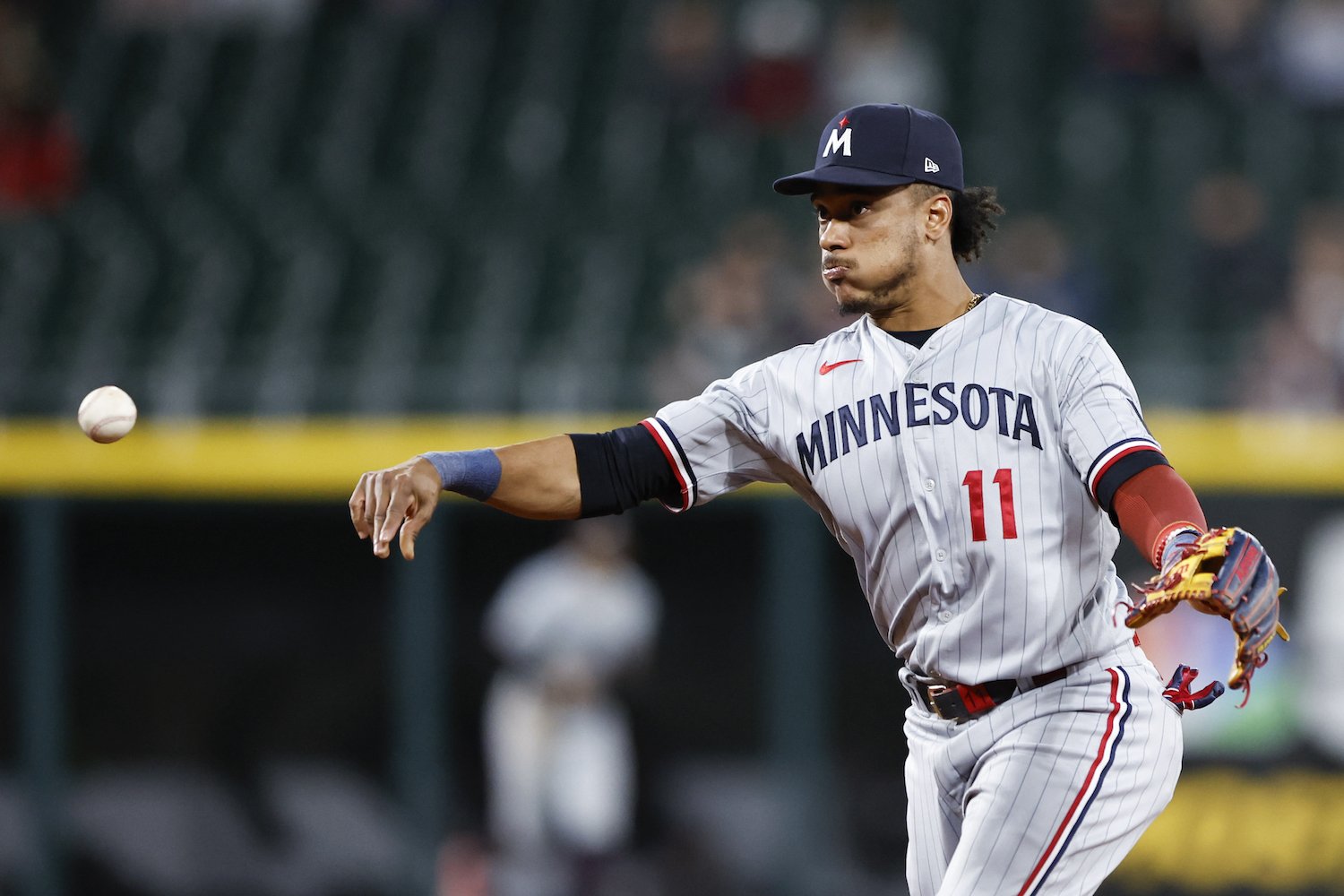 Headlined by experienced veterans and prized young players, the Minnesota Twins infield is a blend of youth and experience. While there is uncertainty about how the Twins infield will be aligned for Game One of the upcoming three-game Wild Card series beginning October 3, the Twins infield options provide a sense of steadiness that is ever so important come playoff time. Let's begin by looking at how the Twins align behind the plate. Christian Vázquez - .221/.278/.321 (.599), 65 wRC+, 0.8 fWAR - Catcher We begin analyzing the Twins' infield by focusing on catcher/first baseman Christian Vázquez. Signed to a three-year, $30 million contract this prior off-season, Vázquez was expected to be the Twins' primary catcher for the 2023 season, but early season struggles at the plate ceded Vázquez's playing time to fellow catcher Ryan Jeffers. While Vázquez has been demoted to backup duties, he is still a more-than-serviceable catcher, and while he was never able to catch his footing offensively, he has been an elite defensive catcher all season. Vázquez will almost certainly serve as Jeffers' backup in Game 1 of the upcoming three-game Wild Card series, though a recent development has many wondering whether that will be the case. It will be interesting to see if Vázquez starts Game 1 or Game 2, and if the Twins advance past the Wild Card round, it will be fascinating to see how the Twins divvy up playing time at catcher. Ryan Jeffers - .270/.367/.474 (.841), 134 wRC+, 2.5 fWAR - Catcher The second member of the American League Central-winning Minnesota Twins infield comes in the form of catcher Ryan Jeffers. As noted earlier, Jeffers began the second playing second fiddle to initial starting catcher Vázquez but quickly supplanted him as the Twins' best catching option. Highlighted by an offensive resurgence, Twins' Comeback Player of the Year candidate Jeffers has solidified himself as one of the Twins' core young players for seasons to come. Jeffers, who has hit 13 home runs this season in 321 plate appearances, has added a jolt from a traditionally offensively deprived position that had been missing since Mitch Garver's departure after the 2021 season. Jeffers will make a start at catcher during the three-game Wild Card series, but whether it is in Game One or Game Two has surprisingly become unclear. If Jeffers doesn't start Game One at catcher, expect him to be used as a pinch-hitter if the opposing team elects to use a left-handed relief pitcher. Alex Kirilloff - .268/.346/.446 (.792), 119 wRC+, 0.8 fWAR - First Baseman Since being the last first-round selection of the Terry Ryan regime in 2016, Twins fans have been entranced by the idea of Kirilloff and the potential that comes with him. Unfortunately, due to a nagging wrist injury that effectively sidelined Kirilloff for two straight seasons, Kirilloff has existed more as an idea rather than in actuality. Luckily, Kirilloff, despite missing the month of August with a right shoulder strain, is back and healthy just in time for the 2023 postseason. Kirilloff will likely start every game at first base and bat toward the top of the order for the Twins as long as the opposing team's starting pitcher is right-handed. Whether manager Rocco Baldelli would bench Kirilloff during the postseason in favor of platooning a right-handed hitting dominant lineup if an opposing team's starting pitcher is left-handed is yet to be seen. However, it is an interesting proposition nonetheless. Kirilloff is the type of talent whose play can lead a team during the postseason, and his mere presence in the Twins lineup creates a great sense of confidence that the daunting 0-18 playoff streak may finally end this October. Donovan Solano - .286/.371/.401 (.772), 119 wRC+, 1.2 fWAR - First Baseman, Second Baseman, Third Baseman, Designated Hitter The next player on this list is 35-year-old platoon utility player Donovan Solano. Despite being labeled a utility player, which he was during the regular season, Solano will likely either start at first base or designated hitter if the opposing team's starting pitcher is left-handed or will work as a pinch hitter whenever a left-handed relief pitcher comes in. Solano's role is cemented for the most part, but it will be interesting to see if he is the first or second pinch-hitter used when a left-handed hitting relief pitcher comes in. As noted earlier, when the opposing team's starting pitcher is left-handed, it will be interesting to see if Baldelli elects to start Solano over Kirilloff at first base or if he elects to start Solano at designated hitter. Solano's value comes from his bat, but he can be used as an emergency second or third baseman if the Twins find themselves lacking infield depth later in a postseason game. Jorge Polanco - .258/.339/.461 (.800), 121 wRC+, 1.5 fWAR - Second Baseman, Third Baseman Fan favorite Jorge Polanco will play a vital role for the Twins and whether or not they can find any form of success this postseason. Polanco hit a first-inning home run against the New York Yankees in Game 1 of the ALDS at Yankee Stadium, so it appears that Polanco is not one to crumble under the immense pressure that is postseason baseball. Expect Polanco to start every game at second base, as he is both a plus defender and a switch-hitter, making him immune to platooning. Once again, it cannot be overstated how crucial of a role the traditionally underrated Polanco will play for the Twins and their postseason success. Polanco has long been an underrated core member of the Twins, and hopefully, he can provide a signature moment that will cement himself in Twins lore infamy. Edouard Julien - .259/.379/.442 (.821), 131 wRC+, 2.4 fWAR - Second Baseman, Designated Hitter, First Baseman The next Twins infielder is Twins Rookie of the Year Candidate and proud French Canadian Edouard Julien. The kid from Québec City jumped onto the scene for the Twins this season and instantly won the hearts of Twins fans from International Falls down to Lanesboro. Julien is a left-handed hitting infielder who primarily played second base and designated hitter for the Twins, with first base sprinkled in occasionally. When the three-game Wild Card round begins on October 3, expect Julien to bat leadoff as the Twins designated as long as the opposing team's starting pitcher is right-handed. Julien is susceptible to platooning, so if a left-handed relief pitcher comes into the game, don't be surprised if he is pinch-hit for. Whether Julien can step up to the moment is yet to be seen. Still, he has already shown he can perform well on the world's brightest stage after putting together an admirable performance during the World Baseball Classic for Team Canada this past March. Julien and his unfathomable walk-rate will be the straw that stirs the drink for the Twins at the top of their order, and expect Julien to be the first Twins hitter to make an appearance in the batter's box come October 3. Royce Lewis - .309/.372/.548 (.920), 154 wRC+, 2.4 fWAR - Third Baseman, Shortstop, Designated Hitter Clouded with uncertainty due to a grade "one-and-a-half" left hamstring strain, it is unknown whether star young plater Royce Lewis will be on the Twins Wild Card series roster. It is too soon to speculate, but everything that has come out about Lewis appears to indicate that he will be active come October 3. If Lewis is active on the Twins Wild Card 26-man roster, it would be reasonable to think he would be the Twins' starting third baseman. However, there is also the possibility that the Twins activate Lewis but limit him to designated hitter or pinch-hitting duties. Whether Lewis will be on the Twins Wild Card roster is yet to be seen. Regardless, he is undoubtedly the type of player who is built for October, and it would be a shame if Lewis, the Twins, and Twins fans were deprived of experiencing his potential postseason greatness. Kyle Farmer - .254/.316/.411 (.727), 101 wRC+, 1.7 fWAR - Second Baseman, Third Baseman, Shortstop Farmer is the type of player who is incredibly important at playoff time. It would be absurd to suggest his postseason roster spot be taken by someone who never played in a Major League Baseball game before, right? Combining veteran leadership, a stable locker room presence, versatility, and a steady bat, Farmer is set to play a crucial role for the Twins this upcoming October, even if it is still being determined exactly how he will do that. If Lewis cannot play during the Wild Card round, Farmer could seamlessly slot in as the Twins starting third baseman. If Lewis can play, which we all hope is the case, Farmer could slot into a pinch-hitting and defensive substitution role, which he has done all season. Nonetheless, whether Farmer shows up in the Twins starting lineup or in the sixth inning of a close game, expect him to contribute positively to the Twins and their playoff aspirations. Willi Castro - .251/.326/.412 (.738), 104 wRC+, 2.1 fWAR - Second Baseman, Third Baseman, Shortstop To label Castro as an infielder is controversial, but it feels appropriate to do so with Lewis's availability for the Wild Card round still up in the air. If Lewis cannot play come October 3, there is a chance that Castro could start Game 1 at third base, though Farmer still feels like the more likely option. Castro's value in the postseason will come from his positional flexibility, pristine base-running ability, and ability to provide heroics in crucial spots. If Lewis is healthy, Castro will likely exclusively play in the outfield. Regardless, with Lewis's status up in the air, it would be negligent not to mention Castro as an infield option. Carlos Correa - .230/.312/.399 (.711), 96 wRC+, 1.1 fWAR - Shortstop The final Twins infielder on this list comes from postseason legend and World Series champion Carlos Correa. Here are Correa's past postseason numbers with the Houston Astros: .272/.344/.505 (.849), 79 total games, 334 plate appearances, 82 hits, 16 doubles, 18 home runs, 30 walks, 79 strikeouts Now, Correa's World Series championship with the 2017 Astros comes with a very obvious caveat, but he has a ring nonetheless. Correa has battled plantar fasciitis in his foot all season. While the injury has led to him putting together his worst offensive season in his Major League career, a recent development in Correa's bout with plantar fasciitis has led to fans developing a newfound sense for Correa and his potential offensive contributions for the Twins come October. On September 20, Do-Hyoung Park of MLB.com announced that Correa suffered a "full-thickness tear to the central cortex of the area (his foot)" and that the tear "has helped others facilitate the healing process." While much is still up in the air regarding Correa's health, expect him to be the Twins starting shortstop come Game 1 of the Wild Card series on October 3. Although Correa has an immense amount of postseason experience under his belt, this will be his first postseason experience as a member of the Twins. Hopefully, Correa can provide the same level of play he provided for the Astros. Heading into their first postseason appearance since 2020, the Twins are a versatility team that effectively blends young talent with experienced veterans, and the infield is a prime example of that phenomenon. What do you think of the Twins postseason infield? Do you have faith in them stepping up to the occasion? Comment below.
- 12 comments
-
- 4
-
-
- christian vazquez
- alex kirilloff
- (and 3 more)
-
I think López and Gray will be able to produce quality starts in their appearances and I think the offense will be fine. My greatest concern is the bullpen. If the Twins find themselves holding a one or two run lead past the seventh inning I will be very nervous. I think Pagán, Thielbar, Jax, Stewart, and Duran have the ability to hold leads but bullpens are extremely volatile, especially during the postseason, so we will just have to hold on an enjoy the ride lol.
- 17 replies
-
- 2
-
-
- louis varland
- chris paddack
- (and 1 more)
-
I don't think Keuchel will make the postseason roster. I believe Funderburk will, but he will be used as a short reliever.
- 17 replies
-
- 3
-
-
- louis varland
- chris paddack
- (and 1 more)
-
The Twins have a niche strength that few teams have the opportunity to utilize. Will they take advantage of it during the postseason? Image courtesy of Matt Blewett - USA TODAY Sports The 162-game Major League Baseball regular season is a war of attrition. Having front-end starting pitchers and above-average hitters is crucial, but it is equally essential to succeed on the margins by having a solid bench and fortified back end of the bullpen. As the old saying goes, a chain is only as strong as its weakest link. While this is true for the regular season, the postseason is an utterly different beast, especially a potential three-game Wild Card series. In contrast to the attrition-like nature of the regular season, the postseason is a flash in the pan where a team's success is contingent on the team's best players performing up to their capabilities in an exceptionally short-lived amount of time. In recent history, teams who have made deep playoff runs tend to have an exceptionally strong starting pitching rotation mixed with a productive lineup. For example, the 2019 World Series-winning Washington Nationals had aces in Max Scherzer and Stephen Strasburg mixed with complimentary above-average arms in Patrick Corbin and Aníbal Sánchez. If the Nationals didn't have this rotation, they wouldn't have won the World Series, let alone get a postseason bid. When looking at the World Series favorites this season, the Atlanta Braves have a theoretically elite three-man rotation consisting of Max Fried, Spencer Strider, and Charlie Morton, in addition to the best lineup in recent Major League Baseball history. Now, Fried and Morton are currently on the 15-day IL and could miss some time in the postseason, but the point still stands. Like the 2023 Braves and 2019 Nationals, the Twins have above-average starting pitching options in Pablo López, Sonny Gray, Joe Ryan, and Bailey Ober and a serviceable lineup. While the Twins' starting pitching is a strength that will likely be the deciding factor in if they can advance deep into the playoffs, they also possess a different and unique strength that has rarely been seen in Major League Baseball regular season or postseason history. That strength resides in the Twins' impressive group of multi-inning capable stretch relievers. Headlined by traditional starting pitchers in Louie Varland, Chris Paddack, and Kenta Maeda, the Twins have three multi-inning capable pitchers who could piggyback López, Gray, or Ryan as a bridge to the Twins' high-leverage relief pitchers in Caleb Thielbar, Griffin Jax, Brock Stewart, Emilio Pagán, and closer Jhoan Duran. To illustrate how this form of bridging could work, let's look over a hypothetical situation. In Game One, Pablo López throws four innings and gives up one earned run, and the Twins have a 3-to-1 lead heading into the fifth inning. López has pitched well, but he was struggling in the fourth inning, and it might be in the Twins' best interest to take him out of the game. Instead of being forced to use Pagán, Jax, Stewart, and Duran to get through the final four innings, the Twins could instead piggyback López with one of their multi-inning relief pitchers in Varland, Paddack, or Maeda for two or three innings. Using one of their multi-inning capable stretch relievers in Varland, Paddack, or Maeda benefits the Twins in two ways. First, using Varland, Paddack, or Maeda in a multi-inning role would allow their high-leverage relief pitchers to be available in more than one or two of the potential three-game Wild Card series. Second, Varland and Maeda have proven to be effective out of the bullpen, and it is fair to assume Paddack will be, so using them in a more condensed setting would allow the Twins to maximize Varland, Paddack, and Maeda's velocity and overall stuff. It is still being determined whether this is what the Twins will do. Regardless, with Varland working exclusively out of the bullpen, Paddack activated as a reliever from the 60-day IL on Sunday morning, and the Twins announcing Maeda's move to the bullpen on Sunday evening, it appears that this is the plan they are heading toward for at least the potential three-game Wild Card series. During the regular season, the Twins used pitchers the likes of Josh Winder, Cole Sands, Brent Headrick, Jordan Balazovic, José De León, and Simeon Woods Richardson as break glass in case of emergency-type stretch relievers who would only be used if the game had become a blowout or if the starting pitcher on that particular day needed to be pulled early either due to health or poor performance. While this mold of stretch reliever worked during the regular season, the Twins look to be drastically changing the purpose of this type of pitcher, and the timing couldn't be more advantageous. What do you think of the Twins multi-inning capable stretch relievers? Should the Twins prioritize using them during the Wild Card round? Comment below. View full article
-
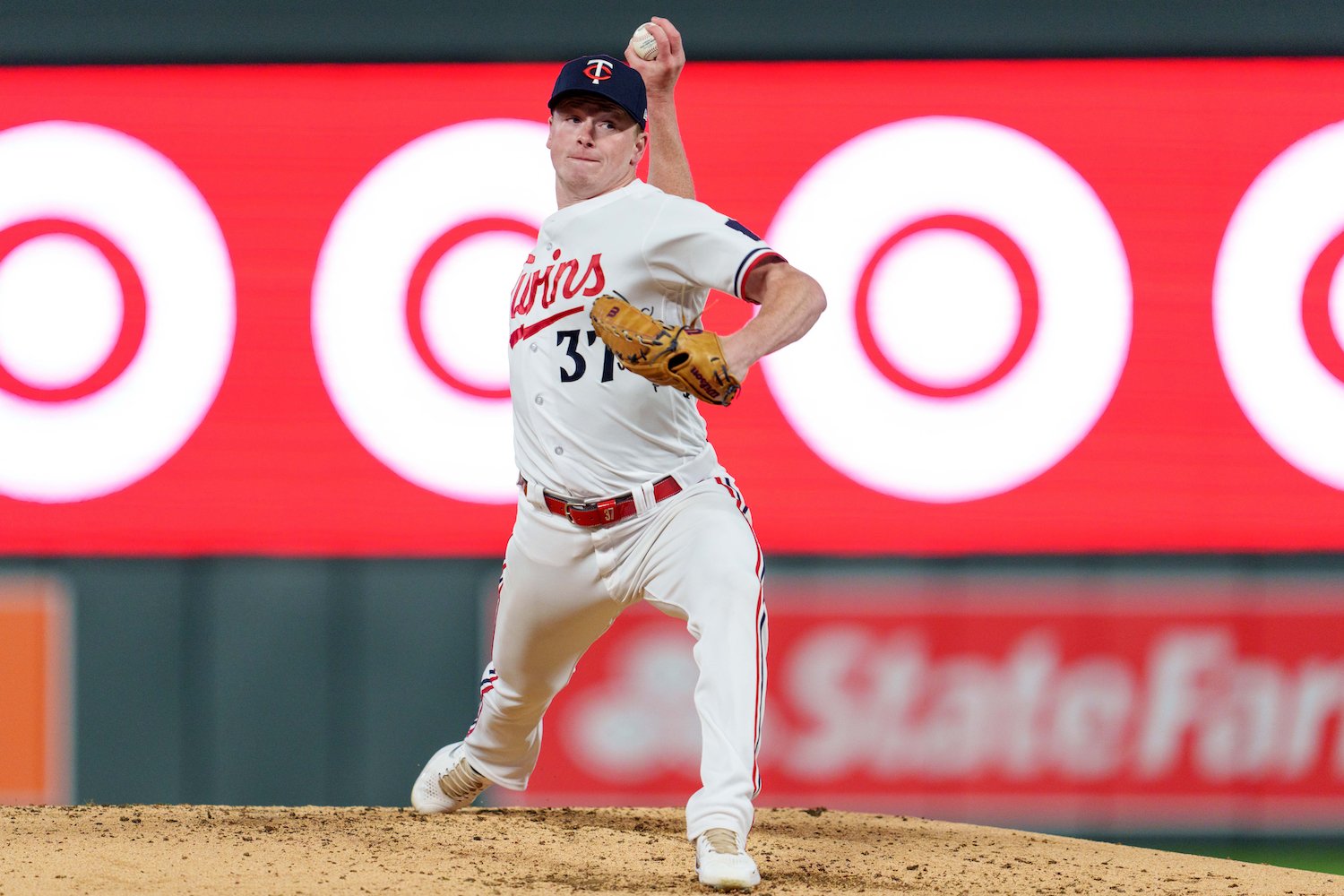 The 162-game Major League Baseball regular season is a war of attrition. Having front-end starting pitchers and above-average hitters is crucial, but it is equally essential to succeed on the margins by having a solid bench and fortified back end of the bullpen. As the old saying goes, a chain is only as strong as its weakest link. While this is true for the regular season, the postseason is an utterly different beast, especially a potential three-game Wild Card series. In contrast to the attrition-like nature of the regular season, the postseason is a flash in the pan where a team's success is contingent on the team's best players performing up to their capabilities in an exceptionally short-lived amount of time. In recent history, teams who have made deep playoff runs tend to have an exceptionally strong starting pitching rotation mixed with a productive lineup. For example, the 2019 World Series-winning Washington Nationals had aces in Max Scherzer and Stephen Strasburg mixed with complimentary above-average arms in Patrick Corbin and Aníbal Sánchez. If the Nationals didn't have this rotation, they wouldn't have won the World Series, let alone get a postseason bid. When looking at the World Series favorites this season, the Atlanta Braves have a theoretically elite three-man rotation consisting of Max Fried, Spencer Strider, and Charlie Morton, in addition to the best lineup in recent Major League Baseball history. Now, Fried and Morton are currently on the 15-day IL and could miss some time in the postseason, but the point still stands. Like the 2023 Braves and 2019 Nationals, the Twins have above-average starting pitching options in Pablo López, Sonny Gray, Joe Ryan, and Bailey Ober and a serviceable lineup. While the Twins' starting pitching is a strength that will likely be the deciding factor in if they can advance deep into the playoffs, they also possess a different and unique strength that has rarely been seen in Major League Baseball regular season or postseason history. That strength resides in the Twins' impressive group of multi-inning capable stretch relievers. Headlined by traditional starting pitchers in Louie Varland, Chris Paddack, and Kenta Maeda, the Twins have three multi-inning capable pitchers who could piggyback López, Gray, or Ryan as a bridge to the Twins' high-leverage relief pitchers in Caleb Thielbar, Griffin Jax, Brock Stewart, Emilio Pagán, and closer Jhoan Duran. To illustrate how this form of bridging could work, let's look over a hypothetical situation. In Game One, Pablo López throws four innings and gives up one earned run, and the Twins have a 3-to-1 lead heading into the fifth inning. López has pitched well, but he was struggling in the fourth inning, and it might be in the Twins' best interest to take him out of the game. Instead of being forced to use Pagán, Jax, Stewart, and Duran to get through the final four innings, the Twins could instead piggyback López with one of their multi-inning relief pitchers in Varland, Paddack, or Maeda for two or three innings. Using one of their multi-inning capable stretch relievers in Varland, Paddack, or Maeda benefits the Twins in two ways. First, using Varland, Paddack, or Maeda in a multi-inning role would allow their high-leverage relief pitchers to be available in more than one or two of the potential three-game Wild Card series. Second, Varland and Maeda have proven to be effective out of the bullpen, and it is fair to assume Paddack will be, so using them in a more condensed setting would allow the Twins to maximize Varland, Paddack, and Maeda's velocity and overall stuff. It is still being determined whether this is what the Twins will do. Regardless, with Varland working exclusively out of the bullpen, Paddack activated as a reliever from the 60-day IL on Sunday morning, and the Twins announcing Maeda's move to the bullpen on Sunday evening, it appears that this is the plan they are heading toward for at least the potential three-game Wild Card series. During the regular season, the Twins used pitchers the likes of Josh Winder, Cole Sands, Brent Headrick, Jordan Balazovic, José De León, and Simeon Woods Richardson as break glass in case of emergency-type stretch relievers who would only be used if the game had become a blowout or if the starting pitcher on that particular day needed to be pulled early either due to health or poor performance. While this mold of stretch reliever worked during the regular season, the Twins look to be drastically changing the purpose of this type of pitcher, and the timing couldn't be more advantageous. What do you think of the Twins multi-inning capable stretch relievers? Should the Twins prioritize using them during the Wild Card round? Comment below.
- 17 comments
-
- 1
-
-
- louis varland
- chris paddack
- (and 1 more)
-
 As the Twins near their first postseason appearance since 2020, they may find themselves in a border battle with their Ontario-based neighbors in Toronto. Coming into the 2023 season, expectations for the Blue Jays were CN Tower high. After getting heartbreakingly swept by the Mariners during the 2022 American League Wild Card round, the Blue Jays supplemented their already strong core by signing free agents in center fielder Kevin Kiermaier, starting pitcher Chris Bassitt, first baseman Brandon Belt, relief pitcher Chad Green and trading for relief pitcher Erik Swanson from the Mariners and outfielder Daulton Varsho from the Arizona Diamondbacks. Adding these prized acquisitions to an already formidable core solidified the Blue Jays as both American League East and World Series contenders. During the 2023 MLB Trade Deadline, the Blue Jays traded for relief pitchers Jordan Hicks and Genesis Cabrera from the St. Louis Cardinals in an attempt to further fortify their World Series-hopeful roster. Unfortunately, the Blue Jays have yet to meet their lofty expectations. They are battling for an American League Wild Card spot with the Texas Rangers, Houston Astros, and Seattle Mariners while owning an 84-67 record. An 84-67 record is good nonetheless, and the Blue Jays will likely finish with a better record than the Twins. If the Blue Jays can make it into the playoffs, they will be a daunting opponent with above-average pitching and offense. Blue Jays Position Players Here are the position players who headline the ninth-best offense in baseball by fWAR: *Offensive statistics are up to date as of 9/20 Matt Chapman, 3B - .246/.335/.430 (.765), 538 PA, 15 home runs, 112 wRC+, 3.2 fWAR Bo Bichette, SS - .304/.336/.474 (.810), 550 PA, 19 home runs, 123 wRC+, 3.2 fWAR Kevin Kiermaier, OF - .265/.323/.425 (.748), 373 PA, eight home runs, 106 wRC+, 2.1 fWAR George Springer, OF/DH - .257/.330/.406 (.736), 635 PA, 20 home runs, 105 wRC+, 2.0 fWAR Brandon Belt, 1B/DH - .251/.369/.470 (.839), 382 PA, 16 home runs, 134 wRC+, 2.0 fWAR Danny Jansen, C - .228/.312/.474 (.786), 301 PA, 17 home runs, 115 wRC+, 2.0 fWAR Whit Merrifield, UTL - .278/.321/.390 (.711), 563 PA, 11 home runs, 96 wRC+, 1.9 fWAR Davis Schneider, 2B - .288/.417/.635 (1.052), 127 PA, eight home runs, 187 wRC+, 1.9 fWAR Daulton Varsho, OF - .220/.286/.376 (.662), 544 PA, 17 home runs, 82 wRC+, 1.7 fWAR Alejandro Kirk, C - .251/.339/.358 (.697), 386 PA, seven home runs, 98 wRC+, 1.5 fWAR Cavan Biggio, UTL - .236/.332/.384 (.716), 289 PA, nine home runs, 102 wRC+, 0.8 fWAR Vladimir Guerrero Jr., 1B - .264/.342/.440 (.782), 644 PA, 24 home runs, 115 wRC+, 0.8 fWAR The Blue Jays lineup is a unique amalgamation of star players in Chapman, Bichette, Springer, and Guerrero Jr., savvy veterans in Kiermaier, Belt, and Merrifield, and talented young pieces in Schneider, Varsho, and Biggio. Players not listed above who could be used off the bench in the playoffs are utility player Santiago Espinal, backup catcher Tyler Heineman (Jansen is currently on the IL), first baseman/outfielder Spencer Horwitz (Belt is currently on the IL), and outfielder Cam Eden. The Blue Jays lineup is predominantly right-handed, with eight of the twelve hitters listed above right-handed, so the Twins right-handed dominant pitching rotation and bullpen should match up well with the Blue Jays lineup in theory. Now that we have familiarized ourselves with the Blue Jays offense, let's transition to their pitching. Blue Jays Pitching Staff Here are the pitchers who headline the fifth-best pitching staff in baseball by fWAR: *Pitching statistics are up to date as of 9/20 Kevin Gausman, SP - 172 IP, 3.40 ERA, 3.04 FIP, 31.1% K%, 7% BB%, 4.8 fWAR Jose Berríos, SP - 178 IP, 3.49 ERA, 4.03 FIP, 22.9% K%, 6.7% BB%, 2.8 fWAR Yusei Kikuchi, SP - 158 2/3 IP, 3.74 ERA, 3.81 FIP, 25.7% K%, 7% BB%, 2.4 fWAR Chris Bassitt, SP - 185 2/3 IP, 3.78 ERA, 4.49 FIP, 21.5% K%, 7.5% BB%, 2.1 fWAR Hyun-Jin Ryu, SP - 44 2/3 IP, 2.62 ERA, 4.18 FIP, 19% K%, 6% BB%, 0.7 fWAR Tim Mayza, RP - 50 2/3 IP, 1.24 ERA, 2.41 FIP, 24.3% K%, 6.9% BB%, 1.4 fWAR Jordan Romano, RP - 55 IP, 2.45 ERA, 3.33 FIP, 29.8% K%, 10.1% BB%, 1.2 fWAR Yimi Garcia, RP - 61 2/3 IP, 4.09 ERA, 3.35 FIP, 27.7% K%, 5.6% BB%, 1 fWAR Erik Swanson, RP - 61 2/3 IP, 3.06 ERA, 3.39 FIP, 29% K%, 7.9% BB%, 0.9 fWAR Jordan Hicks, RP - 19 IP (w/TOR), 2.37 ERA, 3.89 FIP, 21.9% K%, 6.8% BB%, 0.2 fWAR Genesis Cabrera, RP - 21 IP (w/TOR), 2.57 ERA, 4.02 FIP, 20% K%, 7.1% K%, 0.2 fWAR The Blue Jays' pitching staff is a relatively equal mix, with seven of the pitchers listed above throwing right-handed and four throwing left-handed. If the Twins were to face the Blue Jays in the three-game Wild Card Series, they would likely face Gausman in Game 1 and former Twins ace Berrīos in Game 2. If the series were to go to Game 3, it is unknown whether Kikuchi, Bassitt, or Ryu would get the start, but Kikuchi has been the best performer of the three throughout the season. Of course, that is only if the Blue Jays have an opportunity to set their playoff rotation. They may have to throw Gausman or Berrios on the final game of the season just to grab that #6 spot. According to FanGraphs, the Blue Jays have the 11th-best defense in baseball, so the Twins will likely have little opportunity to capitalize on defensive miscues if they face the Blue Jays in the Wild Card Series. The Blue Jays, managed by John Schneider, are 3-3 against the Twins this season, winning two out of three against the Twins at Target Field in late May and losing two out of three against the Twins in early June at Rogers Centre. Although the 2023 regular season did not go as expected for the Blue Jays, they are still a formidable team with a daunting lineup and exceptional pitching staff. The Twins and Blue Jays are two teams with similar strengths and weaknesses, and if they were to match up in the three-game Wild Card round, expect two or three evenly-matched and entertaining games. What do you think of the Toronto Blue Jays? Would you prefer the Twins face them in the three-game Wild Card Series over the Astros, Rangers, or Mariners? Comment below.
- 13 comments
-
- 1
-
-
- matt chapman
- kevin gausman
- (and 2 more)
-
The Twins and Blue Jays are teams with similar strengths and weaknesses. How does this bode for a potential playoff match-up? Image courtesy of Brock Beauchamp & Twins Daily As the Twins near their first postseason appearance since 2020, they may find themselves in a border battle with their Ontario-based neighbors in Toronto. Coming into the 2023 season, expectations for the Blue Jays were CN Tower high. After getting heartbreakingly swept by the Mariners during the 2022 American League Wild Card round, the Blue Jays supplemented their already strong core by signing free agents in center fielder Kevin Kiermaier, starting pitcher Chris Bassitt, first baseman Brandon Belt, relief pitcher Chad Green and trading for relief pitcher Erik Swanson from the Mariners and outfielder Daulton Varsho from the Arizona Diamondbacks. Adding these prized acquisitions to an already formidable core solidified the Blue Jays as both American League East and World Series contenders. During the 2023 MLB Trade Deadline, the Blue Jays traded for relief pitchers Jordan Hicks and Genesis Cabrera from the St. Louis Cardinals in an attempt to further fortify their World Series-hopeful roster. Unfortunately, the Blue Jays have yet to meet their lofty expectations. They are battling for an American League Wild Card spot with the Texas Rangers, Houston Astros, and Seattle Mariners while owning an 84-67 record. An 84-67 record is good nonetheless, and the Blue Jays will likely finish with a better record than the Twins. If the Blue Jays can make it into the playoffs, they will be a daunting opponent with above-average pitching and offense. Blue Jays Position Players Here are the position players who headline the ninth-best offense in baseball by fWAR: *Offensive statistics are up to date as of 9/20 Matt Chapman, 3B - .246/.335/.430 (.765), 538 PA, 15 home runs, 112 wRC+, 3.2 fWAR Bo Bichette, SS - .304/.336/.474 (.810), 550 PA, 19 home runs, 123 wRC+, 3.2 fWAR Kevin Kiermaier, OF - .265/.323/.425 (.748), 373 PA, eight home runs, 106 wRC+, 2.1 fWAR George Springer, OF/DH - .257/.330/.406 (.736), 635 PA, 20 home runs, 105 wRC+, 2.0 fWAR Brandon Belt, 1B/DH - .251/.369/.470 (.839), 382 PA, 16 home runs, 134 wRC+, 2.0 fWAR Danny Jansen, C - .228/.312/.474 (.786), 301 PA, 17 home runs, 115 wRC+, 2.0 fWAR Whit Merrifield, UTL - .278/.321/.390 (.711), 563 PA, 11 home runs, 96 wRC+, 1.9 fWAR Davis Schneider, 2B - .288/.417/.635 (1.052), 127 PA, eight home runs, 187 wRC+, 1.9 fWAR Daulton Varsho, OF - .220/.286/.376 (.662), 544 PA, 17 home runs, 82 wRC+, 1.7 fWAR Alejandro Kirk, C - .251/.339/.358 (.697), 386 PA, seven home runs, 98 wRC+, 1.5 fWAR Cavan Biggio, UTL - .236/.332/.384 (.716), 289 PA, nine home runs, 102 wRC+, 0.8 fWAR Vladimir Guerrero Jr., 1B - .264/.342/.440 (.782), 644 PA, 24 home runs, 115 wRC+, 0.8 fWAR The Blue Jays lineup is a unique amalgamation of star players in Chapman, Bichette, Springer, and Guerrero Jr., savvy veterans in Kiermaier, Belt, and Merrifield, and talented young pieces in Schneider, Varsho, and Biggio. Players not listed above who could be used off the bench in the playoffs are utility player Santiago Espinal, backup catcher Tyler Heineman (Jansen is currently on the IL), first baseman/outfielder Spencer Horwitz (Belt is currently on the IL), and outfielder Cam Eden. The Blue Jays lineup is predominantly right-handed, with eight of the twelve hitters listed above right-handed, so the Twins right-handed dominant pitching rotation and bullpen should match up well with the Blue Jays lineup in theory. Now that we have familiarized ourselves with the Blue Jays offense, let's transition to their pitching. Blue Jays Pitching Staff Here are the pitchers who headline the fifth-best pitching staff in baseball by fWAR: *Pitching statistics are up to date as of 9/20 Kevin Gausman, SP - 172 IP, 3.40 ERA, 3.04 FIP, 31.1% K%, 7% BB%, 4.8 fWAR Jose Berríos, SP - 178 IP, 3.49 ERA, 4.03 FIP, 22.9% K%, 6.7% BB%, 2.8 fWAR Yusei Kikuchi, SP - 158 2/3 IP, 3.74 ERA, 3.81 FIP, 25.7% K%, 7% BB%, 2.4 fWAR Chris Bassitt, SP - 185 2/3 IP, 3.78 ERA, 4.49 FIP, 21.5% K%, 7.5% BB%, 2.1 fWAR Hyun-Jin Ryu, SP - 44 2/3 IP, 2.62 ERA, 4.18 FIP, 19% K%, 6% BB%, 0.7 fWAR Tim Mayza, RP - 50 2/3 IP, 1.24 ERA, 2.41 FIP, 24.3% K%, 6.9% BB%, 1.4 fWAR Jordan Romano, RP - 55 IP, 2.45 ERA, 3.33 FIP, 29.8% K%, 10.1% BB%, 1.2 fWAR Yimi Garcia, RP - 61 2/3 IP, 4.09 ERA, 3.35 FIP, 27.7% K%, 5.6% BB%, 1 fWAR Erik Swanson, RP - 61 2/3 IP, 3.06 ERA, 3.39 FIP, 29% K%, 7.9% BB%, 0.9 fWAR Jordan Hicks, RP - 19 IP (w/TOR), 2.37 ERA, 3.89 FIP, 21.9% K%, 6.8% BB%, 0.2 fWAR Genesis Cabrera, RP - 21 IP (w/TOR), 2.57 ERA, 4.02 FIP, 20% K%, 7.1% K%, 0.2 fWAR The Blue Jays' pitching staff is a relatively equal mix, with seven of the pitchers listed above throwing right-handed and four throwing left-handed. If the Twins were to face the Blue Jays in the three-game Wild Card Series, they would likely face Gausman in Game 1 and former Twins ace Berrīos in Game 2. If the series were to go to Game 3, it is unknown whether Kikuchi, Bassitt, or Ryu would get the start, but Kikuchi has been the best performer of the three throughout the season. Of course, that is only if the Blue Jays have an opportunity to set their playoff rotation. They may have to throw Gausman or Berrios on the final game of the season just to grab that #6 spot. According to FanGraphs, the Blue Jays have the 11th-best defense in baseball, so the Twins will likely have little opportunity to capitalize on defensive miscues if they face the Blue Jays in the Wild Card Series. The Blue Jays, managed by John Schneider, are 3-3 against the Twins this season, winning two out of three against the Twins at Target Field in late May and losing two out of three against the Twins in early June at Rogers Centre. Although the 2023 regular season did not go as expected for the Blue Jays, they are still a formidable team with a daunting lineup and exceptional pitching staff. The Twins and Blue Jays are two teams with similar strengths and weaknesses, and if they were to match up in the three-game Wild Card round, expect two or three evenly-matched and entertaining games. What do you think of the Toronto Blue Jays? Would you prefer the Twins face them in the three-game Wild Card Series over the Astros, Rangers, or Mariners? Comment below. View full article
-
Gleeman and Hayes don't have Funderburk making the playoff roster, but I added him just in case Paddack or Stewart don't make it because I think he's the next option.
- 34 replies
-
- 1
-
-
- carlos correa
- sonny gray
- (and 3 more)
-
I used Gleeman and Hayes' projection from The Athletic, so this isn't my playoff roster projection but I do agree that the Twins should roster both Thielbar and Funderburk. Having two LHRPs against the Mariners or Astros might not make sense as their lineups don't contain many lefties, but if the Twins face the Rangers I think it would be in their best interest to have two LHRPS.
-
This is a great point. Although it will be Julien's first time in the postseason, he is definitely familiar with what it means to play on a big stage. Also, Julien performed really well during the WBC for Team Canada so hopefully he will be able to replicate that performance.
- 34 replies
-
- 2
-
-
- carlos correa
- sonny gray
- (and 3 more)
-
yes, that's my bad. I forgot to include him in the projection, but I have added him!
- 34 replies
-
- 3
-
-
- carlos correa
- sonny gray
- (and 3 more)
-
As the Twins march towards their first playoff appearance since 2020, their projected playoff roster is an amalgamation of promising young and experienced vets. Who has the most postseason experience on the Twins roster, and who is set to make their debut? Let's take a look. Image courtesy of Brock Beauchamp & Twins Daily The postseason is an exciting time for everyone involved. As we get closer to October 3, a sense of nervousness, excitement, and cautious optimism is beginning to blanket the Land of 10,000 Lakes, or Rakes I suppose, as the Twins are set to make their first playoff appearance since getting swept by the Houston Astros in the 2020 playoffs. The playoffs, especially those that have occurred after 2002, tend to bring an overwhelming amount of negative memories to Twins fans, so it is no surprise that fans are doing their best not to get overly optimistic and attempting to avoid every possible jinx there is. On the other hand, the playoffs have brought the two best moments in Minnesota men's professional sports history when the Twins won the World Series in 1987 and 1991. Nevertheless, the postseason is soon coming, and there is reason to celebrate and find joy in the fortunate position the Twins find themselves in. The postseason not only provides strong emotions to those who experience it from an outside perspective but also to those taking part in it. Aaron Gleeman and Dan Hayes of The Athletic recently wrote an article that projected the Twins' 26-man playoff roster for the upcoming three-game Wild Card Series that begins on October 3. In their roster projections, the Twins look to assemble a group that blends both young talent and savvy, experienced veterans. The Twins have a unique roster, and while this upcoming postseason will be the first for many young Twins players, a handful of veterans on the team possess ample playoff experience. While it is up for debate how important playoff experience is, it is vital to note who has been there and who should be counted on to take a leadership role in times of crisis and glory. So, which current Twins have past playoff experience? Before we begin, let's note who is projected to make their postseason debut. Twins Who Will Be Making Their Postseason Debut Infielders: Royce Lewis, Edouard Julien Prized young players Lewis and Julien will make their postseason debuts this October. Although these two have never been in the postseason, they will play critical roles in the outcome of the Twins playoff games this year. Expect Lewis and Julien to hit at the top of the Twins roster as long as the opposing team's starting pitcher is right-handed. The postseason is where legends are made, and if a high-intensity moment arises with one of these young players at the plate, a new moment in modern Twins canon could arise. Outfielders: Matt Wallner, Willi Castro Admittedly, this group of young players is less exciting than Lewis and Julien, but they will undoubtedly play key roles for the Twins this upcoming postseason. Expect Wallner to start in left field if the opposing starting pitcher throws right-handed, and Castro will play a crucial late-inning role as both a pinch runner and defensive substitution. Castro could also start in center field, depending on the matchup. While Wallner and Castro aren't the faces of the team, they will be necessary components as to whether the Twins will be able to experience postseason success or not. Starters: Joe Ryan Of the three potential Wild Card Series starters, Ryan is the only one yet to make a postseason start. Ryan's spot on the Twins' postseason roster was in flux earlier this season, but since returning from the 15-day IL, Ryan has appeared to solidify himself as the Twins' third starter for the playoffs. While part of that is due to the Twins' other starting pitching options struggling as of late, Ryan has shown signs of regaining form, and he should be trusted if a winner takes all Game Three arises. While avoiding a Game Three would be in the Twins' best interest, the Twins would be in a favorable position with Ryan as their potential starter. Relievers: Jhoan Duran, Griffin Jax, Louie Varland, Brock Stewart, Kody Funderburk This is where things get questionable. While most of these relievers are used to high-leverage situations, the postseason is an entirely different experience. If the Twins find themselves holding a one-run lead in the eighth inning of a playoff game, will Jax, Varland, or potentially Stewart be able to hold the lead? If they can, will Duran be able to close the game out? It is impossible to answer that question; we can only wait and see. Nonetheless, the Twins' postseason success could hinge upon the bullpen's ability to hold leads, and the Twins will be relying upon a relatively inexperienced group to do so. Ten of the Twins' potential postseason roster members have never experienced the postseason. While this can be concerning, especially with the bullpen, there is little reason to suggest that inexperience will hamper their performance. Young players like Lewis, Julien, Wallner, Ryan, Duran, Varland, and potentially Castro and Funderburk will be members of the Twins core for seasons to come, and watching them contribute in what is hopefully the first of many postseasons as members of the Twins should bring a sense of both excitement and optimism. Now that we have identified who will make their postseason debuts let's look at who has prior postseason experience. Catchers: Christian Vázquez, Ryan Jeffers Vázquez - .250/.296/.337 (.633), 31 total games, 99 plate appearances, 23 hits, two doubles, two home runs, five walks, 23 strikeouts Jeffers - .000/.000/.000 (.000), two total games, five plate appearances, zero hits, zero walks, two strikeouts To start off the Twins with prior playoff experience section, we begin with the two projected catchers on the postseason roster. At first glance, the first thing that pops out is how much more experience Vázquez has compared to Jeffers. Vázquez has been on multiple deep postseason runs and has won two World Series, one with the Boston Red Sox in 2019 and one with the Houston Astros in 2022, and Jeffers played in two games in the 2020 playoffs. Although Vázquez has more experience and has played integral roles in Worlds Series-winning teams, Jeffers is undoubtedly the better player. Jeffers will almost certainly get the Game One start. Whether Vázquez starts Game Two is yet to be seen, but how the Twins use their catchers in the postseason will be an interesting case to monitor. Infielders: Carlos Correa, Jorge Polanco, Alex Kirilloff, Kyle Farmer, Donovan Solano Correa - .272/.344/.505 (.849), 79 total games, 334 plate appearances, 82 hits, 16 doubles, 18 home runs, 30 walks, 79 strikeouts Polanco - .227/.370/.364 (.734), six total games, 27 plate appearances, five hits, zero doubles, one home run, four walks, five strikeouts Kirilloff - .250/.250/.250 (.500), one total game, four plate appearances, one hit, zero doubles, zero home runs, zero walks, zero strikeouts Farmer - .000/.000/.000 (.000), six total games, ten plate appearances, zero hits, zero walks, four strikeouts Solano - .000/.000/.000 (.000), five total games, nine plate appearances, zero hits, zero walks, three strikeouts The Twins infielders with prior playoff experience list is highlighted by one of the greatest postseason performers in Major League Baseball history in Correa. In his seven seasons with the Astros, Correa participated in three different World Series, with his one championship coming in 2017. Now, that championship has an obvious asterisk, but partaking in three World Series in seven years is impressive, no matter the circumstances. Kirilloff made his Twins debut in the 2020 playoffs and hit a single to right field in one of his four plate appearances, but he is essentially as experienced as the young players who have yet to make their postseason debuts. While Polanco, Farmer, and Solano have playoff experience, they have minimal at-bats and little to show. These three players shouldn't be judged based on their prior postseason experience, as all three cases are such small sample sizes, and it is reasonable to expect them to contribute for the Twins come October. Outfielders: Max Kepler, Michael A. Taylor, Andrew Stevenson, Byron Buxton *Note: Gleeman and Hayes initially had Jordan Luplow making the postseason roster, but he was designated for assignment on September 18. Kepler - .056/.320/.111 (.431), six total games, 25 plate appearances, one hit, one double, zero home runs, seven walks, four strikeouts Taylor - .316/.395/.632 (1.027), 16 total games, 43 plate appearances, 12 hits, zero doubles, four home runs, four walks, 13 strikeouts Stevenson - .000/.000/.000 (.000), one game, zero plate appearances, zero hits, zero walks, zero strikeouts, one run scored Buxton - .167/.167/.167 (.333), three total games, six plate appearances, one hit, zero doubles, zero home runs, zero walks, four strikeouts The first player that jumps out on this list is Taylor. During the Washington Nationals impressive 2019 World Series run, Taylor played an integral role on that team. Taylor also had prior experience in the postseason with the Bryce Harper-led Nationals teams that seemingly could never make it past the Divisional Round of the playoffs. Taylor has encouraging postseason numbers, and hopefully, he can replicate those numbers for the Twins this upcoming October. Stevenson has very minimal postseason experience, but he was a teammate of Taylor on the Nationals team that won the World Series in 2019. Stevenson pinch-ran for the Nationals in the notorious Wild Card game against the Milwaukee Brewers at Nationals Park but didn't play in the Divisional Round, Championship Round, or World Series. If Stevenson makes the Twins playoff roster, he will be used exclusively as a pinch-runner and defensive substitution. Stevenson could provide speed alongside fellow outfielders Castro, Taylor, and Buxton, which is a crucially important skillset to have in the postseason. Starters: Pablo López, Sonny Gray López - 3.60 ERA, 0.60 WHIP, 12.60 K/9, 0.00 BB/9, one game, five innings pitched, 19 total batters faced, three hits, two home runs, three earned runs, zero walks, seven strikeouts Gray - 2.95 ERA, 1.22 WHIP, 7.59 K/9, 5.06 BB/9, four games, 21.1 innings pitched, 90 total batters faced, 14 hits, two home runs, seven earned runs, 12 walks, 18 strikeouts López and Gray have put up respectable numbers in their limited postseason starts. López made one start for the Miami Marlins during the 2020 playoffs, and Gray made two starts for the Oakland Athletics in 2013 and two starts for the New York Yankees in 2017. López and Gray will be the Twins' one-two punch for as long as they are in the playoffs, and much of the team's success will be contingent upon their performances. López and Gray's previous postseason outings are encouraging and should provide a sense of confidence in Twins fan. Relievers: Emilio Pagán, Kenta Maeda, Caleb Thielbar, Chris Paddack Pagán - 2.25 ERA, 1.38 WHIP, 5.63 K/9, 4.50 BB/9, nine appearances, eight innings pitched, 36 total batters faced, seven hits, two home runs, two earned runs, four walks, five strikeouts Maeda - 2.87 ERA, 1.17 WHIP, 10.51 K/9, 3.58 BB/9, 25 appearances, 37 2/3 innings pitched, 159 total batters faced, 29 hits, two home runs, 12 earned runs, two walks, 44 strikeouts Thielbar - 0.00 ERA, 3.00 WHIP, 0.00 K/9, 0.00 BB/9, one appearance, 1/3 innings pitched, two total batters faced, one hit, zero home runs, zero earned runs, zero walks, zero strikeouts Paddack - 23.14 ERA, 3.43 WHIP, 3.86 K/9, 0.00 BB/9, one appearance, 2 1/3 innings pitched, 15 total batters faced, eight hits, one home run, six earned runs, zero walks, one strikeout The reliever that jumps out from this group is Maeda. During his time with the Los Angeles Dodgers from 2016-2019, Maeda started three playoff games but primarily pitched in relief for them in the postseason. Maeda was dominant as a reliever, generating a 1.63 ERA over 22 innings pitched in the playoffs from 2017-2019. While it is unfair to expect that type of dominance this time around for Maeda as a reliever, there is reason to expect the Twins to use him as a high-leverage reliever this upcoming postseason. Thielbar made one postseason appearance with the Twins in 2020, but has faced essentially the bare minimum. Thielbar will be in the mix as the main set-up pitcher along with Jax, Varland, and Pagân. It will be interesting to see who the Twins decide to use as their top set-up pitcher if they have a one or two run lead in the eighth inning. Págan has performed well in the playoffs, and it is reasonable to expect the Twins to use him in a mid-to-high-leverage role as they did during the regular season. Paddack made one playoff start for the San Diego Padres during the 2020 season and had an implosive outing where he gave up six earned runs in 2 1/3 innings pitched. Although Paddack had one subpar start three years ago, there is no reason to think Paddack couldn't provide value as a stretch reliever or mid-to-high leverage short reliever. The Twins projected 2023 playoff roster is an amalgamation of young players hoping to make a name for themselves on baseball's brightest stage and experienced veterans hoping to contribute to a potential World Series-winning team. What do you make of the young Twins players making their postseason debuts? What do you think of veteran players with prior playoff experience? Who do you expect to step up for the Twins in October? Comment below. View full article
-
 The postseason is an exciting time for everyone involved. As we get closer to October 3, a sense of nervousness, excitement, and cautious optimism is beginning to blanket the Land of 10,000 Lakes, or Rakes I suppose, as the Twins are set to make their first playoff appearance since getting swept by the Houston Astros in the 2020 playoffs. The playoffs, especially those that have occurred after 2002, tend to bring an overwhelming amount of negative memories to Twins fans, so it is no surprise that fans are doing their best not to get overly optimistic and attempting to avoid every possible jinx there is. On the other hand, the playoffs have brought the two best moments in Minnesota men's professional sports history when the Twins won the World Series in 1987 and 1991. Nevertheless, the postseason is soon coming, and there is reason to celebrate and find joy in the fortunate position the Twins find themselves in. The postseason not only provides strong emotions to those who experience it from an outside perspective but also to those taking part in it. Aaron Gleeman and Dan Hayes of The Athletic recently wrote an article that projected the Twins' 26-man playoff roster for the upcoming three-game Wild Card Series that begins on October 3. In their roster projections, the Twins look to assemble a group that blends both young talent and savvy, experienced veterans. The Twins have a unique roster, and while this upcoming postseason will be the first for many young Twins players, a handful of veterans on the team possess ample playoff experience. While it is up for debate how important playoff experience is, it is vital to note who has been there and who should be counted on to take a leadership role in times of crisis and glory. So, which current Twins have past playoff experience? Before we begin, let's note who is projected to make their postseason debut. Twins Who Will Be Making Their Postseason Debut Infielders: Royce Lewis, Edouard Julien Prized young players Lewis and Julien will make their postseason debuts this October. Although these two have never been in the postseason, they will play critical roles in the outcome of the Twins playoff games this year. Expect Lewis and Julien to hit at the top of the Twins roster as long as the opposing team's starting pitcher is right-handed. The postseason is where legends are made, and if a high-intensity moment arises with one of these young players at the plate, a new moment in modern Twins canon could arise. Outfielders: Matt Wallner, Willi Castro Admittedly, this group of young players is less exciting than Lewis and Julien, but they will undoubtedly play key roles for the Twins this upcoming postseason. Expect Wallner to start in left field if the opposing starting pitcher throws right-handed, and Castro will play a crucial late-inning role as both a pinch runner and defensive substitution. Castro could also start in center field, depending on the matchup. While Wallner and Castro aren't the faces of the team, they will be necessary components as to whether the Twins will be able to experience postseason success or not. Starters: Joe Ryan Of the three potential Wild Card Series starters, Ryan is the only one yet to make a postseason start. Ryan's spot on the Twins' postseason roster was in flux earlier this season, but since returning from the 15-day IL, Ryan has appeared to solidify himself as the Twins' third starter for the playoffs. While part of that is due to the Twins' other starting pitching options struggling as of late, Ryan has shown signs of regaining form, and he should be trusted if a winner takes all Game Three arises. While avoiding a Game Three would be in the Twins' best interest, the Twins would be in a favorable position with Ryan as their potential starter. Relievers: Jhoan Duran, Griffin Jax, Louie Varland, Brock Stewart, Kody Funderburk This is where things get questionable. While most of these relievers are used to high-leverage situations, the postseason is an entirely different experience. If the Twins find themselves holding a one-run lead in the eighth inning of a playoff game, will Jax, Varland, or potentially Stewart be able to hold the lead? If they can, will Duran be able to close the game out? It is impossible to answer that question; we can only wait and see. Nonetheless, the Twins' postseason success could hinge upon the bullpen's ability to hold leads, and the Twins will be relying upon a relatively inexperienced group to do so. Ten of the Twins' potential postseason roster members have never experienced the postseason. While this can be concerning, especially with the bullpen, there is little reason to suggest that inexperience will hamper their performance. Young players like Lewis, Julien, Wallner, Ryan, Duran, Varland, and potentially Castro and Funderburk will be members of the Twins core for seasons to come, and watching them contribute in what is hopefully the first of many postseasons as members of the Twins should bring a sense of both excitement and optimism. Now that we have identified who will make their postseason debuts let's look at who has prior postseason experience. Catchers: Christian Vázquez, Ryan Jeffers Vázquez - .250/.296/.337 (.633), 31 total games, 99 plate appearances, 23 hits, two doubles, two home runs, five walks, 23 strikeouts Jeffers - .000/.000/.000 (.000), two total games, five plate appearances, zero hits, zero walks, two strikeouts To start off the Twins with prior playoff experience section, we begin with the two projected catchers on the postseason roster. At first glance, the first thing that pops out is how much more experience Vázquez has compared to Jeffers. Vázquez has been on multiple deep postseason runs and has won two World Series, one with the Boston Red Sox in 2019 and one with the Houston Astros in 2022, and Jeffers played in two games in the 2020 playoffs. Although Vázquez has more experience and has played integral roles in Worlds Series-winning teams, Jeffers is undoubtedly the better player. Jeffers will almost certainly get the Game One start. Whether Vázquez starts Game Two is yet to be seen, but how the Twins use their catchers in the postseason will be an interesting case to monitor. Infielders: Carlos Correa, Jorge Polanco, Alex Kirilloff, Kyle Farmer, Donovan Solano Correa - .272/.344/.505 (.849), 79 total games, 334 plate appearances, 82 hits, 16 doubles, 18 home runs, 30 walks, 79 strikeouts Polanco - .227/.370/.364 (.734), six total games, 27 plate appearances, five hits, zero doubles, one home run, four walks, five strikeouts Kirilloff - .250/.250/.250 (.500), one total game, four plate appearances, one hit, zero doubles, zero home runs, zero walks, zero strikeouts Farmer - .000/.000/.000 (.000), six total games, ten plate appearances, zero hits, zero walks, four strikeouts Solano - .000/.000/.000 (.000), five total games, nine plate appearances, zero hits, zero walks, three strikeouts The Twins infielders with prior playoff experience list is highlighted by one of the greatest postseason performers in Major League Baseball history in Correa. In his seven seasons with the Astros, Correa participated in three different World Series, with his one championship coming in 2017. Now, that championship has an obvious asterisk, but partaking in three World Series in seven years is impressive, no matter the circumstances. Kirilloff made his Twins debut in the 2020 playoffs and hit a single to right field in one of his four plate appearances, but he is essentially as experienced as the young players who have yet to make their postseason debuts. While Polanco, Farmer, and Solano have playoff experience, they have minimal at-bats and little to show. These three players shouldn't be judged based on their prior postseason experience, as all three cases are such small sample sizes, and it is reasonable to expect them to contribute for the Twins come October. Outfielders: Max Kepler, Michael A. Taylor, Andrew Stevenson, Byron Buxton *Note: Gleeman and Hayes initially had Jordan Luplow making the postseason roster, but he was designated for assignment on September 18. Kepler - .056/.320/.111 (.431), six total games, 25 plate appearances, one hit, one double, zero home runs, seven walks, four strikeouts Taylor - .316/.395/.632 (1.027), 16 total games, 43 plate appearances, 12 hits, zero doubles, four home runs, four walks, 13 strikeouts Stevenson - .000/.000/.000 (.000), one game, zero plate appearances, zero hits, zero walks, zero strikeouts, one run scored Buxton - .167/.167/.167 (.333), three total games, six plate appearances, one hit, zero doubles, zero home runs, zero walks, four strikeouts The first player that jumps out on this list is Taylor. During the Washington Nationals impressive 2019 World Series run, Taylor played an integral role on that team. Taylor also had prior experience in the postseason with the Bryce Harper-led Nationals teams that seemingly could never make it past the Divisional Round of the playoffs. Taylor has encouraging postseason numbers, and hopefully, he can replicate those numbers for the Twins this upcoming October. Stevenson has very minimal postseason experience, but he was a teammate of Taylor on the Nationals team that won the World Series in 2019. Stevenson pinch-ran for the Nationals in the notorious Wild Card game against the Milwaukee Brewers at Nationals Park but didn't play in the Divisional Round, Championship Round, or World Series. If Stevenson makes the Twins playoff roster, he will be used exclusively as a pinch-runner and defensive substitution. Stevenson could provide speed alongside fellow outfielders Castro, Taylor, and Buxton, which is a crucially important skillset to have in the postseason. Starters: Pablo López, Sonny Gray López - 3.60 ERA, 0.60 WHIP, 12.60 K/9, 0.00 BB/9, one game, five innings pitched, 19 total batters faced, three hits, two home runs, three earned runs, zero walks, seven strikeouts Gray - 2.95 ERA, 1.22 WHIP, 7.59 K/9, 5.06 BB/9, four games, 21.1 innings pitched, 90 total batters faced, 14 hits, two home runs, seven earned runs, 12 walks, 18 strikeouts López and Gray have put up respectable numbers in their limited postseason starts. López made one start for the Miami Marlins during the 2020 playoffs, and Gray made two starts for the Oakland Athletics in 2013 and two starts for the New York Yankees in 2017. López and Gray will be the Twins' one-two punch for as long as they are in the playoffs, and much of the team's success will be contingent upon their performances. López and Gray's previous postseason outings are encouraging and should provide a sense of confidence in Twins fan. Relievers: Emilio Pagán, Kenta Maeda, Caleb Thielbar, Chris Paddack Pagán - 2.25 ERA, 1.38 WHIP, 5.63 K/9, 4.50 BB/9, nine appearances, eight innings pitched, 36 total batters faced, seven hits, two home runs, two earned runs, four walks, five strikeouts Maeda - 2.87 ERA, 1.17 WHIP, 10.51 K/9, 3.58 BB/9, 25 appearances, 37 2/3 innings pitched, 159 total batters faced, 29 hits, two home runs, 12 earned runs, two walks, 44 strikeouts Thielbar - 0.00 ERA, 3.00 WHIP, 0.00 K/9, 0.00 BB/9, one appearance, 1/3 innings pitched, two total batters faced, one hit, zero home runs, zero earned runs, zero walks, zero strikeouts Paddack - 23.14 ERA, 3.43 WHIP, 3.86 K/9, 0.00 BB/9, one appearance, 2 1/3 innings pitched, 15 total batters faced, eight hits, one home run, six earned runs, zero walks, one strikeout The reliever that jumps out from this group is Maeda. During his time with the Los Angeles Dodgers from 2016-2019, Maeda started three playoff games but primarily pitched in relief for them in the postseason. Maeda was dominant as a reliever, generating a 1.63 ERA over 22 innings pitched in the playoffs from 2017-2019. While it is unfair to expect that type of dominance this time around for Maeda as a reliever, there is reason to expect the Twins to use him as a high-leverage reliever this upcoming postseason. Thielbar made one postseason appearance with the Twins in 2020, but has faced essentially the bare minimum. Thielbar will be in the mix as the main set-up pitcher along with Jax, Varland, and Pagân. It will be interesting to see who the Twins decide to use as their top set-up pitcher if they have a one or two run lead in the eighth inning. Págan has performed well in the playoffs, and it is reasonable to expect the Twins to use him in a mid-to-high-leverage role as they did during the regular season. Paddack made one playoff start for the San Diego Padres during the 2020 season and had an implosive outing where he gave up six earned runs in 2 1/3 innings pitched. Although Paddack had one subpar start three years ago, there is no reason to think Paddack couldn't provide value as a stretch reliever or mid-to-high leverage short reliever. The Twins projected 2023 playoff roster is an amalgamation of young players hoping to make a name for themselves on baseball's brightest stage and experienced veterans hoping to contribute to a potential World Series-winning team. What do you make of the young Twins players making their postseason debuts? What do you think of veteran players with prior playoff experience? Who do you expect to step up for the Twins in October? Comment below.
- 34 comments
-
- 7
-
-
- carlos correa
- sonny gray
- (and 3 more)
-
There was abundant uncertainty about Joe Ryan and how he would pitch after returning from a left groin strain that greatly affected his performance before landing on the 15-day injured list. Fortunately, Ryan has appeared to return to form and has solidified himself as the Twins' third-best starting pitching option for the playoffs. Image courtesy of Brock Beauchamp & Twins Daily After giving up seven earned runs on August 2 against the St. Louis Cardinals in Busch Stadium, many thought something was wrong with Twins starting pitcher Joe Ryan. Why is he regressing so quickly? Has he lost his touch? Have hitters figured him out? Many ruminated, but very few knew why Ryan was struggling until it was announced on August 3 that he would be heading to the 15-day IL with a left groin strain. Upon Ryan's placement on the 15-day IL, those who follow the Twins soon found out that Ryan sustained the injury while stretching before pitching against the Atlanta Braves on June 27. Ryan hid his injury from the Twins and subsequently went on to have the worst stretch of his young Major League career. Over the next seven starts after injuring himself while stretching, Ryan gave up 48 hits, ten walks, 17 home runs, and 31 earned runs over 32 1/3 innings pitched and 157 total batters faced. Ryan's injury greatly affected his ability to pitch, and while publicly endeavoring through injury to help the team is typically admirable (i.e., Carlos Correa and his bout with plantar fasciitis), hiding an injury while you and your team suffer is anything but. Nonetheless, the Twins finally got an answer for Ryan's struggles. Although the reason behind Ryan's struggles was unexpected, the team and Ryan could march forward knowing what was wrong and how to address it appropriately. In the 24 days between starts for the Twins, Ryan made one rehab start for the Triple-A St. Paul Saints on August 18, allowing one earned run on one hit, a home run, over four innings pitched. Ryan also walked two batters and struck out seven. During his rehab start, Ryan had appeared to regain his pre-injury form, and the Twins reinstated him from the 15-day IL on August 26 to make a start at Target Field against the Texas Rangers. In Ryan's return from the 15-day IL, he pitched five innings, allowing one earned run on a one-run home run to former Twin Mitch Garver and five hits while walking two and striking out seven over 20 total batters faced. In Ryan's start against the Rangers, he generated an average Exit Velocity (EV), which is the ball's speed as it comes from the hitter's bat, of just 86 mph over 11 batted balls. To put this into perspective, the league average for EV off starting pitchers is 89 mph, so Ryan generated three mph less than the league average. Although this finding was encouraging, labeling Ryan as "back" after just five successful innings would be inappropriate. Luckily, Ryan has made three more starts since his initial return from the 15-day IL, and the FanGraphs Statcast numbers are encouraging. To begin, it is essential to set a performance standard, so here are Ryan's FanGraphs Statcast numbers from April 2 to June 22, also known as the time before he sustained his left groin strain. April 2 to June 22 - 249 batted balls, 89 mph EV, 116 mph maxEV, 20.3-degree launch angle (LA), 11 barrels, 4.4% barrel%, 100 HardHit, and 40.2% HardHit% Now that a performance has been set, here are Ryan's FanGraphs Statcast numbers from when he was pitching injured from June 27 to August 2 compared to when he returned from the 15-day IL on August 26 to September 12: June 27 to August 2 - 92 batted balls, 92.4 mph EV, 113.1 mph maxEV, 22.4-degree LA, 16 barrels, 17.4% barrel%, 45 HardHit, 48% HardHit% August 26 to September 12 - 49 batted balls, 90.6 mph EV, 114.4 maxEV, 17.6-degree LA, five barrels, 10.2% barrel%, 17 HardHIT, 34.7% HardHIT% Ryan has undoubtedly pitched better since returning from his left groin strain. While the idea of "regaining form" is subjective and hard to pin down since human beings and performance are fluid and static in nature, it appears Ryan has regained pre-injury form. Using the Fangraphs Statcast statistics provided above, Ryan's performance has improved by lowering his barrel% and HardHit% once again. Now, Ryan isn't back to his astounding 4.4% barrel% that he generated from April 2 to June 22, but he has lowered his HardHit% from 40.2% to 34.7%, which is encouraging. With other playoff starting options Kenta Maeda, Bailey Ober, and Dallas Keuchel either struggling at the moment or just not being playoff-caliber starting pitchers, Ryan's regaining of form has propelled him into being the Twins' third starting pitching option for the playoffs. Ryan's performance over his next two or so starts will dictate whether this notion will sustain itself, but for now, Ryan looks to have returned to the debatably All-Star Game-worthy pitcher he was pre-injury. Do you think Ryan has solidified himself as the Twins' third starting pitcher for the playoffs? If not, who should be the Twins' third starting pitcher in the playoffs? Comment below. View full article
-
 After giving up seven earned runs on August 2 against the St. Louis Cardinals in Busch Stadium, many thought something was wrong with Twins starting pitcher Joe Ryan. Why is he regressing so quickly? Has he lost his touch? Have hitters figured him out? Many ruminated, but very few knew why Ryan was struggling until it was announced on August 3 that he would be heading to the 15-day IL with a left groin strain. Upon Ryan's placement on the 15-day IL, those who follow the Twins soon found out that Ryan sustained the injury while stretching before pitching against the Atlanta Braves on June 27. Ryan hid his injury from the Twins and subsequently went on to have the worst stretch of his young Major League career. Over the next seven starts after injuring himself while stretching, Ryan gave up 48 hits, ten walks, 17 home runs, and 31 earned runs over 32 1/3 innings pitched and 157 total batters faced. Ryan's injury greatly affected his ability to pitch, and while publicly endeavoring through injury to help the team is typically admirable (i.e., Carlos Correa and his bout with plantar fasciitis), hiding an injury while you and your team suffer is anything but. Nonetheless, the Twins finally got an answer for Ryan's struggles. Although the reason behind Ryan's struggles was unexpected, the team and Ryan could march forward knowing what was wrong and how to address it appropriately. In the 24 days between starts for the Twins, Ryan made one rehab start for the Triple-A St. Paul Saints on August 18, allowing one earned run on one hit, a home run, over four innings pitched. Ryan also walked two batters and struck out seven. During his rehab start, Ryan had appeared to regain his pre-injury form, and the Twins reinstated him from the 15-day IL on August 26 to make a start at Target Field against the Texas Rangers. In Ryan's return from the 15-day IL, he pitched five innings, allowing one earned run on a one-run home run to former Twin Mitch Garver and five hits while walking two and striking out seven over 20 total batters faced. In Ryan's start against the Rangers, he generated an average Exit Velocity (EV), which is the ball's speed as it comes from the hitter's bat, of just 86 mph over 11 batted balls. To put this into perspective, the league average for EV off starting pitchers is 89 mph, so Ryan generated three mph less than the league average. Although this finding was encouraging, labeling Ryan as "back" after just five successful innings would be inappropriate. Luckily, Ryan has made three more starts since his initial return from the 15-day IL, and the FanGraphs Statcast numbers are encouraging. To begin, it is essential to set a performance standard, so here are Ryan's FanGraphs Statcast numbers from April 2 to June 22, also known as the time before he sustained his left groin strain. April 2 to June 22 - 249 batted balls, 89 mph EV, 116 mph maxEV, 20.3-degree launch angle (LA), 11 barrels, 4.4% barrel%, 100 HardHit, and 40.2% HardHit% Now that a performance has been set, here are Ryan's FanGraphs Statcast numbers from when he was pitching injured from June 27 to August 2 compared to when he returned from the 15-day IL on August 26 to September 12: June 27 to August 2 - 92 batted balls, 92.4 mph EV, 113.1 mph maxEV, 22.4-degree LA, 16 barrels, 17.4% barrel%, 45 HardHit, 48% HardHit% August 26 to September 12 - 49 batted balls, 90.6 mph EV, 114.4 maxEV, 17.6-degree LA, five barrels, 10.2% barrel%, 17 HardHIT, 34.7% HardHIT% Ryan has undoubtedly pitched better since returning from his left groin strain. While the idea of "regaining form" is subjective and hard to pin down since human beings and performance are fluid and static in nature, it appears Ryan has regained pre-injury form. Using the Fangraphs Statcast statistics provided above, Ryan's performance has improved by lowering his barrel% and HardHit% once again. Now, Ryan isn't back to his astounding 4.4% barrel% that he generated from April 2 to June 22, but he has lowered his HardHit% from 40.2% to 34.7%, which is encouraging. With other playoff starting options Kenta Maeda, Bailey Ober, and Dallas Keuchel either struggling at the moment or just not being playoff-caliber starting pitchers, Ryan's regaining of form has propelled him into being the Twins' third starting pitching option for the playoffs. Ryan's performance over his next two or so starts will dictate whether this notion will sustain itself, but for now, Ryan looks to have returned to the debatably All-Star Game-worthy pitcher he was pre-injury. Do you think Ryan has solidified himself as the Twins' third starting pitcher for the playoffs? If not, who should be the Twins' third starting pitcher in the playoffs? Comment below.
 -
I agree that putting Kirilloff in the OF is less than ideal when it comes to his defense, but the Twins may be forced to do it come playoff time but I don't think it is very likely. I think Kirilloff is solidified as the Twins first baseman for the postseason. If Wallner keeps struggling, I think Castro and Luplow will platoon in LF in at least the Wild Card Series.
-
Twins rookie Matt Wallner is enduring his first set of prolonged offensive struggles at the Major League level. Can Wallner return to form before the start of the playoffs? Or will his spot on the Twins' playoff roster get taken by someone else? Image courtesy of Jeffrey Becker - USA TODAY Sports A young player's first full season in Major League Baseball is often a story of ups and downs. It is a yin-and-yang relationship where the highest of highs tend to get followed up by the lowest of lows. That phenomenon is currently happening to Twins rookie outfielder Matt Wallner. Wallner, 25, made his Major League debut for the Twins in mid-September of the 2022 season, hitting .228/.323/.386 (.709) with 13 hits, two home runs, and a 103 wRC+ over 65 plate appearances. The toolsy outfielder was impressive during his first cup of coffee at the Major League level, but making meaningful conclusions over such a short sample size would be malpractice. The early portion of the 2023 season saw him making multiple trips east and west along I-94. Wallner started the 2023 season with the St. Paul Saints and was eventually called up by the Twins on April 9 to replace a then-injured Max Kepler, who was placed on the 10-day IL on April 8. He played in six games for the Twins and couldn't generate a hit in 11 plate appearances before getting optioned back over to St. Paul on April 15. The Twins then recalled Wallner a second time on May 23, and he performed exceptionally well, hitting .636/.714/1.000 (1.714) with seven hits, one home run, and a 364 wRC+ over 14 plate appearances. Nevertheless, he was sent over to the 651 once again. Over the next month and a half, Wallner hit well enough that most Twins fans wondered why he wasn't getting an opportunity over then-struggling left-handed hitting corner outfielders Trevor Larnach, Joey Gallo, and Max Kepler. Finally, on July 17, Wallner again got promoted from Triple-A St. Paul and has been with the Major League club ever since. Wallner started his third stint off hot, hitting .238/.333/.571 (.904) with 15 hits, six home runs, and a well-above-league average wRC+ of 145 from July 17 to August 6. He capped off this hot stretch with a walk-off home run off Arizona Diamondbacks closer Paul Sewald. The Twins, their fans, and Wallner himself were riding a high and reasonably so. A young, highly-touted prospect finally got an opportunity to contribute to his home-state team and was performing incredibly well. Why wouldn't everyone celebrate Unfortunately, Wallner's walk-off against the Diamondbacks marked the beginning of a downward spiral that has many questioning his short and long-term future with the Twins. To put Wallner's struggles into perspective, here are his numbers since August 7: Wallner - .172/.308/.391 (.699), 104 PA, 15 hits, two doubles, one triple, five home runs, 10.6% BB%, 35.6% K%, .218 ISO, .222 BABIP, 96 wRC+ Wallner hasn't performed terribly in this stretch, but it is arguably the worst month-long stretch of his career. To condense the sample size provided even more, here are Wallner's numbers since September 1: Wallner - .154/.333/.269 (.602), 33 PA, four hits, one home run, 21.2% BB%, 36.4% K%, .115 ISO, .231 BABIP, 81 wRC+ Offensively, he is struggling immensely as of late, and his ballooned K% of 36.4% and exaggerated swing-and-miss profile have many Twins fans derogatorily dubbing Wallner as a young version of Gallo. So, what is happening to Wallner? Let's take a look. Increased Swing-and-Miss Rate To begin, Wallner swings and misses at a lot of pitches, and while this isn't an inherently bad thing (see: Edouard Julien), the amount in which Wallner swings and misses on pitches is alarming. The best way to illustrate Wallner's swing-and-miss problem is through using the batting statistic titled Whiff%, which is a statistic that divides a hitter's total number of swings and misses by their total number of swings. Wallner currently possesses a Whiff% of 37.1% on fastballs, 43.1% on breaking balls, and 28.1% on off-speed pitches. Combined, Wallner's overall Whiff% sits at 37.5%. To go back to the Gallo comparison, Gallo currently possesses a Whiff% of 37.1% on fastballs, 50.6% on breaking balls, and 58.4% on offspeed pitches. Nobody in modern baseball has as high of a Whiff% of Gallo and his 1st-percentile Whiff%, but Wallner is alarmingly close, particularly on fastballs, where he has an identical Whiff% as Gallo of 37.1%. Wallner has struggled hitting fastballs as of late, but there is reason to believe he can quickly overcome this specific shortcoming at a relatively quick pace. Hitters tend to be able to make the appropriate adjustments on fastballs as they typically need to make slight revisions to both their timing and swing paths. Wallner should be able to make the adjustments, and while it likely will not happen this season, an offseason of tinkering with his swing should help him catch up to fastballs at a sustainable rate. What is alarming is that Wallner has a Whiff% of 43.1% on breaking balls. Hitters are less likely to make quick and relatively simple adjustments and suddenly be able to hit breaking balls like they can with fastballs. There is much more nuance to hitting breaking balls, and an extreme overhaul of Wallner's swing may be necessary. While this overhaul will not happen this late in the season, it is something to monitor this upcoming offseason, and it will be interesting to see how Wallner's stance and swing plane look next Spring Training. Until then, all the Twins can do is work with the player they have now. And while teams will continue to attack Wallner with both fastballs and breaking balls, there is reason to believe he can make the necessary short-term adjustments, particularly with fastballs, to help him perform more like the player he was in late July and early August. Wallner may need to simplify his stance and shorten his swing to get the most out of his at-bats for the rest of the season, and that may come at the expense of some power, but that is a trade-off that Wallner and the Twins would likely accept with open arms for the time being. Are Wallner's Struggles Simply Him Being a Young Player? Young players struggling, especially those of the power-hitting variety, is in no way an uncommon phenomenon as other young Twins hitters in Trevor Larnach, Gilberto Celestino, Ryan Jeffers, Royce Lewis, Alex Kirilloff, Willi Castro, and the previously mentioned Julien either have or currently are undergoing offensive struggles of their own. What separates young players who can stay at the Major League level (i.e., Kirilloff and Lewis) and those who end up stuck in the constant limbo of being a Quad-A player (i.e., Celestino and Larnach) is whether they can make the necessary adjustments needed to be able to hit Major League pitching at a satisfactory rate. Wallner may be enduring the same struggles that every young player does, and he may be able to turn the corner and become a consistent contributor for the Twins for seasons to come. Unfortunately, the timing of his struggles at the plate couldn't have happened at a more inopportune time. The Twins are all but set to make their first postseason appearance since 2020, and the complicated judgment of who makes the playoff roster and who gets left off will soon need to be made by Twins decision-makers. A month ago, it seemed like Wallner was a near lock to make the roster, but that once obvious decision has become much cloudier as Wallner continues to struggle. Should Wallner Make the Twins Playoff Roster? To answer this question, we must first examine how the Twins outfield will likely look come playoff time. Currently, the Twins outfield options include Wallner, Kepler, Castro, Kirilloff, Celestino, Jordan Luplow, and Andrew Stevenson. Other potential outfield options include players on the injured list: Gallo, Nick Gordon, Byron Buxton, and Michael A. Taylor. Prospect Austin Martin is another option, but the Twins adding him to the 40-man roster and throwing him into action in the middle of a pennant race feels highly unlikely. Looking at the Twins' current outfield situation, Kepler, Castro, Kirilloff, and Luplow feel like locks to make the playoff roster. Luplow is strictly a right-handed platoon player, but his archetype is all too valuable in the playoffs. Celestino is only on the roster to take up space until Jorge Polanco returns from the bereavement list, and Stevenson could make the playoff roster, but he feels like a long shot. It always takes work to get a read on where players are regarding their health. Yet, when discussing Gallo, Buxton, Gordon, and Taylor, it feels like Taylor is a lock to make the playoff roster, while the potentially soon-to-return Gallo and Gordon could make it if injuries pile up. But unless that happens, Gordon and Gallo also feel like long shots. Buxton is a unique case; there is no reason to speculate until the Twins provide official updates. As things stand, Wallner is likely on track to make the playoff roster alongside fellow outfield options Kepler, Castro, Kirilloff, Luplow, and Taylor. If Wallner continues to struggle and a veteran like Buxton, Gallo, or Gordon returns from the injured list and produces, or if Stevenson begins to produce more offensively, Wallner's status could change. Come Game One of the Wild Card Series, the Twins will likely start Taylor in center field and Kepler in right field. Who will start in left field is still open for the taking, and if Wallner continues to struggle, don't be surprised if Castro, Luplow, or Kirilloff start in left field come October 3. Wallner's first stretch of prolonged struggles were expected, but the timing could not have been more unfortunate for the young Minnesota native. What do you make of Wallner's struggles? Does he deserve to make the Twins playoff roster? Comment below. View full article
-
Is Matt Wallner's Playoff Roster Spot in Jeopardy Amidst Slump?
Cody Schoenmann posted an article in Twins
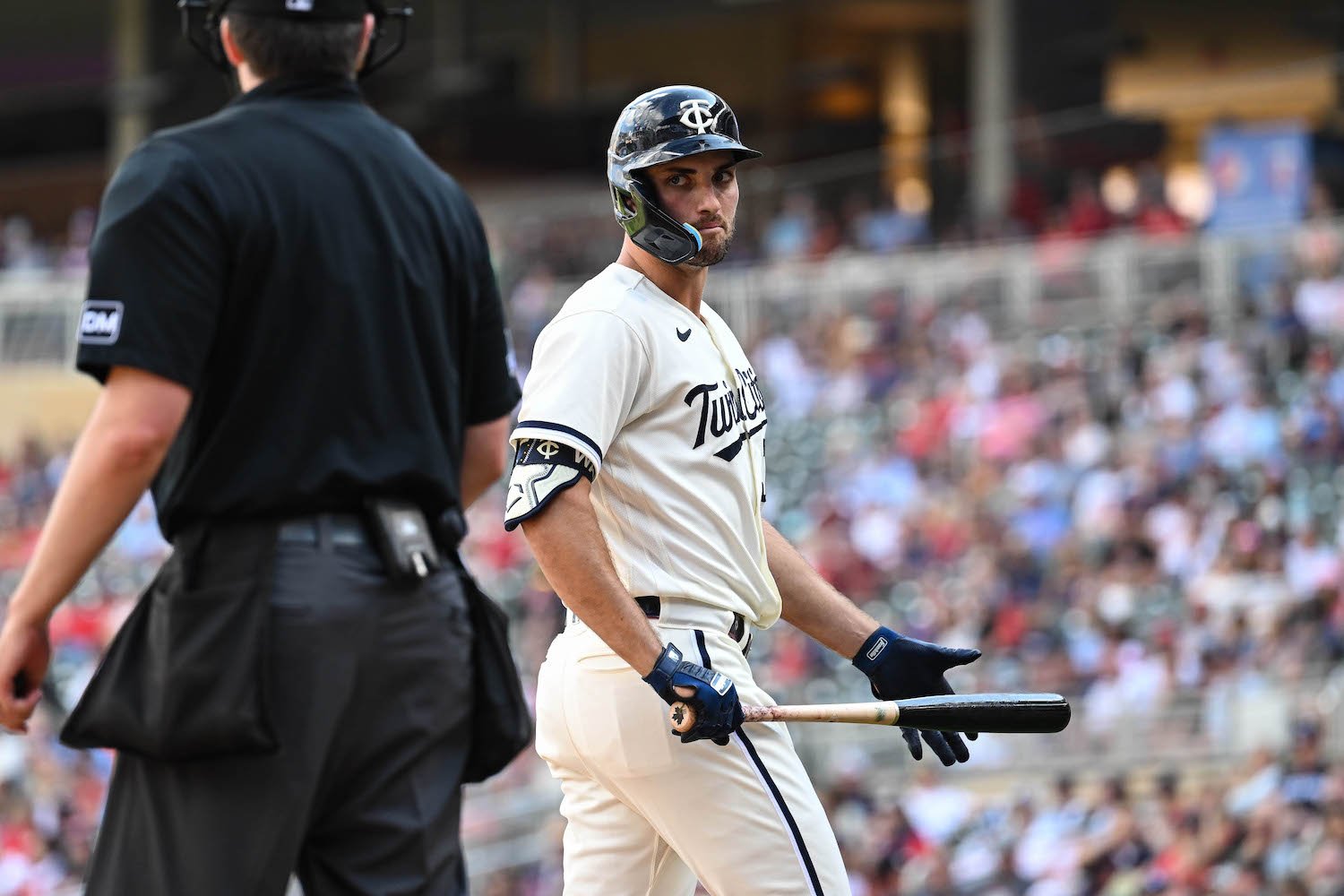 A young player's first full season in Major League Baseball is often a story of ups and downs. It is a yin-and-yang relationship where the highest of highs tend to get followed up by the lowest of lows. That phenomenon is currently happening to Twins rookie outfielder Matt Wallner. Wallner, 25, made his Major League debut for the Twins in mid-September of the 2022 season, hitting .228/.323/.386 (.709) with 13 hits, two home runs, and a 103 wRC+ over 65 plate appearances. The toolsy outfielder was impressive during his first cup of coffee at the Major League level, but making meaningful conclusions over such a short sample size would be malpractice. The early portion of the 2023 season saw him making multiple trips east and west along I-94. Wallner started the 2023 season with the St. Paul Saints and was eventually called up by the Twins on April 9 to replace a then-injured Max Kepler, who was placed on the 10-day IL on April 8. He played in six games for the Twins and couldn't generate a hit in 11 plate appearances before getting optioned back over to St. Paul on April 15. The Twins then recalled Wallner a second time on May 23, and he performed exceptionally well, hitting .636/.714/1.000 (1.714) with seven hits, one home run, and a 364 wRC+ over 14 plate appearances. Nevertheless, he was sent over to the 651 once again. Over the next month and a half, Wallner hit well enough that most Twins fans wondered why he wasn't getting an opportunity over then-struggling left-handed hitting corner outfielders Trevor Larnach, Joey Gallo, and Max Kepler. Finally, on July 17, Wallner again got promoted from Triple-A St. Paul and has been with the Major League club ever since. Wallner started his third stint off hot, hitting .238/.333/.571 (.904) with 15 hits, six home runs, and a well-above-league average wRC+ of 145 from July 17 to August 6. He capped off this hot stretch with a walk-off home run off Arizona Diamondbacks closer Paul Sewald. The Twins, their fans, and Wallner himself were riding a high and reasonably so. A young, highly-touted prospect finally got an opportunity to contribute to his home-state team and was performing incredibly well. Why wouldn't everyone celebrate Unfortunately, Wallner's walk-off against the Diamondbacks marked the beginning of a downward spiral that has many questioning his short and long-term future with the Twins. To put Wallner's struggles into perspective, here are his numbers since August 7: Wallner - .172/.308/.391 (.699), 104 PA, 15 hits, two doubles, one triple, five home runs, 10.6% BB%, 35.6% K%, .218 ISO, .222 BABIP, 96 wRC+ Wallner hasn't performed terribly in this stretch, but it is arguably the worst month-long stretch of his career. To condense the sample size provided even more, here are Wallner's numbers since September 1: Wallner - .154/.333/.269 (.602), 33 PA, four hits, one home run, 21.2% BB%, 36.4% K%, .115 ISO, .231 BABIP, 81 wRC+ Offensively, he is struggling immensely as of late, and his ballooned K% of 36.4% and exaggerated swing-and-miss profile have many Twins fans derogatorily dubbing Wallner as a young version of Gallo. So, what is happening to Wallner? Let's take a look. Increased Swing-and-Miss Rate To begin, Wallner swings and misses at a lot of pitches, and while this isn't an inherently bad thing (see: Edouard Julien), the amount in which Wallner swings and misses on pitches is alarming. The best way to illustrate Wallner's swing-and-miss problem is through using the batting statistic titled Whiff%, which is a statistic that divides a hitter's total number of swings and misses by their total number of swings. Wallner currently possesses a Whiff% of 37.1% on fastballs, 43.1% on breaking balls, and 28.1% on off-speed pitches. Combined, Wallner's overall Whiff% sits at 37.5%. To go back to the Gallo comparison, Gallo currently possesses a Whiff% of 37.1% on fastballs, 50.6% on breaking balls, and 58.4% on offspeed pitches. Nobody in modern baseball has as high of a Whiff% of Gallo and his 1st-percentile Whiff%, but Wallner is alarmingly close, particularly on fastballs, where he has an identical Whiff% as Gallo of 37.1%. Wallner has struggled hitting fastballs as of late, but there is reason to believe he can quickly overcome this specific shortcoming at a relatively quick pace. Hitters tend to be able to make the appropriate adjustments on fastballs as they typically need to make slight revisions to both their timing and swing paths. Wallner should be able to make the adjustments, and while it likely will not happen this season, an offseason of tinkering with his swing should help him catch up to fastballs at a sustainable rate. What is alarming is that Wallner has a Whiff% of 43.1% on breaking balls. Hitters are less likely to make quick and relatively simple adjustments and suddenly be able to hit breaking balls like they can with fastballs. There is much more nuance to hitting breaking balls, and an extreme overhaul of Wallner's swing may be necessary. While this overhaul will not happen this late in the season, it is something to monitor this upcoming offseason, and it will be interesting to see how Wallner's stance and swing plane look next Spring Training. Until then, all the Twins can do is work with the player they have now. And while teams will continue to attack Wallner with both fastballs and breaking balls, there is reason to believe he can make the necessary short-term adjustments, particularly with fastballs, to help him perform more like the player he was in late July and early August. Wallner may need to simplify his stance and shorten his swing to get the most out of his at-bats for the rest of the season, and that may come at the expense of some power, but that is a trade-off that Wallner and the Twins would likely accept with open arms for the time being. Are Wallner's Struggles Simply Him Being a Young Player? Young players struggling, especially those of the power-hitting variety, is in no way an uncommon phenomenon as other young Twins hitters in Trevor Larnach, Gilberto Celestino, Ryan Jeffers, Royce Lewis, Alex Kirilloff, Willi Castro, and the previously mentioned Julien either have or currently are undergoing offensive struggles of their own. What separates young players who can stay at the Major League level (i.e., Kirilloff and Lewis) and those who end up stuck in the constant limbo of being a Quad-A player (i.e., Celestino and Larnach) is whether they can make the necessary adjustments needed to be able to hit Major League pitching at a satisfactory rate. Wallner may be enduring the same struggles that every young player does, and he may be able to turn the corner and become a consistent contributor for the Twins for seasons to come. Unfortunately, the timing of his struggles at the plate couldn't have happened at a more inopportune time. The Twins are all but set to make their first postseason appearance since 2020, and the complicated judgment of who makes the playoff roster and who gets left off will soon need to be made by Twins decision-makers. A month ago, it seemed like Wallner was a near lock to make the roster, but that once obvious decision has become much cloudier as Wallner continues to struggle. Should Wallner Make the Twins Playoff Roster? To answer this question, we must first examine how the Twins outfield will likely look come playoff time. Currently, the Twins outfield options include Wallner, Kepler, Castro, Kirilloff, Celestino, Jordan Luplow, and Andrew Stevenson. Other potential outfield options include players on the injured list: Gallo, Nick Gordon, Byron Buxton, and Michael A. Taylor. Prospect Austin Martin is another option, but the Twins adding him to the 40-man roster and throwing him into action in the middle of a pennant race feels highly unlikely. Looking at the Twins' current outfield situation, Kepler, Castro, Kirilloff, and Luplow feel like locks to make the playoff roster. Luplow is strictly a right-handed platoon player, but his archetype is all too valuable in the playoffs. Celestino is only on the roster to take up space until Jorge Polanco returns from the bereavement list, and Stevenson could make the playoff roster, but he feels like a long shot. It always takes work to get a read on where players are regarding their health. Yet, when discussing Gallo, Buxton, Gordon, and Taylor, it feels like Taylor is a lock to make the playoff roster, while the potentially soon-to-return Gallo and Gordon could make it if injuries pile up. But unless that happens, Gordon and Gallo also feel like long shots. Buxton is a unique case; there is no reason to speculate until the Twins provide official updates. As things stand, Wallner is likely on track to make the playoff roster alongside fellow outfield options Kepler, Castro, Kirilloff, Luplow, and Taylor. If Wallner continues to struggle and a veteran like Buxton, Gallo, or Gordon returns from the injured list and produces, or if Stevenson begins to produce more offensively, Wallner's status could change. Come Game One of the Wild Card Series, the Twins will likely start Taylor in center field and Kepler in right field. Who will start in left field is still open for the taking, and if Wallner continues to struggle, don't be surprised if Castro, Luplow, or Kirilloff start in left field come October 3. Wallner's first stretch of prolonged struggles were expected, but the timing could not have been more unfortunate for the young Minnesota native. What do you make of Wallner's struggles? Does he deserve to make the Twins playoff roster? Comment below.
- 39 comments
-
- 3
-
-
- matt wallner
- joey gallo
- (and 3 more)
