



Parker Hageman
-
Posts
4,152 -
Joined
-
Last visited
-
Days Won
6
Content Type
Profiles
News
Minnesota Twins Videos
2026 Minnesota Twins Top Prospects Ranking
2022 Minnesota Twins Draft Picks
Minnesota Twins Free Agent & Trade Rumors, Notes, & Tidbits
Guides & Resources
2023 Minnesota Twins Draft Picks
The Minnesota Twins Players Project
2024 Minnesota Twins Draft Picks
2025 Minnesota Twins Draft Pick Tracker
2026 Minnesota Twins Draft Tracker: Picks & Bonuses
Forums
Blogs
Events
Store
Downloads
Gallery
Everything posted by Parker Hageman
-
 I'm not suggesting he held back. I'm suggesting he was working on his two-seamer (or something like hitting a spot, etc). Relievers don't have the opportunity to work on things in-season. They don't get the side pens like starters do. They have spring training to test things where results don't matter. The veteran guys who have a roster spot don't need to try to impress on the radar gun. This is something that should be revisited at the end of April or in May.
- 13 replies
-
- 4
-

-
- kyle gibson
- byungho park
- (and 3 more)
-
Perkins also hit 94 the other day. I had a chat with him and he says he feels much better now than where he was at this point last year. Naturally, all players say they are in the best shape of their lives. He pointed out that he had the early spring training injury last year that kept him from pitching to start the Grapefruit League so this year he felt more season ready. The velocity isn't a concern at this point.
-
Still had Runzler on the brain. Thanks.
-
Another day and yet another Minnesota Twins victory in the Grapefruit League. On the field, the offense was not nearly as potent had it been the previous day in Port Charlotte but the shutout of the Pirates’ lineup today proved that the minimum amount of runs was needed to win. Off the field, the front office made several roster moves which solidified the position players heading north and left four remaining slots for pitchers to be determined. Here is more from Saturday from around the complex.* Kyle Gibson tossed six scoreless innings as the Twins topped the Pirates 3-0 at Hammond Stadium, using an assortment of breaking balls to keep Pirates hitters off kilter and register eight strikeouts. Gibson said he mixed in plenty of curve balls in the game, a pitch that he has been trying to incorporate more. The curve has not been getting the swings-and-misses like he would like to see. He did note that the pitch gets the hitters to move their hands on takes and induces weak contact. “I think it plays my slider up a little bit,” Gibson said of the effects of throwing more curve balls. “I think the bigger break on the curve and the slider more like a fastball, I like throwing those two in the same at-bat main because the slider ends up looking like the fastball. It’s something that just throws a little bit of a wrinkle and throws their timing off.” * In the fifth inning, Pittsburgh catcher Chris Stewart hit a grounder to shortstop Eduardo Escobar. Escobar unleashed a hard but errant throw across the diamond that seemed like it had a date with the first base stands. Byung Ho Park, in an extremely athletic manner, leapt and snagged the ball out of the air and came down to retire Stewart in time. Earlier in the game, Park also made a diving stop of a Cole Figueroa smash down the line. “I found out early in camp that he could catch the ball,” Molitor remarked about Park’s defensive chops. “He doesn’t panic, he slows the plays down pretty well. The teaching aspect for him this spring has been more the nuances of the position that have somehow been overlooked in his development over there.” The Twins obviously have Joe Mauer ensconced at first base and he has greatly improved his defensive capabilities at the position, but he seems rigid and still learning the position at times. Park, on the other hand, conducts his business on the field like a true defensive first baseman. * With the six moves from this morning, the Twins are down to 29 players in camp -- 16 of whom are pitchers. The team has expressed the desire to limit the pitching staff to 12 so the next four cuts will involve pitchers. Among those on the bubble are lefties Fernando Abad, Logan Darnell and Ryan O’Rourke as well as right-handers Michael Tonkin and Brandon Kintzler as relievers. Starter hopefuls Tyler Duffey and Ricky Nolasco will pitch on Monday, with one of them joining Tommy Milone in the rotation. Manager Paul Molitor has made it clear that the Twins intend to keep Duffey as a starter and he will not be an option of the pen in spite of being a closer in college. * When the Twins signed Carlos Quentin to a minor league contract, they built in a June 1st opt-out date. The agreement is a common one between veteran players and the parent clubs. The Twins, however, also gave Quentin assurances that they would give him the ability to explore other employment options if they were not going to use him at the major league level. “He’s probably gonna take a day or so to decide on what he wants to do,” Ryan said. “We certainly offered him the chance to play at Triple-A.” The Twins were satisfied with Quentin’s contributions this spring but the numbers game was not favorable for him. “He had some good days here,” Ryan admitted. “And he stayed healthy, which is one of the concerns you might have, but we’re going to go this path at this time. Now that’s not saying that if goes to Triple-A and all of a sudden he gets going down there, there’s an opportunity to come back.” “I think he handled himself well considering he hadn’t played for a year,” Molitor said of Quentin’s performance this spring. “He still looks like a threat in some ways and I think at-bats will help him, if he decides to go that route.” READ: Carlos Quentin Among Six Twins Roster Cuts * For several reasons, the Twins kept Oswaldo Arcia as the bench bat/backup outfielder over the veteran Quentin. Arcia was out of options and, despite struggling the last two years, he is teeming with promise. Arcia had been working hard this offseason to improve his approach at the plate overall, but has specifically focused on handling left-handed pitching. His two home runs in Jupiter on Thursday opened some eyes. “He spent almost all winter here,” Ryan said. “He came in in good shape, he’s got things to prove, he did a better job this spring on defense - throwing, routes, all that stuff defensive. Obviously we’re keeping him mostly for that bat and that power. It’s his opportunity to take some quality at-bats and make that the right decision for us.” For his career, Arcia has hit just .231/.271/.343 against southpaws and just .164 when lefties attacked the outer-third of the strike zone. Both home runs came on balls on the outer-half, showing some indications that the left-handed swinger may be turning a corner. Arcia's inclusion raised questions regarding Molitor’s ability to get some players regular at-bats, something that young hitters like Arcia need to build confidence. “I haven’t thought about how much I am going to play him,” Molitor said. “I do know that I like to keep people involved, particularly early.” * Twins bullpen coach Eddie Guardado says he likes to keep things simple with his relievers when it comes to making adjustments. “I don’t like to go in there and fix a damn engine when you only need to change a spark plug.” * It was pointed out to Trevor Plouffe this week that he had not hit fastballs well in 2016. According to ESPN/TruMedia, Plouffe’s .220 batting average against fastballs was the fourth lowest among qualified hitters. The previous year he had hit .282 while driving 23 doubles (compared to 14 in 2015) on heaters last year. So why the big difference? Were pitchers attacking him differently? Was he hunting after sliders? Plouffe was surprised by the data and had no explanation for the sudden decline. A day later in Port Charlotte, Plouffe launched two mammoth home runs. When asked if those came on fastballs, he just smiled and nodded. Narrative busted. The Twins like Plouffe’s ability to take professional at-bats as a cleanup hitter. “He’s capable for hitting in that slot because he can get a hit and he can hit it over the fence every now and then. I don’t think it fazes him much,” Molitor said of Plouffe. Ryan echoed that sentiment saying Plouffe was “about the ideal guy” to hit behind Sano in order to keep pitchers honest. * The Twins travel to Tampa tomorrow to face the New York Yankees where Phil Hughes, Ryan Pressly and Fernando Abad will throw. The minor leagues will have inter-squad games at 10 AM on the backfields. Click here to view the article
-
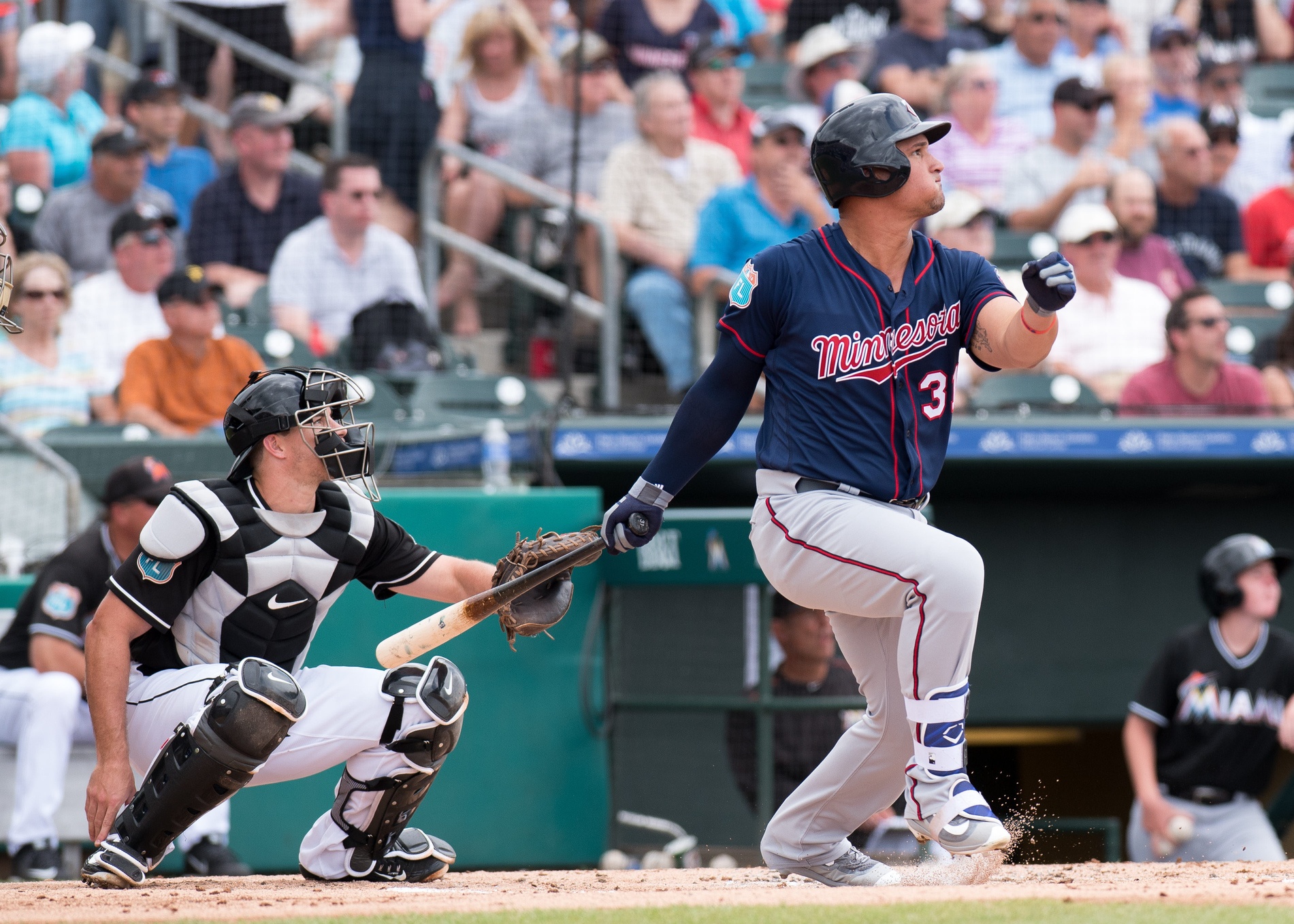 * Kyle Gibson tossed six scoreless innings as the Twins topped the Pirates 3-0 at Hammond Stadium, using an assortment of breaking balls to keep Pirates hitters off kilter and register eight strikeouts. Gibson said he mixed in plenty of curve balls in the game, a pitch that he has been trying to incorporate more. The curve has not been getting the swings-and-misses like he would like to see. He did note that the pitch gets the hitters to move their hands on takes and induces weak contact. “I think it plays my slider up a little bit,” Gibson said of the effects of throwing more curve balls. “I think the bigger break on the curve and the slider more like a fastball, I like throwing those two in the same at-bat main because the slider ends up looking like the fastball. It’s something that just throws a little bit of a wrinkle and throws their timing off.” * In the fifth inning, Pittsburgh catcher Chris Stewart hit a grounder to shortstop Eduardo Escobar. Escobar unleashed a hard but errant throw across the diamond that seemed like it had a date with the first base stands. Byung Ho Park, in an extremely athletic manner, leapt and snagged the ball out of the air and came down to retire Stewart in time. Earlier in the game, Park also made a diving stop of a Cole Figueroa smash down the line. “I found out early in camp that he could catch the ball,” Molitor remarked about Park’s defensive chops. “He doesn’t panic, he slows the plays down pretty well. The teaching aspect for him this spring has been more the nuances of the position that have somehow been overlooked in his development over there.” The Twins obviously have Joe Mauer ensconced at first base and he has greatly improved his defensive capabilities at the position, but he seems rigid and still learning the position at times. Park, on the other hand, conducts his business on the field like a true defensive first baseman. * With the six moves from this morning, the Twins are down to 29 players in camp -- 16 of whom are pitchers. The team has expressed the desire to limit the pitching staff to 12 so the next four cuts will involve pitchers. Among those on the bubble are lefties Fernando Abad, Logan Darnell and Ryan O’Rourke as well as right-handers Michael Tonkin and Brandon Kintzler as relievers. Starter hopefuls Tyler Duffey and Ricky Nolasco will pitch on Monday, with one of them joining Tommy Milone in the rotation. Manager Paul Molitor has made it clear that the Twins intend to keep Duffey as a starter and he will not be an option of the pen in spite of being a closer in college. * When the Twins signed Carlos Quentin to a minor league contract, they built in a June 1st opt-out date. The agreement is a common one between veteran players and the parent clubs. The Twins, however, also gave Quentin assurances that they would give him the ability to explore other employment options if they were not going to use him at the major league level. “He’s probably gonna take a day or so to decide on what he wants to do,” Ryan said. “We certainly offered him the chance to play at Triple-A.” The Twins were satisfied with Quentin’s contributions this spring but the numbers game was not favorable for him. “He had some good days here,” Ryan admitted. “And he stayed healthy, which is one of the concerns you might have, but we’re going to go this path at this time. Now that’s not saying that if goes to Triple-A and all of a sudden he gets going down there, there’s an opportunity to come back.” “I think he handled himself well considering he hadn’t played for a year,” Molitor said of Quentin’s performance this spring. “He still looks like a threat in some ways and I think at-bats will help him, if he decides to go that route.” READ: Carlos Quentin Among Six Twins Roster Cuts * For several reasons, the Twins kept Oswaldo Arcia as the bench bat/backup outfielder over the veteran Quentin. Arcia was out of options and, despite struggling the last two years, he is teeming with promise. Arcia had been working hard this offseason to improve his approach at the plate overall, but has specifically focused on handling left-handed pitching. His two home runs in Jupiter on Thursday opened some eyes. “He spent almost all winter here,” Ryan said. “He came in in good shape, he’s got things to prove, he did a better job this spring on defense - throwing, routes, all that stuff defensive. Obviously we’re keeping him mostly for that bat and that power. It’s his opportunity to take some quality at-bats and make that the right decision for us.” https://twitter.com/twinsdaily/status/713742223024787457 For his career, Arcia has hit just .231/.271/.343 against southpaws and just .164 when lefties attacked the outer-third of the strike zone. Both home runs came on balls on the outer-half, showing some indications that the left-handed swinger may be turning a corner. Arcia's inclusion raised questions regarding Molitor’s ability to get some players regular at-bats, something that young hitters like Arcia need to build confidence. “I haven’t thought about how much I am going to play him,” Molitor said. “I do know that I like to keep people involved, particularly early.” * Twins bullpen coach Eddie Guardado says he likes to keep things simple with his relievers when it comes to making adjustments. “I don’t like to go in there and fix a damn engine when you only need to change a spark plug.” * It was pointed out to Trevor Plouffe this week that he had not hit fastballs well in 2016. According to ESPN/TruMedia, Plouffe’s .220 batting average against fastballs was the fourth lowest among qualified hitters. The previous year he had hit .282 while driving 23 doubles (compared to 14 in 2015) on heaters last year. So why the big difference? Were pitchers attacking him differently? Was he hunting after sliders? Plouffe was surprised by the data and had no explanation for the sudden decline. A day later in Port Charlotte, Plouffe launched two mammoth home runs. When asked if those came on fastballs, he just smiled and nodded. Narrative busted. The Twins like Plouffe’s ability to take professional at-bats as a cleanup hitter. “He’s capable for hitting in that slot because he can get a hit and he can hit it over the fence every now and then. I don’t think it fazes him much,” Molitor said of Plouffe. Ryan echoed that sentiment saying Plouffe was “about the ideal guy” to hit behind Sano in order to keep pitchers honest. * The Twins travel to Tampa tomorrow to face the New York Yankees where Phil Hughes, Ryan Pressly and Fernando Abad will throw. The minor leagues will have inter-squad games at 10 AM on the backfields.
 -
I don't think there is anything a team can glean from Buxton's discussion. Sure, he wants to be more aggressive early in the count. Until anything changes and he proves he can hit in those situations, they'll likely continue to pitch to him the same.
-
I'm thinking Quentin and his agent will discuss their options. This might be the Twins' way of giving him an opportunity to explore another job before committing to Rochester. Ryan will address the media at 12:30 EST so we'll learn more soon.
-
The Carlos Quentin comeback experiment will be delayed. The Minnesota Twins made six moves this morning, trimming the roster down to 29 players, including reassigning the veteran Quentin to Rochester.Joining Quentin on the Triple-A roster is catcher John Hicks, who had hit .304/.292/.348 in 12 spring games. Meanwhile position players Darin Mastroianni, Juan Centeno, James Beresford and pitcher Dan Runzler were reassigned to the minor league camp leaving 29 players left in camp. The Twins now have sixteen pitchers, two catchers, six infielders and five outfielders remaining with four cuts left to make. Quentin, who was in the running for a spot on the bench as a right-handed bat, has a June 1 opt-out in his contract. The 33-year-old signed a minor league deal this offseason in hopes of returning after a year off from baseball. He performed well in the spring, hitting a pair of home runs and posting a .250/.333/.500 line over 15 games. Earlier in the week, assistant GM Rob Antony told reporters that the team had a “gentlemen’s agreement” with Quentin, saying that the team would let Quentin out of his deal if they felt there would be no room for the veteran going forward. Quentin’s reassignment paves the way for Oswaldo Arcia to assume the role of part-time outfielder, DH and pinch hitter. Arcia has not had a strong spring, but a pair of opposite field home runs of left-handed pitching this week has given the Twins some reassurances that Arcia’s offseason work is paying off. Click here to view the article
-
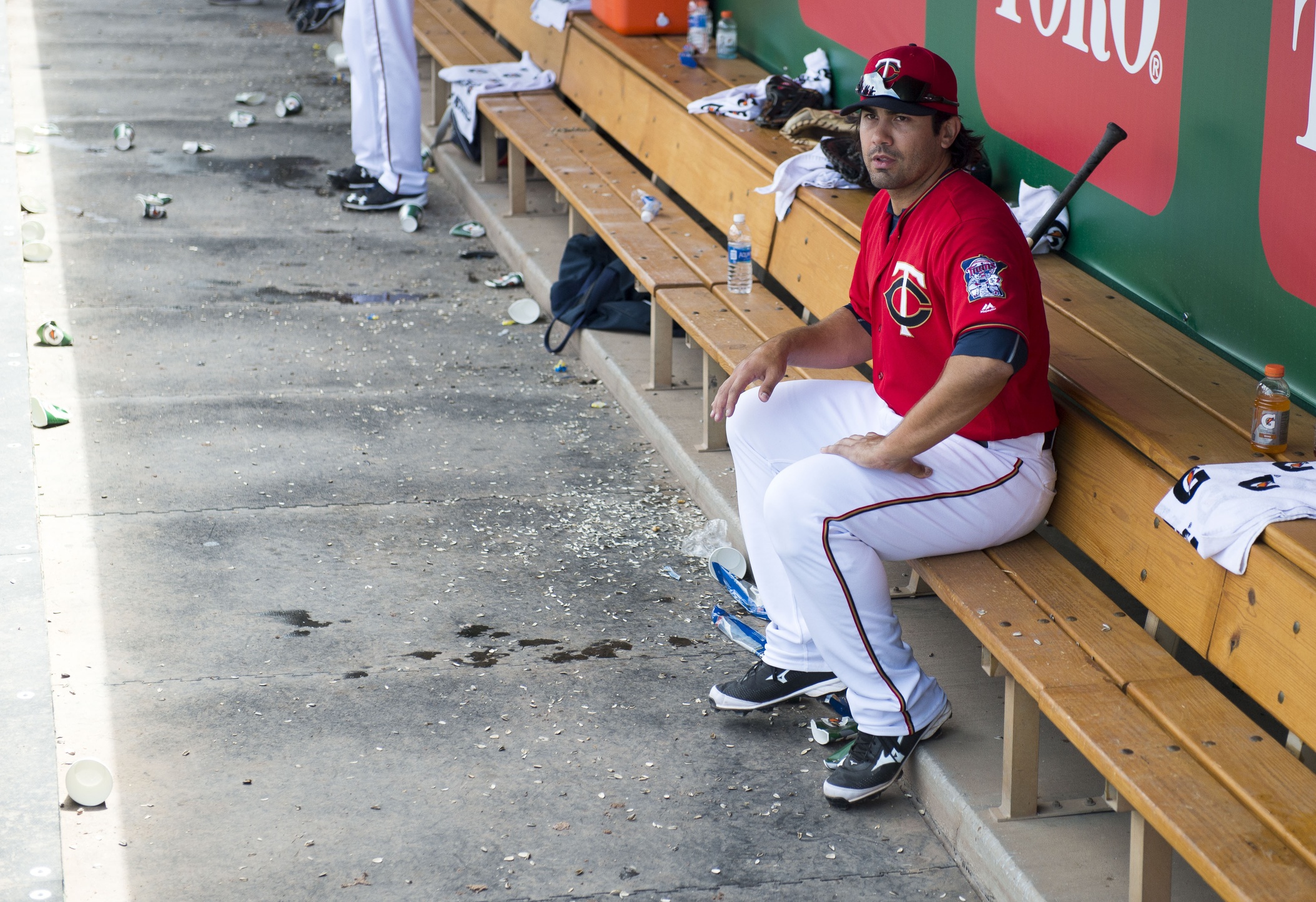 Joining Quentin on the Triple-A roster is catcher John Hicks, who had hit .304/.292/.348 in 12 spring games. Meanwhile position players Darin Mastroianni, Juan Centeno, James Beresford and pitcher Dan Runzler were reassigned to the minor league camp leaving 29 players left in camp. The Twins now have sixteen pitchers, two catchers, six infielders and five outfielders remaining with four cuts left to make. Quentin, who was in the running for a spot on the bench as a right-handed bat, has a June 1 opt-out in his contract. The 33-year-old signed a minor league deal this offseason in hopes of returning after a year off from baseball. He performed well in the spring, hitting a pair of home runs and posting a .250/.333/.500 line over 15 games. Earlier in the week, assistant GM Rob Antony told reporters that the team had a “gentlemen’s agreement” with Quentin, saying that the team would let Quentin out of his deal if they felt there would be no room for the veteran going forward. Quentin’s reassignment paves the way for Oswaldo Arcia to assume the role of part-time outfielder, DH and pinch hitter. Arcia has not had a strong spring, but a pair of opposite field home runs of left-handed pitching this week has given the Twins some reassurances that Arcia’s offseason work is paying off.
 -
Seems just based on speed alone he should hit over .260. The swinging bunt yesterday was a prime example of how he's going to get hits that others would have been thrown out on. He still doesn't look fully comfortable when facing this competition. Even with the swing change, he doesn't swing with intent. He seems more defensive in his swings. As he said, he doesn't like hitting with two strikes (who does) but if the approach is swinging to avoid two strikes rather than driving the right pitch well... It's a mental/comfort thing.
-
Molitor stressed that there are three pitchers and two slots. Everyone is being coy about the outcome but my guess is that they have made their decision and will let everyone know at the end of camp. No reason to make an announcement until they find out if everyone is healthy.
-
With the regular season start a little over a week away, the Minnesota Twins announced their presence with authority in Port Charlotte. On their field, bats came alive and the pitching was crisp. On the personnel side, the team made several moves, paring down the roster. Take a look at the happenings around camp.* Ervin Santana, who was recently appointed the Opening Day starter, was absolutely unsolvable as he ran through the Rays’ lineup. With eight strikeouts over seven innings (59 strikes on 85 pitches) Santana appeared sharp and ready for the real games to begin. Keep the ball down and throw strikes was Santana’s blueprint but he mixed in a diving changeup and his biting slider which incited plenty of awkward swings off the Rays’ bats. Santana’s batterymate also noticed that the righty had been amping up the velocity. “I think he was throwing a bit harder from the get go than I was used to,” catcher Kurt Suzuki said after Santana’s outing. “He was 94, 95 at the beginning so you can tell he’s starting to get to season form.” * Trevor Plouffe and Kurt Suzuki tortured Rays’ starter Drew Smyly. Plouffe belted a pair of home runs to left while Suzuki had a double before launching his first of two home runs (he would get his second later in the seventh inning). Suzuki had fouled a pitch off his Achilles heel and spent some time trying to shake it off. Twins trainers emerged from the spacious Charlotte Sports Park dugout to tend to the catcher. Suzuki eventually returned to the batters’ box and promptly jacked the first offering from Smyly into the boardwalk area over the left-center field wall. “He has a way of beating himself up out there,” Molitor said in reference to Suzuki’s ability to absorb constant punishment from baseballs. Suzuki’s spring has not been necessarily strong but Molitor likes to see all the work Suzuki has been putting in trying to improve on his abysmal 2015 season. “I’ve been working with Bruno and Rudy in the cages,” Suzuki said after the game. “So it’s nice to see stuff paying off.” Suzuki says it is a work in progress but the coaches have been keeping his head still (something I pointed out at Twins Daily last month), not drifting to the ball and keeping a firm base in his swing. Suzuki’s success against Smyly and Jhan Martinez built some confidence in the process. Molitor said the team doesn’t expect Suzuki to hit for power but would like to see him continue to have strong at-bats. “It hasn’t been a really good spring for him but he’s worked hard.” * Bullpen coach Eddie Guardardo was beaming after the game. Why? “He threw BP to [Plouffe] and Suzuki today so he’s trying to take all the credit,” Molitor explained. READ: Will Byron Buxton’s Swing Changes Lead To A Breakout Season? * As expected, the Twins reassigned Max Kepler to the AAA roster. Kepler entered spring with an outside chance of winning a job but it was apparent that he was not going to beat out any of the existing position players for a spot. Still, the Twins were happy with what they saw from the 22-year-old, specifically his defensive chops. “This is the first camp he’s gotten much activity,” Twins general manager Terry Ryan said of his performance. “He played left, he played center, he played first. I felt like he did a decent job defensively.” Ryan remarked he was impressed with Kepler’s throw from the outfield during Thursday’s game in Jupiter. “That’s probably the biggest part of his game. I don’t think there is any question that he can field, that he can run.” Kepler is going to play all over the diamond in Rochester -- including time at first base -- but the emphasis will be on getting him time in the outfield. * Earlier in the week, Kepler discussed his improved approach at the plate. He added the leg kick on his own but also said he has changed the mental side of his game as well. In the past he felt like he became timid when pitchers would get a strike on him. Now, he doesn’t let the strikes dictate his approach. “I was more of a patient hitter, didn't like striking out a lot. I was more of a slap hitter once I got a strike on me. I didn't let that phase me in '15 and the leg kick kind of pushed that approach and be more aggressive.” Kepler believes that he is capable of pumping out more home runs when he applies his new approach over a full season. * Twins also announced they released outright Cedar Rapids native Ryan Sweeney. Initially he had told reporters that he was put through waivers but Ryan clarified. The Twins did not have conversations with him regarding a minor league assignment. “Some of the other guys who are still in camp emerged,” Ryan said. “It’s not anything he did not do. He came in and had plenty of opportunity. We gave him a lot of exposure, we gave him a chance. We just got some people that are ahead of him.” Sweeney went 10-for-37 (.270) with six walks (second only to Miguel Sano’s nine) in 16 Grapefruit League games. READ: Minnesota Twins’ Roster Projection 4.0 * Tyler Duffey has been working diligently on mastering his change-up this spring. After allowing a home run on a 3-1 change to Jose Bautista in Toronto in his first major league start, Duffey shelved the pitch. In his most recent spring start, Duffey said he mixed in a decent amount but grounded them early in the outing. When he tried to make an in-game adjustment with the pitch, he hung one in the middle of the zone that was launched into the neighboring property. In evaluating Duffey’s performance, Terry Ryan said that the staff is taking Duffey’s efforts to work on a new pitch into account rather than a review of his results. “You got to be careful about watching a guy out here when he’s working on a pitch,” Ryan said. “You have to take that into consideration. And he’s thrown a lot of change-ups.” Duffey will get one more opportunity this spring in game action when he and Ricky Nolasco will pitch on Monday in separate games. Ryan dispelled the notion that the two are competing head-to-head but it is difficult not to view those two appearances as influential in the decision-making process. * In minor league action, Jose Berrios threw in the AAA game. According to Twins Daily contributor Bob Sacamento, Berrios was sitting 93 but hit 95 with the fastball in his last inning of work. He also mixed in a slider (85 MPH) and change-up (around 75 MPH) to keep Oriole hitters off-balance. The right-hander finished the day with five innings of work, allowing two hits while strikeout out seven. Twins’ 2014 first round draft pick, shortstop Nick Gordon, returned to game action after suffering a hamstring/back injury. Click here to view the article
- 7 replies
-
- 1
-
-
- ervin santana
- kurt suzuki
- (and 2 more)
-
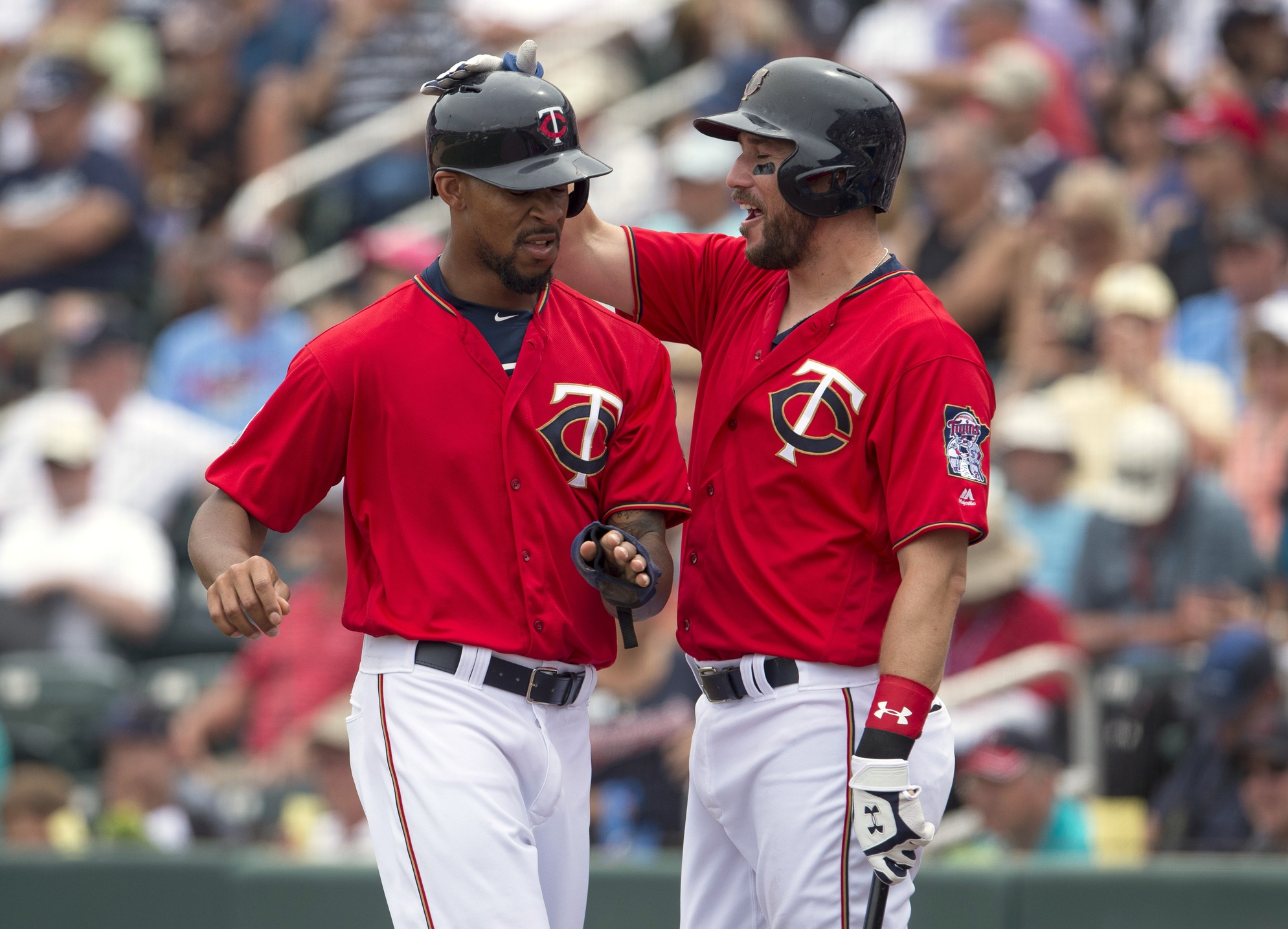 * Ervin Santana, who was recently appointed the Opening Day starter, was absolutely unsolvable as he ran through the Rays’ lineup. With eight strikeouts over seven innings (59 strikes on 85 pitches) Santana appeared sharp and ready for the real games to begin. Keep the ball down and throw strikes was Santana’s blueprint but he mixed in a diving changeup and his biting slider which incited plenty of awkward swings off the Rays’ bats. Santana’s batterymate also noticed that the righty had been amping up the velocity. “I think he was throwing a bit harder from the get go than I was used to,” catcher Kurt Suzuki said after Santana’s outing. “He was 94, 95 at the beginning so you can tell he’s starting to get to season form.” * Trevor Plouffe and Kurt Suzuki tortured Rays’ starter Drew Smyly. Plouffe belted a pair of home runs to left while Suzuki had a double before launching his first of two home runs (he would get his second later in the seventh inning). Suzuki had fouled a pitch off his Achilles heel and spent some time trying to shake it off. Twins trainers emerged from the spacious Charlotte Sports Park dugout to tend to the catcher. Suzuki eventually returned to the batters’ box and promptly jacked the first offering from Smyly into the boardwalk area over the left-center field wall. “He has a way of beating himself up out there,” Molitor said in reference to Suzuki’s ability to absorb constant punishment from baseballs. Suzuki’s spring has not been necessarily strong but Molitor likes to see all the work Suzuki has been putting in trying to improve on his abysmal 2015 season. “I’ve been working with Bruno and Rudy in the cages,” Suzuki said after the game. “So it’s nice to see stuff paying off.” Suzuki says it is a work in progress but the coaches have been keeping his head still (something I pointed out at Twins Daily last month), not drifting to the ball and keeping a firm base in his swing. Suzuki’s success against Smyly and Jhan Martinez built some confidence in the process. Molitor said the team doesn’t expect Suzuki to hit for power but would like to see him continue to have strong at-bats. “It hasn’t been a really good spring for him but he’s worked hard.” * Bullpen coach Eddie Guardardo was beaming after the game. Why? “He threw BP to [Plouffe] and Suzuki today so he’s trying to take all the credit,” Molitor explained. READ: Will Byron Buxton’s Swing Changes Lead To A Breakout Season? * As expected, the Twins reassigned Max Kepler to the AAA roster. Kepler entered spring with an outside chance of winning a job but it was apparent that he was not going to beat out any of the existing position players for a spot. Still, the Twins were happy with what they saw from the 22-year-old, specifically his defensive chops. “This is the first camp he’s gotten much activity,” Twins general manager Terry Ryan said of his performance. “He played left, he played center, he played first. I felt like he did a decent job defensively.” Ryan remarked he was impressed with Kepler’s throw from the outfield during Thursday’s game in Jupiter. “That’s probably the biggest part of his game. I don’t think there is any question that he can field, that he can run.” Kepler is going to play all over the diamond in Rochester -- including time at first base -- but the emphasis will be on getting him time in the outfield. * Earlier in the week, Kepler discussed his improved approach at the plate. He added the leg kick on his own but also said he has changed the mental side of his game as well. In the past he felt like he became timid when pitchers would get a strike on him. Now, he doesn’t let the strikes dictate his approach. “I was more of a patient hitter, didn't like striking out a lot. I was more of a slap hitter once I got a strike on me. I didn't let that phase me in '15 and the leg kick kind of pushed that approach and be more aggressive.” Kepler believes that he is capable of pumping out more home runs when he applies his new approach over a full season. * Twins also announced they released outright Cedar Rapids native Ryan Sweeney. Initially he had told reporters that he was put through waivers but Ryan clarified. The Twins did not have conversations with him regarding a minor league assignment. “Some of the other guys who are still in camp emerged,” Ryan said. “It’s not anything he did not do. He came in and had plenty of opportunity. We gave him a lot of exposure, we gave him a chance. We just got some people that are ahead of him.” Sweeney went 10-for-37 (.270) with six walks (second only to Miguel Sano’s nine) in 16 Grapefruit League games. READ: Minnesota Twins’ Roster Projection 4.0 * Tyler Duffey has been working diligently on mastering his change-up this spring. After allowing a home run on a 3-1 change to Jose Bautista in Toronto in his first major league start, Duffey shelved the pitch. In his most recent spring start, Duffey said he mixed in a decent amount but grounded them early in the outing. When he tried to make an in-game adjustment with the pitch, he hung one in the middle of the zone that was launched into the neighboring property. In evaluating Duffey’s performance, Terry Ryan said that the staff is taking Duffey’s efforts to work on a new pitch into account rather than a review of his results. “You got to be careful about watching a guy out here when he’s working on a pitch,” Ryan said. “You have to take that into consideration. And he’s thrown a lot of change-ups.” Duffey will get one more opportunity this spring in game action when he and Ricky Nolasco will pitch on Monday in separate games. Ryan dispelled the notion that the two are competing head-to-head but it is difficult not to view those two appearances as influential in the decision-making process. * In minor league action, Jose Berrios threw in the AAA game. According to Twins Daily contributor Bob Sacamento, Berrios was sitting 93 but hit 95 with the fastball in his last inning of work. He also mixed in a slider (85 MPH) and change-up (around 75 MPH) to keep Oriole hitters off-balance. The right-hander finished the day with five innings of work, allowing two hits while strikeout out seven. Twins’ 2014 first round draft pick, shortstop Nick Gordon, returned to game action after suffering a hamstring/back injury.
 -
Byron Buxton was not completely satisfied with his introduction to baseball’s highest level. That’s the simplistic way to phrase it. More accurate: Pitchers dissected him like a science project. He swung through a high percentage of over the plate. His strikeout rate ballooned as they threw him a bevy of breaking balls and fastballs off the plate. When he did connect, more often than not, the ball came off his bat at the speed of spilt syrup. This performance was unbecoming of the game’s top prospect. Hitting the ball -- and hitting the ball hard -- has been Buxton’s goal heading into his second tour of duty and he’s made changes to reach that goal.While Buxton acknowledged he was seeing pitches and movement that he had never truly experienced in the minor leagues, he was not making any excuses for the results either. “I gotta sit in the strike zone,” he said about his tendency to chase pitches. “I mean, yeah, it's a big adjustment up here but you gotta make adjustments to pitchers too. It was a little tough transition for me to adjust early but later on in the season I started picking up a little more and I was starting to feel really good at the plate.” After striking out in nearly 40 percent of his plate appearances over his first 21 games, he was able to reduce the frequency to 25 percent over the last 25 games. He quit chasing as many pitches out of the zone and he was able to put the barrel on a few more. Buxton said that he felt that he was able to anticipate a bit better what pitchers were trying to do with him in his last month of the season. “I started figuring out a little bit of what they might be try to do to me in certain situations. When I went up there I just got ready to hit. I got ready to hit the fastball and if they threw a fastball in there I put a pretty good swing on it.” Going forward, however, Buxton wants to be aggressive earlier in the at-bat and avoid the dreaded two-strike counts. “It's hard to hit with two strikes, especially up here in the bigs,” he said. “So if they throw you a pitch you can handle or a pitch you want, that's the pitch the majority of the guys will jump on and do damage with. It's hard to hit with two strikes with the nasty breakers and change-ups and cutters and sinkers. It's too many pitches you try to rely when you just took a get-me-over curve ball or down the middle fastball.” In terms of his contact, the gory batted ball numbers paint a somber portrait of Buxton’s first season with the Twins. ESPN/TruMedia’s data said that Buxton posted a .054 well-hit average (compared to the MLB norm of .138) which was the fifth-lowest among all hitters with 90 or more plate appearances. Likewise, according to BaseballSavant.com, Buxton’s 2015 Exit Velocity average was 87.3 miles per hour. In a simple terms, a ball hit 87 miles per hour roughly translates to a .236 average with a paltry .282 slugging percentage last season. On the other hand, if he were able to increase the exit velocity to send more pitches back out at the 90-95 mile per hour range, he could be looking at a .290 average with a .400 slugging -- a slash line that would be very respectable for a 22-year-old center fielder. In order to generate more velocity off the bat, Buxton worked on incorporating a little leg kick into his swing. “I went into the offseason last year and picked up a little bit of a leg kick, not too big,” Buxton said of his subtle change. “I want to keep [the leg kick] where it's at -- not too big, not trying to being overpowering. Keep me back behind the ball. Keep my head still. It's more for me to get that edge to make contact a little bit more, try to hit the ball hard and more consistent.” So far this spring he is satisfied with this changes in his swing. The hardest part, he says is gaining the right amount of at-bats to feel fully confident. “It's all about getting comfortable, especially if you have never had it before like I had,” he emphasized. “Just getting at-bats, get it comfortable, get to where you know when you need to start your load, where to finish your load, things like that. It's going good. I've gotten comfortable at the plate.” Byron Buxton is in the midst of the maturation process. In some capacity, all players go through this stage. Some do it quickly and some linger. Buxton has all the raw natural tools to be one of the game’s best two-way players. A rough introduction at the plate shouldn’t sidetrack that outcome. Click here to view the article
-
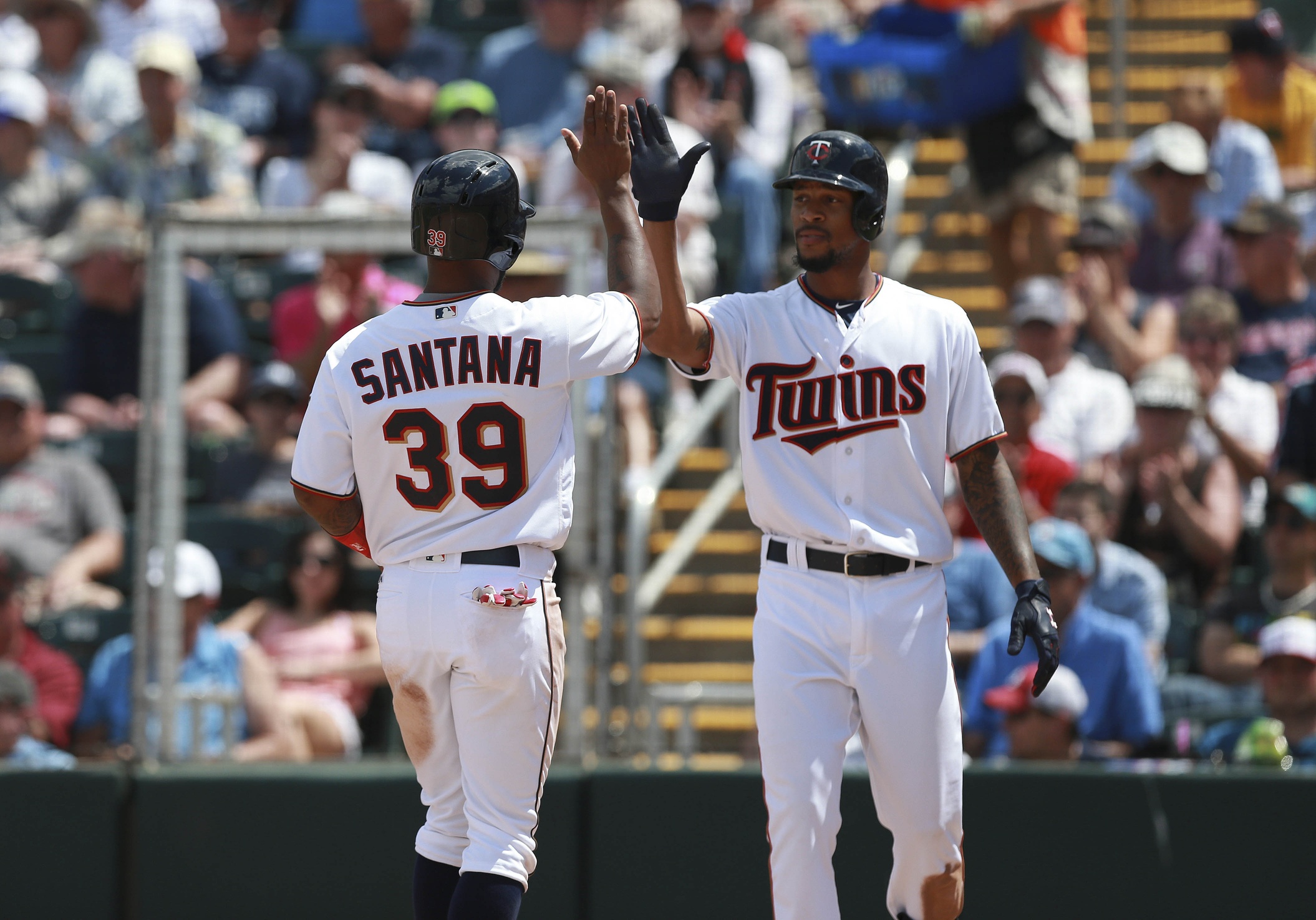 While Buxton acknowledged he was seeing pitches and movement that he had never truly experienced in the minor leagues, he was not making any excuses for the results either. “I gotta sit in the strike zone,” he said about his tendency to chase pitches. “I mean, yeah, it's a big adjustment up here but you gotta make adjustments to pitchers too. It was a little tough transition for me to adjust early but later on in the season I started picking up a little more and I was starting to feel really good at the plate.” After striking out in nearly 40 percent of his plate appearances over his first 21 games, he was able to reduce the frequency to 25 percent over the last 25 games. He quit chasing as many pitches out of the zone and he was able to put the barrel on a few more. Buxton said that he felt that he was able to anticipate a bit better what pitchers were trying to do with him in his last month of the season. “I started figuring out a little bit of what they might be try to do to me in certain situations. When I went up there I just got ready to hit. I got ready to hit the fastball and if they threw a fastball in there I put a pretty good swing on it.” Going forward, however, Buxton wants to be aggressive earlier in the at-bat and avoid the dreaded two-strike counts. “It's hard to hit with two strikes, especially up here in the bigs,” he said. “So if they throw you a pitch you can handle or a pitch you want, that's the pitch the majority of the guys will jump on and do damage with. It's hard to hit with two strikes with the nasty breakers and change-ups and cutters and sinkers. It's too many pitches you try to rely when you just took a get-me-over curve ball or down the middle fastball.” In terms of his contact, the gory batted ball numbers paint a somber portrait of Buxton’s first season with the Twins. ESPN/TruMedia’s data said that Buxton posted a .054 well-hit average (compared to the MLB norm of .138) which was the fifth-lowest among all hitters with 90 or more plate appearances. Likewise, according to BaseballSavant.com, Buxton’s 2015 Exit Velocity average was 87.3 miles per hour. In a simple terms, a ball hit 87 miles per hour roughly translates to a .236 average with a paltry .282 slugging percentage last season. On the other hand, if he were able to increase the exit velocity to send more pitches back out at the 90-95 mile per hour range, he could be looking at a .290 average with a .400 slugging -- a slash line that would be very respectable for a 22-year-old center fielder. In order to generate more velocity off the bat, Buxton worked on incorporating a little leg kick into his swing. “I went into the offseason last year and picked up a little bit of a leg kick, not too big,” Buxton said of his subtle change. “I want to keep [the leg kick] where it's at -- not too big, not trying to being overpowering. Keep me back behind the ball. Keep my head still. It's more for me to get that edge to make contact a little bit more, try to hit the ball hard and more consistent.” https://twitter.com/ParkerHageman/status/712332871860494336 With the new leg kick, Buxton is going back to his roots. Before he was drafted by the Twins he displayed an open stance with a leg kick but that was changed shortly after he entered the organization. “They changed me in rookie ball,” he says of the switch. “They closed me up and tried to slow down some of my movement a bit.” Buxton’s mechanics may remind some of Torii Hunter’s swing but Buxton quickly dispelled that notion by saying that Hunter did not influence his swing style -- only helped him with the mental side of the game. https://twitter.com/parkerhageman/status/606580057310679042 So far this spring he is satisfied with this changes in his swing. The hardest part, he says is gaining the right amount of at-bats to feel fully confident. “It's all about getting comfortable, especially if you have never had it before like I had,” he emphasized. “Just getting at-bats, get it comfortable, get to where you know when you need to start your load, where to finish your load, things like that. It's going good. I've gotten comfortable at the plate.” Byron Buxton is in the midst of the maturation process. In some capacity, all players go through this stage. Some do it quickly and some linger. Buxton has all the raw natural tools to be one of the game’s best two-way players. A rough introduction at the plate shouldn’t sidetrack that outcome.
 -
It has taken twelve years in the majors but Ervin Santana can finally add Opening Day Starter to his resume. With a Cheshire smile on his face, Santana says he took the news in stride. “It feels good,” Santana admitted but then quickly downplayed the significance of the assignment. “To me, it's great but I take it as another start and I just prepare for the day. Same game. Nothing changes. I just have that in my mind and go up there and perform.” The 2016 season will starting significantly differently for Santana after missing the first 80 games last year when he tested positive for PEDs. And this year he hopes to set the tone for the season in a more meaningful way: By picking up where he left off.Santana's track record has earned him the right to usher in the new season. When his suspension was up, he struggled to get up to speed, posting an ugly 6.05 ERA in his first 10 games. However from the end of August forward, no Twins starter had worked as deep into games and had as much success as Santana did over his last seven outings in 2015. In fact, in that time only Chicago’s Jake Arrieta (0.33 ERA) and Cleveland’s Cody Anderson (1.38 ERA) posted lower ERAs than Santana. Only Arrieta allowed fewer home runs per nine innings. Based on that, the Twins made the easy decision heading into spring training that -- barring any unforeseen circumstances -- Santana would be handed the pearl in Baltimore. “It was kind of conversations with [pitching coach] Neil [Allen] prior to spring training, beginning of spring training,” Paul Molitor said of the decision to set the rotation the way they did. “You know you have to set it up somehow, some way. You can always adjust early according to injuries or something that becomes apparent. How they're throwing the baseball. We kind of thought that order made sense at the beginning if everyone was healthy.” With Santana leading the rotation, Molitor said that he would be followed by Kyle Gibson and Phil Hughes in Baltimore but refrained from announcing his fourth and fifth starters. Molitor mentioned the uncertainty surrounding Phil Hughes, who was coming off a “sub-par” season, as the reason why he was dropped to third in the rotation. Hughes has suffered from recurring issues with a disc in his lower back but said that since he received an epidural, the disc has been able to heal and has responded well this spring. The right-hander has been consistently sitting at 90-92 in his starts and has struck out nine over 11 innings in Grapefruit action. Ervin Santana will be the eighth different Opening Day starter for the Minnesota Twins since the 2006 season. Since then only Carl Pavano (2011, 2012) and Johan Santana (2005, 2006) have thrown in multiple Opening Days. Click here to view the article
-
 Santana's track record has earned him the right to usher in the new season. When his suspension was up, he struggled to get up to speed, posting an ugly 6.05 ERA in his first 10 games. However from the end of August forward, no Twins starter had worked as deep into games and had as much success as Santana did over his last seven outings in 2015. In fact, in that time only Chicago’s Jake Arrieta (0.33 ERA) and Cleveland’s Cody Anderson (1.38 ERA) posted lower ERAs than Santana. Only Arrieta allowed fewer home runs per nine innings. Based on that, the Twins made the easy decision heading into spring training that -- barring any unforeseen circumstances -- Santana would be handed the pearl in Baltimore. “It was kind of conversations with [pitching coach] Neil [Allen] prior to spring training, beginning of spring training,” Paul Molitor said of the decision to set the rotation the way they did. “You know you have to set it up somehow, some way. You can always adjust early according to injuries or something that becomes apparent. How they're throwing the baseball. We kind of thought that order made sense at the beginning if everyone was healthy.” With Santana leading the rotation, Molitor said that he would be followed by Kyle Gibson and Phil Hughes in Baltimore but refrained from announcing his fourth and fifth starters. Molitor mentioned the uncertainty surrounding Phil Hughes, who was coming off a “sub-par” season, as the reason why he was dropped to third in the rotation. Hughes has suffered from recurring issues with a disc in his lower back but said that since he received an epidural, the disc has been able to heal and has responded well this spring. The right-hander has been consistently sitting at 90-92 in his starts and has struck out nine over 11 innings in Grapefruit action. Ervin Santana will be the eighth different Opening Day starter for the Minnesota Twins since the 2006 season. Since then only Carl Pavano (2011, 2012) and Johan Santana (2005, 2006) have thrown in multiple Opening Days.
 -
At the beginning of the month it was assumed that Tyler Duffey would be enjoying crab cakes and Flying Dog with the rest of the Twins rotation when the season started in Baltimore. After all, manager Paul Molitor said that it would take something “fairly significant” to not have Duffey as one of his five starters. Whatever the reason -- because of his spring training results, inability to adapt quickly, or the progress of others -- Duffey’s rotation certainty has waned. If the Twins’ decision-makers are looking at the results, Wednesday did not help Duffey’s cause.In a start against the Orioles' minor leaguers on the CenturyLink Sports Complex backfield (as chief competitor, Ricky Nolasco, prepared for his start at Hammond Stadium), Duffey failed to assert himself, allowing six runs spread over 5.2 innings on 90 pitches. Molitor, who had endorsed Duffey several weeks ago, watched several innings of what was an appearance marked with loud contact and inability to put hitters away on two-strike counts. “I was missing arm-side a little bit with my fastballs,” said Duffey of his outing. “They got me behind occasionally, and then I left some over the middle that got hit fairly well today.” The Orioles minor leaguers jumped on Duffey in the second inning, tagging him for a single, double and topped with a mammoth three-run shot to left-center as Molitor looked on. Duffey, who was around the zone for the most part, failed to get hitters to chase his curve ball out of the zone. “I've noticed that all spring,” Duffey said of his curve. “I think guys know it's coming so they're sitting on it. One guy took two fastballs. Didn't even budge. I think he was sitting dead-red on curve ball. So that's where now I'm going to have to adjust accordingly.” Duffey’s curve was clearly his best weapon in 2015 and he leaned on it heavily. According to Fangraphs.com he threw it 39.8 percent of his mix, tied with Toronto’s Brett Cecil for highest usage. Naturally the word on the deuce is getting out. However, Duffey thinks he has the solution to combat opponents’ approach. “Instead of trying to bury it,” he said he was going to simply “throw [the curve] for a strike. I think I can get away with more fastballs throwing that too. That's just the adjustment.” Duffey has also worked diligently on his change-up this spring, a pitch he needs to put the finishing touches on. After throwing several into the dirt to Orioles hitters, Duffey said he made an adjustment to bring the pitch up some, only to do so at the wrong time. In the fourth, he hung a change to a hitter who launched a two-run shot to left-center. Despite the six runs allowed, Duffey said he felt good about the process, including the in-game adjustments with his change-up. “I felt good but my location just wasn’t as good as it had been.” Duffey will likely get one more opportunity to show the Twins he can make his adjustments quicker and without so much barrel involved. Click here to view the article
-
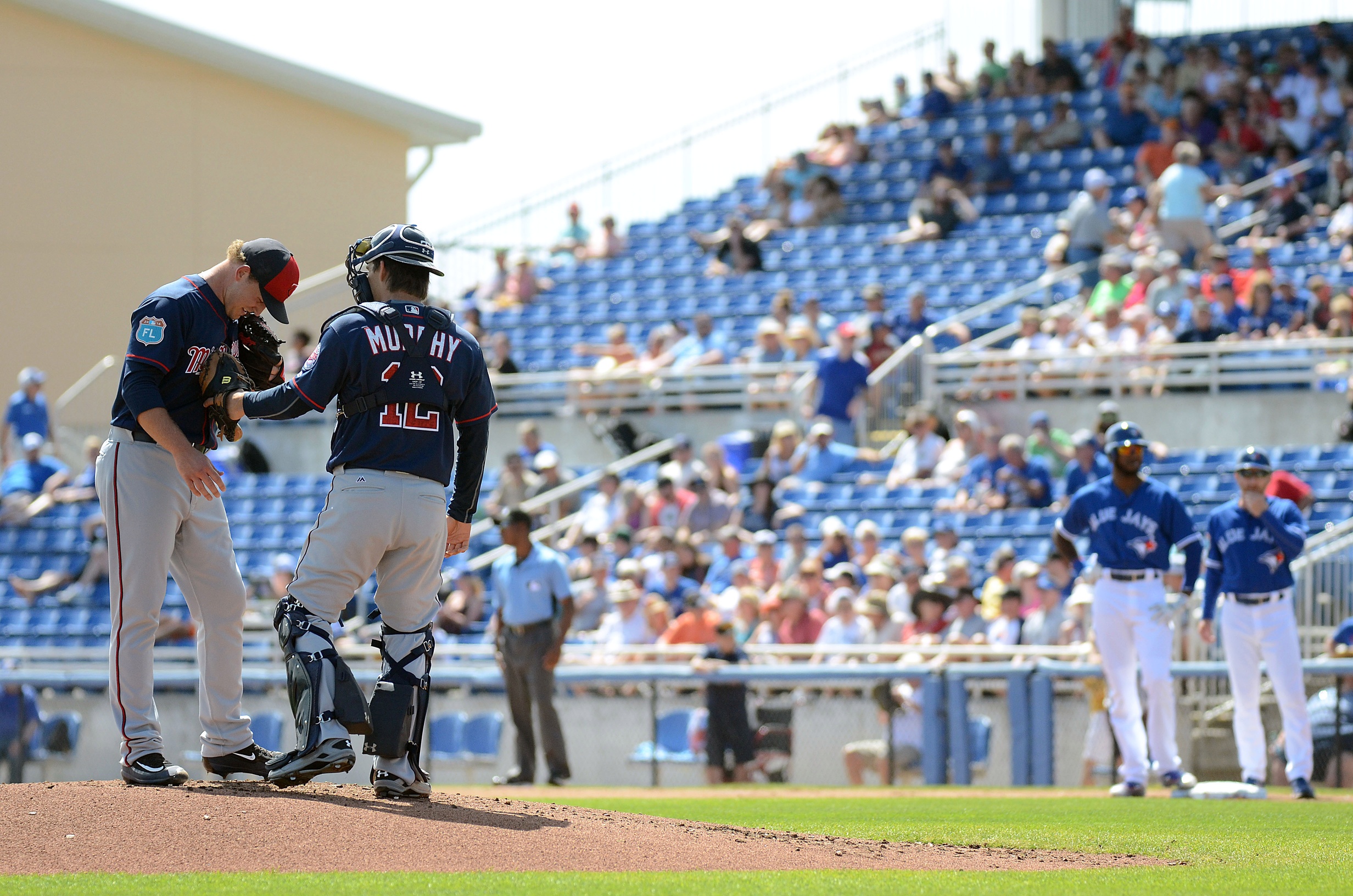 In a start against the Orioles' minor leaguers on the CenturyLink Sports Complex backfield (as chief competitor, Ricky Nolasco, prepared for his start at Hammond Stadium), Duffey failed to assert himself, allowing six runs spread over 5.2 innings on 90 pitches. Molitor, who had endorsed Duffey several weeks ago, watched several innings of what was an appearance marked with loud contact and inability to put hitters away on two-strike counts. “I was missing arm-side a little bit with my fastballs,” said Duffey of his outing. “They got me behind occasionally, and then I left some over the middle that got hit fairly well today.” The Orioles minor leaguers jumped on Duffey in the second inning, tagging him for a single, double and topped with a mammoth three-run shot to left-center as Molitor looked on. Duffey, who was around the zone for the most part, failed to get hitters to chase his curve ball out of the zone. “I've noticed that all spring,” Duffey said of his curve. “I think guys know it's coming so they're sitting on it. One guy took two fastballs. Didn't even budge. I think he was sitting dead-red on curve ball. So that's where now I'm going to have to adjust accordingly.” Duffey’s curve was clearly his best weapon in 2015 and he leaned on it heavily. According to Fangraphs.com he threw it 39.8 percent of his mix, tied with Toronto’s Brett Cecil for highest usage. Naturally the word on the deuce is getting out. However, Duffey thinks he has the solution to combat opponents’ approach. “Instead of trying to bury it,” he said he was going to simply “throw [the curve] for a strike. I think I can get away with more fastballs throwing that too. That's just the adjustment.” Duffey has also worked diligently on his change-up this spring, a pitch he needs to put the finishing touches on. After throwing several into the dirt to Orioles hitters, Duffey said he made an adjustment to bring the pitch up some, only to do so at the wrong time. In the fourth, he hung a change to a hitter who launched a two-run shot to left-center. Despite the six runs allowed, Duffey said he felt good about the process, including the in-game adjustments with his change-up. “I felt good but my location just wasn’t as good as it had been.” Duffey will likely get one more opportunity to show the Twins he can make his adjustments quicker and without so much barrel involved.
 -
He spins a huge slow curve but also has a floater of a changeup that averaged 72 MPH last year. In fact, he allowed this sweet home run to Stephen Drew on a 67.2 MPH pitch that sounded like a gun shot off his bat: http://baseballsavant.com/popup/video.php?video_id=241942083
-
Article: TD Top Prospect: #1 Byron Buxton
Parker Hageman replied to Parker Hageman's topic in Twins Daily Front Page News
This is something I've discussed about the Twins' hitting philosophy in the past. They've cookie-cut a lot of their player's mechanics into the low movement mold (you can read about that here: http://twinsdaily.com/articles.html/_/minnesota-twins-news/joe-benson-and-the-twins-hitting-philosophy-r4302). Buxton fell along those lines. He had more lower-half movement in high school but that was coached out of him somewhere in the system. And to the Twins' credit, I understand what they are trying to accomplish when they are trading power for average. To be fair, I haven't seen his game swing this spring at all. In just reviewing his swing from early in the season to the latter version, you do see a change in his intent -- particularly in the lower half. http://i.imgur.com/uRrdYA3.gif http://i.imgur.com/GWJlKnP.gif In the above swing, Buxton is trying to get his foot down before the pitch is delivered. In the lower swing clip, Buxton is timing the move with his stride, engaging the lower half more. It's more about comfort and feel, I'm sure, but my sense is that Buxton will likely have the lower swing once he gets the reps. -
Byron Buxton didn’t exactly announce his presence with authority during his first stint in the majors. Of course that’s nothing new -- even for the game’s most elite prospects find the transition to baseball’s highest level challenging. What turns the game’s most elite prospects into the game’s most elite players are adjustments. The question for Buxton is, how quickly will he adjust?Age: 22 (DOB: 12/28/1993) 2014 Stats (AA/AAA/MLB): .276/.333/.447 (.779) with 17 doubles, 14 triples, 9 HR ETA: 2016 2014 Ranking: 1 // 2015 Ranking: 1 National Rankings BA: 2 MLB: 2 BP: 2 What's To Like “Buxton has more tools than HGTV -- is one shecky way to describe his potential. He has plus speed, plus defense, plus hit tool, plus makeup and so on…” is how I described Buxton when he was named the number one Twins Daily prospect last year and nothing has changed since. In the tool shed, speed is the most obvious as he demonstrated on the bases (103 stolen bases in 134 attempts in his career) and in the outfield (so many balls caught). Speed might be underselling what provides the most clear and present path to the starting lineup in 2016. His hit tool was a work in progress as he faced superior competition (read: OH MY GOD THAT SLIDER BENT THE LAWS OF SPACE AND TIME), but his ability to cover the real estate between Miguel Sano and Eddie Rosario will be critical to the team’s success. Eventually his bat will become a focal point and the Twins don’t think that it is that far off. “He was better as the months of August and September progressed,” Twins general manager Terry Ryan said in regard to Buxton’s offense. “Even in pre-game, you could see a little bit of that. He was driving baseballs rather than just touching them. He hit a couple home runs, whatever he did.” Power may be the last facet to manifest as some evaluators believe he has 15+ home run potential in that tall frame. Like Ryan said, in September Buxton displayed some impressive opposite field power in Cleveland, sending a shot over the right center Progressive Field wall. So while double-digit dingers could be obtainable, his legs will also be generating his extra bases as a ball in the gap is an almost a sure-fire triple for Buxton. Speed kills, everyone. What's Left To Work On “I readily admit that I rushed him the first crack because we got stuck in the center field spot,” Ryan said of the decision to promote Buxton in early July. “Then he hurt his thumb which was the worst thing that could have happened.” In the grand scheme of life, it wasn’t the worst thing could have happened in 2015 (I mean, global nuclear winter seems slightly worse than one individual’s broken thumb but what do I know, I’m a stupid blogger) however it certainly didn’t help Byron Buxton’s baseball career. Buxton’s all-out hustle has led to several grotesque injuries that have stunted his development to some degree but the good news is that none of his previous injuries have been of the recurring/career-altering nature. Nevertheless, Buxton could use an unadulterated year of playing baseball instead of recovering. An uninterrupted season would also help him solve breaking balls. Sliders specifically seemed to be a foreign object to him. The root problem during his stretch with the Twins was that he was constantly behind in the count. Of his 138 plate appearances, just 27 of those ended in a hitter’s count but another 75 ended in a pitcher’s count. When you are behind as frequently as he was, he is going to face a disproportionate amount of breaking stuff until he can prove he can handle it. Working counts and capitalizing in hitter’s counts are all things that come with experience and, as Ryan mentioned, Buxton did show progress once he was finally healthy and getting regular at-bats. What's Next The Twins have been coy about Buxton’s immediate future. Both the front office and Paul Molitor have placed the burden of winning the center fielder job on Buxton. Is it possible that he spends some time in Rochester? Certainly. The Twins have suggested that Eddie Rosario and Max Kepler are capable of playing the position and their recent experience with Aaron Hicks in center should give them reason for caution. The main takeaway is that Buxton’s struggles should not dim his star going forward. --- TD Top Prospect #10: Nick Burdi TD Top Prospect #9: Kohl Stewart TD Top Prospect #8: Alex Meyer TD Top Prospect #7: Jorge Polanco TD Top Prospect #6: Stephen Gonsalves TD Top Prospect #5: Tyler Jay TD Top Prospect #4: Nick Gordon TD Top Prospect #3: Max Kepler TD Top Prospect #2: Jose Berrios Click here to view the article
-
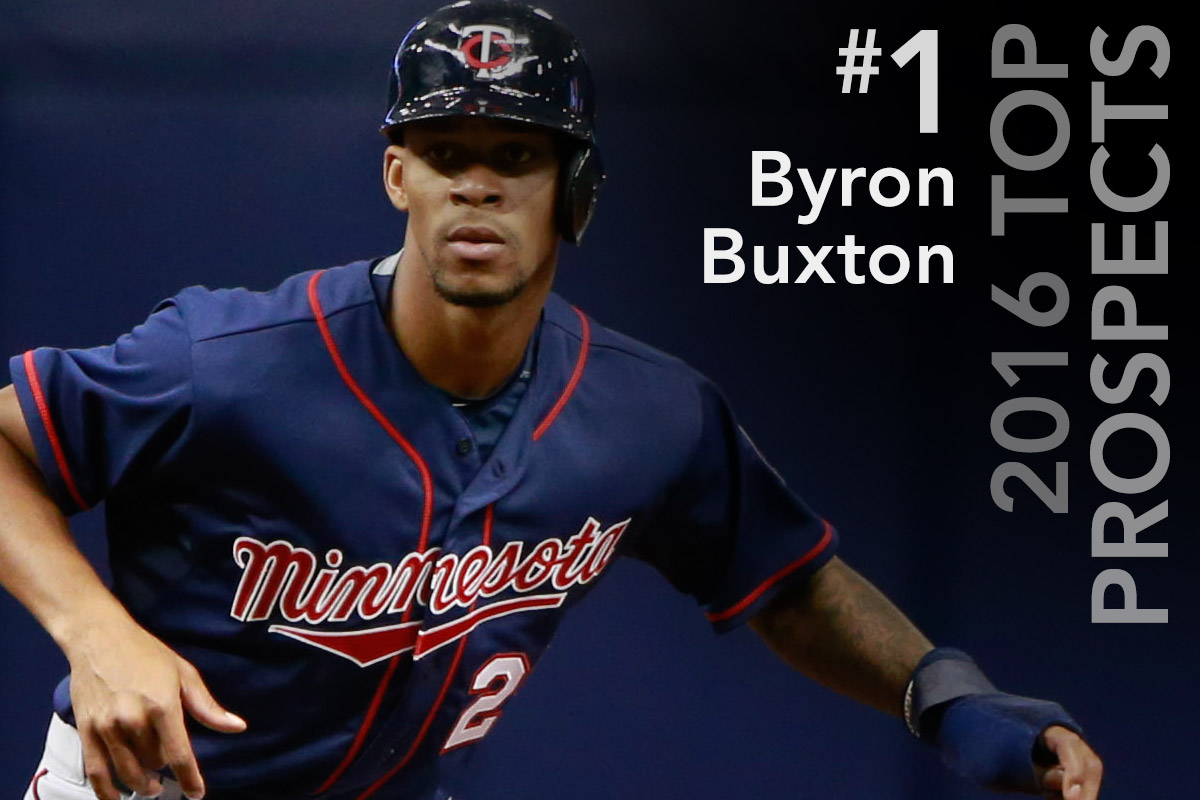 Age: 22 (DOB: 12/28/1993) 2014 Stats (AA/AAA/MLB): .276/.333/.447 (.779) with 17 doubles, 14 triples, 9 HR ETA: 2016 2014 Ranking: 1 // 2015 Ranking: 1 National Rankings BA: 2 MLB: 2 BP: 2 What's To Like “Buxton has more tools than HGTV -- is one shecky way to describe his potential. He has plus speed, plus defense, plus hit tool, plus makeup and so on…” is how I described Buxton when he was named the number one Twins Daily prospect last year and nothing has changed since. In the tool shed, speed is the most obvious as he demonstrated on the bases (103 stolen bases in 134 attempts in his career) and in the outfield (so many balls caught). Speed might be underselling what provides the most clear and present path to the starting lineup in 2016. His hit tool was a work in progress as he faced superior competition (read: OH MY GOD THAT SLIDER BENT THE LAWS OF SPACE AND TIME), but his ability to cover the real estate between Miguel Sano and Eddie Rosario will be critical to the team’s success. Eventually his bat will become a focal point and the Twins don’t think that it is that far off. “He was better as the months of August and September progressed,” Twins general manager Terry Ryan said in regard to Buxton’s offense. “Even in pre-game, you could see a little bit of that. He was driving baseballs rather than just touching them. He hit a couple home runs, whatever he did.” Power may be the last facet to manifest as some evaluators believe he has 15+ home run potential in that tall frame. Like Ryan said, in September Buxton displayed some impressive opposite field power in Cleveland, sending a shot over the right center Progressive Field wall. So while double-digit dingers could be obtainable, his legs will also be generating his extra bases as a ball in the gap is an almost a sure-fire triple for Buxton. Speed kills, everyone. What's Left To Work On “I readily admit that I rushed him the first crack because we got stuck in the center field spot,” Ryan said of the decision to promote Buxton in early July. “Then he hurt his thumb which was the worst thing that could have happened.” In the grand scheme of life, it wasn’t the worst thing could have happened in 2015 (I mean, global nuclear winter seems slightly worse than one individual’s broken thumb but what do I know, I’m a stupid blogger) however it certainly didn’t help Byron Buxton’s baseball career. Buxton’s all-out hustle has led to several grotesque injuries that have stunted his development to some degree but the good news is that none of his previous injuries have been of the recurring/career-altering nature. Nevertheless, Buxton could use an unadulterated year of playing baseball instead of recovering. An uninterrupted season would also help him solve breaking balls. Sliders specifically seemed to be a foreign object to him. The root problem during his stretch with the Twins was that he was constantly behind in the count. Of his 138 plate appearances, just 27 of those ended in a hitter’s count but another 75 ended in a pitcher’s count. When you are behind as frequently as he was, he is going to face a disproportionate amount of breaking stuff until he can prove he can handle it. Working counts and capitalizing in hitter’s counts are all things that come with experience and, as Ryan mentioned, Buxton did show progress once he was finally healthy and getting regular at-bats. What's Next The Twins have been coy about Buxton’s immediate future. Both the front office and Paul Molitor have placed the burden of winning the center fielder job on Buxton. Is it possible that he spends some time in Rochester? Certainly. The Twins have suggested that Eddie Rosario and Max Kepler are capable of playing the position and their recent experience with Aaron Hicks in center should give them reason for caution. The main takeaway is that Buxton’s struggles should not dim his star going forward. --- TD Top Prospect #10: Nick Burdi TD Top Prospect #9: Kohl Stewart TD Top Prospect #8: Alex Meyer TD Top Prospect #7: Jorge Polanco TD Top Prospect #6: Stephen Gonsalves TD Top Prospect #5: Tyler Jay TD Top Prospect #4: Nick Gordon TD Top Prospect #3: Max Kepler TD Top Prospect #2: Jose Berrios
 -
Article: TD Top Prospects: #8 Alex Meyer
Parker Hageman replied to Parker Hageman's topic in Twins Daily Front Page News
I can corroborate that. Spent a lot of time watching his outings and picked that up right away. (I believe Nick had some good video of his release point in spring camp that showed how low he would get at times.) I charted and wrote up his bullpen outings from last year as well: http://www.startribune.com/twinscentric-can-alex-meyer-be-a-shutdown-reliever/310133601/ -
When the Minnesota Twins acquired pitching prospect Alex Meyer in 2012, Twins general manager Terry Ryan made it clear what the expectations for Meyer’s role would be. “Starter, starter, starter, starter,” Ryan told reporters emphatically. At that time the Twins were desperate for any semblance of starting pitching to add to their depleted farm system. On paper Meyer -- who had touched triple digits and held steady around 96-to-98 miles per hour -- was exactly the type of pitcher that the Twins needed. In his first professional season in the Nationals’ organization he had struck out 129 in 139 innings. By comparison the Twins’ organization’s strikeout leader that season was Jason Wheeler with 115 strikeouts (Wheeler, however, needed 27 more innings than Meyer to reach his total). In theory, Meyer’s addition to the system would provide the Twins with a future front-of-the-rotation pitching talent. Three seasons later however his role is less crystallized then what Ryan had envisioned. Meyer’s inconsistency in his mechanics and command combined with his shoulder woes have pushed him toward the bullpen (where he thrived, mind you, holding hitters to a .254 average in relief versus .325 as a starter). Nevertheless, the uncertainty and the shift to the bullpen, as well as talent additions, have driven Meyer lower on the prospect list but make no mistake he still has the tools to be a solid contributor somewhere on the staff.Age: 26 (DOB: 1/3/90) 2015 Stats (AAA/MLB): 94.2 IP, 5.13 ERA, 103/51 K/BB ETA: 2015 2015 Ranking: 5 National Top 100 Rankings BA: NR | MLB: NR | BP: NR What's To Like The velocity, that’s for sure. Meyer was originally drafted by the Red Sox out of Greensburg High School (Ind.) in the 20th round of the 2008 draft but a reported $2 million bonus offer from Boston was not enough to convince the hard-throwing right-hander to bypass college in Kentucky. In 2011, after flashing triple-digits fastball for the Wildcats, the Nationals snagged him in the first round at 23rd overall. So far, the Twins have only received a brief sampling of the heat. In his two-outing stint with the Twins last year he wound up throwing the second hardest fastball among the staff at 98. Velocity matters because dating back to 2008, when hitters are facing 98+, they hit .205 with a slugging of .288. In comparison, when pitchers are sitting 90-to-95, hitters have posted a .274 average with a .428 slugging. According to ESPN/TruMedia the Twins have hit 98 or higher on the radar gun just 23 times (13 of which belonged to Juan Morillo) and was the lowest number among all teams in that eight year span. But Meyer is more than just a pretty fastball. After the 2014 season, Baseball America anointed Meyer’s breaking ball, a knuckle-curve, as the best in the International League. Like his fastball, at times Meyer has trouble commanding it but the hammer break has made it a very good complement to his fastball. What's Left To Work On Consistency has been Meyer’s main issue but if there is one thing Meyer has been consistent about it has been his release point dropping over the last few years. When Meyer made an appearance in the Futures Game in 2011, PitchF/X data said he was releasing the ball near 6.6 feet. However, by the time Meyer arrived with the Twins, his arm angle had lowered so much that he was releasing the ball a foot lower than before. Download attachment: Brooksbaseball-Chart.png Considering Meyer has had shoulder ailments in the past, it is no surprise to see this type of dip in release point. In 2013 he missed 83 days because of a strained shoulder and was shut down in August 2014 with inflammation. This last year was relatively injury free but he readily acknowledge in Rochester that he was focused on raising his release point as he struggled with his command. Opponents who faced him in 2014 and then again in 2015 noted that his fastball looked flat and lacked the same movement compared to the prior season. If he is able to correct this, Meyer could be a dangerous pitcher on the mound. What's Next Since the Twins’ rotation is at capacity (and still trying to find room for Jose Berrios), there could be room in the bullpen as the front office’s indifference toward free agents relievers suggests that they believe in their crop of young power arms - including Meyer. Despite the struggles, with two option years remaining, the Twins can be patient with him. With a few tweaks, Meyer has the weapons to be a shutdown reliever. So while Meyer likely won’t start the season in Minnesota, he will be on a short list of pitchers who will get the call when help is needed. Click here to view the article
