



Parker Hageman
-
Posts
4,152 -
Joined
-
Last visited
-
Days Won
6
Content Type
Profiles
News
Minnesota Twins Videos
2026 Minnesota Twins Top Prospects Ranking
2022 Minnesota Twins Draft Picks
Minnesota Twins Free Agent & Trade Rumors, Notes, & Tidbits
Guides & Resources
2023 Minnesota Twins Draft Picks
The Minnesota Twins Players Project
2024 Minnesota Twins Draft Picks
2025 Minnesota Twins Draft Pick Tracker
2026 Minnesota Twins Draft Tracker: Picks & Bonuses
Forums
Blogs
Events
Store
Downloads
Gallery
Everything posted by Parker Hageman
-
 I have been searching the archives for why he was asked to pinch hit. No quotes from Spark on that one. Interesting choice.
 -
The play right before that -- prior to bringing Berenguer into the game -- Steve Lombardozzi tried to catch Pat Sheridan napping on second with the hidden ball trick while Keith Atherton wandered around the mound. Sheridan didn't bite. After the pitching change, the Twins (Gaetti/Laudner) tried a different tactic. Very smart to alert Brinkman to that play.
-
Article: Myth: Starting Pitcher Velocity
Parker Hageman replied to Seth Stohs's topic in Twins Daily Front Page News
While I understand your overall point (pitchers need more than just velocity to succeed), the connection between an "ace" (which is another conversation altogether) and velocity is much stronger than you think. The real claim should have been the myth of the below-average velocity "ace" as they are harder to find than the hard-throwing ones. http://i.imgur.com/KT51g2N.png- 64 replies
-
- 10
-

-
- tommy milone
- trevor may
- (and 3 more)
-
Yup, the Twins' wives brought whistles to Detroit too. They encountered some flak from the fans that required some security intervention.
-
“What an unlikely bunch of champions we’re looking at here.” Those were the words NBC’s Bob Costas offered overlooking the on-field scrum of Minnesota Twins players as they pushed from the initial contact point near first base and moved as a horde toward second base across the historic Tiger Stadium infield. Costas’ assessment couldn’t have been more accurate. Most experts believed the Twins would be vastly outgunned by baseball’s winningest team in Detroit. The Tigers had the ability to score runs, they had the starting rotation depth, and they had the experience, having just won the World Series in 1984. Most believed the contest would last five games and end in the Tigers favor, not Twins.Across the board, pundits anticipated a Detroit Tiger filled World Series. Washington Post’s Thomas Boswell picked the Tigers in five saying that “this series isn’t going to be worth watching unless the Twins can get a game ahead somehow.” In Detroit, Tom Gage of the Detroit News summarized the baseball world’s opinion on the Twins by saying “the Twins really aren’t a good team.” Tim Kurkjian with the Baltimore Sun wrote Tigers in five because “they’re simply the better team.” So when closer Jeff Reardon speared the Matt Nokes comebacker and ran it toward the imposing Kent Hrbek before flipping him the ball and following his throw into his first baseman’s arms (before their teammates joined them in the infield, creating a mess of grey pinstriped jumping jubilation at the corner of Trumball and Michigan), the Twins had virtually done the near impossible. They had outscored Detroit 34-23 and manhandled the Tigers’ vaunted pitching staff. A staff that included trade deadline acquisition Doyle Alexander, who went 9-0 with a 1.53 ERA in 11 regular season starts including two wins against the Twins. “The Twins did everything better than we did this series,” Alexander said after going 0-2 with a 10.00 ERA against them in the postseason. The Twins also roughed up Jack Morris at the Metrodome after he had gone 2-0 in his two regular season starts against Minnesota. While the Tigers bullpen pitched well, rookie stopper Mike Henneman got touched for six runs in five innings while issuing six walks. For their part, Minnesota's pitchers kept Detroit’s big bats quiet throughout the series. Alan Trammell and Kirk Gibson were held silent, to Michigan’s dismay. “It’s obvious that I’ve stunk in this series,” said Gibson who finished 6-for-21 (.277) with 8 strikeouts. “I didn’t try to strike out, contrary to some people’s beliefs.” “I wished we would have showed what kind of offensive team we were,” Trammell added. The Tigers averaged the most runs per game, hit the most home runs, and held the highest slugging percentage of all American League teams -- it just wouldn’t show in the five-game series. "We were prepared for the series, mentally and physically," said Tigers centerfielder Chet Lemon. " We sent our guys out there. The Twins just outplayed us." “They were overwhelming underdogs,” NBC’s Tony Kubek said in analyzing the Twins’ victory over the heavily favored Tigers, “but they put together a championship series, taking advantage of every mistake the Tigers made.” No, fortunately for Minnesota fans, the overwhelming underdog was celebrating on the field that afternoon. **** Moments later, the Twins were ushered into the creaky and leaky bowels of Tiger Stadium, where cameras and reporters followed the team’s alcohol-soaked celebration. The questions from the media revolved around the team’s ability to prove doubters wrong. With each inquiry, a Twins player or coach responded that while outsiders may have not respected their capabilities, the team had every ounce of faith that they were good enough to play with the best. Gary Gaetti, who was announced as the series’ MVP, was inundated with post-game interview requests. He was not entirely thrilled by the process. “I’ll tell you the truth,” the Twins’ award-winning third baseman shared with the Star Tribune’s Dennis Brackin, “Winning this award spoils a lot of the fun that I wanted to have after the game. I got led around like a dog on a leash: ‘Go do this, go do that.’ I really wanted to be with my teammates. Even now, I can’t be with my team, doing what I want to do, because I have to answer the questions.” It took almost an hour after the game for Gaetti to pull himself away from the media horde and join his teammates in the jubilation. In tow, Gaetti had the ALCS MVP award trophy, a bronze bowl that he used as a large chalice to consume the celebratory bubbly. When he finally spotted outfielder Tom Brunansky, Gaetti sidled up next to him and demanded his teammate pour some of the champagne into the trophy. Gaetti took a swig and then shared it with Brunansky. “I thought it was still up in the air. I didn’t know a final decision had been made,” Gaetti said after finding out he was chosen by the writers for the honor. “I thought maybe they were going to grab Bruno, too. I felt pretty sad afterward because I really felt like he deserved it. Maybe they saw something that I didn’t.” The decision to give the award to Gaetti had not been made easy by Brunansky. After all, Bruno matched The Rat’s home run total (2) but had driven in nine to Gaetti’s five and gone 7-for-17 (.412). Voters pointed to Gaetti’s intangibles that separated him from Brunansky which included starting the scoring off in Game 1 with a big blast off Alexander and -- the play that Tigers’ manager Sparky Anderson considered the most crushing of the series -- the pickoff of Darrell Evans in Game 4. **** When you review why most writers favored Gaetti's candidacy over Brunansky, it was the pivotal Game 4 pickoff of Evans at third base that most consider as the difference-maker. In the sixth inning of Game 4, the Twins were up 4-3 but the Tigers had just tacked on a run and had sacrificed the 40-year-old Evans to third base with one out and the top of the lineup due up. In that scenario, Baseball Prospectus’ Run Expectancy Chart said the Tigers were likely to score 0.94 runs -- almost a guaranteed tie game. Tom Kelly had brought in his strikeout pitcher Juan Berenguer -- Senor Smoke, El Gasolino -- to dispatch Lou Whitaker and Alan Trammell. With Berenguer on the mound facing the left-handed Whitaker, inspiration struck Gaetti. There was an inherent risk that ran with trying to throw the ball down the line with ninety feet separating the Twins from a tied ballgame, a lot could go wrong including throwing the ball away that could result in Evans trotting home uncontested. But that’s the attitude the 1987 Twins brought with them: To hell with it, it’s just a game. He gave Tim Laudner a signal that alerted his catcher to throw the ball down to third. ''Gary and I have a predetermined signal, and he put it on,'' Laudner said later. ''If he puts it on, I'm going to throw it down there.” Once on the same page as his catcher, Gaetti then turned to third base umpire Joe Brinkman to be ready for a play. Gaetti added that he was having a “nice little conversation” with Evans right before putting the play on, lulling him into a false sense of security. “I gave Laudner the sign because I’ve seen Darrell off there a long way before. You’ve got to know your runners. He was about 20 feet off.” Evans was no further off the base than Gaetti as runners are directed and as Berenguer delivered his pitch, he shuffled closer towards home for his secondary lead. Evans, however, was still moving in that direction when Laudner sprung up from his crouch, rescuing a fastball from a date with the dirt. It was only when Laudner cocked his arm that Evans’ weight slammed down hard on his right leg and he tried in vain to scramble back to the safety of the base. Laudner’s throw was head-high and Gaetti, Evans and the ball reached the base at the same time. Gaetti snared the ball and in one motion slammed it on Evans’ back as he stretched for the bag. Brinkman raced in from his position on the third base line closer to the cut of the outfield grass. As he reached the scene, Brinkman gave an emphatic "out" signal. http://i.imgur.com/HhNLYXU.gif From his vantage point, you could certainly question whether Brinkman had the best angle to see the play. On his knees, the veteran Tiger pleaded his case and kept his hands on his hips to display his frustration. Without any replay, the argument fell on deaf ears but any argument was moot: NBC cameras situated along the third base line captured the play which showed Gaetti applying the tag with several inches to spare between Evans and third base. After the game, Evans told reporters that he was completely caught off-guard by the play. ''I wanted to get a good jump on a ground ball or have a chance to score if the ball's in the dirt,'' Evans said in the Tigers clubhouse, trying to justify why he was so far off of third base. ''I kind of hesitated because the ball was almost in the dirt. I was trying to read it. That's why I didn't get back right away. I would have liked to have been back another foot. Then I would've gotten back. He had a little trouble catching the ball, but when he did, he came up throwing.'' Gaetti, no doubt a fierce competitor, had mixed emotions about the play considering Evans had been one of his heroes. “[Evans] is a guy I have looked up to for a long time, so you hate to embarrass him,” Gaetti said. “But because I like him, I have watched him a lot in the past. He has a habit of wandering off the base. So we tipped off umpire Joe Brinkman so he would be ready and knew the play was coming. There is no doubt we got him and that play might have won the game for us.” In spite of the baserunning blunder, Evans’ 1987 season was special and he was one of the reasons the Tigers had won the AL East. During the regular season, Evans became the first 40-year-old to hit 30 home runs in a year. But with the combination of the baserunning gaffe and a muffed ground ball at third that led to a Twins run, Detroit fans turned on Evans and booed him. That emotion would be short-lived, however, as fans gave Evans a standing ovation when he came the plate for his first at-bat in the deciding Game 5. "I think it was well-deserved," Kirk Gibson said of the adulation. "Let's put it this way. A select few fans booed him last night. I don't expect it to happen to me when I swing at a bad pitch. I didn't expect it to happen to Darrell. It was a nice gesture." **** The in-series decision-making by the Twins’ skipper would turn out to be critical, too. Tom Kelly’s juggling of his rotation was met with at least some bit of resistance. For Game 5, Kelly opted to go with veteran Bert Blyleven on three days rest rather than Joe Niekro. Had it backfired and the Tigers come away with a win, Kelly would have been forced to use either Niekro or Les Straker in Game 6 and have Frank Viola as the insurance policy in the event of Game 7, rather than just set his rotation for a more conventional Blyleven/Viola combination for the series’ last two games. Following the game, NBC’s Marv Albert pointed out that Kelly had been aggressive throughout the series. Kelly, in his always low-key manner with the media, agreed. “We try to be aggressive, we try to entertain the people, that’s one of our philosophies coming into spring training. We’re gonna try to take the game to them.” One example of the team's aggressiveness came in the former of Randy Bush. Bush, a career platoon player who had just turned 29 days before Game 2, found himself feeling frisky on the bases. Up until this point in his career, the part-time outfield had swiped 19 bases in 28 tries in 641 games with the Twins. Of those 19 stolen bases, 10 of them came under Kelly's watch in 1987. So when Bush laced a single to center in the bottom of the fourth, Kelly saw an opportunity to catch the Tigers sleeping. Tigers' ace Jack Morris had a big leg kick and a darting split-finger that made it difficult for his catchers to handle and throw. As such, his battery mates were able to only nab 9 of the 40 runners. While the Tigers owned the league's third-lowest caught stealing rate (26 percent), Detroit's catcher that day, Mike Heath, had been very good at thwarting base larceny. Heath had caught 39 percent of would-be base-stealers, fourth-best in the American League that year. On the first pitch to Brunansky, Morris barely comes set before going into his high leg kick. Bush bolted on first movement. Morris’ fastball runs in hard to his arm side and Heath almost picks it off of Brunansky’s back foot. To his credit, Heath fires a strike down to second but the big leg kick and pitch location gave Bush an advantage. His head first slide beats the play. Now on second, with a 2-1 count to Brunansky, Bush surprises everybody by heading to third. While the steal of second was predetermined from the dugout, Bush said later that he had confidence that he could take third. Bush gave third base coach Rick Renick the signal alerting him that Bush felt he could take the base and waited for the green light, which he got on the 2-1 pitch. Again, Morris’ delivery to the plate resulted in a ball running in on Brunansky. For a moment it appeared that Heath was going to receive the ball and throw in one motion behind Brunansky’s back but the Tigers catcher bobbled the ball in the exchange and that fraction of a second gave Bush the base. How surprising was the move? “Well,” Kelly told reporters later, “[bush] very rarely gets to second base.” The commotion rattled Morris. He would walk Brunansky and then Greg Gagne before striking out Launder. With the bases loaded and two out, Morris was especially careful when pitching to Dan Gladden. His darting and diving repertoire had resulted in 24 wild pitches in 1987, ten more than the next closest pitcher. After falling behind Gladden 2-0, Morris threw two fastballs for called strikes. The location of those strikes, had it happened today, would have prompt people on Twitter to screengrab the Statcast strike zone and snarkily demand robot umpires. After fouling off several fastballs off the plate to stay alive, Morris finally hung Gladden a curveball that caught too much of the zone and Gladden happily pulled it through the 5.5 hole, scoring both Bush and Brunansky and giving the Twins a lead that would put Game 2 out of reach. The Minnesota Twins would take a 2 game lead into Tigers Stadium. They certainly took the game to the Tigers. The veterans from the Motor City were outgunned by the young offensive upstarts from the Twin Cities. While the Tigers beat their opponents into submission by scoring 5.53 runs per game (roughly 13 percentage higher than the league’s average), the Twins scored 6.8 runs per game in the series. Kelly’s 1987 squad was no slouch when it came to the long ball either -- they mashed 196 home runs, fifth in the league but 29 fewer than the AL East-winning Detroit club. Opponents pitched around many in the heart of the order but no one more than Hrbek. That year, teams opted to put Hrbek on first 12 times rather than tangling with him. Only Wade Boggs, George Brett and Don Mattingly garnered more respect that season. Still, Kelly knew what type of club he had, one that was built for power not for speed and had some weaknesses past the meat of the order. He would have the likes of Gagne, Lombardozzi and Newman sacrifice runners along to set up Puckett, Hrbek, Gaetti and Brunansky to drive them in. "Tom Kelly is a manager who worked hard in the minor leagues and came forward and taught these players to go out and have fun and play," Tigers manager Sparky Anderson remarked about his managerial compatriot in the opposing dugout. **** Following the game, Anderson complimented the Twins on their series, noting that they were the superior team over the course of those five games. Anderson also paused and gave a word of advice for the Twins’ next challenger: “And those Minnesota fans? Good luck to those two National League teams that have to go listen to that noise.” Fans had been at the forefront for the entire season, helping in the team’s 56-25 home record. The fans were front and center during the ALCS, making racket, waving the white Homer Hankies and adding to the Tigers’ on-field confusion. In addition to the noise, the white roof and lighting added to the lethal combination for visiting players. Don Baylor, whom the Twins acquired at the waiver deadline in August had plenty of experience playing in the stadium as a guest before calling it home. "The lighting here is something you never get accustomed to if you're a visiting player. You can always see a fluctuation of lighting. By the time you get over that feeling, you're down by two runs." As the post-game celebration continued -- with the Twins’ roster and coaching staff dripping in champagne and cheap beer -- KARE11, the local NBC affiliate broadcasting the game, notified viewers that the team would host a welcoming party that night at the Metrodome. The gates would be opening at 9 PM. It would be a homecoming that a generation of Minnesota Twins fans would never forget. Click here to view the article
- 48 replies
-
- 10
-
-
- 1987 world series
- detroit tigers
- (and 2 more)
-
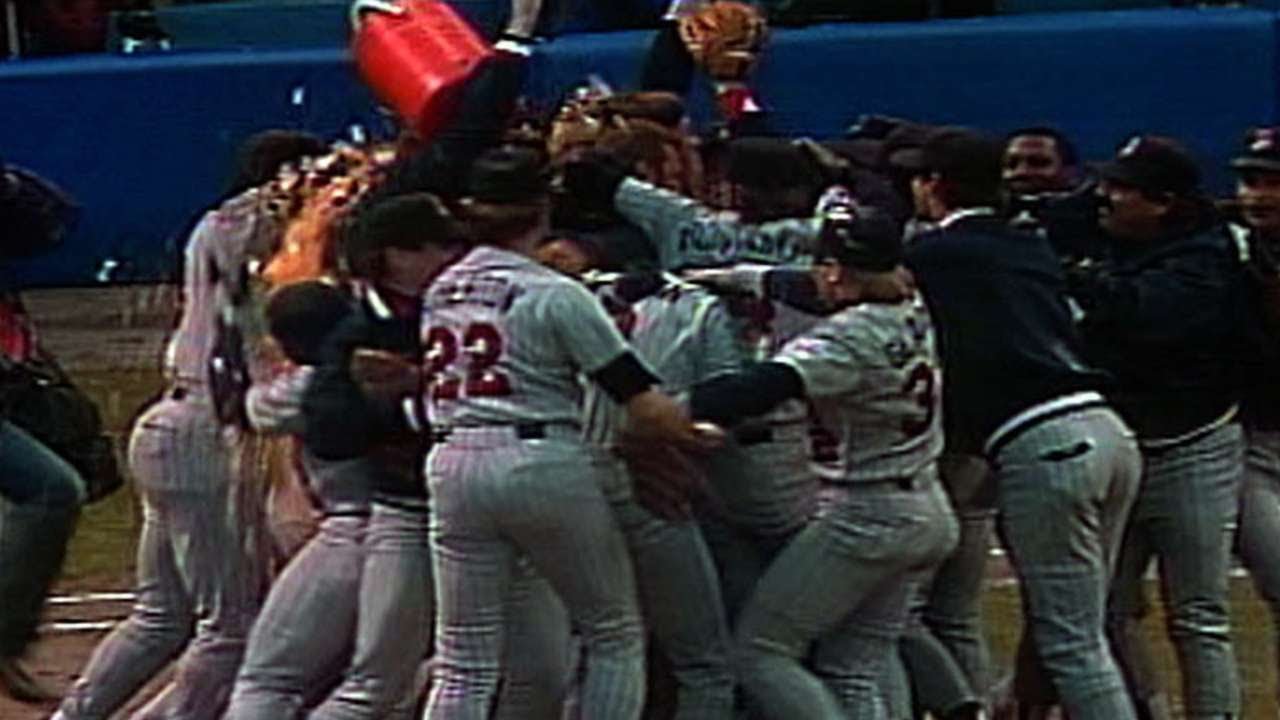 Across the board, pundits anticipated a Detroit Tiger filled World Series. Washington Post’s Thomas Boswell picked the Tigers in five saying that “this series isn’t going to be worth watching unless the Twins can get a game ahead somehow.” In Detroit, Tom Gage of the Detroit News summarized the baseball world’s opinion on the Twins by saying “the Twins really aren’t a good team.” Tim Kurkjian with the Baltimore Sun wrote Tigers in five because “they’re simply the better team.” So when closer Jeff Reardon speared the Matt Nokes comebacker and ran it toward the imposing Kent Hrbek before flipping him the ball and following his throw into his first baseman’s arms (before their teammates joined them in the infield, creating a mess of grey pinstriped jumping jubilation at the corner of Trumball and Michigan), the Twins had virtually done the near impossible. They had outscored Detroit 34-23 and manhandled the Tigers’ vaunted pitching staff. A staff that included trade deadline acquisition Doyle Alexander, who went 9-0 with a 1.53 ERA in 11 regular season starts including two wins against the Twins. “The Twins did everything better than we did this series,” Alexander said after going 0-2 with a 10.00 ERA against them in the postseason. The Twins also roughed up Jack Morris at the Metrodome after he had gone 2-0 in his two regular season starts against Minnesota. While the Tigers bullpen pitched well, rookie stopper Mike Henneman got touched for six runs in five innings while issuing six walks. For their part, Minnesota's pitchers kept Detroit’s big bats quiet throughout the series. Alan Trammell and Kirk Gibson were held silent, to Michigan’s dismay. “It’s obvious that I’ve stunk in this series,” said Gibson who finished 6-for-21 (.277) with 8 strikeouts. “I didn’t try to strike out, contrary to some people’s beliefs.” “I wished we would have showed what kind of offensive team we were,” Trammell added. The Tigers averaged the most runs per game, hit the most home runs, and held the highest slugging percentage of all American League teams -- it just wouldn’t show in the five-game series. "We were prepared for the series, mentally and physically," said Tigers centerfielder Chet Lemon. " We sent our guys out there. The Twins just outplayed us." https://twitter.com/ParkerHageman/status/653587149867106304 “They were overwhelming underdogs,” NBC’s Tony Kubek said in analyzing the Twins’ victory over the heavily favored Tigers, “but they put together a championship series, taking advantage of every mistake the Tigers made.” No, fortunately for Minnesota fans, the overwhelming underdog was celebrating on the field that afternoon. **** Moments later, the Twins were ushered into the creaky and leaky bowels of Tiger Stadium, where cameras and reporters followed the team’s alcohol-soaked celebration. The questions from the media revolved around the team’s ability to prove doubters wrong. With each inquiry, a Twins player or coach responded that while outsiders may have not respected their capabilities, the team had every ounce of faith that they were good enough to play with the best. Gary Gaetti, who was announced as the series’ MVP, was inundated with post-game interview requests. He was not entirely thrilled by the process. “I’ll tell you the truth,” the Twins’ award-winning third baseman shared with the Star Tribune’s Dennis Brackin, “Winning this award spoils a lot of the fun that I wanted to have after the game. I got led around like a dog on a leash: ‘Go do this, go do that.’ I really wanted to be with my teammates. Even now, I can’t be with my team, doing what I want to do, because I have to answer the questions.” It took almost an hour after the game for Gaetti to pull himself away from the media horde and join his teammates in the jubilation. In tow, Gaetti had the ALCS MVP award trophy, a bronze bowl that he used as a large chalice to consume the celebratory bubbly. When he finally spotted outfielder Tom Brunansky, Gaetti sidled up next to him and demanded his teammate pour some of the champagne into the trophy. Gaetti took a swig and then shared it with Brunansky. “I thought it was still up in the air. I didn’t know a final decision had been made,” Gaetti said after finding out he was chosen by the writers for the honor. “I thought maybe they were going to grab Bruno, too. I felt pretty sad afterward because I really felt like he deserved it. Maybe they saw something that I didn’t.” The decision to give the award to Gaetti had not been made easy by Brunansky. After all, Bruno matched The Rat’s home run total (2) but had driven in nine to Gaetti’s five and gone 7-for-17 (.412). Voters pointed to Gaetti’s intangibles that separated him from Brunansky which included starting the scoring off in Game 1 with a big blast off Alexander and -- the play that Tigers’ manager Sparky Anderson considered the most crushing of the series -- the pickoff of Darrell Evans in Game 4. **** When you review why most writers favored Gaetti's candidacy over Brunansky, it was the pivotal Game 4 pickoff of Evans at third base that most consider as the difference-maker. In the sixth inning of Game 4, the Twins were up 4-3 but the Tigers had just tacked on a run and had sacrificed the 40-year-old Evans to third base with one out and the top of the lineup due up. In that scenario, Baseball Prospectus’ Run Expectancy Chart said the Tigers were likely to score 0.94 runs -- almost a guaranteed tie game. Tom Kelly had brought in his strikeout pitcher Juan Berenguer -- Senor Smoke, El Gasolino -- to dispatch Lou Whitaker and Alan Trammell. With Berenguer on the mound facing the left-handed Whitaker, inspiration struck Gaetti. There was an inherent risk that ran with trying to throw the ball down the line with ninety feet separating the Twins from a tied ballgame, a lot could go wrong including throwing the ball away that could result in Evans trotting home uncontested. But that’s the attitude the 1987 Twins brought with them: To hell with it, it’s just a game. He gave Tim Laudner a signal that alerted his catcher to throw the ball down to third. ''Gary and I have a predetermined signal, and he put it on,'' Laudner said later. ''If he puts it on, I'm going to throw it down there.” Once on the same page as his catcher, Gaetti then turned to third base umpire Joe Brinkman to be ready for a play. Gaetti added that he was having a “nice little conversation” with Evans right before putting the play on, lulling him into a false sense of security. “I gave Laudner the sign because I’ve seen Darrell off there a long way before. You’ve got to know your runners. He was about 20 feet off.” Evans was no further off the base than Gaetti as runners are directed and as Berenguer delivered his pitch, he shuffled closer towards home for his secondary lead. Evans, however, was still moving in that direction when Laudner sprung up from his crouch, rescuing a fastball from a date with the dirt. It was only when Laudner cocked his arm that Evans’ weight slammed down hard on his right leg and he tried in vain to scramble back to the safety of the base. Laudner’s throw was head-high and Gaetti, Evans and the ball reached the base at the same time. Gaetti snared the ball and in one motion slammed it on Evans’ back as he stretched for the bag. Brinkman raced in from his position on the third base line closer to the cut of the outfield grass. As he reached the scene, Brinkman gave an emphatic "out" signal. http://i.imgur.com/HhNLYXU.gif From his vantage point, you could certainly question whether Brinkman had the best angle to see the play. On his knees, the veteran Tiger pleaded his case and kept his hands on his hips to display his frustration. Without any replay, the argument fell on deaf ears but any argument was moot: NBC cameras situated along the third base line captured the play which showed Gaetti applying the tag with several inches to spare between Evans and third base. After the game, Evans told reporters that he was completely caught off-guard by the play. ''I wanted to get a good jump on a ground ball or have a chance to score if the ball's in the dirt,'' Evans said in the Tigers clubhouse, trying to justify why he was so far off of third base. ''I kind of hesitated because the ball was almost in the dirt. I was trying to read it. That's why I didn't get back right away. I would have liked to have been back another foot. Then I would've gotten back. He had a little trouble catching the ball, but when he did, he came up throwing.'' Gaetti, no doubt a fierce competitor, had mixed emotions about the play considering Evans had been one of his heroes. “[Evans] is a guy I have looked up to for a long time, so you hate to embarrass him,” Gaetti said. “But because I like him, I have watched him a lot in the past. He has a habit of wandering off the base. So we tipped off umpire Joe Brinkman so he would be ready and knew the play was coming. There is no doubt we got him and that play might have won the game for us.” In spite of the baserunning blunder, Evans’ 1987 season was special and he was one of the reasons the Tigers had won the AL East. During the regular season, Evans became the first 40-year-old to hit 30 home runs in a year. But with the combination of the baserunning gaffe and a muffed ground ball at third that led to a Twins run, Detroit fans turned on Evans and booed him. That emotion would be short-lived, however, as fans gave Evans a standing ovation when he came the plate for his first at-bat in the deciding Game 5. "I think it was well-deserved," Kirk Gibson said of the adulation. "Let's put it this way. A select few fans booed him last night. I don't expect it to happen to me when I swing at a bad pitch. I didn't expect it to happen to Darrell. It was a nice gesture." **** The in-series decision-making by the Twins’ skipper would turn out to be critical, too. Tom Kelly’s juggling of his rotation was met with at least some bit of resistance. For Game 5, Kelly opted to go with veteran Bert Blyleven on three days rest rather than Joe Niekro. Had it backfired and the Tigers come away with a win, Kelly would have been forced to use either Niekro or Les Straker in Game 6 and have Frank Viola as the insurance policy in the event of Game 7, rather than just set his rotation for a more conventional Blyleven/Viola combination for the series’ last two games. Following the game, NBC’s Marv Albert pointed out that Kelly had been aggressive throughout the series. Kelly, in his always low-key manner with the media, agreed. “We try to be aggressive, we try to entertain the people, that’s one of our philosophies coming into spring training. We’re gonna try to take the game to them.” One example of the team's aggressiveness came in the former of Randy Bush. Bush, a career platoon player who had just turned 29 days before Game 2, found himself feeling frisky on the bases. Up until this point in his career, the part-time outfield had swiped 19 bases in 28 tries in 641 games with the Twins. Of those 19 stolen bases, 10 of them came under Kelly's watch in 1987. So when Bush laced a single to center in the bottom of the fourth, Kelly saw an opportunity to catch the Tigers sleeping. Tigers' ace Jack Morris had a big leg kick and a darting split-finger that made it difficult for his catchers to handle and throw. As such, his battery mates were able to only nab 9 of the 40 runners. While the Tigers owned the league's third-lowest caught stealing rate (26 percent), Detroit's catcher that day, Mike Heath, had been very good at thwarting base larceny. Heath had caught 39 percent of would-be base-stealers, fourth-best in the American League that year. On the first pitch to Brunansky, Morris barely comes set before going into his high leg kick. Bush bolted on first movement. Morris’ fastball runs in hard to his arm side and Heath almost picks it off of Brunansky’s back foot. To his credit, Heath fires a strike down to second but the big leg kick and pitch location gave Bush an advantage. His head first slide beats the play. Now on second, with a 2-1 count to Brunansky, Bush surprises everybody by heading to third. While the steal of second was predetermined from the dugout, Bush said later that he had confidence that he could take third. Bush gave third base coach Rick Renick the signal alerting him that Bush felt he could take the base and waited for the green light, which he got on the 2-1 pitch. Again, Morris’ delivery to the plate resulted in a ball running in on Brunansky. For a moment it appeared that Heath was going to receive the ball and throw in one motion behind Brunansky’s back but the Tigers catcher bobbled the ball in the exchange and that fraction of a second gave Bush the base. How surprising was the move? “Well,” Kelly told reporters later, “[bush] very rarely gets to second base.” The commotion rattled Morris. He would walk Brunansky and then Greg Gagne before striking out Launder. With the bases loaded and two out, Morris was especially careful when pitching to Dan Gladden. His darting and diving repertoire had resulted in 24 wild pitches in 1987, ten more than the next closest pitcher. After falling behind Gladden 2-0, Morris threw two fastballs for called strikes. The location of those strikes, had it happened today, would have prompt people on Twitter to screengrab the Statcast strike zone and snarkily demand robot umpires. After fouling off several fastballs off the plate to stay alive, Morris finally hung Gladden a curveball that caught too much of the zone and Gladden happily pulled it through the 5.5 hole, scoring both Bush and Brunansky and giving the Twins a lead that would put Game 2 out of reach. The Minnesota Twins would take a 2 game lead into Tigers Stadium. They certainly took the game to the Tigers. The veterans from the Motor City were outgunned by the young offensive upstarts from the Twin Cities. While the Tigers beat their opponents into submission by scoring 5.53 runs per game (roughly 13 percentage higher than the league’s average), the Twins scored 6.8 runs per game in the series. Kelly’s 1987 squad was no slouch when it came to the long ball either -- they mashed 196 home runs, fifth in the league but 29 fewer than the AL East-winning Detroit club. Opponents pitched around many in the heart of the order but no one more than Hrbek. That year, teams opted to put Hrbek on first 12 times rather than tangling with him. Only Wade Boggs, George Brett and Don Mattingly garnered more respect that season. Still, Kelly knew what type of club he had, one that was built for power not for speed and had some weaknesses past the meat of the order. He would have the likes of Gagne, Lombardozzi and Newman sacrifice runners along to set up Puckett, Hrbek, Gaetti and Brunansky to drive them in. "Tom Kelly is a manager who worked hard in the minor leagues and came forward and taught these players to go out and have fun and play," Tigers manager Sparky Anderson remarked about his managerial compatriot in the opposing dugout. **** Following the game, Anderson complimented the Twins on their series, noting that they were the superior team over the course of those five games. Anderson also paused and gave a word of advice for the Twins’ next challenger: “And those Minnesota fans? Good luck to those two National League teams that have to go listen to that noise.” Fans had been at the forefront for the entire season, helping in the team’s 56-25 home record. The fans were front and center during the ALCS, making racket, waving the white Homer Hankies and adding to the Tigers’ on-field confusion. In addition to the noise, the white roof and lighting added to the lethal combination for visiting players. Don Baylor, whom the Twins acquired at the waiver deadline in August had plenty of experience playing in the stadium as a guest before calling it home. "The lighting here is something you never get accustomed to if you're a visiting player. You can always see a fluctuation of lighting. By the time you get over that feeling, you're down by two runs." As the post-game celebration continued -- with the Twins’ roster and coaching staff dripping in champagne and cheap beer -- KARE11, the local NBC affiliate broadcasting the game, notified viewers that the team would host a welcoming party that night at the Metrodome. The gates would be opening at 9 PM. It would be a homecoming that a generation of Minnesota Twins fans would never forget.
 -
Article: Did You Know?
Parker Hageman replied to Parker Hageman's topic in Twins Daily Front Page News
The Twins struck out looking 21% of their strikeouts. That was below the MLB average of 23%. -
Article: Did You Know?
Parker Hageman replied to Parker Hageman's topic in Twins Daily Front Page News
A broken clock is right twice a day too. Again, I think we're saying roughly the same thing regarding his regression. But the conversation is not "how much regression" but "why" and, to me, simply saying because his three or four year sample size indicated a pattern that should result in another bad year isn't good enough to answer the "why" question. I tip my cap to your ability to foresee Suzuki's terrible season. -
Article: Did You Know?
Parker Hageman replied to Parker Hageman's topic in Twins Daily Front Page News
It's not surprising but the majority of the in-zone damage was on sinkers that were left up in the zone. It's not that it is an particular count but hitters have attacked sinkers that don't stay down. -
Article: Did You Know?
Parker Hageman replied to Parker Hageman's topic in Twins Daily Front Page News
I think you are rifling through a lot of words and numbers to say basically the same thing: Regression was inevitable. Where I disagree with you is on the method that you reached that conclusion. If you looked at Suzuki's four seasons prior to 2014, you would have wRC+ of 83, 90, 64 and 67. Yes, 2014 was a jump but it also came with a change in his approach at the plate (http://twinsdaily.com/articles.html/_/minnesota-twins-news/minnesota-twins/kurt-suzuki-makes-changes-at-the-plate-r2553) that began when he was traded back to Oakland in late 2013. If you were looking at his body of work prior to the 2014 season, you could easily take a gamble that Suzuki might perform close to the league-average (which he wound up doing over that year). If you are going off of four seasons, you know have wRC+ of 90, 64, 67, 107. Now you have two seasons of average to above average sandwiching two bad years. Based on that, there is really no reason to suspect a sudden drop-off based on your methodology. Yes, age, second-half decline and wear & tear as a catcher were reasons to expect a drop in production in 2015 but it doesn't really answer the question why he was able to produce at his career best one year and drop off to one of the career worst the next. -
Article: Did You Know?
Parker Hageman replied to Parker Hageman's topic in Twins Daily Front Page News
Yes and no. Suzuki's career has been inconsistent but 2014 wasn't necessarily that big of an outlier for him. He's had four seasons when he's had a wOBA of .320 or higher (above average for a catcher over the last five years) and he's had three seasons of a wOBA of .275 or lower (well below average for a catcher). Now you could easily say his numbers were going to come down from 2014 but the fact that it turned into his second worst season in his career has more to do with injuries and approach than the mystical workings of baseball regression. -
Article: Did You Know?
Parker Hageman replied to Parker Hageman's topic in Twins Daily Front Page News
This was asked on Twitter but I thought I'd share here: No question that Suzuki's 2015 season was disappointing. The drop in offense versus right handed pitchers is a product of his inability to go the other way as well as he did last year. In 2014, he hit .271 (.163 well-hit average) with seven doubles when going to right field. This year he hit just .145 (.095 well-hit average) with a lone double the other way. Why this happened is unclear. Pitchers seemed to use the same weapons and attacked him in a similar manner. Looking over some of his swings, you see that he was often pulling off on his swing (particularly with his head). Here is an example of two similar pitches that Suzuki hit to right field. The top is 2014 and the bottom is 2015. http://i.imgur.com/uwfvhW3.png While the point of contact looks almost identical in the swing from 2014, Suzuki laces a liner to right. In the 2015, he flies out to right. Now, watch what Suzuki's head does on these two swings. 2014 http://i.imgur.com/KFDUd0r.gif 2015 http://i.imgur.com/tSe53n8.gif In the example above, the head stays still and follows the pitch to right field. In the one below, he is pulling off, which explains why he "just missed" that pitch. I believe this is a microcosm for what has happened to him all season in that scenario. -
Article: Did You Know?
Parker Hageman replied to Parker Hageman's topic in Twins Daily Front Page News
You can find a lot of stats on Buxton's season in my last post: http://twinsdaily.com/articles.html/_/minnesota-twins-news/behind-byron-buxtons-struggles-r4198 -
Article: Did You Know?
Parker Hageman replied to Parker Hageman's topic in Twins Daily Front Page News
You typically don't see good hitters not being able to hit fastballs. Some good hitters have had bad seasons vs fastballs (Mike Moustakas was bad two years in a row then had a good one this year). Most will tell you having success vs sliders/curves is unsustainable. -
Article: Did You Know?
Parker Hageman replied to Parker Hageman's topic in Twins Daily Front Page News
Certainly Danny Santana wasn't the answer. I like Hicks' skill sets. I'm not entirely sure he is a guy who is fully prepared for that role. He hit much better down in the order than at the top but a lot of his leadoff at bats came after his hamstring injury. -
The 2015 Minnesota Twins season is dead and gone. People mourn the end of the baseball in different ways. One way is to stare at tons of numbers on a computer screen trying to make sense of the season. For instance, did you know Trevor Plouffe was terrible when facing fastballs? Or that Kyle Gibson threw the fewest in-zone pitches among all qualified starters? Here are all the little statistical tidbits from 2015.Can’t handle the heat? Trevor Plouffe’s .220 average against fastballs was the fourth-lowest among all qualified hitters. On the other hand, he was one of the game’s best when it came to doing damage on breaking balls (curves and sliders). His OPS against those pitches was .820 -- 9th-highest among MLB hitters. In fact, Plouffe collected 25 extra base hits on breaking balls (only Yoenis Cespedes [26] had more) and was able to do that damage because he attacked the hangers up in the zone. http://i.imgur.com/yYyfMhh.gif Plouffe also had five extra base hits with the bases loaded this season. Only Boston’s Xander Bogaerts had more (6). Miguel Sano’s season was incredible for a 22-year-old. According to Baseball-Reference.com’s Play Index, dating back to 1914 Sano’s .916 OPS is the 21st highest among 22-year-olds with a minimum of 300 plate appearances. He demonstrated a unique blend of patience and power as he drew walks in 15.8% of his plate appearances (11th highest among 22-year-olds) and, according to BaseballSavant.com’s batting ball velocity, he put balls in play at an average of 94.45 MPH. Only Miami’s Giancarlo Stanton pelted balls harder (97.73 MPH). On September 30, Sano hit this Zach McAllister 95.2 MPH fastball into the bleachers at 114 MPH. This would be the hardest hit ball for the Twins in 2015, according to BaseballSavant.com: http://i.imgur.com/A5RPDn8.gif Sano’s .916 OPS also ties him with Tony Oliva for the highest OPS by a Twins’ rookie. Bryon Buxton is really fast. I don’t have a stat or a number or anything but...just...just trust me on this. Brian Dozier hit a team-leading 28 home runs this year. Seven of those bad boys came on pitches outside of the strike zone (tied for MLB-high with Colorado’s Nolan Arenado). Download attachment: trumedia_baseball_heatmap (4).png Dozier also had the honors of facing two of the three fastest pitches in the 2015 in his at bat against Cincinnati’s Aroldis Chapman. According to MLB’s Statcast, Chapman’s 1-2 offering reached 103.9 mile per hour but had the perceived speed of 105 miles per hour thanks to Chapman’s long limbs. It is amazing that Dozier was able to even get a piece of it. http://i.imgur.com/gIdnDoy.gif For the bulk of the season Dozier was used as the team’s primary leadoff hitters (102 games) but the combination of him, Aaron Hicks (31 games) and Danny Santana (18 games) led to one of the lowest productivity from the top of the lineup across baseball. Thanks in part to Dozier’s 22 home runs out of the leadoff spot (only Curtis Granderson [26] and Manny Machado [23] had more), the Twins did score 104 runs (7th out of 30), but in terms of setting up the offense to do further damage, they finished 27th in on-base percentage (.298). Speaking of out-of-zone home runs...rookie Eddie Rosario’s free-swinging tendencies landed him with some unexpected home runs this year. He was able to launch two shots on pitches not only out-of-zone pitches but those classified as “non-competitive” (basically those pitches categorized as no one in their right mind would swing at). Of course, the outfielder also struck out 45 times on non-competitive pitches, the 8th-most in MLB. Download attachment: trumedia_baseball_heatmap (5).png Rosario’s triple total of 15 was the most by a rookie since Philadelphia’s Juan Samuel stretched out 19 three-baggers in 1984. Since 1950, only Samuel and the Dodgers’ Jim Gilliam (17) hit more triples in their rookie year than Rosario. Can’t start a fire without a spark. The Twins overall had the lowest batting average (.227) and on-base percentage (.280) when the bases were empty. However, with men in scoring position, they had the third-highest batting average (.279) and fourth-highest on-base percentage (.351). By most offensive yardsticks, Joe Mauer’s 2015 season wasn’t...you know...good. That said, when it came to getting hits with runners in scoring position, Mauer was able to contribute to the cause. His .352 average in 125 at-bats was the 9th-highest but, more importantly, he only made an out in 52.7% on a ball in play in those situations -- the lowest rate in MLB. Mauer also led baseball by reaching base on an error 14 times. ¯\_(ツ)_/¯ Among all starting right fielders Torii Hunter’s .702 OPS was the third-lowest and his WAR (0.5) was fifth-lowest. While everything was statistically bad overall, Hunter did post a .289/.368/.529 slash line in 144 plate appearances with runners in scoring position. Eduardo Nunez’s helmet came off a lot. http://i.imgur.com/MrYCTw3.gif Outs all over the place. Danny Santana’s magical BABIP-drive 2014 season was followed by a horrific nightmare of a year in 2015. Among all Twins shortstops who were afforded 200 plate appearances, Santana’s .241 OBP was only better than Houston Jimenez (.238, 1984) and Jackie Hernandez (.218, 1968). That's a ton of outs. How about the outs Santana didn’t make? Since Fangraphs.com began tracking the revised zone metric (RZR) defensive rating in 2003, Santana’s .758 RZR was the worst among all Twins’ shortstops. What that means is that Santana has converted only 75.8% of plays in his zone into outs. The Twins eventually replaced him with Eduardo Escobar and Fangraphs/Inside Edge’s fielding data shows a remarkable difference for where Santana was significantly worse than Escobar at making simple routine plays: http://i.imgur.com/9S5l1iN.gifAaron Hicks would lead the team in stolen bases with 13...it was the lowest amount of swipes for a Twins season leader since Ron Washington (10) in 1983. According to Baseball-Reference.com, the Twins managed to thwart just 22 would-be base stealers. Their 19% caught stealing rate was lowest in baseball. Kurt Suzuki threw out just 15% of runners, the lowest rate among all qualified catchers. For no reason whatsoever, here is the Berenguer Boogie. http://i.imgur.com/Kv7SYGD.gif The Twins starting rotation allowed 163 home runs in 2015 (the 18th most in the majors). However 80 of those dingers came when there was men on base -- only Philadelphia (82) and Oakland (85) allowed more. Among all qualified starters, Kyle Gibson threw the lowest percentage of his pitches in the strike zone (40.5%) but that did not stop hitters from swinging: Only Cleveland’s Carlos Carrasco (37.8%) posted a high chase rate than Gibson (40.5%). Avoiding the zone was a sound strategy for Gibson as opponents held a .831 OPS on pitches in the zone, well above the MLB average of .751. Rookie pitcher Tyler Duffey compiled a solid stat line, going 5-1 with a 3.10 ERA and a 53/20 K/BB ratio over 58 innings. There may be an element of luck in play for Duffey’s totals: According to BaseballSavant.com’s Batting Ball Velocity warehouse obtained from MLBAM’s statcast cameras, opponents had a 91.22 MPH exit velocity average -- that’s the 8th highest among all pitchers with 100 or more at-bats. Making contact was an issue for hitters in his outing: Duffey struck out 21.8% of batters faced, only second to Francisco Liriano’s 30.2% strikeout rate by a Twins rookie pitcher. The reason for that was his knee-buckling and whiff-inducing knuckle-curve. No pitcher in 2015 threw a higher percentage of curves than Duffy did (39.8%) but the yakker was responsible for 45 of his 53 strikeouts. Ricky Nolasco has now pitched 194.1 innings in a Twins uniform and his 5.56 ERA is the sixth highest for a Twins starter with a minimum of 150 innings or more thrown. Ahead of him? Jim Deshaies (5.71), Anthony Swarzak (5.87), LaTroy Hawkins (6.11), Pat Mahomes (6.26) and Scott Aldred (6.54). His .313 batting average against is the highest. Oh, and he is the only Twins pitcher to allow a home run that landed on a boat. Phil Hughes’ second season in the Twins uniform did not go quite as planned. Despite the loud contact and home runs and injuries, Hughes did the one thing he was really good at: He didn’t issue any free passes. Hughes walked 0.95 batters per nine innings in 2015 which is the third lowest season total behind Carlos Silva’s ridiculous 2005 (0.43) and Hughes’ 2014 (0.69). Hitters were getting good wood on Hughes’ pitches in the first half: His .201 well-hit average trailed behind only Colorado’s Kyle Kendrick for the highest in baseball. http://i.imgur.com/GNmXJm1.gif An elite All Star closer for the first half of the season, injuries once again marred Glen Perkins’ second half. Perkins’ fastball velocity has declined over the past two seasons, mostly likely injury related. In 2013, he chucked 111 fastballs at 96 MPH or above. Last season he failed to crack 96 at all. This year? Four times he was able to amp it up to 96 -- three of which happened in the same game versus the St. Louis Cardinals on June 17. Perkins’ 78% contact rate (contact per swing) was the second-highest among closers (minimum 15 saves). Only the Dodgers’ Kenley Jansen (72.5%) and Jonathan Papelbon (70.8%) fired more strikes than Perkins (70.1%) and only Papelbon (3.47) used fewer pitches per batter than Perkins (3.50). Kevin Jepsen’s 75 appearances (33 with the Twins) was the highest in the American League over the entire year but Casey Fien’s 35 appearances in the second half was one behind Texas’ Shawn Tolleson for the most by an AL reliever post-All Star Game. Before we go, a young Kent Hrbek striking out and flipping his bat. http://i.imgur.com/AbzVQcW.gif Click here to view the article
-
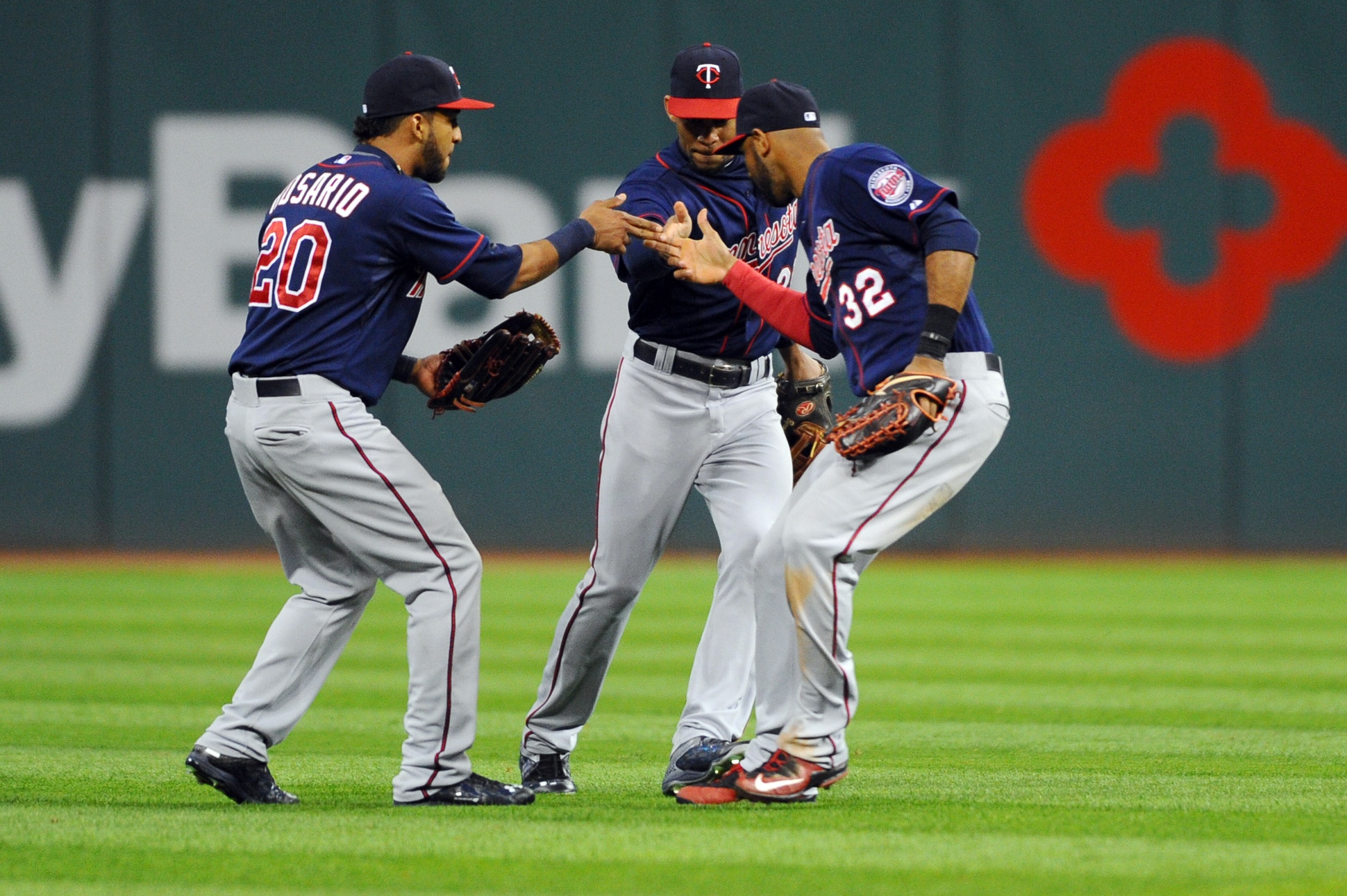 Can’t handle the heat? Trevor Plouffe’s .220 average against fastballs was the fourth-lowest among all qualified hitters. On the other hand, he was one of the game’s best when it came to doing damage on breaking balls (curves and sliders). His OPS against those pitches was .820 -- 9th-highest among MLB hitters. In fact, Plouffe collected 25 extra base hits on breaking balls (only Yoenis Cespedes [26] had more) and was able to do that damage because he attacked the hangers up in the zone. http://i.imgur.com/yYyfMhh.gif Plouffe also had five extra base hits with the bases loaded this season. Only Boston’s Xander Bogaerts had more (6). Miguel Sano’s season was incredible for a 22-year-old. According to Baseball-Reference.com’s Play Index, dating back to 1914 Sano’s .916 OPS is the 21st highest among 22-year-olds with a minimum of 300 plate appearances. He demonstrated a unique blend of patience and power as he drew walks in 15.8% of his plate appearances (11th highest among 22-year-olds) and, according to BaseballSavant.com’s batting ball velocity, he put balls in play at an average of 94.45 MPH. Only Miami’s Giancarlo Stanton pelted balls harder (97.73 MPH). On September 30, Sano hit this Zach McAllister 95.2 MPH fastball into the bleachers at 114 MPH. This would be the hardest hit ball for the Twins in 2015, according to BaseballSavant.com: http://i.imgur.com/A5RPDn8.gif Sano’s .916 OPS also ties him with Tony Oliva for the highest OPS by a Twins’ rookie. Bryon Buxton is really fast. I don’t have a stat or a number or anything but...just...just trust me on this. Brian Dozier hit a team-leading 28 home runs this year. Seven of those bad boys came on pitches outside of the strike zone (tied for MLB-high with Colorado’s Nolan Arenado). Dozier also had the honors of facing two of the three fastest pitches in the 2015 in his at bat against Cincinnati’s Aroldis Chapman. According to MLB’s Statcast, Chapman’s 1-2 offering reached 103.9 mile per hour but had the perceived speed of 105 miles per hour thanks to Chapman’s long limbs. It is amazing that Dozier was able to even get a piece of it. http://i.imgur.com/gIdnDoy.gif For the bulk of the season Dozier was used as the team’s primary leadoff hitters (102 games) but the combination of him, Aaron Hicks (31 games) and Danny Santana (18 games) led to one of the lowest productivity from the top of the lineup across baseball. Thanks in part to Dozier’s 22 home runs out of the leadoff spot (only Curtis Granderson [26] and Manny Machado [23] had more), the Twins did score 104 runs (7th out of 30), but in terms of setting up the offense to do further damage, they finished 27th in on-base percentage (.298). Speaking of out-of-zone home runs...rookie Eddie Rosario’s free-swinging tendencies landed him with some unexpected home runs this year. He was able to launch two shots on pitches not only out-of-zone pitches but those classified as “non-competitive” (basically those pitches categorized as no one in their right mind would swing at). Of course, the outfielder also struck out 45 times on non-competitive pitches, the 8th-most in MLB. Rosario’s triple total of 15 was the most by a rookie since Philadelphia’s Juan Samuel stretched out 19 three-baggers in 1984. Since 1950, only Samuel and the Dodgers’ Jim Gilliam (17) hit more triples in their rookie year than Rosario. Can’t start a fire without a spark. The Twins overall had the lowest batting average (.227) and on-base percentage (.280) when the bases were empty. However, with men in scoring position, they had the third-highest batting average (.279) and fourth-highest on-base percentage (.351). By most offensive yardsticks, Joe Mauer’s 2015 season wasn’t...you know...good. That said, when it came to getting hits with runners in scoring position, Mauer was able to contribute to the cause. His .352 average in 125 at-bats was the 9th-highest but, more importantly, he only made an out in 52.7% on a ball in play in those situations -- the lowest rate in MLB. Mauer also led baseball by reaching base on an error 14 times. ¯\_(ツ)_/¯ Among all starting right fielders Torii Hunter’s .702 OPS was the third-lowest and his WAR (0.5) was fifth-lowest. While everything was statistically bad overall, Hunter did post a .289/.368/.529 slash line in 144 plate appearances with runners in scoring position. Eduardo Nunez’s helmet came off a lot. http://i.imgur.com/MrYCTw3.gif Outs all over the place. Danny Santana’s magical BABIP-drive 2014 season was followed by a horrific nightmare of a year in 2015. Among all Twins shortstops who were afforded 200 plate appearances, Santana’s .241 OBP was only better than Houston Jimenez (.238, 1984) and Jackie Hernandez (.218, 1968). That's a ton of outs. How about the outs Santana didn’t make? Since Fangraphs.com began tracking the revised zone metric (RZR) defensive rating in 2003, Santana’s .758 RZR was the worst among all Twins’ shortstops. What that means is that Santana has converted only 75.8% of plays in his zone into outs. The Twins eventually replaced him with Eduardo Escobar and Fangraphs/Inside Edge’s fielding data shows a remarkable difference for where Santana was significantly worse than Escobar at making simple routine plays: http://i.imgur.com/9S5l1iN.gif Aaron Hicks would lead the team in stolen bases with 13...it was the lowest amount of swipes for a Twins season leader since Ron Washington (10) in 1983. According to Baseball-Reference.com, the Twins managed to thwart just 22 would-be base stealers. Their 19% caught stealing rate was lowest in baseball. Kurt Suzuki threw out just 15% of runners, the lowest rate among all qualified catchers. For no reason whatsoever, here is the Berenguer Boogie. http://i.imgur.com/Kv7SYGD.gif The Twins starting rotation allowed 163 home runs in 2015 (the 18th most in the majors). However 80 of those dingers came when there was men on base -- only Philadelphia (82) and Oakland (85) allowed more. Among all qualified starters, Kyle Gibson threw the lowest percentage of his pitches in the strike zone (40.5%) but that did not stop hitters from swinging: Only Cleveland’s Carlos Carrasco (37.8%) posted a high chase rate than Gibson (40.5%). Avoiding the zone was a sound strategy for Gibson as opponents held a .831 OPS on pitches in the zone, well above the MLB average of .751. Rookie pitcher Tyler Duffey compiled a solid stat line, going 5-1 with a 3.10 ERA and a 53/20 K/BB ratio over 58 innings. There may be an element of luck in play for Duffey’s totals: According to BaseballSavant.com’s Batting Ball Velocity warehouse obtained from MLBAM’s statcast cameras, opponents had a 91.22 MPH exit velocity average -- that’s the 8th highest among all pitchers with 100 or more at-bats. Making contact was an issue for hitters in his outing: Duffey struck out 21.8% of batters faced, only second to Francisco Liriano’s 30.2% strikeout rate by a Twins rookie pitcher. The reason for that was his knee-buckling and whiff-inducing knuckle-curve. No pitcher in 2015 threw a higher percentage of curves than Duffy did (39.8%) but the yakker was responsible for 45 of his 53 strikeouts. Ricky Nolasco has now pitched 194.1 innings in a Twins uniform and his 5.56 ERA is the sixth highest for a Twins starter with a minimum of 150 innings or more thrown. Ahead of him? Jim Deshaies (5.71), Anthony Swarzak (5.87), LaTroy Hawkins (6.11), Pat Mahomes (6.26) and Scott Aldred (6.54). His .313 batting average against is the highest. Oh, and he is the only Twins pitcher to allow a home run that landed on a boat. Phil Hughes’ second season in the Twins uniform did not go quite as planned. Despite the loud contact and home runs and injuries, Hughes did the one thing he was really good at: He didn’t issue any free passes. Hughes walked 0.95 batters per nine innings in 2015 which is the third lowest season total behind Carlos Silva’s ridiculous 2005 (0.43) and Hughes’ 2014 (0.69). Hitters were getting good wood on Hughes’ pitches in the first half: His .201 well-hit average trailed behind only Colorado’s Kyle Kendrick for the highest in baseball. http://i.imgur.com/GNmXJm1.gif An elite All Star closer for the first half of the season, injuries once again marred Glen Perkins’ second half. Perkins’ fastball velocity has declined over the past two seasons, mostly likely injury related. In 2013, he chucked 111 fastballs at 96 MPH or above. Last season he failed to crack 96 at all. This year? Four times he was able to amp it up to 96 -- three of which happened in the same game versus the St. Louis Cardinals on June 17. Perkins’ 78% contact rate (contact per swing) was the second-highest among closers (minimum 15 saves). Only the Dodgers’ Kenley Jansen (72.5%) and Jonathan Papelbon (70.8%) fired more strikes than Perkins (70.1%) and only Papelbon (3.47) used fewer pitches per batter than Perkins (3.50). Kevin Jepsen’s 75 appearances (33 with the Twins) was the highest in the American League over the entire year but Casey Fien’s 35 appearances in the second half was one behind Texas’ Shawn Tolleson for the most by an AL reliever post-All Star Game. Before we go, a young Kent Hrbek striking out and flipping his bat. http://i.imgur.com/AbzVQcW.gif
 -
Article: No Juice Podcast #71: The End.
Parker Hageman posted a topic in Twins Daily Front Page News
On this week's NO JUICE PODCAST, Dan Anderson and Parker Hageman review the 2015 Minnesota Twins season, hand out their awards and revisit their over/unders set during the offseason. LISTEN UP.They talk about the parallels to the 2005 season in which the Twins finished with the same 83-79 record only to return in 2006 and win 96 games. Can the 2016 follow suit? With the right moves, it is entirely possible. So be sure to slap your lawn chair down in front of Brit’s Pub to get the front spot for the 2016 World Series parade. Listen below, on iTunes or on Stitcher: NO JUICE PODCAST, EPISODE #71: THE END Click here to view the article -
 They talk about the parallels to the 2005 season in which the Twins finished with the same 83-79 record only to return in 2006 and win 96 games. Can the 2016 follow suit? With the right moves, it is entirely possible. So be sure to slap your lawn chair down in front of Brit’s Pub to get the front spot for the 2016 World Series parade. Listen below, on iTunes or on Stitcher: NO JUICE PODCAST, EPISODE #71: THE END
 -
Article: Behind Byron Buxton's Struggles
Parker Hageman replied to Parker Hageman's topic in Twins Daily Front Page News
I don't know what this says about where they figure Buxton will start to begin next season but it makes you wonder if they will give him more time at AAA. -
Article: Behind Byron Buxton's Struggles
Parker Hageman replied to Parker Hageman's topic in Twins Daily Front Page News
Pete Rose would do the same thing. I guess it is not for everybody.- 30 replies
-
- 2
-
-
- byron buxton
- miguel sano
- (and 1 more)
-
Article: Behind Byron Buxton's Struggles
Parker Hageman replied to Parker Hageman's topic in Twins Daily Front Page News
Cage work isn't just about swinging at meatballs. There is a process in what they are trying to implement and work out. It's reps but the right kind of reps. There are drills that hitting coaches can use to work specifically on hitting the breaking ball better but, as Dozier points out, it's not about hitting the breaking ball -- it's about hitting the fastball so you are not forced to swing at the breaking ball. I agree too that it will also be pitch recognition. You really can't recreate pro grade curves and sliders. Seeing more and more MLB curves will definitely help.- 30 replies
-
- 5
-
-
- byron buxton
- miguel sano
- (and 1 more)
-
Article: Behind Byron Buxton's Struggles
Parker Hageman replied to Parker Hageman's topic in Twins Daily Front Page News
Yes, to be clear, this is simply a post on what is happening. A lot of players go through this development process.- 30 replies
-
- 4
-
-
- byron buxton
- miguel sano
- (and 1 more)
-
Byron Buxton’s introduction to the game’s highest level has been tumultuous at best. There is no denying that he has been over-matched at the plate – and it was not entirely unexpected. When he was called to Minnesota, FOX Sports’ Ken Rosenthal spoke with Doug Mienkiewicz, his manager at Chattanooga. “I don’t think he’s completely ready,” Mientkiewicz told Rosenthal. “Well, part of me says yes, and part of me says no.” Echoing Mientkiewicz’s thoughts, Baseball America cited two scouts who stated that they felt his approach at the plate was not an advanced one and that pitchers would challenge him early. This is almost exactly what has happened.While Twins fans have been blessed with being able to watch Miguel Sano and his advanced approach posting equal parts power and patience at the plate, they have also seen pitchers confound Buxton with an assortment of breaking balls. What we have seen out of Buxton is that he has done well in the situation in which he is ahead in the count. The problem, however, is that Buxton has rarely found himself ahead in the count this year. Download attachment: Buxton.png Buxton’s approach has been what most evaluators would consider raw. The road map to retiring Buxton is pretty clear cut -- get strike one then breaking ball, breaking ball, breaking ball (if needed). As a leadoff hitter in the minors, Buxton demonstrated patience, attempting to work the count to get his pitch. However, implementing the same approach at the major league level has led to being behind in the count quickly where opponents then dispatch an array of breaking balls with pin-point precision. It all starts with the ever important first pitch. With exception of Joe Mauer (11% swing rate) and Kurt Suzuki (20%) nobody on the roster has swung at fewer first pitch offerings than Buxton (23%). Unlike Mauer, who teams know can hit and therefore deliver fewer in-zone pitches, Buxton sees a ton of pitches in the strike zone. In fact, opponents have thrown in the strike zone on the first pitch 63% of the time -- the highest rate among the Twins’ hitters. (To be fair, Buxton sees a lot more than just fastballs down the pipe -- he also gets a hefty share of get-me-over breaking balls that most hitters do not.) If he attacks occasionally on a first pitch fastball, he might see fewer in-zone pitches, leading to a favorable count. Because Buxton has not given pitchers any reason not to fire a strike, they can very easily advance the count to 0-1. And that's when the pitchers put away their fastballs. While the average hitter gets a fastball 46% of the time in pitcher's counts, Buxton sees 43% fastballs. That’s less heat than even Miguel Sano sees (48%). Buxton is self-aware about his breaking ball issue. Back in 2013, he told Fangraphs.com’s Carson Cistulli that getting his first taste of professional grade benders was an eye-opener. “In the past I had trouble [with them],” Buxton said. “Like, Gulf Coast League and Rookie Ball. It was hard for me to adjust to breaking pitches coming out of high school.” Buxton eventually grew more comfortable with the pitches -- driving them the other way as he said -- but the leap from Double-A to the Majors introduced him to weapons-grade breaking balls. “I’m not used to seeing such sharp break as much as I did in Chattanooga,” he told reporters prior to his Target Field debut. As Buxton told Cistulli in 2013, his favorite pitch is a fastball or hanging curveball middle or middle-away so you can understand why the breaking balls look particularly appetizing because that is where they appear to be heading before they dart quickly out of the zone. Download attachment: Buxton_Curves.png It is a learning process for Buxton and being able to lay off that pitch will do wonders for his development. Beyond laying off of breaking balls, Buxton also needs to get more aggressive in certain situations. Although Buxton has hit the ball well when he works himself into a hitter’s count, he has been one of the more passive hitters in that circumstance. Under conditions in which he is seeing a high percentage of fastballs, Buxton has pulled the trigger less often than everyone other than Joe Mauer. Being more aggressive can pay dividends. In Boston, Mookie Betts figured out that he could not afford to be as passive as he had been in his rookie season. “(Major league) pitchers are just around the zone more. I feel like you have to swing a little more. You can’t go up there taking,” Betts told reporters this spring. “I kind of learned last year that you can’t go up there taking. You’ve got to be ready to swing it. That’s how (Derek) Jeter got 3,000 hits. He wasn’t up there taking.” Internally, the Twins had tried to get outfielder Aaron Hicks to unleash more on pitches in the zone. "Walks are great; getting on base is good," Terry Ryan told reporters back in 2013. "But if he has a chance to drive in a run, and he gets a pitch he can handle, let's go. That's all." This season, Hicks has grown increasingly aggressive in hitters counts, swinging at 46% of the pitches versus just 41% in his first two seasons. The results have been his best offensive season since reach the big leagues. Like Hicks, Buxton is also making the jump from Double-A where the same approach at the plate just won’t cut it. Each player's development happens at his own pace. Just because two players both excel at one level, does not mean they will have equal success (or failure) at the major league level. That being said, over the recent road trip Buxton showed some signs that he is progressing. In Detroit and Cleveland, Buxton attacked pitches in the zone more, leading to a pair of home runs and a double. There is plenty of promise. The focus now for Buxton is making sustained adjustments in his approach to ensure that he reaches his vaunted potential. Click here to view the article
- 30 replies
-
- 3
-
-
- byron buxton
- miguel sano
- (and 1 more)
-
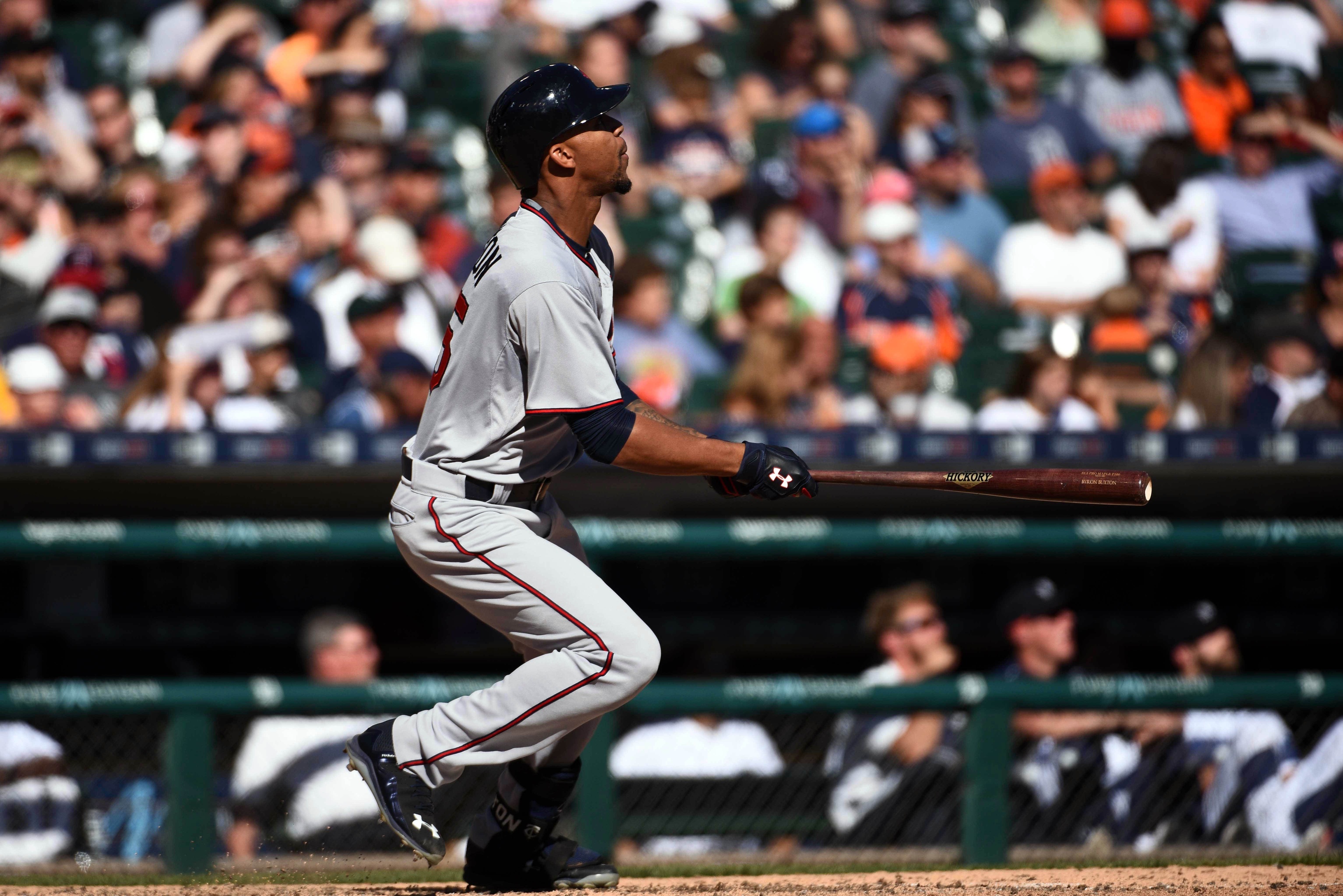 While Twins fans have been blessed with being able to watch Miguel Sano and his advanced approach posting equal parts power and patience at the plate, they have also seen pitchers confound Buxton with an assortment of breaking balls. What we have seen out of Buxton is that he has done well in the situation in which he is ahead in the count. The problem, however, is that Buxton has rarely found himself ahead in the count this year. Buxton’s approach has been what most evaluators would consider raw. The road map to retiring Buxton is pretty clear cut -- get strike one then breaking ball, breaking ball, breaking ball (if needed). As a leadoff hitter in the minors, Buxton demonstrated patience, attempting to work the count to get his pitch. However, implementing the same approach at the major league level has led to being behind in the count quickly where opponents then dispatch an array of breaking balls with pin-point precision. It all starts with the ever important first pitch. With exception of Joe Mauer (11% swing rate) and Kurt Suzuki (20%) nobody on the roster has swung at fewer first pitch offerings than Buxton (23%). Unlike Mauer, who teams know can hit and therefore deliver fewer in-zone pitches, Buxton sees a ton of pitches in the strike zone. In fact, opponents have thrown in the strike zone on the first pitch 63% of the time -- the highest rate among the Twins’ hitters. (To be fair, Buxton sees a lot more than just fastballs down the pipe -- he also gets a hefty share of get-me-over breaking balls that most hitters do not.) If he attacks occasionally on a first pitch fastball, he might see fewer in-zone pitches, leading to a favorable count. Because Buxton has not given pitchers any reason not to fire a strike, they can very easily advance the count to 0-1. And that's when the pitchers put away their fastballs. While the average hitter gets a fastball 46% of the time in pitcher's counts, Buxton sees 43% fastballs. That’s less heat than even Miguel Sano sees (48%). Buxton is self-aware about his breaking ball issue. Back in 2013, he told Fangraphs.com’s Carson Cistulli that getting his first taste of professional grade benders was an eye-opener. “In the past I had trouble [with them],” Buxton said. “Like, Gulf Coast League and Rookie Ball. It was hard for me to adjust to breaking pitches coming out of high school.” Buxton eventually grew more comfortable with the pitches -- driving them the other way as he said -- but the leap from Double-A to the Majors introduced him to weapons-grade breaking balls. “I’m not used to seeing such sharp break as much as I did in Chattanooga,” he told reporters prior to his Target Field debut. As Buxton told Cistulli in 2013, his favorite pitch is a fastball or hanging curveball middle or middle-away so you can understand why the breaking balls look particularly appetizing because that is where they appear to be heading before they dart quickly out of the zone. It is a learning process for Buxton and being able to lay off that pitch will do wonders for his development. Beyond laying off of breaking balls, Buxton also needs to get more aggressive in certain situations. Although Buxton has hit the ball well when he works himself into a hitter’s count, he has been one of the more passive hitters in that circumstance. Under conditions in which he is seeing a high percentage of fastballs, Buxton has pulled the trigger less often than everyone other than Joe Mauer. Being more aggressive can pay dividends. In Boston, Mookie Betts figured out that he could not afford to be as passive as he had been in his rookie season. “(Major league) pitchers are just around the zone more. I feel like you have to swing a little more. You can’t go up there taking,” Betts told reporters this spring. “I kind of learned last year that you can’t go up there taking. You’ve got to be ready to swing it. That’s how (Derek) Jeter got 3,000 hits. He wasn’t up there taking.” Internally, the Twins had tried to get outfielder Aaron Hicks to unleash more on pitches in the zone. "Walks are great; getting on base is good," Terry Ryan told reporters back in 2013. "But if he has a chance to drive in a run, and he gets a pitch he can handle, let's go. That's all." This season, Hicks has grown increasingly aggressive in hitters counts, swinging at 46% of the pitches versus just 41% in his first two seasons. The results have been his best offensive season since reach the big leagues. Like Hicks, Buxton is also making the jump from Double-A where the same approach at the plate just won’t cut it. Each player's development happens at his own pace. Just because two players both excel at one level, does not mean they will have equal success (or failure) at the major league level. That being said, over the recent road trip Buxton showed some signs that he is progressing. In Detroit and Cleveland, Buxton attacked pitches in the zone more, leading to a pair of home runs and a double. There is plenty of promise. The focus now for Buxton is making sustained adjustments in his approach to ensure that he reaches his vaunted potential.
