



Parker Hageman
-
Posts
4,152 -
Joined
-
Last visited
-
Days Won
6
Content Type
Profiles
News
Minnesota Twins Videos
2026 Minnesota Twins Top Prospects Ranking
2022 Minnesota Twins Draft Picks
Minnesota Twins Free Agent & Trade Rumors, Notes, & Tidbits
Guides & Resources
2023 Minnesota Twins Draft Picks
The Minnesota Twins Players Project
2024 Minnesota Twins Draft Picks
2025 Minnesota Twins Draft Pick Tracker
2026 Minnesota Twins Draft Tracker: Picks & Bonuses
Forums
Blogs
Events
Store
Downloads
Gallery
Everything posted by Parker Hageman
-
 In an interesting development this week, the Minnesota Twins’ source of SABR-friendly quotes, Glen Perkins, has elaborated his position on the importance of pitch framing. What makes this particularly intriguing is because a little over a year ago Perkins had explained that he felt that catcher Josmil Pinto needed to improve his framing game in order to contribute at the major league level. In his explanation, the closer suggested that framing ranked ahead of pitch calling when it came to the contributions of catching. Now Perkins says that pitch framing numbers are basically junk. Is Perkins right? Is the idea of pitch framing just snake oil sold by data-pushers?Last year, the Pioneer Press’ Mike Berardino documented a conversation that Perkins had with a local radio show in which he deemed the ability to frame pitches as one of the most significant keys to a catcher’s ability. The discussion centered on Pinto and his subpar framing numbers. “Pitch-framing ability, I think that makes the biggest difference in the world,” Perkins said on Phil Mackey and Judd Zulgad’s 1500 ESPN’s radio program in 2014. “Eric Fryer is really good at pitch framing, so I’m excited about that. He does a great job.” Why does it make the biggest difference in the world? “When you can get your pitcher borderline pitches and get them to go his way, that allows you not only to get ahead in counts but expand the strike zone and go further away,” Perkins said. “That goes a long way to having success. … I think that’s the most important thing. The game calling is secondary. You’ve got to be able to catch pitches around the zone. You need to get pitches. You can’t give pitches. The more pitches you can get, the better off our pitching staff is going to be.” Pitch framing, to paraphrase former MLB umpire Jim McKean, isn't holding a ball or doing any special tricks, it is simply receiving the ball using the proper techniques. And when it comes to seeing results, some catchers are considerably better than others. The notion of pitch framing’s worth extended to data-savvy teams like the Pittsburgh Pirates who, according to Big Data Baseball, zeroed in on free agent catcher Russell Martin almost exclusively on his ability to steal strikes on the outer edges of the strike zone. This, wrote Travis Sawchik, made signing free agent pitchers like Francisco Liriano that much more attractive. Blessed with an assortment of unhittable stuff, Liriano had faulty control but a rare swing-and-miss arsenal -- particularly when he was able to deploy his slider. Martin, the Pirates front office correctly surmised, could turn some of those borderline fastballs into strikes and allow Liriano to spin more sliders. So as the front office of the Pirates rebuilt their rotation based on the belief that Martin had the ability to steal strikes -- whether because of skill, voodoo or otherwise -- only to become an annual playoff team, one of the Twins’ most outspoken proponents for using and understanding data has thrown shade at the data used in measuring pitch framing. “That’s what frustrates me about the framing statistics,” Perkins told Berardino at some point this season. “I know when I say I don’t believe in them, that’s what a lot of guys do: They’ll believe in numbers that support what they think, what their opinion is, and they’ll not support stuff that doesn’t back up what they believe. That’s part of it for me, too.” Wait. What? How does pitch framing go from “the most important thing” a little over a year ago to “I don’t believe in them”? “There’s just too many variables,” he said. “I still think there’s bias in who’s pitching and bias in who’s hitting, regardless of the fact (umpires) get graded or not. I think some guys have tighter strike zones as pitchers and guys that are more established have a bigger strike zone. And hitters, too.” To be fair, Perkins isn't completely off-base. While he may have overstated his position in 2014, pitch framing was far from a perfect science and measurement. In examining Josmil Pinto's shortcomings this past offseason, evidence of Pinto being unfairly docked on pitches that were in the strike zone but ultimately called a ball due to a pitcher grossly missing his location were highlighted. Available framing stats found at StatCorner.com do not account for a pitcher's intent. Is it the catcher's fault that he called for a slider away only to have to lunge back across the plate when a pitcher misses his spot? That is why Baseball Info Solutions developed a Strike Zone Plus/Minus metric that accounts for factors other than just the catcher (all the gory details found here). Their study showed that even when considering the pitchers, hitters and umpires, Kurt Suzuki was still one of the worst pitch framers in the game at -15 runs in 2014. This season, despite showing improvements by StatCorner.com’s measurements, according to BIS’s Strike Zone Plus/Minus Suzuki is actually at -11 runs saved, again the worst framer in baseball. Roughly translated, 11 runs equals about one win in the standings. Is that important? "One pitch can mean the whole game,'' Russell Martin, who signed a five-year, $82 million contract with Toronto partially based on his framing abilities, told USA Today. "Going from a 2-1 count to a 1-2 changes that at-bat completely. As you go through the year, there are times when getting a call here and a call there can change the outcome of a whole year, really, when you're talking about being in the playoffs or missing the playoffs by one game.'' Perkins’ stance on pitch framing isn’t without its merit but at the same time, starting catchers have thousands of data points each season. While some measurement systems are grabbing a bunch of noise, patterns begin to emerge with various catchers who far exceed others at coaxing more out-of-zone pitches to be called strikes and fewer in-zone pitches to be called balls. There are reasons why some catchers like Jonathan Lucroy are perennially at the top of the framing list while others like Suzuki and Jarrod Saltalamacchia are pulling up the rear. What's more, there is now a framing metric that accounts for all the influencing factors (pitchers, umpires and hitters) which had previously concerned players like Perkins. For the Twins who are doing their best to remain relevant in the wild card race, one game in the standings could end up being the difference between a one-game playoff berth or another October at home. Click here to view the article
- 30 replies
-
- 2
-

-
- glen perkins
- kurt suzuki
- (and 1 more)
-
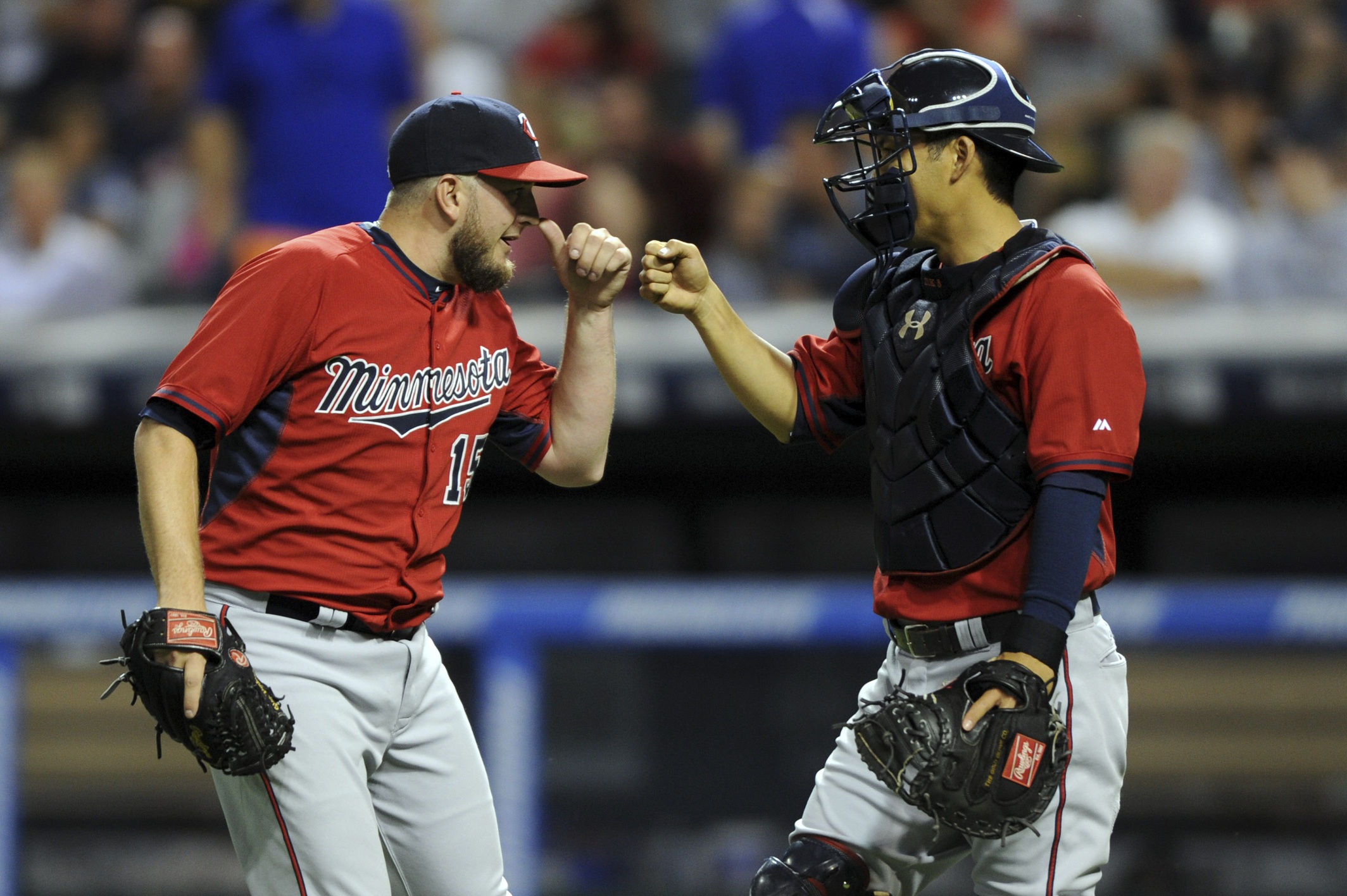 Last year, the Pioneer Press’ Mike Berardino documented a conversation that Perkins had with a local radio show in which he deemed the ability to frame pitches as one of the most significant keys to a catcher’s ability. The discussion centered on Pinto and his subpar framing numbers. “Pitch-framing ability, I think that makes the biggest difference in the world,” Perkins said on Phil Mackey and Judd Zulgad’s 1500 ESPN’s radio program in 2014. “Eric Fryer is really good at pitch framing, so I’m excited about that. He does a great job.” Why does it make the biggest difference in the world? “When you can get your pitcher borderline pitches and get them to go his way, that allows you not only to get ahead in counts but expand the strike zone and go further away,” Perkins said. “That goes a long way to having success. … I think that’s the most important thing. The game calling is secondary. You’ve got to be able to catch pitches around the zone. You need to get pitches. You can’t give pitches. The more pitches you can get, the better off our pitching staff is going to be.” Pitch framing, to paraphrase former MLB umpire Jim McKean, isn't holding a ball or doing any special tricks, it is simply receiving the ball using the proper techniques. And when it comes to seeing results, some catchers are considerably better than others. The notion of pitch framing’s worth extended to data-savvy teams like the Pittsburgh Pirates who, according to Big Data Baseball, zeroed in on free agent catcher Russell Martin almost exclusively on his ability to steal strikes on the outer edges of the strike zone. This, wrote Travis Sawchik, made signing free agent pitchers like Francisco Liriano that much more attractive. Blessed with an assortment of unhittable stuff, Liriano had faulty control but a rare swing-and-miss arsenal -- particularly when he was able to deploy his slider. Martin, the Pirates front office correctly surmised, could turn some of those borderline fastballs into strikes and allow Liriano to spin more sliders. So as the front office of the Pirates rebuilt their rotation based on the belief that Martin had the ability to steal strikes -- whether because of skill, voodoo or otherwise -- only to become an annual playoff team, one of the Twins’ most outspoken proponents for using and understanding data has thrown shade at the data used in measuring pitch framing. “That’s what frustrates me about the framing statistics,” Perkins told Berardino at some point this season. “I know when I say I don’t believe in them, that’s what a lot of guys do: They’ll believe in numbers that support what they think, what their opinion is, and they’ll not support stuff that doesn’t back up what they believe. That’s part of it for me, too.” Wait. What? How does pitch framing go from “the most important thing” a little over a year ago to “I don’t believe in them”? “There’s just too many variables,” he said. “I still think there’s bias in who’s pitching and bias in who’s hitting, regardless of the fact (umpires) get graded or not. I think some guys have tighter strike zones as pitchers and guys that are more established have a bigger strike zone. And hitters, too.” To be fair, Perkins isn't completely off-base. While he may have overstated his position in 2014, pitch framing was far from a perfect science and measurement. In examining Josmil Pinto's shortcomings this past offseason, evidence of Pinto being unfairly docked on pitches that were in the strike zone but ultimately called a ball due to a pitcher grossly missing his location were highlighted. Available framing stats found at StatCorner.com do not account for a pitcher's intent. Is it the catcher's fault that he called for a slider away only to have to lunge back across the plate when a pitcher misses his spot? That is why Baseball Info Solutions developed a Strike Zone Plus/Minus metric that accounts for factors other than just the catcher (all the gory details found here). Their study showed that even when considering the pitchers, hitters and umpires, Kurt Suzuki was still one of the worst pitch framers in the game at -15 runs in 2014. This season, despite showing improvements by StatCorner.com’s measurements, according to BIS’s Strike Zone Plus/Minus Suzuki is actually at -11 runs saved, again the worst framer in baseball. Roughly translated, 11 runs equals about one win in the standings. Is that important? "One pitch can mean the whole game,'' Russell Martin, who signed a five-year, $82 million contract with Toronto partially based on his framing abilities, told USA Today. "Going from a 2-1 count to a 1-2 changes that at-bat completely. As you go through the year, there are times when getting a call here and a call there can change the outcome of a whole year, really, when you're talking about being in the playoffs or missing the playoffs by one game.'' Perkins’ stance on pitch framing isn’t without its merit but at the same time, starting catchers have thousands of data points each season. While some measurement systems are grabbing a bunch of noise, patterns begin to emerge with various catchers who far exceed others at coaxing more out-of-zone pitches to be called strikes and fewer in-zone pitches to be called balls. There are reasons why some catchers like Jonathan Lucroy are perennially at the top of the framing list while others like Suzuki and Jarrod Saltalamacchia are pulling up the rear. What's more, there is now a framing metric that accounts for all the influencing factors (pitchers, umpires and hitters) which had previously concerned players like Perkins. For the Twins who are doing their best to remain relevant in the wild card race, one game in the standings could end up being the difference between a one-game playoff berth or another October at home.
 -
@willihammer I do agree the Twins should have thrown inside -- just not as a response for "pimping" or showboating.
-
The Minnesota Twins retreated from Canada on Thursday night, soundly defeated by the Toronto Blue Jays over four games. In the process they lost their postseason position and winning record. Reflecting back on what they could have done better to quiet the Blue Jays’ mighty lumber, the Twins admitted they failed to dominate the space between the batter and the plate effectively. Thursday night’s starter Kyle Gibson, who was shelled for eight runs over four and two-thirds innings, told reporters after the game that he failed in his attempts to establish his fastball inside. “I didn’t establish an inside fastball at all. That’s something I wanted to do and needed to do,” Gibson said after the game. “You have to do it against those guys. You can’t put yourself in situations where you have to throw pitches out over the plate, that’s where you get in trouble.”Gibson simply picked up where others in the rotation had left off before him. The big bats for the Blue Jays were far too comfortable extending their arms and taking advantage of the outer-half. For instance, Jays third baseman Josh Donaldson was able to launch this opposite field shot off of Ervin Santana. Baseball purists and Twins fans will probably applaud Sano’s tactics over the Blue Jays'. On the other hand, the Toronto hitters are having fun and providing some entertainment to the game. Throwing at players just because of showboating reeks of the “get off my lawn” mentality. Players like Bautista and Encarnacion are well within their bounds to pimp some shots while pitchers like Volquez who take exception to the show are within their rights to sizzle a fastball near their belt. That’s baseball. In the end, throwing inside should be about setting up other pitches rather than sending the proverbial message. Click here to view the article
-
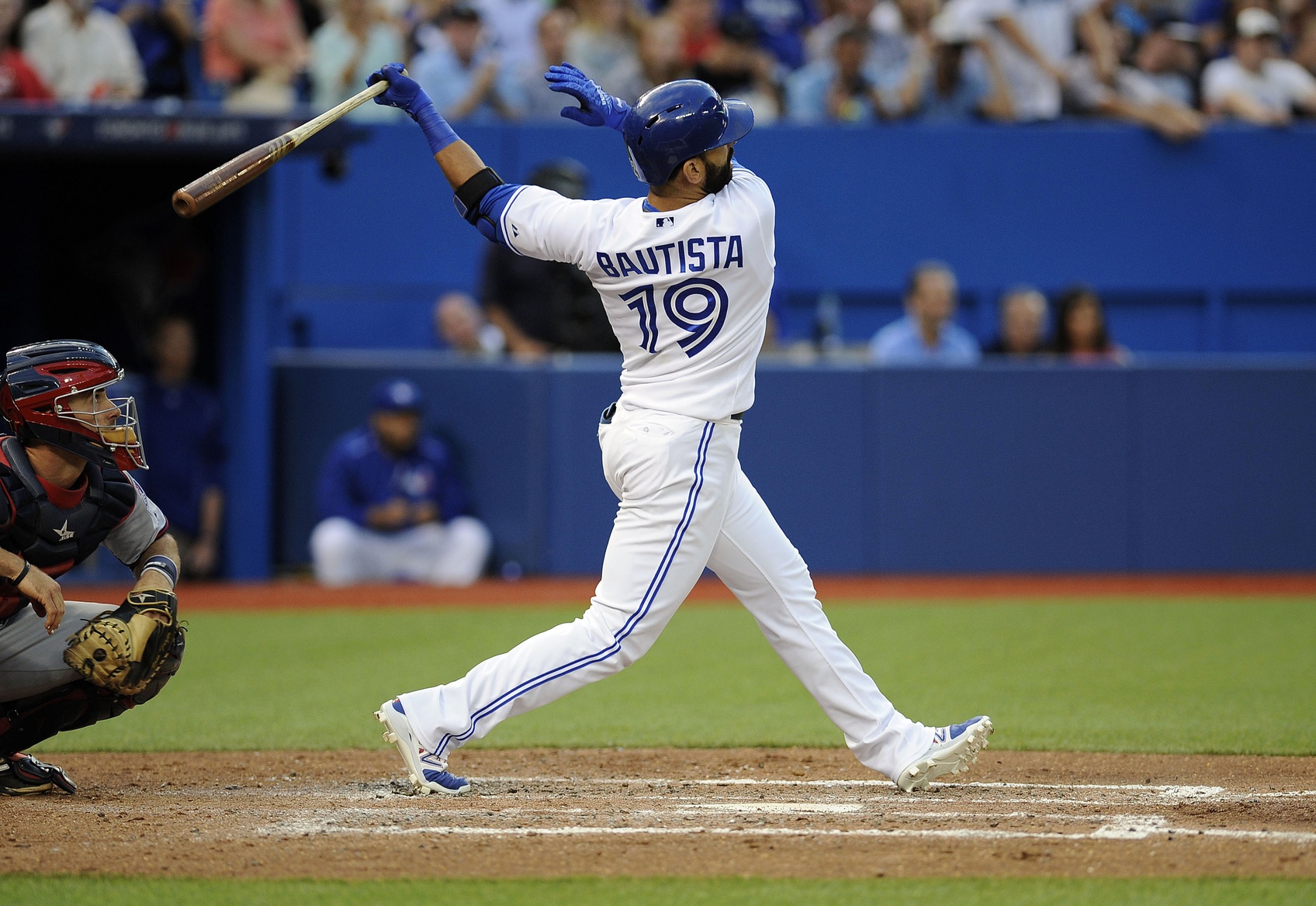 Gibson simply picked up where others in the rotation had left off before him. The big bats for the Blue Jays were far too comfortable extending their arms and taking advantage of the outer-half. For instance, Jays third baseman Josh Donaldson was able to launch this opposite field shot off of Ervin Santana. https://twitter.com/ParkerHageman/status/628284384760737793 Shortly before the Twins slipped through customs, the Royals had taken umbrage at Donaldson’s pimping home runs. Kansas City’s starter Edinson Volquez then drilled Donaldson square in the shoulders on a first pitch offering to start the last game of the series.In the first three games, Donaldson had smacked two home runs and three doubles while driving in seven runs. On that fourth and final game, after being drilled in the shoulder in the first inning, Donaldson finished the day 0-for-3. Take a look at how the Royals pitched Donaldson the first three games versus the final three games when he received three pitches up at his chin level. Should the Twins have followed suit? Clearly the Twins needed to keep the Blue Jays’ best hitters from diving out over the plate. Hitters like Edwin Encarnacion and Troy Tulowitzki absolutely uncorked on offerings which seemingly appeared like they knew where and what was coming. At the same time, pitching inside against the Blue Jays is tricky. If the pitch is thrown with the intent to dislodge the cleats from the ground but the pitch misses its target towards the plate, Toronto’s hitters have proven they can punch that ball long ways. Their .501 slugging percentage on fastballs inside is only bested by the Yankees (whose short porch in right field helps). While it may not seem like it following this series, the Twins are actually pretty good at throwing hard inside. Pitching on the inner third is something that Twins pitchers have excelled at all season. According to ESPN/TruMedia data, the local rotation throws more of their fastballs inside (37%) than any other teams besides the Pirates and White Sox. When they are able to locate those pitches inside but out of the zone, they have proven to have a great deal of success. The results are a lower batting average and slugging percentage than the league’s average. Pitching inside may have helped achieve a few more outs and it may have opened up the far edges of the zone better to avoid the catastrophic moments. But here’s the thing: They don’t inspire fear. The Twins’ starting pitchers are not in the feet-moving business. They have maimed just nine batters with their fastball, the Yankees, Giants and Astros are the only teams that have popped fewer hitters with the heat. Twins starters throw inside to set up other pitches, not to send messages. Getting in a knockdown war with the Blue Jays didn’t really help the Royals either. When the smoke cleared, they still lost the game 5-2. So what about throwing a pitch at their belts to send a message about toning down the post-dinger celebrations? After all, the Blue Jays took more than their share of time admiring their blasts and circling the bases with their arms out. http://i.imgur.com/V0cE3Wt.gif http://2.bp.blogspot.com/-EECMMz6ifws/VcK93g693mI/AAAAAAAAJ2A/KKR9xux9yK0/s1600/Bats%2BShocked.jpg Meanwhile, on the rare occasion a Twins hitter slugs a home run that is really worth admiring, like Miguel Sano did, he nonchalantly dropped the bat and began his trot. https://twitter.com/ParkerHageman/status/629098209948880897 Baseball purists and Twins fans will probably applaud Sano’s tactics over the Blue Jays'. On the other hand, the Toronto hitters are having fun and providing some entertainment to the game. Throwing at players just because of showboating reeks of the “get off my lawn” mentality. Players like Bautista and Encarnacion are well within their bounds to pimp some shots while pitchers like Volquez who take exception to the show are within their rights to sizzle a fastball near their belt. That’s baseball. In the end, throwing inside should be about setting up other pitches rather than sending the proverbial message.
 -
Article: Will The Twins Ever Hit Again?
Parker Hageman replied to Parker Hageman's topic in Twins Daily Front Page News
Who had August 5th for the date the Twins would start hitting again? -
Article: Will The Twins Ever Hit Again?
Parker Hageman replied to Parker Hageman's topic in Twins Daily Front Page News
Most obvious think I've read all day. The point being, the Twins likely are not replacing Nunez on the roster with an outfielder now. -
Article: Will The Twins Ever Hit Again?
Parker Hageman replied to Parker Hageman's topic in Twins Daily Front Page News
The problem with removing Nunez right now is that then the roster is left without a viable backup shortstop option if anything were to happen to Escobar. -
Article: Will The Twins Ever Hit Again?
Parker Hageman replied to Parker Hageman's topic in Twins Daily Front Page News
Honestly, at this point, not much. Buxton is coming back and will immediately improve the outfield. If Hicks is proving that he can't handle right-handed pitching, there will be opportunities to platoon him with Rosario or Kepler could be up in September. It would be nice to have acquired AJ Pierzynski for a cheap left-handed platoon option with Suzuki -- albeit defensive liability. Shortstop is the biggest issue but Eduardo Escobar can fill in for the remainder of the year. Steady in the field. Occasional pop. While I agree with you in theory, the issue has been that Arcia has been far too streaky in Rochester. After binge slamming home runs, he's 6-for-50 (.120). Plus you would have to diminish the defense in the outfield (we discussed this at length on this week's Gleeman & The Geek). Maybe when Buxton is back and September rolls around, Arcia is a platoon option (although the Twins don't want him to be one). The issue is that if you call up Arcia now, you have to remove Shane Robinson (or maybe a pitcher) from the roster. That's fine but I'm not sure the Twins are interested in doing that immediately. Again, I go back to wanting as much outfield defensive as possible and serviceable offensive contributions versus occasional power and poor defense. -
Article: Will The Twins Ever Hit Again?
Parker Hageman posted a topic in Twins Daily Front Page News
What does Ronda Rousey’s last opponent and the Minnesota Twins’ lineup have in common? Neither can hit. Well, that’s not entirely accurate however, as Bethe Correia hit the mat pretty hard. The Twins’ offense, on the other hand, look like they couldn’t even hit the mat at this point. Sure, pitchers like David Price can make even the best hitters feel like they are swinging a car antenna but, as shocking new research revealed, the Twins have not faced David Price in all 17 games since the All-Star break.Despite not having to face Price every night, the Twins still managed to have one of the least potent lineups post-break. Hits are frequently a precursor to runs. Runs, as the rules would have it, are needed to win baseball games. After scoring 4.3 runs per game in the first half of the year (ninth place), they have struggled mightily to push players across the plate as of late. Through 17 second-half games, the Twins have averaged almost one full run less (3.4 per game) in that time. One of the cornerstones to the team’s first-half success, timely hitting, has all but disappeared. The Twins hit a robust .283 with runners in scoring position prior to the Midsummer Classic (4th in MLB) and have dropped to .218 (26th) since. The ability to accumulate hits at a clip higher than the norm is frankly unsustainable and one of the reasons the team outperformed expectations early on, but now the hits are not coming in any situations -- men on, men off, night, day, home or road. Nothing. Following a night in Toronto in which the soft-tossing Marco Estrada limited the lineup to just two hits resulting in a solitary run -- on a sacrifice fly, no less -- the Twins second-half batting average slipped to .213, the lowest in baseball. This series was supposed to matter. The Twins were desperately clinging to the last wild card and starting a four-game set against an opponent that was looking to steal that ticket from them. To show how serious they are about October baseball, the Blue Jays armed themselves to the gills, preparing for all- out war. So far, it appears that the Twins have brought a knife to a bazooka fight. A rubber knife. That a dog has chewed on. Now, in a whimper of a dog missing its rubber knife, the Twins find themselves on the outside looking in on the postseason. Without some efforts from the offense, there is little hope of getting that spot back. That sort of decline is expected out of a lineup that is loaded with young, unpolished hitters but the Twins’ most notable area of offensive weakness comes from the three professional, veteran hitters at the top of the order. In the beginning of the season the Twins’ top three hitters -- a combination of Brian Dozier, Torii Hunter and Joe Mauer -- scored an average of nearly two runs per game (1.6) thanks to a steady mixture of collecting hits, getting on-base and Dozier popping dingers. Now the Twins’ top of the order throng has been effectively shut down. Dozier can’t find any real estate when he puts the ball in play and far too often he isn’t even able to do that, striking out in over 30% of his plate appearances. Hunter has regressed significantly over the month of July, batting .193/.230/.351 over his last 61 plate appearances. Mauer, meanwhile, had put together a string of strong games heading into the break but seemingly lost his plate awareness, taking more defensive swings or watching strike three whistle past. What makes this development particularly damning is that it effectively renders Miguel Sano, the lineup’s most tactical weapon, useless. While onlookers celebrate Sano’s patience and zone recognition (a fantastic skill set to have, by the way) the bigger picture is missed. The purpose of the cleanup hitter is to drive in runs. Sano proved that he could do that in the minors and hit the ball really hard in his arrival to the majors. Once he showed he could do unforgivable things to fastballs, opposing teams quickly rationed those pitches. With no one regularly on base ahead of him nor anyone behind him in the order able to contribute, teams happily throw the big man sliders away and let him trot to first base instead of around all of them. The Twins had an opportunity to upgrade some of the underperforming positions in the lineup at the trade deadline but chose not to. Which is fine. The Twins want to dance with the date they brought to the party, for better or worse. If they expect to regain their playoff slot, they need big contributions from the top of the order. Click here to view the article- 45 replies
-
- 1
-
-
- joe mauer
- ronda rousey
- (and 3 more)
-
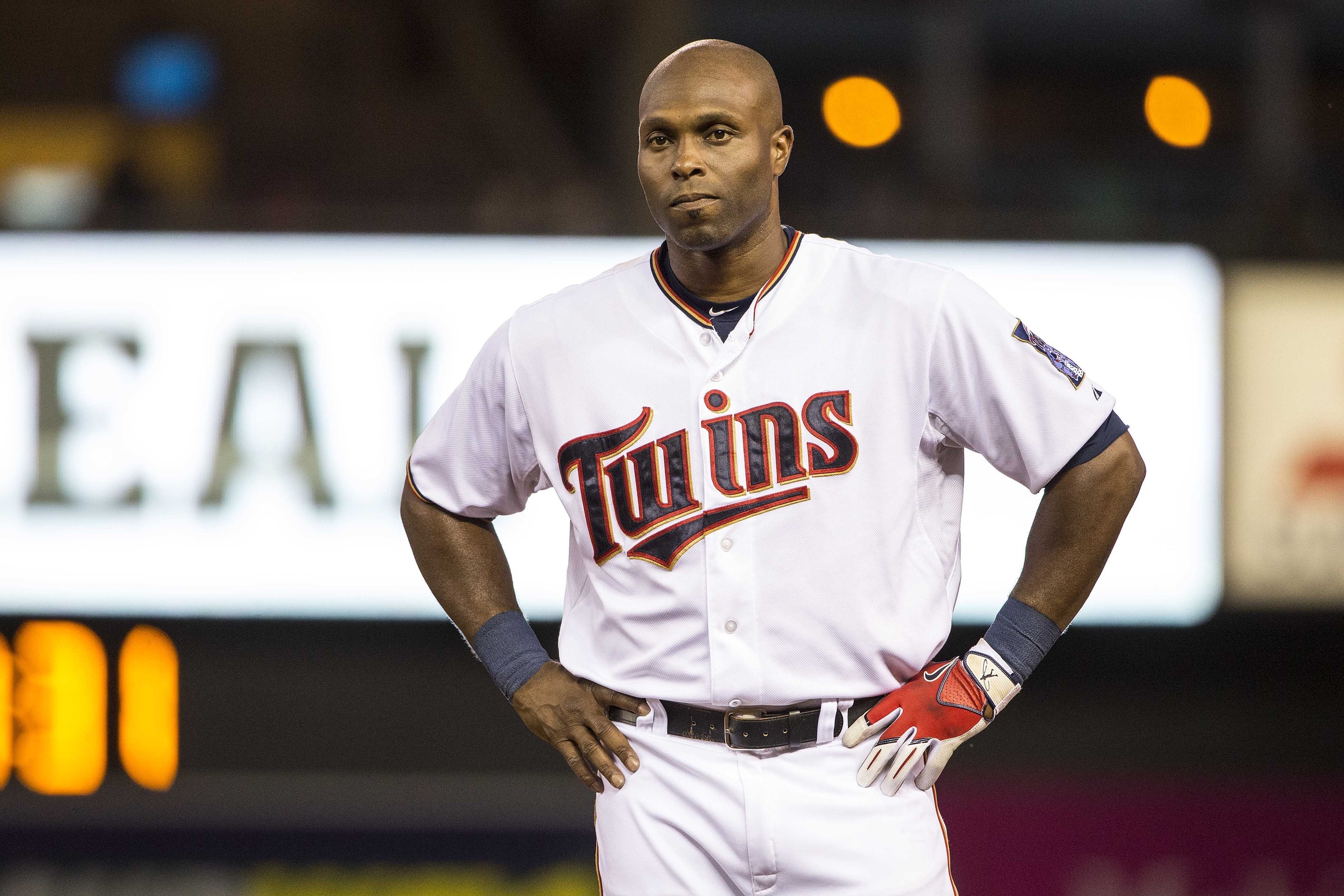 Despite not having to face Price every night, the Twins still managed to have one of the least potent lineups post-break. Hits are frequently a precursor to runs. Runs, as the rules would have it, are needed to win baseball games. After scoring 4.3 runs per game in the first half of the year (ninth place), they have struggled mightily to push players across the plate as of late. Through 17 second-half games, the Twins have averaged almost one full run less (3.4 per game) in that time. One of the cornerstones to the team’s first-half success, timely hitting, has all but disappeared. The Twins hit a robust .283 with runners in scoring position prior to the Midsummer Classic (4th in MLB) and have dropped to .218 (26th) since. The ability to accumulate hits at a clip higher than the norm is frankly unsustainable and one of the reasons the team outperformed expectations early on, but now the hits are not coming in any situations -- men on, men off, night, day, home or road. Nothing. Following a night in Toronto in which the soft-tossing Marco Estrada limited the lineup to just two hits resulting in a solitary run -- on a sacrifice fly, no less -- the Twins second-half batting average slipped to .213, the lowest in baseball. This series was supposed to matter. The Twins were desperately clinging to the last wild card and starting a four-game set against an opponent that was looking to steal that ticket from them. To show how serious they are about October baseball, the Blue Jays armed themselves to the gills, preparing for all- out war. So far, it appears that the Twins have brought a knife to a bazooka fight. A rubber knife. That a dog has chewed on. Now, in a whimper of a dog missing its rubber knife, the Twins find themselves on the outside looking in on the postseason. Without some efforts from the offense, there is little hope of getting that spot back. That sort of decline is expected out of a lineup that is loaded with young, unpolished hitters but the Twins’ most notable area of offensive weakness comes from the three professional, veteran hitters at the top of the order. In the beginning of the season the Twins’ top three hitters -- a combination of Brian Dozier, Torii Hunter and Joe Mauer -- scored an average of nearly two runs per game (1.6) thanks to a steady mixture of collecting hits, getting on-base and Dozier popping dingers. Now the Twins’ top of the order throng has been effectively shut down. Dozier can’t find any real estate when he puts the ball in play and far too often he isn’t even able to do that, striking out in over 30% of his plate appearances. Hunter has regressed significantly over the month of July, batting .193/.230/.351 over his last 61 plate appearances. Mauer, meanwhile, had put together a string of strong games heading into the break but seemingly lost his plate awareness, taking more defensive swings or watching strike three whistle past. What makes this development particularly damning is that it effectively renders Miguel Sano, the lineup’s most tactical weapon, useless. While onlookers celebrate Sano’s patience and zone recognition (a fantastic skill set to have, by the way) the bigger picture is missed. The purpose of the cleanup hitter is to drive in runs. Sano proved that he could do that in the minors and hit the ball really hard in his arrival to the majors. Once he showed he could do unforgivable things to fastballs, opposing teams quickly rationed those pitches. With no one regularly on base ahead of him nor anyone behind him in the order able to contribute, teams happily throw the big man sliders away and let him trot to first base instead of around all of them. The Twins had an opportunity to upgrade some of the underperforming positions in the lineup at the trade deadline but chose not to. Which is fine. The Twins want to dance with the date they brought to the party, for better or worse. If they expect to regain their playoff slot, they need big contributions from the top of the order.
 -
Parker Hageman of Twins Daily stepped in as co-host on this week's "Gleeman and The Geek" episode and topics included the Twins trading for Kevin Jepsen, Tommy Milone's injury, Tyler Duffey joining the rotation, Aaron Hicks' improvement, Byron Buxton's next step, Danny Santana and Jorge Polanco going to the minors, whether or not to worry about Glen Perkins, and recording your children doing embarrassing things for future use. You can listen by downloading us from iTunes, Stitcher or find it at GleemanAndTheGeek.com. Or just click the Play button below. Click here to view the article
-
Gleeman & The Geek, Episode 207: Kevin Jepsen, Trade (For) Me Maybe
Parker Hageman posted an article in Twins
 http://traffic.libsyn.com/gleemangeek/GATG_08022015_final.mp3
 -
Article: Aaron Hicks. He's So Hot Right Now.
Parker Hageman replied to Parker Hageman's topic in Twins Daily Front Page News
God, you are right! One thousandth of a point! Urps. Thanks. This is also my favorite site and, I'm sorry, I've never read your writing but I'm sure I would generally like it too. -
Article: Aaron Hicks. He's So Hot Right Now.
Parker Hageman replied to Parker Hageman's topic in Twins Daily Front Page News
You are vastly underrating Max Kepler. -
On Thursday night, Minnesota Twins center fielder Aaron Hicks left Target Field one one-thousandth of a point away from owning a .300 batting average. To understand how incredible that is, consider the state of Hicks' season and career to this point. Heading into July he was hitting .247 with equally embarrassing on-base and slugging figures to match. Because the numbers mirrored his output from his first two seasons at the major league level, the expectations were low on his being able to contribute. But the numbers didn't bother Hicks because he was focused on the process, not the results. The hits would eventually come. And did they ever. So far this July Hicks has posted the eighth-best OPS (1.051), which was only bested by some of the game’s premium names like Joey Votto, Carlos Gonzalez, Mike Trout and Bryce Harper. How did Aaron Hicks suddenly join some of the league's best hitters? This month’s performance has been a long time coming for Hicks. After hitting .201/.293/.313 in 150 games spread out across 2013 and 2014, Hicks decided he needed to make a change. Over the winter he rebuilt his swing. When he reported to camp, Twins hitting coach Tom Brunansky liked the direction he was going. “The first couple years it was inconsistent,” Brunansky said about Hicks’ swing in spring training. “He couldn't find and then he'd find it and lose it and then he'd get frustrated. I think he's more mature and he's got an idea both right-handed and left-handed what his swing feels like and what it should feel like -- which should help make it repeatable. Which he has been in the cage. It's just the consistency in the game.” The difference in the swing is easy to see even with the untrained eye. Rather than the small step forward as he did in the past, Hicks added the bigger leg kick as the pitcher delivers the ball. http://i.imgur.com/79XVELf.gif http://i.imgur.com/ZCwTyrE.gif While the swing looked substantially better than the past, other aspects of his game were an issue. The Twins staff were not completely happy with his decision-making and mental mistakes. And at the plate, while his swing looked better, they were looking for more aggressive swings and for him to attack the ball early in the count. They felt that time in Rochester would allow him to work on that game-ready consistency. Hicks manhandled AAA pitching, hitting .303/.404/.523 in 34 games in Rochester. The redesigned swing allowed for him to improve his contact from both sides of the plate. His line drive rate was the highest of his career and his strikeouts were at an all-time low. The leg kick provides him with a solid timing mechanism but it also allows him to use his lower half. What allowed him to drive the ball better was not just simply lifting his leg to start his swing, it was what his body was doing in addition to the leg lift. Watch how previously Hicks had gathered or loaded up before firing forward with the bat. As he strides towards the pitcher, Hicks coils his top half somewhat, loading his hands and bat before they begin their forward path. Keep an eye on Hicks’ belt and front hip. There is minimal inward turn. He was not loading much with the lower half meaning that the driving force in this swing was his top half. http://i.imgur.com/ClFsg0v.gif Since changing the swing, during the gathering process when the hands go back, he turns his hips inward as well, producing a more complete drive to meet the ball. http://i.imgur.com/mZZxtYn.gif Overall, Hicks’ performance from the left side is improved but not game-changing. Instead of being a complete liability against right-handed pitchers, Hicks has basically transitioned to being a league-average hitter. The real improvement has been his production against left-handed pitching. You can see a similar load process difference from the right-hand side as well. http://i.imgur.com/xoUOcZF.gif http://i.imgur.com/LRGu6dq.gif Whereas his right-handed side had always been his dominant side, this season he’s batting .404/.460/.632 against left-handed pitching. Take a look at his increased zone coverage from that side of the plate: Download attachment: output_n7lpK1.gif In addition to getting comfortable with his mechanics, Hicks upgraded his approach at the plate. For several seasons, one area in which the Twins hoped he would improve upon is his ability to be aggressive in hitter situations. Far too often Hicks would let pitches in hitters’ counts go by for called strikes. Members of the coaching staff and front office alike were unhappy by this passive approach -- patience is one thing but if a hitter receives a hittable pitch and lets it go by, that frustrates the everyone. This season, Hicks had pulled the trigger much more frequently in those situations to impressive results: From 2013 to 2014, Hicks offered at 40% of all pitches in hitters’ counts. This season he has swung at 49% of all pitches in hitters’ counts. Makes sense, right? Once the swing is optimized, engage more in counts in which one will see more fastballs and in-zone pitches. Likewise, when Hicks previously fell behind in the count, he was all but back in the dugout thinking about his next at-bat. From 2013 to 2014, he batted just .132 while striking out in just shy under 50% of those plate appearances when the pitcher got the upper hand. The biggest factor for that was a complete inability to hit breaking pitches. Even with the platoon advantage of having sliders and curves break at him, he still managed to hit just .105 off of those pitches. This season he has not been a complete pushover: When the pitcher gets ahead in 2015, Hicks is hitting .270 -- twice as much as he did the last two seasons -- with three of his home runs to boot. Whereas breaking balls gave him fits in the past, he has hit .206 against them this year -- another hundred point increase. Twins hitting coach Tom Brunansky believed a lot of the empty swings and weak contact had to do with Hicks’ head moving too much during his swing. In order to fix his line of sight, Brunansky went to work on Hicks’ foundation. “Hicksy moved his head a lot,” said Brunansky this spring. “What's going to stop your head movement is a strong base. What's a strong base is your legs and core. So you have to get that under control to keep everything strong here which will stop your head from movement.” That is where the new mechanics played a substantial role in reducing his strike- outs. Over the last two years, Hicks struck out in a quarter of his plate appearances. This season he has reduced that to 15%. Aaron Hicks is clicking right now and has positioned himself as an invaluable contributor to begin the season’s second half. Things may eventually change as opposing teams gameplan him differently but, for now, Hicks will always have this hot month of July to remember. If he can continue to hit close to this level, he provides Paul Molitor and the Twins a new weapon to use at the top of the order. Click here to view the article
-
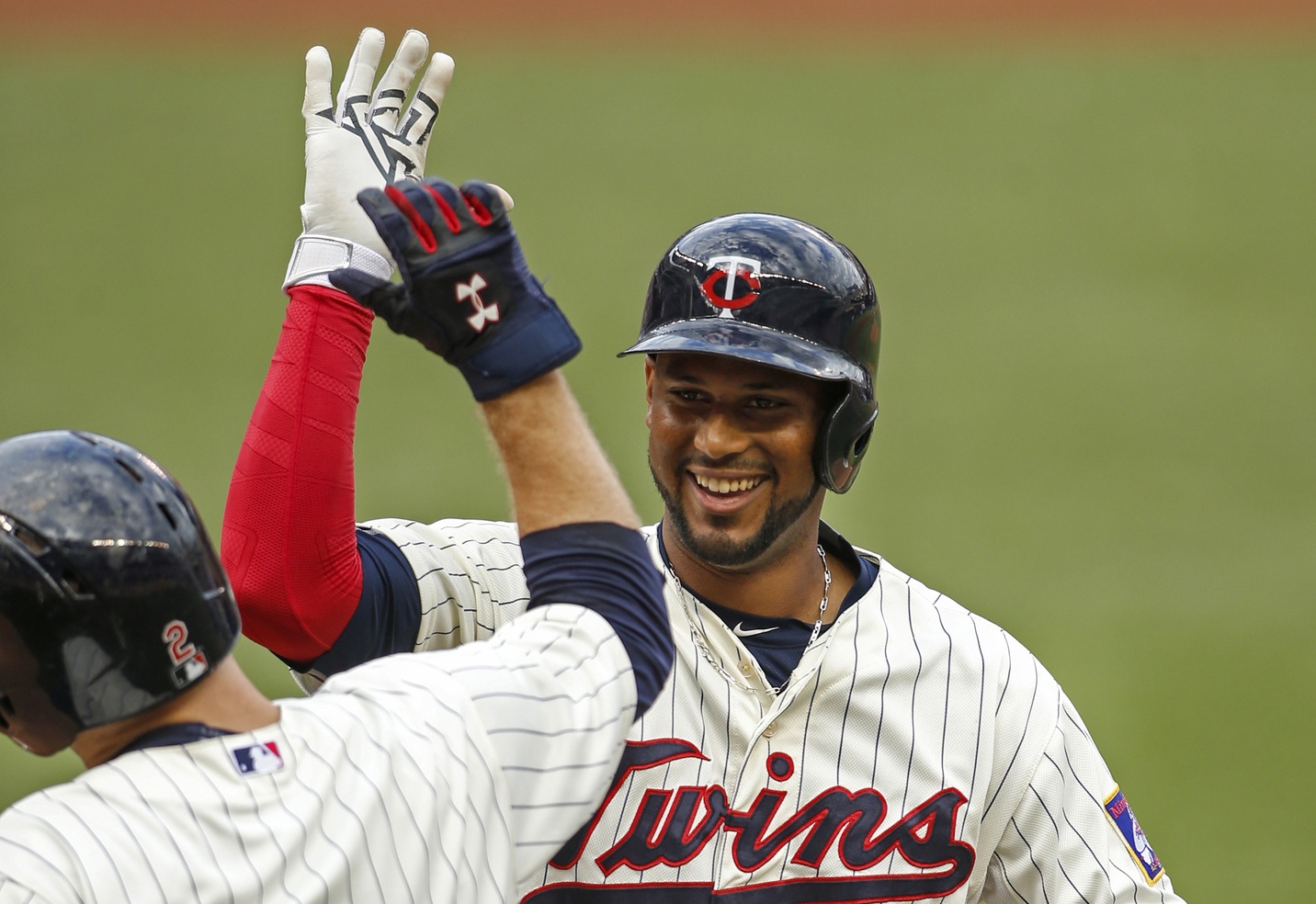 This month’s performance has been a long time coming for Hicks. After hitting .201/.293/.313 in 150 games spread out across 2013 and 2014, Hicks decided he needed to make a change. Over the winter he rebuilt his swing. When he reported to camp, Twins hitting coach Tom Brunansky liked the direction he was going. “The first couple years it was inconsistent,” Brunansky said about Hicks’ swing in spring training. “He couldn't find and then he'd find it and lose it and then he'd get frustrated. I think he's more mature and he's got an idea both right-handed and left-handed what his swing feels like and what it should feel like -- which should help make it repeatable. Which he has been in the cage. It's just the consistency in the game.” The difference in the swing is easy to see even with the untrained eye. Rather than the small step forward as he did in the past, Hicks added the bigger leg kick as the pitcher delivers the ball. http://i.imgur.com/79XVELf.gif http://i.imgur.com/ZCwTyrE.gif While the swing looked substantially better than the past, other aspects of his game were an issue. The Twins staff were not completely happy with his decision-making and mental mistakes. And at the plate, while his swing looked better, they were looking for more aggressive swings and for him to attack the ball early in the count. They felt that time in Rochester would allow him to work on that game-ready consistency. Hicks manhandled AAA pitching, hitting .303/.404/.523 in 34 games in Rochester. The redesigned swing allowed for him to improve his contact from both sides of the plate. His line drive rate was the highest of his career and his strikeouts were at an all-time low. The leg kick provides him with a solid timing mechanism but it also allows him to use his lower half. What allowed him to drive the ball better was not just simply lifting his leg to start his swing, it was what his body was doing in addition to the leg lift. Watch how previously Hicks had gathered or loaded up before firing forward with the bat. As he strides towards the pitcher, Hicks coils his top half somewhat, loading his hands and bat before they begin their forward path. Keep an eye on Hicks’ belt and front hip. There is minimal inward turn. He was not loading much with the lower half meaning that the driving force in this swing was his top half. http://i.imgur.com/ClFsg0v.gif Since changing the swing, during the gathering process when the hands go back, he turns his hips inward as well, producing a more complete drive to meet the ball. http://i.imgur.com/mZZxtYn.gif Overall, Hicks’ performance from the left side is improved but not game-changing. Instead of being a complete liability against right-handed pitchers, Hicks has basically transitioned to being a league-average hitter. The real improvement has been his production against left-handed pitching. You can see a similar load process difference from the right-hand side as well. http://i.imgur.com/xoUOcZF.gif http://i.imgur.com/LRGu6dq.gif Whereas his right-handed side had always been his dominant side, this season he’s batting .404/.460/.632 against left-handed pitching. Take a look at his increased zone coverage from that side of the plate: In addition to getting comfortable with his mechanics, Hicks upgraded his approach at the plate. For several seasons, one area in which the Twins hoped he would improve upon is his ability to be aggressive in hitter situations. Far too often Hicks would let pitches in hitters’ counts go by for called strikes. Members of the coaching staff and front office alike were unhappy by this passive approach -- patience is one thing but if a hitter receives a hittable pitch and lets it go by, that frustrates the everyone. This season, Hicks had pulled the trigger much more frequently in those situations to impressive results: From 2013 to 2014, Hicks offered at 40% of all pitches in hitters’ counts. This season he has swung at 49% of all pitches in hitters’ counts. Makes sense, right? Once the swing is optimized, engage more in counts in which one will see more fastballs and in-zone pitches. Likewise, when Hicks previously fell behind in the count, he was all but back in the dugout thinking about his next at-bat. From 2013 to 2014, he batted just .132 while striking out in just shy under 50% of those plate appearances when the pitcher got the upper hand. The biggest factor for that was a complete inability to hit breaking pitches. Even with the platoon advantage of having sliders and curves break at him, he still managed to hit just .105 off of those pitches. This season he has not been a complete pushover: When the pitcher gets ahead in 2015, Hicks is hitting .270 -- twice as much as he did the last two seasons -- with three of his home runs to boot. Whereas breaking balls gave him fits in the past, he has hit .206 against them this year -- another hundred point increase. Twins hitting coach Tom Brunansky believed a lot of the empty swings and weak contact had to do with Hicks’ head moving too much during his swing. In order to fix his line of sight, Brunansky went to work on Hicks’ foundation. “Hicksy moved his head a lot,” said Brunansky this spring. “What's going to stop your head movement is a strong base. What's a strong base is your legs and core. So you have to get that under control to keep everything strong here which will stop your head from movement.” That is where the new mechanics played a substantial role in reducing his strike- outs. Over the last two years, Hicks struck out in a quarter of his plate appearances. This season he has reduced that to 15%. Aaron Hicks is clicking right now and has positioned himself as an invaluable contributor to begin the season’s second half. Things may eventually change as opposing teams gameplan him differently but, for now, Hicks will always have this hot month of July to remember. If he can continue to hit close to this level, he provides Paul Molitor and the Twins a new weapon to use at the top of the order. https://twitter.com/ParkerHageman/status/626921252939284481
 -
http://stmedia.stimg.co/randball-hot-takes-roundup-skip-bayless-calls-johnny-manziel-an-alcoholic-hottakes.jpg?h=630&w=1200&fit=crop&bg=999&crop=faces That's a scalding hot take right there. You're right that he doesn't lift weights but he certainly works out -- via 1500ESPN:
-
Twins fans have been spoiled by Glen Perkins’ performance. That was the message from Paul Molitor to reporters following the Minnesota Twins closer’s rough night against the New York Yankees this past Saturday. And coming off the first half of the season in which he was a flawless 28-for-28 in save opportunities, fans had come to expect nothing but security when Perkins was summoned from the pen.Perkins had been as close to perfect as a closer could be in the first half of the 2015 season. While his strikeout rate was not otherworldly, Perkins managed to do the three things pitchers can control in order to reduce the numbers of runs: don’t walk anyone (5 walks in 37.1 innings), don’t allow home runs (two home runs) and pile up strikeouts (36 in 37.1 innings). When balls were put into play, his defense helped him along as he stranded 92% of all runners that reached. And just reaching base was very hard against Perkins. Among all closers in the first half, his 0.83 walks plus hits in innings pitched (WHIP) was on the lower end of the spectrum, meaning he did not allow many base-runners in critical situations. In fact, his command was so good that is was not until his 20th appearance of the season when he walked his first batter -- an act that he confessed was somewhat intentional. Perkins’ first walk of the season came against Pittsburgh’s Jung Ho Kang which Perkins said afterward that he had intentionally unintentionally walked the Pirates’ infielder in order to gain the more favorable lefty-on-lefty matchup with Pedro Alvarez whom Perkins promptly struck out to end the night. “That was Jung Ho Kang who went 3-and-0 and we had a 3-run lead so I wanted to go ahead and take my chances with the next guy,” Perkins told the national Fox audience during the Twins and Tigers series. “So I was going to pitch around him and try to get the lefty and take it from there.” On Tuesday night, Perkins had a similar decision to make against Kang again. He could have pitched around him to get to the left-handed hitting Alvarez but with one out and no one on, he decided to go after the rookie shortstop. After retiring Aramis Ramirez on a liner to Trevor Plouffe, Perkins got ahead of Kang with three straight fastballs which were all 95 miles per hour. With the count in his favor, Perkins opted to throw a slider. Instead of the nasty bite that viewers have come to expect, it hung in the bottom third of the zone long enough for Kang to drive it into the second deck and unknot the game. http://i.imgur.com/U2G1A70.gif This probably is not an alarming trend but more of a curiosity, but Glen Perkins has started the second half missing his spots with his slider. Last season before Perkins was eventually sidelined, it was because of the closer said he lacked feeling in his arm to finish pitches. When he turned to his slider, it remained up in the zone. Perkins threw 107 sliders among all his pitches and wound up allowing eight hits including three home runs. The usually trustworthy bat-missing pitch was suddenly elevated more frequently. “You can’t finish a pitch,” Perkins said this spring about his struggles in the second half. “I would try to throw a slider I just couldn’t get the last little bit of the whip. You don’t have the spin. So you lose movement, you lose the life. The life and movement is the spin. Guy with late life spins the ball faster than a guy without late life.” So far in the second half of this season, Perkins is showing a big similarity between his slider at the end of last year and the beginning of this season’s second half. He has thrown it 28 times and it has been put into play hard resulting in five hits -- two of which have resulted in home runs. http://i.imgur.com/0W8o5aM.gif After striking out 36 of 143 batters faced in the first half of the season, Perkins has struck out just one of the 28 he has encountered to start the second half. Hitters have attacked earlier in the count and put more in play but not having the driving slider seems to allow for more contact. Does this ominous start to the second half signal another injury-fueled decline ahead for the Twins closer? So far, Perkins has not said he has any arm issues whatsoever but not locating his slider as effectively as he has in the past must be a valid concern. As a two-pitch pitcher, Perkins relies heavily on being able to change eye-level with his fastball traveling north and his slider heading south. For the Twins, the hope is that Perkins is only experiencing one of those rough patches all pitchers eventually encounter during the dregs of the season in which they simply do not have their best stuff every night. Click here to view the article
-
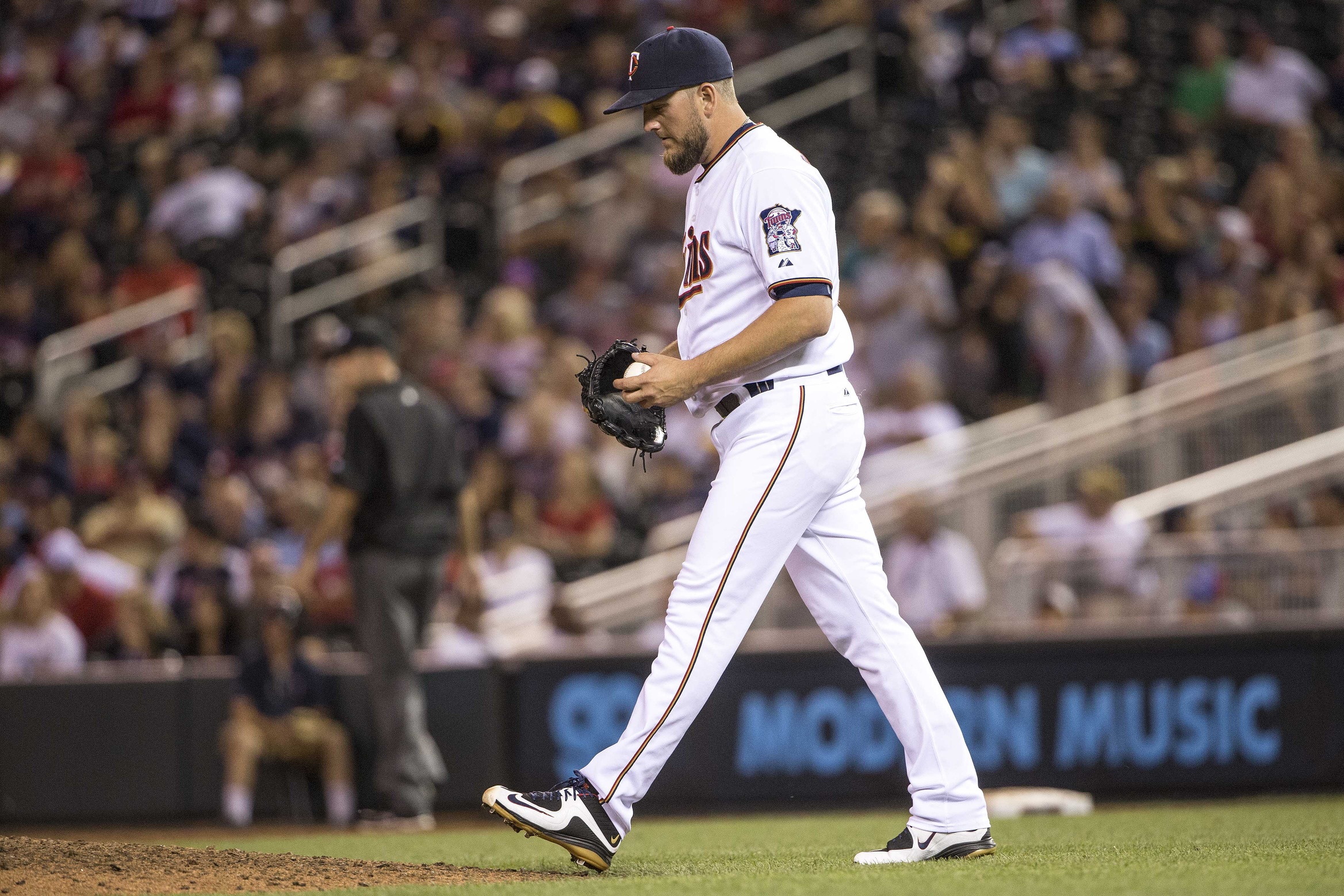 Perkins had been as close to perfect as a closer could be in the first half of the 2015 season. While his strikeout rate was not otherworldly, Perkins managed to do the three things pitchers can control in order to reduce the numbers of runs: don’t walk anyone (5 walks in 37.1 innings), don’t allow home runs (two home runs) and pile up strikeouts (36 in 37.1 innings). When balls were put into play, his defense helped him along as he stranded 92% of all runners that reached. And just reaching base was very hard against Perkins. Among all closers in the first half, his 0.83 walks plus hits in innings pitched (WHIP) was on the lower end of the spectrum, meaning he did not allow many base-runners in critical situations. In fact, his command was so good that is was not until his 20th appearance of the season when he walked his first batter -- an act that he confessed was somewhat intentional. Perkins’ first walk of the season came against Pittsburgh’s Jung Ho Kang which Perkins said afterward that he had intentionally unintentionally walked the Pirates’ infielder in order to gain the more favorable lefty-on-lefty matchup with Pedro Alvarez whom Perkins promptly struck out to end the night. “That was Jung Ho Kang who went 3-and-0 and we had a 3-run lead so I wanted to go ahead and take my chances with the next guy,” Perkins told the national Fox audience during the Twins and Tigers series. “So I was going to pitch around him and try to get the lefty and take it from there.” On Tuesday night, Perkins had a similar decision to make against Kang again. He could have pitched around him to get to the left-handed hitting Alvarez but with one out and no one on, he decided to go after the rookie shortstop. After retiring Aramis Ramirez on a liner to Trevor Plouffe, Perkins got ahead of Kang with three straight fastballs which were all 95 miles per hour. With the count in his favor, Perkins opted to throw a slider. Instead of the nasty bite that viewers have come to expect, it hung in the bottom third of the zone long enough for Kang to drive it into the second deck and unknot the game. http://i.imgur.com/U2G1A70.gif This probably is not an alarming trend but more of a curiosity, but Glen Perkins has started the second half missing his spots with his slider. Last season before Perkins was eventually sidelined, it was because of the closer said he lacked feeling in his arm to finish pitches. When he turned to his slider, it remained up in the zone. Perkins threw 107 sliders among all his pitches and wound up allowing eight hits including three home runs. The usually trustworthy bat-missing pitch was suddenly elevated more frequently. “You can’t finish a pitch,” Perkins said this spring about his struggles in the second half. “I would try to throw a slider I just couldn’t get the last little bit of the whip. You don’t have the spin. So you lose movement, you lose the life. The life and movement is the spin. Guy with late life spins the ball faster than a guy without late life.” So far in the second half of this season, Perkins is showing a big similarity between his slider at the end of last year and the beginning of this season’s second half. He has thrown it 28 times and it has been put into play hard resulting in five hits -- two of which have resulted in home runs. http://i.imgur.com/0W8o5aM.gif After striking out 36 of 143 batters faced in the first half of the season, Perkins has struck out just one of the 28 he has encountered to start the second half. Hitters have attacked earlier in the count and put more in play but not having the driving slider seems to allow for more contact. Does this ominous start to the second half signal another injury-fueled decline ahead for the Twins closer? So far, Perkins has not said he has any arm issues whatsoever but not locating his slider as effectively as he has in the past must be a valid concern. As a two-pitch pitcher, Perkins relies heavily on being able to change eye-level with his fastball traveling north and his slider heading south. For the Twins, the hope is that Perkins is only experiencing one of those rough patches all pitchers eventually encounter during the dregs of the season in which they simply do not have their best stuff every night.
 -
Perhaps the biggest thorn in Ron Gardenhire’s side during his tenure as the Minnesota Twins’ manager was the New York Yankees. Whether it was in the regular season or the postseason, the Yankees figured how to vanquish the Twins, often in spectacular fashion. Now, with Paul Molitor at the helm, the Twins have new leadership and a new direction that hopes to return the favor to the Bronx Bombers. It won’t be easy -- the Yankees are in familiar territory, leading the American League East by five and a half games -- and are every bit a formidable opponent. Here are three things the Twins need to do in order to top the Yankees in this three- game series at Target Field.AVOID THE BACK END OF THE YANKEES BULLPEN For the most part, a lead heading into eighth inning for the New York Yankees is about as secure as Anthony LaPanta’s hair in a wind storm. There of course is the closer Andrew Miller who has been every bit as effective as his pinstriped predecessors. But prior to Miller’s in-game arrival, the Yankees call on the right-handed Dellin Betances to quell any insurrection from the opposition. Betances is almost at Adolis Chapman-level unhittability. Armed with a 96+ fastball that cannot be touched, Betances dispatches opponents with a textbook diving slider (unlike Francisco Liriano’s sweeping slider) which has a here-it-is, there-it- goes movement to it that is hard to resist. At 4.2%, the Giants’ Joe Panik has one of the league’s lowest swinging strike rates but even he couldn’t lay off the diving slider during the All-Star Game. http://i.imgur.com/Nd7FG5p.gif After Betances is finished, it’s the left-handed Miller’s turn. And like Betances before him, Miller also brings with him a lethal fastball-slider combination and has allowed just 12 hits while striking out 53 in 33.1 innings pitched. Miller uses his fastball to get ahead right away (67% first pitch strike rate) then puts opponents away with the slider. http://i.imgur.com/nIjcDCl.gif The best measure for the Twins is to score earlier and often to avoid having to tangle with New York’s two-headed, slider-breathing monster. In order to accomplish this, the Twins will have to get to the Yankees’ three starting pitchers, Michael Pineda, CC Sabathia and Nathan Eovaldi -- no small task itself. DON’T LET MARK TEIXEIRA EXTEND HIS ARMS In order to hold back the Yankees offense, one of the critical things the Twins pitchers need to do is keep first baseman Mark Teixeira at bay. For the past two seasons, baseballs were mostly safe from harm when thrown toward the Yankees’ Teixeira. Wrist injuries followed by surgery had taken the switch-hitting slugger out of the lineup for most of the 2013 season when the Yankees finished fourth in their division. He struggled in 2014 in his first season back and he wasn’t quite the same at the plate. Almost all his power came from the left side of the plate (18 of his 22 home runs). Fans and pundits alike questioned whether the aging Yankee would ever provide enough value to match his $22 million a year salary. What Teixeira has been so good is extending his arms on pitches on the outer-half and pulling them for home runs: http://i.imgur.com/gqTCWiw.gif As scary as the thought might be to attack the large-bodied Teixeira with pitches inside, one of his biggest weaknesses this season has been when he has been busted in. On both sides of the plate, the Yankees first baseman is hitting just .136 compared to the .298 average on pitches on the outer-half. OH, AND ALEX RODRIGUEZ TOO. Before mixing it up with Teixeira, Twins pitchers will have to battle a power-surging Alex Rodriguez. After missing all of 2014 and the majority of 2013, people are genuinely surprised that Rodriguez is having the kind of season he is having at nearly 40 years old. You have to go back five years to see this level of power production out of the man baseball tried to run out of the game. His 18 first-half home runs are the most since his 19 dinger performance in the first-half of the 2008 season. Download attachment: trumedia_baseball_grid (1).png Much like vintage Rodriguez, he has been punishing any ball thrown at the horizontal middle of the zone, hammering anything that hovers around his belt to his mid-thigh. The safest zone is to work him down-and-away while occasionally going upstairs with a fastball in two-strike situations. Rodriguez has detonated fastballs and hanging change-ups this year but has been susceptible to sliders and curves. Look for Kyle Gibson to lean heavily on his slider when these two meet on Sunday. Click here to view the article
-
 AVOID THE BACK END OF THE YANKEES BULLPEN For the most part, a lead heading into eighth inning for the New York Yankees is about as secure as Anthony LaPanta’s hair in a wind storm. There of course is the closer Andrew Miller who has been every bit as effective as his pinstriped predecessors. But prior to Miller’s in-game arrival, the Yankees call on the right-handed Dellin Betances to quell any insurrection from the opposition. Betances is almost at Adolis Chapman-level unhittability. Armed with a 96+ fastball that cannot be touched, Betances dispatches opponents with a textbook diving slider (unlike Francisco Liriano’s sweeping slider) which has a here-it-is, there-it- goes movement to it that is hard to resist. At 4.2%, the Giants’ Joe Panik has one of the league’s lowest swinging strike rates but even he couldn’t lay off the diving slider during the All-Star Game. http://i.imgur.com/Nd7FG5p.gif After Betances is finished, it’s the left-handed Miller’s turn. And like Betances before him, Miller also brings with him a lethal fastball-slider combination and has allowed just 12 hits while striking out 53 in 33.1 innings pitched. Miller uses his fastball to get ahead right away (67% first pitch strike rate) then puts opponents away with the slider. http://i.imgur.com/nIjcDCl.gif The best measure for the Twins is to score earlier and often to avoid having to tangle with New York’s two-headed, slider-breathing monster. In order to accomplish this, the Twins will have to get to the Yankees’ three starting pitchers, Michael Pineda, CC Sabathia and Nathan Eovaldi -- no small task itself. DON’T LET MARK TEIXEIRA EXTEND HIS ARMS In order to hold back the Yankees offense, one of the critical things the Twins pitchers need to do is keep first baseman Mark Teixeira at bay. For the past two seasons, baseballs were mostly safe from harm when thrown toward the Yankees’ Teixeira. Wrist injuries followed by surgery had taken the switch-hitting slugger out of the lineup for most of the 2013 season when the Yankees finished fourth in their division. He struggled in 2014 in his first season back and he wasn’t quite the same at the plate. Almost all his power came from the left side of the plate (18 of his 22 home runs). Fans and pundits alike questioned whether the aging Yankee would ever provide enough value to match his $22 million a year salary. What Teixeira has been so good is extending his arms on pitches on the outer-half and pulling them for home runs: https://twitter.com/msimonespn/status/624217493679112193 http://i.imgur.com/gqTCWiw.gif As scary as the thought might be to attack the large-bodied Teixeira with pitches inside, one of his biggest weaknesses this season has been when he has been busted in. On both sides of the plate, the Yankees first baseman is hitting just .136 compared to the .298 average on pitches on the outer-half. OH, AND ALEX RODRIGUEZ TOO. Before mixing it up with Teixeira, Twins pitchers will have to battle a power-surging Alex Rodriguez. After missing all of 2014 and the majority of 2013, people are genuinely surprised that Rodriguez is having the kind of season he is having at nearly 40 years old. You have to go back five years to see this level of power production out of the man baseball tried to run out of the game. His 18 first-half home runs are the most since his 19 dinger performance in the first-half of the 2008 season. Much like vintage Rodriguez, he has been punishing any ball thrown at the horizontal middle of the zone, hammering anything that hovers around his belt to his mid-thigh. The safest zone is to work him down-and-away while occasionally going upstairs with a fastball in two-strike situations. Rodriguez has detonated fastballs and hanging change-ups this year but has been susceptible to sliders and curves. Look for Kyle Gibson to lean heavily on his slider when these two meet on Sunday.
 -
I can't tell if this is a knock or not.
-
Restraint doesn't mean to not improve for this year. There are plenty of options to improve the team that doesn't require breaking the farm system or adding $20M to the payroll next five years (although I have less of an issue with that than the prospects). The Orlando Cabrera/Carl Pavano trades proved you could add to your team without dipping too far into the system. Simply, it means avoiding overpaying in a midseason trade for someone like Tulowitzki. As Hosken pointed out, there are corner infield/outfield types that I would be OK with trading for a component that stretches beyond just this season. For the right player, Oswaldo Arcia or Max Kepler could be traded (although I'm personally enamored by Kepler). In the case of AJ Pierzynski, it wouldn't cost a lot. Then again, the Twins will be back in the same position in 2016. The free agent market doesn't look promising either for a long term solution (Wieters, if he becomes available which is doubtful): Catchers Alex Avila Chris Ianetta John Jaso Jeff Mathis Dioner Navarro Brayan Pena A.J. Pierzynski Matt Wieters That kind of starting pitching comes at too high of a cost at the deadline. Better to "overpay" in the free agent market than to try to part with several promising prospects (like Oakland did last year).
-
From a logical, long-term, sustainable success standpoint, yes. Absolutely agree. That said, flags fly forever and no one forgets where they were during the World Series parade.
- 151 replies
-
- 2
-
-
- terry ryan
- kurt suzuki
- (and 1 more)
