



Parker Hageman
-
Posts
4,152 -
Joined
-
Last visited
-
Days Won
6
Content Type
Profiles
News
Minnesota Twins Videos
2026 Minnesota Twins Top Prospects Ranking
2022 Minnesota Twins Draft Picks
Minnesota Twins Free Agent & Trade Rumors, Notes, & Tidbits
Guides & Resources
2023 Minnesota Twins Draft Picks
The Minnesota Twins Players Project
2024 Minnesota Twins Draft Picks
2025 Minnesota Twins Draft Pick Tracker
2026 Minnesota Twins Draft Tracker: Picks & Bonuses
Forums
Blogs
Events
Store
Downloads
Gallery
Everything posted by Parker Hageman
-
 As Major League Baseball’s non-waiver trade deadline approaches, casual Minnesota Twins fans may be interested in the activity for the first time in several years. With the postseason in reach, the Twins will be active shoppers. On July 3rd, Twins general manager Terry Ryan joined Darren Wolfson and Chris Long on 1500ESPN. With less than a month to go, Ryan was asked what his goals at the trade deadline were. Outsiders believed the most glaring need would be the bullpen. The staff between the starters and Glen Perkins had been shaky as of late. For instance, Casey Fien, who was a late innings staple heading into the season, had been smacked around, allowing 9 runs on 15 hits in nine innings of work dating back to June 22. Ryan, however, said he prioritized the need for an additional bat in the lineup over a reliever.Just a day prior to his radio appearance, Miguel Sano made his major league debut in Kansas City and his impact was almost immediately felt. His zone acumen appeared advanced and when he swung, he was putting the ball back into play with significantly more velocity than when it came in. Sano's zone awareness stumbled some once teams threw more off-speed pitches in hitter's counts -- as was evident in Oakland following the All-Star break -- but rolling his ankle on a stray baseball during warm-ups was nothing short of another depressing moment in Twins- prospects-getting-injured history. When healthy, Sano's bat could presumably provide the lineup with the necessary thump that was lacking from the designated hitter spot and the middle of the order. In theory, the 22-year-old slugger should be ready to return to the lineup today. However, since the All-Star break the Twins have managed to score just 8 runs (only the Red Sox have scored fewer) and there are other giant holes in the lineup in dire need of an upgrade. Almost immediately after I posted a piece in 2014 suggesting catcher Kurt Suzuki had found the swing plane and mechanics combination to join his high-level contact rate and zone approach, he completely fell back to Earth and crashed through six miles of bedrock. For most of 2014 Suzuki found success by driving a pitch on the outer-half the other way. He hit .279 when going to right field that year. This season he is hitting just .157 as the line drives have been replaced by looping fly balls and other weak contact. In all, since August 1, 2014, Suzuki has compiled an OPS of .606, which is 40th out of 43 catchers who have caught in 60 or more games. One area in which Suzuki has improved in this season is his framing abilities. This was a concerted effort on the part of Suzuki along with bench coach Joe Vavra in spring training. In 2014, according to StatCorner.com, the Twins catcher cost his team 14 runs -- or a little over one win in the standings. This season his metrics are significantly improved. While he’s not an elite strike-stealer by any stretch of the imagination, he has been worth 0.1 runs above average so far in 2015. That has been a benefit to the pitching staff. The state of the position has declined so much in Minnesota that A.J. Pierzynski is being discussed as a viable option. While the left-handed former Twin is enjoying a rebound season with Atlanta, posting a .748 OPS which is ninth best among qualified catchers, his receiving game is a farce, costing his pitching staff almost seven runs during his stint in Georgia. That said, some combination of Suzuki and Pierzynski may actually resemble a serviceable backstop for the remainder of the season. RELATED: Will Twins Address Their Most Glaring Weakness? Meanwhile the shortstop position can only be adequately described by picturing a guy dousing himself in gasoline and lighting himself on fire. Similar to Suzuki, Danny Santana’s offensive approach in 2014 seemed designed to allow him to avoid prolonged slumps. His minimalist swing mechanics, quick wrists and line drive stroke surely allowed him to produce as an average shortstop at least. Instead, he became overly aggressive and expanded the zone to account for the space above both batter’s boxes as well as the strike zone. To make matter’s worse, he was a liability in the field. According to ESPN/TruMedia’s database, in 67 games Santana made 12 defensive misplays (not necessarily errors but costly blunders nonetheless) and 15 errors. The 27 defensive miscues were by far the most in the shortest amount of playing time for all shortstops. Admittedly, errors and mistakes are not the greatest measuring stick to gauge a shortstop’s performance. After all, one shortstop’s 6-3 is another’s seeing-eye single. Yet in comparison to Eduardo Escobar, who has demonstrated a much steadier hand and has shown that he can convert almost all the routine outs, Santana comes in second place. RELATED: Escobar Needs To Be The Everyday Shortstop For all of his shortcomings, Santana excels at being able to start a double-play. Obviously the prerequisite for starting double plays is having a runner on first with less than two outs (his ability to “assist” hitters to reach first safely may have played a factor). Also helpful is having a pitcher spin a ground ball. Santana has started 28 double plays, the sixth most among all shortstops. By comparison, Eduardo Nunez has started 5 while Escobar has started 4. Although a lot of double plays are reliant on the situation, there is skill involved with the timing and the feed to the base in order to set up the twin killing and Santana is fairly adept at that. As it stands, the Twins do need to find some much needed stability in the shortstop position. Because of this, the team has been tied to Colorado’s shortstop, Troy Tulowitzki. As Jeremy Nygaard wrote about yesterday, the Twins and Rockies have had some form of discussion centered around Tulowitzki. According to Nygaard, Colorado has requested either Kyle Gibson or Jose Berrios as part of any trade package and that still might not be enough to pry Tulowitzki away. As his team continues to flounder at the bottom of the National League West, the Rockies shortstop has hinted in not so many words that he would like to play for a contender. “Hopefully I can be into every single pitch and pretend like something is on the line,” he told reporters after Tuesday’s game. While he would be immediate superior to any of the current options, a scenario in which the Twins land him does not seem feasible. This would not only require the Twins absorbing $100 million remaining on Tulowitzki's contract but it would also require the unloading of several valuable prospects. Meanwhile the Twins would receive Tulowitzki, a 30-year-old who is elite when he is able to contribute but is frequently on the trainer's table (between 2012 and 2015, he’s missed 213 of 486 games) and has been blessed with hitting in Denver's rarefied air to increase his power numbers while the spacious confines of Coors Field inflate his batting average and on-base percentage. The Twins -- or anyone looking to trade for him -- would likely overpay for what they would get in return. There is little question that the shortstop position has been a mess but there does not seem to be a reason to overspend for Tulowitzki (as fun as that would be). Danny Santana has regressed so hard in his sophomore season that the world actually started rotating backwards too. Eduardo Escobar has been steadier and provided more professional at-bats this season. Overpaying for a talented shortstop does not appear too appetizing. As Nick suggested on Wednesday, simply playing Escobar in place of Santana for the remainder of the season might provide the team with a sufficient upgrade. And as Seth detailed on Tuesday, there are other shortstop options that may not come at quite the steep price as Tulowitzki would. As the trade deadline approaches, if Terry Ryan adheres to his previous statement of obtaining some offense, there are no two position in bigger need of an upgrade than catcher and shortstop. Neither position necessarily requires selling the farm to improve, either. It’s boring and unsexy but this team should exercise restraint when it comes to the trade deadline. Click here to view the article
- 151 replies
-
- 4
-

-
- terry ryan
- kurt suzuki
- (and 1 more)
-
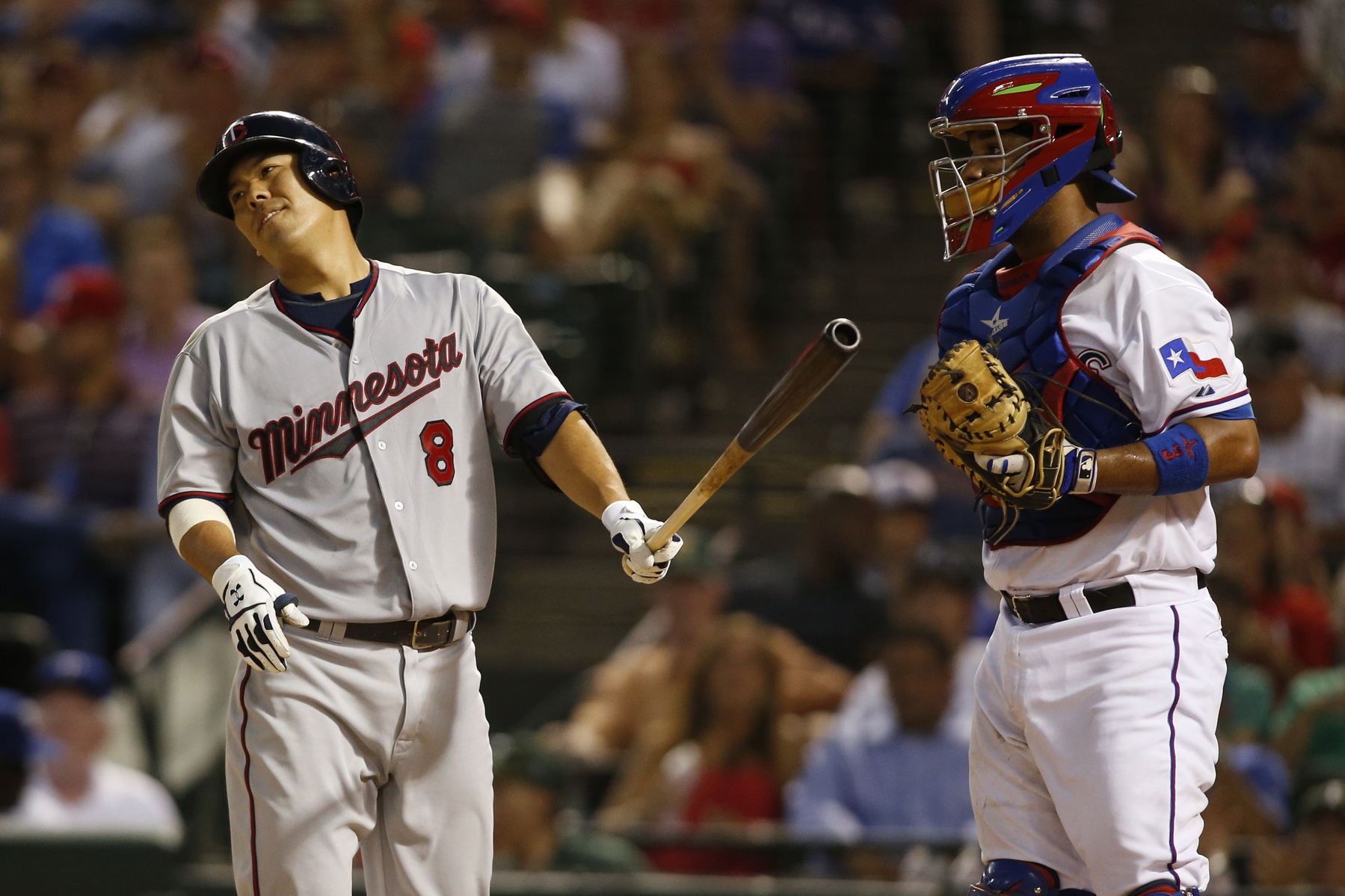 Just a day prior to his radio appearance, Miguel Sano made his major league debut in Kansas City and his impact was almost immediately felt. His zone acumen appeared advanced and when he swung, he was putting the ball back into play with significantly more velocity than when it came in. Sano's zone awareness stumbled some once teams threw more off-speed pitches in hitter's counts -- as was evident in Oakland following the All-Star break -- but rolling his ankle on a stray baseball during warm-ups was nothing short of another depressing moment in Twins- prospects-getting-injured history. When healthy, Sano's bat could presumably provide the lineup with the necessary thump that was lacking from the designated hitter spot and the middle of the order. In theory, the 22-year-old slugger should be ready to return to the lineup today. However, since the All-Star break the Twins have managed to score just 8 runs (only the Red Sox have scored fewer) and there are other giant holes in the lineup in dire need of an upgrade. Almost immediately after I posted a piece in 2014 suggesting catcher Kurt Suzuki had found the swing plane and mechanics combination to join his high-level contact rate and zone approach, he completely fell back to Earth and crashed through six miles of bedrock. For most of 2014 Suzuki found success by driving a pitch on the outer-half the other way. He hit .279 when going to right field that year. This season he is hitting just .157 as the line drives have been replaced by looping fly balls and other weak contact. In all, since August 1, 2014, Suzuki has compiled an OPS of .606, which is 40th out of 43 catchers who have caught in 60 or more games. One area in which Suzuki has improved in this season is his framing abilities. This was a concerted effort on the part of Suzuki along with bench coach Joe Vavra in spring training. In 2014, according to StatCorner.com, the Twins catcher cost his team 14 runs -- or a little over one win in the standings. This season his metrics are significantly improved. While he’s not an elite strike-stealer by any stretch of the imagination, he has been worth 0.1 runs above average so far in 2015. That has been a benefit to the pitching staff. The state of the position has declined so much in Minnesota that A.J. Pierzynski is being discussed as a viable option. While the left-handed former Twin is enjoying a rebound season with Atlanta, posting a .748 OPS which is ninth best among qualified catchers, his receiving game is a farce, costing his pitching staff almost seven runs during his stint in Georgia. That said, some combination of Suzuki and Pierzynski may actually resemble a serviceable backstop for the remainder of the season. RELATED: Will Twins Address Their Most Glaring Weakness? Meanwhile the shortstop position can only be adequately described by picturing a guy dousing himself in gasoline and lighting himself on fire. Similar to Suzuki, Danny Santana’s offensive approach in 2014 seemed designed to allow him to avoid prolonged slumps. His minimalist swing mechanics, quick wrists and line drive stroke surely allowed him to produce as an average shortstop at least. Instead, he became overly aggressive and expanded the zone to account for the space above both batter’s boxes as well as the strike zone. To make matter’s worse, he was a liability in the field. According to ESPN/TruMedia’s database, in 67 games Santana made 12 defensive misplays (not necessarily errors but costly blunders nonetheless) and 15 errors. The 27 defensive miscues were by far the most in the shortest amount of playing time for all shortstops. Admittedly, errors and mistakes are not the greatest measuring stick to gauge a shortstop’s performance. After all, one shortstop’s 6-3 is another’s seeing-eye single. Yet in comparison to Eduardo Escobar, who has demonstrated a much steadier hand and has shown that he can convert almost all the routine outs, Santana comes in second place. RELATED: Escobar Needs To Be The Everyday Shortstop For all of his shortcomings, Santana excels at being able to start a double-play. Obviously the prerequisite for starting double plays is having a runner on first with less than two outs (his ability to “assist” hitters to reach first safely may have played a factor). Also helpful is having a pitcher spin a ground ball. Santana has started 28 double plays, the sixth most among all shortstops. By comparison, Eduardo Nunez has started 5 while Escobar has started 4. Although a lot of double plays are reliant on the situation, there is skill involved with the timing and the feed to the base in order to set up the twin killing and Santana is fairly adept at that. As it stands, the Twins do need to find some much needed stability in the shortstop position. Because of this, the team has been tied to Colorado’s shortstop, Troy Tulowitzki. As Jeremy Nygaard wrote about yesterday, the Twins and Rockies have had some form of discussion centered around Tulowitzki. According to Nygaard, Colorado has requested either Kyle Gibson or Jose Berrios as part of any trade package and that still might not be enough to pry Tulowitzki away. As his team continues to flounder at the bottom of the National League West, the Rockies shortstop has hinted in not so many words that he would like to play for a contender. “Hopefully I can be into every single pitch and pretend like something is on the line,” he told reporters after Tuesday’s game. While he would be immediate superior to any of the current options, a scenario in which the Twins land him does not seem feasible. This would not only require the Twins absorbing $100 million remaining on Tulowitzki's contract but it would also require the unloading of several valuable prospects. Meanwhile the Twins would receive Tulowitzki, a 30-year-old who is elite when he is able to contribute but is frequently on the trainer's table (between 2012 and 2015, he’s missed 213 of 486 games) and has been blessed with hitting in Denver's rarefied air to increase his power numbers while the spacious confines of Coors Field inflate his batting average and on-base percentage. The Twins -- or anyone looking to trade for him -- would likely overpay for what they would get in return. There is little question that the shortstop position has been a mess but there does not seem to be a reason to overspend for Tulowitzki (as fun as that would be). Danny Santana has regressed so hard in his sophomore season that the world actually started rotating backwards too. Eduardo Escobar has been steadier and provided more professional at-bats this season. Overpaying for a talented shortstop does not appear too appetizing. As Nick suggested on Wednesday, simply playing Escobar in place of Santana for the remainder of the season might provide the team with a sufficient upgrade. And as Seth detailed on Tuesday, there are other shortstop options that may not come at quite the steep price as Tulowitzki would. As the trade deadline approaches, if Terry Ryan adheres to his previous statement of obtaining some offense, there are no two position in bigger need of an upgrade than catcher and shortstop. Neither position necessarily requires selling the farm to improve, either. It’s boring and unsexy but this team should exercise restraint when it comes to the trade deadline.
 -
Midway through the 2015 season the Minnesota Twins remain a surprising contender. For anyone that has watched this team for the previous four seasons, it is difficult to wrap your head around how this has happened. While some may point to Paul Molitor’s leadership or Torii Hunter’s veteran presence as positive influences over what is largely the same roster, it is hard to say how much impact they have actually had. Here are five measurable differences between this season and last season which has resulted in a winning record so far in 2015. The Twins Have Been A Really Good 2-Strike Hitting Team With two strikes, the outcome significantly favors the pitcher as hitters have posted a collective .177 batting average and strikeout a whopping 40% of the time when the count hits 2-strikes in 2015. The Twins, however, have refused to go quietly without a fight. They have hit 32 home runs with two-strikes (5th most in MLB) and own a .295 slugging percentage (3rd highest). Brian Dozier and Torii Hunter each have five two-strike home runs while Trevor Plouffe added 14 two-strike doubles (most in MLB). In fact, Plouffe’s 18 total extra base hits in 2-strike counts is tied the Washington Nationals’ baseball destroyer Bryce Harper while only Cincinnati’s Todd Frazier (20) and Arizona’s Paul Goldschmidt (19) have had more. Succeeding In RISP Situations The Twins batted .250 with runners in scoring position in 2014 but are now hitting a robust .283 this season. Hence, the additional scoring. While there are obvious contributors like Joe Mauer, many might not notice the value that Kurt Suzuki has provided in those situations as well. The much maligned Twins catcher has hit just .235/.291/.313 overall but in 79 plate appearances with runners in scoring position, Suzuki has hit .288/.346/.394 (that said, his -1.54 wins probability added is the worst on the roster). In addition to the improved batting average, Minnesota also leads baseball with 11 triples with RISP. Mauer, Eduardo Escobar and Danny Santana have two each while Shane Robinson, Brian Dozier, Trevor Plouffe, Chris Herrmann and Aaron Hicks each have one. Download attachment: RISP BA.png Shifting More Frequently Up to the All-Star Break last year, the Twins had shifted in a total of 806 at-bats, which was 23rd out of 30 teams. This year they have shifted in 1,089 at-bats which is 11th out of the 30 teams. As you may have noticed, the Twins have used the shift more liberally in 2015, often moving players in the middle of specific counts to gain an advantage. Has the increased use of the shift worked? Opponents are hitting .200 versus the Twins in shift formation -- 26th out of 30 teams -- but that is well-below the overall .269 average the Twins pitchers have allowed. Turning More Fly Balls And Line Drives Into Outs As a unit, the Twins’ outfield has been surprisingly improved in 2015. It was anticipated that Torii Hunter’s addition to the outfield in a group with Oswaldo Arcia would create heartache for the pitching staff who watch as would-be outs fell untouched to the Earth. Arcia hasn’t seen much time in the outfield (or on the Major League roster for that matter), replaced instead by the superior defender in Eddie Rosario. Rosario has been a significant upgrade in left field. Meanwhile, Aaron Hicks’ third tour of center field has gone swimmingly in the field as well while Hunter has not been the liability that some Twins Daily blogger made him out to be. The results have been more outs and a happier pitching staff. Download attachment: Fly Outs.png Scoring Early The Twins offense has been brilliant shortly after batting practice but as the game wears on, the lineup has grown stagnant. In the first three innings, the Twins have scored 153 runs -- second only to the potent Toronto Blue Jays lineup (168). So that’s not significantly better than the output from the first-half of the season last year (145) but it is improved nonetheless. The quick leads have allowed the starting pitchers to take the mound comfortably and have given the bullpen plenty of opportunities to preserve the game in the later innings (this is where area ball-thrower Glen Perkins has come in handy). The downside is that the bats grow cold in the later innings and the runs have come few and far between. In innings seven through nine, the Twins have scored just 90 runs -- the third fewest among all teams. Last year, the Twins were one of the better late-inning run producing teams with 133 runs scored (4th). Click here to view the article
-
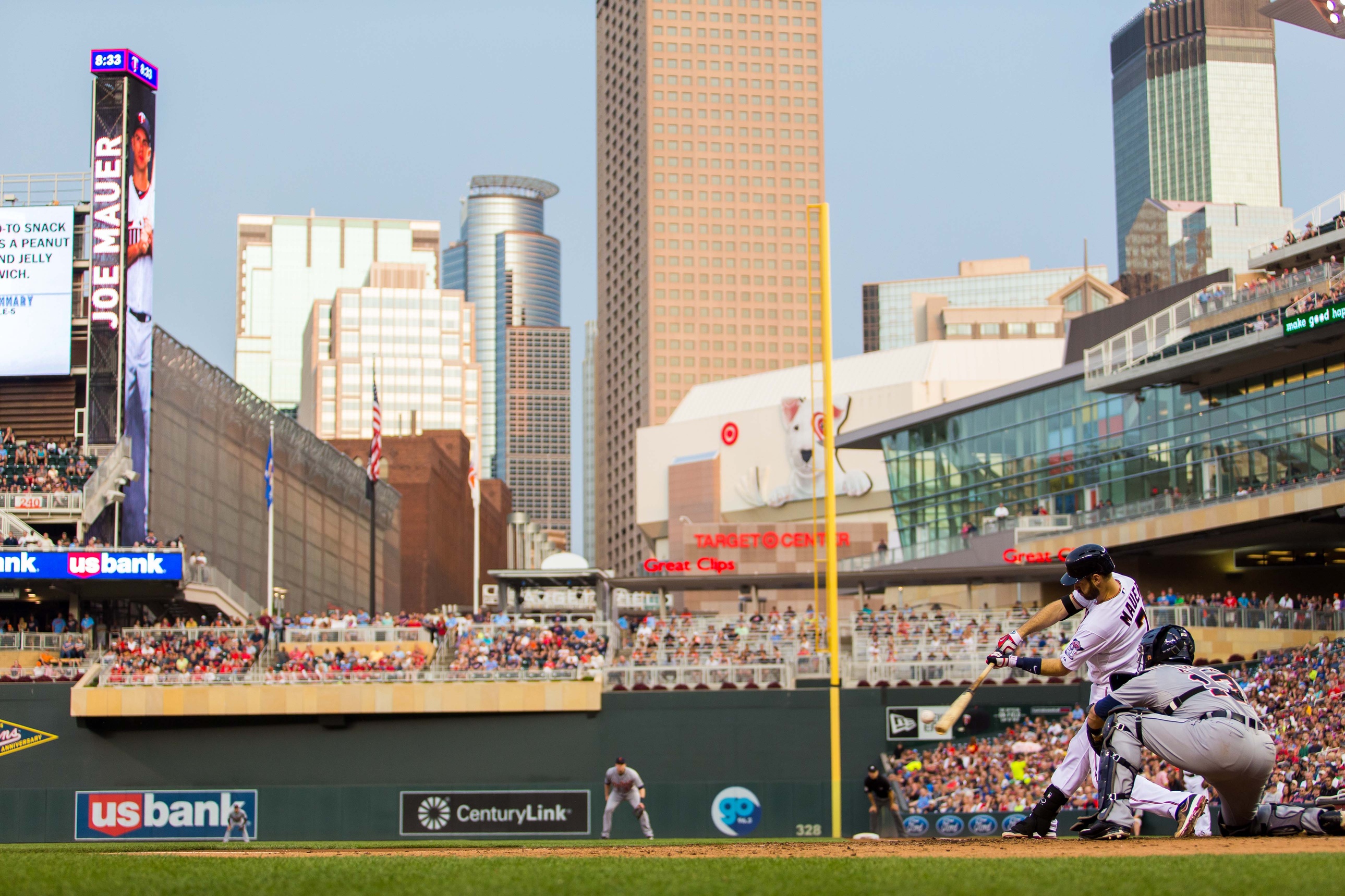 The Twins Have Been A Really Good 2-Strike Hitting Team With two strikes, the outcome significantly favors the pitcher as hitters have posted a collective .177 batting average and strikeout a whopping 40% of the time when the count hits 2-strikes in 2015. The Twins, however, have refused to go quietly without a fight. They have hit 32 home runs with two-strikes (5th most in MLB) and own a .295 slugging percentage (3rd highest). Brian Dozier and Torii Hunter each have five two-strike home runs while Trevor Plouffe added 14 two-strike doubles (most in MLB). In fact, Plouffe’s 18 total extra base hits in 2-strike counts is tied the Washington Nationals’ baseball destroyer Bryce Harper while only Cincinnati’s Todd Frazier (20) and Arizona’s Paul Goldschmidt (19) have had more. Succeeding In RISP Situations The Twins batted .250 with runners in scoring position in 2014 but are now hitting a robust .283 this season. Hence, the additional scoring. While there are obvious contributors like Joe Mauer, many might not notice the value that Kurt Suzuki has provided in those situations as well. The much maligned Twins catcher has hit just .235/.291/.313 overall but in 79 plate appearances with runners in scoring position, Suzuki has hit .288/.346/.394 (that said, his -1.54 wins probability added is the worst on the roster). In addition to the improved batting average, Minnesota also leads baseball with 11 triples with RISP. Mauer, Eduardo Escobar and Danny Santana have two each while Shane Robinson, Brian Dozier, Trevor Plouffe, Chris Herrmann and Aaron Hicks each have one. Shifting More Frequently Up to the All-Star Break last year, the Twins had shifted in a total of 806 at-bats, which was 23rd out of 30 teams. This year they have shifted in 1,089 at-bats which is 11th out of the 30 teams. As you may have noticed, the Twins have used the shift more liberally in 2015, often moving players in the middle of specific counts to gain an advantage. Has the increased use of the shift worked? Opponents are hitting .200 versus the Twins in shift formation -- 26th out of 30 teams -- but that is well-below the overall .269 average the Twins pitchers have allowed. Turning More Fly Balls And Line Drives Into Outs As a unit, the Twins’ outfield has been surprisingly improved in 2015. It was anticipated that Torii Hunter’s addition to the outfield in a group with Oswaldo Arcia would create heartache for the pitching staff who watch as would-be outs fell untouched to the Earth. Arcia hasn’t seen much time in the outfield (or on the Major League roster for that matter), replaced instead by the superior defender in Eddie Rosario. Rosario has been a significant upgrade in left field. Meanwhile, Aaron Hicks’ third tour of center field has gone swimmingly in the field as well while Hunter has not been the liability that some Twins Daily blogger made him out to be. The results have been more outs and a happier pitching staff. Scoring Early The Twins offense has been brilliant shortly after batting practice but as the game wears on, the lineup has grown stagnant. In the first three innings, the Twins have scored 153 runs -- second only to the potent Toronto Blue Jays lineup (168). So that’s not significantly better than the output from the first-half of the season last year (145) but it is improved nonetheless. The quick leads have allowed the starting pitchers to take the mound comfortably and have given the bullpen plenty of opportunities to preserve the game in the later innings (this is where area ball-thrower Glen Perkins has come in handy). The downside is that the bats grow cold in the later innings and the runs have come few and far between. In innings seven through nine, the Twins have scored just 90 runs -- the third fewest among all teams. Last year, the Twins were one of the better late-inning run producing teams with 133 runs scored (4th).
 -
Good Q&A ScottyBroco.
-
It was not meant as snark but rather a tongue-in-cheek remark. I understand what Pitz was driving at. My post wasn't meant to detail why Brian Dozier has been good at baseball overall. I'm sorry if the title insinuated as such. To be fair, I'm not sure what more could be done to appropriately answer that question: Super genetics? Hard-work? Impeccable timing? Quick wrists? 15,000 hours of practice? I do appreciate the read and taking the time to comment on the post.
-
He swings a stick at a round ball and the ball goes far. How's that?
-
“That’s the first time I’ve been asked that.” That was Twins’ second baseman Brian Dozier’s response when asked why he had such a successful track record with pitches up in the zone. And for a fraction of a second, I was shocked at the lack of attention to an obvious trend before Dozier unleashed an all-knowing smirk. He was putting me on. He and everybody else who came into his locker and shoved a microphone in his face were keenly aware of his talent for damaging baseballs that were elevated. It is impossible to miss.Over the past two seasons, Dozier has been a one-man wrecking machine on anything that dared enter the upper-third space of the strike zone. According to ESPN/TruMedia’s database, since 2014 Dozier is outpacing all other sluggers with 26 home runs on pitches left up. The Angels’ Albert Pujols comes in second at 20 followed by Josh Donaldson at 16. On top of that, Dozier’s 63 extra base hits on pitches up far exceeded anyone else’s totals (Pujols is the next closest at 36). Download attachment: trumedia_baseball_grid (1).png “I’ve heard metric in the book where all my power is left field and up-in-the-zone and up-and-in,” Dozier said. “There’s a reason for that. I’m not going to tell you but there is a reason for that. It’s more feel for the game than anything.” The real mystery is why teams continue to even challenge Dozier with pitches at belt and above. Given his tendencies, one would expect that pitchers would strive at all costs to avoid that area of the zone. However Dozier sees more pitches up than any other hitter. While the average hitter sees pitches in the upper portion of the zone 25% of the time, Dozier leads baseball with a 40% upper zone rate. Download attachment: trumedia_baseball_grid (2).png When asked if he was surprised that pitchers were feeding him so many pitches up in the zone, Dozier said he was not. He still sees his share of sliders down-and-away and fastballs away so going upstairs -- particularly up-and-in -- keeps him from camping on other pitches. In addition to being a power threat to any sphere tossed up in the zone, Dozier also has become one of the league's most extreme pull hitters. Since the start of 2014, he has collected over 89 extra base hits when pulling the ball. The next closest in that category is Colorado’s Nolan Arenado with 79. In that time, Dozier has hit more home runs to the pull-side (39) than anyone but Jose Bautista (45), Albert Pujols (42) and Edwin Encarnacion (41). “Why don’t I hit more balls to right field. Why do you want to go out to right when the shortest distance is to left?” Dozier remarked. Download attachment: export (1).png Duh. Dozier’s methods has led to him being one of the most prolific offensive threats at the second base position. Since the start of the 2014 season, his 41 home runs far exceed the others at his position. He holds a 12 dinger lead over Neil Walker of the Pittsburgh Pirates, the next closest competitor in that time. He has 21 home runs more than Detroit’s Ian Kinsler and St. Louis’ Kolton Wong and he has 23 more home runs than the highly compensated Robinson Cano in Seattle. Dozier’s 104 total extra base hits also leads the field by a wide margin (Kinsler is second at 85 extra base hits). He is also not someone who has sacrificed discipline for power either. Among all second baseman, Dozier leads with 123 walks. The next closest is Cleveland’s Jason Kipnis at 77. When you view the metrics, it is hard to understand why anyone wouldn’t want Dozier on their All-Star roster. Download attachment: Dozier Chart.png Still, while making the All-Star team would be a fine marketing accomplishment for the Twins and certainly a lifetime achievement milestone for Dozier himself, the real prize would be if he can continue this production in the second half of the season. Last season, he cruised to the break with 18 home runs but managed just five more in the latter portion of the year. Fans deserve to see the best player at each position in the Midsummer Classic. However, if Dozier gets a few days to rest, don’t be upset either. As long as he is still able to catch up to the high pitch and pull the living fire out of it, he will continue to be one of the top players in the game. Click here to view the article
-
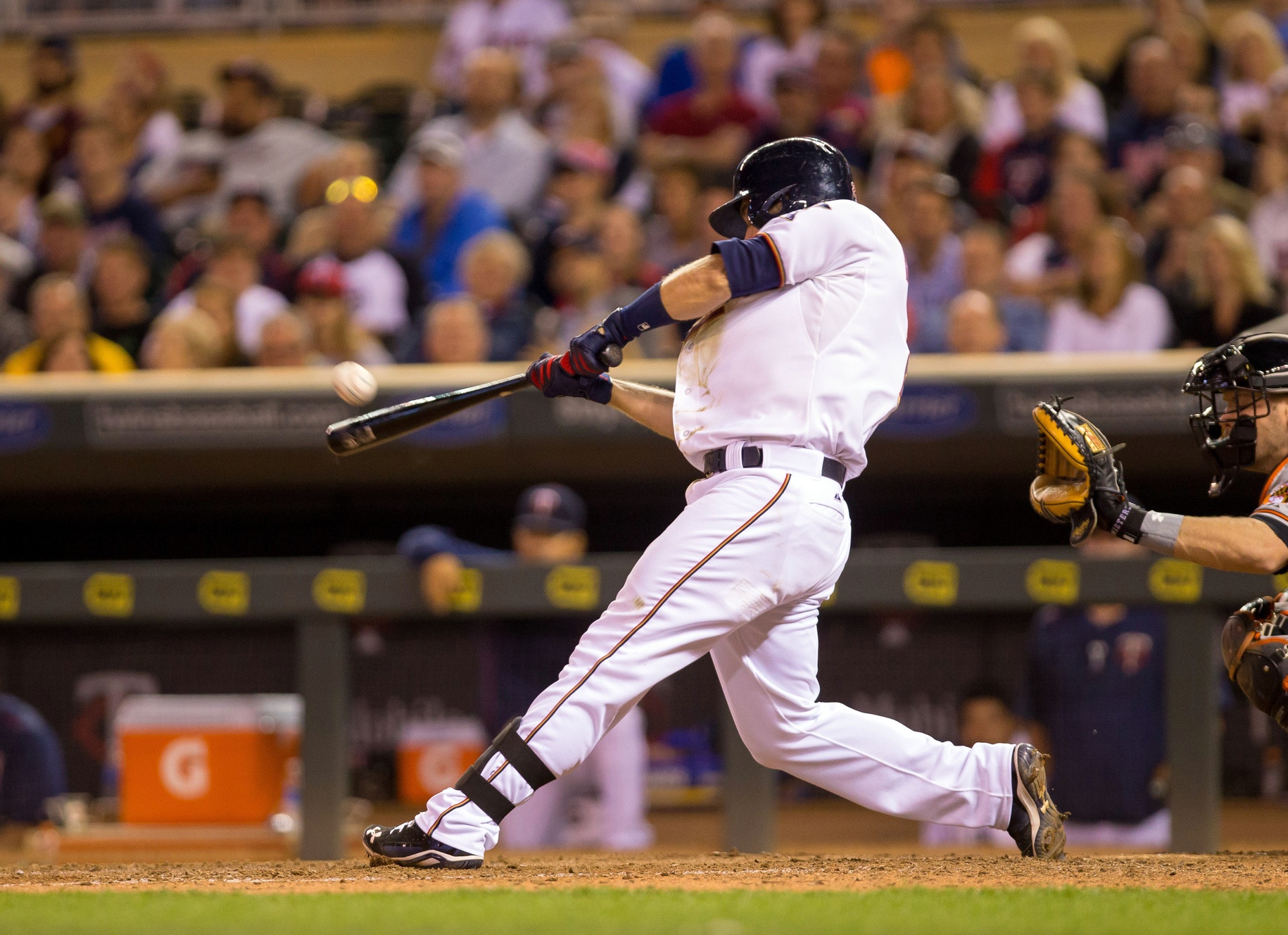 Over the past two seasons, Dozier has been a one-man wrecking machine on anything that dared enter the upper-third space of the strike zone. According to ESPN/TruMedia’s database, since 2014 Dozier is outpacing all other sluggers with 26 home runs on pitches left up. The Angels’ Albert Pujols comes in second at 20 followed by Josh Donaldson at 16. On top of that, Dozier’s 63 extra base hits on pitches up far exceeded anyone else’s totals (Pujols is the next closest at 36). “I’ve heard metric in the book where all my power is left field and up-in-the-zone and up-and-in,” Dozier said. “There’s a reason for that. I’m not going to tell you but there is a reason for that. It’s more feel for the game than anything.” The real mystery is why teams continue to even challenge Dozier with pitches at belt and above. Given his tendencies, one would expect that pitchers would strive at all costs to avoid that area of the zone. However Dozier sees more pitches up than any other hitter. While the average hitter sees pitches in the upper portion of the zone 25% of the time, Dozier leads baseball with a 40% upper zone rate. When asked if he was surprised that pitchers were feeding him so many pitches up in the zone, Dozier said he was not. He still sees his share of sliders down-and-away and fastballs away so going upstairs -- particularly up-and-in -- keeps him from camping on other pitches. In addition to being a power threat to any sphere tossed up in the zone, Dozier also has become one of the league's most extreme pull hitters. Since the start of 2014, he has collected over 89 extra base hits when pulling the ball. The next closest in that category is Colorado’s Nolan Arenado with 79. In that time, Dozier has hit more home runs to the pull-side (39) than anyone but Jose Bautista (45), Albert Pujols (42) and Edwin Encarnacion (41). “Why don’t I hit more balls to right field. Why do you want to go out to right when the shortest distance is to left?” Dozier remarked. Duh. Dozier’s methods has led to him being one of the most prolific offensive threats at the second base position. Since the start of the 2014 season, his 41 home runs far exceed the others at his position. He holds a 12 dinger lead over Neil Walker of the Pittsburgh Pirates, the next closest competitor in that time. He has 21 home runs more than Detroit’s Ian Kinsler and St. Louis’ Kolton Wong and he has 23 more home runs than the highly compensated Robinson Cano in Seattle. Dozier’s 104 total extra base hits also leads the field by a wide margin (Kinsler is second at 85 extra base hits). He is also not someone who has sacrificed discipline for power either. Among all second baseman, Dozier leads with 123 walks. The next closest is Cleveland’s Jason Kipnis at 77. When you view the metrics, it is hard to understand why anyone wouldn’t want Dozier on their All-Star roster. Still, while making the All-Star team would be a fine marketing accomplishment for the Twins and certainly a lifetime achievement milestone for Dozier himself, the real prize would be if he can continue this production in the second half of the season. Last season, he cruised to the break with 18 home runs but managed just five more in the latter portion of the year. Fans deserve to see the best player at each position in the Midsummer Classic. However, if Dozier gets a few days to rest, don’t be upset either. As long as he is still able to catch up to the high pitch and pull the living fire out of it, he will continue to be one of the top players in the game.
 -
Article: One Of These Things
Parker Hageman replied to Seth Stohs's topic in Twins Daily Front Page News
I'll preface this by saying overall, the is no question Kurt Suzuki is hurting the team offensively. That said, the Twins -- misguidedly -- have noted his "professional" at bats, particularly with runners in scoring position. 2014-2015 RISP: .312/.363/.434 in 205 PA Bases Empty: .254/.315/.343 in 438 PA 2015 RISP: .290/.342/.403 in 73 PA Bases Empty: .200/.260/.280 in 146 PA That's the kind of thing the coaching staff salivates over. Producing under those conditions. This is not meant as a defense but an answer to the people who keep asking why the Twins keep trotting him out there.- 30 replies
-
- 3
-
-
- kurt suzuki
- chris herrmann
- (and 3 more)
-
Changeups typically tend to fade on the glove-side of a pitcher or into swings of the same-sided hitters. Missing the spot meant that the pitch would land in the danger zone. Matt Moore, a left-handed pitcher in the Rays organization referenced above in the post, said that his change would fade into the down-and-in zone to lefties -- which is often their power zone. So that's why he avoided throwing them to same-sided opponents. There were guys that were very adept at throwing their changeups to same-sided hitters -- Viola, Radke and Santana were all great at it -- but over the years the practice seemed to remain with just those who had really great changeups. The Rays were savvy in their development to make sure their prospects all were comfortable throwing the pitch to both sides.
-
Most organizations have access to similar databases that show the same type of trends plus advanced scouts to pick up on this too. There's a strong chance that they are already well aware. The Rays operated for six years in the same fashion and still had great success. The main key is execution from the pitchers.
-
I think you are interjecting your own conclusion. The post I wrote about asked the question why the Twins pitchers are outperforming their expected results. The conclusion was that the new process of deploying changeups in certain circumstances which is inciting weaker contact. Now, if the question had been why have the Twins won eight more games this year versus last, then your comment would have been valid...
-
The Minnesota Twins are unexpectedly competing this season, thanks in part to a significant improvement in preventing runs. In 2014, the pitching staff allowed an American League high 4.80 runs per game. This season they are allowing 4.06 runs per game, a 15% reduction in runs allowed. It is still perplexing as to how the Twins are accomplishing this feat. True, the outfield defense is noticeably better and more balls in play are being converted to outs but other indicators, like strikeout rates, are worse. The Twins’ pitchers are outperforming their fielding independent expectations by a wide margin. According to xFIP, a statistic that calculates what a pitcher’s expected ERA should be at based on grounders induced, strikeouts gotten and home runs avoided, the Twins should be hovering near the bottom of the league in terms of runs allowed. However, their overall ERA has been significantly better. How has the Twins pitching staff outperformed expectation to this point in the season? The secret lies with pitching coach Neil Allen.Since his arrival we have heard the tale of Neil Allen’s ability to convince the young pitchers to harness the power of the change-up. From 2009 to 2014, the Rays outpaced everyone by deploying the change-up 14.5% of the time. Naturally, the narrative would be that Allen would come to Minnesota and bestow the same secrets on the Twins’ pitching staff. But, in terms of sheer total percentage of pitches thrown, this has not happened. While the usage is up slightly for Minnesota from 2014, even when accounting for Mike Pelfrey and Ricky Nolasco’s splitter preference the Twins pitching staff still trails well behind the rest of the league in 2015. So every other pitch is not a change-up. And pitchers like Phil Hughes have not greatly altered their pitch selections by learning a change-up. That said, the Twins have found great success on the occasions that they have used their change-ups this year. In 2014, hitters had their way with the Twins’ change-up. Opponents hit .288 (29th out of 30) and posted a hefty 747 OPS. While the rest of the league’s pitchers kept hitters to a .234 average, Kevin Correia (.357), Tommy Milone (.341), Trevor May (.259) and Kyle Gibson (.244) all found themselves above that mark. While Correia was recently released by the Phillies, Milone (.241), May (.215) and Gibson (.179) have reconnected with the pitch this year, posting significantly improved averages against on change-ups. At a collective .207, they now hold the fifth-lowest average against on the change-up. It was not just throwing more change-ups – it was using them under specific conditions. “That’s the one thing me and Neil really talked about a lot and I really wanted to work on was executing change-ups to righties,” said Gibson this past March. “It’s a pitch that looks really similar to my sinker when I have the same release point I think it’s something that is really going to help my sinker against righties.” Allen shared his theories and approach with the players in the spring. Everyone acknowledged they were on-board but no one with the Twins would divulge Allen’s secret recipe when it came to the change-up. From his perspective, when it came to the change-up catcher Kurt Suzuki said it is nice to have another finger to put down. Other pitchers echoed that mentality – the added bullet would be nice to have in the arsenal. Still, the chatter around the Twins camp was not that the change-up in and of itself was going to be the miracle out-pitch -- it was also going to set-up the miracle out-pitch. **** The Rays have been long known to be a savvy, smarter-than-you organization. Their front office is basically a Harvard bar with equations on the wall and ****. In The Extra 2%, baseball writer Jonah Keri documented how the organization’s analytics team running that ball club would stop at nothing to find any edge they could. Those findings were highlighted in obvious situations like the use of infield shifts or found when the Rays’ lineup would eschew the natural platoon advantage against pitchers who held quirky splits. The Wolves of Wall Street were now running a ball club with that same take-every-dollar attitude. They hired the sharpest minds and grabbed every scrap of data they could, compiled it into a proprietary database and studied it to ultimately move the needle to their advantage. In the spreadsheets and on the field, the Rays found that the change-up was a highly underutilized weapon. Change-ups fell out of vogue in the modern world as teams craved fastball velocity and wicked benders to put away hitters. Meanwhile there was value to be had for the teams that creatively applied change-ups. While most organizations avoided throwing change-ups to same-sided hitters, the Rays mandated it. “We’ve got a process that, when you hit Double-A, you’ve got to be able to throw your change-up to righties and left-handers, no matter what side you throw from,” Allen, then with the Rays organization, told Baseball Prospectus. “It’s become a weapon that we started a few years ago. There were a lot of guys coming to Triple-A that couldn’t throw their change-up for strikes righty-on-lefty or lefty-on-righty. The change is a great pitch if you utilize it [well], but we started getting into the philosophy that if it works opposite arm to opposite hitter, why don’t we start trying it righty-on-righty and lefty-on-lefty.” In the majors, the Rays paced the game with far more same-sided change-ups than the rest of the league -- but mainly in righty-to-righty situations. From 2009 to 2014, as the Minnesota Twins’ right-handed pitchers threw change-ups to right-handed hitters 5.3% of the mix, the Rays threw it a whopping 12.6% of their mix. Perhaps as a result, right-handed pitchers for the Rays held the right-handed hitters to a .243 average while the Twins finished last in that category with a .279 average. Since Allen’s hiring, the Twins have followed a similar pattern. Gibson has increased his usage of the change-up overall (from 12% to 17%) and much of that has come against right-handed hitters. In 2014, he threw the pitch to the same-side 1.5% of the time but uses it 14% of the time this year. Trevor May has thrown his change more to righties as well (from 9.9% to 13.2%). Milone, on the other hand, has thrown the pitch less against lefties this year than he has in the past. Despite flashing a solid change-up to David Ortiz in spring training, Milone has abandoned that pitch in favor of a cutter. The Rays southpaws were hesitant to throw the pitch to other lefties as well -- Rays lefty Matt Moore cited the left-handed hitter’s natural low swing plane as a deterrent to throwing to the same-side. What the Rays discovered is that not only is the change-up effective in same-sided circumstances, but the change-up is also potent when thrown consecutively. From 2009 to 2014, the Rays threw the most change-ups but they also threw the highest number of change-ups after change-ups. And when the Rays pitchers doubled up on change-ups -- which they did a MLB-high 32% of the time -- they held opponents to a .189 batting average against. The Rays stacked change-ups like no other team. But the idea wasn’t just to throw out two change-ups in a row. The idea was to hammer the bottom of the zone. **** Download attachment: Changeupo.png In addition to the same-sided usage, the strategic sequencing with the change-up has played a significant role in Twins’ pitchers abilities to generate outs. “I know that he’s a little bit analytical but not really but the stuff that he tells me that I see from an analytical side and it’s stuff that makes a lot of sense,” Twins closer Glen Perkins said about his new pitching coach and the emphasis on the change-up this spring. “I talk to hitters when we are playing cards after the game or standing in the dugout or whatever and the kinda things they are thinking.... [Allen’s] thinking from a hitter’s perspective on it.” Although he personally doesn’t throw a change-up, he toys with it during warm-ups and thinks about having it ready in the event that his devastating fastball-slider combo ever fails him. Perkins, an analytical mind on the mound, was intrigued by Allen’s sales pitch on the chang-eup. The discussions in the clubhouse, in team meetings and during bullpen sessions are well and good, though applying the ideas into game situations can be tricky. In Tuesday night’s game against the Orioles, Gibson recorded three outs on the change-up, including a strikeout in the third of the right-handed Adam Jones. While that may have been just a line of code in the PitchF/X system, the righty-on-righty success was a noteworthy milestone to Gibson. In 2014, Gibson was attempting to incorporate more change-ups against righties when he found himself tangling with Jones in Baltimore. Jones timed a change-up to perfection and launched a long home run. That encounter, Gibson admitted, reduced his confidence in turning to the pitch against righties. But over the offseason and into the spring, Allen provided support for Gibson and pushed him to use the pitch more to righties. While the change-up led to three outs, Gibson also recorded six outs on the pitch after a changeup -- weak contact induced by throwing a follow-up pitch down in the zone. This has been what the Twins pitchers -- particularly Gibson, May and Milone -- have succeeded at all year. If the change-up fails to record an out, they have returned to the bottom of the zone with another pitch. Guys like Gibson and Milone have become out generators because they have followed this pattern and it is making their other pitches better. Allen’s guidance to Gibson was to throw his change-up more in circumstances when he would normally throw his slider. While Gibson’s change-up has had great success on its own, it has enhanced his slider’s performance as well, reducing his average against from .210 to .167 while increasing his swinging strikes on the pitch. For Milone, he has kept hitters off his fastball – posting a career-low .248 average against. Similarly, May’s fastball average against has gone from .333 to .287. Weaker contact has resulted in more outs, fewer base-runners and fewer runs. Click here to view the article
-
 Since his arrival we have heard the tale of Neil Allen’s ability to convince the young pitchers to harness the power of the change-up. From 2009 to 2014, the Rays outpaced everyone by deploying the change-up 14.5% of the time. Naturally, the narrative would be that Allen would come to Minnesota and bestow the same secrets on the Twins’ pitching staff. But, in terms of sheer total percentage of pitches thrown, this has not happened. While the usage is up slightly for Minnesota from 2014, even when accounting for Mike Pelfrey and Ricky Nolasco’s splitter preference the Twins pitching staff still trails well behind the rest of the league in 2015. So every other pitch is not a change-up. And pitchers like Phil Hughes have not greatly altered their pitch selections by learning a change-up. That said, the Twins have found great success on the occasions that they have used their change-ups this year. In 2014, hitters had their way with the Twins’ change-up. Opponents hit .288 (29th out of 30) and posted a hefty 747 OPS. While the rest of the league’s pitchers kept hitters to a .234 average, Kevin Correia (.357), Tommy Milone (.341), Trevor May (.259) and Kyle Gibson (.244) all found themselves above that mark. While Correia was recently released by the Phillies, Milone (.241), May (.215) and Gibson (.179) have reconnected with the pitch this year, posting significantly improved averages against on change-ups. At a collective .207, they now hold the fifth-lowest average against on the change-up. It was not just throwing more change-ups – it was using them under specific conditions. “That’s the one thing me and Neil really talked about a lot and I really wanted to work on was executing change-ups to righties,” said Gibson this past March. “It’s a pitch that looks really similar to my sinker when I have the same release point I think it’s something that is really going to help my sinker against righties.” Allen shared his theories and approach with the players in the spring. Everyone acknowledged they were on-board but no one with the Twins would divulge Allen’s secret recipe when it came to the change-up. From his perspective, when it came to the change-up catcher Kurt Suzuki said it is nice to have another finger to put down. Other pitchers echoed that mentality – the added bullet would be nice to have in the arsenal. Still, the chatter around the Twins camp was not that the change-up in and of itself was going to be the miracle out-pitch -- it was also going to set-up the miracle out-pitch. **** The Rays have been long known to be a savvy, smarter-than-you organization. Their front office is basically a Harvard bar with equations on the wall and ****. In The Extra 2%, baseball writer Jonah Keri documented how the organization’s analytics team running that ball club would stop at nothing to find any edge they could. Those findings were highlighted in obvious situations like the use of infield shifts or found when the Rays’ lineup would eschew the natural platoon advantage against pitchers who held quirky splits. The Wolves of Wall Street were now running a ball club with that same take-every-dollar attitude. They hired the sharpest minds and grabbed every scrap of data they could, compiled it into a proprietary database and studied it to ultimately move the needle to their advantage. In the spreadsheets and on the field, the Rays found that the change-up was a highly underutilized weapon. Change-ups fell out of vogue in the modern world as teams craved fastball velocity and wicked benders to put away hitters. Meanwhile there was value to be had for the teams that creatively applied change-ups. While most organizations avoided throwing change-ups to same-sided hitters, the Rays mandated it. “We’ve got a process that, when you hit Double-A, you’ve got to be able to throw your change-up to righties and left-handers, no matter what side you throw from,” Allen, then with the Rays organization, told Baseball Prospectus. “It’s become a weapon that we started a few years ago. There were a lot of guys coming to Triple-A that couldn’t throw their change-up for strikes righty-on-lefty or lefty-on-righty. The change is a great pitch if you utilize it [well], but we started getting into the philosophy that if it works opposite arm to opposite hitter, why don’t we start trying it righty-on-righty and lefty-on-lefty.” In the majors, the Rays paced the game with far more same-sided change-ups than the rest of the league -- but mainly in righty-to-righty situations. From 2009 to 2014, as the Minnesota Twins’ right-handed pitchers threw change-ups to right-handed hitters 5.3% of the mix, the Rays threw it a whopping 12.6% of their mix. Perhaps as a result, right-handed pitchers for the Rays held the right-handed hitters to a .243 average while the Twins finished last in that category with a .279 average. Since Allen’s hiring, the Twins have followed a similar pattern. Gibson has increased his usage of the change-up overall (from 12% to 17%) and much of that has come against right-handed hitters. In 2014, he threw the pitch to the same-side 1.5% of the time but uses it 14% of the time this year. Trevor May has thrown his change more to righties as well (from 9.9% to 13.2%). Milone, on the other hand, has thrown the pitch less against lefties this year than he has in the past. Despite flashing a solid change-up to David Ortiz in spring training, Milone has abandoned that pitch in favor of a cutter. The Rays southpaws were hesitant to throw the pitch to other lefties as well -- Rays lefty Matt Moore cited the left-handed hitter’s natural low swing plane as a deterrent to throwing to the same-side. What the Rays discovered is that not only is the change-up effective in same-sided circumstances, but the change-up is also potent when thrown consecutively. From 2009 to 2014, the Rays threw the most change-ups but they also threw the highest number of change-ups after change-ups. And when the Rays pitchers doubled up on change-ups -- which they did a MLB-high 32% of the time -- they held opponents to a .189 batting average against. The Rays stacked change-ups like no other team. But the idea wasn’t just to throw out two change-ups in a row. The idea was to hammer the bottom of the zone. **** In addition to the same-sided usage, the strategic sequencing with the change-up has played a significant role in Twins’ pitchers abilities to generate outs. “I know that he’s a little bit analytical but not really but the stuff that he tells me that I see from an analytical side and it’s stuff that makes a lot of sense,” Twins closer Glen Perkins said about his new pitching coach and the emphasis on the change-up this spring. “I talk to hitters when we are playing cards after the game or standing in the dugout or whatever and the kinda things they are thinking.... [Allen’s] thinking from a hitter’s perspective on it.” Although he personally doesn’t throw a change-up, he toys with it during warm-ups and thinks about having it ready in the event that his devastating fastball-slider combo ever fails him. Perkins, an analytical mind on the mound, was intrigued by Allen’s sales pitch on the chang-eup. The discussions in the clubhouse, in team meetings and during bullpen sessions are well and good, though applying the ideas into game situations can be tricky. In Tuesday night’s game against the Orioles, Gibson recorded three outs on the change-up, including a strikeout in the third of the right-handed Adam Jones. While that may have been just a line of code in the PitchF/X system, the righty-on-righty success was a noteworthy milestone to Gibson. In 2014, Gibson was attempting to incorporate more change-ups against righties when he found himself tangling with Jones in Baltimore. Jones timed a change-up to perfection and launched a long home run. That encounter, Gibson admitted, reduced his confidence in turning to the pitch against righties. But over the offseason and into the spring, Allen provided support for Gibson and pushed him to use the pitch more to righties. While the change-up led to three outs, Gibson also recorded six outs on the pitch after a changeup -- weak contact induced by throwing a follow-up pitch down in the zone. This has been what the Twins pitchers -- particularly Gibson, May and Milone -- have succeeded at all year. If the change-up fails to record an out, they have returned to the bottom of the zone with another pitch. Guys like Gibson and Milone have become out generators because they have followed this pattern and it is making their other pitches better. Allen’s guidance to Gibson was to throw his change-up more in circumstances when he would normally throw his slider. While Gibson’s change-up has had great success on its own, it has enhanced his slider’s performance as well, reducing his average against from .210 to .167 while increasing his swinging strikes on the pitch. For Milone, he has kept hitters off his fastball – posting a career-low .248 average against. Similarly, May’s fastball average against has gone from .333 to .287. Weaker contact has resulted in more outs, fewer base-runners and fewer runs.
 -
Article: Molitor Hints At Six-Man Rotation
Parker Hageman replied to Parker Hageman's topic in Twins Daily Front Page News
I don't know if you read the article but statistically speaking, rotations improve (albeit marginally) when going from the four-day rest to a five-day rest cycle. Inferior arms or not. By that measure it gives a team a better chance to win. To your point about "pitchers being used to things", that's a crutch. Yes, there is some psychological effect but pitchers have transitioned from rotation to bullpen from majors to minors, etc, etc. Pitchers will adapt.- 73 replies
-
- 1
-
-
- ervin santana
- paul molitor
- (and 1 more)
-
Article: Molitor Hints At Six-Man Rotation
Parker Hageman replied to Parker Hageman's topic in Twins Daily Front Page News
If your rotation has an elite caliber pitcher, yes, you would be reducing the amount of innings provided to that arm. The Twins, however, do not have that type of starter at the present. On the whole, the rotation is decisively average. In theory, stretching out the arms is one way to increase production. Second, a pitcher's career prior to the majors did not always follow the four-day rest schedule. For instance, Berrios has had anywhere from five-to-seven days between some of his outings this year. My biggest hesitation to the six-man is having that many pitchers and reducing the bench (although the bench hasn't been great either). That said, if the Twins decide to roll with it for a few weeks before the deadline it seems fine to me.- 73 replies
-
- 6
-
-
- ervin santana
- paul molitor
- (and 1 more)
-
Ervin Santana’s return to the Minnesota Twins is imminent and this presents an interesting personnel decision for the team. On Twins Radio prior to Wednesday’s game against the Red, manager Paul Molitor did not offer any hints as to the direction the Twins wants to go. “I think everyone is excited that we are going to be adding a pitcher of Ervin’s quality to our staff,” Molitor told Cory Provus on the pregame show. “I haven’t talked to the AAA staff, I just saw the numbers and like everyone else, we’re really happy to see his last start there was good in terms of command and efficiency and results. So we’re gonna get through today and probably the next 24 or 48 hours make an announcement when he’s gonna pitch for us.” As it lays out, the open date in the rotation is Sunday against the Royals in Kansas City but Molitor was mum regarding whether or not that would be Santana’s start.Santana’s post-suspension tune-up with Rochester was impressive. Over the course of three starts, he worked 20.2 innings while allowing 17 hits (.227 batting average) and just four runs resulting in a 1.74 ERA. In his final two outings, both against the Red Sox’s Pawtucket affiliate, Santana faced several Major League caliber bats including Rusney Castillo and Allen Craig. The velocity was reportedly down to the late-80s/low-90s but he mixed in a slider and change to keep hitters off-balanced. With the excitement building within the team about Santana’s impending arrival, Provus asked the question of how the rotation will shape up once Santana returns and if the six-man rotation is on the table. “It’s one of the options we are looking at,” Molitor said regarding the shift to six in the rotation, “We have options but one of them would be to go ahead and insert Ervin there and give everybody an extra day and use all the starters we have until we get to that last game. Obviously the other route would be to take someone out and try to piece it together from there because of the rest that we will be able to have. Once we decide when where we are going to slot those guys in, we will trust it and go with it.” While Molitor seems open to the six-man idea, general manager Terry Ryan seems less receptive and is leaning towards replacing a current member of the rotation. “Things happen, we all know that,” Ryan told the Star Tribune. “Paul is very adept with connecting with players, I can tell you that. Most players will be very receptive. If I went to them, it might be a different story. It will be a tough decision for whoever winds up getting squeezed.” The New York Mets recently switched to the six-man rotation and the St. Louis Cardinals toyed with the idea this spring. Both team’s motivation was predicated on limiting innings to young arms as well as reducing the workload on rebuild arms like Matt Harvey. The Twins do not have the same scenario when it comes to rationing innings like the two NL teams did. Minnesota’s motivation would be to not remove any of the current starters who are performing serviceably across the board. The obvious reasoning is that it allows the Twins to showcase a pitcher as a trade candidate between now and the July 31 deadline but the other factors could be keeping their pitchers healthy and improving their performance. In 2014, Enos Sarris pointed out that the Japanese trend of using six-man rotations might be responsible for why Japan’s pitchers tend to have fewer instances with Tommy John surgery compared to their Major League counterparts. The data blog FiveThirtyEight.com’s Rob Arthur dug further into the hypothesis and found that pitchers who have four days of rest – like the standard five-man rotation have – will have a reported injury risk of one percent over the next two weeks after pitching. However, a shift to a full five days of rest – enjoyed by those in a six-man rotation – have a 0.8 percent chance of injury, a 20 percent decrease in comparison to the four-days of rest. The caveat, Arthur found, was that while the six-man prevented injuries to some degree, the nature of the injuries were comparable to those of the five-man. In short, while longer rest showed the ability to reduce the frequency of injuries, it did not reduce the risk for suffering major injuries such as UCL tears. Still, for a team over a 162-game schedule, keeping their core starting pitching healthy means fewer dead-arm spells that pitchers try to work through far too often before admitting something is wrong. But not everyone in the game is convinced the extra day between starts is better for the arm. Former MLB pitcher and current FOX Sports analyst CJ Nikowski spent time pitching in Asia and says his personal experience tells him that the notion that the six-man rotation saved arms in Japan is hogwash. “The problem with the notion of “they do it Asia” is that in the four years I spent pitching in both Korea and Japan, I saw more arm injuries than I did here,” Nitkowski wrote in February of this year. “I remember one day sitting in the bullpen and looking around at my teammates, every one of them had a significant arm injury at some point in their professional career.” While there are no numbers in Nitkowski’s post to determine if his gut model statement is true, Nitkowski cites the increase – some say even insane, per Twins pitcher Blaine Boyer – amounts of sideline throwing between starts and in spring training negates any effects the six-man rotation rest factor would play. Nitkowski also argued against the six-man structure because it would reduce the number of starts giving to a team’s high-paid ace. The Twins, however, lack any real “ace” caliber pitchers in the current rotation. Distributing the starts among six and keeping arms healthy for the latter portion of the season could ensure that all pitchers are fresh but it could also mean reducing the number of starts for those starters who are clicking. Like the small decrease in limiting the number of injuries, moving from a four-day to a five-day rest period also has a very minor increase in production. According to Baseball-Reference.com’s splits, pitchers who work on a four-day rest cycle have posted a 4.35 ERA since 2000 while those on a five-days of rest have turned in a 4.31 ERA. Over a 30-game span, if that performance maintains, that could be the difference in at least one run. It may be unlikely for the Twins to embrace the idea but If Santana is added to the core of Phil Hughes, Kyle Gibson, Mike Pelfrey, Tommy Milone and Trevor May for the starting six, it might be a very insightful decision by the Twins to maximize their current production…or it could be an innovative way to market a tradable commodity. Click here to view the article
-
 Santana’s post-suspension tune-up with Rochester was impressive. Over the course of three starts, he worked 20.2 innings while allowing 17 hits (.227 batting average) and just four runs resulting in a 1.74 ERA. In his final two outings, both against the Red Sox’s Pawtucket affiliate, Santana faced several Major League caliber bats including Rusney Castillo and Allen Craig. The velocity was reportedly down to the late-80s/low-90s but he mixed in a slider and change to keep hitters off-balanced. With the excitement building within the team about Santana’s impending arrival, Provus asked the question of how the rotation will shape up once Santana returns and if the six-man rotation is on the table. “It’s one of the options we are looking at,” Molitor said regarding the shift to six in the rotation, “We have options but one of them would be to go ahead and insert Ervin there and give everybody an extra day and use all the starters we have until we get to that last game. Obviously the other route would be to take someone out and try to piece it together from there because of the rest that we will be able to have. Once we decide when where we are going to slot those guys in, we will trust it and go with it.” While Molitor seems open to the six-man idea, general manager Terry Ryan seems less receptive and is leaning towards replacing a current member of the rotation. “Things happen, we all know that,” Ryan told the Star Tribune. “Paul is very adept with connecting with players, I can tell you that. Most players will be very receptive. If I went to them, it might be a different story. It will be a tough decision for whoever winds up getting squeezed.” The New York Mets recently switched to the six-man rotation and the St. Louis Cardinals toyed with the idea this spring. Both team’s motivation was predicated on limiting innings to young arms as well as reducing the workload on rebuild arms like Matt Harvey. The Twins do not have the same scenario when it comes to rationing innings like the two NL teams did. Minnesota’s motivation would be to not remove any of the current starters who are performing serviceably across the board. The obvious reasoning is that it allows the Twins to showcase a pitcher as a trade candidate between now and the July 31 deadline but the other factors could be keeping their pitchers healthy and improving their performance. In 2014, Enos Sarris pointed out that the Japanese trend of using six-man rotations might be responsible for why Japan’s pitchers tend to have fewer instances with Tommy John surgery compared to their Major League counterparts. The data blog FiveThirtyEight.com’s Rob Arthur dug further into the hypothesis and found that pitchers who have four days of rest – like the standard five-man rotation have – will have a reported injury risk of one percent over the next two weeks after pitching. However, a shift to a full five days of rest – enjoyed by those in a six-man rotation – have a 0.8 percent chance of injury, a 20 percent decrease in comparison to the four-days of rest. The caveat, Arthur found, was that while the six-man prevented injuries to some degree, the nature of the injuries were comparable to those of the five-man. In short, while longer rest showed the ability to reduce the frequency of injuries, it did not reduce the risk for suffering major injuries such as UCL tears. Still, for a team over a 162-game schedule, keeping their core starting pitching healthy means fewer dead-arm spells that pitchers try to work through far too often before admitting something is wrong. But not everyone in the game is convinced the extra day between starts is better for the arm. Former MLB pitcher and current FOX Sports analyst CJ Nikowski spent time pitching in Asia and says his personal experience tells him that the notion that the six-man rotation saved arms in Japan is hogwash. “The problem with the notion of “they do it Asia” is that in the four years I spent pitching in both Korea and Japan, I saw more arm injuries than I did here,” Nitkowski wrote in February of this year. “I remember one day sitting in the bullpen and looking around at my teammates, every one of them had a significant arm injury at some point in their professional career.” While there are no numbers in Nitkowski’s post to determine if his gut model statement is true, Nitkowski cites the increase – some say even insane, per Twins pitcher Blaine Boyer – amounts of sideline throwing between starts and in spring training negates any effects the six-man rotation rest factor would play. Nitkowski also argued against the six-man structure because it would reduce the number of starts giving to a team’s high-paid ace. The Twins, however, lack any real “ace” caliber pitchers in the current rotation. Distributing the starts among six and keeping arms healthy for the latter portion of the season could ensure that all pitchers are fresh but it could also mean reducing the number of starts for those starters who are clicking. Like the small decrease in limiting the number of injuries, moving from a four-day to a five-day rest period also has a very minor increase in production. According to Baseball-Reference.com’s splits, pitchers who work on a four-day rest cycle have posted a 4.35 ERA since 2000 while those on a five-days of rest have turned in a 4.31 ERA. Over a 30-game span, if that performance maintains, that could be the difference in at least one run. It may be unlikely for the Twins to embrace the idea but If Santana is added to the core of Phil Hughes, Kyle Gibson, Mike Pelfrey, Tommy Milone and Trevor May for the starting six, it might be a very insightful decision by the Twins to maximize their current production…or it could be an innovative way to market a tradable commodity.
 -
Sick "I go into the Twins clubhouse" brag.
-
On June 14, Byron Buxton made perhaps the most widely anticipated Minnesota Twins debut since Joe Mauer arrived in 2004. While everyone acknowledges that players typically struggle in their first exposure to baseball’s best competition, deep down, what everyone was really asking themselves is if Buxton will be a first-ballot Hall of Famer or a regular ol’ Hall of Famer. As is his penchant, Buxton struggled offensively over his eleven games with the Twins. More disheartening, yet another injury has sidelined him for an extended period of time – something that has become alarmingly frequent over his career. He has all the talent in the world but will he ever be healthy enough to showcase it this season?Age: 21 2015 Stats (AA/MLB): .270/.336/.460 (.795), 8-2B, 13-3B, 6-HR, 28/68 BB/K ETA: 2015 2015 Preseason Ranking: 1 What's To Like The speed is absolutely breathtaking. While a mashed tater hit a country mile gives one pause as it clears the fence and drops into the sea of waiting arms, there is nothing that compares to when a player with top-flight speed slashes one into the gap and is off to the races. Buxton’s first major league hit, a stand-up triple no less, proved that point. In the field, Buxton closes faster than a Canadian Target. According to ESPN/TruMedia, in just under 100 innings in center, Buxton already recorded 10 good fielding plays including this absolute dart at 93 miles per hour (per StatCast) to nail Melky Cabrera at home: In short, Buxton can score runs and he can take them away. What's Left To Work On Terry Ryan was quick to point out that Buxton was not a finished product when he was called up to Minnesota. “I would have liked to keep Buxton down (at Chattanooga) for more at-bats,” Ryan told the Pioneer Press a week prior to Buxton’s thumb injury. “But it wasn’t meant to be, so here he is.” In Chattanooga, shortly after Buxton’s big league debut manager Doug Mientkiewicz exercised similar caution regarding his promotion in a chat with FOX Sport’s Ken Rosenthal. “I don’t think he’s completely ready,” Mientkiewicz told the bow-tied baseball writer. “Well, part of me says yes, and part of me says no.” Previously, the Looksouts manager was more emphatic about what he wanted for Buxton’s immediate future. “I would like to see him here the whole year, and that has nothing to do with me as a manager,” Mienkiewicz told the Times Free Press in early May, “I want to see him have success, and too many times in baseball and in general today, these kids have a good two weeks and they move them. They are going to play a long time, so let them build that huge snowball of confidence to where nothing can deter them once they struggle again.” Mientkiewicz had seen what others had not first-hand – a professional-grade slider presented a challenge to the game’s top prospect. However, in the Southern League, that quality of pitch is harder to find; the major league level would be another story. It became keenly obviously after watching pitchers deploy sliders at a steady clip that Buxton was not fully prepared for the competition. The reports on Buxton is that he has speed bumps at the introductory point at each level. In Double-A this year, his first series began with nine strikeouts over four games. He adjusted and struck out in just 42 plate appearances over the last 54 games. "I feel pretty good," Buxton told The Chattanoogan in early June. "I've been taking better at-bats. I've been laying off pitches early in the year I was swinging at. It's put me in position to drive the ball into the gaps more." In addition to reducing the strikeouts, Buxton also slugged over .500 -- .505 to be exact – so the hope is, once healthy, he will adjust to pitching at the highest level of the game as well. What's Next Buxton’s thumb injury will cost him at least a month according to manager Paul Molitor. There may be some rehab time involved that will give him some opportunity to experience AAA pitching – a less electrifying brand of pitching than in the majors but loaded with arms that have major league experience and ability to locate pitches better than their lower level counterparts. Once he returns, his speed and glove will help stabilize the middle of the outfield and it will only be a matter of time before the speed and bat play a significant role at the top of the order as well. Click here to view the article
-
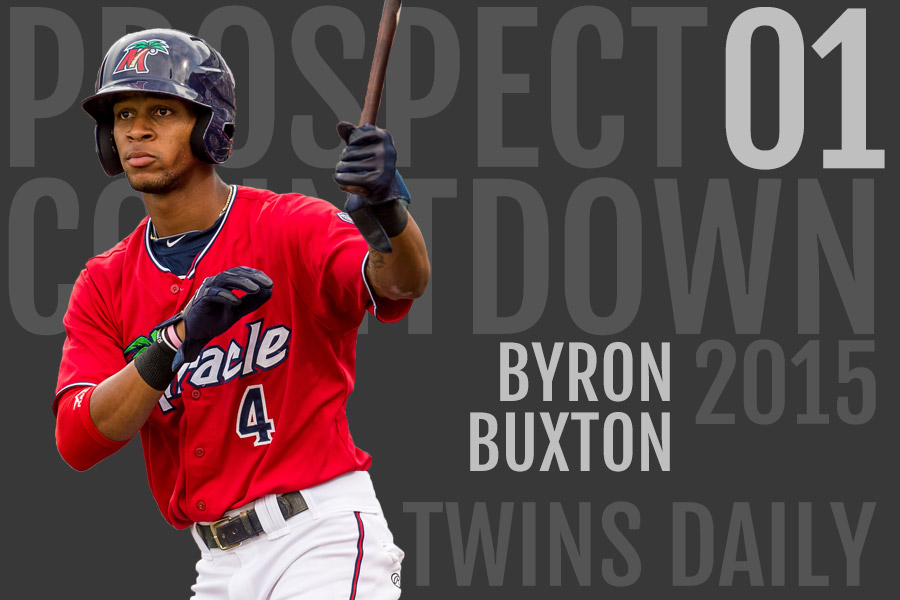 Age: 21 2015 Stats (AA/MLB): .270/.336/.460 (.795), 8-2B, 13-3B, 6-HR, 28/68 BB/K ETA: 2015 2015 Preseason Ranking: 1 What's To Like The speed is absolutely breathtaking. While a mashed tater hit a country mile gives one pause as it clears the fence and drops into the sea of waiting arms, there is nothing that compares to when a player with top-flight speed slashes one into the gap and is off to the races. Buxton’s first major league hit, a stand-up triple no less, proved that point. In the field, Buxton closes faster than a Canadian Target. According to ESPN/TruMedia, in just under 100 innings in center, Buxton already recorded 10 good fielding plays including this absolute dart at 93 miles per hour (per StatCast) to nail Melky Cabrera at home: https://twitter.com/ParkerHageman/status/613200073954979840 In short, Buxton can score runs and he can take them away. What's Left To Work On Terry Ryan was quick to point out that Buxton was not a finished product when he was called up to Minnesota. “I would have liked to keep Buxton down (at Chattanooga) for more at-bats,” Ryan told the Pioneer Press a week prior to Buxton’s thumb injury. “But it wasn’t meant to be, so here he is.” In Chattanooga, shortly after Buxton’s big league debut manager Doug Mientkiewicz exercised similar caution regarding his promotion in a chat with FOX Sport’s Ken Rosenthal. “I don’t think he’s completely ready,” Mientkiewicz told the bow-tied baseball writer. “Well, part of me says yes, and part of me says no.” Previously, the Looksouts manager was more emphatic about what he wanted for Buxton’s immediate future. “I would like to see him here the whole year, and that has nothing to do with me as a manager,” Mienkiewicz told the Times Free Press in early May, “I want to see him have success, and too many times in baseball and in general today, these kids have a good two weeks and they move them. They are going to play a long time, so let them build that huge snowball of confidence to where nothing can deter them once they struggle again.” Mientkiewicz had seen what others had not first-hand – a professional-grade slider presented a challenge to the game’s top prospect. However, in the Southern League, that quality of pitch is harder to find; the major league level would be another story. It became keenly obviously after watching pitchers deploy sliders at a steady clip that Buxton was not fully prepared for the competition. The reports on Buxton is that he has speed bumps at the introductory point at each level. In Double-A this year, his first series began with nine strikeouts over four games. He adjusted and struck out in just 42 plate appearances over the last 54 games. "I feel pretty good," Buxton told The Chattanoogan in early June. "I've been taking better at-bats. I've been laying off pitches early in the year I was swinging at. It's put me in position to drive the ball into the gaps more." In addition to reducing the strikeouts, Buxton also slugged over .500 -- .505 to be exact – so the hope is, once healthy, he will adjust to pitching at the highest level of the game as well. What's Next Buxton’s thumb injury will cost him at least a month according to manager Paul Molitor. There may be some rehab time involved that will give him some opportunity to experience AAA pitching – a less electrifying brand of pitching than in the majors but loaded with arms that have major league experience and ability to locate pitches better than their lower level counterparts. Once he returns, his speed and glove will help stabilize the middle of the outfield and it will only be a matter of time before the speed and bat play a significant role at the top of the order as well.
 -
The Minnesota Twins bullpen maintains the worst strikeout rate in baseball but on Thursday afternoon, they made a move to improve that area. After sending Michael Tonkin down to Rochester after Wednesday’s game, they recalled hard-throwing Alex Meyer to replace him. Meyer, who the team received in the Denard Span trade with Washington as a starting pitching prospect, has rediscovered himself as a reliever in the Red Wings bullpen. Since the move Meyer has worked 17 innings in relief and has limited opponents to a .188 batting average while posting a solid 20-to-6 strikeout-to-walk ratio.The numbers all look convincing enough to believe that Meyer will play an effective role as a reliever going forward. When the Twins opted to send Meyer to the bullpen, he owned a 1.91 WHIP. While he was striking out plenty of batters, the others were either getting hits or walking. Velocity was never an issue for Meyer, who routinely reached 98 on the gun, but commanding pitches in the zone became the focus in 2015. Too often, Meyer’s fastball would fly down the middle or his breaking ball would hang. By the definition of the zone, they were strikes but they were also very hittable. According to the Durham Bulls broadcasters, their players said that compared to 2014, Meyer’s fastball was flat and that it lacked movement that it had the previous year. His command also was an issue since once he was behind in the count, they did not have to anticipate the knuckle-curve. This was reminiscent of Francisco Liriano’s plight from 2012 in which he was unable to locate his fastball and hitters simply laid off his nasty slider. In his final start, Meyer faced Durham and in just over four innings, the Bulls’ lineup knocked out seven hits of him. They waited patiently as he progressed deeper into counts by missing his spots and made him throw 109 pitches on his way to another early exit. Six days later, Rochester was in Durham, North Carolina and Meyer had moved to the bullpen. The move was made in order for Meyer to find consistency with his fastball and to attempt to regain his biting curve ball which had lost the break it had had a year ago. It also was a move to alleviate the pressure he applied to the relief corps each time his start was truncated. Meyer acknowledged that his arm slot had dropped since the end of 2014. Now in the pen, he told the Rochester broadcasting team that he would be concentrating on getting that release point back up to improve his movement. While some pitching prospects might find the switch troublesome on the ego, Meyer seemed to transition smoothly. In his first outing in relief, Meyer worked a clean 1-2-3 eighth inning against the Bulls -- the team which had less than a week earlier knocked him out of the starting rotation. Meyer worked quickly, getting strikes within the first two pitches of each at-bat. His fastball was humming at 96 and touching 97. He deployed a short break slider at significantly slower speed to register his first two outs and blasted a 97 mile per hour fastball above the zone for a swinging strike for the final out. READ: TD MIDSEASON TOP PROSPECT #10 - ALEX MEYER It was something that every bullpen needs -- someone to be able to throw late innings, bat-missing heat. When Rochester hosted a wrestling night at the beginning of June, all the relievers were given WWE wrestling persona’s that matched their demeanor on the mound. Meyer -- who is also called White Missile by his teammates -- was given The Undertaker, a wrestler who dominated in the ring and stole the souls of his opponents. The character fit well for Meyer’s new role. "While I'm in the bullpen, it's go get 'em,” Meyer told the Rochester Democrat & Chronicle. “Do whatever you have to do to get them out. I'm just trying to go out there and attack every batter. Get one batter out at a time and try not to over-analyze things any more than that." By the eye test, he looked comfortable going through the motions of a short outing. He leaned on his fastball but was sure to work his knuckle-curve in several times. In fact, he leaned on his curve too much in his first few relief outings. In his first outing, Meyer found himself up 0-1 in the count and shook off his catcher, Josmil Pinto, in order to throw back-to-back curves (both for balls and well off-target). He returned to his fastball and got two swinging strikes: one on the inner-half of the plate and another above the strike zone to finish the hitter off. In another outing, Meyer turned to his curve too frequently in two-strike situations. In four of the nine matchups against Lehigh Valley on June 2, he threw the bender three pitches in a row -- one of which, on a 3-2 count, facilitated a bases-loaded rally that Meyer somehow eventually wiggled out of. Although he appeared to overuse and misfire with the curve early, Meyer also tightened it up in his subsequent outings. The break appeared sharper and able to generate swinging strikes again. Upon his promotion, Red Wings beat writer Kevin Oklobzija highlighted Meyer’s improvement with the curve as a function why he was successful in the pen. During several broadcasts, announcers remarked how “confident” Meyer looked in his new role. His second appearance out of the bullpen on May 25 was all business. The Red Wings needed one out in the sixth inning and they called on a pitcher who could get a strikeout. Meyer threw four pitches -- all fastballs, all on the outer-half of the zone. While the umpire did not agree that the first one was a strike, the next three were placed in the same spot and were all deemed strikes. At that speed, in that location, the hitter stood little chance of doing anything. In his final outing before being recalled to Minnesota, Meyer worked effectively against the Pawtucket Red Sox. Despite allowing an inherited run to score, he was locating his 95+ fastball with precision and deploying a large breaking ball that buckled several knees. Rather than just throwing the curve when up in the count, Meyer also used it to get ahead of hitters and in even-count situations, making him and his fastball even more difficult to hit. Between the two pitches Meyer looked every bit the part of a major league shutdown reliever. In all Meyer has the raw stuff to be dominant at times. Most critical is working ahead of hitters. Even in relief, he showed signs of struggling to locate his fastball and was occasionally helped by opponents who would chase pitches. Click here to view the article
-
 The numbers all look convincing enough to believe that Meyer will play an effective role as a reliever going forward. When the Twins opted to send Meyer to the bullpen, he owned a 1.91 WHIP. While he was striking out plenty of batters, the others were either getting hits or walking. Velocity was never an issue for Meyer, who routinely reached 98 on the gun, but commanding pitches in the zone became the focus in 2015. Too often, Meyer’s fastball would fly down the middle or his breaking ball would hang. By the definition of the zone, they were strikes but they were also very hittable. According to the Durham Bulls broadcasters, their players said that compared to 2014, Meyer’s fastball was flat and that it lacked movement that it had the previous year. His command also was an issue since once he was behind in the count, they did not have to anticipate the knuckle-curve. This was reminiscent of Francisco Liriano’s plight from 2012 in which he was unable to locate his fastball and hitters simply laid off his nasty slider. In his final start, Meyer faced Durham and in just over four innings, the Bulls’ lineup knocked out seven hits of him. They waited patiently as he progressed deeper into counts by missing his spots and made him throw 109 pitches on his way to another early exit. Six days later, Rochester was in Durham, North Carolina and Meyer had moved to the bullpen. The move was made in order for Meyer to find consistency with his fastball and to attempt to regain his biting curve ball which had lost the break it had had a year ago. It also was a move to alleviate the pressure he applied to the relief corps each time his start was truncated. Meyer acknowledged that his arm slot had dropped since the end of 2014. Now in the pen, he told the Rochester broadcasting team that he would be concentrating on getting that release point back up to improve his movement. While some pitching prospects might find the switch troublesome on the ego, Meyer seemed to transition smoothly. In his first outing in relief, Meyer worked a clean 1-2-3 eighth inning against the Bulls -- the team which had less than a week earlier knocked him out of the starting rotation. Meyer worked quickly, getting strikes within the first two pitches of each at-bat. His fastball was humming at 96 and touching 97. He deployed a short break slider at significantly slower speed to register his first two outs and blasted a 97 mile per hour fastball above the zone for a swinging strike for the final out. READ: TD MIDSEASON TOP PROSPECT #10 - ALEX MEYER It was something that every bullpen needs -- someone to be able to throw late innings, bat-missing heat. When Rochester hosted a wrestling night at the beginning of June, all the relievers were given WWE wrestling persona’s that matched their demeanor on the mound. Meyer -- who is also called White Missile by his teammates -- was given The Undertaker, a wrestler who dominated in the ring and stole the souls of his opponents. The character fit well for Meyer’s new role. "While I'm in the bullpen, it's go get 'em,” Meyer told the Rochester Democrat & Chronicle. “Do whatever you have to do to get them out. I'm just trying to go out there and attack every batter. Get one batter out at a time and try not to over-analyze things any more than that." By the eye test, he looked comfortable going through the motions of a short outing. He leaned on his fastball but was sure to work his knuckle-curve in several times. In fact, he leaned on his curve too much in his first few relief outings. In his first outing, Meyer found himself up 0-1 in the count and shook off his catcher, Josmil Pinto, in order to throw back-to-back curves (both for balls and well off-target). He returned to his fastball and got two swinging strikes: one on the inner-half of the plate and another above the strike zone to finish the hitter off. In another outing, Meyer turned to his curve too frequently in two-strike situations. In four of the nine matchups against Lehigh Valley on June 2, he threw the bender three pitches in a row -- one of which, on a 3-2 count, facilitated a bases-loaded rally that Meyer somehow eventually wiggled out of. Although he appeared to overuse and misfire with the curve early, Meyer also tightened it up in his subsequent outings. The break appeared sharper and able to generate swinging strikes again. Upon his promotion, Red Wings beat writer Kevin Oklobzija highlighted Meyer’s improvement with the curve as a function why he was successful in the pen. https://twitter.com/ParkerHageman/status/614436381432004608 During several broadcasts, announcers remarked how “confident” Meyer looked in his new role. His second appearance out of the bullpen on May 25 was all business. The Red Wings needed one out in the sixth inning and they called on a pitcher who could get a strikeout. Meyer threw four pitches -- all fastballs, all on the outer-half of the zone. While the umpire did not agree that the first one was a strike, the next three were placed in the same spot and were all deemed strikes. At that speed, in that location, the hitter stood little chance of doing anything. In his final outing before being recalled to Minnesota, Meyer worked effectively against the Pawtucket Red Sox. Despite allowing an inherited run to score, he was locating his 95+ fastball with precision and deploying a large breaking ball that buckled several knees. Rather than just throwing the curve when up in the count, Meyer also used it to get ahead of hitters and in even-count situations, making him and his fastball even more difficult to hit. Between the two pitches Meyer looked every bit the part of a major league shutdown reliever. In all Meyer has the raw stuff to be dominant at times. Most critical is working ahead of hitters. Even in relief, he showed signs of struggling to locate his fastball and was occasionally helped by opponents who would chase pitches.
 -
On this week's NO JUICE PODCAST, Dan Anderson and Parker Hageman review the week's Twins notes including Byron Buxton's slow start but impressive moments, Joe Mauer sudden power production and whether this is a sign of a rebound, evaluating prospects and new methods for improving your starting pitching. LISTEN UP.Other topics include trying to catch a foul ball, Father's Day, concerts at Lambeau Field, a new name for the Vikings stadium and baseball card reminiscing. Listen below, on iTunes or on Stitcher: NO JUICE PODCAST, EPISODE #60: PLUS AND MINUS Download attachment: NoJuice.jpg Click here to view the article
