



Parker Hageman
-
Posts
4,152 -
Joined
-
Last visited
-
Days Won
6
Content Type
Profiles
News
Minnesota Twins Videos
2026 Minnesota Twins Top Prospects Ranking
2022 Minnesota Twins Draft Picks
Minnesota Twins Free Agent & Trade Rumors, Notes, & Tidbits
Guides & Resources
2023 Minnesota Twins Draft Picks
The Minnesota Twins Players Project
2024 Minnesota Twins Draft Picks
2025 Minnesota Twins Draft Pick Tracker
2026 Minnesota Twins Draft Tracker: Picks & Bonuses
Forums
Blogs
Events
Store
Downloads
Gallery
Everything posted by Parker Hageman
-
 If you want to believe that 2015 was his true abilities, then OK. Personally, reviewing his skill set, his track record and most player's ability to improve as they get more time, it leads me to believe that Santana is capable of providing more (how much more is up for discussion). I think you are coming from a short-sighted place when it comes to player development. The fact is, the Twins are not faced with a roster crunch at this moment (we'll see how that changes come spring) so let's not resort to cannibalism just quite yet.
- 77 replies
-
- 2
-

-
- danny santana
- terry ryan
- (and 1 more)
-
He did hit .280/.324/.402 in 559 AA plate appearances and .278/.333/.454 in another 267 AAA plate appearances. There's a track record to suggest he can hit at a decent clip at the MLB level. His defense was bad, no question. He made tons of mistakes and played himself out of a job. We were having the exact conversation about Trevor Plouffe in 2011 when he made 11 errors in 45 games at short in 2011 as he posted a 697 OPS. His introduction to third saw a similar amount of errors (both physical and mental) as he learned a new position. I would bet there were plenty of people here looking to push him out after his 2012 or 2013 season. Plouffe dedicated himself and became a significant contributor both offensively and defensively. Santana: 2,514 MiLB PA .276/.319/.399 // 5.1% BB%/18.2% Plouffe: 3,565 MiLB PA .258/.320/.405 // 7.9% BB%/16.4% Ultimately, Santana might not be on the team because of having better, proven talent ahead of him as he runs out of options, but I wouldn't count him out just yet.
-
Well...sort of...yeah. He was the starting shortstop through June 7 when he was sent down to Rochester. When he returned, they gave him a few more weeks of starts. http://www.baseball-reference.com/teams/MIN/2015-lineups.shtml Ryan addresses this in the handbook interview -- I recommend picking up a copy!
- 77 replies
-
- 1
-
-
- danny santana
- terry ryan
- (and 1 more)
-
I guess I don't quite understand this stance. He's got all the tools to be a shortstop (great reaction, good range, great arm) including being very good at the double play feed, but seems to have problems "finishing" plays as the Twins put it. I'd personally like to see if he can improve that this spring. One benefit to showing improvement is also increasing his trade value -- Twins can't keep dumping players with good tools who figure it out elsewhere. Escobar is shortstop #1 right now but he's also been prone to cold streaks throughout his career. Having some form of insurance behind him would also be beneficial.
- 77 replies
-
- 2
-
-
- danny santana
- terry ryan
- (and 1 more)
-
While I don't know if that was necessarily THE REASON he seemed out of sorts this year, I do think there is some mental contributions to why he looked like he was pressing so hard at the plate. The struggles defensively likely carried over in some way. This year's swing appears to be him trying hard to drive the ball. That combined with the fact that he was swinging more and chasing more, it seems to be something that Santana just needs to take some pressure off himself.
-
When evaluating things that had gone wrong in 2015, Twins general manager Terry Ryan indicated the play of Danny Santana as a disappointment for the organization. “Santana was a huge piece, lead-off hitter, speed guy who would play adequate center field,” Ryan said during the Offseason Handbook interview. “All of a sudden we just couldn’t get him going.” It is easy to forget looking back now that heading into the season, Danny Santana was counted on as being a significant contributor. In addition to being a table-setter atop the lineup, he was called upon to anchor the infield at short. While his time as a lead-off hitter was brief and the title of starting shortstop lasted just over two months, it likely cost the Twins some in terms of the standings. What went wrong with his year and is it too little, too late for the 24-year-old middle infielder?At the beginning of the year, Paul Molitor made it known that Santana was the guy he would write in at the top of the order. His speed was clearly a big factor but Molitor also felt that Santana, while not one to draw walks, would be pesky enough to find ways to reach base at a steady clip. Santana’s regular appearance at the top of the order would last 21 games. In that time the switch-hitter posted a .267 OBP while striking out in 24 of his 78 trips to the plate. He failed to even draw one walk in that stretch. That, combined with shoddy glovemanship in the field, brought the experiment to an end. The Twins weren’t fooling themselves on what they believed Danny Santana could provide in 2015. After all, his .405 batting average on balls in play was an extreme rarity. “Historically my gut tells me that it's not sustainable because he didn't put up those kinds of numbers in the minor leagues," general manager Terry Ryan said October of last year regarding Santana's future. "If you're going to be true to yourself and what you know has happened with historically 95 percent of the players, you've got to expect a little bit of a back-off of those numbers, but that would be plenty good enough.” Everyone anticipated regression. No one really thought there would be this much regression. But 2015 turned into a weird baseball version of Groundhog Day for Santana -- every day he would wake up, go to the ballpark and not hit. His aggressive tendencies prevented him from letting the count encroach upon three ball territory (he had 15 plate appearances reach three balls and managed just two walks). He chased after 43 percent of pitches that were out of the strike zone, well above the 30 percent MLB average. What he did put in play was mainly weak ground balls, a far cry from the line drive machine that arrived in 2014. Santana, who had hit over .500 when swinging at the first pitch of the at-bat the prior year, decided to go ultra-aggressive in 2015, swinging almost 40 percent of the time at the first offering. The returns were not nearly as good as in his rookie season, posting an empty .222 average on those swings. His two-strike approach varied radically between the two years as well. In 2014, six of his seven home runs came in two-strike counts. He collected another 16 extra- base hits and managed to hit a respectable .247 when in the pitcher’s kill zone. This past year Santana might as well have faced the final pitch from the dugout as he went back there momentarily. He hit .119 with two strikes and that was accompanied by a .280 OPS, the lowest OPS among hitters with 100 or more plate appearances with two strikes. While pressure to perform and the competition adjusting to Santana’s tendencies -- not to mention carrying some of his fielding woes to the plate with him -- the Twins also felt there was a physical component to his swing that was affecting his production. After all, his line drive rate plummeted from 26% to 18% while his ground ball rate spiked from 49% to 58%. Meanwhile, the pitchers were attacking him in the same manner as before, he just was simply unable to do anything with those mid-zone fastballs. Something was not right. In the first week of June, the Twins sent him to Rochester with a clear message to fix his swing. “For Danny Santana, it may very well be all in the hands,” Rochester Democrat & Chronicle’s Kevin Oklobzija wrote. “Or, rather, what his hands are doing when he's staring down the pitcher in the batter's box. There's too much movement, Santana believes. He thinks that's why his average with the Minnesota Twins tumbled more than 100 points from last year to this year.” Whereas teammates like Oswaldo Arcia and Kennys Vargas have mechanics that just scream at you with movement, Santana’s mechanics were more like a whisper. There is a brief twitch from his front foot as he transfers his weight back and then exploded forward with his quick hands to meet the ball with minimal additional effort from any other part of his body. It was repeatable, balanced. However, for whatever reason, Santana added a new element to his chain in 2015. A minor yet notable change in his system that may have been a factor in the reduced and lower quality of contact. Watch Santana’s swing from the left side from 2014 (top) compared to 2015 (bottom). http://i.imgur.com/RK0VygJ.gif http://i.imgur.com/hdpK4ri.gif Santana incorporated a new heel lift and in-turn on his front side as part of the loading process as the pitcher is releasing the ball. It is small, it is barely noticeable and yet it is likely playing a role in why his numbers dropped off so fast and so furious. Download attachment: Danny Santana_2015 Lift.png 2014 Download attachment: Danny Santana_2014 Lift.png 2015 The intent is to generate power when loading the hips (ironically enough it worked wonders for Eduardo Escobar) but in Santana’s case the new movement is pertinent to his struggles as it creates just enough of a glitch in his swing to disrupt the system. Now he is moving while the pitch is coming, throwing off his timing ever so slightly; his head is changing planes and his hands are creating a different swing path (he is making more contact on top of the ball). With the results of the two seasons as evidence it would seem like an easy decision to encourage Santana to work on returning to his previous swing this winter. Santana is out of options which this makes it a vital off-season for him. Eduardo Escobar has done everything that has been asked of him and more to earn the starting shortstop position heading into 2016 but Santana has the potential to be a contributor as a utility infielder or a safety valve if Escobar regresses. The Twins do not necessarily need Santana to be a utility player but Brian Dozier’s second-half decline over the past two years suggests that some time off throughout the beginning and middle parts of the year could help extend his season. A combination of Dozier, Escobar and a version of Santana that closely resembles the 2014 model would give the Twins solid middle infield depth. At the very least, a solid performance would create some trade value. The Twins say they want to get him going. What would you do with Danny Santana in 2016? ***For more discussion on how to build the 2016 Minnesota Twins roster, be sure to get a copy of the Twins Daily Offseason Handbook.*** Click here to view the article
- 77 replies
-
- 2
-
-
- danny santana
- terry ryan
- (and 1 more)
-
 At the beginning of the year, Paul Molitor made it known that Santana was the guy he would write in at the top of the order. His speed was clearly a big factor but Molitor also felt that Santana, while not one to draw walks, would be pesky enough to find ways to reach base at a steady clip. Santana’s regular appearance at the top of the order would last 21 games. In that time the switch-hitter posted a .267 OBP while striking out in 24 of his 78 trips to the plate. He failed to even draw one walk in that stretch. That, combined with shoddy glovemanship in the field, brought the experiment to an end. The Twins weren’t fooling themselves on what they believed Danny Santana could provide in 2015. After all, his .405 batting average on balls in play was an extreme rarity. “Historically my gut tells me that it's not sustainable because he didn't put up those kinds of numbers in the minor leagues," general manager Terry Ryan said October of last year regarding Santana's future. "If you're going to be true to yourself and what you know has happened with historically 95 percent of the players, you've got to expect a little bit of a back-off of those numbers, but that would be plenty good enough.” Everyone anticipated regression. No one really thought there would be this much regression. But 2015 turned into a weird baseball version of Groundhog Day for Santana -- every day he would wake up, go to the ballpark and not hit. His aggressive tendencies prevented him from letting the count encroach upon three ball territory (he had 15 plate appearances reach three balls and managed just two walks). He chased after 43 percent of pitches that were out of the strike zone, well above the 30 percent MLB average. What he did put in play was mainly weak ground balls, a far cry from the line drive machine that arrived in 2014. Santana, who had hit over .500 when swinging at the first pitch of the at-bat the prior year, decided to go ultra-aggressive in 2015, swinging almost 40 percent of the time at the first offering. The returns were not nearly as good as in his rookie season, posting an empty .222 average on those swings. His two-strike approach varied radically between the two years as well. In 2014, six of his seven home runs came in two-strike counts. He collected another 16 extra- base hits and managed to hit a respectable .247 when in the pitcher’s kill zone. This past year Santana might as well have faced the final pitch from the dugout as he went back there momentarily. He hit .119 with two strikes and that was accompanied by a .280 OPS, the lowest OPS among hitters with 100 or more plate appearances with two strikes. While pressure to perform and the competition adjusting to Santana’s tendencies -- not to mention carrying some of his fielding woes to the plate with him -- the Twins also felt there was a physical component to his swing that was affecting his production. After all, his line drive rate plummeted from 26% to 18% while his ground ball rate spiked from 49% to 58%. Meanwhile, the pitchers were attacking him in the same manner as before, he just was simply unable to do anything with those mid-zone fastballs. Something was not right. In the first week of June, the Twins sent him to Rochester with a clear message to fix his swing. “For Danny Santana, it may very well be all in the hands,” Rochester Democrat & Chronicle’s Kevin Oklobzija wrote. “Or, rather, what his hands are doing when he's staring down the pitcher in the batter's box. There's too much movement, Santana believes. He thinks that's why his average with the Minnesota Twins tumbled more than 100 points from last year to this year.” Whereas teammates like Oswaldo Arcia and Kennys Vargas have mechanics that just scream at you with movement, Santana’s mechanics were more like a whisper. There is a brief twitch from his front foot as he transfers his weight back and then exploded forward with his quick hands to meet the ball with minimal additional effort from any other part of his body. It was repeatable, balanced. However, for whatever reason, Santana added a new element to his chain in 2015. A minor yet notable change in his system that may have been a factor in the reduced and lower quality of contact. Watch Santana’s swing from the left side from 2014 (top) compared to 2015 (bottom). http://i.imgur.com/RK0VygJ.gif http://i.imgur.com/hdpK4ri.gif Santana incorporated a new heel lift and in-turn on his front side as part of the loading process as the pitcher is releasing the ball. It is small, it is barely noticeable and yet it is likely playing a role in why his numbers dropped off so fast and so furious. 2014 2015 The intent is to generate power when loading the hips (ironically enough it worked wonders for Eduardo Escobar) but in Santana’s case the new movement is pertinent to his struggles as it creates just enough of a glitch in his swing to disrupt the system. Now he is moving while the pitch is coming, throwing off his timing ever so slightly; his head is changing planes and his hands are creating a different swing path (he is making more contact on top of the ball). With the results of the two seasons as evidence it would seem like an easy decision to encourage Santana to work on returning to his previous swing this winter. Santana is out of options which this makes it a vital off-season for him. Eduardo Escobar has done everything that has been asked of him and more to earn the starting shortstop position heading into 2016 but Santana has the potential to be a contributor as a utility infielder or a safety valve if Escobar regresses. The Twins do not necessarily need Santana to be a utility player but Brian Dozier’s second-half decline over the past two years suggests that some time off throughout the beginning and middle parts of the year could help extend his season. A combination of Dozier, Escobar and a version of Santana that closely resembles the 2014 model would give the Twins solid middle infield depth. At the very least, a solid performance would create some trade value. The Twins say they want to get him going. What would you do with Danny Santana in 2016? ***For more discussion on how to build the 2016 Minnesota Twins roster, be sure to get a copy of the Twins Daily Offseason Handbook.***
 -
Thanks. Fixed.
-
On this week's NO JUICE PODCAST, Dan Anderson and Parker Hageman discuss the Twins Daily interview with Terry Ryan. Will the Twins target more starting pitching? What about catching? More importantly, did Parker get Terry's goat this year? LISTEN UP.Other topics include paying respects to Flip Saunders, previewing the World Series, Halloween etiquette and more. Listen below, on iTunes or on Stitcher: NO JUICE PODCAST, EPISODE #73: TERRY RYAN'S OFFSEASON PLANNING Click here to view the article
-
 Other topics include paying respects to Flip Saunders, previewing the World Series, Halloween etiquette and more. Listen below, on iTunes or on Stitcher: NO JUICE PODCAST, EPISODE #73: TERRY RYAN'S OFFSEASON PLANNING
 -
Article: On Phil Hughes And Regression
Parker Hageman replied to Parker Hageman's topic in Twins Daily Front Page News
The change from four-seam to two-seam came because he said his four-seamer (the one he used most of the year last year) was not effective. This was from a discussion in May about his pitch selection and it became apparent soon enough that an injury was one of several reasons he was finding his fastball ineffective. He also lost his cutter, one of his best pitches in 2014, and that made his fastball that much more effective. If he can get his health back -- which means improved velocity and command -- no reason to not see a better year in 2016 out of Hughes. -
Article: Will Kurt Suzuki's Offense Continue?
Parker Hageman replied to Parker Hageman's topic in Twins Daily Front Page News
FWIW, he's the breakdown of what happened to Suzuki this year or maybe to put it more in line with his long track record, what made his 2014 season so successful: http://twinsdaily.com/topic/20443-article-did-you-know/?p=413832. To your point about radically changing results, I do believe this can be and has been done a lot in baseball. It doesn't always last. Judging by Suzuki's contact rate and line drive rate, I believe he is still capable of producing similar to how he did in 2014. If you had a serviceable platoon candidate for someone to give him more rest as Nick suggests today, I think you will see numbers in between 2014 and 2014 as Ryan said: http://twinsdaily.com/_/minnesota-twins-news/minnesota-twins/ryan-on-suzuki-he-took-the-post-r4232 -
Article: Ryan On Suzuki: He Took The Post
Parker Hageman replied to Nick Nelson's topic in Twins Daily Front Page News
"Suzuki's wRC+ in 2012 was 63 Suzuki's wRC+ in 2013 was 67 Suzuki's wRC+ in 2014 was 107 Suzuki's wRc+ in 2015 was 66." Hmm. This conversation feels familiar... -
On this week's NO JUICE PODCAST, Dan Anderson and Parker Hageman discuss the playoffs, bat flips (#PimpEverything) and the beginning of the offseason for the Minnesota Twins. LISTEN UP.The guys talk about the 2015 MLB playoffs, including Jose Bautista’s internet-breaking bat flip. They discuss the forthcoming Twins Daily interview with Terry Ryan for the Offseason Handbook and rehash a five-year-old interview with Twins assistant GM Rob Antony. And they answer the all-important question of where and when you should BYOB. Listen below, on iTunes or on Stitcher: NO JUICE PODCAST, EPISODE #72: PLAYOFFS, BAT FLIPS AND THE OFFSEASON Click here to view the article
-
No Juice Podcast #72: Playoffs, Bat Flips and The Offseason
Parker Hageman posted an article in Twins
 The guys talk about the 2015 MLB playoffs, including Jose Bautista’s internet-breaking bat flip. They discuss the forthcoming Twins Daily interview with Terry Ryan for the Offseason Handbook and rehash a five-year-old interview with Twins assistant GM Rob Antony. And they answer the all-important question of where and when you should BYOB. Listen below, on iTunes or on Stitcher: NO JUICE PODCAST, EPISODE #72: PLAYOFFS, BAT FLIPS AND THE OFFSEASON
 -
The nickname “Wrench” -- short for “Mr Goodwrench” -- came from Kent Hrbek. Hrbek said that Dan Gladden looked like he finished performing an oil change on a car. “He reminds you of a guy who took four auto-shop classes in high school,” Hrbek explained to Sports Illustrated’s Austin Murphy. ''Dan could strike out four times and somehow get dirty. The guy is a piece of work.'' “Wrench” was the perfect description for how Gladden played the game. With his speed, grit and hustle, it sometimes felt like he was hitting you with one.Gladden had a dour demeanor that rubbed some people the wrong way. While with the Giants, he had exchanged blows with teammate Jeffrey Leonard during an on-field batting practice. The scuffle stemmed from Gladden’s tendency to take long batting practice sessions, fouling off balls and taking extra cuts. This practice irked Leonard and one day Leonard let Gladden know it. Gladden, not one to back down from a fight, jumped Leonard. According to Hank Greenwald, the Giants play-by-play announcer who witnessed the melee from the booth, the two went at it next to the batting cage and ended up rolling in the dirt before being separated by other teammates. Brunansky, who faced Gladden in the minors, said that he “hated” the way Gladden played the game back then. “He seemed arrogant,” the Twins right fielder said. “He didn't seem to care how he went about it.” In spite of the reputation, the Twins front office felt that the team needed some of that hard scrabble attitude. Unsatisfied with the performance of veteran Mickey Hatcher, McPhail looked elsewhere for help and targeted Gladden, but the transaction took forever to complete. "Every time I talked to (Giants general manager) Al Rosen, he asked for either Jeff Bumgarner or Steve Gasser,” McPhail told the Star Tribune’s Sid Hartman. “I wasn’t going to give either one up.” “We talked about the deal at least once every week until we made it. Atlanta and the Dodgers were very interested in Gladden. The Giants had made a deal with the Reds for Eddie Milner, and they had an abundance of outfielders. Rosen was reluctant to trade him to a team in the National League. He didn’t want Gladden to come back and hurt him.” McPhail said that the trade discussions started early in the offseason during the winter meetings, but the back and forth prolonged the deal until well into spring training. “Rosen finally called one day late in March and said he was going to deal Gladden that day. He said he was willing to make the trade for three of our young pitching prospects. He gave me a list of five, I took two out, and we made the trade.” With Gladden acquired, the Twins cut Hatcher on March 31. It was a shock to the fan base. Hatcher, who had played with the Twins for the last six years with a .284 average but inconsistent playing time, saw the writing on the wall as spring training played out and manager Tom Kelly used him less frequently in the exhibition games. “After two weeks of being here I knew it was over for me,” Hatcher told reporters. “When you’re only playing once every four days, you get the idea. It was obvious they wanted to look at the younger players.” McPhail said he wanted speed. Gladden, who had nabbed 94 bases in 138 attempts with the Giants and was capable of playing center field, would provide that dimension. Additionally, he was tabbed to assume the leadoff hitter role in place of Puckett, who had a breakout power year in 1986, allowing him to hit in the middle of the order where he was better suited and where Tom Kelly wanted him to bat. (Once he assumed the interim manager title the previous September, Kelly shifted Puckett out of the leadoff and into the third spot.) Kelly, however, wasn’t sure what to do with Gladden initially. In the season’s first game Gladden led off but was the designated hitter. It wasn’t until five games later that he got his first start in the outfield, only it was in right field. Kelly preferred Randy Bush and Mark Davidson while spot starting Gladden on occasion. It was not until mid-May that Gladden solidified his role as the team’s starting left fielder and leadoff hitter. Almost immediately, Twins players took notice of Gladden’s attitude. “We didn’t know much about him but we found out soon,” said left-handed reliever Dan Schatzeder. “In one of the first games he played for us, he got into a jawing match with an umpire. He was asserting himself right away. We thought, ‘This guy’s going to be interesting.’” Interesting is right. It would be another eight months before his infamous fight with Lombardozzi, but Gladden was about to provide a very memorable punch against the Cardinals. **** In his second at-bat of Game 1, Gladden grounded into a fielder’s choice, erasing Tim Laudner at second. The at-bat was a microcosm of who Gladden was as a leadoff hitter. Magrane struggled with his command, walking three of the last four hitters he faced. Common baseball sense would be to exert patience and make the rookie pitcher sweat through his polyester. However, rather than making Magrane squirm, Gladden took a cut at the the first pitch -- a big curve, no less -- and bounced the ball harmlessly to Lawless at third who fired to Herr at second to retire Laudner. That was the frustrating part of Gladden as a leadoff hitter. Of course, even though Gladden ignored standard practice like making a pitcher throw a glutton of pitches, on the bases he was able to set up camp right in the pitcher's mind. In spite of eliminating the lead runner, Gladden, now at first base, became all-consuming to the Cardinals’ rookie lefty who struggle to hold runners. Magrane paid extra attention (and then some) to the irritating long-haired runner who had taken 25 bases on 34 attempts during the regular season. What's more, Gladden was 18 for 21 in attempts in the Metrodome that year. And Magrane was terrible when it came to slowing down the run game -- runners had swiped 18 bases on 21 tries. His big body and lack of a slide step gave runners ample time to trot to the next base. Gladden, with one foot on the turf and one foot in the dirt cut-out, was an itch that Magrane needed to scratch constantly. Before even throwing a pitch to Gagne, he thew over to first nine consecutive times. Afterwards, Magrane admitted the obvious that he had obsessed over Gladden. “I messed around with him too much,” Magrane said. “I felt if he was going to go, it was going to be on the first pitch. I should have gone after the hitter a lot more. But I just messed around with him too much.” A batter later, Gladden eventually did swipe that base but was stranded there when Puckett grounded out to second. It would be in his next at bat, with the bases loaded and Magrane out of the game, that Gladden would break the game wide open. Gladden was rejuvenated during the Detroit series after the second half of the year saw his production drop off a cliff. After hitting .283/.337/.405 in the first half, he went .195/.273/.290 the rest of the way after the break. In the ALCS Gladden went 7-for-20 (.350), scored five and drove in another five. He did miss out on the opportunity to add to his RBI total when he failed to convert during a bases loaded appearance in Game 4: With the bags filled and two outs in the second inning, the Tigers’ Frank Tanana threw Gladden three straight breaking balls and ended the threat without the ball being put into play. In the bottom of the fourth inning of Game 1 of the World Series, with Hrbek, Lombardozzi and Laudner occupying the bases, Gladden was given a second chance to do some damage. With his golden hair escaping out of the back of his navy helmet by several inches, Gladden assumed his standard closed stance at the plate -- his front foot almost touching the plate-side batter’s box chalk and his back foot splayed out behind him -- and teased his bat several times in Cardinals' reliever Bob Forsch’s direction. Forsch started Gladden off with a fastball up and away for ball one. On the 1-0 count, the pent-up party atmosphere of the Dome’s left field bleachers released a beach ball onto the field, causing a break in the action while Willie McGee grabbed and tossed the ball over the plastic wall in center. “What’s a ballgame without a beach ball these days,” Michaels inquired to the audience during the brief delay. Dome announcer Bob Casey took that moment to remind the crowd not to throw things on the playing field. After the brief delay, Forsch tried to hit the outside corner again with a fastball but it drifted back over the plate. Gladden was behind and fouled into the first base stands. Forsch then went to the breaking ball on the outer half that Gladden spun down the first base line. Similar to the Detroit series, Gladden now had the bases loaded with two strikes. Then Forsch made a critical mistake. He went back to the curveball. Maybe it wasn’t so much that Forsch went back to the curveball but that he didn’t bury the breaking ball as much as he should have. Forsch’s curve was a looper that started at the belt and broke to the knees. Gladden was out over his front leg when he greeted the pitch and lifted it towards left field. Off the bat, it looked like a chip shot. But it carried. http://i.imgur.com/HRGSXL8.gif “High in the air to deep left field,” Michaels bellowed as Gladden’s shot drifted toward the plexiglass-guarded fans. “Coleman goes back...a grand slam!” The 55,171 people in attendance fell into hysteria. Reports later said that the decibel level reached 118. At that level, it was similar to sitting next to an ambulance siren or a jackhammer, a level of exposure that is only recommended for less than 30 seconds. The Metrodome crowd roared like that for several minutes. The first grand slam in a World Series game since 1970 put the Twins squarely ahead 7 to 1. Gladden later joked to the media that he should have put his “flap” down, the act of keeping one arm motionless while rounding the bases. “I was pretty excited running around the bases” said Gladden, a former Giant. 'I thought about putting my flap down like Jeffrey Leonard, but I thought twice about it.” Had Gladden opted for the flap-down look, it would have been a solid troll move to start the opening game of the series. The St. Louis Cardinals had seen plenty of Leonard’s “one flap down” routine during a contentious National League Championship Series. “I don’t like Jeffrey Leonard,” said Cardinals pitcher John Tudor. “It’s no secret to him or anyone else.” That feeling was shared by most of Tudor’s teammates. In Game 3, Bob Forsch dotted him with a pitch that Leonard felt was intentional. In Game 4, Leonard had already launched a home run deep to left field when later he tried to score from first on a misplayed fly ball. The relay reached home plate and the waiting Cardinals’ catcher Tony Pena in plenty of time. Rather than sliding, Leonard came in high and Pena took the opportunity to place a “tag” right in Leonard’s mug. The Twins were now firmly in the driver’s seat and the stadium was rocking off its hinges. Greg Gagne, who followed Gladden at the plate, said afterwards that the volume of the crowd was unbelievable. “After Gladden hit that grand slam, I was in the batter's box and my ears were ringing. I asked Tony (Pena) if his ears were ringing and he couldn’t even hear me.” **** As bedlam overtook in the Dome, the action outside throughout the Twin Cities was just as Twins-centric. With tickets difficult to obtain, fans waited around the Metrodome ticket offices for over an hour after the start of the game in hopes of landing an unclaimed ticket. At the Orpheum Theater, singer-songwriter Warren Zevon performed in front of 1,500 fans and provided them with continuous updates of the score for Game 1. Zevon worked Kirby Puckett’s name into one of his songs and disparaged the Cardinals in another. For an encore, he returned to the stage with a Twins jersey. Back on the mound Frank Viola remained a magician. Viola was unsolvable for the majority of the game. Having a 10-1 lead didn’t hurt either. Outside of the Puckett misplay that led to the Cardinals’ only run, he was virtually flawless. Prior to being pulled after eight innings, he retired 12 of the last 14 batters he faced and did not allow a baserunner past first from the fourth inning on. Interestingly enough, if things had gone differently and the Twins were inclined to shop Viola during the lean years, he may have been in the other dugout. “I’ve always like Viola,” Whitey Herzog told the Star Tribune’s Steve Aschburner. “We’ve tried to get him for years. He’s a premier pitcher. He knows how to pitch, he changes speeds real well. He pitched an outstanding ball game.” Gladden added an RBI double in the seventh inning, cementing his spot as the game’s most valuable offensive player. His five RBI in one game topped the five he drove in through the entire ALCS series. He had gone from a roster afterthought to a celebrity in the span of two and a half hours. The crowd was delirious leaving the ballpark. Outside the Metrodome, each local TV newscast positioned a reporter on the scene and each reporter was inundated with fans chanting “we’re number one” or the Twins fight song. No doubt that the lopsided results of Game 1 had people thinking that this series would be over after the next three games. With the area’s population all clamoring to participate in the largest screamfest the state had ever seen, Kent Hrbek offered up words that every Twins fan unable to join the party thought. “I wished they had built a bigger stadium.” **** Previous installments... Tame The Tigers Dealt The Cards Click here to view the article
- 6 replies
-
- 2
-
-
- 1987revisited
- dan gladden
- (and 2 more)
-
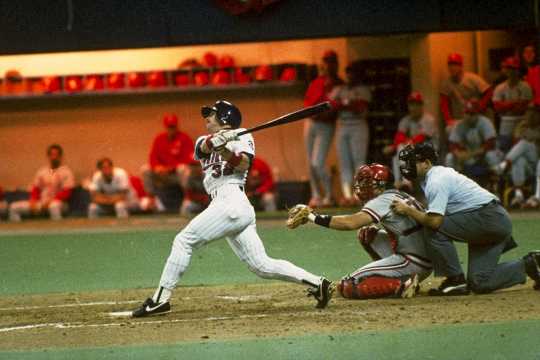 Gladden had a dour demeanor that rubbed some people the wrong way. While with the Giants, he had exchanged blows with teammate Jeffrey Leonard during an on-field batting practice. The scuffle stemmed from Gladden’s tendency to take long batting practice sessions, fouling off balls and taking extra cuts. This practice irked Leonard and one day Leonard let Gladden know it. Gladden, not one to back down from a fight, jumped Leonard. According to Hank Greenwald, the Giants play-by-play announcer who witnessed the melee from the booth, the two went at it next to the batting cage and ended up rolling in the dirt before being separated by other teammates. Brunansky, who faced Gladden in the minors, said that he “hated” the way Gladden played the game back then. “He seemed arrogant,” the Twins right fielder said. “He didn't seem to care how he went about it.” In spite of the reputation, the Twins front office felt that the team needed some of that hard scrabble attitude. Unsatisfied with the performance of veteran Mickey Hatcher, McPhail looked elsewhere for help and targeted Gladden, but the transaction took forever to complete. "Every time I talked to (Giants general manager) Al Rosen, he asked for either Jeff Bumgarner or Steve Gasser,” McPhail told the Star Tribune’s Sid Hartman. “I wasn’t going to give either one up.” “We talked about the deal at least once every week until we made it. Atlanta and the Dodgers were very interested in Gladden. The Giants had made a deal with the Reds for Eddie Milner, and they had an abundance of outfielders. Rosen was reluctant to trade him to a team in the National League. He didn’t want Gladden to come back and hurt him.” McPhail said that the trade discussions started early in the offseason during the winter meetings, but the back and forth prolonged the deal until well into spring training. “Rosen finally called one day late in March and said he was going to deal Gladden that day. He said he was willing to make the trade for three of our young pitching prospects. He gave me a list of five, I took two out, and we made the trade.” With Gladden acquired, the Twins cut Hatcher on March 31. It was a shock to the fan base. Hatcher, who had played with the Twins for the last six years with a .284 average but inconsistent playing time, saw the writing on the wall as spring training played out and manager Tom Kelly used him less frequently in the exhibition games. “After two weeks of being here I knew it was over for me,” Hatcher told reporters. “When you’re only playing once every four days, you get the idea. It was obvious they wanted to look at the younger players.” McPhail said he wanted speed. Gladden, who had nabbed 94 bases in 138 attempts with the Giants and was capable of playing center field, would provide that dimension. Additionally, he was tabbed to assume the leadoff hitter role in place of Puckett, who had a breakout power year in 1986, allowing him to hit in the middle of the order where he was better suited and where Tom Kelly wanted him to bat. (Once he assumed the interim manager title the previous September, Kelly shifted Puckett out of the leadoff and into the third spot.) Kelly, however, wasn’t sure what to do with Gladden initially. In the season’s first game Gladden led off but was the designated hitter. It wasn’t until five games later that he got his first start in the outfield, only it was in right field. Kelly preferred Randy Bush and Mark Davidson while spot starting Gladden on occasion. It was not until mid-May that Gladden solidified his role as the team’s starting left fielder and leadoff hitter. Almost immediately, Twins players took notice of Gladden’s attitude. “We didn’t know much about him but we found out soon,” said left-handed reliever Dan Schatzeder. “In one of the first games he played for us, he got into a jawing match with an umpire. He was asserting himself right away. We thought, ‘This guy’s going to be interesting.’” Interesting is right. It would be another eight months before his infamous fight with Lombardozzi, but Gladden was about to provide a very memorable punch against the Cardinals. **** In his second at-bat of Game 1, Gladden grounded into a fielder’s choice, erasing Tim Laudner at second. The at-bat was a microcosm of who Gladden was as a leadoff hitter. Magrane struggled with his command, walking three of the last four hitters he faced. Common baseball sense would be to exert patience and make the rookie pitcher sweat through his polyester. However, rather than making Magrane squirm, Gladden took a cut at the the first pitch -- a big curve, no less -- and bounced the ball harmlessly to Lawless at third who fired to Herr at second to retire Laudner. That was the frustrating part of Gladden as a leadoff hitter. Of course, even though Gladden ignored standard practice like making a pitcher throw a glutton of pitches, on the bases he was able to set up camp right in the pitcher's mind. In spite of eliminating the lead runner, Gladden, now at first base, became all-consuming to the Cardinals’ rookie lefty who struggle to hold runners. Magrane paid extra attention (and then some) to the irritating long-haired runner who had taken 25 bases on 34 attempts during the regular season. What's more, Gladden was 18 for 21 in attempts in the Metrodome that year. And Magrane was terrible when it came to slowing down the run game -- runners had swiped 18 bases on 21 tries. His big body and lack of a slide step gave runners ample time to trot to the next base. Gladden, with one foot on the turf and one foot in the dirt cut-out, was an itch that Magrane needed to scratch constantly. Before even throwing a pitch to Gagne, he thew over to first nine consecutive times. Afterwards, Magrane admitted the obvious that he had obsessed over Gladden. “I messed around with him too much,” Magrane said. “I felt if he was going to go, it was going to be on the first pitch. I should have gone after the hitter a lot more. But I just messed around with him too much.” A batter later, Gladden eventually did swipe that base but was stranded there when Puckett grounded out to second. It would be in his next at bat, with the bases loaded and Magrane out of the game, that Gladden would break the game wide open. Gladden was rejuvenated during the Detroit series after the second half of the year saw his production drop off a cliff. After hitting .283/.337/.405 in the first half, he went .195/.273/.290 the rest of the way after the break. In the ALCS Gladden went 7-for-20 (.350), scored five and drove in another five. He did miss out on the opportunity to add to his RBI total when he failed to convert during a bases loaded appearance in Game 4: With the bags filled and two outs in the second inning, the Tigers’ Frank Tanana threw Gladden three straight breaking balls and ended the threat without the ball being put into play. In the bottom of the fourth inning of Game 1 of the World Series, with Hrbek, Lombardozzi and Laudner occupying the bases, Gladden was given a second chance to do some damage. With his golden hair escaping out of the back of his navy helmet by several inches, Gladden assumed his standard closed stance at the plate -- his front foot almost touching the plate-side batter’s box chalk and his back foot splayed out behind him -- and teased his bat several times in Cardinals' reliever Bob Forsch’s direction. Forsch started Gladden off with a fastball up and away for ball one. On the 1-0 count, the pent-up party atmosphere of the Dome’s left field bleachers released a beach ball onto the field, causing a break in the action while Willie McGee grabbed and tossed the ball over the plastic wall in center. “What’s a ballgame without a beach ball these days,” Michaels inquired to the audience during the brief delay. Dome announcer Bob Casey took that moment to remind the crowd not to throw things on the playing field. After the brief delay, Forsch tried to hit the outside corner again with a fastball but it drifted back over the plate. Gladden was behind and fouled into the first base stands. Forsch then went to the breaking ball on the outer half that Gladden spun down the first base line. Similar to the Detroit series, Gladden now had the bases loaded with two strikes. Then Forsch made a critical mistake. He went back to the curveball. Maybe it wasn’t so much that Forsch went back to the curveball but that he didn’t bury the breaking ball as much as he should have. Forsch’s curve was a looper that started at the belt and broke to the knees. Gladden was out over his front leg when he greeted the pitch and lifted it towards left field. Off the bat, it looked like a chip shot. But it carried. http://i.imgur.com/HRGSXL8.gif “High in the air to deep left field,” Michaels bellowed as Gladden’s shot drifted toward the plexiglass-guarded fans. “Coleman goes back...a grand slam!” The 55,171 people in attendance fell into hysteria. Reports later said that the decibel level reached 118. At that level, it was similar to sitting next to an ambulance siren or a jackhammer, a level of exposure that is only recommended for less than 30 seconds. The Metrodome crowd roared like that for several minutes. The first grand slam in a World Series game since 1970 put the Twins squarely ahead 7 to 1. Gladden later joked to the media that he should have put his “flap” down, the act of keeping one arm motionless while rounding the bases. “I was pretty excited running around the bases” said Gladden, a former Giant. 'I thought about putting my flap down like Jeffrey Leonard, but I thought twice about it.” Had Gladden opted for the flap-down look, it would have been a solid troll move to start the opening game of the series. The St. Louis Cardinals had seen plenty of Leonard’s “one flap down” routine during a contentious National League Championship Series. “I don’t like Jeffrey Leonard,” said Cardinals pitcher John Tudor. “It’s no secret to him or anyone else.” That feeling was shared by most of Tudor’s teammates. In Game 3, Bob Forsch dotted him with a pitch that Leonard felt was intentional. In Game 4, Leonard had already launched a home run deep to left field when later he tried to score from first on a misplayed fly ball. The relay reached home plate and the waiting Cardinals’ catcher Tony Pena in plenty of time. Rather than sliding, Leonard came in high and Pena took the opportunity to place a “tag” right in Leonard’s mug. The Twins were now firmly in the driver’s seat and the stadium was rocking off its hinges. Greg Gagne, who followed Gladden at the plate, said afterwards that the volume of the crowd was unbelievable. “After Gladden hit that grand slam, I was in the batter's box and my ears were ringing. I asked Tony (Pena) if his ears were ringing and he couldn’t even hear me.” **** As bedlam overtook in the Dome, the action outside throughout the Twin Cities was just as Twins-centric. With tickets difficult to obtain, fans waited around the Metrodome ticket offices for over an hour after the start of the game in hopes of landing an unclaimed ticket. At the Orpheum Theater, singer-songwriter Warren Zevon performed in front of 1,500 fans and provided them with continuous updates of the score for Game 1. Zevon worked Kirby Puckett’s name into one of his songs and disparaged the Cardinals in another. For an encore, he returned to the stage with a Twins jersey. Back on the mound Frank Viola remained a magician. Viola was unsolvable for the majority of the game. Having a 10-1 lead didn’t hurt either. Outside of the Puckett misplay that led to the Cardinals’ only run, he was virtually flawless. Prior to being pulled after eight innings, he retired 12 of the last 14 batters he faced and did not allow a baserunner past first from the fourth inning on. Interestingly enough, if things had gone differently and the Twins were inclined to shop Viola during the lean years, he may have been in the other dugout. “I’ve always like Viola,” Whitey Herzog told the Star Tribune’s Steve Aschburner. “We’ve tried to get him for years. He’s a premier pitcher. He knows how to pitch, he changes speeds real well. He pitched an outstanding ball game.” Gladden added an RBI double in the seventh inning, cementing his spot as the game’s most valuable offensive player. His five RBI in one game topped the five he drove in through the entire ALCS series. He had gone from a roster afterthought to a celebrity in the span of two and a half hours. The crowd was delirious leaving the ballpark. Outside the Metrodome, each local TV newscast positioned a reporter on the scene and each reporter was inundated with fans chanting “we’re number one” or the Twins fight song. No doubt that the lopsided results of Game 1 had people thinking that this series would be over after the next three games. With the area’s population all clamoring to participate in the largest screamfest the state had ever seen, Kent Hrbek offered up words that every Twins fan unable to join the party thought. “I wished they had built a bigger stadium.” **** Previous installments... Tame The Tigers Dealt The Cards
 -
1987 Revisited: Twins Draw The Cards
Parker Hageman replied to Parker Hageman's topic in Twins Daily Front Page News
If you believe Al Michaels' account, some of that noise was artificially created. You might have a class action lawsuit on your hands. Then again, Dave St. Peter has denied that happening. -
“I’ve been reading about some people who have said that it’s a disgrace to have us representing the American League,” Gary Gaetti told reporters not long before the start of the 1987 World Series. “The way I figure it, we might as well go ahead and disgrace the whole game by winning it.” Yes, while the Twins were heavy underdogs facing the powerful and experienced Tigers in the previous round, sentiments shifted as the battered and bruised Cardinals landed in town. For as much as they wanted to continue to play the role of the dark horse, suddenly people believed in the Twins’ chances. On display in the ALCS was power, pitching and solid decision-making by the rookie manager. More national media types were throwing their weight behind the team that had torn the stuffing out of Detroit in five games. “Now that the Twins have become America’s team, I’ll say Minnesota in six games,” ESPN’s Chris Berman predicted. “Twins in six,” speculated the Atlanta Journal-Constitution’s Gerry Fraley. “Their pitching staff is in order. They have the first two games at home. They’re relatively healthy. The series is set up perfectly for them.” Tim Kurkjian, who had written that the Tigers would trounce the Twins in the American League Championship Series, now saw them as the superior team. He still threw shade by saying “the Twins will win in seven because the Cardinals are so banged up and because of the Metrodome factor.” While the Twins shifted to favorites, no one was counting St. Louis out. Were the Cardinals injured? Yup. Were they offensively depleted? Of course. But they had speed and speed never slumps. They were battle-tested with recent World Series experience. And they had Whitey Herzog at the helm. Herzog had guided his team to the best record in the National League and pulled them through a bloodbath of a playoff series against the San Francisco Giants. At 95-67, the Cardinals had finished with the National League’s best record. Yet, in many ways, they had lost the magic from the first half of the season. At the All Star Break St. Louis led all of baseball with 56 wins. Despite pitching well and playing good defense throughout the year, it was the offense that was ablaze in the season’s first half, scoring an MLB-best 486 runs. Even though speedsters like Vince Coleman, Ozzie Smith and Tommy Herr were getting on and getting over, the vast majority of the lumber was supplied by first baseman Jack Clark, who was hitting .311/.459/.645 with an MLB leading 86 RBI at that point. His loss would be monumental to the Cardinals' lineup. On September 9, while playing at Montreal’s Olympic Stadium, his season all but ended. In the top of the sixth, Clark hit a harmless grounder off of Dennis Martinez that third baseman Tim Wallach fielded cleanly only to make a wide throw to Andres Galarraga at first. In an attempt to avoid Galarraga’s tag, Clark rolled his ankle. Herzog would later say that he knew that Clark’s season was finished right then and there. Cardinals pitcher Bob Forsch wrote in his biography that the injury was one of the “ugliest” he had ever seen, describing Clark’s foot grossly swollen and the color of an eggplant. ''Without Jack Clark in the lineup we’re missing a big weapon,'' Jim Lindeman, Clark’s replacement, told reporters. “When he walks up to the plate, he's the only guy who gets the crowd buzzing and the other team fidgeting. He's the only guy who intimidates people with his bat.'' Indeed. After Clark's bat in the lineup, there was a prolific drop-off in power for St. Louis. And to make matters worse, the next closest power contributor had also just injured himself. Terry Pendleton, who had the most home runs on the team behind Clark, pulled a muscle in his rib cage during the final game of the National League Championship Series and was not expected to participate much in the World Series. “Right now it is doubtful that he will play at all,” Herzog said addressing the media before the series. Clark and Pendleton’s absence was no doubt felt throughout the Cardinal lineup. Rather than having Clark, a hitter with a 1.055 OPS that season, Herzog was forced to choose from the rookie Lindeman, who possessed a .632 OPS over his last two seasons, or the 35-year-old Dan Driessen, who had spent most of the year in AAA and posted a .625 OPS in 24 games with the Cardinals. In place of Pendleton, who had posted a respectable .772 OPS that year, it was the 30-year-old Tom Lawless, owner of a career .549 OPS. “Two hundred RBIs,” Herzog answered when asked if they team would miss Clark and Pendleton in the heart of the order. “I’d say that is a hole.” Clark led the team with 35 home runs during the regular season. After that, Pendleton’s 12 was a distant second followed by center fielder Willie McGee’s 11. McGee, a light-hitting speedster, sadly represented St. Louis’ biggest long-ball threat. In fact, no other Cardinals starter managed more than five that year. Prior the series, the Star Tribune’s Doug Grow marveled at the juxtaposition of the two teams. “The Twins dig in at the plate and grunt as they play long-ball. Watch ‘em in batting practice. They love that time in the cage. They stand there and laugh and measure how far they hit it,” Grow observed. “When the St. Louis Cardinals step into the batting cage, the walls are safe from baseballs. Batting is something the Cardinals do only so they can get a chance to run.” With so few options Herzog decided to use the right-handed part-time player in Lindeman -- who had nine career home runs to his name -- as his cleanup hitter against left-handed pitching in the postseason. In Game 3 of the NLCS, Lindeman responded by hitting a 1-1 fastball from San Francisco’s Atlee Hammaker over the left-center field fence for a two-run shot (one of two home runs the Cardinals hit that entire seven game series). It was his first cleanup duty since April of that year. "I think the last time I batted cleanup I probably went oh for four and broke three bats," he told reporters after the game. With another left-hander on the mound from Minnesota in Game 1 and the switch-hitting Pendleton unable to swing from the right-side, Herzog went forward with a lineup card that included Lindeman in the middle of the order, another rookie at DH (Tom Pagnozzi and his .583 OPS) and Lawless, who had a .080 batting average in the regular season, at third. They would meet the man affectionately known in Minnesota as Sweet Music. *** On the night of October 17, 1987, 27-year-old Frank Viola was at work and not at his brother’s wedding in New York where he was supposed to be the best man, like he had committed to a year prior. In 1986 the Twins were well out of postseason contention and the left-handed starter figured that if 1987 were anything like the previous year, he would have his October wide open to participate in his brother’s nuptials. After all, how could a team that won just 71 games make up that much ground? “I thought it would be a little far-fetched. I told ‘em, yeah, I shouldn’t have any problem making it. That was last year, when we were 20 games under .500. It’s unbelieveable,” said Viola. Viola was heavily responsible for the Twins making this postseason run. He had finished the year 17-10 with a solid 2.90 ERA (a career-best 159 ERA+). It was a coming out party of sorts. Viola went from a very good pitcher in 1986 to a great one in 1987. When people asked how he was able to shave an entire run off his ERA over the previous year, he attributed it to his changeup. Viola’s development of the changeup was the difference maker from the good pitcher that arrived with the Twins in the early 1980s into the great one towards the end of that decade. In 1983, Viola was a lefty who used a solid fastball and a slider-curveball combination to retire hitters (or not retire them when you consider his 128 earned runs that season was the most in baseball). That same year, Twins pitching coach Johnny Podres taught Viola how to throw a changeup, keeping his arm action consistent with his fastball delivery. When Podres left and Dick Such took over pitching coach duties, Viola’s changeup became a significant weapon. “I had been working on it for 3 ½ years under Podres but was using 15 or 20 grips. None of them worked. When Such joined us, he made a few adjustments and all of a sudden I found myself comfortable throwing a changeup,” Viola said in spring training before the 1986 season. By 1986, he had mastered command of the pitch and scrapped his slider in favor of the off-speed pitch. "The changeup I use now is the one I felt most comfortable with, but it took me two years to throw it over the plate," Viola told the LA Times in August 1987. Because the Twins were pushed out of the pennant race early in 1986, Viola said he was able to experiment with the pitch until he got it right. It was working swimmingly -- after striking out 5.3 hitters per nine innings over his first four seasons, he was now whiffing 7 per nine, a massive jump. Most notably, the changeup also gave Viola an advantage over right-handed hitters he did not have before. From 1982 through 1985, Viola struck out 13 percent of right-handed hitters but saw that rate jump to 19 percent in 1986 through 1987. That's one reason why that, on October 17, 1987, Frank Viola was standing on the mound at the Hubert H. Humphrey Metrodome and not at his brother's wedding ceremony. The game started off with a failed bunt attempted by Cardinals' leadoff hitter Vince Coleman on Viola’s first-pitch curve. That brought shortstop Ozzie Smith to the plate. Smith took his stance in the right-handed batters’ box. With the exception of Bill Buckner, no hitter was more difficult to strike out than the Wizard of Oz. From 1982 through 1987, Smith had struck out in just 4.9% of his total plate appearances. If there was one thing Ozzie was going to do, it was put the ball in play. In his first appearance against Viola in his career, the left-hander shot a low-90s fastball on the inner-half of the plate at Smith's knees for strike one and then missed wide on a big curve that skipped in the dirt to even the count. Viola now turned to that off-speed weapon that the National League was not accustomed to. The first changeup he threw split the plate in half while falling rapidly, leaving Smith waving over the top of it. Viola followed that one with a near clone of it that Smith once again swung over for strike three. Up to that point in his career, Ozzie Smith had 55 World Series plate appearances under his belt without a strikeout. If their first match-up was any indication, Frank Viola was showing the Cardinals hitters and viewers across America that something special was afoot. **** When you consider the personnel loss the Cardinals had, it was a near miracle that they were able to overtake the Giants in the NLCS. ABC’s Al Michaels’ suggested that Herzog reached baseball’s pinnacle series by virtue of “paste and glue and tacks and the rest of it”. They were missing Clark. Pendleton had a strained rib cage that kept him from being able to hit right-handed. Everything about the lineup felt patchwork. Following his tendon tear Clark attempted to do everything possible to make it back for the postseason to face his former team. He made a pair of pinch-hitting appearances in the regular season and was kept on the roster for the NLCS despite the inability to put much weight on his right leg. Prior to games, he and some of the coaching staff took private on-field batting practice, away from the attention of his teammates and onlookers. It did not go well. He lunged and lurched at balls and produce off-balanced swings with mediocre contact. "It's going to take a while longer," he said in response to an inquiry about his injury status, "and I don't know how much longer it will be. This is more than just a little twisted ankle. There isn't any medicine I can take. If there were shots or pills that would help, I'd have had them by now.” Herzog used Clark once in the seven game series against San Francisco -- a pinch-hit appearance in Game 3 -- where Clark struck out looking with runners on first and second. Before the start of the World Series, the Cardinals ran Clark through a simulated game. Clark went down looking in his at-bats, barely able to transfer his weight off his front leg. That was enough for Herzog to decide not to keep him on the roster for the series, instead opting to carry reliever Lee Tunnell. Surprisingly, it was Clark’s replacement who got the Cardinals on the board first. Leading off the second inning, Viola ran a fastball off the inside edge of the plate, inciting the right-handed Lindeman to flinch. Naturally, the next offering after going hard in was to throw something soft away. Viola spotted a changeup just off the outside corner but left it too far up and Lindeman, now swinging off his front foot, was able to lift toward center field. Puckett, who enjoyed playing a deep center in order to defend the wall and takeaway would-be home runs, initially froze. Perhaps Puckett misjudged the contact, or lost the ball momentarily in the sea of white Homer Hankies; either way, by the time he made his furious break back toward the infield and the landing spot, the ball hit the artificial turf and Lindeman gained second. Following a Willie McGee fly out to right center that moved him up a base, Lindeman later scored on an RBI groundout by Tony Pena, putting the Cardinals up 1-0. As it turns out, the run proved to be as harmless as a minnow bite. Although Magrane had kept the potent Twins hitless through the first three innings, his habit of falling behind hitters and issuing free passes eventually catch up to him. The Twins offense also used their first plate appearances to calibrate themselves against the young pitcher. After their first looks, they were ready to pounce. Magrane had relied mainly on his sinking fastball -- one that didn’t find the zone consistently. In the bottom of the fourth, he started Gaetti with a fastball inside which the reigning ALCS MVP rapped on the ground down the third baseline. Lawless, playing deep for the power hitter, laid out to snare the ball well behind the bag and came up firing. In a bang-bang play, Gaetti beat it by a step -- the Twins’ first hit of the 1987 World Series was an infield hit. After Gaetti’s single, veteran DH Don Baylor did the same. Ditto for Tom Brunansky. *** Brunansky didn’t know it at the time but he was showcasing his talents his future employer. It was no secret that the Cardinals lacked power. When Clark left as a free agent after the 1987 season, St. Louis was left with a pile of toothpicks for bats. Internally, they hoped that Lindeman would progress in the power department but they looked for more of a proven presence, adding beefy Bob Horner to the mix, much to manager Whitey Herzog’s chagrin. The 30-year-old Horner had averaged 24 home runs in his ten seasons in Atlanta but had spent 1987 in Japan playing for the Yakult Swallows where he smacked another 31 home runs. In his exit interview, Horner took parting shots at the Japanese version of the game, calling out the pitchers for not throwing him strikes, chastising the fans for their choice of whistles and noisemakers, and saying the umpires’ strike zones were prejudice against foreigners. His words nearly incited an international incident. While he never was asked about Horner’s remarks, the Redbirds’ manager wasn’t thrilled by the prospect of adding him based on his pool of play. “I don’t like Horner,” Herzog told reporters where rumors surfaced that Cardinals’ GM Dal Maxvill was targeting the large first baseman. “Of his lifetime homers, about seventy percent were hit in Atlanta. He never could hit in St. Louis. He can’t hit, and he can’t field.” It was true that the bulk of Horner’s home runs had come in Fulton County Stadium -- 174 of his 218 homers came in Atlanta. Herzog’s words, however, eventually reached Horner who had signed with St. Louis on a one-year, $960,000 deal, significantly lower than the $10 million multi-year deal that Yukult offered him to stay. “Obviously it’s not something you want to read,” Horner said. “But even though Whitey had criticized me in making those statements, I would still enjoy the challenge of proving him wrong.” With a need for more power, the Cardinals turned to the Twins. On April 22, 1988, the two sides agreed to swap the outfielder Brunansky for St. Louis’ switch-hitting second baseman, Tommy Herr. According to Sid Hartman, who had learned of the trade on the radio while driving his close, personal friend Bobby Knight to his hotel in Bloomington, he immediately called McPhail at home in the middle of the night to ask “what the hell is going on?” The Twins GM told the Star Tribune columnist that they were convinced Brunansky couldn’t throw the ball from right field any more and was turning into a defensive liability. What’s more, Brunansky was hitting .184 with just a lone home run through the season’s first 14 games. And, more importantly, the Twins were 4 and 9 and looking for a spark. Herr reportedly cried when he heard the news. His desire to play for the Twins was questioned by fans, the media and teammates when he was continually sidelined with injuries. In his autobiography, Kent Hrbek called Herr the only teammate he ever played with that he really didn’t like. Meanwhile, in St. Louis, Brunansky brought with him some of the Twins’ loosy-goosy clubhouse attitude that involved various pranks which endeared him to his coworkers -- possibly with the exception of pitcher Joe Magrane. Later that summer, with the help of Ozzie Smith, the outfielder orchestrated a prank on the pitcher. Magrane, who had a reputation as being a pretty-boy clotheshorse, was sent a telegram from GQ magazine requesting a photoshoot. Smith had been profiled in the April issue so it seemed somewhat plausible that the magazine was interested in more St. Louis subjects -- this time to display winter fashion. On a day in which the heat reached 105 degrees, a photographer and Magrane, along with five winter suits, took to the Busch Stadium field and began a photoshoot that lasted over an hour in the oppressive Missouri summer heat. In his book, Cardinals pitcher Bob Forsch described Magrane as “sweating like a stuffed pig” as he ran from the field to the clubhouse for an attire change. Several days later, Magrane received another telegram that said “because of your subpar season, we’ve decided not to use your session in GQ.” A day later, a follow up telegram arrived. It read: “Roses are red, violets are blue. You’ve been had. There’s no GQ.” *** While wearing winter knits in 105 degree heat sounds uncomfortable, it probably was nothing for Magrane compared to the pressure on the mound at the Metrodome with the bases now at maximum capacity (in the form of Gaetti, Baylor and his future teammate Brunansky) and Kent Hrbek coming to the plate looking for a meal. People worried about Hrbek. After all, he went 1-for-20 in the ALCS against Detroit. Fans expressed frustration with their team's best run producer's inability to produce. Was the pressure to carry his hometown team -- his childhood rooting interest -- to their first World Series victory be too much? Throughout the regular season, Hrbek did little against left-handed pitching. While he finished with 34 home runs, all but six came against right-handed pitchers and he posted a .225/.290/.370 line against southpaws in 155 plate appearances. So it was no surprise that the first baseman was batting seventh in the game against Magrane. Magrane had been tough on left-handed opponents, limiting them to a .226 average and just one home run. Given that Magrane held the platoon advantage, it shouldn’t come as surprise that Hrbek’s contact on the 0-1 pitch wasn’t solid. The ball hit the ground inches in front of home then again just beyond second base -- a classic Dome ball that found its way between Smith, arguably the best defensive shortstop in the game, and Herr at second to score Gaetti and Baylor, putting the Twins ahead 2-1. “I just looked at it on the TV, and it was a high fastball away,” Hrbek told the Star Tribune. “I was just trying to hit it to the outfield and go to the left field to get the run in. It’s the old Randy Bush theory. You try to swing as hard as you can in case you hit it.” When Steve Lombardozzi walked, the fifth consecutive Twins hitter to reach base, Whitey Herzog emerged to tell Magrane his night was over. Magrane exited to a chorus of “Happy Trails” by Twins fans. Herzog called on the veteran Bob Forsch, in hope of coaxing a double-play grounder out of catcher Tim Laudner. Forsch did get the grounder but the right-handed hitting Lauds was able to will it through the left-side of the infield between Herr and Lindeman, scoring Brunansky from third and loading the bases once again. That’s when outfielder Dan Gladden came to the plate. ****Come back to TwinsDaily.com tomorrow for more of the "1987 Revisited" series**** View full article
-
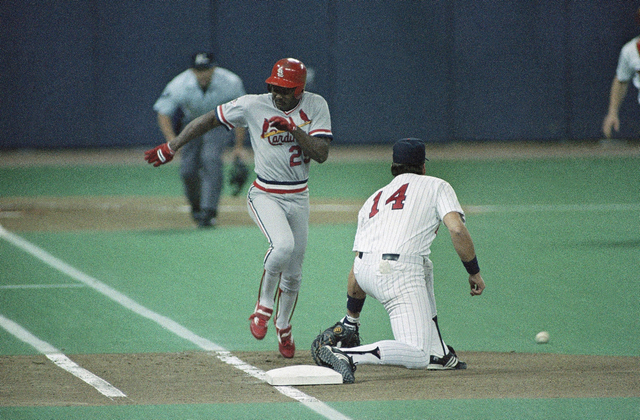 “Now that the Twins have become America’s team, I’ll say Minnesota in six games,” ESPN’s Chris Berman predicted. “Twins in six,” speculated the Atlanta Journal-Constitution’s Gerry Fraley. “Their pitching staff is in order. They have the first two games at home. They’re relatively healthy. The series is set up perfectly for them.” Tim Kurkjian, who had written that the Tigers would trounce the Twins in the American League Championship Series, now saw them as the superior team. He still threw shade by saying “the Twins will win in seven because the Cardinals are so banged up and because of the Metrodome factor.” While the Twins shifted to favorites, no one was counting St. Louis out. Were the Cardinals injured? Yup. Were they offensively depleted? Of course. But they had speed and speed never slumps. They were battle-tested with recent World Series experience. And they had Whitey Herzog at the helm. Herzog had guided his team to the best record in the National League and pulled them through a bloodbath of a playoff series against the San Francisco Giants. At 95-67, the Cardinals had finished with the National League’s best record. Yet, in many ways, they had lost the magic from the first half of the season. At the All Star Break St. Louis led all of baseball with 56 wins. Despite pitching well and playing good defense throughout the year, it was the offense that was ablaze in the season’s first half, scoring an MLB-best 486 runs. Even though speedsters like Vince Coleman, Ozzie Smith and Tommy Herr were getting on and getting over, the vast majority of the lumber was supplied by first baseman Jack Clark, who was hitting .311/.459/.645 with an MLB leading 86 RBI at that point. His loss would be monumental to the Cardinals' lineup. On September 9, while playing at Montreal’s Olympic Stadium, his season all but ended. In the top of the sixth, Clark hit a harmless grounder off of Dennis Martinez that third baseman Tim Wallach fielded cleanly only to make a wide throw to Andres Galarraga at first. In an attempt to avoid Galarraga’s tag, Clark rolled his ankle. Herzog would later say that he knew that Clark’s season was finished right then and there. Cardinals pitcher Bob Forsch wrote in his biography that the injury was one of the “ugliest” he had ever seen, describing Clark’s foot grossly swollen and the color of an eggplant. ''Without Jack Clark in the lineup we’re missing a big weapon,'' Jim Lindeman, Clark’s replacement, told reporters. “When he walks up to the plate, he's the only guy who gets the crowd buzzing and the other team fidgeting. He's the only guy who intimidates people with his bat.'' Indeed. After Clark's bat in the lineup, there was a prolific drop-off in power for St. Louis. And to make matters worse, the next closest power contributor had also just injured himself. Terry Pendleton, who had the most home runs on the team behind Clark, pulled a muscle in his rib cage during the final game of the National League Championship Series and was not expected to participate much in the World Series. “Right now it is doubtful that he will play at all,” Herzog said addressing the media before the series. Clark and Pendleton’s absence was no doubt felt throughout the Cardinal lineup. Rather than having Clark, a hitter with a 1.055 OPS that season, Herzog was forced to choose from the rookie Lindeman, who possessed a .632 OPS over his last two seasons, or the 35-year-old Dan Driessen, who had spent most of the year in AAA and posted a .625 OPS in 24 games with the Cardinals. In place of Pendleton, who had posted a respectable .772 OPS that year, it was the 30-year-old Tom Lawless, owner of a career .549 OPS. “Two hundred RBIs,” Herzog answered when asked if they team would miss Clark and Pendleton in the heart of the order. “I’d say that is a hole.” Clark led the team with 35 home runs during the regular season. After that, Pendleton’s 12 was a distant second followed by center fielder Willie McGee’s 11. McGee, a light-hitting speedster, sadly represented St. Louis’ biggest long-ball threat. In fact, no other Cardinals starter managed more than five that year. Prior the series, the Star Tribune’s Doug Grow marveled at the juxtaposition of the two teams. “The Twins dig in at the plate and grunt as they play long-ball. Watch ‘em in batting practice. They love that time in the cage. They stand there and laugh and measure how far they hit it,” Grow observed. “When the St. Louis Cardinals step into the batting cage, the walls are safe from baseballs. Batting is something the Cardinals do only so they can get a chance to run.” With so few options Herzog decided to use the right-handed part-time player in Lindeman -- who had nine career home runs to his name -- as his cleanup hitter against left-handed pitching in the postseason. In Game 3 of the NLCS, Lindeman responded by hitting a 1-1 fastball from San Francisco’s Atlee Hammaker over the left-center field fence for a two-run shot (one of two home runs the Cardinals hit that entire seven game series). It was his first cleanup duty since April of that year. "I think the last time I batted cleanup I probably went oh for four and broke three bats," he told reporters after the game. With another left-hander on the mound from Minnesota in Game 1 and the switch-hitting Pendleton unable to swing from the right-side, Herzog went forward with a lineup card that included Lindeman in the middle of the order, another rookie at DH (Tom Pagnozzi and his .583 OPS) and Lawless, who had a .080 batting average in the regular season, at third. They would meet the man affectionately known in Minnesota as Sweet Music. *** On the night of October 17, 1987, 27-year-old Frank Viola was at work and not at his brother’s wedding in New York where he was supposed to be the best man, like he had committed to a year prior. In 1986 the Twins were well out of postseason contention and the left-handed starter figured that if 1987 were anything like the previous year, he would have his October wide open to participate in his brother’s nuptials. After all, how could a team that won just 71 games make up that much ground? “I thought it would be a little far-fetched. I told ‘em, yeah, I shouldn’t have any problem making it. That was last year, when we were 20 games under .500. It’s unbelieveable,” said Viola. Viola was heavily responsible for the Twins making this postseason run. He had finished the year 17-10 with a solid 2.90 ERA (a career-best 159 ERA+). It was a coming out party of sorts. Viola went from a very good pitcher in 1986 to a great one in 1987. When people asked how he was able to shave an entire run off his ERA over the previous year, he attributed it to his changeup. Viola’s development of the changeup was the difference maker from the good pitcher that arrived with the Twins in the early 1980s into the great one towards the end of that decade. In 1983, Viola was a lefty who used a solid fastball and a slider-curveball combination to retire hitters (or not retire them when you consider his 128 earned runs that season was the most in baseball). That same year, Twins pitching coach Johnny Podres taught Viola how to throw a changeup, keeping his arm action consistent with his fastball delivery. When Podres left and Dick Such took over pitching coach duties, Viola’s changeup became a significant weapon. “I had been working on it for 3 ½ years under Podres but was using 15 or 20 grips. None of them worked. When Such joined us, he made a few adjustments and all of a sudden I found myself comfortable throwing a changeup,” Viola said in spring training before the 1986 season. By 1986, he had mastered command of the pitch and scrapped his slider in favor of the off-speed pitch. "The changeup I use now is the one I felt most comfortable with, but it took me two years to throw it over the plate," Viola told the LA Times in August 1987. Because the Twins were pushed out of the pennant race early in 1986, Viola said he was able to experiment with the pitch until he got it right. It was working swimmingly -- after striking out 5.3 hitters per nine innings over his first four seasons, he was now whiffing 7 per nine, a massive jump. Most notably, the changeup also gave Viola an advantage over right-handed hitters he did not have before. From 1982 through 1985, Viola struck out 13 percent of right-handed hitters but saw that rate jump to 19 percent in 1986 through 1987. That's one reason why that, on October 17, 1987, Frank Viola was standing on the mound at the Hubert H. Humphrey Metrodome and not at his brother's wedding ceremony. The game started off with a failed bunt attempted by Cardinals' leadoff hitter Vince Coleman on Viola’s first-pitch curve. That brought shortstop Ozzie Smith to the plate. Smith took his stance in the right-handed batters’ box. With the exception of Bill Buckner, no hitter was more difficult to strike out than the Wizard of Oz. From 1982 through 1987, Smith had struck out in just 4.9% of his total plate appearances. If there was one thing Ozzie was going to do, it was put the ball in play. In his first appearance against Viola in his career, the left-hander shot a low-90s fastball on the inner-half of the plate at Smith's knees for strike one and then missed wide on a big curve that skipped in the dirt to even the count. Viola now turned to that off-speed weapon that the National League was not accustomed to. The first changeup he threw split the plate in half while falling rapidly, leaving Smith waving over the top of it. Viola followed that one with a near clone of it that Smith once again swung over for strike three. Up to that point in his career, Ozzie Smith had 55 World Series plate appearances under his belt without a strikeout. If their first match-up was any indication, Frank Viola was showing the Cardinals hitters and viewers across America that something special was afoot. **** When you consider the personnel loss the Cardinals had, it was a near miracle that they were able to overtake the Giants in the NLCS. ABC’s Al Michaels’ suggested that Herzog reached baseball’s pinnacle series by virtue of “paste and glue and tacks and the rest of it”. They were missing Clark. Pendleton had a strained rib cage that kept him from being able to hit right-handed. Everything about the lineup felt patchwork. Following his tendon tear Clark attempted to do everything possible to make it back for the postseason to face his former team. He made a pair of pinch-hitting appearances in the regular season and was kept on the roster for the NLCS despite the inability to put much weight on his right leg. Prior to games, he and some of the coaching staff took private on-field batting practice, away from the attention of his teammates and onlookers. It did not go well. He lunged and lurched at balls and produce off-balanced swings with mediocre contact. "It's going to take a while longer," he said in response to an inquiry about his injury status, "and I don't know how much longer it will be. This is more than just a little twisted ankle. There isn't any medicine I can take. If there were shots or pills that would help, I'd have had them by now.” Herzog used Clark once in the seven game series against San Francisco -- a pinch-hit appearance in Game 3 -- where Clark struck out looking with runners on first and second. Before the start of the World Series, the Cardinals ran Clark through a simulated game. Clark went down looking in his at-bats, barely able to transfer his weight off his front leg. That was enough for Herzog to decide not to keep him on the roster for the series, instead opting to carry reliever Lee Tunnell. Surprisingly, it was Clark’s replacement who got the Cardinals on the board first. Leading off the second inning, Viola ran a fastball off the inside edge of the plate, inciting the right-handed Lindeman to flinch. Naturally, the next offering after going hard in was to throw something soft away. Viola spotted a changeup just off the outside corner but left it too far up and Lindeman, now swinging off his front foot, was able to lift toward center field. Puckett, who enjoyed playing a deep center in order to defend the wall and takeaway would-be home runs, initially froze. Perhaps Puckett misjudged the contact, or lost the ball momentarily in the sea of white Homer Hankies; either way, by the time he made his furious break back toward the infield and the landing spot, the ball hit the artificial turf and Lindeman gained second. Following a Willie McGee fly out to right center that moved him up a base, Lindeman later scored on an RBI groundout by Tony Pena, putting the Cardinals up 1-0. As it turns out, the run proved to be as harmless as a minnow bite. Although Magrane had kept the potent Twins hitless through the first three innings, his habit of falling behind hitters and issuing free passes eventually catch up to him. The Twins offense also used their first plate appearances to calibrate themselves against the young pitcher. After their first looks, they were ready to pounce. Magrane had relied mainly on his sinking fastball -- one that didn’t find the zone consistently. In the bottom of the fourth, he started Gaetti with a fastball inside which the reigning ALCS MVP rapped on the ground down the third baseline. Lawless, playing deep for the power hitter, laid out to snare the ball well behind the bag and came up firing. In a bang-bang play, Gaetti beat it by a step -- the Twins’ first hit of the 1987 World Series was an infield hit. After Gaetti’s single, veteran DH Don Baylor did the same. Ditto for Tom Brunansky. *** Brunansky didn’t know it at the time but he was showcasing his talents his future employer. It was no secret that the Cardinals lacked power. When Clark left as a free agent after the 1987 season, St. Louis was left with a pile of toothpicks for bats. Internally, they hoped that Lindeman would progress in the power department but they looked for more of a proven presence, adding beefy Bob Horner to the mix, much to manager Whitey Herzog’s chagrin. The 30-year-old Horner had averaged 24 home runs in his ten seasons in Atlanta but had spent 1987 in Japan playing for the Yakult Swallows where he smacked another 31 home runs. In his exit interview, Horner took parting shots at the Japanese version of the game, calling out the pitchers for not throwing him strikes, chastising the fans for their choice of whistles and noisemakers, and saying the umpires’ strike zones were prejudice against foreigners. His words nearly incited an international incident. While he never was asked about Horner’s remarks, the Redbirds’ manager wasn’t thrilled by the prospect of adding him based on his pool of play. “I don’t like Horner,” Herzog told reporters where rumors surfaced that Cardinals’ GM Dal Maxvill was targeting the large first baseman. “Of his lifetime homers, about seventy percent were hit in Atlanta. He never could hit in St. Louis. He can’t hit, and he can’t field.” It was true that the bulk of Horner’s home runs had come in Fulton County Stadium -- 174 of his 218 homers came in Atlanta. Herzog’s words, however, eventually reached Horner who had signed with St. Louis on a one-year, $960,000 deal, significantly lower than the $10 million multi-year deal that Yukult offered him to stay. “Obviously it’s not something you want to read,” Horner said. “But even though Whitey had criticized me in making those statements, I would still enjoy the challenge of proving him wrong.” With a need for more power, the Cardinals turned to the Twins. On April 22, 1988, the two sides agreed to swap the outfielder Brunansky for St. Louis’ switch-hitting second baseman, Tommy Herr. According to Sid Hartman, who had learned of the trade on the radio while driving his close, personal friend Bobby Knight to his hotel in Bloomington, he immediately called McPhail at home in the middle of the night to ask “what the hell is going on?” The Twins GM told the Star Tribune columnist that they were convinced Brunansky couldn’t throw the ball from right field any more and was turning into a defensive liability. What’s more, Brunansky was hitting .184 with just a lone home run through the season’s first 14 games. And, more importantly, the Twins were 4 and 9 and looking for a spark. Herr reportedly cried when he heard the news. His desire to play for the Twins was questioned by fans, the media and teammates when he was continually sidelined with injuries. In his autobiography, Kent Hrbek called Herr the only teammate he ever played with that he really didn’t like. Meanwhile, in St. Louis, Brunansky brought with him some of the Twins’ loosy-goosy clubhouse attitude that involved various pranks which endeared him to his coworkers -- possibly with the exception of pitcher Joe Magrane. Later that summer, with the help of Ozzie Smith, the outfielder orchestrated a prank on the pitcher. Magrane, who had a reputation as being a pretty-boy clotheshorse, was sent a telegram from GQ magazine requesting a photoshoot. Smith had been profiled in the April issue so it seemed somewhat plausible that the magazine was interested in more St. Louis subjects -- this time to display winter fashion. On a day in which the heat reached 105 degrees, a photographer and Magrane, along with five winter suits, took to the Busch Stadium field and began a photoshoot that lasted over an hour in the oppressive Missouri summer heat. In his book, Cardinals pitcher Bob Forsch described Magrane as “sweating like a stuffed pig” as he ran from the field to the clubhouse for an attire change. Several days later, Magrane received another telegram that said “because of your subpar season, we’ve decided not to use your session in GQ.” A day later, a follow up telegram arrived. It read: “Roses are red, violets are blue. You’ve been had. There’s no GQ.” *** While wearing winter knits in 105 degree heat sounds uncomfortable, it probably was nothing for Magrane compared to the pressure on the mound at the Metrodome with the bases now at maximum capacity (in the form of Gaetti, Baylor and his future teammate Brunansky) and Kent Hrbek coming to the plate looking for a meal. People worried about Hrbek. After all, he went 1-for-20 in the ALCS against Detroit. Fans expressed frustration with their team's best run producer's inability to produce. Was the pressure to carry his hometown team -- his childhood rooting interest -- to their first World Series victory be too much? Throughout the regular season, Hrbek did little against left-handed pitching. While he finished with 34 home runs, all but six came against right-handed pitchers and he posted a .225/.290/.370 line against southpaws in 155 plate appearances. So it was no surprise that the first baseman was batting seventh in the game against Magrane. Magrane had been tough on left-handed opponents, limiting them to a .226 average and just one home run. Given that Magrane held the platoon advantage, it shouldn’t come as surprise that Hrbek’s contact on the 0-1 pitch wasn’t solid. The ball hit the ground inches in front of home then again just beyond second base -- a classic Dome ball that found its way between Smith, arguably the best defensive shortstop in the game, and Herr at second to score Gaetti and Baylor, putting the Twins ahead 2-1. “I just looked at it on the TV, and it was a high fastball away,” Hrbek told the Star Tribune. “I was just trying to hit it to the outfield and go to the left field to get the run in. It’s the old Randy Bush theory. You try to swing as hard as you can in case you hit it.” When Steve Lombardozzi walked, the fifth consecutive Twins hitter to reach base, Whitey Herzog emerged to tell Magrane his night was over. Magrane exited to a chorus of “Happy Trails” by Twins fans. Herzog called on the veteran Bob Forsch, in hope of coaxing a double-play grounder out of catcher Tim Laudner. Forsch did get the grounder but the right-handed hitting Lauds was able to will it through the left-side of the infield between Herr and Lindeman, scoring Brunansky from third and loading the bases once again. That’s when outfielder Dan Gladden came to the plate. ****Come back to TwinsDaily.com tomorrow for more of the "1987 Revisited" series****
 -
So it must have been that Herndon's legs were so bad at that time that Sparky would remove him for Morris while saving his bench bats.
-
I haven't found anything that directly says Herndon was pulled because of injury but in January 1988, an article insinuated that Herndon was a "sore-legged" DH and "it remains to be seen if he can run well enough" to occasionally play OF. So he must have been in bad shape if he was not running well enough to be lifted for a pitcher and nobody addresses that fact in their gamer.
-
Since no one knows/responding... It's Jack Morris. It finally occurred to me what happened: Detroit had used pinch hitter Larry Herndon for the DH Dave Bergman. By taking out Herndon, the Tigers would lose their DH for the remainder of the game. I suppose Sparky did not want to lose another potential bench player in the event the game went into extra innings.
-
It was a lot closer than that. http://i.imgur.com/iOP0Rkw.gif
