



Parker Hageman
-
Posts
4,152 -
Joined
-
Last visited
-
Days Won
6
Content Type
Profiles
News
Minnesota Twins Videos
2026 Minnesota Twins Top Prospects Ranking
2022 Minnesota Twins Draft Picks
Minnesota Twins Free Agent & Trade Rumors, Notes, & Tidbits
Guides & Resources
2023 Minnesota Twins Draft Picks
The Minnesota Twins Players Project
2024 Minnesota Twins Draft Picks
2025 Minnesota Twins Draft Pick Tracker
2026 Minnesota Twins Draft Tracker: Picks & Bonuses
Forums
Blogs
Events
Store
Downloads
Gallery
Everything posted by Parker Hageman
-
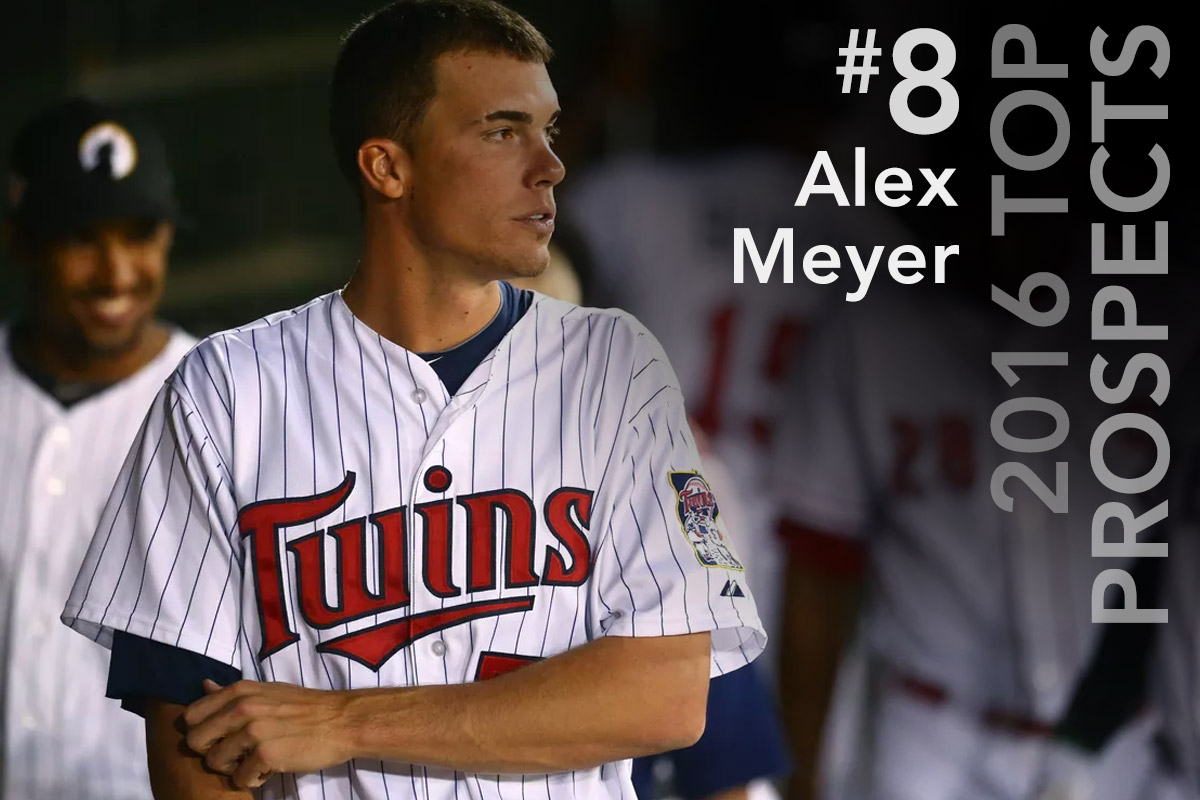 Age: 26 (DOB: 1/3/90) 2015 Stats (AAA/MLB): 94.2 IP, 5.13 ERA, 103/51 K/BB ETA: 2015 2015 Ranking: 5 National Top 100 Rankings BA: NR | MLB: NR | BP: NR What's To Like The velocity, that’s for sure. Meyer was originally drafted by the Red Sox out of Greensburg High School (Ind.) in the 20th round of the 2008 draft but a reported $2 million bonus offer from Boston was not enough to convince the hard-throwing right-hander to bypass college in Kentucky. In 2011, after flashing triple-digits fastball for the Wildcats, the Nationals snagged him in the first round at 23rd overall. So far, the Twins have only received a brief sampling of the heat. In his two-outing stint with the Twins last year he wound up throwing the second hardest fastball among the staff at 98. Velocity matters because dating back to 2008, when hitters are facing 98+, they hit .205 with a slugging of .288. In comparison, when pitchers are sitting 90-to-95, hitters have posted a .274 average with a .428 slugging. According to ESPN/TruMedia the Twins have hit 98 or higher on the radar gun just 23 times (13 of which belonged to Juan Morillo) and was the lowest number among all teams in that eight year span. But Meyer is more than just a pretty fastball. After the 2014 season, Baseball America anointed Meyer’s breaking ball, a knuckle-curve, as the best in the International League. Like his fastball, at times Meyer has trouble commanding it but the hammer break has made it a very good complement to his fastball. What's Left To Work On Consistency has been Meyer’s main issue but if there is one thing Meyer has been consistent about it has been his release point dropping over the last few years. When Meyer made an appearance in the Futures Game in 2011, PitchF/X data said he was releasing the ball near 6.6 feet. However, by the time Meyer arrived with the Twins, his arm angle had lowered so much that he was releasing the ball a foot lower than before. Considering Meyer has had shoulder ailments in the past, it is no surprise to see this type of dip in release point. In 2013 he missed 83 days because of a strained shoulder and was shut down in August 2014 with inflammation. This last year was relatively injury free but he readily acknowledge in Rochester that he was focused on raising his release point as he struggled with his command. Opponents who faced him in 2014 and then again in 2015 noted that his fastball looked flat and lacked the same movement compared to the prior season. If he is able to correct this, Meyer could be a dangerous pitcher on the mound. What's Next Since the Twins’ rotation is at capacity (and still trying to find room for Jose Berrios), there could be room in the bullpen as the front office’s indifference toward free agents relievers suggests that they believe in their crop of young power arms - including Meyer. Despite the struggles, with two option years remaining, the Twins can be patient with him. With a few tweaks, Meyer has the weapons to be a shutdown reliever. So while Meyer likely won’t start the season in Minnesota, he will be on a short list of pitchers who will get the call when help is needed.
 -
 I'm not sure what there was to doubt. If you doubted that he could sustain the production, that's fair. Again, that's what the percentage would bare out. Not really going out on a limb on that one. The reality is (1) he made tangible changes to his mechanics that we can see and (2) he was hitting the ball differently during that time. Can't argue that. To be clear, here's what I wrote at that time: He couldn't sustain it. No question.
 -
This. I don't mean to be glib about this. From a high level perspective, yes, more balls fell for hits in 2014 than the rest of his career. From a granular perspective -- examining the data more closely -- we find that a lot of those hits were to right field and then fell off again in the last two months of 2014 and beyond. Additionally, those hits to right in 2014 were considered well-struck -- not dinks or donks or flares or dying quails or what have you. He was doing something differently in 2014 than he did in the previous three years and the year after. The data bears that out.
- 46 replies
-
- 1
-

-
- kurt suzuki
- terry ryan
- (and 2 more)
-
1. Yes, yes he did: http://twinsdaily.com/articles.html/_/minnesota-twins-news/minnesota-twins/kurt-suzuki-makes-changes-at-the-plate-r2553 2. The well-hit average to the opposite field and 8 doubles suggest that these were not flares or gorks. To be clear, I'm not suggesting he will be able to replicate what he did in 2014. I'm saying that if he is going to provide a decent slash line, it appears he needs to get back to what he was doing two years ago when he was driving the ball up-the-middle/opposite field.
- 46 replies
-
- 1
-
-
- kurt suzuki
- terry ryan
- (and 2 more)
-
Wow. Neat. Here's an actual paragraph I deleted from this post because I didn't want to start a Star Wars brawl: This is the point in which the statistically inclined readers typically think to themselves something like "Yeah, doi, look at his track record, he was OBVIOUSLY due for regression" and then go off to watch Star Wars for the 15th time. And I don't disagree with that assessment because regression in baseball has been proven time and again. We have enough data to know that a 30-year-old with a league average-ish track record does not suddenly become a WAR superstar. It doesn't happen. There can be, however, incremental improvements. I don't want to discount that fact. The reason for the increase in BABIP in 2014 was his ability to get more hits the other way. He made some changes to his approach, was getting a higher percentage of hits the other way and then just stopped doing that again.
-
Definitely agree that the defensive side is another big issue when it comes to playing time with Suzuki. Here's the thing with Kyle Gibson's framing number: They've always been bad, no matter who has been catching him. I wrote the same thing about Gibson's first season while Mauer was catching him. Admittedly, at that time Mauer was really bad at getting strikes at the bottom of the zone where Gibson was throwing most frequently. Now the Twins have never had a strong receiver when it comes to framing so we have no real comparison in what Gibson would be like with a good framer. Sometimes I wonder if certain pitchers are bad at getting borderline calls for various reasons. It would be an interesting study for someone with time/no life.
-
Step 1: With all due credit to B-R.com, ignore their batted ball direction splits. Because of the methodology using Retrosheet's field diagram, the middle of the field is MASSIVE (http://www.retrosheet.org/location.htm). Inside Edge and others have a more equal distribution between what is left/center/right. Step 2: ???? Step 3: Profit.
-
Why didn't I just say that "had Suzuki only hit all home runs he would have been pimp boss of everything"? Look, we're playing make believe to highlight how much his performance going the other way tanked his overall numbers. Nothing more. Nothing less.
-
Kurt Suzuki’s 2015 season was the stuff of nightmares. He couldn’t hit. He couldn’t stop anyone on the bases. He couldn’t help his pitchers expand the zone. He was left being a bat flip enforcer from the dugout. Without many options to push Suzuki internally, the Twins acquired John Ryan Murphy from the Yankees to bolster the position. With at least one year left on his two year deal, many assume that Suzuki has become a lame duck catcher. Yet the Twins have not indicated anything other than expecting Suzuki to play a substantial role in 2016. Can Suzuki turn it around and provide offensive value?Now, I’m not going to admit that I was wrong here because I made a vow on my wedding day to never admit that I am wrong and I don’t plan on starting here. That being said, I was less right then I could have been regarding Suzuki’s immediate future in 2014. At that time, Suzuki’s decent peripherals and above average line drive rate to all fields in conjunction with his new approach suggested to me that he had enough hitting foundation to produce a good batting average/on-base combo. It went against the convention and percentages but even with some leakage, he still could likely post strong numbers. However, almost immediately the story was published, Suzuki proved me wron...less right than I could have been (it takes a big man to admit when he was less right than he could have been). And he continued to do so throughout 2015. Just when you thought he hit rock bottom, the earth would open up and reveal another seven story fall into a slumping abyss. READ: Position Battles - Catcher On July 31, 2014, Kurt Suzuki was hitting .304 with a solid .367 on-base percentage. Both figures were 50 points higher than his career norms. Nevertheless, the Twins boldly doubled down, sharing a similar belief that they could bet against the prevailing wisdom. From August through September of that year, he supplied a .240 batting average with a .290 on-base percentage. He basically replicated those numbers throughout the duration of the 2015 season, ending with a .240 average and a .296 on-base. Suzuki’s problem, according to manager Paul Molitor, had a lot do with what was going on between the ears. "I think sometimes when you get off to poor starts, even as a veteran, it becomes an uphill battle,” Molitor said of Suzuki’s 2015 struggles. “It's hard to look up at the scoreboard and see numbers that aren't very appealing. And you're trying to find ways to get it back into a more comfortable state and you end up thinking about the wrong things instead of just going out there and trusting each at bat.” On July 31, 2015, one year after signing his $12 million extension, Suzuki’s numbers were pitiful. His .230 average and .288 on-base percentage were certainly unbecoming of a starting catcher but there they were, glowing down from above on the giant Target Field video board, reminding him of how little he was contributing to his team. “I always told him, ‘Don't worry about what you hit now, worry about what you hit now for the rest of the season,’” Molitor said. “It's all about going forward. He wanted so much to be a part of it. He'd tell me ‘We're winning, we gotta chance but I feel like I'm not doing anything to help the team. I can't throw anybody out, I can't get a hit.’ So it bothered him.” Unlike 2014, there was a slight uptick in his production over the final months (“He realized we were playing for something,” Molitor reasoned.) but not substantial and certainly not enough to give anyone any reassurance that he could be counted on to anchor the position. The Twins were definitely not confident in his abilities to rebound, instead nabbing John Ryan Murphy to contend for the job. READ: John Hicks Excited To Join Twins The Twins say they were not banking on the same offensive production out of Suzuki for 2015 (in spite of extending him for an additional two years at the height of his output on July 31 suggesting otherwise) but feel that he is capable of splitting the difference. “We got an extreme amount of production out of him two years ago,” general manager Terry Ryan said earlier this offseason. “Nobody was expecting that level going forward because, all right he had an awful good year. But somewhere in between he should settle in.” Can Suzuki actually do enough to finish somewhere in between? As Molitor said, Suzuki’s problems might have a lot to do with his mindset but the data shows that what made his 2014 season so good and his 2015 so bad was the amount of success he had when going the other way. Download attachment: Suzuki.PNG Why this happened is unclear. Perhaps it goes back to what Molitor said about him trying too much rather than hitting what was given. Pitchers seemingly attacked him in a similar manner but with starkly different results, especially going the other way. Consider this: Had Suzuki only pulled or gone up the middle, he would have had a .312/.309/.414 batting line in 2015. Unfortunately, he went 15-for-89 on balls hit the other way, tanking his overall numbers. Looking over the video of the two seasons, you see him often pulling off of pitches he drove the other way in 2014. Here are two similar pitches he hit to right, the top is 2014 and the bottom is 2015: Download attachment: uwfvhW3.png Almost the exact same pitch at the exact same speed in a very similar location. In the top, Suzuki laces a liner to right. In the lower example, Suzuki skies out to right (as you might have suspected with the bat angle). Now watch the two swings in motion and watch what his head does. http://i.imgur.com/KFDUd0r.gif http://i.imgur.com/tSe53n8.gif In the firstexample above (2014), his head remains still and follows the pitch to right. In the one below (2015), he is pulling off the ball, which explains why he “just missed it”. This example is a microcosm of what made him outperform in 2014 and disappoint in 2015. It is possible for him to generate enough offense to avoid being a liability in the lineup but in order to do so, it appears that Suzuki needs to have at least some success going the other way. There are no guarantees he can do that. After all, the years and miles have piled up on his body so who is to say he will even repeat the same level of success pulling the ball or going up the middle as he did in 2015, let alone driving the ball the other way. “We all know he takes a beating,” Molitor said. “I can't really empathize with that. I don't know what it's like to take foul tips or get hit by follow-throughs and just the pounding those guys take squatting everyday like that. It's gotta take it's toll.” Could the years of abuse behind the plate hinder Suzuki's production? Molitor continued, “I think there are studies about catchers after their 30th birthday about offensive trends and things, so It obviously takes its toll. Click here to view the article
-
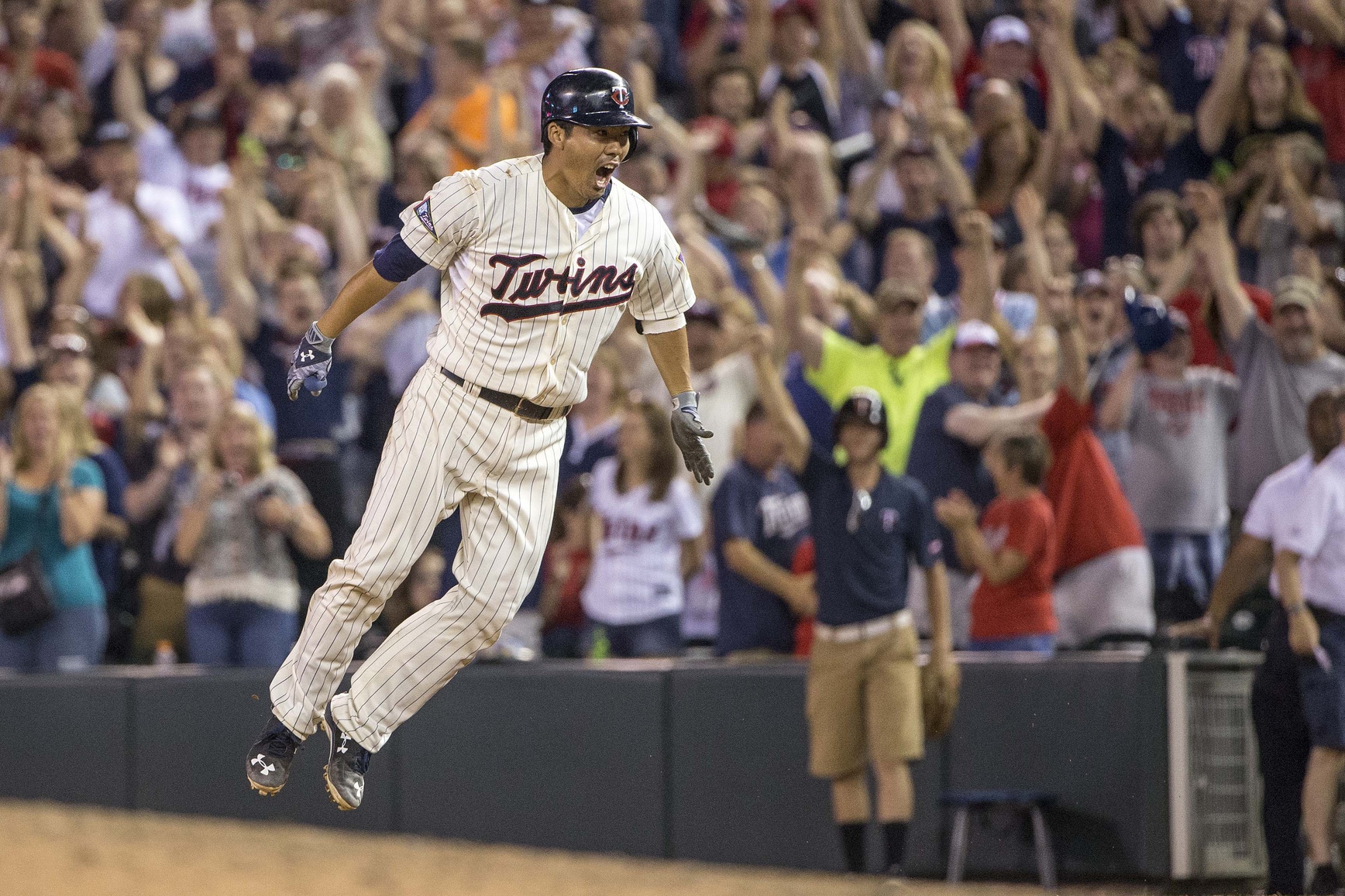 Now, I’m not going to admit that I was wrong here because I made a vow on my wedding day to never admit that I am wrong and I don’t plan on starting here. That being said, I was less right then I could have been regarding Suzuki’s immediate future in 2014. At that time, Suzuki’s decent peripherals and above average line drive rate to all fields in conjunction with his new approach suggested to me that he had enough hitting foundation to produce a good batting average/on-base combo. It went against the convention and percentages but even with some leakage, he still could likely post strong numbers. However, almost immediately the story was published, Suzuki proved me wron...less right than I could have been (it takes a big man to admit when he was less right than he could have been). And he continued to do so throughout 2015. Just when you thought he hit rock bottom, the earth would open up and reveal another seven story fall into a slumping abyss. READ: Position Battles - Catcher On July 31, 2014, Kurt Suzuki was hitting .304 with a solid .367 on-base percentage. Both figures were 50 points higher than his career norms. Nevertheless, the Twins boldly doubled down, sharing a similar belief that they could bet against the prevailing wisdom. From August through September of that year, he supplied a .240 batting average with a .290 on-base percentage. He basically replicated those numbers throughout the duration of the 2015 season, ending with a .240 average and a .296 on-base. Suzuki’s problem, according to manager Paul Molitor, had a lot do with what was going on between the ears. "I think sometimes when you get off to poor starts, even as a veteran, it becomes an uphill battle,” Molitor said of Suzuki’s 2015 struggles. “It's hard to look up at the scoreboard and see numbers that aren't very appealing. And you're trying to find ways to get it back into a more comfortable state and you end up thinking about the wrong things instead of just going out there and trusting each at bat.” On July 31, 2015, one year after signing his $12 million extension, Suzuki’s numbers were pitiful. His .230 average and .288 on-base percentage were certainly unbecoming of a starting catcher but there they were, glowing down from above on the giant Target Field video board, reminding him of how little he was contributing to his team. “I always told him, ‘Don't worry about what you hit now, worry about what you hit now for the rest of the season,’” Molitor said. “It's all about going forward. He wanted so much to be a part of it. He'd tell me ‘We're winning, we gotta chance but I feel like I'm not doing anything to help the team. I can't throw anybody out, I can't get a hit.’ So it bothered him.” Unlike 2014, there was a slight uptick in his production over the final months (“He realized we were playing for something,” Molitor reasoned.) but not substantial and certainly not enough to give anyone any reassurance that he could be counted on to anchor the position. The Twins were definitely not confident in his abilities to rebound, instead nabbing John Ryan Murphy to contend for the job. READ: John Hicks Excited To Join Twins The Twins say they were not banking on the same offensive production out of Suzuki for 2015 (in spite of extending him for an additional two years at the height of his output on July 31 suggesting otherwise) but feel that he is capable of splitting the difference. “We got an extreme amount of production out of him two years ago,” general manager Terry Ryan said earlier this offseason. “Nobody was expecting that level going forward because, all right he had an awful good year. But somewhere in between he should settle in.” Can Suzuki actually do enough to finish somewhere in between? As Molitor said, Suzuki’s problems might have a lot to do with his mindset but the data shows that what made his 2014 season so good and his 2015 so bad was the amount of success he had when going the other way. Why this happened is unclear. Perhaps it goes back to what Molitor said about him trying too much rather than hitting what was given. Pitchers seemingly attacked him in a similar manner but with starkly different results, especially going the other way. Consider this: Had Suzuki only pulled or gone up the middle, he would have had a .312/.309/.414 batting line in 2015. Unfortunately, he went 15-for-89 on balls hit the other way, tanking his overall numbers. Looking over the video of the two seasons, you see him often pulling off of pitches he drove the other way in 2014. Here are two similar pitches he hit to right, the top is 2014 and the bottom is 2015: Almost the exact same pitch at the exact same speed in a very similar location. In the top, Suzuki laces a liner to right. In the lower example, Suzuki skies out to right (as you might have suspected with the bat angle). Now watch the two swings in motion and watch what his head does. http://i.imgur.com/KFDUd0r.gif http://i.imgur.com/tSe53n8.gif In the firstexample above (2014), his head remains still and follows the pitch to right. In the one below (2015), he is pulling off the ball, which explains why he “just missed it”. This example is a microcosm of what made him outperform in 2014 and disappoint in 2015. It is possible for him to generate enough offense to avoid being a liability in the lineup but in order to do so, it appears that Suzuki needs to have at least some success going the other way. There are no guarantees he can do that. After all, the years and miles have piled up on his body so who is to say he will even repeat the same level of success pulling the ball or going up the middle as he did in 2015, let alone driving the ball the other way. “We all know he takes a beating,” Molitor said. “I can't really empathize with that. I don't know what it's like to take foul tips or get hit by follow-throughs and just the pounding those guys take squatting everyday like that. It's gotta take it's toll.” Could the years of abuse behind the plate hinder Suzuki's production? Molitor continued, “I think there are studies about catchers after their 30th birthday about offensive trends and things, so It obviously takes its toll.
 -
Article: Winter Meltdown Recap
Parker Hageman replied to Nick Nelson's topic in Twins Daily Front Page News
Very disappointed that I couldn't make it this year. Sounded like it was a great time. -
 Monday Update: Tickets have been added for the Twins Daily Meltdown this Saturday from 5-8 PM. Following Twins Fest, you can walk a couple of blocks and join the Twins Daily community, former Twins pitcher Carl Pavano, KFAN’s Meatsauce and 612 Brew at the Pourhouse in Downtown Minneapolis to get revved up about the 2016 season. Every attendee will get two free craft 612 Brews, a limited edition Twins Daily Meltdown pint glass and be eligible for an array of door prizes including Twins tickets, gift cards and ten Truman Shaving Sets from Harrys.com. Starting at 5:30, we’ll have a Q&A session with Carl Pavano, who won division championships with the Twins in 2009 and 2010 and a World Series with the Marlins in 2003. It will be followed by a panel discussion with John Bonnes, Seth Stohs, Nick Nelson and Aaron Gleeman, when they will take your questions about the 2016 Twins. The event will be hosted by Paul “Meatsauce” Lambert, from KFAN’s #1 rated Powertrip Morning Show. You’ll get a chance to meet them all, and while tickets will be $35 at the door, they’re just $25 right now. Click here to grab them. You can’t attend the event without a ticket! Twins Daily’s mission is to build a community of fans passionate around the Twins, so if you’re a regular reader who hasn’t attended one of our events, you’re really only getting a fraction of the experience. Is there a better time to talk baseball than the dead of winter? Is there a better place to do it? (A: Nope.) Gather your friends and grab your tickets now. Thursday Update: Half of the limited tickets for the Meltdown sold on Day One! Click here to order your 2016 Winter Meltdown tickets! Today we're happy to announce the best package of door prizes in the event's history. They include Twins tickets, ten(!) Truman Shaving Sets from Harrys.com, gifts from The Pourhouse in Downtown Minneapolis and 612 Brew and copies of the Minnesota Twins Prospect Handbook, plus some other miscellaneous prizes like some rare pint glasses from previous years' Meltdowns. Of course, every attendee gets this year's Winter Meltdown Pint Glass and two free 612 Brew craft beers with which to fill (and refill) it. Plus, meet former Twins pitcher Carl Pavano, KFAN celebrity Paul "Meatsauce" Lambert, crabby Twins blogger Aaron Gleeman and the Twins Daily writers. And it's all just two blocks from Target Field right after Twins Fest on Saturday the 30th. Again, tickets are $10 cheaper online and are going fast. Get your friends together and get them now. You do not want to be shut out. Wednesday Update: In addition to an appearance by former Twins pitcher Carl Pavano, I’m very pleased to announce that Paul “Meatsauce” Lambert will be emceeing the Twins Daily Winter Meltdown next Saturday following Twins Fest. Meatsauce is the most twisted of the degenerates on KFAN's #1 rated Powertrip Morning Show. His hobbies include eating, making inappropriate comments and comparing Twins losing seasons to a dumpster fire. Meatsauce will be joining Pavano, Pavano’s mustache and the Twins Daily writers at the Pourhouse in Downtown Minneapolis from 5-8 next Saturday (January 30th), just one block from Target Field where Twins Fest will be winding down. Tickets go on sale at 8:00 AM tomorrow (Wednesday) and we have sold out quickly in the past, so please don’t mess around – we don’t want to shut anyone out. They’re $25 apiece if you order early versus $35 at the door (if we have any left), and include two free craft beers from 612 Brew AND a free Twins Daily Winter Meltdown Pint Glass that you can see below. Sauce and The Stache … and more special guests may be announced soon. But if you wait that long the tickets will likely be gone. We'll post the link to buy tickets here as soon as they're available. TICKETS ARE NOW AVAILABLE! Click here to order your 2016 Winter Meltdown tickets! Tuesday update: Carl Pavano, who pitched for the Twins from 2009 through 2012, will be a special guest for the 2016 Twins Daily Winter Meltdown, and you can join us. Besides modeling a killer mustache, Pavano helped the Twins win two AL Central championships and also won a World Series championship with the Florida Marlins in 2003. He was an All-Star in 2004 and finished sixth in the Cy Young voting with an 18-8 record and a 3.00 ERA. Finally, he was relatively famous before his MLB career even started, as he was traded for Pedro Martinez when Martinez went from the Expos to Boston. Pavano will join a several other special guests, answering questions about his professional career during the Twins Daily Meltdown Presentation and also meet and greet attendees. Additional guests will be announced over the upcoming days, but don’t wait to hear who they are before you grab your ticket. The limited tickets will be available Wednesday at 8:00 AM and we have sold out in previous years, so set an alarm and get them early! Tickets at $35 at the door, but just $25 for a limited time online. In addition to meeting Pavano and other special guests, attendees get a Twins Daily Winter Meltdown Pint Glass and two complimentary local craft beers from 612 Brew. The event will take place right after Twins Fest, from 5-8 on Saturday January 30th, just one block from Target Plaza at the Pourhouse in Downtown Minneapolis. Any questions? Comment below. And keep checking back at Twins Daily as we announce more special guests. Monday Update: "People ask me what I do in winter when there's no baseball. I'll tell you what I do. I stare out the window and wait for spring." ~ Roger Hornsby How about we all stare out the window together? On Saturday, January 30th – from 5 PM to 8 PM – Twins Daily will be hosting the 3rd Annual Twins Daily Winter Meltdown. This year’s Winter Meltdown will be held at The Pourhouse in Downtown Minneapolis, less than a quarter mile away from the plaza at Target Field, and will feature the same Twins-related discussion and festive atmosphere that you have come to expect from the Twins Daily community. It is friggin' cold out so let’s fire up the hot stove and think baseball again. New to the Winter Meltdown experience? Here’s what you can expect… MINNESOTA TWINS GUESTS You will get exclusive insight to the game from a former Twins player -- an up-close-and-personal opportunity to pick the brain of someone who played in a Minnesota uniform. In 2014, Scott Erickson regaled the crowd with his tales of pitching in the 1991 World Series. Last year, Jacque Jones told stories from The Team That Saved Baseball. This year? Well, you will just have to wait a few days to find out who the guests will be in 2016. In addition to the special guest speakers, Twins Daily writers will be on hand to discuss and debate some of the hot topics involving the local nine. COLLECTIBLE PINT GLASS No one leaves the event empty-handed either as each Winter Meltdown ticket comes with a collectible Twins Daily pint glass, courtesy of our friends at 612 Brew. And (AND!) with each ticket comes two of 612 Brew’s delicious beers to quench your thirst while you consume baseball. A Twins Daily Winter Meltdown Pint Glass Two (2) complimentary local craft beers from 612 Brew Special Twins guests. Twins talk. Pint glass. Two beers. A lifetime of memories. As a baseball fan, what more incentive do you need? (How about something that hits you right in the feels.) TICKETS GO ON SALE THIS WEDNESDAY And they are limited to be sure to be here on Wednesday morning when ticket sales go live. Check back at TwinsDaily.com or follow the event at Twins Daily’s Facebook page (here) to get the latest information on the details for the 2016 Winter Meltdown.
 -
"Abad is not and never has been a good pitcher, his velocity is down." Man, you're right. I wish the best writers would come up with some insight like that. Thanks.
- 62 replies
-
- 5
-
-
- fernando abad
- tipping pitches
- (and 3 more)
-
"So Price and Pettitte had single-game episodes of pitch-tipping. Do you know any examples where it was left unchecked to derail a pitcher's whole season?" Supposedly Jeff Smarjajajaza. He said his entire season with Sox was because he was tipping pitches.
- 62 replies
-
- 2
-
-
- fernando abad
- tipping pitches
- (and 3 more)
-
"They are trying to fix a guy whose upside is a 6th inning MRP. Its embarrassing that LaVelle would even report on such a non story, instead of focusing on why TR, the Pohlads and company seemingly refuse to spend any amount of real money to fix an obviously shaky bullpen." Frankly -- and maybe I'm alone on this -- but I enjoy baseball related insight more than payroll related ones.
- 62 replies
-
- 17
-
-
- fernando abad
- tipping pitches
- (and 3 more)
-
When news broke that lights-out lefty Antonio Bastardo had signed with the New York Mets, Twins faithful were understandably disappointed. After all, the 30-year-old Antonio Bastardo represented everything that the Twins could want: a reliever with a proven successful track record and also just happen to throw with his left hand. As fate would have it, the Twins were in the market for a set-up left-hander to complement the consortium of righties in the bullpen. Nevertheless, they missed out on Bastardo.On the Twins network radio program, general manager Terry Ryan said he was quite content with the assortment of arms he and his staff had already started collecting. In response to missing out (or perhaps sitting out) on Bastardo, Ryan mentioned that he had confidence in finding someone who could provide that kind of production -- specifically naming the recently signed Fernando Abad. As LaVelle Neal from the Star Tribune reported last week, the Minnesota Twins scouts say they feel that Abad had been tipping his pitches in 2015 resulting in the obliteration of many that had he spun toward home plate. When you consider that his home run rate skyrocketed to over two per nine innings pitched, as well as his well-hit average jumping from a career rate under 25% to above 35% in 2015, the theory seems plausible that hitters were tipped off by something in Abad’s methods. Beyond those two high-level metrics, more granular data may also corroborate the Twins’ theory. For instance, when you examine Abad’s chase rate on his two most frequented pitches -- his fastball and curve ball -- over the past four seasons, the numbers show a stark drop in hitters chasing pitches out of the zone. According to ESPN/TruMedia’s data, Abad was able to get hitters to chase after a fastball out of the strike zone 28.5% of the time from 2012 through 2014. This past year, however, hitters held up much more frequently, chasing after 20% of his out-of-zone fastballs. Likewise, opponents followed his breaking ball out of the strike zone 31% of the time from 2012-2014 but chased just 24% of time in 2015. It stands to reason that if hitters were able to pick up on what was coming ahead of time, they would have a better chance at zoning the pitch. Less chance of being fooled would lead to fewer silly swings. Tipping pitches is not exclusive to struggling relievers -- just ask David Price. In the ALCS, Price was cruising along for the Toronto Blue Jays and was shutting down the Kansas City Royals lineup in Game 2. In the seventh inning, however, the Royals began to make loud impact and put four runs on the big lefthander. Later, a member of the Royals staff confirmed to Sports Illustrated’s Tom Verducci that they had picked up on Price’s tell. When Price threw his change-up, he would take an extra deep breath and hold the ball a fraction longer than when he threw his fastball. In the 2001 World Series, the Diamondbacks jumped all over the Yankees to a 15-2, Arizona chased Andy Pettitte out of the game early based on a tell that gave hitters a head’s up. According to broadcaster Rick Sutcliffe, Pettitte would double-tap the ball in his glove in the set position when he was coming with a fastball. Former Diamondback Jay Bell later confirmed this, saying his team had a “clear picture” of what the Yankee southpaw was going to throw. While Price and Pettitte’s stories are the norm when it comes to tipping pitches, there are other more absurd missteps. In his book “Throwback” former catcher Jason Kendall shared the story of Ted Lilly who would actually silently mouth the word “fastball” or “curve” to his catcher if he thought the hitter was taking a warm- up swing or looking down at the third base coach. Often, Lilly would zone out and simply mouth the pitch he wanted no matter who was looking. So what are the Twins’ scouts and hitters possibly seeing from Abad? Going over several of his outings from MLB.tv, there is one possibility of a pattern that starts to emerge in 2015. Take a look at the images below. The images are captured at the moment Abad brings his hands together before dropping his hands to his belt and delivering the pitch. In the top two images, Abad is about to throw a fastball. In the bottom, a breaking ball. Download attachment: Abad_Fastball.PNG Download attachment: Abad_Fastball2.PNG Download attachment: Abad_Breaking Ball.PNG As you can see, Abad’s hands are much higher when he collects prior to spinning a breaking ball to the Angels’ Kole Calhoun than in the other two pitches above. This seemed to happen several times over this season: His threw a fastball from the lower starting point and spun a pitch when he gathered high. It probably would not take long for a major league hitter, coach or scout to pick up on that pattern. http://i.imgur.com/bTViIMj.gif http://i.imgur.com/Isw4qzS.gif Could Abad’s struggles in 2015 really be sourced to an abundantly obvious tell? Abad’s gopher ball struggles might not be completely related to the pitch tipping (although that likely didn’t help). He also lost a noticeable amount of velocity off of his fastball -- dropping nearly two miles per hour on the heat over the previous season. He also added a very meh cutter to his repertoire. Furthermore, tipping his pitches or not, Abad fell behind hitters far too often this past season. He was getting strike one at a 52% clip which was well below the league average of 60%. Once he was behind, hitters could tee off. And tee off they did. Opponents slugged .963 off of Abad in hitter’s counts -- only five other relievers with 30 or more appearances fared worse (including Minnesota’s Trevor May). A combination of a diminished fastball and an expected fastball count will equal KABLOOIE. The Twins seem confident that they can fix Abad. In addition to eliminating his pitch tipping potential, Abad has one of the game’s best left-handed change-ups that can be harnessed. Opponents languished against the offspeed pitch, hitting just .125 while showing little ability to make much contact. It is no secret that Twins’ pitching coach Neil Allen has introduced methods for using the change-up more effectively and Abad seems like someone who could benefit greatly from that knowledge. As someone who is a year removed from chucking 97 mile per hour darts and holding lefties to a .191 batting average, Abad is a worthy gamble. If the collective scouting brain trust feel like they have some adjustments answers that will help him get back to his 2014 success, Abad stands to be a decent addition. Then again, Abad’s entire body of work over his career isn’t all that impressive. The downside is that the Twins have not secured a suitable left-handed alternative if he doesn’t bounce back. Click here to view the article
- 62 replies
-
- 1
-
-
- fernando abad
- tipping pitches
- (and 3 more)
-
Can Terry Ryan And Old School Scouting Still Build A Bullpen?
Parker Hageman posted an article in Twins
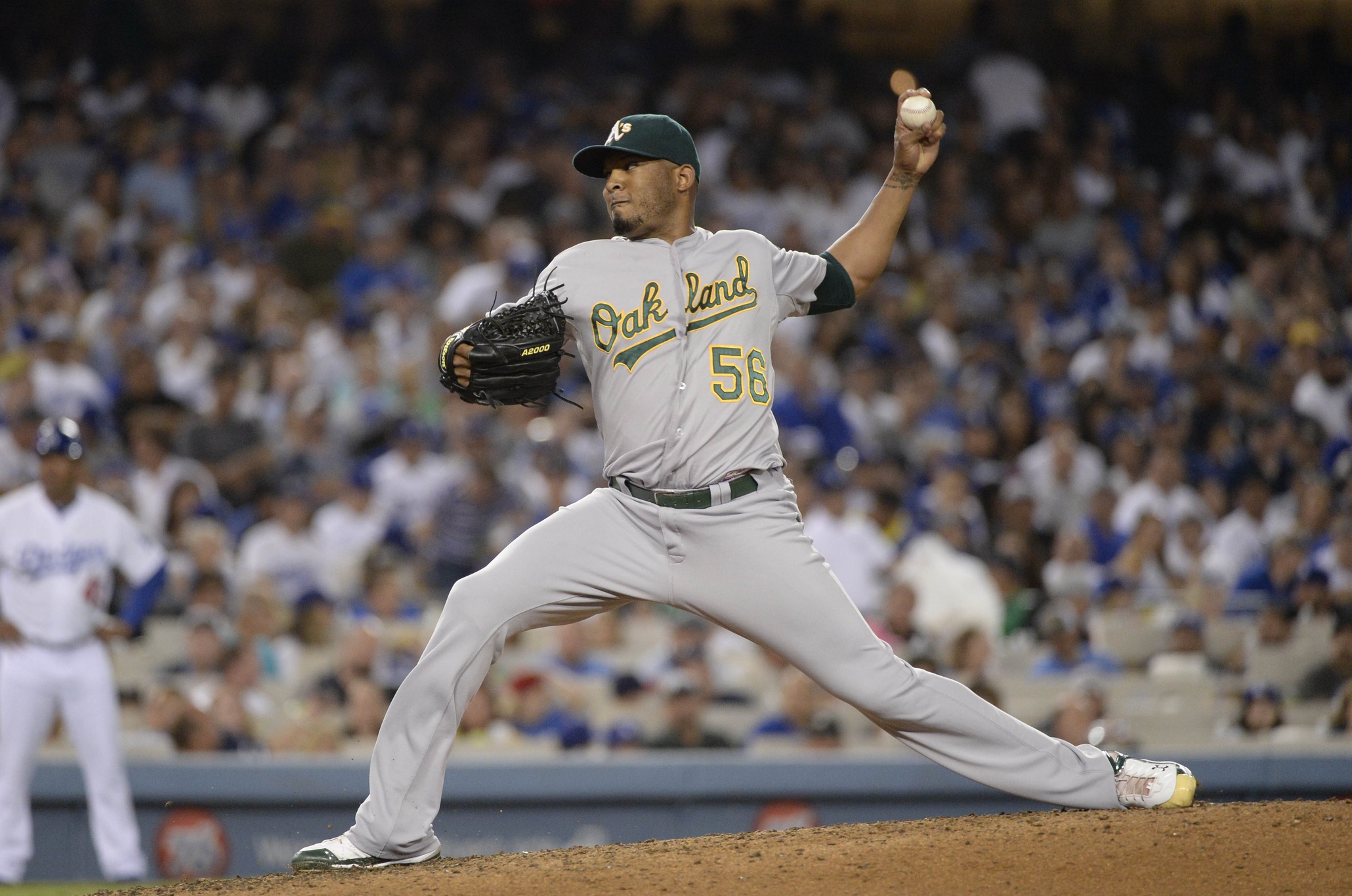 On the Twins network radio program, general manager Terry Ryan said he was quite content with the assortment of arms he and his staff had already started collecting. In response to missing out (or perhaps sitting out) on Bastardo, Ryan mentioned that he had confidence in finding someone who could provide that kind of production -- specifically naming the recently signed Fernando Abad. As LaVelle Neal from the Star Tribune reported last week, the Minnesota Twins scouts say they feel that Abad had been tipping his pitches in 2015 resulting in the obliteration of many that had he spun toward home plate. When you consider that his home run rate skyrocketed to over two per nine innings pitched, as well as his well-hit average jumping from a career rate under 25% to above 35% in 2015, the theory seems plausible that hitters were tipped off by something in Abad’s methods. https://twitter.com/LaVelleNeal/status/689980280942284801 Beyond those two high-level metrics, more granular data may also corroborate the Twins’ theory. For instance, when you examine Abad’s chase rate on his two most frequented pitches -- his fastball and curve ball -- over the past four seasons, the numbers show a stark drop in hitters chasing pitches out of the zone. According to ESPN/TruMedia’s data, Abad was able to get hitters to chase after a fastball out of the strike zone 28.5% of the time from 2012 through 2014. This past year, however, hitters held up much more frequently, chasing after 20% of his out-of-zone fastballs. Likewise, opponents followed his breaking ball out of the strike zone 31% of the time from 2012-2014 but chased just 24% of time in 2015. It stands to reason that if hitters were able to pick up on what was coming ahead of time, they would have a better chance at zoning the pitch. Less chance of being fooled would lead to fewer silly swings. Tipping pitches is not exclusive to struggling relievers -- just ask David Price. In the ALCS, Price was cruising along for the Toronto Blue Jays and was shutting down the Kansas City Royals lineup in Game 2. In the seventh inning, however, the Royals began to make loud impact and put four runs on the big lefthander. Later, a member of the Royals staff confirmed to Sports Illustrated’s Tom Verducci that they had picked up on Price’s tell. When Price threw his change-up, he would take an extra deep breath and hold the ball a fraction longer than when he threw his fastball. In the 2001 World Series, the Diamondbacks jumped all over the Yankees to a 15-2, Arizona chased Andy Pettitte out of the game early based on a tell that gave hitters a head’s up. According to broadcaster Rick Sutcliffe, Pettitte would double-tap the ball in his glove in the set position when he was coming with a fastball. Former Diamondback Jay Bell later confirmed this, saying his team had a “clear picture” of what the Yankee southpaw was going to throw. While Price and Pettitte’s stories are the norm when it comes to tipping pitches, there are other more absurd missteps. In his book “Throwback” former catcher Jason Kendall shared the story of Ted Lilly who would actually silently mouth the word “fastball” or “curve” to his catcher if he thought the hitter was taking a warm- up swing or looking down at the third base coach. Often, Lilly would zone out and simply mouth the pitch he wanted no matter who was looking. So what are the Twins’ scouts and hitters possibly seeing from Abad? Going over several of his outings from MLB.tv, there is one possibility of a pattern that starts to emerge in 2015. Take a look at the images below. The images are captured at the moment Abad brings his hands together before dropping his hands to his belt and delivering the pitch. In the top two images, Abad is about to throw a fastball. In the bottom, a breaking ball. As you can see, Abad’s hands are much higher when he collects prior to spinning a breaking ball to the Angels’ Kole Calhoun than in the other two pitches above. This seemed to happen several times over this season: His threw a fastball from the lower starting point and spun a pitch when he gathered high. It probably would not take long for a major league hitter, coach or scout to pick up on that pattern. http://i.imgur.com/bTViIMj.gif http://i.imgur.com/Isw4qzS.gif Could Abad’s struggles in 2015 really be sourced to an abundantly obvious tell? Abad’s gopher ball struggles might not be completely related to the pitch tipping (although that likely didn’t help). He also lost a noticeable amount of velocity off of his fastball -- dropping nearly two miles per hour on the heat over the previous season. He also added a very meh cutter to his repertoire. Furthermore, tipping his pitches or not, Abad fell behind hitters far too often this past season. He was getting strike one at a 52% clip which was well below the league average of 60%. Once he was behind, hitters could tee off. And tee off they did. Opponents slugged .963 off of Abad in hitter’s counts -- only five other relievers with 30 or more appearances fared worse (including Minnesota’s Trevor May). A combination of a diminished fastball and an expected fastball count will equal KABLOOIE. The Twins seem confident that they can fix Abad. In addition to eliminating his pitch tipping potential, Abad has one of the game’s best left-handed change-ups that can be harnessed. Opponents languished against the offspeed pitch, hitting just .125 while showing little ability to make much contact. It is no secret that Twins’ pitching coach Neil Allen has introduced methods for using the change-up more effectively and Abad seems like someone who could benefit greatly from that knowledge. As someone who is a year removed from chucking 97 mile per hour darts and holding lefties to a .191 batting average, Abad is a worthy gamble. If the collective scouting brain trust feel like they have some adjustments answers that will help him get back to his 2014 success, Abad stands to be a decent addition. Then again, Abad’s entire body of work over his career isn’t all that impressive. The downside is that the Twins have not secured a suitable left-handed alternative if he doesn’t bounce back.
 -
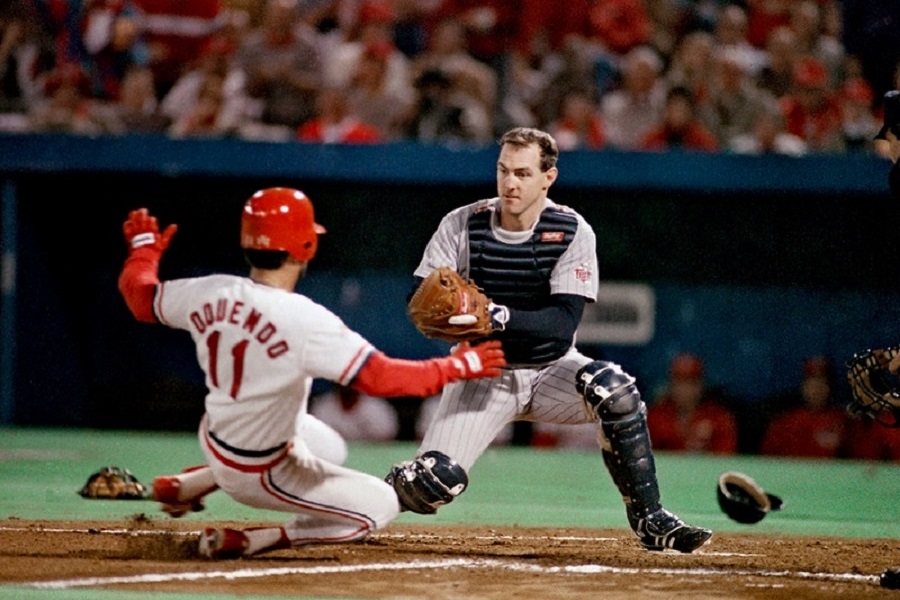
The Twins Daily Winter Meltdown has officially sold out. I hope you got yours. If you have not, and still want to get in the door, we are looking for a few volunteers to help check people in and such. You can find details on how to sign up for that here. Former Minnesota Twins catcher and current Fox Sports North Analyst Tim Laudner has been added to the lineup for the Twins Daily Winter Meltdown this Saturday from 5-8 at The Pourhouse, just two blocks from Target Field and Twins Fest. Laudner will join pitcher Carl Pavano and KFAN's Paul "Meatsauce" Lamber on stage for Q&A and meet attendees. You can still get tickets at a special price right here, but even the additional tickets are running out, so don't delay. Laudner is best known to Twins fans as being the starting catcher of the 1987 World Champion Twins. In that seven-game Championship series versus the Cardinals, he started every game, hitting .318 (with a .444 OBP). He played nine seasons with the Twins, and has since worked as a project manager, run a Big League Baseball Camp and works as an analyst at Fox Sport North and Fox Sports Wisconsin. Not only is the Meltdown going to be a great opportunity to get excited about the 2016 Twins season, and not only will you get a chance to meet Laudner, Pavano and Meatsauce, but there are fantastic door prizes and each ticket is good for two craft beers from get those tickets! Monday Update: Tickets have been added for the Twins Daily Meltdown this Saturday from 5-8 PM. Following Twins Fest, you can walk a couple of blocks and join the Twins Daily community, former Twins pitcher Carl Pavano, KFAN’s Meatsauce and 612 Brew at the Pourhouse in Downtown Minneapolis to get revved up about the 2016 season. Every attendee will get two free craft 612 Brews, a limited edition Twins Daily Meltdown pint glass and be eligible for an array of door prizes including Twins tickets, gift cards and ten Truman Shaving Sets from Harrys.com. Download attachment: PINT GLASS.jpg Starting at 5:30, we’ll have a Q&A session with Carl Pavano, who won division championships with the Twins in 2009 and 2010 and a World Series with the Marlins in 2003. It will be followed by a panel discussion with John Bonnes, Seth Stohs, Nick Nelson and Aaron Gleeman, when they will take your questions about the 2016 Twins. The event will be hosted by Paul “Meatsauce” Lambert, from KFAN’s #1 rated Powertrip Morning Show. You’ll get a chance to meet them all, and while tickets will be $35 at the door, they’re just $25 right now. Click here to grab them. You can’t attend the event without a ticket! Twins Daily’s mission is to build a community of fans passionate around the Twins, so if you’re a regular reader who hasn’t attended one of our events, you’re really only getting a fraction of the experience. Is there a better time to talk baseball than the dead of winter? Is there a better place to do it? (A: Nope.) Gather your friends and grab your tickets now. Thursday Update: Half of the limited tickets for the Meltdown sold on Day One! Click here to order your 2016 Winter Meltdown tickets! Today we're happy to announce the best package of door prizes in the event's history. They include Twins tickets, ten(!) Truman Shaving Sets from Harrys.com, gifts from The Pourhouse in Downtown Minneapolis and 612 Brew and copies of the Minnesota Twins Prospect Handbook, plus some other miscellaneous prizes like some rare pint glasses from previous years' Meltdowns. Download attachment: Harrys_Truman_Set.jpg Of course, every attendee gets this year's Winter Meltdown Pint Glass and two free 612 Brew craft beers with which to fill (and refill) it. Plus, meet former Twins pitcher Carl Pavano, KFAN celebrity Paul "Meatsauce" Lambert, crabby Twins blogger Aaron Gleeman and the Twins Daily writers. And it's all just two blocks from Target Field right after Twins Fest on Saturday the 30th. Again, tickets are $10 cheaper online and are going fast. Get your friends together and get them now. You do not want to be shut out. Wednesday Update: In addition to an appearance by former Twins pitcher Carl Pavano, I’m very pleased to announce that Paul “Meatsauce” Lambert will be emceeing the Twins Daily Winter Meltdown next Saturday following Twins Fest. Meatsauce is the most twisted of the degenerates on KFAN's #1 rated Powertrip Morning Show. His hobbies include eating, making inappropriate comments and comparing Twins losing seasons to a dumpster fire. Meatsauce will be joining Pavano, Pavano’s mustache and the Twins Daily writers at the Pourhouse in Downtown Minneapolis from 5-8 next Saturday (January 30th), just one block from Target Field where Twins Fest will be winding down. Tickets go on sale at 8:00 AM tomorrow (Wednesday) and we have sold out quickly in the past, so please don’t mess around – we don’t want to shut anyone out. They’re $25 apiece if you order early versus $35 at the door (if we have any left), and include two free craft beers from 612 Brew AND a free Twins Daily Winter Meltdown Pint Glass that you can see below. Sauce and The Stache … and more special guests may be announced soon. But if you wait that long the tickets will likely be gone. We'll post the link to buy tickets here as soon as they're available. TICKETS ARE NOW AVAILABLE! Click here to order your 2016 Winter Meltdown tickets! Download attachment: Meatsauce_900.jpg Download attachment: PAVANO_CARL_HATTIP_US_900.jpg Tuesday update: Carl Pavano, who pitched for the Twins from 2009 through 2012, will be a special guest for the 2016 Twins Daily Winter Meltdown, and you can join us. Besides modeling a killer mustache, Pavano helped the Twins win two AL Central championships and also won a World Series championship with the Florida Marlins in 2003. He was an All-Star in 2004 and finished sixth in the Cy Young voting with an 18-8 record and a 3.00 ERA. Finally, he was relatively famous before his MLB career even started, as he was traded for Pedro Martinez when Martinez went from the Expos to Boston. Pavano will join a several other special guests, answering questions about his professional career during the Twins Daily Meltdown Presentation and also meet and greet attendees. Additional guests will be announced over the upcoming days, but don’t wait to hear who they are before you grab your ticket. The limited tickets will be available Wednesday at 8:00 AM and we have sold out in previous years, so set an alarm and get them early! Tickets at $35 at the door, but just $25 for a limited time online. In addition to meeting Pavano and other special guests, attendees get a Twins Daily Winter Meltdown Pint Glass and two complimentary local craft beers from 612 Brew. The event will take place right after Twins Fest, from 5-8 on Saturday January 30th, just one block from Target Plaza at the Pourhouse in Downtown Minneapolis. Any questions? Comment below. And keep checking back at Twins Daily as we announce more special guests. Monday Update: "People ask me what I do in winter when there's no baseball. I'll tell you what I do. I stare out the window and wait for spring." ~ Roger Hornsby Download attachment: 12508691_950385538361002_2926504929367154206_n.jpg How about we all stare out the window together? On Saturday, January 30th – from 5 PM to 8 PM – Twins Daily will be hosting the 3rd Annual Twins Daily Winter Meltdown. This year’s Winter Meltdown will be held at The Pourhouse in Downtown Minneapolis, less than a quarter mile away from the plaza at Target Field, and will feature the same Twins-related discussion and festive atmosphere that you have come to expect from the Twins Daily community. It is friggin' cold out so let’s fire up the hot stove and think baseball again. New to the Winter Meltdown experience? Here’s what you can expect… MINNESOTA TWINS GUESTS You will get exclusive insight to the game from a former Twins player -- an up-close-and-personal opportunity to pick the brain of someone who played in a Minnesota uniform. In 2014, Scott Erickson regaled the crowd with his tales of pitching in the 1991 World Series. Last year, Jacque Jones told stories from The Team That Saved Baseball. This year? Well, you will just have to wait a few days to find out who the guests will be in 2016. In addition to the special guest speakers, Twins Daily writers will be on hand to discuss and debate some of the hot topics involving the local nine. COLLECTIBLE PINT GLASS No one leaves the event empty-handed either as each Winter Meltdown ticket comes with a collectible Twins Daily pint glass, courtesy of our friends at 612 Brew. And (AND!) with each ticket comes two of 612 Brew’s delicious beers to quench your thirst while you consume baseball. A Twins Daily Winter Meltdown Pint GlassTwo (2) complimentary local craft beers from 612 BrewSpecial Twins guests.Twins talk. Pint glass. Two beers. A lifetime of memories. As a baseball fan, what more incentive do you need? (How about something that hits you right in the feels.) TICKETS GO ON SALE THIS WEDNESDAY And they are limited to be sure to be here on Wednesday morning when ticket sales go live. Check back at TwinsDaily.com or follow the event at Twins Daily’s Facebook page (here) to get the latest information on the details for the 2016 Winter Meltdown. Download attachment: 12508691_950385538361002_2926504929367154206_n.jpg Click here to view the article
-
They bug me too. Particularly from late innings guys who are coming in to tight games. HOWEVER, that doesn't seem to bug Terry Ryan (or at least that's what he claimed in his offseason interview): PH: [Kevin Jepsen] reduced his walk rate too. Is that something that Neil Allen worked with? TR: I’m going to tell you something about that walk rate. Of course, when you’ve got a relief pitcher and you look at his walk rate, it’s sometimes large. Well, that may be one walk every two appearances. So his walk rate looks a little higher. If it was a starting pitcher, it would concern me a helluva lot more. But when you’ve got a relief pitcher and he gets out there about 60 games and his walk rate is about four, well that’s not quite as bad as if that was a starter. PH: But now you’ve got a runner on base in a late-inning situation, probably in a close game, right? TR: Well, he was a seventh, eighth inning guy for Tampa. So it didn’t concern us quite as much. If it was a closer, it would concern me a helluva lot more. You don’t want to get free passes on a closer, for sure. We’ve gone that path before. That used to really concern me when you’ve got a guy in the ninth and he’s issuing free passes.
- 110 replies
-
- 1
-
-
- antonio bastardo
- alex meyer
- (and 3 more)
-
It's not what they are not letting the media and fans know, it is what they are telling them. Nothing really has been consistent.
-
This offseason has been an interesting adventure for Miguel Sano’s positional career path. At Torii Hunter’s retirement press conference, manager Paul Molitor revealed that the organization wanted to have Sano transition to an outfield position in order to accommodate for Trevor Plouffe remaining at third while allowing the DH position to remain open (which would eventually go to free agent signee Byung-Ho Park). The Twins stated that they wanted Sano to take some reps in the outfield during his winter ball season. Shortly thereafter, Sano told Dominican reporters that he would not see actual playing time in the outfield, just shag balls during batting practice. And not long after that, Sano informed his Dominican League team that he was asked by the Twins to stop playing. Meanwhile, Twins GM Terry Ryan refuted that claim, saying it was Sano’s decision. Regardless of whose decision it was to stop, Sano has not been playing in games since the beginning of December. Where is he in terms of outfield preparation?At the Winter Meetings Molitor said that the Twins would be working hard to convert the infielder into a corner outfielder. “We have to develop a little urgency here,” Molitor told MLB.com’s Rhett Bollinger, “not just ‘Let’s see how this thing goes.’” Molitor also added that Sano’s conditioning would be monitored to ensure that the 22-year-old would be in the necessary physical condition to play that position. Since then nearly a month has passed without Sano’s presence in Fort Myers. Oswaldo Arcia, on the other hand, has been a fixture at the team’s camp since November, reported KSTP’s Darren Wolfson, and the team’s officials have been impressed with his training process. Wolfson also checked in with the organization to see what the status was for Sano’s transition. His sources told him that they estimate he will be at Fort Myers sometime by the end of January. What has Sano been doing since his departure from his winter league team? According to reporter Juan Carlos Severino, Sano has been working out at the team’s Dominican Republic academy facilities in Boca Chica, putting in six hours of work each day from 6 AM to 12 PM. Sano told Severino that he wanted to continue to play winter ball but he and the team made a mutual decision to focus on his conditioning and outfield play. Although the emphasis has been on learning the new position, Sano said that he was still taking reps at third base because “you never know if they are going to need one.” While Molitor stressed the need for urgency when it comes to preparing a player for a new position, there seems to be a distinct lack of that given that the season is a little over two months away and nary a word has come out on his offseason development. You have to wonder how invested the Twins are in this position change. Click here to view the article
-
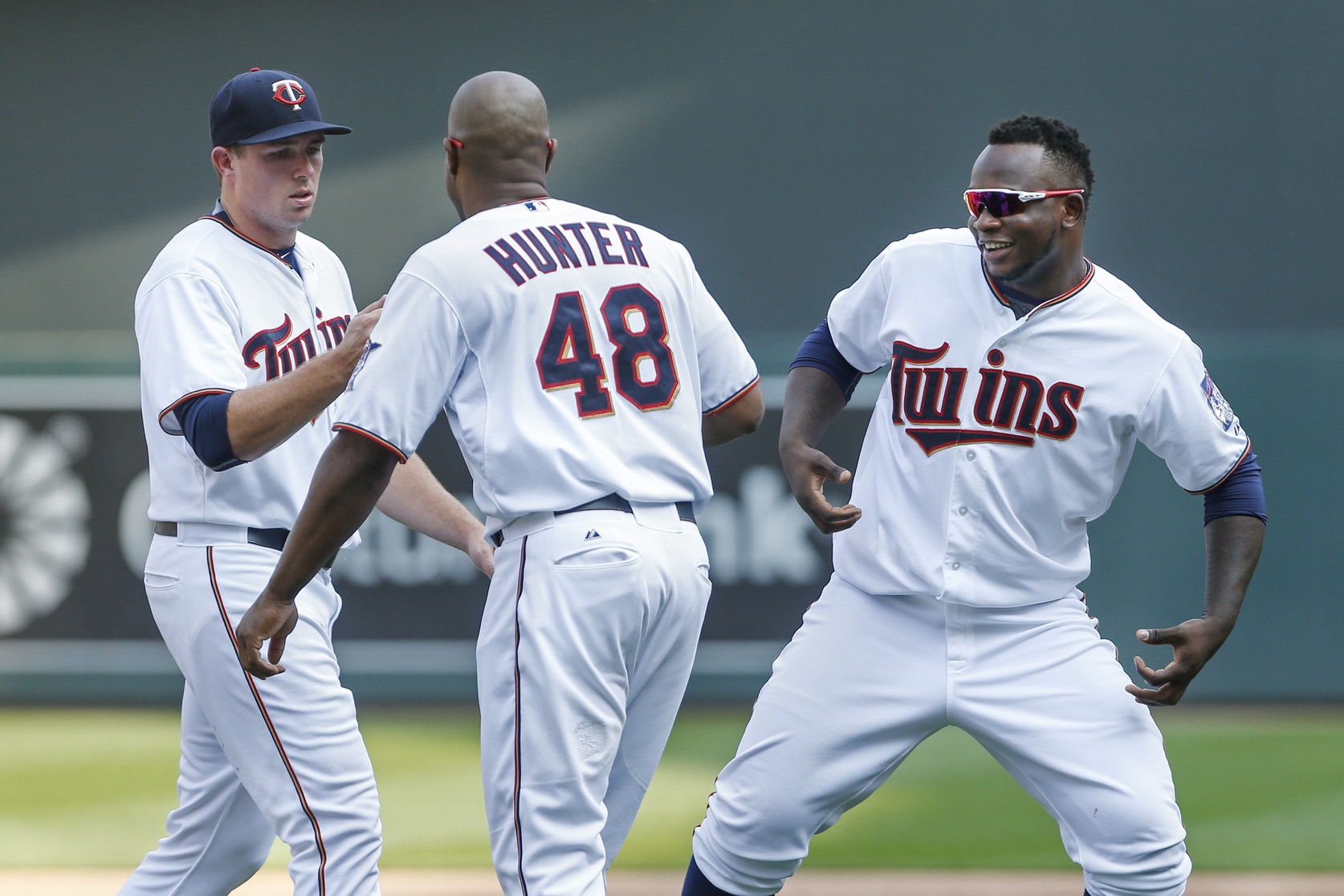 At the Winter Meetings Molitor said that the Twins would be working hard to convert the infielder into a corner outfielder. “We have to develop a little urgency here,” Molitor told MLB.com’s Rhett Bollinger, “not just ‘Let’s see how this thing goes.’” Molitor also added that Sano’s conditioning would be monitored to ensure that the 22-year-old would be in the necessary physical condition to play that position. Since then nearly a month has passed without Sano’s presence in Fort Myers. Oswaldo Arcia, on the other hand, has been a fixture at the team’s camp since November, reported KSTP’s Darren Wolfson, and the team’s officials have been impressed with his training process. Wolfson also checked in with the organization to see what the status was for Sano’s transition. His sources told him that they estimate he will be at Fort Myers sometime by the end of January. What has Sano been doing since his departure from his winter league team? According to reporter Juan Carlos Severino, Sano has been working out at the team’s Dominican Republic academy facilities in Boca Chica, putting in six hours of work each day from 6 AM to 12 PM. Sano told Severino that he wanted to continue to play winter ball but he and the team made a mutual decision to focus on his conditioning and outfield play. Although the emphasis has been on learning the new position, Sano said that he was still taking reps at third base because “you never know if they are going to need one.” While Molitor stressed the need for urgency when it comes to preparing a player for a new position, there seems to be a distinct lack of that given that the season is a little over two months away and nary a word has come out on his offseason development. You have to wonder how invested the Twins are in this position change.
 -
Over this past year, Twins Daily has continued to provide you with what we feel is the best-in-class Minnesota Twins site. A place where you can visit to comment, gain information and be entertained. In 2015, an unimaginable amount of words were killed in the name of all things Twins. On a near-daily basis when you land at TwinsDaily.com you will find some combination of Seth Stohs’ unparalleled prospect coverage, Nick Nelson’s thought-provoking analyses, John Bonnes’ quirky humor or my GIF-loaded scouting breakdowns. Or you might discover posts by regular contributors like Jeremy Nygaard, Cody Christie, Steve Buhr and others. Meanwhile, the forums have been alive with debate and conversation like never before. We thank you all for participating in our grand experiment. But before you Uber off for your rocking New Years’ Eve soiree, help us wring one more click out of these bad boys and check out our top ten most read stories from 2015. 10. What’s A Realistic Timeline For Byron Buxton? Download attachment: 1-Buxton.jpg (courtesy of USA TODAY) With the 2015 season still in its infancy and the Twins trying to battle their way back to .500, Byron Buxton was tearing his way through Southern League pitching, hitting .286/.353/.527 over his first 102 plate appearances. Minnesota, on the other hand, needed desperate help at the top of the lineup and something to give the fans some rooting interest in a team that appeared poised to follow the same losing path as the teams over the previous four years. It took a little over a month but the Twins finally heeded Nick Nelson’s advice. Buxton’s first season at the major league level would be truncated by a thumb injury but he undoubtedly showed promise as the season progressed and he hit .304/.333/.652 over the final two weeks. 9. Twins Daily Top Ten Prospects: Nick Burdi Profile Download attachment: 9-Burdi.jpg Twins Daily launched the 2015 Top Ten Prospect list with hard-throwing reliever Nick Burdi. Burdi represented something that had been sorely lacking in the Twins’ bullpen: Triple-digits heat. After a dominant debut in professional baseball (38 strikeouts over 20.1 innings split between Cedar Rapids and Fort Myers in 2014), expectations were understandably high for the fire-baller. Unfortunately he hit a snag in his first foray in Double-A, getting hit around a bit while walking almost seven batters per nine innings. Burdi seemed to have turned things around after the season when he threw eight innings of two-hit ball in the Arizona Fall League. 8. What Should The Twins Expect From Byung-Ho Park? Download attachment: 9-Park.jpg When the surprising news broke that the Twins were the winners of the Byung-ho Park bid, there was some equal parts excitement and head scratching. After all, despite his video game-like numbers in the Korean Baseball Organization, Park’s potential was very much an unknown. In an effort to shed some light on how that power may play at Target Field, I reviewed Park’s home run footage from 2012, 2014 and 2015 to provide some level of insight as what to expect from the new acquisition. 7.Examining The Shortstop Options Download attachment: 7-Tulo.jpg (courtesy of USA TODAY) On July 19th, the Twins were 50-42, second in the AL Central and five back of the Kansas City Royals. Paul Molitor gave Danny Santana the bulk of the playing time at short only to receive a lowly .221/.241/.306 batting line in return. With the trade deadline coming, the external candidates were discussed (including the possibility of landing Troy Tulowitzki) as well as the internal options. As it played out, the Twins eventually (reluctantly?) handed the job to Eduardo Escobar starting in August and Escobar responded by hitting .286/.350/.524 after receiving steady employ. 6. Twins Prospect Max Kepler Continues To Impress Download attachment: 6-Kepler.jpg (courtesy of USA TODAY) Among all the stories in the farm system, Max Kepler’s rise in 2015 on the prospect charts may have been the most impressive. Clearly a toolsy talent, Kepler was as raw as sushi when he arrived in professional baseball and spent some time battling injuries and learning the game. “We all assumed, figured, projected he would hit eventually,” Twins Vice President of Player Personnel Mike Radcliff explained. “This year it is showing up in the box score for sure.” 5. Hicks-Murphy Trade Looks Worse By The Minute Download attachment: 5-Hicks.jpg (courtesy of USA TODAY) The Twins’ offseason began with a flurry of moves which included sending incumbent (and improving) center fielder Aaron Hicks to New York in exchange for young catcher John Ryan Murphy. Not everyone was pleased with this transaction, as evident by the popularity of Twins Daily blogger Tom Froemming’s post which noted the a half-dozen free agent catching options that were signed soon after the Twins’ trade. 4. Will Twins Address Their Most Glaring Weakness? Download attachment: 4-Lucroy.jpg (courtesy of USA TODAY) That’s the question Nick Nelson posed in mid-July ramping up to the trade deadline. As he pointed out, Twins catcher Kurt Suzuki was hitting a pitiful .227/.283/.303 after a 0-for-8 weekend against the Oakland A’s and there were several rumored options on the market (including Jonathan Lucroy and Derek Norris). Obviously the Twins did not make a move to upgrade at that position in-season but they moved quickly during the winter to swap Aaron Hicks for Yankees’ catcher John Ryan Murphy. 3. Twins Add Seven To Their 40 Man Roster, Lose Achter, Pinto Download attachment: 3-prospects.png (courtesy of Craig Gordon & Seth Stohs) In efforts to complete their 40-man roster for 2016, the Twins added seven players from the farm system to their protected roster but exposed pitcher AJ Achter and catcher Josmil Pinto to other teams. Achter was nabbed by the Phillies while Pinto was originally picked up by the Padres only to be waived shortly thereafter and was claimed by the Brewers. 2. Twins Trade Chips Download attachment: 2-Arica.jpg (courtesy of USA TODAY) With a day remaining until the 2015 trade deadline, Seth Stohs outlined the various trading assets for the Minnesota Twins. Among those listed were Jorge Polanco, Eduardo Escobar, Oswaldo Arcia, Eddie Rosario, Kohl Stewart and more. While all may have been discussed at that time with other teams, the Twins ultimately acquired just reliever Kevin Jepsen from the Tampa Bay Rays in exchange for minor league pitcher Chih-Wei Hu. AND THE MOST READ TWINS DAILY STORY OF 2015... 1. Twins, Rockies Talk Tulowitzki Download attachment: 1-tulo.jpg (courtesy of USA TODAY) With the Twins in contention at the trade deadline for the first time in years, naturally the interest among the fan base was focused on whether or not the Twins would make some upgrades for an unexpected playoff push. When Twins Daily contributor Jeremy Nygaard reported that he had heard inside information that the Twins were discussing a possible trade with the Rockies for shortstop Troy Tulowitzki, well, the traffic nearly broke our Twins Daily servers. It is almost serendipitous that the trade never happened considering that once the Blue Jays acquired Tulowitzki, he hit just .239/.317/.380 while Eduardo Escobar, as previously mentioned, posted a much better .286/.350/.524 line. Click here to view the article
-
 10. What’s A Realistic Timeline For Byron Buxton? (courtesy of USA TODAY) With the 2015 season still in its infancy and the Twins trying to battle their way back to .500, Byron Buxton was tearing his way through Southern League pitching, hitting .286/.353/.527 over his first 102 plate appearances. Minnesota, on the other hand, needed desperate help at the top of the lineup and something to give the fans some rooting interest in a team that appeared poised to follow the same losing path as the teams over the previous four years. It took a little over a month but the Twins finally heeded Nick Nelson’s advice. Buxton’s first season at the major league level would be truncated by a thumb injury but he undoubtedly showed promise as the season progressed and he hit .304/.333/.652 over the final two weeks. 9. Twins Daily Top Ten Prospects: Nick Burdi Profile Twins Daily launched the 2015 Top Ten Prospect list with hard-throwing reliever Nick Burdi. Burdi represented something that had been sorely lacking in the Twins’ bullpen: Triple-digits heat. After a dominant debut in professional baseball (38 strikeouts over 20.1 innings split between Cedar Rapids and Fort Myers in 2014), expectations were understandably high for the fire-baller. Unfortunately he hit a snag in his first foray in Double-A, getting hit around a bit while walking almost seven batters per nine innings. Burdi seemed to have turned things around after the season when he threw eight innings of two-hit ball in the Arizona Fall League. 8. What Should The Twins Expect From Byung-Ho Park? When the surprising news broke that the Twins were the winners of the Byung-ho Park bid, there was some equal parts excitement and head scratching. After all, despite his video game-like numbers in the Korean Baseball Organization, Park’s potential was very much an unknown. In an effort to shed some light on how that power may play at Target Field, I reviewed Park’s home run footage from 2012, 2014 and 2015 to provide some level of insight as what to expect from the new acquisition. 7. Examining The Shortstop Options (courtesy of USA TODAY) On July 19th, the Twins were 50-42, second in the AL Central and five back of the Kansas City Royals. Paul Molitor gave Danny Santana the bulk of the playing time at short only to receive a lowly .221/.241/.306 batting line in return. With the trade deadline coming, the external candidates were discussed (including the possibility of landing Troy Tulowitzki) as well as the internal options. As it played out, the Twins eventually (reluctantly?) handed the job to Eduardo Escobar starting in August and Escobar responded by hitting .286/.350/.524 after receiving steady employ. 6. Twins Prospect Max Kepler Continues To Impress (courtesy of USA TODAY) Among all the stories in the farm system, Max Kepler’s rise in 2015 on the prospect charts may have been the most impressive. Clearly a toolsy talent, Kepler was as raw as sushi when he arrived in professional baseball and spent some time battling injuries and learning the game. “We all assumed, figured, projected he would hit eventually,” Twins Vice President of Player Personnel Mike Radcliff explained. “This year it is showing up in the box score for sure.” 5. Hicks-Murphy Trade Looks Worse By The Minute (courtesy of USA TODAY) The Twins’ offseason began with a flurry of moves which included sending incumbent (and improving) center fielder Aaron Hicks to New York in exchange for young catcher John Ryan Murphy. Not everyone was pleased with this transaction, as evident by the popularity of Twins Daily blogger Tom Froemming’s post which noted the a half-dozen free agent catching options that were signed soon after the Twins’ trade. 4. Will Twins Address Their Most Glaring Weakness? (courtesy of USA TODAY) That’s the question Nick Nelson posed in mid-July ramping up to the trade deadline. As he pointed out, Twins catcher Kurt Suzuki was hitting a pitiful .227/.283/.303 after a 0-for-8 weekend against the Oakland A’s and there were several rumored options on the market (including Jonathan Lucroy and Derek Norris). Obviously the Twins did not make a move to upgrade at that position in-season but they moved quickly during the winter to swap Aaron Hicks for Yankees’ catcher John Ryan Murphy. 3. Twins Add Seven To Their 40 Man Roster, Lose Achter, Pinto (courtesy of Craig Gordon & Seth Stohs) In efforts to complete their 40-man roster for 2016, the Twins added seven players from the farm system to their protected roster but exposed pitcher AJ Achter and catcher Josmil Pinto to other teams. Achter was nabbed by the Phillies while Pinto was originally picked up by the Padres only to be waived shortly thereafter and was claimed by the Brewers. 2. Twins Trade Chips (courtesy of USA TODAY) With a day remaining until the 2015 trade deadline, Seth Stohs outlined the various trading assets for the Minnesota Twins. Among those listed were Jorge Polanco, Eduardo Escobar, Oswaldo Arcia, Eddie Rosario, Kohl Stewart and more. While all may have been discussed at that time with other teams, the Twins ultimately acquired just reliever Kevin Jepsen from the Tampa Bay Rays in exchange for minor league pitcher Chih-Wei Hu. AND THE MOST READ TWINS DAILY STORY OF 2015... 1. Twins, Rockies Talk Tulowitzki (courtesy of USA TODAY) With the Twins in contention at the trade deadline for the first time in years, naturally the interest among the fan base was focused on whether or not the Twins would make some upgrades for an unexpected playoff push. When Twins Daily contributor Jeremy Nygaard reported that he had heard inside information that the Twins were discussing a possible trade with the Rockies for shortstop Troy Tulowitzki, well, the traffic nearly broke our Twins Daily servers. It is almost serendipitous that the trade never happened considering that once the Blue Jays acquired Tulowitzki, he hit just .239/.317/.380 while Eduardo Escobar, as previously mentioned, posted a much better .286/.350/.524 line.
