



Parker Hageman
-
Posts
4,152 -
Joined
-
Last visited
-
Days Won
6
Content Type
Profiles
News
Minnesota Twins Videos
2026 Minnesota Twins Top Prospects Ranking
2022 Minnesota Twins Draft Picks
Minnesota Twins Free Agent & Trade Rumors, Notes, & Tidbits
Guides & Resources
2023 Minnesota Twins Draft Picks
The Minnesota Twins Players Project
2024 Minnesota Twins Draft Picks
2025 Minnesota Twins Draft Pick Tracker
2026 Minnesota Twins Draft Tracker: Picks & Bonuses
Forums
Blogs
Events
Store
Downloads
Gallery
Everything posted by Parker Hageman
-

Article: Take Note Of Zander Wiel
Parker Hageman replied to Parker Hageman's topic in Twins Daily Front Page News
Without bothering to check I have to believe most teams have power hitting 1B/DH prospects, so I am not optimistic he would be anything to build a trade around. We can give him away if some other team thinks he's the final piece to some bigger trade. Right, and to clarify, I'm not suggesting he is a guy teams will seek out, rather, he's the second or third guy involved in a trade -- particularly if he has another good year or two. If he hits, teams will want him. That's a good thing to have stockpiled in a system. FWIW Wiel was also a monster postseason. In five games we went 7-for-17 with five walks. And he's not just some hulking slugger, either. Including the playoffs, he hit 10 triples and was 7-for-8 in stolen base attempts. The guy is really athletic. Yes, he appears plenty athletic for first base. I haven't observed him play that much but plays like this makes me think that there is some ability to convert to an outfielder. Very good arm for a first baseman. https://twitter.com/ParkerHageman/status/756906191968534528 A dearth is exactly what they don't have. I kinda got caught between thoughts there. At the MLB level and AAA, they have a surplus. As I was rattling off the depth chart in Chattanooga and Fort Myers, there's a gap. Behind Wiel in rookie ball is one of my personal favorites in Lewin Diaz. A dearth is exactly what they don't have. Separate from the depth chart and his future, Wiel is interesting because he represents a player that has big athletic movements in the org and is having success with it. The Twins seemingly haven't coached his movements out of him and this would be a big positive if they could refrain from toning everyone down once they got into the system. -
Article: Take Note Of Zander Wiel
Parker Hageman replied to Parker Hageman's topic in Twins Daily Front Page News
Rather than trying to carve up the season into arbitrary segments, try to use a milestone for when a player makes at significant change. In this case, at some point toward the end of June (I can't pinpoint an exact date so I did use make a somewhat arbitrary divide), Wiel made the big swing adjustment. April-June: 309 PA .232/.309/.362 9.7% BB% 21.0% K% July-Sept: 259 PA .291/.360/.574 9.6% BB% 23.1% K% MID League Avg: .249/.317/.355 8.1% BB% 21.7 K% We're not talking about a Palka/Walker type strikeout guy. He's decisively average and, given his position and spot in the order as a run-producer, that is about where I would expect to see him. It's higher than you would see for a truly elite prospect but we're not talking all or nothing. In terms of why he wasn't promoted after he caught fire, Seth will probably have to give more insight on that. In Fort Myers, they had Trey Vavra who wasn't doing much offensively at first base. The Lookouts had DJ Hicks at first and he was (1) super old for the level and (2) not hitting that much. The funny thing about Hicks is that he actually put up better offensive numbers as a 23 year old with Cedar Rapids than Wiel did. I feel like there was opportunity there but the Twins may have just wanted him to build on that confidence. Long view, I don't know if I actually see Wiel winding up with the Twins. They obviously have a dearth surplus of first basemen and that's probably where they finally stick Miguel Sano before he becomes a DH (or Vargas or Park or whoever else gets old and slow). Maybe a position change is in order but I'm not sure if he has enough mobility to play right field. More likely, if Wiel can continue this production at the second half pace in higher levels, he might be a useful trade chip (say in a multi-player trade). -
The Minnesota Twins have developed a reputation for encouraging an archaic hitting philosophy to their prospects in the minor leagues. As other organizations have embraced big swings with big movements and working with them to bring out their best, hitters who have entered the Twins system get the cookie-cutter swing treatment: foot down early, head still, swing down. More and more there have been players in the system who have eschewed those methods only to see their production improve. There are examples of great swing transformations within the Twins’ minor league system that should be highlighted and, much like Max Kepler's in Chattanooga a year ago, Cedar Rapids’ Zander Wiel’s is one of them. While Brian Dozier’s incredible in-season turnaround has drawn all the attention, Wiel’s improvement at the minor league level is no less impressive.First, a little background on Wiel. Wiel’s career at Vanderbilt was often overshadowed by marquee players like teammate Dansby Swanson, who went first overall in the 2015 draft, as well as other big names in the SEC including Alex Bregman (second overall, Astros) and Andrew Benintendi (seventh overall, Red Sox). Wiel, meanwhile, put up respectable numbers in his junior year, finishing with 15 home runs (tied for fifth in the conference) and second in runs batted in (68). Those totals in a tough conference -- where pitching opponents included Florida’s AJ Puk and Logan Shore as well as LSU’s Alex Lange -- and future potential led the Twins in his direction during the 12th round of that year’s draft. The first thing that jumps out about Wiel’s college track record is the significant increase in his home runs total -- from 5 to 15 -- between his sophomore and junior seasons. The catalyst, he said, was the addition of a leg kick. The first baseman spent his first two years at Vanderbilt employing the standard toe tap (as you can see from his ). It was fine for contact but it was not generating the power results he desired as a corner infielder. Wiel spent the summer collegiate league refining and perfecting the movements that he felt put everything in better position to drive the ball. http://i.imgur.com/SRuJeBs.gif Despite the improved numbers, evaluators questioned how well Wiel would do in the professional ranks. Baseball Prospectus said that he “tends to get too far forward in his weight shift, sweeping the barrel through the zone rather than driving it” and wondered if he would struggle switching from metal BBCore bats to wood. MinorLeagueBall.com’s John Sickels noted that there were some concerns about Wiel’s “non-conventional” swing heading into the draft. Most outlets agreed that he would be taken sometime between the fourth and seventh rounds so the Twins considered him a steal in the 12th round when he continued to fall. In just his second game of his professional career, Wiel was hit by a pitch playing for Elizabethton and fractured his hand. He would miss the majority of that season, playing in the final ten games for the E-Twins. When he returned, in order to improve his timing, he simplified his swing by nixing the leg kick. With an entire offseason to heal, Wiel brought the modified swing with him to Cedar Rapids to start the 2016 season. http://i.imgur.com/PR17MJB.gif By the end of June, Wiel was hitting .232/.309/.362 with just four home runs in a little over 300 plate appearances. He said his timing was off. He felt robotic. He was getting beat on fastballs. He made a decision to go big. "Lifting my leg a little more has allowed me to have my trigger more ready to go," Wiel explained to MiLB.com’s Curt Rallo. "I was robotic. Now it's smoother for me. I'm able to see those pitches and hit them out front.” Wiel went even larger and more aggressive with his movements than his Vandy days. http://i.imgur.com/HEePV36.gif From July onward, Wiel hit .291/.360/.574 with 15 home runs in 259 plate appearances. His 19 home runs on the year were second in the Midwest League but it is hard not to think about what kind of damage he could do with an entire season with his new mechanics. Because it is the first thing someone notices about Wiel at the plate the leg kick draws the most attention but he also reset his hands in a better attack position. Previously, Wiel kept the barrel over his back shoulder and brought it straight up before launching it forward. Now his hands and bat are the quietest thing about his swing. The bat is tipped toward the pitcher and held still. This, he emphasized to reporters, was to keep him short to the ball and to keep him from being beat on fastballs inside. Wiel’s breakout in low-A ball is noteworthy, to be sure, but there are several caveats such as Wiel’s advanced age. At 23 years old, he is two years older than the league’s average. He’s older than Max Kepler, Miguel Sano and Byron Buxton. Obviously Wiel had a delayed start to his career given that he spent three years in college (and one year redshirting) but you would like to see him outperforming a league in which he is younger than the pool. Nevertheless, Wiel’s breakout season is very much parallel with Kepler’s, who implemented a leg kick to his swing in Double-A and quickly rose on national prospect ranking. Wiel’s 2016 performance doesn’t seem to be a hot streak or fluky -- he’s made the right adjustments. Time will tell where he goes from here. Click here to view the article
-
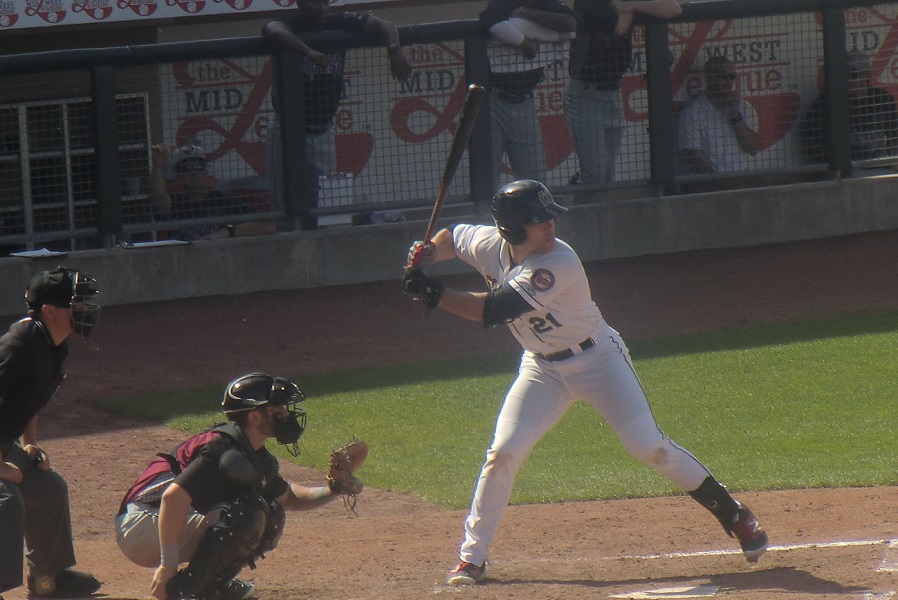 First, a little background on Wiel. Wiel’s career at Vanderbilt was often overshadowed by marquee players like teammate Dansby Swanson, who went first overall in the 2015 draft, as well as other big names in the SEC including Alex Bregman (second overall, Astros) and Andrew Benintendi (seventh overall, Red Sox). Wiel, meanwhile, put up respectable numbers in his junior year, finishing with 15 home runs (tied for fifth in the conference) and second in runs batted in (68). Those totals in a tough conference -- where pitching opponents included Florida’s AJ Puk and Logan Shore as well as LSU’s Alex Lange -- and future potential led the Twins in his direction during the 12th round of that year’s draft. The first thing that jumps out about Wiel’s college track record is the significant increase in his home runs total -- from 5 to 15 -- between his sophomore and junior seasons. The catalyst, he said, was the addition of a leg kick. The first baseman spent his first two years at Vanderbilt employing the standard toe tap (as you can see from his ). It was fine for contact but it was not generating the power results he desired as a corner infielder.Wiel spent the summer collegiate league refining and perfecting the movements that he felt put everything in better position to drive the ball. http://i.imgur.com/SRuJeBs.gif Despite the improved numbers, evaluators questioned how well Wiel would do in the professional ranks. Baseball Prospectus said that he “tends to get too far forward in his weight shift, sweeping the barrel through the zone rather than driving it” and wondered if he would struggle switching from metal BBCore bats to wood. MinorLeagueBall.com’s John Sickels noted that there were some concerns about Wiel’s “non-conventional” swing heading into the draft. Most outlets agreed that he would be taken sometime between the fourth and seventh rounds so the Twins considered him a steal in the 12th round when he continued to fall. In just his second game of his professional career, Wiel was hit by a pitch playing for Elizabethton and fractured his hand. He would miss the majority of that season, playing in the final ten games for the E-Twins. When he returned, in order to improve his timing, he simplified his swing by nixing the leg kick. With an entire offseason to heal, Wiel brought the modified swing with him to Cedar Rapids to start the 2016 season. http://i.imgur.com/PR17MJB.gif By the end of June, Wiel was hitting .232/.309/.362 with just four home runs in a little over 300 plate appearances. He said his timing was off. He felt robotic. He was getting beat on fastballs. He made a decision to go big. "Lifting my leg a little more has allowed me to have my trigger more ready to go," Wiel explained to MiLB.com’s Curt Rallo. "I was robotic. Now it's smoother for me. I'm able to see those pitches and hit them out front.” Wiel went even larger and more aggressive with his movements than his Vandy days. http://i.imgur.com/HEePV36.gif From July onward, Wiel hit .291/.360/.574 with 15 home runs in 259 plate appearances. His 19 home runs on the year were second in the Midwest League but it is hard not to think about what kind of damage he could do with an entire season with his new mechanics. Because it is the first thing someone notices about Wiel at the plate the leg kick draws the most attention but he also reset his hands in a better attack position. Previously, Wiel kept the barrel over his back shoulder and brought it straight up before launching it forward. Now his hands and bat are the quietest thing about his swing. The bat is tipped toward the pitcher and held still. This, he emphasized to reporters, was to keep him short to the ball and to keep him from being beat on fastballs inside. Wiel’s breakout in low-A ball is noteworthy, to be sure, but there are several caveats such as Wiel’s advanced age. At 23 years old, he is two years older than the league’s average. He’s older than Max Kepler, Miguel Sano and Byron Buxton. Obviously Wiel had a delayed start to his career given that he spent three years in college (and one year redshirting) but you would like to see him outperforming a league in which he is younger than the pool. Nevertheless, Wiel’s breakout season is very much parallel with Kepler’s, who implemented a leg kick to his swing in Double-A and quickly rose on national prospect ranking. Wiel’s 2016 performance doesn’t seem to be a hot streak or fluky -- he’s made the right adjustments. Time will tell where he goes from here.
 -
Article: Jose Berrios Is Tipping His Pitches
Parker Hageman replied to Parker Hageman's topic in Twins Daily Front Page News
Again, it's not the fingers itself that you should see, it's the action of what the hand looks like with that grip. Fastball hitters will see a smooth side while the changeup grip -- because of the fingers and the wrap action -- has different look. I keep referring to it as the red dot effect that hitters see with sliders. We have to remember, baseball players have ridiculously good vision and are constantly looking for a tell prior to the release of the ball.- 44 replies
-
- 3
-

-
- jose berrios
- scouting
- (and 1 more)
-
Article: Jose Berrios Is Tipping His Pitches
Parker Hageman replied to Parker Hageman's topic in Twins Daily Front Page News
Sutcliffe has been a pitcher someone else compared him too. Look over his mechanics, I don't think he's gone as wide as Berrios does with his arm. Berrios' action was much more like Dwight Gooden's arm swing. http://www.tradingcarddb.com/Images/Cards/Baseball/134/134-520Fr.jpg Sutcliffe's early mechanics do look like he swung his arm out further but has brought the ball closer to his body as he aged. -
Article: Jose Berrios Is Tipping His Pitches
Parker Hageman replied to Parker Hageman's topic in Twins Daily Front Page News
Right, the hitter is not seeing the pinky/fingers in real time. The position of that hand presents a different look from his fastball grip. In real time (as shown in the video above) hitters will be able to pick up on the difference between the two, similar to being able to see the red dot of a slider only with more advanced notice.- 44 replies
-
- 1
-
-
- jose berrios
- scouting
- (and 1 more)
-
Article: Jose Berrios Is Tipping His Pitches
Parker Hageman replied to Parker Hageman's topic in Twins Daily Front Page News
There is a lot that goes into adjusting an arm path. Timing, release point, etc, etc. It's not an easy process.- 44 replies
-
- 1
-
-
- jose berrios
- scouting
- (and 1 more)
-
Article: Jose Berrios Is Tipping His Pitches
Parker Hageman replied to Parker Hageman's topic in Twins Daily Front Page News
I mean...that's exactly what I said in the concluding paragraph. I know I can get long winded by try to stay 'till the end. The command issue/pitch tipping are not mutually exclusive either: A hitter who knows what they are looking for will also not chase the secondary pitches out of the strike zone in those pitcher's counts.- 44 replies
-
- 2
-
-
- jose berrios
- scouting
- (and 1 more)
-
When the Minnesota Twins called Jose Berrios up to the big club in late April, the fan base was abuzz with excitement. Berrios represented the system’s best hope for producing a top-of-the-rotation starter in over a decade. He had the velocity many of the Twins’ previous starting pitching prospects lacked and was able to put hitters away with one of two nasty secondary pitches. Minor league reports raved about his stuff and his numbers at the upper levels were highly encouraging. Unfortunately, like so many other promising prospects, Berrios did not immediately live up to expectations. Major League hitters blasted him around the ballpark. Over 11 starts, they posted a .988 OPS off of Berrios while tagging him for 12 doubles and 10 home runs. The laundry list of what Berrios needs to do in order to improve is long, but there is one that might be a quick path to having immediate success: Stop tipping his pitches.How is it that one pitcher’s change-up can go from a major weapon in the minors to such a crushable pitch overnight? In September 2015 MLB.com’s Bernie Pleskoff, a former scout for the Astros and Mariners, called Berrios’ change-up his best pitch. “I believe his change-up is his best overall pitch,” Pleskoff wrote. “It's the pitch that can gain Berrios a great advantage over the hitter. He is especially tough on left-handed hitters when his change-up sinks and he changes the eye level and balance of the hitter.” This year in AAA Berrios struck out 125 in 111 innings in part because of the devastating nature of his change-up. Hitters said the arm action mimicked his fastball’s release and dropped precipitously, inciting tons of missed bats in the minors. In fact, Baseball America said it was the best version of that pitch in the International League in 2016. And yet KABOOM. Scouts and hitters raved about the action of Jose Berrios’ change-up so the current results are clearly not based on it being an inferior pitch. So why is it that hitters are not chasing it out of the strike zone and obliterating the ones that do stay in the zone to pieces? Why has it worked at lower levels but not the big leagues? When a pitcher is tipping his pitches, there usually is a tell of some sort. Sometimes it is small like a different turn of the glove at the set position or a slightly different hand break. During the 1987 World Series, the scouting report on Frank Viola was that he held his fastball high in the glove and his change-up down. Other times it is hard to ignore, like holding the ball in the set position differently (such as holding it up by the face for a fastball or down at the belt for a breaking ball). After watching all the available video at BaseballSavant.com of him throwing his various pitches on loop for several weeks, I was stumped. Berrios did not exhibit any of those traits. Another possibility was how he delivered it. Last season Chattanooga’s manager Doug Mientkiewicz noted that he thought Berrios was telegraphing his change-up too much in 2014. Fast forward to this season, PitcherList.com did a high definition GIF breakdown of his first MLB start, categorizing each pitch type. With his change-ups, you notice deceleration of his body and he cuts off his finish differently than for his fastball and curve ball. Although I did consider this phenomenon as a potential source for tipping, ultimately Berrios’ deceleration happens after he releases the ball. Hitters would not be able to see this cue and adjust at the same time. As I stared at the computer screen trying to see the 3D sailboat in the video, it was only after seeing a still photo of Berrios pitching that the answer was so obvious. Let’s see if you can figure it out. Take a look at these two grotesquely blurry zoomed in images. Do you notice anything different between the two? Download attachment: Berrios_FBvCH.PNG Give up? On the one on the left, you will see a finger (his pinky) sticking up above the ball. That’s his change-up. On the right, you see all of Berrios’ fingers wrapped behind the ball. That’s the fastball. Take a look at a more high quality image from a front angle: Download attachment: USATSI_9460476_154617946_lowres.jpg Kim Klement // USA Today Berrios has been alerting opponents to what pitch he is going to throw behind his own back. Naturally, this seems too easy. After all, I’ve paused everything at the right moment. Would batters really be able to pick up that tell in the fraction of a second Berrios flashes the ball behind his back? Watch Berrios’ bullpen session from March ( ) and see if you can pick up on the quick flash: The Twins have said that they want Berrios to work on bringing the ball toward center field instead of toward first base but the way it is presented through the media, the instruction sounds more like a mechanical adjustment in hopes of better command and less like keeping teams from picking up on his pitches. Then again, the Twins may be well aware of the situation and are trying not to draw attention to it from other teams. (If that is the case...sorry, yo.) To be sure, changing an arm path is not an easy task. Pitchers have been told for years that certain delivery styles can be dangerous but they rarely make that adjustment because their current model is so committed to muscle memory. Given his innings total, it is unlikely that Berrios will have any time in winter ball to work on that, so the best will be bullpen side-sessions and some additional work in the offseason before getting several much needed months of rest. Don't be fooled by the early results: Berrios possesses some outstanding stuff. His biggest priority is to wrangle in command of his fastball in order to set up his secondary offerings. Throwing strikes is critical but from the mental side, it can been frustrating to throw what you feel is a solid pitch in a good location only to have it redirected back twice as fast. If he is also able to keep from alerting hitters to which pitch may be coming, that would be a significant improvement as well. Click here to view the article
- 44 replies
-
- 3
-
-
- jose berrios
- scouting
- (and 1 more)
-
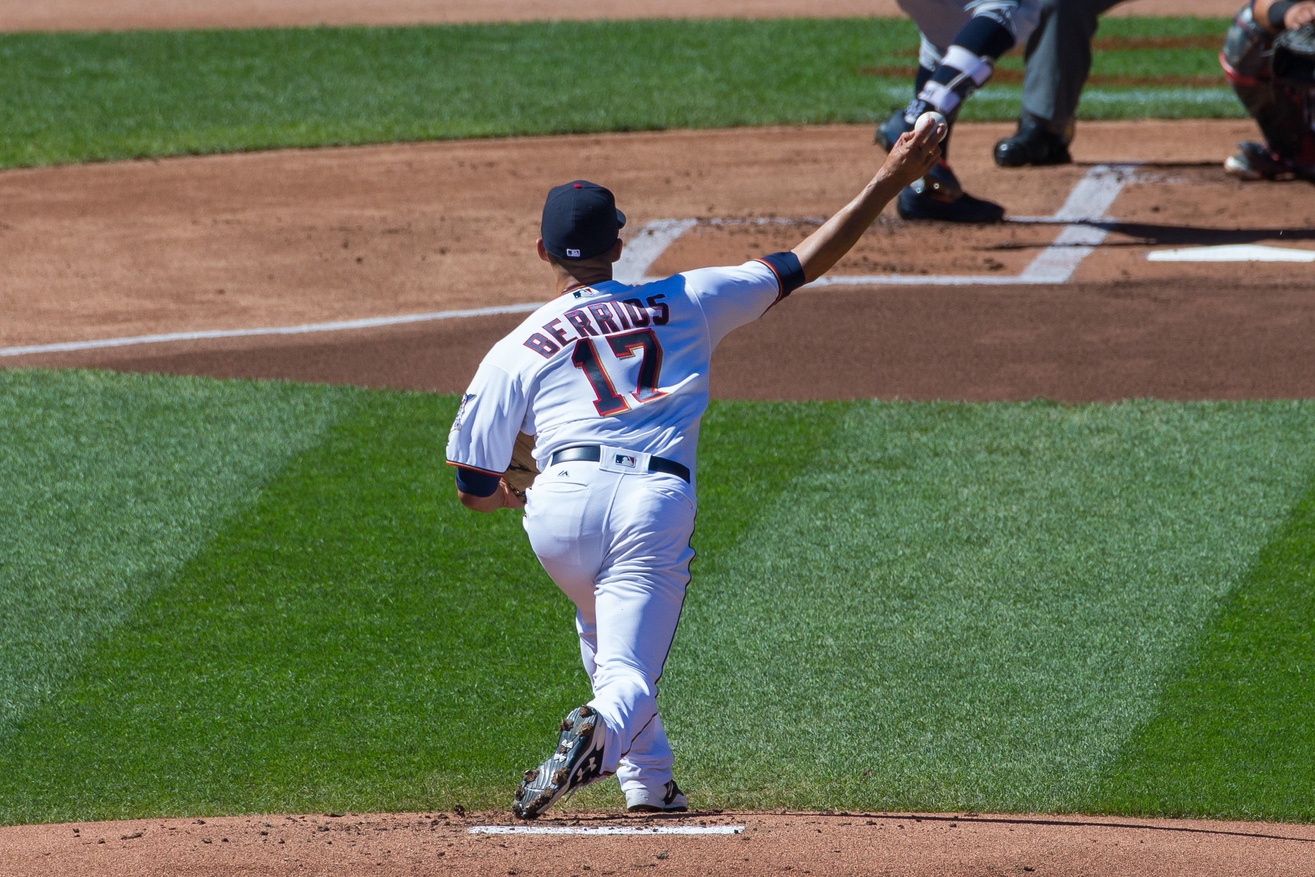 How is it that one pitcher’s change-up can go from a major weapon in the minors to such a crushable pitch overnight? In September 2015 MLB.com’s Bernie Pleskoff, a former scout for the Astros and Mariners, called Berrios’ change-up his best pitch. “I believe his change-up is his best overall pitch,” Pleskoff wrote. “It's the pitch that can gain Berrios a great advantage over the hitter. He is especially tough on left-handed hitters when his change-up sinks and he changes the eye level and balance of the hitter.” This year in AAA Berrios struck out 125 in 111 innings in part because of the devastating nature of his change-up. Hitters said the arm action mimicked his fastball’s release and dropped precipitously, inciting tons of missed bats in the minors. In fact, Baseball America said it was the best version of that pitch in the International League in 2016. And yet KABOOM. Scouts and hitters raved about the action of Jose Berrios’ change-up so the current results are clearly not based on it being an inferior pitch. So why is it that hitters are not chasing it out of the strike zone and obliterating the ones that do stay in the zone to pieces? Why has it worked at lower levels but not the big leagues? When a pitcher is tipping his pitches, there usually is a tell of some sort. Sometimes it is small like a different turn of the glove at the set position or a slightly different hand break. During the 1987 World Series, the scouting report on Frank Viola was that he held his fastball high in the glove and his change-up down. Other times it is hard to ignore, like holding the ball in the set position differently (such as holding it up by the face for a fastball or down at the belt for a breaking ball). After watching all the available video at BaseballSavant.com of him throwing his various pitches on loop for several weeks, I was stumped. Berrios did not exhibit any of those traits. Another possibility was how he delivered it. Last season Chattanooga’s manager Doug Mientkiewicz noted that he thought Berrios was telegraphing his change-up too much in 2014. Fast forward to this season, PitcherList.com did a high definition GIF breakdown of his first MLB start, categorizing each pitch type. With his change-ups, you notice deceleration of his body and he cuts off his finish differently than for his fastball and curve ball. Although I did consider this phenomenon as a potential source for tipping, ultimately Berrios’ deceleration happens after he releases the ball. Hitters would not be able to see this cue and adjust at the same time. As I stared at the computer screen trying to see the 3D sailboat in the video, it was only after seeing a still photo of Berrios pitching that the answer was so obvious. Let’s see if you can figure it out. Take a look at these two grotesquely blurry zoomed in images. Do you notice anything different between the two? Give up? On the one on the left, you will see a finger (his pinky) sticking up above the ball. That’s his change-up. On the right, you see all of Berrios’ fingers wrapped behind the ball. That’s the fastball. Take a look at a more high quality image from a front angle: Kim Klement // USA Today Berrios has been alerting opponents to what pitch he is going to throw behind his own back. Naturally, this seems too easy. After all, I’ve paused everything at the right moment. Would batters really be able to pick up that tell in the fraction of a second Berrios flashes the ball behind his back? Watch Berrios’ bullpen session from March ( ) and see if you can pick up on the quick flash: https://twitter.com/ParkerHageman/status/776777915182743552 For hitters who have elite vision -- the same that claim they can pick up the red or white spin of the ball quickly -- this brief flash of color provides that all-important cue on which pitch speed to expect. For an experienced player like Torii Hunter, who was calling out Berrios’ pitches during a spring training live BP session, this seems easy to pick up on. It is no small wonder Berrios’ change-up has been teed off on and it also explains why his fastball has been hammered as well. Given how quickly video at the major league level can be passed around, it makes complete sense as to why he has been exposed with the Twins versus in the minor leagues. The Twins have said that they want Berrios to work on bringing the ball toward center field instead of toward first base but the way it is presented through the media, the instruction sounds more like a mechanical adjustment in hopes of better command and less like keeping teams from picking up on his pitches. Then again, the Twins may be well aware of the situation and are trying not to draw attention to it from other teams. (If that is the case...sorry, yo.) To be sure, changing an arm path is not an easy task. Pitchers have been told for years that certain delivery styles can be dangerous but they rarely make that adjustment because their current model is so committed to muscle memory. Given his innings total, it is unlikely that Berrios will have any time in winter ball to work on that, so the best will be bullpen side-sessions and some additional work in the offseason before getting several much needed months of rest. Don't be fooled by the early results: Berrios possesses some outstanding stuff. His biggest priority is to wrangle in command of his fastball in order to set up his secondary offerings. Throwing strikes is critical but from the mental side, it can been frustrating to throw what you feel is a solid pitch in a good location only to have it redirected back twice as fast. If he is also able to keep from alerting hitters to which pitch may be coming, that would be a significant improvement as well.
 -
Article: Is The Buxton Era Beginning?
Parker Hageman replied to Cody Christie's topic in Twins Daily Front Page News
I assure you with all the showcases and club teams, there is ample coaching for all US kids as well -- particularly those who stand out. Most metro areas have multiple facilities run by former college and pro players which operate club teams and do bring in kids from outside of the metro as well. In Buxton's case, his area of Georgia had Round Trip Baseball which taught kids but the program was still pretty new and paled in comparison to some of the programs around Atlanta and East Cobb. I do think this puts rural and low-income players at a disadvantage but the opportunity to get the right instructions still exist. In many ways those are similar to the camps the agents in the Dominican run -- only parents pay through the nose to get their kids the "best" instruction whereas the DR agent takes a chunk of your pro earnings if you sign a contract. -
Article: Is The Buxton Era Beginning?
Parker Hageman replied to Cody Christie's topic in Twins Daily Front Page News
Cooooouuuuuupllllaaaa things: 1.) All due respect to Fangraphs, TwinsDaily was the first to report the "front foot down early" hitting approach: http://twinsdaily.com/_/minnesota-twins-news/joe-benson-and-the-twins-hitting-philosophy-r4302 2.) Buxton told me in spring about the Twins changing his approach in the minor leagues this past spring training: 3. He did come into the season with the leg kick, he just did not use it in 2-strike situations: https://twitter.com/ParkerHageman/status/773933777051488256 -
Article: Brian Dozier's Incredible Turnaround
Parker Hageman replied to Parker Hageman's topic in Twins Daily Front Page News
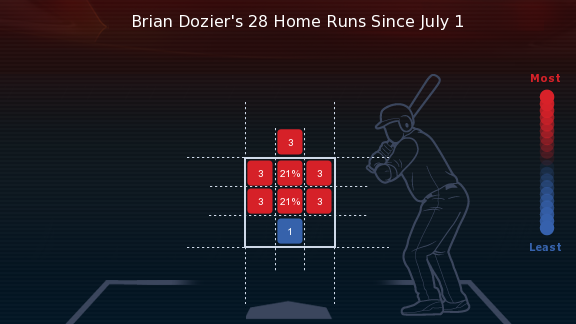
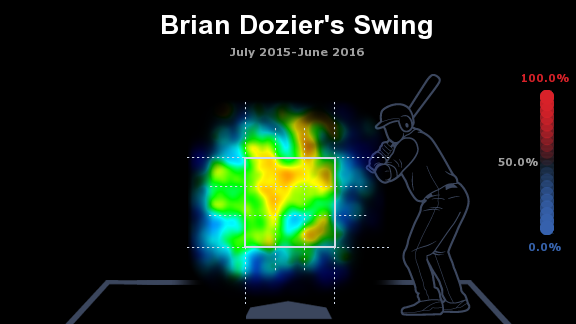
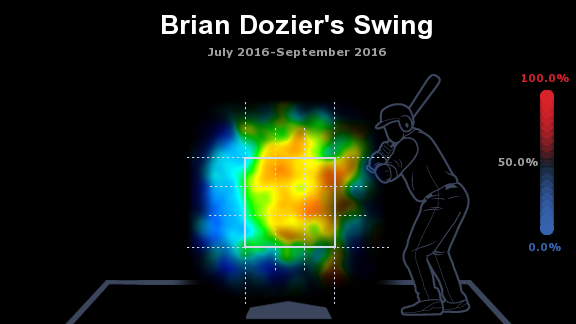
This was something I pointed out on Twitter during the Royals series: Teams aren't TRYING to pitch him up. They are definitely setting targets down-and-away but like all pitchers, they make mistakes. https://twitter.com/ParkerHageman/status/773201457881321472 For years I've preached that Brian Dozier crushes fastballs up in the zone and for years pitchers still leave that pitch in that area. Dating back to 2013, Dozier has more home runs than anyone on pitches in the upper third of the strike zone: 1. B. Dozier... 65 2. A. Pujols... 42 3. P. Goldschmidt... 37 4. E. Encarnacion... 34 5. M. Napoli... 34 I can't figure out why it happens so regularly. I don't know if his statute has something to do with it. When you look at the top three players with the most pitches in the upper portion of the strike zone over that time period, the leaders are Dozier, Brett Gardner and Jose Altuve. It must be exceedingly difficult for guys who are 6-foot-5+ to hit the knees of guys who are sub-6 and squatting. Here's where teams have been pitching him since the end of June: And here's where his home runs have been in the zone: In regards to where he swings overall, there is a stark difference between what he was swinging at since the start of the second half last season to the end of May this year. Then he began to really attack pitches on the inner half. This definitely jives with him discussing how he moved off the plate and opened up that portion of the zone again.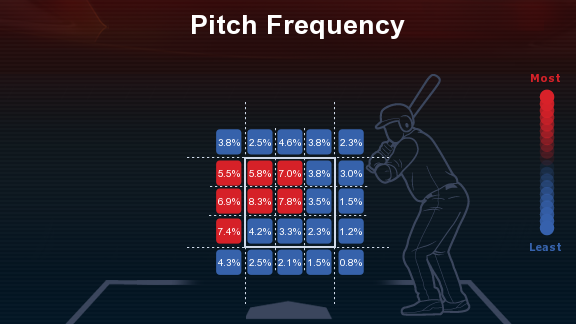
-
Article: Brian Dozier's Incredible Turnaround
Parker Hageman replied to Parker Hageman's topic in Twins Daily Front Page News
That's far too simplistic for a complicated game. 1. Hughes was hurt in 2015. After 2014, he did not revert back to his normal the next year -- he got substantially worse. 2. Suzuki's 2015 got away from him. He struggled with his mechanics all season, constantly moving his head during his swing. Once again, he addressed some of those issues this offseason and bounced back to have a better year this season than 2014. As far as Dozier's future, you're right, it's likely to regress next year simply because this was a career year and opponents will spend all winter figuring out a strategy to keep him from beating them -- just like they did at the end of last season when they went away-away-away and this season when they stayed away and shifted the infield until he proved he could beat it. In regards to this statement... ...I don't believe this is a fact at all. Baseball is organic in the sense that once a player has success, the opposing team is going to do everything it can to eliminate that strength and exploit another weakness. You ask any veteran player in the game and they will tell you they have to adjust every season. Unless you are Miguel Cabrera and a human cheat code.- 16 replies
-
- 2
-
-
- brian dozier
- scouting
- (and 2 more)
-
Article: Brian Dozier's Incredible Turnaround
Parker Hageman replied to Parker Hageman's topic in Twins Daily Front Page News
Such as the juiced ball theory or... -
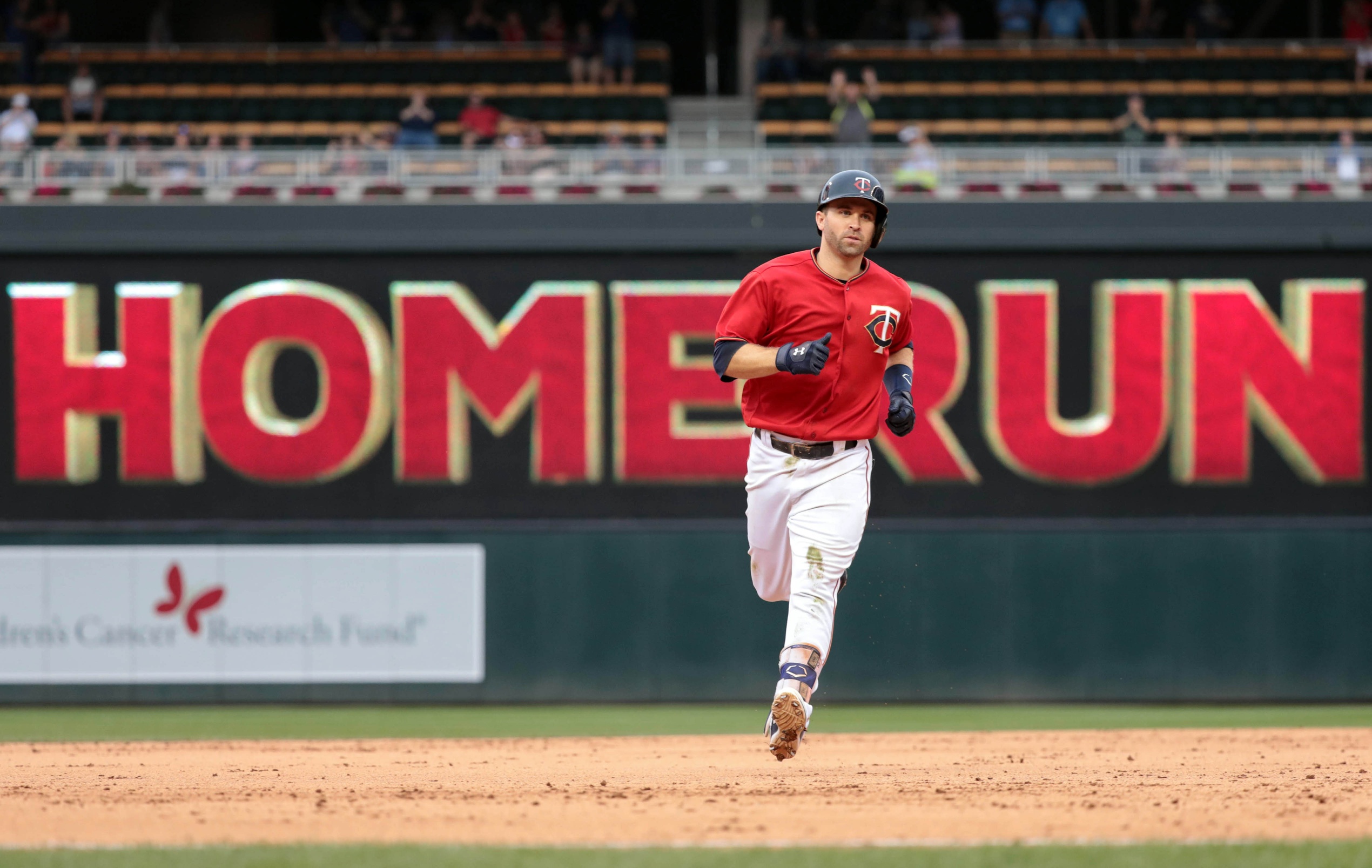
In the top of the third inning on Monday night in Detroit, Brian Dozier tagged a 94 mile per hour Daniel Norris offering just over Comerica's left field wall and mere inches beyond a leaping Justin Upton's outstretched glove for home run number forty on the season. It marked the first time a member of the Minnesota Twins would reach that milestone since Harmon Killebrew did so on September 1, 1970. Dozier's current total is mind-boggling when you consider that on June 5 of this season, he had just six home runs to his name. (By comparison, Killebrew had 14.) Since then, Dozier has gone on a tear, launching 34 home runs. How did this drastic turnaround happen?A few weeks ago I stumbled across a post at Fangraphs.com that tried to explain why Brian Dozier was suddenly hitting every pitch 600 feet. It is something that Fangraphs does all the time. If there is a change in a player’s performance guys like Eno Sarris, Jeff Sullivan and August Fagerstrom do an excellent and thorough job of breaking down the ins-and-outs through stats and video. Occasionally when they are writing about a Twins player, they miss or overlook something that the local followers are aware of. It comes with the territory of trying to cover all 30 teams. This particular Dozier write-up was more geared for the roto reader -- those into fantasy baseball -- but the post dove head-long into a mechanical breakdown of Dozier swing. Based on this assessment, Sport Illustrated’s Jay Jaffe picked it up and used it as a part of his analysis in explaining why Dozier has been Baseball Jesus over the last few months. "[T]he 29 year old Dozier has done impressive damage thanks to an in-season mechanical adjustment," Jaffe wrote. Since many readers here also read a lot of Fangraph articles and writers like Jaffe, I figured I would take the time to make it clear what is and is not happening. As a preface, the author of the post is not wrong, per se. Fangraphs.com’s Scott Strandberg recognized that Brian Dozier has made some changes at the plate. There are some tweaks that are easily seen between his April stance and his August stance. It’s just that the conclusion is a bit off. The first change that Strandberg observed is that Dozier has indeed altered his pre-swing movements, adding a much more exaggerated bat tip prior to getting his hands back. You can easily see the differences in motion as he is now tipping his barrel all the way toward the catcher with a big sweeping movement: http://i.imgur.com/7afuWw3.gif http://i.imgur.com/rsYxTE5.gif That’s creating a rhythm to help time his movements with the pitcher. He's loose and oozing with confidence. In the screengrab from the Fangraphs article posted in the block quote above, the author notes that these are the two positions right before Dozier starts his swing in April and August. The conclusion is Dozier has brought his hands closer to his body and his bat upright right before he starts his swing. Depending on what you consider the start of his swing, it might not be wholly accurate. Backing out of the shot to where Dozier actually readies himself for the pitch, his hands and barrel are in a very similar position between the two dates. The newer model is slightly more upright than the previous version but in no way is it at the point that makes a significant difference to the overall swing. Certainly not to the extent that the screengrab would lead someone to believe. Download attachment: Dozier1.png When he gathers himself into the pre-launch position, with the front foot making contact with the ground, his barrel and hands are back to the exact same spot. Download attachment: Dozier2.png Dozier is doing something different prior to starting his swing that could be helping his timing which, in turn, may help him get to the pitch at the right moment. However, at all the critical portions of the swing, his hands and barrel are in the same spot. It is the second statement -- “This allows Dozier to get the barrel through the zone quicker, which goes a long way toward explaining the spike in hard contact, and his increased power on inside pitches” -- is a little off the mark. In regard to hitting the inside pitch, instead of focusing on the hand position in the screengrab, notice that Dozier is further off of the plate. In early May, Dozier explained to MLB.com's Rhett Bollinger the reason he moved away from the plate. "The way my swing works is that I have to create space," Dozier said. "I like to be able to get extended, but I felt trapped and that I had to cheat, which caused me to drop [my hands]. So it's night and day now. I feel good." Moreover, getting the barrel through the zone quicker has never been Dozier’s problem nor is it a reason why he's jacking so many bombs right now. As Tom Brunansky told me this spring, Dozier’s biggest problem was that his barrel was not in the zone long enough. He was too quick with his barrel in the zone, the exact opposite of what the author believes is happening. The major difference between the two style of swings is a bit more complicated and harder to see in video than what was present. Dozier has been getting behind the ball more -- meaning his barrel has stayed in the zone longer than it did at the beginning of the year. This is the mechanical adjustment where the rubber meets the road for Brian Dozier. The pre-swing hand placement is mostly eyewash, a great timing mechanism that does add a small trigger difference but not an influential component of his power binge. The real question is, with 18 games remaining in 2016, does Dozier have it in him to break Harmon Killebrew's single-season record of 49? Click here to view the article
- 16 replies
-
- 3
-
-
- brian dozier
- scouting
- (and 2 more)
-
 A few weeks ago I stumbled across a post at Fangraphs.com that tried to explain why Brian Dozier was suddenly hitting every pitch 600 feet. It is something that Fangraphs does all the time. If there is a change in a player’s performance guys like Eno Sarris, Jeff Sullivan and August Fagerstrom do an excellent and thorough job of breaking down the ins-and-outs through stats and video. Occasionally when they are writing about a Twins player, they miss or overlook something that the local followers are aware of. It comes with the territory of trying to cover all 30 teams. This particular Dozier write-up was more geared for the roto reader -- those into fantasy baseball -- but the post dove head-long into a mechanical breakdown of Dozier swing. Based on this assessment, Sport Illustrated’s Jay Jaffe picked it up and used it as a part of his analysis in explaining why Dozier has been Baseball Jesus over the last few months. "[T]he 29 year old Dozier has done impressive damage thanks to an in-season mechanical adjustment," Jaffe wrote. Since many readers here also read a lot of Fangraph articles and writers like Jaffe, I figured I would take the time to make it clear what is and is not happening. As a preface, the author of the post is not wrong, per se. Fangraphs.com’s Scott Strandberg recognized that Brian Dozier has made some changes at the plate. There are some tweaks that are easily seen between his April stance and his August stance. It’s just that the conclusion is a bit off. The first change that Strandberg observed is that Dozier has indeed altered his pre-swing movements, adding a much more exaggerated bat tip prior to getting his hands back. You can easily see the differences in motion as he is now tipping his barrel all the way toward the catcher with a big sweeping movement: http://i.imgur.com/7afuWw3.gif http://i.imgur.com/rsYxTE5.gif That’s creating a rhythm to help time his movements with the pitcher. He's loose and oozing with confidence. In the screengrab from the Fangraphs article posted in the block quote above, the author notes that these are the two positions right before Dozier starts his swing in April and August. The conclusion is Dozier has brought his hands closer to his body and his bat upright right before he starts his swing. Depending on what you consider the start of his swing, it might not be wholly accurate. Backing out of the shot to where Dozier actually readies himself for the pitch, his hands and barrel are in a very similar position between the two dates. The newer model is slightly more upright than the previous version but in no way is it at the point that makes a significant difference to the overall swing. Certainly not to the extent that the screengrab would lead someone to believe. When he gathers himself into the pre-launch position, with the front foot making contact with the ground, his barrel and hands are back to the exact same spot. Dozier is doing something different prior to starting his swing that could be helping his timing which, in turn, may help him get to the pitch at the right moment. However, at all the critical portions of the swing, his hands and barrel are in the same spot. It is the second statement -- “This allows Dozier to get the barrel through the zone quicker, which goes a long way toward explaining the spike in hard contact, and his increased power on inside pitches” -- is a little off the mark. In regard to hitting the inside pitch, instead of focusing on the hand position in the screengrab, notice that Dozier is further off of the plate. In early May, Dozier explained to MLB.com's Rhett Bollinger the reason he moved away from the plate. "The way my swing works is that I have to create space," Dozier said. "I like to be able to get extended, but I felt trapped and that I had to cheat, which caused me to drop [my hands]. So it's night and day now. I feel good." Moreover, getting the barrel through the zone quicker has never been Dozier’s problem nor is it a reason why he's jacking so many bombs right now. As Tom Brunansky told me this spring, Dozier’s biggest problem was that his barrel was not in the zone long enough. He was too quick with his barrel in the zone, the exact opposite of what the author believes is happening. The major difference between the two style of swings is a bit more complicated and harder to see in video than what was present. Dozier has been getting behind the ball more -- meaning his barrel has stayed in the zone longer than it did at the beginning of the year. https://twitter.com/ParkerHageman/status/772893988034531328 As Dozier told the Star Tribune’s LaVelle Neal recently, his approach at the plate is now “trying to knock down the center field wall” which is a cue to stay behind the ball and not necessarily an attempt to drive the ball to the middle of the field. "Staying behind the ball doesn’t mean trying to hit the ball the other way or up the middle,” he told Fangraphs' Sarris back in June. “I can hit 100 balls to left field and as long as I stay behind the ball and really backspin it with the top hand in a good position, I’ll get what I want.” In a recent home run swing, you can see that in his barrel turn behind him -- which is working on getting behind the ball and staying in the zone: https://twitter.com/ParkerHageman/status/773380310369234944 This is the mechanical adjustment where the rubber meets the road for Brian Dozier. The pre-swing hand placement is mostly eyewash, a great timing mechanism that does add a small trigger difference but not an influential component of his power binge. The real question is, with 18 games remaining in 2016, does Dozier have it in him to break Harmon Killebrew's single-season record of 49?
 -
Right. You directly injured yourself on the field as a result of a play. That has some level of coverage. Pitchers who blow out their arms are not covered.
-
To clarify: MBA requires all teams to have accident insurance to cover for things like "ambulatory services" for on-field injuries. From my understanding, if you tear something on the field, cannot move and require immediate medical attention, that is covered. If you throw out your shoulder or tear your UCL in your elbow and need Tommy John surgery, that is not covered.
-
On Sunday's radio pregame show, Jack Morris was talking about Pat Light and his use of the splitter-forkball and the disappearance of the pitch in general because of injury concerns. In 2011, the New York Times documented some of that, citing teams like the Twins discouraging pitchers from throwing it. While the pitch MAY be potentially harmful, I still haven't seen any scientific evidence that it is somehow more or less dangerous than all the other pitches.
-
I can't see if Dahl does the "Tommy John Twist" in that picture. LOL.
-
Just to clarify my stance on this issue: 1. It's town ball. I'm not advocating there should be any regulations to deal with pitch counts/limits. Everyone is an adult and is aware of the potential dangers. In regards to Dahl specifically, good for him. That's a hell of a performance that he will retell over and over again, regardless how the rest of his career goes. 2. I think there definitely should be pitch limits for youth/HS although I'm not certain I agree with the proposed 105 limit at HS level. Every pitcher is different. Some work and condition extremely hard and can easily hit those numbers. Others are bean poles and put a lot of undue pressure on the arm. Feels like there should be more case-by-case basis on how far a kid can go but I suppose the league would rather take that responsibility out of the coach's hands. 3. I think colleges need to be more diligent about their pitch counts but not as much as HS obviously. Especially around tournament time when there is a need to lean on arms. With the condensed schedule at that time and the finite amount of arms, I don't know what the recommendation should be. Guys like Roach who have college years ahead of him plus a possibility of playing pro ball shouldn't be leaned on for 170 pitches.
-
This past Friday, in the thick of the Minnesota State Amateur Baseball Tournament, the Moorhead Brewers’ pitcher Tanner Dahl threw not one but two complete games. When all was said and done Dahl, a recent University of Jamestown (North Dakota) graduate, walked away with two Moorhead victories, allowing just one run while running up his pitch count to a whopping 222 pitches. While the monumental performance was celebrated by Minnesota baseball enthusiasts as gritty and gutty, outside of the bubble, people were head scratching the decision to let a pitcher toss that many pitches. “It was simultaneously impressive as it was embarrassing,” Driveline Baseball’s Kyle Boddy told me about his reaction to reading Dahl’s stat line. Boddy, who works with pitchers from all levels of the game and uses a data-driven, science-based approach at studying the arm, understands the mindset of pitchers who often throw all rational thought out the window when the adrenaline is pumping.Baseball observers work themselves in to a lather over two triple-digit figures when it comes to pitching -- velocity and pitch counts. Whenever a pitcher encroaches upon either, it becomes a topic of conversation. Dahl’s totals are unfathomable at any level in this day and age. The news of Dahl’s feat spread among Baseball Twitter and soon the influencers were levying their thoughts on the crazy total of pitches. “I’m curious,” ESPN.com’s Keith Law tweeted. “Will the Brewers pay for his rehab or surgery if he hurt himself today?” The answer, obviously, is no, the Brewers will not. Not in a direct, insurance-policy-gots-you-covered-Chief sort of way. However, knowing the camaraderie and community that goes into a Minnesota town ball team, they would assuredly organize a Kickstarter or (more likely) a beer bust to help offset medical expenses incurred because of his dedication to his team. Clearly, that was Law’s point. When someone signs the mandated player contract to participate in the Minnesota Baseball Association, the language says nothing about bankrolling any major surgeries and rehab that may come from participating in the game. The 23-year-old pitcher -- who was recently a part of the Fargo-Moorhead Redhawks independent league team -- was risking his future baseball livelihood and would be left paying for the repairs if his arm blew out. “Pitcher abuse” is a hot button topic. If it wasn’t, Jeff Passan’s amazing book, The Arm, would not be a New York Times bestseller. Each year during the NCAA tournament we see reports of a school having a pitcher throw 150 or more pitches only to throw again in another day or two. This season alone, a Minnesota State-Mankato pitcher caught everyone’s attention by tossing 171 pitches in an 11-inning game. On May 19, the Mavericks’ Dalton Roach threw 171 pitches in a victory over St Cloud State in NCAA D-II Regional play. Meanwhile SCSU’s starter, Reese Gregory, threw an efficient 121 pitches, just for comparison. Roach told the media after the game that he felt fine and it was OK because he threw mostly fastballs (“The single most dangerous pitch out there right now is a hard fastball. That’s typically the pitch a player gets hurt on,” Dr Pearce McCarty III, one of the Minnesota Twins’ orthopedic surgeons, told the Star Tribune recently). People called for his coach’s head. To prove how fine his arm was after the outing that incited all the pearl-clutching, a little over a week later Roach was pitching in the Northwoods League where, in his first start on May 31, he threw 101 pitches and struck out an Eau Claire Express-record 18 (he started the game by striking out the first 12 batters he faced). Roach, who is heading into his third year of college ball, would make one more start for the Express before being shut down because of an imposed innings limit. Maybe Roach is one of the genetically lucky ones -- the proverbial rubber arm. The guy whose mechanics and muscle structure refuse to break. (Or maybe the wear-and-tear just hasn’t caught up to him yet.) Still, the idea of risking his arm for a Division II championship feels short-sighted. As Boddy put it, almost all pitchers have the mentality of *wanting* to keep throwing but someone (I don’t know, a paid coach perhaps) has to be the adult in that situation. That burden of deciding when to lift the pitcher will likely be removed from the coach’s responsibility this coming season, at least at the high school level. In the Minnesota high school ranks, the state organization is currently weighing the idea of setting a pitch restriction for the young, developing arms. As it stands now, the rules are written in a way that says a pitcher cannot throw more than 14 innings in three days. That is a large enough loophole for a bullpen car to drive through. As written, it means a high school pitcher could essentially pull a Tanner Dahl, throwing back-to-back complete 7-inning games while amassing 200+ pitches. There’s nothing to stop a coach from doing that beside some attentive and vocal parents or their own conscience. It should be noted that the state’s coaches association already has suggested guidelines designed by the Mayo Clinic for pitch counts for their high school players posted on their website, such as a max of 90 pitches for a 17-to-18-year-old on four days of rest, but that’s like a beer company suggesting a fraternity “drink responsibly” during a toga party. That is why the Minnesota State High School League is taking measures to correct that. In October, the state coaches association will discuss the proposed pitch limits which caps the amount at 105 for the upperclassmen (Alabama has a 120 pitch limit) and 85 for the younger grades with required rest days in between outings. How would that process work? The high school association in Illinois recently outlined a similar proposal, limiting their pitchers to a 115-pitch count. It would require teams to keep track of both theirs and the opposing team’s pitch count, and compare pitch count totals during even-numbered innings. The oversight is needed. These are all good steps for the developing pitcher with a future ahead of him. While it makes sense to monitor a college pitcher whose financial aid or potential professional career may be tied to being able to pitch (and not recovering from arm surgery) or keeping the teenage hurler injury-free so that he may have better looks from colleges and the professional ranks, amateur players like Dahl and others operate in a Lord of the Flies-like town ball baseball society. From personal experience, I played on a team with a pitcher who had a decent college career and played for several years in independent ball prior to joining the team. Despite the fact that he was retired from his professional ranks, he was no less tenacious in his approach. He was six-foot-plus, the size of a fullback and had legs like sequoias. On his day to pitch, he had such intense, laser focus that I was positive that somewhere in the universe another planet exploded from its force. It was going to take a tranq gun to pry the ball out of his hand. He could, and routinely did, throw over 120 pitches a game. There’s no question in my mind that someone was constantly asking Dahl if he felt all right each time he came back in the dugout beyond the seventh inning of the first game and each inning into the second game. One of the team’s administrators tweeted back at Law and said that their number two starter was ready to go the moment Dahl said he was done. Hell, even former major league catcher Chris Coste plays on Dahl’s team (he smacked a dinger in the tournament). There were plenty of grown adults well aware of the situation. At 23 years old, you probably still want to play some baseball in the summer for a few more years, or eventually play catch with your kid, or not pay for major surgery. For outsiders, risking all that for a Class “B” town ball title feels like a silly gamble. That being said, if he does blow out his arm because of the 222-pitch day, Dahl will always be able to retell the story about the day he threw back-to-back complete games and helped lift his team into the 2016 championship game. Click here to view the article
-
 Baseball observers work themselves in to a lather over two triple-digit figures when it comes to pitching -- velocity and pitch counts. Whenever a pitcher encroaches upon either, it becomes a topic of conversation. Dahl’s totals are unfathomable at any level in this day and age. The news of Dahl’s feat spread among Baseball Twitter and soon the influencers were levying their thoughts on the crazy total of pitches. “I’m curious,” ESPN.com’s Keith Law tweeted. “Will the Brewers pay for his rehab or surgery if he hurt himself today?” The answer, obviously, is no, the Brewers will not. Not in a direct, insurance-policy-gots-you-covered-Chief sort of way. However, knowing the camaraderie and community that goes into a Minnesota town ball team, they would assuredly organize a Kickstarter or (more likely) a beer bust to help offset medical expenses incurred because of his dedication to his team. Clearly, that was Law’s point. When someone signs the mandated player contract to participate in the Minnesota Baseball Association, the language says nothing about bankrolling any major surgeries and rehab that may come from participating in the game. The 23-year-old pitcher -- who was recently a part of the Fargo-Moorhead Redhawks independent league team -- was risking his future baseball livelihood and would be left paying for the repairs if his arm blew out. “Pitcher abuse” is a hot button topic. If it wasn’t, Jeff Passan’s amazing book, The Arm, would not be a New York Times bestseller. Each year during the NCAA tournament we see reports of a school having a pitcher throw 150 or more pitches only to throw again in another day or two. This season alone, a Minnesota State-Mankato pitcher caught everyone’s attention by tossing 171 pitches in an 11-inning game. On May 19, the Mavericks’ Dalton Roach threw 171 pitches in a victory over St Cloud State in NCAA D-II Regional play. Meanwhile SCSU’s starter, Reese Gregory, threw an efficient 121 pitches, just for comparison. Roach told the media after the game that he felt fine and it was OK because he threw mostly fastballs (“The single most dangerous pitch out there right now is a hard fastball. That’s typically the pitch a player gets hurt on,” Dr Pearce McCarty III, one of the Minnesota Twins’ orthopedic surgeons, told the Star Tribune recently). People called for his coach’s head. To prove how fine his arm was after the outing that incited all the pearl-clutching, a little over a week later Roach was pitching in the Northwoods League where, in his first start on May 31, he threw 101 pitches and struck out an Eau Claire Express-record 18 (he started the game by striking out the first 12 batters he faced). Roach, who is heading into his third year of college ball, would make one more start for the Express before being shut down because of an imposed innings limit. Maybe Roach is one of the genetically lucky ones -- the proverbial rubber arm. The guy whose mechanics and muscle structure refuse to break. (Or maybe the wear-and-tear just hasn’t caught up to him yet.) Still, the idea of risking his arm for a Division II championship feels short-sighted. As Boddy put it, almost all pitchers have the mentality of *wanting* to keep throwing but someone (I don’t know, a paid coach perhaps) has to be the adult in that situation. That burden of deciding when to lift the pitcher will likely be removed from the coach’s responsibility this coming season, at least at the high school level. In the Minnesota high school ranks, the state organization is currently weighing the idea of setting a pitch restriction for the young, developing arms. As it stands now, the rules are written in a way that says a pitcher cannot throw more than 14 innings in three days. That is a large enough loophole for a bullpen car to drive through. As written, it means a high school pitcher could essentially pull a Tanner Dahl, throwing back-to-back complete 7-inning games while amassing 200+ pitches. There’s nothing to stop a coach from doing that beside some attentive and vocal parents or their own conscience. It should be noted that the state’s coaches association already has suggested guidelines designed by the Mayo Clinic for pitch counts for their high school players posted on their website, such as a max of 90 pitches for a 17-to-18-year-old on four days of rest, but that’s like a beer company suggesting a fraternity “drink responsibly” during a toga party. That is why the Minnesota State High School League is taking measures to correct that. In October, the state coaches association will discuss the proposed pitch limits which caps the amount at 105 for the upperclassmen (Alabama has a 120 pitch limit) and 85 for the younger grades with required rest days in between outings. How would that process work? The high school association in Illinois recently outlined a similar proposal, limiting their pitchers to a 115-pitch count. It would require teams to keep track of both theirs and the opposing team’s pitch count, and compare pitch count totals during even-numbered innings. The oversight is needed. These are all good steps for the developing pitcher with a future ahead of him. While it makes sense to monitor a college pitcher whose financial aid or potential professional career may be tied to being able to pitch (and not recovering from arm surgery) or keeping the teenage hurler injury-free so that he may have better looks from colleges and the professional ranks, amateur players like Dahl and others operate in a Lord of the Flies-like town ball baseball society. From personal experience, I played on a team with a pitcher who had a decent college career and played for several years in independent ball prior to joining the team. Despite the fact that he was retired from his professional ranks, he was no less tenacious in his approach. He was six-foot-plus, the size of a fullback and had legs like sequoias. On his day to pitch, he had such intense, laser focus that I was positive that somewhere in the universe another planet exploded from its force. It was going to take a tranq gun to pry the ball out of his hand. He could, and routinely did, throw over 120 pitches a game. There’s no question in my mind that someone was constantly asking Dahl if he felt all right each time he came back in the dugout beyond the seventh inning of the first game and each inning into the second game. One of the team’s administrators tweeted back at Law and said that their number two starter was ready to go the moment Dahl said he was done. Hell, even former major league catcher Chris Coste plays on Dahl’s team (he smacked a dinger in the tournament). There were plenty of grown adults well aware of the situation. At 23 years old, you probably still want to play some baseball in the summer for a few more years, or eventually play catch with your kid, or not pay for major surgery. For outsiders, risking all that for a Class “B” town ball title feels like a silly gamble. That being said, if he does blow out his arm because of the 222-pitch day, Dahl will always be able to retell the story about the day he threw back-to-back complete games and helped lift his team into the 2016 championship game.
