



Parker Hageman
-
Posts
4,152 -
Joined
-
Last visited
-
Days Won
6
Content Type
Profiles
News
Minnesota Twins Videos
2026 Minnesota Twins Top Prospects Ranking
2022 Minnesota Twins Draft Picks
Minnesota Twins Free Agent & Trade Rumors, Notes, & Tidbits
Guides & Resources
2023 Minnesota Twins Draft Picks
The Minnesota Twins Players Project
2024 Minnesota Twins Draft Picks
2025 Minnesota Twins Draft Pick Tracker
2026 Minnesota Twins Draft Tracker: Picks & Bonuses
Forums
Blogs
Events
Store
Downloads
Gallery
Everything posted by Parker Hageman
-
 Actually science has found that throwing a curveball is no more or less harmful than a fastball. https://www.ncbi.nlm.nih.gov/pubmed/25553209
- 34 replies
-
- 3
-

-
- hunter greene
- mlb draft
- (and 3 more)
-
In both scenarios you are offering up hypotheticals so don't get your point with this comment either.
-
If ifs and buts were candy and nuts... But yes, he was a highly thought of prospect.
-
For pitchers in the regional, 130 or more is regular. Coaches use caution during the season and then let the leash off for the postseason. I will add, Vanderbilt has developed one of the best pitching programs in college baseball today. I don't necessarily enjoy Kris Benson as a comp either.
- 34 replies
-
- 1
-
-
- hunter greene
- mlb draft
- (and 3 more)
-
If you are following baseball’s upcoming draft, you have undoubtedly heard the name Hunter Greene - the two-way hard-throwing kid from a Los Angeles-area prep school. If you somehow missed it, Sports Illustrated offered a glowing profile of a kid with plus makeup and off the charts attitude. After reading it, you come away certain this is a can’t miss, surefire Hall of Famer. To drive the point home, on the cover the magazine asked “Baseball’s Lebron or the next Babe?” In less than 24 hours we will know which direction Derek Falvey, Thad Levine and company have decided to lead the Minnesota Twins. Will they go with the sky-high ceiling of prep school graduate Hunter Greene or target a “safer” college pitcher like Kyle Wright or Brendan McKay, two arms that are further along the development timeline, or, hell, even a position player like Royce Lewis or Pavin Smith? If you are basing your reaction off the SI article, you will be sadly disappointed when and if the Twins decide to go another direction. Here’s one reason why the Twins might be vindicated on the decision to pass on baseball’s Lebron.Believe it or not, there are good reasons for the Twins to pass on Greene (as noted recently by Nick Nelson in his excellent profile). Most seem to be concerned with his injury potential and while that may be one of them, we have to remember that almost all pitchers are a high injury risk to some degree. A study from 2016 that links the usage of fastballs (rather than velocity) may make Greene’s reliance on his fastball a slightly higher risk for Tommy John. One of the more common criticisms levied against Greene is the relatively weak set of secondary offerings to go along with his hundred mile per hour fastball. He throws a curve, slider and changeup but none of them stand out in reports. The Pioneer Press’s Charley Walters echoed this in a recent column saying "despite a fastball that reaches 100 mph, [Greene] has little concept of a breaking ball.” Is that right? Little concept? In his senior season Greene has flashed signs that he has some concept of a breaking ball as you can see on this little ditty below. Of course, that specific pitch may have been a rare one-off, well-executed bender for him. Plus, he is squaring off against high school competition that is doing everything possible to just touch the elite velocity pitch. Anything other than the fastball thrown is likely going to induce a big miss. Nevertheless, If we are to take the consensus at its face, scouting reports have been consistent in that criticism about Greene. In May MLB.com’s Jim Callis said that some scouts have rated his curveball as well-below average. While his secondary offerings may not be in the same universe as, say, Josh Beckett’s or Kerry Wood’s curveball coming out of high school, the point is, that depth, tilt and location is evidence that Greene has *some* concept of a breaking ball and that may be a significant factor in the decision whether or not to draft Hunter Greene number one overall. In terms of the tools Greene possesses as a pitcher, the most touted is his ability to reach triple-digits heat as a 17-year-old. That, in and of itself, is a big reason why he has garnered national attention. If you pop the glove at that type of speed at that age, you will be swarmed by men in bucket hats and polo shirts carrying radar guns all summer long. Having said that, the super hard throwing high school pitcher club is not the exclusive fraternity that it once was. There are 14-year-olds shoving 92 in Alabama (by comparison, Greene was hitting 83 as a freshman in high school). Elite velocity still gets hitters out at a high clip at the major league level but almost all pitchers need a wrinkle to mix in and scouts have felt Greene’s secondary offerings have average potential at best. The curveball has become a weapon du jour of analytics teams. Tom Verducci wrote an article about the revival of the pitch in major league baseball, noting the rise of Houston’s Lance McCullers and his reliance on his unhittable deuce as the reason for his big season. In the profile Verducci remarked that “[o]rganizations have learned that if someone does not show an aptitude to spin a baseball as an amateur, it’s foolish to expect him to acquire the skill.” Houston’s general manager Jeff Ludlow did not disagree. In short, if you don’t already have a snapdragon bender that spins at 2,900-plus rpm by the time you are drafted, chances are it will never come. The ability the spin a ball depends on years of release point feel, it's not like a slider or changeup that pitchers can learn in the ranks. With that in mind, it is somewhat concerning that evaluators lack confidence in Greene’s curveball and this might give an organization pause before pulling the trigger at 1-1. In the draft room, Twins staff must be contemplating this and balancing that with the fact that both Vanderbilt’s Wright and Louisville’s McKay already have curves that have been described as plus pitches. Baseball America said that Wright’s curve has been “showing tight spin and late vertical break early and often...the pitch has plus potential.” MLB.com’s draft profile said that McKay’s was “a consistent plus pitch”. The Twins war room will have to weigh this carefully. There is no doubting his makeup and talent. The real question is, do the Twins have enough confidence in Greene to develop a secondary pitch, anything to take pressure off of throwing his fastball all day long? Click here to view the article
- 34 replies
-
- 1
-
-
- hunter greene
- mlb draft
- (and 3 more)
-
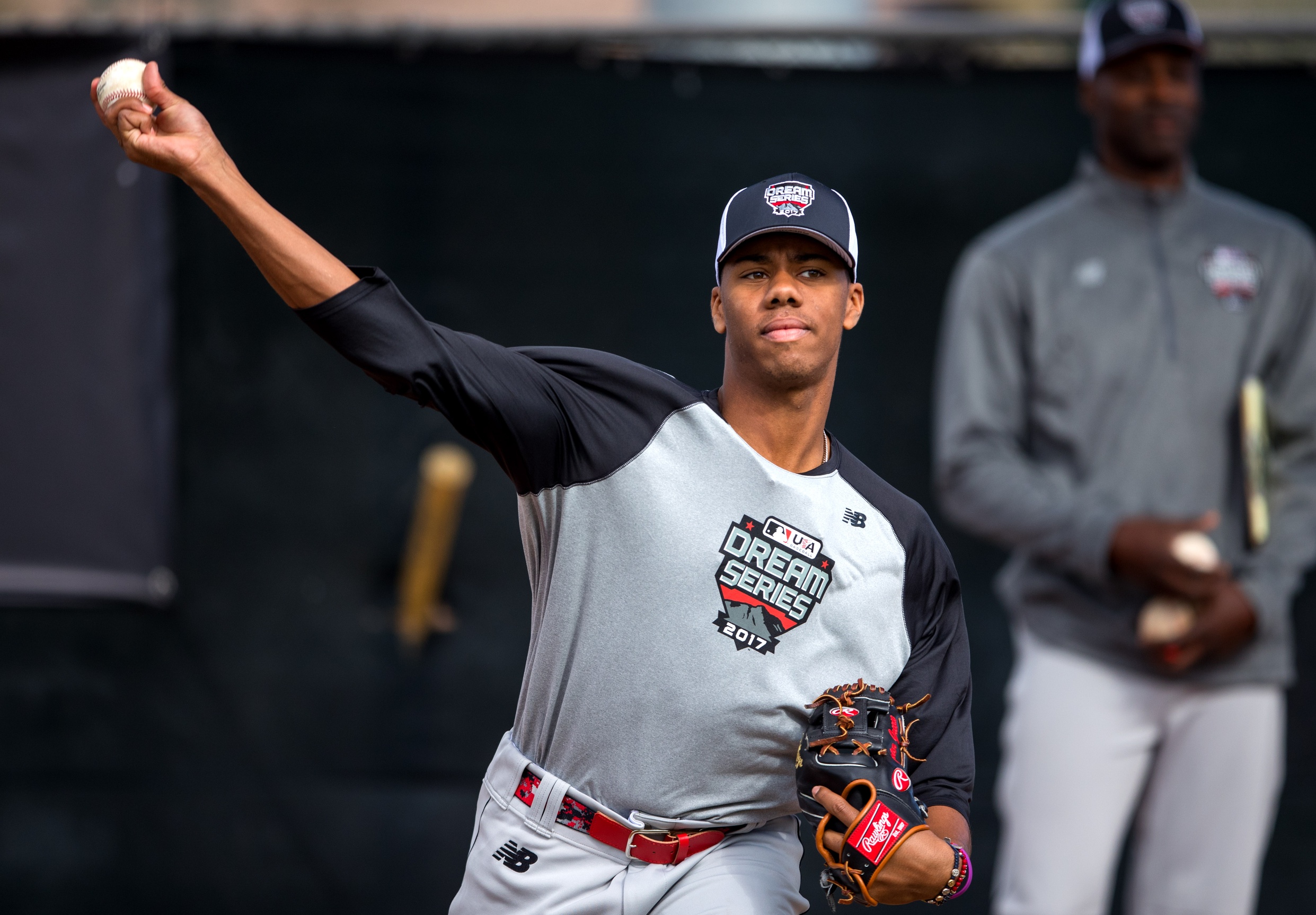 Believe it or not, there are good reasons for the Twins to pass on Greene (as noted recently by Nick Nelson in his excellent profile). Most seem to be concerned with his injury potential and while that may be one of them, we have to remember that almost all pitchers are a high injury risk to some degree. A study from 2016 that links the usage of fastballs (rather than velocity) may make Greene’s reliance on his fastball a slightly higher risk for Tommy John. One of the more common criticisms levied against Greene is the relatively weak set of secondary offerings to go along with his hundred mile per hour fastball. He throws a curve, slider and changeup but none of them stand out in reports. The Pioneer Press’s Charley Walters echoed this in a recent column saying "despite a fastball that reaches 100 mph, [Greene] has little concept of a breaking ball.” Is that right? Little concept? In his senior season Greene has flashed signs that he has some concept of a breaking ball as you can see on this little ditty below. https://twitter.com/parkerhageman/status/873898806819139586 Of course, that specific pitch may have been a rare one-off, well-executed bender for him. Plus, he is squaring off against high school competition that is doing everything possible to just touch the elite velocity pitch. Anything other than the fastball thrown is likely going to induce a big miss. Nevertheless, If we are to take the consensus at its face, scouting reports have been consistent in that criticism about Greene. In May MLB.com’s Jim Callis said that some scouts have rated his curveball as well-below average. While his secondary offerings may not be in the same universe as, say, Josh Beckett’s or Kerry Wood’s curveball coming out of high school, the point is, that depth, tilt and location is evidence that Greene has *some* concept of a breaking ball and that may be a significant factor in the decision whether or not to draft Hunter Greene number one overall. In terms of the tools Greene possesses as a pitcher, the most touted is his ability to reach triple-digits heat as a 17-year-old. That, in and of itself, is a big reason why he has garnered national attention. If you pop the glove at that type of speed at that age, you will be swarmed by men in bucket hats and polo shirts carrying radar guns all summer long. Having said that, the super hard throwing high school pitcher club is not the exclusive fraternity that it once was. There are 14-year-olds shoving 92 in Alabama (by comparison, Greene was hitting 83 as a freshman in high school). Elite velocity still gets hitters out at a high clip at the major league level but almost all pitchers need a wrinkle to mix in and scouts have felt Greene’s secondary offerings have average potential at best. The curveball has become a weapon du jour of analytics teams. Tom Verducci wrote an article about the revival of the pitch in major league baseball, noting the rise of Houston’s Lance McCullers and his reliance on his unhittable deuce as the reason for his big season. In the profile Verducci remarked that “[o]rganizations have learned that if someone does not show an aptitude to spin a baseball as an amateur, it’s foolish to expect him to acquire the skill.” Houston’s general manager Jeff Ludlow did not disagree. In short, if you don’t already have a snapdragon bender that spins at 2,900-plus rpm by the time you are drafted, chances are it will never come. The ability the spin a ball depends on years of release point feel, it's not like a slider or changeup that pitchers can learn in the ranks. With that in mind, it is somewhat concerning that evaluators lack confidence in Greene’s curveball and this might give an organization pause before pulling the trigger at 1-1. In the draft room, Twins staff must be contemplating this and balancing that with the fact that both Vanderbilt’s Wright and Louisville’s McKay already have curves that have been described as plus pitches. Baseball America said that Wright’s curve has been “showing tight spin and late vertical break early and often...the pitch has plus potential.” MLB.com’s draft profile said that McKay’s was “a consistent plus pitch”. The Twins war room will have to weigh this carefully. There is no doubting his makeup and talent. The real question is, do the Twins have enough confidence in Greene to develop a secondary pitch, anything to take pressure off of throwing his fastball all day long?
 -
Article: What Went Wrong For Ryan Pressly?
Parker Hageman replied to Parker Hageman's topic in Twins Daily Front Page News
RE: Pressly's "straight fastball". This is a fair point. His four-seam fastball, even as it is reaching 98, is arrow straight. Data backs that claim up. According to Pitch F/X data, Pressly's fastball has one of the lowest deviation from a straight line path in the game. Two pitchers have an even straighter fastball that Pressly (deviates from the straight line path to home less) is Ardolis Chapman and Clayton Kershaw. To me, the straight fastball in and of itself isn't necessarily a problem until hitters can sit on it. This is why I believe Pressly should be working on switching up his pattern and, like Trevor May said, keep hitters from eliminating other pitches. -
Article: What Went Wrong For Ryan Pressly?
Parker Hageman replied to Parker Hageman's topic in Twins Daily Front Page News
I don't think command of the curveball is the reason he doesn't throw it early in the count. Last year Pressly threw his curveball in the zone at a 47% clip. The years before, even higher than that. Nevertheless, even under those circumstances he choose to throw his slider over his curveball early in the count if he was going to throw something other than a fastball. Molitor said in spring training that Pressly likes to throw his slider on the first pitch to first-pitch fastball hitters. This season, with the zone rate on the curveball is way down. Like Molitor said, he may be overthrowing it (hence grounding it) which, in that case, Rochester is a perfect option to refine that. That said, he should also try to unleash it early in the count as well. -
Article: What Went Wrong For Ryan Pressly?
Parker Hageman replied to Parker Hageman's topic in Twins Daily Front Page News
Well, you didn't really disagree or you misinterpreted what my opinion was. The summary of my opinion in the post above -- based on data -- is that Ryan Pressly should throw his curveball, his best pitch more. That's it. Anything you are interpreting beyond that -- such as his role -- is not a part of this analysis. You are certainly welcomed to disagree with that conclusion but, based on your post, you seem to be agreeing with the fact that his fastball gets obliterated. -
Article: What Went Wrong For Ryan Pressly?
Parker Hageman replied to Parker Hageman's topic in Twins Daily Front Page News
Thanks for the comment! -
Article: What Went Wrong For Ryan Pressly?
Parker Hageman replied to Parker Hageman's topic in Twins Daily Front Page News
There's no question that Pressly's curveball has not been thrown in the zone as much as he did last year. In fact, he has thrown a lot more non-competitive (over 18 inches away from the center of the zone) than last season. So it is not surprising to see that opponents have been laying off. Still, when hitters have swung, they have missed at nearly a 75% clip, highest of his career. I don't blame the catcher for the pitch selection. Ultimately, it is up to the pitcher. Front office members, coaches and catchers can do all they can to recommend throwing what pitches and when but if the pitcher does not feel comfortable throwing the pitch, he is not going to throw it. I sincerely hope the message from the staff to Pressly was for him to throw his curveball a ton in Rochester. Get a feel for throwing it for a strike as well as in early counts.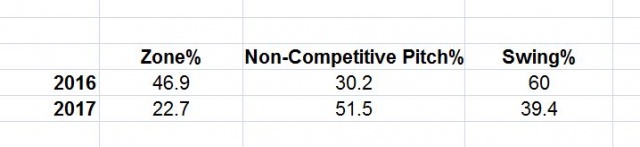
-
On Wednesday afternoon, following yet another bullpen meltdown, the Twins announced the decision to option Ryan Pressly to Rochester. They made other moves too -- including designating for assignment lefty Jason Wheeler -- but Pressly’s demotion hurts. The right-hander had allowed 19 runs in 18 innings of work, owning a swollen 9.50 ERA. Both his walk rate and his home run allowed rate ballooned alongside the ERA. While he was far from the only contributor to the relief corp’s recent collapse, Pressly could no longer be trusted to handle the assignments. The thing is, on paper, Ryan Pressly has all of the qualities of a quality shutdown reliever, someone Paul Molitor should have no lack of confidence in at the end of a game. For one, Pressly shoves upper 90s heat, a rare commodity from someone in Twins uniform. The list of Minnesota pitchers dating back to 2009 who have reached 99 MPH or higher begins and ends with Juan Morillo and Ryan Pressly. Two, he has a snapdragon curveball that toys with the laws of physics and melts minds. And three, like a Turkish celebrity chef, Pressly will season an at-bat with a harder slider, just to keep a hitter’s head ringing. These are three plus pitches and yet Pressly struggled in 2017 to keep opponents from squaring him up. What went wrong for the 28-year-old and can he rebound?In April, following a bad stretch of appearances, Pressly tried to assess his issues. In his eyes, he was nitpicking, failing to attack the strike zone. His manager believed it was possible he was “overthrowing”. Both may be true but there is another issue at play and that is the notion that Pressly has fallen into a predictability pattern. The right-hander, who has one of the better breaking balls in the game, refuses to turn to it until there are two strikes in the count. This means hitters can eliminate that pitch from his arsenal in certain counts -- specifically early in the count -- and just hunt speed. Download attachment: Ryan Pressly 2017.JPG Download attachment: Ryan Pressly.png Rehabbing pitcher Trevor May talked at length this spring about the need to alter the hitter’s ability to eliminate pitches. May discussed the idea of throwing more of his secondary pitches in counts he did not regularly do so in order to give opponents something to think about. Almost every pitcher falls into patterns, he said, such as leaning on one particular pitch type in certain situations. If, for example, a hitter knows he will not see any offspeed pitches in a 1-1 count, he might swing from the heels at the fastball. “If they can never eliminate them you are going to have a leg up every single time because it is much more luck on their part,” May said. “That’s the goal.” In Pressly’s case, teams have likely circulated scouting reports which inform their hitters to look for a fastball in those counts above because they will rarely see anything else. They can eliminate Pressly’s best pitch, his curveball, right away and one of the reasons why they are having success in those particular counts. There does not seem to be a clear explanation for why Pressly doesn’t mix in his curveball in those counts. When he does decide to throw something other than a fastball early in the count, it is usually his slider/hard cutter. It is possible that Pressly, who has not been consistently throwing his bender in the zone this year, may shy away from using it early in counts because he is afraid of falling behind. The logic could be that curveball drops out of the zone so fast, hitters may refrain from chasing after it and thus put him in another 1-0 hole. Still, if hitters are not expecting a curveball and are actively hunting fastballs, it would stand to reason that they might be fooled by the curve and swing over it or beating it into the ground for an easy out. The fact of the matter is his curveball -- the big, slow, time-and-space altering curveball -- is bar none his best pitch. In his five seasons at the major league level, Pressly’s curveball has had a .183 batting average against. Over the last two years he has maintained a swinging strike rate of over 20 percent. What’s more, as Sports Illustrated’s Tom Verducci pointed out this month, smart teams have learned that one of the quickest avenue to pitching success is by throwing your best pitch most often. Spin is highly influential in the results when it comes to curveballs and Pressly’s uncle charlie rotates at one of the highest rates in all of baseball. At over 2,900 RPM on average, Pressly’s pitch had the 11th highest spin rate according to StatCast data. This number is significant because curveballs with that type of data generate low batting averages (as seen above), low exit velocity (Pressly’s is at a low 83.5 MPH vs 86.3 MPH league average), and high swing-and-miss rate (32% miss rate). With these types of returns, Pressly should be spinning his curveball every chance he gets. As Red Sox manager John Farrell told Verducci, “The data is showing, if the curveball is your best pitch, use it more often.” Pressly is blessed with one of the best pitches in the game and, to his detriment, he has not been using it to its fullest potential. For the sake of the Twins’ bullpen, it is a shame that someone as gifted as Pressly has not be able to elevate to the status of lockdown reliever. Perhaps time in Rochester will help him regain some confidence in the pitch as well as give him an opportunity to break off a few snappers in counts he normally would have avoided. Click here to view the article
-
 In April, following a bad stretch of appearances, Pressly tried to assess his issues. In his eyes, he was nitpicking, failing to attack the strike zone. His manager believed it was possible he was “overthrowing”. Both may be true but there is another issue at play and that is the notion that Pressly has fallen into a predictability pattern. The right-hander, who has one of the better breaking balls in the game, refuses to turn to it until there are two strikes in the count. This means hitters can eliminate that pitch from his arsenal in certain counts -- specifically early in the count -- and just hunt speed. Rehabbing pitcher Trevor May talked at length this spring about the need to alter the hitter’s ability to eliminate pitches. May discussed the idea of throwing more of his secondary pitches in counts he did not regularly do so in order to give opponents something to think about. Almost every pitcher falls into patterns, he said, such as leaning on one particular pitch type in certain situations. If, for example, a hitter knows he will not see any offspeed pitches in a 1-1 count, he might swing from the heels at the fastball. “If they can never eliminate them you are going to have a leg up every single time because it is much more luck on their part,” May said. “That’s the goal.” In Pressly’s case, teams have likely circulated scouting reports which inform their hitters to look for a fastball in those counts above because they will rarely see anything else. They can eliminate Pressly’s best pitch, his curveball, right away and one of the reasons why they are having success in those particular counts. There does not seem to be a clear explanation for why Pressly doesn’t mix in his curveball in those counts. When he does decide to throw something other than a fastball early in the count, it is usually his slider/hard cutter. It is possible that Pressly, who has not been consistently throwing his bender in the zone this year, may shy away from using it early in counts because he is afraid of falling behind. The logic could be that curveball drops out of the zone so fast, hitters may refrain from chasing after it and thus put him in another 1-0 hole. Still, if hitters are not expecting a curveball and are actively hunting fastballs, it would stand to reason that they might be fooled by the curve and swing over it or beating it into the ground for an easy out. The fact of the matter is his curveball -- the big, slow, time-and-space altering curveball -- is bar none his best pitch. In his five seasons at the major league level, Pressly’s curveball has had a .183 batting average against. Over the last two years he has maintained a swinging strike rate of over 20 percent. What’s more, as Sports Illustrated’s Tom Verducci pointed out this month, smart teams have learned that one of the quickest avenue to pitching success is by throwing your best pitch most often. Spin is highly influential in the results when it comes to curveballs and Pressly’s uncle charlie rotates at one of the highest rates in all of baseball. At over 2,900 RPM on average, Pressly’s pitch had the 11th highest spin rate according to StatCast data. This number is significant because curveballs with that type of data generate low batting averages (as seen above), low exit velocity (Pressly’s is at a low 83.5 MPH vs 86.3 MPH league average), and high swing-and-miss rate (32% miss rate). With these types of returns, Pressly should be spinning his curveball every chance he gets. As Red Sox manager John Farrell told Verducci, “The data is showing, if the curveball is your best pitch, use it more often.” Pressly is blessed with one of the best pitches in the game and, to his detriment, he has not been using it to its fullest potential. For the sake of the Twins’ bullpen, it is a shame that someone as gifted as Pressly has not be able to elevate to the status of lockdown reliever. Perhaps time in Rochester will help him regain some confidence in the pitch as well as give him an opportunity to break off a few snappers in counts he normally would have avoided.
 -
https://twitter.com/ParkerHageman/status/759096015391555584
-
The same Nick Hanson who required Tommy John surgery, yes.
-
You gotta keep in mind, too, that the level of competition throughout Minnesota -- particularly for the elite baseball prospects -- has increased rapidly over the last 5-10 years. With the proliferation of club teams, MN players are facing a lot of strong competition from around the country on a regular basis in the summer, fall and winter. Carlson was a Blizzard guy. The Blizzard Elite team was ranked 33rd in the national by Perfect Game. So scouts have seen him, and others, matched up against the country's top-end talent. Not to mention, there are at least three new baseball development centers in operation around the Twin Cities that have opened in the last four years, allowing for more developmental time for baseball players that simply wasn't available ten years ago. There is the ability to at least maintain a level with southern states that can play throughout the year.
-
Ha, no. Not my Facebook post.
-
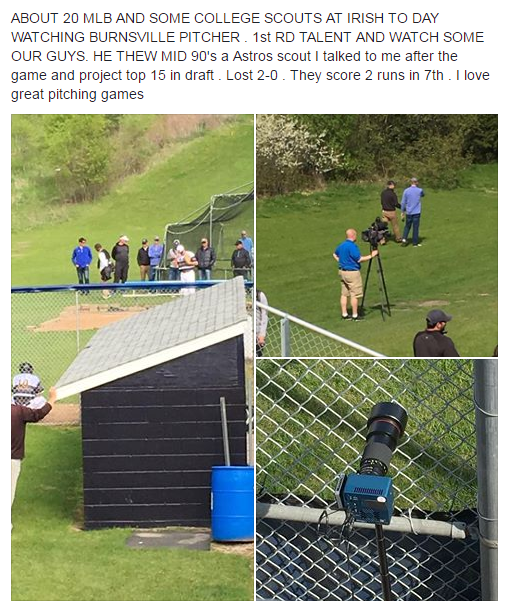
Here's a little insider look at what Sam Carlson is going through right now. In a recent start against Rosemount, Carlson had an entire entourage of scouts looking over his every more -- including his bullpen session. Another coach in that conference told me that when his team faced Carlson, he was throwing 95 with an unhittable slider. His report was "repeats his mechanics well, good feel and presence." He felt that Carlson was "very comparable" to Nick Hanson, his pitcher who was drafted in the 3rd round by the Reds in 2016, but that Carlson has a better feel for the offspeed pitches than Hanson did at this point in their careers.
-
Article: Exit Velocity And The 2017 Twins
Parker Hageman replied to Seth Stohs's topic in Twins Daily Front Page News
Considering Mauer had the team's third highest exit velo in 2016 (89.7), this shouldn't come as a surprise. Mauer's issue last year was that his launch angle was 3.7 degrees -- the lowest among any starter in the Twins' lineup. He was simply killing worms. The surprise this year is that he has been able to produce batted balls with a launch angle of 12.3 -- very much improved. We have yet to see the results -- partly because of the defensive alignments -- but he is churning out batted balls in the right way. While we know what exit velo and launch angles make the best recipe for hits, we don't know some of the factors like when those numbers equalize. How many plate appearances/batted balls does it take in a season for a launch angle to become the norm instead of a sampling blip? I love that we have this data and that people are finally using it, but there are still so many questions remaining.- 15 replies
-
- 6
-
-
- miguel sano
- joe mauer
- (and 3 more)
-
Article: Exit Velocity And The 2017 Twins
Parker Hageman replied to Seth Stohs's topic in Twins Daily Front Page News
Ground balls are just long bunts.- 15 replies
-
- 4
-
-
- miguel sano
- joe mauer
- (and 3 more)
-
I mean, PARKER AND JOHN? Get off your wallets people.
-
Not sure if it is related to the bullpen switch or not but Duffey's biggest improvement is being able to throw his fastball for a strike. He's thrown 72% of his fastballs in zone (compared to 51% last year). He has also gotten strike one more frequently (68% vs 62% in 2016) which sets up other pieces of his arsenal nicely.
-
Article: Ervin Santana Is Legit
Parker Hageman replied to Nick Nelson's topic in Twins Daily Front Page News
I'm not sure if it is a glitch in the Pitch F/X calculation or not (it's been known to happen) but Santana was supposedly throwing a two-seamer dating back to 2010 (http://www.espn.com/los-angeles/mlb/news/story?id=5007541). Sometimes these pitches aren't captured by the pitch recognition formulas. Then again, maybe he never threw it much during game action or didn't have the same type of movement he does now. Overall, Fangraphs charts Santana as throwing fewer than 30 two-seamers each season over the last two years, which is surprising. Another note for his rebound includes improving his mechanics and changing his changeup grip from a split-change to a four-fingered grip: http://twinsdaily.com/_/minnesota-twins-news/what-to-expect-from-ervin-santana-r3252 -
SDI is a terrible metric for actually measuring defensive abilities. It's a mash-up of multiple flawed defensive metrics.
-
Article: Five Takeaways From A Fun First Week
Parker Hageman replied to Nick Nelson's topic in Twins Daily Front Page News
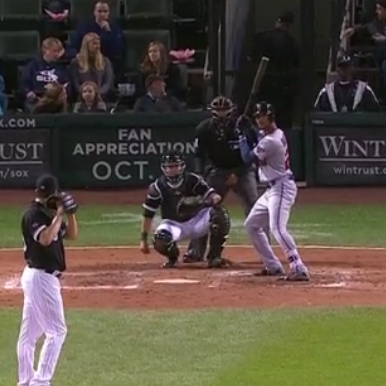
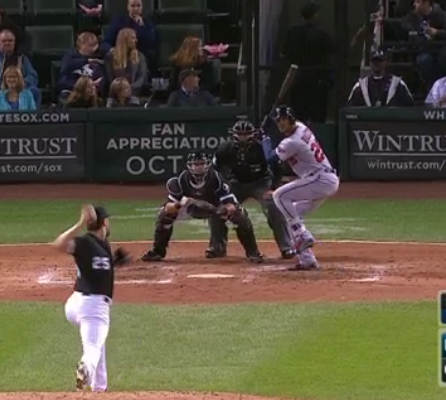
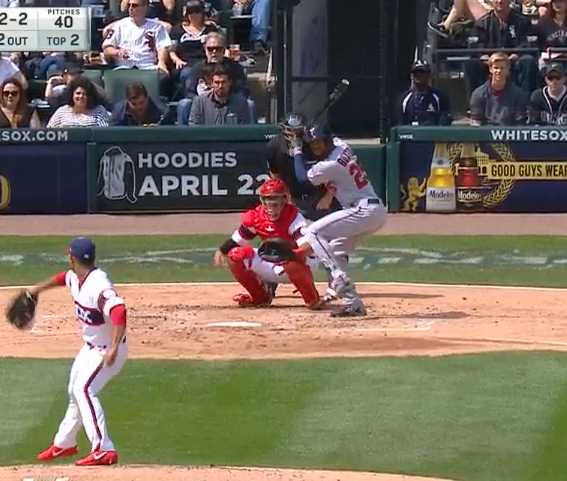
RE: Buxton. I should save this for an actual article but given our HS baseball season starts today (Go Holy Angels), I don't know when I will have the time to put it all together. That said, here is some boring technical stuff about his swing… Buxton has made a few cosmetic changes to his pre-swing mechanics that I believe is hindering him to some degree. The first is he has closed up his front side. In September last year he would start with his front side open before closing it during the leg kick. This year he starts more straight up facing the pitcher. The other thing he's gone away from is the pre-swing barrel tip. Last season during his load process Buxton would bring his barrel up almost vertically before getting into the launch position. This season the bat never goes that direction. These are rhythm components of a swing, not major changes like a leg kick, but the barrel tip is something that helps create bat speed (here’s a very good read on that subject from Jerry Brewer). Think of it this way, tipping the barrel is like a running start in a race versus starting from a standstill. Last season we saw Brian Dozier add a barrel tip to his pre-swing before he started to take off. In addition to activating back and shoulder muscles, it can help timing and getting your body in the right sequence at the right time. Are these the reasons he is having such a difficult time making contact? Possibly. As I mentioned, both elements play a role in timing a swing. At the end of last season we saw he crush all types of pitches in various counts which makes me think Buxton has a plenty good eye at the plate to pick up spin and whatnot. I had a very brief conversation with him during our spring training visit. Like most reports, he was teeming with confidence which was a stark contrast to where he was at last spring. “The leg kick is me now,” he told me in a way that made it seem like I asked if he would give up something special. But what sticks out to me now was that he said would send Torii Hunter video of his swing over the winter and Hunter would give him advice. “He just told me the things he sees in the video that he would want to work on that’s really about staying in the groove and staying with the leg kick,” Buxton said. “So Torii and a few other guys, actually, I’d send them videos and they’d send me feedback.” I don’t know what specific feedback Hunter gave Buxton on his swing. Knowing the Twins’ past hitting philosophies, I would bet that keeping his bat still was one instruction given to him this winter. Buxton also said last year that the Twins coaches had “closed him up” in rookie ball – which is probably why you see him with the more closed batting stance this season. Buxton said he had not worked much with James Rowson in camp at that point. Rowson was seen as a coach in observation mode rather than dispensing regular advice. I’m curious to know how Rowson will approach Buxton’s struggles. Hitting instruction is not simple but the first thing I would encourage is trying to go back to all the elements that made him successful in September/October. Sorry not sorry for hijacking the thread.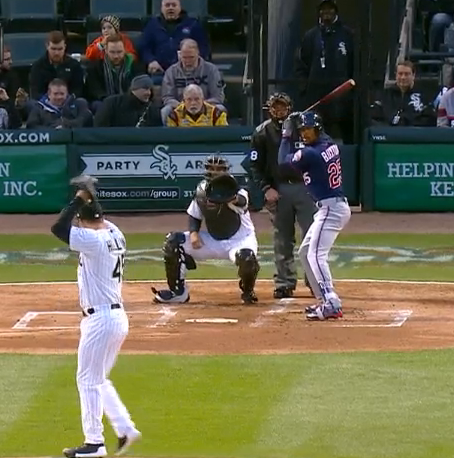
- 75 replies
-
- 14
-
-
- byron buxton
- ervin santana
- (and 1 more)

