



Parker Hageman
-
Posts
4,152 -
Joined
-
Last visited
-
Days Won
6
Content Type
Profiles
News
Minnesota Twins Videos
2026 Minnesota Twins Top Prospects Ranking
2022 Minnesota Twins Draft Picks
Minnesota Twins Free Agent & Trade Rumors, Notes, & Tidbits
Guides & Resources
2023 Minnesota Twins Draft Picks
The Minnesota Twins Players Project
2024 Minnesota Twins Draft Picks
2025 Minnesota Twins Draft Pick Tracker
2026 Minnesota Twins Draft Tracker: Picks & Bonuses
Forums
Blogs
Events
Store
Downloads
Gallery
Everything posted by Parker Hageman
-
 There are a lot of great ideas and suggestions in here. Once we make our first million, we will definitely be handing out kickbacks to all of you.
 -
But what if you are signing a guy who is cheap and also just plain good? And -- AND -- has the opportunity to be even better? Take a look at the difference over the last three seasons between Jake McGee (who just got a 3 year, $27M deal from the Rockies and Zach Duke: LINK. With the exception of the saves (wanking motion), Duke has actually been better than McGee. And he's added more to his team's ledger than McGee (1.78 Wins Probability Added vs 1.56 for McGee). I realize celebrating the idea that the Pohlad's are pinching pennies is lame -- and I'd rather have ballplayers make the money they deserve -- however Duke is clearly going to come at a discount because of his recent surgery, age (35 vs 31), and radar gun readings (89 vs 95 MPH). In the end, Duke has proven that he can get hitters out as effectively (or even more) than McGee. If you are looking at the deal through that lens then the deal looks pretty good. And that is even before the team layers on any changes and insight like increasing the amount of lower arm angle pitches that could make his overall numbers better. Without question Duke may flop. He's aging, post-TJ, and the volatility of relievers from year to year often is one big game of Russian roulette.
- 47 replies
-
- 11
-

-
That's in reference to the professional pitchers in the "modern" Tommy John era from his 2006-2016 chart. Personally, I probably wouldn't include Crosby on the list other than as an asterisk considering he was returning to HS ball. It's impressive, no doubt, but the level which a pitcher needs to return to at the HS level vs professional level is vastly different. If we really need to nitpick, it probably should be read as 8th fastest in the Tommy John era.
-
First, not at all like that. In Breslow's case, he was trying to find a thing that had success. Duke already has that thing. Second, comparing Breslow to Duke is silly. Even during his best years, Breslow never put up the kind of secondary numbers that Duke did as a reliever.
-
No, he dropped down versus right-handed batters too. Had better numbers vs RHB out of the low slot as well.
-
Thanks to KFAN’s Paul Lambert, who leaked out on Christmas morning that the Minnesota Twins and 34-year-old relief pitcher Zach Duke had reached an agreement, people like me spent the remainder of the holiday ignoring their family and going over scouting reports and video of Duke. On Tuesday, the Twins made it official, announcing they have signed Duke to a reported one-year, $2 million deal with a potential to earn another $1.5 million with performance bonuses. As far as free agent relief arms go, it’s a modest sum and notably less than the $5 million per year deal he signed with the White Sox three years ago. On the surface, a one-year contract to a Tommy John surviving journeyman left-handed reliever who can’t crack 90 appears uninspired. However, if you look closer, there is the possibility this becomes a very savvy, very valuable move by this front office.When Duke transitioned into a reliever, he noticed that the majority of the bullpenners were chucking mid-90s heat. Duke never averaged a season over 90 miles per hour in his entire career. He needed something that would help him get hitters out, he needed deception. It was while with the Brewers, Duke began occasionally dropping his arm slot and alternating from a three-quarter and sidearm look. Sometimes hitters got his normal look… ...And sometimes they got his drop-down slot. It launched his best statistical season of his career. Duke’s ground ball rate shot up to near 60 percent and he struck out over 30 percent of hitters faced. That offseason, the Chicago White Sox signed him to a three-year, $15 million deal. Duke continued to post those solid numbers (with an unfortunate spike in home runs allowed with Chicago but, hey, it’s windy there) and he was ultimately traded to St. Louis where he tore his UCL and required Tommy John surgery in October 2016. Written off for the 2017 season, Duke made a hard-charge comeback from the surgery and was back in the Cardinals’ bullpen by the end of July of this past year -- a little over ten months removed from his UCL rebuild. The 266 recovery days is the shortest turnaround in the Tommy John era. If Duke is healthy -- and his medical tests by the Minnesota Twins prior to signing a one-year deal suggests that he is -- there is no reason to think that he cannot replicate a similar level of production as he provided the Brewers, White Sox and Cardinals. That being said, there is a way Duke might actually be *better* going forward because of this one simple fact: He has been infinity better when throwing from the lower arm slot. The numbers, courtesy of Statcast, between Duke’s regular three-quarter slot and his sidearm slot are stark. Since 2015, Statcast has tracked 2,351 pitches from him -- 1,249 have been thrown from the three-quarter slot (53%) and 1,023 (44%) were thrown from the sidearm slot. Now, take a look at the difference in results: Download attachment: Zach Duke.PNG That’s huge. Everything from the lower arm slot is getting better results: More ground balls, more strikeouts, less solid contact. Imagine instead of saying “Three-Quarter” and “Sidearm” that chart said “Pitcher A” and “Pitcher B”. Wouldn’t you want to have “Pitcher B” on the mound for you? Given the data, it makes one wonder why Duke wouldn’t transition to the lower arm slot full-time. Some would argue that Duke’s multiple and varied arm slots actually enhances his lower arm slot -- something like throwing a fastball from the three-quarter slot sets up his slider from down below. The logic is that with the variation, hitters will have to look for a wider release window for the pitch. However, hitters appear to be able to pick up the ball fairly effortlessly from the three-quarter slot so it is safe to assume that Duke’s lower arm slot is not enhancing his three-quarter slot (or, if it is, marginally so). In many ways, asking Duke to favor the sidearm slot is akin to the development teams have had over the last few seasons of encouraging pitchers to lean heavily on their breaking balls. According to Fangraphs, Yankees pitchers threw a league-low 44% fastballs last season. Not far behind them were the Indians, Rays and Astros -- all forward-thinking, data-driven front offices. Hitters made more contact against fastballs. They were having more success against that pitch. Why not have your pitchers throw their best pitch more often? Same thing should be asked about Duke. Why not focus on pitching the way which provided the most success? Duke’s deception isn’t that he gives them different looks. His deception is releasing the ball from an angle that hitters don’t see that often. In 2017, there were 180 left-handed pitchers who released the ball within the similar vertical window as Duke did from three-quarter slot. There were just 43 who threw from the same vertical window as he did from the sidearm slot -- and most of those pitchers did it less than a handful of times. In the first group hitters saw 154,000 pitches come from that angle. From the latter, they saw just 6,200. The more you dig into the numbers, the clearer it is that Duke should be throwing from the lower slot at a higher rate than he has been in the past. Save the three-quarter slot to mess with a hitter’s vision. This Twins have beefed up their front office, including adding Josh Kalk (a pitching data pioneer in the PitchFX era) to the analytics team, and have plenty of sharp individuals who have reviewed this exact data and possibly came to the same conclusion. If the organization’s analytics arm actually identified this potential, ran it by the decision-makers, and they were able to secure a low-cost reliever who has a decent upside with a minor modification, that would be a super savvy maneuver never seen in these parts. Either way, even if they don’t get Duke to reduce his reliance on the three-quarter arm slot, the Twins still have themselves a decent bullpen arm at a substantially low cost. Click here to view the article
-
 When Duke transitioned into a reliever, he noticed that the majority of the bullpenners were chucking mid-90s heat. Duke never averaged a season over 90 miles per hour in his entire career. He needed something that would help him get hitters out, he needed deception. It was while with the Brewers, Duke began occasionally dropping his arm slot and alternating from a three-quarter and sidearm look. Sometimes hitters got his normal look… ...And sometimes they got his drop-down slot. It launched his best statistical season of his career. Duke’s ground ball rate shot up to near 60 percent and he struck out over 30 percent of hitters faced. That offseason, the Chicago White Sox signed him to a three-year, $15 million deal. Duke continued to post those solid numbers (with an unfortunate spike in home runs allowed with Chicago but, hey, it’s windy there) and he was ultimately traded to St. Louis where he tore his UCL and required Tommy John surgery in October 2016. Written off for the 2017 season, Duke made a hard-charge comeback from the surgery and was back in the Cardinals’ bullpen by the end of July of this past year -- a little over ten months removed from his UCL rebuild. The 266 recovery days is the shortest turnaround in the Tommy John era. If Duke is healthy -- and his medical tests by the Minnesota Twins prior to signing a one-year deal suggests that he is -- there is no reason to think that he cannot replicate a similar level of production as he provided the Brewers, White Sox and Cardinals. That being said, there is a way Duke might actually be *better* going forward because of this one simple fact: He has been infinity better when throwing from the lower arm slot. The numbers, courtesy of Statcast, between Duke’s regular three-quarter slot and his sidearm slot are stark. Since 2015, Statcast has tracked 2,351 pitches from him -- 1,249 have been thrown from the three-quarter slot (53%) and 1,023 (44%) were thrown from the sidearm slot. Now, take a look at the difference in results: That’s huge. Everything from the lower arm slot is getting better results: More ground balls, more strikeouts, less solid contact. Imagine instead of saying “Three-Quarter” and “Sidearm” that chart said “Pitcher A” and “Pitcher B”. Wouldn’t you want to have “Pitcher B” on the mound for you? Given the data, it makes one wonder why Duke wouldn’t transition to the lower arm slot full-time. Some would argue that Duke’s multiple and varied arm slots actually enhances his lower arm slot -- something like throwing a fastball from the three-quarter slot sets up his slider from down below. The logic is that with the variation, hitters will have to look for a wider release window for the pitch. However, hitters appear to be able to pick up the ball fairly effortlessly from the three-quarter slot so it is safe to assume that Duke’s lower arm slot is not enhancing his three-quarter slot (or, if it is, marginally so). In many ways, asking Duke to favor the sidearm slot is akin to the development teams have had over the last few seasons of encouraging pitchers to lean heavily on their breaking balls. According to Fangraphs, Yankees pitchers threw a league-low 44% fastballs last season. Not far behind them were the Indians, Rays and Astros -- all forward-thinking, data-driven front offices. Hitters made more contact against fastballs. They were having more success against that pitch. Why not have your pitchers throw their best pitch more often? Same thing should be asked about Duke. Why not focus on pitching the way which provided the most success? Duke’s deception isn’t that he gives them different looks. His deception is releasing the ball from an angle that hitters don’t see that often. In 2017, there were 180 left-handed pitchers who released the ball within the similar vertical window as Duke did from three-quarter slot. There were just 43 who threw from the same vertical window as he did from the sidearm slot -- and most of those pitchers did it less than a handful of times. In the first group hitters saw 154,000 pitches come from that angle. From the latter, they saw just 6,200. The more you dig into the numbers, the clearer it is that Duke should be throwing from the lower slot at a higher rate than he has been in the past. Save the three-quarter slot to mess with a hitter’s vision. This Twins have beefed up their front office, including adding Josh Kalk (a pitching data pioneer in the PitchFX era) to the analytics team, and have plenty of sharp individuals who have reviewed this exact data and possibly came to the same conclusion. If the organization’s analytics arm actually identified this potential, ran it by the decision-makers, and they were able to secure a low-cost reliever who has a decent upside with a minor modification, that would be a super savvy maneuver never seen in these parts. Either way, even if they don’t get Duke to reduce his reliance on the three-quarter arm slot, the Twins still have themselves a decent bullpen arm at a substantially low cost.
 -
GET THE BALL IN THE AIR. That's it. It's that simple* Blankenhorn made several adjustments since the middle of last season, adding a leg mid-season in 2016 and then adding barrel tip to his swing this season (this is one effective way to increase power/bat speed). https://twitter.com/ParkerHageman/status/852216794144284690 The strikeouts are a concern, as is the platoon splits. I'm very interested in seeing what this kid is capable of doing at the next stop. *It's incredibly hard.
-
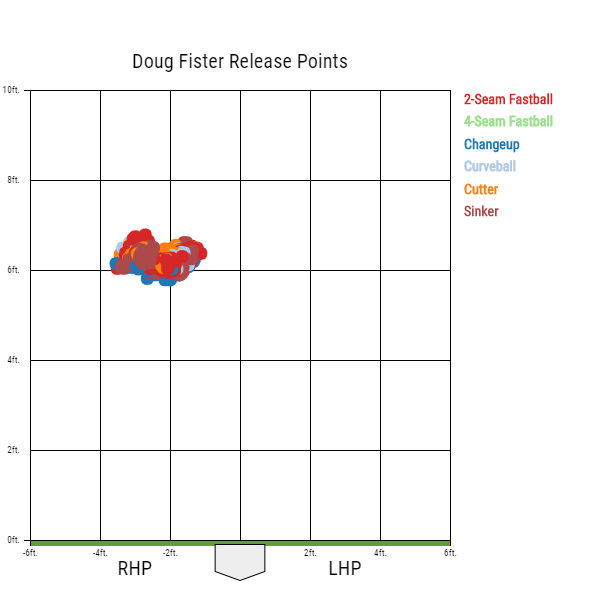
This is a fairly common phenomenon when looking at release point charts for pitchers. There are pitchers who have made adjustments on the rubber in-season -- shifting from first base side to third base side -- and so the release point cluster will shift along with it. Here's Doug Fister's release point chart. Like Meyer, Fister also moved from one side of the rubber to the other in-season.
-
Article: Thank You Moderators!
Parker Hageman replied to John Bonnes's topic in Twins Daily Front Page News
You all keep this ship afloat. Great work. -
Article: Can Phil Hughes Surprise Us?
Parker Hageman replied to Nick Nelson's topic in Twins Daily Front Page News
Found this storyline interesting. Driveline Baseball spend time studying how to add and subtract spin rate. You can easily manipulate the ball to reduce spin rate. In there studies, there was no answer for how to increase spin rate -- with the exception of adding tact to the ball. From Kyle Boddy's interview with Baseball America last year... Now, maybe Hughes didn't mean "spin rate". Maybe he just meant spin, like a different movement out of his fastball instead of the times it rotated to the plate. Either way, his spin rate dropped some from 2016 to 2017. Bigger picture, what someone discovers what it takes to manipulate spin rate and add it to the fastball is going to be celebrated heavily. -
It is certainly possible. At the end of the year, to me, the data suggested we are seeing more "luck" -- hate calling it that but a lot of his additional hits this year were from grounders -- and health. Thread here if you are on twitter ---> https://twitter.com/ParkerHageman/status/911683284534464512 Two years ago Brunansky tried to get him to pull the ball more in spring training. He did try to pull the ball more throughout the season but most of it was on the ground. The problem is, when he pulls, he does so on the ground -- 83.2% of the time. This is why you saw teams setting their SS up the middle over the second base bag and 2B playing deep. This season he pulled the ball less and was able to find more hits on grounders as he sprayed them all over the infield. I don't know if Rowson had some influence and talked him into abandoning the notion that he show actively pull more, but that has been a noticeable difference for him.
-
The Minnesota Twins’ 2017 season success can be credited, in some part, to the offensive emergence of the team’s young hitters. Players like Byron Buxton, Eddie Rosario, and Jorge Polanco all took significant strides forward and made vital contributions to the team’s postseason aspirations. Behind the players, of course, is the newly minted hitting coach James Rowson. At the onset, Rowson’s methods and philosophies were somewhat mysterious. In spring training, players said he rarely did any tinkering or instructing, instead choosing to monitor hitters closely and learned their personalities; asking them questions about their approach rather than telling them what to do. By the end of the season, Rowson received high praise from his students. While all the young hitters deserves some accolades, perhaps no one is as deserving for the turnaround as Byron Buxton is for his in-season adjustments.From afar, the narrative surrounding Buxton is that he jettisoned his leg kick and suddenly emerged as this elite hitter in the late throes of the season. The story sold was in the clickbait mold of BUXTON MADE THIS ONE SIMPLE CHANGE and, boom, he’s all fixed. While that is the most visually obvious change, Buxton’s journey to success is so much more complicated than that. Download attachment: Buxton Success.jpg Making a radical change to your swing in a major league season is rather difficult. Yes, hitters continually tinker with their mechanics throughout the year but rarely is it seen that a player makes a fundamental switch in approach and thrives during the same season. Most times, organizations will send a player to the minors so he can rebuild out of the spotlight. It takes a special individual and a special support staff to make the improvements Buxton did in-season. After splitting last season between toe tapping and leg kicking, Buxton proclaimed that he would be one hundred percent a leg kicker in 2017. This spring, with a newfound sense of clubhouse swagger, Buxton declared that the “leg kick is me now” and he is going to “stick with what I do.” In fact, one of his biggest influences, Torii Hunter, spent the offseason sending him encouraging text messages to stick with the leg kick. There was plenty of reason for Buxton to be riding high. He absolutely tore through pitching in the final month of 2016. In September, equipped with the full throttle leg kick, he hit 9 of his 10 home runs and posted a 287/357/653 line in 113 plate appearances. He still struck out a ton, to be sure, but the hard contact was eye-opening and a tasty sample of his unfilled prospect promise. But when the new season started, Buxton sputtered out of the chute. In April, he struck out in a whopping 37.2 percent of his plate appearances (only Colorado’s Trevor Story whiffed in more). Putting the bat on the ball proved to be a difficult task as 36.7 percent of his swings failed to even make contact. Sliders were another kind of evil. He couldn’t stop himself from contorting his body at pitches breaking over the left-handed batter’s box. He swung and missed on 28.6 percent of sliders seen. There was no denying something was wrong with his approach, fundamentally. The Twins coaching staff, including Paul Molitor, were convinced the previous season the leg kick had to go. Bert Blyleven told broadcast viewers that former hitting coach Tom Brunansky had worked diligently in 2016 to entice Buxton of the same. In the spring, Molitor observed that he was spinning off so many pitches and believed he needed to get his legs in a better position in order to drive the ball. At one point at the end of April, Fox Sports North rolled tape of Buxton being joined by Hunter, Molitor and Rowson in the batting cage. The trio surrounded him and his batting tee and watched as he took a few swings with his leg kick. Hunter moved behind Buxton and repositioned his back leg, hoping to get him to remain on his backside more. Buxton was at low point and needed to make some changes. In a homestand at the end of May, it started with ditching the leg kick. ***To read the rest of this article, be sure to download the 2018 Offseason Handbook at whatever price you would like*** Click here to view the article
-
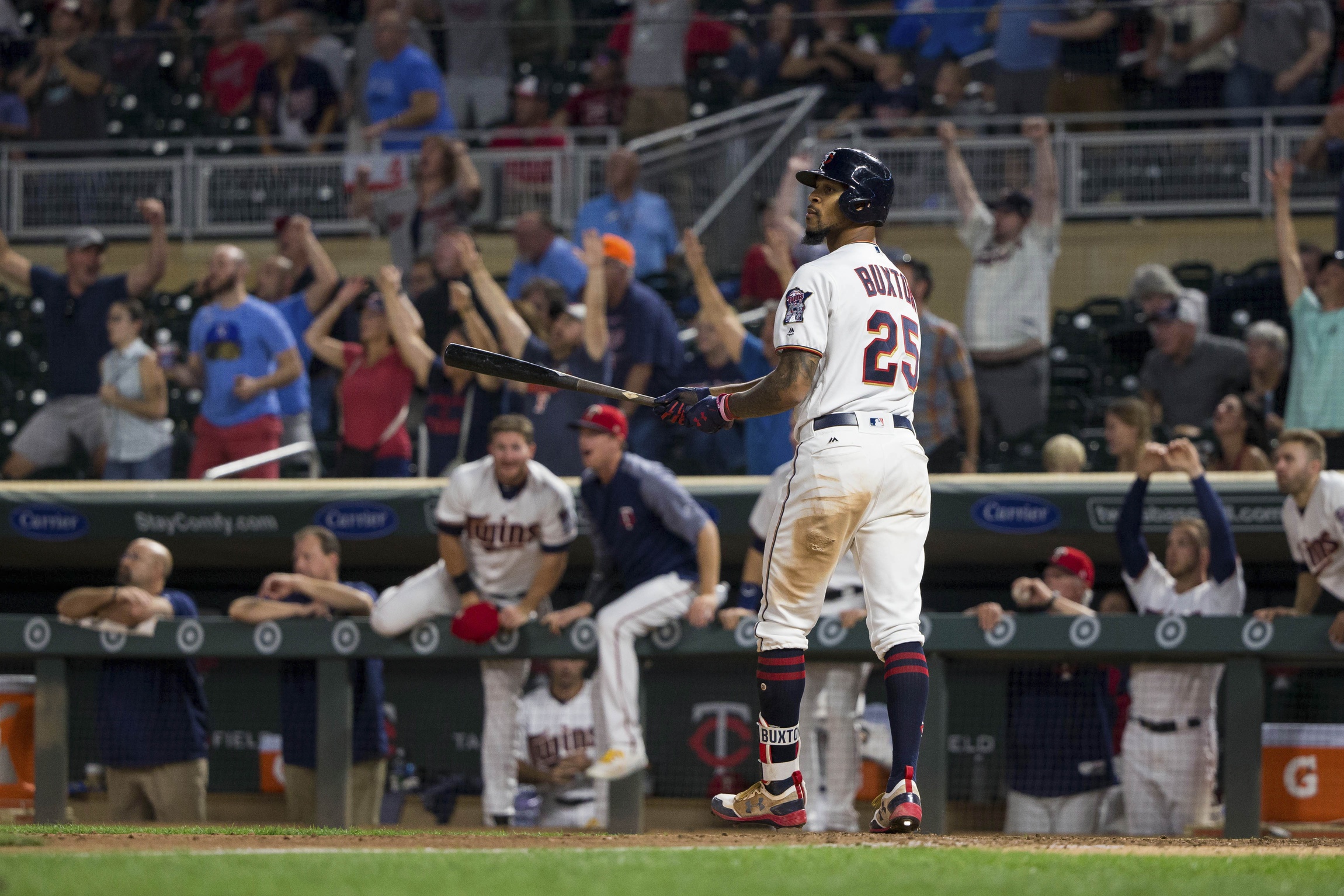 From afar, the narrative surrounding Buxton is that he jettisoned his leg kick and suddenly emerged as this elite hitter in the late throes of the season. The story sold was in the clickbait mold of BUXTON MADE THIS ONE SIMPLE CHANGE and, boom, he’s all fixed. While that is the most visually obvious change, Buxton’s journey to success is so much more complicated than that. Making a radical change to your swing in a major league season is rather difficult. Yes, hitters continually tinker with their mechanics throughout the year but rarely is it seen that a player makes a fundamental switch in approach and thrives during the same season. Most times, organizations will send a player to the minors so he can rebuild out of the spotlight. It takes a special individual and a special support staff to make the improvements Buxton did in-season. After splitting last season between toe tapping and leg kicking, Buxton proclaimed that he would be one hundred percent a leg kicker in 2017. This spring, with a newfound sense of clubhouse swagger, Buxton declared that the “leg kick is me now” and he is going to “stick with what I do.” In fact, one of his biggest influences, Torii Hunter, spent the offseason sending him encouraging text messages to stick with the leg kick. There was plenty of reason for Buxton to be riding high. He absolutely tore through pitching in the final month of 2016. In September, equipped with the full throttle leg kick, he hit 9 of his 10 home runs and posted a 287/357/653 line in 113 plate appearances. He still struck out a ton, to be sure, but the hard contact was eye-opening and a tasty sample of his unfilled prospect promise. But when the new season started, Buxton sputtered out of the chute. In April, he struck out in a whopping 37.2 percent of his plate appearances (only Colorado’s Trevor Story whiffed in more). Putting the bat on the ball proved to be a difficult task as 36.7 percent of his swings failed to even make contact. Sliders were another kind of evil. He couldn’t stop himself from contorting his body at pitches breaking over the left-handed batter’s box. He swung and missed on 28.6 percent of sliders seen. There was no denying something was wrong with his approach, fundamentally. The Twins coaching staff, including Paul Molitor, were convinced the previous season the leg kick had to go. Bert Blyleven told broadcast viewers that former hitting coach Tom Brunansky had worked diligently in 2016 to entice Buxton of the same. In the spring, Molitor observed that he was spinning off so many pitches and believed he needed to get his legs in a better position in order to drive the ball. At one point at the end of April, Fox Sports North rolled tape of Buxton being joined by Hunter, Molitor and Rowson in the batting cage. The trio surrounded him and his batting tee and watched as he took a few swings with his leg kick. Hunter moved behind Buxton and repositioned his back leg, hoping to get him to remain on his backside more. Buxton was at low point and needed to make some changes. In a homestand at the end of May, it started with ditching the leg kick. ***To read the rest of this article, be sure to download the 2018 Offseason Handbook at whatever price you would like***
 -
Probably merits mentioning the notable adjustments Wiel has made over the last two years and how that has improved his power numbers ---> http://twinsdaily.com/_/minnesota-twins-news/minnesota-twins-minor-leagues/take-note-of-zander-wiel-r5102
-
When we talk about the Twins' defensive improvements this year over last year, in addition to the overall upgrade of talent, I think we have to give some credit to the impact that several members of the coaching staff made. At this time last year, I wrote an essay for the 2016 Handbook titled "Above & Beyond: Creatively Improving Run Prevention" and at the core of it, was that the Twins needed to operate similarly to the Red Sox and Cubs who had hired a pitching specialist and a "defensive coordinator". The Twins somewhat followed this blueprint by hiring Jeff Pickler as a bench coach to focus on defense and Jeremy Hefner to focus on the pitching side. Here's what Paul Molitor had to say about Pickler in spring training: There are little things that may have changed behind the scenes that had ripple effects that led to more outs over the course of the season. No doubt last year's defensive improvements were driven by the players on the field but you have to tip your hat to the little things the front office did to buttress the support staff. More importantly, what I'm really driving at is: CONSIDER DOWNLOADING THE OFFSEASON HANDBOOK. Thank you.
- 40 replies
-
- 3
-
-
- byron buxton
- robbie grossman
- (and 2 more)
-
This is almost exactly the type of hire I expected -- the non-name, guy-behind-the-guy. https://twitter.com/ParkerHageman/status/921412255559929857 I am a bit surprised he wasn't someone from a more forward-thinking org (it sounds funny to say about the original Moneyball team but Oakland isn't at the forefront of pitching development). Frankly, I'm not sure what to expect out of him. There isn't a ton of information out there on his overall philosophy but we do have some clips of him talking about things like the implementation of weighted balls. For instance, in a BP article he said regarding weighted balls: “I’m not opposed to them, but I think there’s a time and place, and that’s in the off-season.” The Twins have guys like Ryan O'Rourke who was using weighted balls this past spring. Part of Kyle Gibson's new routine from the Baseball Ranch involved throwing weighted balls (albeit in a sack attached at his wrist). Guys like Chapman and Rivera use weighted balls to warm-up in the bullpen. "Not being opposed" and using them "in the off-season" is an interesting philosophical statement. It will be interesting to see how that plays out. Then there is his comments on velocity. “Everyone wants velocity but we won’t put it over movement or command, things that make you a complete pitcher,” Alston told BP. Now, on the surface, I like that. You have to have a complete pitcher. Those are three pillars of what makes a great pitcher. On the other hand, the Twins have been really bad at developing hard-throwing pitchers. https://twitter.com/ParkerHageman/status/921475373468184580 Part of me wanted someone who prioritizes developing velocity. Then again, that doesn't have to necessarily be in a MLB pitching coach’s radar. A minor league pitching coordinator can have more influence over that product but an organization’s overall pitching philosophy can often stem from what the PC up top believes (such as Rick Anderson’s command and control emphasis). “[A]t the core of a good pitching staff, there is the ability to command your fastball, throw it where you need to, when you need to. It’s your most used pitch for the vast majority of guys in the big leagues,” was Derek Falvey told me before the season started. Neil Allen echoed those comments as well. “What you gotta do is you gotta be able to work the four quadrants of the plate with your fastball,” Allen said. “You gotta be able to go up-and-in, down-and-away, up-and-in, down-and-away.” Alston wants to continue down that path for improvement. “First,” he told reporters, “one of the biggest things I teach is commanding the zone with the fastball.” Truth is, opponents had success against the staff’s fastballs. According to BaseballSavant.com, teams posted a .363 wOBA against heaters. That was the 8th highest in MLB. (Oakland, Alston’s team, was worst, by the way.) But the question that I have is, was the Twins’ lack of success with the fastball more a product of poor command or lower velo? On one hand, they averaged 91.7 – one of the lowest in the game – but on the other hand, the Cubs had the lowest average fastball velocity and were one of the more successful teams when they used their fastball (and the Cubs threw their fastball more than any teams outside of the Brewers). What’s more is that some teams are going away from being fastball-first teams. In the end, the position is more about relationship building and communication over ideology. People can identify flaws, it’s being able to work with the pitchers to correct them that is important.
-
There is a significant difference between "not at the top of any lists" and "below average" by those lists at the position, IMO. I was happy to add some words. It felt like a glossed over section, not just here but in the conversations about Dozier in general. There are four advanced defensive stats that suggest he is below average and I believe that should be a part of the discussion when contemplating his defensive capabilities. I know a lot of people want to go by the eye test on defense -- and Dozier seems to do well there -- this is that additional layer to consider.
-
I don't think this is quite the right assessment of Dozier's defensive contributions when it comes to the statistic side of it. The part about him converting plays on the ones he gets to is accurate but I think the defensive metrics paint him in a different light. I'll start by saying I do not have a complete trust in the advanced defensive metrics. Each of them have a different flaw while all of them have the flaw of sample size. That being said, when you look at them in aggregate, the picture painted is not one of a league average defender but rather a below-to-slightly below average one. 1. Dozier had -4 Defensive Runs Saved (one of the lowest among starting second basemen) with only Brad Miller, Neil Walker, Starlin Castro, Brandon Phillips, Scooter Gennett, Joe Panik and Daniel Murphy as starters with lower DRS. 2. Ultimate Zone Rating has him at -1.3 runs, or 13th among all second basemen with a minimum of 700 innings. 3. His Revised Zone Rating (how many balls in the second base zone he converts into outs) was .774, 8th. 4. Inside Edge metrics say he's great at the 100%-ers but OK at both the 50-90%-ers (79.3% conversion rate) and the 40-60%-ers (52.4% conversion rate). In terms of #2-#3 the amount of times Dozier shifts has an influence on where those numbers go. For instance, for RZR out-of-zone plays Dozier leads the league with 99 plays made but that doesn't take into account a defensive shift. Inside Edge's stats do which shows that he's not making those plays with his feet. I think Dozier does a lot of things right that don't get measured by these stats (makes some of the best forehand/backhand plays in the game) but, in sum, we need to accept that he's not great at getting to plays.
- 30 replies
-
- 3
-
-
- brian dozier
- byron buxton
- (and 3 more)
-
No one is limiting them, it's just the way this type of decision is made. With that logic, you would have to assign Molitor some of the blame for the previous 103-loss season.
- 77 replies
-
- 1
-
-
- paul molitor
- derek falvey
- (and 1 more)
-
I don't necessarily see this move as a referendum that Molitor is Falvey's guy, per se. I don't think Falvey makes this decision in a bubble. He would likely have to run the decision by Dave St Peter as well as Jim Pohlad. I do agree that it says the front office agrees that Molitor is good at his job, but I also believe there is an internal guy that Falvine view as the long-term option as a manager (Pickler) but who is too inexperienced at this juncture. Retaining Molitor allows him to learn on the job for a couple of years.
- 77 replies
-
- 6
-
-
- paul molitor
- derek falvey
- (and 1 more)
-
Yes and no. To certain hitters, yes. To other hitters, like Judge & Sanchez, you show them a fastball out of the zone and continue to pepper them with sliders. Neither have proven the ability to restrain themselves.
-
They rarely do: 84 plate appearances they have shifted. I would believe they would be encouraged into doing so for Castro (if they plan to attack with the slider).
-
So here we are, mere hours away from the first-pitch of a loser go home match-up at Yankee Stadium. No one can script what will happen in a one-game playoff – Nick Blackburn throwing 6.1 innings of one-run ball? Sure. Bobby Keppel and Alexi Casilla playing hero in extra innings? Why not. – the Twins will undoubtedly have a plan of attack in trying to stymie one of the most potent lineups in the smallest of slowpitch softball fields. Tonight’s game may come down to one critical factor: How well Ervin Santana can execute his slider.At 21.6 runs above average, Ervin Santana’s slider has been his best pitch on the season. Only Max Scherzer (30.0) and Jhoulys Chacin (22.4) derived more value out of the pitch on the year. It’s a stellar pitch and quite possibly his best weapon. Download attachment: trumedia_baseball_grid (2).png But here’s why it is going to used more tonight. In his most recent start against the Yankees on September 1st, Ervin Santana threw 70.8% sliders against the Yankees right-handers. Over the entire year, the next highest slider usage vs righties was 58% against Cleveland in his last start of the year (perhaps honing his craft for the one-game playoff). Most of Santana’s games that rate fell around the 50% mark (50% fastballs/50% sliders). It is clear that with the Yankees in New York, Santana throttled down on the pitch. This is big because if there is one pitch that the Yankees’ right-handed contingency has had trouble against it is sliders from right-handed pitchers. Perhaps no one more so than Aaron Judge. The Bronx superman has very few holes but sliders from righties gives him fits. He doesn't expand the strike zone much but he will swing through sliders on the outer-half. In the three plate appearances against each other this year, Santana threw 10 sliders on 14 total pitches. In their first match-up, Santana threw two straight fastballs, got a strike with a slider then, behind Judge 2-1 in the first inning, he tried to sneak a fastball past the hulking Yank to unfavorable results. Over their next two match-ups, Santana threw sliders nine of the next 10 pitches – striking him out once and inducing a long fly to Byron Buxton. Download attachment: trumedia_baseball_grid (1).png This just goes to show how little room for error there is with Judge. Gary Sanchez, meanwhile, is a little more adept at getting to the slider -- he's hitting .283 vs sliders from righties. The biggest soft spot in his swing vs sliders is burying the pitch down and away outside of the strike zone. He will chase but Santana has to avoid throwing it in the strike zone, even down-and-away. Santana threw Sanchez sliders on 8 of the 12 pitches in their three match-ups this year. Download attachment: trumedia_baseball_grid (3).png Starlin Castro has shown the ability to make contact on sliders, particularly those thrown down-and-away, and find some seams on the ground. The good news is that they are mostly singles on the ground, so a shift with Polanco to his right and Dozier covering the middle of the infield could keep Castro from doing damage. The danger comes from hanging Castro a slider inside where he has shown he is very capable for turning and elevating those pitches. Download attachment: trumedia_baseball_grid (4).png Santana has allowed seven home runs on his slider to righties this year, the most since his final season in Los Angeles (where he posted a 5.16 ERA). Unlike that season in LA, Santana has learned to throw it away from contact, locating the slider in non-competitive locations (areas that hitters can't touch it) and getting less contact. As you watch tonight, look for Ervin Santana to use his slider liberally to the right-handed bats. Click here to view the article
