



Parker Hageman
-
Posts
4,152 -
Joined
-
Last visited
-
Days Won
6
Content Type
Profiles
News
Minnesota Twins Videos
2026 Minnesota Twins Top Prospects Ranking
2022 Minnesota Twins Draft Picks
Minnesota Twins Free Agent & Trade Rumors, Notes, & Tidbits
Guides & Resources
2023 Minnesota Twins Draft Picks
The Minnesota Twins Players Project
2024 Minnesota Twins Draft Picks
2025 Minnesota Twins Draft Pick Tracker
2026 Minnesota Twins Draft Tracker: Picks & Bonuses
Forums
Blogs
Events
Store
Downloads
Gallery
Everything posted by Parker Hageman
-
 GLEEMAN AND THE GEEK: EPISODE 378 Sponsored by Bye, Goff, and Rohde, SotaStick, and SeatGeek.
 -

Game Length Isn't the Reason for the Decline in Attendance
Parker Hageman commented on Miles Death's blog entry in Thome the Moneyball
This is a false narrative I've seen pushed by people who claim baseball has lost action because of shifts, home runs, etc. In 2010, there was an average of 18 minutes of "action" (pitches being thrown, balls in play, runners running, etc). In the 1957 World Series, there was 13 total minutes of the same type of action. This notion that there is less action is not entirely accurate. There has been more time stretched between pitches and between innings (commercials) but the time of moving parts on the field has not. I agree with Miles' conclusion that there are probably more families staying home than previously and that has some affect on the attendance. As a family of five, we now go to one game each year as a group. Likewise, with the shift in action happening between the pitcher and the batter, I find watching the game more enjoyable at home where I can see all of that activity. I would assume more people choose to watch at their homes as well (local ratings have been doing just fine). -
Article: The Rise and Fall of Miguel Sano
Parker Hageman replied to Nick Nelson's topic in Twins Daily Front Page News
None. https://www.mlb.com/news/home-run-derby-curse-is-merely-a-myth/c-240929868 https://fivethirtyeight.com/features/the-home-run-derby-myth/ -
What Happened to Logan Morrison?
Parker Hageman commented on Tom Froemming's blog entry in Get to know 'em
It sounds good but it isn't really a thing. In terms of sequencing, opponents have stacked fastballs with breaking/offspeed pitches outside (not even low) just 25 times this season. He's 0-for-4 with 3 walks on those. If we include the outer-third of the zone, pitchers have hit that spot another 21 times, which he's 3-for-10 on (.300). The first part is absolutely true: He's seeing more fastballs up than ever before and because he has an uppercut swing, it's his kryptonite. Teams have recognized this and adjusted. Just 27% of the fastballs seen this season have been in the lower third where he typically runs his barrel into the ball. The fastballs in the upper-half of the zone, Morrison is batting .132 with a 90% out rate when facing them. (He's hitting .083 on fastball in the upper third alone.) To his credit, he's not chasing them or swinging through them, he's just making extremely poor contact (27% of the balls he does put into play are pop-ups). I wrote about this in April when it became clear that Morrison was approaching things differently this year than last. He was a bit more squat -- telling FSN he was doing so in order to "get into his legs more" -- as well as overstriding. Both moves would make catching up to higher fastballs more difficult on top of the already hindering uppercut. Also toss in the notion that he's playing through some injuries (the back) which would also keep him from swinging at 100%. He had some time off but while Mauer was on the DL, Morrison mostly had to play through it. As far as solutions go, Morrison either has to return to his previous approach (more upright, less stride) or spit on as many fastballs up as possible. -
The ending of the Red Wings' second game was amazing. https://twitter.com/ParkerHageman/status/1011430349887418368
-
Article: Let's Talk About Eduardo Escobar
Parker Hageman replied to Parker Hageman's topic in Twins Daily Front Page News
Should have put this on the thread initially... https://twitter.com/ParkerHageman/status/1010194512784871425 -
Article: Let's Talk About Eduardo Escobar
Parker Hageman replied to Parker Hageman's topic in Twins Daily Front Page News
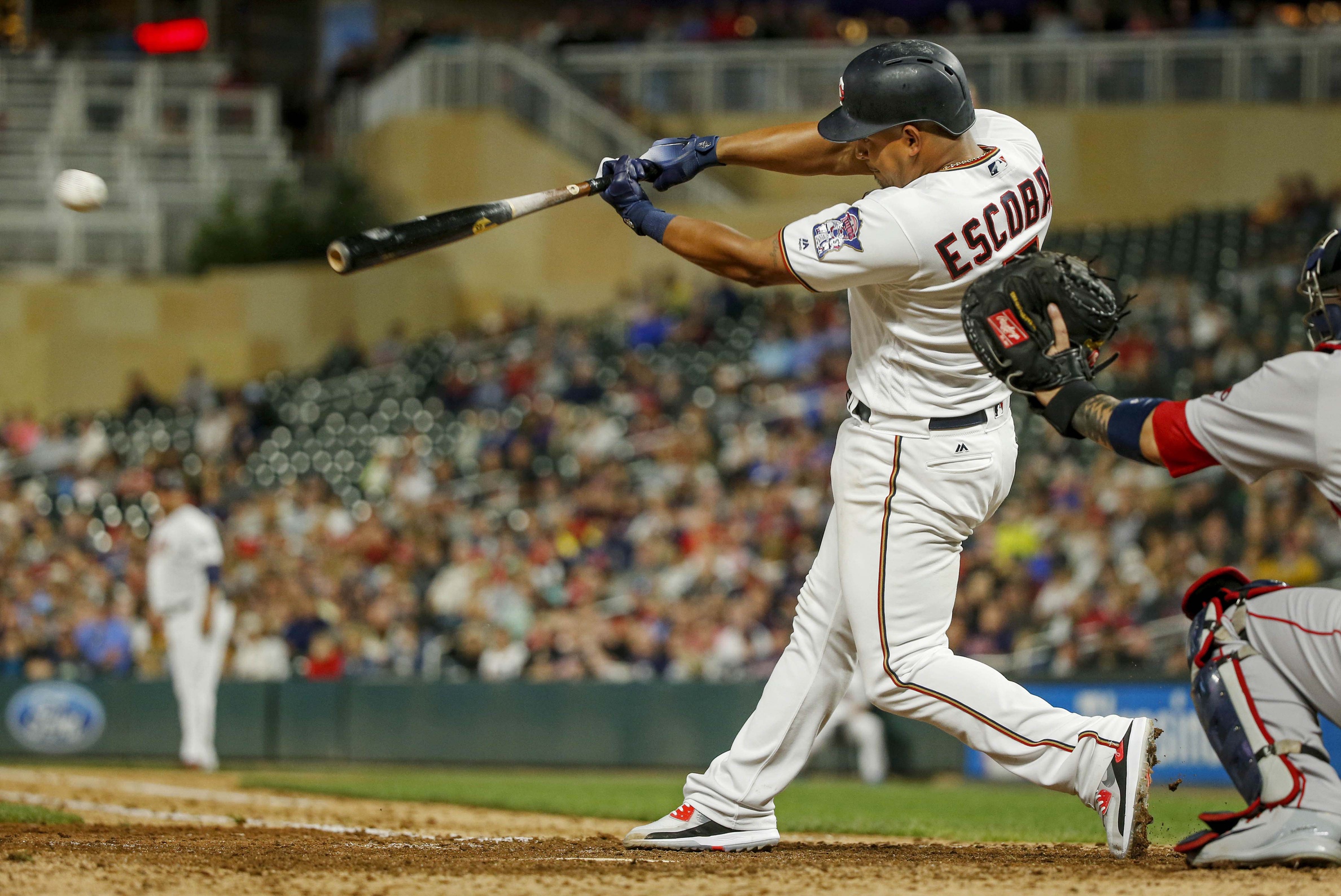
Absolutely. Escobar is notoriously diligent about his workouts. He was also significantly thicker in 2016 and 2017 but that did not translate to the same numbers he is having this year. It wasn't until he was able to connect his swing that he has been able to handle all pitches. There aren't any leg kicks to jump out. The hip coil difference is probably more noticeable to someone who spends hours each week pouring over videos of swings. At the end of the day, there are plenty of strong players. Plenty of players who added mass over five years. Plenty of those players haven't hit like Escobar is doing this year. He might have had some of the power but it would likely not be as consistent, particularly with the bat path he had previously. The tension he creates bringing everything back then snapping forward well connected in his lower-half, core and arms added to his aggressive intent and that is how we get this type of power production. The only thing better would be is if he were losing more balls. -
Eduardo Escobar's day at the park ended shortly after a Rick Porcello fastball bounced off the vulnerable part of the arm just above the elbow and sent shooting pain down to his digits. It is the type of injury that would have made a lesser person's fingers tingle for hours, leaving them incapable of eating steak. Not Ed Escobar, however. Banged up, bandaged up, and listed as day-to-day, the Minnesota Twins' hottest bat made his way several blocks from Target Field to his favorite restaurant to restock on massive quantities of protein. The narrative surrounding Escobar's historic doubles pace has been credited to his penchant for eating at the Brazilian meathouse or a chance run-in with actor Nick Cage. These are both cute stories but the real catalyst behind the power surge has more to do with his development as a hitter than what he has been during outside the lines. Take a look. Click here to view the article
-
 https://twitter.com/ParkerHageman/status/1009854271981064192 https://twitter.com/ParkerHageman/status/1009854582128771077 https://twitter.com/ParkerHageman/status/1009855114197262336 https://twitter.com/ParkerHageman/status/1009855544268611584 https://twitter.com/ParkerHageman/status/1009856382999433217 https://twitter.com/ParkerHageman/status/1009856779876958214 https://twitter.com/ParkerHageman/status/1009857667425292289
 -
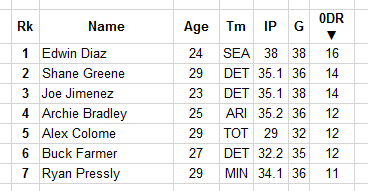
Buster Olney had a good blog recently about how managers have a shrinking role in the outcome of the modern game. He cited one unnamed veteran manager as saying "There’s almost nothing for me to do [during a game]. You change the pitchers, and you wait for somebody to hit a home run. You’re not doing nearly as much stuff as you used to. You don’t even think about doing some of that stuff." When you boil it down, for better or worse, Molitor hasn't done a lot of tinkering. He's called just 8 sac bunts this year, which is on the lower end of the AL (Gardenhire's Tigers have bunted just TWICE this season). They've tried to steal just 32 times, fourth lowest amount in baseball. They also have been picked off 10 times, behind just the Nationals in that amazing category. They've had runners cut down at home an MLB-leading 13 times (they had 17 outs at home all of last year) but they have been fairly aggressive in this area, sending runners from 2nd home on a single or a runner on 1st home on a double at a higher clip than most teams. This is a similar trend that made them successful last year, albeit with different components thanks to injuries. In 2016 and 2015, the Twins were not nearly as aggressive on the bases. They tried to swipe bases but they were not trying to push runners across like they have the last two years. I don't know if this is the manager imparting his will on the strategy to take more chances or not. (In 1992 Molitor was 2nd in the AL in outs at the plate with 6. He definitely tried to make things happen.) As far as bullpen management, outside of the love affair of Ryan Pressly, he's made reasonable decisions. He's called on Pressly 11 times on back-to-back days (which is one of the highest amounts in MLB). Part of it I actually understand too. Pressly's been called upon in late/close situations, often when there have been runners on base (19 inherited runners). At that point, Molitor is looking to miss bats and no one does that more frequently than Pressly. With one more bat-misser in the bullpen for the mid-to-late innings and he'd probably ease up on him. (Also, it's amazing how much Gardenhire is redlining his bullpen in Detroit. Several guys at the top of the list of arms who are asked to go on consecutive days.)
-
Article: Miguel Sano's Struggles
Parker Hageman replied to Parker Hageman's topic in Twins Daily Front Page News
Someone asked on Twitter what sort of drills would work to improve this. One that came to mind was Robinson Cano's screen drill. You place a screen over the middle of the plate and feed pitches on the inner-half. Hitters cannot extend their arms so they have to keep their hands in and rotate.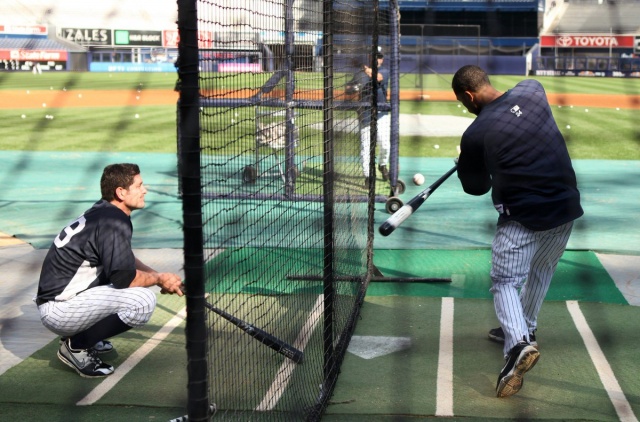
-
Article: Miguel Sano's Struggles
Parker Hageman replied to Parker Hageman's topic in Twins Daily Front Page News
The data points above are all pitches from both hands. The majority of those pitches are fastballs. In the video example provided, both pitches are 92-94 mph fastballs that ran to the 4-spot on the GameDay zone profile (middle-in). We could obviously analysis this further and breakdown what pitch he had just seen and what he might have been expecting however the characteristic that should stand out is what he is doing with his hands in his swing. This isn't unique to just pitches inside, either. Here's another look at two swings on pitches down/away from 2015 (L) and 2018 ®. Notice how the hands stay closer to the body while the more recent swing he has his hands reaching. Someone pointed out he is further away from the plate this season than in 2015, which may be driving some of the reaching, but I tend to circle back to the notion that he's not entire healthy in the lower-half. If you aren't healthy, you aren't using your whole body and you start doing things like getting more armsy or trying to muscle the ball out instead of leveraging it out.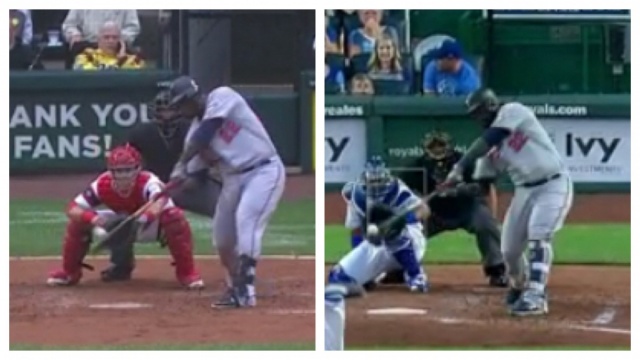
-
MIguel Sano has been a hot mess at the plate pretty much all season. Statistically, he has had career highs and lows in all the wrong categories warranting the need to push pause on his 2018 season. The demotion to Fort Myers should give him the opportunity to clean up his swing as well as recuperate from whatever lingering leg injuries have been stifling him. When it comes to his swing, you may be asking yourself what exactly does the big man have to clean up? Let's take a look. Click here to view the article
-
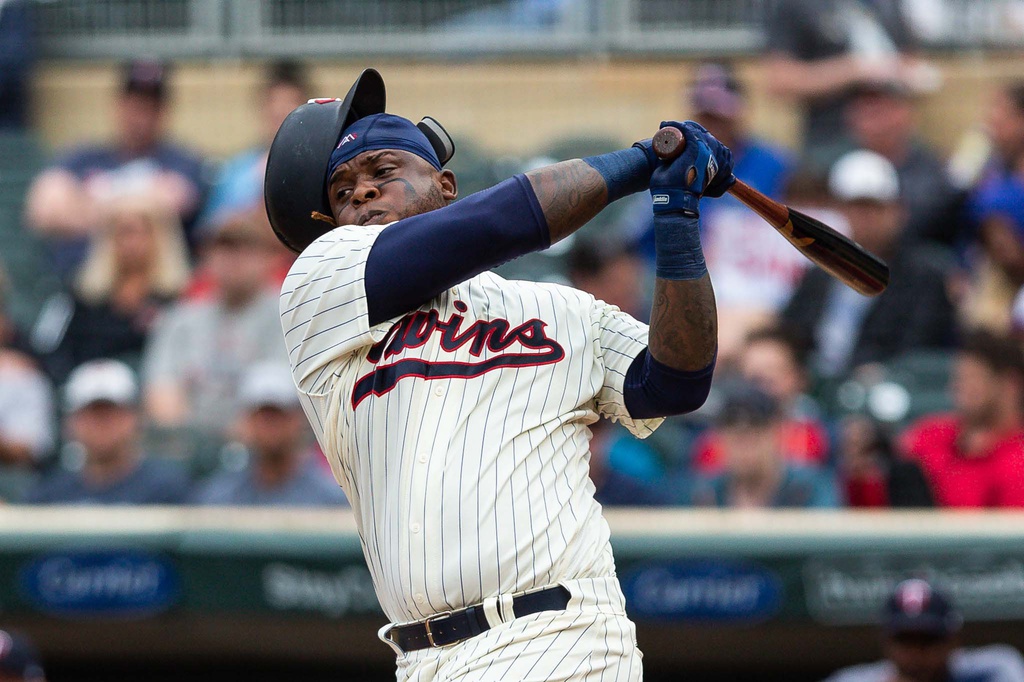 https://twitter.com/ParkerHageman/status/1007726522998972416 https://twitter.com/ParkerHageman/status/1007727021496119296 https://twitter.com/ParkerHageman/status/1007727875095703558 https://twitter.com/ParkerHageman/status/1007728487602548737 https://twitter.com/ParkerHageman/status/1007728796538228737 https://twitter.com/ParkerHageman/status/1007729487432253440
 -
Article: Week in Review: Offense Takes Flight
Parker Hageman replied to Nick Nelson's topic in Twins Daily Front Page News
I've seen that before and, from a coaching perspective, I don't like it. Unless it's 100% ingrained in all the players (especially amateur) it leaves a ton of room for misinterpretation. At the professional level, you will not always be able to hear verbal cues.- 21 replies
-
- 1
-

-
- eddie rosario
- miguel sano
- (and 1 more)
-
Article: Week in Review: Offense Takes Flight
Parker Hageman replied to Nick Nelson's topic in Twins Daily Front Page News
If somebody bobbled it or misfired, it would look genius in retrospect. Again, the runner should be going hard to round the bag unless instructed otherwise. It's possible that Glynn gave Adrianza some other signal to check into third prior to the replay clip. Obviously it wasn't Adrianza's decision to make the turn but it's not entirely on Glynn (95/5). I also wonder if Glynn thought he saw the left fielder bobble it when he decided to send him.- 21 replies
-
- 1
-
-
- eddie rosario
- miguel sano
- (and 1 more)
-
Article: Week in Review: Offense Takes Flight
Parker Hageman replied to Nick Nelson's topic in Twins Daily Front Page News
You can assign some blame to both on that play. Adrianza was slowing down to check into to third when Glynn suddenly gave him the go sign. You see Adrianza have to restart and then stutter-step into third base, which is why you see him stumble around the bag. Glynn was watching the play in left field so he wasn't watch what Adrianza was doing as he approached third. I don't mind pressing a defense at times. When Glynn started to give the wheel, the left fielder had just picked up the ball and, had Adrianza been running full steam like he was going to round it initially, they may have had a shot (but probably not). Maybe you force a bad throw or a misplay at the plate. Cleveland executed it perfectly. The safe play obviously would have been to hold everyone. With runners on 2nd/3rd and one out, Cleveland may have chosen to walk Bobby Wilson to fill the bases and set up the double play. At that point you have potentially two chances with Dozier and Rosario to drive in a run. Or, if they didn't load the bases, Wilson had a pretty decent day at the plate up to that point, possibly being able to lift a fly ball deep enough to score Adrianza anyway. It's fun how much info you have to try to keep in your head as a third base coach and you have a split second to make a decision. https://twitter.com/ParkerHageman/status/1003385136602341376- 21 replies
-
- 2
-
-
- eddie rosario
- miguel sano
- (and 1 more)
-
Article: 2018 MLB Draft: Minnesota Connections
Parker Hageman replied to Seth Stohs's topic in Twins Daily Front Page News
That story is soooper bullsh*t. One, it's Academy of Holy Angels not Holy Angels Academy. Two, it was a 3-0 game. Homeboy is legit. Played for our Starters club team as well this last summer. Their coach raved about his makeup and says he had a lot of scouts calling on him then. Very new to pitching (started just two years ago) but an amazing arm and very frame. We watched him warm up in the outfield and he was humming peas from right center field warning track to the left field foul line -- about 250 feet. You don't see a ton of high school kids being able to do that. The first four innings felt like we just hit balls at people and their guys made a couple of good plays. We had three Ks through 4. The last three innings he just dialed it up and did a Justin Verlander - struck out 8 of the last 10 batters faced. He reportedly touched 94 against us late in the game.- 5 replies
-
- 4
-
-
- seth halvorsen
- aidan maldonado
- (and 3 more)
-
Character is cited as one of the biggest factors for the Cubs when they built their championship team. The book, "The Cubs Way", details this build, showing how they selected one player like Almora over others because of the way he conducted himself before the draft. Highly recommend. There was another good profile on Kyle Schwarber from 2015 that talked about this from the scouting perspective: I think the Twins seems to be emphasizing this point as well. As an organization to have success you have to be able to spot talent but a player's character may be the determining factor between selecting one over another.
- 50 replies
-
- 1
-
-
- royce lewis
- alex kirilloff
- (and 1 more)
-
Article: A Whole New LoMo
Parker Hageman replied to Cody Christie's topic in Twins Daily Front Page News
Good post Cody. Morrison made a change in his approach this season. As Morneau relayed in a broadcast last month, Morrison was trying to get into his legs more than he did last season, which is why he was more squat compared to his more upright stance in 2017. This new stance led to something in the early part of the season that I pointed out during the Yankees series: He was overstriding. http://twinsdaily.com/_/minnesota-twins-news/minnesota-twins/whats-going-on-with-logan-morrison-r6675 This, as Nick mentioned above, led to a longer swing (on top of a swing that can be long to begin with already). It was why he was swinging through and fouling off hittable pitches. Two series later, Morrison started to square balls more. He had two home runs in Chicago when Roy Smalley mentioned that Morrison had felt that his stride was "over-long". https://twitter.com/ParkerHageman/status/997162491527553025 This is what slow starts look like. Hitting is about adjustments and how quickly you can refine your approach. Morrison was trying to take a new approach into the season. It was going to take some time to dial it in. -
He also is credited with one of the better (?) lines from a commentator when talking about a pitcher: "He's just like a surgeon, going after his prey."
-
I think this applies... https://twitter.com/drivelinebases/status/992063234306801665
-
Article: What's Going On With Logan Morrison?
Parker Hageman replied to Parker Hageman's topic in Twins Daily Front Page News
If he were swinging through more fastballs, I would agree. He's just off on those same fastballs. It's not a bat speed issue. -
Let’s talk about Logan Morrison for a hot minute. After last night’s 1-for-4 performance against the Yankees, the one they call LoMo is now hitting .113/.214/.177 on 70 plate appearances on the year. Yes, in the grand scheme of things 70 plate appearances is nothing. After all, a player’s fortune and season can change quickly if said player catches fire for a week. In 2016 Morrison started his career with the Rays by going 6-for-60 with a .290 OPS. He would post an .821 OPS the remainder of the season to bring his final stat line to a respectable .238/.319/.414 mark. Consider this, Morrison’s .392 OPS in 2018 is now the lowest mark among all qualified hitters just as his .290 OPS was to start the 2016 season. There is plenty of season left to return to normalcy but that said, Morrison’s tenure in a Twins uniform has the feel of a Black Mirror episode. Yes, it’s still only April but It has got the makings of a historically bad season. So what is up with LoMo?During Wednesday night’s Fox Sports North broadcast, Roy Smalley homed in on Morrison’s swing on several occasions during the game. From the side view, Smalley remarked that Morrison’s bat path, which works rearward before coming forward, was long and keeping him from catching up to the Yankees’ velocity. While Morrison may have issues squaring higher velocity this season, Morrison’s swing path is not likely the source of his consternation. For one, it is the same bat path/swing he has employed in the previous season when he jacked 38 home runs and posted a .868 OPS. Second, rearward movement of the barrel happens with all swings – it is just a matter to what degree a hitter rotates the barrel that direction. Even Max Kepler, whose swing Smalley has expressed affinity for, has some degree of loop in his swing. When you look at Morrison’s peripheral numbers compared to last season, his plate discipline rates are very similar. He is striking out at a similar rate. He is chasing pitches out of the zone at about the same rate. He is making contact at about the same rate. The main difference is that he is swinging more frequently and not making contact on pitches outside of the zone than he did in the past. When you dig deeper, what stands out is his inability to capitalize on fastballs. In 2017, armed with the same swing path as he has this year, LoMo crushed all kinds of fastballs. Last year 21 of his 38 HR were on fastballs. He was crushing heat. This season has been wildly different. He has fouled off a much higher percentage of fastballs (ticking almost 50% of his swings on fastballs). Morrison has put 13 fastballs into play this year and six of those have been infield pop flies. That is significant considering he had just four infield flies on fastballs all of last year. If his overall numbers did not tip you off, this should tell you that something is wrong. Because of limited video availability, there is not a lot of opportunity to compare Morrison’s swing in 2018 with his swing in 2017. MLBAM does not upload and host side view highlights of players whiffing or lifting pop-ups to second base. FSN, however, was kind enough to provide multiple side view shots. While the camera angles differ slightly (and the low-def quality of my TV combined with the iPhone video capture) may distort the view, what we can discern is that Morrison — compared to last season — is over-striding. This would explain the inability to make solid contact. Watch Morrison’s lower half as he tries to gain more ground with his front/right leg (L) vs last year ®. Look how much further apart Morrison’s knees are from each other. Download attachment: DbrsbQJU8AItbRF.jpg This has all sorts of implications for his swing and why he is just missing squaring fastballs. His eye level can change with the wider stride. His bat path, while similar to last year, is now angled slightly different. His stride timing, a fraction of a second longer now, is disrupted. It can be a domino effect, really. Why is Logan Morrison swinging this way? He may be attempting to get into his legs more (as Brian Dozier demonstrated during his MLB Network appearances) in hopes of gaining more power. He appears more squat in his stance this season versus last. As noted above, he is swinging more often, particularly at pitches outside the zone, so he may be trying to force his way out of the early season slump. He may be just trying something new to change things up. He may have no idea that he has made changes. Where does Morrison go from here? The Twins' middle of the order production has been horrendous so the team clearly needs to get Morrison's bat going and going soon. At this point, Morrison can choose to continue with these mechanics, hoping to refine and perfect the timing of this new, longer stride. Or Morrison and the Twins staff could have the conversation about what made Morrison successful a year ago: his upright and shorter, quicker stride. I won’t pretend to have the answers on this. Morrison could go either direction and struggle or rip off a month of 15 bombs. That said, if I were in charge of trying to get LoMo going, I would start a dialogue about the change in his mechanics, hoping to spur a rapid recovery. Click here to view the article
-
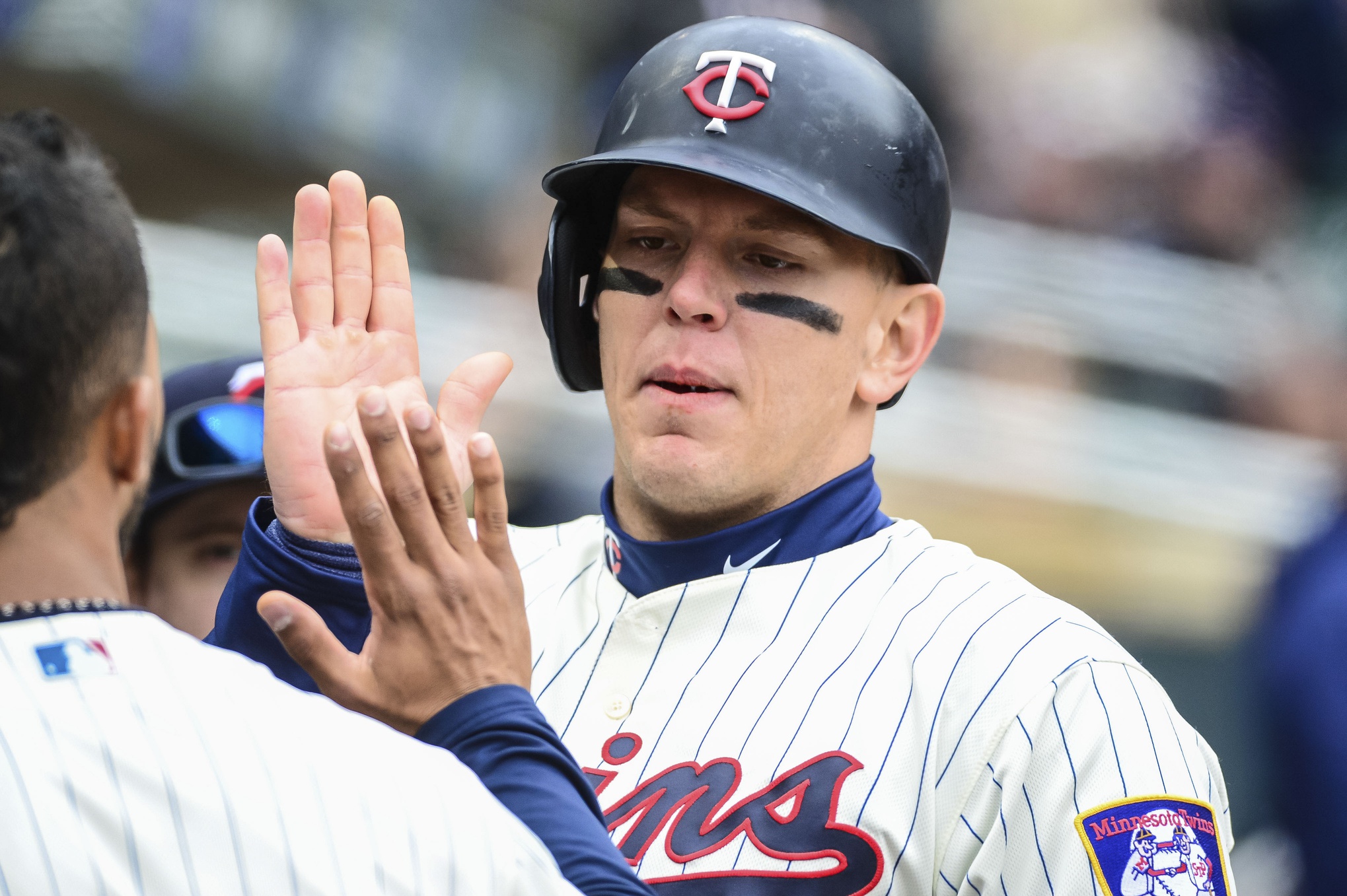 During Wednesday night’s Fox Sports North broadcast, Roy Smalley homed in on Morrison’s swing on several occasions during the game. From the side view, Smalley remarked that Morrison’s bat path, which works rearward before coming forward, was long and keeping him from catching up to the Yankees’ velocity. While Morrison may have issues squaring higher velocity this season, Morrison’s swing path is not likely the source of his consternation. For one, it is the same bat path/swing he has employed in the previous season when he jacked 38 home runs and posted a .868 OPS. Second, rearward movement of the barrel happens with all swings – it is just a matter to what degree a hitter rotates the barrel that direction. Even Max Kepler, whose swing Smalley has expressed affinity for, has some degree of loop in his swing. When you look at Morrison’s peripheral numbers compared to last season, his plate discipline rates are very similar. He is striking out at a similar rate. He is chasing pitches out of the zone at about the same rate. He is making contact at about the same rate. The main difference is that he is swinging more frequently and not making contact on pitches outside of the zone than he did in the past. When you dig deeper, what stands out is his inability to capitalize on fastballs. In 2017, armed with the same swing path as he has this year, LoMo crushed all kinds of fastballs. Last year 21 of his 38 HR were on fastballs. He was crushing heat. This season has been wildly different. He has fouled off a much higher percentage of fastballs (ticking almost 50% of his swings on fastballs). Morrison has put 13 fastballs into play this year and six of those have been infield pop flies. That is significant considering he had just four infield flies on fastballs all of last year. If his overall numbers did not tip you off, this should tell you that something is wrong. Because of limited video availability, there is not a lot of opportunity to compare Morrison’s swing in 2018 with his swing in 2017. MLBAM does not upload and host side view highlights of players whiffing or lifting pop-ups to second base. FSN, however, was kind enough to provide multiple side view shots. While the camera angles differ slightly (and the low-def quality of my TV combined with the iPhone video capture) may distort the view, what we can discern is that Morrison — compared to last season — is over-striding. This would explain the inability to make solid contact. Watch Morrison’s lower half as he tries to gain more ground with his front/right leg (L) vs last year ®. https://twitter.com/ParkerHageman/status/989362474267938816 Look how much further apart Morrison’s knees are from each other. This has all sorts of implications for his swing and why he is just missing squaring fastballs. His eye level can change with the wider stride. His bat path, while similar to last year, is now angled slightly different. His stride timing, a fraction of a second longer now, is disrupted. It can be a domino effect, really. Why is Logan Morrison swinging this way? He may be attempting to get into his legs more (as Brian Dozier demonstrated during his MLB Network appearances) in hopes of gaining more power. He appears more squat in his stance this season versus last. As noted above, he is swinging more often, particularly at pitches outside the zone, so he may be trying to force his way out of the early season slump. He may be just trying something new to change things up. He may have no idea that he has made changes. Where does Morrison go from here? The Twins' middle of the order production has been horrendous so the team clearly needs to get Morrison's bat going and going soon. At this point, Morrison can choose to continue with these mechanics, hoping to refine and perfect the timing of this new, longer stride. Or Morrison and the Twins staff could have the conversation about what made Morrison successful a year ago: his upright and shorter, quicker stride. I won’t pretend to have the answers on this. Morrison could go either direction and struggle or rip off a month of 15 bombs. That said, if I were in charge of trying to get LoMo going, I would start a dialogue about the change in his mechanics, hoping to spur a rapid recovery.


