



Parker Hageman
-
Posts
4,152 -
Joined
-
Last visited
-
Days Won
6
Content Type
Profiles
News
Minnesota Twins Videos
2026 Minnesota Twins Top Prospects Ranking
2022 Minnesota Twins Draft Picks
Minnesota Twins Free Agent & Trade Rumors, Notes, & Tidbits
Guides & Resources
2023 Minnesota Twins Draft Picks
The Minnesota Twins Players Project
2024 Minnesota Twins Draft Picks
2025 Minnesota Twins Draft Pick Tracker
2026 Minnesota Twins Draft Tracker: Picks & Bonuses
Forums
Blogs
Events
Store
Downloads
Gallery
Everything posted by Parker Hageman
-
 I swear if you download the ebook, I address this.
 -
What follows is an excerpt from a feature for the 2019 Offseason Handbook, which you can order here on a name-your-price basis and receive it right away. Contrary to popular belief, the Minnesota Twins did not create The Opener as a way to make Bert Blyleven and Jack Morris’s heads explode on the air. No, this unconventional approach was devised for one simple reason: to get 27 outs. More specifically, it was devised to get 27 outs while avoiding all those pesky runs that can happen between recorded outs.Statistically speaking, starting pitchers deteriorate over the course of a game. Perhaps due to familiarity or simply having their stuff wear down in the later innings, the advantage swings drastically to the hitter his third time facing a pitcher. From 2013 to 2017, the first time facing a pitcher, hitters posted a .249/.310/.396 (.706 OPS) batting line. That means every hitter the first time through is like Oakland’s Marcus Siemen, who posted a .706 OPS in 2018. By the third time facing a pitcher, however, hitters posted a .271/.333/.443 (.776 OPS), which means now everyone is Houston’s All-Star George Springer. Teams can combat that by swapping out the starter for a reliever, thus avoiding the dreaded third time through. After all, batters have hit .243/.317/.384 (.700 OPS) against relievers the first time facing them (hello, Cincinnati’s Tucker Barnhart). Using the opener also has the secondary purpose of protecting the primary pitcher — the pitcher who follows the opener — from a lineup’s top of the order, where most of the best hitters reside. With an opener in place, if a team does opt to allow the primary pitcher to go through a third time, chances are they're avoiding the top and middle parts of the order in that go round. In short, The Opener strategy: (1) limits a starter’s exposure to a third time through the order, (2) protects them against facing the team’s better hitters more than once, and (3) allows a manager to align a relief pitcher whose strengths better neutralize a lineup's top three hitters. “Can’t deny the logic,” Twins director of player personnel Mike Radcliff says regarding the strategy. Baseball is a boat race to 27 outs and, on paper, the opener concept could yield favorable results. While the Tampa Bay Rays were first to deploy the strategy, the Twins say they weren’t copycats. In fact, the discussion dates back to last offseason in Fort Myers. And it is likely no coincidence that one key figure in this discussion used to be employed by the Rays. Josh Kalk’s reputation for maximizing pitching results looms large within the game. In the early PitchF/X era, Kalk was a renowned data wizard, dissecting arms, arsenals and strategies, then posting his findings publicly at The Hardball Times. The forward-thinking, budget-ballin’ Rays scooped him up. Kalk’s work has become so highly respected that reportedly 10 teams were vying for his services last winter when he left the Rays organization. The Twins were geeked when they landed him. “He’s clearly an impact guy,” Falvey said of the Kalk hiring. “We had him down at our org meetings, meeting with our pitching coaches and staff. We feel like that's an area he has a certain level of expertise.” It was at those org meetings at the Fort Myers facilities — one dubbed the pitching summit — where the discussion of using a pitcher as a one-inning opener first began, according to Radcliff. At the core of the meetings, per Falvey, was answering the question: How do we get our young pitchers better. “We were wide-open to everything and anything,” Radcliff said of the organization. “We went in with the mindset that we are not afraid to try anything.” Among contributors in the room were guys like Kalk sitting next to former players like LaTroy Hawkins and Bob McClure, new major-league pitching coach Garvin Alston, and minor-league pitching guys like Pete Maki and JP Martinez. Different eras and different viewpoints were represented. The idea of the opener concept was floated, discussed, debated, argued and vetted. It seemed almost too simple — you protect your young pitchers by limiting their exposure as well as controlling the inning allotment. Minimize the risk and maximize the reward. Not all of the ideas shared were unanimously embraced and the use of the opener strategy was one. In general, the difference of opinions during the summit did not faze Falvey. In reflecting on it, he viewed what transpired as healthy. “We're never going to agree completely,” he said. “If we do, that just means we are saying yes to one idea. If we can disagree and actually, genuinely, talk about different perspectives, we've got a chance to make up ground and be better.” Ultimately the parties walked out of the room with an organizational pitching development strategy going forward, and the idea of the opener was back-pocketed. It wouldn’t take long to see the strategy in action. On May 19th the Rays started closer Sergio Romo, allowing him to get the first three outs in front of their primary pitcher, Ryan Yarbrough. Tampa would use the strategy a total of 55 times in 2018. The results were decent enough for the Rays and their young pitchers — especially Yarbrough. Tampa would win 90 games and the 26-year-old rookie would finish the year 16-6, throwing over 140 innings despite making just six traditional starts. In either capacity — starting or primarying — Yarbrough faced the same hitter thrice on a given day just 83 times, one of the lowest totals of anyone who amassed 100 innings in 2018. The Twins watched from afar as the Rays paired their young pitchers with one-inning openers. Unlike the Rays, the Twins were giving starts to veteran pitchers, such as Lance Lynn, Jake Odorizzi, Kyle Gibson, Jose Berrios and a little Phil Hughes while waiting for Ervin Santana to heal. But injuries and ineffectiveness exposed cracks in that facade. *** Want to read the rest of this story, and 70 pages of in-depth analysis of the offseason that’s about to get underway? Claim your copy of the 2019 Offseason Handbook, at a price of your choosing, and you’ll receive it right away. Click here to view the article
-
Handbook Sampler: How the Twins Opened Their Minds to the Opener
Parker Hageman posted an article in Twins
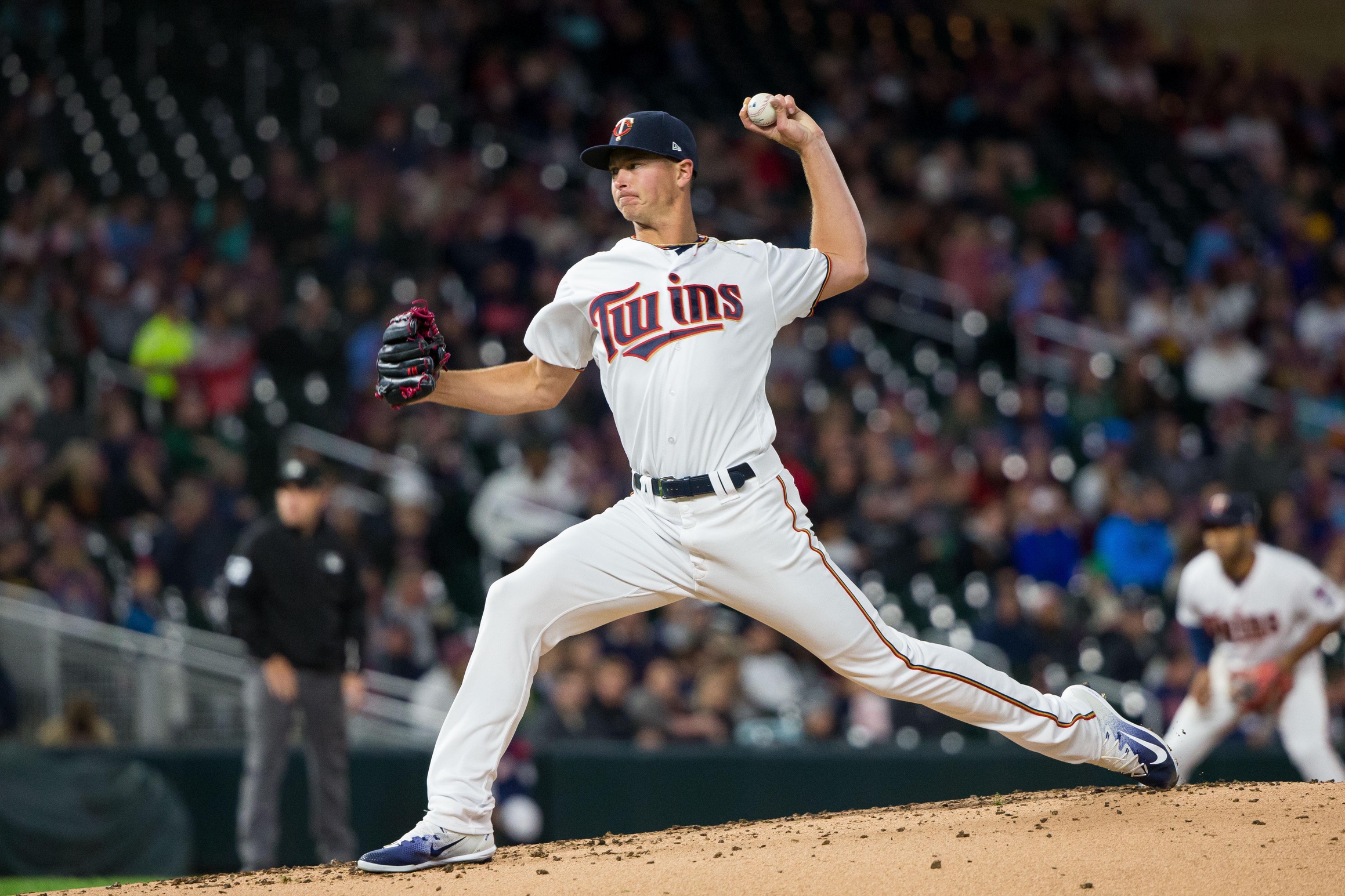 Statistically speaking, starting pitchers deteriorate over the course of a game. Perhaps due to familiarity or simply having their stuff wear down in the later innings, the advantage swings drastically to the hitter his third time facing a pitcher. From 2013 to 2017, the first time facing a pitcher, hitters posted a .249/.310/.396 (.706 OPS) batting line. That means every hitter the first time through is like Oakland’s Marcus Siemen, who posted a .706 OPS in 2018. By the third time facing a pitcher, however, hitters posted a .271/.333/.443 (.776 OPS), which means now everyone is Houston’s All-Star George Springer. Teams can combat that by swapping out the starter for a reliever, thus avoiding the dreaded third time through. After all, batters have hit .243/.317/.384 (.700 OPS) against relievers the first time facing them (hello, Cincinnati’s Tucker Barnhart). Using the opener also has the secondary purpose of protecting the primary pitcher — the pitcher who follows the opener — from a lineup’s top of the order, where most of the best hitters reside. With an opener in place, if a team does opt to allow the primary pitcher to go through a third time, chances are they're avoiding the top and middle parts of the order in that go round. In short, The Opener strategy: (1) limits a starter’s exposure to a third time through the order, (2) protects them against facing the team’s better hitters more than once, and (3) allows a manager to align a relief pitcher whose strengths better neutralize a lineup's top three hitters. “Can’t deny the logic,” Twins director of player personnel Mike Radcliff says regarding the strategy. Baseball is a boat race to 27 outs and, on paper, the opener concept could yield favorable results. While the Tampa Bay Rays were first to deploy the strategy, the Twins say they weren’t copycats. In fact, the discussion dates back to last offseason in Fort Myers. And it is likely no coincidence that one key figure in this discussion used to be employed by the Rays. Josh Kalk’s reputation for maximizing pitching results looms large within the game. In the early PitchF/X era, Kalk was a renowned data wizard, dissecting arms, arsenals and strategies, then posting his findings publicly at The Hardball Times. The forward-thinking, budget-ballin’ Rays scooped him up. Kalk’s work has become so highly respected that reportedly 10 teams were vying for his services last winter when he left the Rays organization. The Twins were geeked when they landed him. “He’s clearly an impact guy,” Falvey said of the Kalk hiring. “We had him down at our org meetings, meeting with our pitching coaches and staff. We feel like that's an area he has a certain level of expertise.” It was at those org meetings at the Fort Myers facilities — one dubbed the pitching summit — where the discussion of using a pitcher as a one-inning opener first began, according to Radcliff. At the core of the meetings, per Falvey, was answering the question: How do we get our young pitchers better. “We were wide-open to everything and anything,” Radcliff said of the organization. “We went in with the mindset that we are not afraid to try anything.” Among contributors in the room were guys like Kalk sitting next to former players like LaTroy Hawkins and Bob McClure, new major-league pitching coach Garvin Alston, and minor-league pitching guys like Pete Maki and JP Martinez. Different eras and different viewpoints were represented. The idea of the opener concept was floated, discussed, debated, argued and vetted. It seemed almost too simple — you protect your young pitchers by limiting their exposure as well as controlling the inning allotment. Minimize the risk and maximize the reward. Not all of the ideas shared were unanimously embraced and the use of the opener strategy was one. In general, the difference of opinions during the summit did not faze Falvey. In reflecting on it, he viewed what transpired as healthy. “We're never going to agree completely,” he said. “If we do, that just means we are saying yes to one idea. If we can disagree and actually, genuinely, talk about different perspectives, we've got a chance to make up ground and be better.” Ultimately the parties walked out of the room with an organizational pitching development strategy going forward, and the idea of the opener was back-pocketed. It wouldn’t take long to see the strategy in action. On May 19th the Rays started closer Sergio Romo, allowing him to get the first three outs in front of their primary pitcher, Ryan Yarbrough. Tampa would use the strategy a total of 55 times in 2018. The results were decent enough for the Rays and their young pitchers — especially Yarbrough. Tampa would win 90 games and the 26-year-old rookie would finish the year 16-6, throwing over 140 innings despite making just six traditional starts. In either capacity — starting or primarying — Yarbrough faced the same hitter thrice on a given day just 83 times, one of the lowest totals of anyone who amassed 100 innings in 2018. The Twins watched from afar as the Rays paired their young pitchers with one-inning openers. Unlike the Rays, the Twins were giving starts to veteran pitchers, such as Lance Lynn, Jake Odorizzi, Kyle Gibson, Jose Berrios and a little Phil Hughes while waiting for Ervin Santana to heal. But injuries and ineffectiveness exposed cracks in that facade. *** Want to read the rest of this story, and 70 pages of in-depth analysis of the offseason that’s about to get underway? Claim your copy of the 2019 Offseason Handbook, at a price of your choosing, and you’ll receive it right away.
 -
Article: Let's Talk About Logan Forsythe
Parker Hageman replied to Parker Hageman's topic in Twins Daily Front Page News
Yes and no. I'm saying he's capable of doing more. -
Article: Let's Talk About Logan Forsythe
Parker Hageman replied to Parker Hageman's topic in Twins Daily Front Page News
While I can see your overall point but this is a bit of a flawed evaluation exercise. If we just look at 2015-2016, when Forsythe was swinging with more intent, those categories shift slightly. Months with 1.000+ OPS: 1 .900 - 1.000 OPS: 1 .800 - .900 OPS: 4 .700 - .800 OPS: 3 .600 - .700 OPS: 1 Under .600 OPS: 2 (and one of those months includes just 7 games) That's a valuable player. It's certainly bottom heavy when you factor in the last two years (this year especially) and changing his swing. This year he's had shoulder issues and hasn't played regularly -- which has to play a role. Personally, I think his current month's OPS is overrated (there's a high amount of BABIP gods smiling down on him) but, going forward, if someone can get in his ear about returning to his previous swing then you might have something. He's going to be very affordable and has potential to post 2015-2016 type numbers. Frankly, I don't think he can do it at Target Field (the right field configuration makes it difficult of opposite field home runs) but he's got rebound potential.- 44 replies
-
- 1
-

-
- logan forsythe
- scouting
- (and 2 more)
-
Logan Forsythe’s 19-game run with the Minnesota Twins has been fairly remarkable. In the time since he came over from the Dodgers in the Brian Dozier trade, Forsythe has led the team in batting average (.377) and on-base percentage (.434). Yes, a little over two weeks is the poster child for small sample size enthusiasts and having half of your hits come on ground balls isn’t exactly a roadmap for sustainability, yet Forsythe has looked good considering he was flotsam in LA. While the hits have been nice, it’s a far cry from his days with the Tampa Bay Rays where he was hitting double-digit dingers.If there is one thing you should remember from this article it is that Logan Forsythe rarely swings the bat. Over the last two seasons, Joe Mauer offered at 36 percent of pitches thrown his direction. The only person who swung less than that was Logan Forsythe. He deemed just 34 percent of pitches worthy of his lumber. So when a rare event like a Logan Forsythe swing transpired, you would want results that were worthy of the wait. He is sort of the infield version of Robbie Grossman -- likes to gamble that the pitcher can’t throw two consecutive strikes when down in the count. The Dodgers, however, were not fans of this passive approach of letting very hittable pitches scurry by. If there is a second thing you should remember from this article it is that Logan Forsythe did hit a healthy number of home runs, once upon a time. In 2015, Forsythe hit 17 home runs with the Rays. He followed that up with another 20 in 2016. His play was enticing enough that, when the Twins balked at trading Dozier in 2017, the Dodgers flipped a solid pitching prospect for Forsythe instead. However, upon his arrival to Los Angeles, he stopped hitting for power. There were various ailments cited -- a toe injury in April 2017 and a shoulder injury in April 2018 -- that zapped some of his power potential and limited his time on the field. While those are all factors for the power outage, there is also a component of his swing that changed significantly between 2016 and now. Watch the clip of his swing in 2016 (right) compared to 2018 (left): Download attachment: FSFrameGIFImage (4).GIF Both swings are against 93 MPH fastballs away from left-handed pitchers, thrown in plus-counts when a hitter should be hunting. For the most part the swings are similar but Forsythe has toned down his pre-launch bat movement since 2016. Download attachment: FSFrameGIFImage.GIF The added movement before the launch equated to more bat speed. It's simple: less bat speed, less exit velocity. For whatever reason -- a coach’s instruction, a tip from a player, his own development and feel, etc -- Forsythe has removed this element of his swing. In doing so, his average exit velocity has dropped, his average launch angle has decreased, and his ability to drive the ball to right field for power has declined as well (he hit 10 home runs to right in 2015-2016 and has zero since). There is a lot to like about Forsythe’s ability to get the barrel to the ball. He’s a barrel turner (as opposed to someone who hacks down). Watch as his hands turn the barrel rearward before rotating forward to contact. This gets the barrel on plane longer and allows for him to stay back longer instead of drifting toward the pitcher. Download attachment: FSFrameGIFImage (1).GIF The other thing to appreciate is that Forsythe actually has a two-strike approach -- something that isn’t always shared by his contemporaries. In two-strike situations Forsythe tones down, eliminating the leg kick and long distance hand load, to try to wait as long as possible and adjust on off-speed pitches: Download attachment: FSFrameGIFImage (3).GIF Forsythe rarely chases breaking balls out of the zone. According to ESPN/TruMedia’s data, since 2017 he’s reached on just 14.3 percent of breaking balls outside of the zone whereas the average hitter has done so on just over 30 percent. For comparison’s sake, Joe Mauer has even chased after 23 percent of breaking balls in that time. Forsythe will swing through some (8 percent, same as Mauer) and the results aren’t great when he does make contact (a .588 OPS vs .657 MLB average) but with baseball’s increasing reliance on nasty breaking balls, being able to wait back and keep from chasing after those pitches is rare skill set. Since coming over to the Twins, Forsythe has been some sort of bizarro Shannon Stewart and has been a spark plug for the offense. The offense, of course, isn’t going anywhere except home in October but Forsythe’s play has at least kept the team from improving its draft position. This isn’t meant to read as a sales pitch to the Twins to try to retain Logan Forsythe. A week ago, Seth Stohs asked “What To Do With Logan Forsythe” and the prevailing sentiment seemed to be “drive him to the airport”. When he was acquired, it was accepted that Forsythe was a placeholder until the end of the year. That should probably stay, but night after night he’s piled on the hits and has given the front office, at the very least, a mild case of the considerations. Truthfully, this is probably more of a sales pitch for contending teams interested in an additional bench bat or utility player. If someone is willing to surrender a prospect or project to have a high-contact right-handed bat on the bench for the playoffs (there’s got to be a team interested in a player who can put the ball in play in a pinch) the Twins should absolutely move him. What’s more, Forsythe would also come with untapped power potential if someone could convince him to rekindle his 2016 swing. If there is a third thing you should remember from this article it is that it ended. Click here to view the article
- 44 replies
-
- 2
-
-
- logan forsythe
- scouting
- (and 2 more)
-
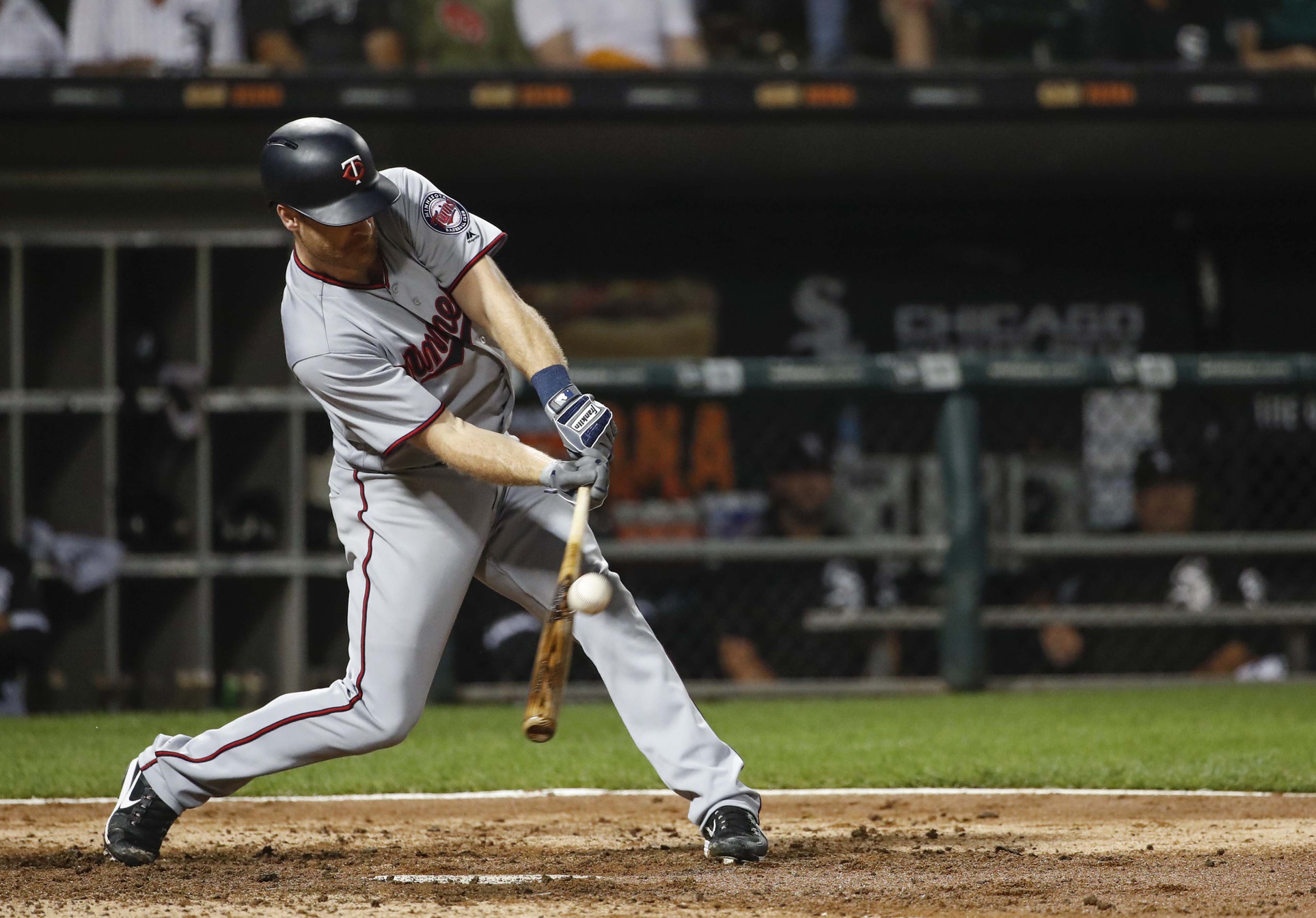 If there is one thing you should remember from this article it is that Logan Forsythe rarely swings the bat. Over the last two seasons, Joe Mauer offered at 36 percent of pitches thrown his direction. The only person who swung less than that was Logan Forsythe. He deemed just 34 percent of pitches worthy of his lumber. So when a rare event like a Logan Forsythe swing transpired, you would want results that were worthy of the wait. He is sort of the infield version of Robbie Grossman -- likes to gamble that the pitcher can’t throw two consecutive strikes when down in the count. The Dodgers, however, were not fans of this passive approach of letting very hittable pitches scurry by. If there is a second thing you should remember from this article it is that Logan Forsythe did hit a healthy number of home runs, once upon a time. In 2015, Forsythe hit 17 home runs with the Rays. He followed that up with another 20 in 2016. His play was enticing enough that, when the Twins balked at trading Dozier in 2017, the Dodgers flipped a solid pitching prospect for Forsythe instead. However, upon his arrival to Los Angeles, he stopped hitting for power. There were various ailments cited -- a toe injury in April 2017 and a shoulder injury in April 2018 -- that zapped some of his power potential and limited his time on the field. While those are all factors for the power outage, there is also a component of his swing that changed significantly between 2016 and now. Watch the clip of his swing in 2016 (right) compared to 2018 (left): Both swings are against 93 MPH fastballs away from left-handed pitchers, thrown in plus-counts when a hitter should be hunting. For the most part the swings are similar but Forsythe has toned down his pre-launch bat movement since 2016. The added movement before the launch equated to more bat speed. It's simple: less bat speed, less exit velocity. For whatever reason -- a coach’s instruction, a tip from a player, his own development and feel, etc -- Forsythe has removed this element of his swing. In doing so, his average exit velocity has dropped, his average launch angle has decreased, and his ability to drive the ball to right field for power has declined as well (he hit 10 home runs to right in 2015-2016 and has zero since). There is a lot to like about Forsythe’s ability to get the barrel to the ball. He’s a barrel turner (as opposed to someone who hacks down). Watch as his hands turn the barrel rearward before rotating forward to contact. This gets the barrel on plane longer and allows for him to stay back longer instead of drifting toward the pitcher. The other thing to appreciate is that Forsythe actually has a two-strike approach -- something that isn’t always shared by his contemporaries. In two-strike situations Forsythe tones down, eliminating the leg kick and long distance hand load, to try to wait as long as possible and adjust on off-speed pitches: Forsythe rarely chases breaking balls out of the zone. According to ESPN/TruMedia’s data, since 2017 he’s reached on just 14.3 percent of breaking balls outside of the zone whereas the average hitter has done so on just over 30 percent. For comparison’s sake, Joe Mauer has even chased after 23 percent of breaking balls in that time. Forsythe will swing through some (8 percent, same as Mauer) and the results aren’t great when he does make contact (a .588 OPS vs .657 MLB average) but with baseball’s increasing reliance on nasty breaking balls, being able to wait back and keep from chasing after those pitches is rare skill set. Since coming over to the Twins, Forsythe has been some sort of bizarro Shannon Stewart and has been a spark plug for the offense. The offense, of course, isn’t going anywhere except home in October but Forsythe’s play has at least kept the team from improving its draft position. This isn’t meant to read as a sales pitch to the Twins to try to retain Logan Forsythe. A week ago, Seth Stohs asked “What To Do With Logan Forsythe” and the prevailing sentiment seemed to be “drive him to the airport”. When he was acquired, it was accepted that Forsythe was a placeholder until the end of the year. That should probably stay, but night after night he’s piled on the hits and has given the front office, at the very least, a mild case of the considerations. Truthfully, this is probably more of a sales pitch for contending teams interested in an additional bench bat or utility player. If someone is willing to surrender a prospect or project to have a high-contact right-handed bat on the bench for the playoffs (there’s got to be a team interested in a player who can put the ball in play in a pinch) the Twins should absolutely move him. What’s more, Forsythe would also come with untapped power potential if someone could convince him to rekindle his 2016 swing. If there is a third thing you should remember from this article it is that it ended.
 -
One thing that I saw was how he would hold his change-up grip versus his other pitch grips in his set position. It is probably more pronounced from the back angle than from the batter's box (the team likely has video from that angle to confirm it) but the wrist rests slightly different in his glove and may tip a hitter. Given he uses his changeup the most outside of his fastball, it could be something to consider. https://twitter.com/ParkerHageman/status/1031717881535447040
-
It should be noted that most pitcher's velocities tend to have a bell curve throughout the season. Unless there is a drastic decline, there will usually be some decline in the back half of the season.
-
I don't think it is quite as easy as ARod says. It takes some familiarity. You face a pitcher a couple times, you learn a bit of his tendencies and someone tips you off on a player's tell and you now have something to look for. If you are sitting change-up and he gives you a quick confirmation of that, that's an advantage. Not every player is going to see it and not every hit means that player saw something.
-
That's a good question. You'd think there could be some data that would help avoid situations like this. But if you do look at the data, it would also say you were successful with that pattern. The other interesting thing is how much better Hildenberger has been with Wilson (572 OPS in 71 PAs) over Garver (914 OPS in 120 PAs). It could all just be noise or small sample size but it would be interesting to breakdown their pitch selection.
-
Yeah, the rub is you have to be able to hit it. Shawn Green wrote an excellent book -- The Way of Baseball -- which details his experience uncovering some of the game's best pitchers during his era and their tells. Names like Maddux, Randy Johnson and Curt Schilling make the list. He also talks about Brad Radke's notorious glove flare on a changeup tell. Knowing what is coming might give the hitter a slight advantage, it usually takes a combination of pattern, tip-off and ability to hit that pitch.
-
Following the trade of Fernando Rodney, the role of closer has been undecided but Trevor Hildenberger seemed as good of a replacement as any for a team that was clearly focused on the future. There was adequate enough reason to give Hildenberger a chance to convert saves. For starters he had performed well in the first-half of the season, striking out about a batter per inning and allowing just five home runs over 43 appearances. He also had the longest name of any member of the Twins’ bullpen. That had to account for something. Even before Hildenberger was asked to save games his performance had started to get shaky. Hitters who had once flailed at fading changeups and frisbee sliders were beginning to square them up. The regularity of which his secondary offerings were pasted around the field even incited the Twins to walk out the dreaded t-word: Tipping.According to the Pioneer Press’s Mike Berardino, manager Paul Molitor said that the team’s video scouts were scouring through tape to find any signs of tipping from Hildenberger, but Molitor felt that there wasn’t any signs of tipping. If that is the case how is it that opponents have gone from hitting .120 with nine extra base hits on his changeup and slider from the beginning of the year until July 15 to hitting .454 with eight extra base hits since July 15? The first element of Hildenberger’s second-half issues is predictability. There were patterns that started to emerge from early in the season that may have influenced the results in the latter portion. In his appearances against the Rays in Tampa, Hildenberger didn’t allow a hit off his secondary stuff. In the recent series in Minnesota, the Rays were 4-for-4. Joey Wendle was one of the Rays hitters to reach against his changeup. In the first two matchups in Tampa, Hildenberger struck Wendle out but he may have left a bread crumb for the left-handed hitter: In both meetings, Hildenberger threw a 1-1 changeup to him. At Target Field, facing yet another 1-1 count Wendle sat on Hildenberger’s changeup and laced it into center field for another hit. Another example was his battles with the Royals’ Whit Merrifield. From May 28 until July 21, Hildenberger faced Merrifield four times. In each occasion, Hildenberger started Merrifield off with a slider. The fourth time around Merrifield swung at the slider and knocked a single. In two ABs since that hit, Hildenberger has started him off with sinkers. But while the Royals and Rays did a number on Hildenberger, it has been the Cleveland Indians who have inflicted the most damage. Prior to the rough stretch, Hildenberger made three appearances against the Indians. During those appearances, he held the Indians hitless against his secondary pitches (0-for-5 with 2 strikeouts). Since July 15 Hildenberger has made four additional appearances against Cleveland and has had the same lineup trash his secondary stuff (6-for-12, 2 HR) -- including Francisco Lindor’s game-winning walk-off home run on August 8. What led up to Lindor’s game-winning tank shot? Leading into that August 8th match-up, Hildenberger had faced Lindor five times in 2018. In three of those occasions he started Lindor off with a changeup. If you are Lindor, chances are you can sit on the changeup and take a Daddy Hack. Hildenberger faced Jason Kipnis twice this year. Once at the beginning of the year where he started him with a sinker then two changeups in a row. In their second meeting -- an at-bat that preceded Lindor’s home run by two hitters -- Hildenberger once again started him with a fastball and then threw two changeups -- the second of which Kipnis lifted into left field for a base hit. The second element that may be behind Hildenberger’s struggles is a combination of the predictability and, yes, some pitch-tipping. According to Berardino’s article, Molitor appeared fairly confident that Hildenberger was not doing anything explicit to tip his pitches (flaring his glove or slowing his delivery to telegraph a particular pitch). And that may be true. But before we outright dismiss it, let’s consider there does seem to be a window in which Hildenberger could be tipping his hand. When Hildenberger breaks his hands, he does so away from his body. While he contorts, twists and bends, there appears to be a momentary flash where hitters can see the ball in Hildenberger’s hand. While not every team may be wise to his, the Indians may be one ballclub that has picked up on it. With the familiarity and perhaps an extra advantage in knowing what pitch may be coming, it wouldn’t be surprising to hear this is why Cleveland has been able to batter Hildenberger around so much in July and August. Again, the latter portion of this is a theory. The Twins have multiple camera angles, such as views from behind home plate, that could confirm this. Plus, if he were tipping, one of the members of the catching crew -- either Bobby Wilson or Mitch Garver -- likely would have mentioned something to the staff. If hitters are seeing something, catchers should definitely be able to as well. That being said, the Twins have little incentive to acknowledge or broadcast the notion that Hildenberger’s tipping pitches. If his mechanics are giving something away -- and again, IF -- the Twins would most likely want to get him quietly to the offseason where they could begin to address it (hiding the ball better like the aforementioned Makita). Click here to view the article
-
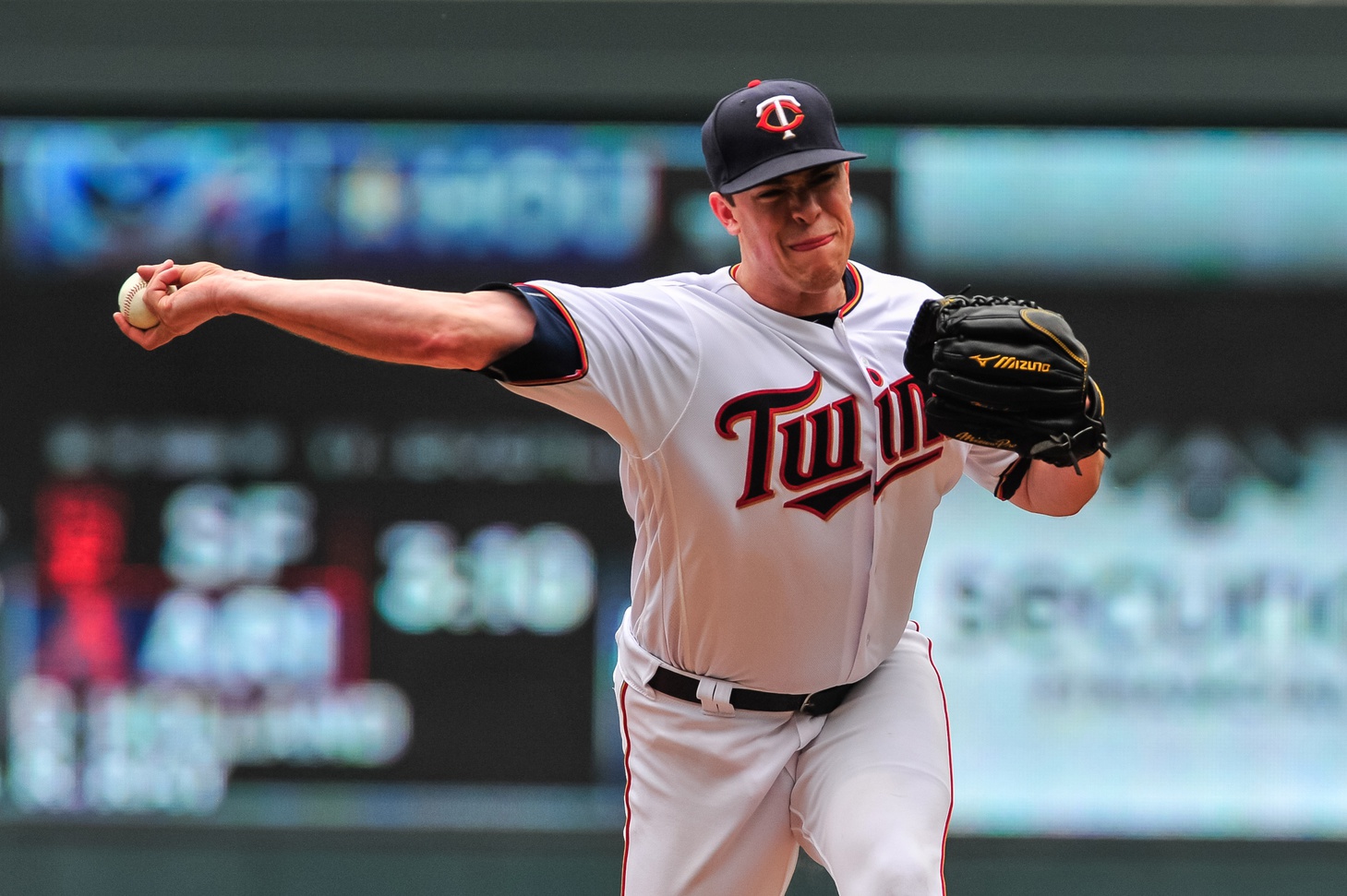 According to the Pioneer Press’s Mike Berardino, manager Paul Molitor said that the team’s video scouts were scouring through tape to find any signs of tipping from Hildenberger, but Molitor felt that there wasn’t any signs of tipping. If that is the case how is it that opponents have gone from hitting .120 with nine extra base hits on his changeup and slider from the beginning of the year until July 15 to hitting .454 with eight extra base hits since July 15? The first element of Hildenberger’s second-half issues is predictability. There were patterns that started to emerge from early in the season that may have influenced the results in the latter portion. In his appearances against the Rays in Tampa, Hildenberger didn’t allow a hit off his secondary stuff. In the recent series in Minnesota, the Rays were 4-for-4. Joey Wendle was one of the Rays hitters to reach against his changeup. In the first two matchups in Tampa, Hildenberger struck Wendle out but he may have left a bread crumb for the left-handed hitter: In both meetings, Hildenberger threw a 1-1 changeup to him. At Target Field, facing yet another 1-1 count Wendle sat on Hildenberger’s changeup and laced it into center field for another hit. Another example was his battles with the Royals’ Whit Merrifield. From May 28 until July 21, Hildenberger faced Merrifield four times. In each occasion, Hildenberger started Merrifield off with a slider. The fourth time around Merrifield swung at the slider and knocked a single. In two ABs since that hit, Hildenberger has started him off with sinkers. But while the Royals and Rays did a number on Hildenberger, it has been the Cleveland Indians who have inflicted the most damage. Prior to the rough stretch, Hildenberger made three appearances against the Indians. During those appearances, he held the Indians hitless against his secondary pitches (0-for-5 with 2 strikeouts). Since July 15 Hildenberger has made four additional appearances against Cleveland and has had the same lineup trash his secondary stuff (6-for-12, 2 HR) -- including Francisco Lindor’s game-winning walk-off home run on August 8. What led up to Lindor’s game-winning tank shot? Leading into that August 8th match-up, Hildenberger had faced Lindor five times in 2018. In three of those occasions he started Lindor off with a changeup. If you are Lindor, chances are you can sit on the changeup and take a Daddy Hack. Hildenberger faced Jason Kipnis twice this year. Once at the beginning of the year where he started him with a sinker then two changeups in a row. In their second meeting -- an at-bat that preceded Lindor’s home run by two hitters -- Hildenberger once again started him with a fastball and then threw two changeups -- the second of which Kipnis lifted into left field for a base hit. The second element that may be behind Hildenberger’s struggles is a combination of the predictability and, yes, some pitch-tipping. According to Berardino’s article, Molitor appeared fairly confident that Hildenberger was not doing anything explicit to tip his pitches (flaring his glove or slowing his delivery to telegraph a particular pitch). And that may be true. But before we outright dismiss it, let’s consider there does seem to be a window in which Hildenberger could be tipping his hand. When Hildenberger breaks his hands, he does so away from his body. While he contorts, twists and bends, there appears to be a momentary flash where hitters can see the ball in Hildenberger’s hand. https://twitter.com/ParkerHageman/status/1029027967886913536 Compare Hildenberger’s away from his body hand break approach to the Padres’ submarining reliever Kazuhisa Makita. Makita keeps his hands close to his body and doe not give the hitter one iota of a glimpse at the baseball until it is frisbeeing towards the plate at the opposite of breakneck speed. https://twitter.com/PitchingNinja/status/977542488482353153 This slow motion side angle demonstrates how Hildenberger drops his hand from his glove with the circle change grip (the OK sign around the ball) facing the hitter. https://twitter.com/ParkerHageman/status/1029028462269530112 Most people will obviously say that’s an easy thing to pick up in slow motion but near impossible to decipher in real time. That’s where hitters like Alex Rodriguez and Frank Thomas would tell you you are wrong. In breaking down the changes Yankees’ starter Luis Severino made, Rodriguez commended the pitcher for hiding the ball more, starting his hands at the belt and breaking them behind his leg versus out away from his body. As Rodriguez shows in the video below, even a brief flash of the changeup grip would tip off a hitter. https://twitter.com/ParkerHageman/status/1029028586227986433 While not every team may be wise to his, the Indians may be one ballclub that has picked up on it. With the familiarity and perhaps an extra advantage in knowing what pitch may be coming, it wouldn’t be surprising to hear this is why Cleveland has been able to batter Hildenberger around so much in July and August. Again, the latter portion of this is a theory. The Twins have multiple camera angles, such as views from behind home plate, that could confirm this. Plus, if he were tipping, one of the members of the catching crew -- either Bobby Wilson or Mitch Garver -- likely would have mentioned something to the staff. If hitters are seeing something, catchers should definitely be able to as well. That being said, the Twins have little incentive to acknowledge or broadcast the notion that Hildenberger’s tipping pitches. If his mechanics are giving something away -- and again, IF -- the Twins would most likely want to get him quietly to the offseason where they could begin to address it (hiding the ball better like the aforementioned Makita).
 -
Article: Process Set to Yield Results for Kepler
Parker Hageman replied to Ted Schwerzler 's topic in Twins Daily Front Page News
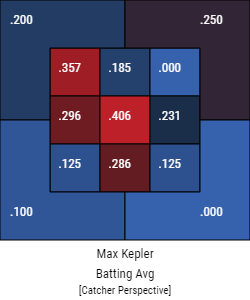
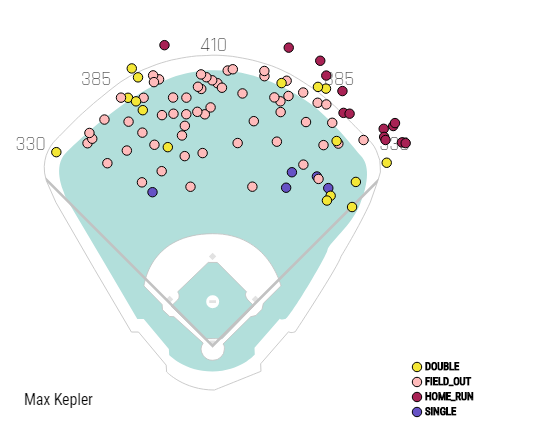
I've talked about this ad nauseam but that's pretty much the difference in swings like Kepler's versus someone who is a barrel-turner. Check out Rosario's ability to cover fastballs up versus Kepler's. Rosario's process is to turn the barrel whereas Kepler's is more of a standard hands-to-ball-barrel-comes-with approach this allows him to get to fastballs up. https://twitter.com/ParkerHageman/status/1009646380384743425 The other thing that stands out about Kepler that I haven't heard anyone talk about is how much Kepler's head moves from the delivery to the point of contact. Kepler starts tall and then crumples his head down, changing planes. Rosario, for all his movement, keeps his head on the same level. To Kepler's credit, he's still stinging the ball and making a very high amount of contact per swing. I just wonder if the movement might also have some impact on his contact point. According to StatCast, Kepler has one of the highest amounts of balls put in play on fastballs that were hit "poorly/under" the ball. These are balls that are hit at a launch angle that result in very few hits (sky balls, long flies and infield flies). I don't know how much this actually means to a player's skills as just above Kepler in the second highest spot is Cleveland's Jose Ramirez, who is having a very fine year. Last year's king of poorly/under hit balls was Francisco Lindor. This year Kepler has 66 of those types of batted balls and he currently has that amount this year. There might be hitters who barrel up balls more often and then just miss to result in the poorly/under ball while other hitters might barrel fewer pitches and actually skew towards the poorly/under hit ball for better results. For instance, while Lindor led baseball in poorly/under hit fastballs in 2017, he still managed to barrel 24 fastballs total (20th best in MLB). Kepler, on the other hand, barreled just 8 fastballs in 2017 (222nd). This year he's barred 10 fastballs (147th) whereas the guy ahead of him in the poorly/under hit chart this year -- Jose Ramirez -- has barreled 27 fastballs (7th best). There's so much left to learn/understand about the StatCast data and how it applies to real life baseball but there's a hugely untapped market there.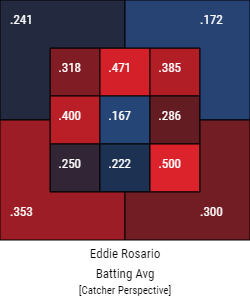
-
Article: Process Set to Yield Results for Kepler
Parker Hageman replied to Ted Schwerzler 's topic in Twins Daily Front Page News
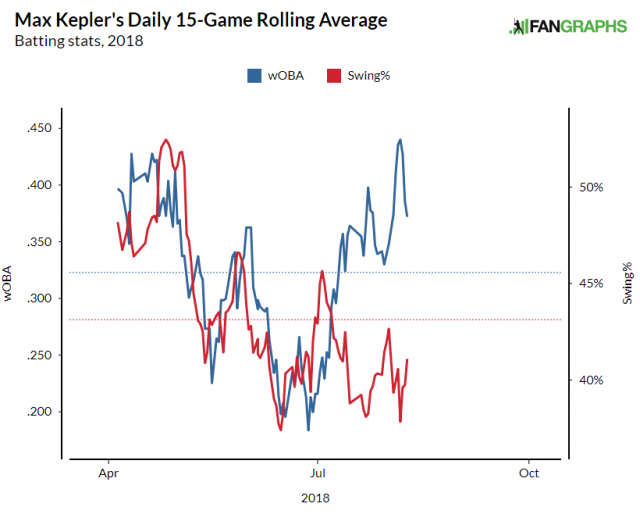
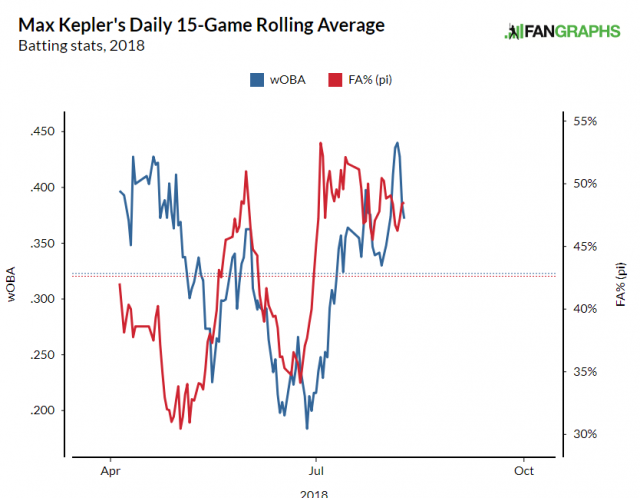
Yes, Kepler has put balls in play within the right confines of exit velocity and launch angle that would normally gather hits by the bushel. Kepler's issues is the distribution of those batted balls. This season, hitters that put the ball in play at 90 MPH or high with a launch angle of 12 degrees or higher had a batting average of .462. Benintendi had a very good .571 average on 105 balls in play. Kepler, on the other hand, is hitting .357 on 98 balls in play. That was 282nd out of 300 qualified hitters. Some might say that is bad luck. After all, you square a ball more often than not it should be a hit. Kepler's problem is where he is hitting those "optimal" batted balls. Take a look at Kepler and Benintendi's spray chart on balls hit over 90 MPH and over 12 degrees: There are a few things working for Benintendi that isn't for Kepler: 1. Benintendi has a nice inside-out swing and times and can drive the ball the other way. Some with that side-spinning hooking doubles away from the left fielder. Combine that approach with the green monster and you get plenty of doubles. Because of this, Benintendi is hitting a robust 484/474/720 compared to Kepler's 264/257/403 opposite field line. And it's not as if playing at Fenway would enhance Kepler's current numbers -- he just hasn't hit the ball well that direction (or much at all). 2. Kepler hits a lot those balls to the big part of the field. Those don't play well at Target Field for left-handed batters. Whereas Benintendi is hitting 491 on those 90+/12+ balls, Kepler is hitting 152 on those, the lowest among qualified hitters. 3. Benintendi gets a lot of top spin singles -- those that fall in front of the outfielders. I do want to talk a little about what Kepler has been doing well that has led to his current hot streak. On June 28th, Kepler finished the day hitting 216/304/394 on the season. Around that date two critical things started to happen that has influenced his hitting. The first is Kepler increased his selectivity – toning down his swing rate: The second part might not be his own doing but, for whatever reason, Kepler is getting a ton of fastballs thrown at him. In the season’s previous stretch, Kepler hit just .200 against fastballs. After June 28th, however, with a more discerning eye and more fastballs delivered his way, he hit .294 on fastballs. When I was breaking down Kepler’s swing a few weekends ago on KFAN (sick radio brag) I talked about how, while Kepler’s swing goes against the new convention of thinking (get behind, get on plane early a la Eddie Rosario), Kepler has a good swing on pitches that fall within his whomping zone (middle-in and down). My theory was that if he just honed in on those pitches, he’d start putting up big numbers. This might be the result of that – he’s spitting on pitches he doesn’t like and driving the ones he does.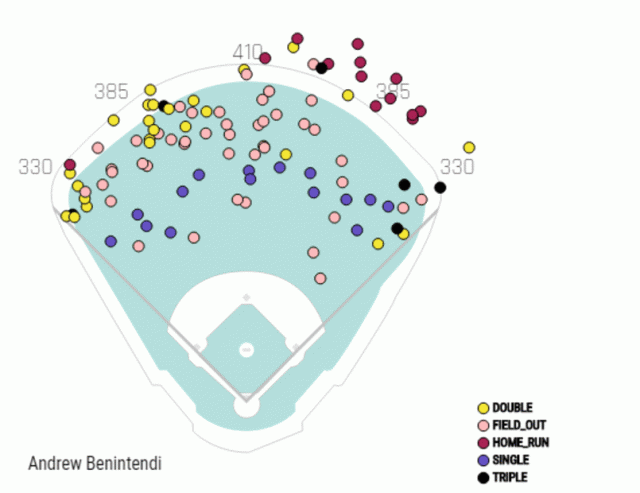
-
Willians Astudillo is one savvy motherforker. He’s not even 27 years old yet but he’s got the savvy moves of a much older, wiser veteran. We already know that Astudillo is sneaky. Behind the plate during spring training, Astudillo caught the Yankees’ Shane Robinson . It was a move Astudillo has pulled out several times in his winter league career in Venezuela. On Wednesday night, however, he was at third base and the crafty Astudillo pulled the hidden ball trick out in broad daylight.First, take a look at the play Let’s break this sucker down for a moment. The throw comes in from right field, relayed to third where Tigers’ prospect Dawel Lugo had just advanced. Astudillo, who catches the ball on a hop, looks around to find former Twins player Doug Mientkiewicz, the manager and third base coach of the Toledo Mudhens, approaching Lugo for a quick chat and confidence builder at the bag. Astudillo told MiLB.com’s Josh Horton afterward that this was when he knew they had a chance to pull it off. "As soon as I got the ball, I looked at the third-base coach [Toledo skipper Doug Mientkiewicz] and the runner, and they were looking different ways. Petit was the only one who knew that I had the ball in the glove, and then the pitcher, and it worked. It worked the whole time," Astudillo told Horton. On the mound at the time was recent acquisition Chase De Jong. From De Jong’s perspective, he thought Astudillo was messing around. "I'm starting to walk back to the mound and I'm upset. I'm asking [Astudillo] for the ball, and he sort of just gives me a quick head shake, like a quick 'no,'" the right-hander told reporters. "And he's kind of a jokester, so I'm thinking, 'All right, now's not the best time to be joking with me.' So I ask for the ball again and he shakes his head again and I'm like, 'OK, something's up.'” It was great salesmanship all around as Lugo, of course, started to wander off the base and Astudillo quickly applied the tag. It’s a rarity for sure, but things like the hidden ball trick are one of the reasons why baseball might just be the greatest game on Earth. Click here to view the article
- 22 replies
-
- 2
-
-
- video
- hidden ball trick
- (and 1 more)
-
 First, take a look at the play https://twitter.com/MorrieSilver8/status/1027573652278177792 Let’s break this sucker down for a moment. The throw comes in from right field, relayed to third where Tigers’ prospect Dawel Lugo had just advanced. Astudillo, who catches the ball on a hop, looks around to find former Twins player Doug Mientkiewicz, the manager and third base coach of the Toledo Mudhens, approaching Lugo for a quick chat and confidence builder at the bag. Astudillo told MiLB.com’s Josh Horton afterward that this was when he knew they had a chance to pull it off. "As soon as I got the ball, I looked at the third-base coach [Toledo skipper Doug Mientkiewicz] and the runner, and they were looking different ways. Petit was the only one who knew that I had the ball in the glove, and then the pitcher, and it worked. It worked the whole time," Astudillo told Horton. On the mound at the time was recent acquisition Chase De Jong. From De Jong’s perspective, he thought Astudillo was messing around. "I'm starting to walk back to the mound and I'm upset. I'm asking [Astudillo] for the ball, and he sort of just gives me a quick head shake, like a quick 'no,'" the right-hander told reporters. "And he's kind of a jokester, so I'm thinking, 'All right, now's not the best time to be joking with me.' So I ask for the ball again and he shakes his head again and I'm like, 'OK, something's up.'” It was great salesmanship all around as Lugo, of course, started to wander off the base and Astudillo quickly applied the tag. It’s a rarity for sure, but things like the hidden ball trick are one of the reasons why baseball might just be the greatest game on Earth.
 -
The venerable Sid Hartman spoke with Derek Falvey following the flurry of moves at the trade deadline. Obviously no baseball executive is going to say "we screwed up, we screwed up real bad, Sid" while banging their head on the desk, sobbing lightly into the sleeve of their favorite blazer in front of a live microphone. So it should go without saying that Falvey is currently happy with what the team acquired. As far as we know.That being said, the Twins did land two arms that Falvey and company are excited about. Pitching prospects are notoriously volatile and the attrition rate is high but it doesn't hurt to stockpile as many as you can. I mean, even Alcala was immediately placed on the DL with a tricep strain. Still, given their ages and radar readings, both Duran and Alcala are sexy AF right now. Until they are not. Remember when the Twins traded for Alex Meyer? So -- for now -- these arms are sexy. In addition to the trades, Falvey was also pressed about the team's future, especially in light of the numerous expiring contracts, leaving the Twins with an estimated $30 million-to-$55 million coming off the payroll heading into 2019. It's a non-answer answer but an obvious one. Will the Twins be active in the free agent market this offseason? Sure, why not? Will they target someone they want to sign to a long-term deal or will they try to piecemeal creative one-year deals with various options? Who knows? The 2018 season was disappointing, yes. There were high expectations. Hell, I would have lost my house hammering the over on the Vegas-set 83-win mark had I followed through with my own proclamation. Now, based on Baseball Prospectus' current projections, the Twins are currently on a 76-win pace and even that feels like a best-case scenario going forward. This does not mean 2019 will be a continuation of this dreck. The team still has a young, talented core albeit one that stumbled this season. Eddie Rosario, Jose Berrios, Max Kepler, Jorge Polanco, Byron Buxton (when not hurt) and Miguel Sano (when properly conditioned and not hurt) are still a solid foundation. Find the right combination of bodies to add to that mix and you can have yourself a contender quickly. For their part the front office is trying to build a sustainable model. The long-term goal means loading the system with potential impact players, putting the right development process in place, and begin cranking out guys who can contribute when the window closes on the current core. In the interim, depending on the expiring contract decision, the Twins have a base and flexibility to potentially reload as a contender for next season. As you follow along with the development of the prospects as well as the team, remember, progress is never a straight line. Click here to view the article
-
 That being said, the Twins did land two arms that Falvey and company are excited about. Pitching prospects are notoriously volatile and the attrition rate is high but it doesn't hurt to stockpile as many as you can. I mean, even Alcala was immediately placed on the DL with a tricep strain. Still, given their ages and radar readings, both Duran and Alcala are sexy AF right now. Until they are not. Remember when the Twins traded for Alex Meyer? So -- for now -- these arms are sexy. In addition to the trades, Falvey was also pressed about the team's future, especially in light of the numerous expiring contracts, leaving the Twins with an estimated $30 million-to-$55 million coming off the payroll heading into 2019. It's a non-answer answer but an obvious one. Will the Twins be active in the free agent market this offseason? Sure, why not? Will they target someone they want to sign to a long-term deal or will they try to piecemeal creative one-year deals with various options? Who knows? The 2018 season was disappointing, yes. There were high expectations. Hell, I would have lost my house hammering the over on the Vegas-set 83-win mark had I followed through with my own proclamation. Now, based on Baseball Prospectus' current projections, the Twins are currently on a 76-win pace and even that feels like a best-case scenario going forward. This does not mean 2019 will be a continuation of this dreck. The team still has a young, talented core albeit one that stumbled this season. Eddie Rosario, Jose Berrios, Max Kepler, Jorge Polanco, Byron Buxton (when not hurt) and Miguel Sano (when properly conditioned and not hurt) are still a solid foundation. Find the right combination of bodies to add to that mix and you can have yourself a contender quickly. For their part the front office is trying to build a sustainable model. The long-term goal means loading the system with potential impact players, putting the right development process in place, and begin cranking out guys who can contribute when the window closes on the current core. In the interim, depending on the expiring contract decision, the Twins have a base and flexibility to potentially reload as a contender for next season. As you follow along with the development of the prospects as well as the team, remember, progress is never a straight line.
 -
By now you’ve undoubtedly heard that Brian Dozier has been traded to the Los Angeles Dodgers. The former Twins second baseman hustled out to the West Coast and arrived at Dodger Stadium to surprise his new coaching staff in the dugout (one that apparently includes former Twins farmhand Danny Lehmann as Dave Roberts’ game-planning and communications coach, which is sort of what Jeff Pickler does for the Twins). Dozier, the quintessential gamer, informed Roberts that he is ready whenever he is needed -- for better or worse.There is a lot to like about Brian Dozier. An undersized middle infielder (listed at 5”11” and 185 his senior year by his Southern Miss bio) drafted in the eighth round, Dozier could have succumbed to what had been standard practice in the Twins’ organization – converting their middle men into slap-hitting bat controllers. Instead, Dozier set his sights on the outfield wall and beyond. He transformed himself into a legitimate slugger, punctuated by his 42 home run season in 2016. While many voices begged him to go the other way more, Dozier doubled down and continued to yank pitches into the left field corner at a high rate. That’s the shortest distance out, he’d say. You could say he’s stubborn and his career has benefited from that trait. That strength, however, might also be one of his weaknesses, coming at the expense of his performance in 2018. After being informed that he would be traded to Dodgers, Dozier told his new GM that he would be ready to go right away. “I don’t like days off,” Dozier told reporters. “No days off.” With the Twins, Dozier was extremely reluctant to sit on the bench. Between 2013 and 2017, he would average 153 games a year, missing 43 total in 5 years. It’s commendable to want to play and contribute to your team’s effort but it can be a burden if a player is not one hundred percent. Last season in August Dozier hinted that he was not operating at full capacity but declined to elaborate on what that ailment might be. Whatever the issue was, he posted a .308/.402/.606 line with 8 home runs in September, helping lift the team to the first postseason in seven years. Dozier’s talk about not being one hundred percent continued into 2018, when in June he once again told reporters something was not quite right. And, once again, he declined to discuss the details. Unlike a year ago, Dozier’s numbers have been more consistent with someone playing through an injury. According to his StatCast Sprint Speed, the 31-year-old Dozier has posted his lowest speed since the metric’s inception four years ago, dropping from 27.8 ft/sec in 2016 (190th among MLBers) to 26.6 ft/sec (317th). His hard-hit percentage, which was 36% and 35% in 2016 and 2017, has dropped to 27% in 2018. Like almost every hitter, he faced more shifts in 2018 than ever before but while he performed well against the adjusted defenses (.365 wOBA) he struggled when faced with the conventional alignment (.271 wOBA). He also pulled the ball at the same rate, the balls he did pull were not hugging the left field foul pole as closely as they had done in previous season, having more fly balls die out short of the fence. He swung less often in 2018 and swung at fewer pitches in the zone, seemingly losing that attack mentality that had made him such a desired commodity the previous two seasons. It is hard to ignore all that. Heading into the trade deadline, the Boston Red Sox opted for veteran second baseman Ian Kinsler over Dozier. Kinsler, like Dozier, harnessed the use of pull power to drive pitches out of the park. This season, after being nearly a foot-per-second quicker than Kinsler in 2016-2017, Dozier had the same sprint speed as Kinsler (26.6 ft/sec) and very comparable lines: Download attachment: kinsler.PNG It is like Dozier rapidly aged five years. Whatever is not quite right with Dozier it is hard to ignore how that might have hindered his production in 2018. Would more days off have helped? Was playing through injuries and ailments part of Dozier’s heart and hustle mentality? Was it a team-first mindset? Or was it to try to ensure a healthy payday heading into a contract year? Both? Neither? People ask why a player would play through injuries even as it obviously affecting their bottom line. Ego is part of it. There is also an element of believing you are one game away from a breakout, one day away from feeling better. Not playing is the greatest enemy of a baseball player. Regardless of the motivation, Brian Dozier has meant so much for the Minnesota Twins and the Twins community. From a baseball perspective, it was completely necessary to move Dozier at the deadline. From a fan’s perspective, it will be weird as hell to see in him a Dodgers uniform for the duration of the season. With that in mind, here’s a montage of Brian Dozier moments in a Twins uniform for comfort. Click here to view the article
-
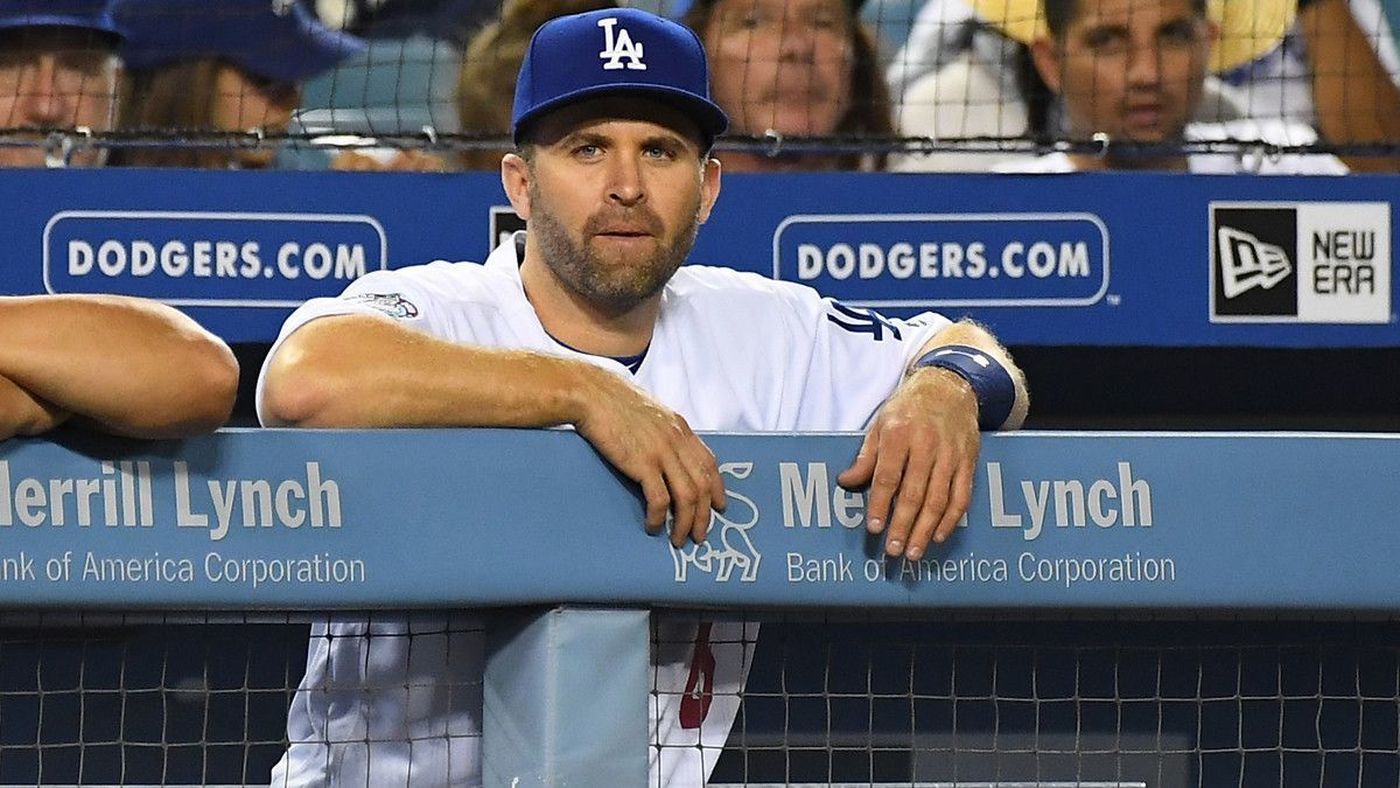 There is a lot to like about Brian Dozier. An undersized middle infielder (listed at 5”11” and 185 his senior year by his Southern Miss bio) drafted in the eighth round, Dozier could have succumbed to what had been standard practice in the Twins’ organization – converting their middle men into slap-hitting bat controllers. Instead, Dozier set his sights on the outfield wall and beyond. He transformed himself into a legitimate slugger, punctuated by his 42 home run season in 2016. While many voices begged him to go the other way more, Dozier doubled down and continued to yank pitches into the left field corner at a high rate. That’s the shortest distance out, he’d say. You could say he’s stubborn and his career has benefited from that trait. That strength, however, might also be one of his weaknesses, coming at the expense of his performance in 2018. After being informed that he would be traded to Dodgers, Dozier told his new GM that he would be ready to go right away. “I don’t like days off,” Dozier told reporters. “No days off.” With the Twins, Dozier was extremely reluctant to sit on the bench. Between 2013 and 2017, he would average 153 games a year, missing 43 total in 5 years. It’s commendable to want to play and contribute to your team’s effort but it can be a burden if a player is not one hundred percent. Last season in August Dozier hinted that he was not operating at full capacity but declined to elaborate on what that ailment might be. Whatever the issue was, he posted a .308/.402/.606 line with 8 home runs in September, helping lift the team to the first postseason in seven years. Dozier’s talk about not being one hundred percent continued into 2018, when in June he once again told reporters something was not quite right. And, once again, he declined to discuss the details. Unlike a year ago, Dozier’s numbers have been more consistent with someone playing through an injury. According to his StatCast Sprint Speed, the 31-year-old Dozier has posted his lowest speed since the metric’s inception four years ago, dropping from 27.8 ft/sec in 2016 (190th among MLBers) to 26.6 ft/sec (317th). His hard-hit percentage, which was 36% and 35% in 2016 and 2017, has dropped to 27% in 2018. Like almost every hitter, he faced more shifts in 2018 than ever before but while he performed well against the adjusted defenses (.365 wOBA) he struggled when faced with the conventional alignment (.271 wOBA). He also pulled the ball at the same rate, the balls he did pull were not hugging the left field foul pole as closely as they had done in previous season, having more fly balls die out short of the fence. He swung less often in 2018 and swung at fewer pitches in the zone, seemingly losing that attack mentality that had made him such a desired commodity the previous two seasons. It is hard to ignore all that. Heading into the trade deadline, the Boston Red Sox opted for veteran second baseman Ian Kinsler over Dozier. Kinsler, like Dozier, harnessed the use of pull power to drive pitches out of the park. This season, after being nearly a foot-per-second quicker than Kinsler in 2016-2017, Dozier had the same sprint speed as Kinsler (26.6 ft/sec) and very comparable lines: It is like Dozier rapidly aged five years. Whatever is not quite right with Dozier it is hard to ignore how that might have hindered his production in 2018. Would more days off have helped? Was playing through injuries and ailments part of Dozier’s heart and hustle mentality? Was it a team-first mindset? Or was it to try to ensure a healthy payday heading into a contract year? Both? Neither? People ask why a player would play through injuries even as it obviously affecting their bottom line. Ego is part of it. There is also an element of believing you are one game away from a breakout, one day away from feeling better. Not playing is the greatest enemy of a baseball player. Regardless of the motivation, Brian Dozier has meant so much for the Minnesota Twins and the Twins community. From a baseball perspective, it was completely necessary to move Dozier at the deadline. From a fan’s perspective, it will be weird as hell to see in him a Dodgers uniform for the duration of the season. With that in mind, here’s a montage of Brian Dozier moments in a Twins uniform for comfort. https://twitter.com/ParkerHageman/status/1024684340666658817
 -
Ready or not Miguel Sano will be back in a Twins uniform in Boston. After being sent to the furthest reaches of the farm system to recondition and rebuild, Sano has returned and brings with him, according to sources, fewer el bees on his midsection. The larger question is while he may be lighter, has he resolved his issues at the plate? Has Sano figured things out or will the second-half of his season be just another sequel that nobody wants to watch?Rochester sources say that after he arrived following time at the team’s facilities in Fort Myers where his diet and exercised were carefully monitored, Sano was reportedly down fifteen pounds from his spring camp weight, which was rumored to be near 293. That is not an insignificant amount of weight to shuck over a month. Compare Sano’s most recent in Rochester (left) with his rehab stint at the beginning of the year (right). Download attachment: IMG_1304.jpg While losing weight was one goal of his demotion, improving his swing was another important aspect. Observers and coaches say he’s moving much better than he did in his first rehab stint with the Red Wings, both in the field and at the plate, however, over his stretch with the Miracle and Rochester, Sano posted a 283/406/434 line with 2 home runs in 64 plate appearances. A fine but not otherworldly run through high-A and AAA pitching. As pointed out prior to his demotion, Sano had a large hole in his swing, namely on the inner-third of the plate. It is difficult to ascertain whether this was addressed. In one highlight from Rochester, Sano loops a ball thrown on the inner-half into right field for an RBI single. What we should take away is that Sano’s hands stay closer to his body, allowing him to go the other way. It’s not a well struck ball by any means and you could argue that a big man like Sano should be pulverizing that ball to the pull side but this is progress considering how he was performing previously. Download attachment: IMG_1308.jpg Sano also posted an 11-to-19 walk-to-strikeout ratio, perhaps indicating a willingness to take more pitches instead of chasing the 2-strike slider over the outside edge. It’s difficult to say whether or not Sano is ready for primetime. He didn’t necessarily tear the cover off the ball and force the team’s hand. The decision to move Eduardo Escobar prompted his return, rest or not. He may not be beloved on the clubhouse as Escobar was but, when healthy, his presence in the lineup every day gives the Twins a legitimate threat to change the game at a moments notice. As manager Paul Molitor once observed “he’s in scoring position standing in the batter’s box.” The Twins could use some of that thump in the heart of the order again. Click here to view the article
-
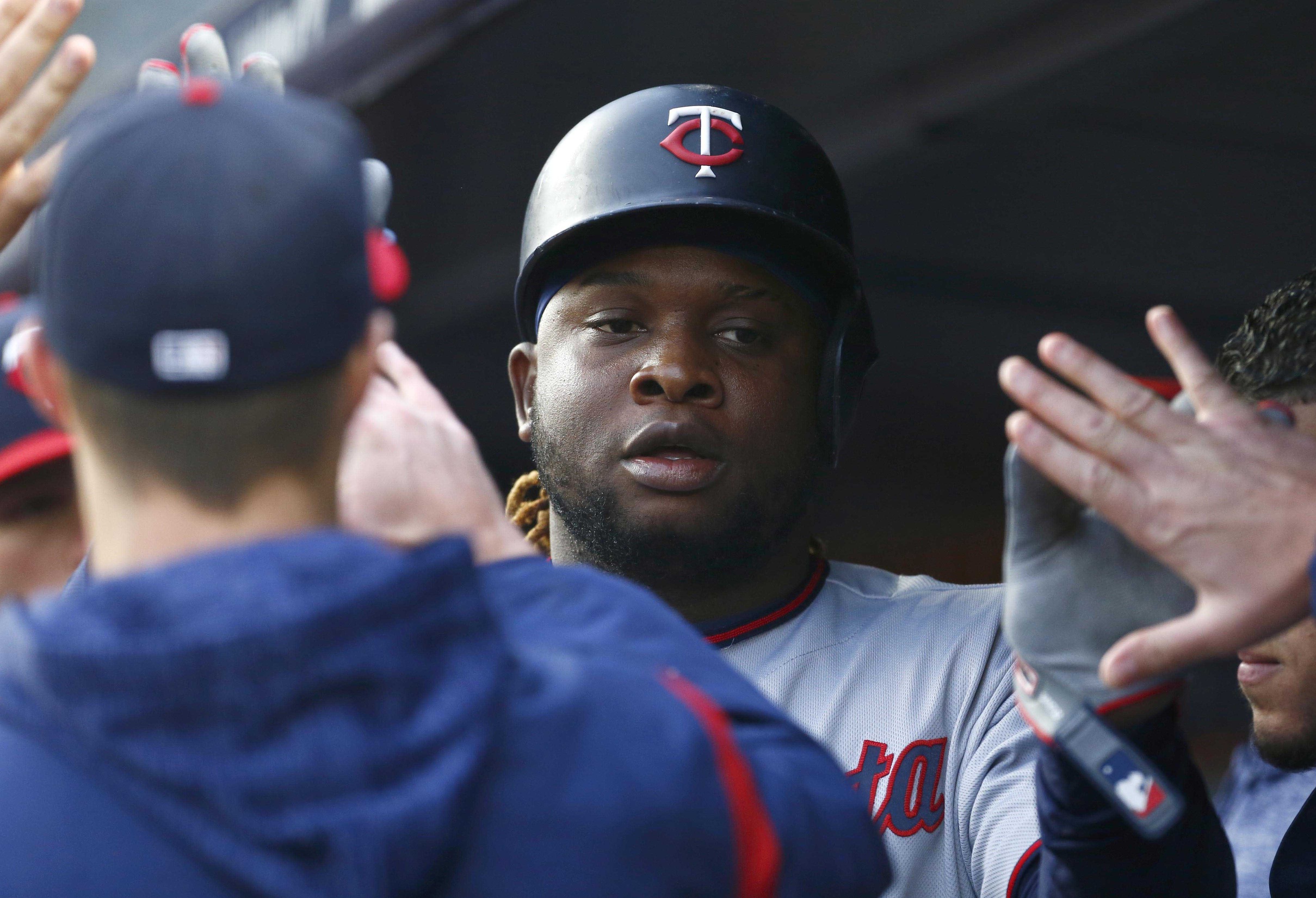 Rochester sources say that after he arrived following time at the team’s facilities in Fort Myers where his diet and exercised were carefully monitored, Sano was reportedly down fifteen pounds from his spring camp weight, which was rumored to be near 293. That is not an insignificant amount of weight to shuck over a month. Compare Sano’s most recent in Rochester (left) with his rehab stint at the beginning of the year (right). While losing weight was one goal of his demotion, improving his swing was another important aspect. Observers and coaches say he’s moving much better than he did in his first rehab stint with the Red Wings, both in the field and at the plate, however, over his stretch with the Miracle and Rochester, Sano posted a 283/406/434 line with 2 home runs in 64 plate appearances. A fine but not otherworldly run through high-A and AAA pitching. As pointed out prior to his demotion, Sano had a large hole in his swing, namely on the inner-third of the plate. It is difficult to ascertain whether this was addressed. In one highlight from Rochester, Sano loops a ball thrown on the inner-half into right field for an RBI single. What we should take away is that Sano’s hands stay closer to his body, allowing him to go the other way. https://twitter.com/morriesilver8/status/1022097530480480264?s=21 It’s not a well struck ball by any means and you could argue that a big man like Sano should be pulverizing that ball to the pull side but this is progress considering how he was performing previously. Sano also posted an 11-to-19 walk-to-strikeout ratio, perhaps indicating a willingness to take more pitches instead of chasing the 2-strike slider over the outside edge. It’s difficult to say whether or not Sano is ready for primetime. He didn’t necessarily tear the cover off the ball and force the team’s hand. The decision to move Eduardo Escobar prompted his return, rest or not. He may not be beloved on the clubhouse as Escobar was but, when healthy, his presence in the lineup every day gives the Twins a legitimate threat to change the game at a moments notice. As manager Paul Molitor once observed “he’s in scoring position standing in the batter’s box.” The Twins could use some of that thump in the heart of the order again.
 -
With John Bonnes in San Diego, Parker Hageman joins Aaron Gleeman to discuss the final week of a rough first half, Kyle Gibson's slider-based turnaround, Brian Dozier getting back on track, the enigma of Max Kepler, trade deadline candidates, Logan Morrison and Addison Reed going on the disabled list, and how much longer the Twins can stick with Matt Belisle. You can listen by downloading us from iTunes, Stitcher, iHeartRadio or find it at GleemanAndTheGeek.com. Or just click this link. GLEEMAN AND THE GEEK: EPISODE 378 Sponsored by Bye, Goff, and Rohde, SotaStick, and SeatGeek. Click here to view the article


