



Parker Hageman
-
Posts
4,152 -
Joined
-
Last visited
-
Days Won
6
Content Type
Profiles
News
Minnesota Twins Videos
2026 Minnesota Twins Top Prospects Ranking
2022 Minnesota Twins Draft Picks
Minnesota Twins Free Agent & Trade Rumors, Notes, & Tidbits
Guides & Resources
2023 Minnesota Twins Draft Picks
The Minnesota Twins Players Project
2024 Minnesota Twins Draft Picks
2025 Minnesota Twins Draft Pick Tracker
2026 Minnesota Twins Draft Tracker: Picks & Bonuses
Forums
Blogs
Events
Store
Downloads
Gallery
Everything posted by Parker Hageman
-

Article: What To Expect From Marwin Gonzalez
Parker Hageman replied to Parker Hageman's topic in Twins Daily Front Page News
In general, that might be what happened. In order to adjust launch angles, there usually is something in the swing that changes -- perhaps the degree in which the barrel enters the zone or different contact point or whatever. Teams do have this type of minuscule data that they can review and discuss with players. Here's the thing -- if he elevates *more* those have a higher tendency of becoming extra-base hits and home runs. If he lowers his launch, he may get a few more hits in front of the defenders but then he might also have more ground balls (which with shifts are getting cut off). For my money, I think the right answer is doing what you can to get him back to whatever was working in 2017. Max Kepler had this similar problem in 2018. He hit a ton of balls in optimal launch angle/ev ranges but a lot of those stayed up in the gaps and were caught by outfielders. Interestingly enough, going back to Tango Tom's flight distance study, Kepler was a guy who outperformed his expected carry rate -- meaning more of his batted balls should have maybe died earlier. The one area of data that the public doesn't have access to is flight spin once the ball makes contact with the bat. From what I've been told, for whatever reason, there are guys who impart high spin and low spin (too much spin and the ball dies or hooks/slices, too little and the ball goes nowhere). The guys who manage to stay in the mid-range of that tend to have the ball carry the furthest -- Mookie Betts was supposedly one of these guys. It possible that Gonzalez (and Kepler) had too much spin in 2018. -
Marwin Gonzalez. Minnesota Twin. Pencil him in for any position in the field, he can play more roles than Christian Bale. As a switch-hitter, he’s his own platoon partner. Call him a Swiss Army Knife or Thneed or whatever object you want to conjure up versatility. The Twins will simply call him theirs. It was a bit of an oddity that Gonzalez lingered this long on the free agent market. Sure, there’s been the ongoing Great Free Agent Freeze-Out but still, someone who can play passable defense at positions 3 through 9 on the diamond and hold his own offensively would be a godsend for any bench -- particularly those that have their sights on a postseason berth -- at a relatively modest price would have multiple suitors. And, yet, Gonzalez was available so long that the Twins were forced to say ‘take our money’. So what is this modern-day Cesar Tovar capable of providing the Twins? Is Gonzalez likely to replicate his 2017 numbers or is his true production closer to what he’s turned in every other year?You probably can’t help but notice that Gonzalez seemingly came out of nowhere, grabbed attention during the Astros’ 2017 World Series run with a career year at age 28, and then turned in a down year in 2018 on the cusp of free agency. That’s one potential reason he was available in late February. After digging in, it appears that Gonzalez’s 2017 breakout season was really a combination of things including optimization of his swing, refining his zone approach and, perhaps, punctuated with a bit of luck. Let’s start with the swing. While he is a switch-hitter, because over 70% of his career plate appearances happened in the left-handed batter's box -- and will likely be where he receives the bulk of his at-bats going forward -- we will focus on this. Over the first 5 seasons of his career, he posted a pedestrian .256/.296/.382 from the left-side. In the last two -- which was mostly driven by his 2017 performance (we’ll get into that later) -- Gonzalez has hit .280/.362/.477. Look back at his home run totals from the left-side: 2012 - 2 2013 - 4 2014 - 6 2015 - 6 2016 - 8 2017 - 18 2018 - 11 So what happened where he finally achieved his breakout in an age-28 season? To understand his power progression, you have to understand how his swing has grown. Below is a comparison of two of Gonzalez’s left-handed swings. The one on the left is from 2015 -- you know, The Weeknd, Adele, Inside Out, Mad Max Fury Road, Obama, etc. Classic 2015. The one on the right is from 2017 -- Cardi B, Imagine Dragons, Get Out, Blade Runner 2049, Trump, etc. Standard 2017 stuff. Like those two years, Marwin Gonzalez’s swing is essentially the same but also radically different. While the components are similar, such as the big leg-kick and low hands, there are some subtle yet very important changes to his movement patterns. Download attachment: unnamed (1).gif From a high-level perspective, it is a more connected swing. What do I mean by more connected? It simply means that the kinetic chain sequence is working as a unit rather than independent parts of the body. For example, look at the hand load portion of his swing. From the 2015 clip, you see his hands pick up the bat and bring it to the launch point. His back elbow is picking up the bat. It is drifting. In 2017, his hands, elbow, and bat remain in the same spot as he steps away, leaving the barrel ready to fire at the launch point. Download attachment: FSFrameGIFImage.gif Another way to explain what is happening is by using your index finger and thumb, curl your finger back toward your thumb — without touching the two fingers — and flick forward. Now do the same thing but put your index finger on your thumb, feel that tension for a second and then flick. Much more potent, right? That’s the difference between these two movements. This was something that Eduardo Escobar changed during his career with the Twins which helped provide more power but also gave him more time to identify pitches. By staying taut and stretching rather than moving to a spot, it gives the hitter extra fractions of milliseconds to identify a pitch. A rolling start, like his 2015 swing, can also be more difficult to shut a swing down. For Gonzalez, the change helped him ID breaking balls sooner. He went from swinging at breaking balls at a 46% clip in his first 5 seasons to offering at them at a 35% clip since 2017. His chase rate also dropped from 34% to 21%. But that was not his only improvement in discipline. Gonzalez’s overall chase rate from the left-side went from 40% and 35% in 2015 and 2016, respectively, to 26% in 2017 and 27% in 2018. Part of the transformation came from the Astros showing the players charts of their weaknesses and creating development strategies to turn them into strengths. Curveballs, from both sides of the plate, were one of Gonzalez’s biggest weaknesses. To be fair, the Houston Astros are light years ahead of most MLB teams and one thing they excel at is pregame prep. Take a listen to how well they prepare for opposing teams using Statcast data. Furthermore, Gonzalez credits working with and interacting with teammates like Jose Altuve, Carlos Correa and Carlos Beltran as factors behind his approach adjustment. Undoubtedly, this likely influenced Gonzalez’s improvements versus breaking balls as much as his swing tweak did. As an import from the Astros organization, this is an ancillary benefit for having signed Gonzalez. Gonzalez’s career has spanned the great shift in Houston, going from the laughingstock to one of the elite and respected organizations. He knows the way the analytic-heavy Astros prepared for games and how valuable it was to share ideas with teammates. In order to use the Statcast data to a lineup’s advantage, it requires buy-in from the players. Gonzalez has been through this rodeo and could potentially assist in getting the Twins players up to speed. The next clip is the power sauce. This is where the two swings really diverge. Watch how in 2015 the barrel and his hands come forward whereas in the 2017 clip the barrel is staying back behind him. It’s pushing versus turning the barrel. Download attachment: FSFrameGIFImage (1).gif What happens now, Gonzalez is extending the time the barrel stays in the zone. Gonzalez’s swing stays on plane with the pitch slightly longer, allowing him to handle a greater variation in speed. It also provides a different attack approach. The 2015 version enters the zone steep, which can lead to cutting or chopping contact — in short, less optimal contact. In 2017, with a barrel that is on plane sooner, he’s getting more lift as his ground ball rate dropped from 52% to 46% (his average fly ball distance also increased from 277 feet to 303 feet). That was the catalyst of his 2017 breakout. A season where he finished hitting a robust .322/.394/.552 from the left side, lifting him to career-best numbers. Of course, those same numbers from the left side plummeted back to earth in 2018. He posted a mundane .237/.330/.399 from the port (which was much closer to his left-handed career slash of .252/.304/.386 when removing the 2017 production). It raises the question if his adjustments were so good that it led to a breakout season in 2017, why did it regress so heavily in 2018? “Know what the difference between hitting .250 and .300 is? It's 25 hits. 25 hits in 500 at-bats is 50 points, okay? There's 6 months in a season, that's about 25 weeks. That means if you get just one extra flare a week - just one - a gorp... you get a groundball, you get a groundball with eyes... you get a dying quail, just one more dying quail a week... and you're in Yankee Stadium.” - Crash Davis, Bull Durham While the changes to his swing have led to an improved approach and more consistent contact, the baseball gods seemingly looked the other way in 2018 after showering him with good fortune in 2017. His average exit velocity dropped to his normal levels. After posting a 92.1 mph exit velocity in 2017, it receded back to 90 mph in 2018. The second data point that changed is his average launch angle increased from 9 degrees to 14 degrees. Most may consider an increase in launch angle a good thing but for Gonzalez, it led to more batted ball outs -- specifically in the line drive category. Per ESPN/TruMedia’s data, in 2017, Gonzalez had a .794 batting average on line drives as a lefty. Coincidentally, only Logan Morrison (.805) had a better average. The rest of the league’s left-handed constituency sat at .687. So Gonzalez was performing well above the norm which may have been an indication to expect regression. Last year that number dropped to .613. Part of the reason for this is that his line drives carried a bit further than his previous season. In 2017 his average liner went 257 feet on average but was at 268 feet in 2018, meaning fewer liners dropped in front of the outfielders and infielders. Hitting the ball hard on a line is obviously preferential, however there are some diminishing returns when more liners become midrange instead of short or long. The venerable Tango Tom, MLBAM’s senior data architect, dropped some wet hot charty data on us this weekend, showing how exit velocity and launch angle affects the distance of a batted ball. A ball struck at a 15-degree launch and a 97 mph exit velo would travel on average 271 feet. This was Gonzalez’s average line drive metrics in 2017. He actually averaged a distance of 257 feet on those balls. Meanwhile, one that has a 17-degree launch and hit at 95 mph would travel 281 feet. In reality, Gonzalez’s liners traveled 268 feet in 2018. Take a look at how that visually played out. Download attachment: Webp.net-gifmaker.gif There were many more balls falling in front of the outfielder and over or between the infielders. Since 2009, line drives that traveled between 200 and 250 feet (which is where the bulk of Gonzalez’s landed in 2017) became hits at a 96.2% clip. Line drives traveling over 250 and under 300 feet, however, only became hits at a 70.3% clip. That extra 11 feet cost Gonzalez a bunch of hits. Likewise, Gonzalez experienced a decline in his ground ball average as well. In 2017 he held a .281 average on ground balls, 12th highest among left-handed hitters and well above the .243 average. In 2018, that average dropped to .182, 64th among left-handed hitters. To be clear, grounders are just long bunts however even the most ardent launch angle supporter still hits ground balls in 30% of their batted ball profile mix. Grounders need to sneak through the infield in order to continue to post robust numbers. What does this mean for the Twins and Marwin Gonzalez going forward? Obviously, you can’t just say Marwin, hit it a bit softer with some topspin occasionally. Hitting doesn’t work that way. That said, Tango Tom’s Twitter thread alluded to that particular study potentially being critical in understanding how attack angle plays a role in the output. There are players who outperform that expected batted ball travel distance and most of those players with the added carry have lower launch angles (Tango cited Lorenzo Cain versus Joey Gallo as contrasting examples). The Twins brain trust may be able to back into an attack angle study with Gonzalez. It may be that his swing in 2018 had some change that can be tweaked back through some spring drills. Again, Gonzalez’s greatest asset is his versatility, not necessarily his bat. Tweaks or no tweaks heading in 2019, if Gonzalez continues to hit the ball as hard as he has done since 2017, from either side of the plate, while playing wherever he is needed in the field, the Twins should wind up with more than enough value. Click here to view the article
-
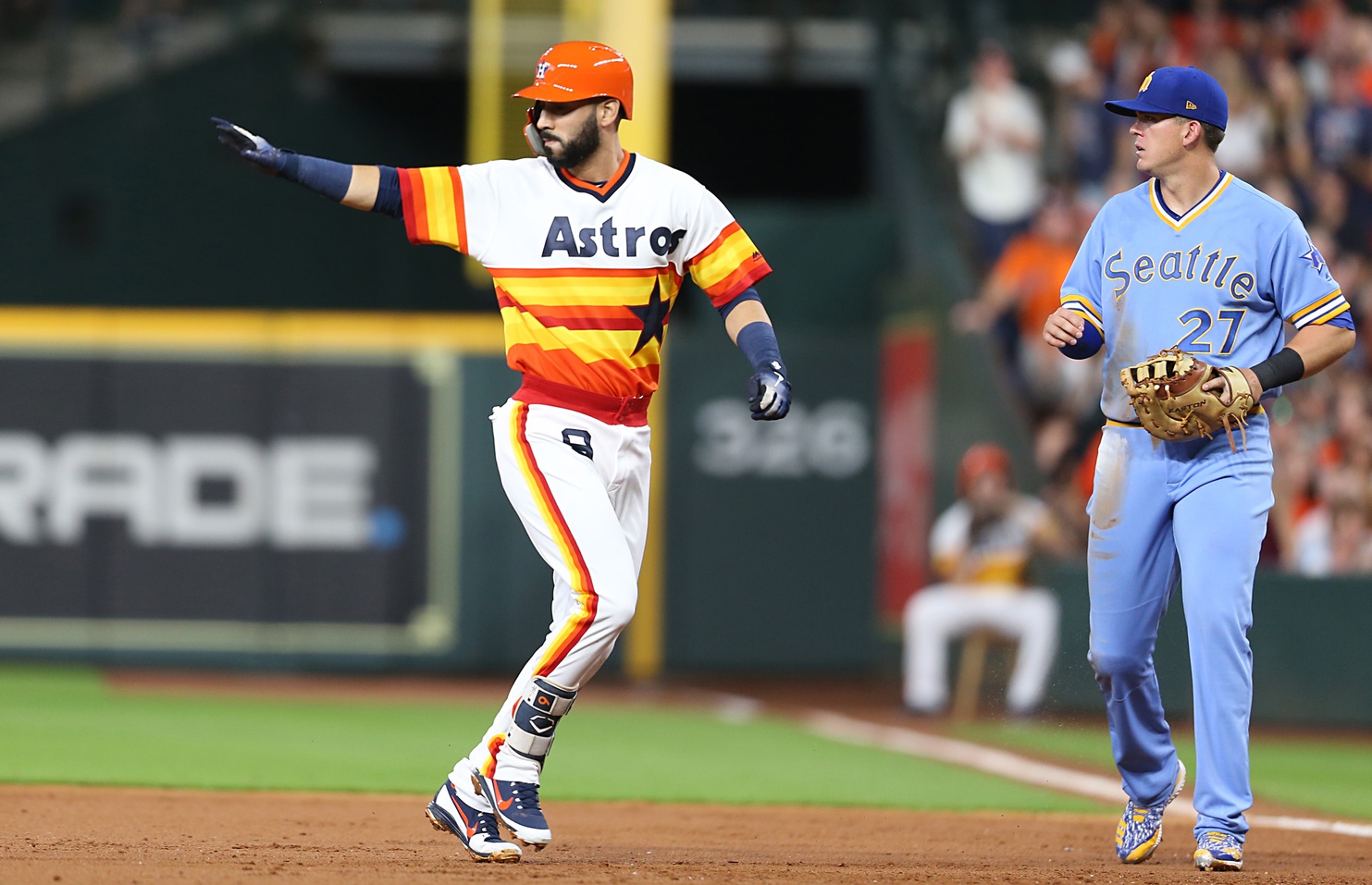 You probably can’t help but notice that Gonzalez seemingly came out of nowhere, grabbed attention during the Astros’ 2017 World Series run with a career year at age 28, and then turned in a down year in 2018 on the cusp of free agency. That’s one potential reason he was available in late February. After digging in, it appears that Gonzalez’s 2017 breakout season was really a combination of things including optimization of his swing, refining his zone approach and, perhaps, punctuated with a bit of luck. Let’s start with the swing. While he is a switch-hitter, because over 70% of his career plate appearances happened in the left-handed batter's box -- and will likely be where he receives the bulk of his at-bats going forward -- we will focus on this. Over the first 5 seasons of his career, he posted a pedestrian .256/.296/.382 from the left-side. In the last two -- which was mostly driven by his 2017 performance (we’ll get into that later) -- Gonzalez has hit .280/.362/.477. Look back at his home run totals from the left-side: 2012 - 2 2013 - 4 2014 - 6 2015 - 6 2016 - 8 2017 - 18 2018 - 11 So what happened where he finally achieved his breakout in an age-28 season? To understand his power progression, you have to understand how his swing has grown. Below is a comparison of two of Gonzalez’s left-handed swings. The one on the left is from 2015 -- you know, The Weeknd, Adele, Inside Out, Mad Max Fury Road, Obama, etc. Classic 2015. The one on the right is from 2017 -- Cardi B, Imagine Dragons, Get Out, Blade Runner 2049, Trump, etc. Standard 2017 stuff. Like those two years, Marwin Gonzalez’s swing is essentially the same but also radically different. While the components are similar, such as the big leg-kick and low hands, there are some subtle yet very important changes to his movement patterns. From a high-level perspective, it is a more connected swing. What do I mean by more connected? It simply means that the kinetic chain sequence is working as a unit rather than independent parts of the body. For example, look at the hand load portion of his swing. From the 2015 clip, you see his hands pick up the bat and bring it to the launch point. His back elbow is picking up the bat. It is drifting. In 2017, his hands, elbow, and bat remain in the same spot as he steps away, leaving the barrel ready to fire at the launch point. Another way to explain what is happening is by using your index finger and thumb, curl your finger back toward your thumb — without touching the two fingers — and flick forward. Now do the same thing but put your index finger on your thumb, feel that tension for a second and then flick. Much more potent, right? That’s the difference between these two movements. This was something that Eduardo Escobar changed during his career with the Twins which helped provide more power but also gave him more time to identify pitches. By staying taut and stretching rather than moving to a spot, it gives the hitter extra fractions of milliseconds to identify a pitch. A rolling start, like his 2015 swing, can also be more difficult to shut a swing down. For Gonzalez, the change helped him ID breaking balls sooner. He went from swinging at breaking balls at a 46% clip in his first 5 seasons to offering at them at a 35% clip since 2017. His chase rate also dropped from 34% to 21%. But that was not his only improvement in discipline. Gonzalez’s overall chase rate from the left-side went from 40% and 35% in 2015 and 2016, respectively, to 26% in 2017 and 27% in 2018. Part of the transformation came from the Astros showing the players charts of their weaknesses and creating development strategies to turn them into strengths. Curveballs, from both sides of the plate, were one of Gonzalez’s biggest weaknesses. To be fair, the Houston Astros are light years ahead of most MLB teams and one thing they excel at is pregame prep. Take a listen to how well they prepare for opposing teams using Statcast data. Furthermore, Gonzalez credits working with and interacting with teammates like Jose Altuve, Carlos Correa and Carlos Beltran as factors behind his approach adjustment. Undoubtedly, this likely influenced Gonzalez’s improvements versus breaking balls as much as his swing tweak did. As an import from the Astros organization, this is an ancillary benefit for having signed Gonzalez. Gonzalez’s career has spanned the great shift in Houston, going from the laughingstock to one of the elite and respected organizations. He knows the way the analytic-heavy Astros prepared for games and how valuable it was to share ideas with teammates. In order to use the Statcast data to a lineup’s advantage, it requires buy-in from the players. Gonzalez has been through this rodeo and could potentially assist in getting the Twins players up to speed. The next clip is the power sauce. This is where the two swings really diverge. Watch how in 2015 the barrel and his hands come forward whereas in the 2017 clip the barrel is staying back behind him. It’s pushing versus turning the barrel. What happens now, Gonzalez is extending the time the barrel stays in the zone. Gonzalez’s swing stays on plane with the pitch slightly longer, allowing him to handle a greater variation in speed. It also provides a different attack approach. The 2015 version enters the zone steep, which can lead to cutting or chopping contact — in short, less optimal contact. In 2017, with a barrel that is on plane sooner, he’s getting more lift as his ground ball rate dropped from 52% to 46% (his average fly ball distance also increased from 277 feet to 303 feet). That was the catalyst of his 2017 breakout. A season where he finished hitting a robust .322/.394/.552 from the left side, lifting him to career-best numbers. Of course, those same numbers from the left side plummeted back to earth in 2018. He posted a mundane .237/.330/.399 from the port (which was much closer to his left-handed career slash of .252/.304/.386 when removing the 2017 production). It raises the question if his adjustments were so good that it led to a breakout season in 2017, why did it regress so heavily in 2018? “Know what the difference between hitting .250 and .300 is? It's 25 hits. 25 hits in 500 at-bats is 50 points, okay? There's 6 months in a season, that's about 25 weeks. That means if you get just one extra flare a week - just one - a gorp... you get a groundball, you get a groundball with eyes... you get a dying quail, just one more dying quail a week... and you're in Yankee Stadium.” - Crash Davis, Bull Durham While the changes to his swing have led to an improved approach and more consistent contact, the baseball gods seemingly looked the other way in 2018 after showering him with good fortune in 2017. His average exit velocity dropped to his normal levels. After posting a 92.1 mph exit velocity in 2017, it receded back to 90 mph in 2018. The second data point that changed is his average launch angle increased from 9 degrees to 14 degrees. Most may consider an increase in launch angle a good thing but for Gonzalez, it led to more batted ball outs -- specifically in the line drive category. Per ESPN/TruMedia’s data, in 2017, Gonzalez had a .794 batting average on line drives as a lefty. Coincidentally, only Logan Morrison (.805) had a better average. The rest of the league’s left-handed constituency sat at .687. So Gonzalez was performing well above the norm which may have been an indication to expect regression. Last year that number dropped to .613. Part of the reason for this is that his line drives carried a bit further than his previous season. In 2017 his average liner went 257 feet on average but was at 268 feet in 2018, meaning fewer liners dropped in front of the outfielders and infielders. Hitting the ball hard on a line is obviously preferential, however there are some diminishing returns when more liners become midrange instead of short or long. The venerable Tango Tom, MLBAM’s senior data architect, dropped some wet hot charty data on us this weekend, showing how exit velocity and launch angle affects the distance of a batted ball. A ball struck at a 15-degree launch and a 97 mph exit velo would travel on average 271 feet. This was Gonzalez’s average line drive metrics in 2017. He actually averaged a distance of 257 feet on those balls. Meanwhile, one that has a 17-degree launch and hit at 95 mph would travel 281 feet. In reality, Gonzalez’s liners traveled 268 feet in 2018. Take a look at how that visually played out. There were many more balls falling in front of the outfielder and over or between the infielders. Since 2009, line drives that traveled between 200 and 250 feet (which is where the bulk of Gonzalez’s landed in 2017) became hits at a 96.2% clip. Line drives traveling over 250 and under 300 feet, however, only became hits at a 70.3% clip. That extra 11 feet cost Gonzalez a bunch of hits. Likewise, Gonzalez experienced a decline in his ground ball average as well. In 2017 he held a .281 average on ground balls, 12th highest among left-handed hitters and well above the .243 average. In 2018, that average dropped to .182, 64th among left-handed hitters. To be clear, grounders are just long bunts however even the most ardent launch angle supporter still hits ground balls in 30% of their batted ball profile mix. Grounders need to sneak through the infield in order to continue to post robust numbers. What does this mean for the Twins and Marwin Gonzalez going forward? Obviously, you can’t just say Marwin, hit it a bit softer with some topspin occasionally. Hitting doesn’t work that way. That said, Tango Tom’s Twitter thread alluded to that particular study potentially being critical in understanding how attack angle plays a role in the output. There are players who outperform that expected batted ball travel distance and most of those players with the added carry have lower launch angles (Tango cited Lorenzo Cain versus Joey Gallo as contrasting examples). The Twins brain trust may be able to back into an attack angle study with Gonzalez. It may be that his swing in 2018 had some change that can be tweaked back through some spring drills. Again, Gonzalez’s greatest asset is his versatility, not necessarily his bat. Tweaks or no tweaks heading in 2019, if Gonzalez continues to hit the ball as hard as he has done since 2017, from either side of the plate, while playing wherever he is needed in the field, the Twins should wind up with more than enough value.
 -
It would be interesting to find out if Hildenberger has done anything to combat the possible pitch tipping. http://twinsdaily.com/articles.html/_/minnesota-twins-news/minnesota-twins/trevor-hildenberger-and-tipping-pitches-r7123
-
At least Berrios had fun.
-
Both pitches are on the outer-third. In the first, the armsy swing, he pulls the ball. In the second, the more connected swing, he drives it the other way. Contrary to the last sentence, he is not "throwing his hands" or "trusting his wrists" in the more recent iteration. That was what he was doing previously which zapped his power potential. It was all disconnected. In both cases, the hands get to the same launch point. They start lower in the newer model but go back to the same spot to fire. Two things to focus on in this swing pattern: (1) Both of these pitches are on the outer-third (fastballs). In the one on the left, he reaches with his hands (the armsy/wristy swing). In the one from last year, his hands go in, connected to his body. (2) Watch his THICC lower body work in the later one. He squats a bit before he launches his swing. He's generating power from the ground up. In the example on the left, the hands/arms are almost disconnected from the upper half when he goes to load and fire. That makes it a more armsy swing. You can see that in his BP swings with the Phillies.
-
Back when the Twins first signed him in November 2017, I noted that Astudillo made some changes to his swing in the minors before having a career year in the Braves org. While he doesn't have a big leg kick or obvious power generator, he now has a fully connected swing whereas his top and lower half acted more independently in his previous swing. https://twitter.com/ParkerHageman/status/1015262501087399936 It's a more connected kinetic chain. I liken it to something that Bruce Lee talked about in his one-inch punch -- working the power from the ground up in the proper sequence -- and you can generate a ton of power in a small space.
-
Most guys in spring are making this type of contact the first time they face live pitching... Obviously Astudillo has the advantage of having played winter ball up until two weeks ago so he is probably further ahead than most of his teammates.
- 44 replies
-
- 12
-

-
In 2007, my (now) wife and I spent a long weekend in Fort Myers (it was the first time for both of us). The plan was to take in a game at Hammond, a night on Ft Myers Beach, and then spend two nights out on Captiva (someone told us the island was low key with a fun bar called The Mucky Duck). The baseball experience sold me but my wife loved Captiva so much that when we (finally) got married, we had it on the beach at 'Tween Waters Inn. I cannot recommend enough to at least visit the area once in your life.
-
Ryan did blow out his arm years before retirement and used literal snake oil to keep his arm healthy, but also let's not cherrypick an outlier like Ryan who had an abnormally long career (and played through injuries). Here's the thing: I think people mistake big lower half movements (like Ryan's leg kick) as being a huge factor in absorbing something that takes pressure off the arm. The ol' Bert Blyleven "PUSHING that back leg OFF the rubber" or driving from the back leg. More recent studies involving more high tech equipment have found that the front leg and hip rotation play a bigger role in creating velocity and taking pressure off of the arm. So while Ryan had those big movements. he also had excellent hip rotation. Graterol is using his lower half fairly well. It's not as pronounced as someone like Ryan but he leads with that front hip, creating a drift forward and then fires his rear hip well over his front. Bottom line, us mortals are not going to be able to derive any stress in Gratarol's mechanics -- that's going to need to be done via the available tech the Twins and other outlets have. If that shows added pressure, they will likely try to get him to make some changes.
-
I'm curious about the metadata on Graterol's slider. From that outing in Ft Myers, he rarely got a swing-and-miss off his slider but it did get plenty of awkward contact and it set up some other pitches nicely, Check out this strikeout sequence (SL in-2S out):
-
A lot of people who look at Graterol's mechanics like to suggest he's not using his legs or lower half, putting stress on his arm. I submit he uses his hips extremely well. if you watch his back hip, watch as it fires forward on the firm front side. That's where the power comes from. -- the lightning-quick rotation. In regards to Nick's comment about movement, I present Graterol's two-seam movement. [Source] What makes this pitch so sexy, besides that movement that resists running to the left-handed batter's box, is that it was set-up by two previous sliders away. Out of his hand, the pitch looks like it's going to be another on the outer-half and then redirects back to the inner third.
-
There's no doubt that Romero could be special. As I mentioned, his fastballs are definitely plus pitches. Unlike Berrios however, who had a plus-plus curveball, Romero has a very good slider at times and an even more sporadic changeup (he leaves it up in the zone too much as well which would definitely be another candidate of the pitch design treatment). And Berrios' 4-seam/curveball combination tunnel much better off each other than Romero's slider does with his fastballs. Minor tweaks can make it much more of a devastating pitch. Development-wise, however, Berrios had been stretch out much more than Romero has been (part of it because of the injuries). So to build him up into a traditional starter might take more prolonged time in Rochester to develop a third pitch. It's certainly something the front office is weighing right now -- whether to go forward with Romero as is in a reduced capacity to maximize what he can contribute now or try to push him to the traditional starters role while working on it in Rochester. Whatever his role is, in my opinion, crafting that slider into the best possible pitch will only serve his best interest.
- 19 replies
-
- 4
-
-
- fernando romero
- scouting
- (and 2 more)
-
It’s January so, like most of the of the young and inexperienced pitchers, Fernando Romero’s future role with the Minnesota Twins is up in the air. What we do know is that with the signing of Martin Perez, the traditional starting rotation is currently full. There is the possibility that Romero emerges as a primary pitcher -- the guy who follows the opener. There’s also a chance he lands as a late-innings power arm. It could be in Minnesota. Or it could be in Rochester.The Twins acknowledged that Romero is currently a two-pitch pitcher. Technically, he has three types of fastballs (but two movement patterns), a promising slider, and a developing change-up but, functionally, he has a fastball and a slider. Because of this, the front office believes he is better served coming out of the bullpen (or at least in a role that limits his times through the order). Foundationally, Romero’s fastballs are solid for any pitching role. The mid-90s-plus 4-seam fastball can be elevated while his 2-seam and 1-seam fastballs burrow down-and-in to right-handed hitters. From a pitch sequencing standpoint, this is something to build upon. In the most basic sense, depending on the shape of a pitcher’s breaking pitch, when you have an elevated fastball, it would be best to have a curveball that can tunnel with it before descending out of the path. Likewise, if you have a running sinker, you would like to pair it more with a slider running the other direction, similar to how Kyle Gibson tunnels his. Ideally, a pitcher would have a variety of pitches moving in different directions to keep hitters defending the entire zone but a pair of complementary pitches can carve opponents up. After all, Glen Perkins had an impressive run as the Twins’ closer with a two-pitch repertoire. So what is the shape of Romero’s slider? The greasy techie data says that it is one that has 8.2 inches of break length from release to the plate, which is average from a right-handed pitcher, and a below average break angle of -2.9. The break angle essentially means which direction and how much the pitch is running. A break angle of 0 means the pitch follows a straight path from the release point to the target with no movement in any direction. If the break angle is positive, it means it is moving toward a right-handed hitter. Negative, toward a lefty. Romero’s -2.9 break angle means it has some movement toward left-handed hitters while the average right-hander’s slider has a break angle of -8.1. (To give a better picture of what break angle means, you can compare Fernando Romero’s -2.9 break angle slider with the new Yankee Adam Ottavino’s frisbee slider with a -21.5 break angle slider who is on the opposite end of the slider movement spectrum.) So that is the essence of his best secondary pitch. It’s thrown fairly hard (the average slider is thrown at 84 mph and his clocks in at 87), moves slightly away from right-handed hitters, and has about league-average break. Before coming to the big club, Paul Molitor described Romero’s slider as “inconsistent”, which is exactly how it played for the Twins. On occasion, Romero would spin a nasty hoochie woochie but on others, it would back up and sit on a platter for a lucky batter. While Romero’s 36 percent miss rate on the slider is above average (and actually higher than that of the oft-celebrated Ottavino), opponents posted a .723 OPS and an 88 mph exit velocity (higher than the MLB slider average of 85.8 mph) off of it. It is a small sampling, to be sure, but one can look at these numbers as an affirmation of what Molitor suggested. One reason for the middling production was simply location. If you divided the zone in half across the middle, separating upper and lower quadrants, his slider landed in the upper quadrant 40.1 percent of the time (significantly higher than the 25 percent league average). The good news is that hitters did not completely decimate sliders left up - but they didn’t swing through them either (just a 5% swinging strike rate up compared to a 25% one when he kept it down). Download attachment: fernando romero.png The location cost him some strikeouts, leaving the ball spinning up in two-strike counts where an otherwise well-executed slider would have been a kill shot. Download attachment: trumedia_baseball_heatmap (7).png In terms of sequencing, Romero’s slider has actually played well off of the 4-seam fastball, enticing a miss rate of 40 percent and a 39 percent chase rate out of the zone in a fastball-slider pairing. On the other hand, opponents may be able to tell the difference between his slider and sinker as they have a 33 percent miss rate and just a 15 percent chase rate on his slider after being set up by his sinker. If Romero does nothing to tweak his slider heading into the 2019 season, at the very least he should be pairing it more frequently off his fastball. Here is where the new-look, data savvy, tech-reliant Twins organization might be able to optimize Fernando Romero’s stuff. It would seem that Romero is a prime candidate to receive the pitch design treatment — a retooling of his pitches guided by Rapsodo technology and high-speed Edgertronic cameras. Championed by Driveline Baseball, the baseball training company has found some best practices that can identify issues and improve a pitch’s performance based on certain modifications. Before pitch design technology became available, the previous best method to improve this was to have a pitching coach observe bullpens, giving the pitcher cues and provide affirmation when the ball seems to react differently. Then they hope that a player carries whatever feel they had during the pen into the game. Between the diagnostic process and communicating what the problem and solution might be, there could be a long trial-and-error period. Now, however, armed with the new tools, a pitcher and the player development team can isolate the issue, diagnose it and set forth a plan to correct it. The first issue for Romero is consistency, which seems to track back to the moment the pitch leaves his hand. When he releases the slider, it may be that he is letting go too early or with different hand tilts. As researchers at Driveline have demonstrated, even the smallest minutiae such as fingertip contact points can wildly change the spin and flight path. Admittedly, without the high-speed cameras, it is difficult to properly diagnose the issue but from the limited slow-motion release clips, we can see where Romero’s slider needs work. Here is an example of how the slider comes out of Romero’s hand. Romero’s thumb is tucked and his fingers are wrapped around the bottom of the baseball. At this juncture, the thumb is making very minimal contact while his index and middle fingertips are applying pressure. Then he snaps across. On average, he imparts 2,431 rpm worth of spin on his slider, which is about the league average spin rate for right-handed sliders (2,413). Now compare that to Justin Verlander’s slider grip and release (image courtesy of Pitching Ninja) -- the one that Verlander reportedly improved upon while using the Astros’ bevy of Edgertronic cameras to isolate his release point. Notice how his fingers wrap the side with more contact points on his fingers. His release motion also comes down diagonally through the ball. The results were two more inches of run than Romero’s slider as well as 200 more rpms of spin (2,684 average). The added rpms is important because each increase of 100 or more translates into more swing and misses. Of course, not everyone has the same release or arm path. Verlander’s 6-5 frame and over-the-top delivery might preclude Romero from copying his style. Romero’s slider release almost mimics that of Marcus Stroman, whose pitch was the basis for Trevor Bauer’s recent slider rebuild (which is now superb). This may be a template for Romero to unleash hell on an improved pitch. Like Verlander’s, Stroman’s slider grip is held deeper in the hand, which can account for more spin. Stroman’s release has his hand placement similar to Romero’s (underneath rather than like Verlander’s wrapping the side) but unlike Romero’s, Stroman has more contact with the baseball, most noticeably with his thumb (Stroman’s is flush whereas Romero’s makes contact on the side of his). The action differs slightly too as Romero pulls across while Stroman’s hand pulls down. To be fair, Romero’s slider numbers actually outperformed Stroman’s in 2018, with a higher swinging strike percentage, but Stroman’s numbers took a step back on the pitch this last season where he had previously had a swinging strike rate of 21 percent and a chase rate of 41 percent (with 17 and 33 being league average on the pitch). That said, Stroman’s metrics exceed those of Romero, with a 12-inch break and a 2,654 rpm spin rate. If Romero can emulate this pitch consistently, it will give him a significantly improved weapon and be a cornerstone swing-and-miss pitch vital for late innings relief. At the very least, tweaking his slider to give it more consistent depth and tilt could help create a monster in the bullpen. What’s more, if he reinvents his slider and maintains the more cutter-ish version, he might have the necessary three-pitch mix to be a force in the rotation. The Twins have built a player development infrastructure -- both the best tech and the best minds — to address this very issue. Now we will get to see it in action. Exciting times. Click here to view the article
- 19 replies
-
- 9
-
-
- fernando romero
- scouting
- (and 2 more)
-
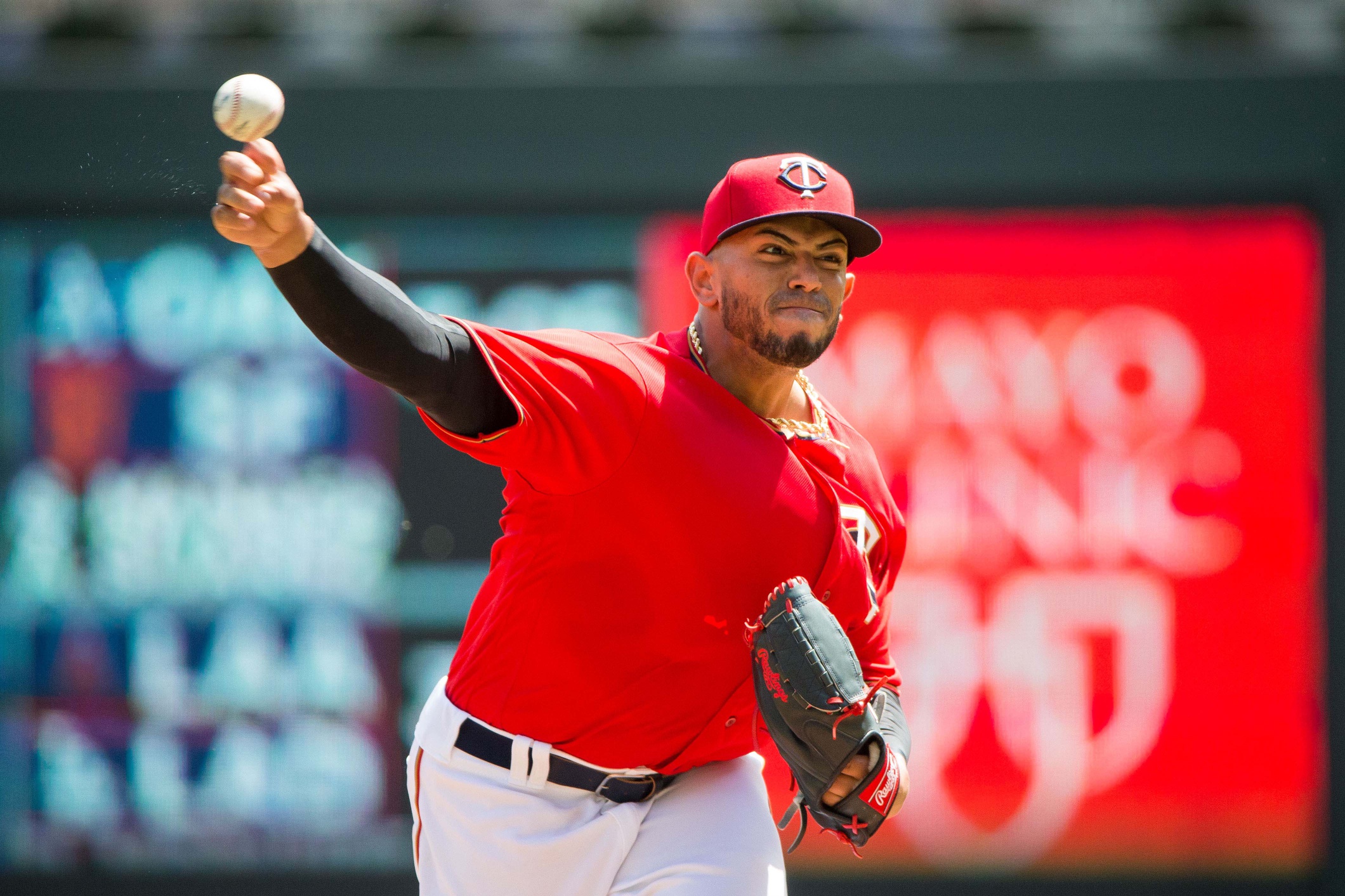 The Twins acknowledged that Romero is currently a two-pitch pitcher. Technically, he has three types of fastballs (but two movement patterns), a promising slider, and a developing change-up but, functionally, he has a fastball and a slider. Because of this, the front office believes he is better served coming out of the bullpen (or at least in a role that limits his times through the order). Foundationally, Romero’s fastballs are solid for any pitching role. The mid-90s-plus 4-seam fastball can be elevated while his 2-seam and 1-seam fastballs burrow down-and-in to right-handed hitters. From a pitch sequencing standpoint, this is something to build upon. In the most basic sense, depending on the shape of a pitcher’s breaking pitch, when you have an elevated fastball, it would be best to have a curveball that can tunnel with it before descending out of the path. Likewise, if you have a running sinker, you would like to pair it more with a slider running the other direction, similar to how Kyle Gibson tunnels his. Ideally, a pitcher would have a variety of pitches moving in different directions to keep hitters defending the entire zone but a pair of complementary pitches can carve opponents up. After all, Glen Perkins had an impressive run as the Twins’ closer with a two-pitch repertoire. So what is the shape of Romero’s slider? The greasy techie data says that it is one that has 8.2 inches of break length from release to the plate, which is average from a right-handed pitcher, and a below average break angle of -2.9. The break angle essentially means which direction and how much the pitch is running. A break angle of 0 means the pitch follows a straight path from the release point to the target with no movement in any direction. If the break angle is positive, it means it is moving toward a right-handed hitter. Negative, toward a lefty. Romero’s -2.9 break angle means it has some movement toward left-handed hitters while the average right-hander’s slider has a break angle of -8.1. (To give a better picture of what break angle means, you can compare Fernando Romero’s -2.9 break angle slider with the new Yankee Adam Ottavino’s frisbee slider with a -21.5 break angle slider who is on the opposite end of the slider movement spectrum.) So that is the essence of his best secondary pitch. It’s thrown fairly hard (the average slider is thrown at 84 mph and his clocks in at 87), moves slightly away from right-handed hitters, and has about league-average break. Before coming to the big club, Paul Molitor described Romero’s slider as “inconsistent”, which is exactly how it played for the Twins. On occasion, Romero would spin a nasty hoochie woochie but on others, it would back up and sit on a platter for a lucky batter. While Romero’s 36 percent miss rate on the slider is above average (and actually higher than that of the oft-celebrated Ottavino), opponents posted a .723 OPS and an 88 mph exit velocity (higher than the MLB slider average of 85.8 mph) off of it. It is a small sampling, to be sure, but one can look at these numbers as an affirmation of what Molitor suggested. One reason for the middling production was simply location. If you divided the zone in half across the middle, separating upper and lower quadrants, his slider landed in the upper quadrant 40.1 percent of the time (significantly higher than the 25 percent league average). The good news is that hitters did not completely decimate sliders left up - but they didn’t swing through them either (just a 5% swinging strike rate up compared to a 25% one when he kept it down). The location cost him some strikeouts, leaving the ball spinning up in two-strike counts where an otherwise well-executed slider would have been a kill shot. In terms of sequencing, Romero’s slider has actually played well off of the 4-seam fastball, enticing a miss rate of 40 percent and a 39 percent chase rate out of the zone in a fastball-slider pairing. On the other hand, opponents may be able to tell the difference between his slider and sinker as they have a 33 percent miss rate and just a 15 percent chase rate on his slider after being set up by his sinker. If Romero does nothing to tweak his slider heading into the 2019 season, at the very least he should be pairing it more frequently off his fastball. Here is where the new-look, data savvy, tech-reliant Twins organization might be able to optimize Fernando Romero’s stuff. It would seem that Romero is a prime candidate to receive the pitch design treatment — a retooling of his pitches guided by Rapsodo technology and high-speed Edgertronic cameras. Championed by Driveline Baseball, the baseball training company has found some best practices that can identify issues and improve a pitch’s performance based on certain modifications. Before pitch design technology became available, the previous best method to improve this was to have a pitching coach observe bullpens, giving the pitcher cues and provide affirmation when the ball seems to react differently. Then they hope that a player carries whatever feel they had during the pen into the game. Between the diagnostic process and communicating what the problem and solution might be, there could be a long trial-and-error period. Now, however, armed with the new tools, a pitcher and the player development team can isolate the issue, diagnose it and set forth a plan to correct it. The first issue for Romero is consistency, which seems to track back to the moment the pitch leaves his hand. When he releases the slider, it may be that he is letting go too early or with different hand tilts. As researchers at Driveline have demonstrated, even the smallest minutiae such as fingertip contact points can wildly change the spin and flight path. Admittedly, without the high-speed cameras, it is difficult to properly diagnose the issue but from the limited slow-motion release clips, we can see where Romero’s slider needs work. Here is an example of how the slider comes out of Romero’s hand. Romero’s thumb is tucked and his fingers are wrapped around the bottom of the baseball. At this juncture, the thumb is making very minimal contact while his index and middle fingertips are applying pressure. Then he snaps across. On average, he imparts 2,431 rpm worth of spin on his slider, which is about the league average spin rate for right-handed sliders (2,413). Now compare that to Justin Verlander’s slider grip and release (image courtesy of Pitching Ninja) -- the one that Verlander reportedly improved upon while using the Astros’ bevy of Edgertronic cameras to isolate his release point. Notice how his fingers wrap the side with more contact points on his fingers. His release motion also comes down diagonally through the ball. The results were two more inches of run than Romero’s slider as well as 200 more rpms of spin (2,684 average). The added rpms is important because each increase of 100 or more translates into more swing and misses. Of course, not everyone has the same release or arm path. Verlander’s 6-5 frame and over-the-top delivery might preclude Romero from copying his style. Romero’s slider release almost mimics that of Marcus Stroman, whose pitch was the basis for Trevor Bauer’s recent slider rebuild (which is now superb). This may be a template for Romero to unleash hell on an improved pitch. Like Verlander’s, Stroman’s slider grip is held deeper in the hand, which can account for more spin. Stroman’s release has his hand placement similar to Romero’s (underneath rather than like Verlander’s wrapping the side) but unlike Romero’s, Stroman has more contact with the baseball, most noticeably with his thumb (Stroman’s is flush whereas Romero’s makes contact on the side of his). The action differs slightly too as Romero pulls across while Stroman’s hand pulls down. To be fair, Romero’s slider numbers actually outperformed Stroman’s in 2018, with a higher swinging strike percentage, but Stroman’s numbers took a step back on the pitch this last season where he had previously had a swinging strike rate of 21 percent and a chase rate of 41 percent (with 17 and 33 being league average on the pitch). That said, Stroman’s metrics exceed those of Romero, with a 12-inch break and a 2,654 rpm spin rate. If Romero can emulate this pitch consistently, it will give him a significantly improved weapon and be a cornerstone swing-and-miss pitch vital for late innings relief. At the very least, tweaking his slider to give it more consistent depth and tilt could help create a monster in the bullpen. What’s more, if he reinvents his slider and maintains the more cutter-ish version, he might have the necessary three-pitch mix to be a force in the rotation. The Twins have built a player development infrastructure -- both the best tech and the best minds — to address this very issue. Now we will get to see it in action. Exciting times.
 -
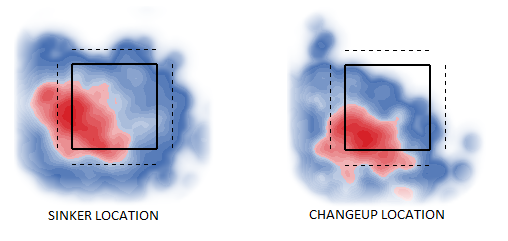
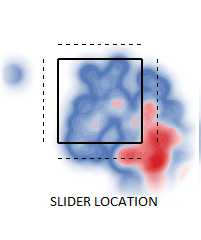
The reason he threw his sinker so much last year was because all of his secondary pitches were obliterated. https://twitter.com/ParkerHageman/status/1086769996557103105 The biggest difference between comparing him to the Anibal Sanchez signing is that Sanchez came equipped with a plus-pitch (his changeup) whereas Perez does not have anything of that quality to build off of. As you can see above, he got hammered in pitchers counts and he typically went with his fastball/sinker in those situations (63%) which is typically a distribution reserved for guys with plus velocity. It seemed that Perez lost confidence in any other pitch. The changeup and sinker pair well off each other but they both are thrown in the same zone -- down/away. This means hitters can put a fastball swing on a pitch in that zone, trying to catch it deep, and also be on time for a changeup. When you look at the batted ball numbers, right-handed hitters had a very high percentage of hits to right field and center because of this. (For lefties, the effect was reversed with a high percentage of their hits going to the pull side.) His 4-seam fastball he would occasionally use to go in as well as the occasional slider but, for the most part, righties could sit on location and spit on things on the inner-half. After all, he rarely threw his slider in the zone so there was little reason to chase and hitters did not fish often. But, in theory, the slider would pair better with a 2-seamer. Being able to throw it in the zone more frequently against right-handers would give him another weapon to keep them honest. He could also potentially add a cutter as another glove-side pitch. I'm confident we're going to see some tweaks this spring. I don't know if it will make him significantly better simply because doesn't have that plus-pitch foundation, but it could push the needle in the right direction.
-
Article: Solving Stephen Gonsalves
Parker Hageman replied to Nick Nelson's topic in Twins Daily Front Page News
Just to be clear, the game is littered with pitchers who fall within this range. Corbin and Keuchel are outliers. It doesn't mean that Gonsalves can't follow suit, it just means that the odds are steeper. There are two things that seem to be the separator between Gonsalves and Corbin/Keuchel. The first is fastball location. As you can see, both Keuchel and Corbin work lower in the zone with two-seamers. Gonsalves has used just a four-seamer and locates it up and over the plate. The difference between a left-handed fastball down (9-spot) and a fastball middle-away (6-spot, where Gonsalves locates) to right handed hitter is notable. The exit velocity on the lower spot is 90.3 MPH in 2018. It was 93.5 MPH in the 6-spot. The second issue is how the pitchers pair their pitches (alliteration, ftw). Wes Johnson talked about how he starts with a pitcher's secondary stuff and crafts the fastball off of that. Pitchers with sliders should tend to throw two-seamers while pitchers with curveballs should pair it with four-seamers. Obviously breaking balls can be liquid (a slider might acts as a curveball and vice versa) so spin direction matters. Gonsalves has thrown what is classified as a slider more often than his curveball. In that regard, it is possible that he would be better served throwing a two-seamer or, maybe easier, throwing his curveball more often than his slider, which would play the four-seamer up more. Both Corbin and Keuchel throw both types of fastballs and have curveballs (or a cutter in Keuchel's case) to go with their sliders but both are predominately sinker/slider types. It will be interesting to see if Gonsalves tweaks his arsenal this year.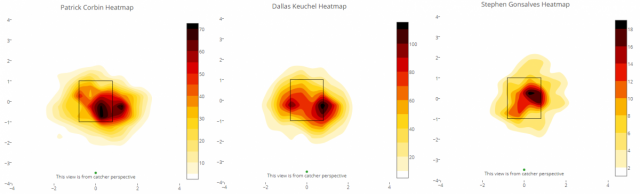
-
The Minnesota Twins’ 2018-2019 offseason had been fairly mundane as far as player acquisition goes. Sure, they said goodbye to Joe Mauer. Hired a shiny new manager. Landed a reclamation project for second base. All well and good. However the Twins had not made a maneuver to inspire the fan base, not sending any kind of signal that they cared about improving more than incrementally in 2019. On Thursday, they finally gave fans something to talk about by signing 38-year-old Nelson Cruz.Cruz’s ability to put the sweetest spot of the bat on the ripest part of the ball over the last several seasons has been near baby-making quality. According to StatCast, over the last four seasons he has ranked 8th-4th-8th-and-11th in Barrels per Plate Appearance. What’s more, when you limit the pool to players who have had 400 or more batted ball events during the season, Cruz’s rankings shift to 4th-3rd-3rd-and-4th. It is surprising to see teams forgo the opportunity to sign a player to a one-year deal (plus options) who has demonstrated this level of power consistency but somehow the Twins have coaxed Cruz into doing so. With the lumber he has been amazingly consistent, even at his advanced baseball age. Consider this: Over the last four years, the only person to barrel more pitches than Cruz’s 247 is Boston’s JD Martinez with 251. The barrel statistic is important because a vast majority of those batted ball types become extra base hits. And the MLBAM’s smart guys have conducted research that shows that barrels per plate appearances is a skill that profiles similar to a walk rate or strikeout rate year-over-year. In short, unless injuries or age foil, expect more of the same laser show from Cruz in Minnesota. That being said, 2018 was not Cruz’s best season, statistically speaking. There is no questioning his power -- 37 dingers is impressive -- yet there seems to be some signs of erosion. For instance, he posted his lowest batting average since 2007. Part of the reason may be facing the shift more. In 2018 defenses shifted him in 19.3% of his plate appearances -- a huge leap from 2017 when he saw shifts in 7.3% of the time. Whether it was the presence of the additional fielder on the left side of second base or pure coincidence, Cruz went 22-for-103 (.214) when confronted by the shift in 2018. Those kinds of results can inspire copycats. Another interesting statistic is that Cruz’s performance against the hard stuff (fastballs, sinkers and cutters) declined in 2018. Download attachment: Cruz.PNG On the surface, this drop can be worrisome. After all, reaction time vanishing with age is a real concern. It is perhaps one reason why Cruz’s market was reduced to just two teams (with the Rays reportedly never giving him a formal offer). When you look deeper however Cruz’s deteriorated performance against the fastball family appears to be less of a function of age and more of a level of luck. In 2018 Cruz hit more of his balls in the air in the left-center to right-center gaps rather than straight down the left field line. He isn’t a prototypical dead-red extreme pull hitter in the mold of say Brian Dozier or Josh Willingham who used Target Field’s inviting left field to their natural advantage. He pulled the ball in the air just 30% of the time this past season, below the league average. With balls hit in the middle of the park, it means some hard hit ones stayed in play (both Safeco and Target Field are two of the most difficult venues for right-handed hitters to hit home runs in the right-center gap). Combine that with more efficient defensive positioning and those hard hit balls became outs. Nevertheless, if you synthesize Cruz’s batted ball profile through the Statcast machine, it shows that Cruz’s actual .264 average and .542 slugging versus hard stuff could have been closer to a .302 average and a .622 slugging percentage. That’s potential upside. As we have seen, the baseball landscape has been changing, enriched with increased velocity and a newfound dedication to high spin fastballs up in the zone. Teams have changed their approach to hitters who normally would mash stuff at the bottom of the strike zone. One such low-ball masher was Nelson Cruz. From 2015 through 2017 Cruz hit 50 home runs on fastballs in the lower half of the zone while posting a monstrous .330/.406/.603 line -- 18th highest slugging percentage among qualified hitters in that time. (Miguel Sano, he wrote foreshadowingly, was 9th on that list.) In that period, the game began to shift. In 2015 the Boston Red Sox pitching staff threw their fastballs 30% of the time at the top of the zone. Baseball was paced by the Nationals’ pitching staff at 35%. In that time the FLY BALL REVOLUTION happened. Blood was shed. Balls were murdered. Families were fractured. Hitters had cultivated swings that acted like a ferris wheel, lifting balls from the bottom of the zone and launching them into orbit with total disregard for human life. Dissatisfied with being a constant punching bag, pitching analysts started to see the value in aiming higher. In time, teams started to replace fastballs with breaking balls and hitting the top of the zone with heaters. This past season, the Boston Red Sox led baseball in upper zone presence with a 45% rate. They would ride this strategy to the World Series. Cruz’s production inverted as opponents starting elevating their fastballs. After punishing the low hard stuff the previous three seasons, he posted a 238/353/390 line on fastballs down in the zone in 2018. Meanwhile he attacked fastballs up. He swung more frequently at heaters at the top of the zone and he made more and better contact. From 2015 to 2017 he connected with just 59% of fastballs in the upper third. In 2018 that number was 70%. Previously he struck out on 31% of fastballs up although he pared that down to 19% in 2018. In that three year window overall he managed to hit .210/.390/.425 with 14 home runs on fastballs up. This past year he hit .261/.455/.693 with 12 home runs. Cruz used to hit long fly balls on pitches down in the zone but that has morphed into a bit of a dead zone for him now as pitches left up in the zone are the ones he has been sending into the stratosphere. Download attachment: cruz fb.png It may be a coincidence but given Cruz's track record for preparation, it would make sense that he is parrying along with the attack. An old dog learning a new tricks. A late stage reinvention. If nothing else, Cruz is one weapon in the lineup that won’t be stymied by the growing trend of high fastballs. Beyond that, with his reputation for mentoring others, it would seem that Cruz might be the perfect acquisition to guide other teammates into making the same adjustment. Which brings us back to the Twins. The Minnesota Twins’ offense has been near the bottom of the league when facing high heat. In 2018, they held a team OPS of .673 against fastballs -- 23rd in the MLB. At the top of the list? Boston (828 OPS) and their advanced analytical approach. The Houston Astros had the second highest OPS against fastballs up (.815 OPS) which is not surprising when you consider the level of preparation their team does before the games. Elite teams address weaknesses. There is no denying that Miguel Sano was a mess last year, requiring a trip all the way down to Fort Myers to attempt to reboot. Teams know there are two surefire ways to get Sano out. The first is the slider over the left-handed batters box that he will chase until his last breath. The other is the elevated fastball. Admittedly, Sano was flummoxed by all fastballs regardless of their location in 2018 but, historically, he hasn’t figured out how to deal with the high heat. Sano’s swing is the standard ferris wheel -- down and back up -- which is very potent but can leave hitters susceptible to pitches up. To his credit, he tried to combat the issue by laying off more. Whereas Cruz swung at nearly half of those fastballs, Sano cut down to 32%. If you can’t beat ‘em, layoff ‘em is a viable short-term solution. Still, with the game trending toward more fastballs up, there is opportunity there. And Sano isn’t alone in the lineup. While Cruz led baseball with the highest exit velocity on fastballs up at 97.5, Jorge Polanco had the lowest at 76.6. Not far from him at the bottom was Cruz’s former teammate Jonathan Schoop at 79.4. Max Kepler has hit just .149 vs fastballs up. If Cruz has indeed unlocked a secret to success in the evolving game, the entire Twins lineup could stand to benefit from his knowledge. This is one element of the game that Cruz’s proficiency at could prove useful to the Twins. Additionally, his reputation as someone who puts in work away from the field could be influential to the younger players. When the Houston Astros added Carlos Beltran in 2017, his ability to help the younger roster understand the game better was lauded as one of the reasons the organization was able to win the World Series. Veteran leadership can be a very important intangible. All said, a one-year deal with options that favors the Twins is a seemingly no-lose situation. Click here to view the article
-
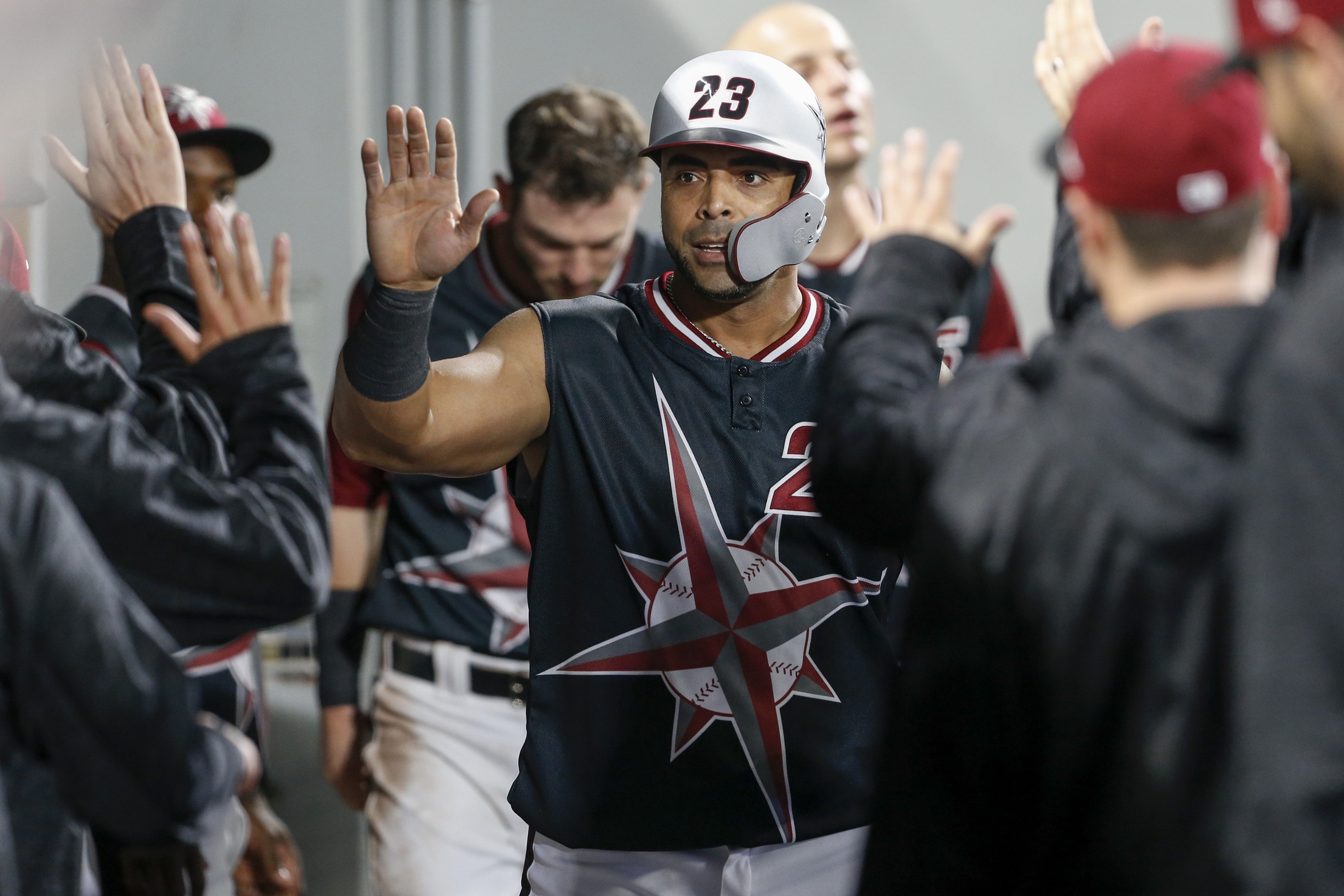 Cruz’s ability to put the sweetest spot of the bat on the ripest part of the ball over the last several seasons has been near baby-making quality. According to StatCast, over the last four seasons he has ranked 8th-4th-8th-and-11th in Barrels per Plate Appearance. What’s more, when you limit the pool to players who have had 400 or more batted ball events during the season, Cruz’s rankings shift to 4th-3rd-3rd-and-4th. It is surprising to see teams forgo the opportunity to sign a player to a one-year deal (plus options) who has demonstrated this level of power consistency but somehow the Twins have coaxed Cruz into doing so. With the lumber he has been amazingly consistent, even at his advanced baseball age. Consider this: Over the last four years, the only person to barrel more pitches than Cruz’s 247 is Boston’s JD Martinez with 251. The barrel statistic is important because a vast majority of those batted ball types become extra base hits. And the MLBAM’s smart guys have conducted research that shows that barrels per plate appearances is a skill that profiles similar to a walk rate or strikeout rate year-over-year. In short, unless injuries or age foil, expect more of the same laser show from Cruz in Minnesota. That being said, 2018 was not Cruz’s best season, statistically speaking. There is no questioning his power -- 37 dingers is impressive -- yet there seems to be some signs of erosion. For instance, he posted his lowest batting average since 2007. Part of the reason may be facing the shift more. In 2018 defenses shifted him in 19.3% of his plate appearances -- a huge leap from 2017 when he saw shifts in 7.3% of the time. Whether it was the presence of the additional fielder on the left side of second base or pure coincidence, Cruz went 22-for-103 (.214) when confronted by the shift in 2018. Those kinds of results can inspire copycats. Another interesting statistic is that Cruz’s performance against the hard stuff (fastballs, sinkers and cutters) declined in 2018. On the surface, this drop can be worrisome. After all, reaction time vanishing with age is a real concern. It is perhaps one reason why Cruz’s market was reduced to just two teams (with the Rays reportedly never giving him a formal offer). When you look deeper however Cruz’s deteriorated performance against the fastball family appears to be less of a function of age and more of a level of luck. In 2018 Cruz hit more of his balls in the air in the left-center to right-center gaps rather than straight down the left field line. He isn’t a prototypical dead-red extreme pull hitter in the mold of say Brian Dozier or Josh Willingham who used Target Field’s inviting left field to their natural advantage. He pulled the ball in the air just 30% of the time this past season, below the league average. With balls hit in the middle of the park, it means some hard hit ones stayed in play (both Safeco and Target Field are two of the most difficult venues for right-handed hitters to hit home runs in the right-center gap). Combine that with more efficient defensive positioning and those hard hit balls became outs. Nevertheless, if you synthesize Cruz’s batted ball profile through the Statcast machine, it shows that Cruz’s actual .264 average and .542 slugging versus hard stuff could have been closer to a .302 average and a .622 slugging percentage. That’s potential upside. As we have seen, the baseball landscape has been changing, enriched with increased velocity and a newfound dedication to high spin fastballs up in the zone. Teams have changed their approach to hitters who normally would mash stuff at the bottom of the strike zone. One such low-ball masher was Nelson Cruz. From 2015 through 2017 Cruz hit 50 home runs on fastballs in the lower half of the zone while posting a monstrous .330/.406/.603 line -- 18th highest slugging percentage among qualified hitters in that time. (Miguel Sano, he wrote foreshadowingly, was 9th on that list.) In that period, the game began to shift. In 2015 the Boston Red Sox pitching staff threw their fastballs 30% of the time at the top of the zone. Baseball was paced by the Nationals’ pitching staff at 35%. In that time the FLY BALL REVOLUTION happened. Blood was shed. Balls were murdered. Families were fractured. Hitters had cultivated swings that acted like a ferris wheel, lifting balls from the bottom of the zone and launching them into orbit with total disregard for human life. Dissatisfied with being a constant punching bag, pitching analysts started to see the value in aiming higher. In time, teams started to replace fastballs with breaking balls and hitting the top of the zone with heaters. This past season, the Boston Red Sox led baseball in upper zone presence with a 45% rate. They would ride this strategy to the World Series. Cruz’s production inverted as opponents starting elevating their fastballs. After punishing the low hard stuff the previous three seasons, he posted a 238/353/390 line on fastballs down in the zone in 2018. Meanwhile he attacked fastballs up. He swung more frequently at heaters at the top of the zone and he made more and better contact. From 2015 to 2017 he connected with just 59% of fastballs in the upper third. In 2018 that number was 70%. Previously he struck out on 31% of fastballs up although he pared that down to 19% in 2018. In that three year window overall he managed to hit .210/.390/.425 with 14 home runs on fastballs up. This past year he hit .261/.455/.693 with 12 home runs. Cruz used to hit long fly balls on pitches down in the zone but that has morphed into a bit of a dead zone for him now as pitches left up in the zone are the ones he has been sending into the stratosphere. It may be a coincidence but given Cruz's track record for preparation, it would make sense that he is parrying along with the attack. An old dog learning a new tricks. A late stage reinvention. If nothing else, Cruz is one weapon in the lineup that won’t be stymied by the growing trend of high fastballs. Beyond that, with his reputation for mentoring others, it would seem that Cruz might be the perfect acquisition to guide other teammates into making the same adjustment. Which brings us back to the Twins. The Minnesota Twins’ offense has been near the bottom of the league when facing high heat. In 2018, they held a team OPS of .673 against fastballs -- 23rd in the MLB. At the top of the list? Boston (828 OPS) and their advanced analytical approach. The Houston Astros had the second highest OPS against fastballs up (.815 OPS) which is not surprising when you consider the level of preparation their team does before the games. Elite teams address weaknesses. There is no denying that Miguel Sano was a mess last year, requiring a trip all the way down to Fort Myers to attempt to reboot. Teams know there are two surefire ways to get Sano out. The first is the slider over the left-handed batters box that he will chase until his last breath. The other is the elevated fastball. Admittedly, Sano was flummoxed by all fastballs regardless of their location in 2018 but, historically, he hasn’t figured out how to deal with the high heat. Sano’s swing is the standard ferris wheel -- down and back up -- which is very potent but can leave hitters susceptible to pitches up. To his credit, he tried to combat the issue by laying off more. Whereas Cruz swung at nearly half of those fastballs, Sano cut down to 32%. If you can’t beat ‘em, layoff ‘em is a viable short-term solution. Still, with the game trending toward more fastballs up, there is opportunity there. And Sano isn’t alone in the lineup. While Cruz led baseball with the highest exit velocity on fastballs up at 97.5, Jorge Polanco had the lowest at 76.6. Not far from him at the bottom was Cruz’s former teammate Jonathan Schoop at 79.4. Max Kepler has hit just .149 vs fastballs up. If Cruz has indeed unlocked a secret to success in the evolving game, the entire Twins lineup could stand to benefit from his knowledge. This is one element of the game that Cruz’s proficiency at could prove useful to the Twins. Additionally, his reputation as someone who puts in work away from the field could be influential to the younger players. When the Houston Astros added Carlos Beltran in 2017, his ability to help the younger roster understand the game better was lauded as one of the reasons the organization was able to win the World Series. Veteran leadership can be a very important intangible. All said, a one-year deal with options that favors the Twins is a seemingly no-lose situation.
 -
One more time for the people in the back...

-
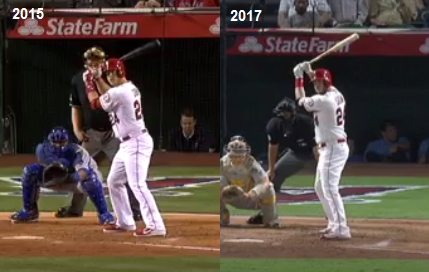
Couple things: 1. "Hands adjustment" is an oversimplification of what happened; it's more of an adjustment that has led to better synchronization of upper/lower half (timing). https://twitter.com/ParkerHageman/status/1067148289936683008 He has demonstrated a better "stretch" at the launch position (front side and the back side are pulling in opposite directions before firing forward) where his weight/hands are now back instead of drifting forward at the ball at front foot strike. This was something that plagued him with the Angels over the years. In his early days, he was given limited playing time and then struggled for prolonged stretches. He'd change his stance in a variety of ways over the years in efforts to find it. In 2015 he displayed an open stance with a leg kick. In 2017, after being sent to the minors to refine his swing, he came back with this hands over his head stance. In regards to the hands adjustment, he's lowered them and kept them closer to his launch spot (rather than having to move them in sync with the pitcher). He can now just go straight back stretching instead of lowering them and then bringing them to that same spot. (This is something that helped Jorge Polanco out in 2017.) This isn't necessarily something all hitters need to do but if they are ones that get out of rhythm, it might be best to shave that distance off. In short, Cron was a bit of a mess until last year. Part of it might be the swing refinement and part of it could be consistent playing time (without the fear of being demoted in LA). 2. Barrel rates more or less explain the amount of power potential a hitter has – not necessarily the overall hitter. Additionally, if a hitter doesn’t make a ton of contact then there overall numbers are going to be different. When you look at that top list, you can see who has some of the most raw power potential when making contact. But Barrels have been found by the StatCast guys are being significantly important to future production. I was working on an article regarding Austin and Cave’s potential and had a correspondence with MLB’s Mike Petriello. He directed me to research by TangoTom which found that Barrels correlate to future wOBA figures similarly to BB or K rates. More or less, this is a skill that can be consistent year-over-year but it sounds like there needs to be 250+ batted ball events before considering it sustainable (which may be flukier for Austin and Cave). Barrels are important because over 75% of those become hits (and extra base hits) so the more BRLs/PA you have, the better your numbers (at least BABIP) should be. The rub is, the remainder of a hitter's profile, particularly in regards to making contact. 3. One of the bigger differences between Morrison and Cron is that as a right-handed hitter, Cron is not going to see the same level of defensive shifts Morrison would. Morrison saw shifts 75% of his plate appearances while Cron had a shift just 14.5% of his. As the league continues to increase the amount of shifts, Morrison's pull side open space will be squeezed out to nothing while Cron should still have ample opportunity to find vacancy. 4. I would have rather have had Josh Donaldson.
-
Article: What To Make of Addison Reed?
Parker Hageman replied to Nick Nelson's topic in Twins Daily Front Page News
I don't know what it's going to take for Addison Reed to turn things around in 2019. Before this year, he was one of the more healthy pitchers in the game. But he's always had funky mechanics and in stop after stop, there are stories of pitching coaches cleaning this up or that up. In Arizona, the pitching coach tandem of Mike Harkey and Mel Stottlemeyer had him make two mechanical adjustments. Then when he went to New York, he supposedly had worked with the Mets' pitching coach Dan Werthen, the slider guru, and straightened more things out. Heading into 2016, his arm slot changed and he began releasing the ball at a higher point. He had one of his best seasons in 2016 and followed up with a good 2017 campaign. In addition to his velocity, his arm slot dipped as well in 2018 with the Twins. This probably should have been a red flag to someone in the organization. Take a look at Reed's mechanics from the home plate view: https://twitter.com/ParkerHageman/status/982256551015497736 In listening to a lot of Wes Johnson's pitching presentation from Pitch-A-Palooza and reading his interviews, the thing that seems consistent is that he is big on maintaining kinetic energy going down hill and toward the plate. Reed's wrapping likely hinders some of that which may play a role in his arm ailments and the decline in velocity. Johnson has also been emphatic that pitchers have different styles of maximizing their intent (he used Greg Maddux and Bob Gibson as examples) so it's difficult to say if he will do much with that portion of his delivery. To Nick's point, I could see Johnson and Jeremy Hefner getting in Reed's ear about refining some parts of his delivery and working on getting that arm slot back up (if it is not injury related). Then again, Reed has been influenced by different pitching coaches on an almost annual basis. I'm not certain new voices, no matter how good, will be a factor. Wes Johnson says he models himself after Houston's Brent Strom and Cincinnati's (formerly Milwaukee's) Derek Johnson who are both renown communicators of the analytic side of the game so it's entirely possible that the delivery of the message will be better coming from someone like Johnson versus Werthan or Harkey or Carl Willis in Boston or Don Cooper in Chicago. What makes Johnson so much different as a pitching coach for the Twins is that he is staunch support of implementing more throwing into a pitcher's program including weighted balls and long toss. In 2017 I had a conversation with then pitching coach Neil Allen about Kyle Gibson's new weighted ball routine that he developed at the Florida Baseball Ranch. Allen was somewhat dismissive above the practice. In the recent past, there have been other coaches in the organization that discouraged weighted ball training and long toss. Johnson will be very much a voice to push the org in a different direction in regards to training. That will likely be beneficial to Reed and others.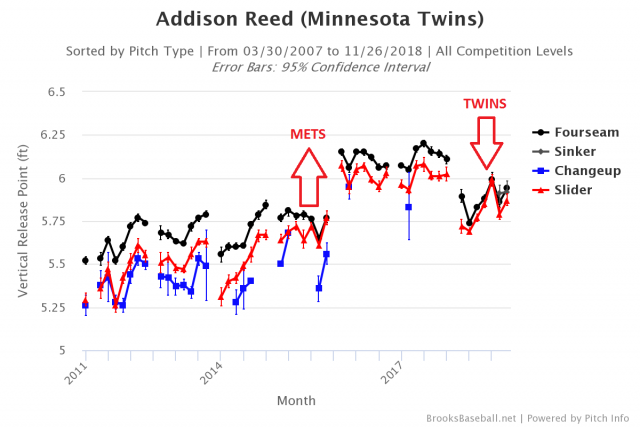
-
They already did that when they hired Pete Maki away from Duke.
-
This was also discussed in the full story -- with quotes from Mike Radcliff on the subject. Go ahead. Download it here. It's free! https://www.e-junkie.com/ecom/gb.php?&c=cart&ejc=2&cl=76672&i=1597641&amount=10 Come back and let me know what you think.


