



Parker Hageman
-
Posts
4,152 -
Joined
-
Last visited
-
Days Won
6
Content Type
Profiles
News
Minnesota Twins Videos
2026 Minnesota Twins Top Prospects Ranking
2022 Minnesota Twins Draft Picks
Minnesota Twins Free Agent & Trade Rumors, Notes, & Tidbits
Guides & Resources
2023 Minnesota Twins Draft Picks
The Minnesota Twins Players Project
2024 Minnesota Twins Draft Picks
2025 Minnesota Twins Draft Pick Tracker
2026 Minnesota Twins Draft Tracker: Picks & Bonuses
Forums
Blogs
Events
Store
Downloads
Gallery
Everything posted by Parker Hageman
-
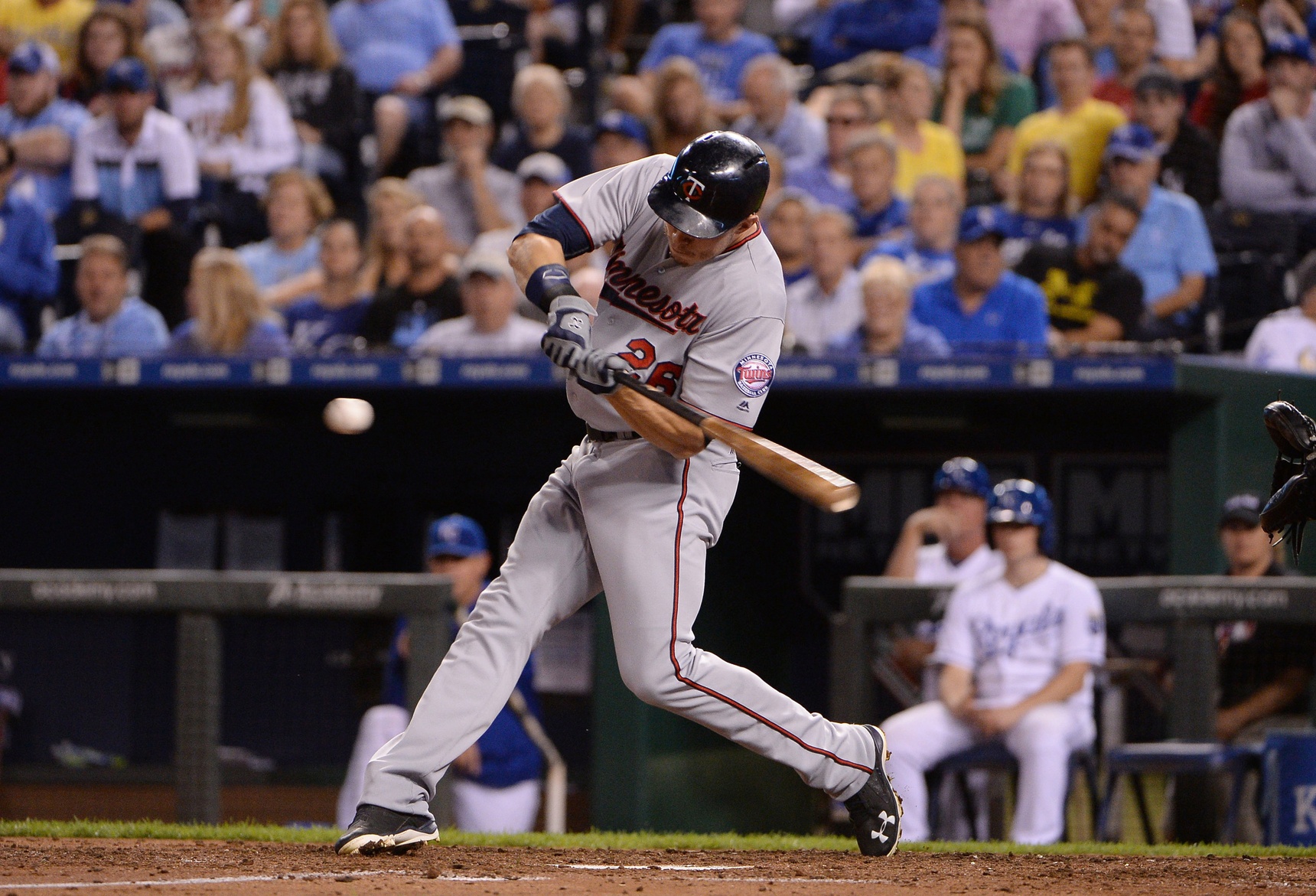 Just down the line in the Twins’ clubhouse sat new acquisition Jason Castro. Castro, somewhat unknowingly, helped launch a revolution in the way professionals view hitting. It was watching Castro transform his swing from the bench that inspired teammate J.D. Martinez to look closer at a swing’s components. “I used to always think, ‘Hit down on the baseball.’ But then I realized that’s not what everyone else is doing,” Martinez told Fangraphs.com’s Eno Sarris. Martinez was injured with the Astros when he saw video of Castro’s revamped swing plane. That begat the search for video of other players’ swings. Ryan Braun, Albert Pujols, Miguel Cabrera. All of the game’s top hitters were swinging (among other things) with a slight uppercut. “I received a little bit of instruction prior to that point of my career,” Castro said about the time he made his adjustments as an Astro. “Really having someone breaking down the swing and how the swing is supposed to work, from just a conceptual point on what you are trying to accomplish, I started to understand that a little more on a fundamental level.” For Castro, that fundamental understanding involved creating more lift. Creating lift and hitting the ball in the air is not new - dating back to instruction supplied by Ted Williams in his seminal book, “The Science of Hitting” -- but with the advanced studies involving StatCast data, baseball has a better understanding of the value created by optimal launch angles and exit velocity. With video, you can marry what that swing looks like and the results. The 2016 National League MVP Kris Bryant said that his father would install targets around the top of the batting cage in order to encourage young Kris to elevate the ball. The practice has certainly paid off for Bryant, who has one of the highest average launch angle in the game. It is the reason he has hit 39 home runs in 2016. On the American League side, Donaldson took to the MLB Network studios to spread his gospel of hitting. “If you are a 10 year old and your coach tells you to get on top of the ball,” the Blue Jays third baseman said, “tell him no.” Donaldson also recently tweeted a video of him taking short toss swings in the cage and trying to rifle the ball through the netting near the top. His caption? “Just say NO...to ground balls.” Kepler stresses that with his swing he is not trying to hit ground balls -- he’s going for line drives. “I’m not trying to hit ground balls. I’m trying to backspin the ball, trying to chop it,” he says as he demonstrates, firing his bottom hand in a diagonal line from his shoulder down at an imaginary pitch. “And the ball goes. It’s harder to catch a ball that’s back-spinning when you lift it. It just goes.” The chop part of his statement is the line that can make some hitting instructors cringe. Fangraphs.com’s Travis Sawchik recently profiled hitting coach Doug Latta and the players he has worked with, such as Marlon Byrd and Justin Turner, who reinvented their approach and careers by moving away from chopping wood. Other players have followed suit. Kepler’s process is interesting because, according to StatCast data, he hasn’t been producing a high-level launch angle rate -- at least not like the classic power hitting profiles like Bryant (19.8), Chris Carter (18.8), or even Josh Donaldson (12.9). His launch angle numbers fall behind even teammate Byron Buxton (14.3). Baseball Savant said that Kepler had an average launch angle of 8.7 degrees. Baseball Savant launch angle GIF show the difference in contact put in play between Max Kepler, Miguel Sano and Wil Myers. Note the amount of contact by Kepler that falls below 0 degrees. That equals ground balls. What is also interesting is the hitter one place ahead of him on the launch angle rankings is the Padres’ Wil Myers (8.8). Why is that interesting? Myers seems to share the same affinity of staying on top of the ball as Kepler. “I try not to be one when I hit it but a lot of players will get up under the ball so they don’t hit into the ground,” Myers told MLB Network’s Harold Reynolds. “I feel like that creates bad habits and I like to stay off the tee and stay down through the ball.” The lackluster launch angle numbers aside, both Kepler (17) and Myers (28) have showed plenty of pop in their bats, thanks to solid exit velocity figures. Or, in simple ball guy terms, they hit the ball on the screws. In short, while Myers and Kepler might not share the same hitting philosophy as guys like Bryant or Donaldson, their process has led to decent results at a young age. Kepler says the mindset -- staying on top and through the ball -- helps put him in the best position for him to make what he believes is optimal contact: a line drive that carries up and into the overhang at Target Field. All players have different cues and feels that help them create their swings. What they tell themselves and what actually happens can be two totally different events. Brian Dozier says he tries to drive the ball through the center field wall. Dozier, of course, pounds more balls about five feet inside the left field foul pole than anyone in the game. Byron Buxton says he tries to drive the ball to second base during batting practice but as September showed, Buxton is completely capable of turning on the ball and driving it into the air. For Kepler, trying to get himself to hit ground balls only is useful to him when he feels when he is out of whack and struggling. The results he wants to see are pearly white baseballs disappearing into the right field stands. “Bonds told me just try to hit hard ground balls, hit the ball through the pitcher’s forehead,” he says. “Try to find your bat path because once it is level and you’re comfortable with it, you are going to square balls up and they are going to go where you want it.”
 -
 The wind was blowing in hard from center field. That probably helped his velocity.
 -
Man, it sounded real bad. I'm very surprised he came out unscathed.
-
The Minnesota Twins had a scheduled off-day on Tuesday but Phil Hughes made an appearance on Bill Smith Field over at the minor league side, throwing to an assortment of minor league hitters, including prospect Travis Harrison. Harrison was the unfortunate recipient of a Hughes’ fastball to the hand. The 24-year-old right-handed hitter had called time prior to the two-strike offering only to have a fastball buzz up and in after he reset. Harrison left the field for further examination. Observers said that the top of his hand was immediately swollen. Hughes said it was an accident and was apologetic afterwards. **Be sure to sign up for Twins Daily’s Write Of Spring email newsletter. In addition to the content found at TwinsDaily.com, you will have access to a unique weekly column as well as special edition notebook section** “Neil’s been really harping on us this spring and change eye levels and back guys off the plate and 0-2 situation I thought it would be a good idea to go up-and-in and I felt really bad about that, to be honest,” Hughes said afterwards, saying that Harrison had attended his mother’s high school in Orange County so the pair have spent time together. “I really hope he’s all right.” The Twins clearly don’t want to injure any member of their organization, Hughes executed the pitch well. Because of Hughes’ elite command, hitters have often become too cozy in the batter’s box in his starts. Plus, if his velocity doesn’t rebound to pre-surgery levels, he will need to make some changes to keep opponents from sitting fastball. Therefore, the coaching staff has wanted to see Hughes move more feet. “Sometimes that it’ll happen this year because Phil Hughes has a reputation of throwing a lot of strikes -- and that’s a good reputation to have -- but you also want to make sure you make people uncomfortable too while remaining aggressive,” Neil Allen said. The Harrison incident was the only blip on an otherwise over-matching performance from Hughes. His fastball reached 91 according to one radar reading and his pro-grade cutter appeared to be an otherworldly pitch to some of the minor league bats. However, the real focus for Hughes was to throw a healthy dose of changeups. “It was a good opportunity to throw a ton of changeups, that was kind of the plan today,” Hughes said of his strategy. “A lot of times you get in the big league spring training games you get caught up in the competitiveness of everything and trying to just get outs, but today I really did throw as many changeups as I could just to get a nice feel for it.” Since at least 2010, when he was pitching for the New York Yankees, Hughes has attempted to add a changeup to his arsenal, to no avail. According to ESPN/TruMedia’s database, Hughes threw just 14 changeups in his 2014 season, 104 in 2015, and 24 in his 12 starts last year. Why the renewed emphasis on the changeup for Hughes? “A lot of times if you are a guy who is really firm, like Phil throws a hard cutter, he throws a hard four-seam and two-seam fastball, he throws a hard curveball,” Allen said. “A changeup is simply going to throw their timing off like that.” Overall, Hughes was satisfied with the outing. "Sometimes you don’t have the luxury of doing stuff like this. Sometimes you go into these spring games, the adrenaline ticks up and you want to just get outs but here it is nice just to throw all my pitches." Click here to view the article
-
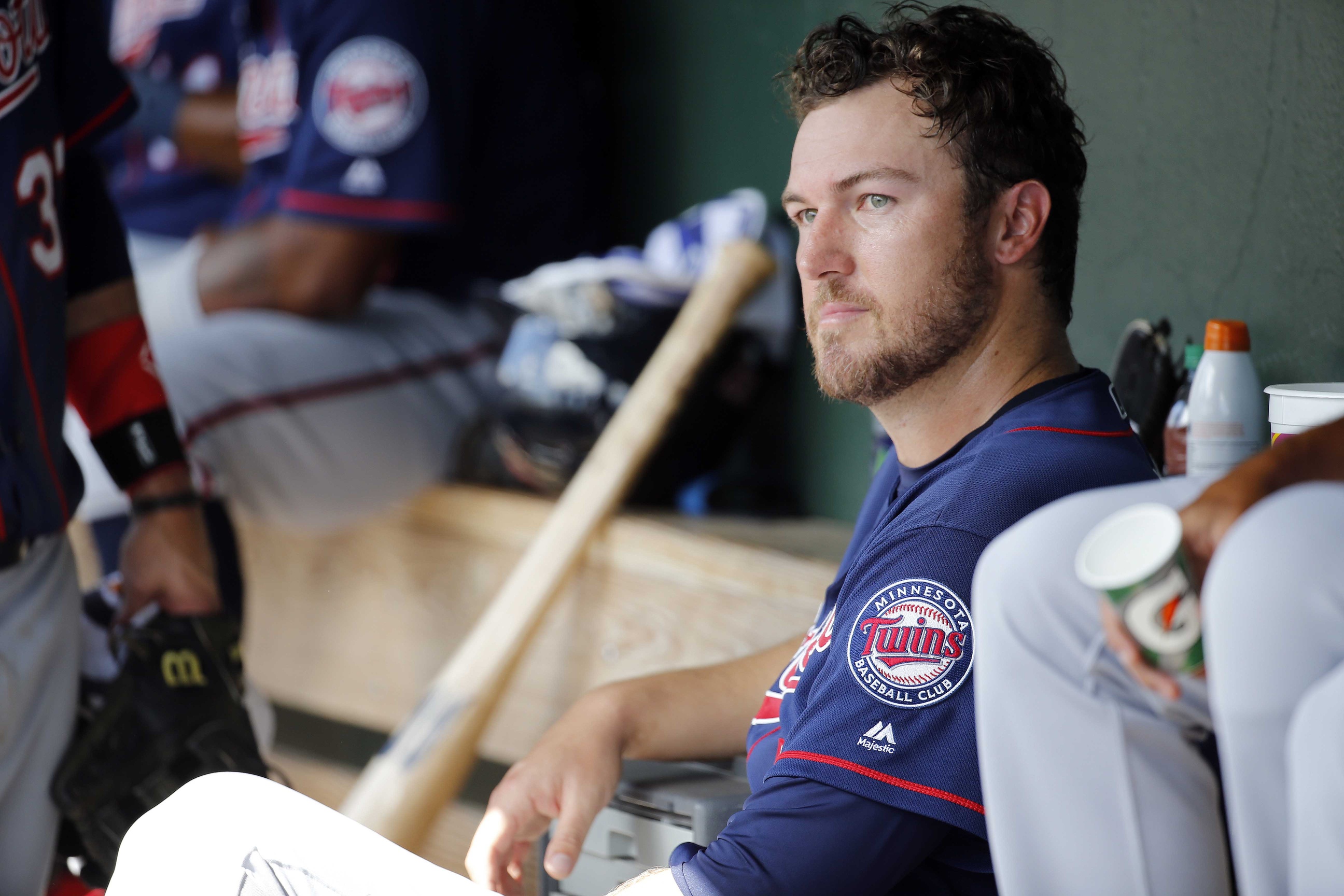 **Be sure to sign up for Twins Daily’s Write Of Spring email newsletter. In addition to the content found at TwinsDaily.com, you will have access to a unique weekly column as well as special edition notebook section** “Neil’s been really harping on us this spring and change eye levels and back guys off the plate and 0-2 situation I thought it would be a good idea to go up-and-in and I felt really bad about that, to be honest,” Hughes said afterwards, saying that Harrison had attended his mother’s high school in Orange County so the pair have spent time together. “I really hope he’s all right.” The Twins clearly don’t want to injure any member of their organization, Hughes executed the pitch well. Because of Hughes’ elite command, hitters have often become too cozy in the batter’s box in his starts. Plus, if his velocity doesn’t rebound to pre-surgery levels, he will need to make some changes to keep opponents from sitting fastball. Therefore, the coaching staff has wanted to see Hughes move more feet. “Sometimes that it’ll happen this year because Phil Hughes has a reputation of throwing a lot of strikes -- and that’s a good reputation to have -- but you also want to make sure you make people uncomfortable too while remaining aggressive,” Neil Allen said. The Harrison incident was the only blip on an otherwise over-matching performance from Hughes. His fastball reached 91 according to one radar reading and his pro-grade cutter appeared to be an otherworldly pitch to some of the minor league bats. However, the real focus for Hughes was to throw a healthy dose of changeups. “It was a good opportunity to throw a ton of changeups, that was kind of the plan today,” Hughes said of his strategy. “A lot of times you get in the big league spring training games you get caught up in the competitiveness of everything and trying to just get outs, but today I really did throw as many changeups as I could just to get a nice feel for it.” Since at least 2010, when he was pitching for the New York Yankees, Hughes has attempted to add a changeup to his arsenal, to no avail. According to ESPN/TruMedia’s database, Hughes threw just 14 changeups in his 2014 season, 104 in 2015, and 24 in his 12 starts last year. Why the renewed emphasis on the changeup for Hughes? “A lot of times if you are a guy who is really firm, like Phil throws a hard cutter, he throws a hard four-seam and two-seam fastball, he throws a hard curveball,” Allen said. “A changeup is simply going to throw their timing off like that.” Overall, Hughes was satisfied with the outing. "Sometimes you don’t have the luxury of doing stuff like this. Sometimes you go into these spring games, the adrenaline ticks up and you want to just get outs but here it is nice just to throw all my pitches."
 -
In walk-off fashion, the Minnesota Twins defeated the St. Louis Cardinals 2-1 in extra innings. After several innings of stranding runners in scoring position, the Twins finally got on the board in the bottom of the ninth when infielder Ehire Adrianza drove home Leonardo Reginatto with a single to right. An inning later, catcher Chris Gimenez stroked a solid single back up the middle in the tenth to sent the winning run home. Notable performances include Kyle Gibson, who worked an efficient four innings, limiting the Cardinals to just one run on two hits. Joe Mauer reached base in all three of his plate appearances, landing his first base hit of the spring and adding two walks. Byron Buxton had two hits, including a double down the left field line. More notes from Monday at the park... **Be sure to sign up for Twins Daily’s Write Of Spring email newsletter. In addition to the content found at TwinsDaily.com, you will have access to a unique weekly column as well as special edition notebook section** ** Chris Gimenez was the recipient of a half-hearted infield celebration following his walk-off single in the tenth. Gimenez is in the running for the backup catcher position. Having caught in four spring games, he has received strong reviews for his in-game defense from several of the pitchers he has handled, including Jose Berrios and Trevor May. Reading between the lines, it appears that the Twins would like to see him win the job. ** Paul Molitor said that the team is going to be more aggressive with their defensive alignments in the outfield, using different positioning for their alignment. “We’re trying to look at all the data we had last year on position and we’re trying to make some adjustments to that,” Molitor said. “For example, when you have a three run lead in the fifth I’m more worried about the bloop, not the double. A guy smokes one over your head, he does, but I’m trying to keep baserunners off, trying to protect leads.” ** Byron Buxton went 2-for-3 on Monday, driving a double down the left field line and reaching on a bunt hit in the third. “I don’t know how much bunting is going to be a part of his game,” said Molitor. “I think it still will be, it should be, but as his offensive prowess grows there might be times you’d rather see him drive that run instead of creating that first-and-third.” It was pointed out that Buxton displayed power last September and the double later in the game would have likely scored Escobar or at least put two runners in scoring position with one out. “Kirby Puckett bunted a lot as a rookie but when he started hitting 30 homers he didn’t bother much.” ** Buxton made a fantastic diving catch in the third inning on a low line drive that looked like it was destined to be a single. “He would have caught that standing up incredibly had the wind not been blowing out there,” Gibson said. “He’s awesome out there, he tracks about everything down.” Gibson said Buxton brings a welcome mindset to the position, always expecting himself to make every play. In his first outing of the spring, Gibson said he surrendered a double which Buxton later apologized for not catching at the wall. “I’m the one who gave up a laser,” Gibson laughed. ** Gibson’s ongoing mechanical transformation is still a work in progress, the right-hander admitted after third outing of the spring. There are times when he says he fights against reverting back into his old delivery but says he is developing a strong feel for the new one. “I’m never trying to be out there thinking about my delivery but if you are not feeling your delivery or you are not feeling when you are out of sync or what's going on when you are out of sync, you are going to hit your head against the wall throwing ball after ball after ball,” Gibson said. ** Glen Perkins continued his rehabilitation, throwing another bullpen off the mound at Hammond Stadium on Monday. Perkins said that he is still not yet throwing sliders in his program. “You ask him how he’s feeling and he gets a big smile,” said Molitor. “And that’s good.” ** Reliever Ryan O’Rourke says he has seen some good indication that his weighted ball training program is providing some early dividends. He said that he was typically topping out at 88-89 at this point in his season but this year he’s been up to 91. ** Phil Hughes will make a backfield appearance on Tuesday at the camp, throwing in what will be a four inning intrasquad contest. Hughes last pitched on Friday and should be looking to reach at least three innings. ** After a scheduled off-day on Tuesday, the Twins will play Team USA as they prepare for the World Baseball Classic. Trevor May will make his third appearance of the spring, coming off his 2.1 innings in Clearwater on Saturday. May said that one of his focuses this coming outing will be on using his changeup in different situations. Click here to view the article
- 7 replies
-
- 1
-

-
- paul molitor
- joe mauer
- (and 1 more)
-
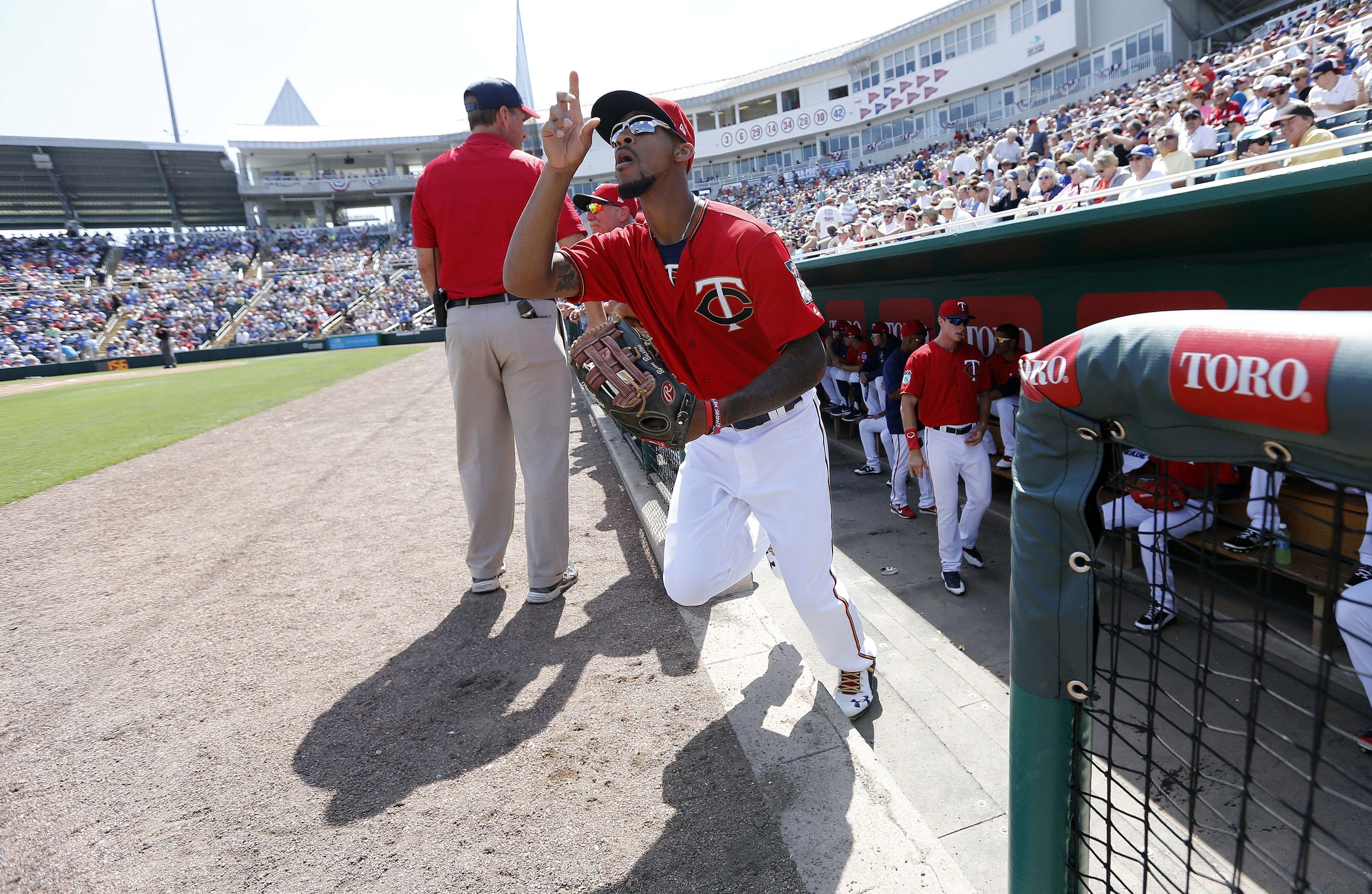 **Be sure to sign up for Twins Daily’s Write Of Spring email newsletter. In addition to the content found at TwinsDaily.com, you will have access to a unique weekly column as well as special edition notebook section** ** Chris Gimenez was the recipient of a half-hearted infield celebration following his walk-off single in the tenth. Gimenez is in the running for the backup catcher position. Having caught in four spring games, he has received strong reviews for his in-game defense from several of the pitchers he has handled, including Jose Berrios and Trevor May. Reading between the lines, it appears that the Twins would like to see him win the job. ** Paul Molitor said that the team is going to be more aggressive with their defensive alignments in the outfield, using different positioning for their alignment. “We’re trying to look at all the data we had last year on position and we’re trying to make some adjustments to that,” Molitor said. “For example, when you have a three run lead in the fifth I’m more worried about the bloop, not the double. A guy smokes one over your head, he does, but I’m trying to keep baserunners off, trying to protect leads.” ** Byron Buxton went 2-for-3 on Monday, driving a double down the left field line and reaching on a bunt hit in the third. “I don’t know how much bunting is going to be a part of his game,” said Molitor. “I think it still will be, it should be, but as his offensive prowess grows there might be times you’d rather see him drive that run instead of creating that first-and-third.” It was pointed out that Buxton displayed power last September and the double later in the game would have likely scored Escobar or at least put two runners in scoring position with one out. “Kirby Puckett bunted a lot as a rookie but when he started hitting 30 homers he didn’t bother much.” ** Buxton made a fantastic diving catch in the third inning on a low line drive that looked like it was destined to be a single. “He would have caught that standing up incredibly had the wind not been blowing out there,” Gibson said. “He’s awesome out there, he tracks about everything down.” Gibson said Buxton brings a welcome mindset to the position, always expecting himself to make every play. In his first outing of the spring, Gibson said he surrendered a double which Buxton later apologized for not catching at the wall. “I’m the one who gave up a laser,” Gibson laughed. ** Gibson’s ongoing mechanical transformation is still a work in progress, the right-hander admitted after third outing of the spring. There are times when he says he fights against reverting back into his old delivery but says he is developing a strong feel for the new one. “I’m never trying to be out there thinking about my delivery but if you are not feeling your delivery or you are not feeling when you are out of sync or what's going on when you are out of sync, you are going to hit your head against the wall throwing ball after ball after ball,” Gibson said. ** Glen Perkins continued his rehabilitation, throwing another bullpen off the mound at Hammond Stadium on Monday. Perkins said that he is still not yet throwing sliders in his program. “You ask him how he’s feeling and he gets a big smile,” said Molitor. “And that’s good.” ** Reliever Ryan O’Rourke says he has seen some good indication that his weighted ball training program is providing some early dividends. He said that he was typically topping out at 88-89 at this point in his season but this year he’s been up to 91. ** Phil Hughes will make a backfield appearance on Tuesday at the camp, throwing in what will be a four inning intrasquad contest. Hughes last pitched on Friday and should be looking to reach at least three innings. ** After a scheduled off-day on Tuesday, the Twins will play Team USA as they prepare for the World Baseball Classic. Trevor May will make his third appearance of the spring, coming off his 2.1 innings in Clearwater on Saturday. May said that one of his focuses this coming outing will be on using his changeup in different situations.
 -
At this point, it is Chris Gimenez.
-
The Minnesota Twins won just one of seven games against the Toronto Blue Jays in 2016. Spring training results are meaningless overall but a convincing 6-2 win over the Blue Jays travel squad at Hammond Stadium might just inspire the organization to do better during the regular season, right? Maybe? No? Probably not. Miguel Sano highlighted the day with a two-run blast in the third. Max Kepler finally came alive and tagged two doubles. Outfielder Drew Stubbs pushed the total to six with a two-run double in the eighth. Ervin Santana scattered five hits but didn’t allow a run to score and the bullpen assortment limited the Blue Jays to just three hits over six innings. Hector Santiago will make his second start for the Twins on Sunday against the Washington Nationals in West Palm Beach. Tyler Duffey will also get some innings, hoping to improve upon his last outing where he allowed six runs in the 19-0 debacle against Tampa Bay. More notes from Saturday in camp…** Ervin Santana, the Twins’ first pitcher to crack the three inning mark this spring, said he was working on his changeup, trying to get comfortable throwing it to both lefties and righties. In his outing, he said he threw about ten changeups. Santana’s slider is his out pitch but the changeup helps keep hitters off-balance and off his slider. In 2016, he threw his changeup as 8 percent of his mix while opponents hit .352 off of it. Since it is a feel pitch, however, it takes some time to get it down. Santana said he doesn’t shy away from opening up his entire arsenal during spring training games, something that he said some pitchers avoid at times. In the third, he threw several changeups up-and-away but continued to dispatch that pitch. “There are some people who go out there and pitch and they don’t have the feel for one type of pitch so they don’t throw it anymore,” Santana said. “I don’t. I just keep throwing it.” Molitor agreed with that mindset. “What I liked is that even though he didn’t quite have a good feel for it, he kept throwing it.” ** Miguel Sano hit a rocket of a home run to left center field. Sano had been struggling this spring simply to make contact. On Friday, Molitor said that the Twins’ third baseman was having some troubles picking up the spin of the baseball and had been fooled on breaking stuff. On the other hand, Sano was just a tick off of the fastball in his swing, Molitor believed. With a 3-0 count in the third, the Twins gave Sano the green light and he pounded a fastball over the left-center field fence to put the team up by three. After relaying the green light sign to third base coach Gene Glynn, Molitor said he turned to Joe Mauer before the 3-0 pitch and asked if Mauer thought Blue Jays pitcher Mark Bolsinger would throw a slider in that situation. Sano hit the home run on the fastball and Mauer replied “He should have.” “He likes to swing 3-0, he tells me all the time,” Molitor said. “He’s in scoring position in the box.” Molitor said that he enjoyed that Sano flashed a short, compact swing on the ball rather than some of his more wild, pull-heavy ones. ** Molitor was asked if that was the first time this spring he’s given the green light on 3-0. Molitor said that he has given the sign several times but he felt that only a few of the hitters have taken the opportunity to swing. “It’s one of those things that you hopefully find out who is fearlessly there,” Molitor said. “You can’t worry about the time where you pop it up or roll it over, you just try to have a plan and execute it.” The Twins haven’t shown much of a tendency to swing during 3-0 counts in the past. Last season they had 115 plate appearances with 3-0 counts. They swung at just 4.9 percent of pitches seen. Only Texas and Colorado watched more pitches go by. ** Max Kepler’s spring has been slow but Molitor was happy to see the two doubles in his first two at-bats. “He got a little feedback today,” said Molitor. “He smoked the ball, a couple of balls to right field.” ** Catcher Mitch Garver -- Twins Daily’s 11th ranked prospect -- put on an impressive display during batting practice prior to Saturday’s game. The right-handed hitter deposited multiple balls onto Hammond Stadium’s berm in left field. In the sixth inning, he smacked a hard grounder which hit the third base bag giving him an easy double and later walked and scored on Drew Stubbs’ double in the eighth. In over 500 at-bats in 2015, Garver hit just four home runs. Last season he hit 12 home runs split between Chattanooga and Rochester. It was with the Lookouts that Garver was able to turn on the power. “Working with Doug Mientkiewicz last summer really did me well,” said Garver. “He and I clicked instantly and we worked together on the same page all season. He gave me a few tips and some pointers. He was really trusting and patient guy, so he understands what it takes to improve your numbers in the minors.” Garver has been praised for his offensive side of the game but one Twins official said the organization was very happy with the work Garver had put into his defensive side. According to their Trackman data, Garver made noticeable improvements in his receiving game after working with new first base coach Jeff Smith. ** Ryan Pressly finished off the game in the ninth, using a mix of fastball, slider and big curve. While the radar gun at Hammond showed him sitting 94 and 95, when he was in a 3-2 count to the Blue Jays’ Reese McGuire, Pressly reached back and blew a 97 mile per hour fastball past the swinging Jay. Click here to view the article
-
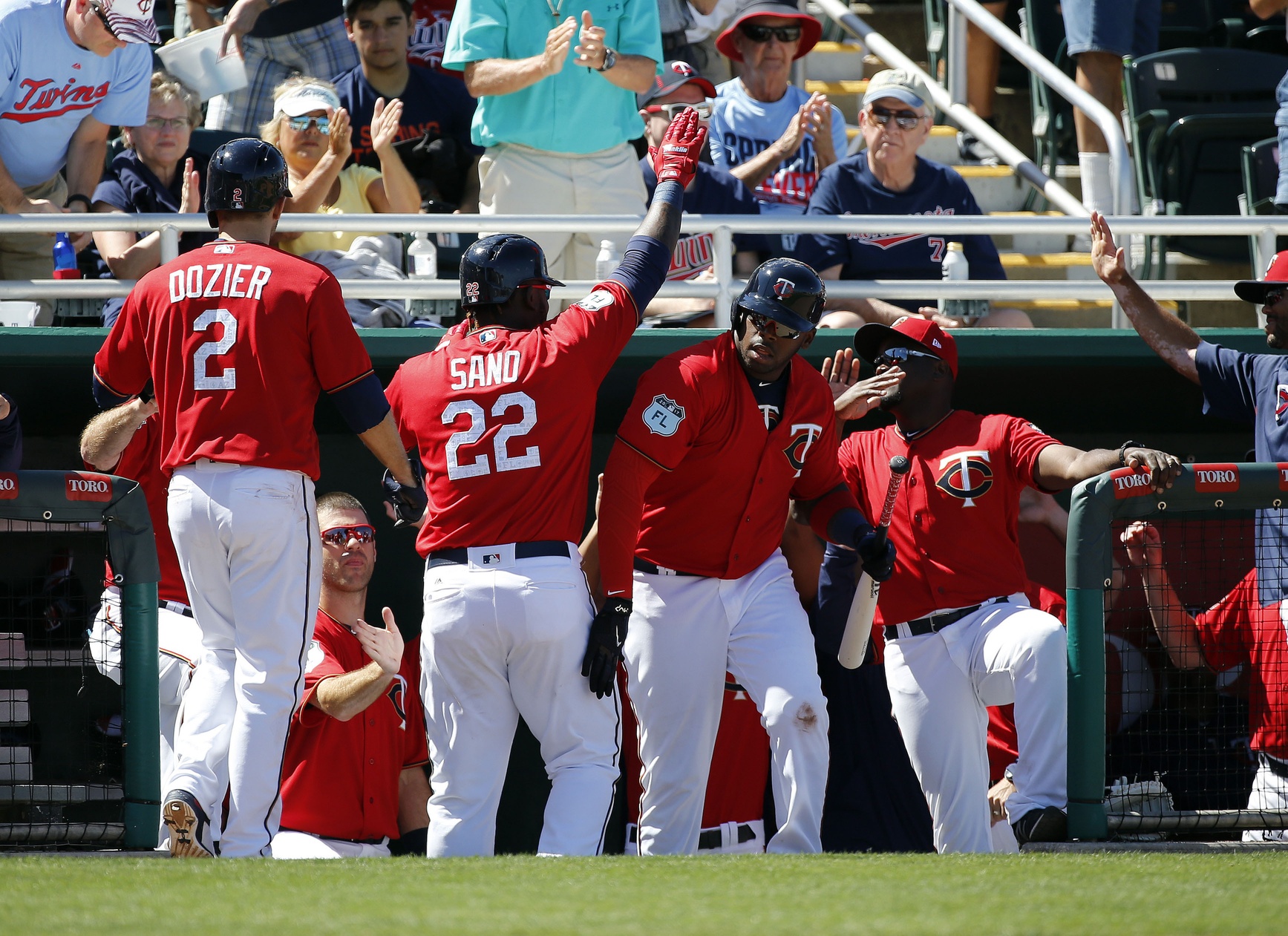 ** Ervin Santana, the Twins’ first pitcher to crack the three inning mark this spring, said he was working on his changeup, trying to get comfortable throwing it to both lefties and righties. In his outing, he said he threw about ten changeups. Santana’s slider is his out pitch but the changeup helps keep hitters off-balance and off his slider. In 2016, he threw his changeup as 8 percent of his mix while opponents hit .352 off of it. Since it is a feel pitch, however, it takes some time to get it down. Santana said he doesn’t shy away from opening up his entire arsenal during spring training games, something that he said some pitchers avoid at times. In the third, he threw several changeups up-and-away but continued to dispatch that pitch. “There are some people who go out there and pitch and they don’t have the feel for one type of pitch so they don’t throw it anymore,” Santana said. “I don’t. I just keep throwing it.” Molitor agreed with that mindset. “What I liked is that even though he didn’t quite have a good feel for it, he kept throwing it.” ** Miguel Sano hit a rocket of a home run to left center field. Sano had been struggling this spring simply to make contact. On Friday, Molitor said that the Twins’ third baseman was having some troubles picking up the spin of the baseball and had been fooled on breaking stuff. On the other hand, Sano was just a tick off of the fastball in his swing, Molitor believed. With a 3-0 count in the third, the Twins gave Sano the green light and he pounded a fastball over the left-center field fence to put the team up by three. After relaying the green light sign to third base coach Gene Glynn, Molitor said he turned to Joe Mauer before the 3-0 pitch and asked if Mauer thought Blue Jays pitcher Mark Bolsinger would throw a slider in that situation. Sano hit the home run on the fastball and Mauer replied “He should have.” “He likes to swing 3-0, he tells me all the time,” Molitor said. “He’s in scoring position in the box.” Molitor said that he enjoyed that Sano flashed a short, compact swing on the ball rather than some of his more wild, pull-heavy ones. ** Molitor was asked if that was the first time this spring he’s given the green light on 3-0. Molitor said that he has given the sign several times but he felt that only a few of the hitters have taken the opportunity to swing. “It’s one of those things that you hopefully find out who is fearlessly there,” Molitor said. “You can’t worry about the time where you pop it up or roll it over, you just try to have a plan and execute it.” The Twins haven’t shown much of a tendency to swing during 3-0 counts in the past. Last season they had 115 plate appearances with 3-0 counts. They swung at just 4.9 percent of pitches seen. Only Texas and Colorado watched more pitches go by. ** Max Kepler’s spring has been slow but Molitor was happy to see the two doubles in his first two at-bats. “He got a little feedback today,” said Molitor. “He smoked the ball, a couple of balls to right field.” ** Catcher Mitch Garver -- Twins Daily’s 11th ranked prospect -- put on an impressive display during batting practice prior to Saturday’s game. The right-handed hitter deposited multiple balls onto Hammond Stadium’s berm in left field. In the sixth inning, he smacked a hard grounder which hit the third base bag giving him an easy double and later walked and scored on Drew Stubbs’ double in the eighth. In over 500 at-bats in 2015, Garver hit just four home runs. Last season he hit 12 home runs split between Chattanooga and Rochester. It was with the Lookouts that Garver was able to turn on the power. “Working with Doug Mientkiewicz last summer really did me well,” said Garver. “He and I clicked instantly and we worked together on the same page all season. He gave me a few tips and some pointers. He was really trusting and patient guy, so he understands what it takes to improve your numbers in the minors.” Garver has been praised for his offensive side of the game but one Twins official said the organization was very happy with the work Garver had put into his defensive side. According to their Trackman data, Garver made noticeable improvements in his receiving game after working with new first base coach Jeff Smith. ** Ryan Pressly finished off the game in the ninth, using a mix of fastball, slider and big curve. While the radar gun at Hammond showed him sitting 94 and 95, when he was in a 3-2 count to the Blue Jays’ Reese McGuire, Pressly reached back and blew a 97 mile per hour fastball past the swinging Jay.
 -
Southern like Brian Dozier? They do have Rudy Hernandez on staff as an assistant hitting coach.
-
The Minnesota Twins top the Philadelphia Phillies 4-3 on Friday behind solid pitching performances and a pair of home runs from middle infielders. Trevor May and Jose Berrios, both battling for a rotation spot, limited the Phillies to just one run, while Jake Reed, Aaron Slegers, Stephen Gonsalves, and JT Chargois turned in zeros in their appearances. Only Buddy Boshers was roughed up in his lone inning of work. Offensively, the Twins were lifted by home runs for two infielders, Danny Santana and Tommy Field. Outfielder Zack Granite drove home two on a single in the seventh inning to put the Twins ahead for good. The Twins are back home at Hammond Stadium on Saturday. Ervin Santana will take on the Toronto Blue Jays in his second start of the spring. More notes…** Trevor May fared well in his second spring start. The first batter he faced was Cesar Hernandez who May got ahead 0-2 but then misfired with a fastball up and clipped Hernandez in the shoulder. Hernandez ended up coming around to score on a sac fly by Odubel Herrera. May said later that he felt that the transition from the windup to the stretch threw him out of whack for a few batters. He recovered and allowed one single while striking out two Phillies. May said that last season he went away from the windup because he was told by Torii Hunter and Paul Molitor that he was tipping his pitches. Prior to starting his windup, he would close his glove around the ball in his hand and hold it lower in the pocket when he threw his breaking balls and leaving it unclenched when throwing his fastball. May says he has since corrected this and hasn’t had any more issues. “He was doing certain things on certain pitches,” Molitor said after his outing. “If I can see them when I’m not really trying to study that stuff then you know it’s somewhat flagrant.” How is it that Molitor still picks up on these things even when he’s not on the field? “Old habits die hard.” ** Berrios struck out four over two innings but admitted he struggled in his first inning of work. He went deep into counts and walked two. While he didn’t want to use it as an excuse, Berrios said the transition coming in from the bullpen was challenging and didn’t feel fully ready in that initial inning. The Twins would like to see better command out of Berrios, have him avoid rushing his delivery and strive for more efficient innings. ** Miguel Sano struck out in three of his at-bats, albeit the first of which he appeared to check his swing. During Jose Berrios’ post-game presser, Sano sidled up behind the reporters. Berrios was then asked if he thought he could strike out Miguel Sano. Sano shook his head and replied “Everyone can strike me out.” Molitor was not concerned about Sano’s performance so far this spring which has included seven strikeouts in ten plate appearances. “I don’t think he’s recognizing spin great yet,” he said. “He's had some good swings at fastballs, just maybe a tick late. He’s got the right approach, trying to stay inside instead of trying to hit everything to left field.” ** Eddie Rosario made back-to-back long distance bus rides to Sarasota and then Clearwater. “The schedule doesn’t always work out,” Molitor said. “I told myself I’m not going to be overly concerned about who goes on what trip. It’s about getting time for them to play. Got some at-bats yesterday, center field today, might play right field on Sunday.” Molitor said that the Puerto Rico team was contemplating using him as a right fielder so the Twins manager obliged and will give him some reps on the other side of the field. He added that it was a good opportunity to try outfielders in other places in the event of an in-season injury. Rosario, who has been given limited exposure versus left-handed pitching in his major league career, faced the Orioles’ side-arming lefty Donnie Hart and the at-bat went pretty much as you would expect. ** Molitor shared his thoughts on how things are working out with the new members of his coaching staff. Click here to view the article
-
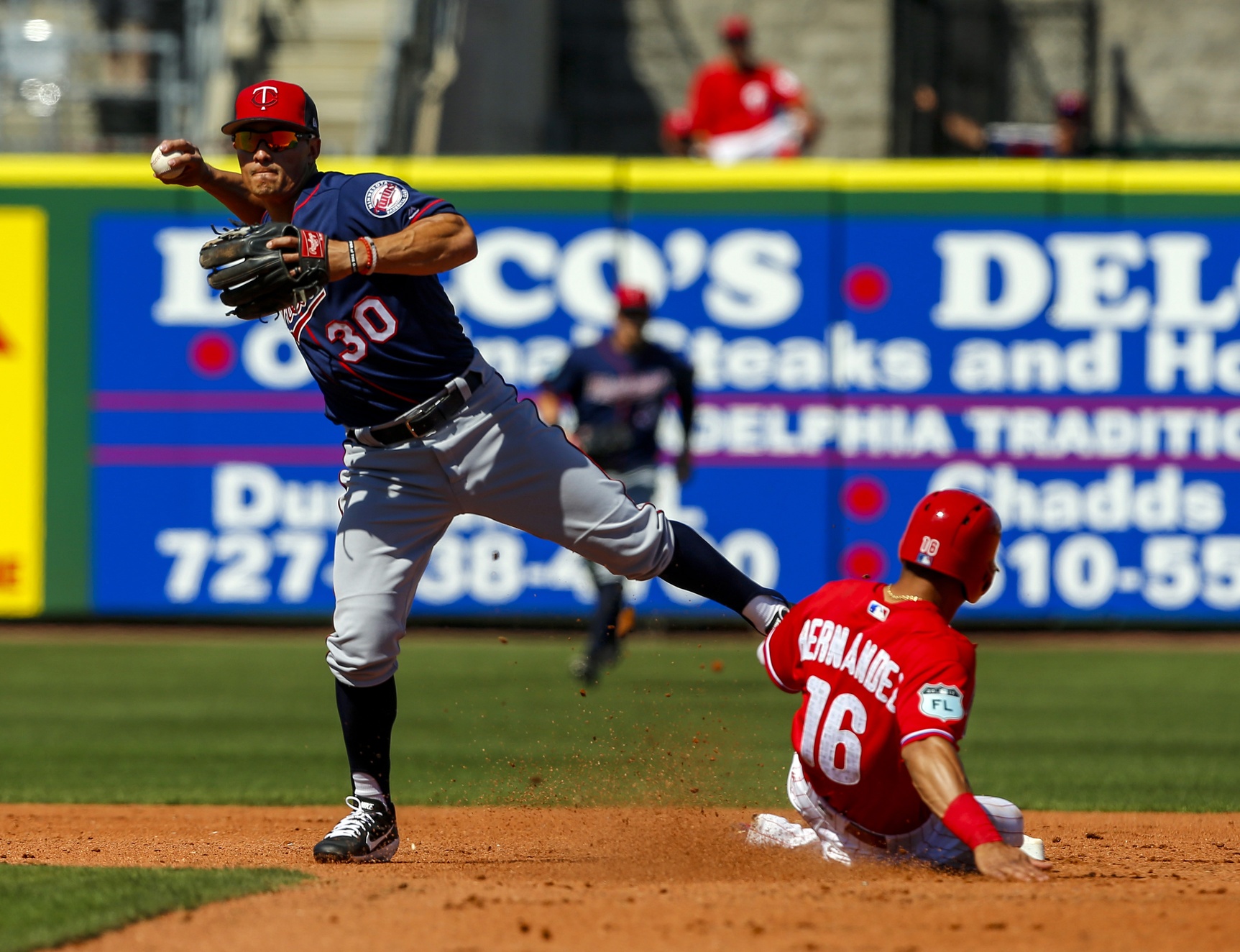 ** Trevor May fared well in his second spring start. The first batter he faced was Cesar Hernandez who May got ahead 0-2 but then misfired with a fastball up and clipped Hernandez in the shoulder. Hernandez ended up coming around to score on a sac fly by Odubel Herrera. May said later that he felt that the transition from the windup to the stretch threw him out of whack for a few batters. He recovered and allowed one single while striking out two Phillies. May said that last season he went away from the windup because he was told by Torii Hunter and Paul Molitor that he was tipping his pitches. Prior to starting his windup, he would close his glove around the ball in his hand and hold it lower in the pocket when he threw his breaking balls and leaving it unclenched when throwing his fastball. May says he has since corrected this and hasn’t had any more issues. “He was doing certain things on certain pitches,” Molitor said after his outing. “If I can see them when I’m not really trying to study that stuff then you know it’s somewhat flagrant.” How is it that Molitor still picks up on these things even when he’s not on the field? “Old habits die hard.” ** Berrios struck out four over two innings but admitted he struggled in his first inning of work. He went deep into counts and walked two. While he didn’t want to use it as an excuse, Berrios said the transition coming in from the bullpen was challenging and didn’t feel fully ready in that initial inning. The Twins would like to see better command out of Berrios, have him avoid rushing his delivery and strive for more efficient innings. ** Miguel Sano struck out in three of his at-bats, albeit the first of which he appeared to check his swing. During Jose Berrios’ post-game presser, Sano sidled up behind the reporters. Berrios was then asked if he thought he could strike out Miguel Sano. Sano shook his head and replied “Everyone can strike me out.” Molitor was not concerned about Sano’s performance so far this spring which has included seven strikeouts in ten plate appearances. “I don’t think he’s recognizing spin great yet,” he said. “He's had some good swings at fastballs, just maybe a tick late. He’s got the right approach, trying to stay inside instead of trying to hit everything to left field.” ** Eddie Rosario made back-to-back long distance bus rides to Sarasota and then Clearwater. “The schedule doesn’t always work out,” Molitor said. “I told myself I’m not going to be overly concerned about who goes on what trip. It’s about getting time for them to play. Got some at-bats yesterday, center field today, might play right field on Sunday.” Molitor said that the Puerto Rico team was contemplating using him as a right fielder so the Twins manager obliged and will give him some reps on the other side of the field. He added that it was a good opportunity to try outfielders in other places in the event of an in-season injury. Rosario, who has been given limited exposure versus left-handed pitching in his major league career, faced the Orioles’ side-arming lefty Donnie Hart and the at-bat went pretty much as you would expect. Overall, Molitor wants to see more consistency out of the outfielder. “He can get zoned in pretty good for a while then he might lose it for a day or two. I think he knows he’s trying to plan on being a more consistent player. Something that would center around his at-bats more than any other part of his game.” ** Back in Fort Myers, Twins prospect Mason Melotakis threw a 25-pitch bullpen without any issues. The 25-year-old left-handed has suffered an oblique strain and was listed as day-to-day. Armed with a fastball that reaches 97, Melotakis spent 2016 in Chattanooga where he worked 33 innings in relief and struck out 42. ** Glen Perkins threw a bullpen session as well on Thursday. The review from Molitor? M’eh. “I didn’t hear anything over-the-top encouraging and I didn’t hear anything alarming.” ** Nick Gordon, Twins Daily’s 4th ranked prospect, won the bat toss contest: ** Molitor shared his thoughts on how things are working out with the new members of his coaching staff.
 -
From what I understand, Molitor has never been resistant to anything new. He might not be aware of everything available but he definitely listens to the ideas.
-
The Minnesota Twins were not overly active in the free agent market but there are plenty of new faces in the clubhouse. With turnover on his coaching staff, Paul Molitor has spent the better part of the spring getting to know his new coworkers. Gone are Tom Brunansky and Butch Davis. New faces include hitting coach James Rowson, first base coach Jeff Smith and bench coach Jeff Pickler. Since mid-February, the new coaching staff has tried to jell in efforts to create a cohesive vision and team. “It’s like Derek and Thad,” Molitor said in regards to his new coaches. “Getting to know these guys better all the time.”The first change started on the hitting side. While outsiders may have looked at the numbers and suspected the pitching may receive an overhaul, Molitor and the front office agreed that the right message was being delivered in spite of the lackluster results. What they determined was that there needed to be a different voice and a different approach with the bats. Rowson, Molitor said, came highly recommended. “We had a lot of good input before I even had a chance to sit down and have a nice, long conversation [with Rowson],” Molitor explained. “There’s a certain energy component to that role, there’s a certain ability to communication and build relationships in that role and obviously you got to have guys hitting.” Molitor quickly found out when they started working together that Rowson checked all the boxes he was looking for in terms of the ideal hitting coach characteristics. “I think the important component in that role is knowing the hitters, knowing what they do well, be available, be positive, be there, give them a game plan when needed. He’s got all that stuff.” Like most hitting coaches, Rowson spends batting practice behind the turtle shell, occasionally giving some advice or encouragement, but mostly observing and learning his hitters. His philosophy, boiled down, is hit the ball hard. If the hitter is putting on his best swing, the direction will take care of itself. No need to aim the ball to the opposite field. When the game starts, Molitor said, Rowson tones down the instruction. “I’m not big on breaking down every pitch in every at bat,” Molitor said. “He might ask what you are thinking on that count but gotta let them play when the game starts.” Jeff Pickler comes to the Twins by the way of the Los Angeles Dodgers and has been asked to use all the tools at his disposal in order to improve the defense, which includes tasks like positioning the outfield in optimal alignment in order to reduce runs allowed. “Picks got a lot of layers,” Molitor said. “He’s embraced the outfield thing, guys really love him out there. His involvement is with him trying to dissect data and what we can use as a team or for certain people that would maybe find a way to advance rather than staying stagnant.” Molitor said that Pickler has been very active in the spring training games already. One example Molitor provided for Pickler’s value added is his ability to think ahead. During Wednesday’s game against the Orioles, with Chris Johnson at the plate, two outs and no one on base, Pickler approached Molitor in the dugout with a suggestion to shift to a no-doubles defense. His reasoning was that light-hitting Johnny Giavotella was on deck. If Johnson were to reach second, he would almost surely score on a single. Taking away the extra base hit opportunity would possibly prevent that run. Molitor respected that kind of foresight. Jeff Smith, the newly added first base coach, is a mountain of a man, every bit the same shape as Miguel Sano but with a few more years. Before the game, Smith roams the field with a catcher’s training glove, a shaved down version of a standard catcher’s mitt that trains backstops to receive the ball with minimum movement. More simply, it helps a catcher in their framing. Molitor acknowledged Jeff Smith’s role as the first base coach is different from his recent stretch as a manager in the minor league system and the new angle of the game will take some getting used to but Smith’s catching background has been a welcomed addition. “I’ve been pleased with how we’ve handled ourselves behind the plate,” Molitor said. The game of baseball has moved beyond simply hiring the manager’s drinking buddy to keep him company on the bench. Coaching staffs have slowly expanded and roles like defensive specialists have emerged as teams have placed a greater emphasis on using data to position their players around the diamond. The Twins have started to adapt to this dugout revolution as well. At least from Molitor’s viewpoint, the Twins feel they have the right collection of coaches in place to get the most out of their players. Click here to view the article
-
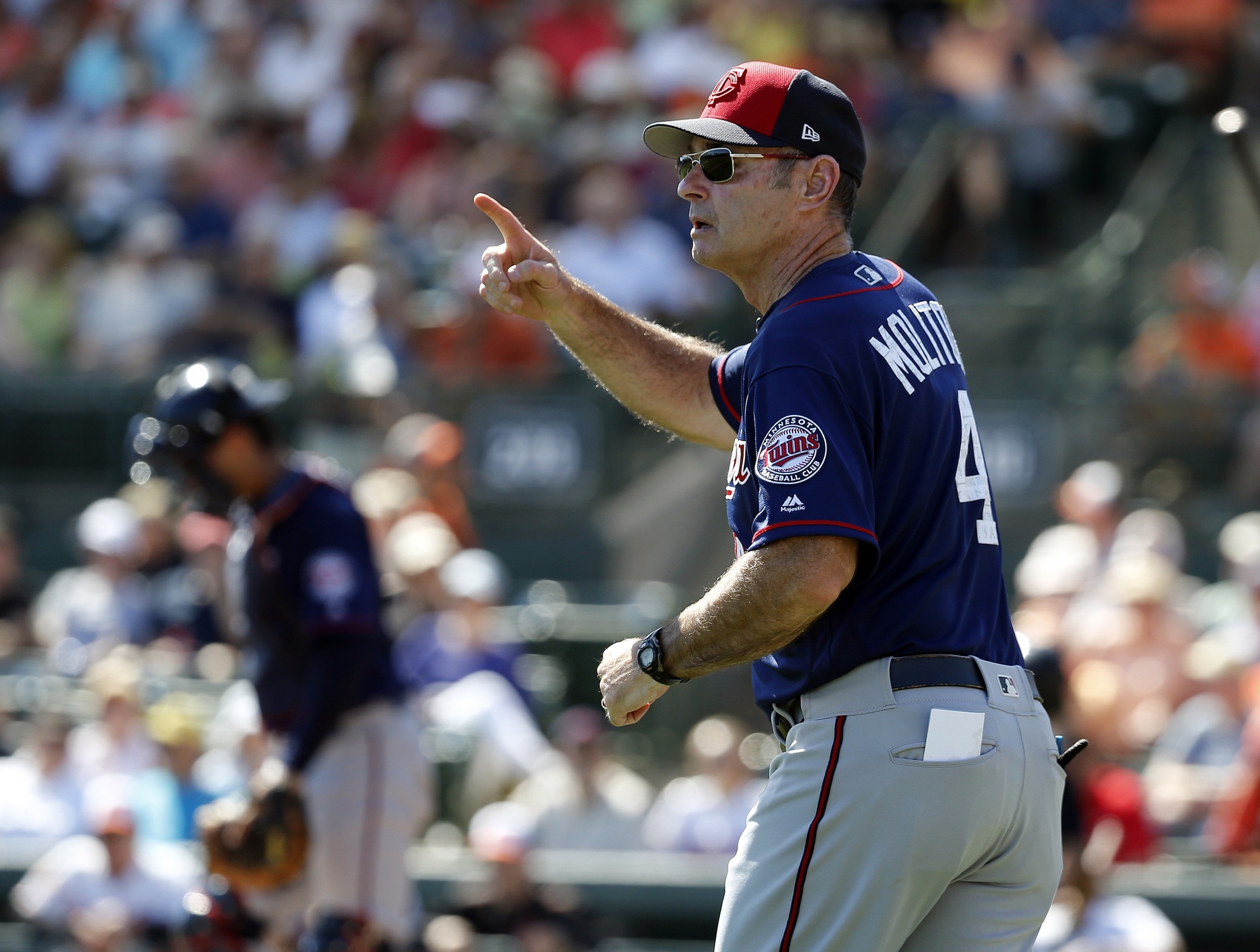 The first change started on the hitting side. While outsiders may have looked at the numbers and suspected the pitching may receive an overhaul, Molitor and the front office agreed that the right message was being delivered in spite of the lackluster results. What they determined was that there needed to be a different voice and a different approach with the bats. Rowson, Molitor said, came highly recommended. “We had a lot of good input before I even had a chance to sit down and have a nice, long conversation [with Rowson],” Molitor explained. “There’s a certain energy component to that role, there’s a certain ability to communication and build relationships in that role and obviously you got to have guys hitting.” Molitor quickly found out when they started working together that Rowson checked all the boxes he was looking for in terms of the ideal hitting coach characteristics. “I think the important component in that role is knowing the hitters, knowing what they do well, be available, be positive, be there, give them a game plan when needed. He’s got all that stuff.” Like most hitting coaches, Rowson spends batting practice behind the turtle shell, occasionally giving some advice or encouragement, but mostly observing and learning his hitters. His philosophy, boiled down, is hit the ball hard. If the hitter is putting on his best swing, the direction will take care of itself. No need to aim the ball to the opposite field. When the game starts, Molitor said, Rowson tones down the instruction. “I’m not big on breaking down every pitch in every at bat,” Molitor said. “He might ask what you are thinking on that count but gotta let them play when the game starts.” Jeff Pickler comes to the Twins by the way of the Los Angeles Dodgers and has been asked to use all the tools at his disposal in order to improve the defense, which includes tasks like positioning the outfield in optimal alignment in order to reduce runs allowed. “Picks got a lot of layers,” Molitor said. “He’s embraced the outfield thing, guys really love him out there. His involvement is with him trying to dissect data and what we can use as a team or for certain people that would maybe find a way to advance rather than staying stagnant.” Molitor said that Pickler has been very active in the spring training games already. One example Molitor provided for Pickler’s value added is his ability to think ahead. During Wednesday’s game against the Orioles, with Chris Johnson at the plate, two outs and no one on base, Pickler approached Molitor in the dugout with a suggestion to shift to a no-doubles defense. His reasoning was that light-hitting Johnny Giavotella was on deck. If Johnson were to reach second, he would almost surely score on a single. Taking away the extra base hit opportunity would possibly prevent that run. Molitor respected that kind of foresight. Jeff Smith, the newly added first base coach, is a mountain of a man, every bit the same shape as Miguel Sano but with a few more years. Before the game, Smith roams the field with a catcher’s training glove, a shaved down version of a standard catcher’s mitt that trains backstops to receive the ball with minimum movement. More simply, it helps a catcher in their framing. Molitor acknowledged Jeff Smith’s role as the first base coach is different from his recent stretch as a manager in the minor league system and the new angle of the game will take some getting used to but Smith’s catching background has been a welcomed addition. “I’ve been pleased with how we’ve handled ourselves behind the plate,” Molitor said. The game of baseball has moved beyond simply hiring the manager’s drinking buddy to keep him company on the bench. Coaching staffs have slowly expanded and roles like defensive specialists have emerged as teams have placed a greater emphasis on using data to position their players around the diamond. The Twins have started to adapt to this dugout revolution as well. At least from Molitor’s viewpoint, the Twins feel they have the right collection of coaches in place to get the most out of their players.
 -
I'd have to check again but by my count, Hughes didn't register a swing and miss in that outing.
-
In a way, Thursday’s outing in Sarasota was a microcosm of Phil Hughes’ previous two seasons. His velocity was down, he threw a ton of strikes, and he struggled to put hitters away. Nevertheless, Hughes left the game after 45 pitches -- 30 of which were strikes -- and felt that he had made significant progress towards returning to his pre-injury form. “Compared to last time, it was miles better,” said Hughes.Last time, of course, was his two inning, four hit, two run outing at JetBlue Park. It was his first game action since his thoracic outlet syndrome surgery and the Red Sox monsters made loud and consistent contact. His pitches lacked velocity and precision. This time his pitches simply lacked velocity. Ed Smith Stadium’s radar gun showed that Hughes was sitting around 88-89 with his fastball/cutter combination. He touched 90 a couple of times. But Hughes wasn’t overly concerned over those figures. “I don’t necessarily want to say ‘OK I have to throw this pitch as hard as I can right now because I have to prove that I am healthy and back’,” Hughes said. In evaluating the difference between the two outings, Hughes said as opposed to his start against Boston, he felt like he was in the driver’s seat, working ahead in the count which allowed him to open up the tool shed and deploy some of his secondary pitches. Facing a formidable Orioles lineup which included Adam Jones, Manny Machado, Mark Trumbo and Chris Davis, Hughes was able to use his cutter, curveball and changeup. “Starting off with some strike ones, throwing some decent cutters, moving the ball around the zone, elevating. I actually had a chance to work on some things instead of trying to get back into some counts like I did last time.” He did start hitters off with strikes. Phil Hughes threw a ton of strikes as Phil Hughes is wont to do. Phil Hughes throws a ton of strikes. That has never been an issue. He was ahead in the count on a regular basis, giving him the chance to use some of his secondary pitches. And, like he said, Hughes did throw some decent cutters. His best was perhaps the first one he threw when he froze Baltimore’s Hyun Soo Kim on a classic backdrop cutter. “I think I had a seven or eight pitch sequence to [Kim]. I figured I’d take a chance on 3-2 so it was nice to execute that pitch,” said Hughes. “It was a pitch that really eluded me my last outing, it felt kinda all over the place. I guess that is sorta to be expected for my first one and today I felt a lot more comfortable and located the ball better.” On the flip side, Hughes had five hitters in 0-2 counts. He allowed three of those hitters to reach base. In the first inning, Manny Machado pulled what Hughes called a “decent curveball” on 0-2 down the third base line for a double. One batter later Hughes found himself 0-2 against Mark Trumbo, only to fall behind in the count and eventually walk him. He did the same thing to Kim in the third inning, who wound up being his last batter of the afternoon. One of the issues Hughes has struggled with over the last two seasons is finishing hitters in strikeout situations. According to ESPN/TruMedia, Hughes has a .243 average against in two-strike counts, the third-highest among qualified pitchers. In 0-2 counts specifically, Hughes has a .250 average against compared to the .155 league average. “A big thing with us is to try to limit the 0-2 hits,” Hughes said. “There’s a fine line because you still want to make a competitive pitch on 0-2, not just waste one, but at the same time make sure it is a quality pitch.” Hughes did make the effort to put hitters away. Against Trumbo, he threw two fastballs at Trumbo’s eye level, only to have him foul the two back. Back in 2014, Hughes had success throwing his fastball in the upper third or higher, resulting in 42 strikeouts. That, however, was when he was sitting 92. The current 88-90 version of his fastball is not likely to achieve the same outcome. Manager Paul Molitor said that Hughes executed the game plan despite not getting the desired results in those two-strike situations. With Trumbo, the Twins wanted to work up above the zone, which Hughes did several times. Molitor credits Trumbo for battling what he considered tough pitches. Hughes’ style, Molitor said, was going to occasionally allow counts to swing from 0-2 to 2-2 in a hurry as he tries to set up an out pitch. “I think Phil understands that he’s such a command guy that he has to push people off the plate, especially when he is ahead in the count and elevate a little bit,” Molitor said. In terms of how he feels compared to previous seasons, Hughes wouldn’t take the bait. “I don’t want to get too far ahead of myself and compare it,” he said after his second start of the spring. “I’m just trying to go through every day and do what I have to do and I feel like at the end of spring I’ll really have a more clear idea of where I’m at.” There are several more weeks of spring training remaining for Hughes to ramp up, add velocity, and improve his command. At the very least, Hughes is happy with his progress so far. Click here to view the article
-
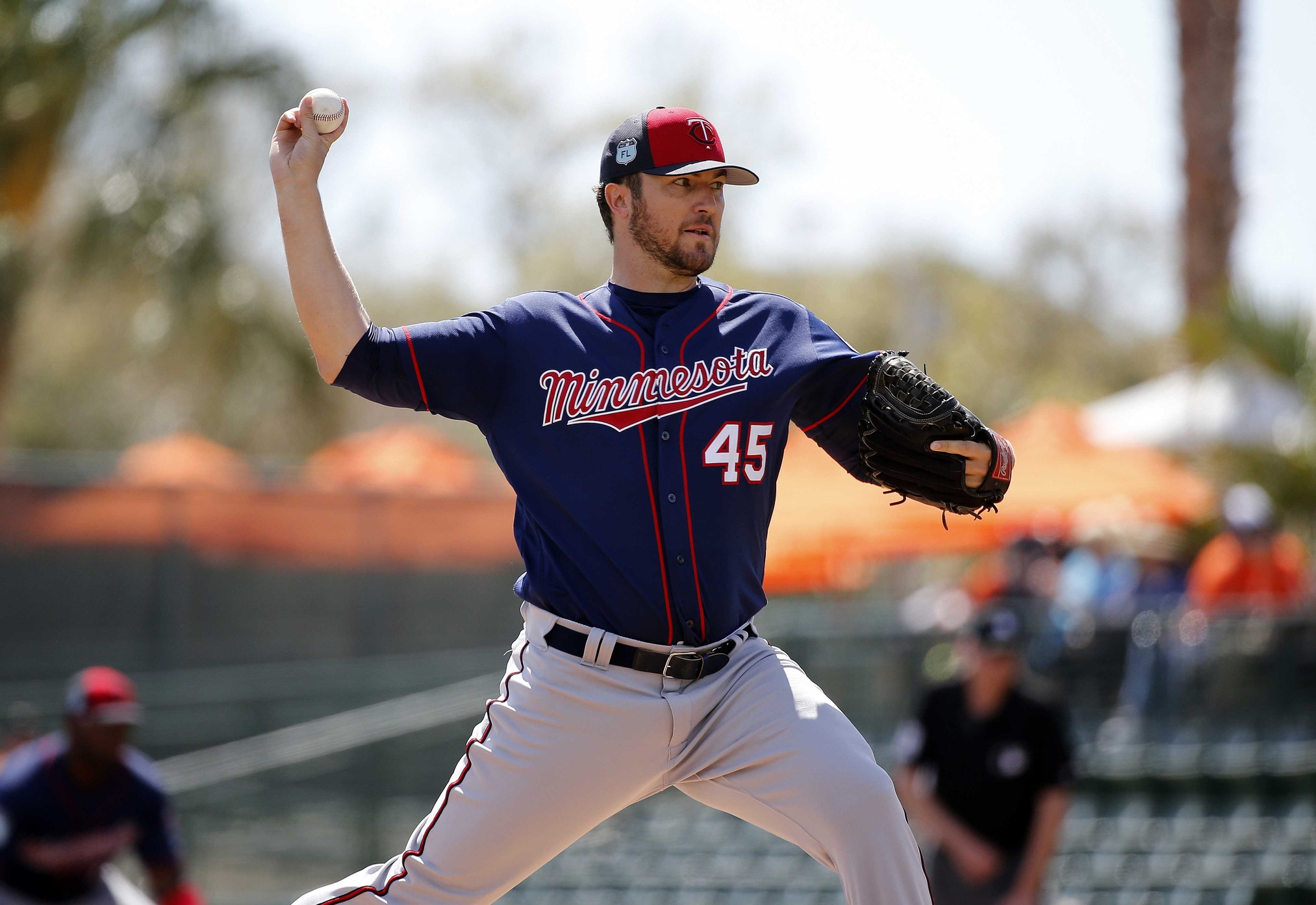 Last time, of course, was his two inning, four hit, two run outing at JetBlue Park. It was his first game action since his thoracic outlet syndrome surgery and the Red Sox monsters made loud and consistent contact. His pitches lacked velocity and precision. This time his pitches simply lacked velocity. Ed Smith Stadium’s radar gun showed that Hughes was sitting around 88-89 with his fastball/cutter combination. He touched 90 a couple of times. But Hughes wasn’t overly concerned over those figures. “I don’t necessarily want to say ‘OK I have to throw this pitch as hard as I can right now because I have to prove that I am healthy and back’,” Hughes said. In evaluating the difference between the two outings, Hughes said as opposed to his start against Boston, he felt like he was in the driver’s seat, working ahead in the count which allowed him to open up the tool shed and deploy some of his secondary pitches. Facing a formidable Orioles lineup which included Adam Jones, Manny Machado, Mark Trumbo and Chris Davis, Hughes was able to use his cutter, curveball and changeup. “Starting off with some strike ones, throwing some decent cutters, moving the ball around the zone, elevating. I actually had a chance to work on some things instead of trying to get back into some counts like I did last time.” He did start hitters off with strikes. Phil Hughes threw a ton of strikes as Phil Hughes is wont to do. Phil Hughes throws a ton of strikes. That has never been an issue. He was ahead in the count on a regular basis, giving him the chance to use some of his secondary pitches. And, like he said, Hughes did throw some decent cutters. His best was perhaps the first one he threw when he froze Baltimore’s Hyun Soo Kim on a classic backdrop cutter. “I think I had a seven or eight pitch sequence to [Kim]. I figured I’d take a chance on 3-2 so it was nice to execute that pitch,” said Hughes. “It was a pitch that really eluded me my last outing, it felt kinda all over the place. I guess that is sorta to be expected for my first one and today I felt a lot more comfortable and located the ball better.” On the flip side, Hughes had five hitters in 0-2 counts. He allowed three of those hitters to reach base. In the first inning, Manny Machado pulled what Hughes called a “decent curveball” on 0-2 down the third base line for a double. One batter later Hughes found himself 0-2 against Mark Trumbo, only to fall behind in the count and eventually walk him. He did the same thing to Kim in the third inning, who wound up being his last batter of the afternoon. One of the issues Hughes has struggled with over the last two seasons is finishing hitters in strikeout situations. According to ESPN/TruMedia, Hughes has a .243 average against in two-strike counts, the third-highest among qualified pitchers. In 0-2 counts specifically, Hughes has a .250 average against compared to the .155 league average. “A big thing with us is to try to limit the 0-2 hits,” Hughes said. “There’s a fine line because you still want to make a competitive pitch on 0-2, not just waste one, but at the same time make sure it is a quality pitch.” Hughes did make the effort to put hitters away. Against Trumbo, he threw two fastballs at Trumbo’s eye level, only to have him foul the two back. Back in 2014, Hughes had success throwing his fastball in the upper third or higher, resulting in 42 strikeouts. That, however, was when he was sitting 92. The current 88-90 version of his fastball is not likely to achieve the same outcome. Manager Paul Molitor said that Hughes executed the game plan despite not getting the desired results in those two-strike situations. With Trumbo, the Twins wanted to work up above the zone, which Hughes did several times. Molitor credits Trumbo for battling what he considered tough pitches. Hughes’ style, Molitor said, was going to occasionally allow counts to swing from 0-2 to 2-2 in a hurry as he tries to set up an out pitch. “I think Phil understands that he’s such a command guy that he has to push people off the plate, especially when he is ahead in the count and elevate a little bit,” Molitor said. In terms of how he feels compared to previous seasons, Hughes wouldn’t take the bait. “I don’t want to get too far ahead of myself and compare it,” he said after his second start of the spring. “I’m just trying to go through every day and do what I have to do and I feel like at the end of spring I’ll really have a more clear idea of where I’m at.” There are several more weeks of spring training remaining for Hughes to ramp up, add velocity, and improve his command. At the very least, Hughes is happy with his progress so far.
 -
And so it begins. Twins Daily’s Report From The Fort 2017 kicks off from Sarasota where the Twins will tangle with the Baltimore Orioles. The visiting media at Ed Smith Stadium is placed directly under the Earth’s sun so there will be interesting tan lines by the end of this game. Not that I am complaining. On to Twins baseball...Phil Hughes will make his second start of the spring. Hughes, who is returning from thoracic outlet syndrome surgery, surrendered four hits and two runs in two innings of work against the Red Sox in his first outing. According to the Pioneer Press’s Mike Berardino, Hughes reached 90 on the radar, which is about what he averaged on his fastball over the past two seasons. Ideally, he would like to see that velocity creep up closer to the 92 mile per hour average he posted in his first season with the Twins. Hughes will have to navigate through some big bats in the Orioles lineup. Adam Jones, Manny Machado, Chris Davis and Mark Trumbo will present a solid challenge for the veteran Glen Perkins turns 34 today. In case you were wondering, the closers with the most saves after turning 34 are Mariano Rivera (369), Dennis Eckersley (326), Trevor Hoffman (287), Jose Mesa (184) and Doug Jones (182). Former Twins closer Joe Nathan is seventh with 177. From now until the end of March, Twins Daily will have you covered from Fort Myers. Be sure to follow Twins Daily on Twitter for live updates, breaking news and insight. Click here to view the article
-
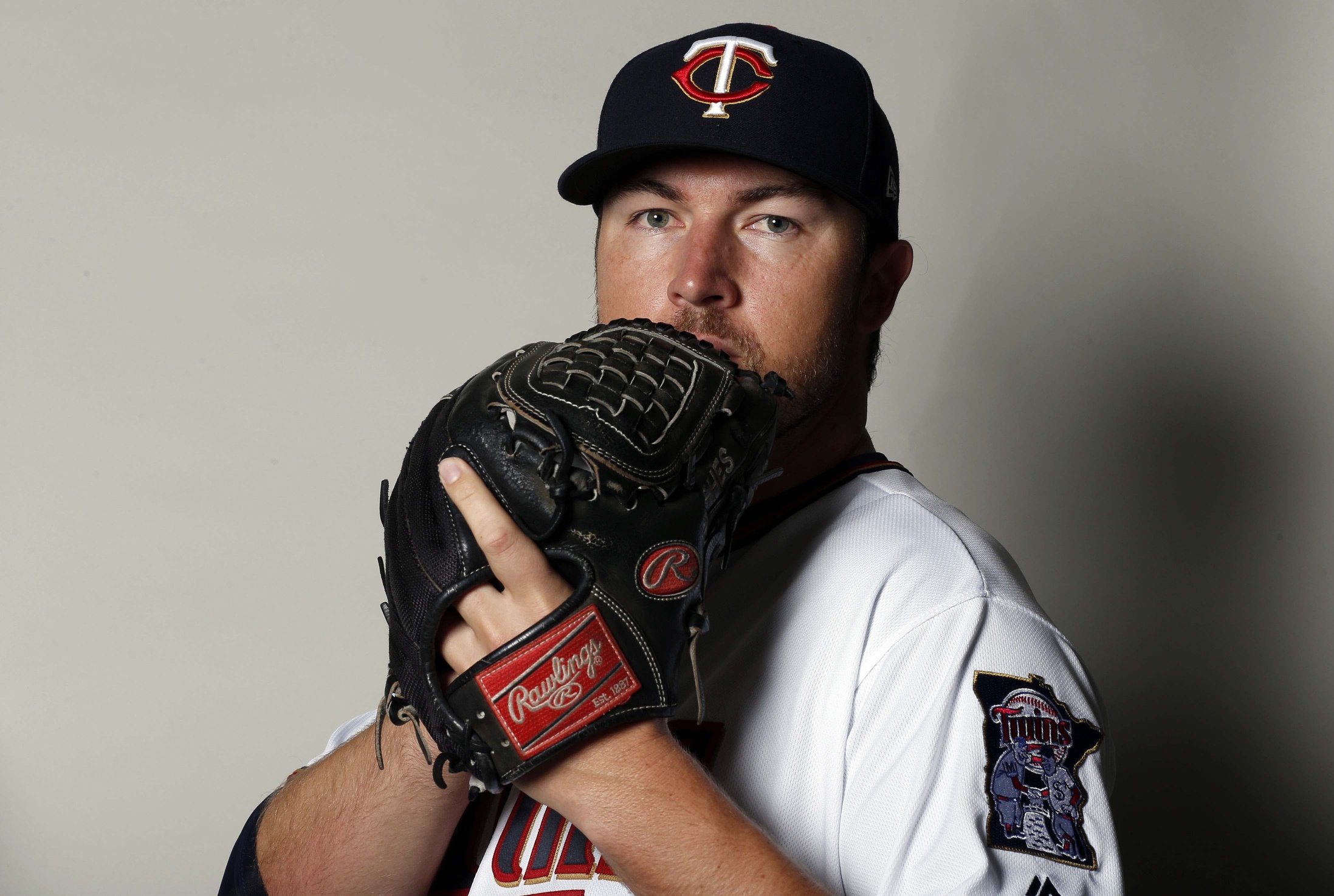 Phil Hughes will make his second start of the spring. Hughes, who is returning from thoracic outlet syndrome surgery, surrendered four hits and two runs in two innings of work against the Red Sox in his first outing. According to the Pioneer Press’s Mike Berardino, Hughes reached 90 on the radar, which is about what he averaged on his fastball over the past two seasons. Ideally, he would like to see that velocity creep up closer to the 92 mile per hour average he posted in his first season with the Twins. Hughes will have to navigate through some big bats in the Orioles lineup. Adam Jones, Manny Machado, Chris Davis and Mark Trumbo will present a solid challenge for the veteran https://twitter.com/twinsdaily/status/837319645971492864/photo/1 Glen Perkins turns 34 today. In case you were wondering, the closers with the most saves after turning 34 are Mariano Rivera (369), Dennis Eckersley (326), Trevor Hoffman (287), Jose Mesa (184) and Doug Jones (182). Former Twins closer Joe Nathan is seventh with 177. From now until the end of March, Twins Daily will have you covered from Fort Myers. Be sure to follow Twins Daily on Twitter for live updates, breaking news and insight.
 -
Article: The Inside Story of Twins Daily
Parker Hageman replied to John Bonnes's topic in Twins Daily Front Page News
I definitely mentioned this multiple times at the on-set of our work together. I distinctly remember bringing that idea up at a meeting at Seth's townhouse and it was met with silence. At the time, I was miffed because I thought everyone was being shortsighted. Later, I came to realize that it was easy for me to accept that proposal because I had the least about of "blog equity" of the group. I was ready to consolidate my work because I had only been working on it for less than three years at that point. Meanwhile, Seth and John were almost a decade in and Nick wasn't too far behind. Without a cohesive vision, I can see why it would be difficult to roll that die. After the FOX meeting and the agreement that we were going to combine efforts on one site, I also recall that Seth, Nick and myself were fairly indifferent about having a forum section attached to the site. John, however, was persistent and insistent. The site had to have a forum or the whole venture wouldn't work. It needed a built-in community. Personally, I was skeptical, mostly because I had never spent any time in forums and the only one I was familiar with was the flaming pile at either KFAN or ESPN. I wasn't even aware of BYTO until Nick introduced Brock to the group. It didn't take long to realize how wrong my stance was on the forums. This has truly been a great collection of thoughts and ideas (mixed with the occasional snark for flavoring). -
Article: TD Top Prospects: #10 Lewin Diaz
Parker Hageman replied to Parker Hageman's topic in Twins Daily Front Page News
Good info. Thanks for sharing. -
Article: TD Top Prospects: #10 Lewin Diaz
Parker Hageman replied to Parker Hageman's topic in Twins Daily Front Page News
"...but he has shown signs of being more than an all-or-nothing type of hitter like Walker." -
Article: TD Top Prospects: #10 Lewin Diaz
Parker Hageman replied to Parker Hageman's topic in Twins Daily Front Page News
Correct. Radcliff was high on his athleticism for a guy his size. I'd like to hear from some of the Twins Daily members who are down at camp. If you get a chance to see his infield chops, let us know.
