



Parker Hageman
-
Posts
4,152 -
Joined
-
Last visited
-
Days Won
6
Content Type
Profiles
News
Minnesota Twins Videos
2026 Minnesota Twins Top Prospects Ranking
2022 Minnesota Twins Draft Picks
Minnesota Twins Free Agent & Trade Rumors, Notes, & Tidbits
Guides & Resources
2023 Minnesota Twins Draft Picks
The Minnesota Twins Players Project
2024 Minnesota Twins Draft Picks
2025 Minnesota Twins Draft Pick Tracker
2026 Minnesota Twins Draft Tracker: Picks & Bonuses
Forums
Blogs
Events
Store
Downloads
Gallery
Everything posted by Parker Hageman
-
 Why the Free Agent Tracker? *** DOWNLOAD THE 2016 OFFSEASON HANDBOOK*** One of the areas in which we feel the Offseason Handbook can be improved is in its static nature, particularly in the sections where the landscape can change rapidly as the hot stove heats up. Each year countless hours are spent curating a list of the available free agents, finding their stats, creating a profile, and providing an estimated contract. We truly feel like you receive a valuable service to pull this information into one document. However, once free agency period kicks in and names begin to fly off the board, the functionality is gone. For a more dynamic experience, we’ve created the 2016 Free Agent Tracker, a database complete with all the information you would normally find with the Offseason Handbook’s Free Agent section only now you can manipulate the things that you want to see, when you want to see them. For example, as KSTP’s Darren Wolfson reported earlier this week, the Twins and free agent Kurt Suzuki appear to be headed in opposite directions and the Twins will likely need to find themselves a new backstop. Who is available on the free agent market? Simply toggle the catcher position and you will have a list of all the free agent catchers. Now let’s say you want to know more details on a specific free agent, such as that Wilson Ramos fella (because you paid little attention to him while he was here the first time around), just click on his name and voila: you are whisked away to a magical land of detailed player profile and a section for any rumors and updates that is pertinent to the player’s free agent status. As the offseason develops and players are signed, the Free Agent Tracker will update, providing the team which inked that player and the eventual contract (usually a rate so high your grandfather can’t believe people who play a kid’s game get paid so much). Unlike some other free agent lists out there, you will be able to sort through the signed and unsigned players. *** DOWNLOAD THE 2016 OFFSEASON HANDBOOK*** So there you have it. We feel that the Free Agent Tracker is a simple yet vital upgrade to the free agency experience, that complements the Offseason Handbook (which, mahgawd, download it now if you haven’t done so already) like pine tar and maple bats. Take some time to roam around the new database and explore the player profiles. Feel free to leave comments or submit your own contract estimates within any of the player profiles. Enjoy.
 -

Article: Derek Falvey, Thad Levine Era Begins
Parker Hageman replied to Seth Stohs's topic in Twins Daily Front Page News
As I said, the Terry Ryan scouting aspect -- looking at an individual player -- needs to be separated from the Terry Ryan GM decisions. Even when he was a GM, Ryan never stopped scouting. Never stopped evaluating. He was probably one of the biggest road dogs among all the GMs, always making stops throughout the minor league system as well as the AZ Fall League. Frankly, I don't think the way talent is observed and evaluate through scouting has changed that much. The way the information and reports are processed and the way the decisions are made inside the front office has definitely changed, which was Ryan's issue. You could possibly argue that StatCast data, PitchF/X and other data collectors adds a new level to scouting -- if you want to call that a part of scouting/evaluation. However, I'm not sure that is what Lavine was referring to. That seems to be separate from his definition of baseball evaluator.- 68 replies
-
- 2
-

-
- derek falvey
- thad levine
- (and 3 more)
-
Article: Derek Falvey, Thad Levine Era Begins
Parker Hageman replied to Seth Stohs's topic in Twins Daily Front Page News
More of an industry-wide accepted belief than an opinion. What you think of Terry Ryan as a GM and what you think of Terry Ryan as a scout should be completely different. But you raise a good question that I would like to know from Levine -- who does he think is a top evaluator? What are his standards for an evaluator? Does he think they can be made or is it some oracle-like gift that cannot be passed down?- 68 replies
-
- 1
-
-
- derek falvey
- thad levine
- (and 3 more)
-
Article: Derek Falvey, Thad Levine Era Begins
Parker Hageman replied to Seth Stohs's topic in Twins Daily Front Page News
Here's something interesting to consider. When the reports of Lavine being hired were floated, I did some due diligence on him and found an interesting piece on him from the WaPo in 2011 in which he said that the evaluators are the biggest advantage a team could have: Lavine reiterated this a bit today. It makes me wonder what his thoughts are on the current state of the Twins evaluation team. I think Terry Ryan would easily be considered one of the 30-to-50 top evaluators in the game -- and there was some indication that the club was in talks to have him stay around -- but is there anyone else? Radcliff? Does that mean Lavine will be hiring more evaluators?- 68 replies
-
- 2
-
-
- derek falvey
- thad levine
- (and 3 more)
-
For me it isn't the velo for Chargois -- although that's great too -- it's that movement he gets. That is going to be tough to square up. https://twitter.com/ParkerHageman/status/779167113130881024
-
After weeks of uncertainty, the Minnesota Twins’ front office is starting to materialize. The Twins announced the hiring of Derek Falvey as the Vice President and Chief Baseball Officer at the beginning of October but the role of General Manager remained vacant. Now, according to multiple reports, the Twins appear on the verge of hiring Thad Levine as just the sixth General Manager since relocating to Minnesota.As Falvey’s Cleveland Indians trounced the Chicago Cubs in the first game of the 2016 World Series, the Star Tribune’s Lavelle Neal broke the news that Levine has “emerged as a candidate” to fill the GM position. Shortly thereafter, Dallas Morning News’ Rangers beat writer Evan Grant tweeted, confirming the Star Tribune report that Levine is expected to join the Twins. Levine is an interesting balance to Falvey’s background from Cleveland’s analytical-oriented front office. Since coming into baseball with the Colorado Rockies, the 44-year-old Levine has spent 11 seasons with the Texas Rangers in the Assistant General Manager’s position, overseeing the statistical analysis among other things for the team. The Rangers, however, are far from front-runners in baseball’s analytics game: According to an informal 2015 ESPN report, the Rangers fell towards the bottom of the league as an organization that eschews statistical analysis (although ahead of the Twins) and opted for more of the standard scouting practice. Meanwhile, in a 2014 Reddit chat, Levine addressed some of those concerns. “As a "younger" front office, we used to be younger than we are now, we were considered an analytical group, when in practice, we were much more scouting focused in our decision making,” Levine said. “In the past five years, we have made significant investments in analytics both in people and systems.” It’s hard to completely judge an organization’s analytical strengths or how much they have grown but, as it stands today, the Rangers have three people listed on their front office who appear dedicated to analytics, including Todd Slavinsky, a University of Minnesota-Morris graduate, as the Director of Baseball Analytics. The Twins, too, have three staffers from their analytics department listed on their front office page, an area they were hoping to grow with the addition of Falvey. In a 2011 Washington Post profile on Levine, Levine said that he believed the biggest advantage a team could have is hiring the best talent evaluators. He noted that there were approximately 30-to-50 of these baseball oracles floating around the game and that he was focused on hiring several of them to give his team the upper hand. “The Rangers complement the recommendations from their scouts with statistical analysis, not the other way around,” wrote the Post’s Adam Kilgore. In that same Reddit chat, Levine submitted an interesting nugget regarding the methods of the Rangers front office. He said that the team monitors Twitter and occasionally finds inspirations for potential trades. “[A]t the trade deadline, we are all on Twitter, because you may be surprised how many trade discussions are inspired or refined by tweets.” Levine also said that the front office staff would use all of the publicly available sites such as Fangraphs.com, Baseball-Reference and others to obtain information. This is by no means a bad thing, however you have to believe that while teams like the Rangers are finding that type of info, organizations like the Cubs, Astros and Dodgers are creating their own research firms in-house. That said, the Rangers methods have been successful and Levine has been instrumental in some of the talent acquisition that has created the strong American League West dynasty. After all, Texas has made it to the postseason in four of the last six years as well as the World Series twice. In his tenure, the Rangers were able to acquire Mike Napoli, Cliff Lee, Josh Hamilton Carlos Lee, Elvis Andrus, Neftali Feliz, Matt Harrison and Jarrod Saltalamacchia for various pieces of talent. “Trades tend to be unique one trade to the next,” Levine commented. “Baseball is all about talent evaluation. Everyone understands the concept of scouting two shortstops. But our jobs also require us to scout each GM. So depending on which GM you are negotiating with, the discussion will go differently.” Overall, Levine’s background seems balanced in both the new school and old school mentalities. One of Levine’s purported strengths while with the Rangers was being able to quickly diagnose the team’s in-season weaknesses and respond swiftly. For years the Twins seemed to fail at identifying roster weaknesses, reacting too late or in the wrong way to these issues. If Levine is able to transport that skill from one organization to another, that should be a huge benefit. It is no small task rebuilding the Twins, but Thad Levine has been in that position before with the Texas Rangers and has two World Series visits to show for it. Click here to view the article
- 53 replies
-
- 2
-
-
- minnesota twins
- rumors
- (and 3 more)
-
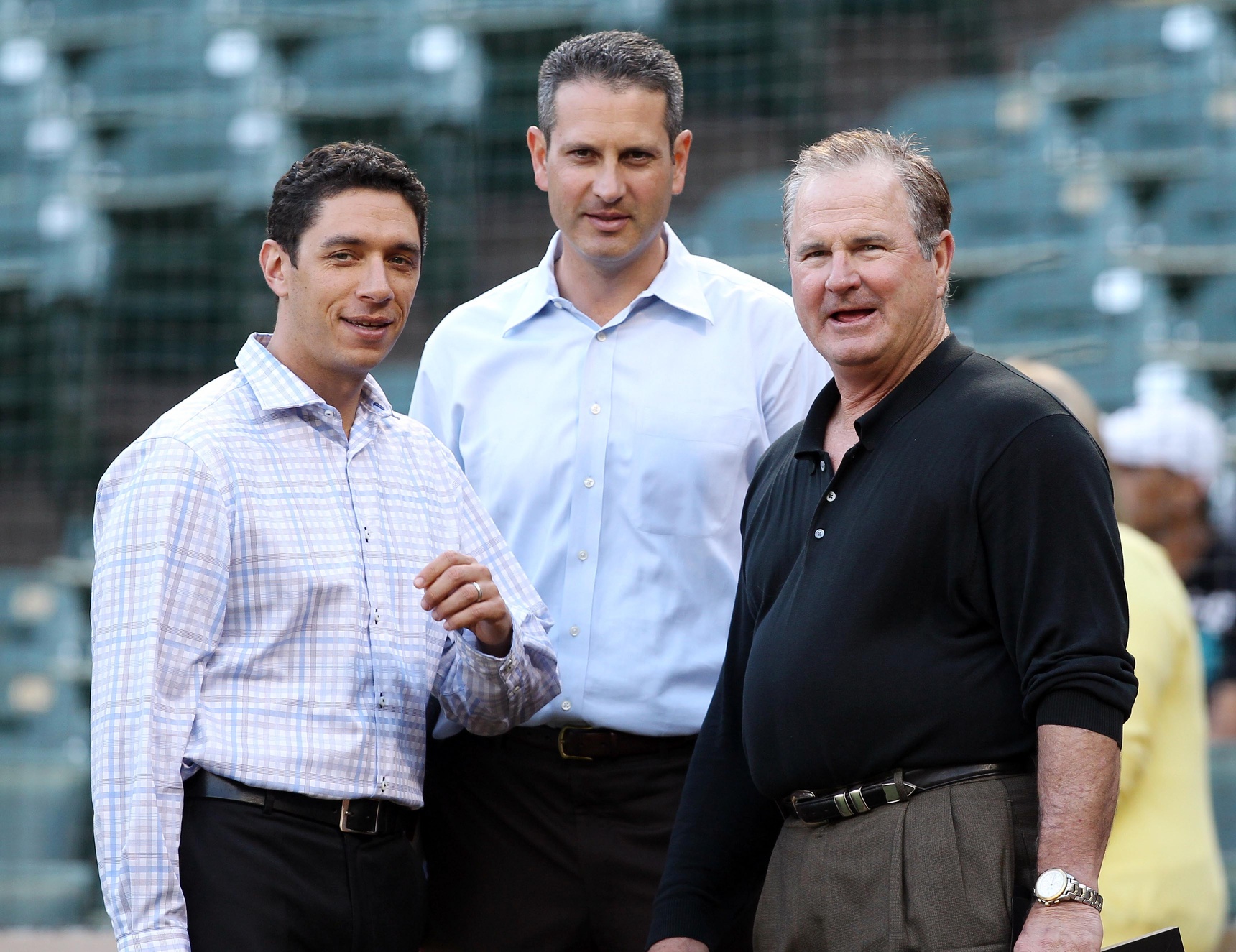 As Falvey’s Cleveland Indians trounced the Chicago Cubs in the first game of the 2016 World Series, the Star Tribune’s Lavelle Neal broke the news that Levine has “emerged as a candidate” to fill the GM position. Shortly thereafter, Dallas Morning News’ Rangers beat writer Evan Grant tweeted, confirming the Star Tribune report that Levine is expected to join the Twins. Levine is an interesting balance to Falvey’s background from Cleveland’s analytical-oriented front office. Since coming into baseball with the Colorado Rockies, the 44-year-old Levine has spent 11 seasons with the Texas Rangers in the Assistant General Manager’s position, overseeing the statistical analysis among other things for the team. The Rangers, however, are far from front-runners in baseball’s analytics game: According to an informal 2015 ESPN report, the Rangers fell towards the bottom of the league as an organization that eschews statistical analysis (although ahead of the Twins) and opted for more of the standard scouting practice. Meanwhile, in a 2014 Reddit chat, Levine addressed some of those concerns. “As a "younger" front office, we used to be younger than we are now, we were considered an analytical group, when in practice, we were much more scouting focused in our decision making,” Levine said. “In the past five years, we have made significant investments in analytics both in people and systems.” It’s hard to completely judge an organization’s analytical strengths or how much they have grown but, as it stands today, the Rangers have three people listed on their front office who appear dedicated to analytics, including Todd Slavinsky, a University of Minnesota-Morris graduate, as the Director of Baseball Analytics. The Twins, too, have three staffers from their analytics department listed on their front office page, an area they were hoping to grow with the addition of Falvey. In a 2011 Washington Post profile on Levine, Levine said that he believed the biggest advantage a team could have is hiring the best talent evaluators. He noted that there were approximately 30-to-50 of these baseball oracles floating around the game and that he was focused on hiring several of them to give his team the upper hand. “The Rangers complement the recommendations from their scouts with statistical analysis, not the other way around,” wrote the Post’s Adam Kilgore. In that same Reddit chat, Levine submitted an interesting nugget regarding the methods of the Rangers front office. He said that the team monitors Twitter and occasionally finds inspirations for potential trades. “[A]t the trade deadline, we are all on Twitter, because you may be surprised how many trade discussions are inspired or refined by tweets.” Levine also said that the front office staff would use all of the publicly available sites such as Fangraphs.com, Baseball-Reference and others to obtain information. This is by no means a bad thing, however you have to believe that while teams like the Rangers are finding that type of info, organizations like the Cubs, Astros and Dodgers are creating their own research firms in-house. That said, the Rangers methods have been successful and Levine has been instrumental in some of the talent acquisition that has created the strong American League West dynasty. After all, Texas has made it to the postseason in four of the last six years as well as the World Series twice. In his tenure, the Rangers were able to acquire Mike Napoli, Cliff Lee, Josh Hamilton Carlos Lee, Elvis Andrus, Neftali Feliz, Matt Harrison and Jarrod Saltalamacchia for various pieces of talent. “Trades tend to be unique one trade to the next,” Levine commented. “Baseball is all about talent evaluation. Everyone understands the concept of scouting two shortstops. But our jobs also require us to scout each GM. So depending on which GM you are negotiating with, the discussion will go differently.” Overall, Levine’s background seems balanced in both the new school and old school mentalities. One of Levine’s purported strengths while with the Rangers was being able to quickly diagnose the team’s in-season weaknesses and respond swiftly. For years the Twins seemed to fail at identifying roster weaknesses, reacting too late or in the wrong way to these issues. If Levine is able to transport that skill from one organization to another, that should be a huge benefit. It is no small task rebuilding the Twins, but Thad Levine has been in that position before with the Texas Rangers and has two World Series visits to show for it.
 -
"Luck is the residue of design." Branch Rickey
-
That's sort of the point. Cleveland was able to mix and match their bullpen exceptional well because of investing and deploying arms in situations that maximize their strengths. The Twins could have at least built the bullpen with that in mind.
-
The Wall Street Journal had a great article on how Cleveland assembled their team. The biggest thing the front office emphasized -- beyond developing two-way players internally which Nick highlighted above -- was in-filling with platoon players. Brandon Guyer. Tyler Naquin. Rajai Davis. All these guys had significant platoon splits and had positional flexibility. That mindset goes far beyond what the Twins front office was thinking just a couple years ago. When sitting down with TR, I asked point-blank what he thought about building the team with some platoons in mind. "Not too much," he told me. "I'm too much on platoons. I'm not on that too much. I think we need to have players that can get 600 plate appearances, 500-something plate appearances. Third baseman, shortstop, second baseman, first baseman, catcher, and left, center and right. That's kind of what good teams do." Well, yeah, but if you can't find that guy, you can do the next best thing and give yourself a platoon advantage. And yes, it requires buy-in from the manager too.
-
I would love to see pics from any of those games/celebrations. People definitely need to share some of those.
-
The thing that struck me about Game 7 is how bad the officiating was. There was the botched rundown as well as the missed Don Baylor play at the plate.
- 48 replies
-
- 1
-
-
- 1987 world series
- detroit tigers
- (and 2 more)
-
Was this pre-game talk? Because watching not long ago, it seems that Al Michaels and Tim McCarver were enamored by his performance in Game 7. He did get smacked around in Game 4 in St. Louis pretty good so maybe there was some residual effect from that. https://twitter.com/ParkerHageman/status/774816309536182272
-
From what I gathered, DSP acted like an owner's rep within the front office, managing high-level and big picture stuff for the organization. I believe he would manage budgeting, including payroll budgets (with Pohlad's approval). If any moves were made (such as signing Kendrys Morales) which deviated from the initial payroll, he would have some input. I'm not sure if it will still work that way now with Falvey but I'm guessing it will for a bit.
-
For me it boiled down to this with Brian Dozier: 2nd Half, 2015: 311 PA .210/.280/.359 9 HR 1st Half, 2016: 359 PA .246/.335/.450 14 HR 2nd Half, 2016: 332 PA .291/.344/.646 28 HR Nunez's power numbers -- the 12 home runs -- was the reason I thought he was second but in reality, he hit very similar to his 2015 season this year with the Twins as well (758 OPS vs 764 OPS).
- 27 replies
-
- 3
-
-
- brian dozier
- kennys vargas
- (and 2 more)
-
The thing for me is that Falvey leaves the Indians as a pitching guru. What exactly is he bringing to the Twins that he hasn't divulged to the Indians org? He may have kept a few tricks up his sleeve but the fact that he's lauded as a pitching-centric guy makes me think that at least one other organization knows all his secrets.
-
You forgot your tags. The thing is, I have read about his college pitching background in a lot of media reports. I just wanted to see what sort of career he had and was rather surprised how little he actually played (not that that is a bad thing).
-
The ex-pitcher angle might be played up a bit. According to Trinity College's stats, Falvey threw a total of 7.2 innings over two seasons, allowing 13 hits, 14 runs and posting a 5/5 K/BB at the Division III program. More to the point, however, I do not think his college performance dictates in anyway how well he will do or not do as an administrator and vision-setting for the organization. I'm more interested in his learning experience with a well-respected front office.
-
Speaking of Carter Hawkins, someone shared a link on Twitter of a Reddit Q&A he did last month. Hopefully he decides to join the community over here too. https://www.reddit.com/r/WahoosTipi/comments/4ydqqs/im_tribe_farm_director_carter_hawkins_ama/#bottom-comments
-
Interesting note from Berardino yesterday that Falvey was working on bringing Indians director of player development Carter Hawkins with him. Hawkins was in Falvey's wedding, which, I don't know necessarily means anything but it will be interesting to see how he assembles his front office. http://www.twincities.com/2016/10/02/byron-buxton-leads-minnesota-twins-to-season-ending-victory/
-
After a week of reports suggesting that the Minnesota Twins had made their decision on the person to lead their baseball operations, the organization has finally made it official on Monday. The 33-year-old Derek Falvey, a Terry Francona-proclaimed “rising star” in Cleveland’s front office, will assume the positions of executive vice president and chief baseball official for the Minnesota Twins.The unofficial direction for Falvey is to make the Twins win again; however, the team's official statement says that Falvey will be responsible for establishing the vision and related strategies for the club’s baseball operation. “It’s a tremendous honor to have the opportunity to lead the Twins baseball operation. This is a proud, resilient franchise, and I’m eager to return championship-caliber baseball to the Twins Cities,” said the 33-year-old Falvey. “We will work diligently and collectively to select and develop top-performers, advance our process, and nurture a progressive culture that will make fans across Twins Territory proud.” Falvey's pedigree with Cleveland includes assisting Indians President of Baseball Operation Chris Antonetti and General Manager Mike Chernoff in financial, statistical, and contractual dealings as well as player development and procurement. He also worked closely with Indians manager Terry Francona in the scouting process. "He does everything," Francona told MLB.com. "I don't know how much you see it a lot of places, but we go to him a lot with questions. And, if he doesn't have the answer, he'll go find it. He's a great resource for even the coaches. I know Chris and Cherney use him, too, but we use him a lot." “Throughout his baseball journey, Derek has earned a reputation as a talented executive thanks to innovation, collaboration and a relentless pursuit of individual and organizational improvement,” St. Peter said. “We believe Derek represents the next generation of dynamic, game-changing MLB leaders. We expect Derek to create positive change directed at restoring our winning tradition.” Falvey will be introduced as the new head of the baseball side of the Twins’ front office at a press conference once the Indians season is over. Click here to view the article
-
 The unofficial direction for Falvey is to make the Twins win again; however, the team's official statement says that Falvey will be responsible for establishing the vision and related strategies for the club’s baseball operation. “It’s a tremendous honor to have the opportunity to lead the Twins baseball operation. This is a proud, resilient franchise, and I’m eager to return championship-caliber baseball to the Twins Cities,” said the 33-year-old Falvey. “We will work diligently and collectively to select and develop top-performers, advance our process, and nurture a progressive culture that will make fans across Twins Territory proud.” Falvey's pedigree with Cleveland includes assisting Indians President of Baseball Operation Chris Antonetti and General Manager Mike Chernoff in financial, statistical, and contractual dealings as well as player development and procurement. He also worked closely with Indians manager Terry Francona in the scouting process. "He does everything," Francona told MLB.com. "I don't know how much you see it a lot of places, but we go to him a lot with questions. And, if he doesn't have the answer, he'll go find it. He's a great resource for even the coaches. I know Chris and Cherney use him, too, but we use him a lot." “Throughout his baseball journey, Derek has earned a reputation as a talented executive thanks to innovation, collaboration and a relentless pursuit of individual and organizational improvement,” St. Peter said. “We believe Derek represents the next generation of dynamic, game-changing MLB leaders. We expect Derek to create positive change directed at restoring our winning tradition.” Falvey will be introduced as the new head of the baseball side of the Twins’ front office at a press conference once the Indians season is over.
 -
Article: Jose Berrios Is Tipping His Pitches
Parker Hageman replied to Parker Hageman's topic in Twins Daily Front Page News
Last night's broadcast was the first time I've seen someone with the organization admit that Berrios' arm path was tipping his pitches. https://twitter.com/ParkerHageman/status/780961503985831936 -
Article: Take Note Of Zander Wiel
Parker Hageman replied to Parker Hageman's topic in Twins Daily Front Page News
1.) You are describing results, not process. Player development is focused on the latter. Wiel made an adjustment and was hitting the ball better in the second half of the season. That's a process improvement. 2.) My definition of fluky for a hitter is not what Wiel was doing. Fluky is doing the same thing in both circumstances and having a few more fly balls get wind-blown out of the park. As detailed, Wiel made a significant change and as such he was hitting the ball much better (not just results-based). Is it streaky? Maybe. Maybe. We certainly don't have enough of a track record to make that charge -- it's possibly that he goes to high-A next year and starts off ice cold. But as of right now, no, it is not streaky. To date, there is a pre-adjustment struggle and post-adjustment improvement. -
Article: Take Note Of Zander Wiel
Parker Hageman replied to Parker Hageman's topic in Twins Daily Front Page News
Here's the thing: It isn't a major change, it's going back to his roots. You can definitely put stock in the swing change as the factor behind the second half results. They are significantly better than they were at the beginning of the year. There's no questioning that. Has this swing change improved Zander Wiel this season and put him in a better position to succeed going forward? Yes, 100%. What I think you are trying to say is that you are not putting stock in his numbers just yet. And that is understandable. Players, coaches and hitting instructors will tell you that the next and/or last adjustment a hitter has to make is the mental side of the game. A guy could have the world's best swing but if he is always baffled by sliders and breaking balls in hitter's counts, he's not going to perform. Wiel hasn't reached that level yet where pitchers are good enough to attack in specific areas. That's just part of being in the lower levels of the minors. As I stress everywhere when discussing a mechanics adjustment, baseball is an organic game in which teams are constantly trying to find weaknesses at every level. Players are constantly making physical and mental adjustments. One thing that I should have stressed more is that Wiel already made one difficult adjustment -- some players do not do that and eventually wash out of the game. He willcertainly have more challenges ahead but this is a very good sign.
