



Parker Hageman
-
Posts
4,152 -
Joined
-
Last visited
-
Days Won
6
Content Type
Profiles
News
Minnesota Twins Videos
2026 Minnesota Twins Top Prospects Ranking
2022 Minnesota Twins Draft Picks
Minnesota Twins Free Agent & Trade Rumors, Notes, & Tidbits
Guides & Resources
2023 Minnesota Twins Draft Picks
The Minnesota Twins Players Project
2024 Minnesota Twins Draft Picks
2025 Minnesota Twins Draft Pick Tracker
2026 Minnesota Twins Draft Tracker: Picks & Bonuses
Forums
Blogs
Events
Store
Downloads
Gallery
Everything posted by Parker Hageman
-
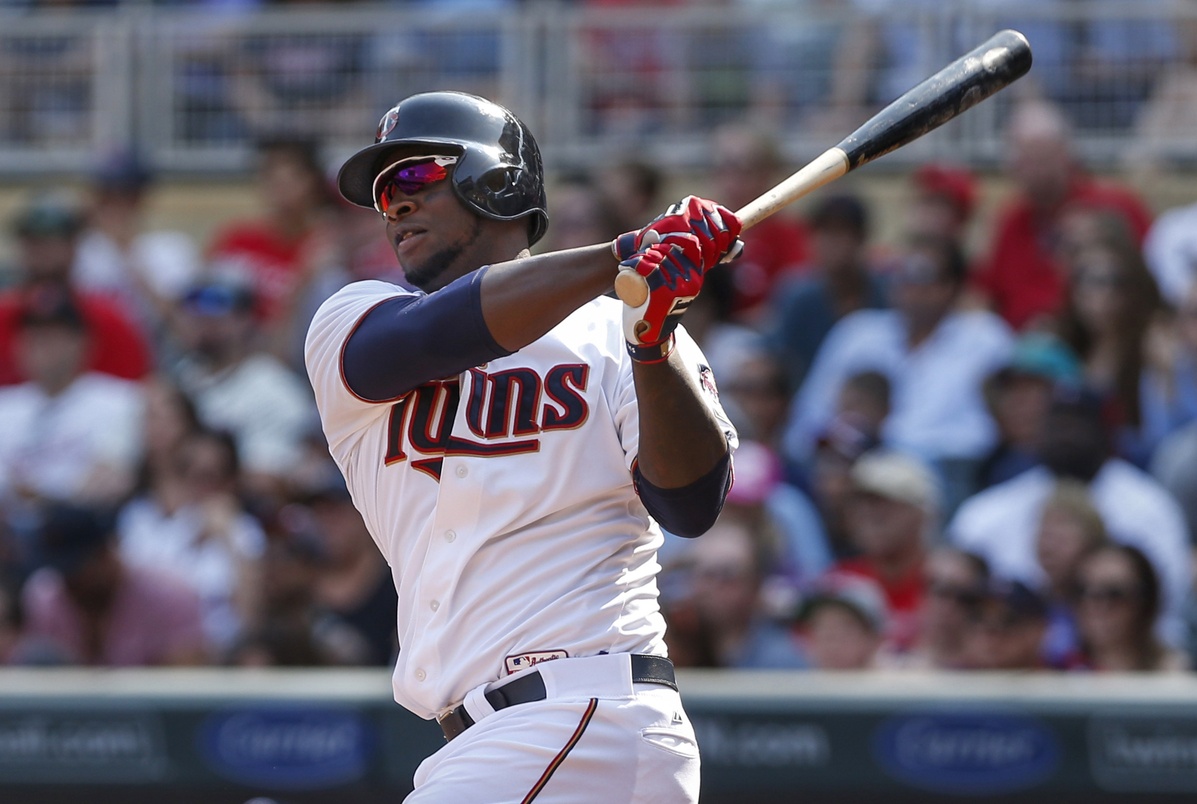 There is no denying the fact that Sano has been blessed with tons of baseball tools which are developed well beyond those of a typical player at his age. At this point in his young career, his power is unparalleled by 22-year-olds throughout history and he already has a master’s degree in zone comprehension. These two factors alone have made him an unmitigated force in the middle of the lineup which sorely needed a thumping heart. "I know in a very short amount of time he has developed a following that can really only compare to the likes of Jim Thome and Harmon Killebrew,” Twins president Dave St. Peter told the Pioneer Press’s Charley Walters. “[P]eople don't want to miss a Miguel Sano at-bat because you just never know what might happen, and at any given moment, he may hit a home run 500-plus feet. That's a trait very few players have." For the past month we have ooh’d and ahh’d over his moonshots and catwalk clanks. Since August 5th, Sano owns the fourth-highest slugging percentage (.722) and the fifth-lowest out rate (53.7%) among all hitters in that time frame. These are the direct results of Sano’s ability to adjust quickly at the game’s highest level without missing a beat. Here’s the really interesting thing: Whether you noticed it or not, Sano already went through a small hiccup at the plate this year and made the necessary changes on the fly to become this monster masher he has been over the last month. After starting his career hitting .378 with a pair of home runs, he cooled down during a series against Oakland. At that time, Sano stepped on a baseball during warm-ups at the O.co Colisuem and twisted his ankle. Perhaps the combination of teams adjusting to him and the injury played a role over the next 15 game where he hit .184 with a pair of home runs and a few doubles. Nevertheless, by early August, Sano was firing on all cylinders again -- amassing 10 home runs over his next 24 games. Sano has made several changes to his swing since his arrival to Minnesota that have boosted his performance at the plate. http://noontimebaseball.com/wp-content/uploads/2015/08/Sano_1stHR_front.gif http://i.imgur.com/1rnFlZT.gif Sano showed early on that he was extremely adept at hammering pitches that were middle-in and middle-middle. Over the first four home runs he tagged in his career, all were in one of those two zone locations. Teams clearly took note of that. After he began struggling in the Oakland series, he began to tinker a bit with his set-up. Hitting coach Tom Brunansky expressed concern that he was pulling off the ball and Sano seemed to institute several changes at the plate to help combat that. He displayed a stance where he was slightly open on his front leg, holding the bat high and striding inward toward the plate. This stride was likely implemented in order to try to have him stay closed on his swing. http://i.imgur.com/IxJaZOX.gif http://i.imgur.com/dy9eAvt.gif After the Seattle series, Sano made a few more modifications to his stance and his swing. In Toronto, he lowered his hands prior to the gathering process (you will noticed in the previous clips he ended up dropping them when he loaded for his swing) and closed his stance. When hitters are going through funks, hitting coach and instructors often advise hitters to calm everything down for a while. They encourage hitters to reduce as much movement (such as keeping his hands in one spot rather than dropping them from an elevated pre-swing position) and focus on bat to ball. http://i.imgur.com/0Mg1O5F.gif Since then, Sano’s swing has gone through a slight transformation. Once again his hands are held high with noticeable pre-swing motion (creating a rhythm) but rather than toe-tapping to make front-foot contact with the ground before the pitch is released, Sano is lifting with a minor kick and getting that foot down well after the pitch is released -- to the dismay of many of the league’s pitchers including Chicago’s Nate Jones. http://i.imgur.com/JVYgdNa.gif The biggest takeaway from his previous swing and the one currently employed is how efficiently he is loading/gathering before driving toward the ball. In the comparison images below, you see that in the more recent swing [middle and right], Sano is turning his hip inward slightly and staying closed on his front side. http://i.imgur.com/2rBpkSs.png In the earlier model his hip is square to the pitcher before flying open when he would swing. This version left him less able to drive pitches on the outer-half as well as a man with his size, stature and strength should and could. The new model has allowed him to punish anything that flies from east to west in the strike zone. Sano’s adjustments at the plate go beyond just the physical swing. When pitchers began to attack the strike zone early in the count in hopes of putting him in a hole right away, Sano countered by taking aggressive swings at the first pitch. When he began his “struggles” in Oakland, pitchers threw in the zone 55.6% of the time to which Sano offered at just 17% of those pitches. Over those 15 games, he accumulated just two first-pitch hits. After incorporating the improved mechanics, Sano has made pitchers pay for trying to sneak a quick strike on him. Since August 5th, he has offered at nearly a quarter of those pitches and has launched five first-pitch home runs. It is remarkable to have a player understand what the opposition is trying to do to him and adjust this quickly. Call it clicking or call it confidence or excellence. Whatever superlative you want to use when describing Miguel Sano at the plate right now is deserved. Sano has found the right swing to maximize his zone coverage and allow for his natural strength to handle anything that finds its way over the plate. This, combined with his competitive comprehension (such as attacking in first-pitch situations) has made him perhaps the most dangerous hitter in baseball at the moment. With just over a month of baseball left to play in the 2015 season, people should be waiting eagerly to see what the big man will do for an encore.
 -
 The last time the Astros won more than 70 games, Ke$ha’s “Tik Tok” was the number one song that year according to Billboard’s annual charts. If you didn’t remember that or remember who Ke$ha is, you are excused because no one remembers 2010 or the last time Houston won more than 70 games. That was also the last year the Twins won more than 70 games. If you didn’t recall that, I guess that’s the kind of memory you have when you brush your teeth with a bottle of Jack. Nobody expected 2015 to be much different for the two teams, either. At ESPN, all of the analysts buried the Twins in the Central while most believed that the Astros would be outclassed by the higher-spending Mariners or Angels. Now the two teams, both of whom are in playoff contention, will meet this weekend to prove which can outperform expectations better.While we know the Twins’ are playing winning baseball because of dance parties and Miguel Sano, let’s take a look at how are the Astros doing this. For Houston, the biggest factor is that they have made it extremely difficult to score runs off their pitching staff. Since the start of the second half, they have averaged just 2.97 runs allowed per game -- tied with the St. Louis Cardinals for the lowest. The Twins are fortunate to miss their top two starters in Dallas Kuechel and Collin McHugh this series but will still face lefty Scott Kazmir and Mike Fiers. Fiers, as participants of the DomiNoNo contest will remember, threw a no-hitter and tragically won everyone a free medium Domino’s pizza two starts ago. Download attachment: 2nd Half ERA.png Aiding in the run reduction has been the liberal use of the defensive shift. The Astros have repositioned their fielders all over the diamond to provide the maximum advantage. Only the Tampa Bay Rays have shifted on more occasions this year but the Astros have had 32 more instances than the Rays where the play was impacted by the shift. So either the Astros are positioning smarter or are luckier than the Rays. Download attachment: shift.png Whereas the pitching staff is mature -- they have second oldest collections of throwers in the American League -- the offense has all the young dudes (boogaloo dudes). None more youthful than 20-year-old shortstop Carlos Correa. While Twins fans are fanning themselves nightly over the displays of power from Sano, Astros fans have seen 100 plate appearances more of Correa who has performed well on both sides of the ball. Not only can he hit, he can cover a ton of ground in the infield. This series could prove to be an interesting showcase for the AL Rookie of the Year. Offensively, overall, the Astros are an interesting case study. The forward-thinking front office has compiled a lineup that isn’t necessarily the on-base machines that the Moneyball A’s were known for. Their .214 batting average is the lowest in the American League and their on-base percentage is in the bottom five. Their strategy for scoring runs involves stealing tons of bases (they have swiped an AL-leading 97 bags) and hitting dingers (174). The two game plans (running wild and swinging for the fences) don’t jive considering that the kind of fence-clearing power could score a runner from any base. There is no question that this is a significant series for both teams. The Twins are trying to maintain their position in the wild card race and the Astros are trying to distance themselves from the rest of the AL West. This should be a can’t miss series. Click here to view the article
 -
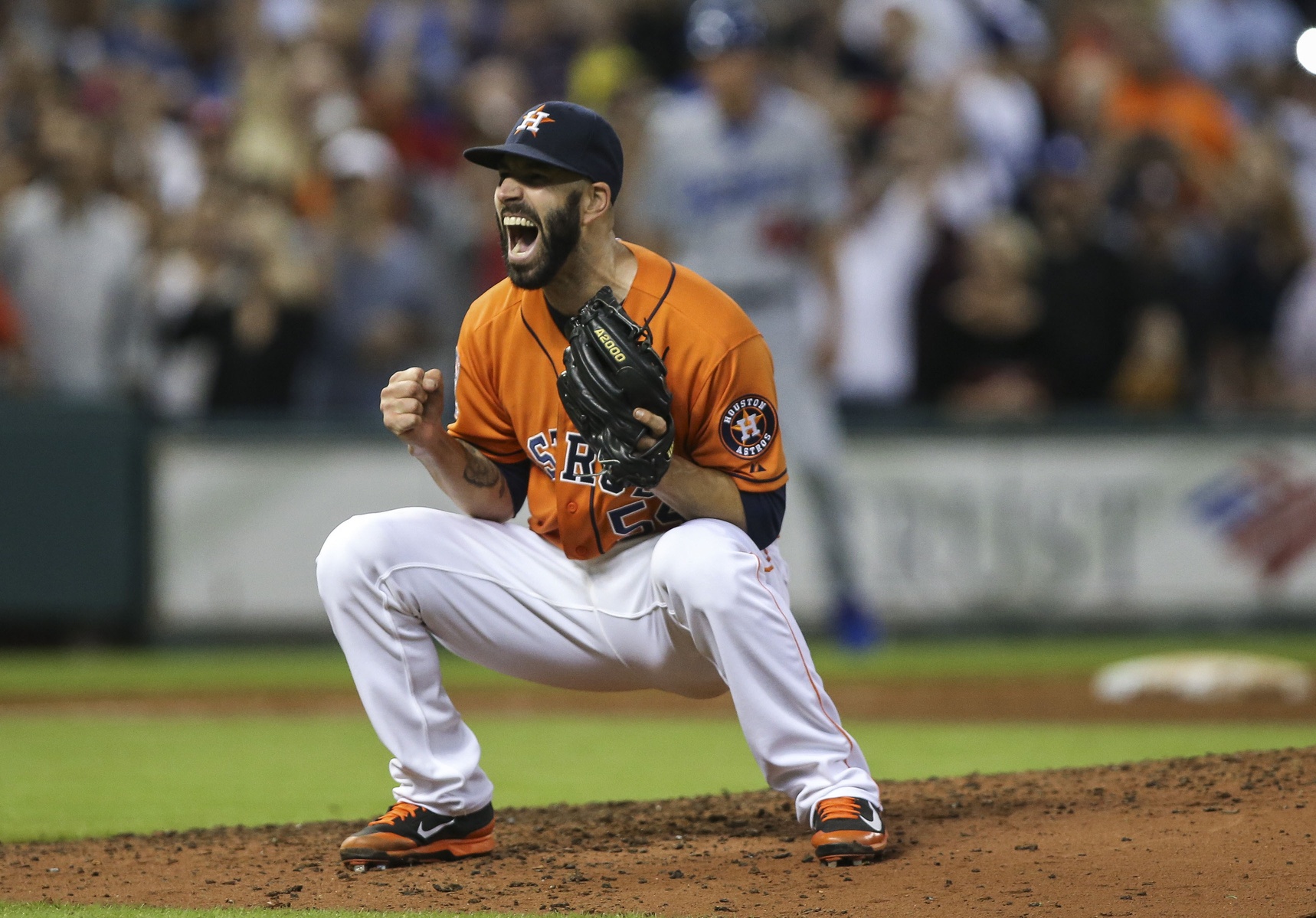 While we know the Twins’ are playing winning baseball because of dance parties and Miguel Sano, let’s take a look at how are the Astros doing this. For Houston, the biggest factor is that they have made it extremely difficult to score runs off their pitching staff. Since the start of the second half, they have averaged just 2.97 runs allowed per game -- tied with the St. Louis Cardinals for the lowest. The Twins are fortunate to miss their top two starters in Dallas Kuechel and Collin McHugh this series but will still face lefty Scott Kazmir and Mike Fiers. Fiers, as participants of the DomiNoNo contest will remember, threw a no-hitter and tragically won everyone a free medium Domino’s pizza two starts ago. Aiding in the run reduction has been the liberal use of the defensive shift. The Astros have repositioned their fielders all over the diamond to provide the maximum advantage. Only the Tampa Bay Rays have shifted on more occasions this year but the Astros have had 32 more instances than the Rays where the play was impacted by the shift. So either the Astros are positioning smarter or are luckier than the Rays. Whereas the pitching staff is mature -- they have second oldest collections of throwers in the American League -- the offense has all the young dudes (boogaloo dudes). None more youthful than 20-year-old shortstop Carlos Correa. While Twins fans are fanning themselves nightly over the displays of power from Sano, Astros fans have seen 100 plate appearances more of Correa who has performed well on both sides of the ball. Not only can he hit, he can cover a ton of ground in the infield. This series could prove to be an interesting showcase for the AL Rookie of the Year. Offensively, overall, the Astros are an interesting case study. The forward-thinking front office has compiled a lineup that isn’t necessarily the on-base machines that the Moneyball A’s were known for. Their .214 batting average is the lowest in the American League and their on-base percentage is in the bottom five. Their strategy for scoring runs involves stealing tons of bases (they have swiped an AL-leading 97 bags) and hitting dingers (174). The two game plans (running wild and swinging for the fences) don’t jive considering that the kind of fence-clearing power could score a runner from any base. There is no question that this is a significant series for both teams. The Twins are trying to maintain their position in the wild card race and the Astros are trying to distance themselves from the rest of the AL West. This should be a can’t miss series.
 -
Right. To be clear, the toe tap isn't necessarily bad. Sano, Bryant, Abreu, Trout all use the toe-tap. They are all strong individuals as well. The kick can act as a good timing mechanism, like Hicks needed, or it can be a strong gathering/load mechanism (like Jimbo pointed out in the second paragraph) like we see with Kepler or both. I am a big advocate of using a leg kick and getting athletic with a swing but it is not for everyone. Part of why it is working for Kepler right now is that he gets what pitchers are doing with him. He is able to combine the physical tools with the mental side of the game.
-
Sano has a toe-tap.
-
Credit goes to Twins scout Andy Johnson. Per an article in the Wall Street Journal: I may disagree with the "beautiful swing" comment but credit where credit is due by recognizing an athlete who could be developed.
- 56 replies
-
- 2
-

-
- max kepler
- chad allen
- (and 3 more)
-
In talking with Radcliff and reading between the lines, it really boils down to Molitor's willingness to have additional "non-essential" (pitchers, catchers) in the clubhouse/dugout.
-
Radcliff hinted at experience being a factor for this September, especially if the Twins remain in contention. He was speaking toward if Kepler was called up right now. Not long-term. His expectations based on what he has seen/the reports at Double-A suggest that Kepler may struggle to be an average major league hitter right now.
- 56 replies
-
- 3
-
-
- max kepler
- chad allen
- (and 3 more)
-
When the Minnesota Twins signed Max Kepler to a $800,000 bonus, the organization knew they had a project on their hands. The raw German-born player would have a longer development timeline than most transforming from the toolsy teenager to a polished prospect. Unlike his compatriots in the Western Hemisphere, Kepler lacked the reps and the game awareness that comes from playing against the pool of competition on this side of the globe as a youth. That shortcoming would be on display in his introduction to professional baseball. If you watched Max Kepler this year or happened to have glanced at his stats in Double-A, however, you would have no idea that he came from a baseball-deficient part of the world. Does he have a chance to see playing time in Minnesota this season?Offensively, this season has been different for Kepler. He has gotten more athletic, more aggressive with his swing and Chattanooga’s hitting coach, former Twin Chad Allen, says that is no accident. “We made him do that,” Allen said referring to Kepler’s remodeled swing with a newly incorporated leg kick. There was an emphasis placed on getting him to drive the ball to the pull side without selling out, increasing his power but without sacrificing his contact abilities. Kepler’s swing has come leaps and bounds since his days honing his craft in Berlin. At 16 years old, his mechanics were a crude iteration of what a baseball swing should be. His body lurched out over his front foot to get to the ball. The Twins worked hard to get him to stay back and wait for the ball to come to him. That resulted in a swing like the one he displayed while with the 2013 Glendale Desert Dogs in the Arizona Fall League, as seen below. Kepler would use the toe-tap method while keeping his weight back. The current version is one with an aggressive lower-half that is seeking to drive ball rather than just meet it. If you watch the progression, Kepler develops from a toolsy hack into an athletic and collected power hitter over the course of five years. http://i.imgur.com/DTGsXWG.gif http://i.imgur.com/5isgBaW.gif http://i.imgur.com/oM6PqBY.gif “The first day we worked together this year, we kinda jumped him a bit and got on him pretty hard,” Allen admitted. “He had to realize that his potential. He’s got a high ceiling. We just made him aggressive. Not necessarily a pull hitter but more aggressive to the pull side and just understanding that he’s got to go up with the mentality that ‘I’m a pretty good hitter and I’m going to think that and when I go to the plate, I’m thinking I’m going to drive the ball every time.’” Within the front office, the Twins’ staff was more or less anticipating this delayed learning curve. Mike Radcliff, the organization’s Vice President of Player Personnel, said that this offensive outburst is just the culmination of his development. He noted that international players like Kepler who do not come from Latin American countries like the Dominican or Venezuela that have leagues for players in that country prior to being brought into the United States system -- guys from Australia or Europe -- are often far behind in the game’s development curve. This season, he believes, was Kepler finally catching up to the rest. “His [development] was limited out of Germany,” said Radcliff. “Played a lot more soccer games than he did baseball games before he was signed. It takes patience and we have a lot of that in our organization, thankfully.” Even when their prized European prospect failed to produce an OPS over 740 in all but one of his first five professional seasons, the Twins evaluators never lost hope. “We all assumed, figured, projected he would hit eventually,” Radcliff continued. “This is the year it is showing up on the box score for sure.” His box score numbers in Double-A have been ridiculous so far this year. Among those hitters who have compiled 400 or more plate appearances at that level, Kepler has the highest OPS (.994) by a large margin. His .569 slugging percentage tops Double-A with teammate Adam Brett Walker coming in a close but not that close second (.506). But while Walker has struck out in an eye-popping 176 of his plate appearance, Kepler managed to strike out in just 57 trips to the plate. “For him to produce, something had to click. He’s doing something different and better,” Radcliff believes. “He’s more in tune to the game. He has more focus, he has more concentration, he knows how to react. Most of it is mental. He’s been physically impressive for a long time.” Allen agreed that he has seen a maturing kid with not only an increased level of confidence but an expanding aptitude for the game. The mental aspect of his game is now catching up with his physical side. “You see him doing stuff at the plate now -- and it’s not all the time -- but for instance every once in a while he’ll hit a lefty down the left field line with two strikes,” Allen explained. “That’s something you can’t necessarily teach to a lot of kids but he has the mental capacity to understand that even though I’m being aggressive to the pull side if you can still go the other way and flick a ball down the line, left-on-left, that showing you that the kid has some mental awareness of what is going on with the game and how the guy is pitching to him.” That is another area of his game that has developed rapidly: Kepler has vastly improved against left-handed pitching. Just two seasons ago, he posted a .117 average off of lefties. He managed just seven hits in 60 at-bats and just one for extra bases. A switch flipped for him, perhaps because of confidence or because of the mechanical changes but this season he has compiled a .364 average versus left-handed pitching, or 28 hits in 77 at-bats. The approach that Allen was describing has paid dividends. Kepler’s progress this season goes beyond the numbers as well. Earlier in August, Kepler was ejected from a game after an umpire failed to acknowledge that he was hit on the arm in an at-bat, instead calling it a foul ball. Kepler showed the mark the ball caused to the umpire and was promptly excused for the rest of the day. To Allen, this is a significant milestone. He and the Lookouts coaching staff view that as a sign of confidence. “In reality, Max has been a very laid back guy. A really, really laid back guy,” Allen said. “What really makes us as a staff smile is that he is now showing emotion. And to us, that is one of the biggest things that made us perk our ears up and go ‘oh wow, now we really got something’. He wants to do better, he wants to succeed. I’m not saying you have to show emotion all the time but when he gets pissed off, when he gets mad at a call that to us is saying that son of a buck is competing. When you have a guy that is competing every single day and gets pissed off when he doesn’t have a call go his way or doesn’t get a hit, that’s a big leap for us.” With major league rosters expanding in September, there is an outside chance that Kepler is added as a left-handed bat with outfield and first base capabilities. “I think hitting-wise, he’s there,” Allen assessed regarding Kepler’s current ability to handle major league pitching. “I think the biggest thing that Max is gonna have to learn like everybody learns when they get to the big leagues is that they gotta mentally stay strong when you go up there because the biggest thing that a young player is gonna have to deal with is learning to deal with failure in the big leagues. And if you can't deal with failure in the big leagues, you probably not going to be there very long.” Radcliff is more conservative when it comes to Kepler’s timeline. Despite the outstanding stat line, he believes there are elements of his game that need some refinement. “He’s not ready to be an average major league player tomorrow. He’s along that path. He’s doing good things, he’s produced. He’s hitting .340 but he still doesn’t take at-bats and swing at strikes and handle breaking balls like he is going to have to do to be an average hitter in the major leagues,” said Radcliff. “So there’s way more things that the eyeball picks up along with all the numbers that he is producing that is part of the evaluation process and part of the process for him to make that next to the 25-man roster.” Radcliff noted that he did not want to sound disparaging when he offered up the things Kepler still needed to work on. After all every minor league prospect has things they need to work on before they stick in the major leagues for good. He mentioned Byron Buxton, a mega-prospect, who still needs to improve at the plate. But from his evaluation stance, after years of simply catching up to the rest of the field, Kepler has positioned himself on the fast track headed for Minnesota. “You watched him back in the GCL and Cedar Rapids, he didn’t know what he was doing,” said Radcliff. “He had a great body and a great swing and he had tools. He had no idea. Now, well now, he is starting to understand what he is doing everyday, and every swing and every at bat.” Click here to view the article
- 56 replies
-
- 5
-
-
- max kepler
- chad allen
- (and 3 more)
-
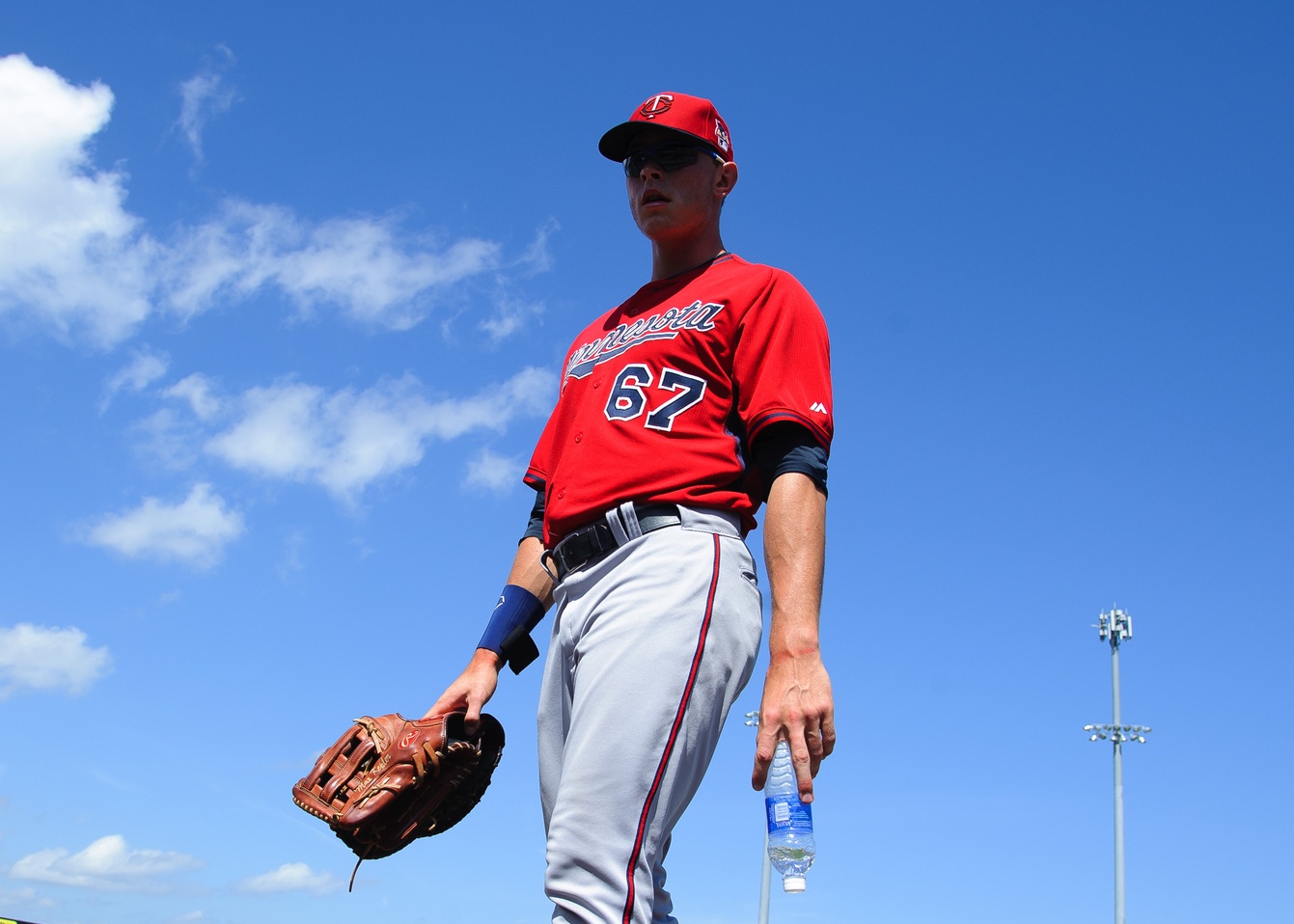 Offensively, this season has been different for Kepler. He has gotten more athletic, more aggressive with his swing and Chattanooga’s hitting coach, former Twin Chad Allen, says that is no accident. “We made him do that,” Allen said referring to Kepler’s remodeled swing with a newly incorporated leg kick. There was an emphasis placed on getting him to drive the ball to the pull side without selling out, increasing his power but without sacrificing his contact abilities. Kepler’s swing has come leaps and bounds since his days honing his craft in Berlin. At 16 years old, his mechanics were a crude iteration of what a baseball swing should be. His body lurched out over his front foot to get to the ball. The Twins worked hard to get him to stay back and wait for the ball to come to him. That resulted in a swing like the one he displayed while with the 2013 Glendale Desert Dogs in the Arizona Fall League, as seen below. Kepler would use the toe-tap method while keeping his weight back. The current version is one with an aggressive lower-half that is seeking to drive ball rather than just meet it. If you watch the progression, Kepler develops from a toolsy hack into an athletic and collected power hitter over the course of five years. http://i.imgur.com/DTGsXWG.gif http://i.imgur.com/5isgBaW.gif http://i.imgur.com/oM6PqBY.gif “The first day we worked together this year, we kinda jumped him a bit and got on him pretty hard,” Allen admitted. “He had to realize that his potential. He’s got a high ceiling. We just made him aggressive. Not necessarily a pull hitter but more aggressive to the pull side and just understanding that he’s got to go up with the mentality that ‘I’m a pretty good hitter and I’m going to think that and when I go to the plate, I’m thinking I’m going to drive the ball every time.’” Within the front office, the Twins’ staff was more or less anticipating this delayed learning curve. Mike Radcliff, the organization’s Vice President of Player Personnel, said that this offensive outburst is just the culmination of his development. He noted that international players like Kepler who do not come from Latin American countries like the Dominican or Venezuela that have leagues for players in that country prior to being brought into the United States system -- guys from Australia or Europe -- are often far behind in the game’s development curve. This season, he believes, was Kepler finally catching up to the rest. “His [development] was limited out of Germany,” said Radcliff. “Played a lot more soccer games than he did baseball games before he was signed. It takes patience and we have a lot of that in our organization, thankfully.” Even when their prized European prospect failed to produce an OPS over 740 in all but one of his first five professional seasons, the Twins evaluators never lost hope. “We all assumed, figured, projected he would hit eventually,” Radcliff continued. “This is the year it is showing up on the box score for sure.” His box score numbers in Double-A have been ridiculous so far this year. Among those hitters who have compiled 400 or more plate appearances at that level, Kepler has the highest OPS (.994) by a large margin. His .569 slugging percentage tops Double-A with teammate Adam Brett Walker coming in a close but not that close second (.506). But while Walker has struck out in an eye-popping 176 of his plate appearance, Kepler managed to strike out in just 57 trips to the plate. “For him to produce, something had to click. He’s doing something different and better,” Radcliff believes. “He’s more in tune to the game. He has more focus, he has more concentration, he knows how to react. Most of it is mental. He’s been physically impressive for a long time.” Allen agreed that he has seen a maturing kid with not only an increased level of confidence but an expanding aptitude for the game. The mental aspect of his game is now catching up with his physical side. “You see him doing stuff at the plate now -- and it’s not all the time -- but for instance every once in a while he’ll hit a lefty down the left field line with two strikes,” Allen explained. “That’s something you can’t necessarily teach to a lot of kids but he has the mental capacity to understand that even though I’m being aggressive to the pull side if you can still go the other way and flick a ball down the line, left-on-left, that showing you that the kid has some mental awareness of what is going on with the game and how the guy is pitching to him.” That is another area of his game that has developed rapidly: Kepler has vastly improved against left-handed pitching. Just two seasons ago, he posted a .117 average off of lefties. He managed just seven hits in 60 at-bats and just one for extra bases. A switch flipped for him, perhaps because of confidence or because of the mechanical changes but this season he has compiled a .364 average versus left-handed pitching, or 28 hits in 77 at-bats. The approach that Allen was describing has paid dividends. Kepler’s progress this season goes beyond the numbers as well. Earlier in August, Kepler was ejected from a game after an umpire failed to acknowledge that he was hit on the arm in an at-bat, instead calling it a foul ball. Kepler showed the mark the ball caused to the umpire and was promptly excused for the rest of the day. https://twitter.com/parkerhageman/status/629673557442736128 To Allen, this is a significant milestone. He and the Lookouts coaching staff view that as a sign of confidence. “In reality, Max has been a very laid back guy. A really, really laid back guy,” Allen said. “What really makes us as a staff smile is that he is now showing emotion. And to us, that is one of the biggest things that made us perk our ears up and go ‘oh wow, now we really got something’. He wants to do better, he wants to succeed. I’m not saying you have to show emotion all the time but when he gets pissed off, when he gets mad at a call that to us is saying that son of a buck is competing. When you have a guy that is competing every single day and gets pissed off when he doesn’t have a call go his way or doesn’t get a hit, that’s a big leap for us.” With major league rosters expanding in September, there is an outside chance that Kepler is added as a left-handed bat with outfield and first base capabilities. “I think hitting-wise, he’s there,” Allen assessed regarding Kepler’s current ability to handle major league pitching. “I think the biggest thing that Max is gonna have to learn like everybody learns when they get to the big leagues is that they gotta mentally stay strong when you go up there because the biggest thing that a young player is gonna have to deal with is learning to deal with failure in the big leagues. And if you can't deal with failure in the big leagues, you probably not going to be there very long.” Radcliff is more conservative when it comes to Kepler’s timeline. Despite the outstanding stat line, he believes there are elements of his game that need some refinement. “He’s not ready to be an average major league player tomorrow. He’s along that path. He’s doing good things, he’s produced. He’s hitting .340 but he still doesn’t take at-bats and swing at strikes and handle breaking balls like he is going to have to do to be an average hitter in the major leagues,” said Radcliff. “So there’s way more things that the eyeball picks up along with all the numbers that he is producing that is part of the evaluation process and part of the process for him to make that next to the 25-man roster.” Radcliff noted that he did not want to sound disparaging when he offered up the things Kepler still needed to work on. After all every minor league prospect has things they need to work on before they stick in the major leagues for good. He mentioned Byron Buxton, a mega-prospect, who still needs to improve at the plate. But from his evaluation stance, after years of simply catching up to the rest of the field, Kepler has positioned himself on the fast track headed for Minnesota. “You watched him back in the GCL and Cedar Rapids, he didn’t know what he was doing,” said Radcliff. “He had a great body and a great swing and he had tools. He had no idea. Now, well now, he is starting to understand what he is doing everyday, and every swing and every at bat.”
 -
On this week's NO JUICE PODCAST, Dan Anderson and Parker Hageman visit CHS Field in St. Paul to talk stadium building with the Saints' assistant GM Scott Bush and they also try to catch home run balls fired out of a pitching machine (video below). Meanwhile, on the other side of the river, the Twins are hanging in contention for a playoff spot. LISTEN UP.Twins topics include the Cotts trade, Glen Perkins' injury and recovery, Phil Hughes' good days and bad days, Wild Card hopes and more. Listen below, on iTunes or on Stitcher: NO JUICE PODCAST, EPISODE #67: THE FALL GUYS Click here to view the article
-
 Twins topics include the Cotts trade, Glen Perkins' injury and recovery, Phil Hughes' good days and bad days, Wild Card hopes and more. Listen below, on iTunes or on Stitcher:NO JUICE PODCAST, EPISODE #67: THE FALL GUYS
 -
Yeah, this was interesting. Baseball Prospectus had an "eyewitness" report from a 2014 outing and just called the pitching slightly above average.
-
rpms makes it nasty. the confidence is the byproduct of having a nasty pitch.
-
It is a positive metric based on the BIS data and a negative one based on PitchF/X. This usually is a pitch classification difference but there may be something lagging in the updates for one or the other. To be clear, the negative value is based on the linear weights of the count, not the location of the pitch. The 8 hits surrendered on his curve, most came with two strikes and would dock him more for that because of the run expectancy of recording an out in two-strike situations. More importantly, it is a minuscule sample size. True, but hitters tend to adjust knowing a pitch is coming. If he has shown he will throw his curveball out of the zone in two-strike situations, they will lay off. Francisco Liriano had one of the game's best sliders but because he was unable to work ahead and was very transparent, hitters began to lay off this pitch in his last few seasons with the Twins.
-
Filth flarn filth. That’s the only thing that came to mind watching Tyler Duffey’s curveball bend space and time over the course of his last two outings. After a rough introduction to the majors at the hands of the Toronto Blue Jays hitters, Duffey has settled in and compiled two solid starts in a row against Cleveland and Baltimore. Ignoring his major league debut for a moment, Duffey has now struck out 15 batters over his last 13.2 innings pitched. Of those 15 strikeouts, 14 have come on his curve.Duffey, a former closer from Rice University and converted into a starter after the Twins drafted him, arrived at the organization with two viable above-average pitches in his fastball (four and two-seamers) and curveball, and he has also mixed in a work-in-progress change-up. Duffey told Twins Daily this spring that he considered his curve ball his best pitch and it shows. Any pitcher will tell you that the fastball is the foundation -- that sets up every pitch -- but the curve ball has been, as the French say, Le Unhittable. With the exception of a few flares, a couple of seeing-eyes and one hanging fly which 40-year-old Torii Hunter in right failed to wrangle in, Duffey’s curve ball has been a zone-expanding, bat-missing machine. Just watch some of these swing that Duffey was able to induce in his start against Cleveland at Target Field last week. http://i.imgur.com/shQKra1.gif http://i.imgur.com/JRiPVcg.gif These are well-compensated, experienced, fully grown professional baseball players taking ridiculous swings usually reserved for hack golfers at a bachelor party after six beers while blindfolded. To date, Duffey has done very little to disguise what is coming once he gets ahead: He has thrown curve balls 51% of the time in a pitcher’s count. Despite the ubiquity of scouting reports on pitchers, there is still some element of surprise that gives a rookie pitcher an advantage over hitters. You can hear about a pitcher’s repertoire and watch footage but until you experience it in the batter’s box and see it for yourself, the pitcher will have a slight edge. That may play a small factor in Duffey’s dominance over two consecutive lineups. http://i.imgur.com/Kjlvpwr.gif However even when knowing the pitch is coming it still can cause hitters to look foolish. For example, during Thursday night’s contest Duffey unleashed a doozy of an 0-2 curve that had Orioles’ slugger Chris Davis completely flummoxed. Davis swung at the ball -- a pitch that would barely make it across the plate in the air. The Orioles successfully lobbied the umpire crew to say that Davis had made the world’s slightest contact with the ball and was therefore foul. With new life, Duffey delivered the exact same pitch in the exact same location which Davis could not manage to nick this time for strike three. Download attachment: trumedia_baseball_grid (1).png What makes Duffey’s curve ball so hellacious? It is the amount of spin he is able to generate. According to his PitchFX spin rate, he is breaking off his curve at 1600 RPMs on average. Why is this important? Studies have shown that the higher the RPMs on breaking balls, the more the pitch moves and the higher the swinging strike rate typically is. Across the league, MLB pitchers have a 1500 RPM average (although ESPN/TruMedia’s database suggests it is closer to 1350). On the high end of that spectrum are guys like Oakland’s Sonny Grey (1898 RPM), Seattle’s Felix Hernandez (1858) and Houston’s Collin McHugh (1886). It was in discussing McHugh’s acquisition that the Houston Astros shared a little secret in their methodology. According to the Bloomberg article in 2014 entitled “Extreme Moneyball”, the Astros analytics team identified McHugh, who was a castoff from both the Mets and Rockies organization, as a potential target because his curve registered such a high spin rate. McHugh’s curve was reaching nearly 2000 RPM. Duffey’s bender does not reach that strata but it is above average in spin rate nonetheless. Based on the 100 curves thrown, Duffey’s hook resides alongside Los Angeles’ Clayton Kershaw and Zack Greinke, Washington’s Gio Gonzalez and Arizona’s Jeremy Hellickson. Through three starts, Duffey's curve sits among some of the game's best when it comes to spin. Who knows what lies ahead in the career for the big right-handed. Will hitters key in on his patterns? Will his fastball have enough oomph to support his curve? Will his change-up develop as a third option? If nothing else, Duffey's curve will prove to be a very valuable weapon out of the bullpen. Click here to view the article
-
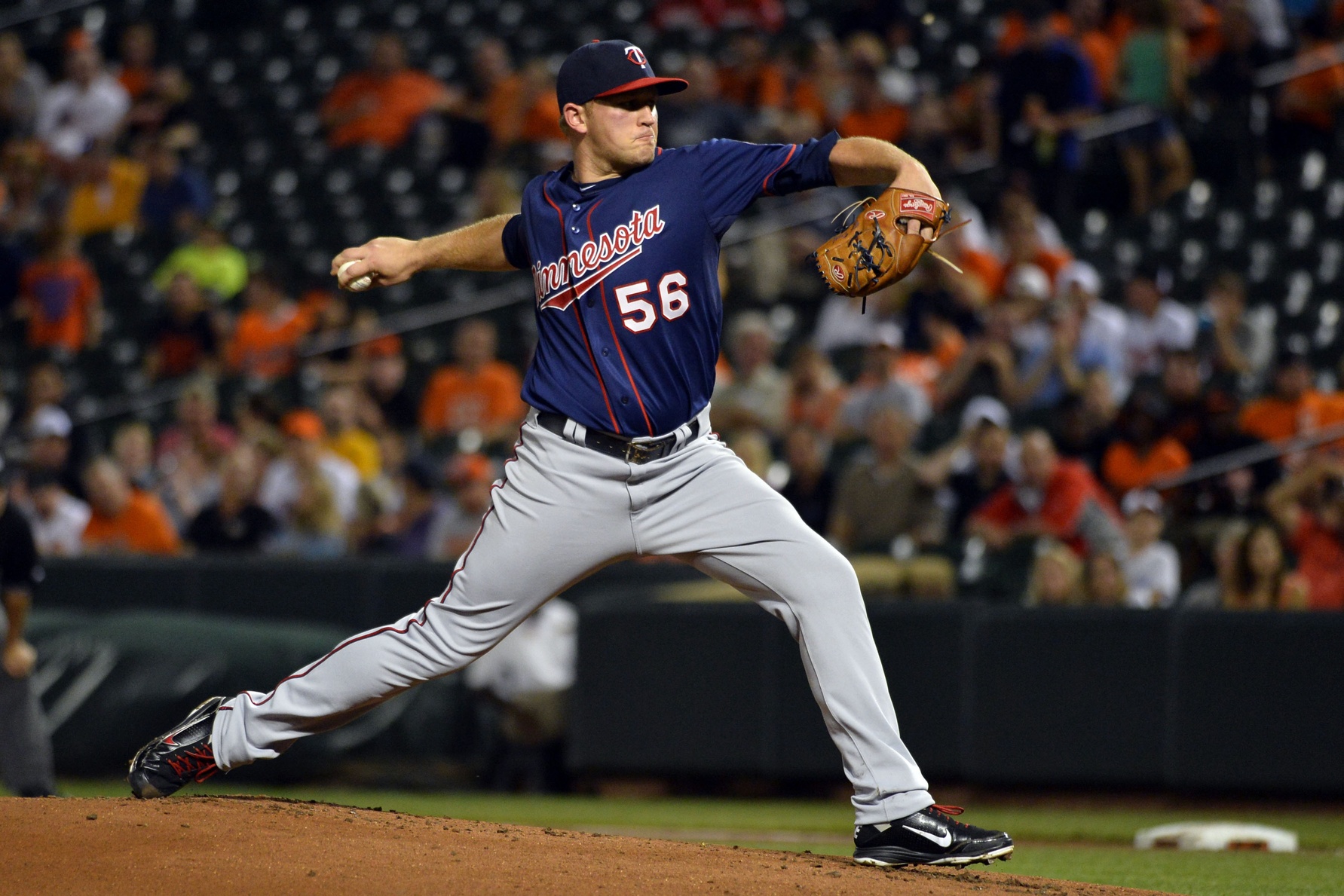 Duffey, a former closer from Rice University and converted into a starter after the Twins drafted him, arrived at the organization with two viable above-average pitches in his fastball (four and two-seamers) and curveball, and he has also mixed in a work-in-progress change-up. Duffey told Twins Daily this spring that he considered his curve ball his best pitch and it shows. Any pitcher will tell you that the fastball is the foundation -- that sets up every pitch -- but the curve ball has been, as the French say, Le Unhittable. With the exception of a few flares, a couple of seeing-eyes and one hanging fly which 40-year-old Torii Hunter in right failed to wrangle in, Duffey’s curve ball has been a zone-expanding, bat-missing machine. Just watch some of these swing that Duffey was able to induce in his start against Cleveland at Target Field last week. http://i.imgur.com/shQKra1.gif http://i.imgur.com/JRiPVcg.gif These are well-compensated, experienced, fully grown professional baseball players taking ridiculous swings usually reserved for hack golfers at a bachelor party after six beers while blindfolded. To date, Duffey has done very little to disguise what is coming once he gets ahead: He has thrown curve balls 51% of the time in a pitcher’s count. Despite the ubiquity of scouting reports on pitchers, there is still some element of surprise that gives a rookie pitcher an advantage over hitters. You can hear about a pitcher’s repertoire and watch footage but until you experience it in the batter’s box and see it for yourself, the pitcher will have a slight edge. That may play a small factor in Duffey’s dominance over two consecutive lineups. http://i.imgur.com/Kjlvpwr.gif However even when knowing the pitch is coming it still can cause hitters to look foolish. For example, during Thursday night’s contest Duffey unleashed a doozy of an 0-2 curve that had Orioles’ slugger Chris Davis completely flummoxed. Davis swung at the ball -- a pitch that would barely make it across the plate in the air. The Orioles successfully lobbied the umpire crew to say that Davis had made the world’s slightest contact with the ball and was therefore foul. With new life, Duffey delivered the exact same pitch in the exact same location which Davis could not manage to nick this time for strike three. What makes Duffey’s curve ball so hellacious? It is the amount of spin he is able to generate. According to his PitchFX spin rate, he is breaking off his curve at 1600 RPMs on average. Why is this important? Studies have shown that the higher the RPMs on breaking balls, the more the pitch moves and the higher the swinging strike rate typically is. Across the league, MLB pitchers have a 1500 RPM average (although ESPN/TruMedia’s database suggests it is closer to 1350). On the high end of that spectrum are guys like Oakland’s Sonny Grey (1898 RPM), Seattle’s Felix Hernandez (1858) and Houston’s Collin McHugh (1886). It was in discussing McHugh’s acquisition that the Houston Astros shared a little secret in their methodology. According to the Bloomberg article in 2014 entitled “Extreme Moneyball”, the Astros analytics team identified McHugh, who was a castoff from both the Mets and Rockies organization, as a potential target because his curve registered such a high spin rate. McHugh’s curve was reaching nearly 2000 RPM. Duffey’s bender does not reach that strata but it is above average in spin rate nonetheless. Based on the 100 curves thrown, Duffey’s hook resides alongside Los Angeles’ Clayton Kershaw and Zack Greinke, Washington’s Gio Gonzalez and Arizona’s Jeremy Hellickson. Through three starts, Duffey's curve sits among some of the game's best when it comes to spin. Who knows what lies ahead in the career for the big right-handed. Will hitters key in on his patterns? Will his fastball have enough oomph to support his curve? Will his change-up develop as a third option? If nothing else, Duffey's curve will prove to be a very valuable weapon out of the bullpen.
 -
Article: On Pitch Framing And Glen Perkins
Parker Hageman replied to Parker Hageman's topic in Twins Daily Front Page News
Again, that's patently false. The ones freely available have too much noise but over the course of a season (or multiple years) you will see that the catchers who pitcher laud as having great skill for framing are always near the top. Now there is another level metric that removes assigning all of the skill set to just the catcher. It's a vastly improved measurement. That being said, pitchers and players do not have to believe in any stats. They don't even have to understand them or acknowledge their existence. Front offices do. They are the ones who have to look at a player's entire body of work and make million dollar decisions. The Rays looked at framing stats. The Pirates looked at framing stats. The Astros looked at framing stats. They exist. It is beneficial to have players who understand data and what it is trying to fundamentally accomplish -- like having Brian Dozier understand why he is shifting into shallow right field. You can chose to ignore it -- like some in this thread have mentioned without explanation as to why they don't "believe" in them -- but the fact is it exists and teams do use it. -
Article: What Happened To Oswaldo Arcia?
Parker Hageman replied to Nick Nelson's topic in Twins Daily Front Page News
4) Terrible approach vs lefties. .183/.250/.282 in 80 PAs this year. One of the things Brunansky stressed this spring was fixing Arcia so that he would be able to hit against same-sided pitching. Getting him to take better at bats vs lefties. Rosario isn't great vs LHP but he sames to have a clue in the batter's box. -
Article: On Pitch Framing And Glen Perkins
Parker Hageman replied to Parker Hageman's topic in Twins Daily Front Page News
It's getting closer to reality. http://www.latimes.com/sports/la-sp-automated-strike-zone-20150810-story.html -
Article: On Pitch Framing And Glen Perkins
Parker Hageman replied to Parker Hageman's topic in Twins Daily Front Page News
In the current freely available iteration of catcher stats, all/most catchers will have some games with those types of umpires. While some will have an umpire like West a few more times than others, it all washes out in the long run. The new version of pitch framing stats takes the umpire into account.- 30 replies
-
- 1
-
-
- glen perkins
- kurt suzuki
- (and 1 more)
-
Article: On Pitch Framing And Glen Perkins
Parker Hageman replied to Parker Hageman's topic in Twins Daily Front Page News
Correct. And I'm not attacking Perkins for not liking pitch framing statistics. I am assuming he was unaware that there is a pitch framing metric that accounts for all the items he listed. Let me ask you, why don't you believe in pitch framing statistics?- 30 replies
-
- 1
-
-
- glen perkins
- kurt suzuki
- (and 1 more)
-
Article: On Pitch Framing And Glen Perkins
Parker Hageman replied to Parker Hageman's topic in Twins Daily Front Page News
It's probably more of a step back than an about-face. The takeaway is that all the things that Perkins said he didn't like about the pitch framing stats are actually accounted for in Strike Zone Plus/Minus system.- 30 replies
-
- 1
-
-
- glen perkins
- kurt suzuki
- (and 1 more)
-
Article: On Pitch Framing And Glen Perkins
Parker Hageman replied to Parker Hageman's topic in Twins Daily Front Page News
Yeah, that's it.
