



Parker Hageman
-
Posts
4,162 -
Joined
-
Last visited
-
Days Won
6
Content Type
Profiles
Minnesota Twins News, Rumors & Analysis
Minnesota Twins Videos
2026 Minnesota Twins Top Prospect Rankings
2022 Minnesota Twins Draft Picks & Signing Bonuses
Minnesota Twins Trade & Free Agent Rumors
Minnesota Twins Fan Guides & Resources
2023 Minnesota Twins Draft Picks & Signing Bonuses
2024 Minnesota Twins Draft Picks & Signing Bonuses
2025 Minnesota Twins Draft Picks & Signing Bonuses
2026 Minnesota Twins Draft Picks & Signing Bonuses
Forums
Blogs
Events
Store
Downloads
Gallery
Everything posted by Parker Hageman
-
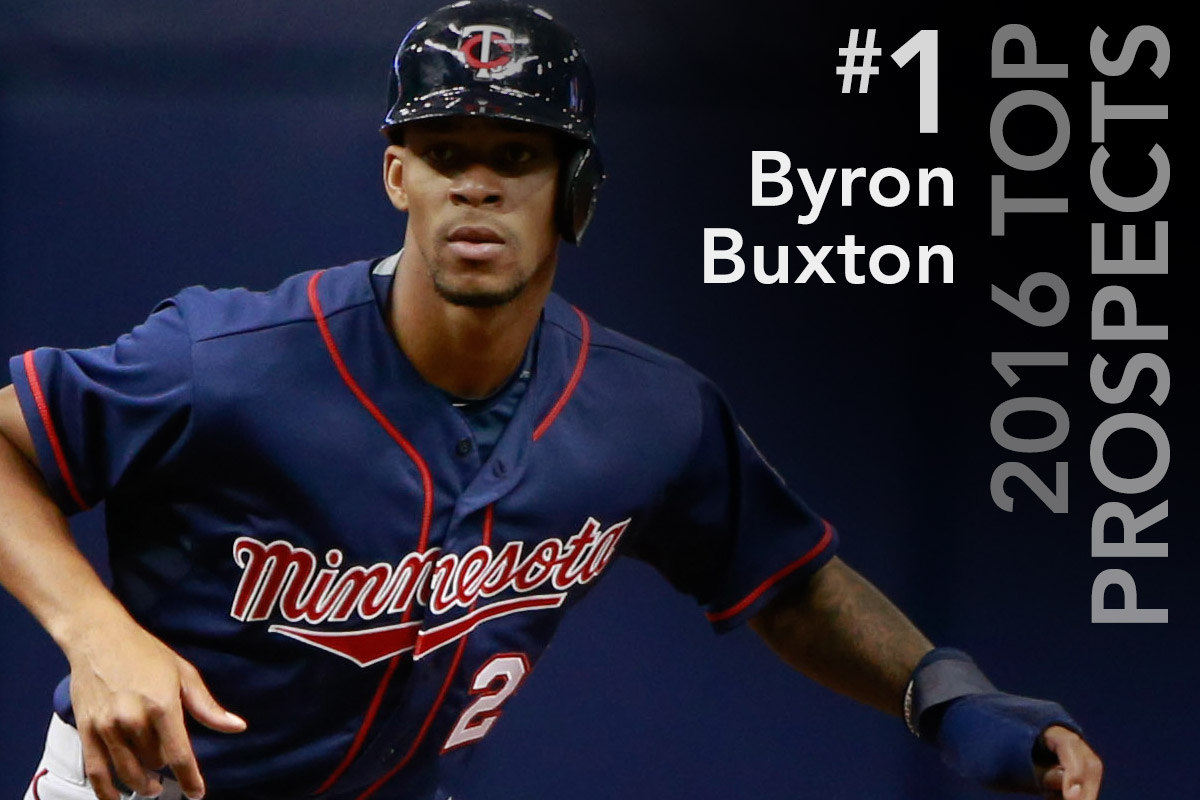 Age: 22 (DOB: 12/28/1993) 2014 Stats (AA/AAA/MLB): .276/.333/.447 (.779) with 17 doubles, 14 triples, 9 HR ETA: 2016 2014 Ranking: 1 // 2015 Ranking: 1 National Rankings BA: 2 MLB: 2 BP: 2 What's To Like “Buxton has more tools than HGTV -- is one shecky way to describe his potential. He has plus speed, plus defense, plus hit tool, plus makeup and so on…” is how I described Buxton when he was named the number one Twins Daily prospect last year and nothing has changed since. In the tool shed, speed is the most obvious as he demonstrated on the bases (103 stolen bases in 134 attempts in his career) and in the outfield (so many balls caught). Speed might be underselling what provides the most clear and present path to the starting lineup in 2016. His hit tool was a work in progress as he faced superior competition (read: OH MY GOD THAT SLIDER BENT THE LAWS OF SPACE AND TIME), but his ability to cover the real estate between Miguel Sano and Eddie Rosario will be critical to the team’s success. Eventually his bat will become a focal point and the Twins don’t think that it is that far off. “He was better as the months of August and September progressed,” Twins general manager Terry Ryan said in regard to Buxton’s offense. “Even in pre-game, you could see a little bit of that. He was driving baseballs rather than just touching them. He hit a couple home runs, whatever he did.” Power may be the last facet to manifest as some evaluators believe he has 15+ home run potential in that tall frame. Like Ryan said, in September Buxton displayed some impressive opposite field power in Cleveland, sending a shot over the right center Progressive Field wall. So while double-digit dingers could be obtainable, his legs will also be generating his extra bases as a ball in the gap is an almost a sure-fire triple for Buxton. Speed kills, everyone. What's Left To Work On “I readily admit that I rushed him the first crack because we got stuck in the center field spot,” Ryan said of the decision to promote Buxton in early July. “Then he hurt his thumb which was the worst thing that could have happened.” In the grand scheme of life, it wasn’t the worst thing could have happened in 2015 (I mean, global nuclear winter seems slightly worse than one individual’s broken thumb but what do I know, I’m a stupid blogger) however it certainly didn’t help Byron Buxton’s baseball career. Buxton’s all-out hustle has led to several grotesque injuries that have stunted his development to some degree but the good news is that none of his previous injuries have been of the recurring/career-altering nature. Nevertheless, Buxton could use an unadulterated year of playing baseball instead of recovering. An uninterrupted season would also help him solve breaking balls. Sliders specifically seemed to be a foreign object to him. The root problem during his stretch with the Twins was that he was constantly behind in the count. Of his 138 plate appearances, just 27 of those ended in a hitter’s count but another 75 ended in a pitcher’s count. When you are behind as frequently as he was, he is going to face a disproportionate amount of breaking stuff until he can prove he can handle it. Working counts and capitalizing in hitter’s counts are all things that come with experience and, as Ryan mentioned, Buxton did show progress once he was finally healthy and getting regular at-bats. What's Next The Twins have been coy about Buxton’s immediate future. Both the front office and Paul Molitor have placed the burden of winning the center fielder job on Buxton. Is it possible that he spends some time in Rochester? Certainly. The Twins have suggested that Eddie Rosario and Max Kepler are capable of playing the position and their recent experience with Aaron Hicks in center should give them reason for caution. The main takeaway is that Buxton’s struggles should not dim his star going forward. --- TD Top Prospect #10: Nick Burdi TD Top Prospect #9: Kohl Stewart TD Top Prospect #8: Alex Meyer TD Top Prospect #7: Jorge Polanco TD Top Prospect #6: Stephen Gonsalves TD Top Prospect #5: Tyler Jay TD Top Prospect #4: Nick Gordon TD Top Prospect #3: Max Kepler TD Top Prospect #2: Jose Berrios
-

TD Top Prospects: #8 Alex Meyer
Parker Hageman replied to Parker Hageman's topic in Twins Daily Front Page News
I can corroborate that. Spent a lot of time watching his outings and picked that up right away. (I believe Nick had some good video of his release point in spring camp that showed how low he would get at times.) I charted and wrote up his bullpen outings from last year as well: http://www.startribune.com/twinscentric-can-alex-meyer-be-a-shutdown-reliever/310133601/ -
When the Minnesota Twins acquired pitching prospect Alex Meyer in 2012, Twins general manager Terry Ryan made it clear what the expectations for Meyer’s role would be. “Starter, starter, starter, starter,” Ryan told reporters emphatically. At that time the Twins were desperate for any semblance of starting pitching to add to their depleted farm system. On paper Meyer -- who had touched triple digits and held steady around 96-to-98 miles per hour -- was exactly the type of pitcher that the Twins needed. In his first professional season in the Nationals’ organization he had struck out 129 in 139 innings. By comparison the Twins’ organization’s strikeout leader that season was Jason Wheeler with 115 strikeouts (Wheeler, however, needed 27 more innings than Meyer to reach his total). In theory, Meyer’s addition to the system would provide the Twins with a future front-of-the-rotation pitching talent. Three seasons later however his role is less crystallized then what Ryan had envisioned. Meyer’s inconsistency in his mechanics and command combined with his shoulder woes have pushed him toward the bullpen (where he thrived, mind you, holding hitters to a .254 average in relief versus .325 as a starter). Nevertheless, the uncertainty and the shift to the bullpen, as well as talent additions, have driven Meyer lower on the prospect list but make no mistake he still has the tools to be a solid contributor somewhere on the staff. Age: 26 (DOB: 1/3/90) 2015 Stats (AAA/MLB): 94.2 IP, 5.13 ERA, 103/51 K/BB ETA: 2015 2015 Ranking: 5 National Top 100 Rankings BA: NR | MLB: NR | BP: NR What's To Like The velocity, that’s for sure. Meyer was originally drafted by the Red Sox out of Greensburg High School (Ind.) in the 20th round of the 2008 draft but a reported $2 million bonus offer from Boston was not enough to convince the hard-throwing right-hander to bypass college in Kentucky. In 2011, after flashing triple-digits fastball for the Wildcats, the Nationals snagged him in the first round at 23rd overall. So far, the Twins have only received a brief sampling of the heat. In his two-outing stint with the Twins last year he wound up throwing the second hardest fastball among the staff at 98. Velocity matters because dating back to 2008, when hitters are facing 98+, they hit .205 with a slugging of .288. In comparison, when pitchers are sitting 90-to-95, hitters have posted a .274 average with a .428 slugging. According to ESPN/TruMedia the Twins have hit 98 or higher on the radar gun just 23 times (13 of which belonged to Juan Morillo) and was the lowest number among all teams in that eight year span. But Meyer is more than just a pretty fastball. After the 2014 season, Baseball America anointed Meyer’s breaking ball, a knuckle-curve, as the best in the International League. Like his fastball, at times Meyer has trouble commanding it but the hammer break has made it a very good complement to his fastball. What's Left To Work On Consistency has been Meyer’s main issue but if there is one thing Meyer has been consistent about it has been his release point dropping over the last few years. When Meyer made an appearance in the Futures Game in 2011, PitchF/X data said he was releasing the ball near 6.6 feet. However, by the time Meyer arrived with the Twins, his arm angle had lowered so much that he was releasing the ball a foot lower than before. Considering Meyer has had shoulder ailments in the past, it is no surprise to see this type of dip in release point. In 2013 he missed 83 days because of a strained shoulder and was shut down in August 2014 with inflammation. This last year was relatively injury free but he readily acknowledge in Rochester that he was focused on raising his release point as he struggled with his command. Opponents who faced him in 2014 and then again in 2015 noted that his fastball looked flat and lacked the same movement compared to the prior season. If he is able to correct this, Meyer could be a dangerous pitcher on the mound. What's Next Since the Twins’ rotation is at capacity (and still trying to find room for Jose Berrios), there could be room in the bullpen as the front office’s indifference toward free agents relievers suggests that they believe in their crop of young power arms - including Meyer. Despite the struggles, with two option years remaining, the Twins can be patient with him. With a few tweaks, Meyer has the weapons to be a shutdown reliever. So while Meyer likely won’t start the season in Minnesota, he will be on a short list of pitchers who will get the call when help is needed. View full article
-
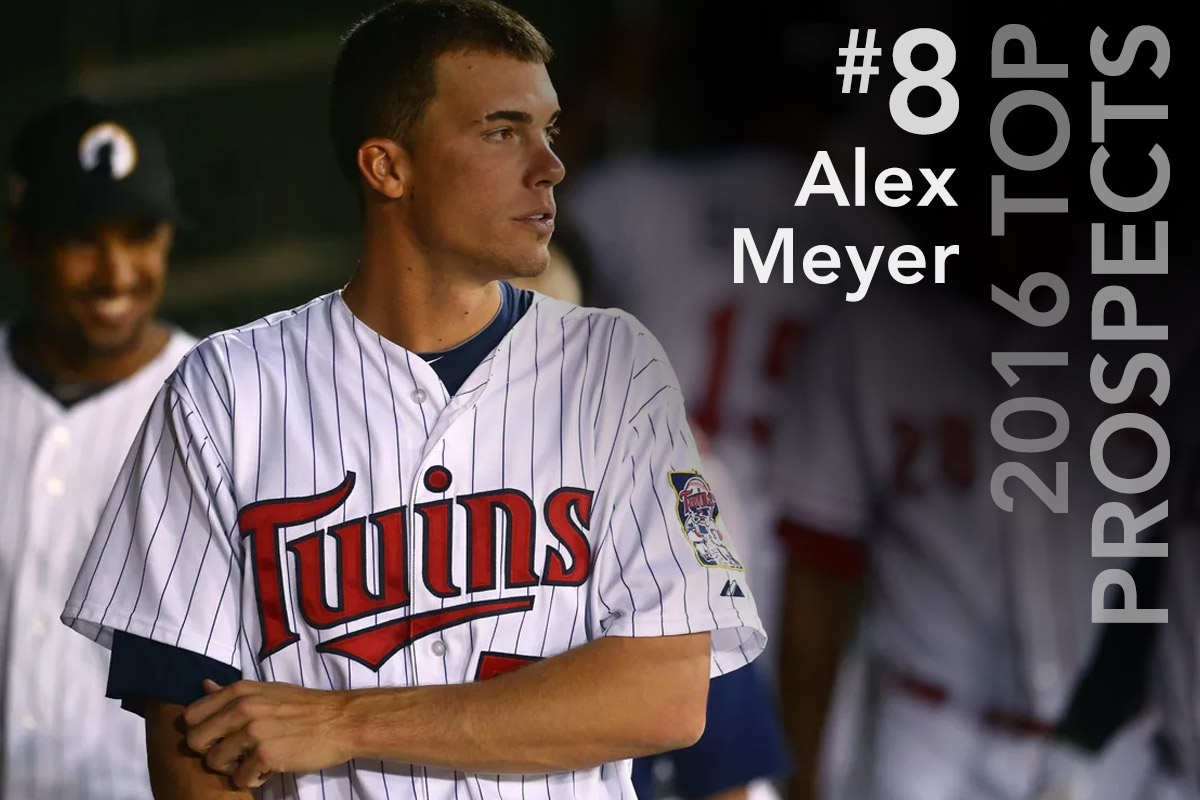 Age: 26 (DOB: 1/3/90) 2015 Stats (AAA/MLB): 94.2 IP, 5.13 ERA, 103/51 K/BB ETA: 2015 2015 Ranking: 5 National Top 100 Rankings BA: NR | MLB: NR | BP: NR What's To Like The velocity, that’s for sure. Meyer was originally drafted by the Red Sox out of Greensburg High School (Ind.) in the 20th round of the 2008 draft but a reported $2 million bonus offer from Boston was not enough to convince the hard-throwing right-hander to bypass college in Kentucky. In 2011, after flashing triple-digits fastball for the Wildcats, the Nationals snagged him in the first round at 23rd overall. So far, the Twins have only received a brief sampling of the heat. In his two-outing stint with the Twins last year he wound up throwing the second hardest fastball among the staff at 98. Velocity matters because dating back to 2008, when hitters are facing 98+, they hit .205 with a slugging of .288. In comparison, when pitchers are sitting 90-to-95, hitters have posted a .274 average with a .428 slugging. According to ESPN/TruMedia the Twins have hit 98 or higher on the radar gun just 23 times (13 of which belonged to Juan Morillo) and was the lowest number among all teams in that eight year span. But Meyer is more than just a pretty fastball. After the 2014 season, Baseball America anointed Meyer’s breaking ball, a knuckle-curve, as the best in the International League. Like his fastball, at times Meyer has trouble commanding it but the hammer break has made it a very good complement to his fastball. What's Left To Work On Consistency has been Meyer’s main issue but if there is one thing Meyer has been consistent about it has been his release point dropping over the last few years. When Meyer made an appearance in the Futures Game in 2011, PitchF/X data said he was releasing the ball near 6.6 feet. However, by the time Meyer arrived with the Twins, his arm angle had lowered so much that he was releasing the ball a foot lower than before. Considering Meyer has had shoulder ailments in the past, it is no surprise to see this type of dip in release point. In 2013 he missed 83 days because of a strained shoulder and was shut down in August 2014 with inflammation. This last year was relatively injury free but he readily acknowledge in Rochester that he was focused on raising his release point as he struggled with his command. Opponents who faced him in 2014 and then again in 2015 noted that his fastball looked flat and lacked the same movement compared to the prior season. If he is able to correct this, Meyer could be a dangerous pitcher on the mound. What's Next Since the Twins’ rotation is at capacity (and still trying to find room for Jose Berrios), there could be room in the bullpen as the front office’s indifference toward free agents relievers suggests that they believe in their crop of young power arms - including Meyer. Despite the struggles, with two option years remaining, the Twins can be patient with him. With a few tweaks, Meyer has the weapons to be a shutdown reliever. So while Meyer likely won’t start the season in Minnesota, he will be on a short list of pitchers who will get the call when help is needed.
-
I'm certainly not going to pretend to be a great high school football mind here but don't coaches teach receivers to come back to the ball during a broken play? Seems odd that they all stacked up on that side of the field.
-
In efforts to find video of some current Twins' swings from their amateur days, I came across videos of Joe Mauer's high school football career. As the quarterback for Cretin-Derham Hall, Mauer led the Raiders to consecutive Prep Bowl berths. In 1999 Cretin trounced Hastings 42-21 and the game featured some impressive passes from the future Minnesota Twin including this 40+ yard touchdown pass. With minimal ability to step into the throw, it was clear that Mauer had some elite arm strength. http://i.imgur.com/1Y2N1qZ.gif The following year, Mauer's senior season, Cretin was back in the finals looking to defend their title against the football factory of Eden Prairie. Down 21-14 late in the fourth quarter, Mauer and the Raider offense orchestrated a drive to the Raider's 30 yard line with a minute-thirty left on the clock. Cretin opts to take a shot towards the end zone on first down with Mauer scrambling to his right. However, Mauer goes full Brett Favre and made an ill-fated decision to throw a pass back across the field. https://twitter.com/ParkerHageman/status/700138957707673600 Mauer's pass would be picked off by Eden Prairie's Greg Winegarden (who went on to play baseball in college at Concordia-St Paul) and he would be chased down after an 82-yard return, which set up an easy championship-clinching field goal for the Eagles. Prior to being draft by the Twins, Mauer committed to player football at Florida State, helping launch FSU to the top college recruiting class that year according to ESPN. As Mauer's current concussion issues remain at the forefront of the local sports cycle, it's hard not to wonder how different things might have been for Mauer and the Twins had he decided to pursue football.
-
Nerd. (and fixed.)
-
Completely agree with the PECOTA take. As far as spring training goes, the Twins were pretty bad last year. I think we gotta see them play 162.
-
Baseball Prospectus released their annual PECOTA projections and once again, the Minnesota Twins are not supposed to do so hot. According to the numbers, the Twins are expected to finish near the bottom of the division with a 79-83 record – 3 games ahead of the reigning World Series champion Kansas City Royals. The bad news is that the 79-win projection is on par with a vast majority of other systems including USA Today's 80-win projection (which they consider "semi-scientific") but the good news is that the 79-win total represents a nine game swing in the win column over last year’s 70-win projection. As you may recall the Twins went on to outperform their 2015 expectation by 13 game but the Royals obliterated the system, winning 95 games while PECOTA suggested a 72-win total in 2015.
-
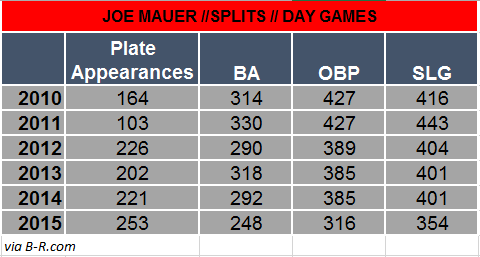
In an interview with the Pioneer Press, Minnesota Twins' Joe Mauer said that the concussion he suffered would blur his vision and effect his hitting as a result. In order to combat that symptom, Mauer says he will bat with sunglasses in attempts to improve his ability to track pitches. Over the last three years, Mauer's swinging strike rate has jumped significantly (from 4% in 2010-2012 to 6% from 2013-2015) and the rate at which he hit the ball hard dropped in that type as well (from 35% to 31%). Then again, Mauer's numbers in the daytime didn't really take a turn for the worse until just this season. Will the sunglasses help Mauer regain his former elite hitting status? It couldn't hurt, right? http://stream1.gifsoup.com/view7/2678677/jack-parkman-shimmy-o.gif
-
According to a Miami sports talk host, Andy Slater, former Minnesota Twins outfielder Delmon Young was arrested in Miami on Sunday night after reportedly attacking a valet driver. Per the local police department, Young is accused of attacking the driver, choking him and using racial slurs. The victim was able to free himself and Young left the scene but when the police caught up with Young at his residence, Young answered the door "naked from the waist down" and used more racial slurs while being arrested shortly thereafter. In 2012, Young had to complete 10 days of community service and participate in a hate crime program stemming from an arrest in New York City after tackling a panhandler and using anti-Semitic slurs.
-
I'll go with the under on the 30 home runs, mainly because of Target Field and his use of the big part of the ballpark. http://twinsdaily.com/_/minnesota-twins-news/what-should-the-twins-expect-from-byung-ho-park-r4266
-
Can Kurt Suzuki Turn Things Around In 2016?
Parker Hageman replied to Parker Hageman's topic in Twins Daily Front Page News
I'm not sure what there was to doubt. If you doubted that he could sustain the production, that's fair. Again, that's what the percentage would bare out. Not really going out on a limb on that one. The reality is (1) he made tangible changes to his mechanics that we can see and (2) he was hitting the ball differently during that time. Can't argue that. To be clear, here's what I wrote at that time: He couldn't sustain it. No question. -
Can Kurt Suzuki Turn Things Around In 2016?
Parker Hageman replied to Parker Hageman's topic in Twins Daily Front Page News
This. I don't mean to be glib about this. From a high level perspective, yes, more balls fell for hits in 2014 than the rest of his career. From a granular perspective -- examining the data more closely -- we find that a lot of those hits were to right field and then fell off again in the last two months of 2014 and beyond. Additionally, those hits to right in 2014 were considered well-struck -- not dinks or donks or flares or dying quails or what have you. He was doing something differently in 2014 than he did in the previous three years and the year after. The data bears that out.- 46 replies
-
- 1
-

-
- kurt suzuki
- terry ryan
- (and 2 more)
-
Can Kurt Suzuki Turn Things Around In 2016?
Parker Hageman replied to Parker Hageman's topic in Twins Daily Front Page News
Winner.- 46 replies
-
- 1
-
-
- kurt suzuki
- terry ryan
- (and 2 more)
-
Can Kurt Suzuki Turn Things Around In 2016?
Parker Hageman replied to Parker Hageman's topic in Twins Daily Front Page News
1. Yes, yes he did: http://twinsdaily.com/articles.html/_/minnesota-twins-news/minnesota-twins/kurt-suzuki-makes-changes-at-the-plate-r2553 2. The well-hit average to the opposite field and 8 doubles suggest that these were not flares or gorks. To be clear, I'm not suggesting he will be able to replicate what he did in 2014. I'm saying that if he is going to provide a decent slash line, it appears he needs to get back to what he was doing two years ago when he was driving the ball up-the-middle/opposite field.- 46 replies
-
- 1
-
-
- kurt suzuki
- terry ryan
- (and 2 more)
-
Can Kurt Suzuki Turn Things Around In 2016?
Parker Hageman replied to Parker Hageman's topic in Twins Daily Front Page News
Wow. Neat. Here's an actual paragraph I deleted from this post because I didn't want to start a Star Wars brawl: This is the point in which the statistically inclined readers typically think to themselves something like "Yeah, doi, look at his track record, he was OBVIOUSLY due for regression" and then go off to watch Star Wars for the 15th time. And I don't disagree with that assessment because regression in baseball has been proven time and again. We have enough data to know that a 30-year-old with a league average-ish track record does not suddenly become a WAR superstar. It doesn't happen. There can be, however, incremental improvements. I don't want to discount that fact. The reason for the increase in BABIP in 2014 was his ability to get more hits the other way. He made some changes to his approach, was getting a higher percentage of hits the other way and then just stopped doing that again. -
Can Kurt Suzuki Turn Things Around In 2016?
Parker Hageman replied to Parker Hageman's topic in Twins Daily Front Page News
Definitely agree that the defensive side is another big issue when it comes to playing time with Suzuki. Here's the thing with Kyle Gibson's framing number: They've always been bad, no matter who has been catching him. I wrote the same thing about Gibson's first season while Mauer was catching him. Admittedly, at that time Mauer was really bad at getting strikes at the bottom of the zone where Gibson was throwing most frequently. Now the Twins have never had a strong receiver when it comes to framing so we have no real comparison in what Gibson would be like with a good framer. Sometimes I wonder if certain pitchers are bad at getting borderline calls for various reasons. It would be an interesting study for someone with time/no life. -
Can Kurt Suzuki Turn Things Around In 2016?
Parker Hageman replied to Parker Hageman's topic in Twins Daily Front Page News
Step 1: With all due credit to B-R.com, ignore their batted ball direction splits. Because of the methodology using Retrosheet's field diagram, the middle of the field is MASSIVE (http://www.retrosheet.org/location.htm). Inside Edge and others have a more equal distribution between what is left/center/right. Step 2: ???? Step 3: Profit. -
Can Kurt Suzuki Turn Things Around In 2016?
Parker Hageman replied to Parker Hageman's topic in Twins Daily Front Page News
Why didn't I just say that "had Suzuki only hit all home runs he would have been pimp boss of everything"? Look, we're playing make believe to highlight how much his performance going the other way tanked his overall numbers. Nothing more. Nothing less. -
Kurt Suzuki’s 2015 season was the stuff of nightmares. He couldn’t hit. He couldn’t stop anyone on the bases. He couldn’t help his pitchers expand the zone. He was left being a bat flip enforcer from the dugout. Without many options to push Suzuki internally, the Twins acquired John Ryan Murphy from the Yankees to bolster the position. With at least one year left on his two year deal, many assume that Suzuki has become a lame duck catcher. Yet the Twins have not indicated anything other than expecting Suzuki to play a substantial role in 2016. Can Suzuki turn it around and provide offensive value? Kurt Suzuki’s 2015 season was the stuff of nightmares. He couldn’t hit. He couldn’t stop anyone on the bases. He couldn’t help his pitchers expand the zone. He was left being a bat flip enforcer from the dugout. Without many options to push Suzuki internally, the Twins acquired John Ryan Murphy from the Yankees to bolster the position. With at least one year left on his two year deal, many assume that Suzuki has become a lame duck catcher. Yet the Twins have not indicated anything other than expecting Suzuki to play a substantial role in 2016. Can Suzuki turn it around and provide offensive value? Now, I’m not going to admit that I was wrong here because I made a vow on my wedding day to never admit that I am wrong and I don’t plan on starting here. That being said, I was less right then I could have been regarding Suzuki’s immediate future in 2014. At that time, Suzuki’s decent peripherals and above average line drive rate to all fields in conjunction with his new approach suggested to me that he had enough hitting foundation to produce a good batting average/on-base combo. It went against the convention and percentages but even with some leakage, he still could likely post strong numbers. However, almost immediately the story was published, Suzuki proved me wron...less right than I could have been (it takes a big man to admit when he was less right than he could have been). And he continued to do so throughout 2015. Just when you thought he hit rock bottom, the earth would open up and reveal another seven story fall into a slumping abyss. READ: Position Battles - Catcher On July 31, 2014, Kurt Suzuki was hitting .304 with a solid .367 on-base percentage. Both figures were 50 points higher than his career norms. Nevertheless, the Twins boldly doubled down, sharing a similar belief that they could bet against the prevailing wisdom. From August through September of that year, he supplied a .240 batting average with a .290 on-base percentage. He basically replicated those numbers throughout the duration of the 2015 season, ending with a .240 average and a .296 on-base. Suzuki’s problem, according to manager Paul Molitor, had a lot do with what was going on between the ears. "I think sometimes when you get off to poor starts, even as a veteran, it becomes an uphill battle,” Molitor said of Suzuki’s 2015 struggles. “It's hard to look up at the scoreboard and see numbers that aren't very appealing. And you're trying to find ways to get it back into a more comfortable state and you end up thinking about the wrong things instead of just going out there and trusting each at bat.” On July 31, 2015, one year after signing his $12 million extension, Suzuki’s numbers were pitiful. His .230 average and .288 on-base percentage were certainly unbecoming of a starting catcher but there they were, glowing down from above on the giant Target Field video board, reminding him of how little he was contributing to his team. “I always told him, ‘Don't worry about what you hit now, worry about what you hit now for the rest of the season,’” Molitor said. “It's all about going forward. He wanted so much to be a part of it. He'd tell me ‘We're winning, we gotta chance but I feel like I'm not doing anything to help the team. I can't throw anybody out, I can't get a hit.’ So it bothered him.” Unlike 2014, there was a slight uptick in his production over the final months (“He realized we were playing for something,” Molitor reasoned.) but not substantial and certainly not enough to give anyone any reassurance that he could be counted on to anchor the position. The Twins were definitely not confident in his abilities to rebound, instead nabbing John Ryan Murphy to contend for the job. READ: John Hicks Excited To Join Twins The Twins say they were not banking on the same offensive production out of Suzuki for 2015 (in spite of extending him for an additional two years at the height of his output on July 31 suggesting otherwise) but feel that he is capable of splitting the difference. “We got an extreme amount of production out of him two years ago,” general manager Terry Ryan said earlier this offseason. “Nobody was expecting that level going forward because, all right he had an awful good year. But somewhere in between he should settle in.” Can Suzuki actually do enough to finish somewhere in between? As Molitor said, Suzuki’s problems might have a lot to do with his mindset but the data shows that what made his 2014 season so good and his 2015 so bad was the amount of success he had when going the other way. Why this happened is unclear. Perhaps it goes back to what Molitor said about him trying too much rather than hitting what was given. Pitchers seemingly attacked him in a similar manner but with starkly different results, especially going the other way. Consider this: Had Suzuki only pulled or gone up the middle, he would have had a .312/.309/.414 batting line in 2015. Unfortunately, he went 15-for-89 on balls hit the other way, tanking his overall numbers. Looking over the video of the two seasons, you see him often pulling off of pitches he drove the other way in 2014. Here are two similar pitches he hit to right, the top is 2014 and the bottom is 2015: Almost the exact same pitch at the exact same speed in a very similar location. In the top, Suzuki laces a liner to right. In the lower example, Suzuki skies out to right (as you might have suspected with the bat angle). Now watch the two swings in motion and watch what his head does. http://i.imgur.com/KFDUd0r.gif http://i.imgur.com/tSe53n8.gif In the firstexample above (2014), his head remains still and follows the pitch to right. In the one below (2015), he is pulling off the ball, which explains why he “just missed it”. This example is a microcosm of what made him outperform in 2014 and disappoint in 2015. It is possible for him to generate enough offense to avoid being a liability in the lineup but in order to do so, it appears that Suzuki needs to have at least some success going the other way. There are no guarantees he can do that. After all, the years and miles have piled up on his body so who is to say he will even repeat the same level of success pulling the ball or going up the middle as he did in 2015, let alone driving the ball the other way. “We all know he takes a beating,” Molitor said. “I can't really empathize with that. I don't know what it's like to take foul tips or get hit by follow-throughs and just the pounding those guys take squatting everyday like that. It's gotta take it's toll.” Could the years of abuse behind the plate hinder Suzuki's production? Molitor continued, “I think there are studies about catchers after their 30th birthday about offensive trends and things, so It obviously takes its toll. View full article
-
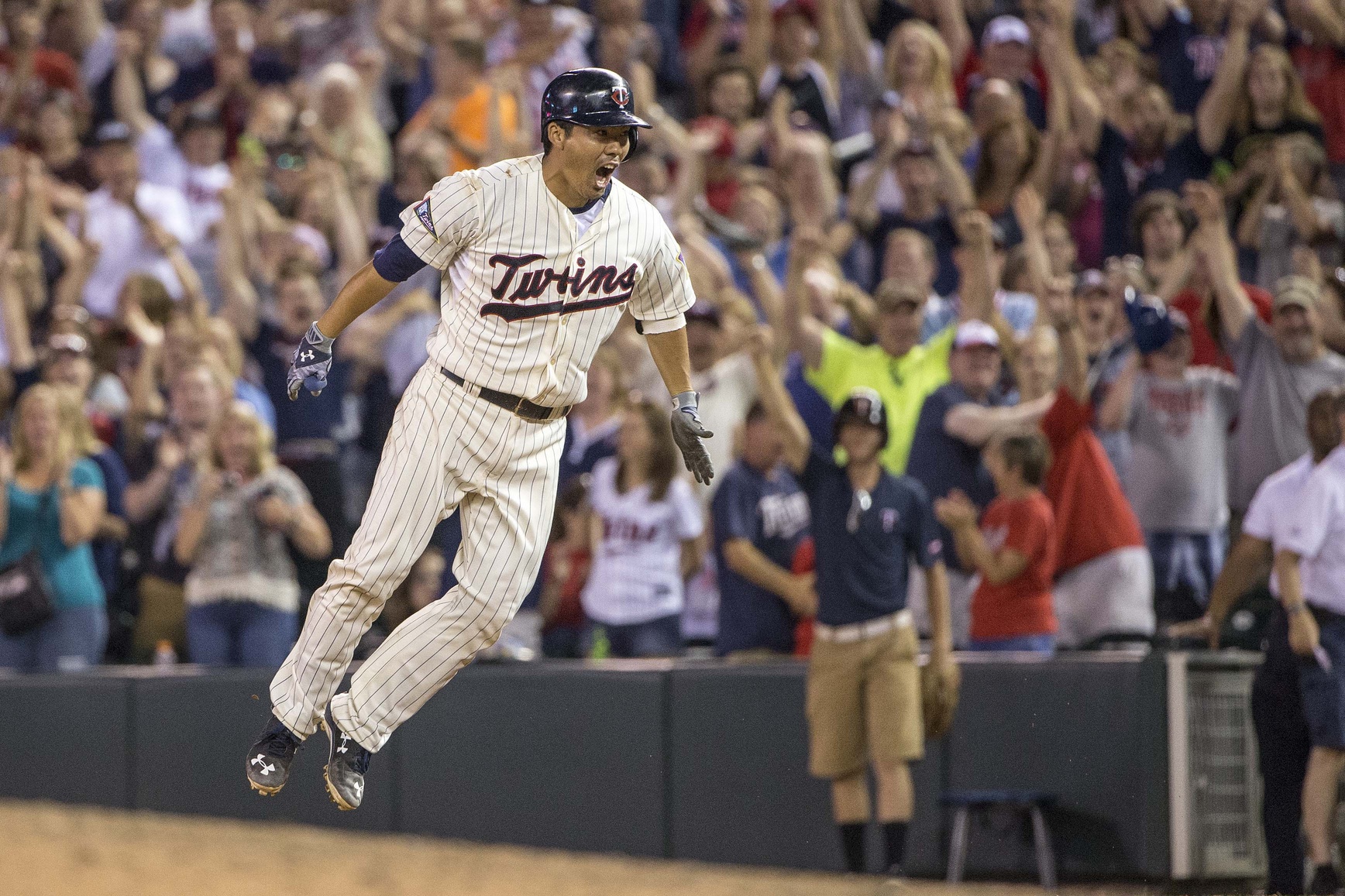 Now, I’m not going to admit that I was wrong here because I made a vow on my wedding day to never admit that I am wrong and I don’t plan on starting here. That being said, I was less right then I could have been regarding Suzuki’s immediate future in 2014. At that time, Suzuki’s decent peripherals and above average line drive rate to all fields in conjunction with his new approach suggested to me that he had enough hitting foundation to produce a good batting average/on-base combo. It went against the convention and percentages but even with some leakage, he still could likely post strong numbers. However, almost immediately the story was published, Suzuki proved me wron...less right than I could have been (it takes a big man to admit when he was less right than he could have been). And he continued to do so throughout 2015. Just when you thought he hit rock bottom, the earth would open up and reveal another seven story fall into a slumping abyss. READ: Position Battles - Catcher On July 31, 2014, Kurt Suzuki was hitting .304 with a solid .367 on-base percentage. Both figures were 50 points higher than his career norms. Nevertheless, the Twins boldly doubled down, sharing a similar belief that they could bet against the prevailing wisdom. From August through September of that year, he supplied a .240 batting average with a .290 on-base percentage. He basically replicated those numbers throughout the duration of the 2015 season, ending with a .240 average and a .296 on-base. Suzuki’s problem, according to manager Paul Molitor, had a lot do with what was going on between the ears. "I think sometimes when you get off to poor starts, even as a veteran, it becomes an uphill battle,” Molitor said of Suzuki’s 2015 struggles. “It's hard to look up at the scoreboard and see numbers that aren't very appealing. And you're trying to find ways to get it back into a more comfortable state and you end up thinking about the wrong things instead of just going out there and trusting each at bat.” On July 31, 2015, one year after signing his $12 million extension, Suzuki’s numbers were pitiful. His .230 average and .288 on-base percentage were certainly unbecoming of a starting catcher but there they were, glowing down from above on the giant Target Field video board, reminding him of how little he was contributing to his team. “I always told him, ‘Don't worry about what you hit now, worry about what you hit now for the rest of the season,’” Molitor said. “It's all about going forward. He wanted so much to be a part of it. He'd tell me ‘We're winning, we gotta chance but I feel like I'm not doing anything to help the team. I can't throw anybody out, I can't get a hit.’ So it bothered him.” Unlike 2014, there was a slight uptick in his production over the final months (“He realized we were playing for something,” Molitor reasoned.) but not substantial and certainly not enough to give anyone any reassurance that he could be counted on to anchor the position. The Twins were definitely not confident in his abilities to rebound, instead nabbing John Ryan Murphy to contend for the job. READ: John Hicks Excited To Join Twins The Twins say they were not banking on the same offensive production out of Suzuki for 2015 (in spite of extending him for an additional two years at the height of his output on July 31 suggesting otherwise) but feel that he is capable of splitting the difference. “We got an extreme amount of production out of him two years ago,” general manager Terry Ryan said earlier this offseason. “Nobody was expecting that level going forward because, all right he had an awful good year. But somewhere in between he should settle in.” Can Suzuki actually do enough to finish somewhere in between? As Molitor said, Suzuki’s problems might have a lot to do with his mindset but the data shows that what made his 2014 season so good and his 2015 so bad was the amount of success he had when going the other way. Why this happened is unclear. Perhaps it goes back to what Molitor said about him trying too much rather than hitting what was given. Pitchers seemingly attacked him in a similar manner but with starkly different results, especially going the other way. Consider this: Had Suzuki only pulled or gone up the middle, he would have had a .312/.309/.414 batting line in 2015. Unfortunately, he went 15-for-89 on balls hit the other way, tanking his overall numbers. Looking over the video of the two seasons, you see him often pulling off of pitches he drove the other way in 2014. Here are two similar pitches he hit to right, the top is 2014 and the bottom is 2015: Almost the exact same pitch at the exact same speed in a very similar location. In the top, Suzuki laces a liner to right. In the lower example, Suzuki skies out to right (as you might have suspected with the bat angle). Now watch the two swings in motion and watch what his head does. http://i.imgur.com/KFDUd0r.gif http://i.imgur.com/tSe53n8.gif In the firstexample above (2014), his head remains still and follows the pitch to right. In the one below (2015), he is pulling off the ball, which explains why he “just missed it”. This example is a microcosm of what made him outperform in 2014 and disappoint in 2015. It is possible for him to generate enough offense to avoid being a liability in the lineup but in order to do so, it appears that Suzuki needs to have at least some success going the other way. There are no guarantees he can do that. After all, the years and miles have piled up on his body so who is to say he will even repeat the same level of success pulling the ball or going up the middle as he did in 2015, let alone driving the ball the other way. “We all know he takes a beating,” Molitor said. “I can't really empathize with that. I don't know what it's like to take foul tips or get hit by follow-throughs and just the pounding those guys take squatting everyday like that. It's gotta take it's toll.” Could the years of abuse behind the plate hinder Suzuki's production? Molitor continued, “I think there are studies about catchers after their 30th birthday about offensive trends and things, so It obviously takes its toll.
