



Parker Hageman
-
Posts
4,152 -
Joined
-
Last visited
-
Days Won
6
Content Type
Profiles
News
Minnesota Twins Videos
2026 Minnesota Twins Top Prospects Ranking
2022 Minnesota Twins Draft Picks
Minnesota Twins Free Agent & Trade Rumors, Notes, & Tidbits
Guides & Resources
2023 Minnesota Twins Draft Picks
The Minnesota Twins Players Project
2024 Minnesota Twins Draft Picks
2025 Minnesota Twins Draft Pick Tracker
2026 Minnesota Twins Draft Tracker: Picks & Bonuses
Forums
Blogs
Events
Store
Downloads
Gallery
Everything posted by Parker Hageman
-
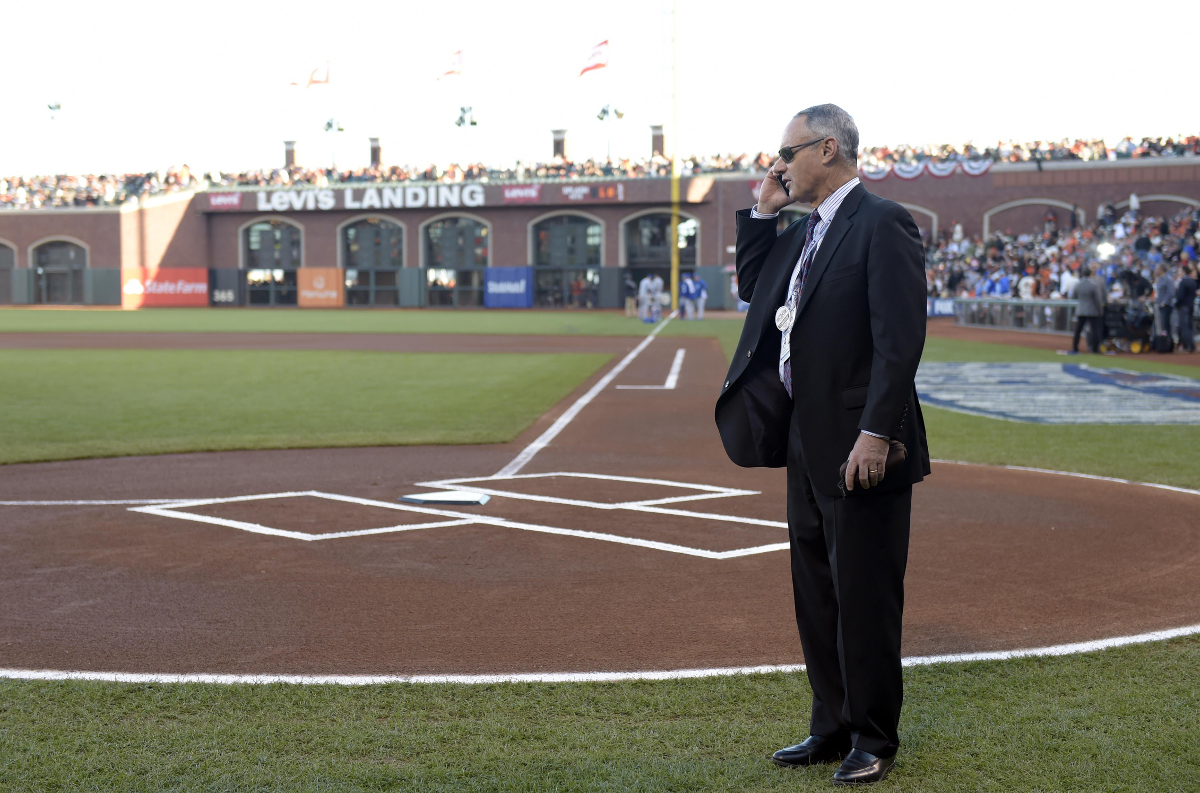 There is precedent to embrace the shift. For example, according to Baseball Info Solutions, shifting has been rewarding to the teams who move their players around the most, those having “saved” an average of 8 runs per season or a rough translation of about one win per season. Data-driven teams saw this edge and were aggressive in placing their players in a position to maximize their odds of converting a batted ball into an out. However at the beginning of the year new commissioner Rob Manfred seemingly placed the shift on the endangered species list. Would he really kill the shift? In his tour around spring training facilities, the commissioner made a whistle-stop at the Lee County Sports Complex camp to discuss the state of Major League Baseball and the game’s future with the team’s ownership as well as providing face time with the players. Manfred fielded questions from the media that ranged from the early feedback on the new pace-of-game initiatives (“really been positive”) to a childhood memory of a Twins-Yankees series in 1968 (“everybody remembers the first time they went to a major league game”) to Scott Boras’ comments about the Cubs’ decision to send client Kris Bryant to the minors (“that really isn’t any of Scott Boras’ business”). When prompted to elaborate his stance regarding banning defensive shifts, Manfred had to laugh. “I’m so tired of this topic,” Manfred told the media scrum with a chuckle and then humored the internet writer with an explanation behind the charge he made on ESPN in January that a ban on defensive shifts was under consideration by his office. “My comment on defensive shifts came after a series of questions so without repeating them all, we are looking at the issue of offense in the game. We wouldn’t be doing our jobs if we’re not because there is a lot of conversation in the game about the fact that offense is down. Where we are on that issue analytically is we haven’t even decided whether we have an aberration or a trend that may require a remedy. I went through all that before I got to defensive shifts. As a follow, somebody said ‘If and when you decide you have a problem what might you talk about, what might you be willing to consider?’ In that context I mentioned defensive shifts. Nothing more serious than that.” There is no grand plan to build a fence between short and second or tethering the third baseman to the base. What Manfred made clear is that there is no imminent danger to the shift lifestyle and that all the blowback has him reconsidering that option. “Frankly, given the feedback that I’ve gotten since I made that comment I’m not even certain that I would even consider it anymore.” So defensive enthusiasts can rest easy knowing that there will be no restrictions placed on fielders in the foreseeable future. The Twins can continue to rearrange their infielders as they see fit to try to minimize the damage from their pitching staff.
 -
 On the back fields of the Twins’ spring training complex, a relay throw away from the sparkling new minor league facility, starter Phil Hughes was putting the finishing touches on his preseason work against a group of Rays prospects. The outing went as expected. For the most part Hughes manhandled an inexperienced lineup save for a two-run home run by first base prospect Jake Bauers which Hughes claimed came on a curve that he failed to bury.“I threw him a good backdoor cutter that he fouled off, a good fastball that he fouled off and then I threw him a terrible curveball,” Hughes said. “I was a little ticked.” In their next meeting, Hughes provided the Rays’ hitter with an education in major league pitching and how to expand the strike zone, punctuated with his patent backdown cutter. Like a fair number of Hughes’ strikeouts with the cutter, the pitch skirted around the strike zone. Because he hit his target with such precision, catcher Kurt Suzuki barely moving an eyelash, the umpire punched him out looking. In disbelief, Bauers lingered in the box after the inning-ended strikeout, he mumbled “that’s not a strike” to the ump while shaking his head. The slow walk back to the dugout was followed with more disagreement. “He seemed like he had an attitude.” Hughes joked. In all, Hughes looked sharp and pounded the strike zone like business as usual. Hughes ripped out 70 pitches and threw another twenty in the bullpen to work on finishing his curveball and emphasizing his arm speed. The start also including several changeups and a few more in the bullpen session. One change prompted both pitching coach Neil Allen and Suzuki to let him know how good that pitch was moving. “I’ve never been a guy with great feel for it,” Hughes said of the pitch. “I just have to make sure that my arm speed is good and that I’m just releasing it out front. I threw a couple good ones in the bullpen afterwards just to mix it in and get a little feel.” Pitch data suggests that Hughes threw about a dozen changeups last year but the side work where he can focus on the feel rather than the results has helped build his confidence in the pitch. “It’s feel and confidence really,” Hughes said about progress of his change. “If I’m not confident enough I won’t throw it in a game and I’ll rely on the three pitches I used primarily last year. If the feel's there and I throw it and the results are there I’ll gain confidence and I’ll throw it more.” With one more start in spring between now and opening day, Hughes said he is not sure what the plan will be for the next outing. After 90 pitches on Friday, he believes that he may either ramp up to 100 pitches or throw fewer in preparation for the real games. “Ideally, Neil [Allen] would want to back us off on our last start before the regular season but he also mentioned he wanted to get us throwing 100 pitches so I don’t know if this next start is going to be backed off or (go) to 100.” Click here to view the article
 -
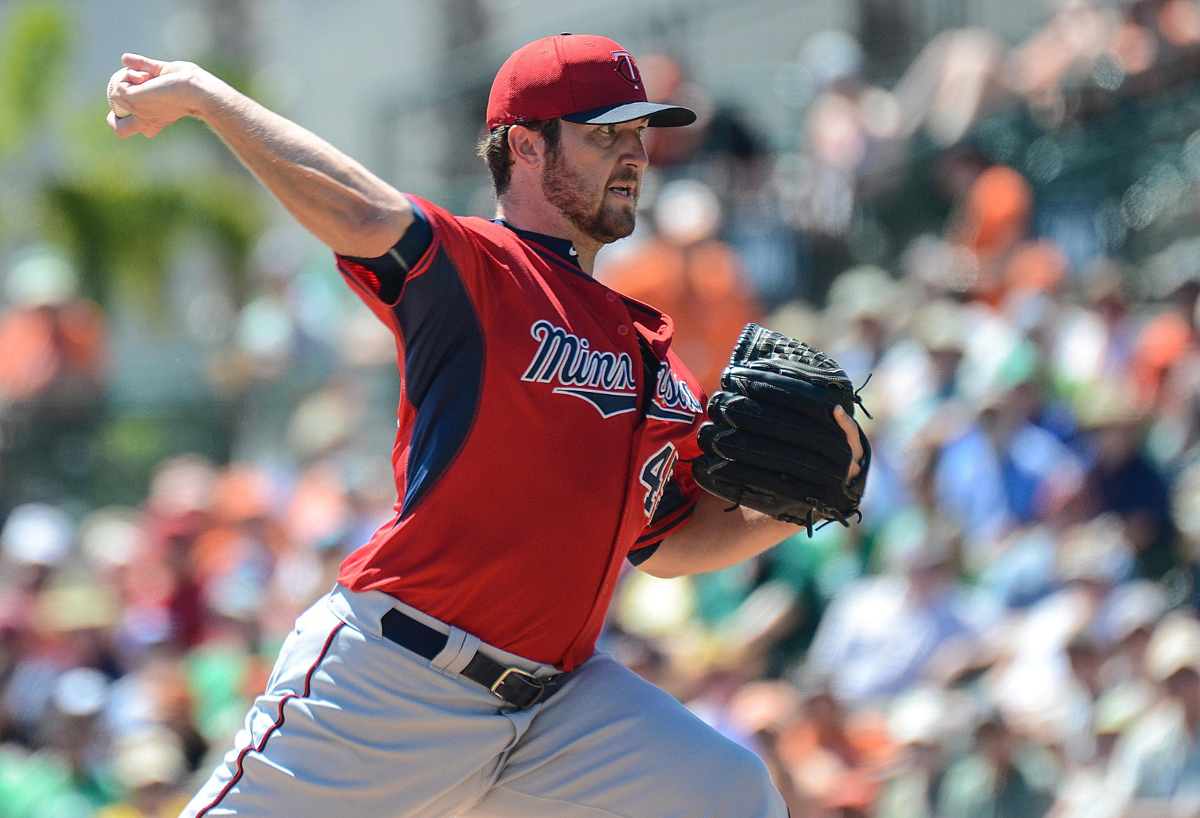 “I threw him a good backdoor cutter that he fouled off, a good fastball that he fouled off and then I threw him a terrible curveball,” Hughes said. “I was a little ticked.” In their next meeting, Hughes provided the Rays’ hitter with an education in major league pitching and how to expand the strike zone, punctuated with his patent backdown cutter. Like a fair number of Hughes’ strikeouts with the cutter, the pitch skirted around the strike zone. Because he hit his target with such precision, catcher Kurt Suzuki barely moving an eyelash, the umpire punched him out looking. In disbelief, Bauers lingered in the box after the inning-ended strikeout, he mumbled “that’s not a strike” to the ump while shaking his head. The slow walk back to the dugout was followed with more disagreement. “He seemed like he had an attitude.” Hughes joked. In all, Hughes looked sharp and pounded the strike zone like business as usual. Hughes ripped out 70 pitches and threw another twenty in the bullpen to work on finishing his curveball and emphasizing his arm speed. The start also including several changeups and a few more in the bullpen session. One change prompted both pitching coach Neil Allen and Suzuki to let him know how good that pitch was moving. “I’ve never been a guy with great feel for it,” Hughes said of the pitch. “I just have to make sure that my arm speed is good and that I’m just releasing it out front. I threw a couple good ones in the bullpen afterwards just to mix it in and get a little feel.” Pitch data suggests that Hughes threw about a dozen changeups last year but the side work where he can focus on the feel rather than the results has helped build his confidence in the pitch. “It’s feel and confidence really,” Hughes said about progress of his change. “If I’m not confident enough I won’t throw it in a game and I’ll rely on the three pitches I used primarily last year. If the feel's there and I throw it and the results are there I’ll gain confidence and I’ll throw it more.” With one more start in spring between now and opening day, Hughes said he is not sure what the plan will be for the next outing. After 90 pitches on Friday, he believes that he may either ramp up to 100 pitches or throw fewer in preparation for the real games. “Ideally, Neil [Allen] would want to back us off on our last start before the regular season but he also mentioned he wanted to get us throwing 100 pitches so I don’t know if this next start is going to be backed off or (go) to 100.”
 -
ESPN/TruMedia (http://www.trumedianetworks.com/mlb-baseball-analytics/). I'm not certain what BaseballSavant is doing with their pitchf/x data for zone stuff but it doesn't seem to add up to what TruMedia (paywall) or to what Fangraphs.com's PitchF/x (51%) data is saying. Then again, the BIS's Fangraphs.com video scouted data says his zone rate was closer to 45% which would match the BaseballSavant data. I honestly don't have an explanation for the discrepancies. TruMedia is PitchFX-based but has video scouts (Inside Edge, I believe) verifying. Meanwhile BaseballSavant and Fangraph.com's Pitch F/X data should be the same feed. One might be adjusting the zone parameters differently. Another interesting case of data discrepancies. QUICK UPDATE: I emailed Daren Williams, the proprietor of BaseballSavant.com and he claims that he gets his data straight from MLB AM's feed and does nothing to manipulate it with. "All the zone data on Baseball Savant is taken directly from MLBAM," Williams said. "Every pitch MLBAM records is given a zone location by their PITCHfx algorithm. When you view the game day app it's the same as what they show. That's what I'm using."
-
Correct. From what I've been told, it is not because MLB wants to sit on the data but that the data set is significantly larger than PitchF/X-StatsCast that they don't quite know how to share it to the public.
-
That really wasn't the case. He actually saw more in-zone pitches in the second-half of the season (49% 1st half/51% 2nd half). His July/August BB/K are interesting. In July, he posted a 3/23 BB/K. In August, it was 25/18 BB/K. I'm not certain why the discrepancy either. In July, he often moved around the order batting leadoff, second and third. The person hitting behind him frequently changed as well -- instead of Mauer batting behind him like at the beginning of the year, it was Eduardo Nunez, Kurt Suzuki, Eduardo Escobar and Trevor Plouffe. In August he went back to batting second consistently and had Mauer hitting behind him again. Maybe it was mindset? His approach may have been that of a run-producer in July while he went back to approaching it as a table-setter in August.
-
No question. I thought the same thing. Interestingly enough, John Dewan, James' partner in the website as well as the president of BIS, responded to James' plea and left it available for all to see (read here). What it seems is that they believe James has a fundamental misunderstanding for how BIS's Defensive Runs Saved system works. Early in the stats' inception, James concocted the idea of the plus/minus reward but the stat has since evolved by weighting the play based on the situation and difficulty. It also has broken it down to "runs" for easier digestion. I believe the system is improved but still is lacking in areas that allows for easy comprehension. Technically, it is all available -- we would just have to watch the video all plays and log them like BIS or Inside Edge does. I'm holding out hope that FieldF/X will give that layer -- be able to answer the question of quickness and first-step and routes that we are only able to measure with our eyes or video scouts' account. It will be a brave new world, indeed.
-
As Terry Ryan rattled off the bullet points which led the organization toward signing Brian Dozier to a new four-year, $20 million contract that lasts through 2018, the Twins’ general manager cited his second baseman’s glove work. “He doesn’t get enough attention for his defense,” the Twins’ general manager said on Tuesday morning at Dozier's press conference. To put that in pop culture terms, his fielding is the baseball equivalent of Justified.Certainly Dozier’s new contract goes beyond his defense. As Ryan said, Dozier has been able to pop a few over the fence -- where his first-half totals landed him a Home Run Derby -- as well as steal bases (and baserunning in general). Beyond that, he also creates chemistry in the clubhouse and has a mane that just won’t quit. But Dozier’s defense seems appropriately appreciated for what it is: visually appealing but occasionally flawed. So let’s give Dozier’s defense some attention here. Let us start with the understanding that defense is the final frontier when it comes to finding a baseline of what constitutes universally good defense. Some will never be swayed from the trusty eye test while others will use a litany of defensive metrics to construct a profile. The problem with the former is that a human cannot watch, inventory and compare every play over the course of a season or multiple seasons. The issue with the latter is that several different systems with various methodologies are being used to measure a complex series of events. Even Bill James, the OG of metrics, recently threw shade at BIS’ defensive stats as well as other advanced fielding stats. “Fielding Statistics failed because they created no organized universe of data, thus no solid footing on which Direct-Inference Analysis could be conducted,” James wrote in January on his website, BillJamesOnline.net which houses the Plus/Minus system. In laymen’s terms, the common language of OPS+ is that 100 is average and anything above or below it is good or bad. Would saying Dozier was a -4.4 UZR/150 second baseman in 2014 mean something without context? Or that he had 0 Defensive Runs Saved? Or that he was a -16 in the Plus/Minus? These are three stats attempting to measure the same thing but are spoken in three different languages. The advanced metrics are good. They help inventory numerous plays that the mind will never be able to recall without a layer of bias. Where the system starts to be flawed is in attempting to compare one player against other players of that position as not all plays are created equal. Take this Dozier play for example. In it, the runner at second is going on the play and it is Dozier’s responsibility to cover the base. The batter manages to hit behind the runner at which point Dozier quickly changes directions, lunges back at the ball and makes the play to first. http://i.imgur.com/ZneGQ3S.gif How exactly is that type of play measured across the league’s stash of second basemen? On one hand a faster second baseman might have overrun that play because he would be covering the bag. On the other, a different second baseman might not have moved a muscle and made a routine at ‘em ball. How is there a way to appropriately weigh this play? There is no perfect method or one statistic that will be a magic bullet for a player’s defense. In determining where Dozier’s defense stands, it is best to take a little bit of everything into account. Mark Simon at ESPN Stats & Info forwarded some Baseball Info Solution raw data that would help add flavor to Dozier’s defensive abilities. According to Simon, Dozier finished the year with the highest “good fielding plays” by a second baseman with 74. That is one of these types of plays in which Dozier ranges to his left on a slow bounder and manages a quick release with enough on it to Mauer first: http://i.imgur.com/IpUTw1G.gif In that particular play, you see Dozier demonstrating his quick first step, range and rapid-fire release. Within Inside Edge’s statistical warehouse at Fangraphs.com that buckets these plays into categories ranging from “Almost Certain” to “Remote”, that particular play constituted an “Even Chance” or a 50/50 shot another second baseman would have made that same play. In addition to making the most “good fielding plays” for second basemen in 2014, Dozier also committed the most “miscues and errors” in the group as well (24). In these circumstances, Errors, as everyone knows, are made-up stats determined by a dictator in the press box while Miscues are plays that the dictators in the press box miss because they were refilling their soda at that time or the player missed a double-play opportunity, slipped or was temporarily blinded by the sun. Like these two on one play: http://i.imgur.com/BBcxEED.gif Or this one: http://i.imgur.com/YWGtrvg.gif Dozier led all second basemen with nine throwing errors in 2014, most of which appear to be of the rushed delivery variety -- trying to do too much. Dozier’s ownership of the most “good fielding plays” and “miscues” is a byproduct of simply having one of the highest number of opportunities. According to ESPN/TruMedia’s data, the Twins’ pitching staff allowed 440 ground balls in play to the right-center (second base) zone, the third-most in the majors. Meanwhile, Inside Edge’s Kenny Kendrena provided some additional data regarding Dozier’s fielding tendencies. According to their stuff, Dozier was 10th among all second baseman at converting “hard-hit” balls into outs. These are the low-flying missiles that leave the infield in a hurry. http://i.imgur.com/CA5Ohzh.gif Thanks to his pitch-to-impact staff, Dozier was on the receiving end of 31 of these balls, second only to Diamondbacks’ Aaron Hill (40). While he did not make all the “Almost Certain” plays (11 of 12), he did lead in turning most “Unlikely” plays into outs (3 of 4). In addition to handling hard-hit balls well, Kendrena revealed that their data shows that Dozier also was one of the most adept second basemen at making plays backhanded. Not plays to his backhand-side, actually having his glove turned around. Like this: http://i.imgur.com/p3q16Pb.gif And this: http://i.imgur.com/crQFWgB.gif Only Boston’s Dustin Pedroia was scored as better at plays in this manner than Dozier in 2014. This was the reason Dozier’s Plus/Minus while ranging to his right was strong. Putting all of these parts into a whole paints the picture of a solid but not spectacular defender. Based on Inside Edge’s video scouts, Dozier has the ability to make plays that were considered “Unlikely”. BIS’s data suggested the same thing. He has flash and leaves nothing on the table when it comes to stopping a moving baseball. There is no question that the effort -- the kind that make pitchers, coaches and eye-testers happy -- is there. But at the same time he also created several mistakes when trying to do too much. Dozier’s defense probably qualifies as above average. Not elite. Not yet. Is that enough attention? Click here to view the article
-
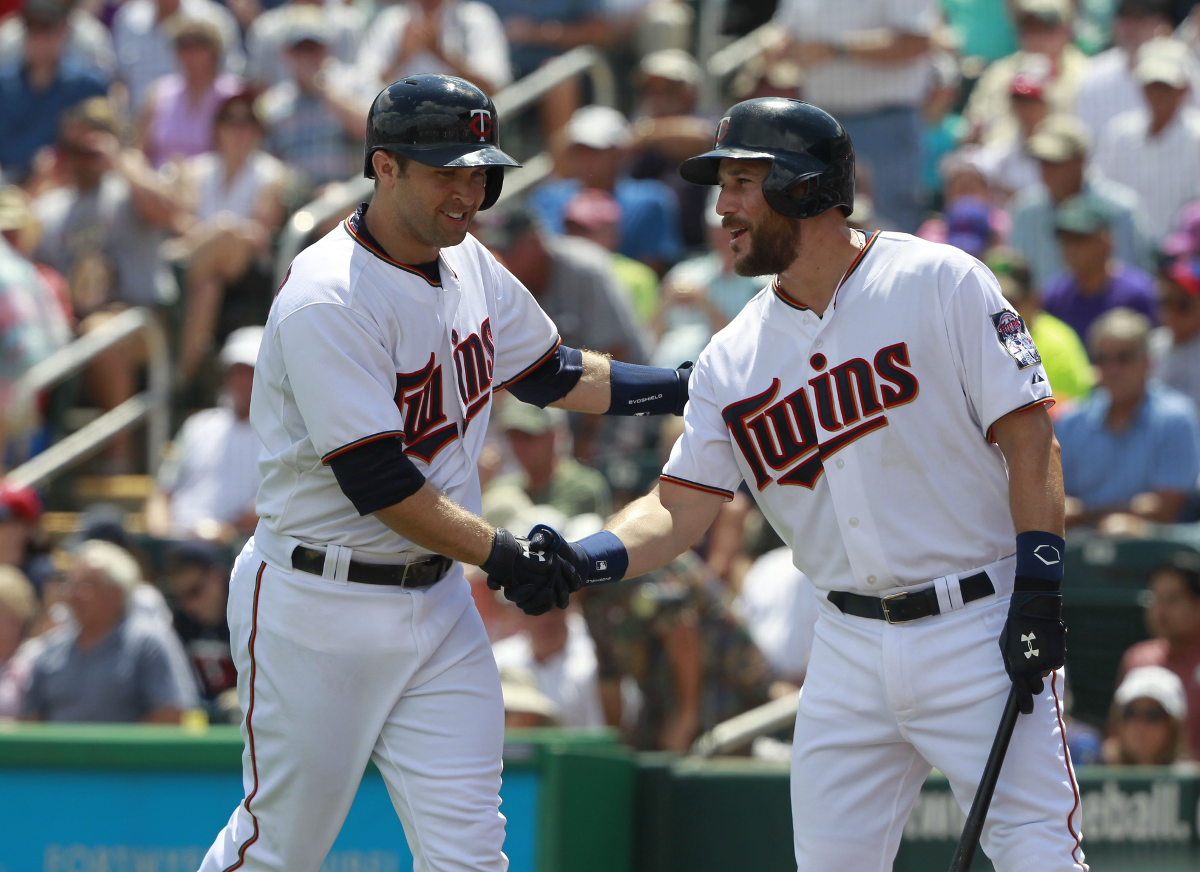 Certainly Dozier’s new contract goes beyond his defense. As Ryan said, Dozier has been able to pop a few over the fence -- where his first-half totals landed him a Home Run Derby -- as well as steal bases (and baserunning in general). Beyond that, he also creates chemistry in the clubhouse and has a mane that just won’t quit. But Dozier’s defense seems appropriately appreciated for what it is: visually appealing but occasionally flawed. So let’s give Dozier’s defense some attention here. Let us start with the understanding that defense is the final frontier when it comes to finding a baseline of what constitutes universally good defense. Some will never be swayed from the trusty eye test while others will use a litany of defensive metrics to construct a profile. The problem with the former is that a human cannot watch, inventory and compare every play over the course of a season or multiple seasons. The issue with the latter is that several different systems with various methodologies are being used to measure a complex series of events. Even Bill James, the OG of metrics, recently threw shade at BIS’ defensive stats as well as other advanced fielding stats. “Fielding Statistics failed because they created no organized universe of data, thus no solid footing on which Direct-Inference Analysis could be conducted,” James wrote in January on his website, BillJamesOnline.net which houses the Plus/Minus system. In laymen’s terms, the common language of OPS+ is that 100 is average and anything above or below it is good or bad. Would saying Dozier was a -4.4 UZR/150 second baseman in 2014 mean something without context? Or that he had 0 Defensive Runs Saved? Or that he was a -16 in the Plus/Minus? These are three stats attempting to measure the same thing but are spoken in three different languages. The advanced metrics are good. They help inventory numerous plays that the mind will never be able to recall without a layer of bias. Where the system starts to be flawed is in attempting to compare one player against other players of that position as not all plays are created equal. Take this Dozier play for example. In it, the runner at second is going on the play and it is Dozier’s responsibility to cover the base. The batter manages to hit behind the runner at which point Dozier quickly changes directions, lunges back at the ball and makes the play to first. http://i.imgur.com/ZneGQ3S.gif How exactly is that type of play measured across the league’s stash of second basemen? On one hand a faster second baseman might have overrun that play because he would be covering the bag. On the other, a different second baseman might not have moved a muscle and made a routine at ‘em ball. How is there a way to appropriately weigh this play? There is no perfect method or one statistic that will be a magic bullet for a player’s defense. In determining where Dozier’s defense stands, it is best to take a little bit of everything into account. Mark Simon at ESPN Stats & Info forwarded some Baseball Info Solution raw data that would help add flavor to Dozier’s defensive abilities. According to Simon, Dozier finished the year with the highest “good fielding plays” by a second baseman with 74. That is one of these types of plays in which Dozier ranges to his left on a slow bounder and manages a quick release with enough on it to Mauer first: http://i.imgur.com/IpUTw1G.gif In that particular play, you see Dozier demonstrating his quick first step, range and rapid-fire release. Within Inside Edge’s statistical warehouse at Fangraphs.com that buckets these plays into categories ranging from “Almost Certain” to “Remote”, that particular play constituted an “Even Chance” or a 50/50 shot another second baseman would have made that same play. In addition to making the most “good fielding plays” for second basemen in 2014, Dozier also committed the most “miscues and errors” in the group as well (24). In these circumstances, Errors, as everyone knows, are made-up stats determined by a dictator in the press box while Miscues are plays that the dictators in the press box miss because they were refilling their soda at that time or the player missed a double-play opportunity, slipped or was temporarily blinded by the sun. Like these two on one play: http://i.imgur.com/BBcxEED.gif Or this one: http://i.imgur.com/YWGtrvg.gif Dozier led all second basemen with nine throwing errors in 2014, most of which appear to be of the rushed delivery variety -- trying to do too much. Dozier’s ownership of the most “good fielding plays” and “miscues” is a byproduct of simply having one of the highest number of opportunities. According to ESPN/TruMedia’s data, the Twins’ pitching staff allowed 440 ground balls in play to the right-center (second base) zone, the third-most in the majors. Meanwhile, Inside Edge’s Kenny Kendrena provided some additional data regarding Dozier’s fielding tendencies. According to their stuff, Dozier was 10th among all second baseman at converting “hard-hit” balls into outs. These are the low-flying missiles that leave the infield in a hurry. http://i.imgur.com/CA5Ohzh.gif Thanks to his pitch-to-impact staff, Dozier was on the receiving end of 31 of these balls, second only to Diamondbacks’ Aaron Hill (40). While he did not make all the “Almost Certain” plays (11 of 12), he did lead in turning most “Unlikely” plays into outs (3 of 4). In addition to handling hard-hit balls well, Kendrena revealed that their data shows that Dozier also was one of the most adept second basemen at making plays backhanded. Not plays to his backhand-side, actually having his glove turned around. Like this: http://i.imgur.com/p3q16Pb.gif And this: http://i.imgur.com/crQFWgB.gif Only Boston’s Dustin Pedroia was scored as better at plays in this manner than Dozier in 2014. This was the reason Dozier’s Plus/Minus while ranging to his right was strong. Putting all of these parts into a whole paints the picture of a solid but not spectacular defender. Based on Inside Edge’s video scouts, Dozier has the ability to make plays that were considered “Unlikely”. BIS’s data suggested the same thing. He has flash and leaves nothing on the table when it comes to stopping a moving baseball. There is no question that the effort -- the kind that make pitchers, coaches and eye-testers happy -- is there. But at the same time he also created several mistakes when trying to do too much. Dozier’s defense probably qualifies as above average. Not elite. Not yet. Is that enough attention?
 -
Mike Berardino posted story on Monday addressing this: Welp. I guess I won't be writing that story when I get down to cover the Twins. Thanks MIKE.
-
How many games will Kurt Suzuki catch? Which combination of pitchers will have more starts -- Ricky Nolasco/Mike Pelfrey or Trevor May/Alex Meyer? Will Joe Mauer have an OBP over .390? How many fastballs will Glen Perkins throw over 95 mph? On this week's No Juice Podcast Dan Anderson and Parker Hageman try to handicap these stats and more. Listen upOther topics include Dan's March Madness adventure, NFL doctors, Adrian Peterson's agent and Christian Laettner hatred. Listen below, on iTunes or on Stitcher: NO JUICE PODCAST, EPISODE #48: TWINS OVER-UNDERS Click here to view the article
-
 Other topics include Dan's March Madness adventure, NFL doctors, Adrian Peterson's agent and Christian Laettner hatred. Listen below, on iTunes or on Stitcher: NO JUICE PODCAST, EPISODE #48: TWINS OVER-UNDERS
 -
Article: Report From The Fort: John Bonnes
Parker Hageman replied to John Bonnes's topic in Twins Daily Front Page News
Lookin fine, John. Lookin' mighty fine indeed. Be sure to watch the video and leave us some feedback. -
Article: Initial Thoughts From The Fort
Parker Hageman replied to John Bonnes's topic in Twins Daily Front Page News
Thanks for the reminder to buy #CheapSunglasses.- 28 replies
-
- 1
-

-
- paul molitor
- alex meyer
- (and 1 more)
-
Article: Alex Meyer's Wild Ride
Parker Hageman replied to Nick Nelson's topic in Twins Daily Front Page News
No, the arm slot is not an injury concern. Randy Johnson had a 3/4 arm slot. http://www.trbimg.com/img-54ac4047/turbine/la-sp-sn-baseball-hall-of-fame-20150106 -
Article: On Danny Santana And Regression
Parker Hageman replied to Parker Hageman's topic in Twins Daily Front Page News
Interestingly enough, since 2009 line drive BABIP has the lowest correlation between the overall BABIP -- i.e. high line drive BABIP did not necessary equal a high overall BABIP -- and that ground ball BABIP was a stronger correlation. Liners obvious become hits at a higher percentage but it makes sense considering there are much more grounders vs liners in play. Just found that interesting when looking over the data. Going back to Santana's line drive%, I'm not certain it will remain that much higher than league average going forward. Since 2011, he's minor league line drive% was 13%. I would anticipate that his 2015 season has a line drive rate somewhere closer to 20%. There's an element of opponents adjusting to him. He struggled with breaking pitches but he didn't see a lot of them (pitchers tend not to throw switch-hitters a high percentage of breaking balls that go into the swing). Likewise for fastballs up-and-in when he is batting left-handed. I would expect him to see a few more of those in 2015. -
Article: Alex Meyer's Wild Ride
Parker Hageman replied to Nick Nelson's topic in Twins Daily Front Page News
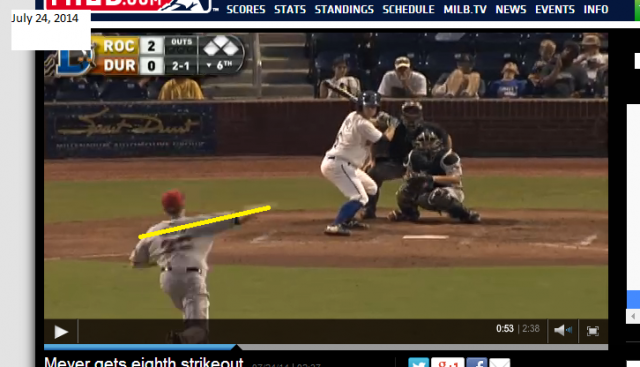
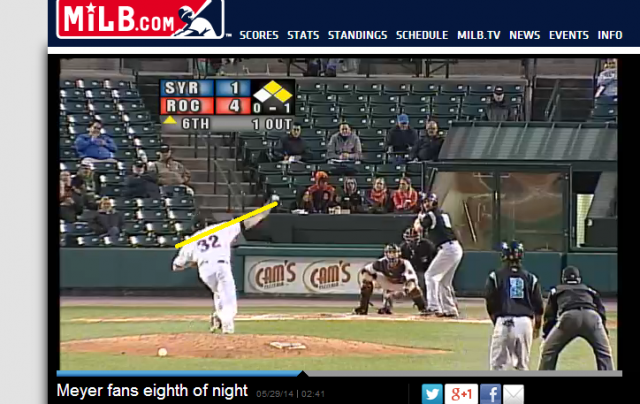
The Twins noted that last year Meyer's arm slot began to drop prior to having to be shut down. This is actually an improvement over what that was: Here's another capture of his arm slot from early 2014: One interesting difference from Meyer last year to Meyer in camp is that he is finishing differently. Last year, he was a pitcher who swung everything around to the glove side and fell off towards the first base line. In camp he seems to be trying to finish north-south/in line with the plate. Seems to be fighting the finish. I'll try to whip up some GIFs on that at some point. Overall, consistency always will be an issue for him.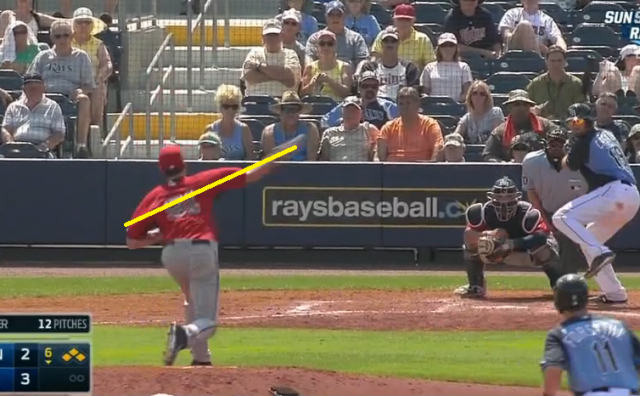
-
Paul Molitor recently shared the characteristics he is looking for in an ideal leadoff hitter: They enjoy long walks on the beach and an on-base percentage that is .370 or higher. While Molitor might have difficulty finding that type of player within the Twins’ roster -- just 19 players managed to produce OBP .370 or above last year -- his rationale behind that statement is a welcomed bit of logic in Twins Territory. After all, his predecessor fell in love with batting Jacque Jones first because “he can make it 1-0”, inferring the solo home run would put the Twins up quickly (to his credit, Jones did hit 20 career home runs as the first batter of the game). The former manager also had a penchant for placing speed above all when it came to filling out his lineup at the top. Hearing Molitor's preference for on-base abilities over speed was a breath of fresh air.Of course, Molitor also indicated that he is counting on Danny Santana to play a vital role at the top of the order. "I see Danny at the top for the most part to be honest with you,” the new manager told Twins Daily’s Nick Nelson recently. “Because I like the dimension he brings to that spot." Based on Santana’s rookie season, it is not difficult to see the reason to want to put him at the top spot but if the actual desire is to have a hitter with a .370+ OBP batting leadoff, Santana is probably not the right candidate. The Twins organization obviously expects regression. "Historically my gut tells me that it's not sustainable because he didn't put up those kinds of numbers in the minor leagues," general manager Terry Ryan said last fall regarding Santana's future. "If you're going to be true to yourself and what you know has happened with historically 95 percent of the players, you've got to expect a little bit of a back-off of those numbers, but that would be plenty good enough." Dating back to 1961* Santana has had the third highest batting average on balls in play (BABIP). Read that again: Dating back to the John F. Kennedy administration, Santana has been able to reach safely when putting the bat on the ball more frequently than all but two people. Given the amount of scouting, video, and data available in this era to figure out how to pitch to and defend against hitters, it is somewhat remarkable that there are hitters now who can put the ball in play and it winds up a hit 40% of the time. What is even more remarkable is that there were two last year who managed to do that: Download attachment: Danny Santana_BABIP.png Santana, of course, and Colorado’s Drew Stubbs were the two players joining Cincinnati’s Joey Votto (2012), Jose Hernandez (2002) and Manny Ramirez (2000) to achieve a batting average on balls in play over .400 since the turn of the last century. To contextualize: Since the 1961 season, there have been 33 occasions when a hitter with a minimum of 400 plate appearances has managed to produce/get blessed with a BABIP over .390 in a season. That is a small pool of players. The pool grows even smaller when you consider that four players managed to reach that milestone twice in their careers (Bobby Abreu, Derek Jeter, Roberto Clemente, and Rod Carew). Only Abreu managed to perform the feat in consecutive seasons (1998 and 1999). While there are legendary hitters on that list like the aforementioned Jeter, Carew and Clemente, there are plenty of other one-hit wonders that managed to catch lightning in a bottle. There’s Reggie Jefferson who had a breakout year with Boston in 1996. Milwaukee’s Hernandez reached the list by limiting the number of balls he put into play (he struck out 188 times that season). Shane Mack, Mariano Duncan, BJ Upton, Phil Bradley -- there’s no rhyme or reason to this list. The takeaway is that batting average on balls in play is comprised of some element of luck. You can be a great hitter with amazing speed like Ichiro Suzuki and manage to obtain a .390 BABIP just once in a 14 year career. Or you could be like Jefferson who, in 1996, figured out that if you can bang it off the Monster it won’t get caught and it will stay in play. This is all to say that repeating the numbers Santana posted 2014 feels virtually impossible -- like finding a place that serves decent unicorn burgers. (So hard to find in the western suburbs.) It takes an uniquely talented hitter with a special level of luck to repeat that sort of action. So the question is: Is Danny Santana a uniquely talented hitter? Ryan said his evaluators like Santana’s surprising power potential. “I think the one thing that people didn’t realize up here that hadn’t seen him, he’s got strength,” Ryan said after last season. “He can drive the ball. He’s not a banjo hitter, he’s not a singles guy. He can drive the ball from both sides. He can reach the fences so he’s going to keep the defenses honest.” Santana’s power is an interesting facet of his game. When you look over his spray chart, a high percentage of his extra base hits go down the lines rather than in the gaps. If outfielders/corner infielders hug the lines, this opens up the gaps and middle of the field more for the base hits. However, Santana has not demonstrated the consistent ability to reach the fences, which would entice the outfield to play back and give him more real estate just outside of the infield. His speed is clearly one of the biggest assets of his arsenal. This has given him the ability to take an extra base as well as get to first when others might not. According to Fangraphs.com, 12.7% of his hits did not leave the infield, meaning he had to turn on the afterburners and kick chalk in a hurry to reach safely. Like this: http://i.imgur.com/WmGjMV1.gif Both he and Stubbs excelled at having grounders find their way through the infield (or as mentioned above, beating the throw down the line). This trait correlates well with overall BABIP success and when you break it down, it makes sense. The ground ball is the most common method the ball is put into play (compared to line drive and fly ball) so having a high percentage that go for hits will bolster the overall BABIP: Download attachment: Santana_Chart.png Via ESPN/TruMedia. But counting on getting hits via ground ball is volatile -- since 2009 hitters have posted a batting average in play of .257 on wormburners. That being said, those with wheels have been able to produce consistently above average in that category. Danny Santana certainly fits that mold but his otherworldly ground ball BABIP is due for regression to the mean. In addition to being able to beat out grounders, Santana is a fairly skilled bunter when it comes to bunting for a hit. More likely to bunt from the left-side of the plate (17 of 18 attempts in 2014), Santana has both been able to deaden the ball in the third base-pitcher-catcher no-man’s land or take it with him like this: http://i.imgur.com/UaZIfqM.gif These are the finer points in Santana’s game that will help him gain hits within the margins but when it comes to his on-base percentage, with his above-average strikeout rate in conjunction with his below-average walk rate, he has little wiggle room to avoid regression. Without a robust walk rate, he lacks the stability that free passes provide. In summary, this was a lot of energy spent to say, yes, expect Danny Santana to regress at the plate in 2015. He still has a strong skill set that should help him continue to gather plenty of hits. *Arbitrary? Sure. Whatever. Finish your taco. Click here to view the article
-
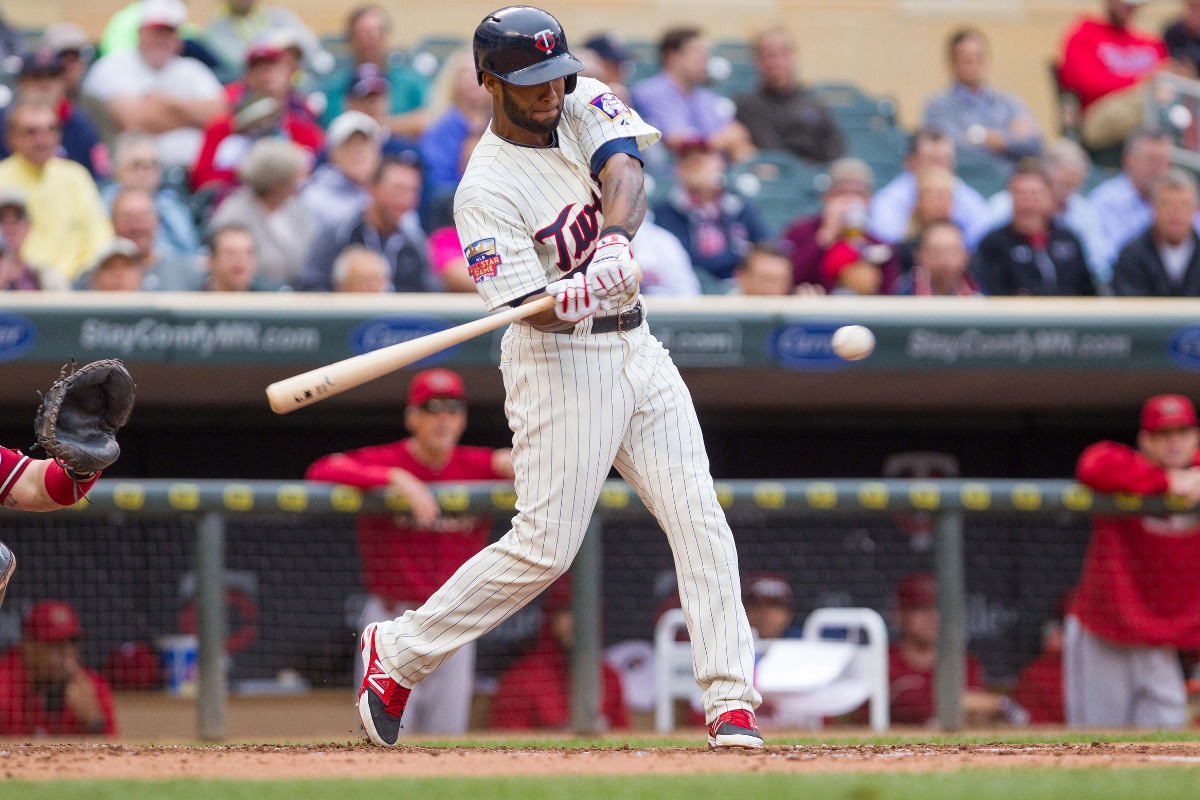 Of course, Molitor also indicated that he is counting on Danny Santana to play a vital role at the top of the order. "I see Danny at the top for the most part to be honest with you,” the new manager told Twins Daily’s Nick Nelson recently. “Because I like the dimension he brings to that spot." Based on Santana’s rookie season, it is not difficult to see the reason to want to put him at the top spot but if the actual desire is to have a hitter with a .370+ OBP batting leadoff, Santana is probably not the right candidate. The Twins organization obviously expects regression. "Historically my gut tells me that it's not sustainable because he didn't put up those kinds of numbers in the minor leagues," general manager Terry Ryan said last fall regarding Santana's future. "If you're going to be true to yourself and what you know has happened with historically 95 percent of the players, you've got to expect a little bit of a back-off of those numbers, but that would be plenty good enough." Dating back to 1961* Santana has had the third highest batting average on balls in play (BABIP). Read that again: Dating back to the John F. Kennedy administration, Santana has been able to reach safely when putting the bat on the ball more frequently than all but two people. Given the amount of scouting, video, and data available in this era to figure out how to pitch to and defend against hitters, it is somewhat remarkable that there are hitters now who can put the ball in play and it winds up a hit 40% of the time. What is even more remarkable is that there were two last year who managed to do that: Santana, of course, and Colorado’s Drew Stubbs were the two players joining Cincinnati’s Joey Votto (2012), Jose Hernandez (2002) and Manny Ramirez (2000) to achieve a batting average on balls in play over .400 since the turn of the last century. To contextualize: Since the 1961 season, there have been 33 occasions when a hitter with a minimum of 400 plate appearances has managed to produce/get blessed with a BABIP over .390 in a season. That is a small pool of players. The pool grows even smaller when you consider that four players managed to reach that milestone twice in their careers (Bobby Abreu, Derek Jeter, Roberto Clemente, and Rod Carew). Only Abreu managed to perform the feat in consecutive seasons (1998 and 1999). While there are legendary hitters on that list like the aforementioned Jeter, Carew and Clemente, there are plenty of other one-hit wonders that managed to catch lightning in a bottle. There’s Reggie Jefferson who had a breakout year with Boston in 1996. Milwaukee’s Hernandez reached the list by limiting the number of balls he put into play (he struck out 188 times that season). Shane Mack, Mariano Duncan, BJ Upton, Phil Bradley -- there’s no rhyme or reason to this list. The takeaway is that batting average on balls in play is comprised of some element of luck. You can be a great hitter with amazing speed like Ichiro Suzuki and manage to obtain a .390 BABIP just once in a 14 year career. Or you could be like Jefferson who, in 1996, figured out that if you can bang it off the Monster it won’t get caught and it will stay in play. This is all to say that repeating the numbers Santana posted 2014 feels virtually impossible -- like finding a place that serves decent unicorn burgers. (So hard to find in the western suburbs.) It takes an uniquely talented hitter with a special level of luck to repeat that sort of action. So the question is: Is Danny Santana a uniquely talented hitter? Ryan said his evaluators like Santana’s surprising power potential. “I think the one thing that people didn’t realize up here that hadn’t seen him, he’s got strength,” Ryan said after last season. “He can drive the ball. He’s not a banjo hitter, he’s not a singles guy. He can drive the ball from both sides. He can reach the fences so he’s going to keep the defenses honest.” Santana’s power is an interesting facet of his game. When you look over his spray chart, a high percentage of his extra base hits go down the lines rather than in the gaps. If outfielders/corner infielders hug the lines, this opens up the gaps and middle of the field more for the base hits. However, Santana has not demonstrated the consistent ability to reach the fences, which would entice the outfield to play back and give him more real estate just outside of the infield. His speed is clearly one of the biggest assets of his arsenal. This has given him the ability to take an extra base as well as get to first when others might not. According to Fangraphs.com, 12.7% of his hits did not leave the infield, meaning he had to turn on the afterburners and kick chalk in a hurry to reach safely. Like this: http://i.imgur.com/WmGjMV1.gif Both he and Stubbs excelled at having grounders find their way through the infield (or as mentioned above, beating the throw down the line). This trait correlates well with overall BABIP success and when you break it down, it makes sense. The ground ball is the most common method the ball is put into play (compared to line drive and fly ball) so having a high percentage that go for hits will bolster the overall BABIP: Via ESPN/TruMedia. But counting on getting hits via ground ball is volatile -- since 2009 hitters have posted a batting average in play of .257 on wormburners. That being said, those with wheels have been able to produce consistently above average in that category. Danny Santana certainly fits that mold but his otherworldly ground ball BABIP is due for regression to the mean. In addition to being able to beat out grounders, Santana is a fairly skilled bunter when it comes to bunting for a hit. More likely to bunt from the left-side of the plate (17 of 18 attempts in 2014), Santana has both been able to deaden the ball in the third base-pitcher-catcher no-man’s land or take it with him like this: http://i.imgur.com/UaZIfqM.gif These are the finer points in Santana’s game that will help him gain hits within the margins but when it comes to his on-base percentage, with his above-average strikeout rate in conjunction with his below-average walk rate, he has little wiggle room to avoid regression. Without a robust walk rate, he lacks the stability that free passes provide. In summary, this was a lot of energy spent to say, yes, expect Danny Santana to regress at the plate in 2015. He still has a strong skill set that should help him continue to gather plenty of hits. *Arbitrary? Sure. Whatever. Finish your taco.
 -
Article: Offense Is Springing To Life
Parker Hageman replied to Nick Nelson's topic in Twins Daily Front Page News
Part of me doesn't want to open this can of worms given the sample-size and spring training in general, but Joe Mauer has not done well at the plate in his 18 plate appearances. [18 plate appearances?! Geez. Now that I see it in print it seems even more absurd.] No one seems to be mentioning this from the team's perspective -- is he getting good swings? Hitting the ball well at people? Not swinging well? Be nice for an update in that regard. I'll hang up and listen to you guys.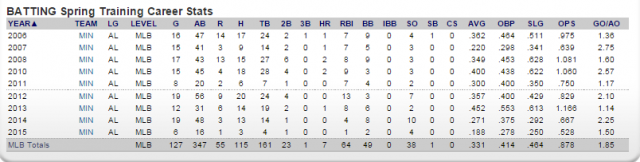
-
Article: Offense Is Springing To Life
Parker Hageman replied to Nick Nelson's topic in Twins Daily Front Page News
Is this in reference to his spring performance or his .288/.345/.383 line last year? If it's towards the .357/.429/.429 spring line, yeah, sure. Inevitable. But the 2014 numbers? Meh. I'm not certain it is "inevitable". Those 2014 numbers were definitely supported by the hot start -- and I've banged this drum a lot -- but the mechanical changes he made to his swing after his trade to Oakland gave him better plate coverage. Will his BABIP remain over .300? No, probably not. That might be inevitable. But if he continues to avoid fly balls like he did last season, there's no reason his BABIP has to regress too far below .270-.280. In my opinion, the drop off from August on seemed to be simply wearing down. Catching takes its toll, particularly when you are on the wrong side of 30. What would be beneficial is to mix in Pinto (or whoever) more frequently during the first-half of the season in order to keep Suzuki fresh throughout the season. Overall, I'd bet the under on his 2015 numbers but I'm not expecting a collapse. -
Will the Twins trade Eduardo Escobar? Does Eddie Rosario have a legitimate shot at center field? Would sending Alex Meyer down to Rochester to start the season be the smart decision? On this week's No Juice Podcast -- recorded at JL Beers in Northeast Minneapolis -- Dan Anderson and Parker Hageman discuss these topics and more. Listen up and win $10 in Burger Bucks from JL Beers.After a chat with JL Beers’ Mike Evans, they introduce MinnCentric’s newest site, Northern Pitch — a soccer website that started off with a bang last week by breaking some big news — and give a farewell to Christian Ponder and Greg Jennings. Listen below, on iTunes or on Stitcher: NO JUICE PODCAST, EPISODE #47: TRYOUTS Click here to view the article
-
 After a chat with JL Beers’ Mike Evans, they introduce MinnCentric’s newest site, Northern Pitch — a soccer website that started off with a bang last week by breaking some big news — and give a farewell to Christian Ponder and Greg Jennings. Listen below, on iTunes or on Stitcher: NO JUICE PODCAST, EPISODE #47: TRYOUTS
 -
That was the statement Minnesota Twins outfielder Torii Hunter told MLB Network Radio’s Steve Phillips on Sunday. Hunter, a veteran of 18 years in the majors, made it clear that he had offers coming in from multiple teams that made it to the postseason or were contending to the end. The Orioles, Royals and Mariners were all reaching out for him. In the end, however, the lure of his original team proved too strong.“When I started talking to the Twins I had a relationship with [general manager] Terry Ryan and we just had a great conversation, man, and Eddie Guardado called me, he’s the bullpen coach now, and he’s talking about how much fun we can make this clubhouse,” Hunter told MLB Network Radio the reason why he signed a one-year deal with Minnesota rather than pursue pennants. “You know you’re talking about a place where I grew up and played 15 years in this organization and got to know everybody in this organization so this is where I learned how to be a Major League baseball player and not just that - to be a man and earn how to pay bills and financial literacy and all these different things. So I had flashbacks and I was thinking about all of that and I said ‘OK, I’m gonna come back and finish my career here.’” From the Twins’ perspective Hunter’s experience and ability to connect with the younger players played a role in their decision to target him. “We like his play but just as important we needed a presence and a little and I think guys like [byron] Buxton, [Eddie] Rosario and [Oswaldo] Arcia, those types of outfielders, will gravitate towards Torii,” general manager Terry Ryan told the show over the weekend. When asked if that career will be finished at the end of 2015, Hunter was coy. Performance and the Twins’ willingness to bring him back will be the determining factor. “If I go out and I hit .280-plus and put up 17 home runs like I been doing the last couple of years and do 80 RBIs or more, I’m coming back,” Hunter said. “I gotta get this out of my system. Who wouldn’t want those numbers to have on their team? And if I can come back and the Twins allow me back, I’ll come back again as long as I retire in a Twins uniform.” At 38-years-old, Hunter has experienced some declining defense over the past several seasons and has shifted to right field but offensively he has managed to stay above average in production while losing ground in the on-base percentage department. Even if Hunter does hit the milestones he mentioned it is difficult to see the Twins, who have a glut of outfield prospects, bringing him back in 2016. Click here to view the article
-
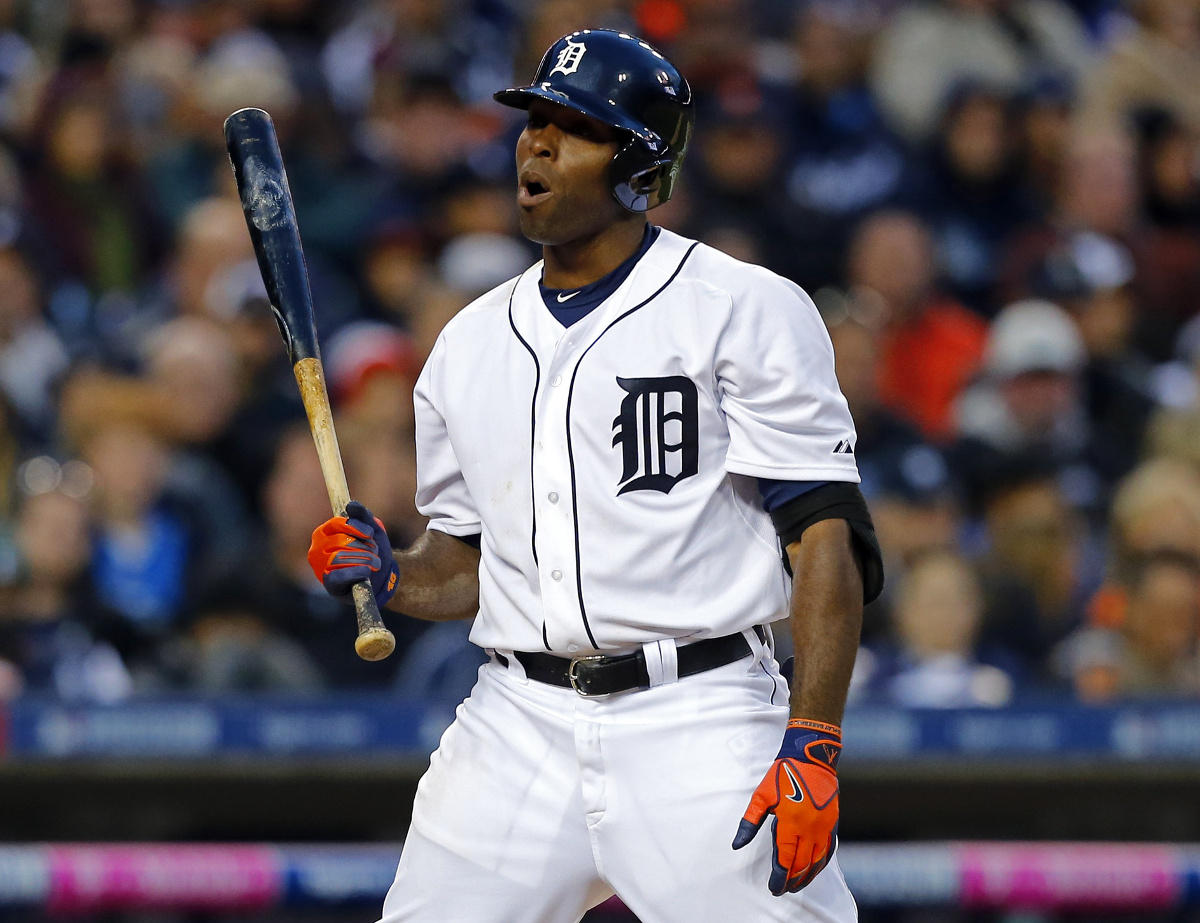 “When I started talking to the Twins I had a relationship with [general manager] Terry Ryan and we just had a great conversation, man, and Eddie Guardado called me, he’s the bullpen coach now, and he’s talking about how much fun we can make this clubhouse,” Hunter told MLB Network Radio the reason why he signed a one-year deal with Minnesota rather than pursue pennants. “You know you’re talking about a place where I grew up and played 15 years in this organization and got to know everybody in this organization so this is where I learned how to be a Major League baseball player and not just that - to be a man and earn how to pay bills and financial literacy and all these different things. So I had flashbacks and I was thinking about all of that and I said ‘OK, I’m gonna come back and finish my career here.’” From the Twins’ perspective Hunter’s experience and ability to connect with the younger players played a role in their decision to target him. “We like his play but just as important we needed a presence and a little and I think guys like [byron] Buxton, [Eddie] Rosario and [Oswaldo] Arcia, those types of outfielders, will gravitate towards Torii,” general manager Terry Ryan told the show over the weekend.When asked if that career will be finished at the end of 2015, Hunter was coy. Performance and the Twins’ willingness to bring him back will be the determining factor. “If I go out and I hit .280-plus and put up 17 home runs like I been doing the last couple of years and do 80 RBIs or more, I’m coming back,” Hunter said. “I gotta get this out of my system. Who wouldn’t want those numbers to have on their team? And if I can come back and the Twins allow me back, I’ll come back again as long as I retire in a Twins uniform.” At 38-years-old, Hunter has experienced some declining defense over the past several seasons and has shifted to right field but offensively he has managed to stay above average in production while losing ground in the on-base percentage department. Even if Hunter does hit the milestones he mentioned it is difficult to see the Twins, who have a glut of outfield prospects, bringing him back in 2016.


