


Twins Video
On Thursday against the Red Sox, Minnesota Twins’ third baseman Trevor Plouffe was station on the right side of second base. This is certainly a not uncommon alignment to use against David Ortiz but also becoming increasingly common in an era that has seen a massive proliferation in the use of the strategy overall.
The Twins were late adaptors but they have almost gone all-in on the defense, deploying the shift more liberally with most of the credit given to now-manager Paul Molitor. The organization went from 66 shifts in 2013 to over 500 instances in 2014. Like seeing someone take a selfie, baseball’s defensive shifts went from being a weird practice to commonplace.
There is precedent to embrace the shift. For example, according to Baseball Info Solutions, shifting has been rewarding to the teams who move their players around the most, those having “saved” an average of 8 runs per season or a rough translation of about one win per season. Data-driven teams saw this edge and were aggressive in placing their players in a position to maximize their odds of converting a batted ball into an out. However at the beginning of the year new commissioner Rob Manfred seemingly placed the shift on the endangered species list.
Would he really kill the shift?
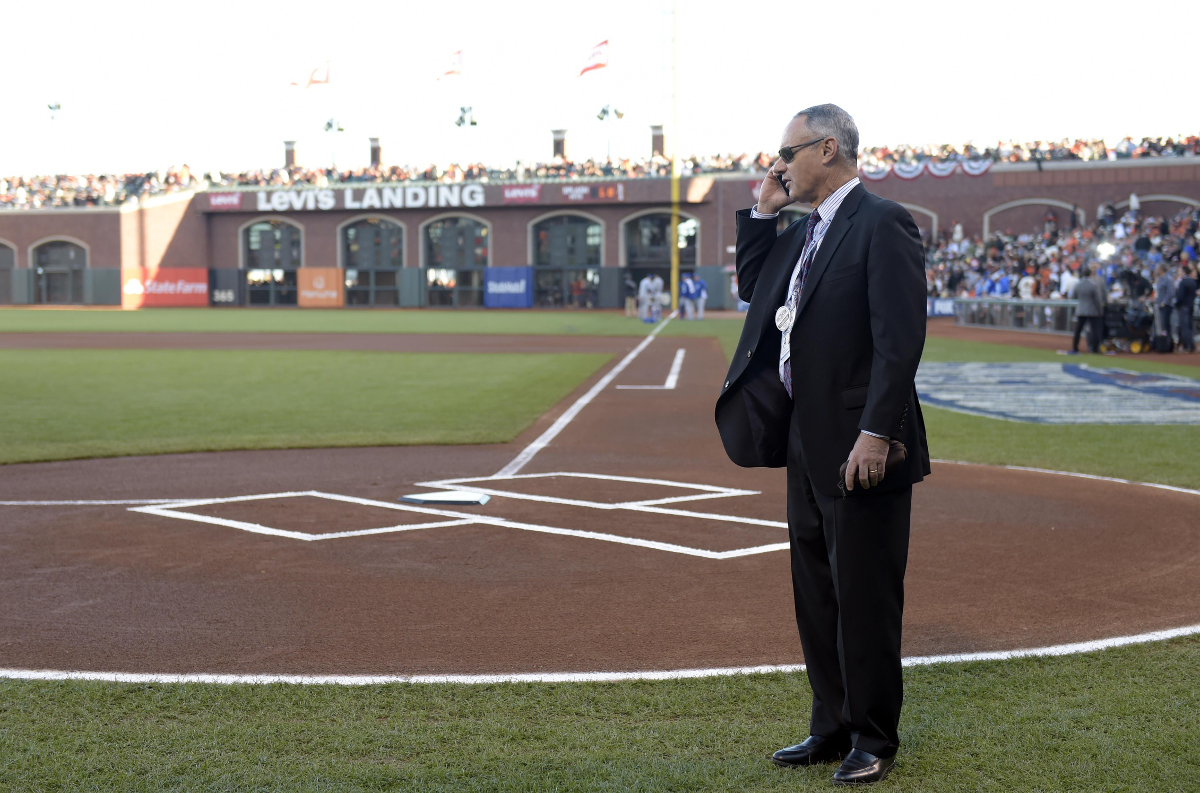
In his tour around spring training facilities, the commissioner made a whistle-stop at the Lee County Sports Complex camp to discuss the state of Major League Baseball and the game’s future with the team’s ownership as well as providing face time with the players.
Manfred fielded questions from the media that ranged from the early feedback on the new pace-of-game initiatives (“really been positive”) to a childhood memory of a Twins-Yankees series in 1968 (“everybody remembers the first time they went to a major league game”) to Scott Boras’ comments about the Cubs’ decision to send client Kris Bryant to the minors (“that really isn’t any of Scott Boras’ business”). When prompted to elaborate his stance regarding banning defensive shifts, Manfred had to laugh.
“I’m so tired of this topic,” Manfred told the media scrum with a chuckle and then humored the internet writer with an explanation behind the charge he made on ESPN in January that a ban on defensive shifts was under consideration by his office.
“My comment on defensive shifts came after a series of questions so without repeating them all, we are looking at the issue of offense in the game. We wouldn’t be doing our jobs if we’re not because there is a lot of conversation in the game about the fact that offense is down. Where we are on that issue analytically is we haven’t even decided whether we have an aberration or a trend that may require a remedy. I went through all that before I got to defensive shifts. As a follow, somebody said ‘If and when you decide you have a problem what might you talk about, what might you be willing to consider?’ In that context I mentioned defensive shifts. Nothing more serious than that.”
There is no grand plan to build a fence between short and second or tethering the third baseman to the base. What Manfred made clear is that there is no imminent danger to the shift lifestyle and that all the blowback has him reconsidering that option.
“Frankly, given the feedback that I’ve gotten since I made that comment I’m not even certain that I would even consider it anymore.”
So defensive enthusiasts can rest easy knowing that there will be no restrictions placed on fielders in the foreseeable future. The Twins can continue to rearrange their infielders as they see fit to try to minimize the damage from their pitching staff.





Recommended Comments
Create an account or sign in to comment
You need to be a member in order to leave a comment
Create an account
Sign up for a new account in our community. It's easy!
Register a new accountSign in
Already have an account? Sign in here.
Sign In Now