



Parker Hageman
-
Posts
4,152 -
Joined
-
Last visited
-
Days Won
6
Content Type
Profiles
News
Minnesota Twins Videos
2026 Minnesota Twins Top Prospects Ranking
2022 Minnesota Twins Draft Picks
Minnesota Twins Free Agent & Trade Rumors, Notes, & Tidbits
Guides & Resources
2023 Minnesota Twins Draft Picks
The Minnesota Twins Players Project
2024 Minnesota Twins Draft Picks
2025 Minnesota Twins Draft Pick Tracker
2026 Minnesota Twins Draft Tracker: Picks & Bonuses
Forums
Blogs
Events
Store
Downloads
Gallery
Everything posted by Parker Hageman
-

Article: Corey Koskie Comments On 2015 Twins
Parker Hageman replied to Lindsey Young's topic in Twins Daily Front Page News
Fun read Lindsey. Thanks. Did you guys talk about the concussion at all? -
No question. This could all collapse on him too -- we've only seen a few swings in spring. Pitchers could adjust to that and find a way to disrupt his timing there too. However, in my opinion, changing his timing mechanism and adding what could result in more power in his swing is a step in the right direction.
-
Each time I post a video comparison I hope I don't have to provide a disclaim each time that, yes, circumstances are different. You are not going to get the situations to match 100% of the time. Both are fastballs. The first is middle-up. The second is away-middle. That said, in each project I study as much video as I can to provide examples of the overall differences in the swing. Here's the thing that you should take away -- he was unable hold up with the toe-tap far too often resulting in swings like the one above because of his front side leak (watch the action on his front hip open up): http://i.imgur.com/JHhf3Jt.gif The leg kick, in theory, should help him keep his weight back and provide a better timing mechanism.
-
After a season and a half of floundering against right-handed pitching, Minnesota Twins’ outfielder Aaron Hicks made the decision to stop switch-hitting and bat exclusively from the right side. Several pitches later, the outfielder admitted he made a huge mistake and went back to swinging from both sides.With right-handed pitchers accounting for 70 to 75 percentage of all plate appearances each year, it was clear that in order to have success at the major league level Hicks was going to have to figure out a way to get hits off of them. The decision to stop hitting left-handed -- even for a brief stint -- was an acknowledgment that he was overmatched and lost at the plate. The brief experiment of hitting from the right-side only fizzled out not because his swing was bad but because Hicks realized that it is difficult to track professional-grade pitches from a perspective he had not seen since he was 15-years-old. The decision to return to switch-hitting was an admission that he would never going to be able to have success facing same-side matchups. If he was going to overcome this deficiency, it was going to be as a left-handed hitter -- which would be no small task. Earlier in the offseason Hicks’ shortcomings at the plate were highlighted at Twins Daily. His left-handed swing mechanics were such that he would open on his front side well before the point of contact, leaving him unable to generate power or handle pitches on the outer half of the zone. From both sides of the plate, Hicks has good bat speed. He has decent size and seemingly adds more muscle with each passing offseason. In theory he should be able to provide pop. In practice, however, he has not. According to ESPN/TruMedia, of all left-handed hitters with a minimum of 100 plate appearances, Hicks’ .078 hard hit average was the 7th lowest. For perspective, the light-hitting Ben Revere managed to post a .115 hard hit average. On the other end of the spectrum was Kennys Vargas whose .230 hard hit average from the left side was only bested by David Ortiz and Victor Martinez. It seemed obvious that if Hicks is going to provide even league-average level production at the plate, he was going to need to make some wholesale changes -- maybe a timing mechanism or a complete rebuild. Turns out, that is exactly what he is doing. During the first spring training game against the Red Sox, Twins’ broadcaster Cory Provus mentioned that Hicks had been working on incorporating a leg kick in his left-handed swing. Indeed, Hicks had swapped out the old toe-tap for the bigger leg kick: http://i.imgur.com/79XVELf.gif http://i.imgur.com/ZCwTyrE.gif For Hicks, the new model is a much better swing. What does that mean going forward? Hitters like Jose Bautista and Josh Donaldson are the poster players for the argument for the pro-leg kick contingent. Donaldson, a hitter who used to have a toe-tap much like Hicks, found that the leg kick helped his timing and his ability to generate power. While productive if a hitter can master it, there are times when the leg kick can become a detriment if everything else is not working in unison. Cubs’ prospect Mike Olt felt his big leg kick was hindering his bat path so he has cut down on the height in order to make other aspects of his swing work. Likewise, Robinson Cano had a leg kick coming up in the Yankees system but eschewed that for his current model. There is no one-size-fits-all swing mechanics. For Hicks, there are still plenty of moving parts to his approach at the plate including the mental side. Confidence, or lack thereof, was cited by manager Paul Molitor as one of the reasons Hicks has struggled so mightily at the plate. And what about away from the plate? So far this spring Hicks, according to the Star Tribune’s Phil Miller, was picked off of first and second in the same inning (but the play at first was ruled a balk). Meanwhile on Tuesday, Hicks had another baserunning gaffe when he forgot the situation and stopped halfway on an inning-ending fly ball to the outfield. Molitor yanked him from the game. Hicks, to his credit, is putting in the work and demonstrating that he wants to improve his game. Nevertheless, Byron Buxton has looked the part of a MLB-ready center fielder but after the lost year that was 2014 the Twins will rightfully send him down for more seasoning. If the speedy footsteps of Mr. Buxton looking to take the position does not provide extra motivation for Hicks in 2015, who knows what will. Click here to view the article
-
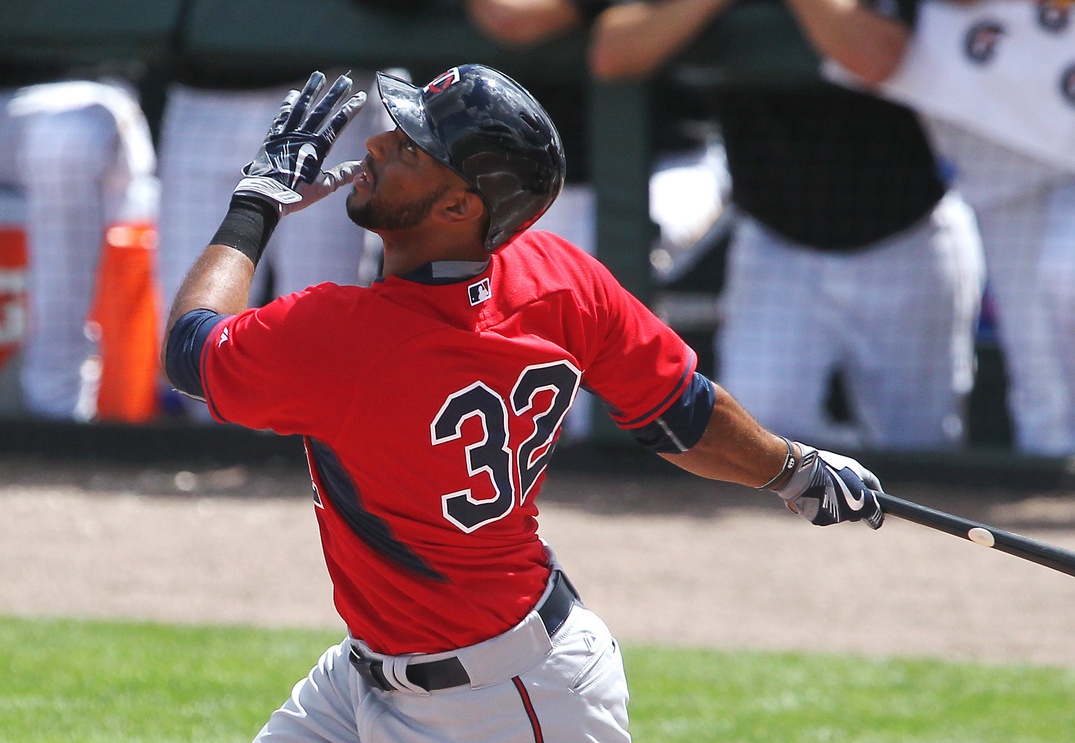 With right-handed pitchers accounting for 70 to 75 percentage of all plate appearances each year, it was clear that in order to have success at the major league level Hicks was going to have to figure out a way to get hits off of them. The decision to stop hitting left-handed -- even for a brief stint -- was an acknowledgment that he was overmatched and lost at the plate. The brief experiment of hitting from the right-side only fizzled out not because his swing was bad but because Hicks realized that it is difficult to track professional-grade pitches from a perspective he had not seen since he was 15-years-old. The decision to return to switch-hitting was an admission that he would never going to be able to have success facing same-side matchups. If he was going to overcome this deficiency, it was going to be as a left-handed hitter -- which would be no small task. Earlier in the offseason Hicks’ shortcomings at the plate were highlighted at Twins Daily. His left-handed swing mechanics were such that he would open on his front side well before the point of contact, leaving him unable to generate power or handle pitches on the outer half of the zone. From both sides of the plate, Hicks has good bat speed. He has decent size and seemingly adds more muscle with each passing offseason. In theory he should be able to provide pop. In practice, however, he has not. According to ESPN/TruMedia, of all left-handed hitters with a minimum of 100 plate appearances, Hicks’ .078 hard hit average was the 7th lowest. For perspective, the light-hitting Ben Revere managed to post a .115 hard hit average. On the other end of the spectrum was Kennys Vargas whose .230 hard hit average from the left side was only bested by David Ortiz and Victor Martinez. It seemed obvious that if Hicks is going to provide even league-average level production at the plate, he was going to need to make some wholesale changes -- maybe a timing mechanism or a complete rebuild. Turns out, that is exactly what he is doing. During the first spring training game against the Red Sox, Twins’ broadcaster Cory Provus mentioned that Hicks had been working on incorporating a leg kick in his left-handed swing. Indeed, Hicks had swapped out the old toe-tap for the bigger leg kick: http://i.imgur.com/79XVELf.gif http://i.imgur.com/ZCwTyrE.gif For Hicks, the new model is a much better swing. What does that mean going forward? Hitters like Jose Bautista and Josh Donaldson are the poster players for the argument for the pro-leg kick contingent. Donaldson, a hitter who used to have a toe-tap much like Hicks, found that the leg kick helped his timing and his ability to generate power. While productive if a hitter can master it, there are times when the leg kick can become a detriment if everything else is not working in unison. Cubs’ prospect Mike Olt felt his big leg kick was hindering his bat path so he has cut down on the height in order to make other aspects of his swing work. Likewise, Robinson Cano had a leg kick coming up in the Yankees system but eschewed that for his current model. There is no one-size-fits-all swing mechanics. For Hicks, there are still plenty of moving parts to his approach at the plate including the mental side. Confidence, or lack thereof, was cited by manager Paul Molitor as one of the reasons Hicks has struggled so mightily at the plate. And what about away from the plate? So far this spring Hicks, according to the Star Tribune’s Phil Miller, was picked off of first and second in the same inning (but the play at first was ruled a balk). Meanwhile on Tuesday, Hicks had another baserunning gaffe when he forgot the situation and stopped halfway on an inning-ending fly ball to the outfield. Molitor yanked him from the game. Hicks, to his credit, is putting in the work and demonstrating that he wants to improve his game. Nevertheless, Byron Buxton has looked the part of a MLB-ready center fielder but after the lost year that was 2014 the Twins will rightfully send him down for more seasoning. If the speedy footsteps of Mr. Buxton looking to take the position does not provide extra motivation for Hicks in 2015, who knows what will.
 -
The Twins Should Have Drafted Mark Prior
Parker Hageman commented on Kyle Eliason's blog entry in Kyle Eliason's Blog
Man. I was hoping this was just a troll job but you've used data and facts to support your claim.- 11 comments
-
- 1
-

-
- mark prior
- joe mauer
- (and 3 more)
-
On this week's episode of the No Juice Podcast, Twins Daily's Seth Stohs joins the show live from Fort Myers to preview the upcoming Report From The Fort. The guys discuss the pitching talent in the farm system, the catching depth, a possible Brian Dozier extension and tinkering with Phil Hughes. Listen up.Other topics include a Kevin Garnett update, Nickelback cancelling on everyone, topping the Mall of America, and stealing the Alary's shuttle bus. Listen below, on iTunes or on Stitcher: NO JUICE PODCAST, EPISODE #46: LIVE FROM FORT MYERS, IT'S SETH STOHS Check out this special No Juice presentation: Torii Hunter in VETERAN LEADERSHIP Click here to view the article
-
 Other topics include a Kevin Garnett update, Nickelback cancelling on everyone, topping the Mall of America, and stealing the Alary's shuttle bus. Listen below, on iTunes or on Stitcher: NO JUICE PODCAST, EPISODE #46: LIVE FROM FORT MYERS, IT'S SETH STOHS Check out this special No Juice presentation: Torii Hunter in VETERAN LEADERSHIP https://www.youtube.com/watch?v=sN-iPar9s2I
 -
Article: Josmil Pinto and the Frame Game
Parker Hageman replied to Parker Hageman's topic in Twins Daily Front Page News
Speaking towards the point I made about refining the catcher framing statistics, there was apparently a study conducted by Baseball Info Solutions for the Sloan Sports Conference which added some of the elements like counts, pitchers, command, etc. The entire gory study is found here (http://www.sloansportsconference.com/wp-content/uploads/2015/02/SSAC15-RP-Finalist-Who-is-responsible-for-a-called-strike.pdf) but the biggest takeaway is that even with all the filters applied Kurt Suzuki was still one of the worst framers in baseball last year. -
Article: Josmil Pinto and the Frame Game
Parker Hageman replied to Parker Hageman's topic in Twins Daily Front Page News
We highly encourage dissatisfied readers to do the research and post a blog themselves.- 27 replies
-
- 5
-
-
- josmil pinto
- framing
- (and 1 more)
-
Article: Josmil Pinto and the Frame Game
Parker Hageman replied to Parker Hageman's topic in Twins Daily Front Page News
Catchers are worthless pieces of skin anyway. I say Robot Umpires and a giant ratty old mattress behind the plate to stop the pitch. Who's with me? -
Article: Josmil Pinto and the Frame Game
Parker Hageman replied to Parker Hageman's topic in Twins Daily Front Page News
I don't think the comparison should be between these two instances. The real separation is that d'Arnuad's pitcher hit his target. Same goes with Suzuki's strike. Pinto's movement (lowering and lunging) doesn't do his pitcher any favors but the fact is the pitcher missed his target. A better test would be to see how Pinto receives the same pitch in the same position as d'Arnuad or vice versa. Other than that... #RobotUmpiresNow.- 27 replies
-
- 1
-
-
- josmil pinto
- framing
- (and 1 more)
-
Article: Josmil Pinto and the Frame Game
Parker Hageman replied to Parker Hageman's topic in Twins Daily Front Page News
Catchers have said that this is actually a trait that helps in getting more calls. From the Brewers' Jonathan Lucroy: And the Astros' Jason Castro: In the particular case of Pinto above, I think that the pitch locations are causing his angles in how he receives it. That being said, I wouldn't be surprised to see in video that he is not angling like Castro/Lucroy/d'Arnuad in those situations. -
Hoping to secure the role of backup catcher, Josmil Pinto realizes that he has areas of his game behind the plate he needed to work on. Earlier this week, we discussed his inability to control the run game. Another element of his defensive game -- the framing portion -- has also come under considerable criticism. According to the catcher framing stat found at StatCorner.com, Pinto finished the 2015 season as a bottom-10 receiver. He was deficient at both getting out-of-zone pitches to be called strikes as well as from keeping in-zone pitches from being called balls. This fact did not go unnoticed by his pitching staff. Is Pinto really that bad at framing as well?To begin, we really have to understand what we are talking about when it comes to “framing” and how Pinto would be good or bad at it. In a 2013 interview with Baseball Prospectus, former MLB umpire Jim McKean made an excellent observation about the practice. “Everybody says, ‘Oh, he’s a good framer, he’s a bad framer,’ and that’s just an entertainment word. It’s just, he caught the ball correctly,” McKean said. “As long as the ball is received steadily with a strong hand, then it’s a lot easier to see the pitches. And every time they do that and they go ‘Oh, he’s a good framer,’ well, no, he’s just catching the pitch correctly. That’s just my interpretation. And I was in the big league for about 30 years, so I’ve seen all sorts of catching, and good catching will make it easier for umpires to call more strikes.” From an umpire’s perspective that makes total sense. Little noise, little movement. When Glen Perkins told 1500ESPN listeners that Pinto struggled with pitches below or at the bottom of the zone, his observations were correct. The rookie catcher finished 78 out of 79 catchers in getting low pitches called strikes and the two examples below show why some of it is on him and some is on his pitcher. In this example, Pinto calls for a 3-2 fastball on the outer-half from reliever Casey Fien. Fien obliges and throws heat that clips a hair of the corner: Download attachment: Pinto_PitcherEx2.png Though by definition a strike, the umpire says it is a ball. Part of it might be on where Pinto caught it (see below) as well as the positioning of the umpire. In the interview with Baseball Prospectus, McKean said that the umpire’s positioning can put some areas of the strike zone in a blind spot. Like in the instance below, if he’s lined up on the inside of a hitter, the outer portion of the zone might be harder to track. In that situation, a catcher’s ability to receive the pitch correctly can mean the difference between a ball and a strike. Download attachment: Pinto_Ball_9.5-2ex-Caught.png There are various reasons why a pitch’s outcome is considered a ball when it was actually in the zone. Believe it or not, some of it actually has to do with the pitcher as well. For example, while catching a Ricky Nolasco start against the Angels in early September, Pinto sets up on the outer-half calling for a slider. Nolasco misses his spot but manages to throw a decent slider that nicks the inside edge of the plate. Download attachment: Pinto_PitcherEx.png Data shows that the pitch crossed a portion of the plate -- albeit not by much. Still, Pinto is forced to shift back towards the inside and his reception of the ball does not do Nolasco any favors. “[T]he problem you run into is, when a catcher moves out there, you move out there a little bit with him,” said McKean. “Then they throw the ball inside, and it’s in the strike zone, and it looks like he’s diving to catch it. And that’s very difficult to call a strike on. You can do it, and most of the time the hitter’s going to look at you and say, ‘Jimmy, how can that be a strike? He’s diving back to catch it.’” While the umpire in this situation did not shift to the outside with Pinto, everything else mirrored what McKean described. Given the scenario it is hard to assign total blame on the catcher, yet the framing statistic would demerit Pinto in this instance. Download attachment: Pinto_Ball_9.5-Caught.png One takeaway about this pitch is that Pinto does not receive it that poorly. Yes, he tries to pull his glove up after catching the pitch but as McKean told Baseball Prospectus, catchers who fail to catch low pitches palm up (as seen in the image above) often will have that particular pitch called against them. In that regard, Pinto is probably not as technically bad as the Marlins’ Jarrod Saltalamacchia. The 29-year-old backstop earned the dubious honors of being the worst receiving catcher in 2014 based on the StatCorner.com’s pitch framing statistic (24.4 runs below average). Here is an example as to why he brings up the rear of the list. On a 3-2 count, his pitcher brings a knee-high strike which should end the at-bat in the Marlins’ favor. It is called a ball. Download attachment: Salty_Pitch.png Admittedly, the 95-mile per hour fastball has some sink to it, running the pitch back towards the Dodgers’ Yasiel Puig but rather than grabbing it palm up, Saltalamacchia catches it, well, like this: Download attachment: Salty_Ball_Caught.png In this case, it is hard not to wonder whether if a different catcher had caught this middle-zone/knee-high pitch with minimal movement i it would have been called a strike. Let’s review another scenario. The New York Mets’ Travis d’Arnaud was considered one of game’s better receivers and well liked by his staff. "When the balls are down, he does something that makes them look like they're strikes," said the Mets’ Zack Wheeler in 2013. "It's ridiculous. I had a couple that I threw and I knew they were balls, but they looked like strikes after he framed them up." How ridiculous can he be? Take a look at the location of this pitch. Download attachment: dArnaud_Pitch.png There are several reasons that could explain why the umpire chose to expand his zone regardless of d’Anuard’s efforts. For starters, the Mets had just walked two batters in a row with the bases loaded. While umpires try to stay in the confines of the strike zone, they too are human and want to have the game end in under 17 hours. D'Anuard also caught the ball with minimal movement but his pitcher also hit his target making the reception less of a challenge than what Pinto and Saltalamacchia faced. Download attachment: dArnaud_Strike_Caught.png According to StatCorner.com, the Twins’ Kurt Suzuki remains one of the game’s worst framers as well. For whatever reason, Suzuki is unable to convince umpires that borderline pitches are strikes. That is, until two-strike situations. Whereas the average catcher was able to get a called strike on 3.7% of all out-of-zone takes with two-strikes, Suzuki coaxed strike three looking at a 5% clip -- only behind Boston’s David Ross and the Dodgers’ A.J. Ellis in that situation. Seems like that should count for a little bit more than a first-pitch strike. That said, Suzuki’s magic may simply be the skill of pitcher Phil Hughes. Hughes had a whopping 12% called strike rate on pitches out of the strike zone when there were two strikes. His cutter became an outstanding weapon that he deployed on left-handed hitters as such: http://i.imgur.com/hUtvBWn.gif Despite going around the plate, Hughes hit his target. Suzuki will receive positive points for framing even though the bulk of the work is done by Hughes’ pitching. “What a pitcher does has a lot to do with it,” Suzuki told me last spring training. “If he’s all over the place, he’s obviously not going to get those borderline calls, no matter how good you make it look. If you are around the plate consistently, you are going to get those calls. There’s definitely an art to it, you look at the Molinas, they are pretty good at what they do.” As McKean noted, the art of framing is actually the art of catching properly. In this context, Pinto has some work to do to become a better all-around defensive catcher. Umpires cannot be robots. The current catcher framing measurement system has plenty of flaws that give credit and punish receivers for mistakes of their pitchers. Umpires are influenced by reactions around them, positioning and because of biases. In a 3-0 count, a pitch out of the strike zone is likely to be called a strike 17% while a 0-2 pitch is likely to be called a ball 39% of the time. Until statisticians can factor in targeting and weigh the counts properly, catcher framing stats will remain imperfect. Click here to view the article
-
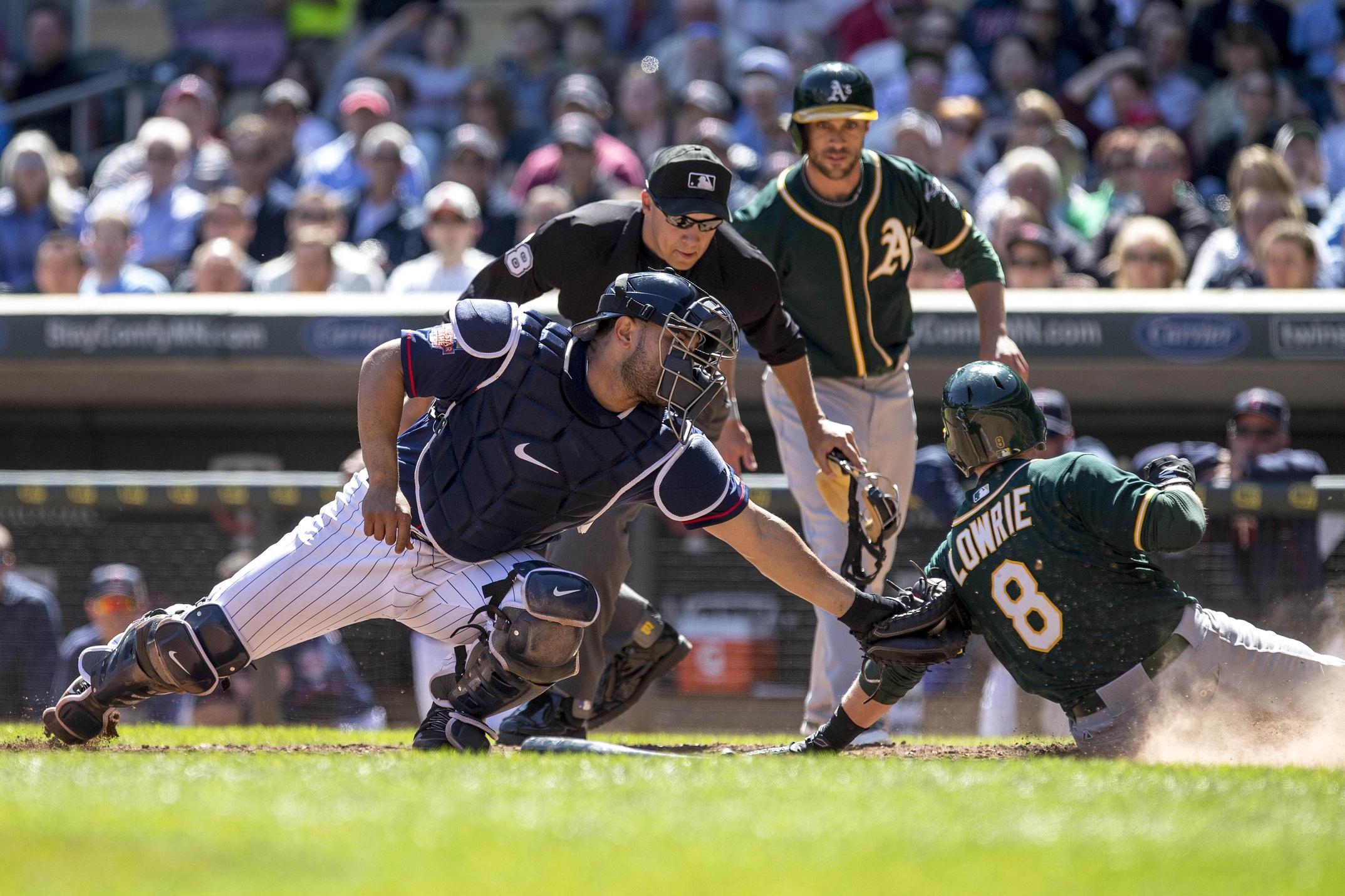 To begin, we really have to understand what we are talking about when it comes to “framing” and how Pinto would be good or bad at it. In a 2013 interview with Baseball Prospectus, former MLB umpire Jim McKean made an excellent observation about the practice. “Everybody says, ‘Oh, he’s a good framer, he’s a bad framer,’ and that’s just an entertainment word. It’s just, he caught the ball correctly,” McKean said. “As long as the ball is received steadily with a strong hand, then it’s a lot easier to see the pitches. And every time they do that and they go ‘Oh, he’s a good framer,’ well, no, he’s just catching the pitch correctly. That’s just my interpretation. And I was in the big league for about 30 years, so I’ve seen all sorts of catching, and good catching will make it easier for umpires to call more strikes.” From an umpire’s perspective that makes total sense. Little noise, little movement. When Glen Perkins told 1500ESPN listeners that Pinto struggled with pitches below or at the bottom of the zone, his observations were correct. The rookie catcher finished 78 out of 79 catchers in getting low pitches called strikes and the two examples below show why some of it is on him and some is on his pitcher. In this example, Pinto calls for a 3-2 fastball on the outer-half from reliever Casey Fien. Fien obliges and throws heat that clips a hair of the corner: Though by definition a strike, the umpire says it is a ball. Part of it might be on where Pinto caught it (see below) as well as the positioning of the umpire. In the interview with Baseball Prospectus, McKean said that the umpire’s positioning can put some areas of the strike zone in a blind spot. Like in the instance below, if he’s lined up on the inside of a hitter, the outer portion of the zone might be harder to track. In that situation, a catcher’s ability to receive the pitch correctly can mean the difference between a ball and a strike. There are various reasons why a pitch’s outcome is considered a ball when it was actually in the zone. Believe it or not, some of it actually has to do with the pitcher as well. For example, while catching a Ricky Nolasco start against the Angels in early September, Pinto sets up on the outer-half calling for a slider. Nolasco misses his spot but manages to throw a decent slider that nicks the inside edge of the plate. Data shows that the pitch crossed a portion of the plate -- albeit not by much. Still, Pinto is forced to shift back towards the inside and his reception of the ball does not do Nolasco any favors. “[T]he problem you run into is, when a catcher moves out there, you move out there a little bit with him,” said McKean. “Then they throw the ball inside, and it’s in the strike zone, and it looks like he’s diving to catch it. And that’s very difficult to call a strike on. You can do it, and most of the time the hitter’s going to look at you and say, ‘Jimmy, how can that be a strike? He’s diving back to catch it.’” While the umpire in this situation did not shift to the outside with Pinto, everything else mirrored what McKean described. Given the scenario it is hard to assign total blame on the catcher, yet the framing statistic would demerit Pinto in this instance. One takeaway about this pitch is that Pinto does not receive it that poorly. Yes, he tries to pull his glove up after catching the pitch but as McKean told Baseball Prospectus, catchers who fail to catch low pitches palm up (as seen in the image above) often will have that particular pitch called against them. In that regard, Pinto is probably not as technically bad as the Marlins’ Jarrod Saltalamacchia. The 29-year-old backstop earned the dubious honors of being the worst receiving catcher in 2014 based on the StatCorner.com’s pitch framing statistic (24.4 runs below average). Here is an example as to why he brings up the rear of the list. On a 3-2 count, his pitcher brings a knee-high strike which should end the at-bat in the Marlins’ favor. It is called a ball. Admittedly, the 95-mile per hour fastball has some sink to it, running the pitch back towards the Dodgers’ Yasiel Puig but rather than grabbing it palm up, Saltalamacchia catches it, well, like this: In this case, it is hard not to wonder whether if a different catcher had caught this middle-zone/knee-high pitch with minimal movement i it would have been called a strike. Let’s review another scenario. The New York Mets’ Travis d’Arnaud was considered one of game’s better receivers and well liked by his staff. "When the balls are down, he does something that makes them look like they're strikes," said the Mets’ Zack Wheeler in 2013. "It's ridiculous. I had a couple that I threw and I knew they were balls, but they looked like strikes after he framed them up." How ridiculous can he be? Take a look at the location of this pitch. There are several reasons that could explain why the umpire chose to expand his zone regardless of d’Anuard’s efforts. For starters, the Mets had just walked two batters in a row with the bases loaded. While umpires try to stay in the confines of the strike zone, they too are human and want to have the game end in under 17 hours. D'Anuard also caught the ball with minimal movement but his pitcher also hit his target making the reception less of a challenge than what Pinto and Saltalamacchia faced. According to StatCorner.com, the Twins’ Kurt Suzuki remains one of the game’s worst framers as well. For whatever reason, Suzuki is unable to convince umpires that borderline pitches are strikes. That is, until two-strike situations. Whereas the average catcher was able to get a called strike on 3.7% of all out-of-zone takes with two-strikes, Suzuki coaxed strike three looking at a 5% clip -- only behind Boston’s David Ross and the Dodgers’ A.J. Ellis in that situation. Seems like that should count for a little bit more than a first-pitch strike. That said, Suzuki’s magic may simply be the skill of pitcher Phil Hughes. Hughes had a whopping 12% called strike rate on pitches out of the strike zone when there were two strikes. His cutter became an outstanding weapon that he deployed on left-handed hitters as such: http://i.imgur.com/hUtvBWn.gif Despite going around the plate, Hughes hit his target. Suzuki will receive positive points for framing even though the bulk of the work is done by Hughes’ pitching. “What a pitcher does has a lot to do with it,” Suzuki told me last spring training. “If he’s all over the place, he’s obviously not going to get those borderline calls, no matter how good you make it look. If you are around the plate consistently, you are going to get those calls. There’s definitely an art to it, you look at the Molinas, they are pretty good at what they do.” As McKean noted, the art of framing is actually the art of catching properly. In this context, Pinto has some work to do to become a better all-around defensive catcher. Umpires cannot be robots. The current catcher framing measurement system has plenty of flaws that give credit and punish receivers for mistakes of their pitchers. Umpires are influenced by reactions around them, positioning and because of biases. In a 3-0 count, a pitch out of the strike zone is likely to be called a strike 17% while a 0-2 pitch is likely to be called a ball 39% of the time. Until statisticians can factor in targeting and weigh the counts properly, catcher framing stats will remain imperfect.
 -
Right. Those are the pickoffs as in either a pitcher throws to first when a runner takes off or steps off and catches the runner going to another base. For some reason the catcher gets credit as well.
-
I'm not away of anyone keeping track of pickoff attempts. Would be a good one to track to see if there are catchers more likely to snap throw down to first.
-
Technically, he threw out 2 base-runners (the other three with pick-off/caught stealing that counts in the overall total) and one of the two he threw out was a botched hit-and-run by Oakland.
-
Revisited some of the film on Pinto on pitches that were in the zone but got called a ball or borderline pitches that were not called strikes but other catchers had coaxed a strike call. There are clearly some mannerisms that he does that might dissuade the umpire's decision. You see that his glove moves a lot when receiving it and, in the case of some borderline pitchers, he showed a propensity towards moving the glove back towards the zone. My belief is that an umpire needs to call the pitch where it crossed but there is a grey area -- not to mention pitch movement: https://www.youtube.com/watch?v=7ZBT2ub-OHM Bigger picture, I really enjoyed this interview with a former MLB umpire who basically said it shouldn't be called "framing" it should be called "catching correctly": Speaking to that last part, you see Pinto do that a lot: Catch the low borderline pitch with a downward stab and then bring it back up. Maybe I'll post about this tomorrow with some examples.
- 38 replies
-
- 4
-
-
- josmil pinto
- scouting
- (and 1 more)
-
Joe Vavra caught two games in his minor league career. Apparently, he's in charge of the catchers this year: https://twitter.com/LaVelleNeal/status/569885881206616064 https://twitter.com/MillerStrib/status/570284978564501504
- 38 replies
-
- 2
-
-
- josmil pinto
- scouting
- (and 1 more)
-
Article: Where Will Miguel Sano Play?
Parker Hageman replied to Nick Nelson's topic in Twins Daily Front Page News
Of all those numbers, only the last one really applies. -
Article: Where Will Miguel Sano Play?
Parker Hageman replied to Nick Nelson's topic in Twins Daily Front Page News
I mean, he certainly moves well for a big guy: https://vine.co/v/hOIdXahbuPu -
I will still argue the "how important" (i.e. the value metric) is still up for debate but when a pitcher like Glen Perkins calls out your framing skills then I think that skill definitely needs work:
- 38 replies
-
- 1
-
-
- josmil pinto
- scouting
- (and 1 more)
-
Fairly certain it was a little bit of everything. He had been in an 14-for-70 (.200) slide since the beginning of May and Kendrys Morales' addition gave the Twins a DH option. I can't find Ryan's comments at that time but these were Gardenhire's response:
- 38 replies
-
- 1
-
-
- josmil pinto
- scouting
- (and 1 more)
-
When camp opened, the Minnesota Twins’ manager Paul Molitor discussed the grim realities of the team’s inabilities to stop opponents from stealing bases. The game, he believes, has shifted to one that focuses on speed rather than power. Stopping the other team from turning a single into a double was going to be a point of emphasis heading into 2015. Last year, when veteran catcher Kurt Suzuki was not behind the plate, opponents stole at will off the Twins’ battery. Central to those stolen bases was rookie backstop Josmil Pinto. While he was behind the plate runners went 20-for-20 in stolen base attempts, by far the highest number of bases swiped in MLB without recording an out. But here’s the question: Was Pinto’s run defense that bad?Last season started off on the right foot. Last spring training he and pitcher Jared Burton would combined to take down the Blue Jay’s Anthony Gose -- who would go on to swipe 15 on 20 attempts. The mechanics were nearly flawless as he received and transitioned in almost one motion. When the regular season started, it was Gose in Minnesota who would test Pinto first. With Mike Pelfrey delivering a 89-mile per hour two-seamer, Gose beats Pinto’s throw to second by a small margin. The replay shows a strong throw that is nanoseconds late. Mechanically, Pinto repeats the same motion as seen below. Download attachment: Gose_4.17_GOTHEEM.png Download attachment: Gose_4.17_MISS.png It would be during his next attempt at nailing a runner that things went go awry for Pinto. Two days after his near-hit with Gose, the Twins were in Kansas City fending off a Royals rally. With Nori Aoki on second and Omar Infante on first with one out, Kevin Correia delivered to the plate and both Royal runners scampered. Kansas City demonstrated the highest tendency to take third in 2014 (they went 29-for-36) and the Twins appeared to have the situation measured. With the left-handed batting Eric Hosmer at the plate, Pinto had a clear line to third and had Aoki, the lead runner, by multiple steps. However. Pinto unleashed a throw that was airmailed to Omaha. All Plouffe could do was feign a leaping attempt while the ball sailed well over his head, allowing Aoki to score, putting the Royals up 5-to-2 in the fourth. http://i.imgur.com/IIy8HBd.gif For the most part, everything is going in the right direction for Pinto on this play. His footwork is good and the arm action is strong but his release is off. The Twins would scratch and claw back to 5-4 but the one run would be the difference-maker between losing 92 games and losing just 91 games. Maybe it was lack of confidence or maybe it was just inevitable but from that point forward, Pinto’s throwing unraveled. Runners had gone six-for-six against Pinto by May 31 though it could have easily have been 4-for-6 if either the Gose or Aoki play went slightly different. (I guess you could also says that if things had gone slightly different I may have been the one dating Katie Upton. Make believe is fun.) From May 1 to May 31, Pinto had gone six games without anyone challenging him on the bases. That would change against the Yankees. In the bottom of the eighth and the game tied at one apiece, Twins reliever Brian Duensing allowed a one-out single to speedster Jacoby Ellsbury. The reigning 2013 AL thief would get a fairly substantial jump on the left-handed Duensing, taking advantage of an offspeed pitch: Download attachment: Ellsburg_5.31_jump2.png The pitch came in low, which Pinto backhanded on his knees, and proceeded to throw the ball while kneeling. Download attachment: Ellsburg_5.31_SB1.png Download attachment: Ellsburg_5.31_SB2.png While ugly, Pinto was able to get off a strong throw that nearly nabbed Ellsbury. It was an impressive feat considering the jump Ellsbury got, the pitch he chose to run on and the location where Pinto had to catch it. In all, some catchers might opt to eat that base. The throw, however, hit Ellsbury in the leg on his slide and skipped into center field, allowing him to trot into third base. Download attachment: Ellsburg_5.31_SB3.png The following series sparked a line of bad throws as the Brewers took advantage of Pinto’s inability to stop the run game. In Milwaukee on June 3rd, Brewers’ shortstop Jean Segura took second after a swinging strikeout and a subsequent throw by Pinto that skipped well short of the base. Yet it was Twins’ pitcher Samuel Deduno who should probably shoulder some blame for the stolen base in that situation. Runners found the erratic Deduno to be the perfect patsy as they ran roughshod on him on the season (10-for-10). Download attachment: Segura_6.3_jump.png Download attachment: Segura_6.3_receive.png When the border battle series returned to Minnesota a couple days later, the Brewers once again took advantage of Pinto’s throwing. First it was the large Mark Reynolds who would take second -- selecting a Caleb Thielbar curveball to run on -- as Pinto’s throw traveled off target. Later that inning Jean Segura took another base on a first-pitch curve that Ryan Braun even stepped away from and gave Pinto a clean throwing lane. If Pinto had a hint of a fighting chance to stop Segura, it was killed by his 123-foot offline throw. Download attachment: Segura_6.5_receive.png Download attachment: Segura_6.5_throw.png The Brewers had demonstrated an uncanny knack for running on breaking and offspeed pitches. All four bases Milwaukee swindled from under Pinto’s watch came on non-fastballs -- certainly a disadvantage for the catcher -- but bringing his season total to 0-for-13 nonetheless. The young backstop was entering rare territory. Just a handful of catchers had accumulated that many attempts without throwing out at least one runner in a season. Following the Milwaukee series, the Twins set out to study and analyze film while bench coach Terry Steinbach revisited his mechanics. The film study likely reflected a lot of what is seen above: Opponents were able to select favorable pitches to run on and Pinto's throws were becoming increasingly offline. Whatever the film said and whatever Steinbach offered as advice did not help. In his next game behind the plate against the Astros he was once again picked apart. The eventual 2014 AL stolen base winner Jose Altuve added two bags off of pitcher Deduno and Pinto. Based on his jumps and Deduno’s inability to keep his close, Pinto stood small chance of succeeding in throwing him out on either attempt. Robbie Grossman would tack one on as well. Download attachment: Altuva_6.8_throw.png When the Twins signed Kendrys Morales midseason, they pointed to Pinto’s lowly offensive production, his pitch framing and throwing woes as reason to send him back to Rochester. “This is the right thing to do,” manager Ron Gardenhire told reporters after they announced Pinto’s demotion. “He definitely has to work on some things (defensively). He’s been getting a little sloppy trying to set his feet for throws and not framing the ball. There’s issues here, and this is going to help him. This kid has a chance to be a starting catcher, not a backup catcher. We believe in his offense.” When he was recalled from Rochester in September, the streak continued as runners went unhindered to the next base. On September 5, Angels’ Mike Trout took second base effortlessly on a Ricky Nolasco 80-mile per hour curve. Later that game Trout possibly aided teammate Kole Calhoun’s thievery by loitering too long over home plate: Download attachment: CalhounTrou_9.5.png Download attachment: CalhounTrou_9.5_SB.png Would a clear throwing lane have allowed Pinto to make a better throw? As the season progressed there was no doubt that Pinto’s throws were growing steadily worse. The last attempt, trying to thwart Detroit’s Austin Romine at second, sailed heavily to the second base side of the bag. Download attachment: Romine_9.28_SB.png The video review of Pinto’s throws (with the exception of three early season attempts that are lost in the internet ether) shows a trend of offline attempts. Overall, Pinto’s footwork and mechanics do not seem terrible. He threw often with a closed foot but that is a trait that was shared by the Padres’ Rene Rivera, who had the best base-kill rates among catchers in 2014. Compared to Rivera’s howitzer (or even teammate Kurt Suzuki’s arm) Pinto’s arm strength at times appeared weak. Perhaps Pinto’s offseason shoulder injury played a substantial role in his throwing. What is expected out of Pinto for this season? Depends on who you ask. Pinto claims his main purpose for playing in the winter leagues this offseason was to focus on the defensive skills. "That's the first reason I went to Venezuela," Pinto told MLB.com’s Rhett Bollinger. "I wanted to catch a couple games and improve my defense. It was the first year I played a complete season. So it was good." Manager Paul Molitor seems to favor his offensive potential and does not think Pinto’s defense was necessarily the disaster the data suggests. He believes his defensive miscues were a product of mental struggles. “I saw him vastly improve when he was with [manager] Jeff Smith in Double-A,” Molitor told reporters in camp this year. “t was like a hitter going into a slump. He was unsuccessful a couple of times, so you try to get quicker and your arm slot changes. There were a couple of times he came out for early work, which is a good thing, but he had trouble with his accuracy. So it got a little mental for him.” In a recent Q&A with Fox Sports North, General Manager Terry Ryan echoed Molitor’s assessment of Pinto, saying that his 2014 demotion was based on his offense and not his inability to control the run game. Ryan also believed he saw improvement out of Pinto in his stint in Rochester. The Twins have clearly invested the bulk of the catching time in Kurt Suzuki but with his offensive potential and need to give the aging Suzuki more time off the Twins need Pinto to contribute in all aspects in 2015. Click here to view the article
- 38 replies
-
- 4
-
-
- josmil pinto
- scouting
- (and 1 more)
