



Parker Hageman
-
Posts
4,152 -
Joined
-
Last visited
-
Days Won
6
Content Type
Profiles
News
Minnesota Twins Videos
2026 Minnesota Twins Top Prospects Ranking
2022 Minnesota Twins Draft Picks
Minnesota Twins Free Agent & Trade Rumors, Notes, & Tidbits
Guides & Resources
2023 Minnesota Twins Draft Picks
The Minnesota Twins Players Project
2024 Minnesota Twins Draft Picks
2025 Minnesota Twins Draft Pick Tracker
2026 Minnesota Twins Draft Tracker: Picks & Bonuses
Forums
Blogs
Events
Store
Downloads
Gallery
Everything posted by Parker Hageman
-
 Last season started off on the right foot. Last spring training he and pitcher Jared Burton would combined to take down the Blue Jay’s Anthony Gose -- who would go on to swipe 15 on 20 attempts. The mechanics were nearly flawless as he received and transitioned in almost one motion. When the regular season started, it was Gose in Minnesota who would test Pinto first. With Mike Pelfrey delivering a 89-mile per hour two-seamer, Gose beats Pinto’s throw to second by a small margin. The replay shows a strong throw that is nanoseconds late. Mechanically, Pinto repeats the same motion as seen below. It would be during his next attempt at nailing a runner that things went go awry for Pinto. Two days after his near-hit with Gose, the Twins were in Kansas City fending off a Royals rally. With Nori Aoki on second and Omar Infante on first with one out, Kevin Correia delivered to the plate and both Royal runners scampered. Kansas City demonstrated the highest tendency to take third in 2014 (they went 29-for-36) and the Twins appeared to have the situation measured. With the left-handed batting Eric Hosmer at the plate, Pinto had a clear line to third and had Aoki, the lead runner, by multiple steps. However. Pinto unleashed a throw that was airmailed to Omaha. All Plouffe could do was feign a leaping attempt while the ball sailed well over his head, allowing Aoki to score, putting the Royals up 5-to-2 in the fourth. http://i.imgur.com/IIy8HBd.gif For the most part, everything is going in the right direction for Pinto on this play. His footwork is good and the arm action is strong but his release is off. The Twins would scratch and claw back to 5-4 but the one run would be the difference-maker between losing 92 games and losing just 91 games. Maybe it was lack of confidence or maybe it was just inevitable but from that point forward, Pinto’s throwing unraveled. Runners had gone six-for-six against Pinto by May 31 though it could have easily have been 4-for-6 if either the Gose or Aoki play went slightly different. (I guess you could also says that if things had gone slightly different I may have been the one dating Katie Upton. Make believe is fun.) From May 1 to May 31, Pinto had gone six games without anyone challenging him on the bases. That would change against the Yankees. In the bottom of the eighth and the game tied at one apiece, Twins reliever Brian Duensing allowed a one-out single to speedster Jacoby Ellsbury. The reigning 2013 AL thief would get a fairly substantial jump on the left-handed Duensing, taking advantage of an offspeed pitch: The pitch came in low, which Pinto backhanded on his knees, and proceeded to throw the ball while kneeling. While ugly, Pinto was able to get off a strong throw that nearly nabbed Ellsbury. It was an impressive feat considering the jump Ellsbury got, the pitch he chose to run on and the location where Pinto had to catch it. In all, some catchers might opt to eat that base. The throw, however, hit Ellsbury in the leg on his slide and skipped into center field, allowing him to trot into third base. The following series sparked a line of bad throws as the Brewers took advantage of Pinto’s inability to stop the run game. In Milwaukee on June 3rd, Brewers’ shortstop Jean Segura took second after a swinging strikeout and a subsequent throw by Pinto that skipped well short of the base. Yet it was Twins’ pitcher Samuel Deduno who should probably shoulder some blame for the stolen base in that situation. Runners found the erratic Deduno to be the perfect patsy as they ran roughshod on him on the season (10-for-10). When the border battle series returned to Minnesota a couple days later, the Brewers once again took advantage of Pinto’s throwing. First it was the large Mark Reynolds who would take second -- selecting a Caleb Thielbar curveball to run on -- as Pinto’s throw traveled off target. Later that inning Jean Segura took another base on a first-pitch curve that Ryan Braun even stepped away from and gave Pinto a clean throwing lane. If Pinto had a hint of a fighting chance to stop Segura, it was killed by his 123-foot offline throw. The Brewers had demonstrated an uncanny knack for running on breaking and offspeed pitches. All four bases Milwaukee swindled from under Pinto’s watch came on non-fastballs -- certainly a disadvantage for the catcher -- but bringing his season total to 0-for-13 nonetheless. The young backstop was entering rare territory. Just a handful of catchers had accumulated that many attempts without throwing out at least one runner in a season. Following the Milwaukee series, the Twins set out to study and analyze film while bench coach Terry Steinbach revisited his mechanics. The film study likely reflected a lot of what is seen above: Opponents were able to select favorable pitches to run on and Pinto's throws were becoming increasingly offline. Whatever the film said and whatever Steinbach offered as advice did not help. In his next game behind the plate against the Astros he was once again picked apart. The eventual 2014 AL stolen base winner Jose Altuve added two bags off of pitcher Deduno and Pinto. Based on his jumps and Deduno’s inability to keep his close, Pinto stood small chance of succeeding in throwing him out on either attempt. Robbie Grossman would tack one on as well. When the Twins signed Kendrys Morales midseason, they pointed to Pinto’s lowly offensive production, his pitch framing and throwing woes as reason to send him back to Rochester. “This is the right thing to do,” manager Ron Gardenhire told reporters after they announced Pinto’s demotion. “He definitely has to work on some things (defensively). He’s been getting a little sloppy trying to set his feet for throws and not framing the ball. There’s issues here, and this is going to help him. This kid has a chance to be a starting catcher, not a backup catcher. We believe in his offense.” When he was recalled from Rochester in September, the streak continued as runners went unhindered to the next base. On September 5, Angels’ Mike Trout took second base effortlessly on a Ricky Nolasco 80-mile per hour curve. Later that game Trout possibly aided teammate Kole Calhoun’s thievery by loitering too long over home plate: Would a clear throwing lane have allowed Pinto to make a better throw? As the season progressed there was no doubt that Pinto’s throws were growing steadily worse. The last attempt, trying to thwart Detroit’s Austin Romine at second, sailed heavily to the second base side of the bag. The video review of Pinto’s throws (with the exception of three early season attempts that are lost in the internet ether) shows a trend of offline attempts. Overall, Pinto’s footwork and mechanics do not seem terrible. He threw often with a closed foot but that is a trait that was shared by the Padres’ Rene Rivera, who had the best base-kill rates among catchers in 2014. Compared to Rivera’s howitzer (or even teammate Kurt Suzuki’s arm) Pinto’s arm strength at times appeared weak. Perhaps Pinto’s offseason shoulder injury played a substantial role in his throwing. What is expected out of Pinto for this season? Depends on who you ask. Pinto claims his main purpose for playing in the winter leagues this offseason was to focus on the defensive skills. "That's the first reason I went to Venezuela," Pinto told MLB.com’s Rhett Bollinger. "I wanted to catch a couple games and improve my defense. It was the first year I played a complete season. So it was good." Manager Paul Molitor seems to favor his offensive potential and does not think Pinto’s defense was necessarily the disaster the data suggests. He believes his defensive miscues were a product of mental struggles. “I saw him vastly improve when he was with [manager] Jeff Smith in Double-A,” Molitor told reporters in camp this year. “t was like a hitter going into a slump. He was unsuccessful a couple of times, so you try to get quicker and your arm slot changes. There were a couple of times he came out for early work, which is a good thing, but he had trouble with his accuracy. So it got a little mental for him.” In a recent Q&A with Fox Sports North, General Manager Terry Ryan echoed Molitor’s assessment of Pinto, saying that his 2014 demotion was based on his offense and not his inability to control the run game. Ryan also believed he saw improvement out of Pinto in his stint in Rochester. The Twins have clearly invested the bulk of the catching time in Kurt Suzuki but with his offensive potential and need to give the aging Suzuki more time off the Twins need Pinto to contribute in all aspects in 2015.
 -
 On this week's No Juice Podcast Dan Anderson and Parker Hageman review the happenings from around the baseball world. Glen Perkins lobbying for jobs. The Minnesota catcher struggle is real. Weird spring training injuries. Overzealous updates from the media. It is all here. Listen up.Other topics include the ruling on Adrian Peterson and Kevin Garnett's return to Minnesota. Oh, and Dan had a baby. Listen below, on iTunes or on Stitcher: NO JUICE PODCAST, EPISODE #45: SPRING TRAINING UPDATES Check out this special No Juice presentation of the current state of Minnesota professional sports mashed up with the latest promo from Mad Men: Click here to view the article
 -
 Other topics include the ruling on Adrian Peterson and Kevin Garnett's return to Minnesota. Oh, and Dan had a baby. Listen below, on iTunes or on Stitcher: NO JUICE PODCAST, EPISODE #45: SPRING TRAINING UPDATES Check out this special No Juice presentation of the current state of Minnesota professional sports mashed up with the latest promo from Mad Men: https://www.youtube.com/watch?v=F-z-1PRKyE0&feature=youtu.be
 -
Article: All About That Base
Parker Hageman replied to Parker Hageman's topic in Twins Daily Front Page News
You mean like this? http://m.mlb.com/min/video/topic/63817564/v35862217/minbal-orioles-challenge-out-confirmed-in-5th/?c_id=min -
If one were to highlight the utter banality of baseball’s month of February, a simple action in a spring training complex back field -- featuring grown men who mime a throw to the plate, speed-jog fifty feet from the middle of the diamond to step on first base and receive an underhand toss -- might suffice. The act is then repeated without end until the pitchers are dreaming of breaking towards first in their sleep. That’s the goal anyway.It may appear boring to both the participants and onlookers alike, but drilling in spring training is likely favored over some of the original methods for ensuring pitchers take responsibility for covering first base. In the late 1880s, the first baseman began to position themselves away from the base and closer to where they are today. This new positioning caused issues due to the fact that first basemen were now playing back to cover more ground and were beat when racing to the bag. This then became the pitchers’ responsibility to get to the base. Instinctively, pitchers shied away from the added cardio and stayed at the mound. According to the book A Game Of Inches, at that time the Cardinals’ owner and first baseman Charles Comiskey admitted he would field the ball from his position and, if his pitcher failed to man the base, Comiskey would throw the ball to the unattended base regardless. “[T]he crowd saw who was to blame, and pretty soon pitchers got into the habit of running over rapidly rather than be roasted,” Comiskey said. Even after several years it still had not sunk in with pitchers to beeline it to first base if the ball was hit to their left. In 1905, following a Washington Post article that described the acts of the the team’s pitchers not covering the base the previous season as acts of “stupidity or indifference”, the Washington Senators became one of the earliest recorded team to implement fielding practice for pitchers in spring training so they would be confident the first baseman could “play a deep field and feel certain that the pitcher will go over and take his throws.” In many ways, the residuals of the old Senators practices carried over when the franchise moved to Minnesota. When Jack Morris arrived at the newly minted Lee County Sports Complex in the spring of 1991, the veteran pitcher encountered Twins manager Tom Kelly’s brand of tirelessly drilling on the fundamentals. According to Season of Dreams, after camp ended Morris told reporters that he covered first base more times in his first spring with the Twins in Florida than he had in 14 years with the Detroit Tigers. A hundred years later the tradition continues in Fort Myers with the new generation of pitchers pantomiming their delivery to the plate and trotting off towards first. You would think that over the course of a century modern pitchers would have realized that first basemen are no longer tethered to the base. In fact, some believe that the time spent on drilling this is a waste. As Angels pitcher CJ Wilson told MLB.com’s Jesse Sanchez, “I'd rather spend the time going over strategies and pitching techniques than do PFP,” Wilson said in 2011. “It's just boring."(1) Boring or not, the Twins value pounding the fundamentals into their players -- even if it is based on a practice that originated 100 years ago. It can pay dividends; take Twins’ pitcher Kyle Gibson for instance. In 2015, Gibson led all major league pitchers with 30 putouts. In many ways the pitcher putouts at first are much like RBI totals -- they are all about opportunity. A right-handed ground ball pitcher is likely going to induce more opportunities than a fly ball pitcher or a left-handed pitcher. Likewise, a pitcher needs a first baseman who will not finish the job himself. Two reasons that Gibson’s totals led baseball was: 1) he had one of the highest number of grounders in a first baseman’s zone and 2) his first baseman was unfamiliar with the position. That being said, Gibson’s reaction time on those plays is impressive. Beating a path from the mound to the bag presents challenges. First is taking the right route, the second is finding the base and the third is receiving the throw. And sometimes that does not go as smoothly as rehearsed: http://cdn0.vox-cdn.com/assets/4386775/dozier.gif Though second baseman Brian Dozier rightfully receives credit for making a fine play, Gibson’s ability adjust to the throw should be acknowledged. It may seem mundane but the repetition may help avoid disastrous situations like the one Tim Hudson experienced in Atlanta where improper footwork and terrible timing led to ankle surgery for the veteran pitcher: Sorry if you were eating lunch. It is hard to say what exactly makes a pitcher “good” at covering first base. Is it the muscle memory established in camp? Is it natural athleticism? Or is it handedness that provides the right-handed pitchers who fall off towards first base the advantage? The answer is all of the above but with emphasis on the latter. Yes, the seed is planted in Florida or Arizona which helps trigger the pitcher’s reaction at the crack of the bat. Beyond that, being born right-handed provides the benefits of both facing more left-handed batters who are more likely to hit the ball to first base as well as having a step or two edge over their southpaw’d counterparts. In another hundred years we will all be dead and gone but the PFP is bound to live on. According to ESPN/TruMedia data, the average left-handed starting pitcher saw 28 ground ball plays in the first baseman’s zone. Maybe Wilson is on to something. In the grand scheme it does seem silly to concentrate so much time towards an act that occurs less than one time per start. Why not invest more of the left-handed staff’s time in other areas? Click here to view the article
-
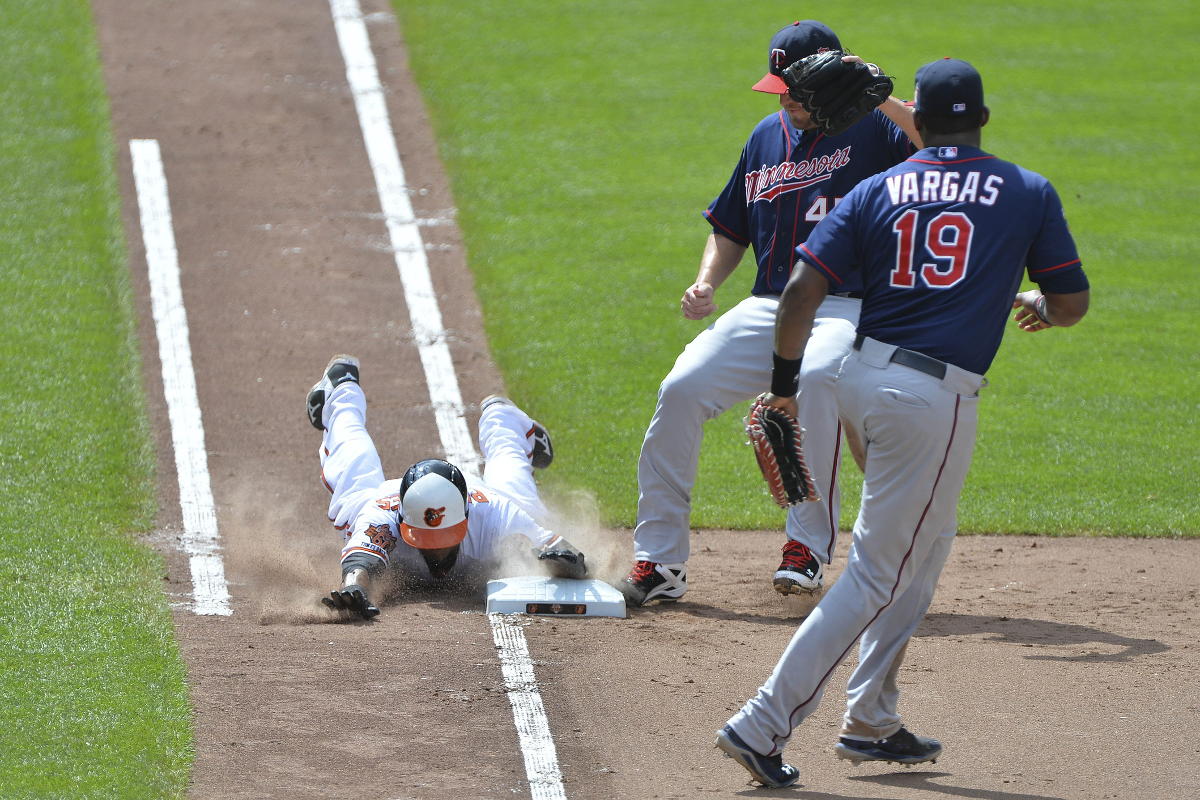 It may appear boring to both the participants and onlookers alike, but drilling in spring training is likely favored over some of the original methods for ensuring pitchers take responsibility for covering first base. In the late 1880s, the first baseman began to position themselves away from the base and closer to where they are today. This new positioning caused issues due to the fact that first basemen were now playing back to cover more ground and were beat when racing to the bag. This then became the pitchers’ responsibility to get to the base. Instinctively, pitchers shied away from the added cardio and stayed at the mound. According to the book A Game Of Inches, at that time the Cardinals’ owner and first baseman Charles Comiskey admitted he would field the ball from his position and, if his pitcher failed to man the base, Comiskey would throw the ball to the unattended base regardless. “[T]he crowd saw who was to blame, and pretty soon pitchers got into the habit of running over rapidly rather than be roasted,” Comiskey said. Even after several years it still had not sunk in with pitchers to beeline it to first base if the ball was hit to their left. In 1905, following a Washington Post article that described the acts of the the team’s pitchers not covering the base the previous season as acts of “stupidity or indifference”, the Washington Senators became one of the earliest recorded team to implement fielding practice for pitchers in spring training so they would be confident the first baseman could “play a deep field and feel certain that the pitcher will go over and take his throws.” In many ways, the residuals of the old Senators practices carried over when the franchise moved to Minnesota. When Jack Morris arrived at the newly minted Lee County Sports Complex in the spring of 1991, the veteran pitcher encountered Twins manager Tom Kelly’s brand of tirelessly drilling on the fundamentals. According to Season of Dreams, after camp ended Morris told reporters that he covered first base more times in his first spring with the Twins in Florida than he had in 14 years with the Detroit Tigers. A hundred years later the tradition continues in Fort Myers with the new generation of pitchers pantomiming their delivery to the plate and trotting off towards first. You would think that over the course of a century modern pitchers would have realized that first basemen are no longer tethered to the base. In fact, some believe that the time spent on drilling this is a waste. As Angels pitcher CJ Wilson told MLB.com’s Jesse Sanchez, “I'd rather spend the time going over strategies and pitching techniques than do PFP,” Wilson said in 2011. “It's just boring."(1) Boring or not, the Twins value pounding the fundamentals into their players -- even if it is based on a practice that originated 100 years ago. It can pay dividends; take Twins’ pitcher Kyle Gibson for instance. In 2015, Gibson led all major league pitchers with 30 putouts. In many ways the pitcher putouts at first are much like RBI totals -- they are all about opportunity. A right-handed ground ball pitcher is likely going to induce more opportunities than a fly ball pitcher or a left-handed pitcher. Likewise, a pitcher needs a first baseman who will not finish the job himself. Two reasons that Gibson’s totals led baseball was: 1) he had one of the highest number of grounders in a first baseman’s zone and 2) his first baseman was unfamiliar with the position. That being said, Gibson’s reaction time on those plays is impressive. Beating a path from the mound to the bag presents challenges. First is taking the right route, the second is finding the base and the third is receiving the throw. And sometimes that does not go as smoothly as rehearsed: http://cdn0.vox-cdn.com/assets/4386775/dozier.gif Though second baseman Brian Dozier rightfully receives credit for making a fine play, Gibson’s ability adjust to the throw should be acknowledged. It may seem mundane but the repetition may help avoid disastrous situations like the one Tim Hudson experienced in Atlanta where improper footwork and terrible timing led to ankle surgery for the veteran pitcher: Sorry if you were eating lunch. It is hard to say what exactly makes a pitcher “good” at covering first base. Is it the muscle memory established in camp? Is it natural athleticism? Or is it handedness that provides the right-handed pitchers who fall off towards first base the advantage? The answer is all of the above but with emphasis on the latter. Yes, the seed is planted in Florida or Arizona which helps trigger the pitcher’s reaction at the crack of the bat. Beyond that, being born right-handed provides the benefits of both facing more left-handed batters who are more likely to hit the ball to first base as well as having a step or two edge over their southpaw’d counterparts. In another hundred years we will all be dead and gone but the PFP is bound to live on. According to ESPN/TruMedia data, the average left-handed starting pitcher saw 28 ground ball plays in the first baseman’s zone. Maybe Wilson is on to something. In the grand scheme it does seem silly to concentrate so much time towards an act that occurs less than one time per start. Why not invest more of the left-handed staff’s time in other areas?
 -
On one hand, it seems to me to be the cost of living the dream. Internships and apprenticeships in various other industries pay next to nothing as well. On the other hand, this is a $9 billion dollar industry now. Stands to reason that some increase is pay is merited. Beyond that, it is something that could provide a competitive advantage to the team that does that. Often, the low-paid prospects -- frequently the ones in the later rounds of the draft or college grads -- are forced to find offseason work in order to cover the cost of living. The high draft picks and guys that get healthy bonuses are able to work or not work as they choose. The working players have less time dedicated towards conditioning and improving their play. Maybe in some cases players are already tabbed as "organization filler" by the front office but every so often that type of player winds up making an impact. If a team is able to provide just a bit more to cover the player year-round, then there may be better returns later.
-
What is life like on the bus and trying to make it on a minor league paycheck? On this week's No Juice Podcast Dan Anderson and Parker Hageman talk with former Twins' farmhand AJ Pettersen on his experience in the bus leagues. Pettersen peels back the curtain on minor league life. He teaches us all how to survive on $5 a day. Listen up.Listen below, on iTunes or on Stitcher: NO JUICE PODCAST, EPISODE #44: MINOR LEAGUE LIFE WITH AJ PETTERSEN Click here to view the article
-
No Juice Podcast #44: Life in the Minors with AJ Pettersen
Parker Hageman posted an article in Twins
 Listen below, on iTunes or on Stitcher: NO JUICE PODCAST, EPISODE #44: MINOR LEAGUE LIFE WITH AJ PETTERSEN
 -
With the Minnesota Twins' pitchers and catchers reporting to camp today, we have a video special presentation: Real Stories. The first subject is former Twins pitcher Cole DeVries. DeVries shares the highs and lows of his major league career. Watch below.Earlier in the off-season, DeVries sat down with the No Juice Podcast to discuss his experience with Ron Gardenhire, Rick Anderson and coming up through the minor league system. In this video, the former Twins pitcher talks about his career -- from stepping on the field for the first time to facing a potent Texas Ranger lineup to what life is like after the game. This will hopefully be the first of many Real Stories from people in and around the game. We would love to produce more videos but we need input from viewers like you. Please leave feedback below. Click here to view the article
-
 Earlier in the off-season, DeVries sat down with the No Juice Podcast to discuss his experience with Ron Gardenhire, Rick Anderson and coming up through the minor league system. In this video, the former Twins pitcher talks about his career -- from stepping on the field for the first time to facing a potent Texas Ranger lineup to what life is like after the game. https://www.youtube.com/watch?v=dFK_ktgWWYs This will hopefully be the first of many Real Stories from people in and around the game. We would love to produce more videos but we need input from viewers like you. Please leave feedback below.
 -
Article: TD Top Prospects: #1 Byron Buxton
Parker Hageman replied to Parker Hageman's topic in Twins Daily Front Page News
I had done so in 2013 but the switch over to the new system has lost the GIF clips. I was in support of making adjustments to his high school swing -- lots of movement, etc -- in retrospect, I would like to have seen a big more engagement out of the lower half. http://imageshack.com/a/img809/1010/4gl.gif It is simple, balanced and repeatable. Going to get a ton of hits, maximize contact, etc. It just seems to lack the lower-half power. I know it would cost him some contact/base hits, but I would like to see something close to Adam Jones' approach. http://www.baseball-intellect.com/WordPress/wp-content/uploads/2009/08/adam-jones.gif All in all, I want to watch more clips of him. Everything is very limited. Whatever was working for him in Cedar Rapids seemed to be the right path but the Twins felt that he would not succeed with that approach moving up the latter. Would love to talk to their instructors on the reasoning they had for it. Either way, here's more on the subject of his swing progression from Class-A to High-A in 2013: http://www.startribune.com/sports/twins/242945961.html -
Article: TD Top Prospects: #1 Byron Buxton
Parker Hageman replied to Parker Hageman's topic in Twins Daily Front Page News
Yeah, we called it "flip" when we played -- here is a video of the Mariners doing it: Both? I think the belief is that he will grow into being a 20+ HR hitter like Hunter did once he matures. -
Article: TD Top Prospects: #1 Byron Buxton
Parker Hageman replied to Parker Hageman's topic in Twins Daily Front Page News
Sort of reminds me of what neuroscouting in the Boston Red Sox's organization found in regards to Mookie Betts: http://twinsdaily.com/topic/16971-red-sox-using-neuroscouting/. I'm guessing Buxton would do well with these tests as well. Talking about his hit tool, I'm also starting to wonder if he will lose some HR power potential with the adjustments the Twins are making. When he was drafted, he was using his lower half a lot and now they've removed any semblance of a stride. The desired results appear to be working on his ability to make constant contact and putting the ball in play rather than pulling/driving it far. -
If nothing else, Byron Buxton’s 2014 season probably ensured that the Minnesota Twins organization met their health care deductible. In spring training Buxton sprained the pisotriquetral ligament in his wrist while diving for a ball in a minor league game. Then after missing the month of April, Buxton joined the Fort Myers Miracle in May, only to reaggravate the wrist five games into his return. After coming back in July, Buxton’s offensive production was down from his previous stint in the Florida State League in 2013. It was in New Britain -- one game into his new uniform -- that Buxton collided with teammate Mike Kvasnicka in the outfield resulting in a season-ending concussion. After the season the Twins opted to send Buxton to the Arizona Fall League to accrue some much needed innings. There, while diving for a ball in short center, Buxton broke his finger which required surgery to repair. In all, 2014 might be a lost year for the Twins’ top prospect but it did nothing to diminish his promise.Age: 21 (DOB: 12/18/1993) 2014 Stats (Fort Myers/New Britain): .234/.307/.395 (.702) with 4-2B, 2-3B, 4-HR ETA: Late 2015 2014 Ranking: 1 What’s To Like Buxton has more tools than HGTV -- is one shecky way to describe his potential. He has plus speed, plus defense, plus hit tool, plus makeup and so on. "He'll wow you in the batter's box. He'll wow you in the outfield. He can run. He can fly. He has the arm. He's got the tools," was the review Miracle hitting coach Tommy Watkins gave reporters when Buxton hit the Florida State League in 2013. "He's an exciting player. He does everything whether it is stepping in the box and hitting doubles and triples or taking doubles away from guys." Still, the road to the majors is littered with players who have had tools but failed to apply themselves. In a 2014 profile of Buxton, the Star Tribune highlighted the young player’s offseason workout routine which involved a daily morning run at 5:30 followed by hours of personal training and batting practice -- all before lunch. Certainly lack of a work ethic is not going to hinder Buxton’s potential. Buxton earned an invitation to major league camp and will have the opportunity to work with veteran Torii Hunter, hoping to glean some valuable insight that may also help lead to a fruitful career. There are some who believe Buxton has an even brighter future than the five-time All-Star. "I played with Torii at 19-, 20-years-old and this kid has all the tools, if not more, than Torii had," Miracle manager Doug Meintkiewicz, a teammate of Hunter’s, told reporters after watching Buxton play. What’s Left To Work On Proving he can stay on the field, for one thing. As far as the injuries go however, Buxton said that he’s fully recovered and the collision in the outfield has not made him gun-shy in the least. “My health is good,” Buxton said on the Twins Hot Stove Show. “I wouldn’t change the way I play the game. I’m gonna play it hard and try to take away as many base hits that I can and try to help my pitcher out.” Of all of his tools, his hitting needs the most work. While it is very much above average, it is not quite at the plus-plus grade that his defense and speed receive. Since being added to the system the Twins staff has made some changes to his swing mechanics, hoping to get him to be a bit more balanced at the point of contact rather than drifting forward. While heading for the Arizona Fall League ,Buxton told the Twins Hot Stove Show that he wanted to work on going the other way more and improving his pitch selection, which may or may not have been a directive of the front office. “He will have to have to make some adjustments as he moves up the ladder in pro ball,” said scout Therron Brockish at Baseball America in November 2013. “There have been a lot of swings-and-misses in the Arizona Fall League, with the quality of pitching being a little better than what’s he’s probably seen up to this point. Sometimes he loads late, causing him to be late in trying to catch up to a good fastball. I would also like to see him use a little more of the whole field, but he’s still a young hitter with tremendous upside.” He could use a reductionn of his strikeout rate, but it isn't necessarily the swinging strikeouts that cause questions. Th percentage of plate appearances in which he was caught looking doubled from 2013 to 2014. Similarly, in his second tour of the Florida State League Buxton’s walk rate dropped from 13% to 8%. Destined to start his career at the top of the order, the Twins need Buxton to get on base and utilize his elite speed. SUMMARY Believe it or not, Buxton is not far off. According to Twins general manager Terry Ryan, he has a very real chance of making it to Minnesota in 2015. That said, Buxton’s lack of playing time in 2014 hurts his chances of making it to the Twins early in the year. Buxton will most likely start the year reunited with his Miracle manager Mientkiewicz in Chattanooga. If he proves himself capable, he will be on the move quickly. While the second-halves of the seasons lately have's not given Twins fans much reason to visit Target Field, Buxton's presence would surely pique some interest. TD Top Prospect #10: Nick Burdi TD Top Prospect #9: Trevor May TD Top Prospect #8: Eddie Rosario TD Top Prospect #7: Jorge Polanco TD Top Prospect #6: Nick Gordon TD Top Prospect #5: Alex Meyer TD Top Prospect #4: Kohl Stewart TD Top Prospect #3: Jose Berrios TD Top Prospect #2: Miguel Sano TD Top Prospect #1: Byron Buxton Click here to view the article
-
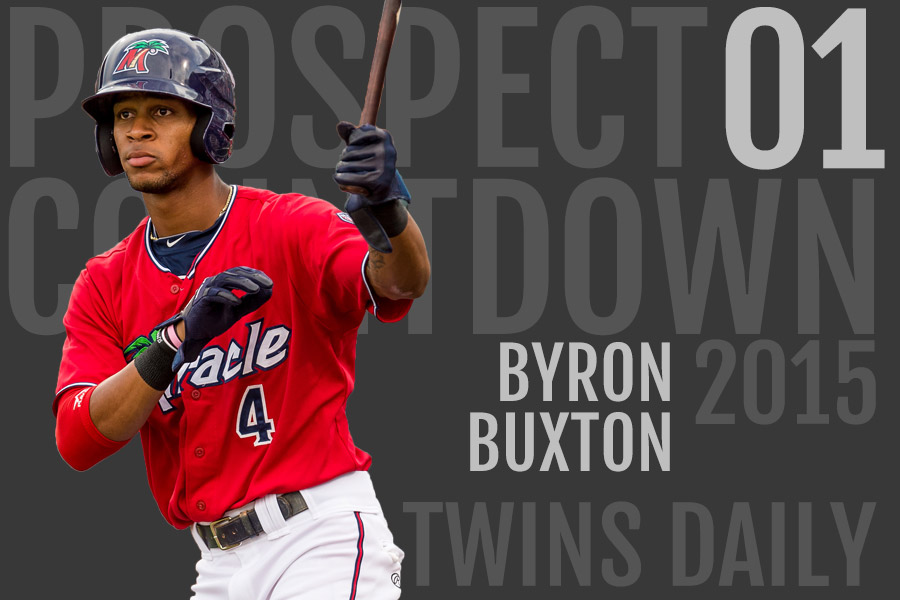 Age: 21 (DOB: 12/18/1993) 2014 Stats (Fort Myers/New Britain): .234/.307/.395 (.702) with 4-2B, 2-3B, 4-HR ETA: Late 2015 2014 Ranking: 1 What’s To Like Buxton has more tools than HGTV -- is one shecky way to describe his potential. He has plus speed, plus defense, plus hit tool, plus makeup and so on. "He'll wow you in the batter's box. He'll wow you in the outfield. He can run. He can fly. He has the arm. He's got the tools," was the review Miracle hitting coach Tommy Watkins gave reporters when Buxton hit the Florida State League in 2013. "He's an exciting player. He does everything whether it is stepping in the box and hitting doubles and triples or taking doubles away from guys." Still, the road to the majors is littered with players who have had tools but failed to apply themselves. In a 2014 profile of Buxton, the Star Tribune highlighted the young player’s offseason workout routine which involved a daily morning run at 5:30 followed by hours of personal training and batting practice -- all before lunch. Certainly lack of a work ethic is not going to hinder Buxton’s potential. Buxton earned an invitation to major league camp and will have the opportunity to work with veteran Torii Hunter, hoping to glean some valuable insight that may also help lead to a fruitful career. There are some who believe Buxton has an even brighter future than the five-time All-Star. "I played with Torii at 19-, 20-years-old and this kid has all the tools, if not more, than Torii had," Miracle manager Doug Meintkiewicz, a teammate of Hunter’s, told reporters after watching Buxton play. What’s Left To Work On Proving he can stay on the field, for one thing. As far as the injuries go however, Buxton said that he’s fully recovered and the collision in the outfield has not made him gun-shy in the least. “My health is good,” Buxton said on the Twins Hot Stove Show. “I wouldn’t change the way I play the game. I’m gonna play it hard and try to take away as many base hits that I can and try to help my pitcher out.” Of all of his tools, his hitting needs the most work. While it is very much above average, it is not quite at the plus-plus grade that his defense and speed receive. Since being added to the system the Twins staff has made some changes to his swing mechanics, hoping to get him to be a bit more balanced at the point of contact rather than drifting forward. While heading for the Arizona Fall League ,Buxton told the Twins Hot Stove Show that he wanted to work on going the other way more and improving his pitch selection, which may or may not have been a directive of the front office. “He will have to have to make some adjustments as he moves up the ladder in pro ball,” said scout Therron Brockish at Baseball America in November 2013. “There have been a lot of swings-and-misses in the Arizona Fall League, with the quality of pitching being a little better than what’s he’s probably seen up to this point. Sometimes he loads late, causing him to be late in trying to catch up to a good fastball. I would also like to see him use a little more of the whole field, but he’s still a young hitter with tremendous upside.” He could use a reductionn of his strikeout rate, but it isn't necessarily the swinging strikeouts that cause questions. Th percentage of plate appearances in which he was caught looking doubled from 2013 to 2014. Similarly, in his second tour of the Florida State League Buxton’s walk rate dropped from 13% to 8%. Destined to start his career at the top of the order, the Twins need Buxton to get on base and utilize his elite speed. SUMMARY Believe it or not, Buxton is not far off. According to Twins general manager Terry Ryan, he has a very real chance of making it to Minnesota in 2015. That said, Buxton’s lack of playing time in 2014 hurts his chances of making it to the Twins early in the year. Buxton will most likely start the year reunited with his Miracle manager Mientkiewicz in Chattanooga. If he proves himself capable, he will be on the move quickly. While the second-halves of the seasons lately have's not given Twins fans much reason to visit Target Field, Buxton's presence would surely pique some interest. TD Top Prospect #10: Nick Burdi TD Top Prospect #9: Trevor May TD Top Prospect #8: Eddie Rosario TD Top Prospect #7: Jorge Polanco TD Top Prospect #6: Nick Gordon TD Top Prospect #5: Alex Meyer TD Top Prospect #4: Kohl Stewart TD Top Prospect #3: Jose Berrios TD Top Prospect #2: Miguel Sano TD Top Prospect #1: Byron Buxton
 -
How Did Kirby Puckett Become A Power Hitter?
Parker Hageman replied to Parker Hageman's topic in Minnesota Twins Talk
Great question. This was something I wanted to add a paragraph about but could not find any articles attempting to answer that question. It is possible that this was addressed at some point during that year by either the Star Tribune or Pioneer Press however I don't have access to those archives. I would assume that someone would have mentioned it to him after his totals dropped so dramatically. Only thing I can find cited is that Puckett told reporters at the All-Star Game that he was failing to find a "groove": Still, he won his first and only batting title that year so he was clearly hitting the ball hard -- it just wasn't leaving the park. -
How Did Kirby Puckett Become A Power Hitter?
Parker Hageman replied to Parker Hageman's topic in Minnesota Twins Talk
According to Terry Ryan, the strike played a significant role in Mack's decision to take the two-year deal with Tokyo Giants. There was little indication of January 1995 that the strike would be over to begin the season so Mack's signing seemed fair in retrospect. -
How Did Kirby Puckett Become A Power Hitter?
Parker Hageman replied to Parker Hageman's topic in Minnesota Twins Talk
Frankly, I wrote this post on facts. We know these things happened. I acknowledged that there were people who believed that Puckett may have taken steroids but there is not one iota of proof -- not one dealer, a person with knowledge or a smoking needle if you will. Any attempts to connect him to steroids is just unfounded speculation. Could it be true? Sure. Obviously with what happened in baseball the past decade I would not be one bit surprised to find out everyone was on steroids at some point. If you would like to speculate further based on rumors or hearsay, I recommend you provide your analysis in the blogs section. -
How Did Kirby Puckett Become A Power Hitter?
Parker Hageman replied to Parker Hageman's topic in Minnesota Twins Talk
Hitting instructor Bobby Tewksbary (http://tewk****ting.com/) and I were going back on several video clips of Mauer's swing from 2009 to the current edition recently. Given that clips are limited, grainier and from different angles (Dome vs Target Field) from 2009, it is hard to put together anything comprehensive. There are minor, minor differences (there's a bit more upper body tilt now, his got a more open stance now, etc). The only thing that stands out to me -- and it is hard to confirm based on the video clips -- is that he appears to be loading more with his hands/arms and shoulders before he starts his swing and that in my opinion may play a small factor in his bat speed: 2009: http://m.mlb.com/video/v5027405/minchc-mauers-seeingeye-single-plates-punto 2014: http://m.mlb.com/video/v35291327/minhou-mauers-single-leads-to-two-runs-in-9th/?c_id=mlb I would have to GIF and isolate this but watch his loading process before bringing his hands forward. This is a trait that appears to be consistent between the two years. Is these move causing issues in his swing? Slowing his bat down? Is this intentional attempt at trying to manufacture power instead of letting it happen? -
How Did Kirby Puckett Become A Power Hitter?
Parker Hageman replied to Parker Hageman's topic in Minnesota Twins Talk
I thought a note from Halsey Hall in his Hammond Happenings thread saying that the Twins had requested that Oliva and Rod Carew not give hitting instruction any more was interesting: http://twinsdaily.com/topic/16825-hammond-happenings/?p=306228 -
How Did Kirby Puckett Become A Power Hitter?
Parker Hageman replied to Parker Hageman's topic in Minnesota Twins Talk
We do fixate a lot on the leg kick that Puckett added, but it is not necessarily the driving force that helped him accumulate all those home runs. In his profile of Jose Bautista's reinvention, it was the timing of his swing that was the focal point of his rebuild -- the leg keg was added for "rhythm". Puckett's leg kick added rhythm and helps with his timing. Timing was one of the cited factors for Brian Dozier's increased power. Arcia possesses the similar leg kick but you see his timing being off -- that is one area I hope he focuses on for the future. -
How Did Kirby Puckett Become A Power Hitter?
Parker Hageman replied to Parker Hageman's topic in Minnesota Twins Talk
Ben Revere has the highest contact rate in the majors. He is not one leg kick away from 20+ home runs in a season. I understand what you are driving at but that is a vast oversimplification for what happened to Puckett from 1985 to 1986. Can Mauer do this? Maybe. He does have the issue of not being able to pull the ball: http://twinsdaily.com/_/minnesota-twins-news/what-happened-to-joe-mauer-r3348. -
How Did Kirby Puckett Become A Power Hitter?
Parker Hageman replied to Parker Hageman's topic in Minnesota Twins Talk
I don't know if Puckett ever laid off certain pitches -- I recall that he still swung at offerings that he couldn't hit with a 10-foot pole throughout his career -- but pulling the ball more seemed to allow for greater success, whether it was because of keeping the defense honest or just because he was driving the ball harder. Obviously we do not have batted ball data or swing zone heat maps like we do now but that would have been great to compare those seasons (1984-1985 to after). -
How Did Kirby Puckett Become A Power Hitter?
Parker Hageman replied to Parker Hageman's topic in Minnesota Twins Talk
In response to the weight gain, Puckett responded by saying the added LBs helped him stay back/anchored.

