



Parker Hageman
-
Posts
4,152 -
Joined
-
Last visited
-
Days Won
6
Content Type
Profiles
News
Minnesota Twins Videos
2026 Minnesota Twins Top Prospects Ranking
2022 Minnesota Twins Draft Picks
Minnesota Twins Free Agent & Trade Rumors, Notes, & Tidbits
Guides & Resources
2023 Minnesota Twins Draft Picks
The Minnesota Twins Players Project
2024 Minnesota Twins Draft Picks
2025 Minnesota Twins Draft Pick Tracker
2026 Minnesota Twins Draft Tracker: Picks & Bonuses
Forums
Blogs
Events
Store
Downloads
Gallery
Everything posted by Parker Hageman
-
 Yeah, geez. That was grossly overlooked.
 -
Agreed. I think that their signing wasn't bad in and of itself. The problem was that depth quickly became an issue.
-
Jason Kubel and Jason Bartlett.
-
On this week's No Juice Podcast, Dan Anderson and Parker Hageman rehash the happenings that came from Major League Baseball's Winter Meetings, including the signing of pitcher Ervin "#SmellBaseball" Santana, exploring quotes from Paul Molitor and possibly saying farewell to Chris Parmelee. Click to listen below. NO JUICE PODCAST, EPISODE #34: BASEBALL'S WINTER MEETINGS Other topics from this week's show include more payroll talk and lying to your children during the holidays. Listen below, on iTunes or on Stitcher: NO JUICE PODCAST, EPISODE #34: BASEBALL'S WINTER MEETINGS Click here to view the article
-
 NO JUICE PODCAST, EPISODE #34: BASEBALL'S WINTER MEETINGS Other topics from this week's show include more payroll talk and lying to your children during the holidays. Listen below, on iTunes or on Stitcher: NO JUICE PODCAST, EPISODE #34: BASEBALL'S WINTER MEETINGS
 -
Article: What To Expect From Ervin Santana
Parker Hageman replied to Parker Hageman's topic in Twins Daily Front Page News
Here's some good insight on Allen and the changeup: Read the full article here: http://www.baseballprospectus.com/article.php?articleid=21043- 19 replies
-
- 3
-

-
- ervin santana
- free agent
- (and 2 more)
-
The Minnesota Twins appear to be on the verge of announcing the signing of 32-year-old Ervin Santana. Once he passes his physical, he will be a Twin for the next four years, for better or worse. If you are looking his recent track record, you may find similarities in his numbers to those of Twins' pitcher Ricky Nolasco in that same time span. Behind the pile of numbers is a slightly different story for Santana. After the dreadful 2012, over the past two seasons he has been an above average pitcher. Here is why this is a good trend.Like rock music’s Santana, Ervin’s delivery is now Smooth In 2012, Santana was a mess. His velocity was down, his command had escaped him and opponents were dropping dingers all over place (he allowed an MLB-high 39 home runs). While with the Angels, manager Mike Scioscia questioned whether Santana could maintain a consistent release point and often found his mechanics erratic. Whether his mechanics played a role, the right-handed witnessed a decline in his fastball’s velocity and the ability to regularly throw it for a strike. That year 23 of his league-leading 39 home runs came on his fastball. Tired of paying for more baseballs, Los Angeles decided not to pick up his option for 2013 and traded him to Kansas City. Somewhere between California and Missouri, Santana smoothed out rough spots in his delivery that had plagued him with the Angels. Most noticeably, in 2012 Santana had the habit of tilting his upper body towards the first base side while in the full windup before driving towards home. The result of this was a front side that would fly open (his glove side drifting towards the first base line prematurely) and creating issues for his command. http://i.imgur.com/DW5rEpk.gif At some point with the Royals, this was corrected and his upper body weight stayed above his back leg and tilted slightly towards the third base side while gathering. When driving towards the plate he remains on line and his glove side does not flip as quickly. http://i.imgur.com/aouOjZd.gif In these two examples both catchers are indicating they want a slider thrown down and on Santana’s glove side. Because of the mechanics in 2012, his arm drags and is not able to finish the slider properly. The slider stays up and in. (Although he misses his spot, Seattle’s Jesus Montero is flummoxed anyway as everyone knows his bats are afraid of balls that curve.) In the 2014 example, because of his fluid and smooth delivery Santana is able to place his slider in a much better spot. According to ESPN/TruMedia, Santana has shown a much better tendency of burying the slider and keeping it out of the middle of the strike zone: http://i.imgur.com/dM5yuzX.gif In addition to the slider, Santana’s fastball also lost some velocity in 2012. While not even one mile per hour on average, it still was a noticeable drop. Like the slider, he was unable to locate the fastball in the zone. Santana’s most significant improvement came at the apex of his delivery. He still lifts his hands over his head but rather than keeping his glove high and his arms away from his body, he now lowers his glove and keeps everything in tight. This may seem minor but it helps with his tempo. Whereas the Braves’ version is smooth, the Angels delivery feels like his lower and upper halves are playing catch-up throughout his delivery. Download attachment: Santana_2012_Balance Point.jpg Download attachment: Santana_2014_Balance Point.jpg In all, smoothing out his delivery has led to better execution and better command of his pitches. If Santana is able to maintain these consistent mechanics, there should be little concern for a repeat of his 2012 campaign. Adapt or die While his season in Kansas City could arguably be considered his best, it is hard not to envy the amount of defense he had behind him in Royals uniforms. Because of the coverage, Santana turned in one of the lowest opponent bartting average of his career. In Atlanta, he did not have the same luxury. Getting to face a pitcher in the batting order a few times each game certainly boosted the strikeout numbers but Santana made another adjustment to keep hitters off-balance. As Fangraphs.com’s Jeff Sullivan pointed out in April, Santana was suddenly unleashing a changeup that he had rarely used in previous seasons. After throwing it just 5.5% of the time from 2009 to 2013, with the Braves Santana upped that to 14%. The wrinkle gave opponents one more pitch to think about and wound up inducing a swing-and-miss nearly 30% of the time. Deployed mainly on lefties, the seldom seen pitch was making appearances in hitters’ counts and frequently thrown to set up a slider for the kill. In fact, according to ESPN’s data, Santana struck out 24 batters on sliders set up by changeups. In the previous four seasons, he had managed to ring up 12 batters combined using that method. Revisiting the GIF above, Santana’s strikeout of Washington’s Adam LaRoche came on a slider after he threw a changeup that stayed away for strike two. If you watch LaRoche’s reactions, he is clearly sold on another changeup only to make a foolish effort to make contact when the ball begins to bite. http://i.imgur.com/aouOjZd.gif Santana’s changeup seems to be an ever-evolving pitch for him. In Los Angeles, he displayed a split-change, something he picked up from split-fingered fastball specialist Dan Haren. Meanwhile, this past year Santana showed Fangraphs.com’s Eno Sarris his latest changeup grip which looks like a palmball thrown at the fingertips (man, does Santana have some long digits): But Santana seems to employ multiple grips on his change. There’s also a slight split version and a circle-change looking grip. The trick for Santana has been keeping his arm action similar to the fastball while shaving off some velocity. This past year he threwn it at 84 mph on average, giving him a solid six-to-eight miles an hour of difference between it and his fastball. Lefties overall finished decently against Santana. When all was said and done, they batted .291 but because of the new mix, Santana was able to strike them out in a greater volume and limit the number of home runs hit. The takeaway Over the course of his career, Santana’s hit some high notes. He has also been banged around. While his slider is a legitimate pitch, he still allows a hefty number of balls in play, most of which are in the form of fly balls. Target Field's pitcher-friendly environment should limit the home runs but the questionable outfield defense may allow more extra base hits. Based on the changes in his mechanics and his willingness to modify his pitch selection, Santana appears to be headed for a good year in the short-term. The real question is f he can remain healthy and productive in the latter half of his four-year contract. For now, Santana is a definite upgrade to the Twins rotation. Click here to view the article
- 19 replies
-
- 7
-
-
- ervin santana
- free agent
- (and 2 more)
-
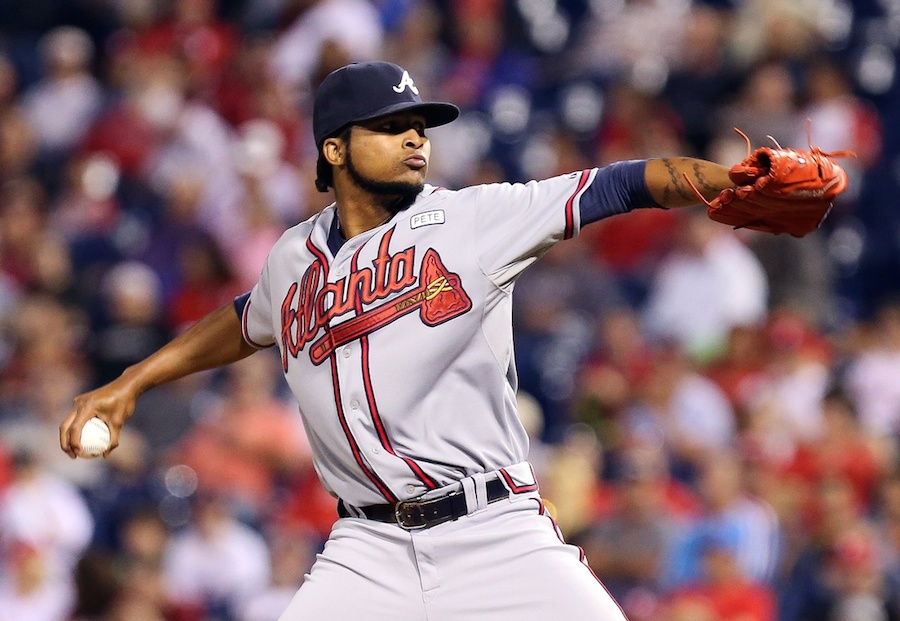 Like rock music’s Santana, Ervin’s delivery is now Smooth In 2012, Santana was a mess. His velocity was down, his command had escaped him and opponents were dropping dingers all over place (he allowed an MLB-high 39 home runs). While with the Angels, manager Mike Scioscia questioned whether Santana could maintain a consistent release point and often found his mechanics erratic. Whether his mechanics played a role, the right-handed witnessed a decline in his fastball’s velocity and the ability to regularly throw it for a strike. That year 23 of his league-leading 39 home runs came on his fastball. Tired of paying for more baseballs, Los Angeles decided not to pick up his option for 2013 and traded him to Kansas City. Somewhere between California and Missouri, Santana smoothed out rough spots in his delivery that had plagued him with the Angels. Most noticeably, in 2012 Santana had the habit of tilting his upper body towards the first base side while in the full windup before driving towards home. The result of this was a front side that would fly open (his glove side drifting towards the first base line prematurely) and creating issues for his command. http://i.imgur.com/DW5rEpk.gif At some point with the Royals, this was corrected and his upper body weight stayed above his back leg and tilted slightly towards the third base side while gathering. When driving towards the plate he remains on line and his glove side does not flip as quickly. http://i.imgur.com/aouOjZd.gif In these two examples both catchers are indicating they want a slider thrown down and on Santana’s glove side. Because of the mechanics in 2012, his arm drags and is not able to finish the slider properly. The slider stays up and in. (Although he misses his spot, Seattle’s Jesus Montero is flummoxed anyway as everyone knows his bats are afraid of balls that curve.) In the 2014 example, because of his fluid and smooth delivery Santana is able to place his slider in a much better spot. According to ESPN/TruMedia, Santana has shown a much better tendency of burying the slider and keeping it out of the middle of the strike zone: http://i.imgur.com/dM5yuzX.gif In addition to the slider, Santana’s fastball also lost some velocity in 2012. While not even one mile per hour on average, it still was a noticeable drop. Like the slider, he was unable to locate the fastball in the zone. Santana’s most significant improvement came at the apex of his delivery. He still lifts his hands over his head but rather than keeping his glove high and his arms away from his body, he now lowers his glove and keeps everything in tight. This may seem minor but it helps with his tempo. Whereas the Braves’ version is smooth, the Angels delivery feels like his lower and upper halves are playing catch-up throughout his delivery. In all, smoothing out his delivery has led to better execution and better command of his pitches. If Santana is able to maintain these consistent mechanics, there should be little concern for a repeat of his 2012 campaign. Adapt or die While his season in Kansas City could arguably be considered his best, it is hard not to envy the amount of defense he had behind him in Royals uniforms. Because of the coverage, Santana turned in one of the lowest opponent bartting average of his career. In Atlanta, he did not have the same luxury. Getting to face a pitcher in the batting order a few times each game certainly boosted the strikeout numbers but Santana made another adjustment to keep hitters off-balance. As Fangraphs.com’s Jeff Sullivan pointed out in April, Santana was suddenly unleashing a changeup that he had rarely used in previous seasons. After throwing it just 5.5% of the time from 2009 to 2013, with the Braves Santana upped that to 14%. The wrinkle gave opponents one more pitch to think about and wound up inducing a swing-and-miss nearly 30% of the time. Deployed mainly on lefties, the seldom seen pitch was making appearances in hitters’ counts and frequently thrown to set up a slider for the kill. In fact, according to ESPN’s data, Santana struck out 24 batters on sliders set up by changeups. In the previous four seasons, he had managed to ring up 12 batters combined using that method. Revisiting the GIF above, Santana’s strikeout of Washington’s Adam LaRoche came on a slider after he threw a changeup that stayed away for strike two. If you watch LaRoche’s reactions, he is clearly sold on another changeup only to make a foolish effort to make contact when the ball begins to bite. http://i.imgur.com/aouOjZd.gif Santana’s changeup seems to be an ever-evolving pitch for him. In Los Angeles, he displayed a split-change, something he picked up from split-fingered fastball specialist Dan Haren. Meanwhile, this past year Santana showed Fangraphs.com’s Eno Sarris his latest changeup grip which looks like a palmball thrown at the fingertips (man, does Santana have some long digits): But Santana seems to employ multiple grips on his change. There’s also a slight split version and a circle-change looking grip. The trick for Santana has been keeping his arm action similar to the fastball while shaving off some velocity. This past year he threwn it at 84 mph on average, giving him a solid six-to-eight miles an hour of difference between it and his fastball. Lefties overall finished decently against Santana. When all was said and done, they batted .291 but because of the new mix, Santana was able to strike them out in a greater volume and limit the number of home runs hit. The takeaway Over the course of his career, Santana’s hit some high notes. He has also been banged around. While his slider is a legitimate pitch, he still allows a hefty number of balls in play, most of which are in the form of fly balls. Target Field's pitcher-friendly environment should limit the home runs but the questionable outfield defense may allow more extra base hits. Based on the changes in his mechanics and his willingness to modify his pitch selection, Santana appears to be headed for a good year in the short-term. The real question is f he can remain healthy and productive in the latter half of his four-year contract. For now, Santana is a definite upgrade to the Twins rotation.
 -
Article: $200 Million is the New $100 Million
Parker Hageman replied to Jon Marthaler's topic in Twins Daily Front Page News
I guess I'd prefer that to what is happening in Milwaukee with their debt service repayment program: http://www.jsonline.com/news/miller-park-stadium-district-increases-operations-budget-b99389028z1-282365821.html -
Article: $200 Million is the New $100 Million
Parker Hageman replied to Jon Marthaler's topic in Twins Daily Front Page News
MLBAM's revenue capabilities is downright breathtaking. It truly is. I posted this comment originally over at Jon's blog post but here is a re-post: That's JUST TV REVENUE, not Target Field revenue. Here's the link to the 2013 article: http://awfulannouncing.com/2013/how-mlb-splits-your-tv-dollars.html Are the Pohlads just pocketing money? I don't think it is as malicious of a money-grab as some commentors like to believe. Dave St. Peter addressed some of this issue on our podcast a few weeks ago -- http://twinsdaily.com/_/minnesota-twins-news/podcasts/no-juice-podcast-27-dave-st-peter-r3169. I should also add that he is attending our second Twins Daily Winter Meltdown as a speaker again so you will be able to ask him payroll questions in person. https://twitter.com/nojuicepodcast/status/527468288511856640 -
$200 million is the new $100 million
Parker Hageman commented on Jon Marthaler's blog entry in Marthaler
1. I don't think they have ever directly used that line. It seems to be something that has been recited in the media echo chamber. 2. I don't think that has been the issue as of late either. Unless Dave St. Peter was blowing smoke, the Twins tried to sign Garza and Ervin Santana after signing Hughes/Nolasco. http://twinsdaily.com/_/minnesota-twins-news/podcasts/no-juice-podcast-27-dave-st-peter-r3169 Other members of the front office had brought that up off the record as well. As it turns out, sometimes free agents just don't want to sign with teams for reason. It may say a lot about the status of the organization. 3. Also, if accurate, the Twins should be making an estimated $86M on TV revenue (their own + revenue sharing) in 2015. That would have covered their 2014 payroll. There is definitely money to spend this year. Depending on what their estimates are for revenue at Target Field this year, there should definitely be room for a payroll of $100-$130M without flinching. The one thing I do agree with the Twins on is avoiding long contracts. Those have a tendency of souring. I'd rather they overpay three times over for 2-3 year contract than try to sign a Jon Lester to a six-year deal. In the end, the Twins probably are in the situation where they may leave payroll money on the table that goes back to ownership. It is unappetizing but I do not think it is malicious or a money grab. -
$200 million is the new $100 million
Parker Hageman commented on Jon Marthaler's blog entry in Marthaler
Hi Jon. Big fan. Love your work. For people that always say SPEND! I just ask one thing: Outline specifically on who or what you would want that money spent on. I'm completely in agreement that I want to see them spend more but only to do so in the best interest of the team. You could give Kyle Kendrick a $15M a year contract to help spend that extra $30M the Twins will receive this year but I don't think that is in the best interest of the team. Kthxbai! -
Article: Molitor's Management Style
Parker Hageman replied to Parker Hageman's topic in Twins Daily Front Page News
When I spoke to Brunansky on the available data his take on it is that he needs to know all of it and be able to present it to the players in ways they can understand. -
Article: Molitor's Management Style
Parker Hageman replied to Parker Hageman's topic in Twins Daily Front Page News
http://www.reactiongifs.com/wp-content/uploads/2012/09/I-dont-get-it2.gif- 20 replies
-
- 2
-
-
- torii hunter
- paul molitor
- (and 1 more)
-
Part of Paul Molitor's appeal as a managerial candidate for the Minnesota Twins has been his willingness to embrace data and information in ways that his predecessor did not. Not only would Molitor be able to draw from his years of experience in the game but he would also add to it an analytical side that would provide an advantage for his players. As it turns out, not everyone on the team shares the same opinion on sabermetrics.“I think whoever believes in that sabermetrics stuff never played the game and won’t understand it. There’s no way you can measure playing outfield. Only eyes can do that,” the 39-year-old Torii Hunter told a room full of media onlookers, whirling recorders and broadcasting cameras last Wednesday. That would be only the fourth-most troublesome thing he said during the introductory press conference. Here’s the thing about Hunter’s opinion on sabermetrics: It doesn’t matter what he thinks. The stats community releases plenty of deep sighs whenever a player makes a reference to sabermetrics being nothing but a bunch of nerdery for Harry Potter enthusiasts to post on the internet between live-action role playing sessions. It doesn’t matter if Hunter thinks UZR stands for Untamed Zebra Riders and measures space lint; Hunter and other players do not need to know or understand the data, they just need to execute. Take Glen Perkins. Perkins might be the closest thing to a stathead in the major leagues. And though he will tell you he looks at fielding independent pitching numbers to help balance himself between outings, once he hits the field the numbers disappear. ‘‘The only thing I analyze when I’m out there is what stuff I have and what the hitter is doing,’’ he told the Star Tribune’s Jim Souhan in 2013. ‘‘All the numbers, all the stuff that I love, doesn’t play when you’re on the field. None of that stuff is a scouting tool for a player facing another player.’’ Like Hunter, Twins second baseman Brian Dozier wants little to do with the sabermetric fielding data and shares the same sentiment in regard to those who do use it. "Obviously that's part of the game now more than ever. I really don't (pay attention to it) because as far as defensively, sabermetrically, anything like that, I think it's people behind a desk trying to dictate how you play the game," Dozier told FoxSportsNorth.com’s Tyler Mason this past April. "That's not the way the game's been played. Nobody can see what's inside of you.” Haters gonna hate. Players gonna play. In spite of the fact that Hunter may think sabermetrics is on par with unicorn droppings, his new manager Paul Molitor “believes” in the sabermetrics stuff and had played the game a little bit himself. “My reaction to Torii’s sabermetrics declining considerably in the past few years, that doesn’t concern me,” Molitor told reporters in sunsoaked San Diego on Tuesday during the Winter Meetings. “Now you can measure range and all those things, but I’ll take his experience and knowledge and throw him out there with a couple of young outfielders and take my chances with no hesitancy whatsoever. Yeah, he’s 39. He’s not 29. We all get that, but I’m confident about what he’s going to bring to our team from many different areas including not being concerned about his defense.” In not so many words Molitor acknowledged that Hunter’s range has diminished, which is what the sabermetric stats were saying about him all along. The response was a diplomatic managerial answer. Ultimately, Molitor views Hunter’s defense -- at least the portions that are not measured by ultimate zone rating or Inside Edge’s video scouts -- as a significant upgrade over Oswaldo Arcia. “I watched how Scottie [ulger] worked with [Arcia] last year in the outfield, and they’ll go out there in right field and Scottie will hit balls in corner and say this ball is a double. Your objective is not to play it into a triple,” Molitor explained. “During the game someone will hit it down the line and he’ll try to slide and stop the ball before it gets into the corner and it turns a double into a triple.” Choosing to downplay Hunter’s defensive data does not mean Molitor is avoiding the statistical side of the game as a manager. Molitor credits his time around some of the game’s forward-thinkers at the helm, particularly former Brewers manager Tom Trebelhorn. “I was fortunate being around guys like George [bamberger], and Harvey [Kuenn], and a young Buck Rogers in his first time managing, and then a young guy like Tom Trebelhorn comes in and kind of innovative and a new thinker and you learn from that.” Trebelhorn was one of the early adaptors of statistical analysis in the dugout. According to his book “Behind-the-Scenes Baseball”, Doug Decatur recalls his time as a statistical consultant for Trebelhorn and the Brewers, writing over 200 stat reports that he would fax the then-Brewers manager. In 1991, Decatur would provide Trebelhorn with information for best bullpen deployment or batting order optimization, ideas that are almost standard now and available online but were groundbreaking at the time. “I’m learning more about sabermetrics all the time. Obviously, as a coach last year, I was exposed to them at a deeper level than I had been as a minor league player development person,” Molitor said. At the major league level, the available data can be enough to “choke a cow” as hitting coach Tom Brunansky tells it. Or it is like “drinking out of a firehose” as former pitcher Cole Devries described it. For Molitor, as a coach he was able to take it in at a slower pace. The exposure to data last year was something he sought out on his own, according to Twins’ manager of baseball research Jack Goin. When he was hired as a coach, Goin and his team briefed Molitor on what they could provide him and how he could obtain it. From there, Molitor was highly proficient at procuring information and implementing it into action, such as in the form of an increase in infield shifts. Now the team’s manager, Molitor is seemingly headed towards expanding the use of the information but with caution. “I’m going to try to learn what I think is valuable in assessing who plays, lineups, all those type of things. But I’m going to hopefully have enough confidence in myself to have a feel for players, and flow, and season, and momentum where I can trust some of that too. But I think with all the things that are out there, you can overwhelm yourself. But obviously some of it makes sense, and it’s proven to be successful in how managers integrate it into their system both defensively and offensively.” Click here to view the article
- 20 replies
-
- 3
-
-
- torii hunter
- paul molitor
- (and 1 more)
-
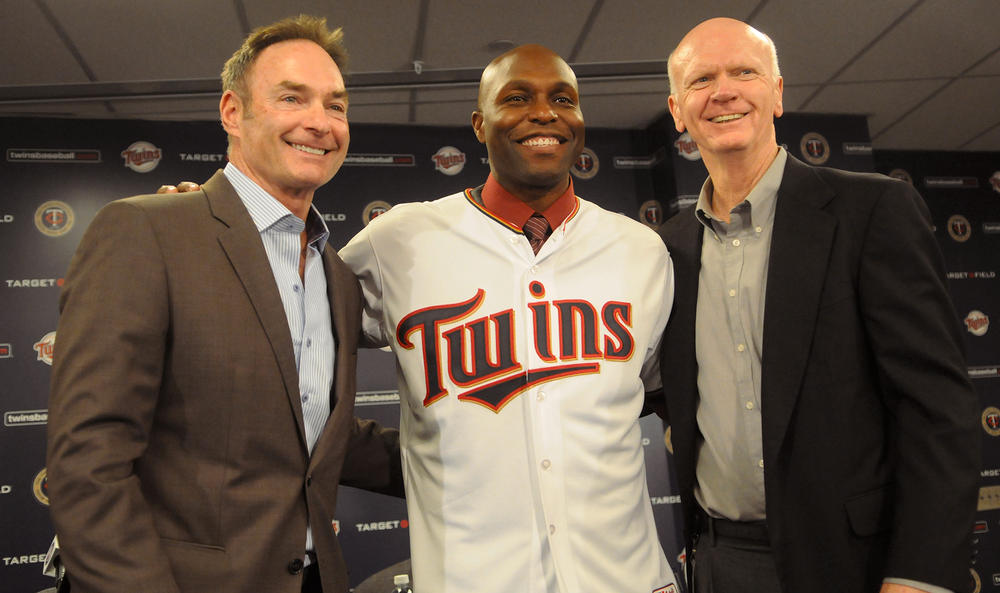 “I think whoever believes in that sabermetrics stuff never played the game and won’t understand it. There’s no way you can measure playing outfield. Only eyes can do that,” the 39-year-old Torii Hunter told a room full of media onlookers, whirling recorders and broadcasting cameras last Wednesday. That would be only the fourth-most troublesome thing he said during the introductory press conference. Here’s the thing about Hunter’s opinion on sabermetrics: It doesn’t matter what he thinks. The stats community releases plenty of deep sighs whenever a player makes a reference to sabermetrics being nothing but a bunch of nerdery for Harry Potter enthusiasts to post on the internet between live-action role playing sessions. It doesn’t matter if Hunter thinks UZR stands for Untamed Zebra Riders and measures space lint; Hunter and other players do not need to know or understand the data, they just need to execute. Take Glen Perkins. Perkins might be the closest thing to a stathead in the major leagues. And though he will tell you he looks at fielding independent pitching numbers to help balance himself between outings, once he hits the field the numbers disappear. ‘‘The only thing I analyze when I’m out there is what stuff I have and what the hitter is doing,’’ he told the Star Tribune’s Jim Souhan in 2013. ‘‘All the numbers, all the stuff that I love, doesn’t play when you’re on the field. None of that stuff is a scouting tool for a player facing another player.’’ Like Hunter, Twins second baseman Brian Dozier wants little to do with the sabermetric fielding data and shares the same sentiment in regard to those who do use it. "Obviously that's part of the game now more than ever. I really don't (pay attention to it) because as far as defensively, sabermetrically, anything like that, I think it's people behind a desk trying to dictate how you play the game," Dozier told FoxSportsNorth.com’s Tyler Mason this past April. "That's not the way the game's been played. Nobody can see what's inside of you.” Haters gonna hate. Players gonna play. In spite of the fact that Hunter may think sabermetrics is on par with unicorn droppings, his new manager Paul Molitor “believes” in the sabermetrics stuff and had played the game a little bit himself. “My reaction to Torii’s sabermetrics declining considerably in the past few years, that doesn’t concern me,” Molitor told reporters in sunsoaked San Diego on Tuesday during the Winter Meetings. “Now you can measure range and all those things, but I’ll take his experience and knowledge and throw him out there with a couple of young outfielders and take my chances with no hesitancy whatsoever. Yeah, he’s 39. He’s not 29. We all get that, but I’m confident about what he’s going to bring to our team from many different areas including not being concerned about his defense.” In not so many words Molitor acknowledged that Hunter’s range has diminished, which is what the sabermetric stats were saying about him all along. The response was a diplomatic managerial answer. Ultimately, Molitor views Hunter’s defense -- at least the portions that are not measured by ultimate zone rating or Inside Edge’s video scouts -- as a significant upgrade over Oswaldo Arcia. “I watched how Scottie [ulger] worked with [Arcia] last year in the outfield, and they’ll go out there in right field and Scottie will hit balls in corner and say this ball is a double. Your objective is not to play it into a triple,” Molitor explained. “During the game someone will hit it down the line and he’ll try to slide and stop the ball before it gets into the corner and it turns a double into a triple.” Choosing to downplay Hunter’s defensive data does not mean Molitor is avoiding the statistical side of the game as a manager. Molitor credits his time around some of the game’s forward-thinkers at the helm, particularly former Brewers manager Tom Trebelhorn. “I was fortunate being around guys like George [bamberger], and Harvey [Kuenn], and a young Buck Rogers in his first time managing, and then a young guy like Tom Trebelhorn comes in and kind of innovative and a new thinker and you learn from that.” Trebelhorn was one of the early adaptors of statistical analysis in the dugout. According to his book “Behind-the-Scenes Baseball”, Doug Decatur recalls his time as a statistical consultant for Trebelhorn and the Brewers, writing over 200 stat reports that he would fax the then-Brewers manager. In 1991, Decatur would provide Trebelhorn with information for best bullpen deployment or batting order optimization, ideas that are almost standard now and available online but were groundbreaking at the time. “I’m learning more about sabermetrics all the time. Obviously, as a coach last year, I was exposed to them at a deeper level than I had been as a minor league player development person,” Molitor said. At the major league level, the available data can be enough to “choke a cow” as hitting coach Tom Brunansky tells it. Or it is like “drinking out of a firehose” as former pitcher Cole Devries described it. For Molitor, as a coach he was able to take it in at a slower pace. The exposure to data last year was something he sought out on his own, according to Twins’ manager of baseball research Jack Goin. When he was hired as a coach, Goin and his team briefed Molitor on what they could provide him and how he could obtain it. From there, Molitor was highly proficient at procuring information and implementing it into action, such as in the form of an increase in infield shifts. Now the team’s manager, Molitor is seemingly headed towards expanding the use of the information but with caution. “I’m going to try to learn what I think is valuable in assessing who plays, lineups, all those type of things. But I’m going to hopefully have enough confidence in myself to have a feel for players, and flow, and season, and momentum where I can trust some of that too. But I think with all the things that are out there, you can overwhelm yourself. But obviously some of it makes sense, and it’s proven to be successful in how managers integrate it into their system both defensively and offensively.”
 -
On this week's No Juice Podcast, Dan Anderson and Parker Hageman are joined by the Star Tribune's Amelia Rayno. They discuss the Torii Hunter signing, the subsequent press conference, interviewing Chuck Knoblauch and more. Click to listen below. NO JUICE PODCAST, EPISODE #33: BASEBALL TALK WITH AMELIA RAYNO Rayno, the Gophers Men's Basketball beat writer for the Star Tribune, shares her impressions on the press conference from the perspective of a reporter. In 2011, she wrote a fantastic profile on former Minnesota Twin Chuck Knoblauch, one of the first interactions he had with the media since his retirement. Knoblauch had retreated to his home and family in Houston, eschewing the baseball world since leaving the field. "He's very in his own head," Rayno said about Knoblauch, "I think that's his personality. He kind of relives a lot of things, even now. I think the reason he decided to do it, and now he's even talking about writing a book because he really just wants to get it out, get it off his chest. He feels like he's been misunderstood." "I think he was angry and legitimately confused about how he was treated in Minnesota. He was really young obviously when he asked to be traded," Rayno said regarding the fan reaction. "He's an extremely competitive person and he explained it years later 'I just wanted to win.'" For more on Hunter, Knoblauch and the Minnesota Gophers basketball team, listen below, on iTunes or on Stitcher: NO JUICE PODCAST, EPISODE #33: BASEBALL TALK WITH AMELIA RAYNO Click here to view the article
-
 NO JUICE PODCAST, EPISODE #33: BASEBALL TALK WITH AMELIA RAYNO Rayno, the Gophers Men's Basketball beat writer for the Star Tribune, shares her impressions on the press conference from the perspective of a reporter. In 2011, she wrote a fantastic profile on former Minnesota Twin Chuck Knoblauch, one of the first interactions he had with the media since his retirement. Knoblauch had retreated to his home and family in Houston, eschewing the baseball world since leaving the field. "He's very in his own head," Rayno said about Knoblauch, "I think that's his personality. He kind of relives a lot of things, even now. I think the reason he decided to do it, and now he's even talking about writing a book because he really just wants to get it out, get it off his chest. He feels like he's been misunderstood." "I think he was angry and legitimately confused about how he was treated in Minnesota. He was really young obviously when he asked to be traded," Rayno said regarding the fan reaction. "He's an extremely competitive person and he explained it years later 'I just wanted to win.'" For more on Hunter, Knoblauch and the Minnesota Gophers basketball team, listen below, on iTunes or on Stitcher: NO JUICE PODCAST, EPISODE #33: BASEBALL TALK WITH AMELIA RAYNO
 -
Article: No Juice Podcast #32: Cole DeVries
Parker Hageman replied to Parker Hageman's topic in Twins Daily Front Page News
Prior to the interview I had to refresh myself on his career and went to check out his game logs at B-R.com. In terms of 2012, I was surprised how well he pitched. His overall numbers were not great because in two of his 17 outings he allowed 7 runs (one in which he only went 1.1 innings vs Tampa). In 8 of his outings he allowed 1 earned run or fewer. He had decent splits that year as well. If he never tweaked his forearm in spring training 2013, who knows where his career would have gone. -
On this week's No Juice Podcast, Dan Anderson and Parker Hageman are joined by former Minnesota Twins pitcher Cole DeVries. They discuss clubhouse chemistry, pitching coaches, advanced stats and rookie hazing. Click to listen below."The big thing that pitching coaches are told when you get to pro ball is not to hurt anyone," DeVries told the No Juice Podcast on his sentiments towards pitching coaches and their influence over the staff in light of the recent hiring of Neil Allen as the Twins pitching coach. "If it was someone who I knew how to help correct the problem I had is that you use [the pitching coach] when you are in a slump. Because when you are going good, you don’t need anyone’s help. You know what you are doing, everything’s working for those two, three, four or five starts but when you go on the other half of that and you are just getting killed every time you are going out, that’s when I always tried to lean on that pitching coach.” He also spoke about his interactions with Rick Anderson, providing insight into how some pitchers approach their game. “I was never much of a big video guy because I would go more off feel," DeVries said. "If something felt off. Because I knew exactly how my body had to feel in order to execute a pitch in certain location. So where I started to have trouble was when I couldn’t feel what I was doing, if things kind of felt numb or my body was all over the place. And so that’s why I never really watched very much video: because there is no feel in video. That’s why I always had to iron my things out in bullpen.” Devries, who retired after the 2013 season, talked about his injuries and decision to retire. Listen below, on iTunes or on Stitcher: NO JUICE PODCAST, EPISODE #32: COLE DEVRIES Click here to view the article
-
 "The big thing that pitching coaches are told when you get to pro ball is not to hurt anyone," DeVries told the No Juice Podcast on his sentiments towards pitching coaches and their influence over the staff in light of the recent hiring of Neil Allen as the Twins pitching coach. "If it was someone who I knew how to help correct the problem I had is that you use [the pitching coach] when you are in a slump. Because when you are going good, you don’t need anyone’s help. You know what you are doing, everything’s working for those two, three, four or five starts but when you go on the other half of that and you are just getting killed every time you are going out, that’s when I always tried to lean on that pitching coach.” He also spoke about his interactions with Rick Anderson, providing insight into how some pitchers approach their game. “I was never much of a big video guy because I would go more off feel," DeVries said. "If something felt off. Because I knew exactly how my body had to feel in order to execute a pitch in certain location. So where I started to have trouble was when I couldn’t feel what I was doing, if things kind of felt numb or my body was all over the place. And so that’s why I never really watched very much video: because there is no feel in video. That’s why I always had to iron my things out in bullpen.” Devries, who retired after the 2013 season, talked about his injuries and decision to retire. Listen below, on iTunes or on Stitcher: NO JUICE PODCAST, EPISODE #32: COLE DEVRIES
 -
Completely understand your plight against UZR but your comments seem to overlook the fact that Inside Edge's numbers based on video scouts confirm what his UZR is saying. Likewise, raw batted ball data is also suggesting he is not able to cover as much ground as the top defenders. I believe those three lenses provides a clear picture about his level of defense in 2014.
-
I cannot isolate home/road splits for defense. It's possible someone at Inside Edge or another company can do this but I do not have access to that. One observation in watching film of him this past year is that he plays deep. This make him very good at going back on balls (as we've all seen make plays at the wall) but bad at those that fall short.
-
Pre-UZR calculations used Total Zone Rating as the defensive measurement for WAR. http://www.baseball-reference.com/about/total_zone.shtml
-
Gunnathor, I certainly echo your hesitation in the belief of putting too much emphasis on a defensive stat like UZR. There is plenty of shade that can be thrown on a one-year sampling and the methodology in general. The problem though is that there are multiple different measuring sticks that rate Hunter's performance as the worst, including Inside Edge's video scouts which has nothing to do with the zone ratings found in the UZR. More than that, when you just look at the sheer number of plays made, Hunter's performance was by far the worst at turning balls into outs. Are there factors like outfield partners, alignment and stadium playing an effect on this? Possibly. But reviewing the available video it is easy to see that his jumps and speed are just not there. I do believe there are other things a player can do to contribute defensively that are not measured in the advanced fielding stats and go beyond catching the ball that help a team but the most important thing in my mind is generating outs. Not turning a fly ball/liner into an out creates more opportunity for the other team to score runs.
