



Parker Hageman
-
Posts
4,152 -
Joined
-
Last visited
-
Days Won
6
Content Type
Profiles
News
Minnesota Twins Videos
2026 Minnesota Twins Top Prospects Ranking
2022 Minnesota Twins Draft Picks
Minnesota Twins Free Agent & Trade Rumors, Notes, & Tidbits
Guides & Resources
2023 Minnesota Twins Draft Picks
The Minnesota Twins Players Project
2024 Minnesota Twins Draft Picks
2025 Minnesota Twins Draft Pick Tracker
2026 Minnesota Twins Draft Tracker: Picks & Bonuses
Forums
Blogs
Events
Store
Downloads
Gallery
Everything posted by Parker Hageman
-
 Twins Daily and the No Juice Podcast will be hosting St. Peter in a special video Q & A session at the Excelsior Brewing Co.'s Taproom on Tuesday, October 21st. Submit your question in this thread below and it could be answered by the team’s president. http://excelsiorbrew.com/wp-content/themes/eddiemachado-bones-responsive-35e1022/images/main-logo.png
 -
If there is one position that will be different for the Minnesota Twins in 2015, it appears that it will be left field. And if the team wants to reward it’s pitching staff, it should be a defensive-minded individual.In 2014, the position originally was intended for the incumbent Josh Willingham but on April 7th he was sidelined with a fractured wrist from a Justin Masterson’s pitch. That forced Jason Kubel into duty. But before long the position turned over again when Kubel was DFA’d and Willingham was traded to the Royals at the non-waiver deadline. The Twins used a mixture of Chris Parmelee, Eduardo Nunez and Jordan Schafer to conclude the year. With the exception of Schafer, and a handful of games from Sam Fuld, this unit was not particularly good. In fact, you might say it was the worst in baseball, at least by advanced fielding metrics standards. According to Ultimate Zone Rating found at Fangraphs.com, the left field position held a -19.3 UZR, the worst in baseball. Over at BillJamesOnline.net, their Plus/Minus rating provided by BIS said the Twins left field was at -25. If you look toward Inside Edge’s scouted data -- how many balls which were hit to left field were converted into outs -- well, it gets just slightly better. Inside Edge assigns a catchability value to each play that is then loaded into their overall database. These are broken down into categories like 90%-to-100% catchable, 60%-to-90%, 40%-to-60% and so on. For the Twins, they managed to catch 98.7% (27 of 30) of all balls that fell within the 90%-to-100% range. In the 60%-to-90% range, they tracked down an MLB-worst 56% of those plays. Of course, advanced fielding metrics have flaws. Scouts have biases. In terms of just the raw counts, the Twins fared OK. A generous OK. According to ESPN/TruMedia’s data, the Twins left fielders faced 769 fly balls or line drives that traveled over 200 feet in the air and stayed in the ballpark. Of those, they managed to convert 59.9% into outs which was roughly comparable to the league average of 60.4%. For those following the playoffs and watching the Royals’ Alex Gordon, you might hear that he has been viewed as one of the best defenders in the game. Not just the best defender in left field: everywhere. According to Fangraphs.com’s UZR, his 25.0 mark is the best in baseball in all positions. He apparently did not just get that way by being born into in. Gordon has a pregame warmup routine in the field which is borderline psychotic: That’s how players go from good to great. If Aaron Hicks ultimately takes the left field role in 2015, he should adopt something similar to improve his game. Next to the Twins’ 769 total flies/liners hit in left field, the Royals are second in baseball. Whereas the Twins were below average in converting balls into outs, the Royals’ left fielders, headlined by Gordon, stopped 63.7% of those balls from becoming hits. For the visual learners, here is the ESPN/TruMedia spray charts associated with the two teams. Notice the significant real estate gap that does not contain hits from the Royals (right) compared to the Twins (left): Download attachment: MIN_KC Spray Chart.png Gordon has been a beacon of hope to his pitching staff when balls have been launched in his direction; he is particularly skilled at going back on balls. On the other hand, Twins pitchers have suffered due to the inability of getting back on plays such as this one. http://i.imgur.com/Lsdop8J.gif That Dayan Viciedo fly ball, which was catchable on the track, was turned into a triple thanks to the misplay. And if you look at the spray chart above, there are other examples of this happening. This was a far too common occurrence according to the data. While it may not seem critical to some, the defensive integrity of this position is important because of the nature of the Twins’ pitching staff. As high-contact, low-strikeout hurlers they tend to allow more batted balls in play. As mentioned above, the Twins had the highest number of liners and flies hit toward left field. Many of them were deemed catchable by Inside Edge’s scouts. At worst, failing to do so gives the opposing team more opportunities to score and at the very least it adds unnecessary pitches to a highly-compensated pitcher’s totals. Be it internal, through trade or free agency, employing a left fielder in 2015 who can turn more of these hits into outs should be a priority for the front office this offseason. Click here to view the article
-
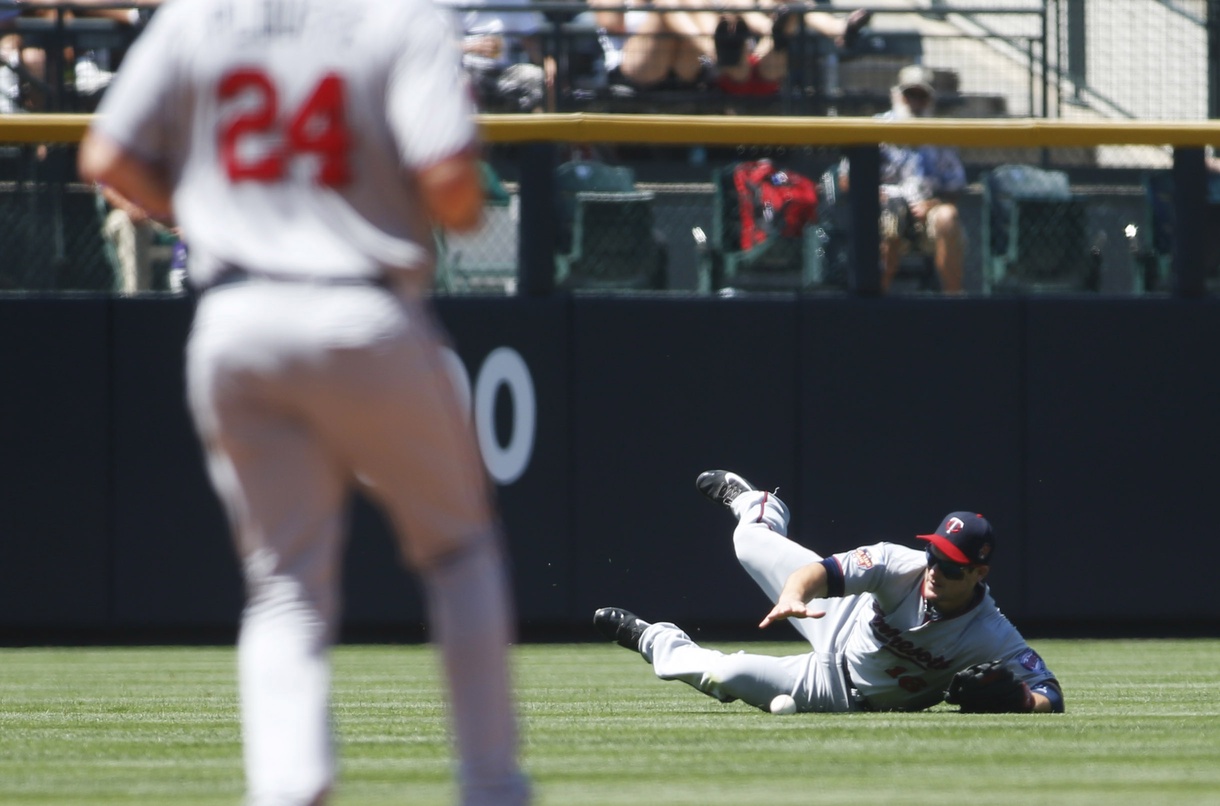 In 2014, the position originally was intended for the incumbent Josh Willingham but on April 7th he was sidelined with a fractured wrist from a Justin Masterson’s pitch. That forced Jason Kubel into duty. But before long the position turned over again when Kubel was DFA’d and Willingham was traded to the Royals at the non-waiver deadline. The Twins used a mixture of Chris Parmelee, Eduardo Nunez and Jordan Schafer to conclude the year. With the exception of Schafer, and a handful of games from Sam Fuld, this unit was not particularly good. In fact, you might say it was the worst in baseball, at least by advanced fielding metrics standards. According to Ultimate Zone Rating found at Fangraphs.com, the left field position held a -19.3 UZR, the worst in baseball. Over at BillJamesOnline.net, their Plus/Minus rating provided by BIS said the Twins left field was at -25. If you look toward Inside Edge’s scouted data -- how many balls which were hit to left field were converted into outs -- well, it gets just slightly better. Inside Edge assigns a catchability value to each play that is then loaded into their overall database. These are broken down into categories like 90%-to-100% catchable, 60%-to-90%, 40%-to-60% and so on. For the Twins, they managed to catch 98.7% (27 of 30) of all balls that fell within the 90%-to-100% range. In the 60%-to-90% range, they tracked down an MLB-worst 56% of those plays. Of course, advanced fielding metrics have flaws. Scouts have biases. In terms of just the raw counts, the Twins fared OK. A generous OK. According to ESPN/TruMedia’s data, the Twins left fielders faced 769 fly balls or line drives that traveled over 200 feet in the air and stayed in the ballpark. Of those, they managed to convert 59.9% into outs which was roughly comparable to the league average of 60.4%. For those following the playoffs and watching the Royals’ Alex Gordon, you might hear that he has been viewed as one of the best defenders in the game. Not just the best defender in left field: everywhere. According to Fangraphs.com’s UZR, his 25.0 mark is the best in baseball in all positions. He apparently did not just get that way by being born into in. Gordon has a pregame warmup routine in the field which is borderline psychotic: That’s how players go from good to great. If Aaron Hicks ultimately takes the left field role in 2015, he should adopt something similar to improve his game. Next to the Twins’ 769 total flies/liners hit in left field, the Royals are second in baseball. Whereas the Twins were below average in converting balls into outs, the Royals’ left fielders, headlined by Gordon, stopped 63.7% of those balls from becoming hits. For the visual learners, here is the ESPN/TruMedia spray charts associated with the two teams. Notice the significant real estate gap that does not contain hits from the Royals (right) compared to the Twins (left): Gordon has been a beacon of hope to his pitching staff when balls have been launched in his direction; he is particularly skilled at going back on balls. On the other hand, Twins pitchers have suffered due to the inability of getting back on plays such as this one. http://i.imgur.com/Lsdop8J.gif That Dayan Viciedo fly ball, which was catchable on the track, was turned into a triple thanks to the misplay. And if you look at the spray chart above, there are other examples of this happening. This was a far too common occurrence according to the data. While it may not seem critical to some, the defensive integrity of this position is important because of the nature of the Twins’ pitching staff. As high-contact, low-strikeout hurlers they tend to allow more batted balls in play. As mentioned above, the Twins had the highest number of liners and flies hit toward left field. Many of them were deemed catchable by Inside Edge’s scouts. At worst, failing to do so gives the opposing team more opportunities to score and at the very least it adds unnecessary pitches to a highly-compensated pitcher’s totals. Be it internal, through trade or free agency, employing a left fielder in 2015 who can turn more of these hits into outs should be a priority for the front office this offseason.
 -
 On this week’s No Juice Podcast Dan Anderson and Parker Hageman talk about Parker's interview with Twins general manager Terry Ryan that will be released for the upcoming Twins Daily Offseason Handbook. Listen below.Other topics include the Vikings loss to the Lion and how awful announcer Mike Goldberg was, blacking out at the Gophers' football game, things to do in Crosslake and etc, etc, so on and so on. Listen below, on iTunes or on Stitcher: NO JUICE PODCAST, EPISODE #25: MY TALK WITH TERRY Click here to view the article
 -
 Other topics include the Vikings loss to the Lion and how awful announcer Mike Goldberg was, blacking out at the Gophers' football game, things to do in Crosslake and etc, etc, so on and so on. Listen below, on iTunes or on Stitcher: NO JUICE PODCAST, EPISODE #25: MY TALK WITH TERRY
 -
When we chatted this spring (or possibly last season) he mentioned that this would be a goal for them. Not sure where it progressed to this year.
-
The Minnesota Twins’ Manager of Baseball Research, Jack Goin, does not like to tip his pitches. Most statistically-inclined minds would like to hear that the team is working on finding the next market inefficiency to exploit or running regression models on supercomputers in efforts to find an in-game strategy that would help gain a win or two. Others might just assume they are just sorting the RBI leaderboard at Fangraphs.com. Either way, Goin isn’t going to tell me what they are working on.“I’m not overly concerned that people see us as middle-of-the-pack, below-the-pack or any of that stuff. Obviously, I’m working on where I want to get to as a department but I’m not concerned what the outside perception is, so to speak.” By most outside estimates, the Twins likely fall in the middle of the pack. Unlike the Houston Astros who went all-in on analytics from the top down in their ballclub, the Twins seemingly view that as one piece of the equation, one ingredient in the recipe. And, unlike the Pittsburgh Pirates and the Astros, who receive splashy tell-all write-ups from Grantland and Bloomberg touting their organization’s analytical deployment, Goin likes to keep his activities and goals close to the vest. This past August Grantland’s Ben Lindbergh revealed that the Pirates send 26-year-old Mike Fitzgerald on road trips with the team to provide information when the team is away from PNC Park. Lindbergh notes that Fitzgerald, whose title is Qualitative Analyst, is what most people would consider a friggin genius. A math graduate from MIT, Fitzgerald tags along with the Pirates to provide “direct, in-season information” to the coaching staff. “Fitzgerald, meanwhile, makes most road trips: If the Pirates are playing, he’s almost always at the park,” Lindbergh writes. “I surveyed several analysts from other front offices, and none of them knew — or would admit to knowing — of another employee with Fitzgerald’s statistical expertise who travels close to full-time with a team.” As a footnote to his statement, Lindbergh mentions that one of the reasons he may have been unable to find another team to admit they have the same practice is because, like the Twins, most research departments are mum on their methods. Baseball analysts, Lindbergh notes, are the secretive sort. Goin, however, admitted that the Twins have a similar practice in place, sending one of the members of the analytics department on about sixty percent of the road trips. Like the Pirates, the Twins would be able to feed data to the coaching staff on request. Having someone from the research department traveling with the team allows him to provide insight on pitching matchups, how to pitch opposing players and, what has become increasingly more common, defensive shifts. In 2013, the Twins fielders shifted -- aligning three infielders on one side of second base -- just 66 times (27th). This year, that number dramatically increased to over 500 times (16th). “Joe Vavra kind of chipped away at that in 2013, starting to get some shifts involved and then Gardy was starting to go along with it then and we took it to another level for us this year,” explains Goin. “A lot of that was Molitor, he did a lot of video work.” “I’m not sure how much Gardy liked the shift but as it started to pay off he liked it a little bit more", said general manager Terry Ryan. “We never shifted too much the last couple of years, but neither did anybody for that matter. It was always the David Ortizes, the guys you normally expect. Now all of a sudden you see shifts on three players in every lineup.” While Goin and his team would provide data, in addition to the video work supplied by the team’s director of Major League video, Sean Harlin, the coaching staff would be responsible for deciding the game plan. “Paul and Gardy would have a meeting, talk about who they were going to shift and how they were going to shift,” Goin said. “Then after that meeting they would have an infielders or defenders meeting with Gardy and Molitor and whoever else and then they’d talk about it: Here are the charts, how should we shift him? Step-pull, straight-away, two-steps pull or whatever it is.” It is hard to say if the emphasis on shifting was beneficial to the team’s record in 2014. According to the shift data, the Twins finished in the middle of the pack for hits saved. At the same time, the infield’s overall defensive efficiency took a step back in 2014. In 2013, the Twins’ opponents had a batting average on grounders in play of .235. This year that increased to .258. It is possible that it is, in part, due to that the pitching staff being hit hard or that the team did not position their players in the right spot enough. Consider this, on ground balls in the middle of the diamond, opponents hit .500, the highest in all of baseball. What Goin and his team provides to the coaching staff evolved based on preferences. “Sometimes it starts out with a question from him and then you create some type of report from what that initial conversation was,” Goin said. “‘Oh, that’s great but can we add this or move this?’ And you add a piece that you didn’t think of at the initial conversation. They get a standard package and then different coaches get a few one-off packages that they like on their own. Brunansky and Gardy got a couple and Molitor got a couple. Rick Anderson got hitters, Bruno got pitchers and some of the other coaches got reports too. Gardy got everything.” The Twins’ baseball research department, which started out as a one-man show several years ago, has expanded as the acceptance has increased. In addition to adding coordinator Andrew Ettel, they recently posted for a developer of baseball systems to “develop, deliver, and maintain data driven solutions for analytics and architecture of player information and evaluation systems.” This is more or less a position that has become commonplace within front offices to help create database systems for both readily available statistics like Pitch F/X and proprietary projections. Perhaps most important for the new hire might be working with MLBAM’s new field-tracking system that was installed in a handful of ballparks, including Target Field, this past year. Unlike the Pitch F/X system which was released to the public and allowed hobbyists like Josh Kalk to tinker with the data that ultimately led to his hiring by the Tampa Bay Rays, the new system will be provided to only the teams. One of the reasons this will not be made available for the general public is because each game’s data will be terabytes. MLB will purportedly release the data to all teams prior to the 2015 season, at which point, it will be a race to see which organization can leverage the information to their advantage. There is also the perception that the Twins decision-makers are not interested in or resistant to this kind of information. Both Ryan and Goin say that is not true, but that there is some education required. “I got that in here and I look at it,” said Ryan, gesturing to his computer when asked about his familiarity with Pitch F/X, “but for me to decipher it I have to go to him.” At the basic level, the Twins research department’s role appears to be the storefront of a butcher shop. Ryan does not need to know how the sausage is made, but he has trust in Goin and his staff that he is not receiving tainted meat. “There are things that I need to be educated about that kind of catch my eye, and I've got to make sure I know what the norm is, for sure, and I go to Jack,” Ryan said of the role the research team. **** It’s a piece. That’s the common phrase that the pair offered as a response to a lot of inquiries about the use of stats and analytics when it came to decisions in the front office. In the end, the team admits that it is not a guiding light for the direction of the organization. For the stats community and analytics proponents, that may be an unsatisfying answer. For others, that might strike a good balance. Click here to view the article
-
 “I’m not overly concerned that people see us as middle-of-the-pack, below-the-pack or any of that stuff. Obviously, I’m working on where I want to get to as a department but I’m not concerned what the outside perception is, so to speak.” By most outside estimates, the Twins likely fall in the middle of the pack. Unlike the Houston Astros who went all-in on analytics from the top down in their ballclub, the Twins seemingly view that as one piece of the equation, one ingredient in the recipe. And, unlike the Pittsburgh Pirates and the Astros, who receive splashy tell-all write-ups from Grantland and Bloomberg touting their organization’s analytical deployment, Goin likes to keep his activities and goals close to the vest. This past August Grantland’s Ben Lindbergh revealed that the Pirates send 26-year-old Mike Fitzgerald on road trips with the team to provide information when the team is away from PNC Park. Lindbergh notes that Fitzgerald, whose title is Qualitative Analyst, is what most people would consider a friggin genius. A math graduate from MIT, Fitzgerald tags along with the Pirates to provide “direct, in-season information” to the coaching staff. “Fitzgerald, meanwhile, makes most road trips: If the Pirates are playing, he’s almost always at the park,” Lindbergh writes. “I surveyed several analysts from other front offices, and none of them knew — or would admit to knowing — of another employee with Fitzgerald’s statistical expertise who travels close to full-time with a team.” As a footnote to his statement, Lindbergh mentions that one of the reasons he may have been unable to find another team to admit they have the same practice is because, like the Twins, most research departments are mum on their methods. Baseball analysts, Lindbergh notes, are the secretive sort. Goin, however, admitted that the Twins have a similar practice in place, sending one of the members of the analytics department on about sixty percent of the road trips. Like the Pirates, the Twins would be able to feed data to the coaching staff on request. Having someone from the research department traveling with the team allows him to provide insight on pitching matchups, how to pitch opposing players and, what has become increasingly more common, defensive shifts. In 2013, the Twins fielders shifted -- aligning three infielders on one side of second base -- just 66 times (27th). This year, that number dramatically increased to over 500 times (16th). “Joe Vavra kind of chipped away at that in 2013, starting to get some shifts involved and then Gardy was starting to go along with it then and we took it to another level for us this year,” explains Goin. “A lot of that was Molitor, he did a lot of video work.” “I’m not sure how much Gardy liked the shift but as it started to pay off he liked it a little bit more", said general manager Terry Ryan. “We never shifted too much the last couple of years, but neither did anybody for that matter. It was always the David Ortizes, the guys you normally expect. Now all of a sudden you see shifts on three players in every lineup.” While Goin and his team would provide data, in addition to the video work supplied by the team’s director of Major League video, Sean Harlin, the coaching staff would be responsible for deciding the game plan. “Paul and Gardy would have a meeting, talk about who they were going to shift and how they were going to shift,” Goin said. “Then after that meeting they would have an infielders or defenders meeting with Gardy and Molitor and whoever else and then they’d talk about it: Here are the charts, how should we shift him? Step-pull, straight-away, two-steps pull or whatever it is.” It is hard to say if the emphasis on shifting was beneficial to the team’s record in 2014. According to the shift data, the Twins finished in the middle of the pack for hits saved. At the same time, the infield’s overall defensive efficiency took a step back in 2014. In 2013, the Twins’ opponents had a batting average on grounders in play of .235. This year that increased to .258. It is possible that it is, in part, due to that the pitching staff being hit hard or that the team did not position their players in the right spot enough. Consider this, on ground balls in the middle of the diamond, opponents hit .500, the highest in all of baseball. What Goin and his team provides to the coaching staff evolved based on preferences. “Sometimes it starts out with a question from him and then you create some type of report from what that initial conversation was,” Goin said. “‘Oh, that’s great but can we add this or move this?’ And you add a piece that you didn’t think of at the initial conversation. They get a standard package and then different coaches get a few one-off packages that they like on their own. Brunansky and Gardy got a couple and Molitor got a couple. Rick Anderson got hitters, Bruno got pitchers and some of the other coaches got reports too. Gardy got everything.” The Twins’ baseball research department, which started out as a one-man show several years ago, has expanded as the acceptance has increased. In addition to adding coordinator Andrew Ettel, they recently posted for a developer of baseball systems to “develop, deliver, and maintain data driven solutions for analytics and architecture of player information and evaluation systems.” This is more or less a position that has become commonplace within front offices to help create database systems for both readily available statistics like Pitch F/X and proprietary projections. Perhaps most important for the new hire might be working with MLBAM’s new field-tracking system that was installed in a handful of ballparks, including Target Field, this past year. Unlike the Pitch F/X system which was released to the public and allowed hobbyists like Josh Kalk to tinker with the data that ultimately led to his hiring by the Tampa Bay Rays, the new system will be provided to only the teams. One of the reasons this will not be made available for the general public is because each game’s data will be terabytes. MLB will purportedly release the data to all teams prior to the 2015 season, at which point, it will be a race to see which organization can leverage the information to their advantage. There is also the perception that the Twins decision-makers are not interested in or resistant to this kind of information. Both Ryan and Goin say that is not true, but that there is some education required. “I got that in here and I look at it,” said Ryan, gesturing to his computer when asked about his familiarity with Pitch F/X, “but for me to decipher it I have to go to him.” At the basic level, the Twins research department’s role appears to be the storefront of a butcher shop. Ryan does not need to know how the sausage is made, but he has trust in Goin and his staff that he is not receiving tainted meat. “There are things that I need to be educated about that kind of catch my eye, and I've got to make sure I know what the norm is, for sure, and I go to Jack,” Ryan said of the role the research team. **** It’s a piece. That’s the common phrase that the pair offered as a response to a lot of inquiries about the use of stats and analytics when it came to decisions in the front office. In the end, the team admits that it is not a guiding light for the direction of the organization. For the stats community and analytics proponents, that may be an unsatisfying answer. For others, that might strike a good balance.
 -
Yeah, who woulda suspected it would be Lindsay?
-
On this week’s No Juice Podcast -- live from Station 280 near Dinkytown -- Dan Anderson and Parker Hageman bring in local media mogul Lindsay Guentzel and former Twins minor leaguer AJ Pettersen to discuss the career of Ron Gardenhire and hash out the front-running replacement candidates in Paul Molitor and Doug Mientkiewicz. Listen below.Guentzel talks about her time with the MLB FanCave, her experience as a pregame show host for the Twins Radio Network and drops all of the names. Pettersen shares his thoughts on targeting a manager that can relate to the Latino players, his inside sources that are close to Paul Molitor and the shift from New Britain to Chattanooga. Listen below, on iTunes or on Stitcher: NO JUICE PODCAST, EPISODE 24: GOODBYE GARDY, HELLO________? Click here to view the article
-
 Guentzel talks about her time with the MLB FanCave, her experience as a pregame show host for the Twins Radio Network and drops all of the names. Pettersen shares his thoughts on targeting a manager that can relate to the Latino players, his inside sources that are close to Paul Molitor and the shift from New Britain to Chattanooga. Listen below, on iTunes or on Stitcher: NO JUICE PODCAST, EPISODE 24: GOODBYE GARDY, HELLO________?
 -
![More information about "Minnesota Twins' Top 10 Moments of 2014 [VIDEO]"](//dtb3yzl0vm3pr.cloudfront.net/monthly_2021_05/8994635b7f4a27e5db48de0a1587221e.jpg.c83250504aed015762e59f1845ef31d3.jpg) Honorable Mention On Sunday, August 3, the Twins decimated the Chicago White Sox 16-3. Within the offensive binge, Chris Parmelee, Oswaldo Arcia and Eric Fryer went back-to-back-to-back -- the first time the team had done so since July 12, 2001 when Doug Mintkiewicz, Corey Koskie and Torii Hunter took Brewers’ pitcher Jimmy Haynes deep at Miller Park. It would be the first (and last apparently) time this would happen with Ron Gardenhire as the Twins’ manager. While the feat is impressive it was the reaction of the fan that receives this mention. During Parmelee’s home runs, this guy -- who appears to have an onlooking lady companion with him -- hops the rail in the party porch in pursuit of the ball but fails to stick the landing. http://i.imgur.com/P9uFBD2.gif (via Twins Daily) Reminder: They’re baseballs, people. Yarn, wrapped with dead horse and held together with red stitches. Just baseballs. 10. Kurt Suzuki With A Ghostrider-Like Slider Around Salvador Perez Yeah, slides are not normally warrant a mention but after this throw beat Kurt Suzuki to the plate, the Twins’ catcher performs some sleight-of-hand, somehow got around a diving Salvador Perez and slapped his hand on the dish for the run. http://38.media.tumblr.com/58339045a8293974408ffc0e5a55447a/tumblr_nafh69I5OQ1rrei7qo1_400.gif (via TwinsBaseball.Tumblr.com) I mean, compare that technique to Kendrys Morales who apparently went to the school for kids who can’t slide good and want to learn other things too: http://i.imgur.com/sPsdyam.gif 9. The Rookies Arrive Both Danny Santana and Kennys Vargas made their major league debuts with the Twins in 2014 and both contributed offensively right away. Here are their first Major League hits: (via @cjzero) 8. Kennys Vargas Nearly Takes A Piece Off Josh Donaldson Vargas has been very good since joining the Minnesota Twins, specifically at hitting baseballs hard. During the series in Oakland, Vargas hit a ball that was registered at 120 miles an hour off the bat. That, according to Trackman’s 100,000 batted ball database, was the hardest hit ball ever. EVER. Because of this ability, it must be quite worrisome to have to play third base when he smashes pitches down the line. Oakland's Josh Donaldson narrowly avoided getting cut in half by a Vargas one-hopper and, once the ball clears, he double-checks to make sure he's "all there". http://i.imgur.com/57KEbRB.gif "One, two...three...OK, good to go." 7. Oswaldo Arcia Destroys Lumber The 23-year-old Arcia proved to be loaded with power -- as evidenced by his 20 home runs -- but he also had tendencies to be mired in slumps. He had been in the midst of a .173 stretch in July with a butt-load of strikeouts when he decided to take the frustration out on his bat. Splinters ensue. http://i.kinja-img.com/gawker-media/image/upload/s--tAzFTjHv--/c_fit,fl_progressive,q_80,w_636/zeqdpy5ynjvtrsrt90qp.gif (via Deadspin.com) But he can destroy baseballs too. According to HitTrackerOnline.com, a site that measures “true distance” of a player’s home run, said that he whalloped 10 No-Doubt bombs. No-Doubts are shots that clear the fence by 20 vertical feet and land at least 50 feet past the wall. Much like this one that ricochet off the flagpole at Target Field: (via @cjzero) In general, 27% of a player’s home runs fall in that category. For Arcia, half of his home runs were No-Doubts. Big time power. 6. Glen Perkins Really Loves Red Bull I don’t know. Closers have to stay up really late, I guess. (via @cjzero) Find moments 1 through 5 on the next page. 5. Phil Hughes Tries To Snag An Invisible Baseball During July 30th game in Kansas City, the Royals' large catcher Salvador Perez launched a run-scoring double to the left-center gap. Phil Hughes, the Twins pitcher on the mound at the time, apparently thought it was a hot shot back up the middle and reacted accordingly to an imaginary baseball. http://i.imgur.com/EybjiMT.gif (via Twins Daily) Some speculated on Twitter that Hughes was actually baiting the runner on base into thinking the ball was in the infield, but Hughes made it clear that he did not have a clue where that ball was. For No Reason Whatsoever, Sid Hartman Throwing A Baseball http://i.imgur.com/Kowo32P.gif 4. Infielders In The Outfield Because of curious personnel decisions made in spring training and underperformance by Aaron Hicks, the Twins were relegated to using several infielders in the outfield. This did not always look pretty: http://i.imgur.com/WNBsp9W.gif http://i.imgur.com/7Ahbebc.gif http://i.imgur.com/FIZHJXw.gif Oy. 3. Brian Dozier Uses His Leather Well Brian Dozier’s conversion to second base has solidified an infield position in which the Twins had troubles finding a long-term answer. Statistically, he was not near the top of the list in the advanced metrics. Baseball Info Solution’s Plus/Minus statistic does not have him in the top 10 for second basemen this year while Ultimate Zone Rate has him rated 14th in the position. But numbers are for nerds. Baseball is played on the field, not spreadsheets, bro. Dozier has shown some flashy defense and was a league-leader in the most glove-flip assists -- as demonstrated by the clips below: http://33.media.tumblr.com/0d71f7277360cf5691f2b5ac3076ae08/tumblr_nbz1h95blU1rrei7qo1_500.gif http://38.media.tumblr.com/b71916445995fb575109c4c2d2f3d592/tumblr_n4vi01F2zH1rrei7qo1_500.gif (via TwinsBaseball.Tumblr.com) 2. Byron Buxton’s High-Speed Collision Yeah, this is tough to stomach. The game’s top prospect, in his first start in center at Double-A, goes headlong after fly ball only to meet with teammate Mike Kvasnicka in the gap. The result was a concussion that could have been exponentially worse. (via @cjzero) For the remainder of his minor league development, would it be OK to cover him in bubblewrap? 1. Aaron Hicks Trucks Across Missouri To Nab Fly At first glance, this play seems innocuous enough. It appears to be a center field (Aaron Hicks) taking charge of a fly ball from a right fielder (Chris Colabello). There is a little bump and grind as the ball is brought safely down to Earth but otherwise, what’s the big deal, right? http://i.imgur.com/EPbRq8T.gif But take a look where Hicks was when the ball came off of the bat to where he made the catch: According to Inside Edge’s data, the play fell within the 40-to-60% likelihood of being converted, and, sure, there is some hang-time on the Royals’ Mike Moustakas’ fly but that is some impressive coverage from a center fielder who also had to contend with a giant linebacker in Colabello.
Honorable Mention On Sunday, August 3, the Twins decimated the Chicago White Sox 16-3. Within the offensive binge, Chris Parmelee, Oswaldo Arcia and Eric Fryer went back-to-back-to-back -- the first time the team had done so since July 12, 2001 when Doug Mintkiewicz, Corey Koskie and Torii Hunter took Brewers’ pitcher Jimmy Haynes deep at Miller Park. It would be the first (and last apparently) time this would happen with Ron Gardenhire as the Twins’ manager. While the feat is impressive it was the reaction of the fan that receives this mention. During Parmelee’s home runs, this guy -- who appears to have an onlooking lady companion with him -- hops the rail in the party porch in pursuit of the ball but fails to stick the landing. http://i.imgur.com/P9uFBD2.gif (via Twins Daily) Reminder: They’re baseballs, people. Yarn, wrapped with dead horse and held together with red stitches. Just baseballs. 10. Kurt Suzuki With A Ghostrider-Like Slider Around Salvador Perez Yeah, slides are not normally warrant a mention but after this throw beat Kurt Suzuki to the plate, the Twins’ catcher performs some sleight-of-hand, somehow got around a diving Salvador Perez and slapped his hand on the dish for the run. http://38.media.tumblr.com/58339045a8293974408ffc0e5a55447a/tumblr_nafh69I5OQ1rrei7qo1_400.gif (via TwinsBaseball.Tumblr.com) I mean, compare that technique to Kendrys Morales who apparently went to the school for kids who can’t slide good and want to learn other things too: http://i.imgur.com/sPsdyam.gif 9. The Rookies Arrive Both Danny Santana and Kennys Vargas made their major league debuts with the Twins in 2014 and both contributed offensively right away. Here are their first Major League hits: (via @cjzero) 8. Kennys Vargas Nearly Takes A Piece Off Josh Donaldson Vargas has been very good since joining the Minnesota Twins, specifically at hitting baseballs hard. During the series in Oakland, Vargas hit a ball that was registered at 120 miles an hour off the bat. That, according to Trackman’s 100,000 batted ball database, was the hardest hit ball ever. EVER. Because of this ability, it must be quite worrisome to have to play third base when he smashes pitches down the line. Oakland's Josh Donaldson narrowly avoided getting cut in half by a Vargas one-hopper and, once the ball clears, he double-checks to make sure he's "all there". http://i.imgur.com/57KEbRB.gif "One, two...three...OK, good to go." 7. Oswaldo Arcia Destroys Lumber The 23-year-old Arcia proved to be loaded with power -- as evidenced by his 20 home runs -- but he also had tendencies to be mired in slumps. He had been in the midst of a .173 stretch in July with a butt-load of strikeouts when he decided to take the frustration out on his bat. Splinters ensue. http://i.kinja-img.com/gawker-media/image/upload/s--tAzFTjHv--/c_fit,fl_progressive,q_80,w_636/zeqdpy5ynjvtrsrt90qp.gif (via Deadspin.com) But he can destroy baseballs too. According to HitTrackerOnline.com, a site that measures “true distance” of a player’s home run, said that he whalloped 10 No-Doubt bombs. No-Doubts are shots that clear the fence by 20 vertical feet and land at least 50 feet past the wall. Much like this one that ricochet off the flagpole at Target Field: (via @cjzero) In general, 27% of a player’s home runs fall in that category. For Arcia, half of his home runs were No-Doubts. Big time power. 6. Glen Perkins Really Loves Red Bull I don’t know. Closers have to stay up really late, I guess. (via @cjzero) Find moments 1 through 5 on the next page. 5. Phil Hughes Tries To Snag An Invisible Baseball During July 30th game in Kansas City, the Royals' large catcher Salvador Perez launched a run-scoring double to the left-center gap. Phil Hughes, the Twins pitcher on the mound at the time, apparently thought it was a hot shot back up the middle and reacted accordingly to an imaginary baseball. http://i.imgur.com/EybjiMT.gif (via Twins Daily) Some speculated on Twitter that Hughes was actually baiting the runner on base into thinking the ball was in the infield, but Hughes made it clear that he did not have a clue where that ball was. For No Reason Whatsoever, Sid Hartman Throwing A Baseball http://i.imgur.com/Kowo32P.gif 4. Infielders In The Outfield Because of curious personnel decisions made in spring training and underperformance by Aaron Hicks, the Twins were relegated to using several infielders in the outfield. This did not always look pretty: http://i.imgur.com/WNBsp9W.gif http://i.imgur.com/7Ahbebc.gif http://i.imgur.com/FIZHJXw.gif Oy. 3. Brian Dozier Uses His Leather Well Brian Dozier’s conversion to second base has solidified an infield position in which the Twins had troubles finding a long-term answer. Statistically, he was not near the top of the list in the advanced metrics. Baseball Info Solution’s Plus/Minus statistic does not have him in the top 10 for second basemen this year while Ultimate Zone Rate has him rated 14th in the position. But numbers are for nerds. Baseball is played on the field, not spreadsheets, bro. Dozier has shown some flashy defense and was a league-leader in the most glove-flip assists -- as demonstrated by the clips below: http://33.media.tumblr.com/0d71f7277360cf5691f2b5ac3076ae08/tumblr_nbz1h95blU1rrei7qo1_500.gif http://38.media.tumblr.com/b71916445995fb575109c4c2d2f3d592/tumblr_n4vi01F2zH1rrei7qo1_500.gif (via TwinsBaseball.Tumblr.com) 2. Byron Buxton’s High-Speed Collision Yeah, this is tough to stomach. The game’s top prospect, in his first start in center at Double-A, goes headlong after fly ball only to meet with teammate Mike Kvasnicka in the gap. The result was a concussion that could have been exponentially worse. (via @cjzero) For the remainder of his minor league development, would it be OK to cover him in bubblewrap? 1. Aaron Hicks Trucks Across Missouri To Nab Fly At first glance, this play seems innocuous enough. It appears to be a center field (Aaron Hicks) taking charge of a fly ball from a right fielder (Chris Colabello). There is a little bump and grind as the ball is brought safely down to Earth but otherwise, what’s the big deal, right? http://i.imgur.com/EPbRq8T.gif But take a look where Hicks was when the ball came off of the bat to where he made the catch: According to Inside Edge’s data, the play fell within the 40-to-60% likelihood of being converted, and, sure, there is some hang-time on the Royals’ Mike Moustakas’ fly but that is some impressive coverage from a center fielder who also had to contend with a giant linebacker in Colabello. -
Another year, another 90-loss season. Can you even remember what winning baseball smells like? Brighter days are likely ahead but the recent history has been depressing. Still, even with all the losses there are moments that continue to remind you that baseball is beautiful -- even if the results are ugly. Here are the Twins’ top 10 moments from the 2014 season: Honorable Mention On Sunday, August 3, the Twins decimated the Chicago White Sox 16-3. Within the offensive binge, Chris Parmelee, Oswaldo Arcia and Eric Fryer went back-to-back-to-back -- the first time the team had done so since July 12, 2001 when Doug Mintkiewicz, Corey Koskie and Torii Hunter took Brewers’ pitcher Jimmy Haynes deep at Miller Park. It would be the first (and last apparently) time this would happen with Ron Gardenhire as the Twins’ manager. While the feat is impressive it was the reaction of the fan that receives this mention. During Parmelee’s home runs, this guy -- who appears to have an onlooking lady companion with him -- hops the rail in the party porch in pursuit of the ball but fails to stick the landing. http://i.imgur.com/P9uFBD2.gif (via Twins Daily) Reminder: They’re baseballs, people. Yarn, wrapped with dead horse and held together with red stitches. Just baseballs. 10. Kurt Suzuki With A Ghostrider-Like Slider Around Salvador Perez Yeah, slides are not normally warrant a mention but after this throw beat Kurt Suzuki to the plate, the Twins’ catcher performs some sleight-of-hand, somehow got around a diving Salvador Perez and slapped his hand on the dish for the run. http://38.media.tumblr.com/58339045a8293974408ffc0e5a55447a/tumblr_nafh69I5OQ1rrei7qo1_400.gif (via TwinsBaseball.Tumblr.com) I mean, compare that technique to Kendrys Morales who apparently went to the school for kids who can’t slide good and want to learn other things too: http://i.imgur.com/sPsdyam.gif 9. The Rookies Arrive Both Danny Santana and Kennys Vargas made their major league debuts with the Twins in 2014 and both contributed offensively right away. Here are their first Major League hits: (via @cjzero) 8. Kennys Vargas Nearly Takes A Piece Off Josh Donaldson Vargas has been very good since joining the Minnesota Twins, specifically at hitting baseballs hard. During the series in Oakland, Vargas hit a ball that was registered at 120 miles an hour off the bat. That, according to Trackman’s 100,000 batted ball database, was the hardest hit ball ever. EVER. Because of this ability, it must be quite worrisome to have to play third base when he smashes pitches down the line. Oakland's Josh Donaldson narrowly avoided getting cut in half by a Vargas one-hopper and, once the ball clears, he double-checks to make sure he's "all there". http://i.imgur.com/57KEbRB.gif "One, two...three...OK, good to go." 7. Oswaldo Arcia Destroys Lumber The 23-year-old Arcia proved to be loaded with power -- as evidenced by his 20 home runs -- but he also had tendencies to be mired in slumps. He had been in the midst of a .173 stretch in July with a butt-load of strikeouts when he decided to take the frustration out on his bat. Splinters ensue. http://i.kinja-img.com/gawker-media/image/upload/s--tAzFTjHv--/c_fit,fl_progressive,q_80,w_636/zeqdpy5ynjvtrsrt90qp.gif (via Deadspin.com) But he can destroy baseballs too. According to HitTrackerOnline.com, a site that measures “true distance” of a player’s home run, said that he whalloped 10 No-Doubt bombs. No-Doubts are shots that clear the fence by 20 vertical feet and land at least 50 feet past the wall. Much like this one that ricochet off the flagpole at Target Field: (via @cjzero) In general, 27% of a player’s home runs fall in that category. For Arcia, half of his home runs were No-Doubts. Big time power. 6. Glen Perkins Really Loves Red Bull I don’t know. Closers have to stay up really late, I guess. (via @cjzero) Find moments 1 through 5 on the next page. Page 1 of 2 12 → Last » Click here to view the article
-
Article: Do Hitters Fear Some Catchers?
Parker Hageman replied to Parker Hageman's topic in Twins Daily Front Page News
Click bait. Thanks Linus. I would encourage people to read the post before making generalizations in the comment section. -
Article: Do Hitters Fear Some Catchers?
Parker Hageman replied to Parker Hageman's topic in Twins Daily Front Page News
Nobody said "scared". I think what Plouffe is conveying (in addition to the framing stats) is that some catchers like Molina can make hitters feel uncomfortable. I like how 'Sconnie put it above: I think the conversation from the hitter's perspective is ready to be had. Would love to hear more players like Plouffe share their thoughts. -
Article: Do Hitters Fear Some Catchers?
Parker Hageman replied to Parker Hageman's topic in Twins Daily Front Page News
I mean... -
Article: Do Hitters Fear Some Catchers?
Parker Hageman posted a topic in Twins Daily Front Page News
Trevor Plouffe’s last few days have likely been a rollercoaster. After a forearm injury sidelined him for the rest of the 2014 season with just a few games to go, he was initially told he would not require surgery for repair. A trip to the Mayo Clinic confirmed that he would indeed require surgery to fix the arm. Then the only manager he has known with the Twins was let go and he raced across town (running two red lights) only to give his support following Ron Gardenhire’s exit interview at Target Field. That’s quite a lot going through his head. Another interesting thought going through his head lately was the effects of catcher framing.Prompted by a stat on the subject provided by ESPN’s Stats & Info overseer Mark Simon, Plouffe inquired whether or not Rays’ catcher Jose Molina the leading catcher in coaxing extra strikes from outside the strike zone: Download attachment: Plouffe2.png Plouffe’s intuition was close -- according to ESPN/TruMedia Molina finished just behind Ross -- but it was actually the Angels’ Hank Conger whose 11.6% called strike rate on pitches outside of the zone led baseball this year. This exercise always interests me: Players using their experience to guess what the data says. Plouffe has stood in with Molina behind the dish for 48 pitches in his career. Of those he has taken, six have been called strikes that have been out of the zone (16%). This is slightly higher than average (approximately 9%) but too small of a sampling to make any connection. Now, Plouffe was never rung up on any out-of-zone strikes looking, still, if you are Plouffe in the batters box, you might recall those few pitches with clarity. That said, Molina has had his way with the Twins lineup dating back to 2010 and Plouffe certainly has observed a lot of his teammates shaking their heads on the way back to the dugout. In 16 games, he’s managed to steal strikes out of the zone at a 14% clip, which is the highest rate for a catcher facing the Twins in that time. Beyond that, the lineup has had just over 500 plate appearances while he has been the receiver and have hit just .207 -- the lowest average against by one catcher in that time (minimum 300 plate appearances). There is plenty of discussion on whether or not framing adds the win value that some believe, but there is little question that it is a skill (just ask my ). “I don’t put too much stock in that,” Twins catcher Kurt Suzuki told me this spring. “Don’t get me wrong, I think that has a lot to do with it but at the same time, what a pitcher does has a lot to do with it. If he’s all over the place, he’s obviously not going to get those borderline calls, not matter how good you make it look. If you are around the plate consistently, you are going to get those calls. There’s definitely an art to it, you look at the Molinas, they are pretty good at what they do.” Plouffe and Suzuki are correct, the Molinas are pretty good. He has also had some pretty good pitchers throwing to him as well. For the most part, framing is always presented from the pitcher/catcher perspective but it is interesting to see that it may be possible that the catcher can have a psychological effect on a hitter. So does that mean that catchers like Molina while expanding the strike zone for their pitcher are able to induce more chases by the hitters attempting to protect this increasing strike zone? According to ESPN’s data, Molina’s chase percentage is exactly league average dating back to 2010 (26.5%) which indicates that despite the ability to grab strikes off the plate, hitters are not necessarily enticed to go after those pitches at a higher rate. Fans and analysts alike can continue to debate the catcher’s unseen effects on the game but it is interesting to find out that, at least in the case of Trevor Plouffe, the backstop can get inside a hitter’s head. Click here to view the article- 28 replies
-
- 1
-

-
- trevor plouffe
- ron gardenhire
- (and 2 more)
-
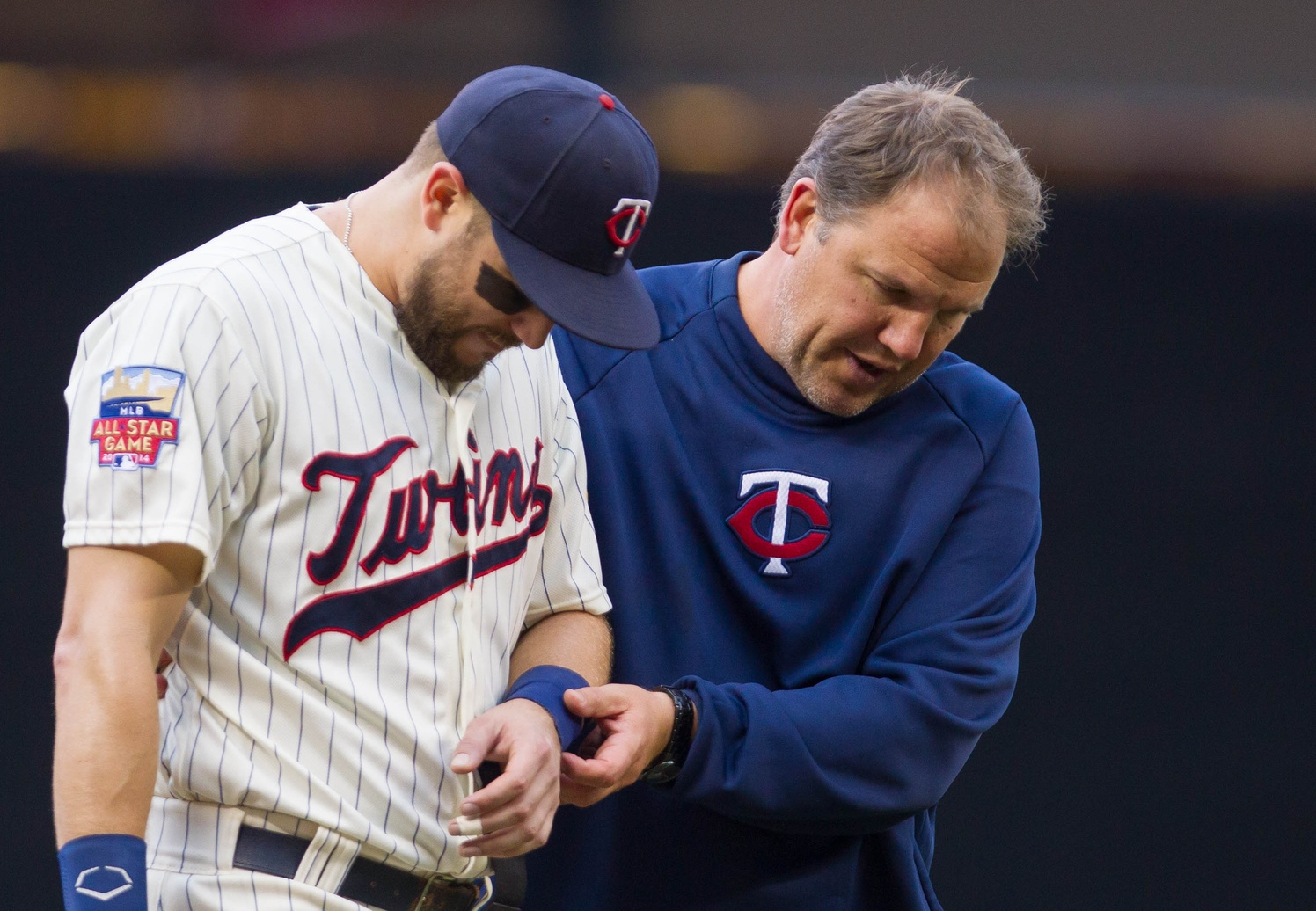 Prompted by a stat on the subject provided by ESPN’s Stats & Info overseer Mark Simon, Plouffe inquired whether or not Rays’ catcher Jose Molina the leading catcher in coaxing extra strikes from outside the strike zone: Plouffe’s intuition was close -- according to ESPN/TruMedia Molina finished just behind Ross -- but it was actually the Angels’ Hank Conger whose 11.6% called strike rate on pitches outside of the zone led baseball this year. This exercise always interests me: Players using their experience to guess what the data says. Plouffe has stood in with Molina behind the dish for 48 pitches in his career. Of those he has taken, six have been called strikes that have been out of the zone (16%). This is slightly higher than average (approximately 9%) but too small of a sampling to make any connection. Now, Plouffe was never rung up on any out-of-zone strikes looking, still, if you are Plouffe in the batters box, you might recall those few pitches with clarity. That said, Molina has had his way with the Twins lineup dating back to 2010 and Plouffe certainly has observed a lot of his teammates shaking their heads on the way back to the dugout. In 16 games, he’s managed to steal strikes out of the zone at a 14% clip, which is the highest rate for a catcher facing the Twins in that time. Beyond that, the lineup has had just over 500 plate appearances while he has been the receiver and have hit just .207 -- the lowest average against by one catcher in that time (minimum 300 plate appearances). There is plenty of discussion on whether or not framing adds the win value that some believe, but there is little question that it is a skill (just ask my ).“I don’t put too much stock in that,” Twins catcher Kurt Suzuki told me this spring. “Don’t get me wrong, I think that has a lot to do with it but at the same time, what a pitcher does has a lot to do with it. If he’s all over the place, he’s obviously not going to get those borderline calls, not matter how good you make it look. If you are around the plate consistently, you are going to get those calls. There’s definitely an art to it, you look at the Molinas, they are pretty good at what they do.” Plouffe and Suzuki are correct, the Molinas are pretty good. He has also had some pretty good pitchers throwing to him as well. For the most part, framing is always presented from the pitcher/catcher perspective but it is interesting to see that it may be possible that the catcher can have a psychological effect on a hitter. So does that mean that catchers like Molina while expanding the strike zone for their pitcher are able to induce more chases by the hitters attempting to protect this increasing strike zone? According to ESPN’s data, Molina’s chase percentage is exactly league average dating back to 2010 (26.5%) which indicates that despite the ability to grab strikes off the plate, hitters are not necessarily enticed to go after those pitches at a higher rate. Fans and analysts alike can continue to debate the catcher’s unseen effects on the game but it is interesting to find out that, at least in the case of Trevor Plouffe, the backstop can get inside a hitter’s head.
 -
The Minnesota Twins make it official: Ron Gardenhire is out as manager."You lose this many games, you got to do something," the Twins' manager of 13-years told the Pioneer Press this afternoon after news broke. "[Terry Ryan] called me in this morning, I said, 'Terry, you don't have a choice here; do what you have to do." Before noon, ESPN.com's Jerry Crasnick tweeted that the Twins may be looking to move on from manager Ron Gardenhire this afternoon saying "Just heard the word is not good on #twins manager Ron Gardenhire, but I'm trying to get confirmation on that." Meanwhile, 1500 ESPN's Patrick Reusse followed that up by confirming that Gardenhire is out. In addition to Gardenhire, the Star Tribune's LaVelle Neal reports that the entire coaching staff is being let go but will likely have the opportunity to be re-hired if the new manager deems fit. Gardenhire finishes his Twins career with four straight 90-loss season but had led the team to six postseason berths in his 13-year tenure as the manager of the team. The organization will have a press conference at 3 PM to address the news. Ron Gardenhire will be in attendance. One key member of the front office will not be there is owner Jim Pohlad who 1500 ESPN's Darren Wolfson reports is currently in Texas at the on-going estate-tax trial. Here is the Twins press release: Besides winning Manager of the Year in 2010, Gardenhire finished in the top three in voting in seven of his thirteen years as Twins manager, with five runner-up finishes. He didn't have his first losing season as a manager until 2007, in his sixth year as manager. He din't have his second losing year until 2011, his tenth year as manager. But in the history of baseball, only two managers have survived four consecutive 90-loss seasons, although one of them was Gardenhire's predecessor, Tom Kelly, who was retained by Twins GM Terry Ryan. Click here to view the article
-
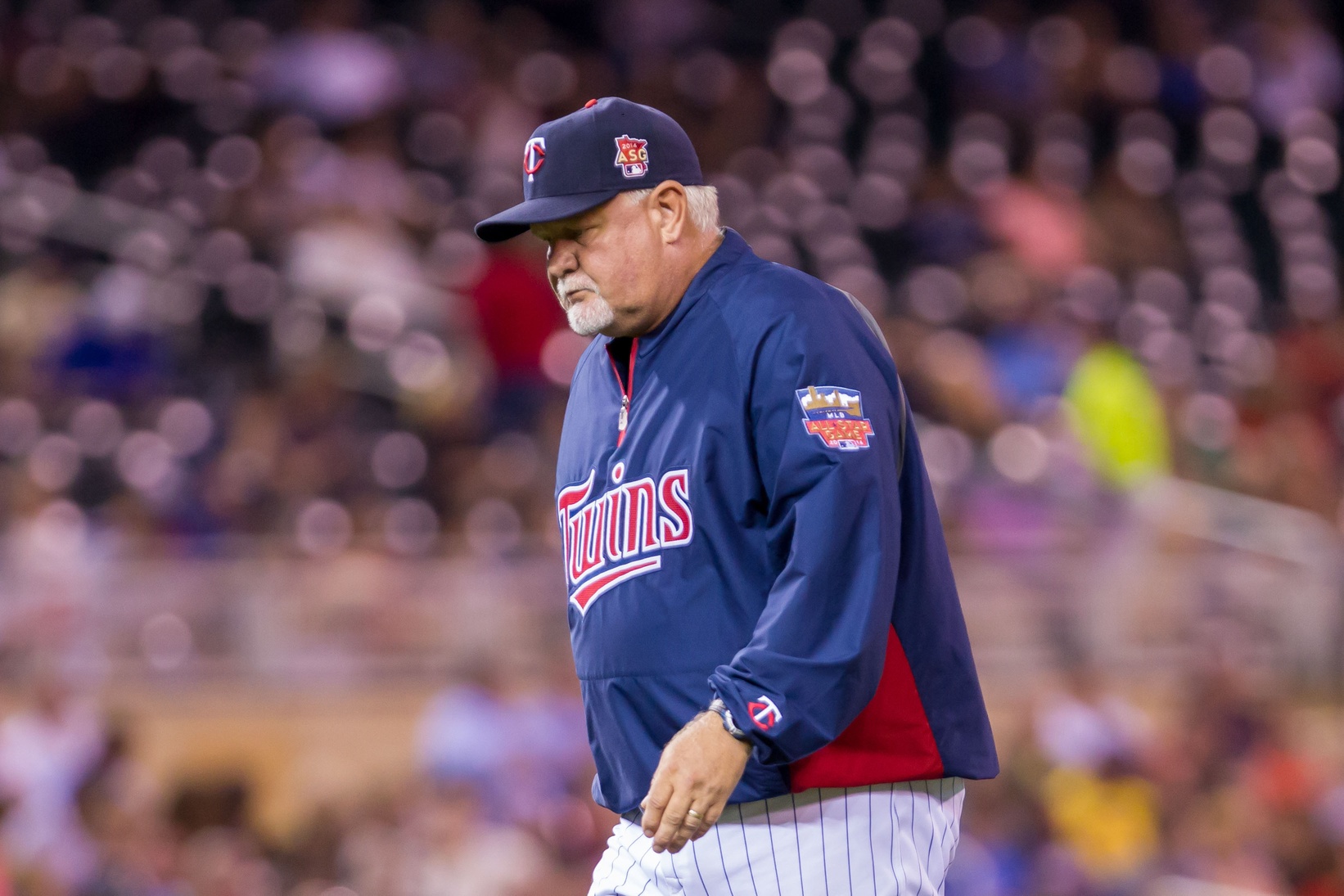 "You lose this many games, you got to do something," the Twins' manager of 13-years told the Pioneer Press this afternoon after news broke. "[Terry Ryan] called me in this morning, I said, 'Terry, you don't have a choice here; do what you have to do." Before noon, ESPN.com's Jerry Crasnick tweeted that the Twins may be looking to move on from manager Ron Gardenhire this afternoon saying "Just heard the word is not good on #twins manager Ron Gardenhire, but I'm trying to get confirmation on that." Meanwhile, 1500 ESPN's Patrick Reusse followed that up by confirming that Gardenhire is out. In addition to Gardenhire, the Star Tribune's LaVelle Neal reports that the entire coaching staff is being let go but will likely have the opportunity to be re-hired if the new manager deems fit. Gardenhire finishes his Twins career with four straight 90-loss season but had led the team to six postseason berths in his 13-year tenure as the manager of the team. The organization will have a press conference at 3 PM to address the news. Ron Gardenhire will be in attendance. One key member of the front office will not be there is owner Jim Pohlad who 1500 ESPN's Darren Wolfson reports is currently in Texas at the on-going estate-tax trial. Here is the Twins press release: Besides winning Manager of the Year in 2010, Gardenhire finished in the top three in voting in seven of his thirteen years as Twins manager, with five runner-up finishes. He didn't have his first losing season as a manager until 2007, in his sixth year as manager. He din't have his second losing year until 2011, his tenth year as manager. But in the history of baseball, only two managers have survived four consecutive 90-loss seasons, although one of them was Gardenhire's predecessor, Tom Kelly, who was retained by Twins GM Terry Ryan.
 -
Absolutely. He's got terrific stories and such a positive guy. Could have stayed there and chatted all night if he didn't kick us out.
-
In this week's No Juice Podcast episode, Dan Anderson and Parker Hageman discuss the week's Minnesota Twins talkers and interview former minor leaguer Jamie Ogden. Topics include the future of the coaching staff, Vance Worley's success, Derek Jeter's final game in the Bronx, and framing 100 mile per hour fastballs. Listen and watch below.Other topics include Up North Weddings and general sports banter. Listen below, on iTunes or on Stitcher: THE NO JUICE PODCAST, EPISODE #23: THAT'S A WRAP AND JAMIE OGDEN Click here to view the article
-
The No Juice Podcast, Episode #23: That's A Wrap And Jamie Ogden
Parker Hageman posted an article in Twins
 Other topics include Up North Weddings and general sports banter. https://www.youtube.com/watch?v=UU7oj-TArAE Listen below, on iTunes or on Stitcher: THE NO JUICE PODCAST, EPISODE #23: THAT'S A WRAP AND JAMIE OGDEN
 -
Knowing what/where the pitch was going helped a lot. The machine can throw just about any type of pitch at basically any speed. We got a warm-up round at 85-mph and Jamie was kind enough to provide Dan with an unannounced curveball that that left him bailing out and skittish for the rest of the night. Hitting 100 when a pitcher is able to unleash another type of pitch must be damn near impossible.
-
Earlier in the week, Parker Hageman and Dan Anderson showed you what it looked like to try to pitch frame a 100-mph fastball. Today, they try to hit it.According to ESPN/TruMedia, in the Major Leagues this year there have 821 fastballs thrown over 100 miles an hour -- with Cincinnati’s closer Aroldis Chapman firing the bulk of them. The results have been understandably poor as hitters have batted just .144 off the triple digit heat. Professional hitters have swung and missed on 36% of their swings. So, with that in mind, what are the odds that two yahoos from the town leagues can even get a piece of the heat? Ever wonder if you could make contact with a 100-mile per hour fastball? Line Drive Sports in Lino Lakes and Killebrew Root Beer have created the Killebrew 100 MPH Challenge that supports the Assist2Play.org foundation. Contact Line Drive Sports to set up your challenge today. Special thanks to former Twins minor league Jamie Ogden for providing the instructions and spiritual support. Click here to view the article
![More information about "Minnesota Twins' Top 10 Moments of 2014 [VIDEO]"](http://dtb3yzl0vm3pr.cloudfront.net/monthly_2021_05/8994635b7f4a27e5db48de0a1587221e.jpg.c83250504aed015762e59f1845ef31d3.jpg)
