



Parker Hageman
-
Posts
4,152 -
Joined
-
Last visited
-
Days Won
6
Content Type
Profiles
News
Minnesota Twins Videos
2026 Minnesota Twins Top Prospects Ranking
2022 Minnesota Twins Draft Picks
Minnesota Twins Free Agent & Trade Rumors, Notes, & Tidbits
Guides & Resources
2023 Minnesota Twins Draft Picks
The Minnesota Twins Players Project
2024 Minnesota Twins Draft Picks
2025 Minnesota Twins Draft Pick Tracker
2026 Minnesota Twins Draft Tracker: Picks & Bonuses
Forums
Blogs
Events
Store
Downloads
Gallery
Everything posted by Parker Hageman
-
 Other topics include apologizing for technical difficulties, reminiscing about NFL Blitz, thoughts on and Mallrats. Listen below, on iTunes or on Stitcher: NO JUICE PODCAST, EPISODE #29: RUN DOZIER RUN Be sure to watch our latest video promo, : https://www.youtube.com/watch?v=8IwtDuCJSyc&feature=youtu.be
 -

Article: How Much Has Molitor Helped?
Parker Hageman replied to Parker Hageman's topic in Twins Daily Front Page News
Yes, yes I was. If you read my stuff for a while you would find that I like to pepper in things like that to keep the reader on their toes. I do a lot of stat breakdowns and want to keep things light. Definitely enjoyed your Mollie/Bruno back-and-forth. Thanks. -
Article: How Much Has Molitor Helped?
Parker Hageman replied to Parker Hageman's topic in Twins Daily Front Page News
Sure, that's one area that he's been involved in but his position was a baserunning coach. Here's more on his involvement in regards to shifts: http://twinsdaily.com/_/minnesota-twins-news/twins-research-team-wont-tip-their-pitches-r3131 When I asked Ryan about the baserunning stats and if he felt Molitor added to that, he agreed but also credited Joe Vavra among others as well. He felt that the personnel (Dozier, Mauer) helped those numbers this year. -
Many words have been dedicated to Paul Molitor’s baseball genius since his official press conference. Players have lined up to offer anecdotes that show how differently and intensely the Minnesota Twins’ new manager sees the game. He rolled balls down the baselines to see how a bunt will break. He pulls grass out and lets it dance in the wind to see which way the ball will carry for the outfielders. He tastes a handful of dirt so the infielders will know if there will be bad hops. In short, as a coach he has been a ball guy to the core.Molitor’s main role in 2014 was as a baserunning coach. Sure, he aligned defenses and added an analytic flair to the process but his job was to improve the movement on the bases. Judging from raw numbers, the Twins made strides in this area. They went from first-to-third more often, they moved up bases on outs and they stole more bases. Of all the personnel on the team from 2013 to 2014, Brian Dozier has most credited Molitor with making significant improvements to his running game. In terms of stolen bases, Dozier not only increased his number of steals but also posted a higher success rate. Based on that, I ran through video of stolen base attempts hoping to find unquestionable evidence of Molitor’s influence in Dozier’s game. Like suicidal leads or telepathic jumps the moment the pitcher twitches a muscle. Any video confirmation that Molitor’s tutelage helped the second baseman swindle seven more bags in 2014. Alas, there was nothing concrete that said that since Molitor’s addition to the staff, Dozier started doing this differently and added more steals. This is not to say that Molitor did not add some improvement to Dozier’s running game -- it is simply more of an effect that cannot be picked up from the three dozen or so clips of Dozier stealing available at MLBAM. Once StatCast is made ready to the general population we may be able to decipher if he is getting better jumps but for now the available data reveals little difference in his run game. The results are not related to a re-engineering of his mechanics, apparently, but rather an increase in his level of preparedness. "It's been night and day compared to every other year, as far as dissecting pitchers, knowing exactly what they do, their tendencies, stuff like that,” Dozier told FoxSportsNorth.com’s Tyler Mason in May of this year. “[Molitor] has a five, 10-minute conversation with me before every game and every single thing that he's got on film from the pitcher, tendencies, everything." Last year, Dozier did increase the number of attempts to steal third which often came against infields that were shifting against left-handed batters. After making a break for third three times in his first two seasons, Dozier bolted for the hot corner six times this year. Was that game plan created by Molitor -- or was Dozier just savvier in his third year when he perpetrated those thefts? Beyond the pitchers, Molitor would also check out the environment. Each stadium’s infield cut is slightly different at first base. Some have big swooping cuts like Target Field while others like Oakland’s O.co Coliseum have small cutouts. In some cases, even one foot past the cut would be borderline insanity while in others two feet past the cut would still be a step-and-dive away from first. Before each game, Molitor would help establish where a runner’s lead should be. “The cut on the grass at first base is different at every park,” Dozier told the Star Tribune’s Chip Scoggins after Molitor was introduced as the new manager. “He would get his lead and then visualize where that cut on the grass is right beneath his feet. So he would know the cut of the grass is at my right foot in a 14-foot lead. He would say, ‘OK, this is where my lead is tonight.’” This advice may be able to provide a player like Dozier -- whose speed is not at the level of the Dodgers’ Dee Gordon or the Phillies’ Ben Revere -- an advantage that could provide a handful of successful stolen base attempts in a seasons. Another element of his run game that is probably overlooked is his ability to execute a terrific slide. One thing that will stand out when reviewing Brian Dozier’s stolen base attempts of second base is that he rarely beats the throw to the base. Take this example of his successful swipe of second against the Indians in 2012. The throw beats him by a significant margin but because of his ability to stay to the outside with his body and keep his left hand in until the last second, Dozier gives shortstop Asdrubel Cabrera a minimal target. http://i.imgur.com/5lInWHQ.gif Yes, it may seem minor but when you review the film you see that Dozier’s head-first sliding abilities likely landed him several bases in the process. Against the Padres this year, Dozier may have “stolen” a base away from the National League West team by using misdirection by sliding far right of the base and slipping his hand in under. This leaves shortstop Jedd Gyorko who has the ball well in advance of Dozier to choose between tagging his hand or his body. Gyorko splits the difference and aims for the shoulder, allowing Dozier to slide his hand underneath. http://i.imgur.com/SvWKyBT.gif Since Dozier’s been implementing this slide since his rookie season (and possibly in the minor leagues as well), it is hard to attribute it directly to Molitor. It is possible that he helped refine it while Dozier was in the minors but it is not something created since Molitor was added to the coaching staff. Comparing Dozier’s slide tactics to those of the game’s top base-stealers in Gordon (below) and the Astros’ Jose Altuve, you find that those fleet-of-foot individuals prefer the feet-first slide into second. Their speed in conjunction with getting good jumps allows them to beat many throws to the base and the feet-first slide gives them the ability to pop up and scamper to third if there happens to be an errant throw: http://i.imgur.com/M7tNJCQ.gif To see how much Dozier’s slide can help his numbers, consider the case of Chicago’s Adam Eaton. In 2014, Eaton swiped 15 bases in 24 attempts, a lower success rate than Dozier. Eaton, by most accounts, is faster than Dozier. According to Fangraphs.com’s Fan Scouting Reports, Eaton has scored a 79 speed score over his career. Dozier, meanwhile, is at 60 with his speed score. Eaton has good instincts and a good first step. But, unlike Dozier’s ballet around the base, Eaton is a bulldozer of a slider. While using the head-first slide, Eaton goes in direct and hard at the bag. On several occasions this has helped dislodge the ball but on others it has aided the opposing team by sliding directly into the tag: http://i.imgur.com/BO7wdb9.gif What this boils down to is Dozier doing the little things to provide himself with an opportunity to gain 90 feet on the bases. It is knowing the pitcher, understanding the surroundings and executing a Ghostrider slide. How much of this is Molitor’s influence? That’s hard to say. Dozier spoke of how much Molitor prepared him and the team which has to add some factor. Clearly Molitor has had some influence when it comes to improving the running game, but how much and in what capacity is not known. Click here to view the article
- 19 replies
-
- 2
-

-
- paul molitor
- brian dozier
- (and 1 more)
-
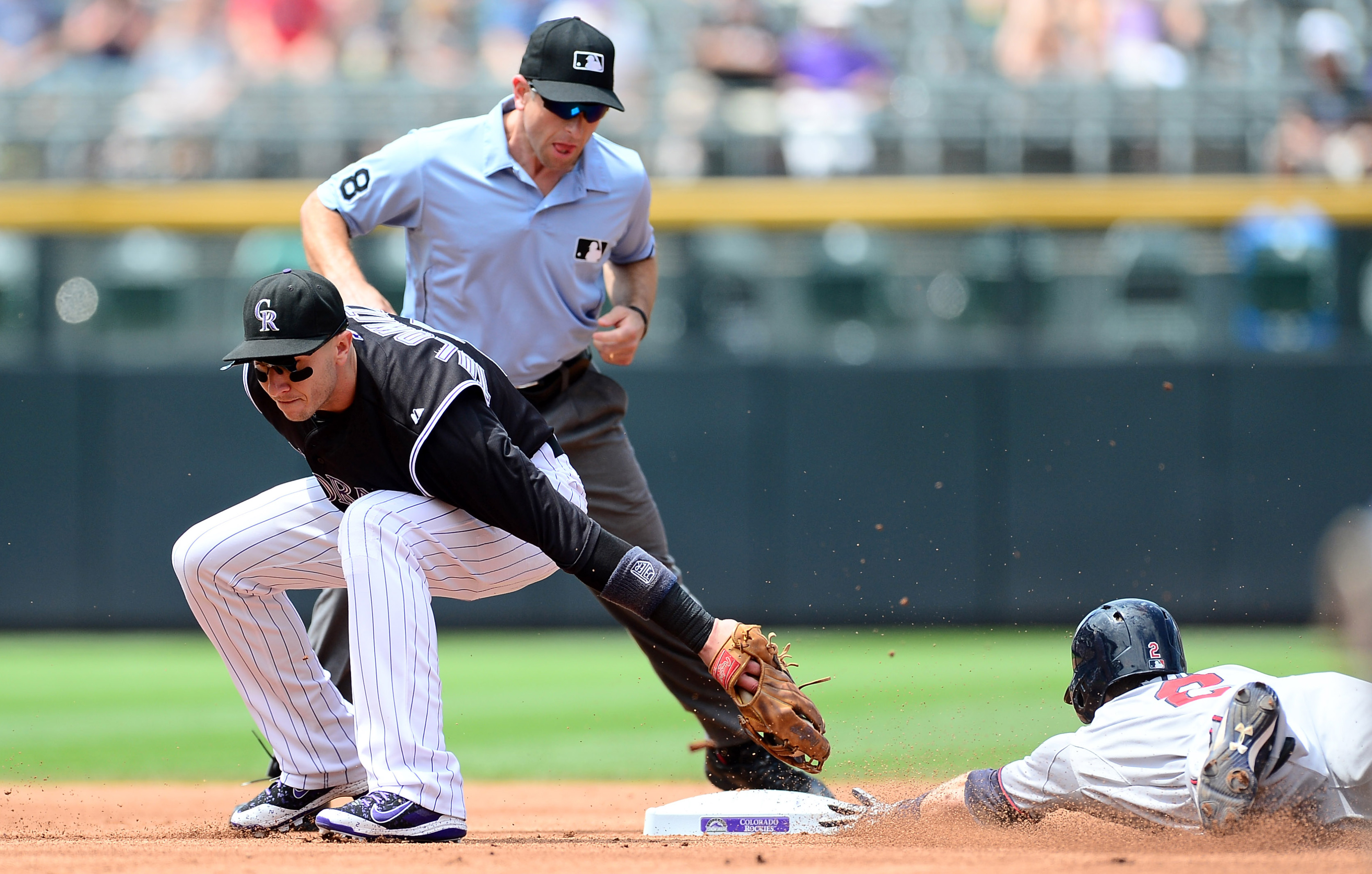 Molitor’s main role in 2014 was as a baserunning coach. Sure, he aligned defenses and added an analytic flair to the process but his job was to improve the movement on the bases. Judging from raw numbers, the Twins made strides in this area. They went from first-to-third more often, they moved up bases on outs and they stole more bases. Of all the personnel on the team from 2013 to 2014, Brian Dozier has most credited Molitor with making significant improvements to his running game. In terms of stolen bases, Dozier not only increased his number of steals but also posted a higher success rate. Based on that, I ran through video of stolen base attempts hoping to find unquestionable evidence of Molitor’s influence in Dozier’s game. Like suicidal leads or telepathic jumps the moment the pitcher twitches a muscle. Any video confirmation that Molitor’s tutelage helped the second baseman swindle seven more bags in 2014. Alas, there was nothing concrete that said that since Molitor’s addition to the staff, Dozier started doing this differently and added more steals. This is not to say that Molitor did not add some improvement to Dozier’s running game -- it is simply more of an effect that cannot be picked up from the three dozen or so clips of Dozier stealing available at MLBAM. Once StatCast is made ready to the general population we may be able to decipher if he is getting better jumps but for now the available data reveals little difference in his run game. The results are not related to a re-engineering of his mechanics, apparently, but rather an increase in his level of preparedness. "It's been night and day compared to every other year, as far as dissecting pitchers, knowing exactly what they do, their tendencies, stuff like that,” Dozier told FoxSportsNorth.com’s Tyler Mason in May of this year. “[Molitor] has a five, 10-minute conversation with me before every game and every single thing that he's got on film from the pitcher, tendencies, everything." Last year, Dozier did increase the number of attempts to steal third which often came against infields that were shifting against left-handed batters. After making a break for third three times in his first two seasons, Dozier bolted for the hot corner six times this year. Was that game plan created by Molitor -- or was Dozier just savvier in his third year when he perpetrated those thefts? Beyond the pitchers, Molitor would also check out the environment. Each stadium’s infield cut is slightly different at first base. Some have big swooping cuts like Target Field while others like Oakland’s O.co Coliseum have small cutouts. In some cases, even one foot past the cut would be borderline insanity while in others two feet past the cut would still be a step-and-dive away from first. Before each game, Molitor would help establish where a runner’s lead should be. “The cut on the grass at first base is different at every park,” Dozier told the Star Tribune’s Chip Scoggins after Molitor was introduced as the new manager. “He would get his lead and then visualize where that cut on the grass is right beneath his feet. So he would know the cut of the grass is at my right foot in a 14-foot lead. He would say, ‘OK, this is where my lead is tonight.’” This advice may be able to provide a player like Dozier -- whose speed is not at the level of the Dodgers’ Dee Gordon or the Phillies’ Ben Revere -- an advantage that could provide a handful of successful stolen base attempts in a seasons. Another element of his run game that is probably overlooked is his ability to execute a terrific slide. One thing that will stand out when reviewing Brian Dozier’s stolen base attempts of second base is that he rarely beats the throw to the base. Take this example of his successful swipe of second against the Indians in 2012. The throw beats him by a significant margin but because of his ability to stay to the outside with his body and keep his left hand in until the last second, Dozier gives shortstop Asdrubel Cabrera a minimal target. http://i.imgur.com/5lInWHQ.gif Yes, it may seem minor but when you review the film you see that Dozier’s head-first sliding abilities likely landed him several bases in the process. Against the Padres this year, Dozier may have “stolen” a base away from the National League West team by using misdirection by sliding far right of the base and slipping his hand in under. This leaves shortstop Jedd Gyorko who has the ball well in advance of Dozier to choose between tagging his hand or his body. Gyorko splits the difference and aims for the shoulder, allowing Dozier to slide his hand underneath. http://i.imgur.com/SvWKyBT.gif Since Dozier’s been implementing this slide since his rookie season (and possibly in the minor leagues as well), it is hard to attribute it directly to Molitor. It is possible that he helped refine it while Dozier was in the minors but it is not something created since Molitor was added to the coaching staff. Comparing Dozier’s slide tactics to those of the game’s top base-stealers in Gordon (below) and the Astros’ Jose Altuve, you find that those fleet-of-foot individuals prefer the feet-first slide into second. Their speed in conjunction with getting good jumps allows them to beat many throws to the base and the feet-first slide gives them the ability to pop up and scamper to third if there happens to be an errant throw: http://i.imgur.com/M7tNJCQ.gif To see how much Dozier’s slide can help his numbers, consider the case of Chicago’s Adam Eaton. In 2014, Eaton swiped 15 bases in 24 attempts, a lower success rate than Dozier. Eaton, by most accounts, is faster than Dozier. According to Fangraphs.com’s Fan Scouting Reports, Eaton has scored a 79 speed score over his career. Dozier, meanwhile, is at 60 with his speed score. Eaton has good instincts and a good first step. But, unlike Dozier’s ballet around the base, Eaton is a bulldozer of a slider. While using the head-first slide, Eaton goes in direct and hard at the bag. On several occasions this has helped dislodge the ball but on others it has aided the opposing team by sliding directly into the tag: http://i.imgur.com/BO7wdb9.gif What this boils down to is Dozier doing the little things to provide himself with an opportunity to gain 90 feet on the bases. It is knowing the pitcher, understanding the surroundings and executing a Ghostrider slide. How much of this is Molitor’s influence? That’s hard to say. Dozier spoke of how much Molitor prepared him and the team which has to add some factor. Clearly Molitor has had some influence when it comes to improving the running game, but how much and in what capacity is not known.
 -
On this week's No Juice Podcast, Dan Anderson and Parker Hageman talk about the Minnesota Twins' announcement of the new managerial hiring, Paul Molitor. Listen below.Other topics include revisiting the Dave St. Peter interview, the blueprints from the Twins Daily Offseason Handbook, Dan freaks out about a super-secret Gophers basketball scrimmage and Vanilla Ice. Listen below, on iTunes or on Stitcher: NO JUICE PODCAST, EPISODE #28: PAUL MOLITOR [/b] Click here to view the article
-
 Other topics include revisiting the Dave St. Peter interview, the blueprints from the Twins Daily Offseason Handbook, Dan freaks out about a super-secret Gophers basketball scrimmage and Vanilla Ice. Listen below, on iTunes or on Stitcher: NO JUICE PODCAST, EPISODE #28: PAUL MOLITOR https://www.youtube.com/watch?v=M5uSda00iwA
 -
This is a very well phrased question. I wish it had been available prior to the Q&A. Not to sound like a broken record but please listen to the podcast section of the show -- http://twinsdaily.com/_/minnesota-twins-news/podcasts/no-juice-podcast-27-dave-st-peter-r3169 -- where he talks about other areas of the organization beyond the 48-52% the money is spent. As confession -- there are more people here that are concerned about the distribution of the revenue/payroll that I am. I don't know if we have a lot of accountants by trade here, fiscal watchdogs or just passionate fans that feel wronged in some way by the ownership. Personally, I care more about player development. I'm interested/intrigued by payroll/revenues/state of baseball, but ultimately I am more interested in what happens on the field. That probably comes out in both your Q&A and my interview on the podcast with him. I ask the big picture questions about revenue/payroll but I don't have the desire to pound on the topic until he spills everything. Again, the question above would have been great. Probably would have generated a decent response. I'm sorry if some of you don't feel like you've received your monies worth on this one.
-
He talked about the 50% mark, he talked about the alternative revenue streams and the areas that the other section of revenue is spent on. You're not going to get specifics. You just won't. Private company, they won't give it out. Should I have asked the Forbes estimate question? Maybe. Just didn't find it that compelling at the time given the length we spent on payroll, revenue and the like.
-
We did cover a lot of revenue/payroll discussion during our podcast prior to the video interview so many of those questions were dropped to avoid redundancy. I transcribed some of the audio/answers from the podcast portion of this event. Check it out here: http://twinsdaily.com/_/minnesota-twins-news/podcasts/no-juice-podcast-27-dave-st-peter-r3169
-
Article: No Juice Podcast #27: Dave St. Peter
Parker Hageman replied to Parker Hageman's topic in Twins Daily Front Page News
You got plans tonight? Actually, we might. Thanks for the suggestion. -
Again, the questions were provided by everyone in the forums. You had the chance to provide that type of question, and it does not look like you did (there were plenty of good questions in the article section left only after we recorded). I'd recommend both listening to the podcast version of this show which we asked different questions (http://twinsdaily.com/_/minnesota-twins-news/podcasts/no-juice-podcast-27-dave-st-peter-r3169) or purchasing the Offseason Handbook in which Terry Ryan talked about the process of hiring a manager (http://twinsdaily.com/store/product/4-2015-minnesota-twins-offseason-handbook/) . In terms of payroll and spending, I don't know what more you want from the front office. We're never going to get everything. In multiple conversations with different people within the organization, I don't have any reason to believe they are lying/misleading anyone. Also: #TWSS
-
I did a spittake.
-
I'm forgetting if he said this in the video or our podcast portion (both are different so listen/watch both!) but St. Peter mentioned that they put other monies into the facilities in Florida, a new facility in the DR in the works and a few other upgrades. That's where *some* of the other 50% goes, I guess.
-
Thanks for transcribing, Jay. If you want to continue with the entirety, I'd definitely post it for all to see.
-
The interview was conducted a day or two prior to the news of Maddon opting out of his Rays contract broke.
-
Last week, we asked you to submit questions for Minnesota Twins President Dave St. Peter. Watch him answer those in the video below.For more from St. Peter, be sure to listen to this week's No Juice Podcast. Click here to view the article
-
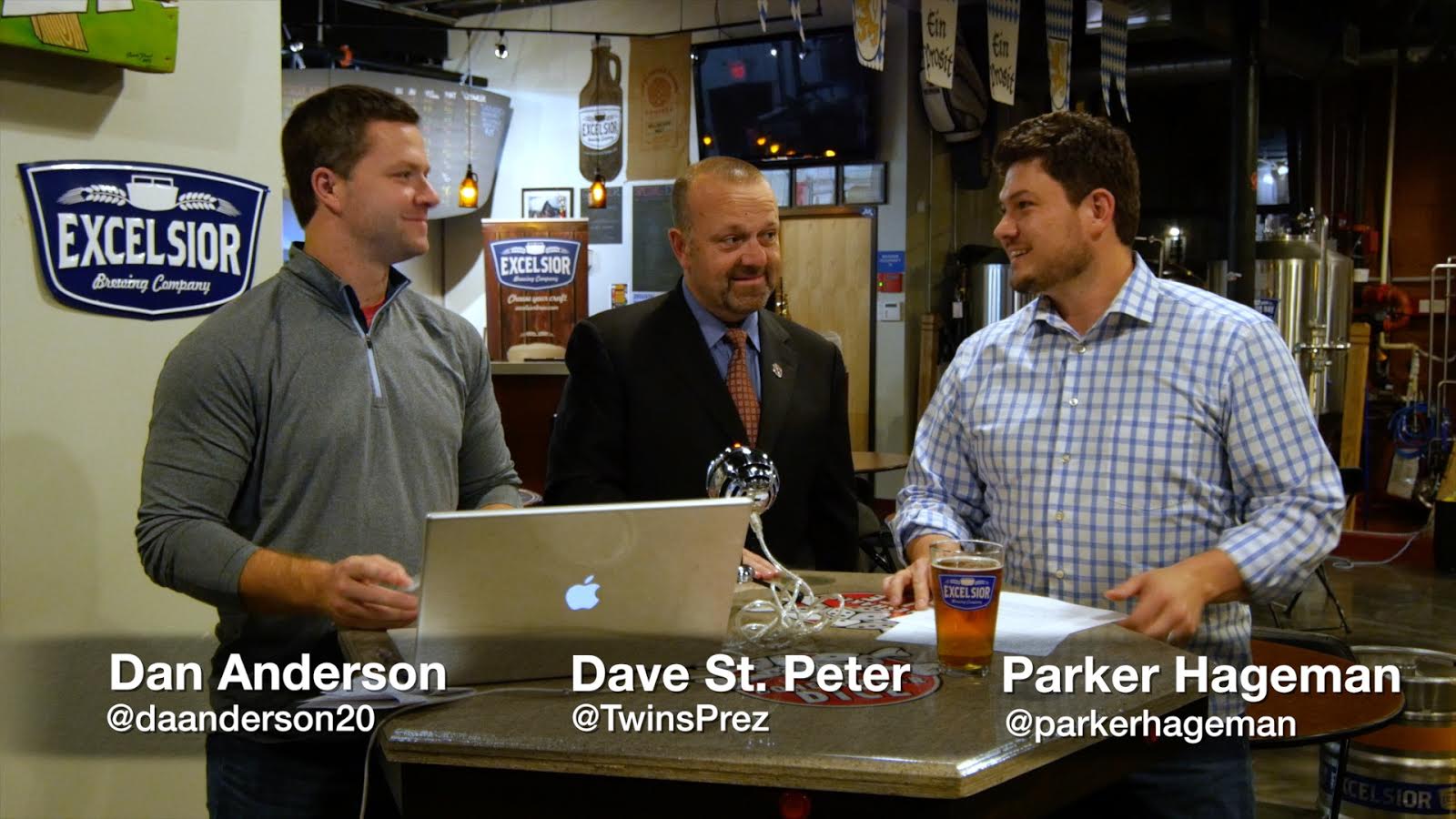 For more from St. Peter, be sure to listen to this week's No Juice Podcast. https://www.youtube.com/watch?v=JeogSBoMM8M
 -
On this week's No Juice Podcast, Dan Anderson and Parker Hageman meet with Minnesota Twins President Dave St. Peter at Excelsior Brewing Company to discuss the state of the team and the outlook for 2015. Listen below.Also joining the guys is Excelsior Brewing Company owner, found and vice duke John Klink who talks about the state of craft brewing in Minnesota. Listen below, on iTunes or on Stitcher: NO JUICE PODCAST, EPISODE #27: DAVE ST. PETER For more from Dave St. Peter on payroll and the future of the Twins, listen to this week's NO JUICE PODCAST. Click here to view the article
-
 Also joining the guys is Excelsior Brewing Company owner, found and vice duke John Klink who talks about the state of craft brewing in Minnesota. Listen below, on iTunes or on Stitcher: NO JUICE PODCAST, EPISODE #27: DAVE ST. PETER For more from Dave St. Peter on payroll and the future of the Twins, listen to this week's NO JUICE PODCAST.
 -
Twins GM Terry Ryan Talks About The Search For A New Manager
Parker Hageman posted an article in Twins
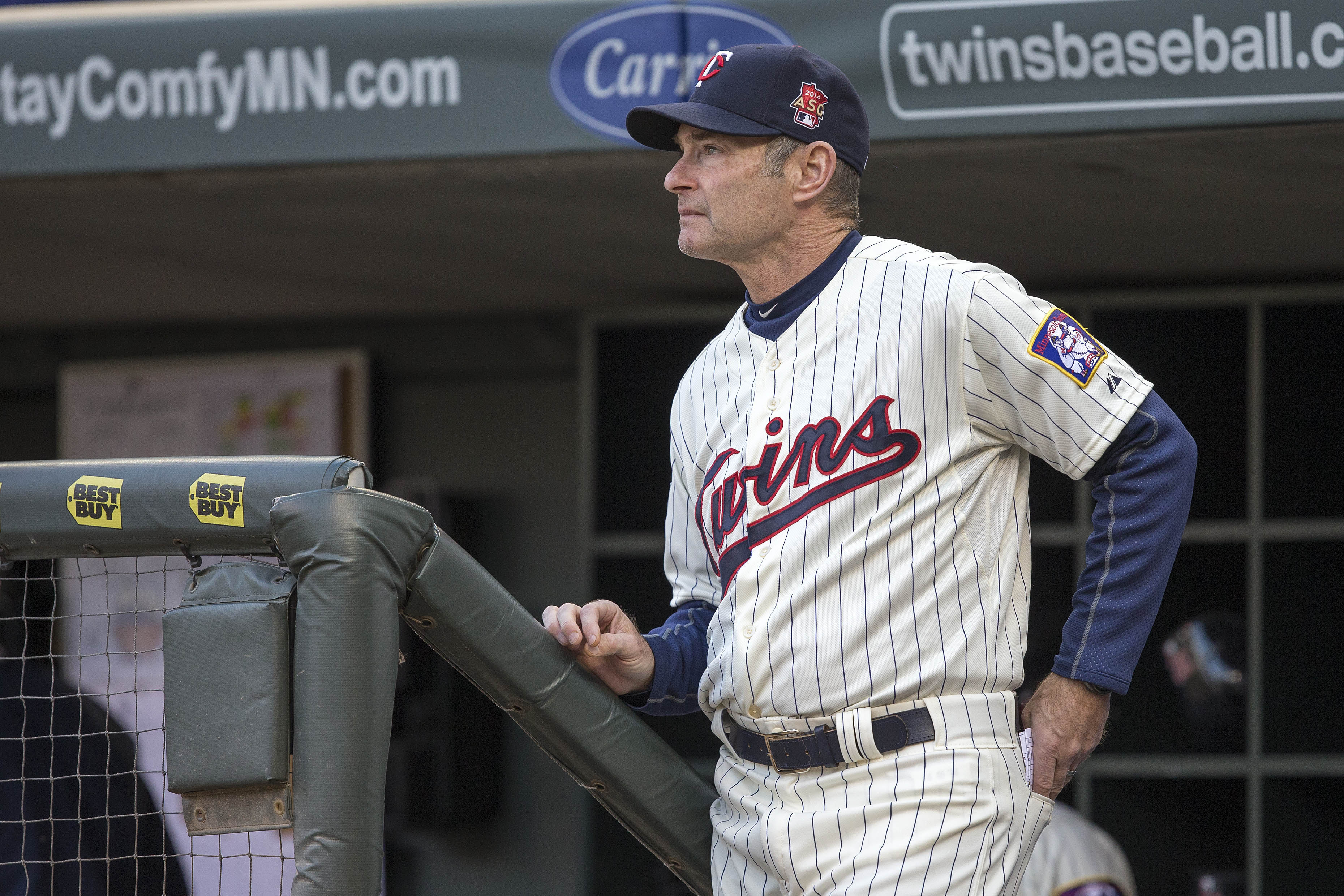 ***Download the Offseason Handbook FREE SAMPLE for more from Terry Ryan*** Outsiders might believe that because of the existing relationship with Molitor as a bench coach and observing Mientkiewicz’s style in the minor leagues, give the team an understanding of how they would operate as managers thus forgoing the need for a detailed download. How’s the family? Everything good? Thanks for stopping in, you’ll hear from us soon. Ryan was quick to dispel that notion. “No, it’s not informal. It’s very formal,” Ryan said frankly during our Offseason Handbook interview. “And you are going to get answers to questions.” Still, the process slightly favors Molitor and Mientkiewicz because of what the team is looking for. “People that are within the organization are going to be much more prepared to do an interview than outside people,” Ryan acknowledged. “The people outside better come very prepared, ‘cause I’m going to ask questions about this club, and about our minor leagues and our affiliates and the people that work within, our trainers, our team physicians, and they don’t know a thing about that. So hopefully they should be at least prepared enough to at least go through the interview process.” Despite giving Molitor and Mientkiewicz an advantage, reports of Lovullo’s interview have been glowing. While other external candidates -- such as Sandy Alomar Jr, Demarlo Hale and Joe McEwing -- have all been reportedly excused from consideration KSTP’s Darren Wolfson said last week that his sources said Lovullo “nailed his interview.” Based on that and Ryan’s admitted guidelines, it is safe to assume that the Red Sox bench coach is a well-prepared individual. In terms of in-game management, Ryan said the Twins are aware of the uses of defensive shifts, the effects of sacrifices, lineup construction and other analytical elements of the modern game -- things that Lovullo has been associated with and Molitor has embraced in his role with the Twins -- but Ryan considered that all a piece for the manager, not the focus. If anything, pitching was going to be an emphasis and he has expectations of how a manager should handle his arms. “Strategy is more important than some,” Ryan said. “The most important thing out of many managerial interviews is how they handle the pitching staff.” When it comes to pitching, as minor league managers, both Mientkiewicz and Lovullo have recent experience in this area while Molitor is more of novice. Of course, the next manager will have a pitching coach that he will be able to task with guidance. And that person will be selected by a joint effort from the manager and the front office -- not just the new manager’s old drinking buddy, as was the practice in a bygone era. “He shouldn’t have total control over his coaching staff, nor should I. But it should be a combination of what the front office deems as the right pieces and what a manager would deem and how much he can delegate those pieces.” Another element that has been discussed outside of the front office has been the possible inclusion of a manager with a Latin American background. Unless there is another “mystery” candidate not yet identified, the Twins are not currently considering this. With the increasing number of players from the Dominican Republic and Venezuela on the roster and in the pipeline, there was the thought that the Twins should target someone who can relate well to these players. But Ryan did not find this need a pressing one. “I don’t see it being important as long as we have people that are in this operation that can help anybody and everybody we have on our roster,” Ryan said. “Just like sabermetrics will be a piece. And strategy will be a piece. And who they hire or want to hire will be as a coaching staff. And it will all come together and I suspect every piece of information that you deem important, we have touched on.” ***Download the Offseason Handbook FREE SAMPLE for more from Terry Ryan***
 -
The Minnesota Twins search for a new manager remains a fluid situation however, the hunt has seemingly narrowed to three final candidates in Paul Molitor, Doug Mientkiewicz and Torey Lovullo. While we know who the applicants are, what is not known is how and what the organization is looking for in the next manager. General Manager Terry Ryan offers insight on the hiring process. ***Download the Offseason Handbook FREE SAMPLE for more from Terry Ryan*** Outsiders might believe that because of the existing relationship with Molitor as a bench coach and observing Mientkiewicz’s style in the minor leagues, give the team an understanding of how they would operate as managers thus forgoing the need for a detailed download. How’s the family? Everything good? Thanks for stopping in, you’ll hear from us soon. Ryan was quick to dispel that notion. “No, it’s not informal. It’s very formal,” Ryan said frankly during our Offseason Handbook interview. “And you are going to get answers to questions.” Still, the process slightly favors Molitor and Mientkiewicz because of what the team is looking for. “People that are within the organization are going to be much more prepared to do an interview than outside people,” Ryan acknowledged. “The people outside better come very prepared, ‘cause I’m going to ask questions about this club, and about our minor leagues and our affiliates and the people that work within, our trainers, our team physicians, and they don’t know a thing about that. So hopefully they should be at least prepared enough to at least go through the interview process.” Despite giving Molitor and Mientkiewicz an advantage, reports of Lovullo’s interview have been glowing. While other external candidates -- such as Sandy Alomar Jr, Demarlo Hale and Joe McEwing -- have all been reportedly excused from consideration KSTP’s Darren Wolfson said last week that his sources said Lovullo “nailed his interview.” Based on that and Ryan’s admitted guidelines, it is safe to assume that the Red Sox bench coach is a well-prepared individual. In terms of in-game management, Ryan said the Twins are aware of the uses of defensive shifts, the effects of sacrifices, lineup construction and other analytical elements of the modern game -- things that Lovullo has been associated with and Molitor has embraced in his role with the Twins -- but Ryan considered that all a piece for the manager, not the focus. If anything, pitching was going to be an emphasis and he has expectations of how a manager should handle his arms. “Strategy is more important than some,” Ryan said. “The most important thing out of many managerial interviews is how they handle the pitching staff.” When it comes to pitching, as minor league managers, both Mientkiewicz and Lovullo have recent experience in this area while Molitor is more of novice. Of course, the next manager will have a pitching coach that he will be able to task with guidance. And that person will be selected by a joint effort from the manager and the front office -- not just the new manager’s old drinking buddy, as was the practice in a bygone era. “He shouldn’t have total control over his coaching staff, nor should I. But it should be a combination of what the front office deems as the right pieces and what a manager would deem and how much he can delegate those pieces.” Another element that has been discussed outside of the front office has been the possible inclusion of a manager with a Latin American background. Unless there is another “mystery” candidate not yet identified, the Twins are not currently considering this. With the increasing number of players from the Dominican Republic and Venezuela on the roster and in the pipeline, there was the thought that the Twins should target someone who can relate well to these players. But Ryan did not find this need a pressing one. “I don’t see it being important as long as we have people that are in this operation that can help anybody and everybody we have on our roster,” Ryan said. “Just like sabermetrics will be a piece. And strategy will be a piece. And who they hire or want to hire will be as a coaching staff. And it will all come together and I suspect every piece of information that you deem important, we have touched on.” ***Download the Offseason Handbook FREE SAMPLE for more from Terry Ryan*** Click here to view the article
-
Thanks everyone who contributed to this! Dave St Peter was a great guest, addressed many of the questions asked here and in the forum section. He did not physically harm me for asking unending questions on the payroll. The video will be up in the next few days. Thanks again to all!

-
Do you have a question for Twins President Dave St. Peter that you have wanted answered? A topic he should address? Now is your opportunity.Twins Daily and the No Juice Podcast will be hosting St. Peter in a special video Q & A session at the Excelsior Brewing Co.'s Taproom on Tuesday, October 21st. Submit your question in this thread below and it could be answered by the team’s president. http://excelsiorbrew.com/wp-content/themes/eddiemachado-bones-responsive-35e1022/images/main-logo.png Click here to view the article
