



Parker Hageman
-
Posts
4,152 -
Joined
-
Last visited
-
Days Won
6
Content Type
Profiles
News
Minnesota Twins Videos
2026 Minnesota Twins Top Prospects Ranking
2022 Minnesota Twins Draft Picks
Minnesota Twins Free Agent & Trade Rumors, Notes, & Tidbits
Guides & Resources
2023 Minnesota Twins Draft Picks
The Minnesota Twins Players Project
2024 Minnesota Twins Draft Picks
2025 Minnesota Twins Draft Pick Tracker
2026 Minnesota Twins Draft Tracker: Picks & Bonuses
Forums
Blogs
Events
Store
Downloads
Gallery
Everything posted by Parker Hageman
-
 According to ESPN/TruMedia, in the Major Leagues this year there have 821 fastballs thrown over 100 miles an hour -- with Cincinnati’s closer Aroldis Chapman firing the bulk of them. The results have been understandably poor as hitters have batted just .144 off the triple digit heat. Professional hitters have swung and missed on 36% of their swings. So, with that in mind, what are the odds that two yahoos from the town leagues can even get a piece of the heat? https://www.youtube.com/watch?v=g-r-UMAYKm4&list=UUUksIQgrcv2hgbughOgsuAg Ever wonder if you could make contact with a 100-mile per hour fastball? Line Drive Sports in Lino Lakes and Killebrew Root Beer have created the Killebrew 100 MPH Challenge that supports the Assist2Play.org foundation. Contact Line Drive Sports to set up your challenge today. Special thanks to former Twins minor league Jamie Ogden for providing the instructions and spiritual support.
 -
 Catcher Framing has been the statistic that has been all the rage -- it is the sooper popular thing right now among stat nerds. Catchers who previously were undervalued, like Rene Rivera or Jose Molina, are suddenly highly sought after when studies showed that some catchers could coax extra strikes from out of the zone. Meanwhile, backstops like Ryan Doumit have become dinosaurs. How difficult is it to corral a 100 mile per hour pitch?It is possible that velocity plays a difference in how a catcher receives the ball or how an umpire gauges it. According to ESPN, since 2009, 9% of balls taken out of the zone that were 99 MPH or below were called strikes. In that same time, 7% of all pitches thrown 100 MPH or above and taken out of the zone were called strikes. Is it more difficult to frame pitches at that velocity or does the speed play a bigger factor? With average fastball velocity from major league pitcher’s climbing each year, this could play a factor in the coming years. Thanks to former Twins minor leaguer Jamie Odgen and Line Drive Sports in Lino Lakes, the No Juice Podcast’s Dan Anderson’s shows just how difficult it is to catch and frame 100 mile per hour heat. [NOTE: Some adult language] For more on this subject and others, be sure to listen to this week’s No Juice Podcast. Click here to view the article
 -
VIDEO: How Difficult Is It To Frame A 100-Miles-Per-Hour Pitch?
Parker Hageman posted an article in Twins
 It is possible that velocity plays a difference in how a catcher receives the ball or how an umpire gauges it. According to ESPN, since 2009, 9% of balls taken out of the zone that were 99 MPH or below were called strikes. In that same time, 7% of all pitches thrown 100 MPH or above and taken out of the zone were called strikes. Is it more difficult to frame pitches at that velocity or does the speed play a bigger factor? With average fastball velocity from major league pitcher’s climbing each year, this could play a factor in the coming years. Thanks to former Twins minor leaguer Jamie Odgen and Line Drive Sports in Lino Lakes, the No Juice Podcast’s Dan Anderson’s shows just how difficult it is to catch and frame 100 mile per hour heat. [NOTE: Some adult language] For more on this subject and others, be sure to listen to this week’s No Juice Podcast.
 -
In this week's No Juice Podcast episode, Dan Anderson and Parker Hageman discuss the week's Minnesota Twins talkers. Topics include shutting down Glen Perkins for the year, the shift from New Britain to Chattanooga, thoughts on Danny Santana at short and #HotTwinsTakes from the Twins Daily forum from members Mike Wants Wins and jaimedude2. Listen below.Other topics include the Minnesota Vikings, things Minnesotans need to stop doing, the best compensated Minnesotan athletes and college football at the FargoDome. Listen below, on iTunes or on Stitcher: THE NO JUICE PODCAST, EPISODE #22: ALL OUT OF GLENS Click here to view the article
-
 Other topics include the Minnesota Vikings, things Minnesotans need to stop doing, the best compensated Minnesotan athletes and college football at the FargoDome. Listen below, on iTunes or on Stitcher: THE NO JUICE PODCAST, EPISODE #22: ALL OUT OF GLENS
 -
Article: What Is Going On With Glen?
Parker Hageman replied to Parker Hageman's topic in Twins Daily Front Page News
Update on Glen: That's good-ish news. -
Article: What Is Going On With Glen?
Parker Hageman replied to Parker Hageman's topic in Twins Daily Front Page News
This should be interesting. -
Article: The Real Brian Dozier?
Parker Hageman replied to Nick Nelson's topic in Twins Daily Front Page News
1st half: 40.8% overall fly ball% 2nd half: 40.4% overall fly ball% *From ESPN/TruMedia In hitters' counts -- where he hit 7 first-half home runs -- he is seeing slightly fewer fastballs and hitting fewer fly balls (from 53% to 44%) from the first-half to the second. -
Article: What Is Going On With Glen?
Parker Hageman replied to Parker Hageman's topic in Twins Daily Front Page News
Agreed. In theory, there are two things happening. The season-long velocity decline is aging while the recent trend of not being able to finish his slider is injury related. To the former, it is of concern but not damning. As you said, he had been very good. Different approach, but good. If he continues to trend like Fangraphs.com show that relievers experience, there is going to be a decline in production over the next few seasons. After all -- a 92-to-95 mph fastball is turned into a hit more frequently than the 96+. More 92-to-95 = more hits. More hits = more runs. I guess we'll see after the winter where he is at. Hopefully, whatever is ailing his arm right now, is something that rest will resolve. -
Article: What Is Going On With Glen?
Parker Hageman replied to Parker Hageman's topic in Twins Daily Front Page News
I wish I could always be as positive as you, Seth! I unfortunately look at too much data. In all, I think he will be "fine". The recent struggles with the slider appear to be influenced by the neck/shoulder. More concerning, as shown in the chart, his velocity has been down all season -- not just at the end. The hope is that the velocity loss is effected by the lingering neck/shoulder issue and that will rebound after an offseason of rest. If not, and it is indeed the effects of aging, we will still see a very good Perkins, just not the shutdown one from 2012-2013. -
For most of 2014 it was business as usual for Minnesota Twins closer Glen Perkins. His numbers have been very similar to his previous two seasons. Yes, there were subtle changes -- like he has struck out batters at a slightly lower rate (declined from 32% to 26%) and he also shaved off free passes (reducing his walk rate from 6.3% to 4.3%) but you would have to squint to pick up the differences.The latter statistic is a point of pride for the closer. “I know that I want to avoid home runs, strike guys out and not walk guys,” Perkins told MLB.com’s Rhett Bollinger in August. “If I can do that, and maybe even get a groundball, and even that it's that important to me as not walking a guy and those things. As long as I don't walk guys and don't give up home runs, I know I'm doing the right thing.” But while he has limited the walks, he has been hit hard as of late -- allowing a home run in each of his last three outings -- and even raising concerns that there may be an injury in play. He told reporters that he was unable to finish his slider which even prompted an MRI of his shoulder to see if there was any damage. No damage was found but the location of his sliders since August -- which have led to three home runs -- shows that something is not right: Download attachment: Perkins Slider.png In addition to his slider, there is also concern for his fastball. According to the Pioneer Press, an unnamed scout had watched Perkins’ September 4th outing and said that his “velocity was down a tick”. While it is more noticeable as he has scuffled as of late, Perkins’ fastball has been “down a tick” almost all season. When the left-hander was converted to a reliever, he saw his average fastball velocity increase considerably from his days as a starter with the Twins. In 2011, he was averaging 93.9 but touched 98 several times. In 2012 and 2013, he was averaging 94.9 and throwing his fastball above 96 on a semi-regular basis. This season however Perkins has not had that same gas on the pitch that he had in 2012 and 2013. Just four of the 604 fastballs he has thrown this season were measured at 96 miles per hour or above: Download attachment: Perkins Velocity.png Despite the drop in velocity, Perkins’ fastball has not been a liability this season. Yes, it has been turned into hits more frequently partly due to a higher line drive rate than past years but according to ESPN/TruMedia’s Hard Hit Average, it has not been hit that hard. Beyond that, Perkins has shown a better ability to locate his fastball in the strike zone -- he has his career highest in-zone percentage (59.6%) and tied his highest strike rate (70%). So the higher batting average on his fastball could be a product of attacking the strike zone and avoiding walks. Still, this precipitous dip in velocity could be of concern for the front office with $17.25 million remaining to be paid to the closer. At 31 years old, Perkins is near the age where relievers start to experience a decline in their velocity, which also correlates to fewer strikeouts: The difference for relievers who throw 92-to-95 or 96-to-98 is significant. This year, hitters are batting .267/.347/.412 with a 9.1% swinging strike rate on fastballs that range from 92-to-95. From 96-to-98, hitters have been less successful posting a .230/.305/.326 line with a 11.4% swinging strike rate. Being able to throw 96-plus is a definite advantage. If it is an injury that has been acting as a governor for Perkins’ fastball, the good news is the year is almost finished. If it is age that is inhibiting his velocity, that is a different story. Click here to view the article
-
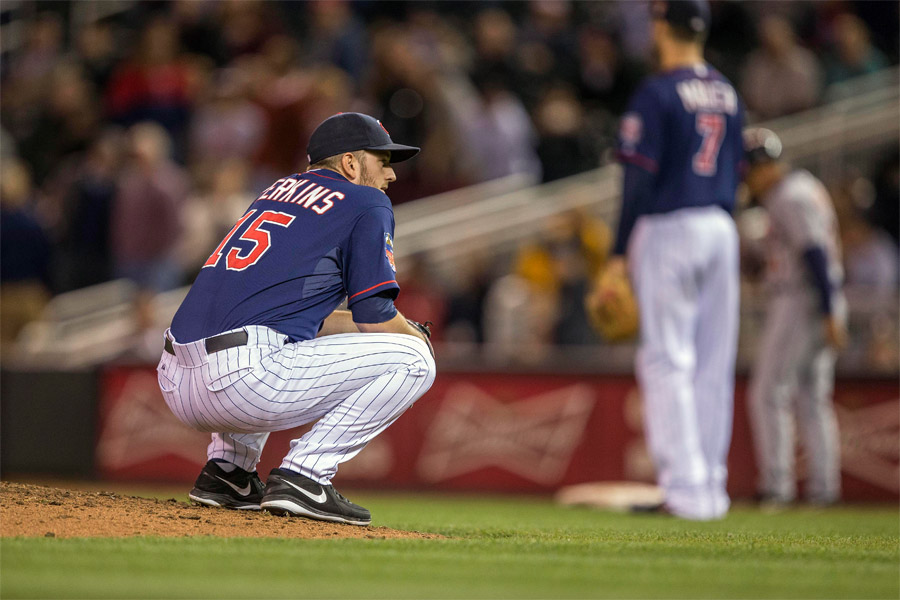 The latter statistic is a point of pride for the closer. “I know that I want to avoid home runs, strike guys out and not walk guys,” Perkins told MLB.com’s Rhett Bollinger in August. “If I can do that, and maybe even get a groundball, and even that it's that important to me as not walking a guy and those things. As long as I don't walk guys and don't give up home runs, I know I'm doing the right thing.” But while he has limited the walks, he has been hit hard as of late -- allowing a home run in each of his last three outings -- and even raising concerns that there may be an injury in play. He told reporters that he was unable to finish his slider which even prompted an MRI of his shoulder to see if there was any damage. No damage was found but the location of his sliders since August -- which have led to three home runs -- shows that something is not right: In addition to his slider, there is also concern for his fastball. According to the Pioneer Press, an unnamed scout had watched Perkins’ September 4th outing and said that his “velocity was down a tick”. While it is more noticeable as he has scuffled as of late, Perkins’ fastball has been “down a tick” almost all season. When the left-hander was converted to a reliever, he saw his average fastball velocity increase considerably from his days as a starter with the Twins. In 2011, he was averaging 93.9 but touched 98 several times. In 2012 and 2013, he was averaging 94.9 and throwing his fastball above 96 on a semi-regular basis. This season however Perkins has not had that same gas on the pitch that he had in 2012 and 2013. Just four of the 604 fastballs he has thrown this season were measured at 96 miles per hour or above: Despite the drop in velocity, Perkins’ fastball has not been a liability this season. Yes, it has been turned into hits more frequently partly due to a higher line drive rate than past years but according to ESPN/TruMedia’s Hard Hit Average, it has not been hit that hard. Beyond that, Perkins has shown a better ability to locate his fastball in the strike zone -- he has his career highest in-zone percentage (59.6%) and tied his highest strike rate (70%). So the higher batting average on his fastball could be a product of attacking the strike zone and avoiding walks. Still, this precipitous dip in velocity could be of concern for the front office with $17.25 million remaining to be paid to the closer. At 31 years old, Perkins is near the age where relievers start to experience a decline in their velocity, which also correlates to fewer strikeouts: The difference for relievers who throw 92-to-95 or 96-to-98 is significant. This year, hitters are batting .267/.347/.412 with a 9.1% swinging strike rate on fastballs that range from 92-to-95. From 96-to-98, hitters have been less successful posting a .230/.305/.326 line with a 11.4% swinging strike rate. Being able to throw 96-plus is a definite advantage. If it is an injury that has been acting as a governor for Perkins’ fastball, the good news is the year is almost finished. If it is age that is inhibiting his velocity, that is a different story.
 -
In this week's No Juice Podcast episode, Dan Anderson and Parker Hageman discuss the improvement of Trevor May, what Doug Mientkiewicz might bring to the table as a manager and the struggles of top prospects. They also lob #HotTakes when addressing forum posts from Twins Daily community members Boom Boom and James Richter.Other topics include the fallout of the recent Adrian Peterson news, the loss to the New England Patriots and the NFL's secret security team. Listen below, on iTunes or on Stitcher: THE NO JUICE PODCAST, EPISODE #21: VEGAS OF THE UPPER MIDWEST Click here to view the article
-
The No Juice Podcast, Episode #21: Vegas Of The Upper Midwest
Parker Hageman posted an article in Twins
 Other topics include the fallout of the recent Adrian Peterson news, the loss to the New England Patriots and the NFL's secret security team. Listen below, on iTunes or on Stitcher: THE NO JUICE PODCAST, EPISODE #21: VEGAS OF THE UPPER MIDWEST
 -
That would be a good idea. I'm interested to find out what sort of bullpen sessions he goes through.
-
Would you mind calling my wife and telling her that?
-
Off the field, pitcher Trevor May likes to create music and spin tracks. However, while on the mound with the Twins this season, this DJ has been unable to find the right rhythm.After an impressive season in Triple-A -- where he had his lowest walk rate since 2010 -- May was called up to the Twins in August. May’s minor league success did not transfer to the major league level. So far, starting in six of his seven appearances, May has pitched 29.2 innings while turning in a 24/19 K/BB ratio to go along with 41 hits to which have cumulated in a rotund 8.38 ERA. His biggest foe, besides people who do not enjoy his sick beats, has been pitching with runners on base. To this point in his major league career, ESPN/Trumedia says he has thrown 279 pitches in both the windup and the stretch. With the bases empty, he has kept opponents to a passable .269 average with a 17/9 K/BB ratio but when he puts a runner on, opponents have lambasted him to the tune of .479 with a disheartening 7/13 K/BB ratio. To be fair, a sizable number of those walks occurred during his debut in Oakland (6 walks from the stretch), but his performance has been shakiest when the bases are clogged. An American League scout who had observed May told the Star Tribune’s LaVelle Neal that May’s “got the ammo. He needs to locate it. And his fastball is pretty flat.” May has a four-pitch mix but has yet to show he can locate his fastball consistently enough to make the other pitches effective. For most of May’s tenure in professional baseball, his ability to repeat his mechanics has been questioned as his release point will occasionally vary and his arm slot will drop. This keeps his pitches up in the zone where they can flatten out and it seems to happen to him more often from the stretch. Overall, May’s fastball has been turned into hits at a high rate from both the windup and stretch. The biggest difference is the type of contact hitters are making. Consider this: When runners are on, opponents have posted a 46% line drive rate with a .276 hard-hit average compared to a 20% line drive rate and a .135 hard-hit average from his full windup. This makes sense when you consider the locations of his fastballs when in the windup (top) versus the stretch (bottom): Download attachment: May_FB.png Getting strike one while working in the stretch has been an on-going struggle for May as he has hit the zone with fewer than half of his first-pitch pitches (46%), a far cry from when there are no baserunners (63%). What’s more, hitters have become more conservative once May is pitching from the stretch, chasing far fewer pitches out of the zone (16%) than when he is in the windup (35%). That puts the 24-year-old at quite the disadvantage. Broadcasters and media-types often talk about things “snowballing” for pitchers. Each of May’s outings so far has been more avalanche than snowball once runners step on to the bases. Every pitcher has some discrepancy between the windup and the stretch, but May’s splits are more pronounced than most thus far in his small sample size. Obviously, the stats will normalize over time as his .404 batting average on balls in play is sure to come down and he is able to corral that grotesque walk rate. Look for improvements out of May in his next start on Sunday in Chicago. Click here to view the article
-
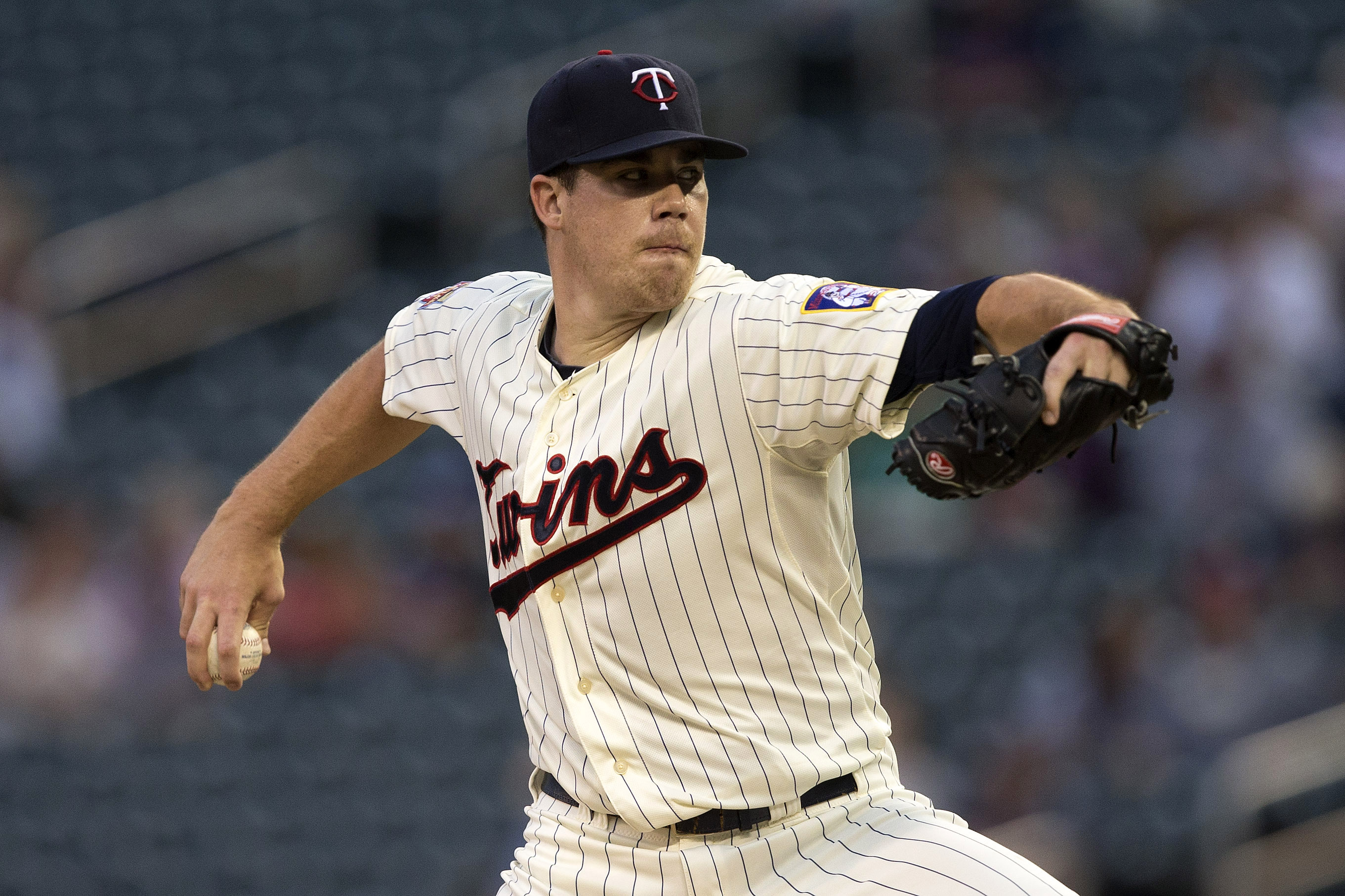 After an impressive season in Triple-A -- where he had his lowest walk rate since 2010 -- May was called up to the Twins in August. May’s minor league success did not transfer to the major league level. So far, starting in six of his seven appearances, May has pitched 29.2 innings while turning in a 24/19 K/BB ratio to go along with 41 hits to which have cumulated in a rotund 8.38 ERA. His biggest foe, besides people who do not enjoy his sick beats, has been pitching with runners on base. To this point in his major league career, ESPN/Trumedia says he has thrown 279 pitches in both the windup and the stretch. With the bases empty, he has kept opponents to a passable .269 average with a 17/9 K/BB ratio but when he puts a runner on, opponents have lambasted him to the tune of .479 with a disheartening 7/13 K/BB ratio. To be fair, a sizable number of those walks occurred during his debut in Oakland (6 walks from the stretch), but his performance has been shakiest when the bases are clogged. An American League scout who had observed May told the Star Tribune’s LaVelle Neal that May’s “got the ammo. He needs to locate it. And his fastball is pretty flat.” May has a four-pitch mix but has yet to show he can locate his fastball consistently enough to make the other pitches effective. For most of May’s tenure in professional baseball, his ability to repeat his mechanics has been questioned as his release point will occasionally vary and his arm slot will drop. This keeps his pitches up in the zone where they can flatten out and it seems to happen to him more often from the stretch. Overall, May’s fastball has been turned into hits at a high rate from both the windup and stretch. The biggest difference is the type of contact hitters are making. Consider this: When runners are on, opponents have posted a 46% line drive rate with a .276 hard-hit average compared to a 20% line drive rate and a .135 hard-hit average from his full windup. This makes sense when you consider the locations of his fastballs when in the windup (top) versus the stretch (bottom): Getting strike one while working in the stretch has been an on-going struggle for May as he has hit the zone with fewer than half of his first-pitch pitches (46%), a far cry from when there are no baserunners (63%). What’s more, hitters have become more conservative once May is pitching from the stretch, chasing far fewer pitches out of the zone (16%) than when he is in the windup (35%). That puts the 24-year-old at quite the disadvantage. Broadcasters and media-types often talk about things “snowballing” for pitchers. Each of May’s outings so far has been more avalanche than snowball once runners step on to the bases. Every pitcher has some discrepancy between the windup and the stretch, but May’s splits are more pronounced than most thus far in his small sample size. Obviously, the stats will normalize over time as his .404 batting average on balls in play is sure to come down and he is able to corral that grotesque walk rate. Look for improvements out of May in his next start on Sunday in Chicago.
 -
The Star Tribune's LaVelle Neal has a story on the Twins working with Oswaldo Arcia and it has some interesting quotes from the coaching staff: Manager Ron Gardenhire -- From hitting coach Tom Brunansky --
-
Thanks for watching/listening. This, of course, was a trial run. Going forward, the video will likely be smaller segments/bits rather than the entire show. The only reason we did not release the audio separately is because we wanted people to watch/listen to the video in order to get some feedback/ideas. Once again, thanks for listening!
-
The No Juice Podcast takes a different route in this week’s episode, unleashing the first No Juice Vidcast to address all of the #HotTopics in the Twins Daily forum section. In this video, Parker Hageman and Dan Anderson answer questions regarding Ron Washington vs Ron Gardenhire, the Minnesota Twins’ email survey, the magic of Tom Brunansky, Tommy Milone, Kyle Gibson and pitcher handling and surprising Twins minor leaguers. Click play on the video to have all of your baseball dreams come true: Please share any and all feedback in the comments section below or follow us on Twitter (@nojuicepodcast). We would love to hear what you think about the show, Parker’s stupid #SoberBeard or Dan’s constant head-bobbing. To hear the podcast which tackles the Minnesota Vikings, sinking pontoons, stealing other podcast’s mailbag questions and the music of 1996, listen below, on iTunes or on Stitcher: THE NO JUICE PODCAST, EPISODE #20: VIKINGS OPENER Click here to view the article
-
The No Juice Podcast, Episode #20: Video Killed The Podcast Star
Parker Hageman posted an article in Twins
 Click play on the video to have all of your baseball dreams come true: https://www.youtube.com/watch?v=lfg587A-_QM&list=UUUksIQgrcv2hgbughOgsuAg%5B/media Please share any and all feedback in the comments section below or follow us on Twitter (@nojuicepodcast). We would love to hear what you think about the show, Parker’s stupid #SoberBeard or Dan’s constant head-bobbing. To hear the podcast which tackles the Minnesota Vikings, sinking pontoons, stealing other podcast’s mailbag questions and the music of 1996, listen below, on iTunes or on Stitcher: THE NO JUICE PODCAST, EPISODE #20: VIKINGS OPENER
 -
Yeah, that is an on-going problem that the Twins have been trying to fix. http://twinsdaily.com/articles.html/_/minnesota-twins-news/minnesota-twins/oswaldo-arcia-is-very-good-but-hes-not-quite-there-yet-r2724
-
If it feels like I have dedicated a lot of words in this space to Oswaldo Arcia’s approach at the plate, it is because he remains a work-in-progress and the Minnesota Twins realize this. Arcia has impressed in stretches (like hitting seven home runs in August) but then regresses into a mess as pitchers tie him in knots. With the focus shifting toward 2015, the Twins are doing all they can to mold Arcia into a complete hitter.Early in the season, Fox Sports North’s Roy Smalley pointed out that the Twins were attempting to get Arcia to adjust his hands during the swing to avoid being eaten up by fastballs up in the zone. That is still a project as Arcia has gone 3-for-45 on fastballs in the upper third or higher this year while missing on 48% of his cuts (compared to the 21% league average). More recently, prior to Wednesday’s game Fox Sports North has shown Twins hitting coach Tom Brunansky attempting to break Arcia from the habit of dropping his shoulder and remaining closed in order to handle being pitched away more. Once again, Arcia is hitting a paltry .182 on the outer-half (one of the lowest in the league) while pulling a significant number of those pitches. These areas of his game need to improve. The Twins are also trying to get him to understand how pitchers are attacking him. According to a tweet from the Star Tribune’s La Velle E Neal, manager Ron Gardenhire said the team is having Arcia watch more video to absorb what teams are doing with him. Heat maps from ESPN/TruMedia reveal the simple formula: Fastballs up in the zone, breaking stuff/offspeed down and away. Download attachment: Arcia_Heat Maps.png It is relatively easy to understand why opposing teams apply this treatment. Because he has such strength combined with a pull-happy tendency, Arcia has detonated pitches middle-in: Download attachment: strike-zone (51).png Another factor that is involved in his streaky hitting is his pitch selection. In terms of breaking and offspeed pitches, Arcia has chased 44% of those pitches out of the zone compared to the 33% MLB average. The coaching staff obviously has the best insight on how to move forward with Arcia but it is possible that resurrecting a method from his past might help his future. Watching him now, it may be easy to credit Arcia’s aggressive leg kick as a big source for his power generation. True, it does help cultivate power, but Arcia has been as strong as they come with or without that stage in his swing. The model that Arcia uses today had its inception in 2013 while with the Rochester Red Wings. Prior to that, he displayed the muted toe tap stride while in Double-A. http://i.imgur.com/AoaBdR0.gif Compare that to the current model: http://i.imgur.com/4IOzAsG.gif This is not an intent to discuss the merits of the toe tap versus the leg kick, but you can notice the difference in just the head movement when he strides. In 2012, his head stays on the plane whereas with the current version, the head has noticeable movement and changes planes. Beyond that, because of the timing mechanism in the leg lift, there is less time for pitch recognition before committing to swing, which may explain why he is so susceptible to slower and breaking stuff out of the zone. To be sure, there is little difference in Arcia’s power numbers and strikeout/walk rates from 2012 to now. He had plenty of pop and struck out in a very high proportion of his at-bats in both Double-A and in the majors. Admittedly, major league pitchers are much better at locating their secondary pitches than their Double-A counterparts but Arcia’s previous swing seems to give him more balance, which could translate to handling being pitched away better, and greater opportunity for pitch recognition. When Kennys Vargas came up to the Twins this year, he initially had a big leg kick that was quickly trashed for the muted toe tap. Despite the change, this has not seemed to have stymied Vargas’ power in the least while allowing him to better combat the assortment of secondary offerings of major league pitching. This might be a good opportunity to see if Arcia would be interested in trying the same. The 23-year-old Venezuelan is plenty talented and gifted in the power department. With the team firmly out of any postseason contention, now is the time to make adjustments and improve for next year. There is no need to pull every pitch into the IDS, mostly because every pitch should not be pulled. As the season winds down, the goal is to reduce the number of pitches chased out of the zone and drive some of those away pitches back up the middle and the other way. Click here to view the article
-
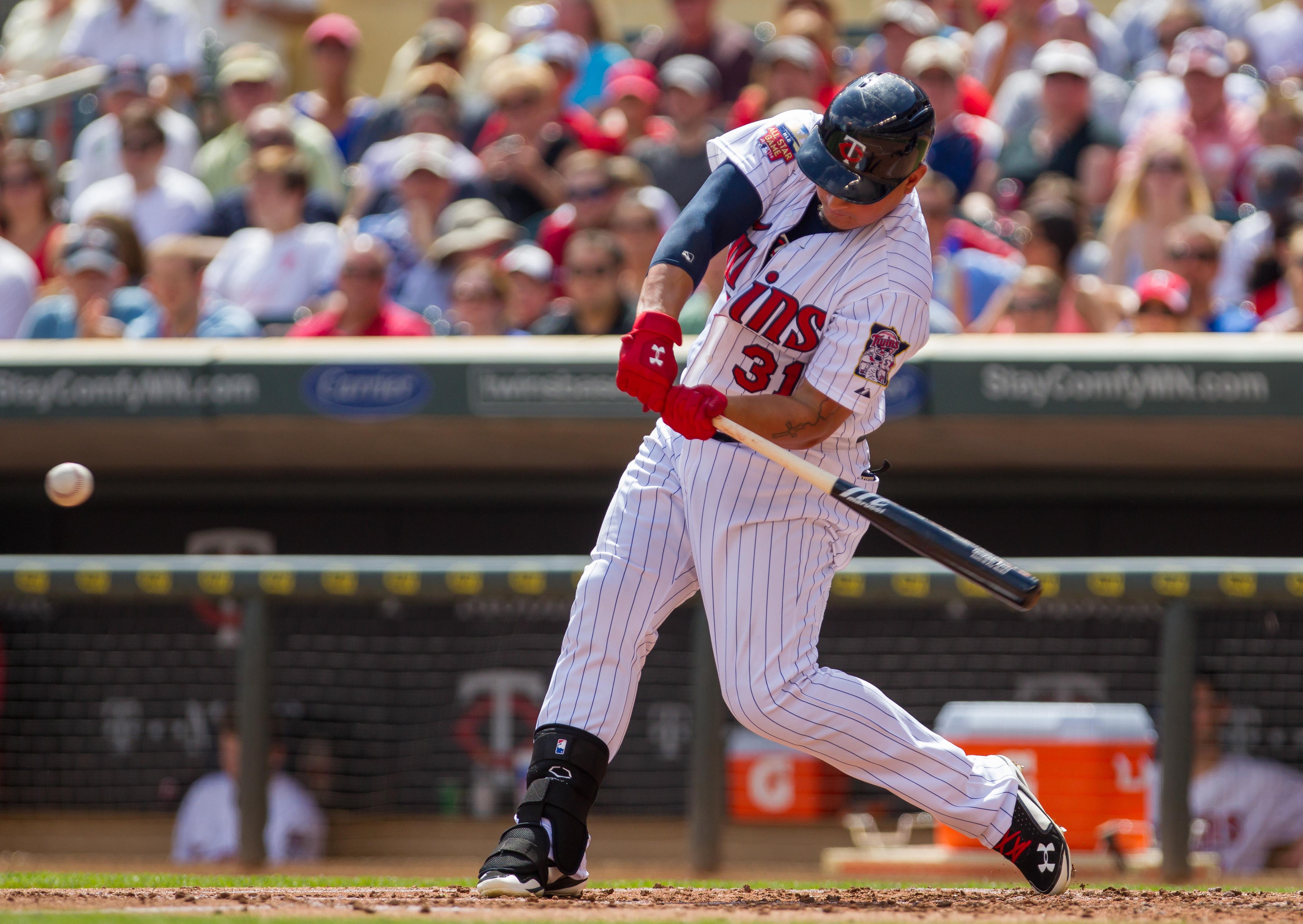 Early in the season, Fox Sports North’s Roy Smalley pointed out that the Twins were attempting to get Arcia to adjust his hands during the swing to avoid being eaten up by fastballs up in the zone. That is still a project as Arcia has gone 3-for-45 on fastballs in the upper third or higher this year while missing on 48% of his cuts (compared to the 21% league average). More recently, prior to Wednesday’s game Fox Sports North has shown Twins hitting coach Tom Brunansky attempting to break Arcia from the habit of dropping his shoulder and remaining closed in order to handle being pitched away more. Once again, Arcia is hitting a paltry .182 on the outer-half (one of the lowest in the league) while pulling a significant number of those pitches. These areas of his game need to improve. The Twins are also trying to get him to understand how pitchers are attacking him. According to a tweet from the Star Tribune’s La Velle E Neal, manager Ron Gardenhire said the team is having Arcia watch more video to absorb what teams are doing with him. Heat maps from ESPN/TruMedia reveal the simple formula: Fastballs up in the zone, breaking stuff/offspeed down and away. It is relatively easy to understand why opposing teams apply this treatment. Because he has such strength combined with a pull-happy tendency, Arcia has detonated pitches middle-in: Another factor that is involved in his streaky hitting is his pitch selection. In terms of breaking and offspeed pitches, Arcia has chased 44% of those pitches out of the zone compared to the 33% MLB average. The coaching staff obviously has the best insight on how to move forward with Arcia but it is possible that resurrecting a method from his past might help his future. Watching him now, it may be easy to credit Arcia’s aggressive leg kick as a big source for his power generation. True, it does help cultivate power, but Arcia has been as strong as they come with or without that stage in his swing. The model that Arcia uses today had its inception in 2013 while with the Rochester Red Wings. Prior to that, he displayed the muted toe tap stride while in Double-A. http://i.imgur.com/AoaBdR0.gif Compare that to the current model: http://i.imgur.com/4IOzAsG.gif This is not an intent to discuss the merits of the toe tap versus the leg kick, but you can notice the difference in just the head movement when he strides. In 2012, his head stays on the plane whereas with the current version, the head has noticeable movement and changes planes. Beyond that, because of the timing mechanism in the leg lift, there is less time for pitch recognition before committing to swing, which may explain why he is so susceptible to slower and breaking stuff out of the zone. To be sure, there is little difference in Arcia’s power numbers and strikeout/walk rates from 2012 to now. He had plenty of pop and struck out in a very high proportion of his at-bats in both Double-A and in the majors. Admittedly, major league pitchers are much better at locating their secondary pitches than their Double-A counterparts but Arcia’s previous swing seems to give him more balance, which could translate to handling being pitched away better, and greater opportunity for pitch recognition. When Kennys Vargas came up to the Twins this year, he initially had a big leg kick that was quickly trashed for the muted toe tap. Despite the change, this has not seemed to have stymied Vargas’ power in the least while allowing him to better combat the assortment of secondary offerings of major league pitching. This might be a good opportunity to see if Arcia would be interested in trying the same. The 23-year-old Venezuelan is plenty talented and gifted in the power department. With the team firmly out of any postseason contention, now is the time to make adjustments and improve for next year. There is no need to pull every pitch into the IDS, mostly because every pitch should not be pulled. As the season winds down, the goal is to reduce the number of pitches chased out of the zone and drive some of those away pitches back up the middle and the other way.


