



Nick Nelson
-
Posts
8,327 -
Joined
-
Last visited
-
Days Won
56
Content Type
Profiles
News
Minnesota Twins Videos
2026 Minnesota Twins Top Prospects Ranking
2022 Minnesota Twins Draft Picks
Minnesota Twins Free Agent & Trade Rumors, Notes, & Tidbits
Guides & Resources
2023 Minnesota Twins Draft Picks
The Minnesota Twins Players Project
2024 Minnesota Twins Draft Picks
2025 Minnesota Twins Draft Pick Tracker
2026 Minnesota Twins Draft Tracker: Picks & Bonuses
Forums
Blogs
Events
Store
Downloads
Gallery
Everything posted by Nick Nelson
-
 The trade deadline is approaching, and the Minnesota Twins are set to open up shop. But the dirty little secret is that if the front office wants to truly capitalize on a clear "sell" opportunity and bring back high-caliber prospects, it's going to require parting with one (or both) of two beloved players who would be extremely painful to lose. The Twins, destined for irrelevance this season, have a variety of players they'd be more than happy to ship out. Impending free agents like Andrelton Simmons, Michael Pineda, Hansel Robles and J.A. Happ? Why not? Makes no difference really. Those players will be free for anyone to sign come November, and there's no reason to be clamoring for an extension with any of them. Even players under control beyond this year, like Josh Donaldson and Miguel Sanó, could be dealt with a viable argument their salary allotment is better diverted elsewhere. The problem, of course, is that none of these players are likely to generate significant demand at the deadline. Due either to performance, contracts, injuries, or some combination, they're all burdened by drawbacks that significantly dash their trade value. In any of these cases, the Twins are going to be accepting an underwhelming return. Many trade scenarios would qualify as no more than a salary dump. When it comes to selling high, the front office has three opportunities, and in only two of those cases will they be able to dictate a market and drive up the asking price. Fresh off his All-Star appearance, Nelson Cruz is an elite hitter, and basically the biggest offensive upgrade a team could ask for at the deadline. He's a bona fide difference-maker for a contender, and all but certain to get moved. But as a 41-year-old pure DH with two months left on his deal, Cruz's market is inherently limited. When you narrow down the field of teams that actually have a fit, are willing to pay his remaining salary, and are in contention for a championship, you wind up with a handful at most. Cruz will almost surely be traded, but he's not going to bring back a game-changing prospect. That's the nature of the beast. If the Twins want to sell high and compel another team to overpay at the deadline, they're going to need to trade away either their best starter, José Berríos, or their best reliever, Taylor Rogers. Now this is not an endorsement of that course of action. I feel the same reservations as many people reading this do. In part, the attachment is sentimental. Berríos and Rogers are both extremely likable, as well as extremely familiar. They are among the longest-tenured Twins players – both drafted in 2012 before making major-league debuts in 2016. They've remained constants in the rotation and bullpen while the team has changed drastically around them. Both are models of durability and consistency. But sentimentality aside, the more important factor here is that both Berríos and Rogers are critical if not essential to any hopes of the Twins rebounding and returning to contention in 2022. It's already difficult enough to envision the club fielding a contention-caliber rotation OR bullpen next year, given the sorry current state of both units. But when you remove the top performer (by a wide margin) in each, the task feels insurmountable. Berríos and Rogers should theoretically be centerpieces of a retool-and-reset strategy. They are both under team control at a reasonable rate next year, and each is on top of his game. Berríos ranks seventh among AL starters in fWAR, while Rogers ranks fifth among relievers – a first-time All-Star with career highs in K-rate, swinging-strike rate, and FIP. Of course, these are exactly the reasons they will generate outsized demand. Whereas Cruz has a narrow field of suitors, Berríos and Rogers are attractive to any team that's even THINKING about buying. Which brings us back to the point at hand. I don't like the idea of trading either of these long-time fixtures, especially when you'd be subtracting from a clear area of weakness. But no one can deny that if the Twins want to make a real splash and acquire substantial prospect capital to aid whatever scale of rebuild they are about to undertake ... they really have no other choice. This front office prides itself on being opportunistic, and has never been weighed down by sentimentality. We'll see where they land. MORE FROM TWINS DAILY — Latest Twins coverage from our writers — Recent Twins discussion in our forums — Follow Twins Daily via Twitter, Facebook or email View full article
- 74 replies
-
- 1
-

-
- jose berrios
- taylor rogers
- (and 1 more)
-
In terms of team performance, this was probably the most disappointing and soul-crushing first half of a Twin season I've ever endured. And yet I can honestly say that – as a pure baseball fan – I've enjoyed the first half of this season as much as any I can remember. I love baseball in all of its dissectible minutiae. I delight in overthinking every at-bat, sweating every intense moment, and debating pointless frivolities. I get a kick out of analyzing and opining on the many twists and turns of a marathon season. And offseason. (If you frequent this site, you might have noticed.) But more than all that, I just love the baseball experience. Removing all of the stats, trends, trades, analytics, and hot takes, I am plain and simply a baseball fan to the core. I feel at peace in the ballpark, or with sounds of the game droning on my TV or radio. When I was a young pup riding the bus down Cedar Avenue to the Metrodome, I didn't care much about Kirby Puckett's OPS or Brad Radke's trade value. I was just happy to be wandering through this majestic Dome, eating a hot dog and staring on at the action alongside thousands of other contented folks. If the game went long, maybe I'd even get to stay out late on a school night. Much has changed since those days, but the fundamental source of my passion has not. And I was reminded of this very starkly in 2020, when a cherished annual summer routine – uninterrupted since I could remember (mind you, I was 9 years old when the '94 strike took place) – fell apart. As the pandemic unfolded two springs ago, I was highly skeptical a season of record could be salvaged. Happily I was wrong. Major League Baseball managed to pull off a shortened 60-game season, and it was entirely fine. Much better than nothing. But it never quite felt authentic, and was over almost as quickly as it began. (The Twins played their 60th game of this season five weeks ago.) Most crucially, like so many diehards across the country, I never got to attend a game. It's an irrelevant footnote in the face of all the tragedy and trauma faced by so many last year, but losing the ballpark experience was a bummer. I promised myself that when we emerged from it all and congregated once again at the stadium, I'd savor the hell out of it. And that I have. I've attended more Twins games at Target Field in the first half of this season than any previous. (And a couple at Kauffman Stadium!) I've run into random friends, heckled opposing outfielders, inhaled messy brats, beat the buzzer on bottom-of-seventh beers, and gazed wordlessly from my seat for indefinite stretches at the beautifully bland cadence of baseball, in all of its calm and rhythmic glory. Lord, did I miss it. I attended two games this past weekend, during a sweep of the Tigers to close out the first half. Let's just say it cemented my deep gratitude for the return of (relative) normalcy in the realm of baseball. On Friday I grabbed bleacher seats with high school friends and felt the electricity of the year's biggest crowd. The place was alive. Sunday, I joined up with a whole gaggle of Twins Daily writers – many of whom I'd scarcely had met before, what with the absence of events for 16 months – and we had a ball milling about on the Gray Duck Deck. Considerable Bomba Juice was consumed. These times are golden. They're what fuel my fandom and love for the sport, through thick and thin. I don't know if this year's Twins season would be described as thick or thin (kinda weird descriptors?), but what matters is we're all trudging through it together, and Sunday was an excellent reminder of that: a perfect punctuation to the best and worst damn first half of Twins baseball ever. The return of baseball as we know and love it would be way more fun, obviously, if our favorite team did not fall flat and completely erase any pretense of contention by the All-Star Game. But them's the breaks. The home team hasn't won much, and it's a shame. Still, those eternal words ring truer than ever: Take me out to the ballgame. Take me out with the crowd. View full article
-
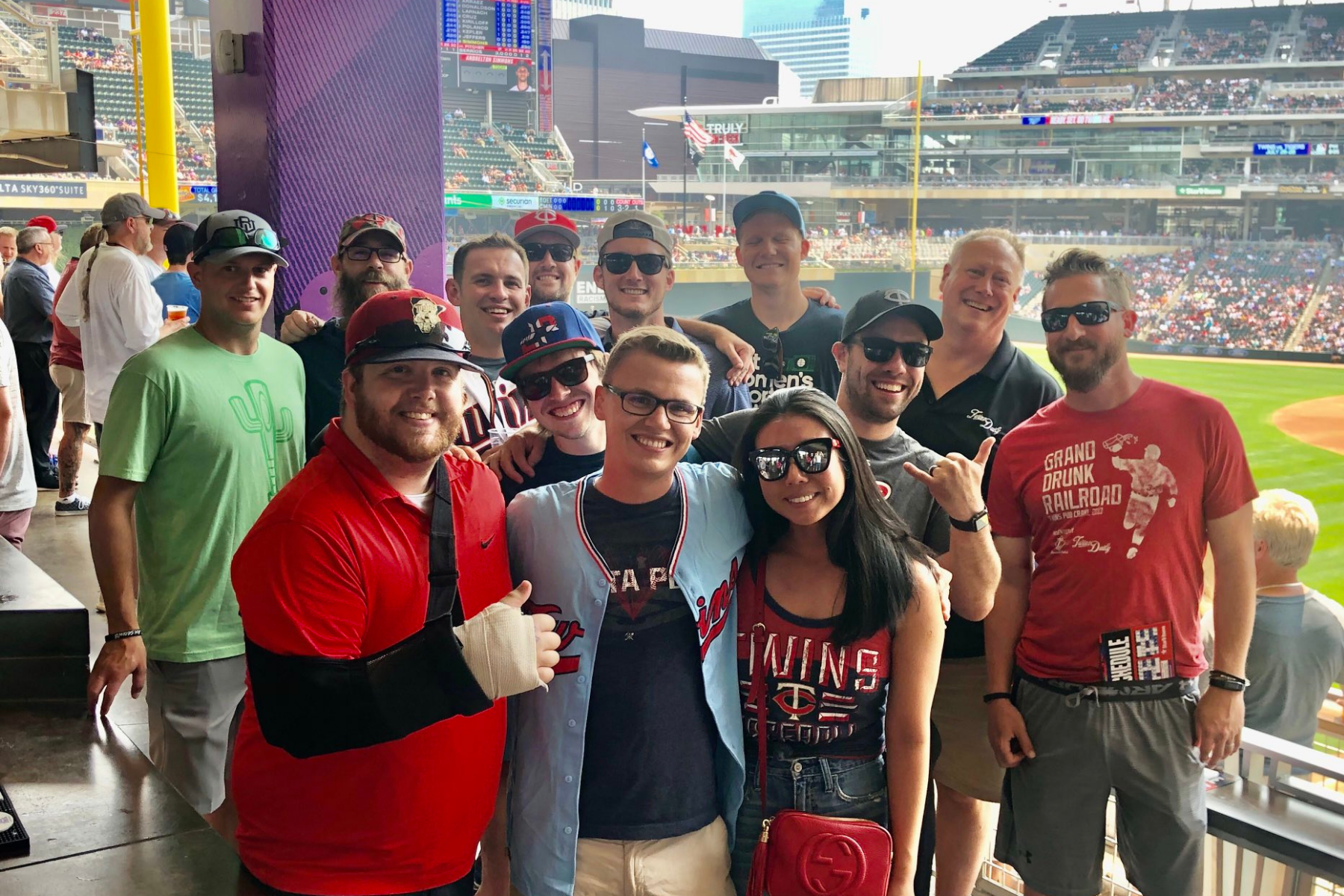 I love baseball in all of its dissectible minutiae. I delight in overthinking every at-bat, sweating every intense moment, and debating pointless frivolities. I get a kick out of analyzing and opining on the many twists and turns of a marathon season. And offseason. (If you frequent this site, you might have noticed.) But more than all that, I just love the baseball experience. Removing all of the stats, trends, trades, analytics, and hot takes, I am plain and simply a baseball fan to the core. I feel at peace in the ballpark, or with sounds of the game droning on my TV or radio. When I was a young pup riding the bus down Cedar Avenue to the Metrodome, I didn't care much about Kirby Puckett's OPS or Brad Radke's trade value. I was just happy to be wandering through this majestic Dome, eating a hot dog and staring on at the action alongside thousands of other contented folks. If the game went long, maybe I'd even get to stay out late on a school night. Much has changed since those days, but the fundamental source of my passion has not. And I was reminded of this very starkly in 2020, when a cherished annual summer routine – uninterrupted since I could remember (mind you, I was 9 years old when the '94 strike took place) – fell apart. As the pandemic unfolded two springs ago, I was highly skeptical a season of record could be salvaged. Happily I was wrong. Major League Baseball managed to pull off a shortened 60-game season, and it was entirely fine. Much better than nothing. But it never quite felt authentic, and was over almost as quickly as it began. (The Twins played their 60th game of this season five weeks ago.) Most crucially, like so many diehards across the country, I never got to attend a game. It's an irrelevant footnote in the face of all the tragedy and trauma faced by so many last year, but losing the ballpark experience was a bummer. I promised myself that when we emerged from it all and congregated once again at the stadium, I'd savor the hell out of it. And that I have. I've attended more Twins games at Target Field in the first half of this season than any previous. (And a couple at Kauffman Stadium!) I've run into random friends, heckled opposing outfielders, inhaled messy brats, beat the buzzer on bottom-of-seventh beers, and gazed wordlessly from my seat for indefinite stretches at the beautifully bland cadence of baseball, in all of its calm and rhythmic glory. Lord, did I miss it. I attended two games this past weekend, during a sweep of the Tigers to close out the first half. Let's just say it cemented my deep gratitude for the return of (relative) normalcy in the realm of baseball. On Friday I grabbed bleacher seats with high school friends and felt the electricity of the year's biggest crowd. The place was alive. Sunday, I joined up with a whole gaggle of Twins Daily writers – many of whom I'd scarcely had met before, what with the absence of events for 16 months – and we had a ball milling about on the Gray Duck Deck. Considerable Bomba Juice was consumed. These times are golden. They're what fuel my fandom and love for the sport, through thick and thin. I don't know if this year's Twins season would be described as thick or thin (kinda weird descriptors?), but what matters is we're all trudging through it together, and Sunday was an excellent reminder of that: a perfect punctuation to the best and worst damn first half of Twins baseball ever. The return of baseball as we know and love it would be way more fun, obviously, if our favorite team did not fall flat and completely erase any pretense of contention by the All-Star Game. But them's the breaks. The home team hasn't won much, and it's a shame. Still, those eternal words ring truer than ever: Take me out to the ballgame. Take me out with the crowd.
- 25 comments
-
- 18
-
-
The Twins are riding a winning streak into the All-Star break, thanks to a four-game sweep over the Tigers at Target Field to close out the first half. The MLB Draft is underway, the trade deadline is bearing down, and plenty of intriguing storylines are unfolding. Let's dig in. Weekly Snapshot: 7/5 through Sun, 7/11 *** Record Last Week: 5-2 (Overall: 39-50) Run Differential Last Week: +7 (Overall: -57) Standing: T-4th Place in AL Central (15.0 GB) Last Week's Game Recaps: Game 83 | MIN 8, CWS 5: Ober Picks Up First MLB Win Game 84 | CWS 4, MIN 1: Berríos Gets No Help in Brilliant Outing Game 85 | CWS 6, MIN 1: Bats Have No Answer for Lance Lynn Game 86 | MIN 5, DET 3: Happ and Hitters Go Deep as Twins Top Tigers Game 87 | MIN 4, DET 2: Tides Turn for Twins in 4-Run Sixth Inning Game 88 | MIN 9, DET 4: Late Surge from Offense Lifts Twins Game 89 | MIN 12, DET 9: Polanco Walks Off Detroit in 10th NEWS & NOTES Even after taking four straight from Detroit, improving to 7-2 against them this year, the Twins are still only tied with the Tigers for fourth place in the AL Central standings. That speaks to how badly things were going beforehand – with another series loss against the White Sox earlier in the week, Minnesota had fallen to a season-high 15.5 games out of first place. The Twins head into the All-Star break with several players sidelined, including key cogs like Byron Buxton and Mitch Garver. But the steady stream of injuries has thankfully slowed to a trickle of late, with more additions than subtractions in the past couple weeks. The latest activation was Michael Pineda, who replaced Griffin Jax on the active roster but struggled in his return on Wednesday. It sounds like Garver and Jake Cave could be firing up rehab stints shortly after the break concludes. HIGHLIGHTS Top performers from the past week included: Max Kepler, who has sprung to life after watching his batting average dip below .200 at the end of June. Kepler has raised his OPS by nearly 100 points in July, and the last week helped a lot as he went 9-for-24 with three home runs and seven RBIs. He is a sleeper candidate to be traded this month. José Berríos is less of a sleeper and more of a prime deadline asset for the selling Twins. We'll see if they get an offer that compels them to trade their best starter, but Berríos is doing his part to stoke the market. He went seven innings in both of his two starts this past week, striking out 18 and allowing just four hits. Luis Arraez started six of the seven games and collected hits in each, finishing the week 10-for-26. Since returning from the IL in mid-June, Arraez is batting .329/.376/.459 with five doubles and three triples in 23 games. It was a relatively quiet week for Jorge Polanco, who went 7-for-28 to keep his batting average in the .250 range, but he finished with a bang on Sunday, driving in a career-high five runs and sending the Twins into the break with a walk-off win. LOWLIGHTS Adjustments might be catching up with Trevor Larnach. The rookie outfielder has so impressed manager Rocco Baldelli that he's now hitting third or fourth on a regular basis, but Larnach finds himself in a real funk as the All-Star break arrives. The last week saw him go 4-for-26 with 15 strikeouts in 29 plate appearances, including golden sombreros (4 Ks) on both Saturday and Sunday. Major-league pitchers are finding ways to attack and exploit Larnach, who has a 22-to-3 K/BB ratio this month. Now the impetus is on him to make his own adjustments and get back on track. Given the caliber of hitter he is, that seems likely, and these will be the intriguing sorts of threads to follow in the second half of this wayward season. Another key figure to follow will be Bailey Ober, who struggled against Detroit on Saturday, coughing up four runs over 3 ⅓ innings while laboring through 79 pitches. The big right-hander has an opportunity to more or less lock down a 2022 rotation spot with a good showing this year, but he's gonna need to step it up. Ober has gotten through five innings only twice in eight starts, and lapses like Saturday's have been all too common. He flashes strikeout stuff and his control has been pretty solid, but he's given up nine homers in 33 innings. Can he solve the long-ball woes in the second half? And how much opportunity will have to do so, as the Twins carefully manage his workload coming off the lost season? TRENDING STORYLINE The MLB Draft is officially underway and the Twins made their first two picks on Sunday night, selecting a pair of prep stars with enticing upside. With their first pick, at #26 overall, the Twins took Chase Petty, a right-handed pitcher out of Mainland Regional High School in New Jersey. The hard-throwing hurler is reputed for a fastball that touches triple digits, but he slid to the back of the first round because he has trouble controlling it. If the Twins can harness his command and keep him healthy they may have a gem here. At #36, the Twins used their second pick to take another 18-year-old high schooler, this time going with shortstop Noah Miller out of Ozaukee High School in Wisconsin. He's considered a defensive specialist – which is good because it means he should stick at short – but he has the tools to become a two-way threat. The Twins' first two picks in this draft don't exactly scream "immediate help," and are a departure from this front office's typical tendency to jump on college players in the early rounds. But that's not necessarily a bad thing. We'll see where the organization goes from here. The draft continues on Monday with rounds 2 through 10, and Minnesota's next selection will come at No. 61. Make sure to stay tuned into Twins Daily as we'll be covering the action live. LOOKING AHEAD Nelson Cruz will represent the Twins in the All-Star Game on Tuesday, and then the team gets back to action with a flurry of action on the other side of the break. Friday's double-header against Detroit sparks a span of six games in four days coming out of the break, with a double-header in Chicago against the White Sox awaiting next Monday. We'll see how the Twins situate their roster and rotation to accommodate. As of now, probable starters have not been announced. TUESDAY, 7/13: MLB ALL-STAR GAME FRIDAY, 7/16 (G1): TWINS @ TIGERS FRIDAY, 7/16 (G2): TWINS @ TIGERS SATURDAY, 7/17: TWINS @ TIGERS SUNDAY, 7/18: TWINS @ TIGERS MORE FROM TWINS DAILY — Latest Twins coverage from our writers — Recent Twins discussion in our forums — Follow Twins Daily via Twitter, Facebook or email View full article
-
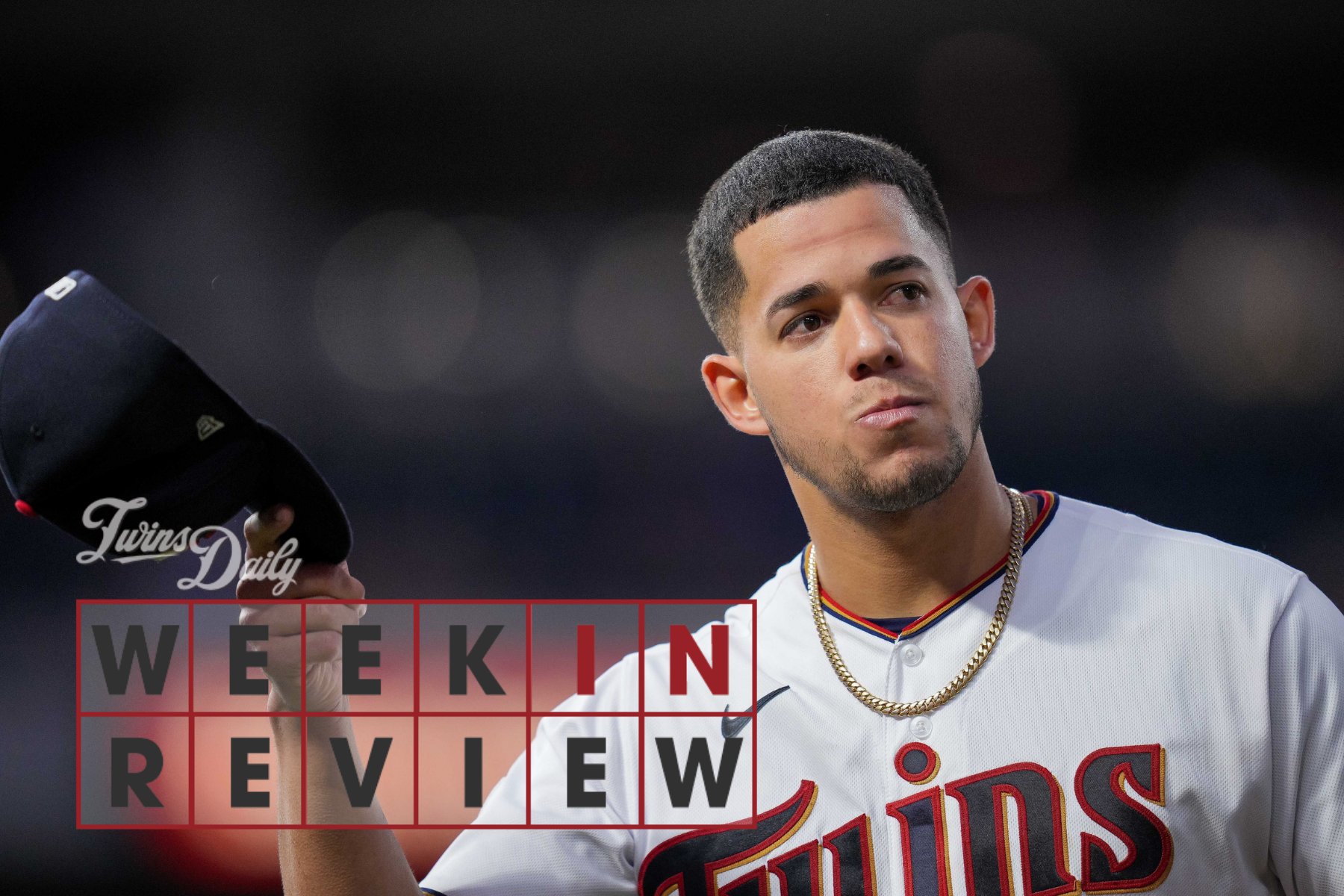 Weekly Snapshot: 7/5 through Sun, 7/11 *** Record Last Week: 5-2 (Overall: 39-50) Run Differential Last Week: +7 (Overall: -57) Standing: T-4th Place in AL Central (15.0 GB) Last Week's Game Recaps: Game 83 | MIN 8, CWS 5: Ober Picks Up First MLB Win Game 84 | CWS 4, MIN 1: Berríos Gets No Help in Brilliant Outing Game 85 | CWS 6, MIN 1: Bats Have No Answer for Lance Lynn Game 86 | MIN 5, DET 3: Happ and Hitters Go Deep as Twins Top Tigers Game 87 | MIN 4, DET 2: Tides Turn for Twins in 4-Run Sixth Inning Game 88 | MIN 9, DET 4: Late Surge from Offense Lifts Twins Game 89 | MIN 12, DET 9: Polanco Walks Off Detroit in 10th NEWS & NOTES Even after taking four straight from Detroit, improving to 7-2 against them this year, the Twins are still only tied with the Tigers for fourth place in the AL Central standings. That speaks to how badly things were going beforehand – with another series loss against the White Sox earlier in the week, Minnesota had fallen to a season-high 15.5 games out of first place. The Twins head into the All-Star break with several players sidelined, including key cogs like Byron Buxton and Mitch Garver. But the steady stream of injuries has thankfully slowed to a trickle of late, with more additions than subtractions in the past couple weeks. The latest activation was Michael Pineda, who replaced Griffin Jax on the active roster but struggled in his return on Wednesday. It sounds like Garver and Jake Cave could be firing up rehab stints shortly after the break concludes. HIGHLIGHTS Top performers from the past week included: Max Kepler, who has sprung to life after watching his batting average dip below .200 at the end of June. Kepler has raised his OPS by nearly 100 points in July, and the last week helped a lot as he went 9-for-24 with three home runs and seven RBIs. He is a sleeper candidate to be traded this month. José Berríos is less of a sleeper and more of a prime deadline asset for the selling Twins. We'll see if they get an offer that compels them to trade their best starter, but Berríos is doing his part to stoke the market. He went seven innings in both of his two starts this past week, striking out 18 and allowing just four hits. Luis Arraez started six of the seven games and collected hits in each, finishing the week 10-for-26. Since returning from the IL in mid-June, Arraez is batting .329/.376/.459 with five doubles and three triples in 23 games. It was a relatively quiet week for Jorge Polanco, who went 7-for-28 to keep his batting average in the .250 range, but he finished with a bang on Sunday, driving in a career-high five runs and sending the Twins into the break with a walk-off win. LOWLIGHTS Adjustments might be catching up with Trevor Larnach. The rookie outfielder has so impressed manager Rocco Baldelli that he's now hitting third or fourth on a regular basis, but Larnach finds himself in a real funk as the All-Star break arrives. The last week saw him go 4-for-26 with 15 strikeouts in 29 plate appearances, including golden sombreros (4 Ks) on both Saturday and Sunday. Major-league pitchers are finding ways to attack and exploit Larnach, who has a 22-to-3 K/BB ratio this month. Now the impetus is on him to make his own adjustments and get back on track. Given the caliber of hitter he is, that seems likely, and these will be the intriguing sorts of threads to follow in the second half of this wayward season. Another key figure to follow will be Bailey Ober, who struggled against Detroit on Saturday, coughing up four runs over 3 ⅓ innings while laboring through 79 pitches. The big right-hander has an opportunity to more or less lock down a 2022 rotation spot with a good showing this year, but he's gonna need to step it up. Ober has gotten through five innings only twice in eight starts, and lapses like Saturday's have been all too common. He flashes strikeout stuff and his control has been pretty solid, but he's given up nine homers in 33 innings. Can he solve the long-ball woes in the second half? And how much opportunity will have to do so, as the Twins carefully manage his workload coming off the lost season? TRENDING STORYLINE The MLB Draft is officially underway and the Twins made their first two picks on Sunday night, selecting a pair of prep stars with enticing upside. With their first pick, at #26 overall, the Twins took Chase Petty, a right-handed pitcher out of Mainland Regional High School in New Jersey. The hard-throwing hurler is reputed for a fastball that touches triple digits, but he slid to the back of the first round because he has trouble controlling it. If the Twins can harness his command and keep him healthy they may have a gem here. At #36, the Twins used their second pick to take another 18-year-old high schooler, this time going with shortstop Noah Miller out of Ozaukee High School in Wisconsin. He's considered a defensive specialist – which is good because it means he should stick at short – but he has the tools to become a two-way threat. The Twins' first two picks in this draft don't exactly scream "immediate help," and are a departure from this front office's typical tendency to jump on college players in the early rounds. But that's not necessarily a bad thing. We'll see where the organization goes from here. The draft continues on Monday with rounds 2 through 10, and Minnesota's next selection will come at No. 61. Make sure to stay tuned into Twins Daily as we'll be covering the action live. LOOKING AHEAD Nelson Cruz will represent the Twins in the All-Star Game on Tuesday, and then the team gets back to action with a flurry of action on the other side of the break. Friday's double-header against Detroit sparks a span of six games in four days coming out of the break, with a double-header in Chicago against the White Sox awaiting next Monday. We'll see how the Twins situate their roster and rotation to accommodate. As of now, probable starters have not been announced. TUESDAY, 7/13: MLB ALL-STAR GAME FRIDAY, 7/16 (G1): TWINS @ TIGERS FRIDAY, 7/16 (G2): TWINS @ TIGERS SATURDAY, 7/17: TWINS @ TIGERS SUNDAY, 7/18: TWINS @ TIGERS MORE FROM TWINS DAILY — Latest Twins coverage from our writers — Recent Twins discussion in our forums — Follow Twins Daily via Twitter, Facebook or email
 -
TD Midseason Top 20 Twins Prospect Rankings: 1-5
Nick Nelson replied to Nick Nelson's topic in Twins Minor League Talk
I haven't heard anything specifically worrisome. My guess is they're just giving him a little extra time to manage his workload. In fact, there's a part of me that wonders if the litany of injuries and IL stints throughout the system are due in some part to an extremely conservative approach because the Twins are trying to be super careful easing guys in after the lost year. Maybe that's just hopeful thinking.- 16 replies
-
- 6
-
-
- royce lewis
- jhoan duran
- (and 3 more)
-
With former top prospects like Alex Kirilloff (#1 on our preseason list), Trevor Larnach (#3) and Ryan Jeffers (#4) graduating from prospect status, several new names enter the top five in our midseason update. These promising young players all have a chance to play a significant role as the Twins aim to retool and rebound. 5. Jose Miranda, 3B/2B Age: 23 ETA: 2022 2021 Stats (AA/AAA): .350 AVG, .409 OBP, .614 SLG, 16 HR, 46 RBI 2021 Ranking: 19 When we ranked him No. 19 on our preseason top prospects list, the short synopsis on Miranda was a familiar one: "High-contract righty-swinging infielder needs to find power stroke." The former second-round draft pick has long sat on the fringes of our top-20 rankings because of his many intriguing traits, but the production just wasn't there to justify ranking him much higher. Through his first 379 games in the minors, he slugged .394 with 37 home runs. This year, he found his power stroke. Miranda came out of the gates red-hot at Double-A, opening with a seven-game hitting streak that included three home runs, and he never really slowed down. Miranda slashed .345/.408/.588 with 13 home runs in two months at Wichita, then earned a late-June promotion to St. Paul, where he put together an unforgettable Triple-A debut: 5-6, 3 HR, 6 RBIs. It all came together in a hurry for Miranda and there's not much reason to think his breakthrough isn't legit. He's got a smooth, compact swing from the right side that was always produced high contact rates, and he's clearly turned a corner with his ability to drive the ball. He projects as a third baseman in the big leagues, and perhaps pretty soon, depending on what happens with Josh Donaldson. 4. Matt Canterino, RHSP Age: 23 ETA: 2022 2021 Stats (A+): 18 IP, 1.00 ERA, 0.72 WHIP, 1.14 FIP, 51.5 K%, 4.4 BB% 2021 Ranking: 9 Canterino drew considerable hype coming into this season after reports emerged of him touching 100 MPH in a side session. A second-rounder out of Rice University in 2019, he made a strong impression by dominating in his first stint as a pro (1.44 ERA, 11.2 K/9 between rookie and A-ball), but plenty of highly-drafted collegiate players have done that. Taking the next step is the differentiator. Canterino's velo jump, and the behind-the-scenes work it reflected, were seemingly positive indicators. The righty needed to show it on the field. He has. Canterino was brilliant through four starts for Cedar Rapids, now the Twins' High-A affiliate. I mean, we're talking stupid good numbers. Thirty-five strikeouts in 18 innings? A 17.5 K/9 rate?? Canterino was striking out literally more than half the batters he faced. Beyond overpowering. He was likely in line for an imminent promotion to Double-A, but unfortunately the 23-year-old developed a sore elbow and hasn't pitched since May. He is currently on the comeback trail and the Twins hope he'll be able to return to the mound soon – probably in Wichita once he's fully back on track. 3. Jordan Balazovic, RHSP Age: 22 ETA: 2022 2021 Stats (AA): 21 1/3 IP, 4.44 ERA, 1.40 WHIP, 3.86 FIP, 29.5 K%, 7.1 BB% 2021 Ranking: 6 After getting a late start to his season while healing from injury, Balazovic's results through six starts at Double-A have been ... uneven. His 4.44 ERA is nothing to write home about, and he has yet to get through six innings in an outing. With that said, he's been building up – his best, and longest, start was also his most recent – and the signs of that big potential have been on display. In 24 ⅓ innings, he has piled up 33 strikeouts with a 14% swing-and-miss rate. While hitters have had success against him at times, they haven't hit for much power (3 HR and 7 XBH total) and Balazovic's control hasn't really eluded him at any point. For now the key is to continually advance his workload and consistency. 2. Jhoan Duran, RHSP Age: 23 ETA: 2022 2021 Stats (A/AA): 34 1/3 IP, 3.41 ERA, 1.28 WHIP, 2.64 FIP, 38.2 K%, 9.0 BB% 2021 Ranking: n/a Like Balazovic, Duran's start to the 2021 campaign was delayed by injury following a lost pandemic season. When he took the mound on May 22nd at CHS Field, it was Duran's first time pitching in a minor-league game since August 29th of 2019. He was worth the wait. Unleashing triple-digit heat, Duran dazzled, striking out six over three innings of one-run ball. His next time out he allowed only one hit while fanning eight over four scoreless frames. However, things took a downward turn at this point, as Duran was tagged with losses in his next three appearances (one a long-relief outing), surrendering 8 earned runs with an 8-to-12 K/BB ratio in nine innings. Then, he went on the Injured List with an elbow strain. For now, the Twins hope and believe he'll avoid surgery. Duran has the best stuff in Minnesota's system and some of the best in the minors. He's the real deal talent-wise and the Twins have done a stellar job in targeting, acquiring, and developing him. His biggest barriers are control and health, and we've seen both fully presented this year, with the latter currently sidelining him indefinitely. He's as boom-or-bust as they come, but the ceiling is game-changing and within reach. 1. Royce Lewis, SS Age: 22 ETA: 2022 2021 Stats: n/a 2021 Ranking: 2 Losing two consecutive full seasons – one to a global pandemic and the next to a torn ACL – in the very crux of one's development is an ordeal many baseball prospects would be unable to overcome. I'd bet on Royce Lewis not being one of them. His much-lauded character and makeup have always positively affected the view and evaluation of Lewis, in certain intangible ways, but these qualities can have a very real impact in how he responds to this challenge. He'll be more than two years removed from playing competitively when he takes the field next spring – or maybe this winter – but has the natural talent to get back up to speed quickly. And "speed" really is the key word: even after knee surgery, he'll be one of the fastest and most athletic prospects in the game. Lewis is a dynamic talent who will likely end up at one of the most important defensive positions on the field – shortstop or center – and should be relatively productive at one of those spots even if his offensive shortcomings are not fully resolved. If the Twins do hope to rebound back into contention next year, they may need to ask quite a bit of their No. 1 prospect, as well as the other four we just profiled. One commonality you will notice among this reshaped top five: They're all 22 or 23 years old, with ETAs of 2022. These players are all verging on big-league ready and in most cases, health is the only significant barrier to surpass. MORE FROM TWINS DAILY — Latest Twins coverage from our writers — Recent Twins discussion in our forums — Follow Twins Daily via Twitter, Facebook or email View full article
- 16 replies
-
- 1
-
-
- royce lewis
- jhoan duran
- (and 3 more)
-
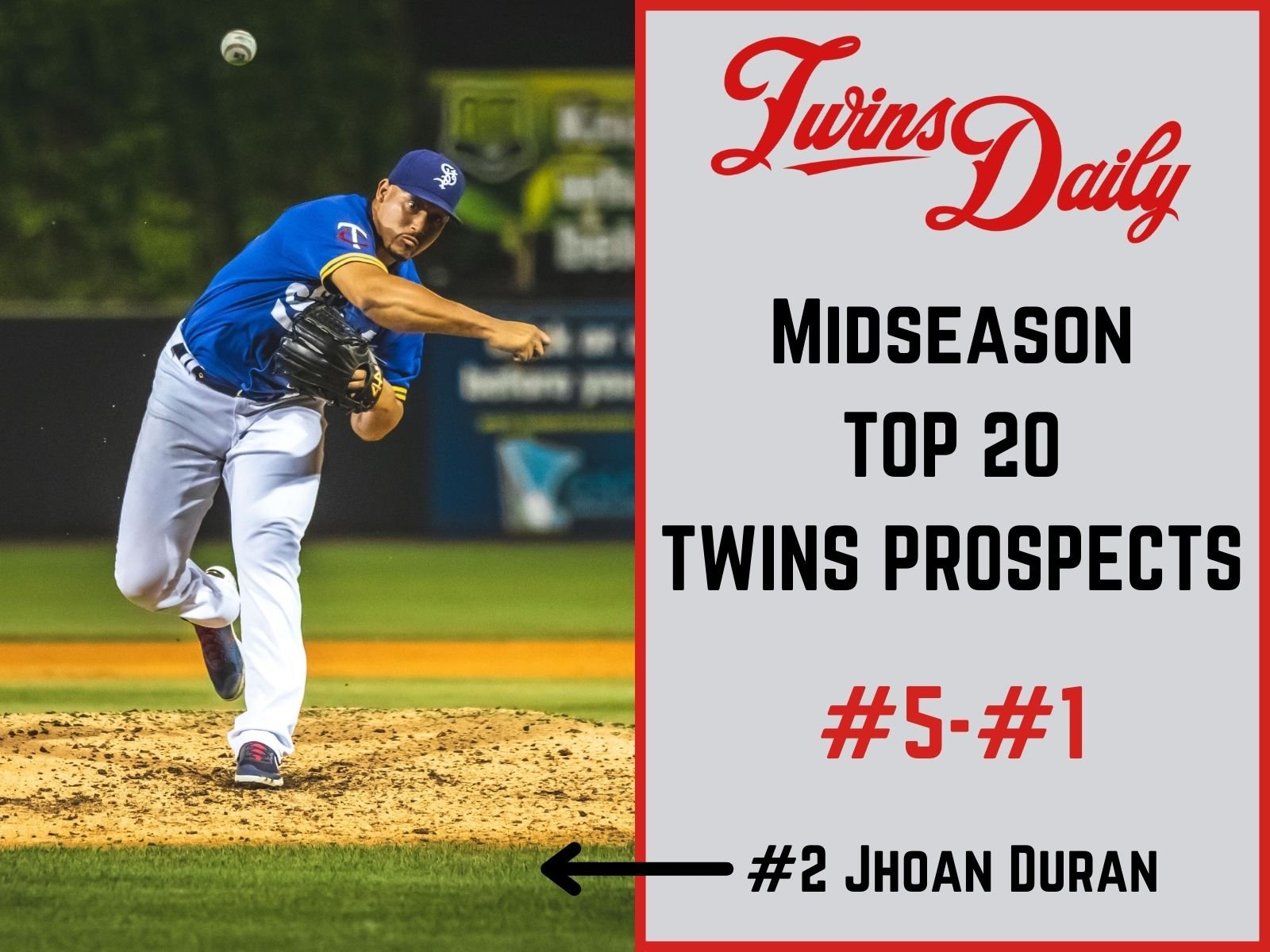 5. Jose Miranda, 3B/2B Age: 23 ETA: 2022 2021 Stats (AA/AAA): .350 AVG, .409 OBP, .614 SLG, 16 HR, 46 RBI 2021 Ranking: 19 When we ranked him No. 19 on our preseason top prospects list, the short synopsis on Miranda was a familiar one: "High-contract righty-swinging infielder needs to find power stroke." The former second-round draft pick has long sat on the fringes of our top-20 rankings because of his many intriguing traits, but the production just wasn't there to justify ranking him much higher. Through his first 379 games in the minors, he slugged .394 with 37 home runs. This year, he found his power stroke. Miranda came out of the gates red-hot at Double-A, opening with a seven-game hitting streak that included three home runs, and he never really slowed down. Miranda slashed .345/.408/.588 with 13 home runs in two months at Wichita, then earned a late-June promotion to St. Paul, where he put together an unforgettable Triple-A debut: 5-6, 3 HR, 6 RBIs. It all came together in a hurry for Miranda and there's not much reason to think his breakthrough isn't legit. He's got a smooth, compact swing from the right side that was always produced high contact rates, and he's clearly turned a corner with his ability to drive the ball. He projects as a third baseman in the big leagues, and perhaps pretty soon, depending on what happens with Josh Donaldson. 4. Matt Canterino, RHSP Age: 23 ETA: 2022 2021 Stats (A+): 18 IP, 1.00 ERA, 0.72 WHIP, 1.14 FIP, 51.5 K%, 4.4 BB% 2021 Ranking: 9 Canterino drew considerable hype coming into this season after reports emerged of him touching 100 MPH in a side session. A second-rounder out of Rice University in 2019, he made a strong impression by dominating in his first stint as a pro (1.44 ERA, 11.2 K/9 between rookie and A-ball), but plenty of highly-drafted collegiate players have done that. Taking the next step is the differentiator. Canterino's velo jump, and the behind-the-scenes work it reflected, were seemingly positive indicators. The righty needed to show it on the field. He has. Canterino was brilliant through four starts for Cedar Rapids, now the Twins' High-A affiliate. I mean, we're talking stupid good numbers. Thirty-five strikeouts in 18 innings? A 17.5 K/9 rate?? Canterino was striking out literally more than half the batters he faced. Beyond overpowering. He was likely in line for an imminent promotion to Double-A, but unfortunately the 23-year-old developed a sore elbow and hasn't pitched since May. He is currently on the comeback trail and the Twins hope he'll be able to return to the mound soon – probably in Wichita once he's fully back on track. 3. Jordan Balazovic, RHSP Age: 22 ETA: 2022 2021 Stats (AA): 21 1/3 IP, 4.44 ERA, 1.40 WHIP, 3.86 FIP, 29.5 K%, 7.1 BB% 2021 Ranking: 6 After getting a late start to his season while healing from injury, Balazovic's results through six starts at Double-A have been ... uneven. His 4.44 ERA is nothing to write home about, and he has yet to get through six innings in an outing. With that said, he's been building up – his best, and longest, start was also his most recent – and the signs of that big potential have been on display. In 24 ⅓ innings, he has piled up 33 strikeouts with a 14% swing-and-miss rate. While hitters have had success against him at times, they haven't hit for much power (3 HR and 7 XBH total) and Balazovic's control hasn't really eluded him at any point. For now the key is to continually advance his workload and consistency. 2. Jhoan Duran, RHSP Age: 23 ETA: 2022 2021 Stats (A/AA): 34 1/3 IP, 3.41 ERA, 1.28 WHIP, 2.64 FIP, 38.2 K%, 9.0 BB% 2021 Ranking: n/a Like Balazovic, Duran's start to the 2021 campaign was delayed by injury following a lost pandemic season. When he took the mound on May 22nd at CHS Field, it was Duran's first time pitching in a minor-league game since August 29th of 2019. He was worth the wait. Unleashing triple-digit heat, Duran dazzled, striking out six over three innings of one-run ball. His next time out he allowed only one hit while fanning eight over four scoreless frames. However, things took a downward turn at this point, as Duran was tagged with losses in his next three appearances (one a long-relief outing), surrendering 8 earned runs with an 8-to-12 K/BB ratio in nine innings. Then, he went on the Injured List with an elbow strain. For now, the Twins hope and believe he'll avoid surgery. Duran has the best stuff in Minnesota's system and some of the best in the minors. He's the real deal talent-wise and the Twins have done a stellar job in targeting, acquiring, and developing him. His biggest barriers are control and health, and we've seen both fully presented this year, with the latter currently sidelining him indefinitely. He's as boom-or-bust as they come, but the ceiling is game-changing and within reach. 1. Royce Lewis, SS Age: 22 ETA: 2022 2021 Stats: n/a 2021 Ranking: 2 Losing two consecutive full seasons – one to a global pandemic and the next to a torn ACL – in the very crux of one's development is an ordeal many baseball prospects would be unable to overcome. I'd bet on Royce Lewis not being one of them. His much-lauded character and makeup have always positively affected the view and evaluation of Lewis, in certain intangible ways, but these qualities can have a very real impact in how he responds to this challenge. He'll be more than two years removed from playing competitively when he takes the field next spring – or maybe this winter – but has the natural talent to get back up to speed quickly. And "speed" really is the key word: even after knee surgery, he'll be one of the fastest and most athletic prospects in the game. Lewis is a dynamic talent who will likely end up at one of the most important defensive positions on the field – shortstop or center – and should be relatively productive at one of those spots even if his offensive shortcomings are not fully resolved. If the Twins do hope to rebound back into contention next year, they may need to ask quite a bit of their No. 1 prospect, as well as the other four we just profiled. One commonality you will notice among this reshaped top five: They're all 22 or 23 years old, with ETAs of 2022. These players are all verging on big-league ready and in most cases, health is the only significant barrier to surpass. MORE FROM TWINS DAILY — Latest Twins coverage from our writers — Recent Twins discussion in our forums — Follow Twins Daily via Twitter, Facebook or email
- 16 comments
-
- 3
-
-
- royce lewis
- jhoan duran
- (and 3 more)
-
Trading Josh Donaldson Is the Right Call
Nick Nelson replied to Nick Nelson's topic in Twins Daily Front Page News
Well the likability article was obviously a reaction to the Giolito incident, and the general JD experience that it represented. It was also one writer's opinion and if you went through the comments I'm sure you noticed it was not a very popular or commonly shared opinion. This article is a reaction to the fact that he's one of the most likely Twins to get traded with the deadline 3 weeks away. It has nothing to do with his likability or personality, both of which I made sure to steer clear of in articulating the case because they distract from the actual points. -
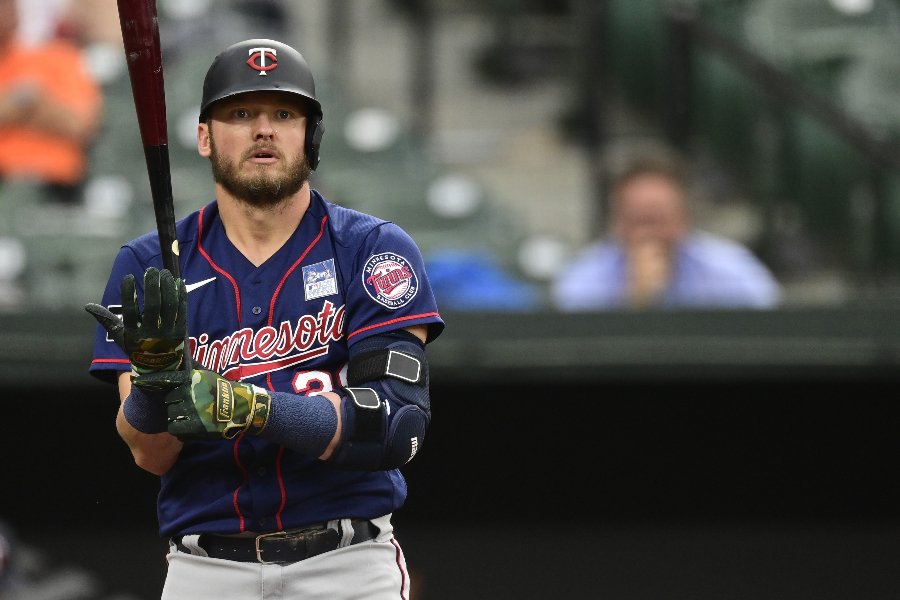 The Twins have apparently begun to explore Donaldson's trade market, with a report out of SNY last week suggesting "very preliminary talks" have taken place with the Mets. JD makes sense for a team like that: in the championship mix, and capable of benefiting from a brashly confident former MVP who's shown he can still play at a high level. Donaldson's presence does little for the irrelevant 2021 Twins, so in assessing the sensibility of trading him to New York or elsewhere, the question becomes one of his future fit. Are the Twins doing themselves a great disservice by unloading Donaldson's 2022 and 2023 seasons – along with a 2024 team option – when all they're likely to get back is some level of salary relief and an unspectacular prospect or two? I would suggest: no, probably not. Let us consider the two aforementioned scenarios. If the front office decides that its current collection of talent is fundamentally insufficient, and the next wave of prospects won't be ready quickly enough to fuel a return to championship contention within the next two years, then keeping Donaldson and his $21 million annual salary simply doesn't make sense, on any level. Not only is it an illogical expense, begrudged by ownership, but JD himself will likely become discontented by a non-competitive approach in what may be his final productive seasons. So what if they choose instead to rebuild on the fly and make another go of it in 2022? I think this is the right approach, and the most likely one. Here it becomes a little harder to argue that the Twins are better off without Donaldson, who's been a high-quality player when on the field. Nonetheless, three reasons I believe it's the right call: Donaldson is at high risk for injury and regression. I think we need to divorce ourselves from not only the idea of who Donaldson used to be – a 40-HR MVP-caliber superstar – and maybe even the image of Donaldson as he is now. Turning 36 in December, he's at a stage where rapid physical decline is commonplace, and that's evident enough from what we've witnessed on the field. His offensive skills are mostly holding up – albeit not at the level of his late-20s prime – but Donaldson's defense has gone from great to good, and his speed from bad to "yikes." The injury issues, recurring and localized in his legs, seem unlikely to dissipate as he ages toward 40. The nature of a long-term deal for a mid-30s player like Donaldson is that you expect to get the best value up-front, and deal with the likelihood of regression as a cost of doing business. The Twins have already moved past the ostensible good part of JD's contract, with fruitless results for the team. Now they're moving into a back end carrying more risk and less upside. Granted, these facts are plainly evident to any suitor for Donaldson, which is why the Twins aren't exactly in a position of ideal leverage. But a team like the free-spending Mets is more well-suited to take on that risk and the associated financial commitment than Minnesota. The Twins have depth at third base. The indispensability of Donaldson is contingent on the quality of his potential replacements. When they signed him, third base was a position of clear organizational scarcity. Today, that's not quite so true. First and foremost, you have the emergence of José Miranda as a top prospect. He raked in Double-A, he's now raking in Triple-A, and he's 23. Miranda is on the verge of big-league readiness and his contact-heavy profile lends itself to at least staying afloat in his early exposure to the majors, if not quickly taking off. It wouldn't be a matter of putting all eggs in the meteoric Miranda's basket, either. Luis Arraez has played 250 career innings at third in the majors. Royce Lewis played primarily there in his last competitive baseball action during the 2019 Arizona Fall League. Miguel Sanó will still presumably be around next year. The Twins have options. And while none are Donaldson-caliber players, it's not entirely clear that any would be all that drastic a drop-off from the version you're getting at ages 36 and 37, to whatever extent his health makes him available. The Twins have bigger priorities and JD at third base was always a luxury. The Twins never needed Josh Donaldson. They signed him late in the 2019-20 offseason because they had spending flexibility, missed out on their free agent pitching targets, and saw an opportunity to level-up an already great offense. He was a luxury they could afford at the time, but much has changed since, and now you really wonder if he's one they can still afford. Even without Donaldson and Nelson Cruz, the Twins would be poised to field a solid offensive unit next year. The pitching staff is another story. They're going to need all the help and resources they can get. While no other team is going to take on the entirety of Donaldson's remaining ~$60 million commitment, any fraction of that spending flexibility will be useful to the front office as it addresses a needy rotation and bullpen, not to mention shortstop. In the event he's traded, whatever the Twins are able to get back in exchange for Donaldson is going to look underwhelming on its face. It won't be a fun situation to navigate from a PR perspective. But when you look at the realities of a team that currently figures to have about $40 million in hand for the offseason, the logic of trading Donaldson is difficult to deny. They're staring down a wealth of key vacancies and he's a risk-laden expensive veteran. The Twins have their work cut out if they want to turn around a last-place team and bring it back to respectability, much less World Series contention, in short order. Popularity can't be the guiding principle in the difficult decisions that lie ahead. MORE FROM TWINS DAILY — Latest Twins coverage from our writers — Recent Twins discussion in our forums — Follow Twins Daily via Twitter, Facebook or email
 -
Playing out a lost season, the Minnesota Twins have two potential paths ahead of them: retool or rebuild. Whichever route they choose, one conclusion is inevitable: trading Josh Donaldson, and whatever portion of his remaining contract they can unload, makes strategic sense. The Twins have apparently begun to explore Donaldson's trade market, with a report out of SNY last week suggesting "very preliminary talks" have taken place with the Mets. JD makes sense for a team like that: in the championship mix, and capable of benefiting from a brashly confident former MVP who's shown he can still play at a high level. Donaldson's presence does little for the irrelevant 2021 Twins, so in assessing the sensibility of trading him to New York or elsewhere, the question becomes one of his future fit. Are the Twins doing themselves a great disservice by unloading Donaldson's 2022 and 2023 seasons – along with a 2024 team option – when all they're likely to get back is some level of salary relief and an unspectacular prospect or two? I would suggest: no, probably not. Let us consider the two aforementioned scenarios. If the front office decides that its current collection of talent is fundamentally insufficient, and the next wave of prospects won't be ready quickly enough to fuel a return to championship contention within the next two years, then keeping Donaldson and his $21 million annual salary simply doesn't make sense, on any level. Not only is it an illogical expense, begrudged by ownership, but JD himself will likely become discontented by a non-competitive approach in what may be his final productive seasons. So what if they choose instead to rebuild on the fly and make another go of it in 2022? I think this is the right approach, and the most likely one. Here it becomes a little harder to argue that the Twins are better off without Donaldson, who's been a high-quality player when on the field. Nonetheless, three reasons I believe it's the right call: Donaldson is at high risk for injury and regression. I think we need to divorce ourselves from not only the idea of who Donaldson used to be – a 40-HR MVP-caliber superstar – and maybe even the image of Donaldson as he is now. Turning 36 in December, he's at a stage where rapid physical decline is commonplace, and that's evident enough from what we've witnessed on the field. His offensive skills are mostly holding up – albeit not at the level of his late-20s prime – but Donaldson's defense has gone from great to good, and his speed from bad to "yikes." The injury issues, recurring and localized in his legs, seem unlikely to dissipate as he ages toward 40. The nature of a long-term deal for a mid-30s player like Donaldson is that you expect to get the best value up-front, and deal with the likelihood of regression as a cost of doing business. The Twins have already moved past the ostensible good part of JD's contract, with fruitless results for the team. Now they're moving into a back end carrying more risk and less upside. Granted, these facts are plainly evident to any suitor for Donaldson, which is why the Twins aren't exactly in a position of ideal leverage. But a team like the free-spending Mets is more well-suited to take on that risk and the associated financial commitment than Minnesota. The Twins have depth at third base. The indispensability of Donaldson is contingent on the quality of his potential replacements. When they signed him, third base was a position of clear organizational scarcity. Today, that's not quite so true. First and foremost, you have the emergence of José Miranda as a top prospect. He raked in Double-A, he's now raking in Triple-A, and he's 23. Miranda is on the verge of big-league readiness and his contact-heavy profile lends itself to at least staying afloat in his early exposure to the majors, if not quickly taking off. It wouldn't be a matter of putting all eggs in the meteoric Miranda's basket, either. Luis Arraez has played 250 career innings at third in the majors. Royce Lewis played primarily there in his last competitive baseball action during the 2019 Arizona Fall League. Miguel Sanó will still presumably be around next year. The Twins have options. And while none are Donaldson-caliber players, it's not entirely clear that any would be all that drastic a drop-off from the version you're getting at ages 36 and 37, to whatever extent his health makes him available. The Twins have bigger priorities and JD at third base was always a luxury. The Twins never needed Josh Donaldson. They signed him late in the 2019-20 offseason because they had spending flexibility, missed out on their free agent pitching targets, and saw an opportunity to level-up an already great offense. He was a luxury they could afford at the time, but much has changed since, and now you really wonder if he's one they can still afford. Even without Donaldson and Nelson Cruz, the Twins would be poised to field a solid offensive unit next year. The pitching staff is another story. They're going to need all the help and resources they can get. While no other team is going to take on the entirety of Donaldson's remaining ~$60 million commitment, any fraction of that spending flexibility will be useful to the front office as it addresses a needy rotation and bullpen, not to mention shortstop. In the event he's traded, whatever the Twins are able to get back in exchange for Donaldson is going to look underwhelming on its face. It won't be a fun situation to navigate from a PR perspective. But when you look at the realities of a team that currently figures to have about $40 million in hand for the offseason, the logic of trading Donaldson is difficult to deny. They're staring down a wealth of key vacancies and he's a risk-laden expensive veteran. The Twins have their work cut out if they want to turn around a last-place team and bring it back to respectability, much less World Series contention, in short order. Popularity can't be the guiding principle in the difficult decisions that lie ahead. MORE FROM TWINS DAILY — Latest Twins coverage from our writers — Recent Twins discussion in our forums — Follow Twins Daily via Twitter, Facebook or email View full article
-
Week in Review: Nail in the Coffin
Nick Nelson replied to Nick Nelson's topic in Twins Daily Front Page News
Wow, you picked a couple good ones! Fun little ballpark, isn't it? -
Week in Review: Nail in the Coffin
Nick Nelson replied to Nick Nelson's topic in Twins Daily Front Page News
I stand corrected! Good call. -
Week in Review: Nail in the Coffin
Nick Nelson replied to Nick Nelson's topic in Twins Daily Front Page News
I've heard this a lot but I think it's overblown and kind of a straw man. I didn't really have a problem with Mauer's lack of fire, but even those that did can understand there is a time and place for everything. Donaldson's umpire blow-up last year came at literally one of the worst times possible. If he got himself kicked out of a blowout in Kansas City in a non-condensed season it wouldn't have been quite so bothersome. Mouthing off to a team that has you buried by 12 games in the standings, and is on the way to sweeping you into irrelevance? Taunting their pitchers when you yourself have one of the most embarrassing staffs in the league? I mean, take yourself out of the Twins fan lens and think about how laughable this looks to anyone on the outside, especially the White Sox. -
Week in Review: Nail in the Coffin
Nick Nelson replied to Nick Nelson's topic in Twins Daily Front Page News
I would say the chances of him pitching for the St. Paul Saints as a non-40 roster guy are extremely low. But you're right, non-zero. -
The Twins talked trash, got thrashed, and saw the embers of their fleeting contention hopes turn to ash. Let's review a tough week and set the stage for trade deadline SZN. Weekly Snapshot: Mon, 6/28 through Sun, 7/4 *** Record Last Week: 1-5 (Overall: 34-48) Run Differential Last Week: -16 (Overall: -64) Standing: 5th Place in AL Central (14.5 GB) Last Week's Game Recaps: Game 77 | CWS 7, MIN 6: Offense Can't Overcome Maeda's Messy Start Game 78 | CWS 13, MIN 3: Sox Launch 6 Homers in Ugly Blowout Game 79 | CWS 8, MIN 5: Swept Out of the South Side Game 80 | KC 7, MIN 4: Royals Snap 9-Game Losing Streak Game 81 | KC 6, MIN 3: Jax Knocked Around in First MLB Start Game 82 | MIN 6, KC 2: Twins Salvage a Win Behind Maeda NEWS & NOTES The Matt Shoemaker era has officially ended in Minnesota. One of the worst free agent signings in franchise history saw his Twins tenure come to an end last week, as his egregiously bad relief outing against the White Sox – 2.2 IP, 8 ER, 3 HR – proved to be the last straw. He was designated for assignment the following day, taking with him an 8.06 ERA in 60 ⅓ innings. Short-handed as they are on usable arms, the Twins simply could not afford to send Shoemaker out there anymore. If the guy can't get you through a few innings of mop-up duty without getting bombed, what's the point? Replacing him on the roster is Derek Law, who actually looked pretty solid in his return to the major-league mound on Thursday, generating eight swings-and-misses on 32 pitches in 1 ⅔ innings. He added two scoreless frames against Kansas City on Saturday. It behooves the Twins to take a long look at Law in the second half and evaluate whether he might be of potential use to their bullpen in 2022. HIGHLIGHTS Fresh after turning 41, and on the heels of another very strong week at the plate – 7-for-18 with a homer, a double, three RBIs and four walks – Nelson Cruz was named to his seventh All-Star Game. He'll be Minnesota's lone representative but a worthy one. Cruz slumped a bit in May but snapped out of it with a scorching tear that stacks up to the most productive stretches of his career. Since June 1st, Nelly is slashing .367/.453/.700 with eight home runs, 20 RBIs, and a 17-to-14 K/BB ratio in 25 games. His wOBA of .477 during that span ranks third in baseball behind MVP front-runners Shohei Ohtani and Vladimir Guerrero Jr. Alongside Cruz, the rookie outfield tandem of Alex Kirilloff and Trevor Larnach is one of the few things keeping Twins games watchable at this point in time. As the club spirals around them, these promising young hitters continue to excel. Kirilloff went 7-for-25 and Larnach went 8-for-24, with each chipping in a home run and two doubles. To be honest, the real highlights for the Twins organization over the past week took place across the river in St. Paul. The two fastest-rising prospects in the system, infielder Jose Miranda and pitcher Josh Winder, made their respective Triple-A debuts and they were both sensational. Making his first appearance as a Saint on Tuesday night, Miranda had an offensive game for the ages, launching three home runs (including a grand slam) in a five-hit performance that cemented his bat's legitimacy. Three days later, Winder made his first start in Triple-A and didn't miss a beat, exhibiting the same dominance that produced a 1.98 ERA in 10 Double-A starts and led to a promotion. Winder took a no-hitter into the sixth, struck out eight, and allowed just one run on one hit in 5 ⅔ innings, improving to 4-0 on the season overall. LOWLIGHTS If the Twins are going to lose nonstop, I personally would prefer if they did so with some level of grace. Josh Donaldson's taunting and trash-talking might strike me as fun under different circumstances, but when it's coming from a laughably bad team that is legitimately struggling to stay out of last place, it just seems kinda sad and pitiful. To recap: Donaldson's homered in his first at-bat to open the Chicago series, putting the Twins up 2-0. He loudly yelled "Hands not sticky anymore!" – an allusion to Sox starter Lucas Giolito – while crossing home plate in an ostensible effort to pump up his own dugout. It didn't work. From that point forward, Chicago outscored Minnesota 28-12 in a lopsided sweep that snuffed out any glimmer of hope for the Twins to make a run in the division. Press conferences were held, debates rung out about likability, and JD successfully made himself the center of attention. Meanwhile the Twins got their asses kicked all over the field. Giolito and the rest of Chicago's pitchers did just fine with no sticky stuff, while Minnesota's staff was completely unable to contain a White Sox lineup that had been mired in a terrible slump. After slashing .204/.292/.308 with 27 total runs in their previous nine games, the Sox exploded for a .356/.417/.634 line with 28 runs in three games against the woeful Twins. Donaldson has certainly talked a big game, and to his credit he had a good week with two homers, two doubles, and four RBIs, but generally speaking his production has not justified the bravado. In the first season-and-a-half of his historic four-year, $92 million contract, Donaldson has played in 93 of a possible 142 games (65%), contributing 2.2 WAR and 0.77 WPA over that span. He's been good, but certainly not franchise-altering, and he's been absent in the biggest spots. He got himself kicked out of their most critical regular-season game last year so he could show up an umpire, and he was unavailable when the Twins were swept out of the playoffs. This season, amidst the quality production and relative durability, he's been one of the slowest runners in baseball and miserably ineffective in clutch spots. Incidentally, it sounds as though the Twins have engaged in preliminary trade talks involving Donaldson, but with the third baseman battling yet another leg issue (he pulled up with a tight hamstring after rounding first on Saturday), he might be difficult to move. Having said all that, there's not much Donaldson can do about the Twins pitching, which is obscenely bad and clearly the primary source of Minnesota's season-long struggles. The past week featured plenty more abjectly awful performances, from Shoemaker punching his ticket out of town, to J.A. Happ laying yet another egg in KC, to Griffin Jax getting pounded by the Royals in his first MLB start, to Kenta Maeda putting forth the worst start of his career. Truly hideous stuff. TRENDING STORYLINE It's July, the trade deadline is looming, and the Twins are open for business. Cruz's hot hitting bodes well for his value and he certainly looks like one of the most likely players to get dealt, although it's unclear just how much of a return can be expected for a 41-year-old designated hitter with two months left on his contract, even if he's one of the league's best hitters. Health will be a sticking point (pun intended) for some of the Twins' most valuable assets including Donaldson. His proneness to leg injury is a reality that cannot be ignored regardless of the outcome with his current hammy issue, but if he can rebound quickly and return to the field, as he has with previous instances this year, it may help alleviate some of the concern. Michael Pineda, meanwhile, should certainly have appeal to pitching-needy contenders, provided there is confidence his arm is okay. Pineda's brutal first rehab start in St. Paul on Sunday – 4 IP, 4 ER, 3 BB, 1 K – won't help on the latter front. LOOKING AHEAD With tails between their legs, the beaten-down Minnesota Twins return to Target Field for seven games against Chicago and Detroit. Minnesota could've infused the White Sox series with some measure of drama by delivering a strong performance at Guaranteed Rate Field last week, but instead they'll simply be trying to regain some dignity and escape from last place. The Twins are set to play 15 straight against the White Sox and Tigers, with the All-Star break sandwiched in the middle. MONDAY, 7/5: WHITE SOX @ TWINS – RHP Dylan Cease v. RHP Bailey Ober TUESDAY, 7/6: WHITE SOX @ TWINS – LHP Carlos Rodón v. RHP José Berríos WEDNESDAY, 7/7: WHITE SOX @ TWINS – RHP Lance Lynn v. LHP J.A. Happ THURSDAY, 7/8: TIGERS @ TWINS – LHP Tarik Skubal v. TBD FRIDAY, 7/9: TIGERS @ TWINS – RHP Matt Manning v. RHP Kenta Maeda SATURDAY, 7/10: TIGERS @ TWINS – RHP Jose Urena v. RHP Bailey Ober SUNDAY, 7/11: TIGERS @ TWINS – RHP Wily Peralta v. RHP Jose Berrios MORE FROM TWINS DAILY — Latest Twins coverage from our writers — Recent Twins discussion in our forums — Follow Twins Daily via Twitter, Facebook or email View full article
-
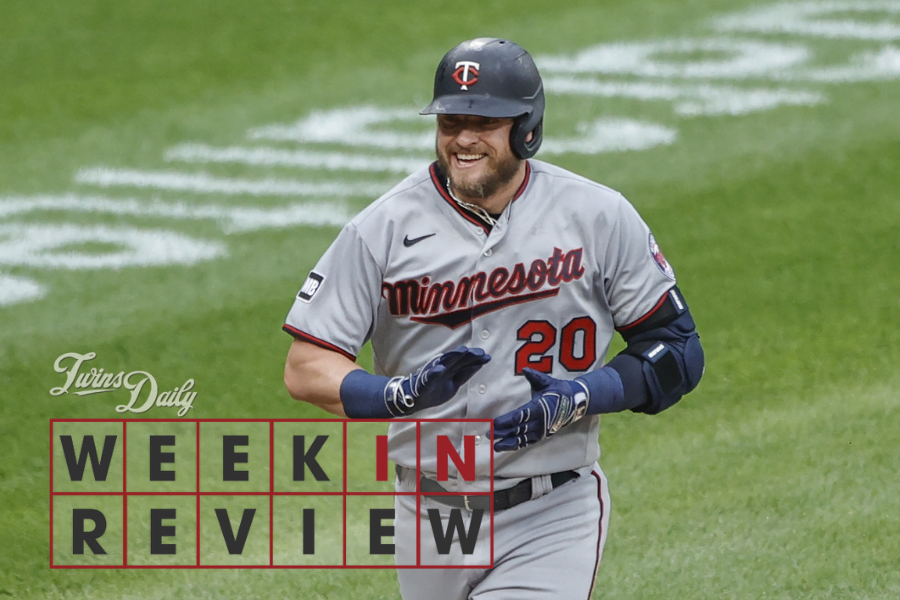 Weekly Snapshot: Mon, 6/28 through Sun, 7/4 *** Record Last Week: 1-5 (Overall: 34-48) Run Differential Last Week: -16 (Overall: -64) Standing: 5th Place in AL Central (14.5 GB) Last Week's Game Recaps: Game 77 | CWS 7, MIN 6: Offense Can't Overcome Maeda's Messy Start Game 78 | CWS 13, MIN 3: Sox Launch 6 Homers in Ugly Blowout Game 79 | CWS 8, MIN 5: Swept Out of the South Side Game 80 | KC 7, MIN 4: Royals Snap 9-Game Losing Streak Game 81 | KC 6, MIN 3: Jax Knocked Around in First MLB Start Game 82 | MIN 6, KC 2: Twins Salvage a Win Behind Maeda NEWS & NOTES The Matt Shoemaker era has officially ended in Minnesota. One of the worst free agent signings in franchise history saw his Twins tenure come to an end last week, as his egregiously bad relief outing against the White Sox – 2.2 IP, 8 ER, 3 HR – proved to be the last straw. He was designated for assignment the following day, taking with him an 8.06 ERA in 60 ⅓ innings. Short-handed as they are on usable arms, the Twins simply could not afford to send Shoemaker out there anymore. If the guy can't get you through a few innings of mop-up duty without getting bombed, what's the point? Replacing him on the roster is Derek Law, who actually looked pretty solid in his return to the major-league mound on Thursday, generating eight swings-and-misses on 32 pitches in 1 ⅔ innings. He added two scoreless frames against Kansas City on Saturday. It behooves the Twins to take a long look at Law in the second half and evaluate whether he might be of potential use to their bullpen in 2022. HIGHLIGHTS Fresh after turning 41, and on the heels of another very strong week at the plate – 7-for-18 with a homer, a double, three RBIs and four walks – Nelson Cruz was named to his seventh All-Star Game. He'll be Minnesota's lone representative but a worthy one. Cruz slumped a bit in May but snapped out of it with a scorching tear that stacks up to the most productive stretches of his career. Since June 1st, Nelly is slashing .367/.453/.700 with eight home runs, 20 RBIs, and a 17-to-14 K/BB ratio in 25 games. His wOBA of .477 during that span ranks third in baseball behind MVP front-runners Shohei Ohtani and Vladimir Guerrero Jr. Alongside Cruz, the rookie outfield tandem of Alex Kirilloff and Trevor Larnach is one of the few things keeping Twins games watchable at this point in time. As the club spirals around them, these promising young hitters continue to excel. Kirilloff went 7-for-25 and Larnach went 8-for-24, with each chipping in a home run and two doubles. To be honest, the real highlights for the Twins organization over the past week took place across the river in St. Paul. The two fastest-rising prospects in the system, infielder Jose Miranda and pitcher Josh Winder, made their respective Triple-A debuts and they were both sensational. Making his first appearance as a Saint on Tuesday night, Miranda had an offensive game for the ages, launching three home runs (including a grand slam) in a five-hit performance that cemented his bat's legitimacy. Three days later, Winder made his first start in Triple-A and didn't miss a beat, exhibiting the same dominance that produced a 1.98 ERA in 10 Double-A starts and led to a promotion. Winder took a no-hitter into the sixth, struck out eight, and allowed just one run on one hit in 5 ⅔ innings, improving to 4-0 on the season overall. LOWLIGHTS If the Twins are going to lose nonstop, I personally would prefer if they did so with some level of grace. Josh Donaldson's taunting and trash-talking might strike me as fun under different circumstances, but when it's coming from a laughably bad team that is legitimately struggling to stay out of last place, it just seems kinda sad and pitiful. To recap: Donaldson's homered in his first at-bat to open the Chicago series, putting the Twins up 2-0. He loudly yelled "Hands not sticky anymore!" – an allusion to Sox starter Lucas Giolito – while crossing home plate in an ostensible effort to pump up his own dugout. It didn't work. From that point forward, Chicago outscored Minnesota 28-12 in a lopsided sweep that snuffed out any glimmer of hope for the Twins to make a run in the division. Press conferences were held, debates rung out about likability, and JD successfully made himself the center of attention. Meanwhile the Twins got their asses kicked all over the field. Giolito and the rest of Chicago's pitchers did just fine with no sticky stuff, while Minnesota's staff was completely unable to contain a White Sox lineup that had been mired in a terrible slump. After slashing .204/.292/.308 with 27 total runs in their previous nine games, the Sox exploded for a .356/.417/.634 line with 28 runs in three games against the woeful Twins. Donaldson has certainly talked a big game, and to his credit he had a good week with two homers, two doubles, and four RBIs, but generally speaking his production has not justified the bravado. In the first season-and-a-half of his historic four-year, $92 million contract, Donaldson has played in 93 of a possible 142 games (65%), contributing 2.2 WAR and 0.77 WPA over that span. He's been good, but certainly not franchise-altering, and he's been absent in the biggest spots. He got himself kicked out of their most critical regular-season game last year so he could show up an umpire, and he was unavailable when the Twins were swept out of the playoffs. This season, amidst the quality production and relative durability, he's been one of the slowest runners in baseball and miserably ineffective in clutch spots. Incidentally, it sounds as though the Twins have engaged in preliminary trade talks involving Donaldson, but with the third baseman battling yet another leg issue (he pulled up with a tight hamstring after rounding first on Saturday), he might be difficult to move. Having said all that, there's not much Donaldson can do about the Twins pitching, which is obscenely bad and clearly the primary source of Minnesota's season-long struggles. The past week featured plenty more abjectly awful performances, from Shoemaker punching his ticket out of town, to J.A. Happ laying yet another egg in KC, to Griffin Jax getting pounded by the Royals in his first MLB start, to Kenta Maeda putting forth the worst start of his career. Truly hideous stuff. TRENDING STORYLINE It's July, the trade deadline is looming, and the Twins are open for business. Cruz's hot hitting bodes well for his value and he certainly looks like one of the most likely players to get dealt, although it's unclear just how much of a return can be expected for a 41-year-old designated hitter with two months left on his contract, even if he's one of the league's best hitters. Health will be a sticking point (pun intended) for some of the Twins' most valuable assets including Donaldson. His proneness to leg injury is a reality that cannot be ignored regardless of the outcome with his current hammy issue, but if he can rebound quickly and return to the field, as he has with previous instances this year, it may help alleviate some of the concern. Michael Pineda, meanwhile, should certainly have appeal to pitching-needy contenders, provided there is confidence his arm is okay. Pineda's brutal first rehab start in St. Paul on Sunday – 4 IP, 4 ER, 3 BB, 1 K – won't help on the latter front. LOOKING AHEAD With tails between their legs, the beaten-down Minnesota Twins return to Target Field for seven games against Chicago and Detroit. Minnesota could've infused the White Sox series with some measure of drama by delivering a strong performance at Guaranteed Rate Field last week, but instead they'll simply be trying to regain some dignity and escape from last place. The Twins are set to play 15 straight against the White Sox and Tigers, with the All-Star break sandwiched in the middle. MONDAY, 7/5: WHITE SOX @ TWINS – RHP Dylan Cease v. RHP Bailey Ober TUESDAY, 7/6: WHITE SOX @ TWINS – LHP Carlos Rodón v. RHP José Berríos WEDNESDAY, 7/7: WHITE SOX @ TWINS – RHP Lance Lynn v. LHP J.A. Happ THURSDAY, 7/8: TIGERS @ TWINS – LHP Tarik Skubal v. TBD FRIDAY, 7/9: TIGERS @ TWINS – RHP Matt Manning v. RHP Kenta Maeda SATURDAY, 7/10: TIGERS @ TWINS – RHP Jose Urena v. RHP Bailey Ober SUNDAY, 7/11: TIGERS @ TWINS – RHP Wily Peralta v. RHP Jose Berrios MORE FROM TWINS DAILY — Latest Twins coverage from our writers — Recent Twins discussion in our forums — Follow Twins Daily via Twitter, Facebook or email
 -
The Minnesota Twins ticked off their second consecutive winning week, powered by some strong offensive performances and dramatic moments. They've won seven out of nine, shaving 4 ½ games off their division deficit in the process. Even as they're left reeling from yet another Byron Buxton health setback, the Twins find themselves on a rare run they can feel good about. Weekly Snapshot: Mon, 6/21 through Sun, 6/27 *** Record Last Week: 3-2 (Overall: 32-43) Run Differential Last Week: +3 (Overall: -48) Standing: T-3rd Place in AL Central (11.5 GB) Last Week's Game Recaps: Game 72 | MIN 7, CIN 5: Sanó Walks Off Reds in Extras Game 73 | CIN 10, MIN 7: Late Comeback Falls Short as Bullpen Lapses Game 74 | CLE 4, MIN 1: Bats Can't Back Up Berríos' Brilliance Game 75 | MIN 8, CLE 7: Offense Powers Twins Through Bullpen Game Game 76 | MIN 8, CLE 2: Happ Bounces Back with Bomba Support NEWS & NOTES As deflating as this Twins season has been for fans, following the frustrating and logic-defying plight of Byron Buxton may be even more heartbreaking than the team's overall struggles. It really is just one thing after another for the snakebitten superstar. This time, a broken left hand, suffered via an HBP on Monday night in just his third game back from the IL. While evidently playing through some pain in a hip that was not back to 100%, Buxton was nonetheless effective, going 4-for-11 with a homer and double in his brief reappearance. Now, after missing a month and a half due to the hip strain, he's staring down a similar length of absence as this boxer's fracture heals. It sucks. It absolutely sucks. For him, for the team, for the fans, for baseball. Buxton's new injury led to a quick recall for Gilberto Celestino, who joins Max Kepler and Nick Gordon as the team's center field depth of the moment. The rest of the week's roster action was centralized on the pitching staff, with more bad news hitting the bullpen. Luke Farrell, one of the unit's few standouts, went on the Injured List with a right oblique strain. Cody Stashak has been placed on the 60-day IL due to a disc injury in his back. Randy Dobnak was also shelved with a finger strain. The Stashak move opened up a 40-man spot for Danny Coulombe, who was selected from the minors and started a bullpen game on Friday. Griffin Jax, also called up to fill a spot on the beleaguered staff, followed as the bulk guy for that game, and picked up his first big-league win. HIGHLIGHTS Miguel Sanó heated up again and reminded us what a game-changing force he can be when it's clicking. Of course, it hasn't clicked often for him this year, which is why he found himself on the bench Monday night (an increasingly routine occurrence for him against right-handed starters). While he didn't start the game, he did finish it. Sanó followed with another huge hit the following day, coming inches short of tying things up against Cincinnati with another two-run homer, but instead settling for a double off the top of the wall that set up Alex Kirilloff's game-tying knock. Sanó started only twice last week, but had more multi-hit games (2) than he had in the previous month. He's also gone 13 consecutive plate appearances without striking out – a rather amazing feat for him. Sanó helped lead the charge in a generally strong week for the offense, which produced 31 runs in five games and is on its way to finishing up an impressive month of June. The team has a .783 OPS this month, after finishing May at .744 and April at .723. Also contributing to the recent run-scoring outburst at Target Field was Luis Arraez, who went 6-for-18 and was instrumental to Friday night's win, chipping in three extra-base hits and three RBIs. The glimmer of power was a very refreshing sight from Arraez, whose slugging percentage had dropped to .327 earlier this month before he gave it a boost with two doubles and three triples in his past eight games. Kirilloff keeps on raking; he went 5-for-16 with a double, homer, and five RBIs. Nelson Cruz also stayed hot, contributing six hits including two home runs and a double. Josh Donaldson returned from a brief pause due to a calf scare, chipping in five hits (including a monster blast) and three RBIs during the Cleveland series. This is a pretty dang good offense. The pitching inspires less confidence, but that's not true across the board. José Berríos was outstanding once again his last time out, holding Cleveland to one run over 6 ⅓ innings, although the offense couldn't back him up and snapped a string of seven straight wins with him on the mound. Rocking a 7-2 record and 3.41 ERA, Berríos may well be working his way toward another All-Star nod. He and Taylor Rogers have clearly been the class of this pitching staff, which I suppose is not the most surprising development, all other things aside. It's noteworthy from a bigger-picture perspective because both are under team control for one more year in 2022. As the Twins weigh the merits of a retool-vs-rebuild path forward, Berríos and Rogers will loom as pivotal figures at the deadline. Both long-tenured pitchers are sure to be in demand. Do the Twins feel they could afford to let either one go, if they aspire to bounce back and contend next season? LOWLIGHTS Outside of Berríos, Rogers, and a couple of others, there is just not much positivity to be drawn from this current group of arms. Hansel Robles, who's generally been one of the more dependable bullpen fixtures, had an extremely tough week, coughing up four runs in two innings of work and getting tagged with a loss in Tuesday's game. Jorge Alcalá, whom the Twins badly need to emerge as a key piece for the late innings, gave up four earned runs in his two appearances, and sports a 5.40 ERA in his past 20 trips to the mound. Alex Colomé mixed in another meltdown, yielding three runs (one earned) on two hits and a walk in Tuesday's loss. He has a 6.23 ERA in June. Cyclical spare parts like Coulombe and Jax have not shown much. Michael Pineda is hurt, and hasn't pitched into the sixth inning since May. Randy Dobnak was a disastrous mess before going on the shelf himself. Kenta Maeda has looked better since returning from IL, but remains a far cry from the dominant force we witnessed last year. The Twins have the worst pitching WAR of any team in the American League. They've given up the second-most home runs in the majors. Their relievers are on track for historical ineptitude when it comes to letting inherited runners score. This is a brutal pitching corps with no simple fixes in sight. TRENDING STORYLINE If they're going to make a last-gasp effort to regain relevance, the Twins need to do something about the pitching unit. To rattle off wins like they need to up until the All-Star break requires consistently good work from the rotation and bullpen. Frankly: a dramatic turnaround. But what can they do? They aren't going to shake things up with a splashy "buyer" trade, sitting in a last-place tie. There really isn't much available in terms of help on the farm, with top prospect Jhoan Duran sidelined indefinitely alongside MLB-ready arms like Devin Smeltzer and Lewis Thorpe. The best starting pitcher in St. Paul, 25-year-old Charlie Barnes, is a replacement-level guy through and through. (But maybe an improvement over the likes of J.A. Happ and Matt Shoemaker?) Would the front office consider dipping down to Double-A for an upside arm like Jordan Balazovic or Josh Winder? It would be a bold and perhaps desperate measure, but ... desperate times. LOOKING AHEAD If the Twins want to jam their foot into the fast-closing door and keep it open a crack, here is their chance. After taking two of three from second-place Cleveland, they now head to Chicago for a four-game showdown against the division leaders. The White Sox are in a rut, having lost six of eight with an injury-plagued offense that's been stalling out. The Royals are straight-up crumbling, with 17 losses in their last 21 games. Winning these next two series could help the Twins gain a foothold of sorts, with nearly a month still remaining until the trade deadline. It'll be interesting to see where things stand on the 4th, one week from today. MONDAY, 6/28: TWINS @ WHITE SOX – RHP Kenta Maeda v. RHP Lucas Giolito TUESDAY, 6/29: TWINS @ WHITE SOX – RHP José Berríos v. RHP Dylan Cease WEDNESDAY, 6/30: TWINS @ WHITE SOX – RHP Bailey Ober v. LHP Carlos Rodon THURSDAY, 7/1: TWINS @ WHITE SOX – TBD Undecided v. RHP Lance Lynn FRIDAY, 7/2: TWINS @ ROYALS – LHP J.A. Happ v. RHP Brady Singer SATURDAY, 7/3: TWINS @ ROYALS – RHP Kenta Maeda v. LHP Danny Duffy SUNDAY, 7/4: TWINS @ ROYALS – RHP José Berríos v. RHP Brad Keller View full article
-
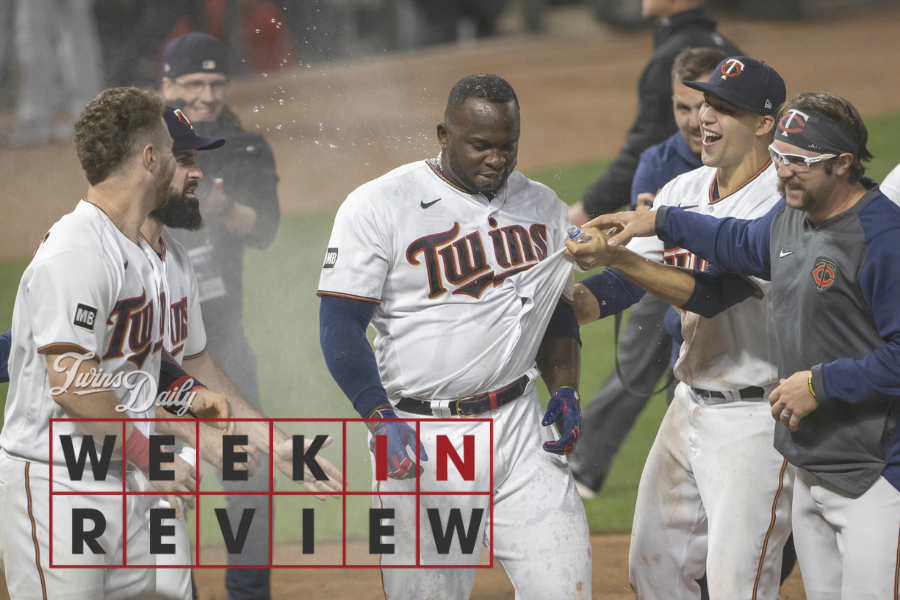 Weekly Snapshot: Mon, 6/21 through Sun, 6/27 *** Record Last Week: 3-2 (Overall: 32-43) Run Differential Last Week: +3 (Overall: -48) Standing: T-3rd Place in AL Central (11.5 GB) Last Week's Game Recaps: Game 72 | MIN 7, CIN 5: Sanó Walks Off Reds in Extras Game 73 | CIN 10, MIN 7: Late Comeback Falls Short as Bullpen Lapses Game 74 | CLE 4, MIN 1: Bats Can't Back Up Berríos' Brilliance Game 75 | MIN 8, CLE 7: Offense Powers Twins Through Bullpen Game Game 76 | MIN 8, CLE 2: Happ Bounces Back with Bomba Support NEWS & NOTES As deflating as this Twins season has been for fans, following the frustrating and logic-defying plight of Byron Buxton may be even more heartbreaking than the team's overall struggles. It really is just one thing after another for the snakebitten superstar. This time, a broken left hand, suffered via an HBP on Monday night in just his third game back from the IL. While evidently playing through some pain in a hip that was not back to 100%, Buxton was nonetheless effective, going 4-for-11 with a homer and double in his brief reappearance. Now, after missing a month and a half due to the hip strain, he's staring down a similar length of absence as this boxer's fracture heals. It sucks. It absolutely sucks. For him, for the team, for the fans, for baseball. Buxton's new injury led to a quick recall for Gilberto Celestino, who joins Max Kepler and Nick Gordon as the team's center field depth of the moment. The rest of the week's roster action was centralized on the pitching staff, with more bad news hitting the bullpen. Luke Farrell, one of the unit's few standouts, went on the Injured List with a right oblique strain. Cody Stashak has been placed on the 60-day IL due to a disc injury in his back. Randy Dobnak was also shelved with a finger strain. The Stashak move opened up a 40-man spot for Danny Coulombe, who was selected from the minors and started a bullpen game on Friday. Griffin Jax, also called up to fill a spot on the beleaguered staff, followed as the bulk guy for that game, and picked up his first big-league win. HIGHLIGHTS Miguel Sanó heated up again and reminded us what a game-changing force he can be when it's clicking. Of course, it hasn't clicked often for him this year, which is why he found himself on the bench Monday night (an increasingly routine occurrence for him against right-handed starters). While he didn't start the game, he did finish it. Sanó followed with another huge hit the following day, coming inches short of tying things up against Cincinnati with another two-run homer, but instead settling for a double off the top of the wall that set up Alex Kirilloff's game-tying knock. Sanó started only twice last week, but had more multi-hit games (2) than he had in the previous month. He's also gone 13 consecutive plate appearances without striking out – a rather amazing feat for him. Sanó helped lead the charge in a generally strong week for the offense, which produced 31 runs in five games and is on its way to finishing up an impressive month of June. The team has a .783 OPS this month, after finishing May at .744 and April at .723. Also contributing to the recent run-scoring outburst at Target Field was Luis Arraez, who went 6-for-18 and was instrumental to Friday night's win, chipping in three extra-base hits and three RBIs. The glimmer of power was a very refreshing sight from Arraez, whose slugging percentage had dropped to .327 earlier this month before he gave it a boost with two doubles and three triples in his past eight games. Kirilloff keeps on raking; he went 5-for-16 with a double, homer, and five RBIs. Nelson Cruz also stayed hot, contributing six hits including two home runs and a double. Josh Donaldson returned from a brief pause due to a calf scare, chipping in five hits (including a monster blast) and three RBIs during the Cleveland series. This is a pretty dang good offense. The pitching inspires less confidence, but that's not true across the board. José Berríos was outstanding once again his last time out, holding Cleveland to one run over 6 ⅓ innings, although the offense couldn't back him up and snapped a string of seven straight wins with him on the mound. Rocking a 7-2 record and 3.41 ERA, Berríos may well be working his way toward another All-Star nod. He and Taylor Rogers have clearly been the class of this pitching staff, which I suppose is not the most surprising development, all other things aside. It's noteworthy from a bigger-picture perspective because both are under team control for one more year in 2022. As the Twins weigh the merits of a retool-vs-rebuild path forward, Berríos and Rogers will loom as pivotal figures at the deadline. Both long-tenured pitchers are sure to be in demand. Do the Twins feel they could afford to let either one go, if they aspire to bounce back and contend next season? LOWLIGHTS Outside of Berríos, Rogers, and a couple of others, there is just not much positivity to be drawn from this current group of arms. Hansel Robles, who's generally been one of the more dependable bullpen fixtures, had an extremely tough week, coughing up four runs in two innings of work and getting tagged with a loss in Tuesday's game. Jorge Alcalá, whom the Twins badly need to emerge as a key piece for the late innings, gave up four earned runs in his two appearances, and sports a 5.40 ERA in his past 20 trips to the mound. Alex Colomé mixed in another meltdown, yielding three runs (one earned) on two hits and a walk in Tuesday's loss. He has a 6.23 ERA in June. Cyclical spare parts like Coulombe and Jax have not shown much. Michael Pineda is hurt, and hasn't pitched into the sixth inning since May. Randy Dobnak was a disastrous mess before going on the shelf himself. Kenta Maeda has looked better since returning from IL, but remains a far cry from the dominant force we witnessed last year. The Twins have the worst pitching WAR of any team in the American League. They've given up the second-most home runs in the majors. Their relievers are on track for historical ineptitude when it comes to letting inherited runners score. This is a brutal pitching corps with no simple fixes in sight. TRENDING STORYLINE If they're going to make a last-gasp effort to regain relevance, the Twins need to do something about the pitching unit. To rattle off wins like they need to up until the All-Star break requires consistently good work from the rotation and bullpen. Frankly: a dramatic turnaround. But what can they do? They aren't going to shake things up with a splashy "buyer" trade, sitting in a last-place tie. There really isn't much available in terms of help on the farm, with top prospect Jhoan Duran sidelined indefinitely alongside MLB-ready arms like Devin Smeltzer and Lewis Thorpe. The best starting pitcher in St. Paul, 25-year-old Charlie Barnes, is a replacement-level guy through and through. (But maybe an improvement over the likes of J.A. Happ and Matt Shoemaker?) Would the front office consider dipping down to Double-A for an upside arm like Jordan Balazovic or Josh Winder? It would be a bold and perhaps desperate measure, but ... desperate times. LOOKING AHEAD If the Twins want to jam their foot into the fast-closing door and keep it open a crack, here is their chance. After taking two of three from second-place Cleveland, they now head to Chicago for a four-game showdown against the division leaders. The White Sox are in a rut, having lost six of eight with an injury-plagued offense that's been stalling out. The Royals are straight-up crumbling, with 17 losses in their last 21 games. Winning these next two series could help the Twins gain a foothold of sorts, with nearly a month still remaining until the trade deadline. It'll be interesting to see where things stand on the 4th, one week from today. MONDAY, 6/28: TWINS @ WHITE SOX – RHP Kenta Maeda v. RHP Lucas Giolito TUESDAY, 6/29: TWINS @ WHITE SOX – RHP José Berríos v. RHP Dylan Cease WEDNESDAY, 6/30: TWINS @ WHITE SOX – RHP Bailey Ober v. LHP Carlos Rodon THURSDAY, 7/1: TWINS @ WHITE SOX – TBD Undecided v. RHP Lance Lynn FRIDAY, 7/2: TWINS @ ROYALS – LHP J.A. Happ v. RHP Brady Singer SATURDAY, 7/3: TWINS @ ROYALS – RHP Kenta Maeda v. LHP Danny Duffy SUNDAY, 7/4: TWINS @ ROYALS – RHP José Berríos v. RHP Brad Keller
 -
The week got off to an ugly start in Seattle, but the Twins rebounded with four straight victories – including a sweep in Texas – to match their longest winning streak of the season. Read on for a recap of what went down, and a look ahead to what's next. Weekly Snapshot: Mon, 6/14 through Sun, 6/20 *** Record Last Week: 4-2 (Overall: 30-41) Run Differential Last Week: -1 (Overall: -51) Standing: 4th Place in AL Central (12.5 GB) Last Week's Game Recaps: Game 66 | SEA 4, MIN 3: M's Edge Twins in Maeda's Return to the Mound Game 67 | SEA 10, MIN 0: Yikes Game 68 | MIN 7, SEA 2: Twins Salvage a Win in Seattle Behind Ober Game 69 | MIN 7, TEX 5: Arraez Sparks Extra-Inning Victory Game 70 | MIN 3, TEX 2: Relievers Lock Down Tight Lead Game 71 | MIN 4, TEX 2: Bullpen Backs Maeda, Twins Sweep Texas NEWS & NOTES Let's get started with a quick rundown of roster moves over the past seven days: In: Luis Arraez (activated from IL) Kenta Maeda (activated from IL) Max Kepler (activated from IL) Byron Buxton (activated from IL) Caleb Thielbar (activated from IL) Out: Shaun Anderson (claimed off waivers by Texas) Willians Astudillo (optioned to AAA) Gilberto Celestino (optioned to AAA) Griffin Jax (optioned to AAA) Rob Refsnyder (placed on IL) There are a few noteworthy things here, mostly related to the Buxton activation. It took much longer than expected, as Buxton failed to convince the team he was fully ready for most of the week, and consequentially stayed on IL until Saturday. When he was activated, Astudillo was the choice to be sent down, which is somewhat surprising, and reflects well on Nick Gordon. Under different circumstances, Gordon would've been the logical choice for a demotion, but he has played well and his newfound utility in center field makes him a fairly key depth piece as Buxton's health remains fairly uncertain. The other big headline in terms of roster moves was the Twins losing Anderson on waivers. Yet another offseason relief project that officially flopped. Cody Pirkl had a very good post on the topic, explaining how this once-promising but failed move perfectly encapsulates the front office's winter as as a whole. HIGHLIGHTS Fortunately, many signs of optimism are coming from good places: young players who have the potential to play significant roles next year and beyond. Bailey Ober was simply fantastic in his fourth big-league outing, spinning four scoreless innings against the Mariners in Seattle. He struck out six, allowed one hit, and faced the minimum while building upon a tremendously impressive start to his big-league career. Ryan Jeffers continues to thrive in Mitch Garver's absence; he went 4-for-15 with a homer and four RBIs. Since returning to the Twins at the start of June, Jeffers has been a slugging machine with seven extra-base hits (four home runs) and 11 RBIs in 13 games. Alex Kirilloff and Trevor Larnach combined to produce 11 hits including two homers and five RBIs. These young bats are cementing their MLB readiness and boosting the future outlook of the lineup. His play might not have the same type of long-term implications, but Nelson Cruz has gotten back to dominating offensively and that bodes well in its own way. He was the driving force in the lineup last week, finishing 9-for-21 with two home runs and six RBIs. Cruz might have a somewhat limited market at the trade deadline, due to the finite field of teams capable of using a DH, but the more he can make himself look like a clear difference-maker, the better for the Twins. Cruz did exit Sunday's game with neck tightness, but let's hope it's minor. The bullpen, to its credit, enjoyed some fine performances, and uncharacteristically managed to hold down down some leads. Taylor Rogers led the way, tossing three scoreless frames across three appearances with four strikeouts and no walks. He's quietly having a stellar season, with a 2.73 ERA and 41-to-5 K/BB ratio in 29 ⅔ innings. Caleb Thielbar picked up a couple of victories in relief, allowing one run over three innings with five strikeouts and no walks. Hansel Robles allowed one run in four innings, notching a win and a save. Tyler Duffey allowed just one unearned run in his three appearances, and has a 1.54 ERA over the past calendar month. All of the above performances were nice to see, helping Minnesota cobble together four straight victories for just the second time all year, but more than anything, it was refreshing to get some key players off the Injured List and back in the lineup. Buxton legged out a single in his return on Saturday, and then launched a two-run homer in his first at-bat on Sunday. Kepler played all weekend and looked healthy, although he's got just one hit in 13 plate appearances since being activated. Arraez collected hits in each of his five starts, including a clutch 10th-inning triple on Saturday that pushed the Twins ahead. LOWLIGHTS The younger players are carrying much of the load while highly-paid veterans – with the exception of Cruz – are proving to be less useful. J.A. Happ was awful once again on Wednesday, coughing up six runs (five earned) over four innings to set the stage for a 10-0 laugher. Opponents are slashing .371/.414/.692 against the lefty in his past seven turns, so basically he's making everyone look like the April version of Buxton. Miguel Sanó went 2-for-18 with eight strikeouts and no walks; he has a ghastly 25-to-1 K/BB ratio in June. Andrelton Simmons went 3-for-13 as his balky ankle started barking again. Josh Donaldson went 1-for-10 in Seattle before leaving a game with calf tightness, which of course throws the rest of his season into doubt. It was only a matter of time. Still no word as of yet on an IL move for him. Theoretically, any of these players could be tradable assets for the Twins, offering the opportunity to recoup some prospects as they rebuild on the fly, or at least some salary relief. (Happ, Sanó, Simmons and Donaldson are earning a combined $50 million this year, with Sanó and JD owed another $50 million or so moving forward,) But their poor play and recurring injuries are putting a damper on that notion. Unlike Cruz, none of these vets are playing up to their standards or doing much to build any demand in the eyes of contenders. And now Cruz's health is in question. Aye aye aye. TRENDING STORYLINE The trade deadline is suddenly only a little over a month away. At this point the micro-trends of players who might be involved begin to matter a lot. In some cases, there's not a lot that can happen to change the core narrative. Even if Donaldson gets back on the field soon, it's not going to erase the glaring realities of his total lack of dependability, which were resurfaced by another calf scare. Even if Sanó gets rolling on another signature hot streak, it isn't going to make suitors blind to his overwhelming slumps in the past two seasons. I'm not sure Happ has enough time to position himself as anything more than a back-of-rotation salary dump. But other things DO matter. If Cruz's neck issue proves to be significant, that could cost the Twins one of their most clear-cut trade chips. Then again, if he comes back and keeps crushing, he may become all the more irresistible as that final puzzle piece for an AL contender. Meanwhile, if Simmons can build upon his three-hit game on Sunday and hit well for the next month, that may raise his stock substantially. His defense has been very good, but the idea of giving up a quality player for the shortstop may hinge on the belief he can contribute in some way offensively. And then of course there is Buxton and José Berríos. What if Buck keeps tearing things up for the next few weeks and a starry-eyed club makes a crazy offer for 1.5 years of his services? Or, say, a couple of big-name starters on good teams get injured, and desperation drives the market for Berríos? Lots of threads to follow as we head toward July. There is also, I guess, the possibility that Minnesota launches off from this four-game winning streak, goes on a tear during the upcoming division-heavy portion of the schedule, and vaults to some semblance of relevance by the All-Star break to deter an all-out sell-off. But that scenario seems outrageously optimistic for this cursed 2021 season. LOOKING AHEAD The state of Ohio will be represented at Target Field in the coming week, with both Cincinnati and Cleveland paying visits. The Reds have been playing good ball of late and could present a challenging match-up, especially with their top two starters toeing the rubber in this short series. Shane Bieber is on IL with a shoulder strain, so Minnesota will not have to face him in the four-gamer against second-place Cleveland. Following the two-gamer against Cincy, the Twins play 25 straight games against AL Central opponents, including 14 against Cleveland and the White Sox. MONDAY, 6/21: REDS @ TWINS – RHP Tyler Mahle v. LHP J.A. Happ TUESDAY, 6/22: REDS @ TWINS – LHP Wade Miley v. RHP Bailey Ober THURSDAY, 6/24: CLEVELAND @ TWINS – RHP J.C. Mejia v. RHP Jose Berrios FRIDAY, 6/25: CLEVELAND @ TWINS – RHP Cal Quantrill v. RHP Randy Dobnak SATURDAY, 6/26: CLEVELAND @ TWINS – LHP Sam Hentges v. RHP Kenta Maeda SUNDAY, 6/27: CLEVELAND @ TWINS – RHP Aaron Civale v. LHP J.A. Happ View full article
-
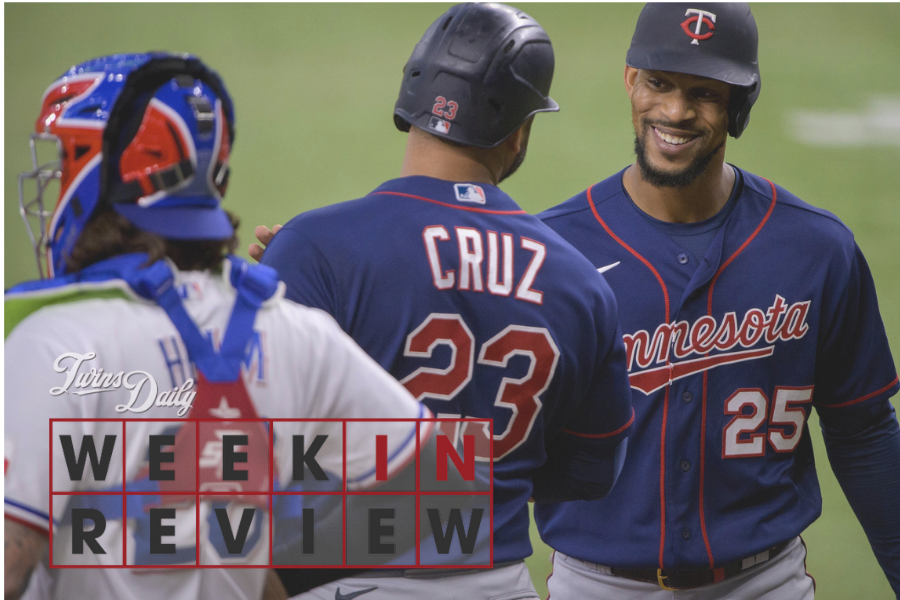 Weekly Snapshot: Mon, 6/14 through Sun, 6/20 *** Record Last Week: 4-2 (Overall: 30-41) Run Differential Last Week: -1 (Overall: -51) Standing: 4th Place in AL Central (12.5 GB) Last Week's Game Recaps: Game 66 | SEA 4, MIN 3: M's Edge Twins in Maeda's Return to the Mound Game 67 | SEA 10, MIN 0: Yikes Game 68 | MIN 7, SEA 2: Twins Salvage a Win in Seattle Behind Ober Game 69 | MIN 7, TEX 5: Arraez Sparks Extra-Inning Victory Game 70 | MIN 3, TEX 2: Relievers Lock Down Tight Lead Game 71 | MIN 4, TEX 2: Bullpen Backs Maeda, Twins Sweep Texas NEWS & NOTES Let's get started with a quick rundown of roster moves over the past seven days: In: Luis Arraez (activated from IL) Kenta Maeda (activated from IL) Max Kepler (activated from IL) Byron Buxton (activated from IL) Caleb Thielbar (activated from IL) Out: Shaun Anderson (claimed off waivers by Texas) Willians Astudillo (optioned to AAA) Gilberto Celestino (optioned to AAA) Griffin Jax (optioned to AAA) Rob Refsnyder (placed on IL) There are a few noteworthy things here, mostly related to the Buxton activation. It took much longer than expected, as Buxton failed to convince the team he was fully ready for most of the week, and consequentially stayed on IL until Saturday. When he was activated, Astudillo was the choice to be sent down, which is somewhat surprising, and reflects well on Nick Gordon. Under different circumstances, Gordon would've been the logical choice for a demotion, but he has played well and his newfound utility in center field makes him a fairly key depth piece as Buxton's health remains fairly uncertain. The other big headline in terms of roster moves was the Twins losing Anderson on waivers. Yet another offseason relief project that officially flopped. Cody Pirkl had a very good post on the topic, explaining how this once-promising but failed move perfectly encapsulates the front office's winter as as a whole. HIGHLIGHTS Fortunately, many signs of optimism are coming from good places: young players who have the potential to play significant roles next year and beyond. Bailey Ober was simply fantastic in his fourth big-league outing, spinning four scoreless innings against the Mariners in Seattle. He struck out six, allowed one hit, and faced the minimum while building upon a tremendously impressive start to his big-league career. Ryan Jeffers continues to thrive in Mitch Garver's absence; he went 4-for-15 with a homer and four RBIs. Since returning to the Twins at the start of June, Jeffers has been a slugging machine with seven extra-base hits (four home runs) and 11 RBIs in 13 games. Alex Kirilloff and Trevor Larnach combined to produce 11 hits including two homers and five RBIs. These young bats are cementing their MLB readiness and boosting the future outlook of the lineup. His play might not have the same type of long-term implications, but Nelson Cruz has gotten back to dominating offensively and that bodes well in its own way. He was the driving force in the lineup last week, finishing 9-for-21 with two home runs and six RBIs. Cruz might have a somewhat limited market at the trade deadline, due to the finite field of teams capable of using a DH, but the more he can make himself look like a clear difference-maker, the better for the Twins. Cruz did exit Sunday's game with neck tightness, but let's hope it's minor. The bullpen, to its credit, enjoyed some fine performances, and uncharacteristically managed to hold down down some leads. Taylor Rogers led the way, tossing three scoreless frames across three appearances with four strikeouts and no walks. He's quietly having a stellar season, with a 2.73 ERA and 41-to-5 K/BB ratio in 29 ⅔ innings. Caleb Thielbar picked up a couple of victories in relief, allowing one run over three innings with five strikeouts and no walks. Hansel Robles allowed one run in four innings, notching a win and a save. Tyler Duffey allowed just one unearned run in his three appearances, and has a 1.54 ERA over the past calendar month. All of the above performances were nice to see, helping Minnesota cobble together four straight victories for just the second time all year, but more than anything, it was refreshing to get some key players off the Injured List and back in the lineup. Buxton legged out a single in his return on Saturday, and then launched a two-run homer in his first at-bat on Sunday. Kepler played all weekend and looked healthy, although he's got just one hit in 13 plate appearances since being activated. Arraez collected hits in each of his five starts, including a clutch 10th-inning triple on Saturday that pushed the Twins ahead. LOWLIGHTS The younger players are carrying much of the load while highly-paid veterans – with the exception of Cruz – are proving to be less useful. J.A. Happ was awful once again on Wednesday, coughing up six runs (five earned) over four innings to set the stage for a 10-0 laugher. Opponents are slashing .371/.414/.692 against the lefty in his past seven turns, so basically he's making everyone look like the April version of Buxton. Miguel Sanó went 2-for-18 with eight strikeouts and no walks; he has a ghastly 25-to-1 K/BB ratio in June. Andrelton Simmons went 3-for-13 as his balky ankle started barking again. Josh Donaldson went 1-for-10 in Seattle before leaving a game with calf tightness, which of course throws the rest of his season into doubt. It was only a matter of time. Still no word as of yet on an IL move for him. Theoretically, any of these players could be tradable assets for the Twins, offering the opportunity to recoup some prospects as they rebuild on the fly, or at least some salary relief. (Happ, Sanó, Simmons and Donaldson are earning a combined $50 million this year, with Sanó and JD owed another $50 million or so moving forward,) But their poor play and recurring injuries are putting a damper on that notion. Unlike Cruz, none of these vets are playing up to their standards or doing much to build any demand in the eyes of contenders. And now Cruz's health is in question. Aye aye aye. TRENDING STORYLINE The trade deadline is suddenly only a little over a month away. At this point the micro-trends of players who might be involved begin to matter a lot. In some cases, there's not a lot that can happen to change the core narrative. Even if Donaldson gets back on the field soon, it's not going to erase the glaring realities of his total lack of dependability, which were resurfaced by another calf scare. Even if Sanó gets rolling on another signature hot streak, it isn't going to make suitors blind to his overwhelming slumps in the past two seasons. I'm not sure Happ has enough time to position himself as anything more than a back-of-rotation salary dump. But other things DO matter. If Cruz's neck issue proves to be significant, that could cost the Twins one of their most clear-cut trade chips. Then again, if he comes back and keeps crushing, he may become all the more irresistible as that final puzzle piece for an AL contender. Meanwhile, if Simmons can build upon his three-hit game on Sunday and hit well for the next month, that may raise his stock substantially. His defense has been very good, but the idea of giving up a quality player for the shortstop may hinge on the belief he can contribute in some way offensively. And then of course there is Buxton and José Berríos. What if Buck keeps tearing things up for the next few weeks and a starry-eyed club makes a crazy offer for 1.5 years of his services? Or, say, a couple of big-name starters on good teams get injured, and desperation drives the market for Berríos? Lots of threads to follow as we head toward July. There is also, I guess, the possibility that Minnesota launches off from this four-game winning streak, goes on a tear during the upcoming division-heavy portion of the schedule, and vaults to some semblance of relevance by the All-Star break to deter an all-out sell-off. But that scenario seems outrageously optimistic for this cursed 2021 season. LOOKING AHEAD The state of Ohio will be represented at Target Field in the coming week, with both Cincinnati and Cleveland paying visits. The Reds have been playing good ball of late and could present a challenging match-up, especially with their top two starters toeing the rubber in this short series. Shane Bieber is on IL with a shoulder strain, so Minnesota will not have to face him in the four-gamer against second-place Cleveland. Following the two-gamer against Cincy, the Twins play 25 straight games against AL Central opponents, including 14 against Cleveland and the White Sox. MONDAY, 6/21: REDS @ TWINS – RHP Tyler Mahle v. LHP J.A. Happ TUESDAY, 6/22: REDS @ TWINS – LHP Wade Miley v. RHP Bailey Ober THURSDAY, 6/24: CLEVELAND @ TWINS – RHP J.C. Mejia v. RHP Jose Berrios FRIDAY, 6/25: CLEVELAND @ TWINS – RHP Cal Quantrill v. RHP Randy Dobnak SATURDAY, 6/26: CLEVELAND @ TWINS – LHP Sam Hentges v. RHP Kenta Maeda SUNDAY, 6/27: CLEVELAND @ TWINS – RHP Aaron Civale v. LHP J.A. Happ
 -
The Minnesota Twins are a bad baseball team. This was made painfully clear during another losing week in which they were thoroughly outplayed by two plainly superior contending clubs. Where do we go from here? Weekly Snapshot: Mon, 6/7 through Sun, 6/13 *** Record Last Week: 2-4 (Overall: 26-39) Run Differential Last Week: -15 (Overall: -50) Standing: T-4th Place in AL Central (15.0 GB) Last Week's Game Recaps: Game 60 | NYY 8, MIN 4: New York Pulls Away Late, Wins Series Opener Game 61 | NYY 9, MIN 6: Yankees Tee Off on Dobnak in Victory Game 62 | MIN 7, NYY 5: Donaldson, Cruz Power Dramatic Comeback vs. Chapman Game 63 | HOU 6, MIN 4: Shoemaker's Late Lapse Leads to Loss Game 64 | MIN 5, HOU 2: Twins Win Behind Strong Effort from Berríos Game 65 | HOU 14, MIN 3: Astros Destroy Twins Pitching in Blowout NEWS & NOTES Relatively speaking, it was a pretty quiet week in terms of roster moves and injury updates. Byron Buxton, Kenta Maeda, Luis Arraez, and Max Kepler all embarked on rehab assignments in St. Paul, so the Twins figure to get back these important fixtures in the near future. Gilberto Celestino was optioned to Triple-A, then quickly recalled, as Kyle Garlick went on the shelf with a sports hernia. Rob Refsnyder is back. (He started in right field and batted cleanup on Sunday, which says a lot about the state of this roster.) HIGHLIGHTS The biggest highlight of the week, and the season, came in the ninth inning of Thursday's series finale against the Yankees. With the Twins trailing by two runs and facing a sweep, Aroldis Chapman came to the mound, carrying a 0.39 ERA, 4-0 record, and 12-for-13 save conversion rate. He'd been lights-out, and was going up against a Twins team that has constantly shrunk in big spots. All of which made the ensuing sequence of events astonishingly improbable. If you turned away from the TV, you might've missed one of the most exhilarating comeback wins in recent franchise history. It all happened so quickly. Jorge Polanco led off with a single. In stepped Josh Donaldson, who took ball one and then launched a mammoth game-tying home run to left-center. Willians Astudillo, pinch-hitting for Nick Gordon, followed with a first-pitch single of his own. And then came Nelson Cruz, who basically replicated what Donaldson did two ABs earlier by drilling a 1-0 pitch deep to center for the walk-off winner. Within a span of nine pitches, the Twins grasped victory from the jaws of defeat. For Twins fans, the feeling was bittersweet, because it was hard not to think about how much more epic and energizing that win would've been if the Twins hadn't cast themselves hopelessly out of contention. In anticipation of this season, we dreamed about Cruz and Donaldson coming through with game-changing jolts like this all year long, but instead, such marquee moments have been far and few between, which is part of the reason the team finds itself buried in last place. With that said, Cruz's bat has been showing some life at the plate again lately and that's good to see now matter how you slice it. He went 6-for-16 with three home runs and six RBIs on the week, equaling his totals in those categories from the entire month of May. He might not find himself leading the Twins on a pennant chase in August and September, but maybe he can do it for someone else, and score Minnesota a prospect or two in the process. Donaldson's clutch bomb was also part of a power-hitting rejuvenation, as he followed the next day by going deep twice against Houston – his second two-homer game in an eight-day span. His slugging percentage, which had sagged to .408 by the end of the Baltimore series in early June, is back up to .475. As I noted last week, Donaldson's been remarkably healthy and durable since his season-opening IL sint, leading the team in games played and plate appearances since returning. He's also been doing some very nice work with the glove. Polanco, whose single set up the dramatic finish against New York, has generally stayed hot at the plate. He went 6-for-21 with three homers and six RBIs last week. His left-handed swing is actually doing damage again and that's huge. Other standout offensive performances included Miguel Sanó (8-for-24 with two homers and four RBIs) and Alex Kirilloff (5-for-13 with just one strikeout in five games). There weren't many positives on the pitching side, but José Berríos certainly qualifies. He was masterful against the Astros on Saturday night, spinning seven innings of two-run ball. The righty allowed only five hits and two walks while striking out eight. Berríos has won five straight decisions and the Twins are 7-1 in his last seven starts dating back to the beginning of May. The other noteworthy pitching bright spot was a strong showing from Bailey Ober on Friday night, when he made a spot start in place of Matt Shoemaker. Going against an elite Houston offense, Ober tossed five innings and allowed just two runs, striking out seven with one walk. He continues to pump 92-93 MPH with his four-seamer, which is immensely encouraging. Ober looks like he could be a legitimate factor on a pitching staff that desperately needs help, both now and moving forward. LOWLIGHTS Even after being bumped from the rotation, Shoemaker continues to cost the Twins with his staggeringly poor play. He appeared in relief on Friday night against the Astros and took the loss, giving up two runs in the ninth to break a tie. (The decision by Rocco Baldelli to use him in this situation was ... questionable to say the least.) He came out of the bullpen again on Sunday and looked customarily awful, coughing up three runs on four hits and two walks in two innings of work. Shoemaker has the worst ERA in the league, he's been tagged with eight losses in 13 appearances, and seems to look worse every time he takes the mound. It's past time for the Twins to move on. Roster crunches and depth issues be damned: you can't justify continuing to run a guy like this out in major-league games. The same can also be said for Alex Colomé, whose brief stretch of effectiveness in May is now a distant memory. He gave up two runs on three hits in his one inning of work on Sunday, and has a 5.48 ERA on the season to go along with his league-worst (by a mile) negative-2.34 Win Probability Added. Colomé's departure is probably less imminent than Shoemaker's, because they're paying him three times as much and are so direly short-handed in the bullpen, but in both cases it's only a matter of time. These guys were complete free agent busts and wherever the Twins go from here, they aren't going to be part of it. The situation with Randy Dobnak is a bit more complicated. He's looked every bit as bad as Shoemaker, with his ERA inflating to 8.38 after allowing 14 earned runs in 6 ⅔ innings over the past week. Dobnak gave up five home runs in two appearances, with four coming against his reinvented slider which has changed from a powerful asset to a glaring weakness for him. That begs the question why he or the Twins thought it would be a good idea to tinker with that pitch in the first place. It's not pleasant to watch Dobnak pitch right now, but the solution isn't as simple as cutting bait like it is with Shoemaker. The Twins just signed Dobnak to a five-year contract extension on the heels of an outstanding spring training, and while the monetary commitment isn't huge, they are invested in him for better or worse. It behooves them to help him work through his issues because he's currently one of their few figments of long-term stability in the rotation picture. Fixing the pitching staff has become a primary crux for the Twins and their future outlook. The work is cut out for them here. Michael Pineda looks to be headed for the Injured List. Shoemaker is unusable and J.A. Happ hasn't been much better. Berríos is under contract for one more year after this and Maeda two more. It's tough to have much confidence in the front office filling tons of holes and constructing a quality unit from scratch during the offseason given how poorly all of their moves this year fared. As such, you can see why it's critically important for Ober to build on his early success and for Dobnak to get straightened out. The Twins need some things to break right with young pitchers or they simply won't be equipped to contend next year, in which case, why not just trade Berríos at the upcoming deadline? TRENDING STORYLINE For what it's worth, the Twins are about to get a lot closer to full strength. Maeda, Buxton, and Arraez have completed their rehab stints and will be traveling to Seattle for the upcoming road trip. Maeda is scheduled to start against the Mariners on Monday, and the other two will presumably be activated for that game as well. Kepler is be a bit further behind, given that he played his first rehab game in St. Paul on Sunday (and was the DH), but we could see him up before week's end. Those are some pretty key cogs the Twins have been playing without. We'll see if their returns, along with a softening of the schedule, can help this team get on a bit of a winning run here in the back half of June. So far, sustained hot streaks have eluded them. LOOKING AHEAD Get ready for some late-night baseball as the Twins head to Seattle for a showdown against the Mariners in Pacific Time. Then, following an off day, Minnesota heads down to Texas for a weekend series against the last-place Rangers. MONDAY, 6/13: TWINS @ MARINERS – RHP Kenta Maeda v. LHP Marco Gonzales TUESDAY, 6/14: TWINS @ MARINERS – LHP J.A. Happ vs. RHP Chris Flexen WEDNESDAY, 6/15: TWINS @ MARINERS – RHP Bailey Ober v. RHP Justus Sheffield FRIDAY, 6/17: TWINS @ RANGERS – RHP Jose Berrios v. RHP Mike Foltynewicz SATURDAY, 6/18: TWINS @ RANGERS – TBD v. LHP Kolby Allard SUNDAY, 6/19: TWINS @ RANGERS – RHP Kenta Maeda v. RHP Dane Dunning View full article
-
 Weekly Snapshot: Mon, 6/7 through Sun, 6/13 *** Record Last Week: 2-4 (Overall: 26-39) Run Differential Last Week: -15 (Overall: -50) Standing: T-4th Place in AL Central (15.0 GB) Last Week's Game Recaps: Game 60 | NYY 8, MIN 4: New York Pulls Away Late, Wins Series Opener Game 61 | NYY 9, MIN 6: Yankees Tee Off on Dobnak in Victory Game 62 | MIN 7, NYY 5: Donaldson, Cruz Power Dramatic Comeback vs. Chapman Game 63 | HOU 6, MIN 4: Shoemaker's Late Lapse Leads to Loss Game 64 | MIN 5, HOU 2: Twins Win Behind Strong Effort from Berríos Game 65 | HOU 14, MIN 3: Astros Destroy Twins Pitching in Blowout NEWS & NOTES Relatively speaking, it was a pretty quiet week in terms of roster moves and injury updates. Byron Buxton, Kenta Maeda, Luis Arraez, and Max Kepler all embarked on rehab assignments in St. Paul, so the Twins figure to get back these important fixtures in the near future. Gilberto Celestino was optioned to Triple-A, then quickly recalled, as Kyle Garlick went on the shelf with a sports hernia. Rob Refsnyder is back. (He started in right field and batted cleanup on Sunday, which says a lot about the state of this roster.) HIGHLIGHTS The biggest highlight of the week, and the season, came in the ninth inning of Thursday's series finale against the Yankees. With the Twins trailing by two runs and facing a sweep, Aroldis Chapman came to the mound, carrying a 0.39 ERA, 4-0 record, and 12-for-13 save conversion rate. He'd been lights-out, and was going up against a Twins team that has constantly shrunk in big spots. All of which made the ensuing sequence of events astonishingly improbable. If you turned away from the TV, you might've missed one of the most exhilarating comeback wins in recent franchise history. It all happened so quickly. Jorge Polanco led off with a single. In stepped Josh Donaldson, who took ball one and then launched a mammoth game-tying home run to left-center. Willians Astudillo, pinch-hitting for Nick Gordon, followed with a first-pitch single of his own. And then came Nelson Cruz, who basically replicated what Donaldson did two ABs earlier by drilling a 1-0 pitch deep to center for the walk-off winner. Within a span of nine pitches, the Twins grasped victory from the jaws of defeat. For Twins fans, the feeling was bittersweet, because it was hard not to think about how much more epic and energizing that win would've been if the Twins hadn't cast themselves hopelessly out of contention. In anticipation of this season, we dreamed about Cruz and Donaldson coming through with game-changing jolts like this all year long, but instead, such marquee moments have been far and few between, which is part of the reason the team finds itself buried in last place. With that said, Cruz's bat has been showing some life at the plate again lately and that's good to see now matter how you slice it. He went 6-for-16 with three home runs and six RBIs on the week, equaling his totals in those categories from the entire month of May. He might not find himself leading the Twins on a pennant chase in August and September, but maybe he can do it for someone else, and score Minnesota a prospect or two in the process. Donaldson's clutch bomb was also part of a power-hitting rejuvenation, as he followed the next day by going deep twice against Houston – his second two-homer game in an eight-day span. His slugging percentage, which had sagged to .408 by the end of the Baltimore series in early June, is back up to .475. As I noted last week, Donaldson's been remarkably healthy and durable since his season-opening IL sint, leading the team in games played and plate appearances since returning. He's also been doing some very nice work with the glove. Polanco, whose single set up the dramatic finish against New York, has generally stayed hot at the plate. He went 6-for-21 with three homers and six RBIs last week. His left-handed swing is actually doing damage again and that's huge. Other standout offensive performances included Miguel Sanó (8-for-24 with two homers and four RBIs) and Alex Kirilloff (5-for-13 with just one strikeout in five games). There weren't many positives on the pitching side, but José Berríos certainly qualifies. He was masterful against the Astros on Saturday night, spinning seven innings of two-run ball. The righty allowed only five hits and two walks while striking out eight. Berríos has won five straight decisions and the Twins are 7-1 in his last seven starts dating back to the beginning of May. The other noteworthy pitching bright spot was a strong showing from Bailey Ober on Friday night, when he made a spot start in place of Matt Shoemaker. Going against an elite Houston offense, Ober tossed five innings and allowed just two runs, striking out seven with one walk. He continues to pump 92-93 MPH with his four-seamer, which is immensely encouraging. Ober looks like he could be a legitimate factor on a pitching staff that desperately needs help, both now and moving forward. LOWLIGHTS Even after being bumped from the rotation, Shoemaker continues to cost the Twins with his staggeringly poor play. He appeared in relief on Friday night against the Astros and took the loss, giving up two runs in the ninth to break a tie. (The decision by Rocco Baldelli to use him in this situation was ... questionable to say the least.) He came out of the bullpen again on Sunday and looked customarily awful, coughing up three runs on four hits and two walks in two innings of work. Shoemaker has the worst ERA in the league, he's been tagged with eight losses in 13 appearances, and seems to look worse every time he takes the mound. It's past time for the Twins to move on. Roster crunches and depth issues be damned: you can't justify continuing to run a guy like this out in major-league games. The same can also be said for Alex Colomé, whose brief stretch of effectiveness in May is now a distant memory. He gave up two runs on three hits in his one inning of work on Sunday, and has a 5.48 ERA on the season to go along with his league-worst (by a mile) negative-2.34 Win Probability Added. Colomé's departure is probably less imminent than Shoemaker's, because they're paying him three times as much and are so direly short-handed in the bullpen, but in both cases it's only a matter of time. These guys were complete free agent busts and wherever the Twins go from here, they aren't going to be part of it. The situation with Randy Dobnak is a bit more complicated. He's looked every bit as bad as Shoemaker, with his ERA inflating to 8.38 after allowing 14 earned runs in 6 ⅔ innings over the past week. Dobnak gave up five home runs in two appearances, with four coming against his reinvented slider which has changed from a powerful asset to a glaring weakness for him. That begs the question why he or the Twins thought it would be a good idea to tinker with that pitch in the first place. It's not pleasant to watch Dobnak pitch right now, but the solution isn't as simple as cutting bait like it is with Shoemaker. The Twins just signed Dobnak to a five-year contract extension on the heels of an outstanding spring training, and while the monetary commitment isn't huge, they are invested in him for better or worse. It behooves them to help him work through his issues because he's currently one of their few figments of long-term stability in the rotation picture. Fixing the pitching staff has become a primary crux for the Twins and their future outlook. The work is cut out for them here. Michael Pineda looks to be headed for the Injured List. Shoemaker is unusable and J.A. Happ hasn't been much better. Berríos is under contract for one more year after this and Maeda two more. It's tough to have much confidence in the front office filling tons of holes and constructing a quality unit from scratch during the offseason given how poorly all of their moves this year fared. As such, you can see why it's critically important for Ober to build on his early success and for Dobnak to get straightened out. The Twins need some things to break right with young pitchers or they simply won't be equipped to contend next year, in which case, why not just trade Berríos at the upcoming deadline? TRENDING STORYLINE For what it's worth, the Twins are about to get a lot closer to full strength. Maeda, Buxton, and Arraez have completed their rehab stints and will be traveling to Seattle for the upcoming road trip. Maeda is scheduled to start against the Mariners on Monday, and the other two will presumably be activated for that game as well. Kepler is be a bit further behind, given that he played his first rehab game in St. Paul on Sunday (and was the DH), but we could see him up before week's end. Those are some pretty key cogs the Twins have been playing without. We'll see if their returns, along with a softening of the schedule, can help this team get on a bit of a winning run here in the back half of June. So far, sustained hot streaks have eluded them. LOOKING AHEAD Get ready for some late-night baseball as the Twins head to Seattle for a showdown against the Mariners in Pacific Time. Then, following an off day, Minnesota heads down to Texas for a weekend series against the last-place Rangers. MONDAY, 6/13: TWINS @ MARINERS – RHP Kenta Maeda v. LHP Marco Gonzales TUESDAY, 6/14: TWINS @ MARINERS – LHP J.A. Happ vs. RHP Chris Flexen WEDNESDAY, 6/15: TWINS @ MARINERS – RHP Bailey Ober v. RHP Justus Sheffield FRIDAY, 6/17: TWINS @ RANGERS – RHP Jose Berrios v. RHP Mike Foltynewicz SATURDAY, 6/18: TWINS @ RANGERS – TBD v. LHP Kolby Allard SUNDAY, 6/19: TWINS @ RANGERS – RHP Kenta Maeda v. RHP Dane Dunning
- 64 comments
-
- 5
-
-
- josh donaldson
- nelson cruz
- (and 2 more)
-
As I recall, he fabricated a trade rumor, got mad upon being called out for it, and then vanished into the great beyond.
-
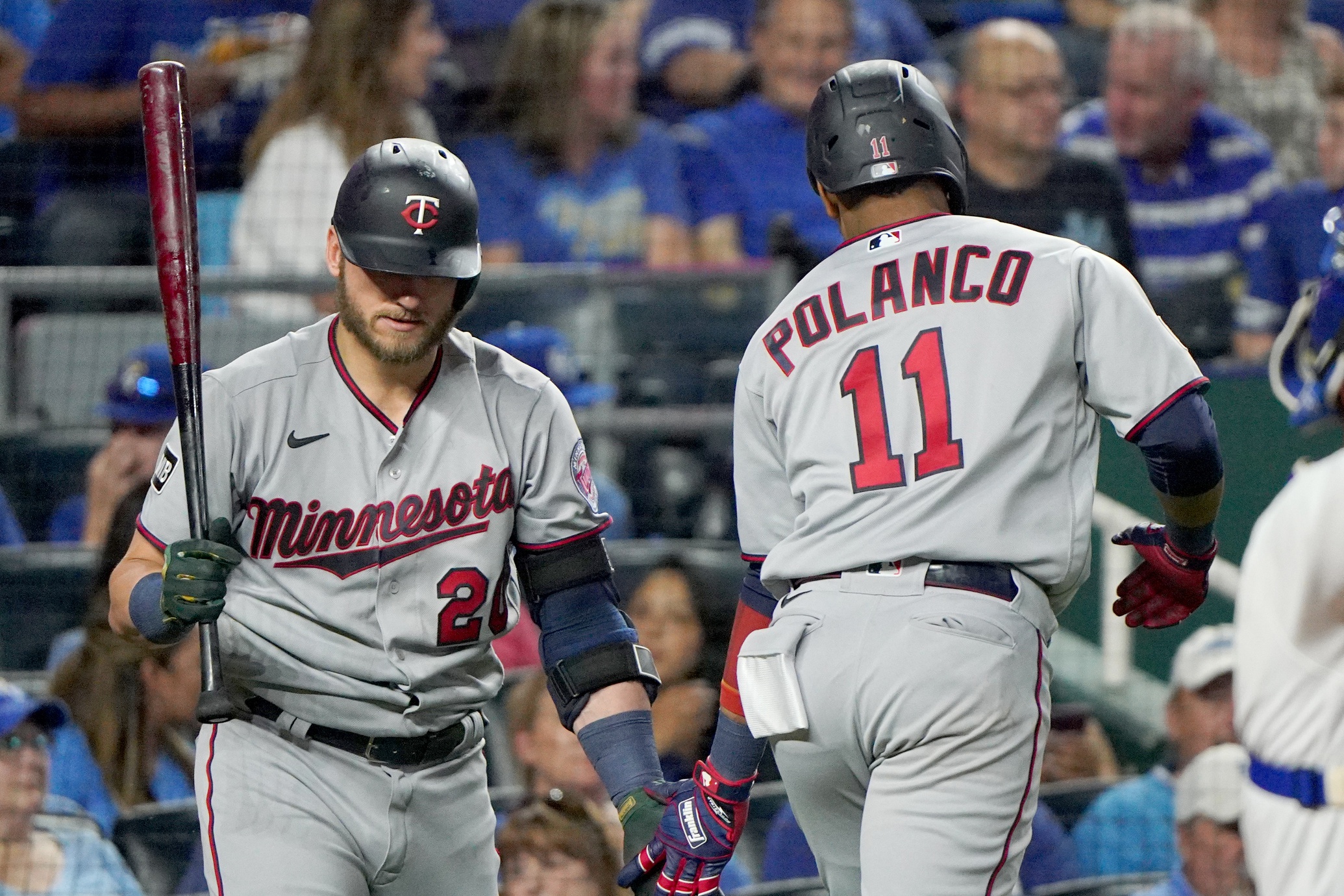 With the Twins boasting one of the worst records in the league and continuing to affirm it with their play week after week, it's natural to start thinking about the big picture, and wondering what the path forward looks like. Has their championship window closed? Is a full-on rebuild in the offing? Or is this a bump in the road that calls for retooling on the fly and getting back after it in 2022? I personally lean toward the latter, for a number of different reasons. Among them: these five key positive player trends all support the idea that Minnesota could move back into contention relatively quickly. 1. Jorge Polanco Is Returning to Form I'll admit: I was about ready to give up on Polanco as a standout player. In mid-April I openly wondered when Rocco Baldelli's faith in the infielder would be shaken, noting that Polanco continued to hit in critical lineup spots regularly despite woeful production over his past full season's worth of games. Incidentally, Baldelli's confidence DID appear to diminish around that time ... temporarily. In the latter half of April and into May, Polanco frequently found himself hitting in the bottom half of the lineup, which had almost never happened under Rocco's watch. We also learned somewhere around this time that Polanco was once again being bothered by his twice-repaired ankle. Things looked grim. But to his great credit, the 27-year-old started to find himself at the plate again. After finishing April with a miserable .555 OPS, Polanco raised that mark 150 points by slashing .253/.343/.494 in May. He's kept clicking in June, where he is thus far 8-for-24 with two doubles and a home run. Batted-ball data backs up the improved production; as Nash Walker points out, Polanco leads all second basemen in hard-hit rate since the start of May. The ankle might still be barking, but Polanco is finding a way to battle through and get the job done. Right now he actually has a higher hard-hit rate, barrel rate, and average exit velocity than any prior season in his career. Dude is mashing. He's restoring his status as a building-block type player, which is excellent news because Polanco remains under contract for at least the next two seasons, with club options for 2024 and '25. #2. Taylor Rogers Is as Good as Ever His frequent struggles in 2020, combined with the inherent volatility of relief pitchers, led plenty of us to wonder whether Rogers' days as a top-tier relief arm were over – to the extent that bringing him back in arbitration for $6 million was a subject of some debate. Am I pleased to say those debates look pretty silly now. Shaking off his mediocre work in the short season, Rogers has been phenomenal here in 2021, posting a 2.57 ERA and 2.59 WHIP across 24 ⅓ frames. His 12.6 K/9 rate would be a career-high, as would his 12.3% swinging strike rate, and he ranks 18th among all MLB relievers in fWAR. Take a look at his Statcast measurements and all those bright red circles. Under team control for one more year after this, Rogers is proving he's someone the Twins can count on as an anchor in their bullpen. They've got much work to do with this unit, but having a centerpiece of his caliber makes a big difference. He's been among the few bright spots in a disastrous relief corps, but not the only one: Tyler Duffey's recent improvement and Luke Farrell's impressive early work are also encouraging developments. #3. Josh Donaldson Is an Iron Man Again I'm not sure Donaldson's season can be viewed as any kind of glowing positive in the grand scheme, but the fact he's been able to stay on the field as a regular fixture is huge, and frankly seemed unfathomable two months ago. JD's first season with the Twins was ruined by a reemergence of his calf issues, framing his health as a primary question mark during the ensuing offseason, and he lasted all of one plate appearance before going down this year. With the Twins still on the hook for $21 million annually for three more seasons, Donaldson was quickly beginning to look like a constrictive burden in their roster construction efforts going forward. The third baseman ended up missing only 10 games following the mild hamstring strain in Game 1. Since returning on April 14th he's played in 45 of a possible 47 games, starting 43 of them. Even with the missed time, Donaldson ranks third on the team in plate appearances. Since coming off IL, he leads all Twins in both PAs and games played. His performance may leave something to be desired and he runs like he's dragging an anvil, but at 35, Donaldson is showing he can hold up as an everyday player and he's still clobbering the ball even if the results haven't been there. The outlook here has improved drastically. This team was going to be in serious trouble if things continued to devolve. #4. Rookies Are Ready for the Challenge In a season where so much has gone wrong, it would only make sense for rookies to come up and look totally overwhelmed. I mean, when even the established veterans are looking lost, how are young kids supposed to find their way? Instead, while there have been exceptions, most of the newcomers on this roster have risen to the occasion. I talked in the latest Week in Review column about the impressive early showings from pitcher Bailey Ober and infielder Nick Gordon. Alex Kirilloff has hit the ground running, although his balky wrist currently appears to be sapping all his power. Trevor Larnach looks like a seasoned vet in the batter's box. These guys could all play fairly significant roles on a competing Twins team in 2022. Regardless of how they supplement from outside, there's no doubt that Minnesota's return to contention will need to be fueled internally to a large degree. The young wave is mostly inspiring confidence right now. #5. Mitch Garver Is Elite Offensively Again Garver went through an awful ordeal in Baltimore last week, and he'll probably be sidelined for a while. But, so long as he doesn't choose to quit baseball (I'd consider it), there's plenty of reason to be excited for his return. In the month prior to his tremendously unfortunate mishap behind the plate, Garver wasn't just hitting well – he was dominating like few other hitters in the league. From May 2nd to June 1st he slashed .286/.444/.589 with four homers, five doubles, and a 17-to-16 K/BB ratio. His OPS during that span ranked third among all AL hitters and his .440 wOBA was almost 60 points higher than the next-best MLB catcher (Yasmani Grandal of the White Sox). In the aftermath of a hideous slump that lasted throughout 2020 and carried over into the first month of 2021, this awakening from Garver has been reinvigorating. He's not just getting lucky and running into meatballs – he has fundamentally transformed his offensive game and turned back into the selective, smart, fastball-crushing force that earned a Silver Slugger award in 2019. Garver was playing at an MVP-caliber level in the month before he went down, just as he did throughout the balance of 2019. If he can come back and sustain anywhere near that level, he'll be an enormous difference-maker, and he's controllable through the next two seasons. Feeling Better? I know I am. This team has a whole host of troubles right now but they're not rotting away at the core. In addition to the names mentioned above, they figure to get back their top two starters (José Berríos and Kenta Maeda) and their best player (Byron Buxton), although in two of those cases it could be the last ride here. Now, those guys have their own set of question marks – can Maeda get healthy and shake off his uncharacteristic early-season struggles, and can Buxton ever stay on the field for two weeks consecutively – but it'd be silly to give up on this team and blow it up. Here's hoping the rest of the season gives us more silver linings to build on. As we learned not too long ago when a 78-win also-ran in 2018 blossomed into a 101-win world-beater in 2019 – not to mention the vice-versa scenario this year – the tides can turn quickly. MORE FROM TWINS DAILY — Latest Twins coverage from our writers — Recent Twins discussion in our forums — Follow Twins Daily via Twitter, Facebook or email
